10 Patio Gym Ideas for a Functional Outdoor Workout
Sweaty gym air ruins motivation fast. I wanted fresh air, zero mirrors, and workouts that didn’t feel like a chore. I also wanted something that didn’t scream “fitness equipment exploded here.”
That’s how the patio gym idea grabbed me. An outdoor workout space feels lighter, calmer, and way more forgiving on lazy days.
Let me walk you through ideas that actually work in real homes, not fantasy Pinterest houses.
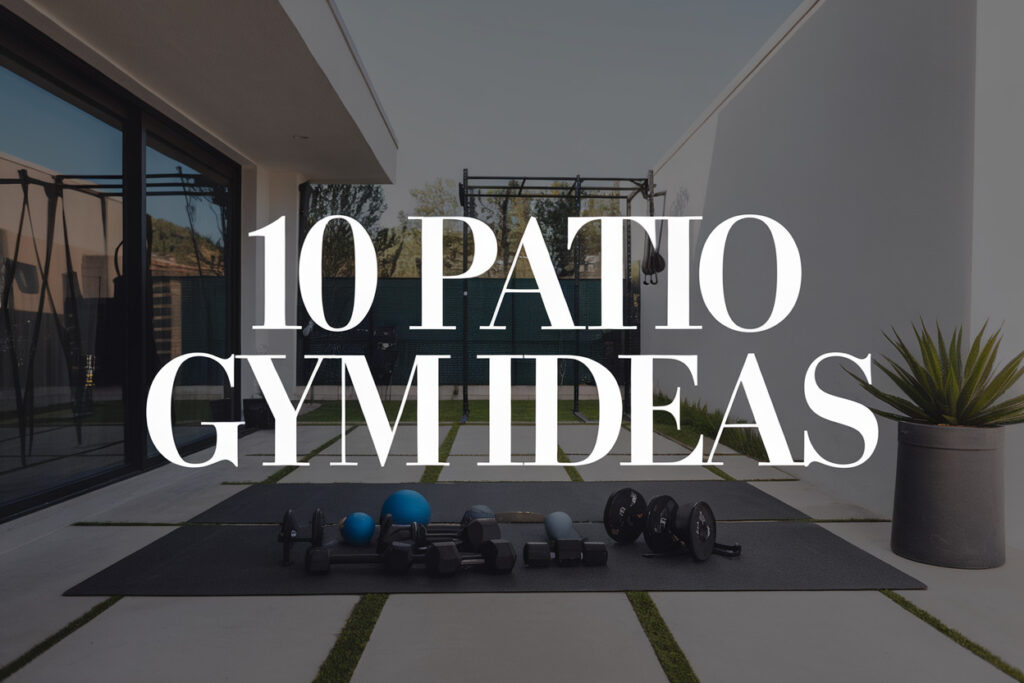
1. Rubber Flooring That Saves Your Joints and Your Sanity
Hard concrete feels brutal on knees. I learned that lesson after one enthusiastic burpee session that ended with me walking like a retired cowboy. Rubber gym flooring changed everything and instantly made the patio feel intentional instead of improvised.
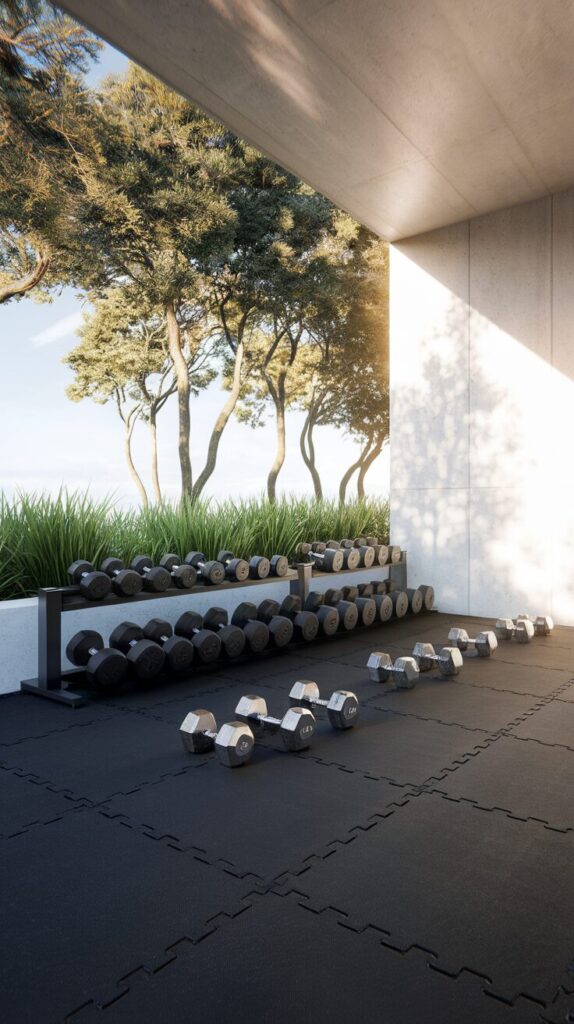
This setup creates a stable, slip-resistant base that works for strength training, yoga, and HIIT. It also defines the space visually, which makes the area feel like a real gym instead of a random corner. IMO, flooring sets the tone before you add a single weight.
Why This Works
Rubber absorbs impact and reduces strain on joints. It also prevents equipment from sliding around during workouts. The visual contrast helps separate workout space from lounging space, which keeps your patio from feeling cluttered.
How to Do It
- Measure the workout zone and mark it clearly
- Choose interlocking rubber tiles for easy setup
- Leave a small border gap for drainage and expansion
- Clean the surface before laying tiles
Style & Design Tips
Stick to matte black or charcoal for a clean, gym-like feel. Avoid bright puzzle-style tiles unless you want playground energy. Keep edges clean and square for a polished look.
Pro Tip or Budget Hack
Check local sports stores for returned mats. Many sell barely used tiles at half price.
2. Foldable Wall-Mounted Equipment to Save Space

Loose weights everywhere kill the vibe. I hated stepping over dumbbells just to grab coffee. Wall-mounted, foldable gear gave me my patio back without sacrificing workouts.
This idea uses vertical space to store or deploy equipment only when needed. You get flexibility without permanent clutter. It works especially well in small patios or shared outdoor spaces.
Why This Works
Vertical storage keeps the floor clear and improves movement flow. Foldable designs adapt to different workout types without crowding the area. The patio stays functional even on rest days.
How to Do It
- Install wall-mounted racks into studs
- Choose foldable benches or squat arms
- Keep heavier items lower for safety
- Leave clear folding clearance
Style & Design Tips
Match hardware colors to patio fixtures for cohesion. Black metal or powder-coated steel blends best outdoors. Avoid chrome finishes that glare in sunlight.
Pro Tip or Budget Hack
Look for commercial gym takeoffs. Many gyms upgrade equipment often and sell older wall gear cheap.
3. Resistance Band Station for Quiet, Low-Impact Training
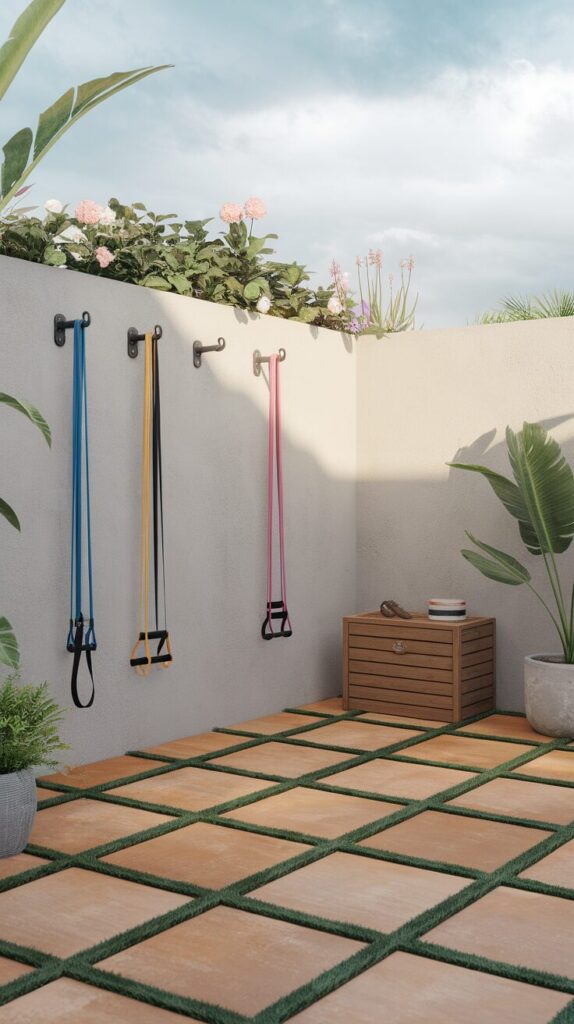
Not every workout needs clanging metal. Some days I want movement without waking neighbors or stressing joints. Resistance bands solve that quietly and effectively.
A dedicated band station creates endless workout options in minimal space. Bands also travel well, which makes the setup flexible and low commitment.
Why This Works
Bands provide variable resistance without heavy equipment. They reduce joint stress and support controlled movements. The setup works for strength, rehab, and mobility days.
How to Do It
- Install anchor points at multiple heights
- Use heavy-duty carabiners
- Store bands in a weatherproof box
- Rotate band tension regularly
Style & Design Tips
Stick to neutral band colors to avoid visual chaos. Label resistance levels clearly. Keep anchors flush and symmetrical for a clean look.
Pro Tip or Budget Hack
Buy loop bands in bulk sets. Individual replacements cost more long term.
4. Compact Power Rack for Serious Strength Training
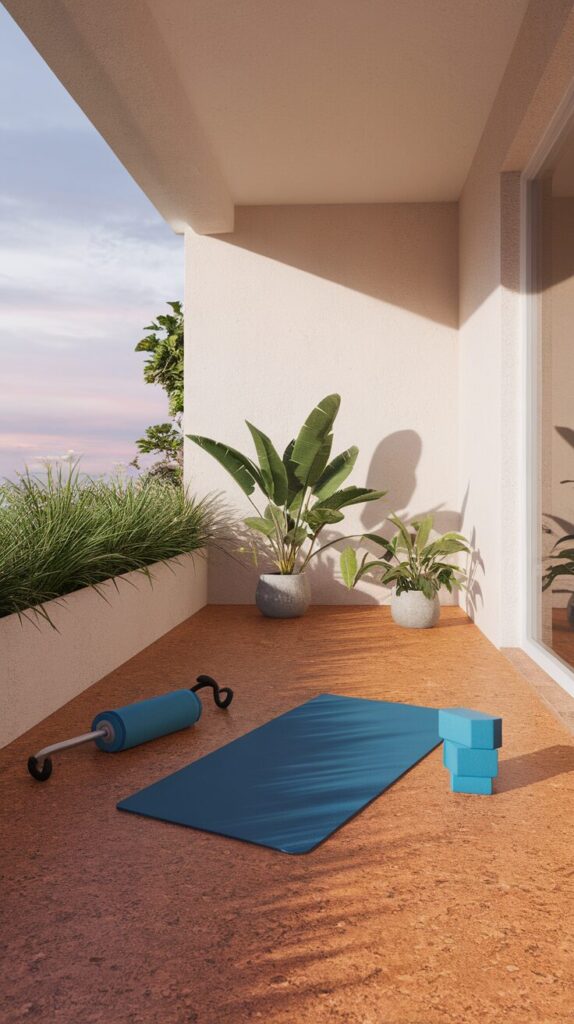
Yes, patios can handle real lifting. I hesitated at first, but compact racks proved me wrong. This setup turns outdoor space into a legit strength zone.
A small footprint rack supports squats, presses, and pulls without dominating the patio. It brings gym-level capability home.
Why This Works
Compact racks concentrate multiple exercises in one frame. Outdoor air improves workout comfort during heavy lifts. The rack visually anchors the gym zone.
How to Do It
- Choose a short-depth rack
- Bolt it into weighted plates or flooring
- Use rust-resistant materials
- Add safety arms
Style & Design Tips
Go minimal with matte black frames. Avoid bulky attachments you won’t use. Keep weight plates organized for balance.
Pro Tip or Budget Hack
Skip brand-new racks. Used commercial racks last forever and cost less.
5. Yoga and Mobility Zone with Soft Flooring
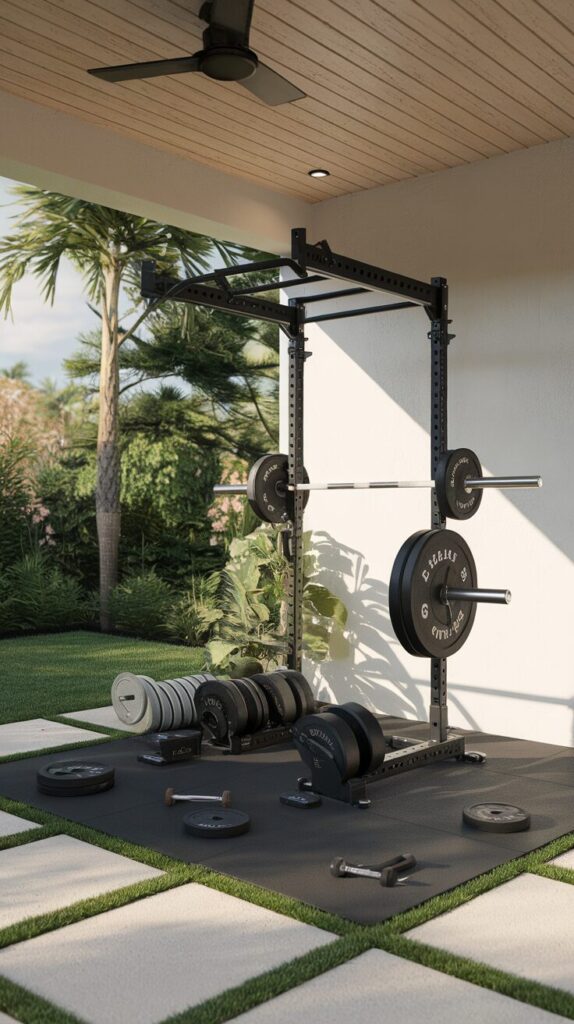
Some days demand stretching, not sweat puddles. A dedicated mobility zone makes recovery feel intentional instead of rushed.
This space encourages consistency by staying ready at all times. It also adds calm energy to the patio.
Why This Works
Soft flooring supports joints and balance. Visual separation helps shift mental focus from intensity to recovery. The zone promotes daily movement habits.
How to Do It
- Use foam tiles or cork mats
- Add a mat rack nearby
- Keep props within reach
- Face the zone toward greenery
Style & Design Tips
Choose earth tones to create calm. Avoid loud patterns that distract. Keep the area uncluttered.
Pro Tip or Budget Hack
Cork flooring lasts longer outdoors than foam and looks better over time.
6. Outdoor Cardio Corner Without Big Machines
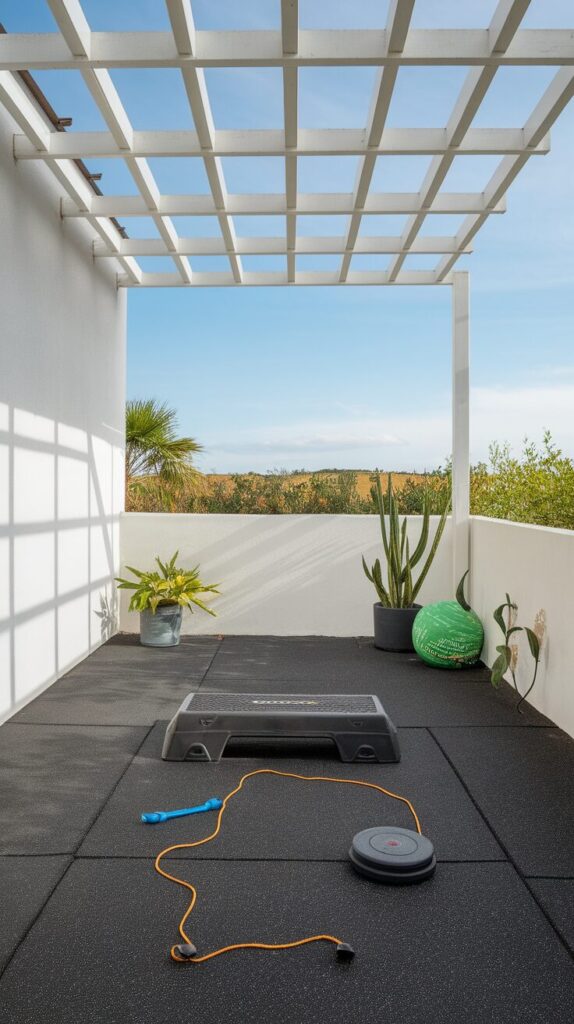
Treadmills outside feel excessive. I wanted cardio without motors, cords, or noise. Simple tools delivered better results.
Jump ropes, step platforms, and sleds cover cardio needs efficiently. The setup stays flexible and low maintenance.
Why This Works
Manual cardio tools burn calories without electricity. They store easily and adapt to different workouts. Outdoor airflow reduces perceived effort.
How to Do It
- Store ropes and steps vertically
- Use weighted sleds on rubber flooring
- Rotate tools weekly
- Warm up properly
Style & Design Tips
Stick to two or three tools max. Too many options kill consistency. Keep colors neutral.
Pro Tip or Budget Hack
DIY sleds with old tires and rope save serious money.
7. Weather-Proof Storage That Looks Like Furniture
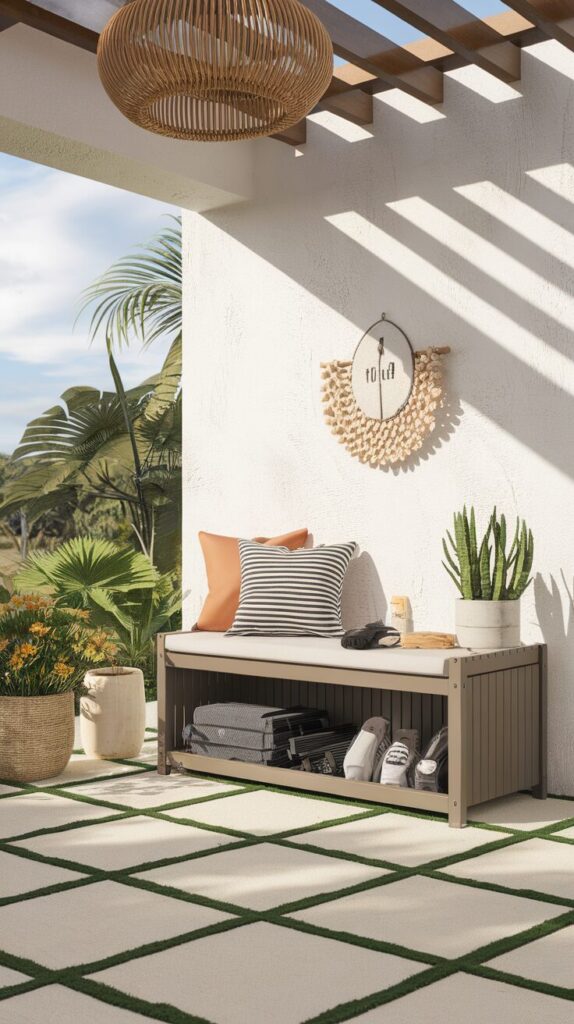
Ugly bins ruin outdoor aesthetics. I wanted storage that blended in, not screamed utility. Furniture-style storage fixed that fast.
This idea hides equipment while adding seating or surfaces. It keeps the patio polished even when workouts pause.
Why This Works
Dual-purpose storage reduces visual clutter. Weather-resistant materials protect gear year-round. The patio stays guest-ready.
How to Do It
- Choose resin or treated wood
- Add interior moisture absorbers
- Label contents discreetly
- Keep frequently used items accessible
Style & Design Tips
Match storage finishes to existing patio furniture. Warm wood tones soften gym visuals. Avoid bulky lids.
Pro Tip or Budget Hack
Deck boxes often cost less than gym storage and last longer outdoors.
8. Mirror Placement That Improves Form Without Vanity
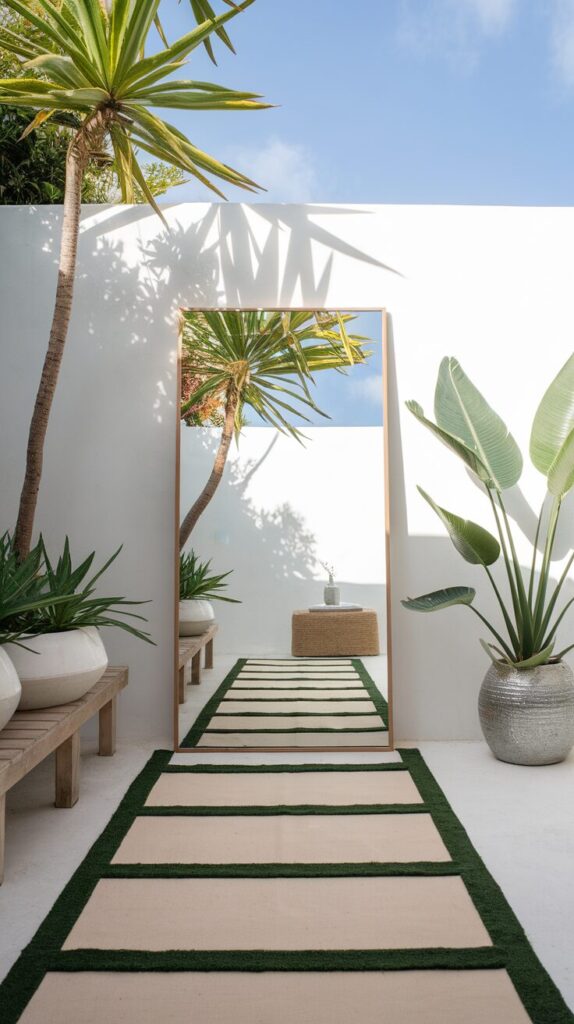
Mirrors help technique but kill outdoor vibes fast. Strategic placement keeps function without turning the patio into a locker room.
I use partial mirrors placed at angles. They help form checks without dominating the space.
Why This Works
Mirrors improve movement accuracy. Limited coverage avoids harsh reflections. The setup balances feedback with atmosphere.
How to Do It
- Use shatter-resistant acrylic mirrors
- Mount at eye level
- Angle slightly downward
- Avoid full wall coverage
Style & Design Tips
Frame mirrors in black or wood. Keep edges clean. Avoid glossy frames.
Pro Tip or Budget Hack
Gym mirror panels often sell cheap secondhand after renovations.
9. Shade and Lighting That Extend Workout Hours
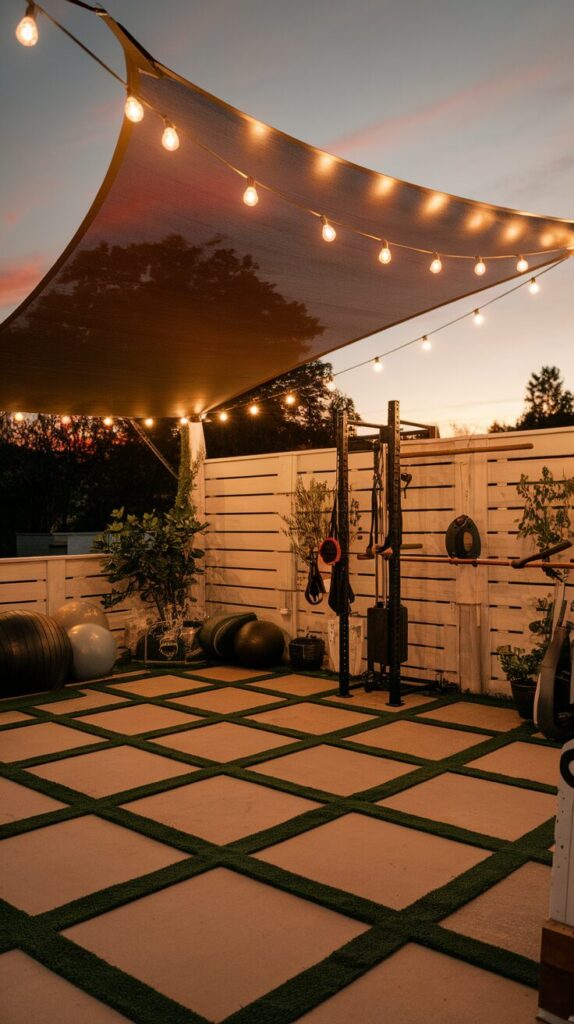
Sun glare kills motivation. Poor lighting ends evening workouts early. Proper shade and lighting fix both problems.
This setup makes workouts comfortable any time. It also protects equipment from weather damage.
Why This Works
Shade regulates temperature. Soft lighting improves visibility without harshness. Extended usability increases consistency.
How to Do It
- Install retractable shade sails
- Use warm LED string lights
- Add focused task lights
- Avoid overhead glare
Style & Design Tips
Choose warm white lighting only. Cool light feels sterile outdoors. Keep fixtures minimal.
Pro Tip or Budget Hack
Solar-powered lights reduce wiring and long-term costs.
10. Personal Touches That Make You Want to Show Up
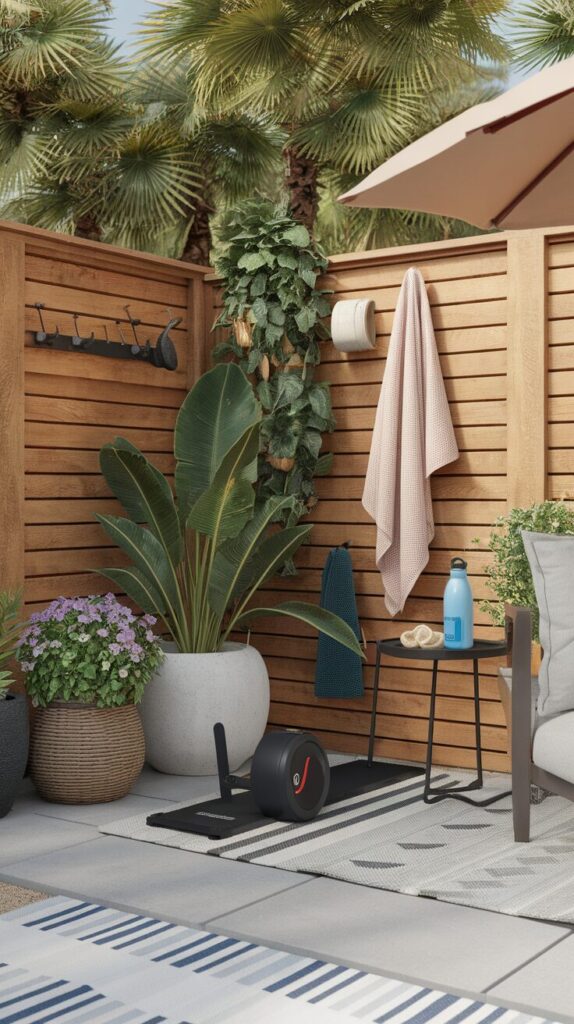
A gym should feel personal, not punishing. I added small touches that made workouts feel welcoming. That changed everything.
Plants, speakers, and textures matter more than people admit. Comfort drives consistency.
Why This Works
Personal details increase emotional connection. The space feels inviting instead of intimidating. Motivation improves naturally.
How to Do It
- Add hardy plants for life
- Use weatherproof speakers
- Include a towel hook
- Keep water nearby
Style & Design Tips
Limit décor to three personal items max. Too much kills focus. Keep colors cohesive.
Pro Tip or Budget Hack
Outdoor-rated rugs soften the space without major cost.
Patio Gym Planning Framework: Build It Right From Day One
Before you buy a single dumbbell, step back and define your goal. Decide whether you want strength training, mobility work, fat-loss circuits, or a balanced mix. Your layout, flooring, and equipment choices should support that goal instead of fighting it.
Next, measure your patio honestly and plan zones with intention. Map out space for movement, storage, and recovery so nothing overlaps awkwardly. Clear pathways improve safety and make workouts feel smooth instead of chaotic.
Finally, think long term instead of trendy. Choose weather-resistant materials, rust-proof finishes, and flooring designed for outdoor conditions. A solid foundation saves money, protects equipment, and keeps your patio gym functional year-round.
Safety & Durability Considerations for Outdoor Workouts
Outdoor gyms face moisture, heat, dust, and temperature swings. Select powder-coated steel, stainless hardware, and sealed flooring to prevent rust and warping. Regular inspections protect both equipment and your body.
Secure heavy equipment properly to prevent tipping. Anchor racks, use stable flooring, and avoid uneven surfaces that shift during movement. Stability builds confidence and reduces injury risk.
Keep ventilation and hydration in mind. Fresh air improves endurance, but direct heat drains energy fast. Position your gym where shade and airflow naturally support performance.
Common Mistakes to Avoid
Many people overcrowd their patio with too much equipment. More gear does not equal better results. Prioritize versatility over quantity and keep open floor space sacred.
Some homeowners ignore drainage and weather exposure. Water pooling under flooring damages materials and creates slipping hazards. Always allow airflow and proper runoff.
Others skip storage planning entirely. Loose equipment clutters the patio and shortens the life of your gear. Invest in smart storage from the beginning to protect both aesthetics and safety.
Finally, people underestimate lighting. Poor visibility reduces workout quality and increases risk. Install balanced lighting that supports early mornings and evening sessions.
Maintenance Routine That Protects Your Investment
Create a simple weekly wipe-down habit. Clean sweat, dust, and moisture from metal surfaces to prevent corrosion. Small maintenance steps extend equipment lifespan dramatically.
Inspect bolts, anchors, and flooring connections monthly. Tighten loose hardware and replace worn parts immediately. Proactive maintenance costs less than replacing damaged gear.
Rotate equipment placement occasionally. Constant sun exposure fades materials unevenly. Balanced exposure keeps your patio gym looking consistent and well-kept.
Frequently Asked Questions
Can I build a patio gym on a small balcony?
Yes, you can build a functional setup even in limited space. Focus on foldable equipment, resistance bands, and compact flooring. Keep the layout simple and vertical.
Will outdoor equipment rust quickly?
Quality materials resist rust when you choose powder-coated or stainless finishes. Regular cleaning and protective covers prevent long-term damage. Smart material choices make a big difference.
Do I need professional installation for racks?
You can install many compact racks yourself if you follow instructions carefully. Use proper anchors and secure into structural supports. When unsure, consult a professional for safety.
How do I protect equipment during heavy rain?
Use weatherproof covers and store smaller items inside sealed containers. Elevate equipment slightly above direct ground contact. Consistent protection prevents moisture buildup.
What flooring works best outdoors?
Rubber tiles, horse stall mats, and cork perform well outdoors. Choose materials designed for moisture resistance and impact absorption. Proper drainage underneath improves longevity.
How much should I budget for a patio gym?
Costs vary based on equipment and materials. You can start small with a few hundred dollars or invest more for full strength setups. Build gradually to control spending while maintaining quality.
Final Thoughts
You don’t need everything at once. Pick one idea that fits your space and your habits. Small changes stack faster than you expect.
Your patio already exists, so use it. Build a setup that feels good enough to show up for, even on lazy days.