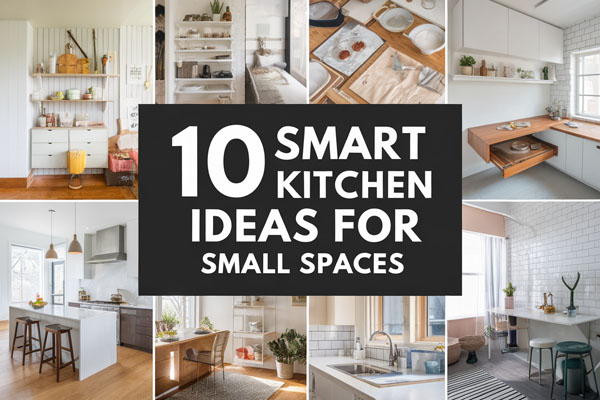
10 Small Square Kitchen Ideas for Smart Layouts
Square kitchens waste space faster than you think when the layout ignores corners and traffic flow. Most people blame the size, but the real issue usually comes down to how cabinets, appliances, and storage fight each other.
A small square kitchen can feel surprisingly efficient when every wall works with intention instead of just holding random stuff.
The good news is that square layouts are actually easier to optimize than narrow galley kitchens. You get symmetry, balanced walls, and clean lines to work with. You just have to use them smartly.
1. Wraparound Counter Layout (L-Shape in a Square)
Small square kitchens often leave one wall awkwardly underused, which creates dead space and awkward movement. Instead of pushing everything along a single wall, I prefer wrapping the counter along two connected walls. This instantly gives you more prep space without making the room feel boxed in.
I’ve used this setup in a tight rental kitchen, and it completely changed how I cooked. Suddenly I had room to chop, mix, and plate without doing that weird shuffle between sink and stove.
Why This Works
An L-shape in a square kitchen naturally creates a work triangle between sink, stove, and fridge. Movement becomes shorter and smoother, which matters a lot when you’re cooking daily. The corner becomes functional instead of wasted.
It also visually frames the space, giving your kitchen structure. That structure makes even a small room feel intentional.
How to Do It
- Install base cabinets along two adjoining walls
- Place the sink on one wall and the stove on the other to form a triangle
- Use the corner for a lazy Susan or pull-out system
- Keep upper cabinets lighter or shorter to avoid heaviness
Each step matters because flow beats decoration in a tight kitchen. If you don’t plan placement carefully, you’ll regret it every single day.
Style & Design Tips
Go for light cabinet colors like soft white, warm beige, or pale gray. Dark cabinetry can feel heavy in a square footprint.
Avoid bulky corner cabinets that swing awkwardly. Clean lines and simple hardware always look better in smaller kitchens.
Pro Tip or Budget Hack
If custom cabinets aren’t in the budget, use ready-made corner base cabinets and upgrade the hardware later. Swapping handles and adding under-cabinet lighting makes even budget units look upgraded.
2. One-Wall + Island Combo
Sometimes the smartest move is keeping everything on one wall and letting a small island do the heavy lifting. This works beautifully in square kitchens because you still maintain symmetry while gaining extra storage and seating.
I’ve seen people skip islands because they assume the room is too small. That’s usually wrong if you size it properly.
Why This Works
A centered island creates balance in a square layout. It becomes the anchor of the room instead of clutter along the walls.
It also adds prep space and casual seating without permanent construction.
How to Do It
- Keep cabinets and appliances on one main wall
- Choose a narrow island (24–30 inches deep)
- Leave at least 36 inches of clearance on all sides
- Add storage shelves on the island’s outer side
Clearance matters more than island size. If you can’t walk comfortably around it, it’s not worth it.
Style & Design Tips
Choose a contrasting island color for depth. A navy or muted green island under neutral cabinets looks sharp without overpowering the space.
Avoid oversized pendant lights that visually shrink the room. Smaller fixtures keep everything airy.
Pro Tip or Budget Hack
Use a rolling island instead of built-in cabinetry. You’ll save money and keep flexibility if you ever want to rearrange.
3. U-Shaped Compact Layout
When storage is your biggest complaint, a U-shape solves it fast. In a square kitchen, this layout hugs three walls and maximizes every inch.
I personally love U-shaped kitchens for serious cooking because everything stays within arm’s reach.
Why This Works
Three walls of cabinetry mean more storage and more countertop space. That reduces clutter, which instantly makes small spaces feel bigger.
It also keeps traffic outside the main cooking zone.
How to Do It
- Install base cabinets along three walls
- Keep upper cabinets lighter or glass-fronted
- Position the sink in the center wall
- Place stove and fridge on opposite sides
Spacing the appliances correctly prevents the cramped feeling people worry about.
Style & Design Tips
Use reflective backsplash tiles to bounce light around. Glossy subway tile works great here.
Avoid dark countertops unless the cabinets are very light. Too much contrast can chop up the space visually.
Pro Tip or Budget Hack
Skip upper cabinets on one wall and add open shelving instead. It lowers cost and prevents the room from feeling boxed in.
4. Corner Sink Strategy
Corners are usually wasted or awkward in square kitchens. Installing the sink in the corner changes that completely.
It sounds unusual, but it frees up long counter stretches on both sides.
Why This Works
Placing the sink in the corner uses space that’s normally dead. That gives you uninterrupted prep zones.
It also opens up wall space for windows or floating shelves.
How to Do It
- Install a corner sink base cabinet
- Add angled countertop pieces
- Place dishwasher directly beside the sink
- Keep upper cabinets minimal around that corner
Plumbing adjustments may cost a bit more, but the payoff in usable space is worth it.
Style & Design Tips
Choose a single-bowl sink to maximize washing space. A bulky double bowl can overwhelm the corner.
Keep the backsplash simple so the angled counter doesn’t feel chaotic.
Pro Tip or Budget Hack
If moving plumbing is expensive, fake the effect by using a small prep sink in the corner instead of relocating the main sink.
5. Floor-to-Ceiling Storage Wall
Vertical space often gets ignored in square kitchens. Extending cabinetry all the way up solves storage problems instantly.
I did this in a tiny apartment kitchen and it eliminated the need for extra shelves entirely.
Why This Works
Tall cabinetry draws the eye upward, making the ceiling feel higher. It also hides clutter behind doors instead of spreading it around the room.
You gain serious storage without increasing footprint.
How to Do It
- Install full-height cabinets on one wall
- Use upper sections for seasonal or rarely used items
- Keep lower cabinets for daily essentials
- Choose slim, flat-panel doors
Slim doors prevent the wall from feeling bulky.
Style & Design Tips
Use one consistent cabinet color from bottom to top. Mixing colors can break visual flow.
Add long vertical handles to emphasize height.
Pro Tip or Budget Hack
Install standard cabinets and add a simple top box above them. Crown molding can hide seams and make it look custom.
6. Peninsula Instead of Island
If a full island crowds the center, a peninsula offers similar benefits without blocking circulation.
It attaches to a wall or cabinet run, which saves floor space.
Why This Works
A peninsula creates separation between cooking and dining zones. It also provides extra counter space.
In a square kitchen, it adds structure without closing the room.
How to Do It
- Extend cabinetry out from one wall
- Keep depth around 24 inches
- Leave open space on three sides
- Add bar stools on the outer edge
Placement should allow easy entry and exit from the kitchen.
Style & Design Tips
Match the peninsula countertop to the main counter for cohesion. Consistency keeps the layout clean.
Avoid bulky supports underneath that block legroom.
Pro Tip or Budget Hack
Use standard base cabinets and top them with a slightly overhanging counter to create seating space.
7. Appliance Wall Consolidation
Appliances scattered across walls waste flow. Grouping them along one wall simplifies everything.
This works especially well in square layouts.
Why This Works
When the fridge, oven, and microwave share a wall, the remaining walls stay open for prep and storage.
It reduces visual clutter and improves movement.
How to Do It
- Create a dedicated appliance zone
- Install built-in or counter-depth fridge
- Stack microwave above oven if possible
- Keep small appliances stored away
Organization prevents that crowded countertop look.
Style & Design Tips
Panel-ready appliances blend beautifully with cabinets. It makes the wall look seamless.
Keep handles aligned for a clean finish.
Pro Tip or Budget Hack
Use a cabinet enclosure around standard appliances to mimic built-in style without premium pricing.
8. Two-Tone Cabinet Layout
All-white kitchens are safe, but two-tone cabinets add depth without crowding a small square space.
I’ve found this trick makes compact kitchens feel more designed and less basic.
Why This Works
Darker lower cabinets ground the room. Lighter uppers keep the space open.
It balances weight visually.
How to Do It
- Choose a neutral base like white or cream
- Paint lower cabinets a deeper shade
- Keep countertops light
- Use matching hardware throughout
Balance is key here.
Style & Design Tips
Soft greens, navy, or charcoal work great on lower cabinets. Avoid super trendy colors you might regret.
Keep backsplash subtle so the cabinets remain the focus.
Pro Tip or Budget Hack
Paint existing lower cabinets instead of replacing them. Good prep and quality paint make a huge difference.
9. Open Shelf Feature Wall
Upper cabinets can make square kitchens feel heavy. Replacing one section with open shelving lightens everything.
It’s not for everyone, but when styled properly, it looks amazing.
Why This Works
Open shelves create breathing room. They visually expand tight walls.
They also force you to stay organized, which is honestly not a bad thing.
How to Do It
- Remove upper cabinets from one wall
- Install sturdy floating shelves
- Keep daily dishes accessible
- Limit decor to a few intentional pieces
Less is more here.
Style & Design Tips
Use wood shelves for warmth against white walls. Avoid overcrowding with random decor.
Stick to coordinated dishware for a polished look.
Pro Tip or Budget Hack
Install budget floating brackets and stain simple wood planks yourself. It costs far less than custom shelving.
10. Hidden Storage Solutions
Clutter kills small square kitchens fast. Hidden storage keeps everything clean and functional.
You don’t need more cabinets, you need smarter ones.
Why This Works
Pull-out trays and drawer organizers maximize space you already have. That reduces countertop mess.
When surfaces stay clear, the kitchen automatically feels bigger.
How to Do It
- Add pull-out pantry drawers
- Install drawer dividers for utensils
- Use toe-kick drawers for flat items
- Add pull-out trash bins
Every small upgrade compounds over time.
Style & Design Tips
Keep interiors organized with matching bins. Chaos inside cabinets eventually spills out.
Choose soft-close hardware for smoother function.
Pro Tip or Budget Hack
Start with affordable drawer organizers before investing in full pull-out systems. Even simple dividers make a big impact.
Smart Planning Strategy for Small Square Kitchens
Layout decisions work best when they follow a simple foundation instead of random upgrades. Before buying cabinets or knocking down anything, measure the room carefully and map where plumbing, electrical outlets, and windows already exist. Moving those elements adds cost fast, so smart design works with them, not against them.
Start by identifying your biggest frustration. If counter space is the issue, prioritize layout first. If clutter drives you crazy, focus on vertical storage and drawer systems before worrying about cabinet color.
Traffic flow deserves serious attention. In a square kitchen, at least one clear pathway should stay open at all times. When someone opens the fridge, no one should feel trapped behind it.
Appliance scale matters more than people realize. Standard-sized appliances can overwhelm compact kitchens, so consider counter-depth refrigerators or slim dishwashers if space is tight. The goal is proportion, not cramming everything in.
Finally, plan for longevity. Trendy details look fun online, but layout mistakes last years. Choose structural improvements first, then layer style on top.
Common Mistakes to Avoid
Pushing all furniture and cabinetry against the walls sounds logical, but it often creates wasted center space. That middle area can serve as prep or storage if used wisely.
Oversized islands ruin circulation in square kitchens. If walking around feels tight, the island is too big, even if it looks stylish in photos.
Ignoring corners wastes valuable square footage. Lazy Susans, diagonal cabinets, or pull-out trays transform those awkward spots into useful storage.
Too many upper cabinets can make the room feel boxed in. Mixing closed storage with open shelving keeps visual weight balanced.
Poor lighting turns even well-designed layouts into frustrating spaces. Layer overhead, task, and under-cabinet lighting for better function.
Choosing dark finishes without enough natural or artificial light makes small spaces feel smaller. Contrast should feel intentional, not heavy.
Lighting and Ventilation Considerations
Lighting defines how functional your layout feels during everyday use. Overhead lights alone rarely provide enough brightness for chopping and cooking.
Install under-cabinet lighting to eliminate shadows on prep surfaces. It improves visibility and subtly enhances the overall look without major renovation.
Ventilation also affects comfort more than expected. In small square kitchens, steam and cooking smells linger quickly without proper airflow.
A quality range hood or strong exhaust fan keeps the air fresh. This small upgrade protects cabinets and prevents long-term wear from moisture buildup.
Storage Zoning for Better Organization
Random storage leads to constant frustration. Instead, divide your kitchen into clear zones based on how you cook.
Keep cooking utensils near the stove. Store plates and bowls near the dishwasher to make unloading easier.
Designate one cabinet or drawer for baking supplies. When similar items stay grouped, your workflow becomes smoother.
Upper shelves can hold less-used appliances, while lower drawers should handle daily essentials. Smart zoning reduces clutter without adding extra cabinets.
Material Selection for Durability
Compact kitchens get heavy daily use. Surfaces must handle constant wiping, heat, and spills.
Quartz countertops resist stains and scratches, making them ideal for tight cooking spaces. Laminate remains a budget-friendly option if installed properly.
Cabinet finishes should be easy to clean. Matte finishes hide fingerprints better than glossy surfaces in busy homes.
Backsplashes deserve attention as well. Simple tile patterns age better than overly intricate designs.
Maintenance and Long-Term Care
Small kitchens show mess faster than large ones. Regular maintenance keeps them feeling spacious.
Wipe down counters daily to prevent visual clutter. Even a few items left out can make the room look crowded.
Check cabinet hinges and drawer slides every few months. Tight hardware maintains smooth functionality.
Declutter seasonally. If you haven’t used an item in a year, consider storing it elsewhere.
Frequently Asked Questions
1. What is the best layout for a small square kitchen?
An L-shape or compact U-shape often works best because it maximizes wall space while maintaining good flow. The right choice depends on how much storage and prep space you need.
2. Can I add an island to a small square kitchen?
Yes, but only if you maintain at least 36 inches of clearance on all sides. A narrow or rolling island works better than a bulky built-in version.
3. How do I make a square kitchen look bigger?
Use light cabinet colors, reflective backsplashes, and consistent flooring. Keeping countertops clear also makes a noticeable difference.
4. Are open shelves practical in small kitchens?
They can be practical if you stay organized. Limiting shelves to one wall prevents the space from feeling cluttered.
5. Should cabinets go all the way to the ceiling?
In most cases, yes. Full-height cabinets increase storage and make ceilings appear taller.
6. What appliances are best for compact kitchens?
Counter-depth refrigerators, slim dishwashers, and built-in microwave units save space. Choose proportionally sized appliances that fit the room rather than dominate it.
Final Thoughts
Small square kitchens don’t need massive renovations to work better. They need smart layout decisions and intentional storage.
Focus on flow first, then style. Once movement feels natural, everything else falls into place.