10 Small U-Shaped Kitchen Ideas for Better Flow
Good kitchen flow depends more on layout discipline than square footage. A tight U-shaped kitchen can either feel efficient or completely suffocating depending on how you use those three walls. Smart choices make it practical instead of cramped.
Most people assume small means limited, but I’ve seen tiny kitchens outperform oversized ones simply because they were planned better.
The trick isn’t adding more stuff. It’s making every inch pull its weight without getting in your way.
1. Keep the Center Completely Clear
A crowded middle path ruins a U-shaped kitchen faster than anything else. When cabinets, stools, or random storage creep into the center, movement becomes awkward and cooking feels stressful. In a small layout, the middle zone is sacred space.
I once helped a friend remove a narrow rolling cart she thought was “helpful,” and the kitchen instantly felt twice as functional. That single change improved walking flow more than any décor upgrade. Sometimes better flow just means subtracting something.
Why This Works
U-shaped kitchens depend on an open center to create a natural work triangle. When that space stays clear, your steps between sink, stove, and fridge feel effortless instead of cramped. Clear pathways reduce friction in daily cooking.
Open middle space also prevents visual clutter. Even if cabinets are full, the room feels breathable when the center isn’t blocked.
How to Do It
- Measure your center clearance and aim for at least 36 inches if possible.
- Remove any standalone furniture that interrupts the walking path.
- Avoid bulky rugs that visually shrink the floor space.
- Keep trash bins tucked under counters or inside cabinets.
Each of these steps protects the movement zone that keeps everything functional.
Style & Design Tips
Use continuous flooring across the entire U to create visual flow. Avoid strong pattern breaks in the center because they visually divide the room. Simple flooring keeps the space feeling larger.
Skip decorative center tables in small U-shaped kitchens. They look cute online but feel annoying in real life.
Pro Tip or Budget Hack
If you need extra prep space, install a pull-out cutting board under the counter instead of adding furniture. It gives you surface area only when you need it. Then it disappears.
2. Extend Countertops to the Same Height on All Three Sides
Uneven counter heights can disrupt visual flow in small kitchens. When one side drops or steps down awkwardly, the space feels chopped up. Consistency makes everything look intentional.
I’ve seen older kitchens where one wall had a slightly lower surface for “baking,” but in a small U-shape it just broke the rhythm. Keeping the height uniform instantly modernizes the layout.
Why This Works
Matching counter heights create a continuous horizontal line. That line visually stretches the room and keeps your eyes moving smoothly around the space. Visual continuity equals perceived space.
Functionally, it also makes moving hot pans or cutting boards around easier. No awkward lifting or stepping over level changes.
How to Do It
- Standardize all counters at 36 inches unless you have a specific ergonomic reason.
- Replace mismatched base cabinets if needed.
- Use the same countertop material across all three walls.
- Avoid thick edge details on only one section.
Uniform surfaces support both design and practicality.
Style & Design Tips
Choose a light or mid-tone countertop for small kitchens. High-contrast counters can visually shrink the layout if the cabinets are dark. Keep finishes cohesive for flow.
Thin-profile countertops feel lighter than bulky stone slabs. That detail matters more in tight spaces.
Pro Tip or Budget Hack
If replacing everything isn’t realistic, use matching countertop overlays to create visual consistency. It’s cheaper than full demolition and still cleans up the look.
3. Use Open Shelving on One Wall Only
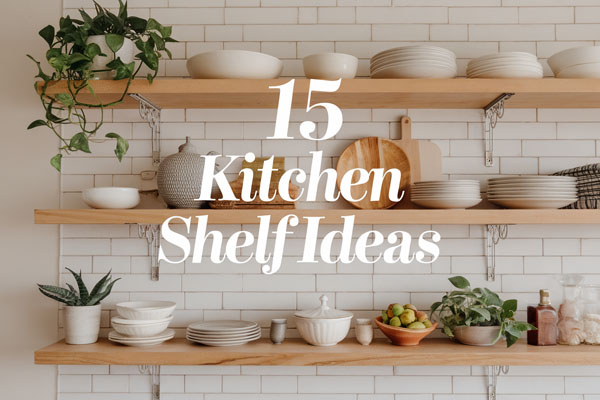
Upper cabinets on all three sides can make a small U-shaped kitchen feel boxed in. Heavy cabinetry closes the space visually. Swapping one wall for open shelving creates breathing room.
I’m not a fan of going fully open everywhere because it becomes high-maintenance. But one wall? That’s manageable and stylish.
Why This Works
Removing one row of upper cabinets reduces visual weight. Your eye gets a break, which makes the kitchen feel wider. Balance matters more than symmetry here.
Open shelving also encourages intentional storage. You display only what you actually use.
How to Do It
- Choose the shortest wall in the U for open shelves.
- Install sturdy brackets anchored into studs.
- Limit shelf depth to 10–12 inches.
- Keep items organized by color or function.
Controlled openness prevents clutter chaos.
Style & Design Tips
Stick to neutral dishware if you want a clean look. Too many mixed colors can feel messy fast. Use matching jars or baskets to keep it cohesive.
Avoid overfilling shelves. Negative space makes the design work.
Pro Tip or Budget Hack
You can remove cabinet doors instead of the entire cabinet box. It mimics open shelving without major cost. Paint the interior for a fresh finish.
4. Add Under-Cabinet Lighting
Small kitchens suffer when shadows collect under upper cabinets. Dark corners make the space feel tighter and less functional. Proper lighting instantly improves both flow and usability.
I added LED strips in my own kitchen once and wondered why I waited so long. It completely changed how the countertops looked at night.
Why This Works
Under-cabinet lighting removes harsh shadows along prep areas. Brighter counters make chopping and cooking safer and easier. Even lighting also visually expands walls.
Good lighting creates depth. Depth makes small kitchens feel larger.
How to Do It
- Choose LED strip lights for slim installation.
- Mount them toward the front underside of cabinets.
- Hide wiring behind cabinet trim.
- Use warm white for a cozy feel.
Front-mounted strips eliminate counter shadows effectively.
Style & Design Tips
Avoid overly cool white lighting. Blue-toned lights make kitchens feel clinical. Warm light keeps it inviting without feeling dim.
Use dimmers if possible for flexibility. That small upgrade makes a difference.
Pro Tip or Budget Hack
Battery-operated LED strips work well for renters. They’re inexpensive and don’t require hardwiring. You still get that glow effect.
5. Create a Clear Work Triangle
A cluttered or poorly planned work triangle turns cooking into unnecessary cardio. In a U-shaped layout, the fridge, stove, and sink should form a natural movement path. If one element sits too far off, the flow breaks.
I’ve seen small kitchens where the fridge sat outside the U entirely, and it completely ruined the rhythm. Keeping the three main points connected matters more than fancy finishes.
Why This Works
The work triangle reduces wasted steps. When each side of the triangle measures between 4 and 9 feet, movement feels efficient without being cramped. Balance keeps the kitchen functional.
Shorter travel distances mean smoother cooking sessions. That’s real-world usability.
How to Do It
- Position the sink in the center wall of the U if possible.
- Keep the stove on one side and the fridge on the other.
- Avoid placing tall cabinets between these points.
- Maintain clear counter landing space near each appliance.
Landing space prevents awkward juggling of hot pots or groceries.
Style & Design Tips
Avoid oversized appliances in small kitchens. Compact appliances maintain proportion. Overscaling ruins flow instantly.
Match appliance finishes for cohesion. Too many competing materials feel busy.
Pro Tip or Budget Hack
If relocating appliances isn’t possible, improve flow with rolling prep trays near the fridge. It shortens the functional distance without remodeling.
6. Use Light Cabinet Colors with a Darker Base
All-dark cabinetry in a small U-shaped kitchen can feel heavy. Lighter uppers paired with slightly darker base cabinets create visual balance. This subtle contrast grounds the room without shrinking it.
I’ve tried fully dark kitchens before, and while they look dramatic, they overwhelm tight layouts. Strategic contrast works better.
Why This Works
Light upper cabinets reflect more light. Darker base cabinets anchor the space. That combination prevents the kitchen from feeling top-heavy.
Visual weight distribution matters in tight rooms. Balanced tones feel calmer.
How to Do It
- Paint upper cabinets white, cream, or soft gray.
- Choose deeper tones like navy or charcoal for base cabinets.
- Use consistent hardware across both sections.
- Keep backsplash light to tie everything together.
Unified hardware keeps the two-tone look intentional.
Style & Design Tips
Avoid extreme contrast like black and bright white in very small kitchens. Soft contrast feels more cohesive. Subtle shifts create elegance.
Matte finishes tend to look more modern in small spaces.
Pro Tip or Budget Hack
Repaint just the upper cabinets first. If budget is tight, even that single change can lighten the room dramatically.
7. Install Corner Pull-Out Storage
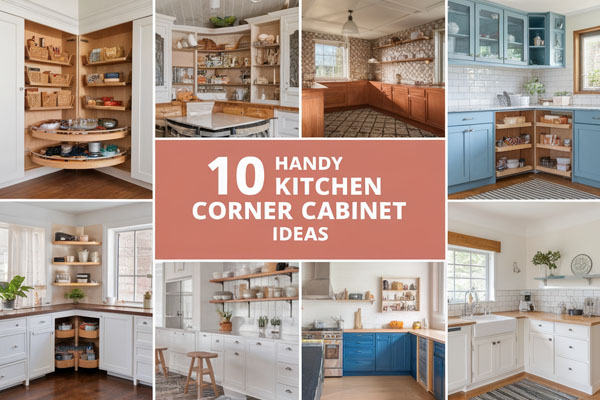
Corner cabinets in U-shaped kitchens often become black holes. Items disappear and rarely come back out. Smart pull-out systems fix that wasted space.
I once pulled out a corner cabinet I hadn’t touched in months and found three identical spice jars. That’s when I realized lazy storage causes clutter.
Why This Works
Pull-out systems maximize awkward angles. Instead of dead corners, you get accessible storage. Efficient storage reduces counter clutter.
When cabinets function properly, the kitchen feels bigger. Usable space beats hidden chaos.
How to Do It
- Install a lazy Susan or swing-out shelf.
- Measure cabinet interior dimensions carefully.
- Choose sturdy metal or wood systems.
- Keep heavier items on lower rotating shelves.
Proper weight distribution prevents sagging mechanisms.
Style & Design Tips
Keep corner storage for less frequently used items. Prime storage spots should stay near the main prep zone. Organization improves flow.
Label containers if needed to avoid overbuying duplicates.
Pro Tip or Budget Hack
If custom hardware feels expensive, install simple sliding baskets. They’re cheaper and still improve access dramatically.
8. Add a Slim Breakfast Ledge on One Side
Traditional islands rarely fit inside small U-shaped kitchens. A slim breakfast ledge attached to the outer edge works better. It adds functionality without blocking movement.
I’ve built one using a simple wood slab and brackets, and it changed how the kitchen felt. Suddenly there was seating without losing flow.
Why This Works
A narrow ledge keeps the center open while adding surface space. It functions as prep space, dining spot, or laptop station. Flexibility increases usability.
Keeping depth around 12–15 inches prevents crowding. Slim design is key.
How to Do It
- Attach a wood or quartz slab to the outer cabinet side.
- Use heavy-duty brackets for support.
- Keep stool size compact and backless.
- Leave at least 30 inches of clearance behind stools.
Clearance keeps traffic moving smoothly.
Style & Design Tips
Choose stools that tuck fully underneath. Bulky seating ruins the point of slim design. Keep colors cohesive with cabinetry.
Wood ledges warm up modern kitchens nicely.
Pro Tip or Budget Hack
Repurpose a solid wood shelf as your ledge. Sand and seal it yourself to save money. It’s surprisingly affordable.
9. Keep Upper Cabinets to the Ceiling
Short cabinets with wasted space above them collect dust and visually cut the room short. Extending cabinetry to the ceiling creates vertical flow. Height makes small kitchens feel taller.
I used to think ceiling-height cabinets felt too formal, but in small kitchens they just make sense. More storage and better lines.
Why This Works
Full-height cabinets draw the eye upward. Vertical emphasis creates the illusion of more space. It also eliminates dead zones.
Extra storage reduces countertop clutter. That directly improves flow.
How to Do It
- Add stacked cabinets above existing ones.
- Match paint color for seamless integration.
- Store seasonal or rarely used items up top.
- Use step stools stored inside cabinets.
Hidden stools keep things practical.
Style & Design Tips
Keep crown molding simple. Overly ornate trim feels heavy in small kitchens. Clean lines look modern and light.
Match ceiling color closely to cabinet color for smooth transitions.
Pro Tip or Budget Hack
If replacing cabinets isn’t feasible, add faux cabinet boxes above existing ones. Paint them to match and create the illusion of height.
10. Use a Continuous Backsplash Across All Three Walls
Breaking the backsplash material on each wall disrupts visual flow. A single material wrapping around the entire U unifies the space. Continuity creates calm.
I’ve seen patchwork backsplashes that made small kitchens feel chaotic. One material simply works better.
Why This Works
A continuous backsplash ties the three walls together. Your eye moves seamlessly without stopping at transitions. That uninterrupted line improves perceived width.
Simple materials also reduce visual noise. Clean backgrounds help small rooms breathe.
How to Do It
- Choose one tile or slab material.
- Install it across all three sides.
- Keep grout color close to tile tone.
- Avoid accent strips that break continuity.
Consistent grout prevents grid overload.
Style & Design Tips
Large-format tiles reduce grout lines. Fewer lines equal less visual clutter. Consider glossy finishes for light reflection.
Neutral tones age better than trendy patterns.
Pro Tip or Budget Hack
Peel-and-stick tiles can mimic continuous backsplash affordably. Just ensure proper surface prep for durability.
The Foundation: Planning a Small U-Shaped Kitchen for Long-Term Function
Good flow starts long before cabinets get installed. Layout decisions, appliance placement, and storage planning determine whether the space feels efficient or frustrating five years from now. Rushing this stage usually leads to expensive corrections later.
A small U-shaped kitchen works best when you define zones early. Prep, cooking, cleaning, and storage should each have clear boundaries, even if they overlap slightly. When every wall has a job, the room stops feeling random and starts feeling intentional.
Clear measurements are non-negotiable in tight layouts. Every inch affects movement, drawer clearance, and appliance doors. Guesswork causes friction you’ll feel daily.
Measure Before You Design
Accurate measurements prevent layout regrets. Measure wall-to-wall width, ceiling height, window placement, door swings, and appliance dimensions before choosing cabinets. Small errors compound quickly in compact kitchens.
Mark walking clearances directly on the floor with painter’s tape. Seeing it physically helps you understand how tight or comfortable the layout will feel.
Prioritize Workflow Over Trends
Trends fade, but functionality stays. Fancy open shelving or dramatic color schemes should never override storage logic and traffic flow. A small kitchen cannot afford style choices that reduce efficiency.
Choose finishes after confirming layout practicality. Design works best when it supports movement, not when it competes with it.
Plan Storage by Category
Group items by use frequency. Everyday tools belong within arm’s reach of prep zones, while seasonal items can move higher or deeper into cabinets. This keeps counters clear and minimizes unnecessary steps.
Smart categorization reduces visual clutter. When everything has a defined home, the room feels calmer.
Common Mistakes to Avoid in Small U-Shaped Kitchens
Even well-intentioned renovations go wrong when people ignore scale and flow. Small kitchens amplify design mistakes because there’s no room to hide them. Avoiding a few key errors can save both money and daily frustration.
These mistakes show up often in real homes. I’ve seen them repeatedly, and they almost always create the same problems.
Overcrowding the Layout
Adding too many cabinets or appliances makes the room feel boxed in. More storage sounds helpful, but excessive bulk limits movement. Breathing room matters more than sheer capacity.
Respect the center clearance. If the walkway feels tight during planning, it will feel worse during cooking.
Choosing Oversized Appliances
Full-depth refrigerators and large professional-style ranges dominate small kitchens. They eat up precious inches and disrupt balance. Compact models often look more proportional and perform just as well.
Always compare appliance dimensions carefully. Even two extra inches can affect drawer clearance.
Ignoring Lighting Layers
Relying only on one ceiling fixture creates harsh shadows. Poor lighting shrinks visual space and reduces functionality. Layered lighting makes the kitchen feel wider and more usable.
Combine overhead lighting with under-cabinet and task lighting. Balanced illumination supports both safety and comfort.
Breaking Visual Continuity
Switching materials on each wall creates fragmentation. Multiple backsplash styles or clashing cabinet finishes interrupt flow. Cohesion keeps the layout feeling larger.
Stick with unified finishes. Consistency builds visual calm.
Underestimating Storage Hardware
Skipping pull-outs and drawer organizers leads to messy cabinets. Deep, dark spaces quickly become chaotic. Smart hardware prevents wasted corners.
Invest in functional inserts where possible. Organization improves both usability and longevity.
Storage Optimization Strategies for Compact U-Shaped Layouts
Storage planning often determines whether a small U-shaped kitchen feels efficient or overwhelming. Maximizing vertical and hidden space reduces countertop clutter immediately. Less clutter directly improves flow.
Storage should feel accessible, not buried. If reaching something feels annoying, you’ll stop using it.
Use Deep Drawers Instead of Lower Cabinets
Deep drawers provide better visibility than traditional base cabinets. You can see everything from above instead of digging through stacks. That visibility reduces frustration.
Drawers also allow better organization with dividers. Order creates efficiency.
Incorporate Vertical Dividers
Vertical tray dividers store baking sheets and cutting boards upright. This prevents stacking and makes access easier. Small adjustments like this reduce chaos.
Dedicated slots eliminate awkward balancing. Everything stays in place.
Add Interior Door Storage
The inside of cabinet doors often goes unused. Slim racks for spices or cleaning supplies add extra capacity without affecting layout. Hidden storage supports cleaner counters.
Just ensure hinges can handle the added weight. Reinforcement may be necessary.
Utilize Toe-Kick Drawers
The space beneath base cabinets can hold shallow drawers. These work well for flat items like trays or placemats. Hidden storage improves efficiency without altering appearance.
Toe-kick drawers feel subtle but practical. They use space most people ignore.
Maintenance and Longevity Considerations
A well-designed small kitchen should age gracefully. Materials and layout decisions affect long-term performance. Durability matters just as much as appearance.
High-traffic kitchens experience wear quickly. Planning for that reduces repair costs.
Choose Durable Finishes
Quartz countertops resist staining better than many natural stones. Semi-gloss cabinet paint cleans easier than flat finishes. Practical materials preserve appearance longer.
Durability reduces maintenance stress. That supports daily flow.
Protect High-Impact Zones
Install backsplash protection behind cooking areas. Use heat-resistant materials near stoves. Targeted protection prevents costly damage.
Small preventive steps extend lifespan significantly.
Schedule Regular Organization Checks
Clutter creeps back slowly. Reassessing storage every few months keeps the layout efficient. Small resets prevent large overhauls.
Consistency maintains performance. Organization is ongoing, not one-time.
Frequently Asked Questions
What is the ideal clearance for a small U-shaped kitchen?
Aim for at least 36 inches of walkway space between opposing counters. This allows comfortable movement without crowding. More space improves usability if possible.
Is a U-shaped kitchen better than a galley kitchen for small homes?
It depends on room dimensions. U-shaped layouts offer more counter space, while galley kitchens work better in narrow rooms. Choose based on available width.
Can I add seating inside a small U-shaped kitchen?
Full islands rarely fit comfortably. A slim breakfast ledge or fold-down table works better. Keeping the center clear should remain the priority.
What cabinet color makes a small U-shaped kitchen look bigger?
Light upper cabinets reflect more light and expand visual space. Pairing them with slightly darker bases creates balance without heaviness. Avoid overly dark schemes in tight layouts.
How do I maximize corner storage in a U-shaped kitchen?
Install lazy Susans, swing-out shelves, or sliding baskets. These solutions prevent dead space and improve access. Proper hardware transforms awkward angles.
Are open shelves practical in small kitchens?
They can work if limited to one wall. Too many open shelves increase visual clutter and maintenance. Balance openness with closed storage for best results.
Final Thoughts
Small U-shaped kitchens don’t need massive renovations to work better. Thoughtful layout adjustments change the experience more than expensive materials ever will. Function first, style second.
When flow feels natural, cooking becomes easier and less stressful. Start with one improvement and build from there. I’ve learned that simplicity wins every time in tight spaces.