21 Stylish Living Room Table Ideas That Refresh Your Decor
My living room used to feel fine but never finished, like I forgot to put on earrings before leaving the house. The couch looked good, the rug behaved, but the table situation felt random and lazy.
Once I started treating living room tables as actual design tools, the whole space clicked fast. If your room feels close but not quite there, your tables probably cause the problem.
I learned this the hard way after rearranging pillows for the hundredth time and still feeling annoyed. Tables anchor a room, carry style, and quietly fix clutter issues when you choose them well.
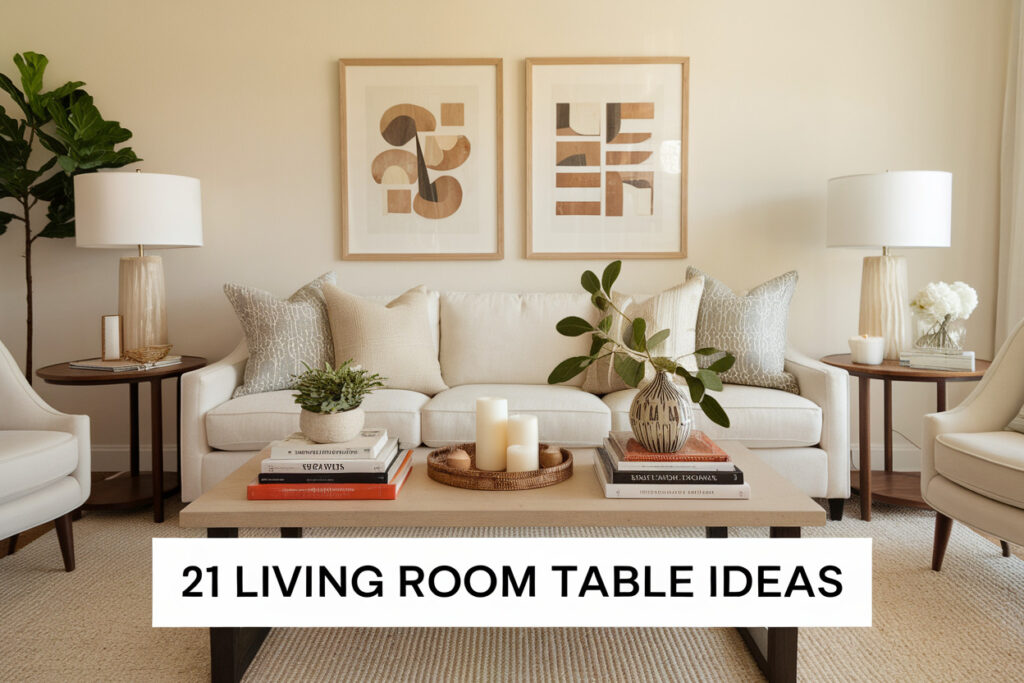
Let me walk you through ideas I actually like and would recommend to a friend without sugarcoating anything.
1. Layered Coffee Tables Instead of One Big Statement Piece
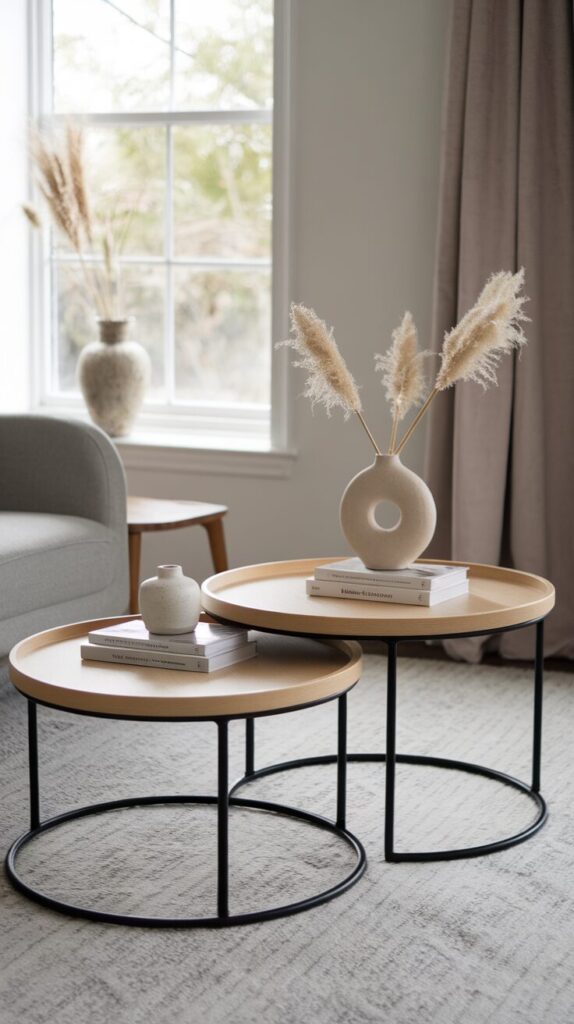
Most living rooms suffer from one oversized coffee table that dominates the space and limits flexibility. I used to think bigger meant better until I realized it blocked movement and swallowed the room.
Layered coffee tables give you surface space without visual heaviness and let the layout breathe.
This setup works especially well in smaller or awkward rooms where one solid table feels bossy. You get multiple levels, easier reach, and way more styling options without committing to a single massive shape.
I also love how it feels more relaxed and collected, not showroom stiff.
Why This Works
Layering breaks up visual weight and keeps the center of the room from looking flat. Different heights add depth and make the space feel intentional instead of accidental. You also gain flexibility when guests come over or when you want to rearrange things.
How to Do It
- Choose two or three tables with different heights but similar finishes.
- Keep at least one table lightweight enough to move easily.
- Overlap them slightly instead of lining them up perfectly.
Style & Design Tips
Stick to a tight color palette so the look stays calm and cohesive. Avoid mixing too many shapes unless you love visual chaos and cleaning stress. Round plus oval usually feels softer than square-on-square.
Pro Tip or Budget Hack
Use a small accent table you already own as a second layer instead of buying new. I once reused a bedroom side table and nobody noticed, which felt like a personal win.
2. An Upholstered Ottoman Table That Pulls Double Duty
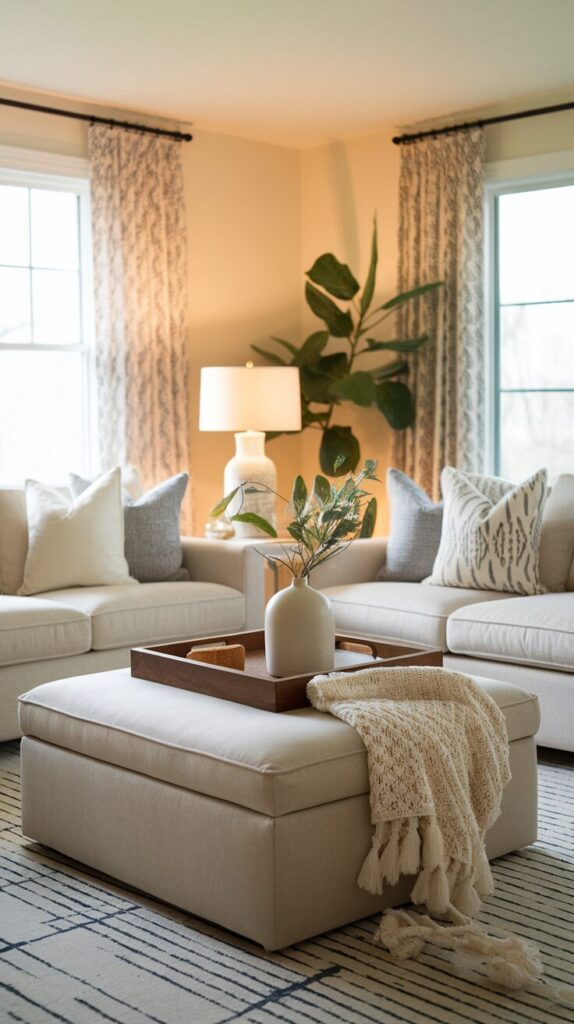
Hard tables look great but sometimes feel cold and uninviting. An upholstered ottoman table brings softness while still giving you function when styled right. I avoided these for years because I feared spills, then realized trays solve everything.
This option works best if you like cozy vibes and flexible seating. You can prop your feet up, slide it around, or use it as extra seating when people crowd the sofa. It feels relaxed without looking sloppy when you style it intentionally.
Why This Works
Soft textures balance out sharp lines from sofas and media units. Ottomans reduce visual hardness and make a living room feel more welcoming. They also adapt easily when your needs change.
How to Do It
- Choose a firm ottoman with a flat top.
- Add one large tray to anchor decor and drinks.
- Keep styling minimal so it stays functional.
Style & Design Tips
Go neutral if you want longevity, especially with kids or pets around. Avoid overly tufted styles if you hate crumbs hiding forever. Leather or performance fabric cleans easier than you expect.
Pro Tip or Budget Hack
Buy a basic ottoman and upgrade it with a custom tray instead of splurging on designer pieces. The tray does most of the visual work anyway.
3. A Sculptural Coffee Table That Acts Like Art
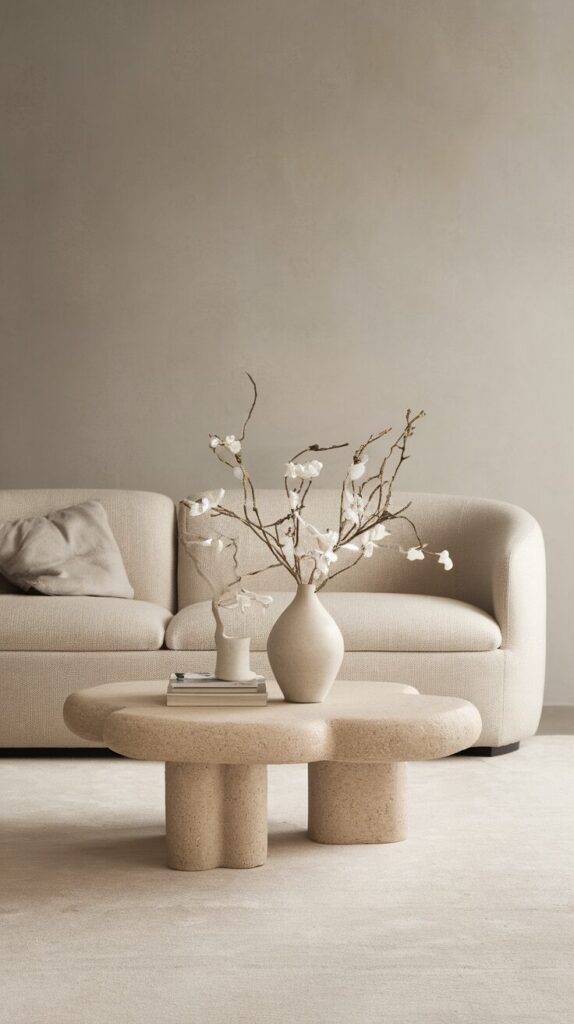
Some rooms need drama, not more storage. A sculptural coffee table instantly becomes the focal point and sets the tone for the entire living room. I love these when everything else feels safe and predictable.
This idea works best if you already keep clutter under control. A bold table demands breathing room and confidence, so it suits people who like design statements more than practicality. It turns the table into a conversation starter without saying a word.
Why This Works
Strong shapes anchor the room and create instant interest. Sculptural pieces add personality and stop the space from feeling generic. They also elevate simple furniture around them.
How to Do It
- Pick one standout shape or material.
- Keep surrounding furniture simple and low-key.
- Style with restraint so the table stays visible.
Style & Design Tips
Stone, concrete, or carved wood feels timeless and bold. Avoid pairing with overly patterned rugs that compete for attention. Let the table be the star, not part of a crowd.
Pro Tip or Budget Hack
Look for secondhand sculptural tables or unique bases you can top with glass. Vintage stores hide gems if you stay patient.
4. A Slim Console Table Behind the Sofa
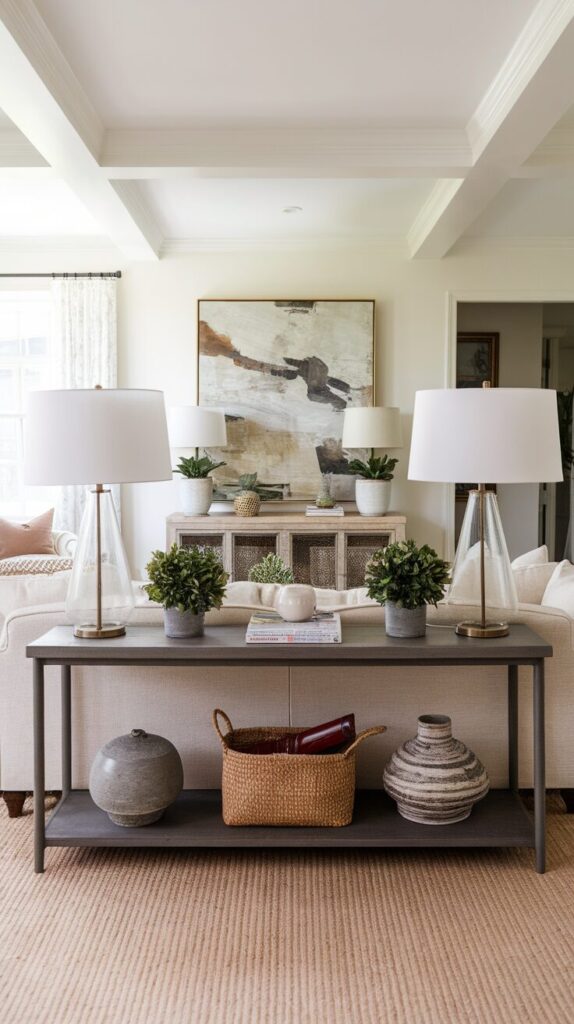
The space behind a sofa often turns into a wasted zone or a dumping ground. A slim console table fixes that instantly while adding structure and function. I added one years ago and never looked back.
This table gives you a spot for lamps, drinks, and decor without crowding seating. It also visually separates zones in open layouts and makes the room feel finished from every angle.
Why This Works
Console tables define space and add balance behind large furniture. They improve flow and prevent the sofa from floating awkwardly. You also gain useful surface space without cluttering walkways.
How to Do It
- Measure carefully to keep walkways clear.
- Choose a table slightly lower than the sofa back.
- Add lighting or storage baskets underneath.
Style & Design Tips
Match the console finish to your coffee table for cohesion. Avoid bulky legs that trip people constantly. Slim profiles always win here.
Pro Tip or Budget Hack
Use a narrow desk or entry table instead of buying something labeled “sofa table.” Labels inflate prices fast.
5. A Round Coffee Table to Soften Sharp Layouts
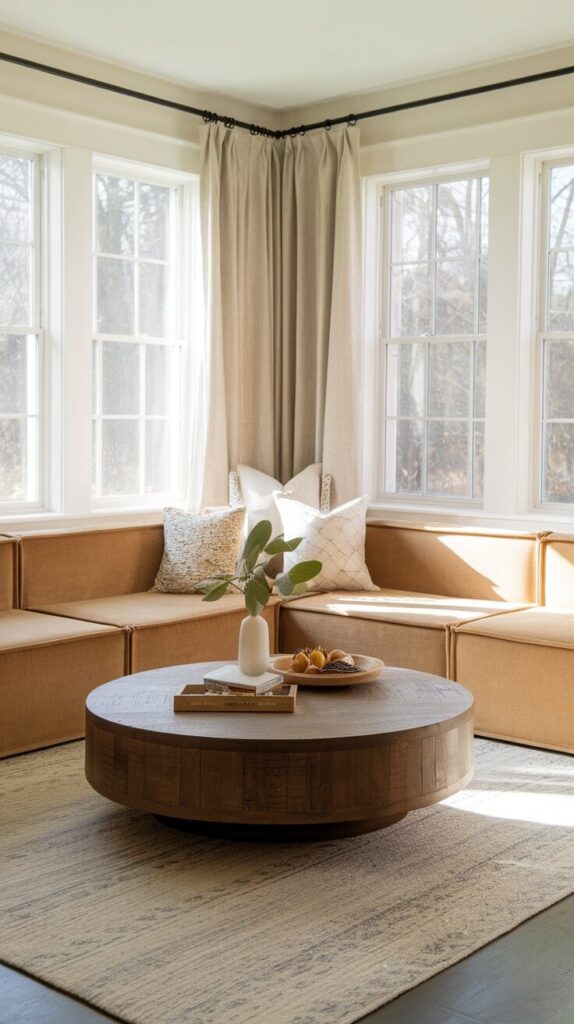
Rooms full of straight lines can feel stiff and unfriendly. A round coffee table instantly softens the layout and improves flow. I recommend this constantly for families or tight spaces.
The absence of corners helps movement and makes the room feel more open. It also pairs beautifully with sectionals or boxy sofas that need contrast.
Why This Works
Curves create visual relief and balance sharp furniture edges. Round tables improve circulation and reduce bump hazards. They also encourage conversation flow naturally.
How to Do It
- Choose the largest size that still allows walking space.
- Center it carefully within the seating area.
- Keep decor minimal and rounded.
Style & Design Tips
Wood warms things up, while glass keeps it airy. Avoid heavy bases that feel clunky. Lightness matters more than material.
Pro Tip or Budget Hack
Thrift stores often carry round pedestal tables you can refinish easily. A fresh stain changes everything.
6. A Nested Table Set for Flexible Living
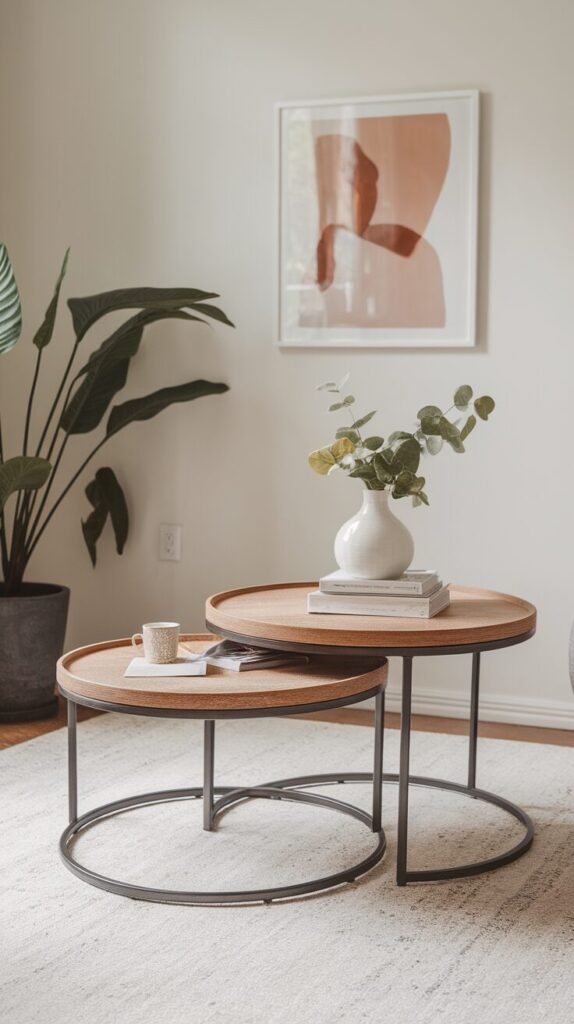
Some days need space, others need surfaces everywhere. Nested tables handle both without drama. I love how they adapt without forcing commitment.
This idea suits people who entertain or live small. You pull them apart when needed and tuck them away when done, which feels oddly satisfying.
Why This Works
Nesting keeps clutter minimal while offering flexibility. You gain multiple surfaces without permanent bulk. It also supports changing needs easily.
How to Do It
- Choose a cohesive set with varying heights.
- Use the largest as the main anchor.
- Pull out smaller ones only when needed.
Style & Design Tips
Stick to simple finishes so they disappear when stacked. Avoid mismatched styles that look accidental. Consistency keeps it intentional.
Pro Tip or Budget Hack
Buy sets with metal frames and swap tops later if tastes change. Frames last longer than trends.
7. A Storage Coffee Table That Hides the Chaos
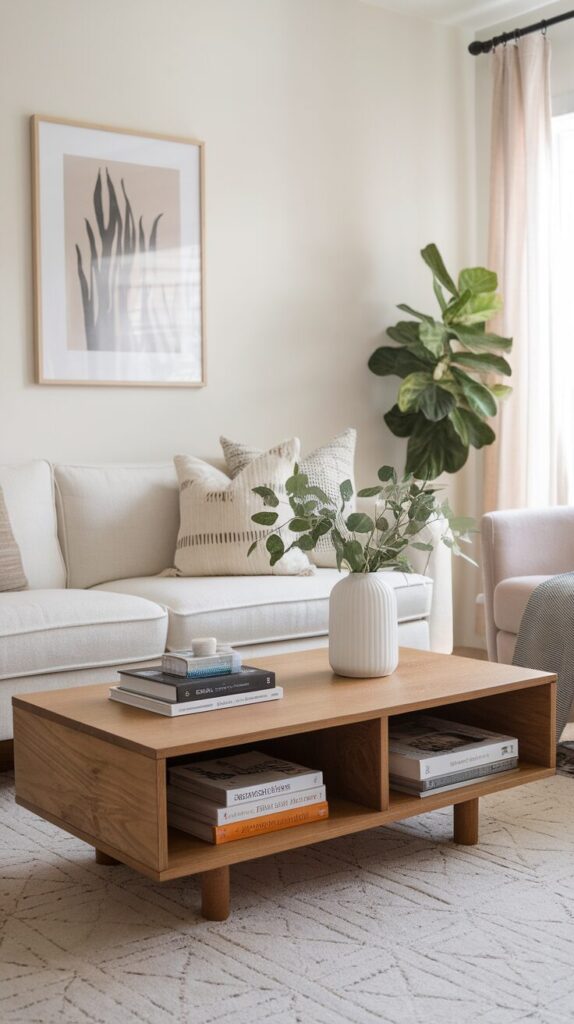
Let’s be honest, living rooms attract clutter like magnets. A storage coffee table saves your sanity without screaming “storage.” I rely on this more than I admit.
Hidden compartments keep remotes, books, and random items out of sight. The room instantly looks calmer without daily cleanup marathons.
Why This Works
Concealed storage reduces visual noise fast. It supports real life without sacrificing style. You maintain a clean look even on lazy days.
How to Do It
- Choose lift-top or drawer styles.
- Keep frequently used items inside.
- Avoid overstuffing to maintain ease.
Style & Design Tips
Wood finishes feel warmer than glossy options. Avoid chunky hardware that dates quickly. Simple always ages better.
Pro Tip or Budget Hack
Add baskets inside open storage tables to hide contents cheaply. Baskets fix almost everything IMO.
8. A Glass Coffee Table for Airy Rooms
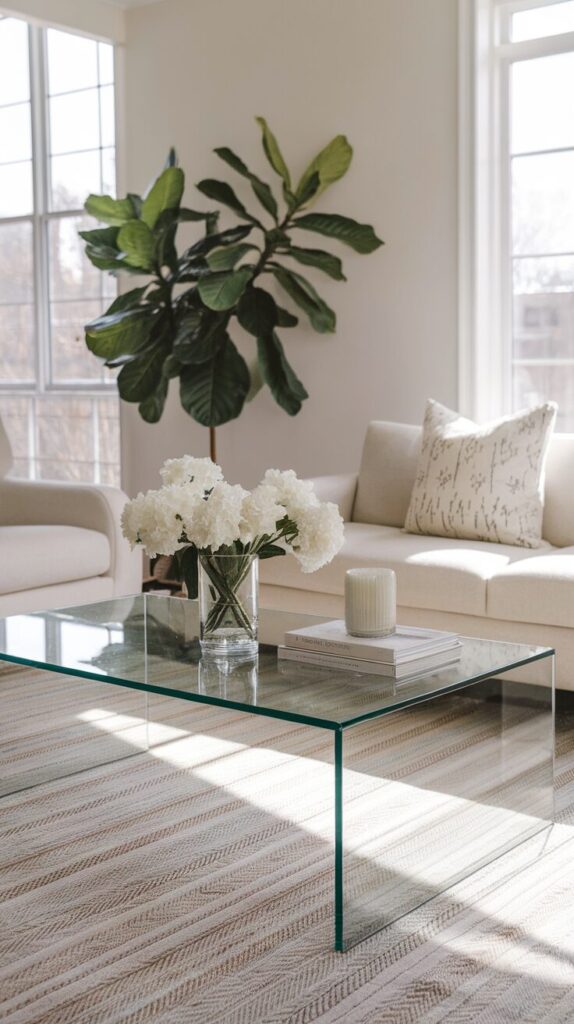
Heavy furniture can overwhelm smaller spaces. A glass coffee table visually disappears while still doing its job. I resisted these forever, then realized they solve space issues instantly.
This option works great when you want lightness without sacrificing function. It lets rugs and floors shine while keeping the layout open.
Why This Works
Glass reflects light and reduces visual weight. The room feels larger and less crowded. It also balances heavy sofas nicely.
How to Do It
- Choose tempered glass for safety.
- Keep styling minimal and intentional.
- Clean regularly to avoid fingerprints.
Style & Design Tips
Pair with warm textures so the room doesn’t feel cold. Avoid ornate bases that fight for attention. Let simplicity win.
Pro Tip or Budget Hack
Look for secondhand glass tables and replace scratched tops cheaply. Bases matter more than perfection.
9. A Vintage Trunk as a Coffee Table
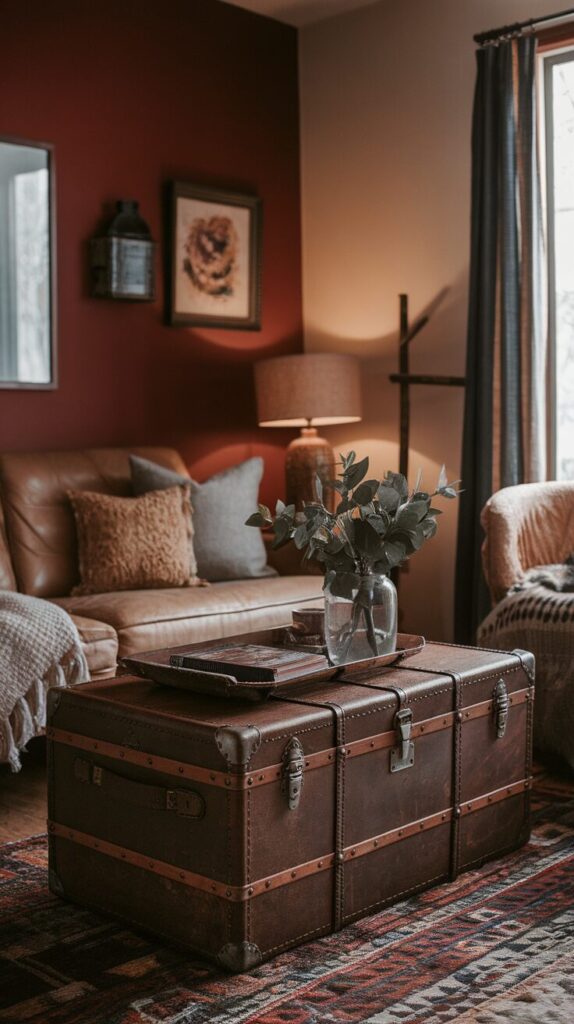
Nothing beats character like a well-worn trunk. I love these for adding soul and storage at once. They bring history without feeling precious.
A trunk works best in eclectic or cozy rooms where perfection feels boring. It hides blankets, games, and clutter while telling a story.
Why This Works
Vintage pieces add depth and personality instantly. Trunks offer storage without modern bulk. They ground the room with texture.
How to Do It
- Check height to match sofa seats.
- Add felt pads to protect floors.
- Style lightly on top.
Style & Design Tips
Leather and wood age beautifully over time. Avoid overly polished trunks that feel fake. Wear adds charm here.
Pro Tip or Budget Hack
Estate sales beat antique stores on pricing almost every time. Patience saves money.
10. A Minimalist Slab Table for Clean Spaces
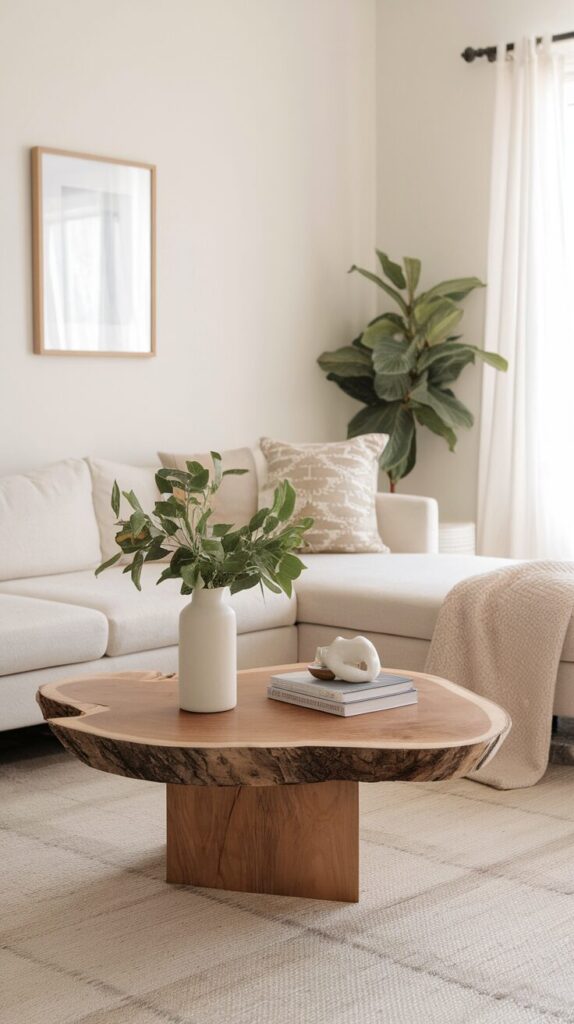
Some rooms crave restraint. A simple slab table delivers calm and order fast. I love these when decor already does enough talking.
This table style suits modern or neutral rooms. It keeps the focus on textures and layout instead of clutter.
Why This Works
Clean lines reduce visual stress. Slab tables ground the space without distraction. They support minimalist styling effortlessly.
How to Do It
- Choose solid materials with subtle grain.
- Keep decor sparse and intentional.
- Center carefully for balance.
Style & Design Tips
Natural wood beats high-gloss finishes here. Avoid oversized decor that breaks the calm. Less actually feels better.
Pro Tip or Budget Hack
Custom slab tables often cost less from local makers than big brands. Ask around locally.
11. A Pair of Matching Side Tables for Balance
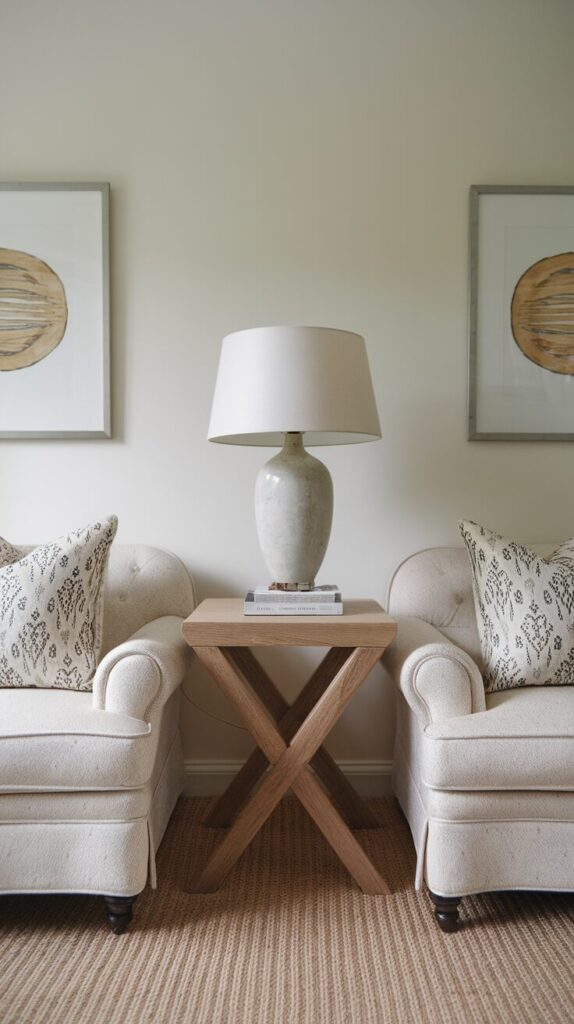
Symmetry brings instant calm. Matching side tables create order without effort. I use this trick constantly when rooms feel off.
This setup works well for sofas flanked by chairs or lamps. It makes the layout feel intentional and polished.
Why This Works
Symmetry signals balance and stability. Matching tables simplify decisions. The room feels cohesive quickly.
How to Do It
- Choose identical tables in size and finish.
- Place lamps or decor evenly.
- Keep spacing consistent.
Style & Design Tips
Avoid overly ornate designs unless the room supports it. Simple shapes feel timeless. Symmetry loves simplicity.
Pro Tip or Budget Hack
Buy one table and find a close match later. Slight variation still works.
12. A Live-Edge Table for Natural Texture
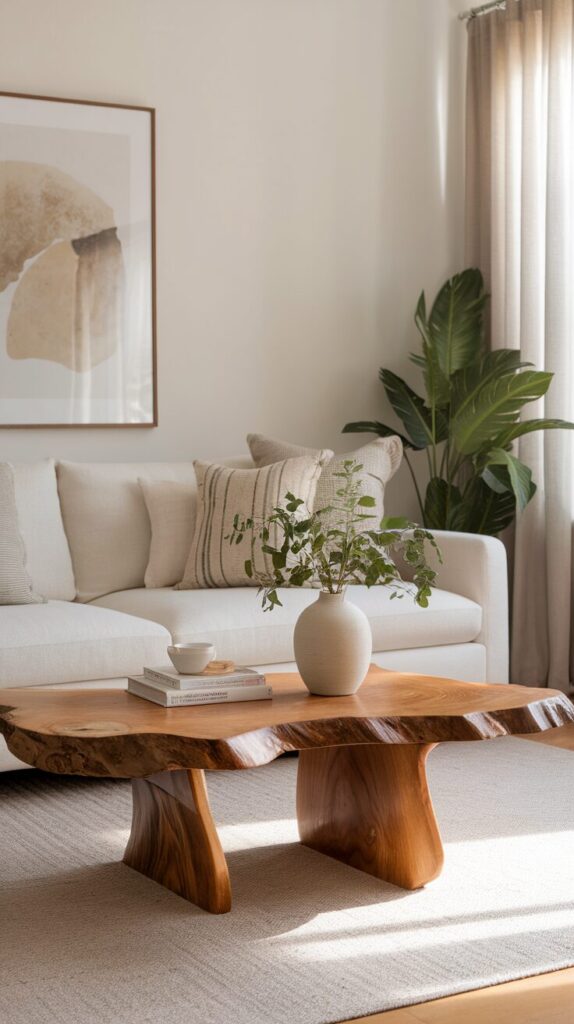
Live-edge tables bring nature indoors effortlessly. I love the organic feel they add without trying too hard. They soften modern spaces beautifully.
This idea suits rooms that feel too polished or sterile. The raw edges introduce warmth and authenticity.
Why This Works
Organic shapes contrast clean lines naturally. Wood grain adds texture and movement. The room feels grounded.
How to Do It
- Pair with simple seating.
- Keep decor minimal on top.
- Let the wood shine.
Style & Design Tips
Avoid overly rustic finishes unless intentional. Balance with modern elements. Contrast keeps it fresh.
Pro Tip or Budget Hack
Local woodworkers often sell offcuts perfect for small tables. Ask and save.
13. A Marble Table for Instant Elegance
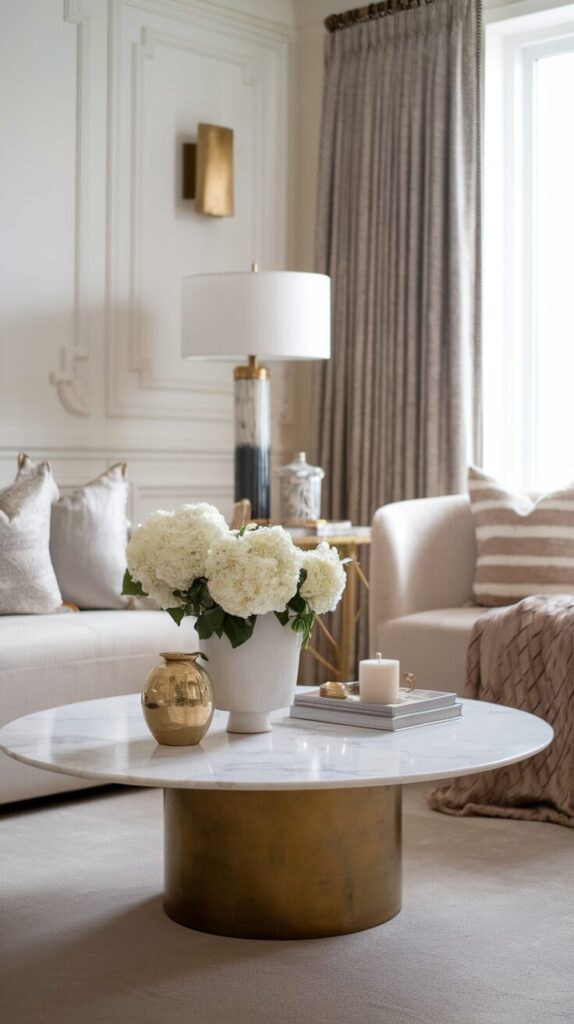
Marble brings luxury fast. I use it sparingly but love the effect. It elevates even simple rooms.
This table works best in rooms that need polish. It pairs well with neutral palettes.
Why This Works
Marble reflects light and feels timeless. It adds visual weight without clutter. The room feels refined.
How to Do It
- Choose sealed marble for durability.
- Style lightly with soft textures.
- Clean spills quickly.
Style & Design Tips
Warm metals pair beautifully with marble. Avoid busy patterns nearby. Let marble breathe.
Pro Tip or Budget Hack
Faux marble tables look convincing from a distance. Save real stone for later.
14. A Two-Tier Coffee Table for Practical Styling
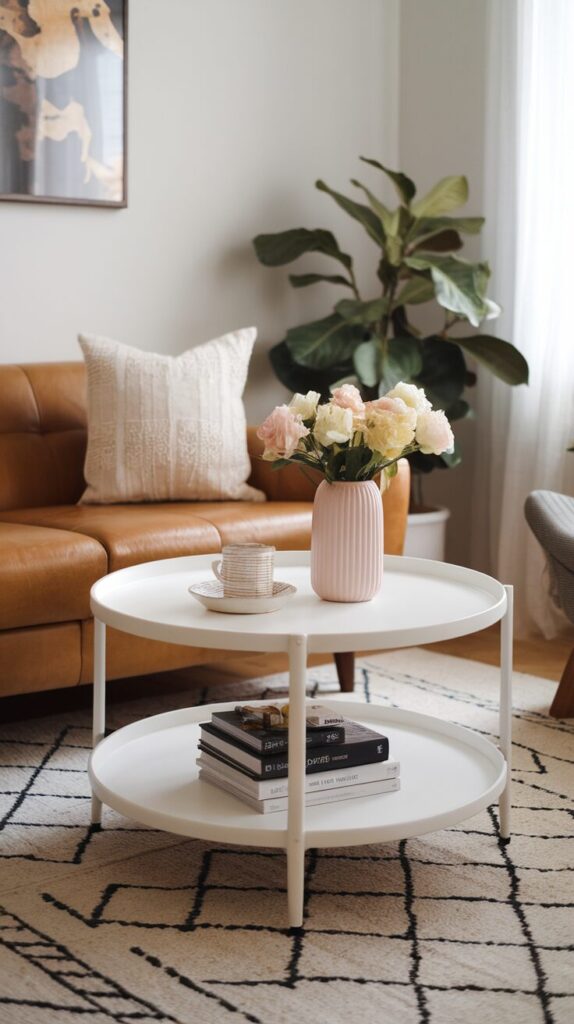
Single surfaces limit options. Two-tier tables give you space to style and store. I love the flexibility.
This option suits people who like decor but hate clutter. You get balance and function.
Why This Works
Multiple levels separate function from display. The room feels organized. Styling stays intentional.
How to Do It
- Use top for decor.
- Store books or baskets below.
- Keep lower tier tidy.
Style & Design Tips
Avoid overcrowding both levels. Leave breathing room. Negative space matters.
Pro Tip or Budget Hack
Add a shelf to an existing table with brackets. DIY saves money.
15. A C-Shaped Table for Everyday Convenience
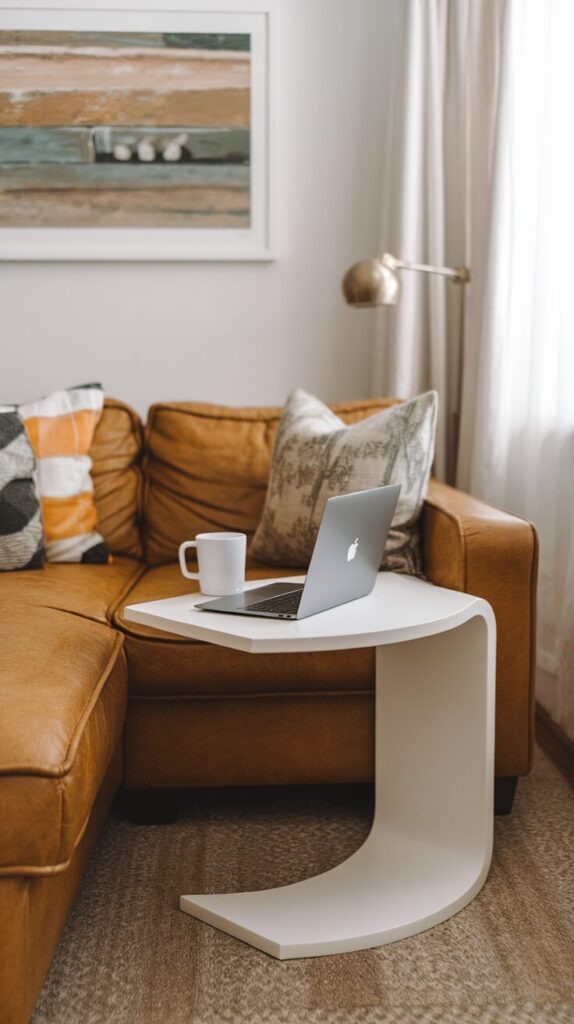
C-shaped tables feel underrated. I use mine constantly for coffee and laptops. They slide in perfectly.
This idea suits casual living and small spaces. It supports real life easily.
Why This Works
The shape hugs seating naturally. You gain surface space without bulk. It adapts fast.
How to Do It
- Slide under sofa or chair.
- Keep height aligned with arms.
- Use daily.
Style & Design Tips
Metal frames feel light and modern. Avoid flimsy builds. Stability matters.
Pro Tip or Budget Hack
Buy one quality piece instead of multiple cheap ones. It lasts longer.
16. A Drum Table for Bold Texture
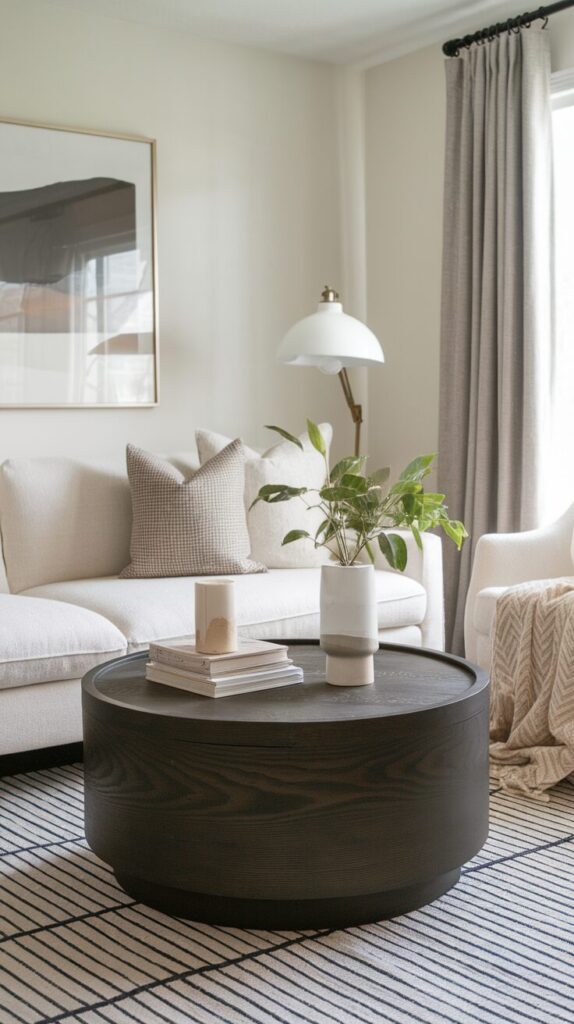
Drum tables add presence. I love them in neutral rooms that need grounding. They feel solid and intentional.
This table suits minimal decor with strong materials. It anchors the space visually.
Why This Works
Solid forms create stability. Texture adds interest without clutter. The room feels grounded.
How to Do It
- Center carefully.
- Style lightly.
- Balance with soft elements.
Style & Design Tips
Wood or metal drums age well. Avoid overly decorative styles. Weight equals impact.
Pro Tip or Budget Hack
Garden stools double as drum tables indoors. FYI they cost less.
17. A Cluster of Small Accent Tables
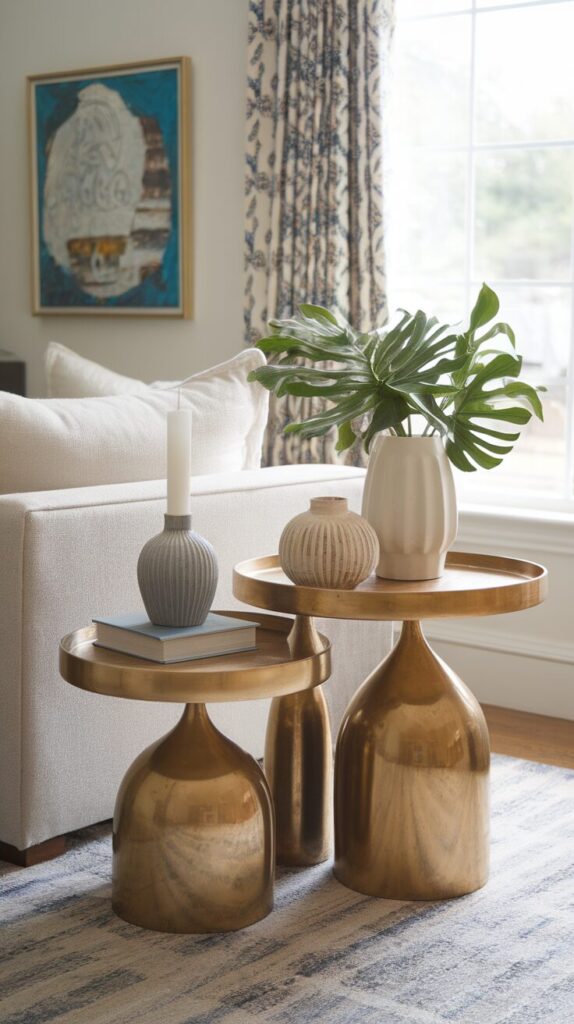
One table doesn’t always cut it. A cluster adds flexibility and style. I love how casual this feels.
This idea works well for relaxed spaces. You move tables as needed.
Why This Works
Clusters adapt easily. They support multiple uses. The room feels dynamic.
How to Do It
- Choose varied heights.
- Keep finishes consistent.
- Spread thoughtfully.
Style & Design Tips
Avoid overcrowding. Let each piece breathe. Balance keeps it chic.
Pro Tip or Budget Hack
Mix thrifted tables with one new piece. Blend carefully.
18. A Concrete Table for Modern Edge
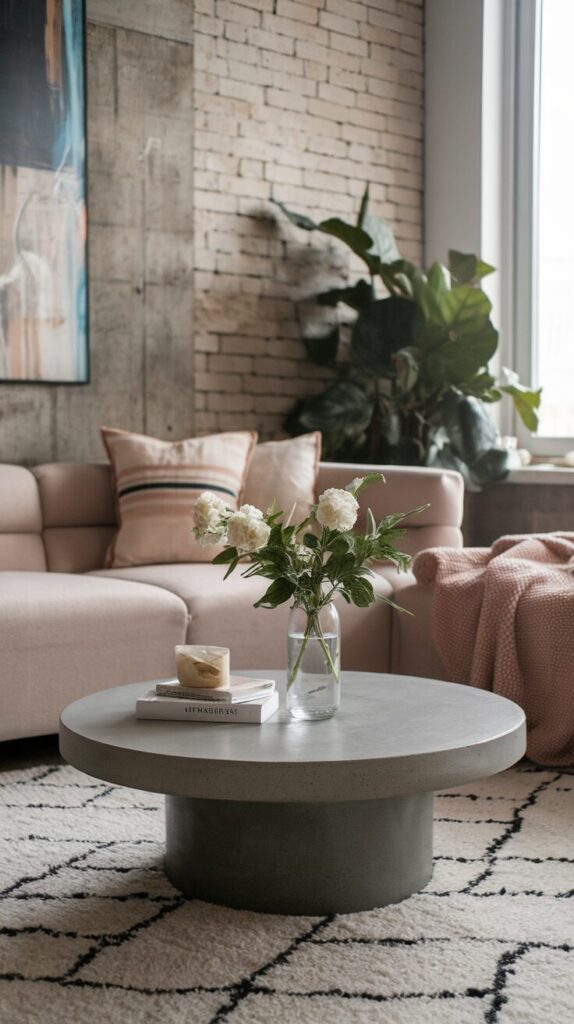
Concrete tables feel bold and grounded. I use them sparingly but love the contrast. They add edge fast.
This suits modern or industrial rooms. It balances soft furnishings well.
Why This Works
Concrete adds weight and texture. It grounds light spaces. The room feels intentional.
How to Do It
- Pair with soft textiles.
- Keep decor minimal.
- Protect floors.
Style & Design Tips
Avoid pairing with too many hard surfaces. Balance matters. Soft plus hard wins.
Pro Tip or Budget Hack
Concrete-look finishes mimic the real thing cheaply. Nobody notices.
19. A Mirrored Table for Light Reflection
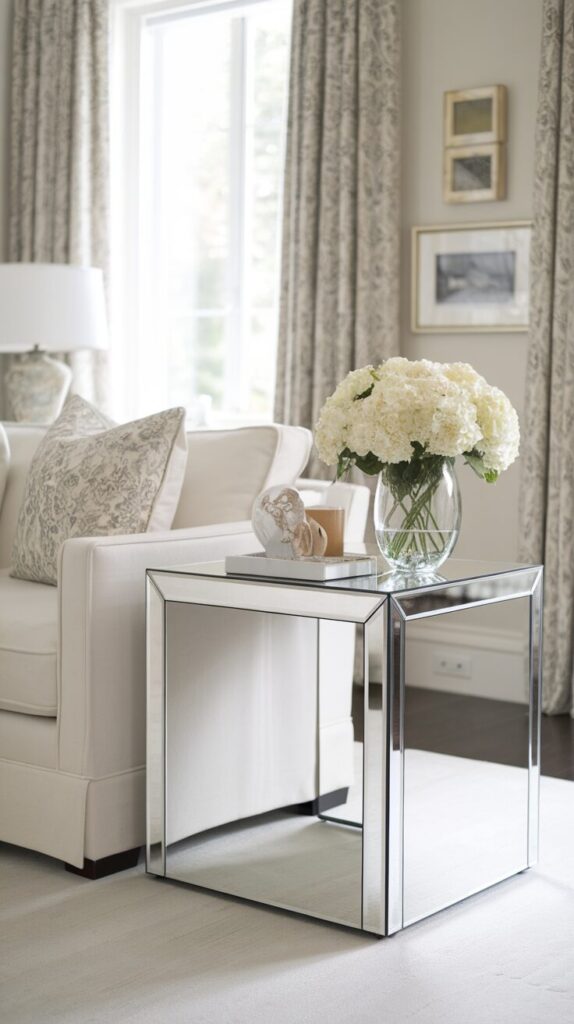
Mirrored tables bounce light beautifully. I love them in darker rooms. They brighten spaces quietly.
This idea works when you need sparkle without clutter. It feels glamorous but subtle.
Why This Works
Mirrors reflect light and space. The room feels larger. Visual weight decreases.
How to Do It
- Keep surfaces clean.
- Style minimally.
- Place near light sources.
Style & Design Tips
Avoid pairing with busy decor. Let reflections work. Restraint matters.
Pro Tip or Budget Hack
Use mirrored trays on tables for similar effect. Cheaper and flexible.
20. A Rustic Wood Table for Warmth
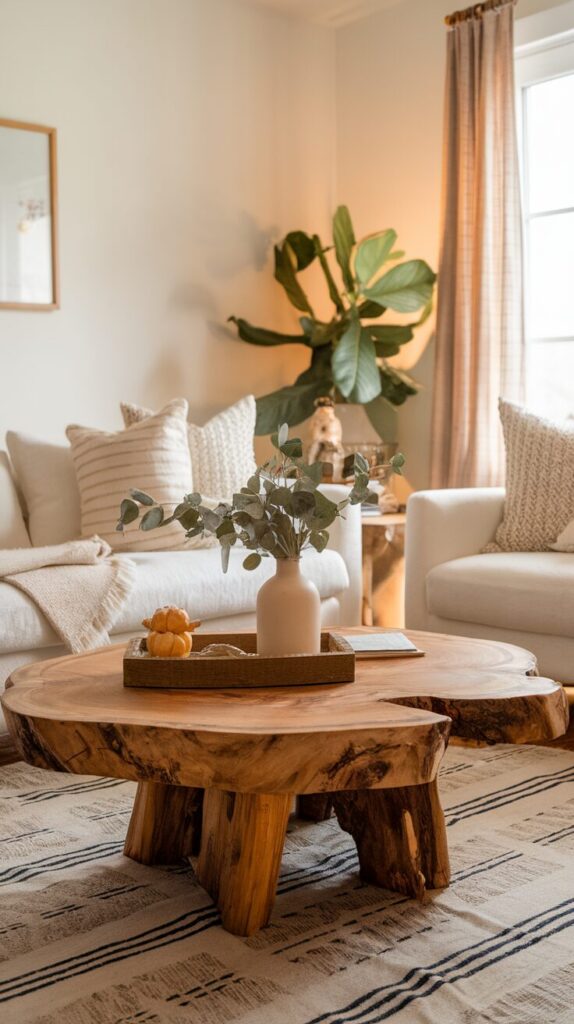
Rustic tables bring comfort instantly. I love their lived-in feel. They make rooms feel human.
This suits cozy or farmhouse styles. It adds warmth fast.
Why This Works
Wood texture adds soul. Imperfections feel authentic. The room relaxes.
How to Do It
- Pair with soft fabrics.
- Avoid over-styling.
- Let wear show.
Style & Design Tips
Natural finishes age best. Avoid fake distressing. Real wear wins.
Pro Tip or Budget Hack
Refinish old tables yourself. Sanding changes everything.
21. A Statement Side Table That Pops
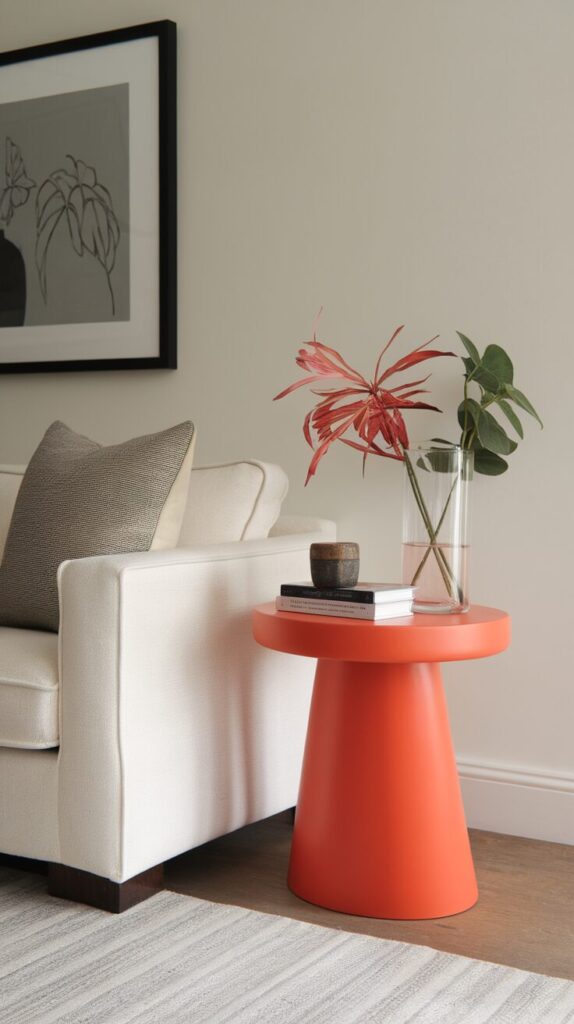
Side tables deserve attention too. A bold side table adds personality. I love using color or shape here.
This works when the rest of the room stays neutral. The pop feels intentional.
Why This Works
Small statements feel safe. You add interest without overload. The room feels curated.
How to Do It
- Choose one bold element.
- Keep nearby decor simple.
- Balance carefully.
Style & Design Tips
Avoid matching bold pieces nearby. One statement works best. Let it shine solo.
Pro Tip or Budget Hack
Paint a basic table for custom color. DIY beats buying new.
Living Room Table Styling Strategy: The Foundation Before You Buy Anything
Most people shop for a new table before they understand what their living room actually needs. I used to do that too, and I ended up with beautiful pieces that solved nothing. You need a simple strategy before you spend money, or you will repeat the same frustration in a prettier form.
Start by identifying the main purpose of your living room. Decide whether you use it for entertaining, lounging, working, or all three, because that decision shapes your table choices instantly. When you match your tables to real daily habits, the room starts working for you instead of against you.
Next, measure your seating layout carefully and map out walking paths. Keep at least 16–18 inches between sofas and coffee tables so people can move comfortably. Proper spacing improves flow and prevents the room from feeling cramped, even if your furniture stays the same size.
Finally, define your visual anchor before adding secondary tables. Choose one main focal table, then support it with side or accent pieces that complement rather than compete. This layered approach creates structure, balance, and long-term flexibility.
How to Choose the Right Size and Proportion Every Time
Proportion decides whether a room feels polished or awkward. I see gorgeous tables look completely wrong simply because they sit too small or too bulky for the seating around them. Size matters more than style in most living rooms.
Your coffee table should measure roughly two-thirds the length of your sofa. That ratio keeps things balanced without overwhelming the space. When you follow this guideline, your layout instantly looks intentional.
Height matters just as much as length. Keep your coffee table within 1–2 inches of your sofa seat height for the most natural look and comfort. When tables sit too high or too low, the room feels slightly “off” even if nobody can explain why.
Side tables should sit level with or slightly below sofa arms. This alignment keeps lamps, drinks, and decor within easy reach while maintaining visual harmony. When proportions feel right, the entire room relaxes.
Material Selection Guide: What Actually Holds Up Over Time
Not every trendy material survives daily life. I learned this after scratching a delicate finish within weeks because I prioritized aesthetics over durability. You need to match materials to your lifestyle, not just your Pinterest board.
Solid wood handles everyday wear beautifully and ages with character. Glass keeps things airy but demands regular cleaning and careful placement. Metal adds structure and edge but can feel cold without warm accents.
Stone and marble elevate the room instantly but require sealing and mindful maintenance. Upholstered pieces offer comfort but need performance fabric if you entertain often. When you think long term, you save money and frustration.
Common Mistakes to Avoid When Styling Living Room Tables
Many people overcrowd their tables with decor and then wonder why the room feels chaotic. I see trays stacked on books stacked on candles stacked on more decor, and the surface loses function completely. Leave breathing room so the table can actually serve its purpose.
Avoid mixing too many competing finishes in one small area. When you combine chrome, brass, matte black, rustic wood, and marble in one seating zone, the eye feels confused. Stick to two or three finishes max to maintain cohesion.
Do not ignore scale when layering decor. Oversized vases swallow small tables, while tiny objects look lost on large surfaces. Choose decor that feels proportional to the table size.
Never block natural movement with poorly placed tables. I always walk through the room mentally before finalizing placement. If you bump into edges daily, you will resent the furniture no matter how stylish it looks.
Styling Formula: A Simple Rule for Balanced Table Decor
You do not need a design degree to style tables well. I follow a simple three-element formula that keeps everything balanced and practical. It works almost every time without overthinking.
Start with one grounding element like a tray or stack of books. Add a vertical piece such as a vase, lamp, or sculpture to create height. Finish with one organic or soft element like greenery or a textured object.
Keep odd numbers whenever possible for visual interest. I also rotate decor seasonally instead of overhauling everything at once. Small swaps refresh the look without blowing the budget.
FAQ: Living Room Table Design & Styling
How far should a coffee table sit from the sofa?
Keep about 16–18 inches between the sofa and the coffee table. This distance allows comfortable movement while keeping drinks and decor within reach. Proper spacing improves both function and flow.
Can I mix different table styles in one living room?
Yes, but keep finishes or shapes consistent to avoid chaos. Pair different silhouettes with similar materials for cohesion. Intentional contrast feels stylish, random contrast feels messy.
What shape works best in a small living room?
Round or oval tables usually work best in small spaces. Curved edges improve movement and reduce visual bulk. They also make tight layouts feel softer.
Should my side tables match my coffee table?
They do not need to match exactly, but they should relate in tone or material. Shared finishes create harmony even if shapes differ. Consistency keeps the room cohesive.
How do I make my coffee table look expensive?
Use fewer, higher-impact pieces instead of clutter. Add one sculptural object, a quality tray, and a well-styled book stack. Thoughtful restraint often looks more expensive than over-styling.
How often should I update table decor?
I rotate small accents seasonally or whenever the room feels stale. You do not need new furniture to refresh a space. Simple swaps keep things feeling intentional and fresh without major spending.
Final Thoughts
Living room tables shape how a space feels way more than people realize. You don’t need all these ideas, and honestly you shouldn’t try them at once. Pick one that solves your biggest annoyance and start there.
I always tweak one table at a time and let the room settle. Small changes shift the whole vibe faster than full makeovers.