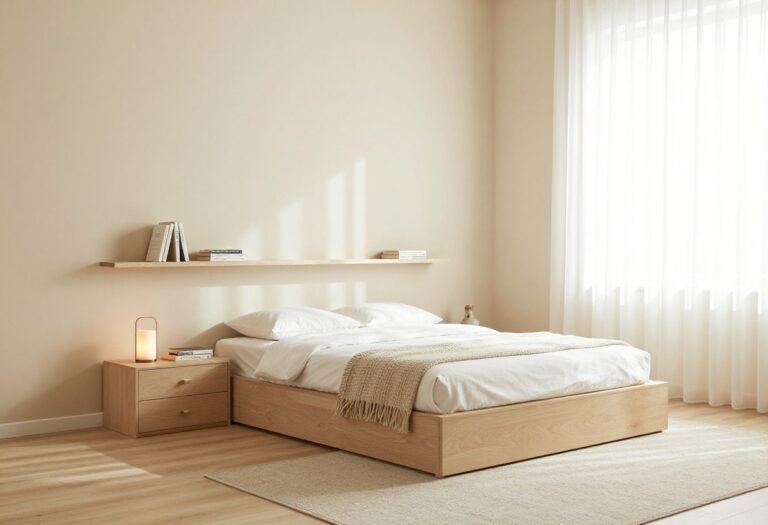
11 Two Kids Bedroom Ideas for Small Rooms With Split Zones
Sharing a bedroom can be a wonderful experience for siblings, but in a small room, it often feels like a challenge. The key is creating distinct zones that give each child a sense of ownership while keeping the space cohesive and clutter-free.
With a little planning, you can design a room that feels twice as big and twice as personal.
These 11 ideas focus on smart splits, clever storage, and stylish touches that work for real families.
1. Bunk Beds With a Built-In Room Divider
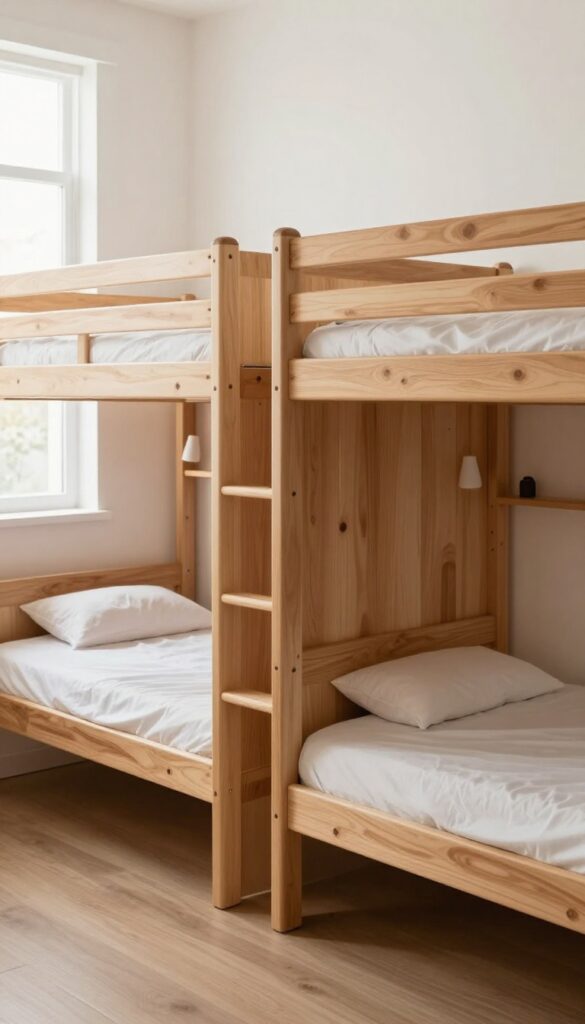
Bunk beds are a go-to for small shared rooms, but they can feel a bit exposed when both kids are awake and wanting their own space. Adding a built-in room divider—like a partial wall, tall headboard, or even a floor-to-ceiling panel—gives each child a defined zone without sacrificing the open floor plan. It's a simple structural tweak that makes the room feel bigger and more personal at the same time.
Why It Works
The divider creates visual separation so each kid has a sense of ownership over their side, which cuts down on bickering. It also doubles as a surface for shelves or hooks, adding storage without taking up extra square footage.
Best For
Siblings with a big age gap or different sleep schedules, since the divider blocks light and noise from the other side. Also great for rooms where you want to keep a playful vibe but still give each child privacy.
Styling Tip
Choose a divider that matches the bed frame's finish—white for a clean look, or wood tones for warmth. Add a small reading light on each side to make the zones feel cozy and functional.
2. Loft Beds Over Separate Study Nooks
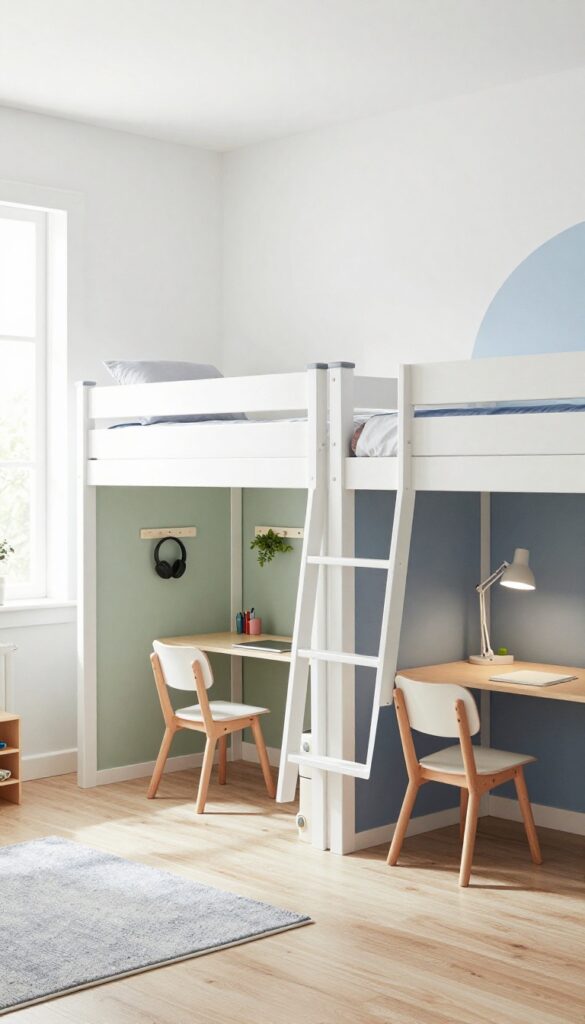
Imagine walking into a room where each bed seems to float above its own little workstation. That's the magic of loft beds paired with individual study nooks. By raising both beds, you reclaim precious floor space and give each child a dedicated spot for homework, drawing, or quiet reading.
The vertical layout keeps the room feeling open and airy, even when square footage is tight.
Why It Works
Loft beds are a classic space-saving solution, but adding separate desks underneath takes it to the next level. Each child gets their own territory without needing extra square footage. The raised beds also free up the center of the room for play or movement, making the whole space feel larger and less cluttered.
Best For
This setup is ideal for siblings close in age who need their own study areas but share a small room. It works especially well in rooms with higher ceilings, where loft beds feel comfortable and not too cramped. If your kids have different homework schedules or just need personal space, this layout gives them both.
Styling Tip
Paint each study nook a different accent color to personalize the zones—maybe soft sage for one and dusty blue for the other. Add a small peg rail above each desk for hanging headphones, art supplies, or a tiny plant. Use cord organizers to keep chargers tidy, and install a clip-on lamp to save desk space.
3. Color-Coded Zones With Paint or Wallpaper
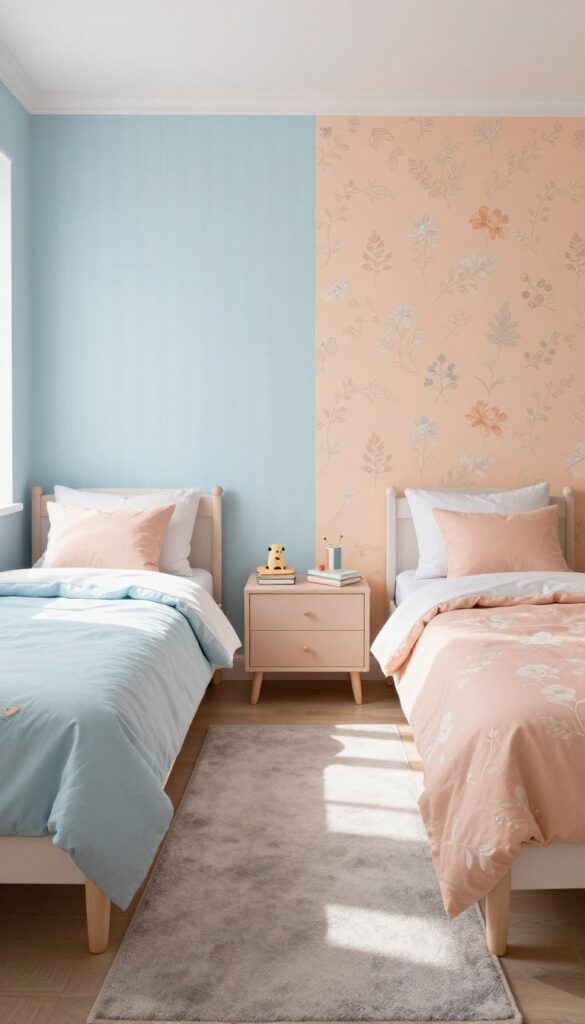
A shared bedroom doesn’t have to feel like one big compromise. By painting or wallpapering each child’s side in a distinct color or pattern, you give them their own visual territory without adding a single piece of furniture. A diagonal split down the middle or a bold central accent wall makes the divide feel intentional—like a design choice, not an afterthought.
It’s a simple, budget-friendly way to reduce arguments over space and let each personality shine.
Why It Works
Color-coding creates clear boundaries in a small room, so each child knows exactly where their zone starts and ends. It also tricks the eye into seeing two separate areas, making the room feel larger and more organized. Plus, you can update one side without redoing the whole room as tastes change.
Best For
Siblings with different color preferences or ages, especially in rooms where furniture alone can’t define the split. Works great for rectangular rooms where a straight or diagonal line can run from wall to wall.
Styling Tip
Keep the shared floor neutral—like a soft gray or beige rug—so the walls do the talking. Use the same trim color throughout to tie the two halves together. If using wallpaper, pick patterns from the same collection for a cohesive look.
4. Shared Wall-Mounted Shelving With Personal Bins
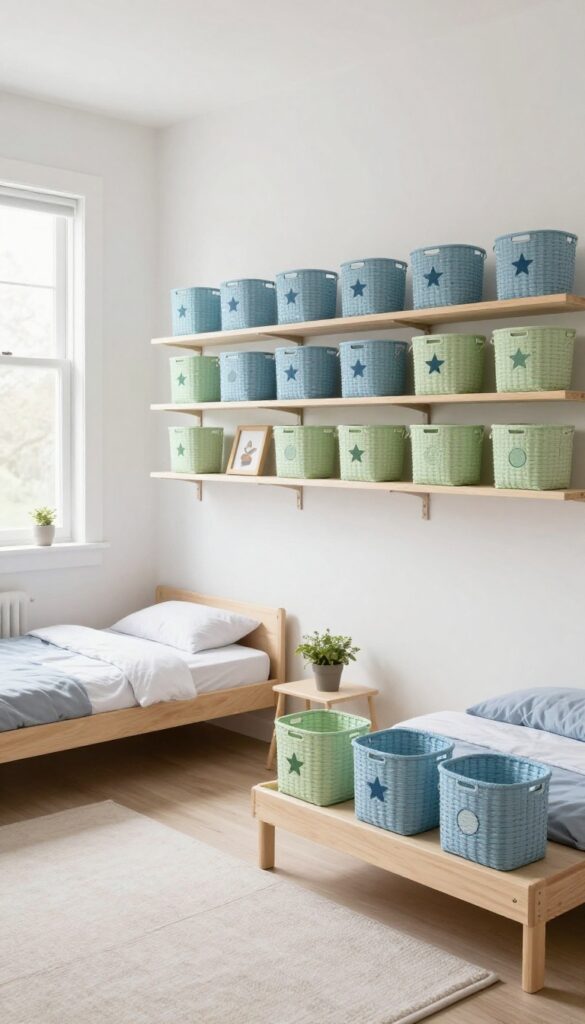
When floor space is tight, the walls become your best storage ally. A single long shelf system running across one wall can serve both kids without taking up a single square foot of play area. The trick is to give each child their own set of bins or baskets in a color or pattern they choose.
This keeps the overall look cohesive while letting each kid feel a sense of ownership over their section. It’s a simple way to cut down on clutter and “that’s mine!” arguments.
Why It Works
By going vertical, you free up precious floor space for a play mat or extra seating. The personal bins make cleanup easy because each child knows exactly where their stuff goes. And since the shelving is shared, the room feels less chaotic and more intentionally designed.
Best For
This setup works beautifully for siblings with a small age gap who share a room and need quick access to toys, books, or art supplies. It’s also ideal if you’re trying to avoid a bulky dresser or toy box that eats up floor space.
Styling Tip
Choose bins in two complementary colors—like soft blue and pale green—to keep the look unified but distinct. Label each bin with the child’s name or a simple icon (star vs. circle) so even pre-readers can help tidy up. Mount the shelf at a height both kids can reach, and leave a little space between bins for a small plant or a framed photo to soften the display.
5. Curtain Dividers for Flexible Privacy
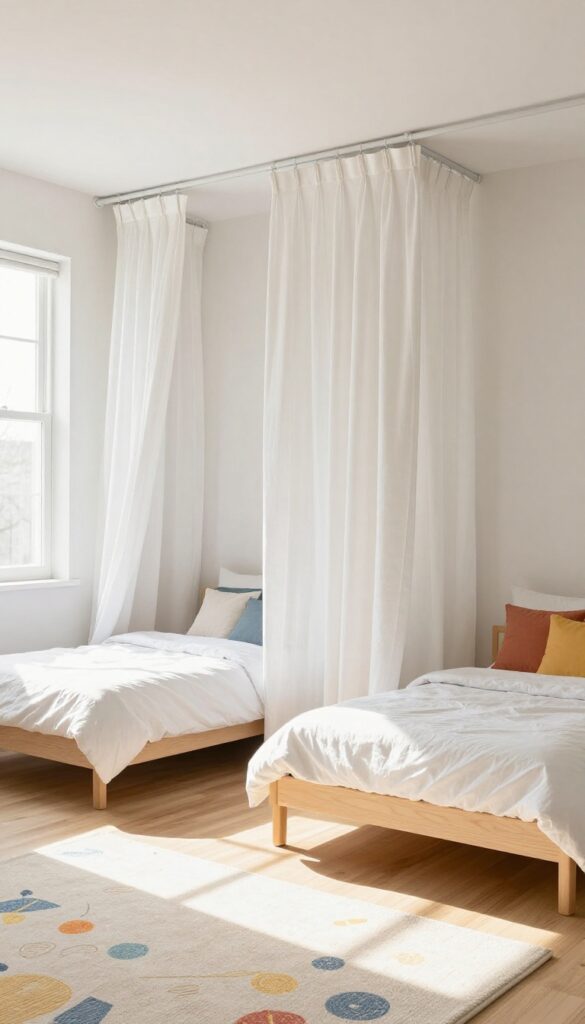
A ceiling-mounted curtain track is one of the simplest ways to carve out separate zones in a shared kid's room. Instead of a permanent wall, soft fabric panels let you close off each bed for quiet time or open them up for play. The result is a flexible layout that grows with your children and makes the room feel bigger than it actually is.
Why It Works
Curtains are budget-friendly and require no construction, so you can install them in an afternoon. They also add warmth and texture to the room, softening hard edges and absorbing some noise. When open, they disappear completely, keeping the space airy and open.
Best For
This idea works especially well in narrow rooms where a solid partition would block light or make the space feel cramped. It's also great for siblings who need occasional privacy but still want to feel connected at night.
Styling Tip
Choose curtains in a light, breathable fabric like linen or cotton to keep the room feeling bright. For a playful touch, use a pattern that ties into the room's theme, like stars or stripes. Mount the track close to the ceiling and let the curtains pool slightly on the floor for a cozy, tent-like effect.
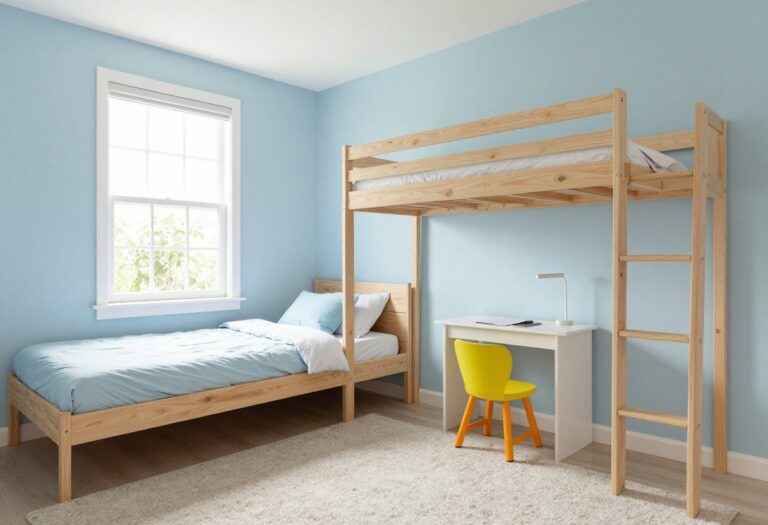
6. Twin Beds in an L-Shape With a Shared Corner Table
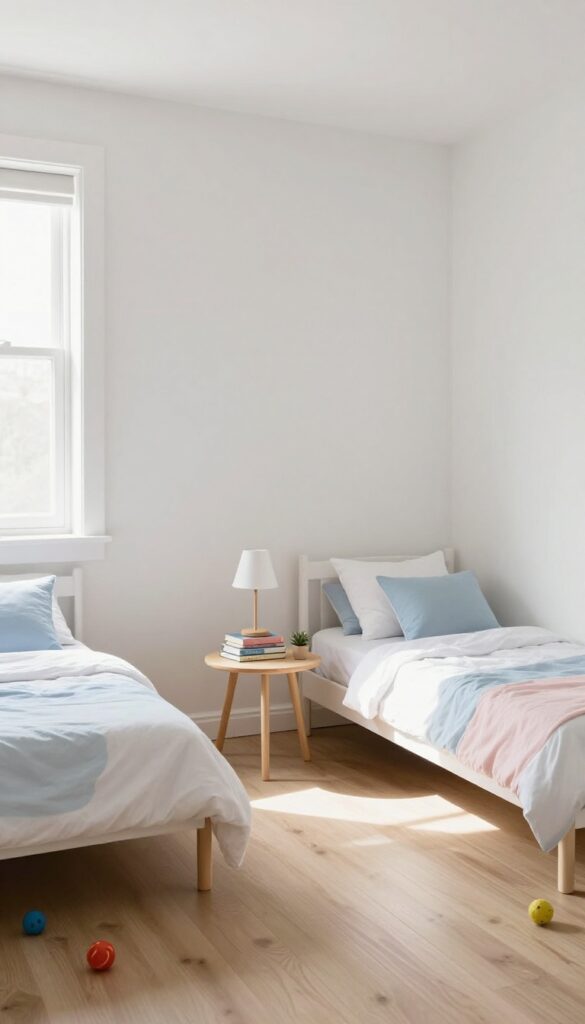
Arranging twin beds in an L-shape against two walls is a clever way to carve out separate sleep zones without losing that cozy, connected feel. The beds meet at the corner, where a small table sits right in the middle—perfect for a shared lamp, a stack of books, or a tiny plant. It’s a layout that makes a small room feel intentional and airy, not cramped.
Why It Works
By tucking the beds into a corner, you free up the rest of the floor for play, storage, or a desk. The shared table becomes a natural divider that gives each kid their own bedside spot while keeping the room visually unified. It’s space-efficient without making the room feel like a dorm.
Best For
This setup works great for siblings who get along well and don’t mind being close. It’s especially good in narrow or square rooms where parallel beds would eat up too much floor space.
Styling Tip
Use matching bedding with different accent colors to give each side a personal touch. Keep the corner table low and simple—a round or square side table with a soft lamp creates a warm focal point.
7. Vertical Storage Towers Between Beds
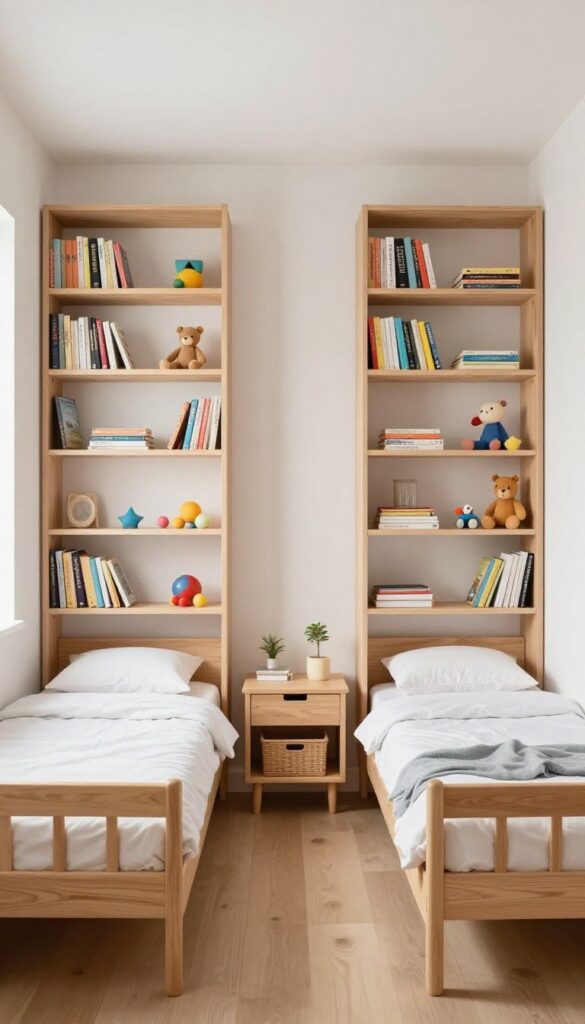
Picture this: two twin beds on opposite walls, and right between them, a tall, slender bookshelf that reaches toward the ceiling. It’s not just a storage unit—it’s a clever room divider that gives each kid their own little zone without closing off the room. The shelves face outward on both sides, so each child has easy access to their own books, toys, or nighttime essentials.
It keeps the floor plan open and airy while carving out personal space in a shared room.
Why It Works
In a small room, every inch counts. A vertical tower uses vertical real estate instead of precious floor space, so you get storage and separation without making the room feel cramped. Plus, it’s a natural way to define each child’s territory—no need for bulky furniture or permanent walls.
Best For
This setup works great for siblings who are close in age and share a room, especially when you want to give them a sense of independence. It’s also perfect for narrow rooms where a traditional dresser or wardrobe would eat up too much floor area.
Styling Tip
Choose a bookshelf with a closed back or solid panels so items don’t fall through to the other side. Paint it the same color as the walls to make it blend in, or go for a contrasting hue to make it a focal point. Add small bins or baskets on lower shelves for hidden storage of toys and clutter.
8. Under-Bed Drawers for Personal Belongings
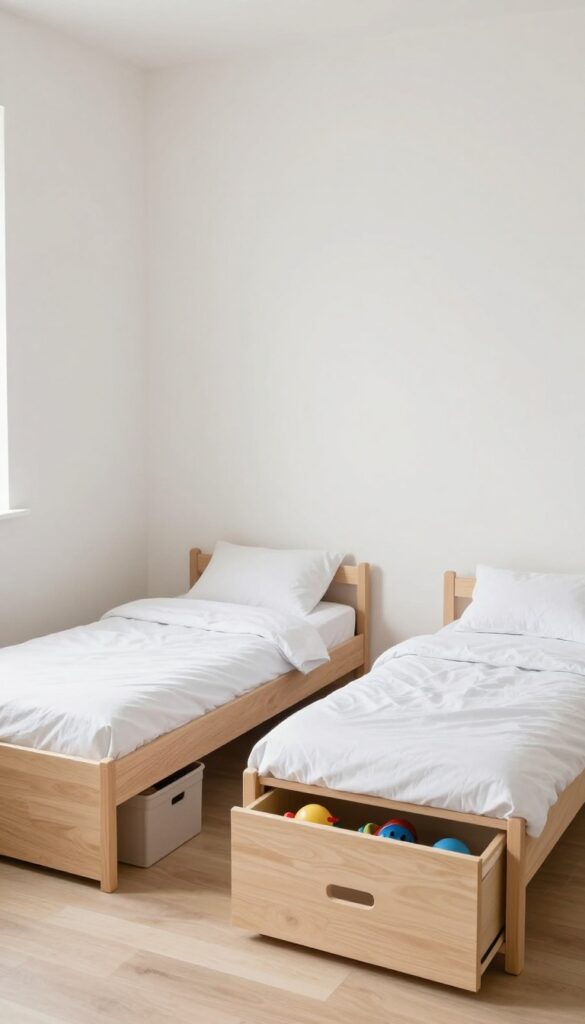
Kids accumulate stuff fast—toys, books, art supplies, and random treasures. When two children share a small room, keeping their belongings separate and organized can feel like a constant battle. That’s where under-bed drawers come in.
They turn wasted space into a tidy storage solution that gives each child their own designated spot for personal items. Rolling drawers or labeled bins slide easily under low beds, making it simple for kids to access their things and put them away. The best part?
Everything stays out of sight, so the room looks calm and clutter-free even when life gets messy.
Why It Works
- Under-bed storage is one of the most underused areas in a shared kids' room. By adding rolling drawers or bins, you create a dedicated home for each child's personal belongings without taking up any extra floor space. Labels help kids remember what goes where, encouraging independence and reducing arguments over whose toy is whose.
- Plus, keeping items hidden behind a bed skirt or drawer fronts instantly cuts visual clutter, making the room feel larger and more peaceful.
Best For
This idea works especially well for small shared bedrooms where floor space is tight and closet storage is limited. It's perfect for families with young children who have lots of small toys or art supplies, but it also suits older kids who need a spot for books, electronics, or hobby gear. Any room with standard or low-profile beds can benefit from this simple upgrade.
Styling Tip
- Choose rolling drawers with a smooth, quiet mechanism so kids can open them easily. Use clear bins with colored labels or patterned drawer fronts to add a playful touch. For a cohesive look, match the drawer color to the bed frame or go with neutral tones like white or natural wood.
- Add a small rug under each bed to define the storage zone and make pulling out drawers feel intentional.
9. Shared Gallery Wall With Individual Art Frames
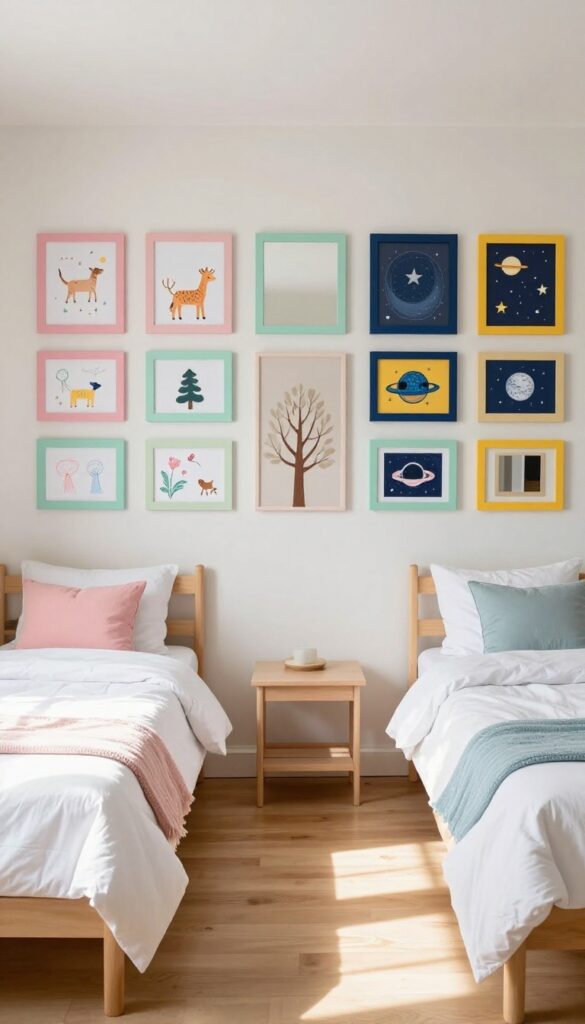
A gallery wall doesn't have to be a grown-up-only feature. In a shared kids' room, it can become a personal showcase where each child gets their own curated display space. By assigning distinct frames or sections to each kid, you let their personalities shine without cluttering the floor or adding bulky furniture.
The key is keeping it cohesive enough to feel intentional, not chaotic.
Why It Works
This approach adds visual interest at eye level while using zero floor space—perfect for small rooms. Each child feels ownership over their section, reducing territorial disputes, and you can easily swap out artwork as their tastes evolve.
Best For
Siblings with different interests or ages, especially when you want to avoid competing decor themes. It works well in rooms where wall space is limited but you still want to celebrate each child's creativity.
Styling Tip
Use matching frames in different colors or sizes to create unity without uniformity. Arrange the frames in a loose grid or organic cluster, leaving a few inches between each child's zone. Mix in a shared element like a family photo or a neutral print to tie both sides together.
10. Rug Zones to Define Play and Sleep Areas
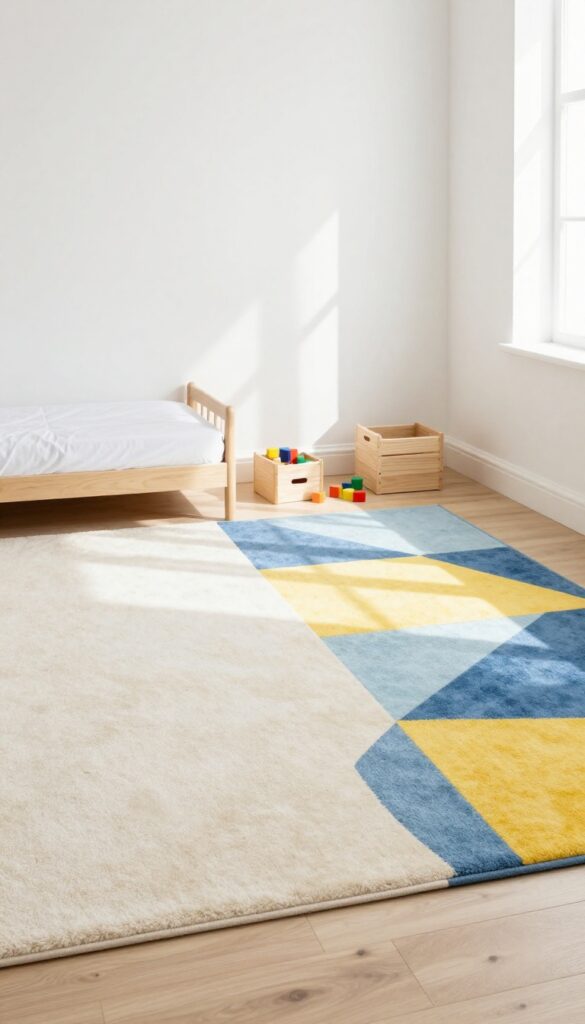
A single rug can anchor a room, but two smaller rugs—or one large rug with a clear visual split—can do something even smarter: mark out separate territories for play and sleep. In a shared kids' room, this subtle boundary helps each child feel like they have their own little domain, even when square footage is tight. Rugs add warmth underfoot and a pop of color, making the room feel cozy without adding clutter.
Why It Works
Rugs create instant visual zones without needing walls or bulky furniture. A soft, plush rug under the play area invites sitting and building, while a low-pile rug near the beds keeps the sleep zone feeling calm and easy to clean. This low-cost trick gives each child a clear sense of ownership and helps maintain order—toys stay on the play rug, and bedtime stays on the sleep rug.
Best For
This idea works wonders in small shared rooms where floor space is limited and you need to maximize every inch. It's especially great for toddlers and preschoolers who respond well to visual cues, but older kids appreciate the clear boundaries too. If your room has an awkward layout or two distinct activity spots, rug zoning is a flexible fix.
Styling Tip
- Choose rugs in complementary colors or patterns—like a geometric play rug and a solid, soft sleep rug—to keep the room cohesive. Place the play rug in the center of the activity area and the sleep rug at the foot of each bed. For a unified look, pick one color that appears in both rugs.
- Washable rugs are a lifesaver in the play zone.
11. Ceiling-Mounted Canopies for Personal Nooks
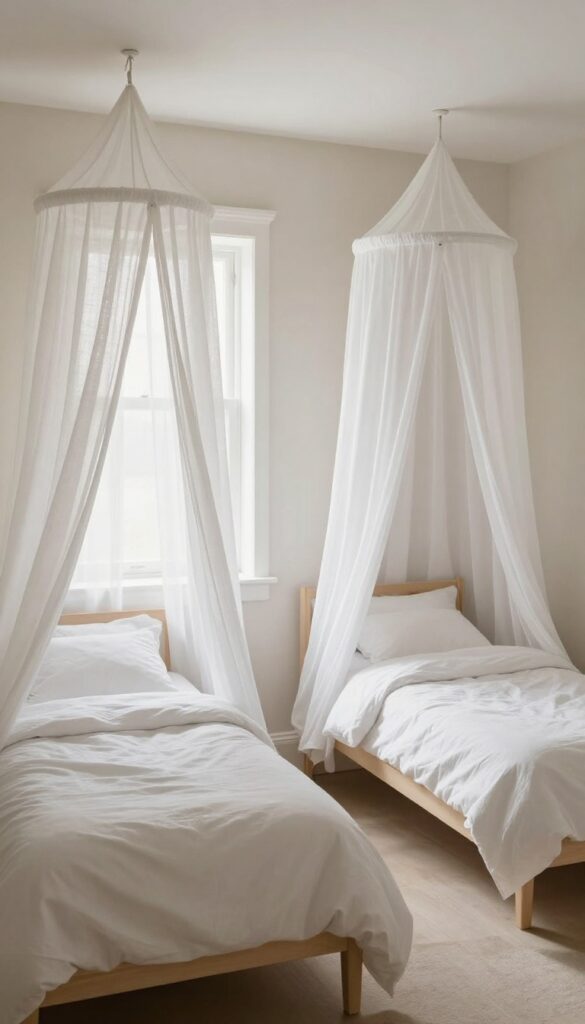
Kids love having their own little hideaway, and you don't need square footage to make it happen. Hanging a canopy over each bed carves out a personal nook that feels like a tiny retreat. It softens the room, adds a playful touch, and gives each child a special spot without any walls going up.
Why It Works
Canopies create instant visual separation in a shared room, making each bed feel like its own zone. They're also a clever space hack because they use vertical airspace instead of floor area, which is gold in a small room. The fabric absorbs sound a bit too, making the room feel quieter and cozier.
Best For
This idea is perfect for siblings who need their own space but share a tight floor plan. It works especially well with twin beds placed on opposite walls or in an L-shape, where the canopies define each child's territory without closing them off.
Styling Tip
Choose lightweight, breathable fabrics like cotton or linen in colors that tie the room together. For a cohesive look, match the canopy color to each child's bedding or use the same neutral tone for both. Install a simple curtain rod or a ceiling hook with a ring—no need for a full four-poster bed.
FAQ
How do I split a small bedroom for two kids without losing space?
Use vertical solutions like loft beds or tall shelving units that act as dividers. Curtains and rugs also define zones without taking up floor area.
What's the best bed layout for a narrow shared bedroom?
Twin beds along opposite walls or in an L-shape work well. Bunk beds are also great for narrow rooms since they free up floor space.
How can I give each child privacy in a small room?
Room dividers like curtains, bookshelves, or partial walls create visual separation. Canopies over beds also offer a sense of personal space.
What storage solutions work best for two kids sharing a room?
Under-bed drawers, wall-mounted shelves with individual bins, and vertical cabinets between beds maximize storage while keeping items separate.
How do I decorate a shared kids' bedroom without it looking messy?
Stick to a cohesive color palette and use matching storage bins. Personalize with small touches like individual art frames or labeled baskets.
Conclusion
Designing a small shared bedroom for two kids doesn't mean sacrificing style or comfort. With thoughtful split zones, you can give each child their own little world while keeping the room functional and clutter-free.
The best part is that many of these ideas are easy to adapt as your kids grow. Start with one or two changes, and watch the room transform into a space that works for everyone.