10 Warm Colourful Kitchen Ideas for a Fresh, Pulled-Together Look
A kitchen should feel like the heart of your home—not a showroom. Warm colours and thoughtful details can turn a functional space into one you actually want to spend time in. The trick is balancing personality with practicality so your kitchen stays easy to use and lovely to look at.
These ten ideas focus on real-life solutions: rich hues that don't overwhelm, textures that add depth, and finishes that handle daily messes. Whether you're planning a full refresh or just a few small swaps, each suggestion is designed to feel achievable and inviting.
Ready to give your kitchen a warm, colourful update? Let's dive into ideas that bring character without sacrificing function.
1. Terracotta Tiles for Instant Warmth
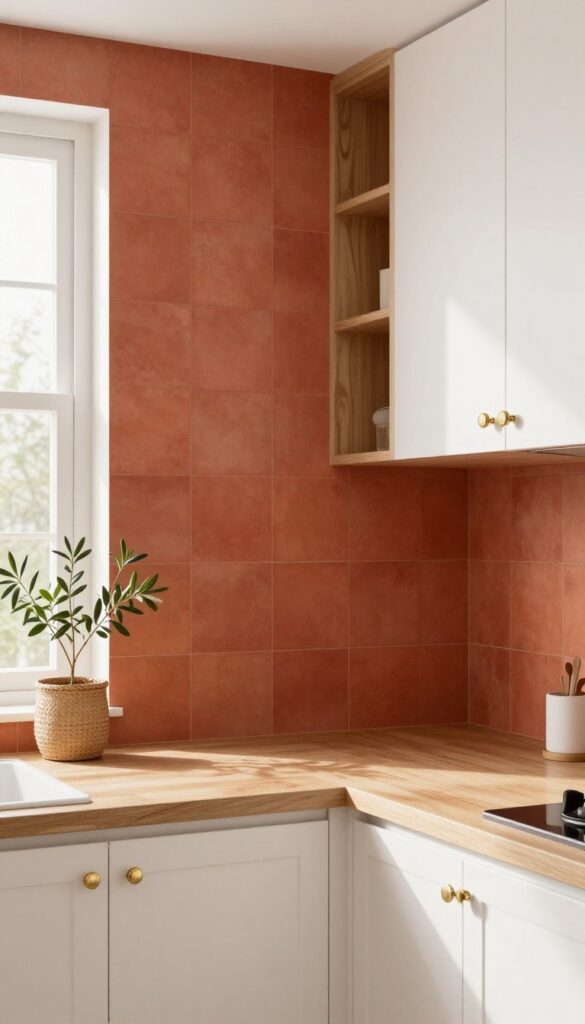
Swap cool subway tiles for terracotta ones on a backsplash or floor. Their earthy orange-red tones add natural warmth and pair beautifully with white cabinets and wooden accents. This simple change transforms a sterile kitchen into a cozy, inviting space—without a full renovation.
Why It Works
Terracotta’s natural clay tones bring a grounded, sunbaked feel that balances modern fixtures. The porous texture softens light and hides everyday smudges, making it both beautiful and low-maintenance.
Best For
Kitchens with white or light-colored cabinetry that need a pop of warmth. Also great for open-plan spaces where you want the kitchen to feel connected to living areas.
Styling Tip
Mix terracotta tiles with warm brass hardware and open wood shelving. Add a few olive plants in woven pots to echo the earthy palette and keep the look fresh.
2. Sage Green Cabinets with Brass Hardware
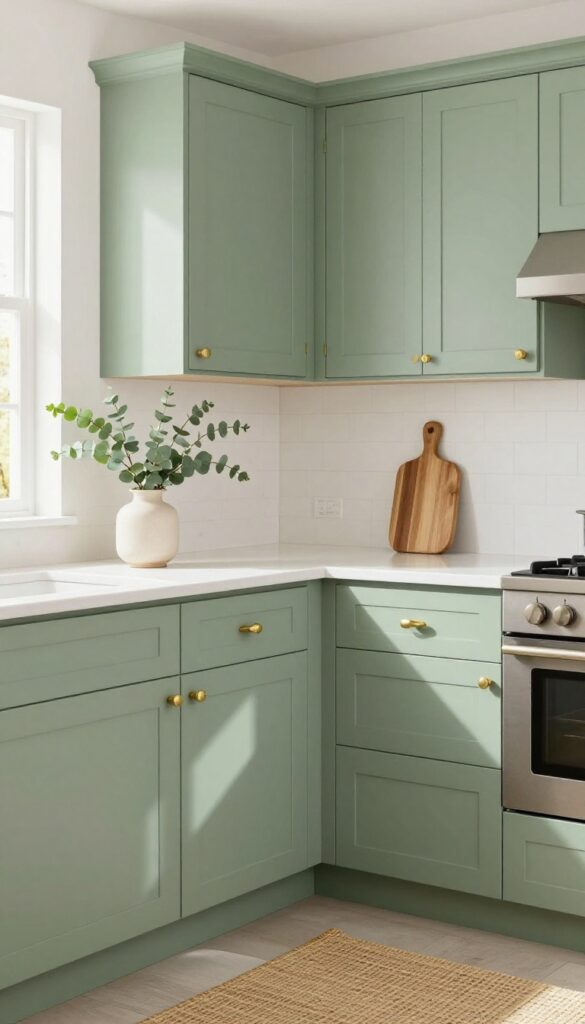
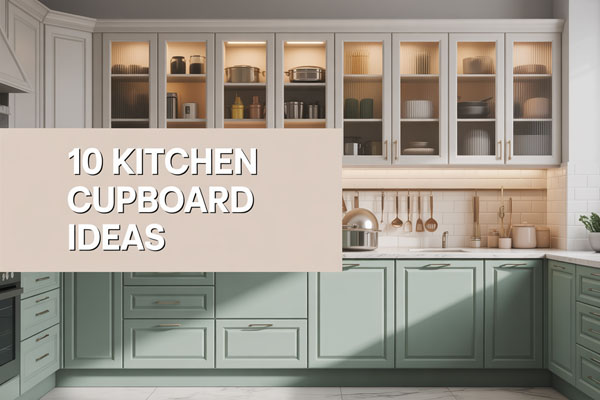
Soft green cabinets are having a real moment, and for good reason. Sage sits right between earthy and airy, so it never feels too heavy or too cold. Pair it with brass hardware and you get a kitchen that feels warm, polished, and lived-in all at once.
The combo works especially well in kitchens with good natural light, where the green can shift from muted to vibrant depending on the time of day.
Why It Works
- Sage green is one of those colors that instantly relaxes a space. It’s not as stark as white, not as bold as navy, and not as trendy as some other pastels. The brass adds just enough shine to keep the look from feeling flat, without going full glam.
- Together, they create a balanced palette that feels both current and timeless.
Best For
This idea shines in kitchens that get a fair amount of daylight, but it also works in darker spaces if you choose a lighter sage and add under-cabinet lighting. It’s perfect for anyone who wants color without the commitment of a bright or dark hue. Great for open-plan kitchens where the green can tie into a living or dining area.
Styling Tip
Keep countertops light—white quartz or marble-look porcelain keeps the space fresh. Add warmth with natural wood cutting boards, a woven runner, and a few ceramic pieces in cream or terracotta. Avoid too much extra color on the counters; let the cabinets be the star.
3. Open Shelving in a Warm Wood Tone
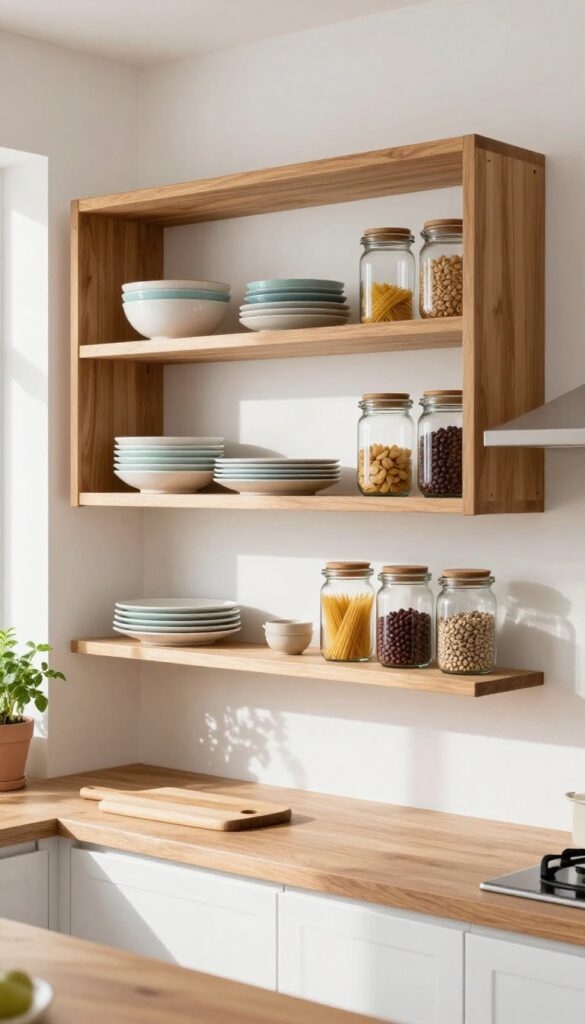
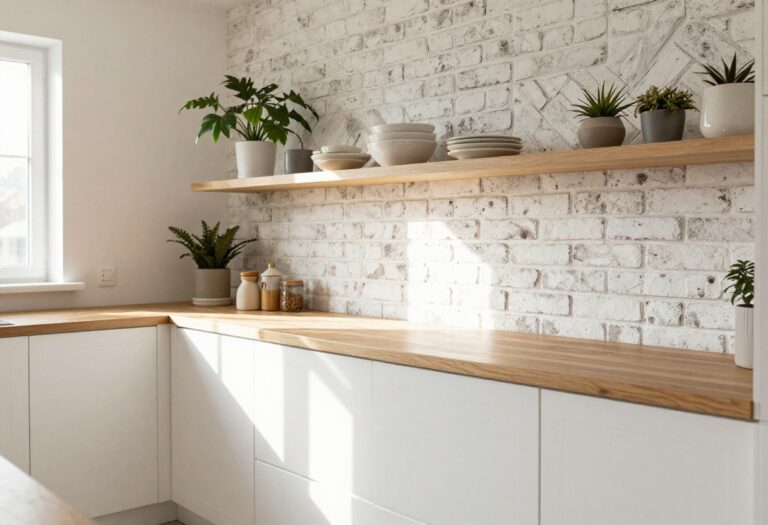
Upper cabinets can sometimes make a kitchen feel closed in, especially in smaller spaces. Swapping them for open shelves in oak or walnut instantly lightens the room and adds a layer of warmth. The natural grain of the wood brings a cozy, lived-in feel that pairs beautifully with colourful dinnerware and glass jars, making the kitchen feel both practical and personal.
Why It Works
Open shelving keeps everyday items within easy reach while turning your favourite dishes into part of the decor. The warm wood tone softens the overall look and creates a natural contrast with lighter walls or countertops, so the space feels inviting rather than cluttered.
Best For
This idea shines in kitchens that lack natural light or feel boxed in by heavy cabinetry. It's also perfect for renters who can't do a full renovation but can install a few floating shelves to instantly warm up the space.
Styling Tip
Mix stackable dinner plates in solid colours with a few patterned pieces and clear glass jars filled with pasta or beans. Keep the arrangement asymmetrical—group similar items together but vary the heights and spacing for a relaxed, curated look that's easy to update.
4. A Statement Range Hood in a Bold Hue
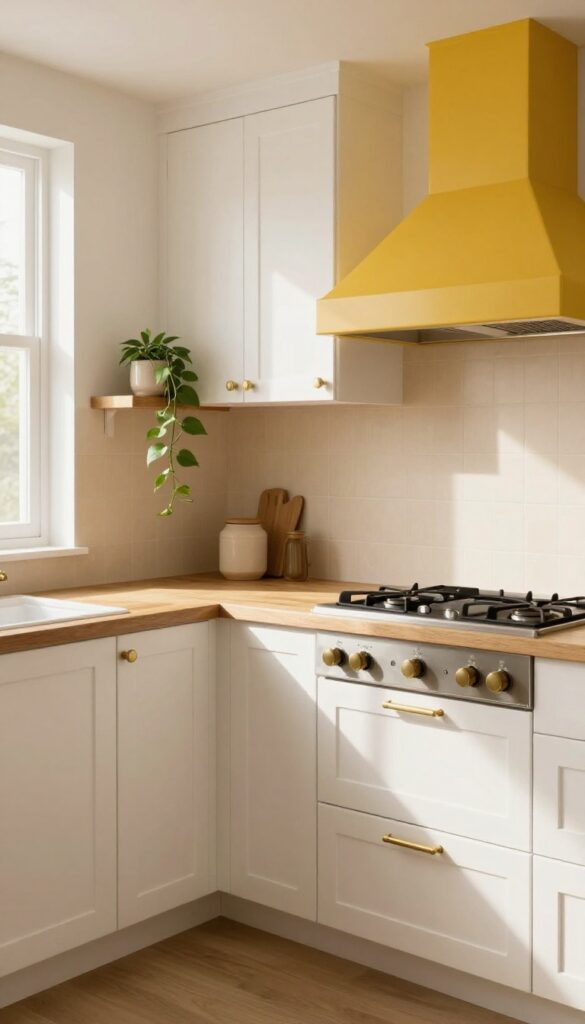
Your range hood doesn't have to blend into the background. Painting it a deep blue, mustard yellow, or rust red turns it into an instant focal point that draws the eye up and adds personality. It's a relatively small surface area, so you can go bold without overwhelming the room.
Plus, it's a practical upgrade that feels intentional, not just decorative.
Why It Works
A colorful range hood anchors the cooking zone without taking up extra floor or counter space. It creates a natural visual anchor, especially in open-plan kitchens, and lets you inject warmth and character into an otherwise utilitarian element. The color can be echoed in small accessories like dish towels, canisters, or a vase, making the whole scheme feel pulled together.
Best For
This idea works well in kitchens with neutral cabinetry and countertops, where the hood can stand out as a deliberate accent. It's also great for galley or L-shaped layouts where the hood is visible from multiple angles. If you have a stainless steel hood, you can still paint it with high-heat appliance paint for a custom look.
Styling Tip
- Keep the rest of the kitchen relatively simple so the hood remains the star. Pair it with brass or matte black hardware for contrast. Add a small shelf above with a few ceramic jars or a trailing plant to soften the look.
- For a cohesive feel, choose a color that appears elsewhere in the room—like in the backsplash tile or bar stools.
5. Layered Lighting with Warm Bulbs
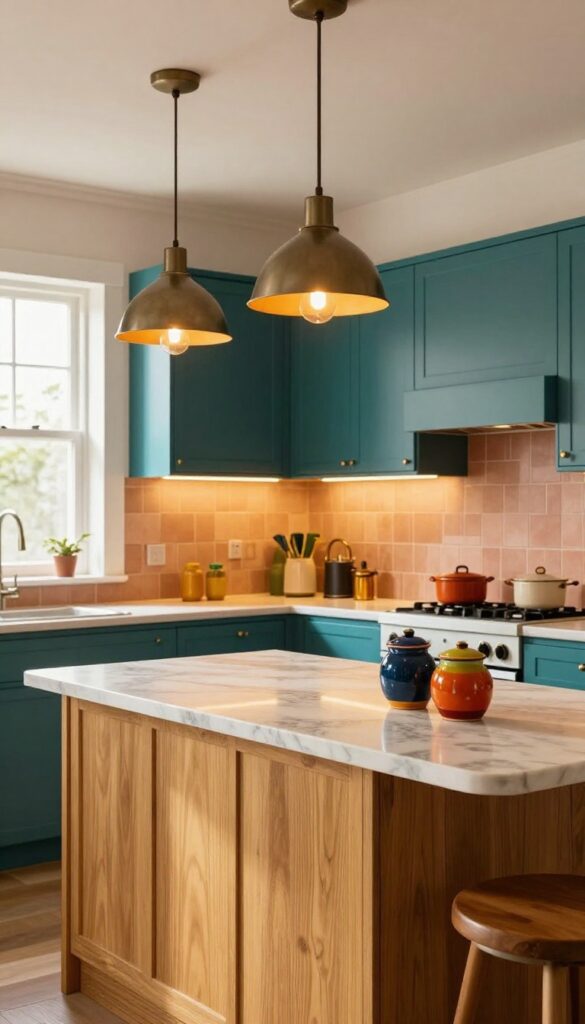
Lighting can make or break a warm, colourful kitchen. Instead of relying on a single overhead fixture, try layering different light sources at various heights. Combine a statement pendant over the island or dining table with under-cabinet strips to banish shadows on countertops, and add a dimmer switch so you can adjust the mood from bright meal prep to soft dinner glow.
The key is choosing warm white bulbs (2700K) throughout—they cast a gentle amber light that makes every colour in your kitchen look richer and more inviting.
Why It Works
Warm, layered lighting mimics the natural variation of sunlight, which makes a space feel alive and cosy rather than flat and clinical. The dimmer gives you control, so you can dial up the brightness for tasks or turn it down for relaxed evenings. This approach also highlights texture and colour in your cabinets, backsplash, and decor, pulling the whole room together without any extra effort.
Best For
Any kitchen where you want to create a lived-in, welcoming atmosphere—especially open-plan spaces that flow into a living or dining area. It's also perfect for kitchens with bold colour schemes, because warm light prevents hues from looking harsh or garish.
Styling Tip
Stick to one colour temperature (2700K) for all bulbs to avoid a disjointed look. Use pendant lights with metal or glass shades that let the warm glow shine through, and install under-cabinet strips with a slim profile so they blend in. Don't forget a dimmer switch for the overhead fixture—it's a small upgrade that makes a huge difference in everyday comfort.
6. Patterned Roman Shades for Softness
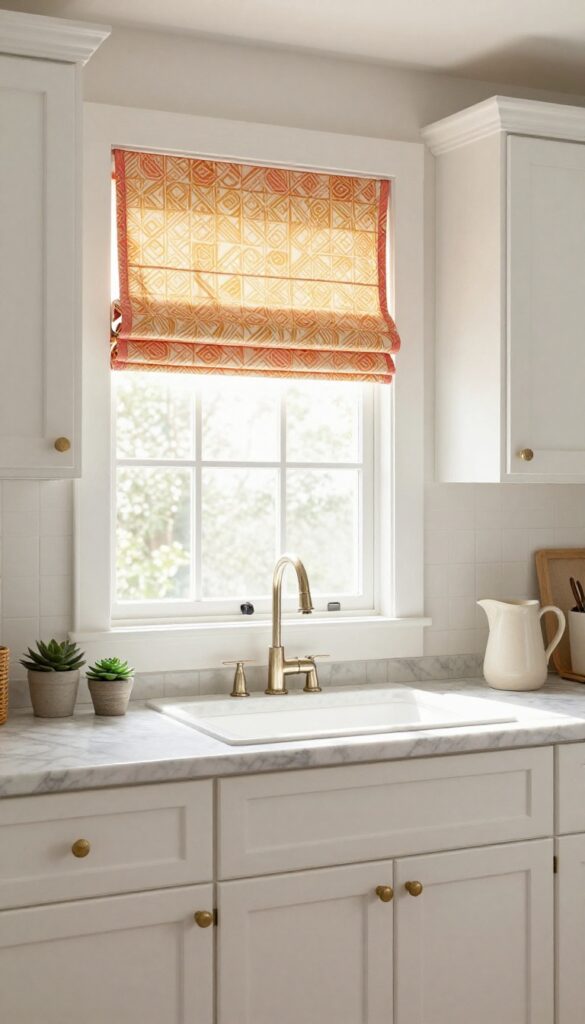
Hard surfaces dominate most kitchens—countertops, backsplashes, cabinets, and floors. To balance all that hard edge, bring in softness with Roman shades in a colorful geometric or floral pattern. They hang like fabric art, filtering light and adding a cozy layer that makes the room feel instantly more inviting.
Best of all, you can swap them out whenever your taste changes, unlike permanent wallpaper.
Why It Works
Roman shades soften the visual noise of a busy kitchen while introducing pattern in a controlled way. The fabric absorbs sound and adds texture, making the space feel warmer and more lived-in. Plus, they're practical—easy to raise for full light or lower for privacy.
Best For
This works beautifully in kitchens with lots of white or neutral cabinetry where a pop of pattern feels intentional. It's also great for kitchens with a window above the sink, since the shade becomes a focal point without competing with other elements.
Styling Tip
Choose a pattern that pulls in two or three colors already present in your kitchen—like a warm coral and mustard geometric on a cream background. Mount the shade inside the window frame for a clean look, or outside to make the window appear larger. Pair with simple metal curtain rods and linen panels for extra softness.
7. A Vintage-Style Rug Underfoot
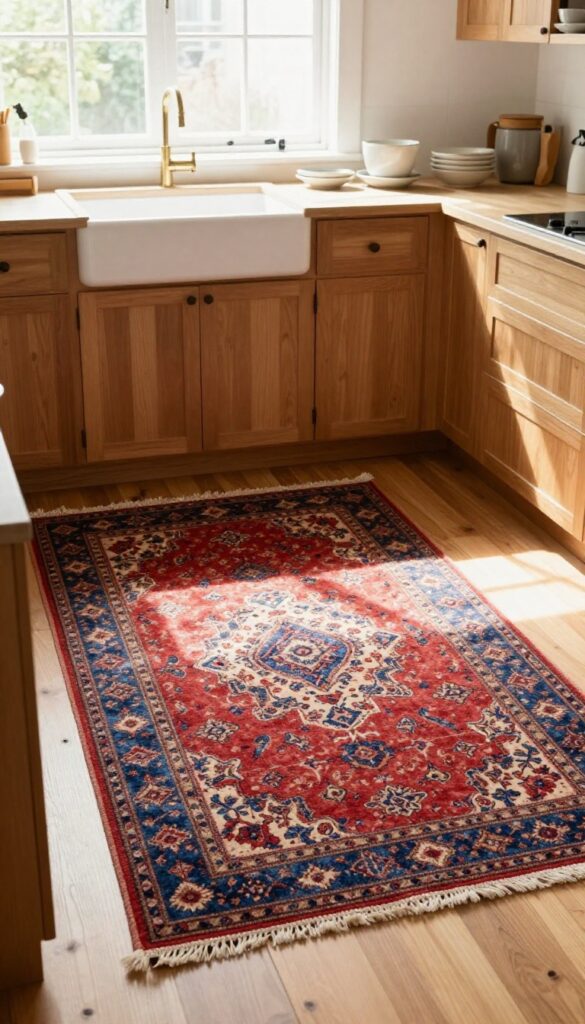
A worn-in rug does something special for a kitchen. It adds color, softens the hard surfaces, and makes the space feel like it’s been loved for years. A low-pile vintage-style rug in front of the sink or stove brings warmth without trapping crumbs, and the faded reds or blues tie together warm cabinets and neutral counters effortlessly.
Why It Works
Kitchens are full of hard, cold materials like tile and stainless steel. A rug adds a layer of texture and color that instantly warms up the room. Low-pile vintage rugs are practical because they’re easy to clean, and the faded patterns hide everyday wear and spills.
Best For
This works especially well in kitchens with neutral cabinets or white walls. The rug becomes the main color source, so you can keep other decor simple. It’s also great for galley kitchens where a small rug can define the work zone.
Styling Tip
Choose a rug with a pattern that includes at least one color already in your kitchen, like a blue that matches your dish towels or a red that echoes your cookware. Make sure it’s machine-washable and has a non-slip pad underneath for safety.
8. Butcher Block Countertops with Character
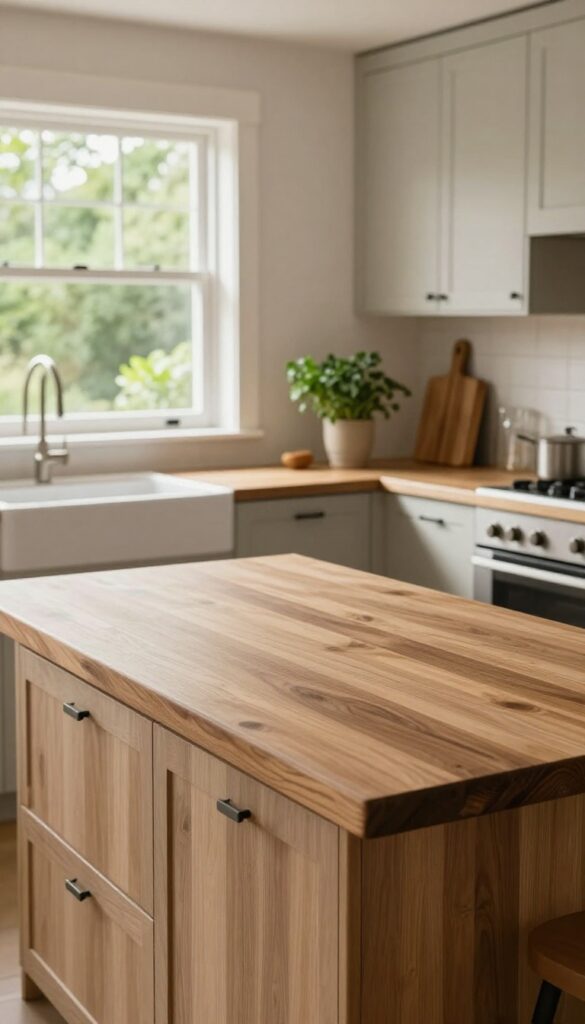
A kitchen that feels warm and lived-in often has natural materials at its heart. Butcher block countertops bring exactly that—wood grain that softens the hard edges of cabinets and appliances, making the whole space feel more grounded. They’re not just for serious cooks either; even a small section of butcher block on an island or a baking station adds instant coziness.
Why It Works
Wood is inherently warm, both visually and to the touch. Butcher block countertops break up the monotony of stone or laminate surfaces, adding texture and a natural focal point. Plus, they’re actually functional as a cutting surface, so they earn their keep in a busy kitchen.
Best For
This works especially well in kitchens that lean rustic, farmhouse, or transitional. It’s also a great choice if you want to introduce warmth without painting or changing cabinets—just swap in a butcher block section on an island or a stretch of counter.
Styling Tip
To keep the look intentional, pair butcher block with simple, matte hardware and avoid overly glossy finishes elsewhere. Let the wood be the star. For maintenance, seal it with a food-safe mineral oil or beeswax blend every few months to keep the grain rich and protected.
9. Colourful Small Appliances as Decor
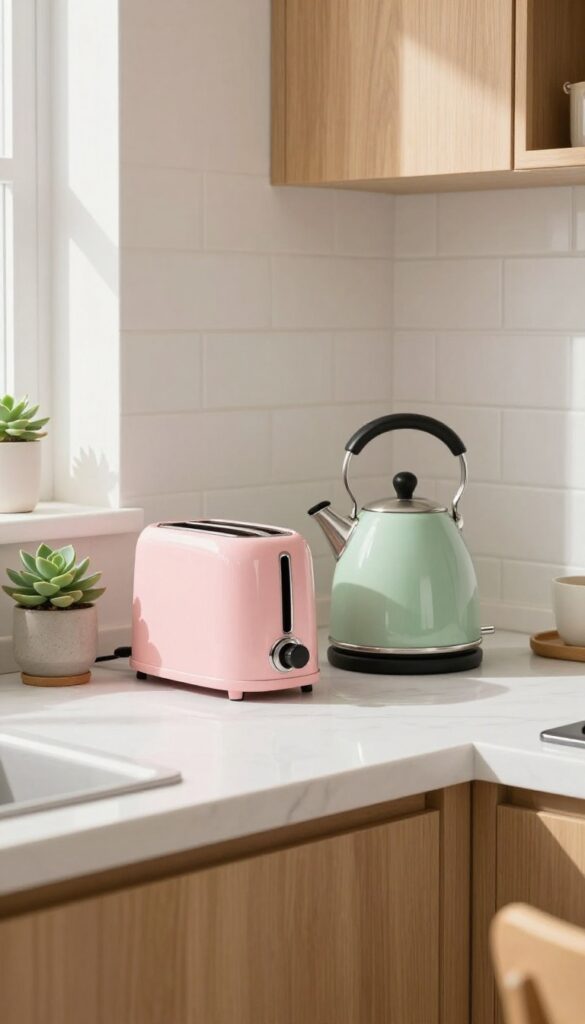
Small appliances don't have to be hidden away in cabinets. A pastel pink toaster, mint green kettle, or retro mixer sitting on the counter can pull double duty as both useful tools and cheerful decor. They add instant colour without needing to paint a wall or swap out tiles, and they make the kitchen feel more personal and lived-in.
Why It Works
These appliances become functional art pieces. Their colours pop against neutral backsplashes or countertops, drawing the eye and creating a focal point. Plus, keeping them out means you use them more often, which adds to the warm, busy feel of a real kitchen.
Best For
This idea works well in kitchens with mostly white, grey, or wood cabinetry where a splash of colour won't compete. It's also great for renters who can't make permanent changes but want to inject personality.
Styling Tip
Stick to one or two complementary colours for a cohesive look. Group them together on a corner of the counter or near the coffee station. Add a small plant or a ceramic canister nearby to tie the vignette together without cluttering.
10. A Gallery Wall of Kitchen Art
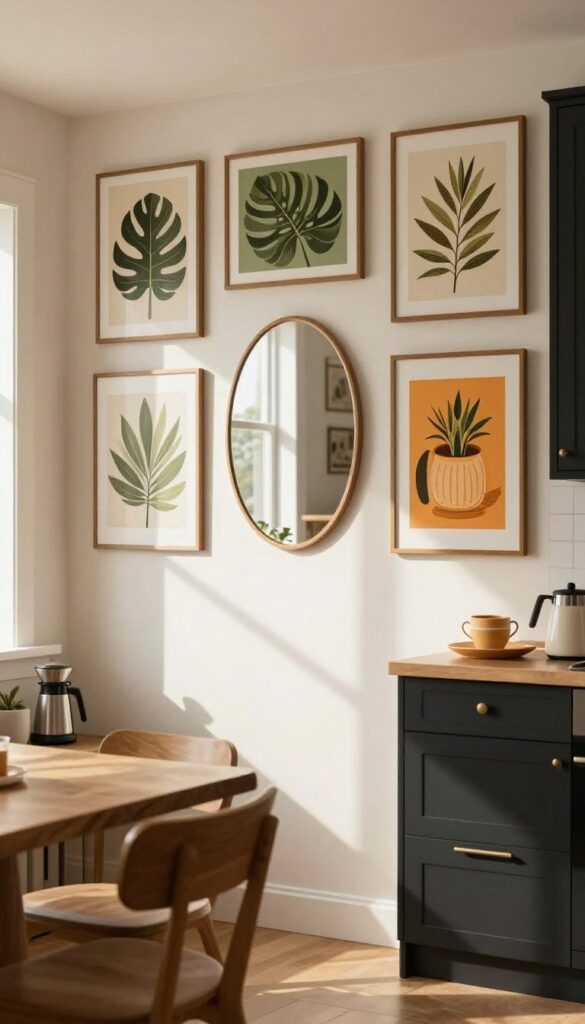
Walls in a kitchen often stay bare, but they're prime real estate for personality. A small gallery wall turns an empty stretch into a conversation starter, especially when you mix food-themed prints with botanical illustrations and a mirror. The key is choosing frames that feel collected over time—wood and black tones keep it from looking too matchy-matchy.
It's an easy way to layer in warmth without adding clutter to your countertops.
Why It Works
A gallery wall brings visual interest at eye level, drawing attention away from less exciting areas like upper cabinets. The mix of art and mirror reflects light, making the kitchen feel bigger and brighter. Plus, swapping out prints seasonally or as your taste evolves keeps the space feeling fresh without a full remodel.
Best For
This idea shines in kitchens with a blank wall near the dining area, breakfast nook, or even above a coffee station. It works especially well in open-plan layouts where the kitchen flows into the living room, because the gallery wall bridges the two spaces. Avoid placing it directly behind the stove or sink where grease and splashes could damage the art.
Styling Tip
Stick to a loose grid or organic arrangement with 5–7 pieces. Start with a central mirror, then build outward with prints in similar color palettes—think warm oranges, olive greens, and cream backgrounds. Use frame clips or adhesive strips to avoid damaging tiles, and keep the outer edges aligned for a pulled-together look.
FAQ
How do I add colour to a small kitchen without making it feel cramped?
Stick to one or two warm hues—like sage green and terracotta—and use them on lower cabinets or a backsplash. Keep upper areas light and use open shelving to maintain an airy feel.
What are the best warm colours for a kitchen?
Earthy tones like terracotta, mustard yellow, olive green, and warm neutrals (cream, beige) work well. They create a cozy atmosphere without being overwhelming.
Can I mix warm and cool colours in a kitchen?
Yes, but use warm colours as the base. Add small cool accents like blue dish towels or a navy rug for contrast. Keep the balance 70% warm to 30% cool for harmony.
How do I make a colourful kitchen look pulled together?
Repeat a colour in at least three places—like cabinet paint, a rug, and accessories. Use natural materials (wood, stone) to ground the palette and avoid visual chaos.
What's an easy way to update a rental kitchen with colour?
Use removable peel-and-stick tiles for a backsplash, swap out hardware, and add colourful textiles like a rug, curtains, or dish towels. These changes are temporary but impactful.
Conclusion
Warmth and colour don't have to mean a full renovation. Small changes—a new rug, a coat of paint on cabinets, or a few open shelves—can shift the whole feel of your kitchen. The key is choosing pieces that work for your daily life and bring you joy every time you walk in.
Start with one idea that excites you most, and build from there. Your kitchen should feel like a reflection of your personality, not a catalog page. Happy decorating!