9 Warm Kitchen Banquette Ideas for a Home That Feels Easy to Use
A kitchen banquette can transform a corner of your home into the coziest spot for morning coffee or weeknight dinners. It’s not just about saving space—it’s about creating a place where people naturally gather and linger. The key is making it feel warm and lived-in without sacrificing style.
Forget stiff, formal dining setups. A banquette should invite you to sit down, stay awhile, and actually use it every day. That means choosing materials, colors, and layouts that feel approachable and easy to maintain.
Here are nine ideas to help you design a kitchen banquette that’s both practical and full of character. Each one focuses on real-life comfort and a relaxed, welcoming vibe.
1. Built-In Bench with Cushions That Actually Fit
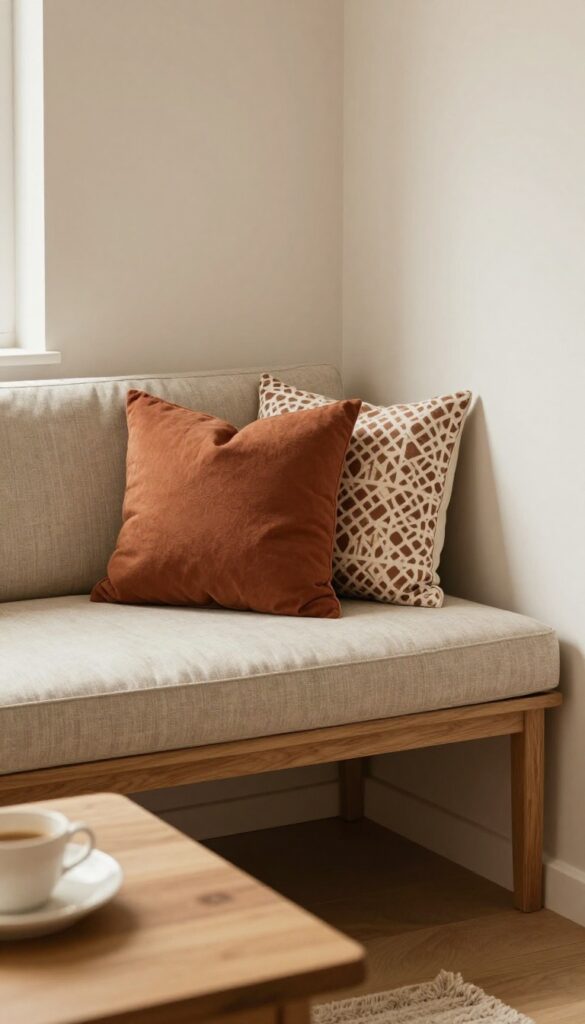
Nothing kills the cozy vibe of a breakfast nook faster than cushions that slip and slide every time you sit down. A built-in bench solves that problem permanently. When the bench is custom-fitted to your space, you can order cushions that stay put—no constant readjusting.
Go for thick foam (at least three inches) wrapped in a washable fabric like performance cotton or indoor-outdoor canvas. A warm neutral like oatmeal, taupe, or a soft terracotta keeps things inviting without screaming for attention. Toss in a couple of plush pillows in a coordinating pattern, and you have a seat that begs you to linger over coffee.
Why It Works
A built-in bench maximizes seating in tight corners or awkward alcoves where chairs wouldn't fit. The tailored cushions eliminate the frustration of constantly fixing misaligned seat pads, making the space feel more polished and intentional. Plus, the solid construction adds architectural interest and can include hidden storage underneath for extra functionality.
Best For
This idea is best for L-shaped or U-shaped kitchen layouts with a designated dining nook, especially if you have kids or pets who create messes. It also works beautifully in galley kitchens where every inch counts—the bench can double as a room divider or a spot for extra kitchen storage.
Styling Tip
Choose a cushion fabric with a slight texture, like a linen blend or a woven cotton, to add visual warmth without overwhelming the space. For the pillows, mix one solid in a deeper hue (think rust or olive) with one small-scale geometric print. Keep the bench back low—around 12 to 14 inches—so it doesn't block the view or make the room feel closed in.
2. Mix-and-Match Chairs for an Eclectic Look
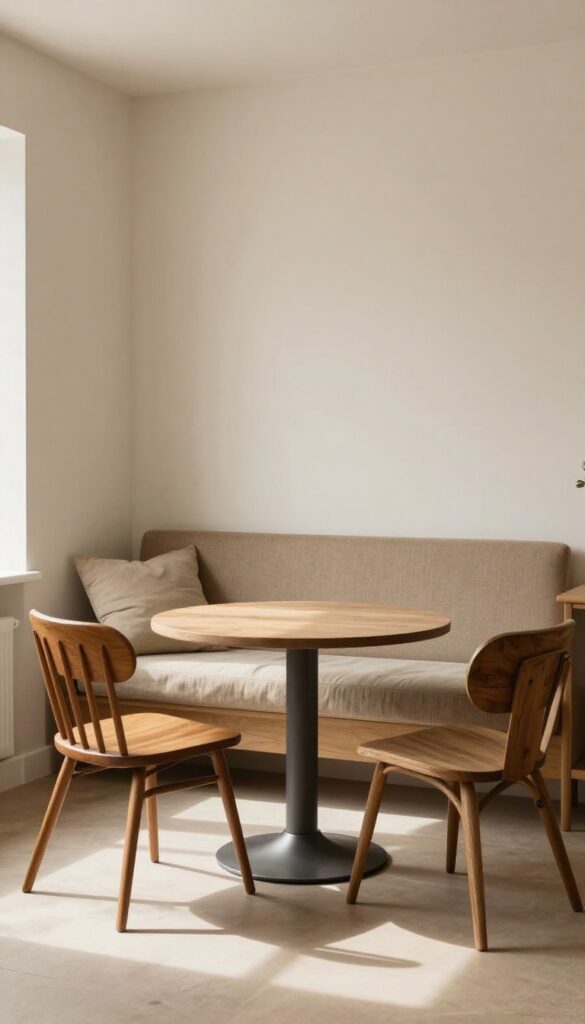
A built-in banquette already brings a sense of permanence and coziness to a kitchen nook. On the opposite side, instead of matching chairs, try pulling together a few different styles. Think a vintage wooden spindle chair next to a sleek modern metal one, or a cushioned upholstered seat beside a rustic bentwood.
The key is keeping the color palette consistent—maybe all in warm neutrals or soft earth tones—so the mix feels intentional, not chaotic. This approach makes your kitchen feel collected over time, like each piece has its own story.
Why It Works
Mismatched chairs add visual texture and personality without requiring a full set of matching furniture. The banquette anchors the space, so the variety on the other side feels balanced, not busy. It also lets you experiment with different materials—wood, metal, cane, or upholstery—all in one spot, which naturally makes the room feel more layered and lived-in.
Best For
This idea works well in open-plan kitchens or eat-in areas where you want the dining zone to feel distinct but still part of the whole room. It’s especially good for homes that lean transitional or eclectic, but even a more traditional kitchen can benefit from a subtle mix—like two matching chairs and one accent seat.
Styling Tip
- Stick to a unified color story to keep the look cohesive. For example, all seats in shades of warm wood, or all with black frames. If you add an upholstered chair, choose a fabric that picks up a color from the banquette cushions or a nearby rug.
- Vary the seat heights slightly, but keep them within an inch or two for comfortable dining.
3. Under-Bench Storage That Doesn’t Scream ‘Storage’
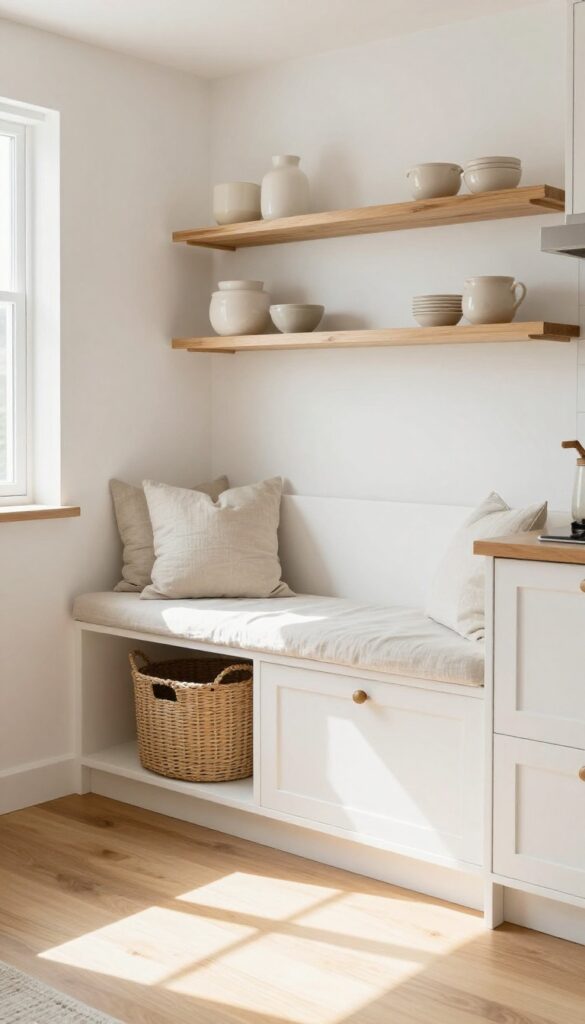
Banquette seating is already a cozy win, but the real magic happens when you put that empty space beneath the bench to work. The trick is making it feel like part of the design, not an afterthought. Think pull-out drawers that blend into the bench frame or woven baskets that add texture rather than clutter.
When storage looks intentional and warm, it just makes the whole kitchen feel more put-together and easy to live in.
Why It Works
Hidden storage keeps everyday essentials close without visual chaos. Drawers or bins under the seat mean table linens, kids’ craft supplies, or extra pantry items have a designated home that’s out of sight but easy to grab. The key is choosing materials that match the banquette’s style—natural fiber baskets keep things soft and inviting, while painted drawer fronts can disappear into the bench’s base.
Best For
This idea shines in busy family kitchens where counter space is precious and you need a spot for overflow items. It’s also great in eat-in kitchens with limited cabinet storage, letting you stash bulkier items like serving platters or seasonal decor. If your banquette doubles as a homework station or craft zone, pull-out bins make cleanup a breeze.
Styling Tip
Stick with natural materials like seagrass, rattan, or linen baskets to keep the look warm and layered. If you opt for drawers, paint them the same color as the bench base so they recede visually. Add a small leather pull or brass handle for a subtle touch that feels intentional, not purely functional.
4. A Round Table for Better Flow
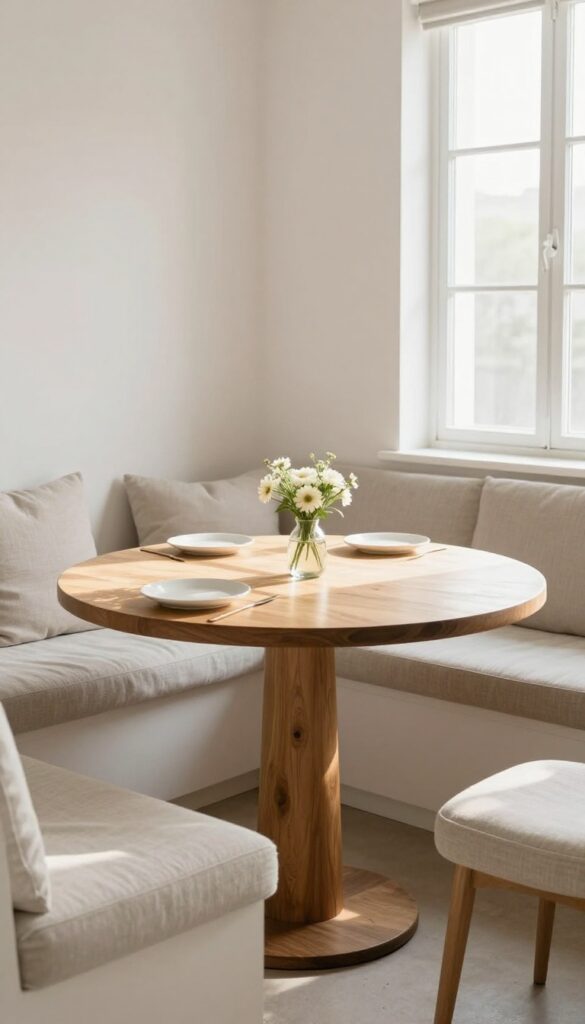
Square and rectangular tables are the usual go-to for banquettes, but a round or oval table changes the whole feel of the space. It softens all those right angles and makes it much easier to slide in and out, especially if your banquette is tucked into a corner. Plus, there's something naturally inviting about a round table—everyone can see each other, which makes meals feel more connected and less like you're sitting in a row at a diner.
Why It Works
A round table eliminates sharp corners that can make a tight banquette feel cramped. The curved shape creates a natural flow around the seating area, so people can get in and out without bumping knees or shuffling sideways. And because there's no head of the table, conversations feel more inclusive and relaxed.
Best For
This setup works beautifully in smaller kitchens or breakfast nooks where space is at a premium. The round shape fits neatly into corners or bay windows and can make an awkward layout feel intentional. It's also a great choice for families who want a cozy, communal spot for everyday meals.
Styling Tip
Opt for a pedestal base instead of four legs—it gives everyone more legroom and makes it easier to scoot chairs in and out. Pair it with a warm wood finish or a painted base that matches your banquette cushion for a pulled-together look. A simple linen tablecloth or a round woven placemat adds softness without clutter.
5. Layered Lighting Over the Table
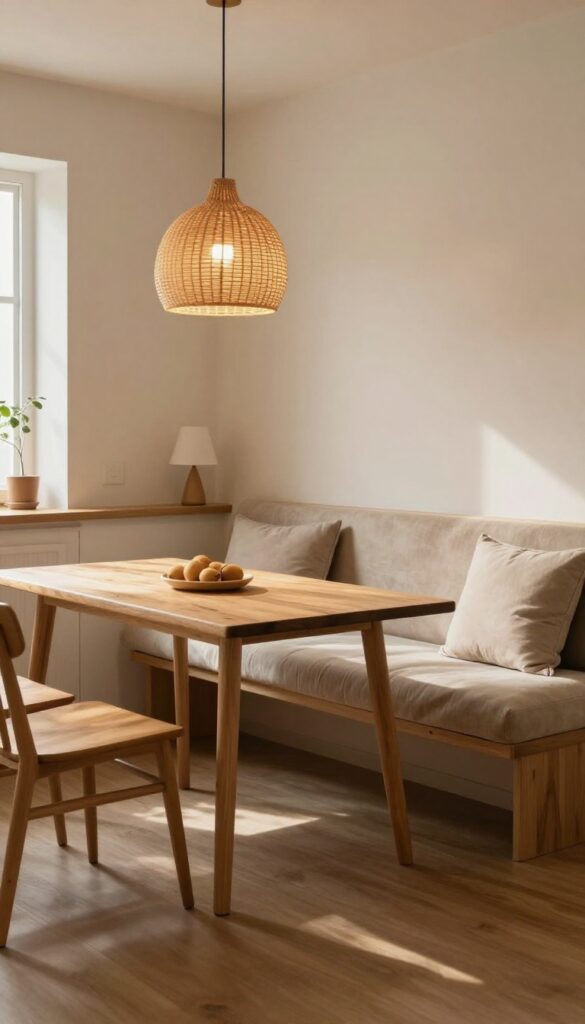
A single overhead light can leave a banquette feeling flat, especially in the evening. Layering your lighting—starting with a pendant or chandelier hung low over the table—gives the nook its own glow. Add a dimmer switch and warm bulbs, and you can shift from bright breakfasts to soft, candlelit dinners without changing a thing.
Why It Works
A low-hanging fixture creates a visual anchor, making the banquette feel like a defined dining zone rather than an afterthought. The dimmer gives you control over the mood, so the same corner works for morning coffee and evening meals. Warm light (2700K–3000K) softens faces and makes the space feel instantly cozier.
Best For
Banquettes in open-plan kitchens where the eating area needs its own identity. It’s especially effective in narrow nooks or corners where a single statement light can do the job of defining the space without adding clutter.
Styling Tip
Hang the fixture so the bottom sits 30–36 inches above the tabletop. Choose a shade with a slight opening at the bottom to direct light downward, and pair it with a plug-in wall sconce or a small table lamp on a nearby counter for extra warmth.
6. Upholstered Backrests for Comfort
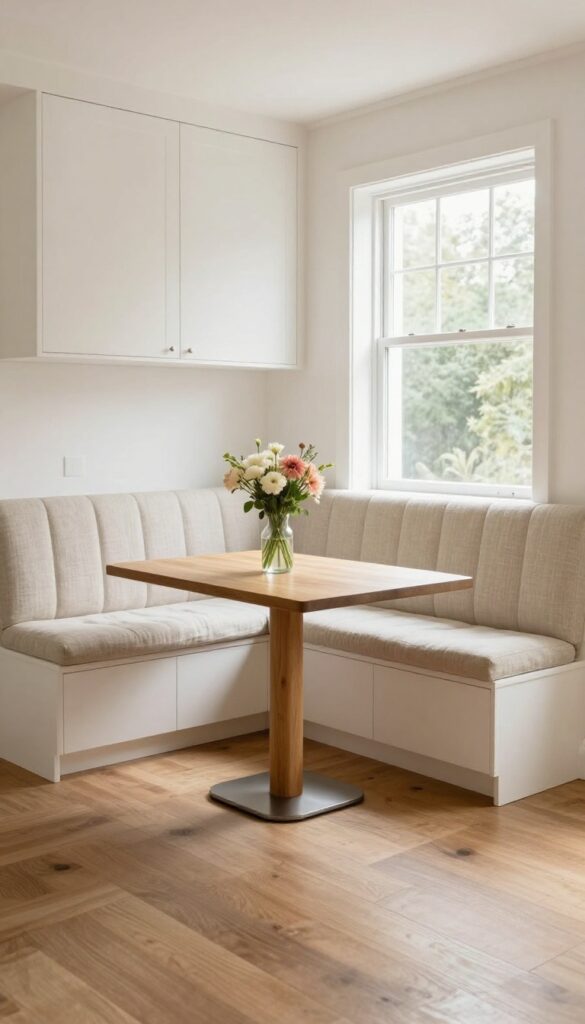
Hard bench backs might look clean, but they don't invite you to linger. Adding a padded backrest changes the whole feel of your banquette, making it a spot where people actually want to sit and stay. Upholster it in a durable fabric like linen or cotton blend, and you get that soft, warm touch without sacrificing practicality.
Why It Works
Comfort is key for a banquette that gets daily use. A padded backrest cushions your spine and shoulders, so long breakfasts or dinner parties don't leave you sore. It also softens the look of the kitchen, balancing out hard countertops and tile floors with a cozy, inviting texture.
Best For
This idea shines in family kitchens where people gather for meals, homework, or coffee. It's also great for narrow banquettes where you lean back more, since the padding prevents that hard, cold feeling against your back.
Styling Tip
Choose a fabric that's stain-resistant and easy to wipe clean—performance linen or a cotton-polyester blend works well. Tuck in a few lumbar pillows in a contrasting color or pattern to add depth, but keep them small so they don't crowd the seating.
7. Open Shelving Above the Bench
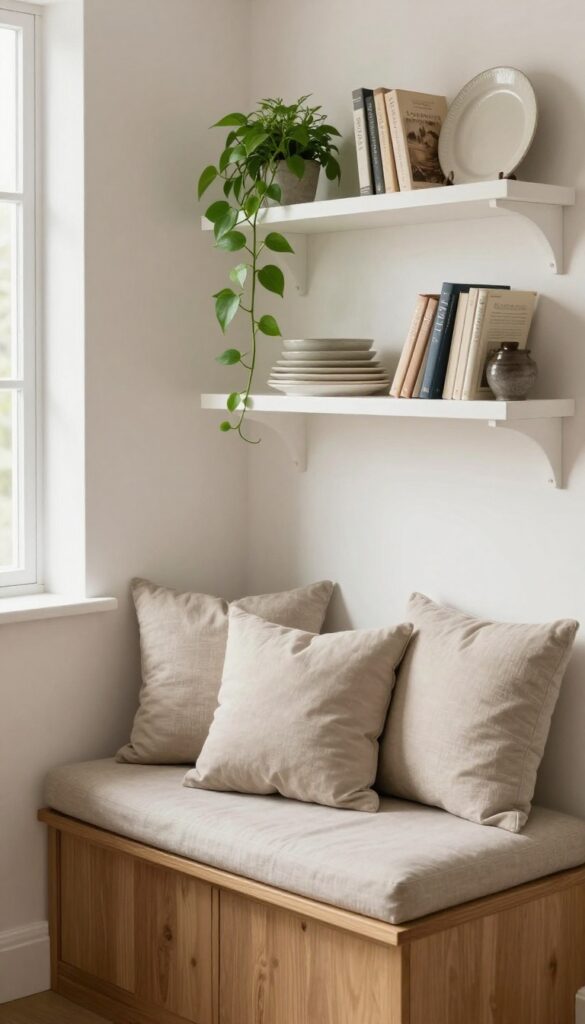
If your banquette is tucked into a corner or against a wall, the space above it is prime real estate. Rather than leaving it bare, mount a couple of floating shelves to hold everyday dishes, cookbooks, or a few trailing plants. It keeps frequently used items within easy reach while adding a layer of warmth and personality.
The key is to style them simply—think a mix of ceramics and greenery—so the look stays cozy without feeling cluttered.
Why It Works
Open shelving makes the banquette area feel more intentional and lived-in. It turns a blank wall into a functional display that’s both practical and visually appealing. Plus, having dishes and glassware close at hand makes setting the table or grabbing a coffee cup effortless.
Best For
This idea works well in smaller kitchens where cabinet space is tight, or in any banquette nook that needs a little character. It’s also great for renters who can’t install permanent cabinetry—just a few sturdy shelves and some brackets do the trick.
Styling Tip
Stick to a neutral palette for the shelves themselves—white or natural wood keeps the look airy. On the shelves, group items in odd numbers and vary heights: stack a couple of plates, lean a cookbook, and add a small potted herb or a trailing pothos. Avoid overcrowding; leave some breathing room so the display feels curated, not chaotic.
8. A Bold Color or Pattern on the Bench
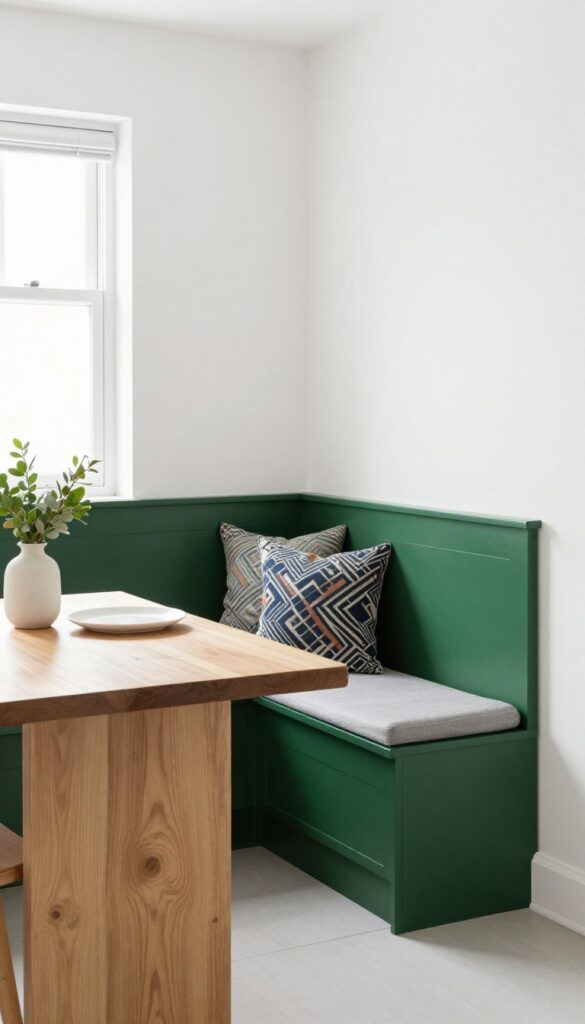
Sometimes a banquette just needs a little drama. Painting the bench a deep green, navy, or terracotta instantly turns it into a focal point, while a patterned cushion adds personality without overwhelming the space. The trick is to keep everything else quiet—neutral walls, simple tableware, maybe a natural wood table.
That way the boldness feels intentional, not chaotic, and the banquette becomes the warm, inviting heart of your kitchen.
Why It Works
A bold bench draws the eye and gives the kitchen a clear anchor. It adds color and character without requiring a full renovation, and the contrast against neutral surroundings makes the space feel grounded and curated.
Best For
This works especially well in open-plan kitchens or eat-in areas where you want to define the dining zone. It's also great for kitchens with mostly white or light cabinetry, as the bench provides a much-needed pop of warmth.
Styling Tip
If you paint the bench, choose a semi-gloss or satin finish so it's easy to wipe down. For cushions, go with a durable, stain-resistant fabric in a pattern that picks up one of your kitchen's accent colors—like a subtle stripe or geometric print.
9. Natural Textures for an Organic Feel
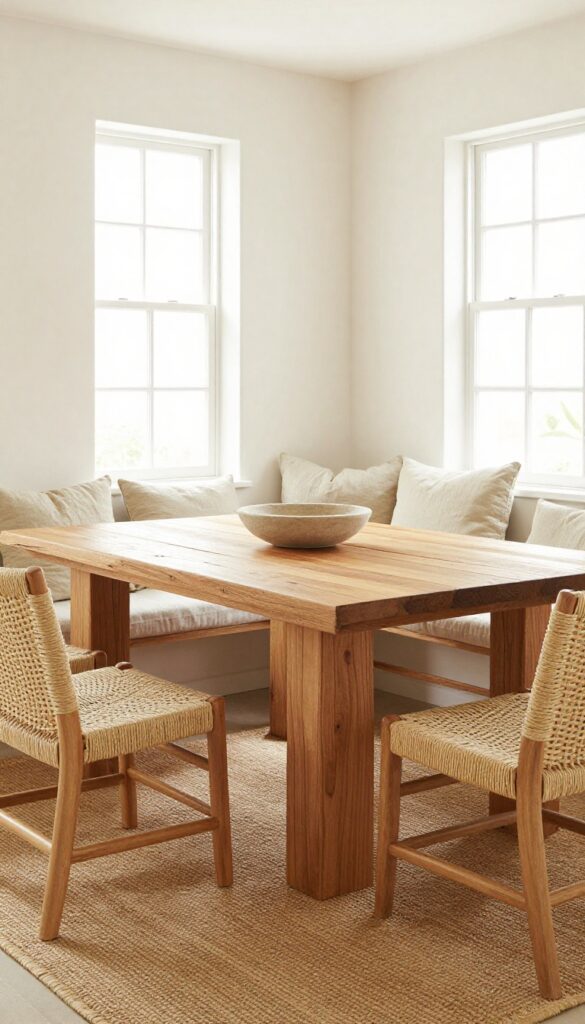
There’s something grounding about a banquette that mixes wood, rattan, linen, and stone. These materials bring warmth without trying too hard—they just feel right. A wooden table with visible grain, woven placemats, and a soft jute rug underfoot turn the banquette into a spot you actually want to linger at.
The best part? These textures only get better with age, developing a patina that adds character over time.
Why It Works
Natural textures create a layered, tactile space that feels inviting and lived-in. The combination of hard and soft surfaces—like smooth stone countertops next to a rough linen cushion—keeps the eye moving and adds depth. Plus, materials like wood and rattan are durable enough for daily use, so the banquette stays practical while looking effortlessly stylish.
Best For
This look is perfect for kitchens that get a lot of traffic, especially if you have kids or pets. The forgiving nature of natural materials means spills and scratches just add to the charm. It also works beautifully in homes with an earthy or rustic vibe, but can be toned down with neutral linens for a more modern feel.
Styling Tip
Mix different wood tones to keep things interesting—pair a lighter oak table with darker rattan chairs or a walnut bench. Add a stone bowl or a simple ceramic vase as a centerpiece to tie in the organic theme. Keep textiles like cushion covers and napkins in earthy tones like oatmeal, sage, or terracotta for a cohesive look.
FAQ
How much space do I need for a kitchen banquette?
A banquette can work in tight spots. Aim for at least 4 feet of wall space for a two-person setup. For a family-sized nook, plan for 6 to 8 feet.
Leave 12 to 18 inches between the table edge and the bench for easy seating.
What’s the best table shape for a banquette?
Round or oval tables are ideal because they soften the lines and make it easier to get in and out. Rectangular tables work too, especially in longer nooks. A pedestal base maximizes legroom.
How do I make a banquette feel cozy without looking cluttered?
Stick to a few key textures—like a chunky knit throw, linen cushions, and a natural wood table. Limit decorative items to one or two per shelf. Use warm lighting to set the mood without adding physical stuff.
Can I add storage to a banquette without making it bulky?
Yes. Use shallow drawers under the seat or slim pull-out bins. Avoid deep cabinets that push the seating too far forward.
Baskets on open shelves above the bench also add storage without visual weight.
What fabric is best for banquette cushions?
Look for durable, washable fabrics like cotton canvas, linen blends, or performance velvet. Darker colors or subtle patterns hide stains better. Removable covers make cleaning much easier.
Conclusion
A warm kitchen banquette isn’t about perfection—it’s about creating a spot that feels natural to use every day. Whether you go for bold color, layered textures, or smart storage, the goal is a space that welcomes you without fuss. Start with one or two ideas that resonate with your home’s layout and your daily habits.
Small changes, like swapping in a round table or adding a dimmer switch, can make a big difference in how the room feels. Your banquette should be as practical as it is inviting.