9 Inviting Kitchen Worktop Ideas That Look Thoughtful, Not Overdone
Your kitchen worktop does a lot of heavy lifting. It's where you prep meals, set down groceries, and sometimes even eat breakfast on the go. But it also sets the visual tone for the whole room.
A thoughtful worktop choice can make your kitchen feel open, calm, and easy to live in. The trick is picking something that looks intentional without trying too hard.
These nine ideas lean into a light and airy feel while keeping things smart and space-aware. No fussy finishes or trend-driven gimmicks here—just surfaces that work with your home, not against it.
1. Warm White Quartz for a Clean, Soft Backdrop
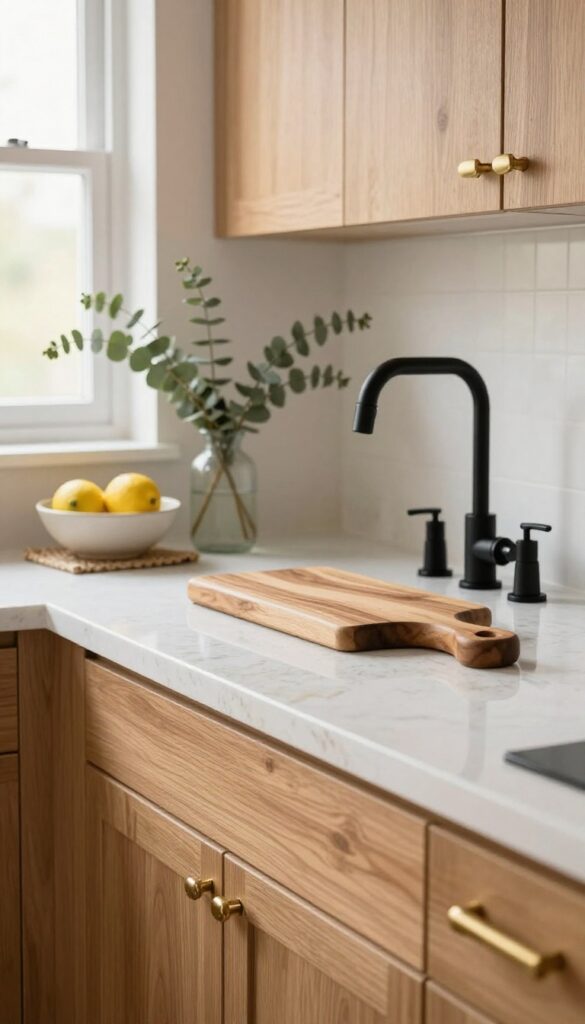
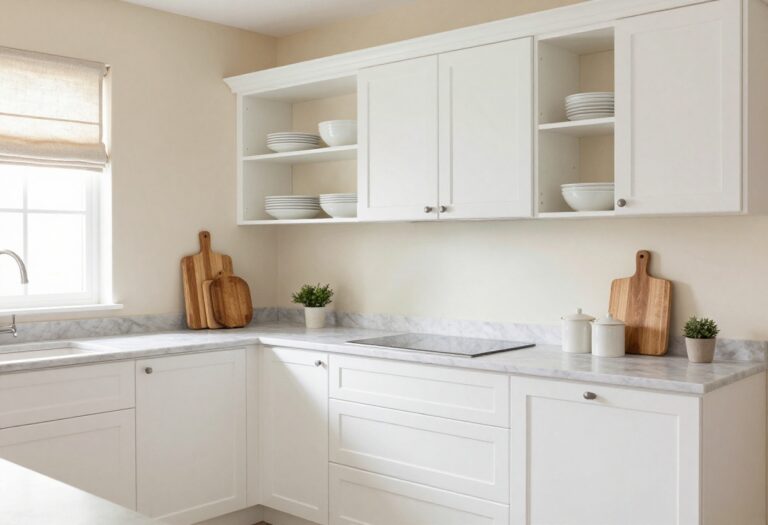
A kitchen worktop sets the tone for the whole room, and warm white quartz delivers a serene foundation that feels both fresh and inviting. Unlike stark white surfaces that can feel clinical, warm white quartz has a subtle creaminess that softens the space. It pairs effortlessly with natural wood, matte black fixtures, or brushed brass, making it a flexible choice for any style.
The gentle veining adds just enough visual interest to keep the surface from feeling flat, while still maintaining a calm, uncluttered look.
Why It Works
Warm white quartz reflects light beautifully, making smaller kitchens feel more open and airy. Its non-porous surface is stain-resistant and easy to clean, which is a huge plus for busy cooking spaces. The soft hue also helps hide everyday smudges and crumbs better than darker stones, so your worktop stays looking tidy with minimal effort.
Best For
This worktop is ideal for kitchens that lean modern, Scandinavian, or transitional, especially if you want a light, bright feel without going all-white. It also works well in compact galley kitchens or open-plan layouts where the countertop needs to blend seamlessly with living areas.
Styling Tip
Balance the softness of warm white quartz with contrasting textures like a chunky wooden cutting board, woven placemats, or a matte black tap. Add a small vase of fresh eucalyptus or a simple ceramic fruit bowl to keep the look natural and lived-in.
2. Light Oak Butcher Block for Natural Warmth
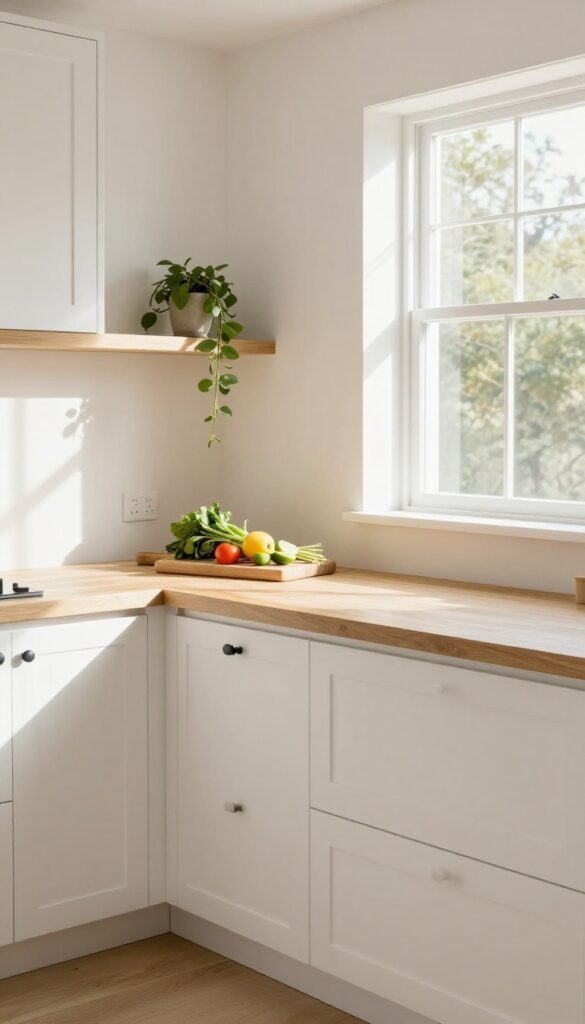
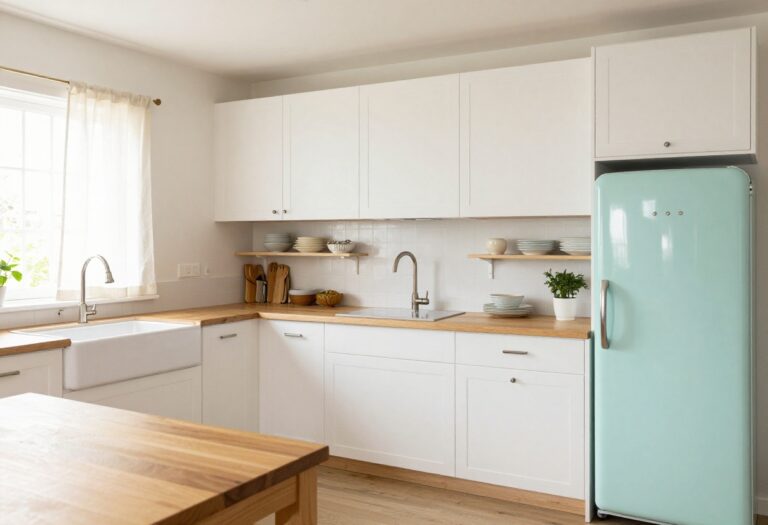
Light oak butcher block brings organic texture and warmth to your kitchen. It softens hard lines and pairs beautifully with white cabinetry, creating a cozy yet airy feel. The pale wood keeps the space from feeling heavy while adding just enough character to make the room feel lived-in and inviting.
Why It Works
Butcher block is naturally warm both visually and physically. The light oak tone reflects light, making the kitchen feel more open, while the wood grain adds subtle pattern without overwhelming the space. It’s also a durable work surface that stands up to daily chopping and prepping.
Best For
This works wonderfully in kitchens with white or light-colored cabinetry, especially if you want to introduce natural elements without darkening the room. It’s also great for galley kitchens or smaller spaces where dark countertops might feel too heavy.
Styling Tip
Pair light oak butcher block with matte black or brushed brass hardware for a modern touch. Add a few open shelves with white dishes and a trailing plant to keep the look light and layered. Seal the wood properly to protect against stains and moisture.
3. Matte Porcelain in Soft Gray for Understated Elegance
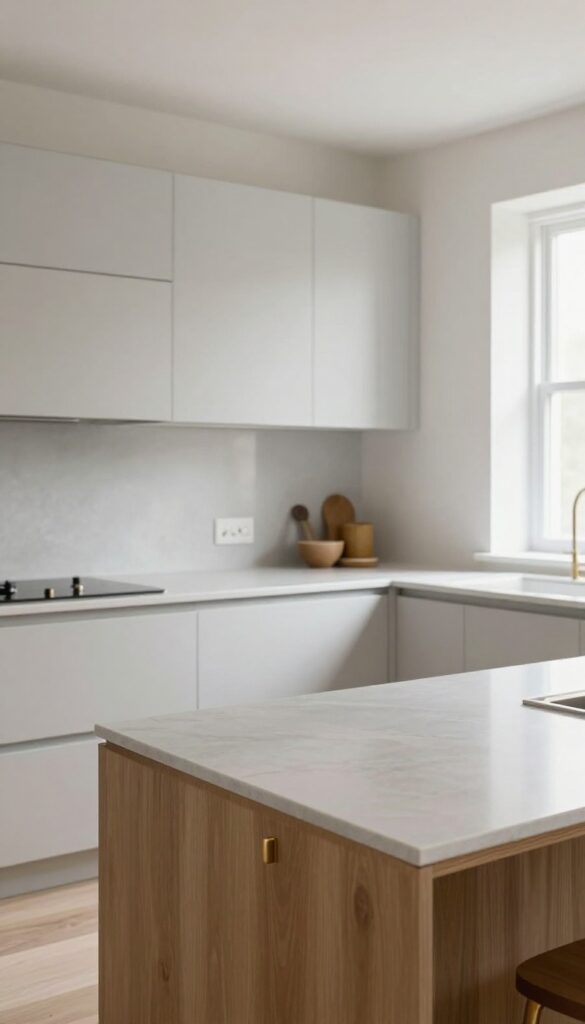
Soft gray matte porcelain brings a quiet sophistication to the kitchen without trying too hard. Unlike high-gloss surfaces that can feel cold or overly reflective, this finish absorbs light gently, making the space feel calm and airy. It’s the kind of worktop that doesn’t shout for attention but still anchors the room with a solid, grounded presence.
Why It Works
Matte porcelain is incredibly durable and non-porous, so it resists stains, scratches, and heat without needing sealants. The soft gray tone hides daily smudges and water spots better than darker or lighter colors, keeping the worktop looking pristine with minimal effort.
Best For
This worktop is ideal for busy family kitchens where you want a clean, modern look without constant upkeep. It also suits open-plan spaces where the counter needs to blend seamlessly with light cabinetry and pale walls, maintaining a bright, uncluttered feel.
Styling Tip
Pair the soft gray surface with warm wood accents—like a butcher block island or open shelving—to add texture and prevent the space from feeling too cool. Brushed brass or matte black hardware will introduce subtle contrast without overpowering the calm vibe.
4. Thin-Profile Dekton for a Sleek, Seamless Look
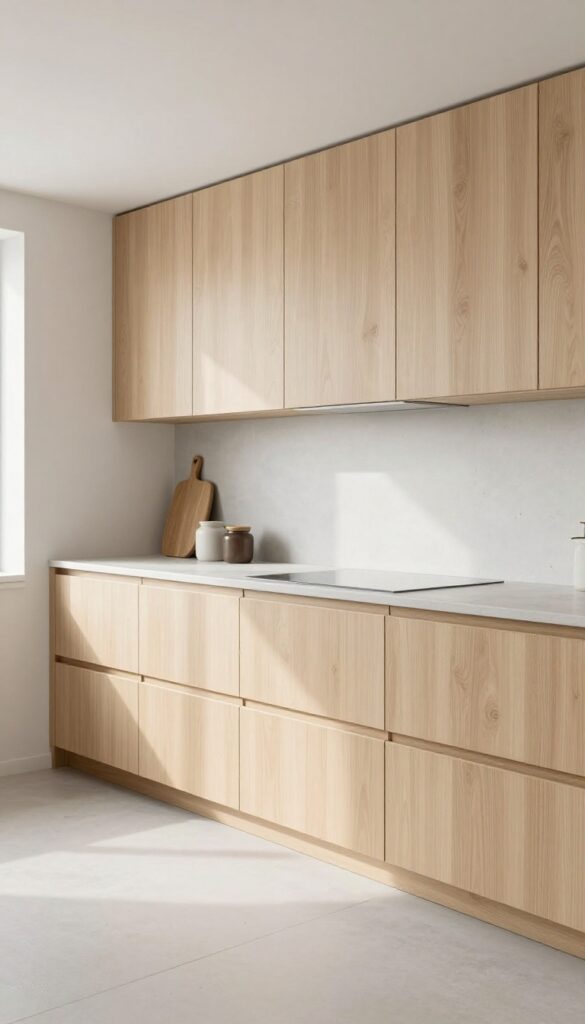
A kitchen worktop that feels almost invisible might sound contradictory, but that's exactly the effect Dekton's ultra-thin profile achieves. At just 12mm thick, these surfaces create a streamlined silhouette that doesn't dominate the room—it just quietly supports your cooking and gathering. The light color options, like pale concrete or soft white, bounce natural light around the space, making the whole kitchen feel more open and airy.
It's a modern choice that doesn't scream for attention, which is exactly what you want in a thoughtfully designed home.
Why It Works
Dekton's thin profile reduces visual bulk, so your kitchen feels larger and less cluttered. The material itself is incredibly durable—resistant to heat, scratches, and stains—so you don't have to sacrifice practicality for style. The seamless look also means fewer grout lines or joints to clean, making daily upkeep a breeze.
Best For
This worktop shines in modern or minimalist kitchens where clean lines and open space are priorities. It's also ideal for small kitchens or galley layouts where every inch of visual breathing room matters. If you love the look of stone but want something lighter and less imposing, this is your match.
Styling Tip
Pair a light Dekton worktop with matte white or pale oak cabinetry to keep the palette soft and cohesive. Add warmth with a wooden cutting board or a few ceramic jars—these small touches prevent the space from feeling too cold. For hardware, go with brushed brass or matte black for a subtle contrast that still feels airy.
5. Reclaimed Wood Planks for Rustic Charm
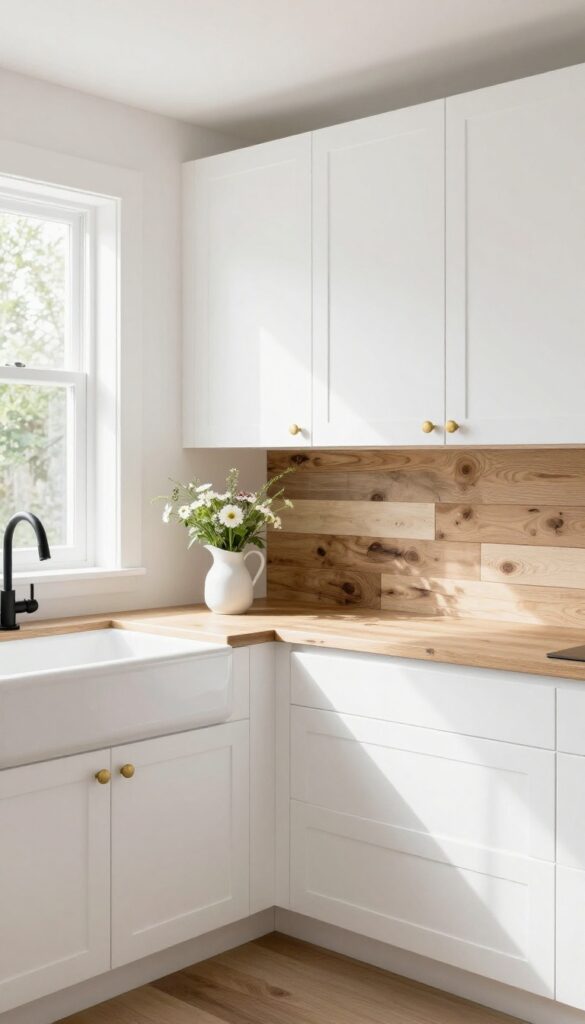
Reclaimed wood planks bring a slice of history into your kitchen without making it feel heavy or dark. The natural patina and varied grain patterns add texture and warmth, while the light, airy angle keeps the space open and inviting. It's a sustainable choice that feels thoughtful, not overdone—like a well-loved farmhouse table that's been passed down through generations.
Why It Works
Reclaimed wood has a relaxed, lived-in feel that instantly makes a kitchen more welcoming. Its subtle imperfections and rich character add visual interest without competing with other elements, so the room stays balanced and calm.
Best For
This idea shines in kitchens with neutral or white cabinetry, where the wood becomes a focal point. It also works beautifully in open-plan spaces, connecting the kitchen to adjacent living areas with a cohesive, natural flow.
Styling Tip
Install reclaimed planks as a backsplash behind the stove or sink, or use them to create a floating shelf above a prep area. Pair with matte black or brass fixtures and simple white dishes to let the wood take center stage.
6. White Marble Look-Alike for Timeless Luxury
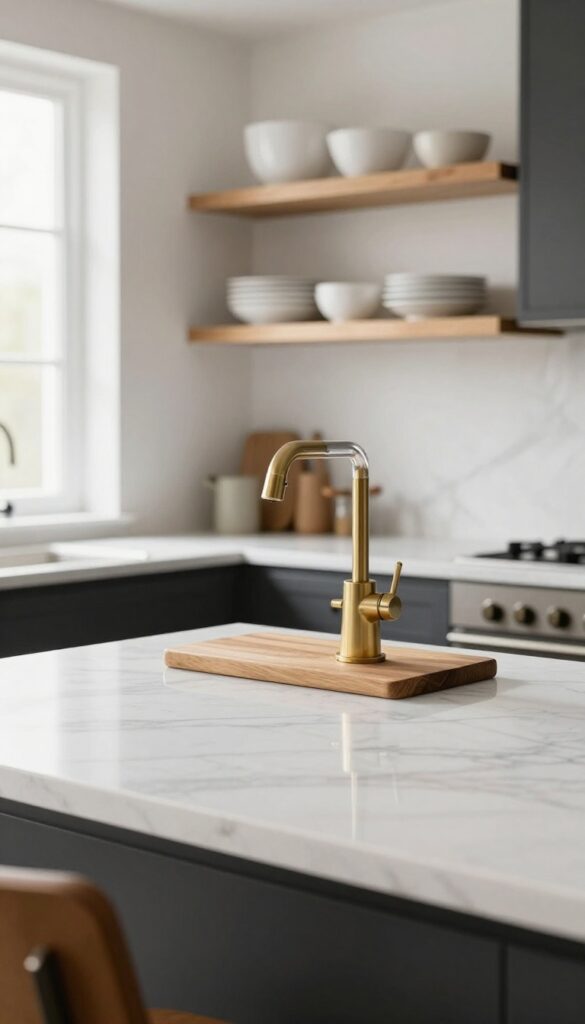
A kitchen that feels light, airy, and effortlessly sophisticated doesn’t need real marble—especially when engineered alternatives deliver the same visual impact without the stress. These surfaces mimic the soft white backdrop and delicate gray veining of natural stone, but they’re far more forgiving in daily use. The result is a workspace that feels open and refined, yet completely practical for real-life cooking and cleaning.
Why It Works
Engineered marble-look surfaces resist stains, scratches, and etching far better than natural stone, so you get that high-end aesthetic without constant worry. The pale base reflects light beautifully, making even a compact kitchen feel more spacious and serene. It’s a smart choice for anyone who loves the look of marble but needs a surface that can keep up with a busy household.
Best For
This idea is perfect for kitchens that crave a classic, luxurious feel but are used heavily—think family homes, rental properties, or anyone who cooks daily. It also suits small or dimly lit kitchens where a bright, reflective surface can open up the space visually.
Styling Tip
Pair the white marble look-alike with warm wood accents—like open shelving in oak or walnut—to prevent the space from feeling too cold. Add brushed brass or matte black hardware for a subtle contrast that feels intentional. Keep countertops relatively clear to let the veining shine, and introduce soft textiles like a linen runner or woven placemats to balance the sleek surface.
7. Blush-Tinted Concrete for a Subtle Pop of Color
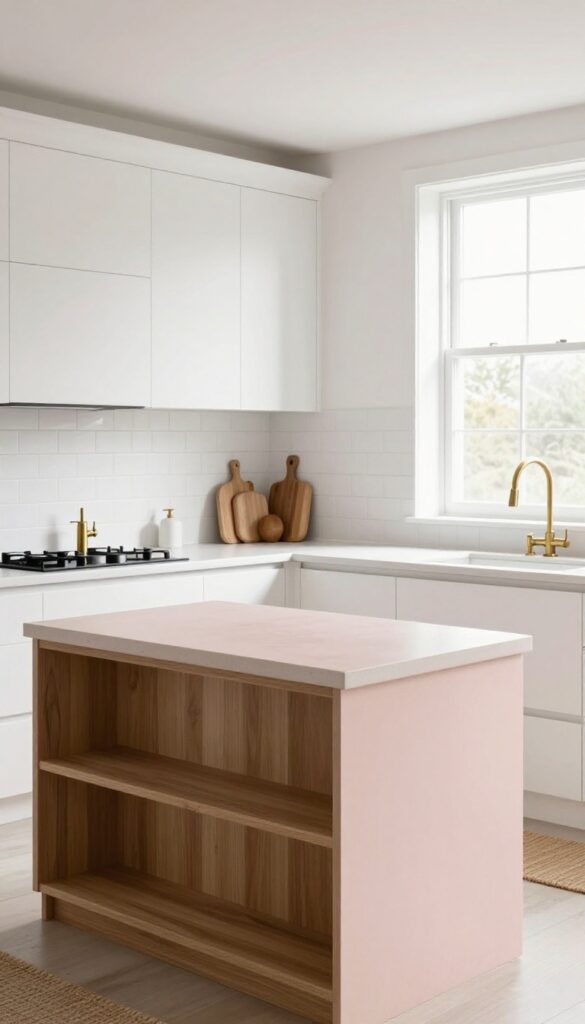
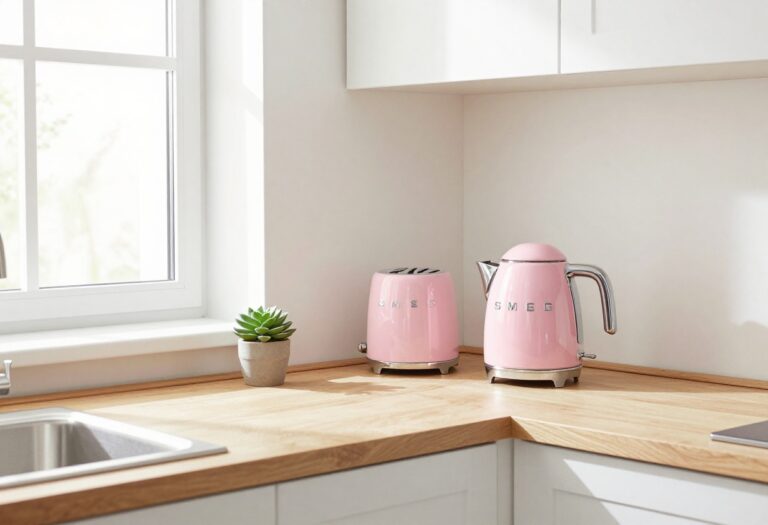
Concrete countertops have been a go-to for modern kitchens, but the raw gray can sometimes feel a bit cold. By adding a soft blush tint to the mix, you get the same industrial durability with a gentle warmth that softens the whole space. The pink hue is subtle enough that it doesn't scream for attention, yet it brings a quiet energy that makes the kitchen feel more inviting.
It's a smart way to introduce color without overwhelming the room, especially if you're working with a light and airy palette.
Why It Works
The blush tone catches natural light beautifully, creating a soft glow that makes the kitchen feel larger and more open. Because the color is integrated into the concrete rather than painted on, it won't chip or fade, so you get long-lasting personality without the upkeep. Plus, concrete's natural variations in texture and shade mean every surface is slightly unique, adding depth without clutter.
Best For
This idea shines in kitchens with white or pale wood cabinetry and lots of natural light. It's also a great fit for open-plan spaces where the kitchen flows into a living or dining area, since the blush can tie into accent pillows or artwork without feeling forced. If you're aiming for a look that's both modern and cozy, this is your sweet spot.
Styling Tip
Pair the blush concrete with brass or matte black fixtures for contrast, and keep the backsplash simple—a white subway tile or a soft marble slab works perfectly. Add a few warm wood cutting boards or a woven runner to reinforce the light, airy feel. Avoid adding any other strong colors on the countertops; let the blush be the main event.
8. Glossy White Tile for a Reflective, Spacious Feel
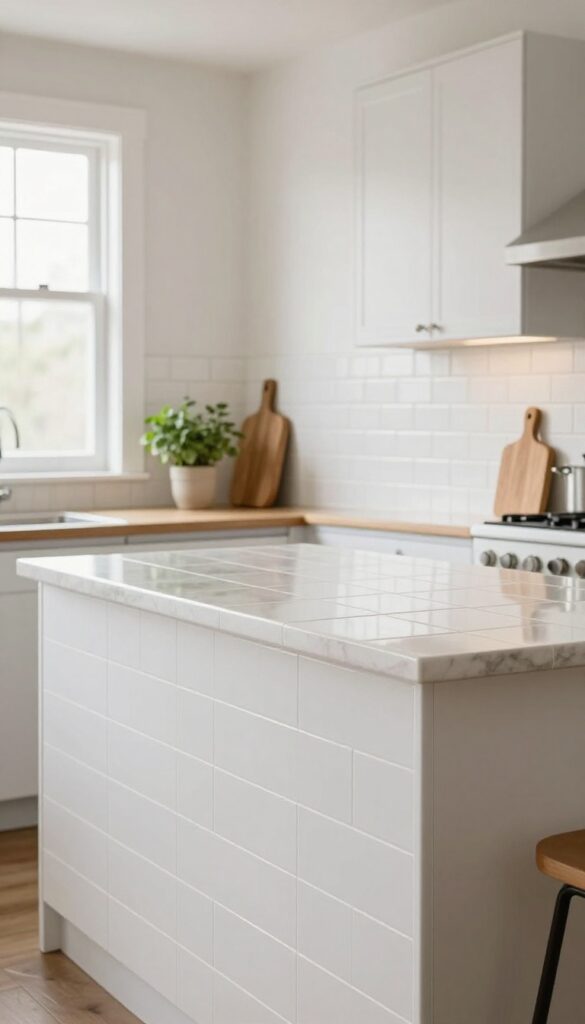
Glossy white tile worktops are a classic choice for kitchens that crave light and openness. The high-shine surface acts like a mirror, bouncing natural and artificial light around the room to create an airy, expansive feel. It’s a smart, space-aware solution that works especially well in smaller kitchens or those with limited window exposure.
The clean, polished look feels fresh without being cold, and the reflective quality adds a subtle sense of depth that makes the whole kitchen feel larger than it is.
Why It Works
The glossy finish maximizes light reflection, which visually expands the space and brightens dark corners. White tile also has a timeless, neutral appeal that pairs well with almost any color scheme or cabinet style. Plus, the non-porous surface is easy to wipe clean, making it a practical choice for busy kitchens where spills and splatters are part of daily life.
Best For
This idea is perfect for small kitchens, galley layouts, or any space that could use a boost in brightness. It’s also great for kitchens with dark cabinetry or flooring, as the white tile provides a striking contrast that keeps the room from feeling too heavy. If you love a clean, modern aesthetic but want to avoid a sterile look, glossy white tile offers a warm, inviting alternative when paired with natural textures.
Styling Tip
- To keep the look from feeling too clinical, introduce warm wood accents like a butcher block island or open shelving. Add touches of greenery with potted herbs or a small vase of fresh flowers. For a softer feel, choose a tile with a slight bevel or a handmade look rather than a perfectly uniform subway tile.
- And don’t forget under-cabinet lighting—it will make the glossy surface really glow.
9. Black Soapstone for a Quiet, Grounding Contrast
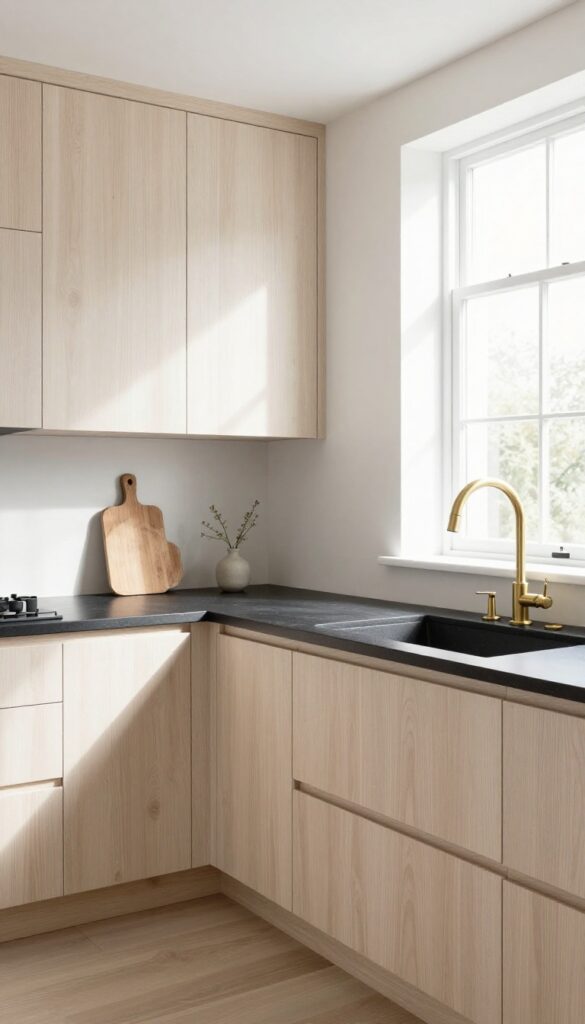
A black soapstone worktop brings a calm, matte presence that feels more like a natural element than a design statement. Unlike glossy surfaces that bounce light around, this stone absorbs it, creating a soft, grounding focal point in a light and airy kitchen. Over time, the surface develops a subtle patina—small marks and gentle wear that add character without looking busy.
It’s the kind of material that doesn’t shout for attention but quietly holds the room together, making everything around it feel more intentional.
Why It Works
Soapstone’s deep, even color provides a visual anchor in pale kitchens, preventing them from feeling washed out or too sterile. Its matte finish reduces glare and fingerprints, so the surface always looks clean and composed. The natural patina means minor scratches blend in rather than stand out, giving the worktop a lived-in elegance that fits perfectly with a smart, space-aware style.
Best For
This worktop is ideal for kitchens with lots of natural light, where the dark surface can create a striking but serene contrast. It also works well in galley kitchens or smaller spaces where you want a bold element without overwhelming the room. If you love the look of slate or dark stone but prefer a softer, more organic feel, soapstone is a great match.
Styling Tip
Pair black soapstone with light wood cabinetry and open shelving in pale oak or whitewashed pine. Add a few warm brass or unlacquered brass accents—like a faucet or cabinet pulls—to introduce subtle shine. Keep the countertop relatively clear; let a single wooden cutting board or a small vase with fresh herbs be the only decor, so the stone’s texture stays the star.
FAQ
What is the most durable kitchen worktop material?
Quartz and Dekton are among the most durable options, resisting scratches, stains, and heat well. Porcelain is also highly durable and low-maintenance.
How do I keep a light-colored worktop looking clean?
Seal porous materials like marble or wood properly. For non-porous surfaces like quartz, daily wiping with mild soap and water is enough. Avoid harsh cleaners that can dull the finish.
Can I mix different worktop materials in one kitchen?
Absolutely. Combining materials, like wood on an island and quartz on perimeter counters, adds visual interest. Just keep the color palette cohesive for a balanced look.
What worktop works best for small kitchens?
Light-colored, reflective surfaces like glossy white tile or warm white quartz help small kitchens feel larger. Thin profiles also reduce visual bulk.
How much maintenance does a wood worktop require?
Wood worktops need regular oiling to prevent drying and staining. They're best for low-moisture areas and require prompt cleaning after spills.
Conclusion
Choosing the right worktop is about finding a surface that feels like it belongs in your home. Whether you lean toward warm wood, soft stone, or sleek porcelain, each option here brings something different to the table—literally. The best choice is one that fits your daily habits and makes your kitchen feel a little more inviting.
Take your time, consider how you use the space, and pick a worktop that feels thoughtful without being overdone. A light, airy kitchen starts with a surface that works as hard as you do.