10 Small Black Kitchen Ideas for Modern Homes
Dark finishes solve more small-kitchen problems than most people realize. Black hides visual clutter, sharpens contrast, and instantly makes basic cabinets look intentional instead of builder-grade.
The trick is using it with restraint and purpose. Small kitchens don’t need to feel cramped or heavy just because you love bold design.
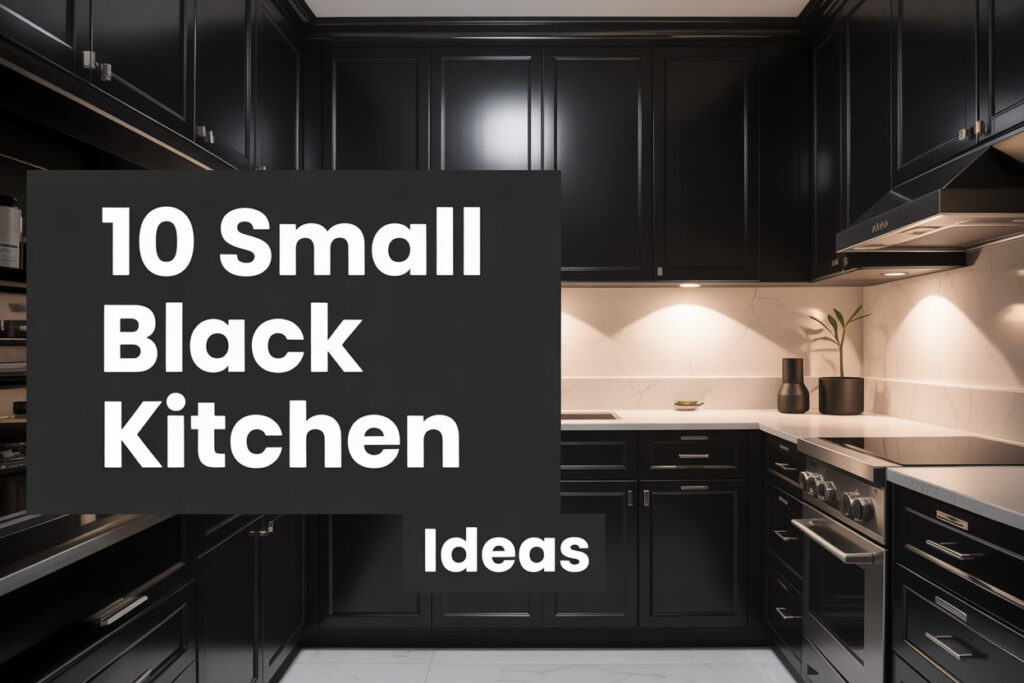
When you balance black with smart layout choices, the space actually feels tighter in a good way—clean, modern, and put together.
1. Matte Black Lower Cabinets with Light Upper Walls
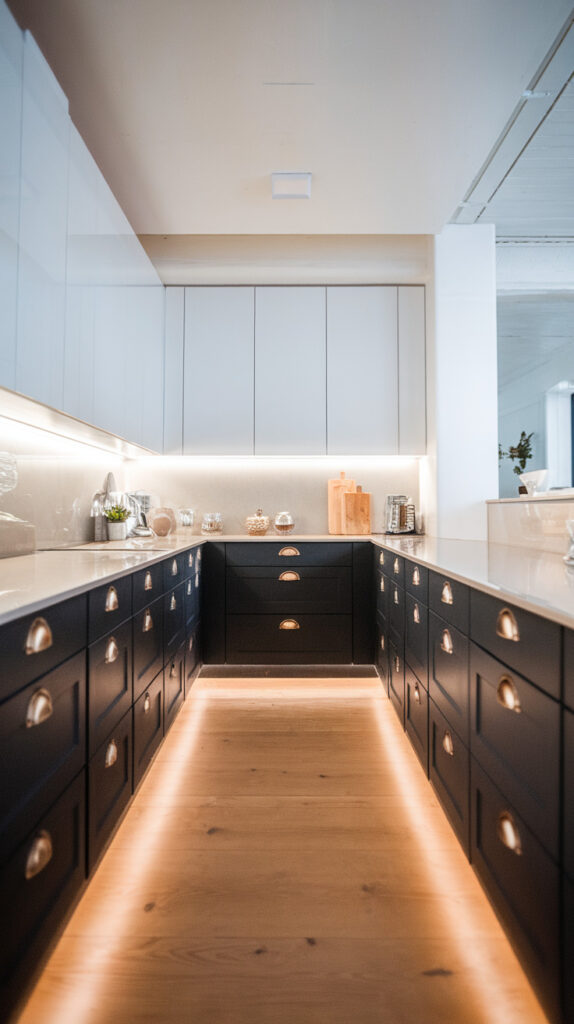
Storage usually overwhelms a small kitchen long before color does. Most compact kitchens feel crowded because cabinets run floor to ceiling in the same finish, creating one solid block of visual weight. Painting just the lower cabinets matte black keeps the depth grounded while letting the upper walls breathe.
I’ve tried this in a narrow galley setup, and the difference shocked me. The bottom half felt sleek and tailored, while the upper half stayed open and airy. It felt modern without trying too hard.
Why This Works
Your eye naturally rests lower in a room, so anchoring that space with a dark tone stabilizes the layout. Leaving the upper area lighter prevents the walls from closing in.
Black below also hides scuffs and everyday wear, which matters in tight kitchens where cabinets take a beating. It’s functional, not just trendy.
How to Do It
- Remove cabinet doors and hardware before painting so you get clean edges.
- Use a durable matte cabinet paint that resists fingerprints.
- Keep upper walls or cabinets white, cream, or soft gray.
- Upgrade hardware to brushed brass or stainless for contrast.
Each step matters because small mistakes show more clearly against black surfaces.
Style & Design Tips
Avoid high-gloss finishes on lower cabinets unless you love constant wiping. Matte or satin black feels more modern and forgiving.
Pair it with light countertops to prevent heaviness. White quartz or light marble-look surfaces create contrast that keeps the room balanced.
Pro Tip or Budget Hack
If repainting all lower cabinets feels overwhelming, start with just the island base. It delivers the same grounded look without committing to the full kitchen.
2. Black Open Shelving Instead of Upper Cabinets
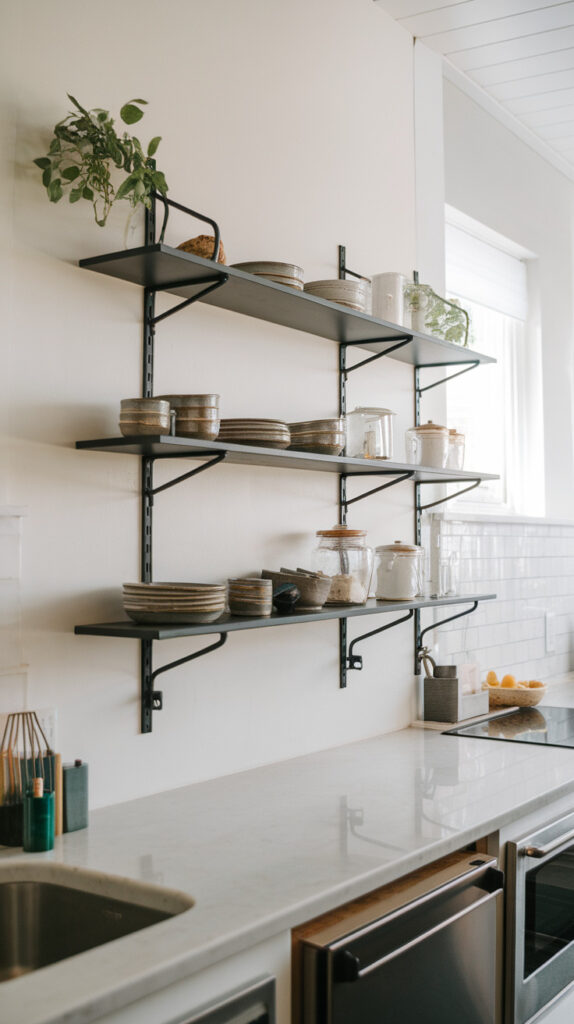
Upper cabinets often make small kitchens feel boxed in. They’re bulky, and when they stretch across a short wall, they visually shrink everything.
Swapping some of them for black open shelves changes the vibe immediately. It keeps storage functional while opening the vertical space, and the black shelving adds a modern edge instead of looking farmhouse-basic.
Why This Works
Open shelves reduce visual weight because they allow the wall behind them to show through. Black shelves create strong horizontal lines that feel structured without being bulky.
They also encourage you to curate what’s visible. When everything on display is intentional, the kitchen feels styled rather than stuffed.
How to Do It
- Remove one section of upper cabinets carefully and patch the wall.
- Install sturdy black metal or wood shelves anchored into studs.
- Style with neutral dishes, glass jars, and a few plants.
- Keep spacing consistent to avoid a cluttered look.
Secure installation is crucial because shelves must handle real weight, not just decor.
Style & Design Tips
Stick to a limited color palette on the shelves. Too many bright objects kill the sleek black effect.
Use texture instead of color for interest. Ceramic, glass, and wood tones layered together look thoughtful without chaos.
Pro Tip or Budget Hack
Paint basic wood shelves black instead of buying expensive designer ones. Good brackets and proper spacing make even budget shelves look high-end.
3. Black Accent Wall Behind Open Storage
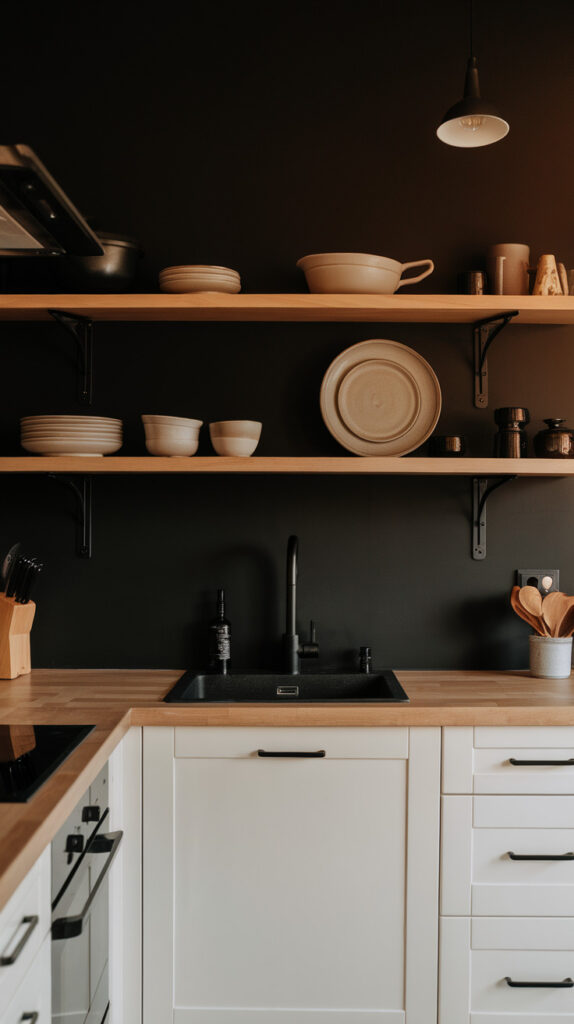
Small kitchens usually lack depth. Everything sits in one plane, and the room feels flat.
Painting one wall black—especially the one behind open shelving or dining nooks—adds dimension. It creates contrast that makes the rest of the kitchen pop.
Why This Works
Dark walls recede visually, which sounds backward but works beautifully. The black background makes lighter cabinets and decor stand out.
It also frames open storage in a way that feels deliberate. Instead of random shelves, you get a focal point.
How to Do It
- Choose a deep matte black paint with good coverage.
- Prep the wall thoroughly so texture doesn’t show through.
- Paint two even coats for rich saturation.
- Let it cure fully before reinstalling shelves.
Clean edges matter because black highlights uneven lines.
Style & Design Tips
Avoid pairing a black wall with dark cabinets in a tiny kitchen. Balance it with white or wood tones.
Layer in metallic accents. Brass, chrome, or matte nickel stand out beautifully against black.
Pro Tip or Budget Hack
Test the paint on a large sample board first. Lighting shifts black tones more than you expect, and some blacks lean blue or gray.
4. Black Kitchen Island in a Compact Layout
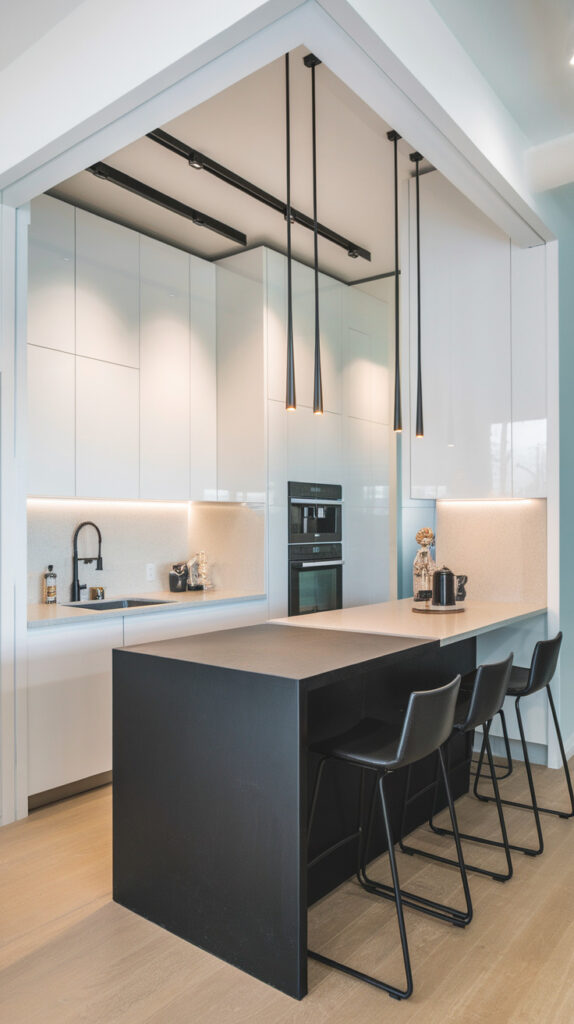
A small kitchen island can look awkward if it blends into everything else. Painting it black turns it into a statement instead of an afterthought.
I once updated a tiny island with black paint and new hardware, and it completely changed the room. It felt custom, not stock.
Why This Works
Islands sit in the center, so giving them a bold color defines the layout. Black creates contrast without needing extra decor.
It also hides scuffs from bar stools and foot traffic. That’s practical in a tight space.
How to Do It
- Sand and clean the island thoroughly.
- Apply a primer made for cabinetry.
- Use multiple thin coats of black paint.
- Seal with a protective topcoat if needed.
Thin coats prevent brush marks, which show easily on dark surfaces.
Style & Design Tips
Keep the countertop lighter for contrast. A white or butcher block top balances the base.
Add statement pendant lights above for cohesion without over-decorating.
Pro Tip or Budget Hack
Swap out the hardware at the same time. Even affordable brass pulls can make a black island look designer-level.
5. Black Backsplash for Bold Contrast
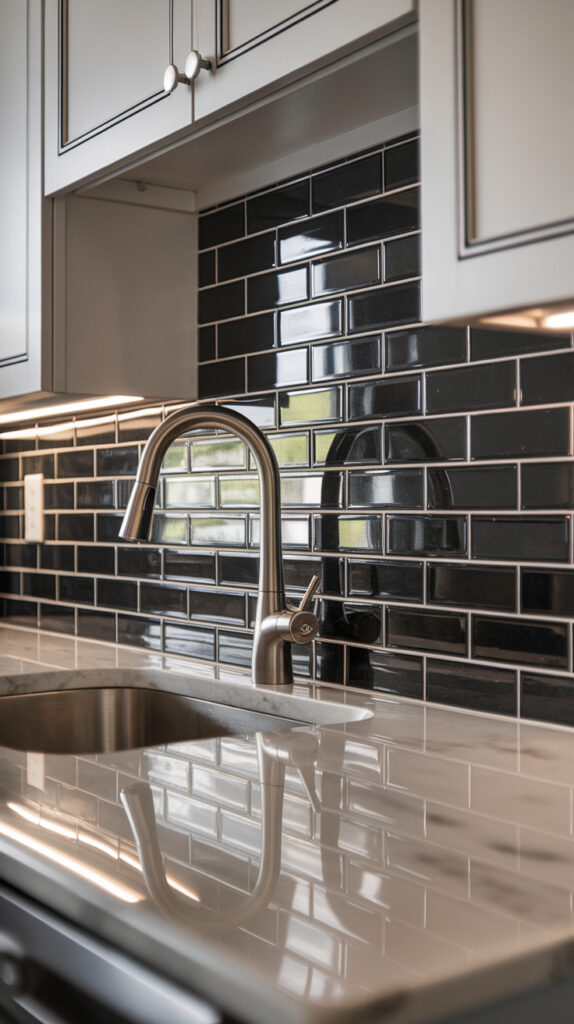
Backsplashes usually default to white subway tile, which is safe but predictable. In a small modern kitchen, a black backsplash can feel sleek and unexpected.
The key is texture, not just color. Flat black tile without variation can look heavy.
Why This Works
A dark backsplash anchors the workspace visually. It frames countertops and cabinets, giving the eye clear boundaries.
It also hides splashes and stains better than lighter grout lines.
How to Do It
- Choose black subway tile, hex tile, or textured ceramic.
- Use contrasting grout for subtle definition.
- Install evenly with spacers for clean lines.
- Seal grout to prevent discoloration.
Precision matters because uneven spacing becomes obvious with dark tile.
Style & Design Tips
Avoid pairing a black backsplash with dark countertops unless you want drama. Contrast keeps things modern.
Add under-cabinet lighting so the surface doesn’t disappear into shadow.
Pro Tip or Budget Hack
Peel-and-stick black tile works surprisingly well for renters. Just invest in high-quality adhesive versions.
6. Matte Black Hardware and Fixtures
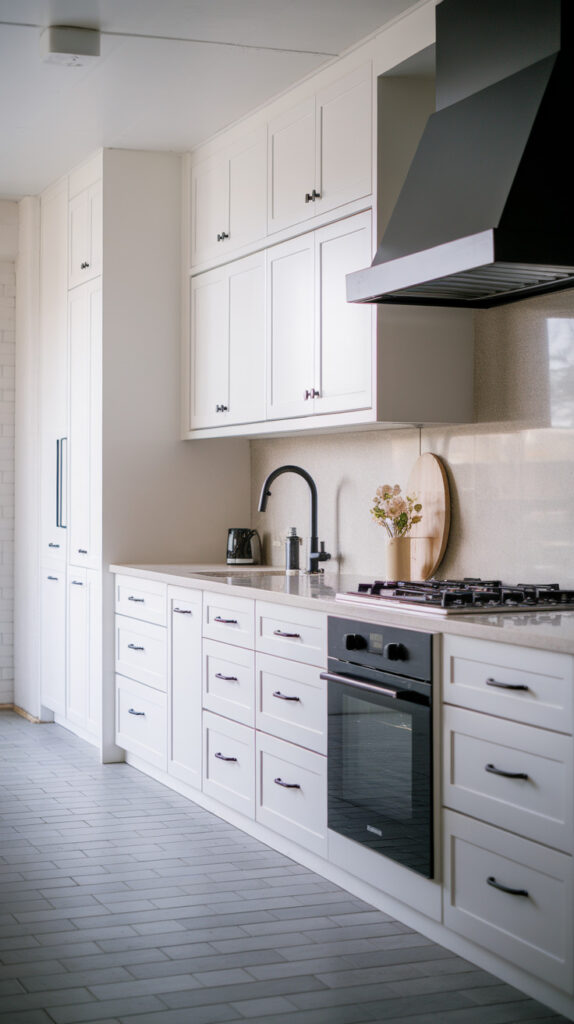
Sometimes a full paint job isn’t realistic. Changing hardware to matte black delivers a modern update with minimal effort.
It’s one of the easiest ways to refresh a dated kitchen without remodeling.
Why This Works
Black hardware adds sharp definition to lighter cabinets. It creates contrast lines that feel intentional.
Because it’s small-scale, it doesn’t overwhelm tight spaces.
How to Do It
- Measure existing hole spacing before buying pulls.
- Replace cabinet knobs and drawer handles consistently.
- Swap faucet for a matte black finish if budget allows.
- Keep finishes consistent throughout the room.
Consistency prevents the space from feeling mismatched.
Style & Design Tips
Avoid mixing too many finishes. Black pairs well with brass or stainless, but limit combinations.
Choose simple shapes. Overly ornate designs clash with modern style.
Pro Tip or Budget Hack
Spray-paint existing hardware with metal-safe matte black paint if replacing everything feels pricey.
7. Black-Framed Glass Cabinets
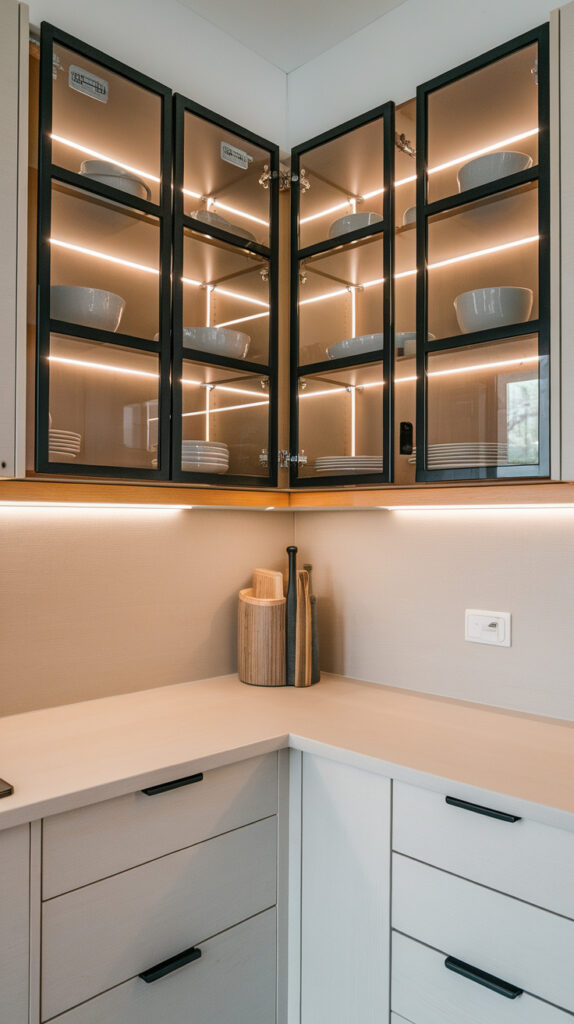
Solid cabinet doors can feel heavy in small kitchens. Replacing a few with black-framed glass inserts lightens the look while keeping structure.
This upgrade feels custom without knocking down walls.
Why This Works
Glass breaks up large cabinet blocks visually. Black framing keeps the design cohesive with modern trends.
You get display space without sacrificing storage.
How to Do It
- Remove panel centers carefully.
- Insert clear or frosted glass panels.
- Paint frames black for contrast.
- Reinstall with secure hardware.
Precision cutting ensures a polished finish.
Style & Design Tips
Keep items inside minimal and organized. Clutter ruins the glass effect fast.
Use warm interior lighting to prevent the cabinets from looking cold.
Pro Tip or Budget Hack
Frosted adhesive film can mimic custom glass inserts at a fraction of the cost.
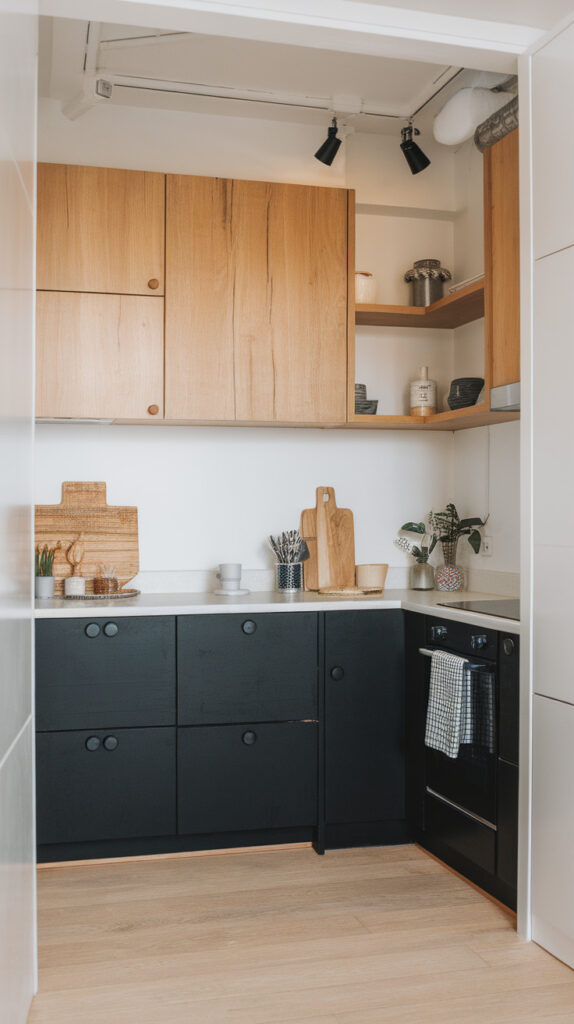
8. Black and Wood Combination Cabinets
All-black kitchens can feel intense in tight layouts. Pairing black with warm wood tones softens the effect instantly.
I love this combo because it feels modern but not sterile.
Why This Works
Wood adds warmth that balances black’s sharpness. The contrast keeps the room interesting without visual chaos.
It also prevents the kitchen from feeling flat or overly monochrome.
How to Do It
- Use black for lower cabinets.
- Install natural wood uppers or open shelves.
- Keep countertops neutral.
- Repeat wood tones in stools or decor.
Repeating tones creates cohesion.
Style & Design Tips
Choose mid-tone woods instead of very dark ones. Too much darkness shrinks the space.
Matte finishes look more current than glossy wood stains.
Pro Tip or Budget Hack
Use wood-look laminate if solid wood cabinets exceed your budget. Good-quality versions look convincing.
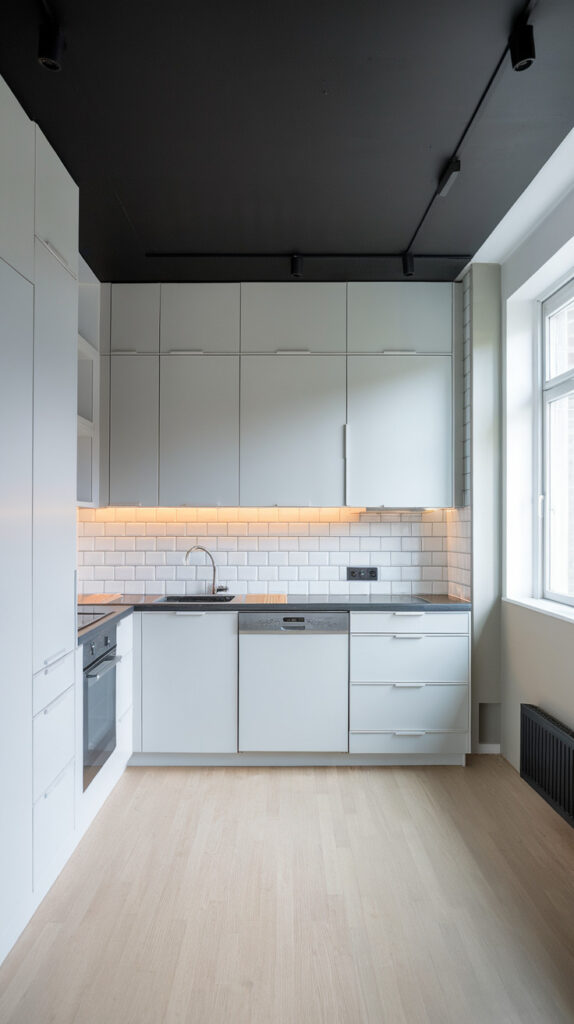
9. Black Ceiling for Dramatic Depth
Ceilings usually get ignored, especially in small kitchens. Painting a low ceiling black can actually make the walls feel taller.
It sounds risky, but it works when balanced properly.
Why This Works
Dark ceilings blur edges where walls meet overhead space. That softens visual boundaries.
It creates a cocoon effect that feels intentional rather than cramped.
How to Do It
- Prep and prime thoroughly.
- Use flat black paint to minimize reflection.
- Keep walls light for contrast.
- Add layered lighting to maintain brightness.
Lighting becomes essential when ceilings go dark.
Style & Design Tips
Avoid this in kitchens with minimal natural light. Balance is everything.
Use slim, modern fixtures that don’t hang too low.
Pro Tip or Budget Hack
Try painting just a small section above an island first. It gives impact without full commitment.
10. Black Appliances for Seamless Integration
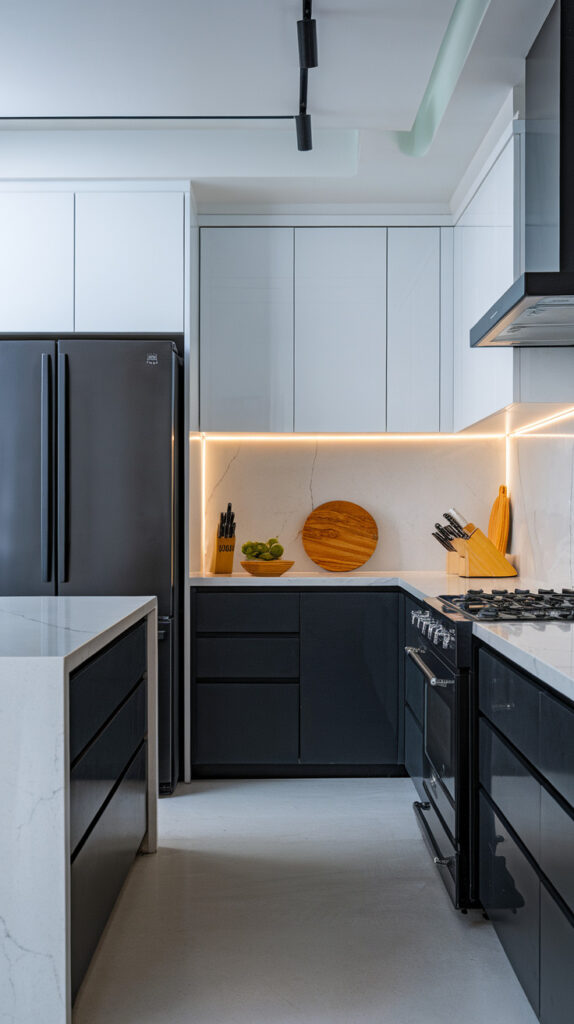
Stainless steel isn’t the only modern option. Black appliances blend beautifully into dark cabinetry for a seamless look.
They feel cohesive rather than standout.
Why This Works
Matching appliances to cabinets reduces visual breaks. The kitchen looks streamlined and uncluttered.
Black surfaces also hide fingerprints better than glossy stainless.
How to Do It
- Choose matte black or fingerprint-resistant finishes.
- Coordinate handles with cabinet hardware.
- Balance with lighter countertops.
- Avoid mixing too many appliance colors.
Consistency keeps the kitchen calm and modern.
Style & Design Tips
If replacing all appliances isn’t possible, start with the range or refrigerator.
Keep surrounding decor minimal to highlight the sleek lines.
Pro Tip or Budget Hack
Appliance wraps can temporarily change stainless to black at a lower cost than full replacement.
Design Strategy & Foundation for Small Black Kitchens
Strong design choices beat random upgrades every time. A small black kitchen works when the layout, lighting, and material balance are intentional from the start, not layered in as an afterthought.
Start with function before aesthetics. Measure workflow zones carefully, especially the distance between sink, stove, and refrigerator, because dark finishes highlight poor layout faster than light ones.
Lighting planning should happen before paint selection. Black absorbs light, so you need layered sources like ceiling fixtures, under-cabinet strips, and task lighting to keep the space usable and visually open.
Material contrast creates depth. Pairing black with stone, wood, or brushed metal prevents the kitchen from feeling flat and adds subtle texture that elevates the overall design.
Finally, limit bold elements to one or two focal points. When every surface competes for attention, small kitchens feel chaotic instead of modern.
Lighting Principles That Make Black Work
Good lighting transforms black from heavy to high-end. Without it, even the most beautiful cabinetry can feel dull or closed in.
Use layered lighting instead of relying on a single overhead fixture. Combine recessed lights, pendants, and under-cabinet strips so shadows don’t swallow key surfaces.
Choose warm white bulbs instead of cool-toned ones. Warm lighting softens black finishes and prevents the kitchen from looking sterile.
Reflective surfaces help bounce light back into the room. Glossy tiles, glass inserts, and metallic accents subtly increase brightness without changing the color palette.
Material Selection Guide for Durability and Style
Not all black finishes perform the same in real kitchens. Durability matters more in compact spaces where every cabinet and surface sees daily use.
Matte paint hides fingerprints better than gloss, but high-quality formulas prevent streaking. Investing in cabinet-grade paint ensures smoother application and longer wear.
Quartz countertops pair beautifully with black because they resist stains and reflect just enough light. Natural stone also works well, but it requires sealing to maintain its appearance.
Metal finishes influence the overall tone. Brass warms the look, stainless keeps it contemporary, and black-on-black feels ultra-modern when done carefully.
Common Mistakes to Avoid
Painting every surface black is the fastest way to shrink a small kitchen. Balance dark finishes with lighter walls, countertops, or flooring to maintain visual breathing room.
Ignoring lighting upgrades leads to disappointment. Black absorbs light, so insufficient lighting makes the space feel dim rather than dramatic.
Choosing low-quality paint or hardware creates uneven finishes. Imperfections stand out more against dark colors, so preparation and materials matter.
Overdecorating kills the sleek aesthetic. Too many accessories break the clean lines that make black kitchens feel modern.
Mixing too many finishes confuses the design. Stick to two or three complementary materials for a cohesive look.
Budget Planning & Upgrade Prioritization
Not every kitchen needs a full remodel to achieve a modern black look. Strategic upgrades deliver high impact without exhausting your budget.
Start with the most visible element, such as the island or backsplash. A single bold update often shifts the entire room’s tone.
Allocate funds for lighting and hardware early. These smaller details elevate the overall aesthetic and often cost less than cabinetry changes.
Plan upgrades in phases if needed. Completing one area properly looks better than partially finishing everything at once.
Maintenance & Cleaning Tips for Black Finishes
Black kitchens stay beautiful when maintained properly. Regular care prevents buildup that dulls the surface.
Use microfiber cloths for daily wipe-downs to reduce streaks. Harsh scrubbers can damage matte finishes and leave visible marks.
Clean spills quickly, especially on countertops and backsplashes. Dark surfaces hide stains at first but can show residue under certain lighting.
Choose non-abrasive cleaners made for painted cabinetry or stone. Preserving the finish keeps the kitchen looking intentional instead of worn.
Frequently Asked Questions
Is black a good color for very small kitchens?
Yes, when balanced correctly. Pairing black with light elements and strong lighting keeps the space from feeling cramped.
Does black make a kitchen look smaller?
It can if overused. Strategic placement, such as lower cabinets or an island, adds depth instead of shrinking the room.
What countertop colors work best with black cabinets?
White, light gray, or marble-look quartz provide contrast. These options brighten the room and maintain modern appeal.
Are matte black cabinets hard to maintain?
Not if you use quality paint. Matte finishes actually hide fingerprints better than glossy ones.
Can I mix black with wood tones?
Absolutely. Warm wood softens black and prevents the design from feeling too stark.
Do black kitchens go out of style?
Black remains a classic neutral in modern design. Trends shift, but clean lines and balanced contrast keep black kitchens timeless.
Final Thoughts
Black isn’t too bold for small kitchens; it just needs intention. When you use it strategically, it sharpens the layout instead of shrinking it.
I’ve tested enough of these ideas to know that restraint matters more than bravery. Pick one or two upgrades, execute them well, and the whole space levels up without feeling overdone.