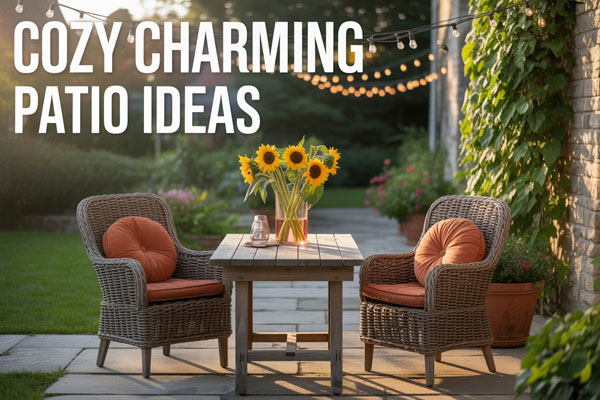
10 Back Patio Ideas for Relaxed and Stylish Outdoor Living
You know that feeling when you step outside and your patio just feels…meh. I used to think a patio only needed a chair and some plants, but wow, I was wrong. Your back patio can actually feel like your favorite room if you give it some love.
I want to share ideas that feel real, doable, and not ripped from some perfect catalog.
Think relaxed, stylish, and totally livable, because outdoor spaces should feel fun, not stressful.
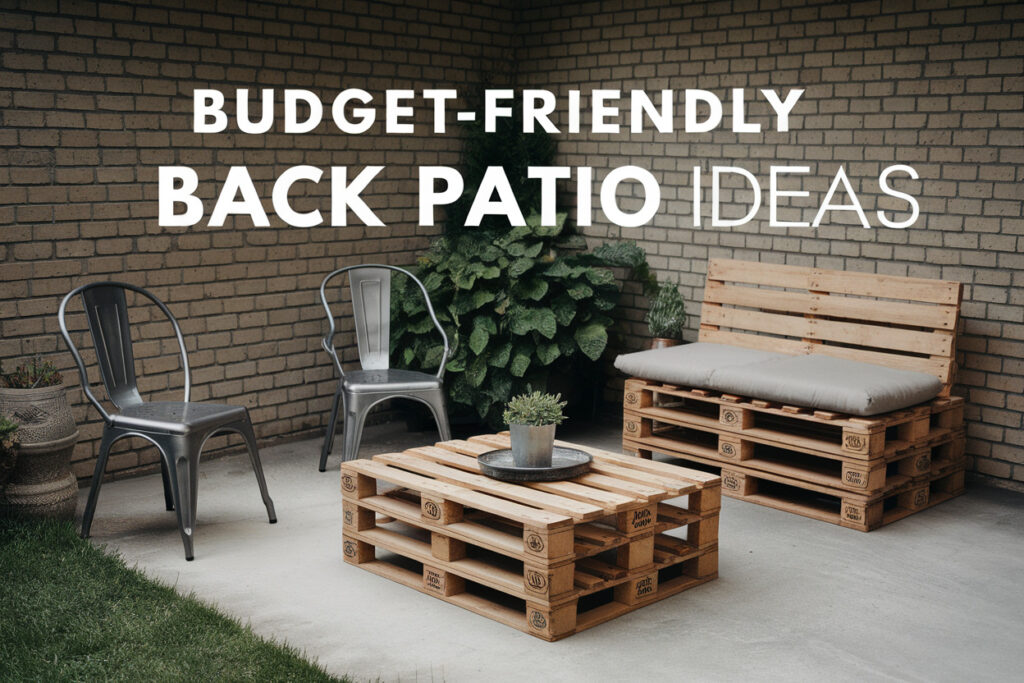
1. Create a Cozy Lounge Zone That Feels Like a Living Room
I always say a patio without comfortable seating feels like a waiting area, not a hangout spot. A cozy lounge zone instantly changes how you use the space and how long you stay outside. You want people to sink in, relax, and forget about their phones for a bit.
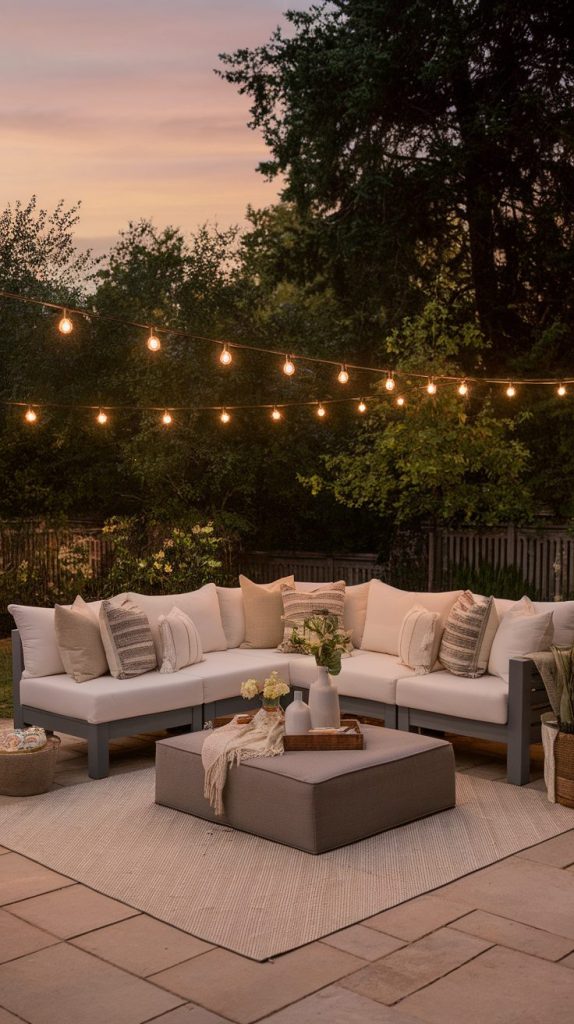
Start with a comfortable outdoor sofa or sectional that fits your space without cramping it. I personally love low-profile seating because it feels casual and inviting instead of stiff. Add deep cushions, weather-resistant fabric, and a layout that encourages conversation instead of everyone facing forward like a movie theater.
Throw pillows matter more than most people admit. I mix neutral cushions with one or two bold patterns to keep things interesting without chaos. IMO, outdoor rugs also deserve way more credit because they define the space and make it feel intentional.
A coffee table or ottoman gives the area purpose beyond just sitting. I use mine for drinks, snacks, and sometimes my feet after a long day. Choose materials like wood, concrete, or metal that can handle weather without turning ugly after one season.
Lighting finishes the vibe better than any fancy furniture. Soft string lights or lanterns make the space feel warm and welcoming once the sun goes down. When the lighting feels right, you suddenly want to stay outside way longer than planned.
The goal here feels simple but powerful. You want your patio to feel like an extension of your living room, not a separate, forgotten space. Once you get this right, everything else feels easier to build around.
2. Add an Outdoor Dining Area for Easy Meals and Long Chats
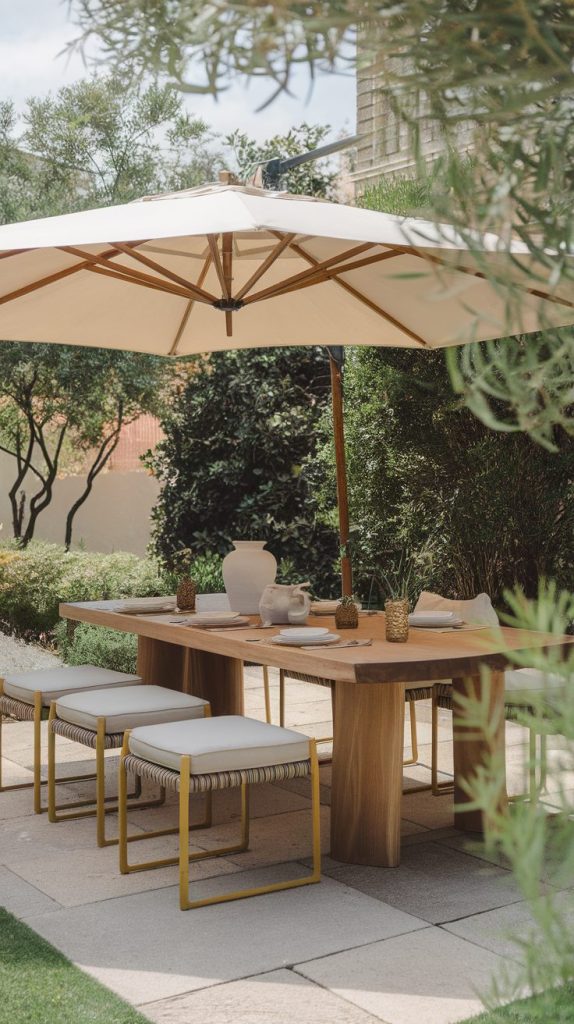
I love eating outside, even when the food stays super basic. An outdoor dining area turns regular meals into mini events without much effort. You start looking for excuses to eat outdoors once the setup feels comfortable and stylish.
Choose a table size based on how you actually live, not how many guests you imagine hosting someday. I prefer slightly smaller tables that feel intimate and easier to style. A solid table with enough legroom makes a bigger difference than fancy materials.
Chairs deserve attention because uncomfortable chairs kill dinner vibes fast. I look for supportive seating with cushions or curved backs that invite people to linger. If chairs feel good, conversations last longer without anyone checking the time.
Shade matters more than people expect. A patio umbrella, pergola, or even a sail shade keeps meals enjoyable during sunny afternoons. Nobody wants to squint or sweat through dinner, no matter how cute the table looks.
Table styling keeps things relaxed yet pulled together. I stick with simple placemats, durable dishes, and maybe a centerpiece that won’t blow away. Candles or lanterns at night instantly make dinners feel special without trying too hard.
An outdoor dining area gives your patio purpose. You stop seeing it as just a decorative space and start using it daily. That shift alone makes your entire backyard feel more alive.
3. Use Outdoor Rugs to Define Spaces and Add Warmth
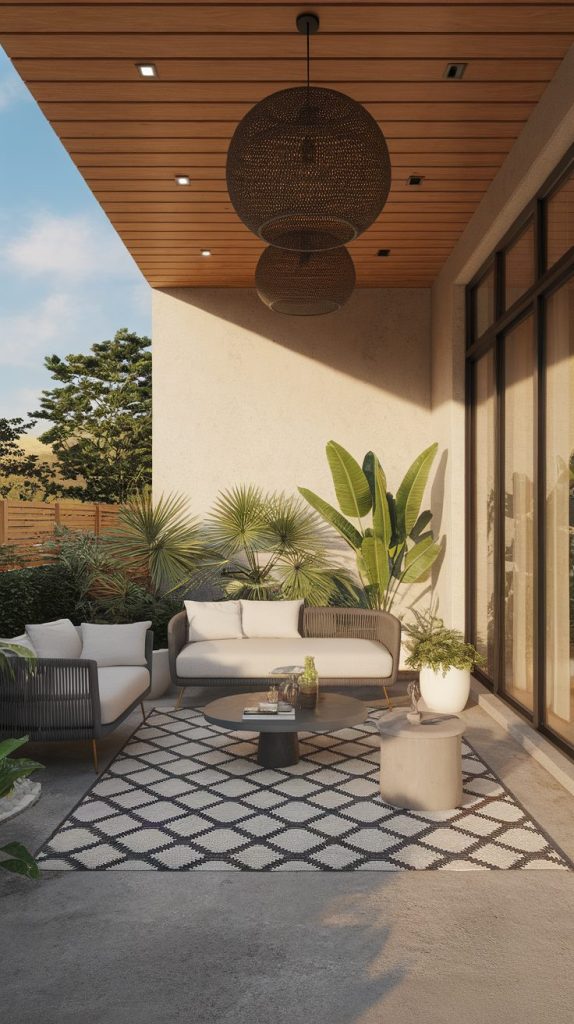
I used to think outdoor rugs felt unnecessary, but I completely changed my mind. Rugs anchor furniture and give patios a finished look that bare concrete or wood can’t match. They also make spaces feel warmer and more intentional.
Choose rugs designed specifically for outdoor use so they can handle moisture and sun. I prefer flatweave styles because they dry quickly and clean easily. Patterned rugs hide dirt better than solid ones, which saves your sanity long term.
Rugs help you visually separate zones on larger patios. You can define a lounge area, dining spot, or reading nook without building anything permanent. That flexibility feels amazing if you like changing things up seasonally.
Color choices matter more than you think. Neutral rugs create calm, while bold patterns add personality and energy. I usually match rug tones with cushions or planters so everything feels connected without looking matchy.
Size makes or breaks the look. A rug that feels too small makes furniture look awkward and crowded. I always size up so at least the front legs of seating rest comfortably on the rug.
Once you add an outdoor rug, the patio suddenly feels styled instead of thrown together. That one change often makes people ask if you hired a designer. FYI, you didn’t, you just made a smart choice.
4. Bring in Greenery for a Fresh and Relaxed Feel
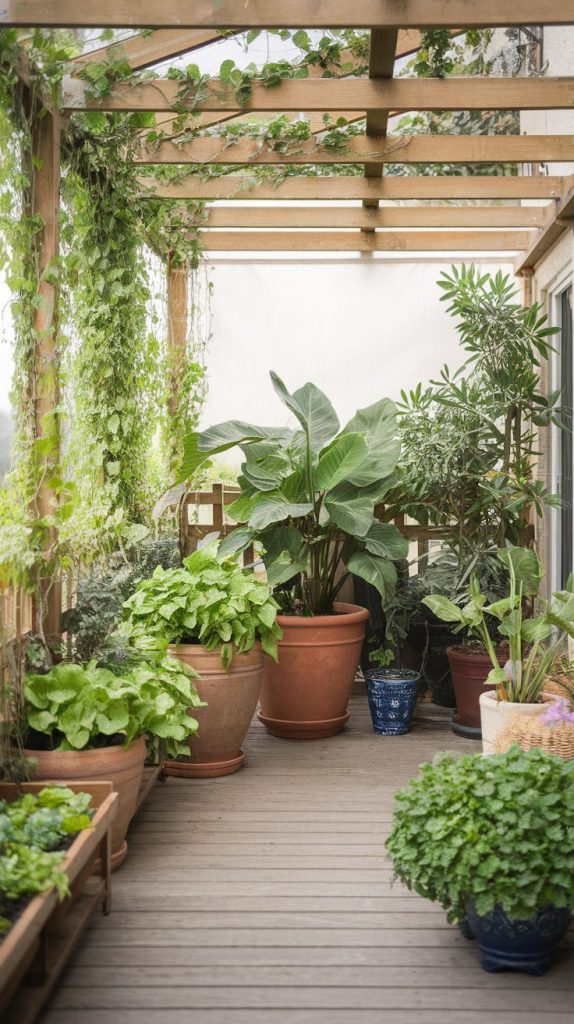
Plants completely transform outdoor spaces in ways furniture never can. Greenery adds life, movement, and a calming vibe that makes patios feel more natural. I honestly think plants do half the design work for you.
Start with potted plants if you want flexibility. Large planters frame seating areas beautifully and add height variation. I mix tall plants, medium shrubs, and trailing greenery to keep things visually interesting.
Choose plants that suit your climate and maintenance style. I always recommend low-maintenance options if you want to enjoy your patio without constant upkeep. There’s no shame in choosing plants that thrive with minimal effort.
Herbs work beautifully on patios and smell amazing. I love having basil, rosemary, or mint nearby because they feel practical and decorative at the same time. You get bonus points when you use them in cooking or drinks.
Placement matters as much as plant choice. Use greenery to soften hard edges, add privacy, or guide movement through the space. Plants can act like natural walls without making the area feel closed off.
Greenery brings balance to any patio design. Even the most modern setup feels warmer and more inviting with plants around. Once you add enough greenery, the patio starts to feel like a retreat instead of a backyard corner.
5. Install Soft Lighting to Set the Mood After Sunset
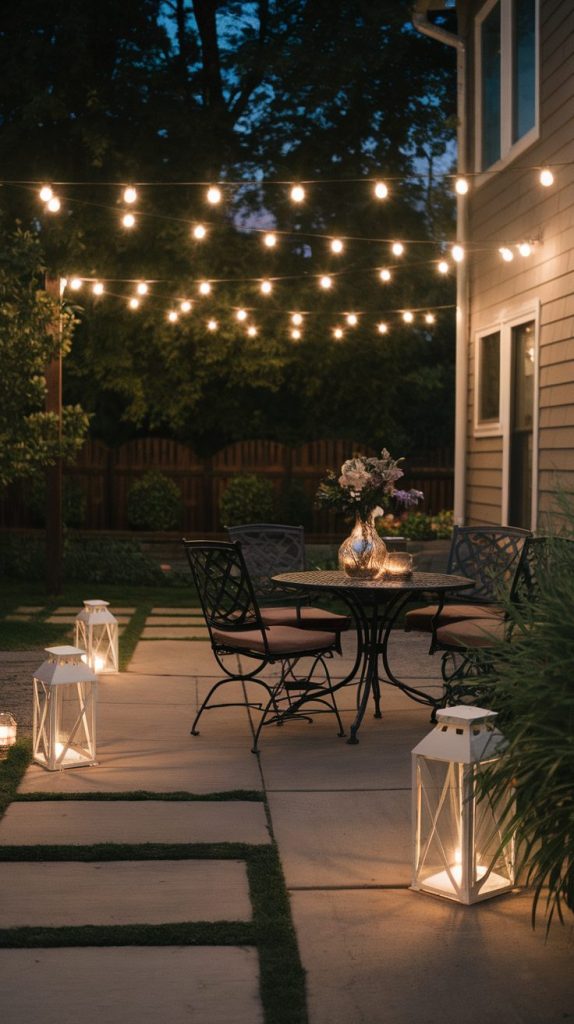
Lighting changes everything once the sun goes down. Without it, patios feel unfinished and slightly sad at night. With the right lighting, your space suddenly feels magical and cozy.
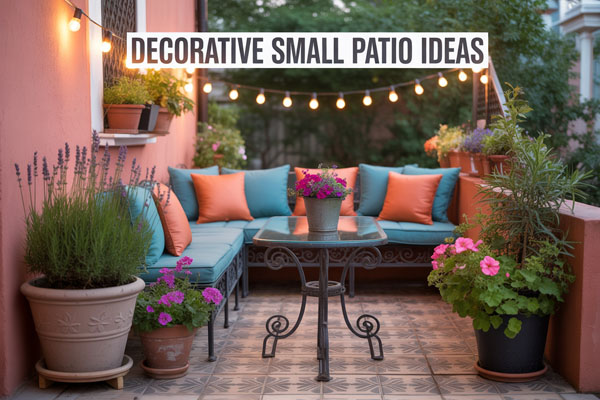
String lights remain popular for a reason. They create a soft glow that feels relaxed and welcoming without blinding anyone. I usually hang them overhead or along fences to frame the space nicely.
Lanterns add charm and flexibility. You can move them around depending on where people gather. I love lanterns with LED candles because they look real without worrying about wind or safety.
Path lighting improves both style and function. Small lights along walkways or steps help people move safely while adding a polished look. These lights subtly guide the eye without screaming for attention.
Layered lighting works best. Combine overhead lights, table lighting, and ground-level accents for depth. When you layer lighting, the patio feels thoughtfully designed instead of flat.
Good lighting makes you want to stay outside longer. It encourages late-night chats, quiet moments, and relaxed evenings. Once you experience a well-lit patio, you’ll never want to go back to darkness.
6. Add a Fire Pit for Warmth and Year-Round Use
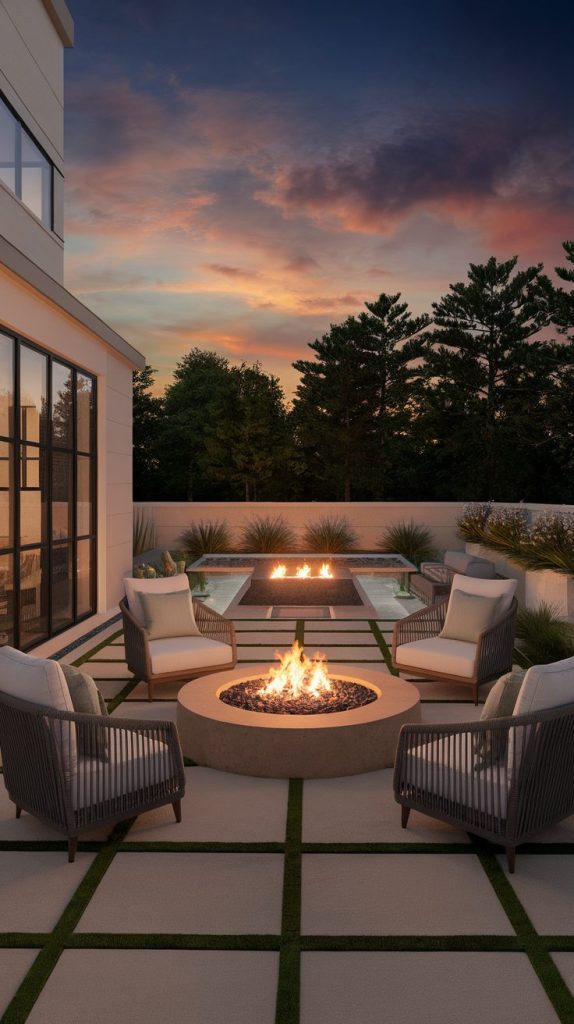
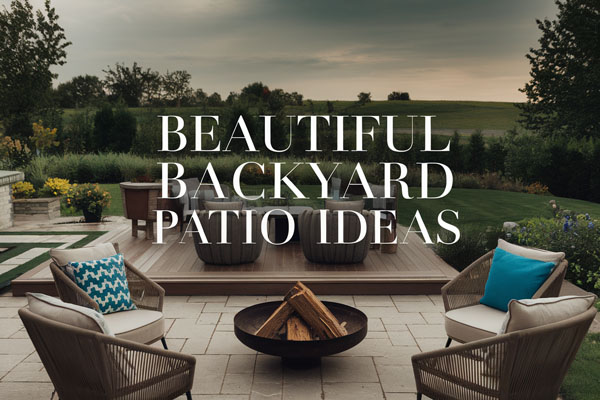
A fire pit instantly becomes the heart of a patio. People naturally gather around fire without even thinking about it. It creates warmth, ambiance, and a reason to stay outside when temperatures drop.
Choose a fire pit style that fits your space and lifestyle. Portable fire pits work great for flexibility, while built-in options feel more permanent and dramatic. I lean toward gas fire pits for ease and low maintenance.
Safety and placement matter. Keep the fire pit away from furniture and overhanging structures. I always leave enough space for people to move comfortably without feeling cramped.
Seating around the fire pit should feel inviting. Chairs, benches, or built-in seating encourage conversation and relaxation. Cushions designed for outdoor use add comfort without stressing about sparks.
Fire pits extend patio season dramatically. You start using the space during cooler months instead of abandoning it. That extra use makes the investment feel totally worth it.
There’s something deeply relaxing about sitting by a fire. Conversations slow down, phones disappear, and time feels less rushed. A fire pit turns your patio into a true gathering place.
7. Create Privacy Without Making the Space Feel Closed In
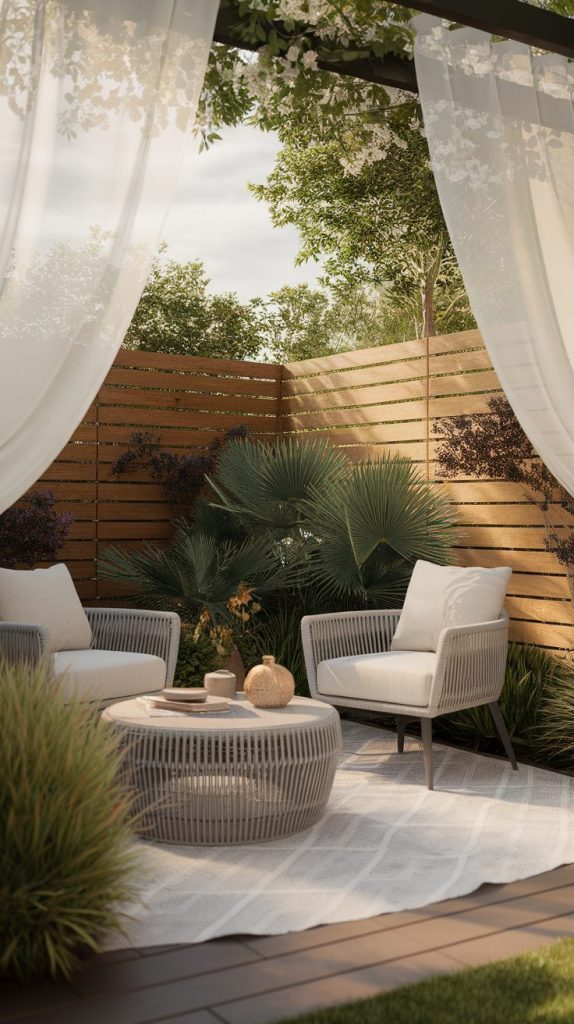
Privacy helps patios feel comfortable and personal. Nobody relaxes fully when they feel exposed to neighbors or passersby. The trick involves adding privacy without blocking light or airflow.
Outdoor curtains offer an easy and stylish solution. You can open them during the day and close them when needed. I love how they add softness while keeping the space flexible.
Privacy screens and panels work well for modern patios. Wood slats, metal screens, or lattice panels add texture and style. These elements also create beautiful backdrops for plants or lighting.
Tall plants and hedges create natural privacy. Bamboo, ornamental grasses, or tall shrubs block views without feeling heavy. Plants always feel friendlier than solid walls.
Pergolas help define space while allowing light through. You can add fabric panels or climbing plants for extra coverage. Pergolas strike a great balance between openness and enclosure.
Privacy makes patios feel more intimate and relaxing. When you feel comfortable, you actually use the space more. That comfort transforms how the patio fits into your daily life.
8. Use Natural Materials for a Timeless and Relaxed Look
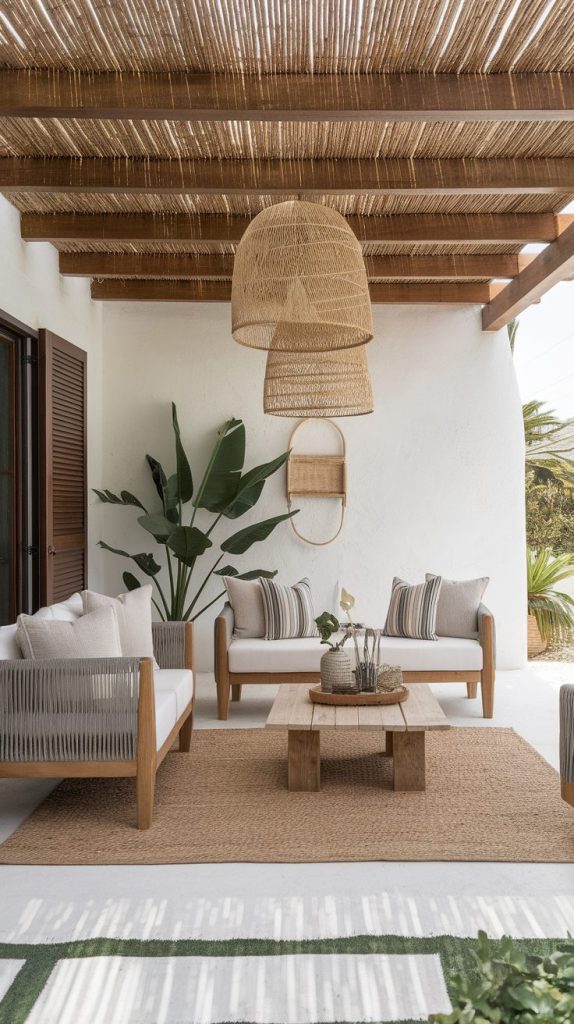
Natural materials bring warmth and authenticity to outdoor spaces. They age beautifully and never feel overly trendy. I gravitate toward wood, stone, and woven textures because they feel grounded and inviting.
Wood furniture adds instant warmth. Teak, cedar, and eucalyptus work well outdoors when properly treated. I love how wood develops character over time instead of looking worn out.
Stone elements add durability and texture. Stone pavers, tabletops, or accents create a solid foundation. Stone balances softer materials and adds visual weight to the design.
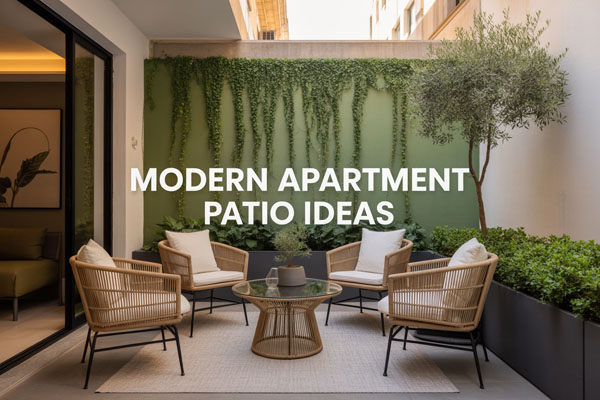
Woven materials soften hard surfaces. Rattan, wicker, or rope details add comfort and visual interest. These textures make patios feel relaxed instead of formal.
Mixing natural materials creates depth. Pair wood furniture with stone accents and woven accessories. That combination feels layered and thoughtful without trying too hard.
Natural materials help patios blend seamlessly with outdoor surroundings. The space feels calm, cohesive, and timeless. You create a look that stays relevant year after year.
9. Style with Accessories That Feel Personal and Lived In
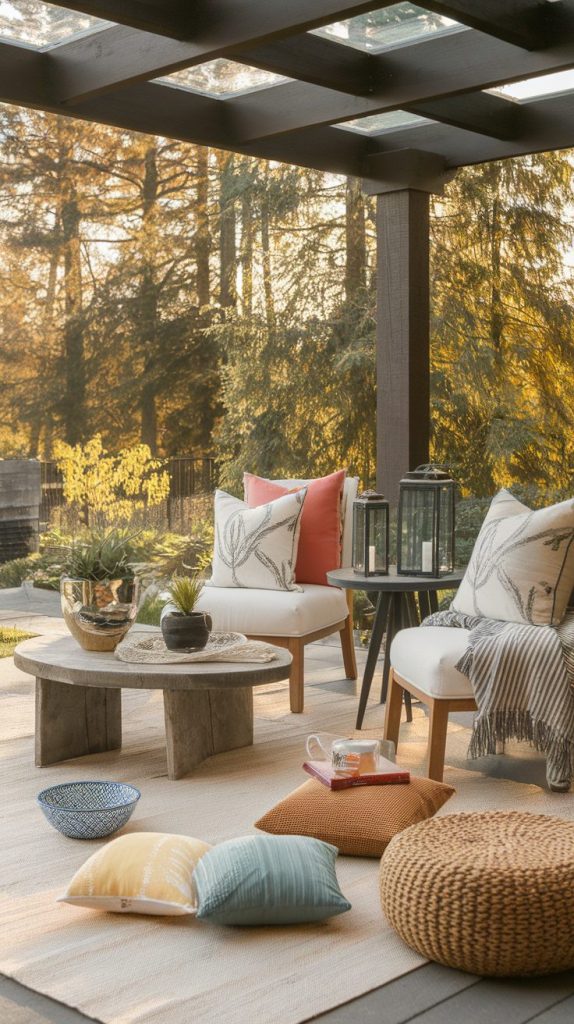
Accessories turn a patio from generic to personal. They show personality and make the space feel loved. I always say accessories tell the story of how you actually use the space.
Throw pillows and blankets add comfort and color. Choose outdoor-friendly fabrics so you don’t stress about weather. I keep a small storage bench nearby for easy access.
Side tables and trays add function. They give people places to set drinks or books. Functional accessories always earn their place in my designs.
Decorative items like lanterns, bowls, or sculptures add character. I avoid clutter by choosing fewer, larger pieces. Every item should earn its spot visually and practically.
Personal touches matter most. Add items that reflect your style, like favorite colors or textures you love. These choices make the space feel uniquely yours.
When accessories feel intentional, the patio feels finished. You stop tweaking and start enjoying. That sense of completion makes outdoor living way more satisfying.
10. Design for Comfort First and Style Second
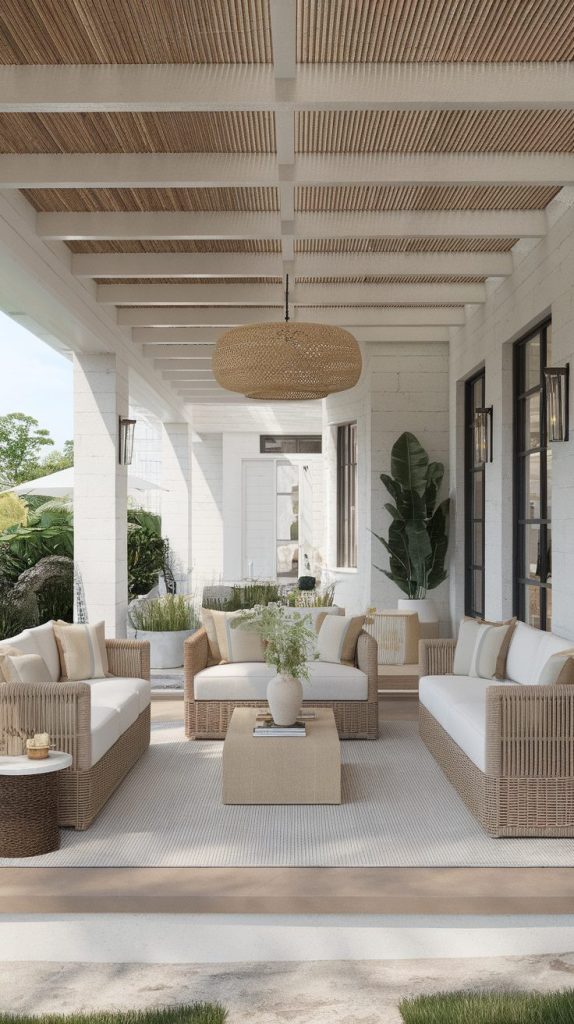
Comfort always wins in outdoor spaces. A patio that looks great but feels uncomfortable won’t get used. I design for how I want to feel, then worry about how it looks.
Choose furniture that supports relaxation. Cushioned seating, supportive backs, and proper heights matter more than trends. You want pieces that invite you to sit and stay awhile.
Think about movement and flow. Leave enough space to walk comfortably around furniture. Good layout makes the patio feel spacious even when it’s small.
Weather protection improves comfort. Shade structures, umbrellas, and covers extend usability. I always plan for sun, wind, and occasional rain.
Test your setup like you would indoors. Sit, lounge, and move around to see how it feels. Adjust until everything feels easy and natural.
When comfort leads the design, style follows effortlessly. You create a patio that looks great because it works beautifully. That balance makes outdoor living truly enjoyable.
Back Patio Design Strategy: How to Plan for Long-Term Comfort and Style
Before you buy a single chair or hang string lights, you need a simple plan. A clear strategy helps you avoid random purchases and design regret later. I always start by defining how I actually want to use the patio on a weekly basis.
Ask yourself whether you want quiet morning coffee moments, weekend dinner hosting, or relaxed evening lounging. Your main goal should guide every decision from furniture layout to lighting. When you design around real life, the space naturally feels functional and stylish.
Next, measure your patio carefully and sketch a rough layout. I map out seating zones, walkways, and focal points before moving anything heavy. This step prevents overcrowding and keeps traffic flow smooth.
Think about climate early in the process. Sun direction, wind exposure, and rainfall affect material choices and shade solutions. Smart planning protects your investment and extends the lifespan of your patio setup.
Finally, set a realistic budget and prioritize foundational items first. Spend more on durable seating and weather-resistant materials, then layer in décor over time. This strategy keeps your patio looking cohesive instead of chaotic.
Common Mistakes to Avoid
Many people overload their patio with furniture because they fear empty space. Overcrowding makes even large patios feel cramped and uncomfortable. I always leave breathing room around seating areas to maintain a relaxed vibe.
Another mistake involves ignoring comfort in favor of style. Hard chairs and thin cushions may look sleek, but they ruin long evenings outdoors. Comfort should always guide your final choices.
People often forget about scale and proportion. Tiny rugs under large sectionals or oversized tables in small spaces create visual imbalance. I double-check dimensions before buying anything.
Skipping shade planning creates frustration during hot afternoons. Direct sun exposure makes beautiful patios unusable for hours each day. Shade solutions like umbrellas or pergolas solve that problem instantly.
Poor lighting also kills ambiance. Relying on one harsh overhead light flattens the entire design. Layered lighting creates warmth and depth that elevate the space dramatically.
Choosing Durable and Weather-Resistant Materials
Outdoor furniture faces constant exposure to sun, moisture, and temperature changes. Cheap materials fade, rust, or crack quickly under pressure. I always recommend investing in pieces specifically built for outdoor use.
Look for weather-resistant fabrics like solution-dyed acrylic for cushions. These fabrics resist fading and moisture while staying comfortable. Durable cushions reduce replacement costs over time.
Powder-coated metal frames prevent rust and extend lifespan. Teak and cedar also perform well outdoors when properly maintained. Quality materials save money in the long run because they hold up season after season.
Consider storage options for extreme weather. Deck boxes or covered storage protect pillows and accessories during heavy rain. Smart storage extends the life of decorative items and keeps the patio organized.
Maintenance plays a big role in durability. Regular cleaning and seasonal inspections prevent small issues from becoming expensive problems. A little upkeep keeps your patio looking polished year-round.
Budget Planning and Cost Breakdown
Designing a stylish back patio doesn’t require unlimited funds. Smart budgeting helps you prioritize essentials and avoid overspending. I break down costs into categories before making any purchases.
Typical patio budget categories include:
- Seating and furniture
- Dining setup
- Lighting and electrical additions
- Shade structures
- Décor and accessories
I usually allocate the largest portion to seating because comfort drives usage. Lighting and décor follow after foundational pieces feel complete. Spreading purchases over time reduces financial pressure and allows thoughtful upgrades.
DIY projects also lower overall costs. Painting planters, building simple benches, or installing string lights yourself saves money. Strategic DIY efforts stretch your budget without sacrificing style.
Always leave a small contingency buffer. Unexpected delivery fees or add-ons pop up more often than expected. A reserved portion of your budget keeps surprises manageable.
Safety and Maintenance Considerations
Safety should always support style. Secure furniture placement prevents tipping, especially in windy areas. I anchor lightweight pieces when necessary to maintain stability.
Electrical elements require extra care. Outdoor-rated extension cords and weatherproof outlets protect against moisture damage. Proper installation ensures safe lighting and heating solutions.
Fire pits require clear safety zones. Maintain adequate distance from seating and overhead structures. Responsible placement reduces risk and protects guests.
Regular maintenance keeps everything safe and functional. Tighten screws, clean surfaces, and inspect materials seasonally. Consistent care preserves both beauty and safety.
A well-maintained patio reflects pride and responsibility. Clean, secure spaces encourage frequent use and support long-term enjoyment.
Frequently Asked Questions
1. How much space do I need for a functional back patio?
You can create a comfortable patio in surprisingly small spaces. Even a compact area supports a loveseat and small table if you plan carefully. Smart layouts maximize every square foot.
2. What is the best flooring option for a back patio?
Concrete, pavers, and composite decking offer durability and versatility. I prefer pavers for visual texture and long-term strength. Each option works well when installed properly.
3. How can I make a small patio look bigger?
Use lighter color palettes and streamlined furniture. Avoid bulky pieces that overwhelm the space. Mirrors and vertical plants also add visual depth.
4. What lighting works best for relaxed outdoor living?
Layered lighting creates the best atmosphere. Combine string lights, lanterns, and subtle pathway lights. This mix adds warmth and dimension without harsh glare.
5. How do I protect patio furniture during bad weather?
Use protective covers and store cushions indoors when possible. Deck boxes offer convenient storage during storms. Preventive care extends furniture life significantly.
6. How often should I refresh patio décor?
Seasonal updates keep the space feeling fresh. Swap pillows, add new plants, or adjust lighting arrangements. Small changes maintain excitement without major expense.
Conclusion
A relaxed and stylish back patio doesn’t require perfection or endless spending. It just needs thoughtful choices that match how you actually live and relax. When comfort leads the design, everything else falls into place naturally.
Start small, experiment, and adjust as you go. Your patio should grow with you and reflect your personality. Once it feels right, you’ll wonder how you ever lived without it.