10 Closet Maintenance Tips for Better Organization
Closets don’t get messy because you “can’t organize.” They get messy because your closet has no maintenance system. You put things away once, life happens, and suddenly the floor becomes a second shelf.
Closet organization feels satisfying for about three days, then it slowly collapses like a cheap folding chair. The real secret isn’t the perfect layout—it’s the boring habits that keep the layout alive.
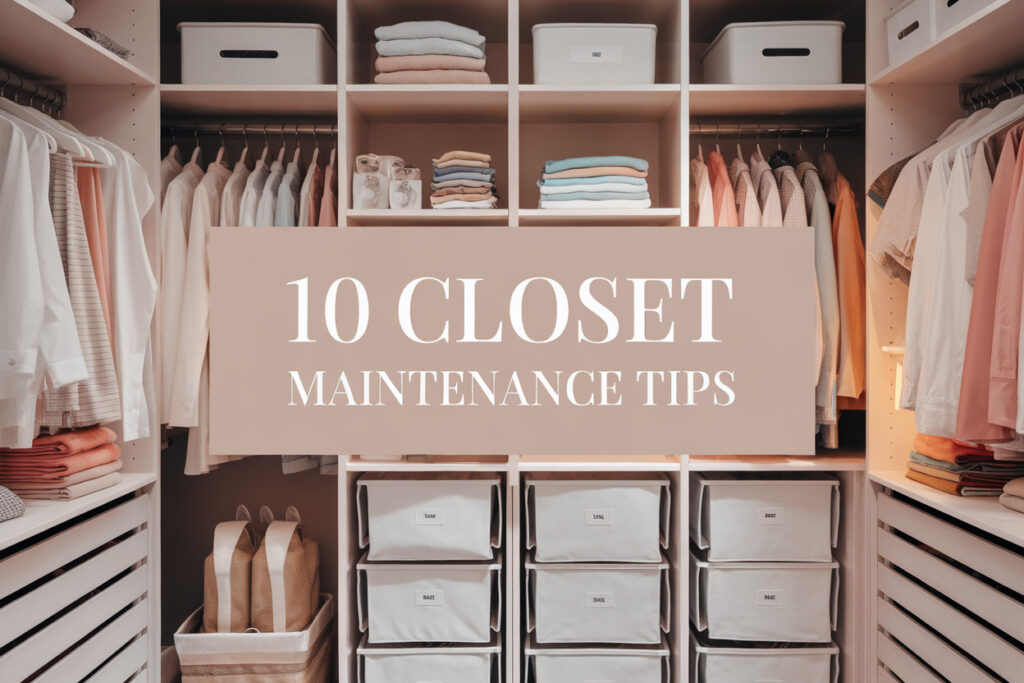
If you want a closet that stays clean without constant effort, you need maintenance moves that work even when you feel lazy, rushed, or mildly annoyed at your own laundry pile.
Why Closet Maintenance Matters More Than Organization
Most people organize their closet like it’s a one-time event, like painting a wall or building furniture. But closets don’t work that way because they constantly deal with movement, habits, and daily decisions.
Organization is the setup. Maintenance is what keeps the setup from falling apart. If you only organize once and never maintain, your closet will slowly turn into a storage dump where clothes get shoved, crushed, and forgotten.
Closet maintenance also protects your clothing. When you ignore upkeep, items wrinkle, stretch out, snag, collect dust, and sometimes get ruined from overcrowding or moisture. Then you waste money replacing things you already owned.
And honestly, a cluttered closet messes with your brain more than people admit. It creates stress every morning because it adds friction to getting dressed, and it makes you feel like you’re behind before your day even starts.
1. Do a Monthly Closet Reset
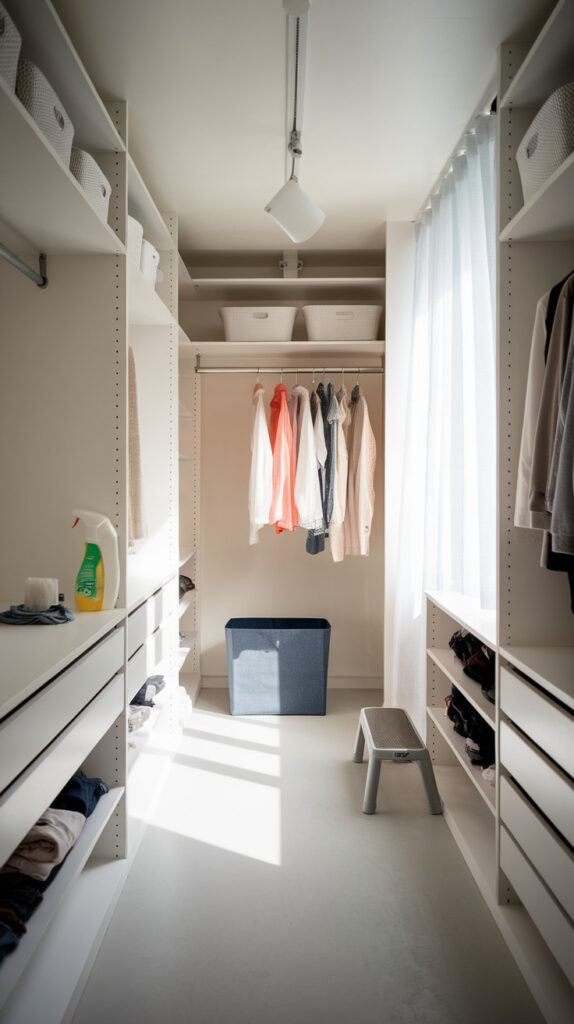
Closets get messy because small messes stack up quietly until they feel unfixable. A monthly reset stops the clutter before it turns into chaos and forces you to deal with the “random junk” zone before it grows.
I love monthly resets because they don’t require deep cleaning energy. They work like a quick reality check, and they keep your closet from turning into a black hole where good clothes disappear.
Why It Works
A monthly reset keeps your closet aligned with your real lifestyle. You catch clothes you stopped wearing, items that drifted into the wrong spot, and pieces that should’ve been donated weeks ago.
It also prevents that frustrating moment where you own tons of clothes but somehow can’t find a single decent outfit.
How to Do It (Step-by-Step)
- Pull out everything that doesn’t belong (bags, shoes, laundry piles, random hangers) because clutter spreads fast when you ignore it.
- Wipe shelves and rods quickly with a microfiber cloth so dust doesn’t build up and dull your space.
- Re-hang items that slipped into the wrong category so your system stays consistent.
- Toss or donate anything you haven’t worn in months because it steals space from things you actually use.
- Rotate seasonal items if the weather shifted so your closet matches your daily needs.
Tips & Variations
A smart tip is to keep a small “reset basket” in your closet so you can toss misplaced items in one place and deal with them later. For a variation, try doing a 15-minute reset every two weeks instead of one longer session.
2. Use Matching Hangers to Maintain Visual Order
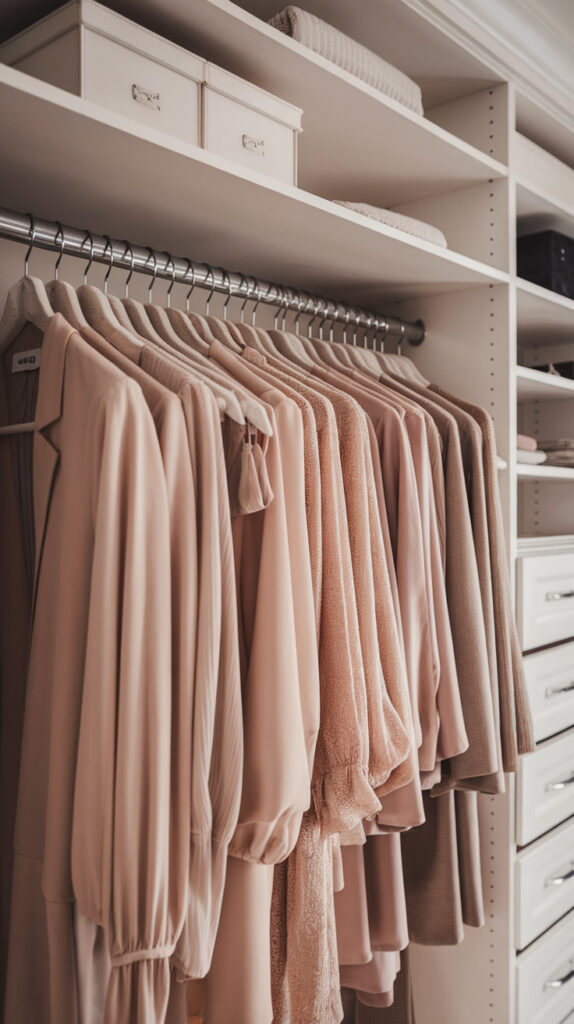
Closets look messy even when they aren’t, and mismatched hangers play a huge role in that. Different hanger shapes cause clothes to hang unevenly, and suddenly everything looks like it’s leaning or collapsing.
Matching hangers create instant visual calm, and they also stop clothes from slipping and falling onto the floor. I didn’t think hangers mattered until I switched, and yeah… they matter a lot.
Why It Works
Uniform hangers keep clothing aligned and spaced evenly. Your closet stays easier to scan, and you stop losing items behind bulky plastic hangers.
It also makes you more likely to hang things up properly because the closet actually feels organized.
How to Apply
- Choose one hanger type (velvet slim hangers work best for most closets) because consistency matters more than fancy features.
- Replace old hangers gradually if needed so you don’t overwhelm yourself or waste money.
- Use sturdier hangers for coats and heavy jackets to avoid stretching.
- Keep 10–15 extra hangers ready so you don’t “temporarily” pile clothes on a chair.
Tips & Variations
A good tip is to choose hangers in a color that blends into your closet for a cleaner look. For variation, use wood hangers only for your best pieces and slim hangers for everything else.
Get the Weekend Home Reset Checklist Pack
A free printable pack to help you reset your home, clear the mess, and make your space feel calmer in a simple, doable way.
3. Rotate Seasonal Clothing Regularly
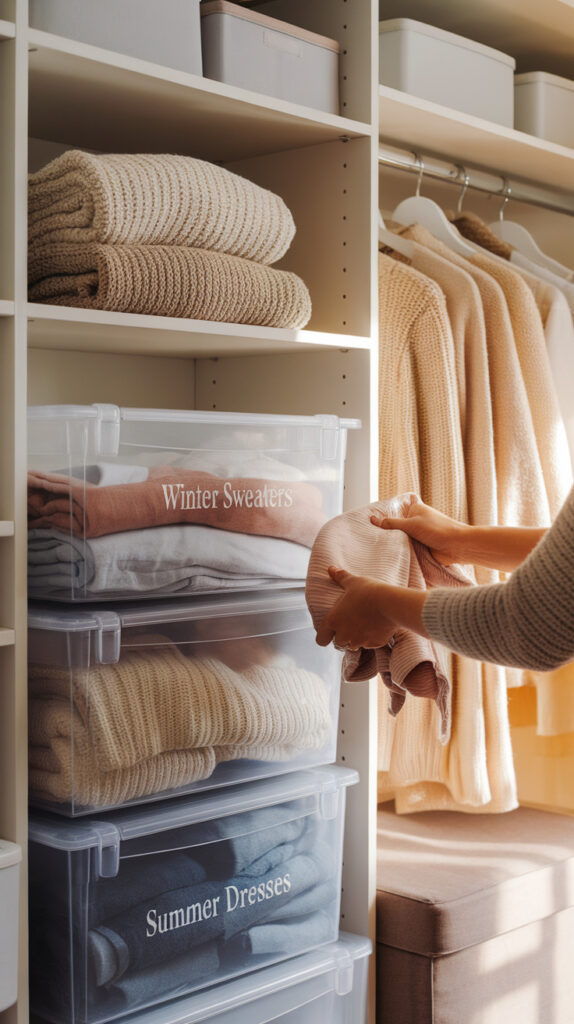
Seasonal clothes cause clutter because they hang around long after you stop wearing them. Summer items stay mixed in during winter, winter sweaters sit buried during spring, and your closet becomes a confused mess.
Seasonal rotation fixes that fast. It makes your closet feel bigger without buying a single organizer, which honestly feels like cheating.
Why It Works
Rotating clothes keeps your everyday wardrobe visible and reachable. You stop digging through off-season stuff just to find the one shirt you actually wear.
It also protects seasonal clothing from unnecessary wear, dust, and overcrowding damage.
How to Apply
- Remove anything you won’t wear for the next 2–3 months because it wastes prime closet space.
- Store off-season items in labeled bins so you don’t forget what’s inside.
- Place the bins on the top shelf or under the bed to keep your closet focused on current needs.
- Keep a small “transition section” for light jackets or layered pieces for unpredictable weather.
Tips & Variations
A helpful tip is to store seasonal clothes with a dryer sheet or cedar block to keep them smelling fresh. For variation, rotate by temperature shifts, not by calendar months, because weather doesn’t care about your planner.
4. Wipe Down Shelves and Drawers Quarterly
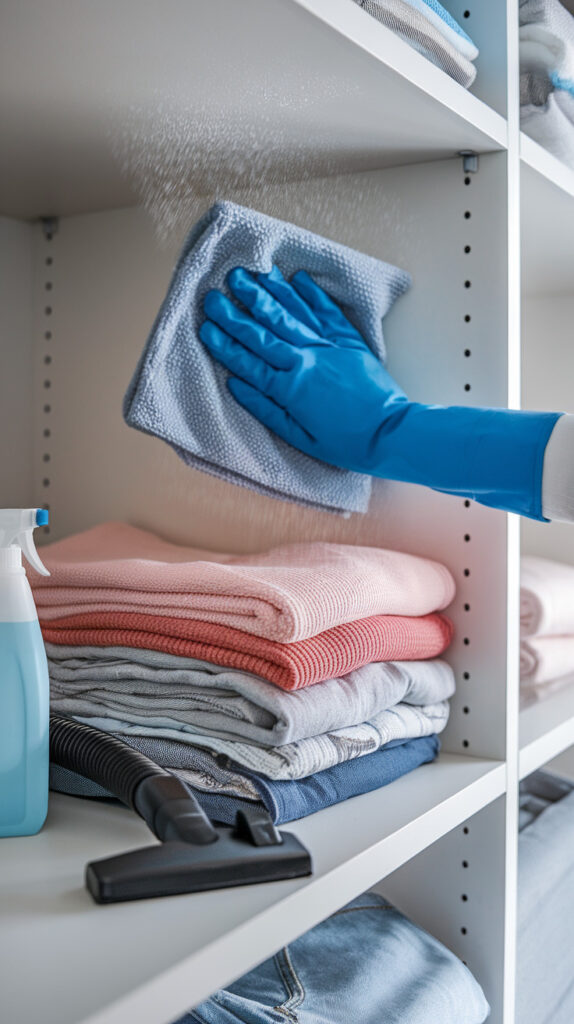
Closets collect dust like it’s their full-time job. Even if your closet looks clean, shelves and drawers build up grime, hair, and tiny lint bits that cling to clothing.
Quarterly wipe-downs keep your closet feeling fresh and prevent that gross dusty smell that sneaks up over time. It’s not glamorous, but it makes a difference.
Why It Works
Dust and dirt wear down fabrics over time, especially delicate items like knits. When shelves stay clean, your folded clothes stay cleaner too.
It also makes your closet feel more “finished” and less like a storage closet you avoid.
How to Apply
- Empty one shelf or drawer at a time so you don’t create a disaster mid-clean.
- Wipe surfaces using a damp microfiber cloth because it traps dust instead of spreading it.
- Vacuum corners and baseboards to remove lint piles and hidden debris.
- Let everything dry fully before putting clothes back to avoid moisture issues.
Tips & Variations
A practical tip is to keep a small cleaning spray in your closet so you don’t need to run around looking for supplies. For variation, line shelves with washable shelf liners so cleaning takes half the time.
5. Check for Clothing Damage Before It Spreads

Closets become a graveyard for damaged clothes that never get fixed. A loose button, a ripped seam, or a stretched collar sits there quietly until it becomes unwearable.
If you catch small damage early, you save money and keep your closet from filling with “almost wearable” stuff. I swear those items multiply when you ignore them.
Why It Works
Small repairs prevent clothes from turning into throwaways. It also stops damaged clothing from snagging other fabrics and creating a bigger problem.
This habit also reduces decision fatigue because you stop staring at pieces you can’t realistically wear.
How to Apply
- Inspect high-wear items monthly like jeans, bras, and sweaters because they break down faster.
- Create a “repair pile” bin so damaged items don’t mix back into your closet.
- Fix simple issues quickly (buttons, loose threads) so they don’t linger for months.
- Toss items beyond repair instead of keeping them out of guilt.
Tips & Variations
A great tip is to keep a mini sewing kit in your closet for quick fixes. For variation, take your repair pile to a tailor twice a year and handle everything at once like a boss.
6. Maintain a “One In, One Out” Rule
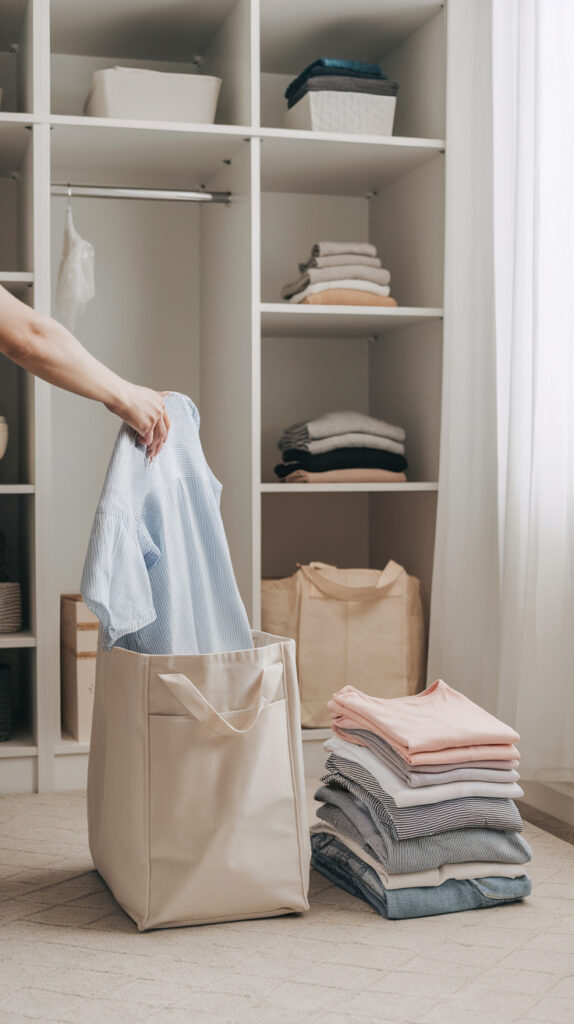
Closets overflow because new clothes enter constantly, but nothing leaves. That’s it. That’s the whole reason. People don’t like hearing it, but it’s true.
The “one in, one out” rule stops closet bloat without forcing you into extreme minimalism. You still shop, but you shop smarter.
Why It Works
This rule forces your closet to stay balanced. It prevents overcrowding, which keeps clothes from wrinkling and getting buried.
It also makes you think harder before buying something, because you must decide what it replaces.
How to Apply
- When you buy a new item, choose one similar item to donate or toss so categories stay under control.
- Apply this rule especially to jeans, shoes, jackets, and handbags because those eat space fast.
- Keep a donation bag in your closet so you can remove items immediately.
- Set a limit like “only 10 pairs of shoes” so you maintain structure.
Tips & Variations
A smart tip is to donate the item you like least, not the one that feels easiest to give up. For variation, try a one in, two out rule if your closet already feels packed.
7. Keep Frequently Used Items at Eye Level
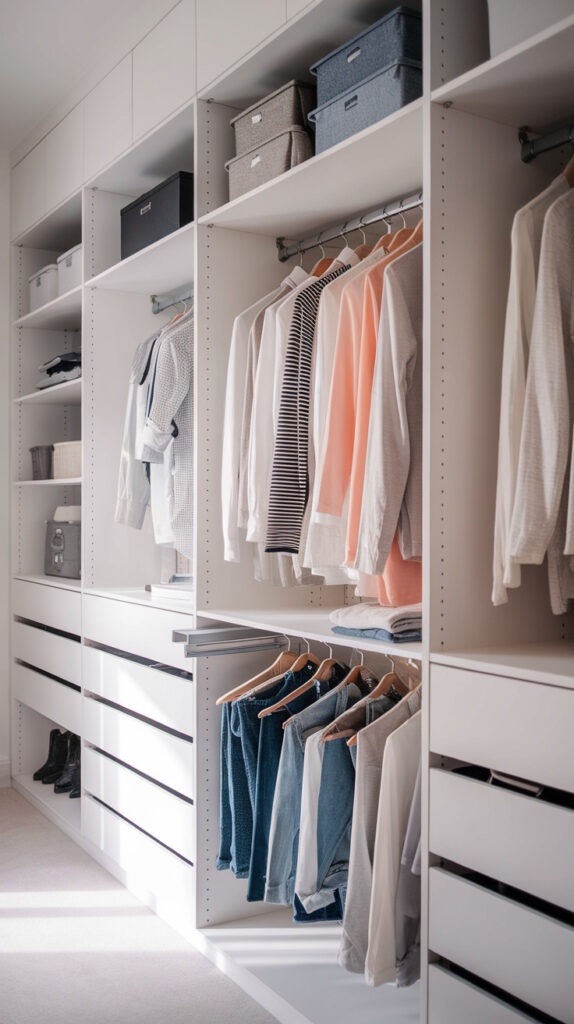
Closets fall apart when you store daily items in inconvenient places. If your most-worn clothes sit on a high shelf or buried behind fancy outfits, you’ll stop using the system.
Eye-level storage makes your closet work with your habits instead of against them. That’s the whole goal.
Why It Works
When your closet feels easy, you maintain it naturally. You stop tossing clothes onto the bed or chair because hanging them up doesn’t feel like a chore.
It also reduces mess because you don’t constantly dig through stacks to reach the items you want.
How to Apply
- Place daily basics (work outfits, casual tops, favorite jeans) at the most accessible height.
- Store special occasion outfits higher up or off to the side because you don’t need them daily.
- Keep gym clothes and pajamas in easy-reach drawers so you don’t create random piles.
- Hang outfits by category so you can grab and go quickly.
Tips & Variations
A practical tip is to arrange clothing based on your weekly routine instead of color alone. For variation, set up a “grab zone” for your top 10 most-worn items and treat it like your closet VIP section.
8. Store Accessories in Designated Zones
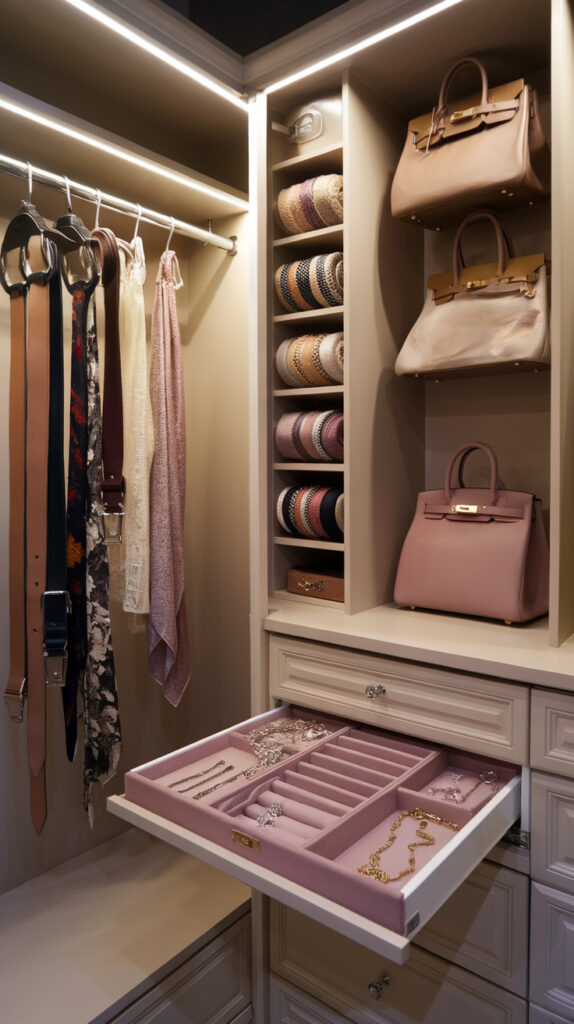
Accessories cause chaos because they don’t have a clear home. Belts slide off shelves, scarves fall into piles, and jewelry ends up tangled like it started a fight with itself.
A designated zone keeps accessories visible and easy to grab, which means you’ll actually use them. And yes, it also stops you from buying duplicates you forgot you owned.
Why It Works
When accessories stay organized, your closet looks cleaner and functions better. You also protect delicate items from damage.
It saves time because you stop searching for one belt like it’s a missing person case.
How to Apply
- Use hooks or hangers for belts and scarves so they don’t collapse into piles.
- Store jewelry in a drawer organizer so pieces don’t tangle.
- Keep handbags upright using shelf dividers so they don’t slump and lose shape.
- Create a small tray for everyday accessories like watches or hair clips.
Tips & Variations
A great tip is to store accessories near the clothing they match most often. For variation, use clear containers so you see everything instantly without digging.
9. Avoid Overcrowding Rod Space
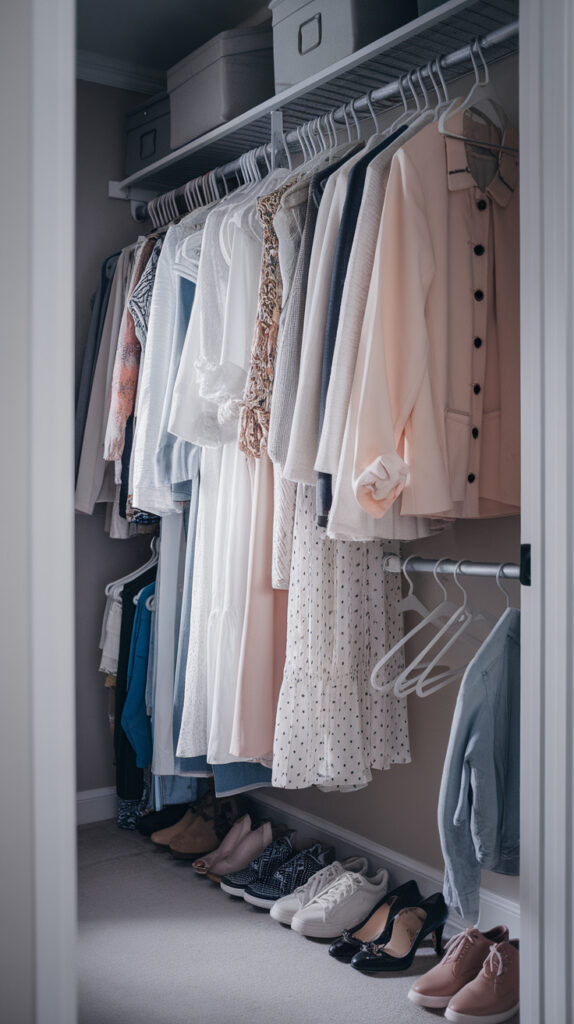
Overcrowded closet rods cause wrinkled clothing, stretched fabrics, and constant frustration. If your hangers touch shoulder-to-shoulder with no breathing room, your closet will never stay neat.
I know people love squeezing in “just one more” item, but that habit ruins everything. It’s like stuffing a suitcase until the zipper cries.
Why It Works
Proper spacing keeps clothes in better condition. It also makes your closet easier to use because you can slide hangers without fighting them.
When clothes hang properly, you stop rewashing items just because they got wrinkled in storage.
How to Apply
- Leave about a finger-width between hangers so clothes hang naturally.
- Move bulky coats and jackets to a separate area or seasonal storage.
- Use slim hangers to reduce space waste.
- Remove items you haven’t worn in months to create breathing room.
Tips & Variations
A practical tip is to count how many hangers your rod comfortably holds, then treat that number like a hard limit. For variation, install a second rod if you have vertical space, especially for shirts and pants.
10. Revisit Your Storage System Twice a Year
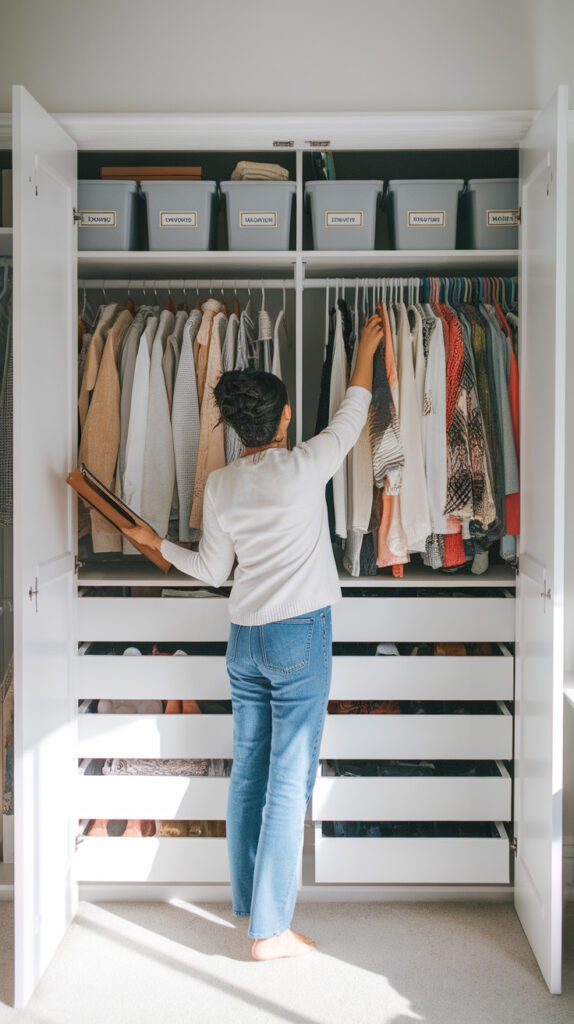
Closets change because life changes. Your job shifts, your style changes, your routine changes, and suddenly your closet setup doesn’t fit anymore.
Twice-a-year check-ins keep your closet system aligned with reality. It’s not dramatic. It’s just smart maintenance.
Why It Works
Revisiting your system prevents slow clutter buildup. You notice what doesn’t work and fix it before it becomes annoying.
It also helps you adjust storage based on what you actually wear instead of what you think you wear.
How to Apply
- Review your closet layout and ask what areas feel messy or frustrating.
- Adjust shelves, bins, or dividers if certain categories overflow.
- Donate items you no longer reach for because they block space.
- Rearrange based on lifestyle changes like work-from-home, gym habits, or seasonal needs.
Tips & Variations
A good tip is to take a quick photo of your closet before you adjust anything so you can see what improved. For variation, do a spring and fall closet audit and treat it like a reset ritual instead of a dreaded chore.
Simple Closet Maintenance Schedule You Can Follow
Most people fail at closet maintenance because they try to do everything at once. They plan a full-day closet makeover, burn out halfway through, and then avoid the closet for months.
A simple schedule makes maintenance automatic. You don’t need motivation when you rely on routine.
Start with a weekly 5–10 minute check. Put away stray items, hang up anything that landed on a chair, and toss trash or random clutter before it settles in.
Then do a monthly reset. That’s your bigger refresh where you wipe surfaces, re-hang misplaced items, and donate anything you stopped wearing.
Finally, do a seasonal deep clean twice a year. This includes rotating seasonal clothing, checking for damage, washing bins, vacuuming corners, and reassessing whether your closet layout still fits your lifestyle.
This schedule works because it respects your time. It also keeps your closet from reaching that “I need a whole weekend for this” level of disaster.
Smart Storage Additions That Improve Closet Maintenance
Storage tools only help if they make maintenance easier. If an organizer creates extra steps, you won’t use it, and it will become clutter itself. I’ve seen people buy fancy bins and then still toss everything on the floor, which feels like a personal attack on logic.
Shelf dividers work incredibly well because they stop folded stacks from collapsing. They keep categories separated so you don’t mix jeans with sweaters like your closet lost its mind.
Drawer organizers also make a huge difference, especially for socks, underwear, and workout clothes. Without them, drawers turn into messy pits where you dig around like you’re mining for fabric.
Clear bins help because you see what you stored without opening everything. That matters more than people realize because hidden storage creates forgotten clutter.
Hooks and over-the-door racks improve maintenance because they add “quick drop” zones. You can hang a bag, robe, or belt instantly instead of throwing it somewhere random.
Vertical stacking tools like tiered shoe racks also reduce floor mess. They give every item a clear home, and clear homes make closets easier to maintain.
Closet Maintenance Mistakes That Create More Clutter
The biggest mistake people make involves buying organizers before decluttering. They add bins and baskets to a closet that already holds too much stuff, then they wonder why it still looks messy.
Another common issue comes from ignoring seasonal rotation. Off-season clothing eats up space, and it makes daily maintenance harder because you must dig through layers of stuff you don’t even wear.
People also keep damaged items “for later,” and later never comes. Those pieces create visual clutter and take up space that should go to clothing you actually trust.
Mixing categories ruins closet structure fast. When you toss scarves with sweaters and shoes with handbags, you lose your system, and you create a closet where everything feels like a random pile.
Too many bins can also backfire. If you store everything in containers, you stop seeing what you own, and your closet becomes a collection of mystery boxes.
Closet maintenance works best when you keep things visible, simple, and realistic. The goal isn’t perfection—it’s a closet that doesn’t stress you out.
Frequently Asked Questions
How often should I clean my closet?
You don’t need to deep clean your closet constantly, but you should do light maintenance regularly. I recommend a quick weekly check where you put items back where they belong and remove anything that drifted into the wrong spot.
For actual cleaning, wiping shelves and vacuuming corners every three months works well. Closets collect dust faster than people expect, especially if you store shoes, bags, or fabric bins.
Then twice a year, do a seasonal deep clean. Rotate clothes, wash storage bins, and reassess your setup so your closet stays functional instead of slowly collapsing.
What is the best way to maintain closet organization?
The best way involves small habits that prevent clutter from building up. If you only organize once and never revisit it, your closet will fall apart no matter how perfect it looked on day one.
Stick to a monthly closet reset, follow the one in, one out rule, and keep daily items at eye level. Those three habits alone solve most closet chaos.
Also, stop overcomplicating your system. A simple closet you actually maintain beats a fancy system you ignore.
How do I prevent clutter from coming back?
Clutter returns when your closet has no limits. If you keep adding items without removing anything, your closet will eventually overflow, even if you organize constantly.
Use the one in, one out rule and keep a donation bag inside your closet. When you try something on and don’t like it, toss it into the donation bag immediately instead of hanging it back up.
Also, stop storing random non-clothing items in your closet. Closets attract junk like magnets, and you have to protect that space like it matters.
Should I use storage bins or drawers?
Both work, but they serve different purposes. Drawers work best for daily items like underwear, workout clothes, socks, and t-shirts because they make access easy and fast.
Storage bins work better for seasonal clothing, handbags, accessories, and items you don’t use every day. Clear bins usually work best because you can see what’s inside without digging.
If you want long-term closet maintenance, choose whatever option makes putting things away feel effortless. The easiest system always wins.
How do I organize a small closet effectively?
Small closets need strict control over space. You can’t keep everything, and you can’t overcrowd the rod without creating a wrinkled mess.
Use slim hangers, rotate seasonal items out, and store shoes vertically instead of scattered on the floor. Put your daily wardrobe at eye level so you don’t waste time digging.
Most importantly, stop trying to fit your entire life into a tiny closet. If you treat it like a curated wardrobe instead of a storage unit, it will stay organized much longer.
Final Thoughts
Closet maintenance works because it prevents the slow buildup that turns your space into chaos. You don’t need a Pinterest-perfect closet, you just need habits that stop clutter from taking over.
If you follow the monthly reset, rotate seasonal clothing, and keep your system simple, your closet stays functional without constant effort. That’s the real win.
A closet that stays organized feels like a small upgrade to your whole day, and honestly, that kind of peace is worth a little routine.
Get the Weekend Home Reset Checklist Pack
A free printable pack to help you reset your home, clear the mess, and make your space feel calmer in a simple, doable way.