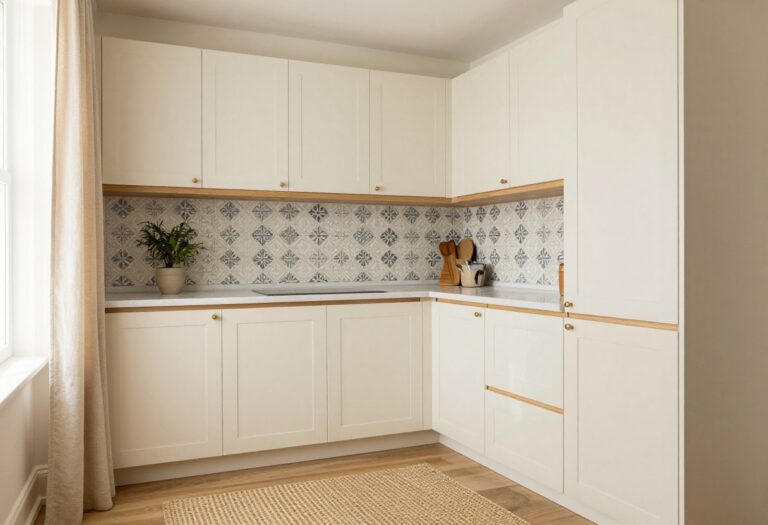
10 Creative Kitchen Mats Floor Ideas for a Home That Feels Easy to Use
Your kitchen floor takes a lot of heat—spills, crumbs, and constant foot traffic. But that doesn't mean you have to sacrifice style for practicality. A well-chosen mat can anchor the room, add a soft layer underfoot, and make the whole space feel more put together.
The key is finding options that look good and handle real life. Whether you're after something plush and cozy or sleek and wipeable, there's a mat out there that fits your vibe.
Let's walk through ten creative kitchen mat ideas that keep your home feeling easy to use without skimping on charm. From natural fibers to bold patterns, these picks are designed to make your kitchen both stylish and livable.
1. Layer a Jute Rug Under a Smaller Cotton Mat
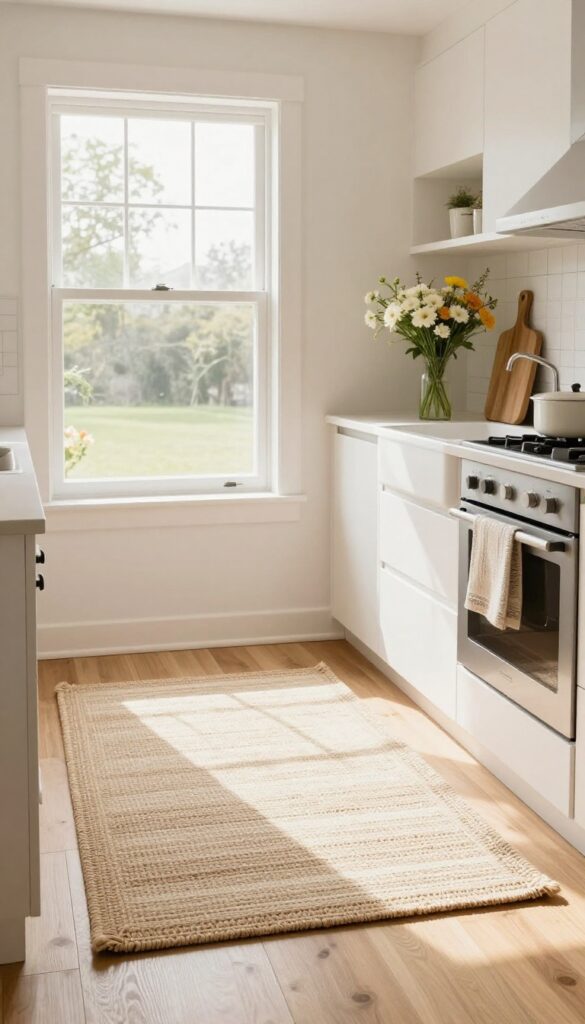
Kitchen floors take a beating—spills, crumbs, constant foot traffic. A single mat often feels too thin or too plain, but layering changes everything. Start with a large, natural jute rug that adds warmth and texture underfoot, then top it with a smaller, washable cotton mat right in front of the sink or stove.
The contrast between rough jute and soft cotton creates a cozy, curated look that still handles real life. It’s a simple trick that makes the kitchen feel more inviting without sacrificing practicality.
Why It Works
Jute brings organic texture and a neutral base that anchors the space, while the cotton mat catches daily messes and can be tossed in the wash. The layered combo adds visual depth and softness to hard tile or wood floors, making the kitchen feel warmer and more lived-in. Plus, it’s easy to swap out the top mat seasonally or when it wears out, without replacing the whole setup.
Best For
This idea works well in kitchens with neutral or warm color schemes—think beige, cream, soft gray, or earthy tones. It’s especially great for open-concept layouts where the kitchen flows into a dining or living area, because the jute rug helps define the zone while keeping a cohesive look. Avoid it in kitchens with very dark floors, as jute can blend in too much.
Styling Tip
Choose a jute rug that’s at least a foot wider and longer than the cotton mat on all sides, so the layering feels intentional. Stick to a cotton mat with a simple pattern or solid color that complements the jute’s natural tone—like a striped or diamond weave in cream or sage. Place the mat so it sits just inside the rug’s border, leaving a few inches of jute visible around the edges.
2. Go for a Long, Narrow Runner Along the Galley
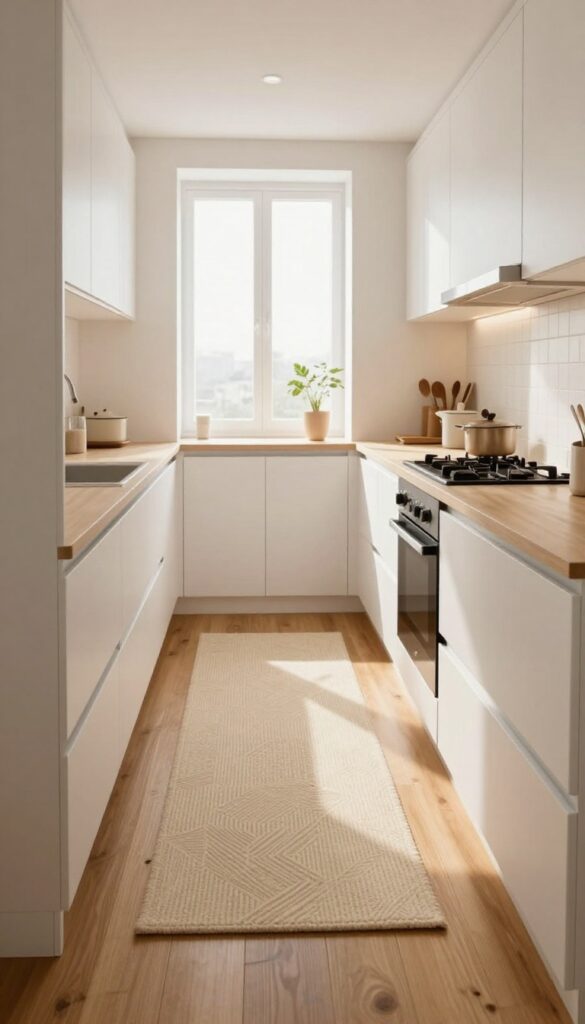
Galley kitchens are all about efficiency, but they can feel a little cramped or cold if you're not careful. That's where a well-chosen runner comes in—it softens the floor, adds a hit of color, and makes the space feel more intentional. A durable material like polypropylene or wool stands up to spills and foot traffic while bringing in that cozy, layered look you want.
Why It Works
A runner visually connects the two sides of a galley kitchen, creating a sense of flow rather than a narrow tunnel. The extra cushion underfoot is a game-changer when you're standing at the stove or sink for a while, and the pattern or texture can hide crumbs and splashes better than a solid mat.
Best For
This idea is perfect for galley kitchens, narrow walkways between counters, or any long, rectangular space that needs warmth without feeling cluttered. It also works well in rental kitchens where you can't change the flooring but want to add personality.
Styling Tip
Choose a runner that's about two-thirds the length of your kitchen to leave a little floor visible at each end—this keeps the space from feeling chopped up. For a cozy layered vibe, go with a low-pile wool runner in a warm neutral or a subtle geometric pattern, and add a contrasting natural-fiber mat near the sink for extra texture.
3. Choose a Patterned Vinyl Mat for High-Traffic Zones
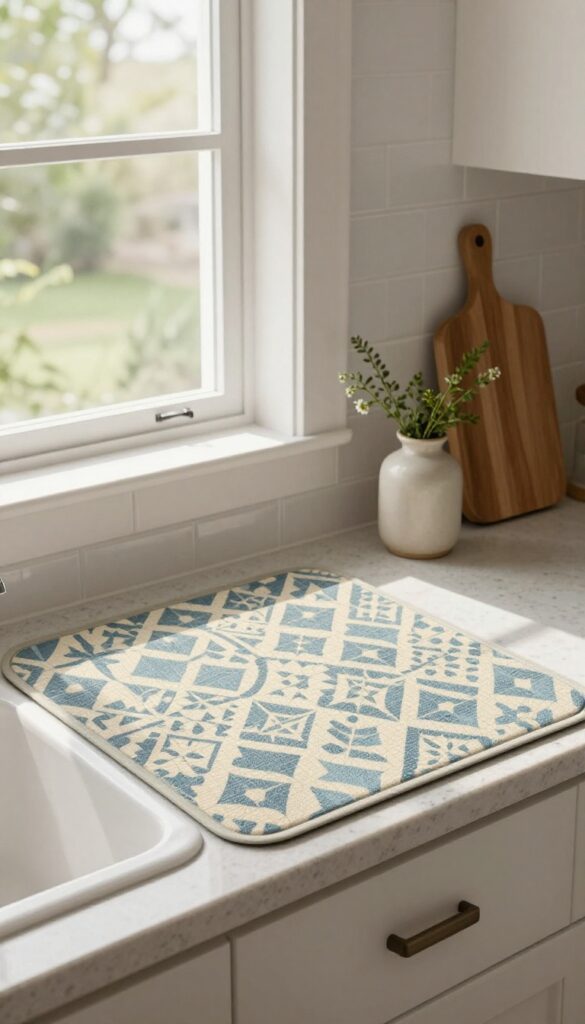
A kitchen mat does more than cushion your feet—it can anchor the whole room with personality. Patterned vinyl mats bring that cozy, layered feel we love, especially when you want warmth without sacrificing practicality. They’re tough enough for the busiest spots, yet their designs add a soft, collected look that makes a kitchen feel lived-in and easy to use.
Why It Works
Vinyl is a workhorse material: it resists moisture, cleans up in seconds, and stands up to constant foot traffic. Bold patterns cleverly disguise spills, crumbs, and scuffs, so the mat stays looking fresh even after a week of meal prep. That mix of durability and forgiving style makes it a smart choice for real-life kitchens.
Best For
This mat shines in front of the sink, stove, or dishwasher—anywhere messes happen most. It’s also great for rental kitchens where you want to add character without permanent changes. If your kitchen sees heavy daily use, a patterned vinyl mat keeps things pretty without adding stress.
Styling Tip
Look for a pattern that pulls colors from your countertops or backsplash to create a cohesive flow. A geometric or floral design in muted tones adds visual interest without overwhelming the space. Pair it with a natural fiber runner or a wooden cutting board nearby to layer textures and keep the look grounded.
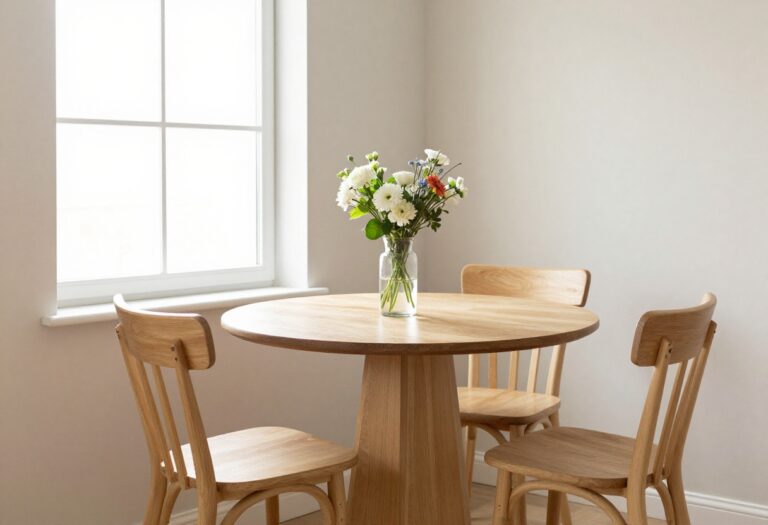
4. Try a Round Mat Under a Breakfast Table
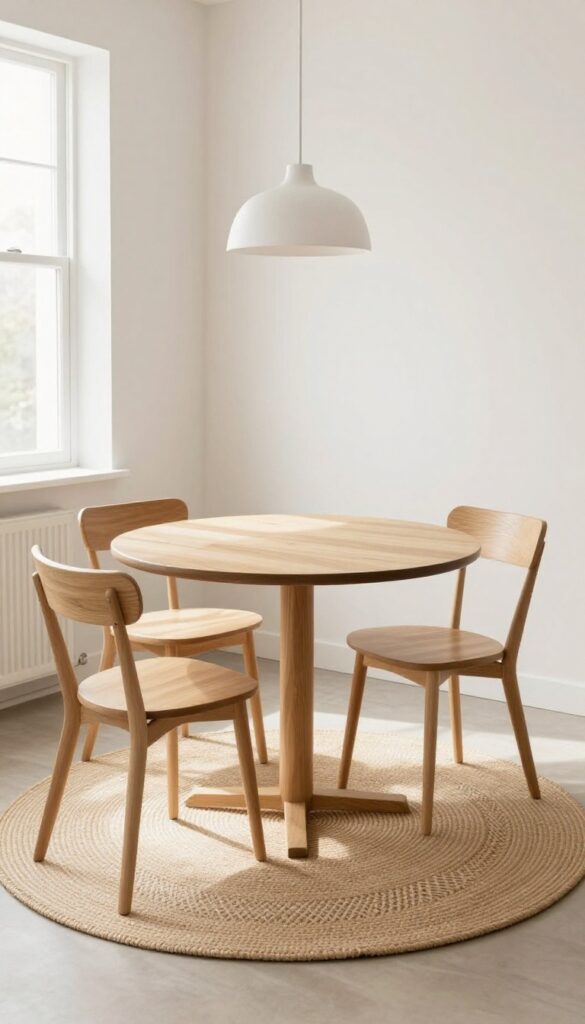
A round mat under a small breakfast table instantly softens the look of a kitchen nook. It defines the eating area without the bulk of a full rug, making the space feel intentional and cozy. The curved shape breaks up all the straight lines in a kitchen, adding a gentle, organic touch that feels both practical and stylish.
Why It Works
Round mats are perfect for small dining spots because they echo the shape of a round or pedestal table, creating a natural visual anchor. They take up less visual floor space than a rectangle rug, so the room still feels open and easy to move around. Low-pile or flatweave options let chairs slide in and out without catching, which keeps the area functional for daily meals.
Best For
This idea works best in compact kitchens, breakfast nooks, or any spot where a full rug would overwhelm the room. It's also great for apartments or rental kitchens where you want to add warmth without committing to a large, permanent rug. If you have a small round table and want to define the zone without closing off the space, a round mat is the answer.
Styling Tip
Choose a mat with a subtle pattern or texture—like a braided jute or a low-contrast geometric print—to keep the look layered but not busy. Make sure the mat extends at least 24 inches beyond the table edge on all sides so chairs stay on the mat when pushed back. Pair it with a simple pendant light above the table to complete the cozy, defined dining zone.
5. Opt for a Cushioned Anti-Fatigue Mat in a Standing Area
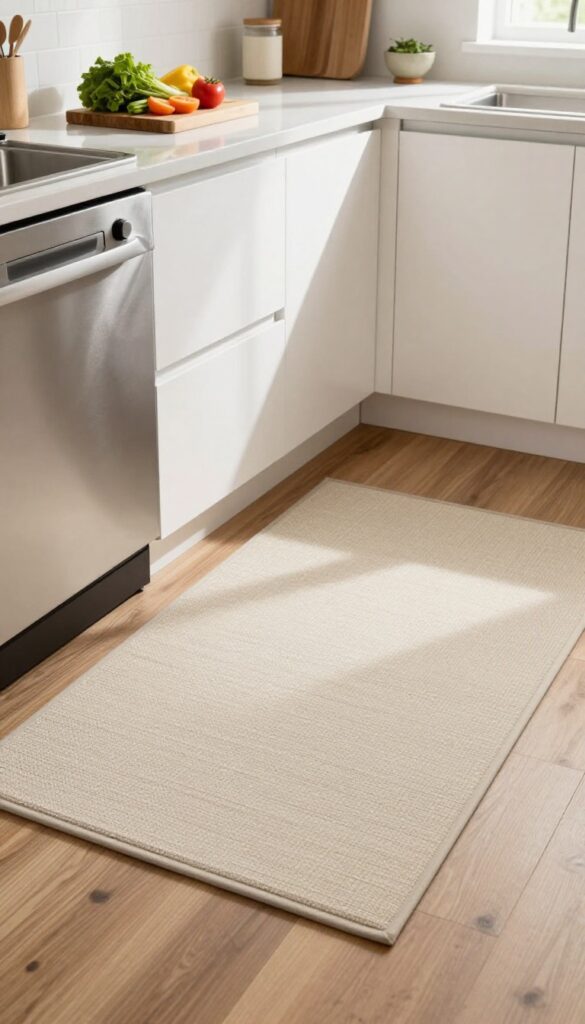
Your kitchen floor might look great, but if you spend any time chopping, stirring, or prepping, you know the toll standing on hard tile or wood can take. A cushioned anti-fatigue mat changes that completely, adding a layer of softness that makes long cooking sessions feel easier on your legs and back. The trick is choosing one that feels cozy underfoot without screaming for attention—think textured neutrals, subtle geometric patterns, or a warm woven look that blends right into your kitchen’s layered vibe.
Why It Works
These mats are designed with memory foam or gel cores that absorb pressure and encourage micro-movements, keeping your circulation flowing while you work. That practical benefit is huge, but visually, a well-chosen mat can anchor a standing area—like in front of the sink or stove—adding a soft, grounded layer that breaks up hard surfaces and makes the kitchen feel more inviting.
Best For
This idea is perfect for anyone who cooks regularly and wants to reduce fatigue without sacrificing style. It’s especially great in kitchens with hard flooring like tile, stone, or hardwood, and in spaces where you stand for more than 30 minutes at a time—like near the prep zone, island, or oven.
Styling Tip
Go for a mat that’s large enough to stand on comfortably, but not so big it overwhelms the area. A neutral tone like warm gray, beige, or taupe with a subtle woven texture or faint stripe keeps it practical and pretty. If your kitchen has warm wood tones, a mat with a slight orange or brown undertone will tie everything together.
6. Use a Natural Seagrass Mat for an Organic Feel
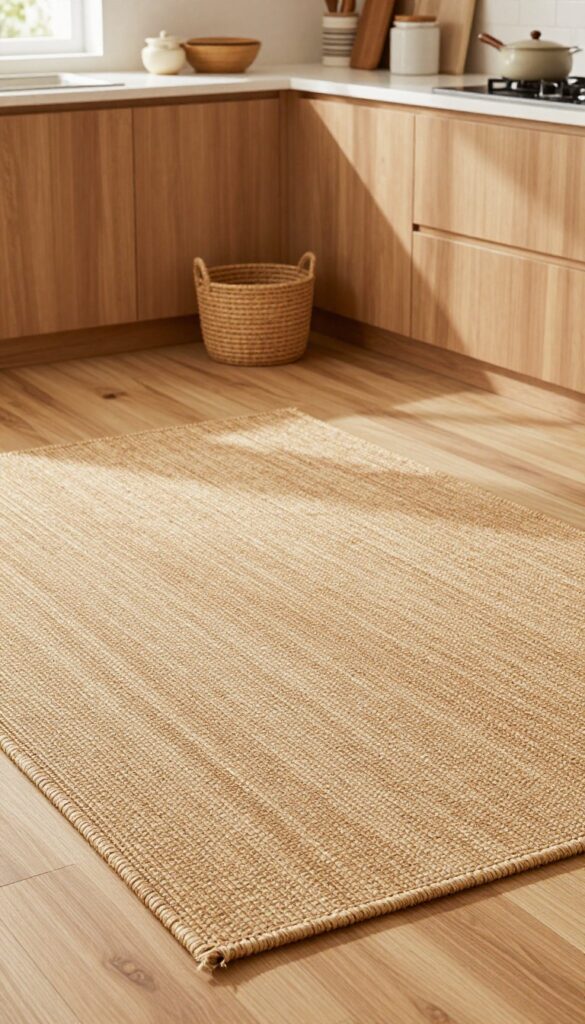
A seagrass mat instantly softens the hard surfaces of a kitchen while adding a layer of natural texture. The earthy tones and woven pattern bring warmth without trying too hard, making the space feel grounded and inviting. It’s a simple swap that makes a big difference in how the room feels underfoot and at a glance.
Why It Works
Seagrass is naturally durable and moisture-resistant, so it holds up well in a kitchen environment. The organic fibers add visual depth and a tactile element that contrasts nicely with tile or hardwood. Plus, it’s easy to clean—just a quick vacuum or spot wipe keeps it looking fresh.
Best For
This mat works beautifully in rustic, farmhouse, or coastal kitchens where natural materials are already part of the palette. It also suits busy family kitchens that need a practical, low-maintenance floor covering with a soft, cozy feel.
Styling Tip
Pair the seagrass mat with neutral-toned cabinets and warm wood accents to enhance the organic vibe. Add a few woven baskets or ceramic canisters nearby to tie the look together. For a layered effect, place a thin cotton rug on top near the sink or prep area.
7. Pick a Dark-Colored Mat to Hide Everyday Wear
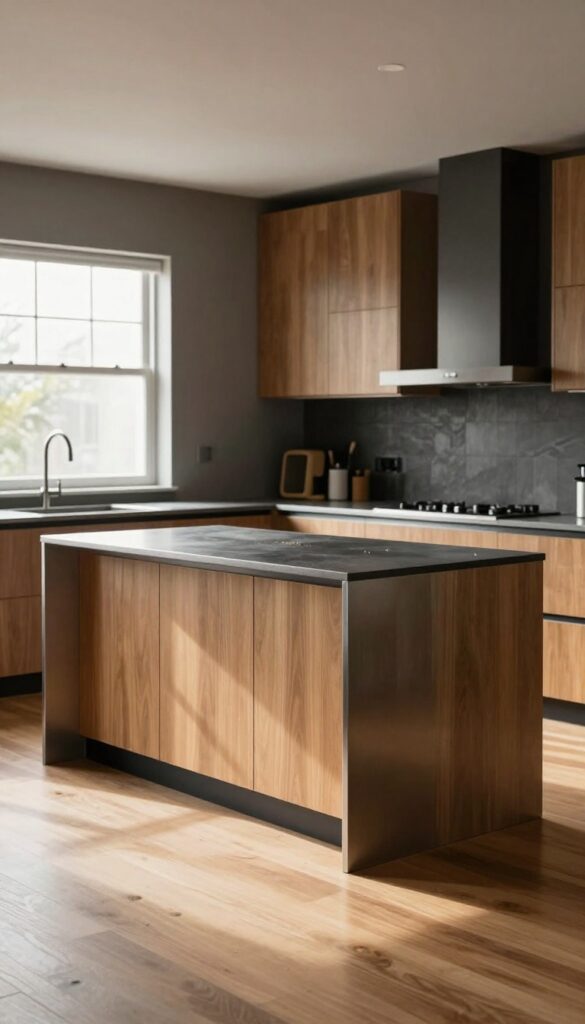
A dark charcoal, navy, or deep green mat does more than just anchor your kitchen—it quietly handles the mess of daily cooking. Crumbs, coffee drips, and flour dust blend right in, so you’re not constantly wiping or vacuuming. The rich, grounded color also adds a cozy depth that balances out bright countertops or stainless steel appliances.
Why It Works
Dark hues are naturally forgiving, making this mat a low-maintenance choice for busy kitchens. The color absorbs visual clutter, so the floor stays looking tidy even between deep cleans. Plus, the mat’s weighty presence helps define the cooking zone without feeling harsh.
Best For
This idea shines in high-traffic kitchens where spills and splashes are part of the routine. It’s also great for open-plan spaces where you want to subtly separate the cooking area from the dining or living zone. If you have light-colored floors, the contrast adds a sophisticated anchor.
Styling Tip
Pair a charcoal mat with warm wood tones or brass hardware to keep the look from feeling too cold. Add a textured runner in a similar dark shade nearby for a layered, cohesive feel. Avoid matching the mat exactly to your cabinets—opt for a shade that’s a few steps darker for the best effect.
8. Install a Custom-Fit Mat for an Irregular Layout
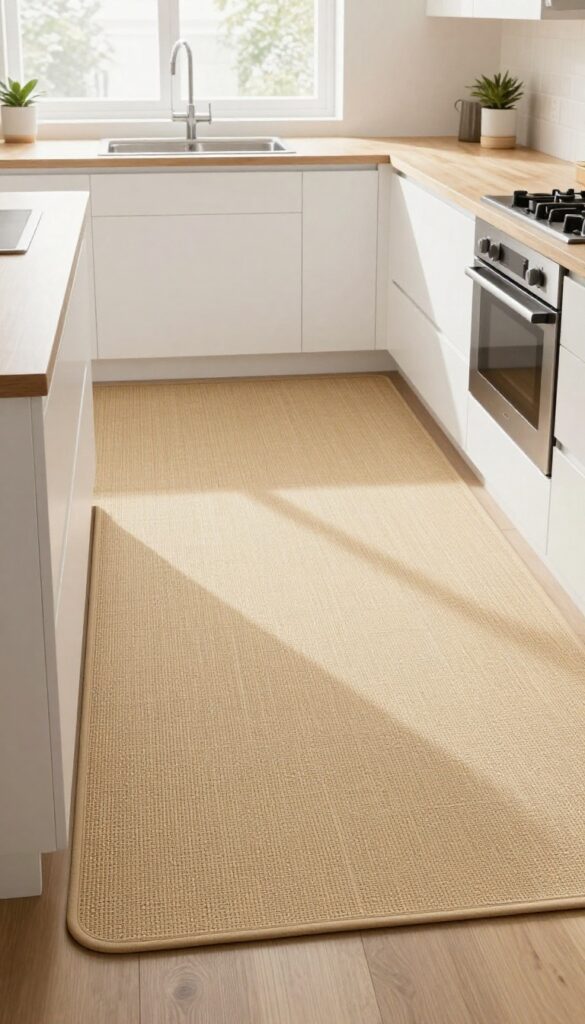
Kitchens with unusual floor plans often end up with mismatched mats that slide around or leave bare patches near the counters. A custom-cut mat solves that by hugging every curve and corner, making the space feel intentionally designed rather than pieced together. The result is a continuous, soft surface that feels both polished and practical, especially when you choose a textured material like woven vinyl or recycled rubber.
Why It Works
A mat that fits perfectly eliminates tripping hazards and keeps dirt from collecting in gaps. It also creates a visual anchor for the room, making an irregular layout feel cohesive rather than chaotic. Full coverage underfoot adds warmth and comfort, which is especially welcome in a busy kitchen where you're standing for long periods.
Best For
This idea shines in galley kitchens, L-shaped layouts, or any space with odd angles, islands, or peninsula overhangs. It's also great for renters who can't change the flooring but want to define zones without permanent alterations.
Styling Tip
Choose a mat with a subtle pattern or texture in a tone that bridges your cabinets and floor color. If your layout includes a curved section, order a template kit from the manufacturer to ensure a precise fit. Pair with a coordinating runner in the main walkway for a layered, custom look.
9. Mix a Vintage-Style Runner with Modern Cabinetry
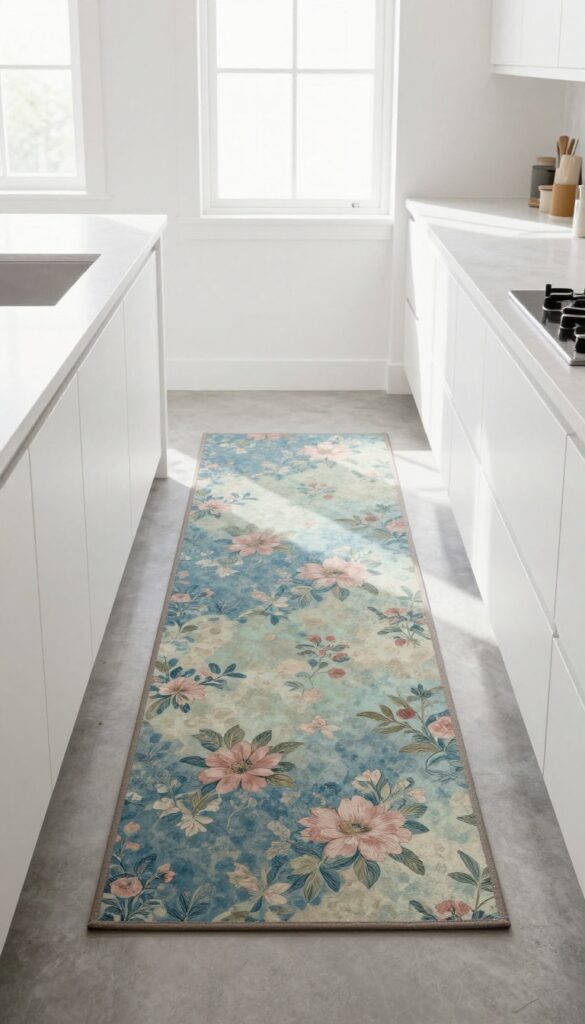
Sleek, handleless cabinets can feel a little cold, especially in an all-white kitchen. A vintage-style runner with faded floral or geometric patterns instantly warms up the space and adds a layer of softness underfoot. It's an easy, low-commitment way to introduce a lived-in, collected-over-time feel without changing your cabinetry.
Why It Works
The contrast between old and new creates visual interest. The runner's worn-in colors and organic pattern break up the clean lines of modern cabinets, making the kitchen feel approachable and cozy. It also absorbs sound and adds texture, which helps a minimalist kitchen feel less sterile.
Best For
Kitchens with flat-panel or slab-style cabinets in white, gray, or natural wood tones. It's especially effective in galley kitchens or open-plan layouts where the runner can define the cooking zone and anchor the island or sink area.
Styling Tip
Choose a runner with a low pile and a non-slip backing for safety near the stove and sink. Look for patterns in muted tones—faded blues, sage greens, or dusty pinks—that echo other accents in the room. Keep the runner centered under the sink or along the main walkway, leaving at least 4 inches of floor visible on each side.
10. Place a Small Mat Inside a Backdoor Entry
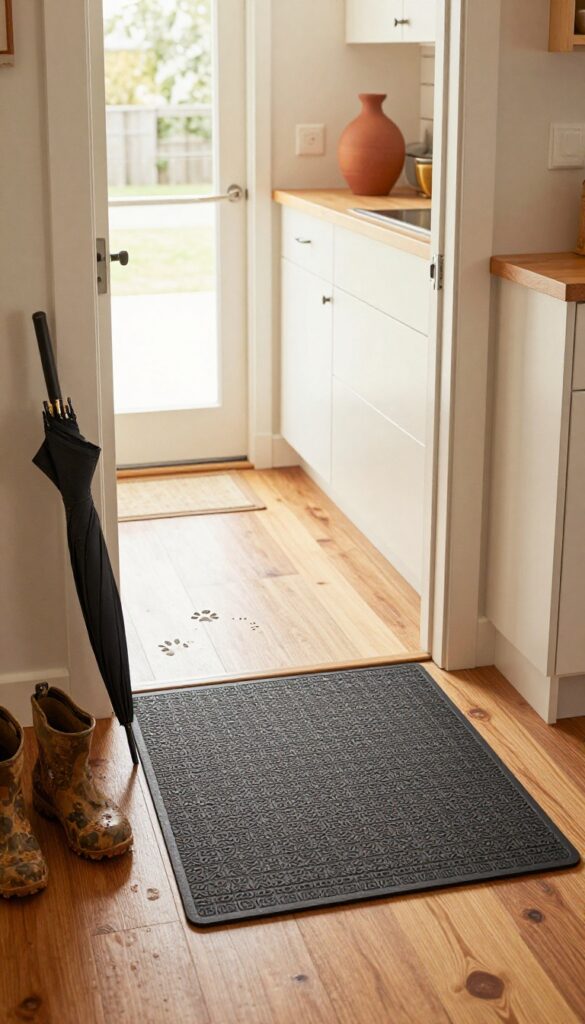
The back door is a workhorse entry—muddy boots, wet paws, grocery bags, and everything in between. A small mat placed just inside catches the mess before it travels through your kitchen. Choose a rubber-backed mat with a low profile so the door swings freely.
A dark, textured pattern hides dirt and adds a cozy, grounded feel to the transition zone.
Why It Works
This mat acts as a first line of defense against dirt and moisture, keeping your kitchen floor cleaner longer. The rubber backing prevents slipping and curling, even with heavy traffic. It’s a small addition that makes daily comings and goings feel smoother and less stressful.
Best For
Homes with a back door that opens directly into the kitchen or mudroom. It’s especially useful for families with kids, pets, or anyone who spends time in the garden. The mat works well in tight spaces where a larger rug would get in the way.
Styling Tip
- Pick a mat in a warm earthy tone like terracotta, olive, or charcoal to tie into a cozy kitchen palette. Look for a subtle geometric or leaf pattern that hides scuffs. Keep it simple—no tassels or thick pile that could trip you up.
- Pair it with a matching runner in the main kitchen for a coordinated look.
FAQ
What type of kitchen mat is easiest to clean?
Vinyl and rubber-backed mats are the easiest to clean—just wipe or hose them down. Cotton mats that are machine-washable are also a great low-maintenance choice.
Can I use a rug in the kitchen without it getting ruined?
Yes, if you choose a low-pile or flatweave rug made from durable fibers like polypropylene, wool, or cotton. Avoid high-pile rugs that trap crumbs and moisture.
How do I keep a kitchen mat from slipping?
Use a non-slip rug pad underneath, or choose a mat with a rubber or latex backing. This keeps the mat secure even on tile or hardwood floors.
What size mat works best in a small kitchen?
A runner (2×3 or 2×4 feet) or a small rectangular mat (2×3 feet) works well in tight spaces. Round mats can also fit nicely in corners or under a small table.
Are anti-fatigue mats worth it for kitchen use?
Absolutely, if you stand for long periods while cooking or washing dishes. They reduce pressure on your feet and legs, making kitchen tasks more comfortable.
Conclusion
Your kitchen mat is more than just a floor covering—it's a chance to add comfort, personality, and practicality to one of the busiest rooms in your home. Whether you go for a layered look, a bold pattern, or a natural fiber, the right mat can make your kitchen feel easier to use and more inviting. Take your time picking something that fits your routine and style.
A little thought now means a kitchen that feels good underfoot every single day. Happy decorating!