21 Large Bedroom Ideas to Maximize Comfort & Style
My bedroom used to feel big but somehow still wrong. The space looked empty in the worst way, like I forgot to finish decorating and just gave up halfway.
I learned the hard way that large bedrooms need intention, not just furniture tossed far apart.
A big bedroom gives you options, but it also exposes bad layout choices fast. Empty corners feel awkward, oversized furniture looks lonely, and clutter spreads like it owns the place.
Let me walk you through ideas that actually make a large bedroom feel cozy, stylish, and lived-in without turning it into a furniture showroom.

1. Create a Defined Sleeping Zone That Feels Grounded
A large bedroom often suffers from floating furniture syndrome, where the bed looks like it drifted into the middle of the room and stopped.
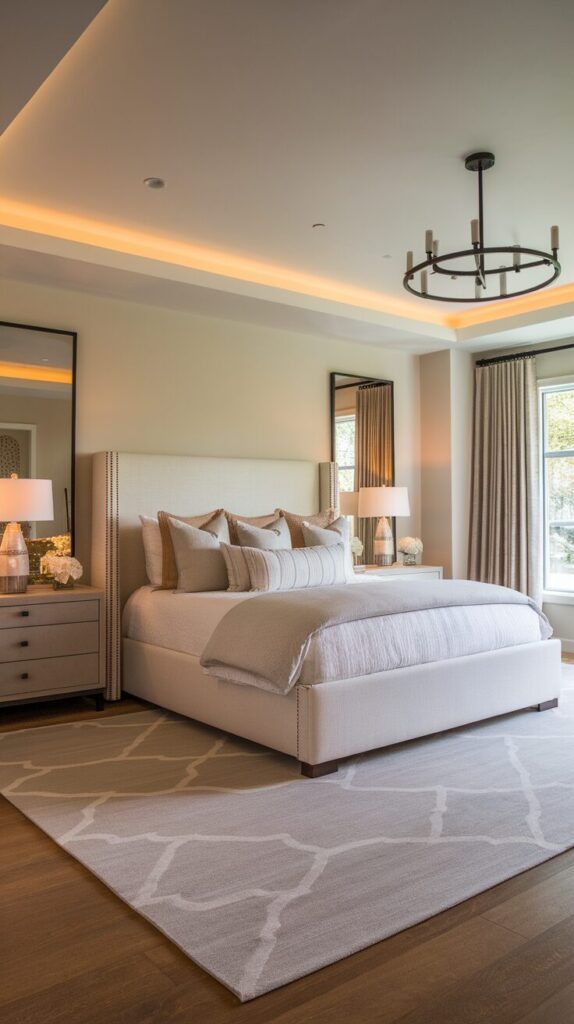
I used to shove my bed against a wall just because it felt safe, but the room always felt off. A defined sleeping zone instantly gives the room structure and purpose.
This idea centers on anchoring the bed with intention so it feels like the heart of the room. You create visual boundaries that say, “This is where rest happens,” instead of letting everything blur together. The space feels calmer, more hotel-like, and way more grown-up.
Why This Works
A sleeping zone gives your eyes a clear focal point. The brain relaxes faster when furniture feels organized instead of scattered. Large rooms need zones, or they feel unfinished no matter how nice the pieces look.
How to Do It
- Place the bed centered on the longest uninterrupted wall
- Add a large area rug that extends at least two feet around the bed
- Use matching nightstands to visually frame the bed
- Keep the walking space even on both sides for balance
Style & Design Tips
Choose a rug that contrasts the floor slightly so the bed stands out. Avoid tiny rugs that barely peek out because they make the room feel awkward. Upholstered or wood headboards add warmth and help visually anchor the bed.
Pro Tip or Budget Hack
If rugs cost too much, layer two identical smaller rugs side by side under the bed. Nobody notices, and your wallet stays calm.
2. Use Oversized Rugs to Kill the Empty Echo Effect
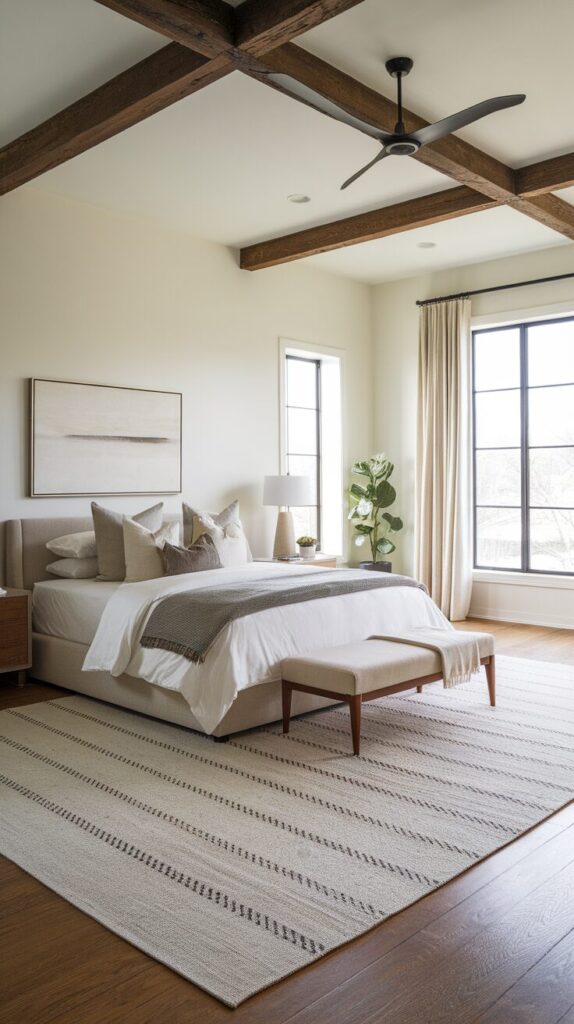
Large bedrooms echo visually even if they stay quiet. I ignored rugs for years because I thought they only mattered in small spaces. Once I added a big rug, the entire room suddenly felt intentional and finished.
Oversized rugs pull furniture together and stop the room from feeling like a gymnasium. They create warmth underfoot and add texture without crowding the space. Rugs also quietly fix layout mistakes without moving heavy furniture.
Why This Works
Rugs act like visual glue. They reduce the feeling of emptiness by filling negative space. Large rugs also soften sound and make bedrooms feel more relaxed.
How to Do It
- Choose a rug large enough for at least the front two-thirds of the bed
- Let nightstands sit partially on the rug for cohesion
- Center the rug evenly so it doesn’t drift visually
- Pick low-pile rugs for easier maintenance
Style & Design Tips
Neutral rugs keep things calm, while subtle patterns add interest without noise. Avoid high-contrast patterns if your furniture already has bold shapes. Texture matters more than color in big bedrooms.
Pro Tip or Budget Hack
Check clearance sections at carpet stores for oversized remnants. You often score designer-level rugs for half the price.
3. Add a Sitting Area That Actually Gets Used
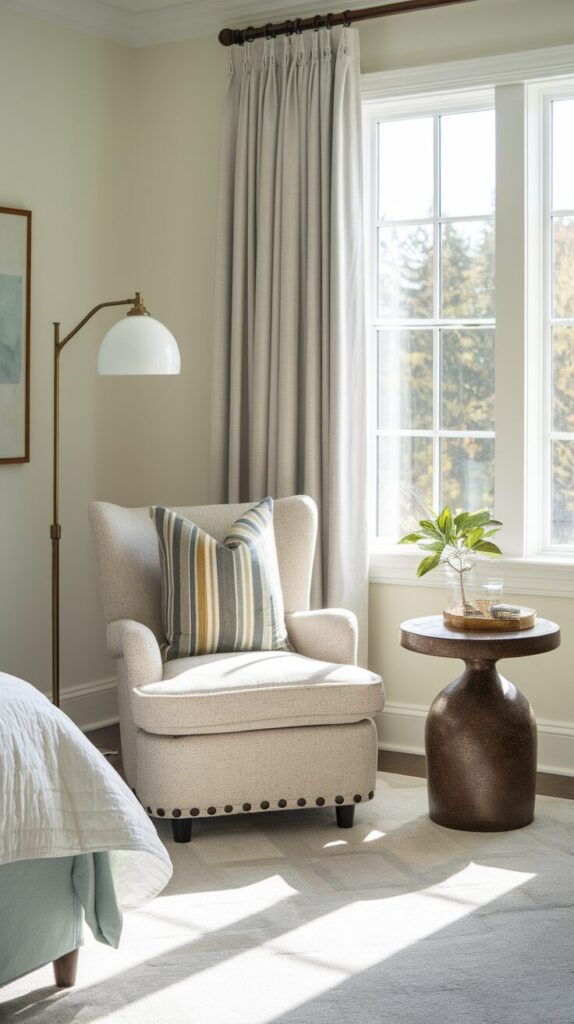
Everyone loves the idea of a sitting area, but most people create one that never sees action. I once added two chairs and a table that existed purely for dust collection. A sitting area should invite you in, not intimidate you.
A well-planned seating zone turns extra space into daily comfort. It becomes a place to read, scroll, stretch, or just breathe before bed. The room feels layered instead of one-note.
Why This Works
Large bedrooms need multiple functions to feel alive. Seating areas break up scale and add personality. They also keep the bed from dominating the entire room.
How to Do It
- Place seating near a window or natural light
- Use one chair and a small side table if space feels tricky
- Add a floor lamp for cozy lighting
- Keep the layout conversational and open
Style & Design Tips
Choose soft, inviting fabrics over stiff formal chairs. Avoid matching the bed exactly, because contrast adds depth. Curved furniture softens boxy rooms beautifully.
Pro Tip or Budget Hack
A small loveseat often costs less than two accent chairs. It also looks more intentional in large rooms.
4. Install Floor-to-Ceiling Curtains for Instant Drama
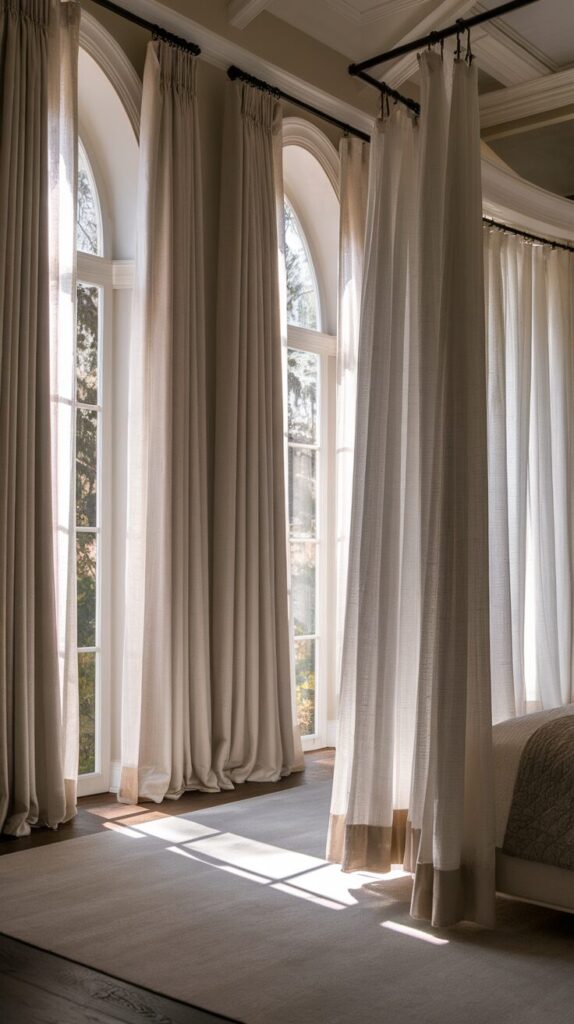
Short curtains make big rooms look confused. I learned this after hanging panels that stopped awkwardly halfway down the wall. Floor-to-ceiling curtains change everything fast.
Long curtains stretch the room vertically and add softness. They frame windows beautifully and make ceilings feel taller. Even plain rooms suddenly look styled.
Why This Works
Vertical lines trick the eye into seeing height. Curtains also absorb sound and soften hard edges. Large bedrooms benefit from that visual flow.
How to Do It
- Mount curtain rods close to the ceiling
- Use panels that just kiss the floor
- Choose wider panels for fullness
- Keep hardware simple and clean
Style & Design Tips
Light fabrics feel airy, while heavier fabrics add drama. Avoid skimpy panels that look stretched thin. Fullness equals luxury here.
Pro Tip or Budget Hack
Buy two sets of affordable panels and combine them on one rod. Full curtains always look more expensive.
5. Anchor the Room With a Statement Bed Frame
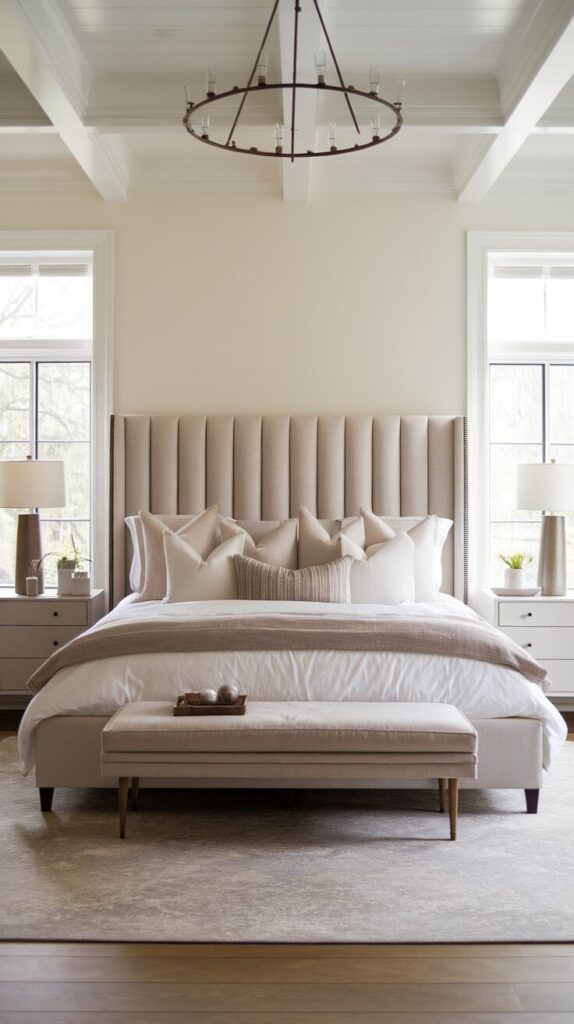
A large bedroom laughs at small furniture. I once used a basic metal bed frame, and the room felt unfinished no matter what I added. A statement bed fixes that instantly.
The bed should feel confident, not apologetic. Upholstered, wood, or canopy styles hold visual weight and command attention. Everything else can relax once the bed steps up.
Why This Works
The bed acts as the room’s anchor. Strong focal points reduce visual wandering. Large rooms need at least one bold piece.
How to Do It
- Choose a bed frame with height or texture
- Center it carefully on the wall
- Pair it with substantial nightstands
- Keep bedding simple to balance the frame
Style & Design Tips
Neutral bed frames age better than trendy ones. Avoid overly ornate details unless the room already leans classic. Simplicity scales better.
Pro Tip or Budget Hack
DIY an upholstered headboard using plywood, foam, and fabric. It costs less and fits perfectly.
6. Break Up Space With a Bedroom Divider or Screen
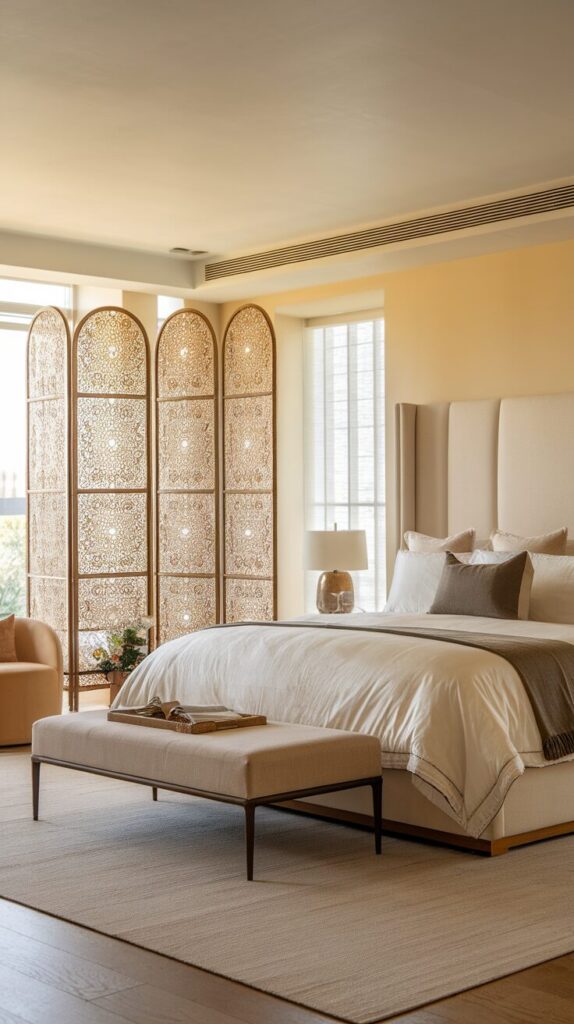
Large bedrooms sometimes feel too open. I resisted dividers because I feared clutter, but one well-placed screen changed everything. Dividers add structure without walls.
Screens define zones while keeping the room flexible. They also add texture and visual interest. You gain privacy without sacrificing light.
Why This Works
Dividers interrupt long sightlines. The eye enjoys pauses instead of endless openness. Large rooms benefit from gentle separation.
How to Do It
- Place screens near seating or dressing areas
- Choose lightweight, movable designs
- Keep them slightly offset, not centered
- Use them to hide cluttered corners
Style & Design Tips
Natural materials like wood or woven panels feel warm. Avoid heavy opaque screens that block light completely. Flow matters.
Pro Tip or Budget Hack
Repurpose old doors or shutters as a folding screen. They add character and cost almost nothing.
7. Add a Dresser That Doubles as a Design Feature
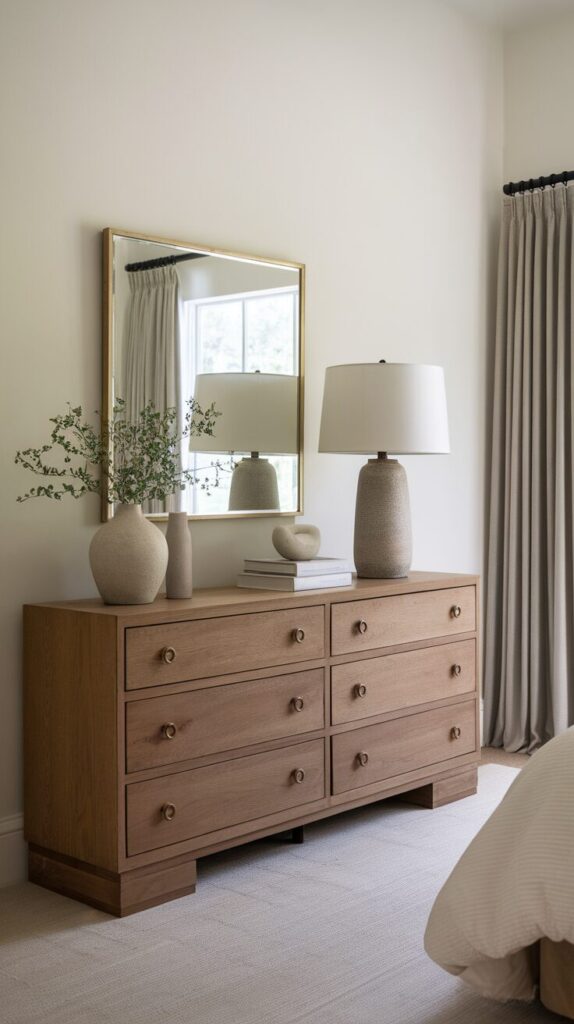
Tiny dressers disappear in large bedrooms. I learned to stop downsizing storage just because I feared bulk. A substantial dresser anchors walls beautifully.
Large dressers add weight and purpose. They also give you styling space for lamps, art, or trays. Function meets style without effort.
Why This Works
Big furniture fills visual gaps. Dressers add horizontal balance to tall walls. Storage stays hidden, which always helps.
How to Do It
- Choose wide, low dressers for balance
- Center them under art or mirrors
- Leave breathing room on both sides
- Keep the top styled but minimal
Style & Design Tips
Mix textures like wood and metal for interest. Avoid cluttering the top with too many items. Let each piece breathe.
Pro Tip or Budget Hack
Secondhand stores often sell solid wood dressers cheap. Paint or refinish them for a custom look.
8. Use Large-Scale Wall Art Instead of Tiny Frames
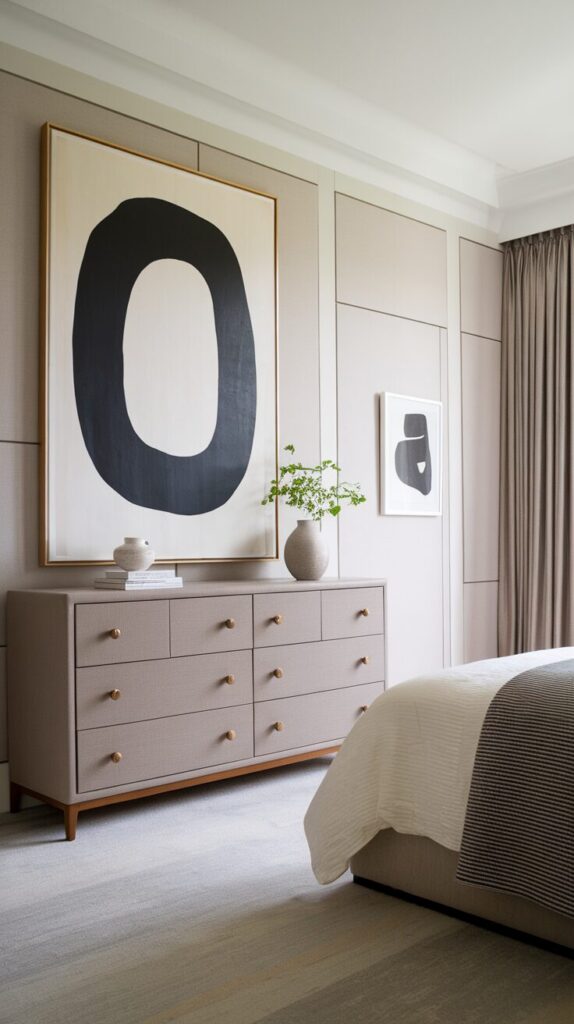
Small art floats awkwardly in big bedrooms. I once tried gallery walls with tiny frames, and everything looked lost. Large-scale art fixes scale issues instantly.
One or two oversized pieces feel intentional. They ground the wall and draw attention without chaos. The room feels curated instead of cluttered.
Why This Works
Large art matches the scale of the room. It reduces visual noise. Big walls need big statements.
How to Do It
- Choose art at least two-thirds the width of furniture
- Hang at eye level, not too high
- Use simple frames for balance
- Let negative space exist
Style & Design Tips
Abstract art works well because it feels flexible. Avoid tiny clusters on large walls. Scale matters more than quantity.
Pro Tip or Budget Hack
DIY oversized art using canvas drop cloths and paint. Imperfection adds charm.
9. Layer Lighting for Mood and Function
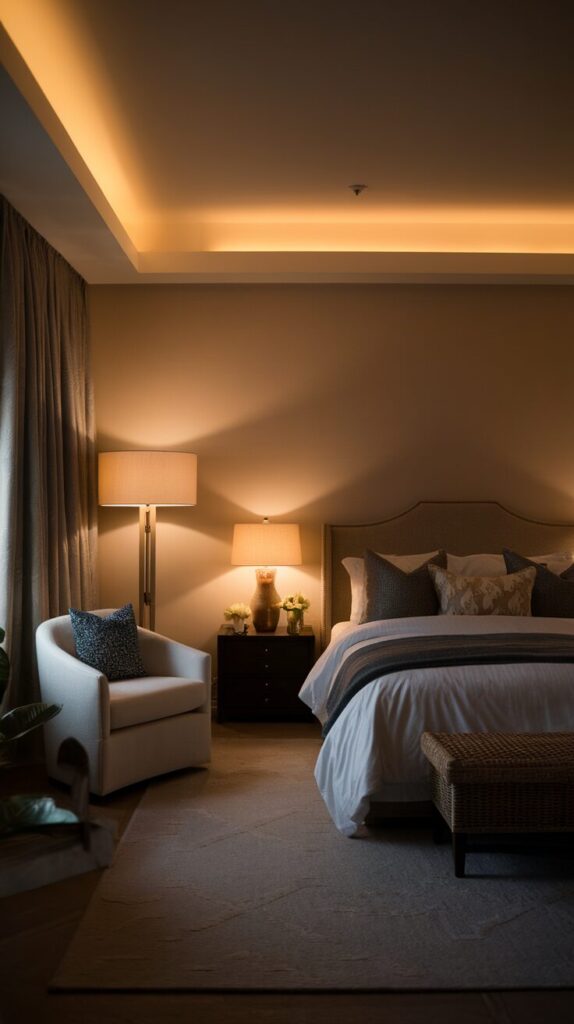
One overhead light never works in a large bedroom. I tried it, hated it, and never looked back. Layered lighting changes how the room feels instantly.
Different light sources create warmth and depth. You control the mood instead of blasting brightness everywhere. The room feels intentional and cozy.
Why This Works
Lighting guides emotion. Layers prevent harsh shadows and flat spaces. Large rooms need multiple light sources to feel balanced.
How to Do It
- Use bedside lamps for reading
- Add floor lamps in seating areas
- Install soft overhead lighting
- Use warm bulbs everywhere
Style & Design Tips
Mix lamp styles for personality. Avoid cool white bulbs because they kill cozy vibes. Warm light always wins.
Pro Tip or Budget Hack
Plug lamps into smart outlets. Control everything from your phone without rewiring.
10. Create a Cozy Reading Nook in an Empty Corner
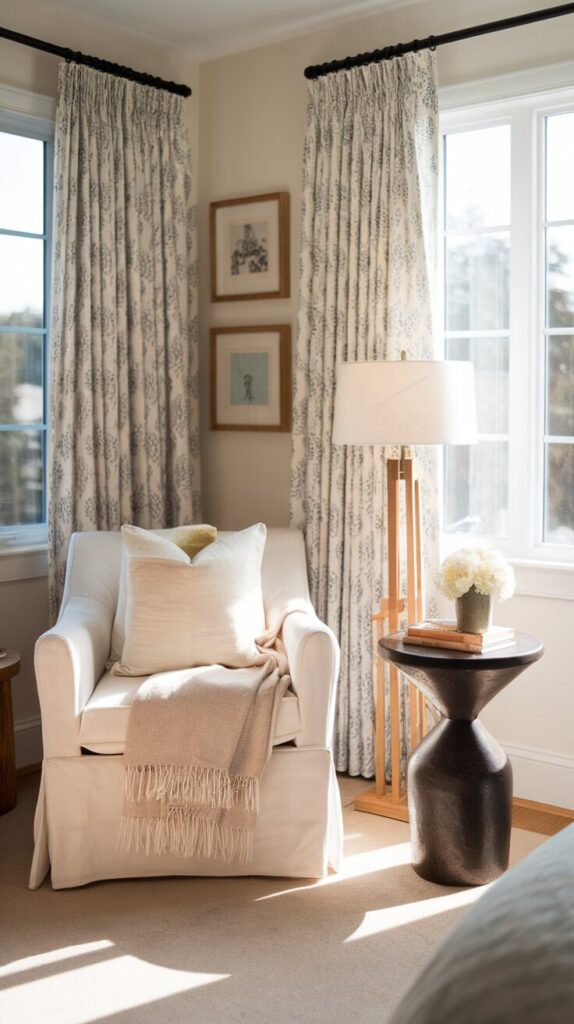
Corners often get ignored in big bedrooms. I turned one into a reading nook and suddenly used the space daily. Nooks add charm and purpose.
A chair, lamp, and small table work wonders. The room feels layered and personal. You gain a retreat within a retreat.
Why This Works
Corners break up open layouts. They add intimacy to large rooms. People naturally gravitate toward defined spaces.
How to Do It
- Choose a comfortable chair
- Add a soft throw or pillow
- Place a lamp within reach
- Keep it visually separate
Style & Design Tips
Curved chairs soften hard angles. Avoid oversized furniture that overwhelms the nook. Comfort beats scale here.
Pro Tip or Budget Hack
Use a small rug to visually define the nook without construction.
11. Balance the Room With Matching Nightstands
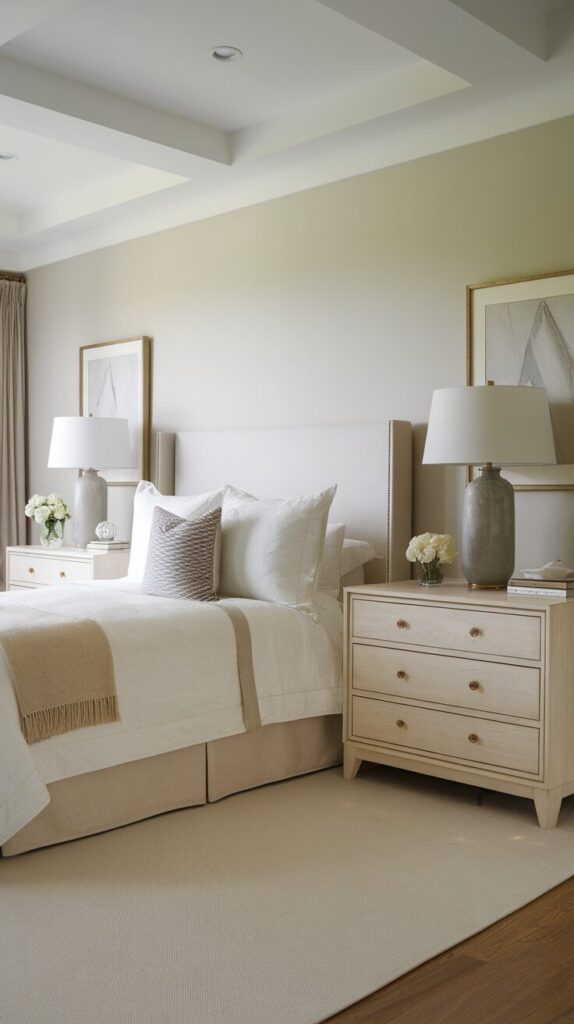
Mismatched nightstands feel chaotic in large bedrooms. I tried the eclectic look and quickly regretted it. Symmetry brings calm.
Matching nightstands frame the bed beautifully. They add structure and make the room feel finished. Everything feels intentional.
Why This Works
Symmetry relaxes the brain. Large spaces benefit from visual order. Matching elements reduce visual clutter.
How to Do It
- Choose nightstands with similar height
- Place them evenly on both sides
- Use matching lamps if possible
- Keep surfaces mostly clear
Style & Design Tips
You can still mix textures subtly. Avoid mismatched heights because they feel sloppy. Balance matters more than trendiness.
Pro Tip or Budget Hack
Buy one nightstand and find a close match secondhand. Paint both to match perfectly.
12. Use a Bench at the Foot of the Bed
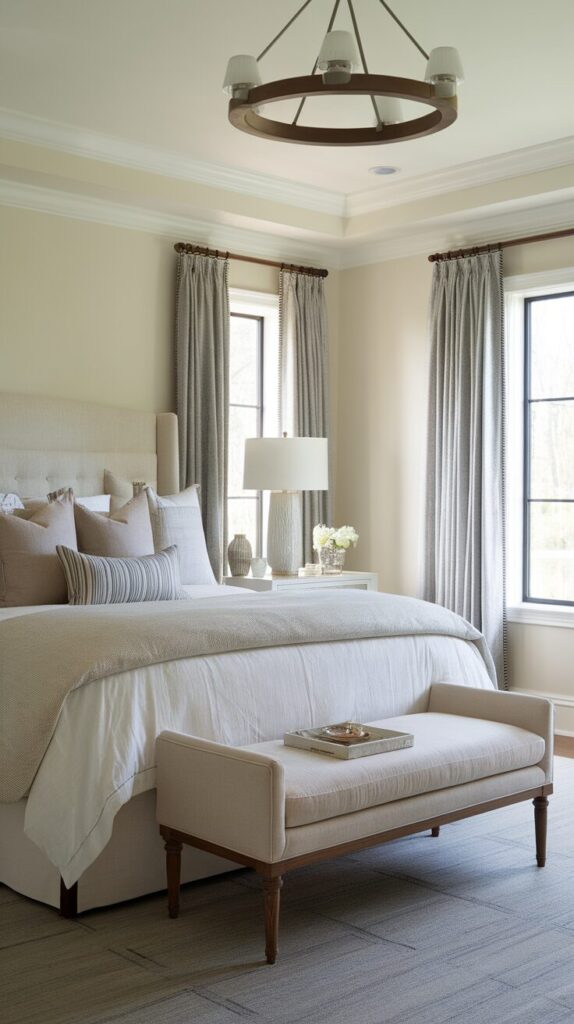
A bench adds function and polish instantly. I ignored benches until I realized how useful they feel daily. Shoes, throws, and bags finally had a home.
Benches also visually finish the bed area. They ground the layout and add softness. The room feels styled, not staged.
Why This Works
Benches add horizontal weight. They balance tall beds visually. Function meets form easily.
How to Do It
- Choose a bench slightly narrower than the bed
- Place it centered at the foot
- Keep clearance for walking space
- Use storage benches if possible
Style & Design Tips
Upholstered benches add warmth. Avoid benches taller than the mattress. Proportion keeps things elegant.
Pro Tip or Budget Hack
Repurpose a wooden coffee table with a cushion on top. Instant bench, minimal cost.
13. Fill Walls With Texture Instead of More Furniture
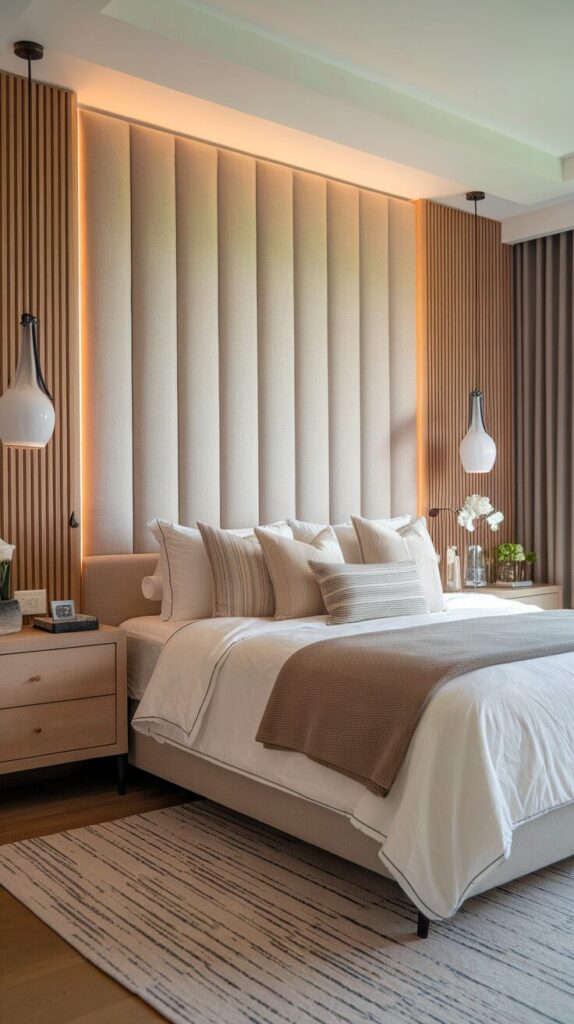
Bare walls make large bedrooms feel cold. I added texture instead of furniture and everything softened. Walls deserve attention too.
Texture adds depth without clutter. Wood panels, fabric, or wallpaper change the mood completely. The room feels layered and intentional.
Why This Works
Texture absorbs light and sound. It adds interest without taking floor space. Large rooms thrive on layered surfaces.
How to Do It
- Use peel-and-stick wallpaper
- Add fabric wall panels
- Try wood slats or molding
- Keep patterns subtle
Style & Design Tips
Neutral textures age better. Avoid overly busy patterns that fight furniture. Calm always wins in bedrooms.
Pro Tip or Budget Hack
Use removable wallpaper behind the bed only. You get impact without commitment.
14. Zone the Room With Multiple Area Rugs
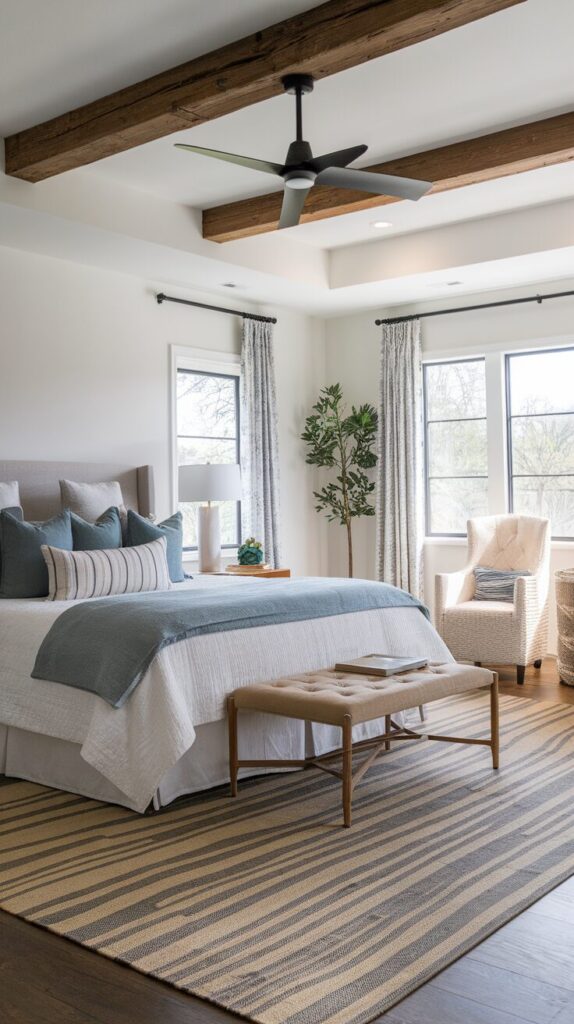
One rug rarely covers everything in large bedrooms. I layered rugs and suddenly the room made sense. Zones became clear without walls.
Multiple rugs guide movement and define areas. The space feels intentional instead of random. Each zone feels complete.
Why This Works
Rugs visually separate functions. They reduce emptiness. Large rooms need visual boundaries.
How to Do It
- Use one rug under the bed
- Add smaller rugs in seating areas
- Keep colors cohesive
- Leave walking paths clear
Style & Design Tips
Mix textures, not patterns. Avoid clashing colors across rugs. Cohesion keeps things calm.
Pro Tip or Budget Hack
Use indoor-outdoor rugs for durability and savings.
15. Add a Vanity or Dressing Table
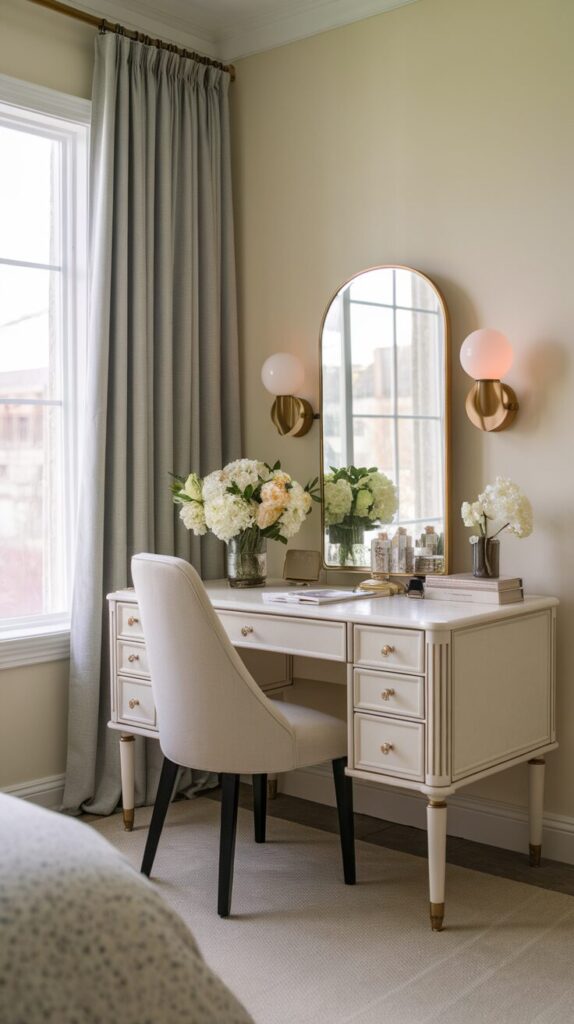
Large bedrooms can handle dedicated grooming spaces. I added a small vanity and used it daily. Function beats empty space.
A vanity adds routine and charm. It turns getting ready into a ritual. The room feels thoughtful and lived-in.
Why This Works
Dedicated zones increase usability. Furniture earns its place. Large rooms thrive on purposeful layouts.
How to Do It
- Place near natural light
- Use a comfortable chair
- Add task lighting
- Keep storage organized
Style & Design Tips
Mirrors amplify light beautifully. Avoid cluttered tabletops. Clean lines feel luxurious.
Pro Tip or Budget Hack
Convert a small desk into a vanity. Add a mirror and good lighting.
16. Use Tall Plants to Fill Vertical Space
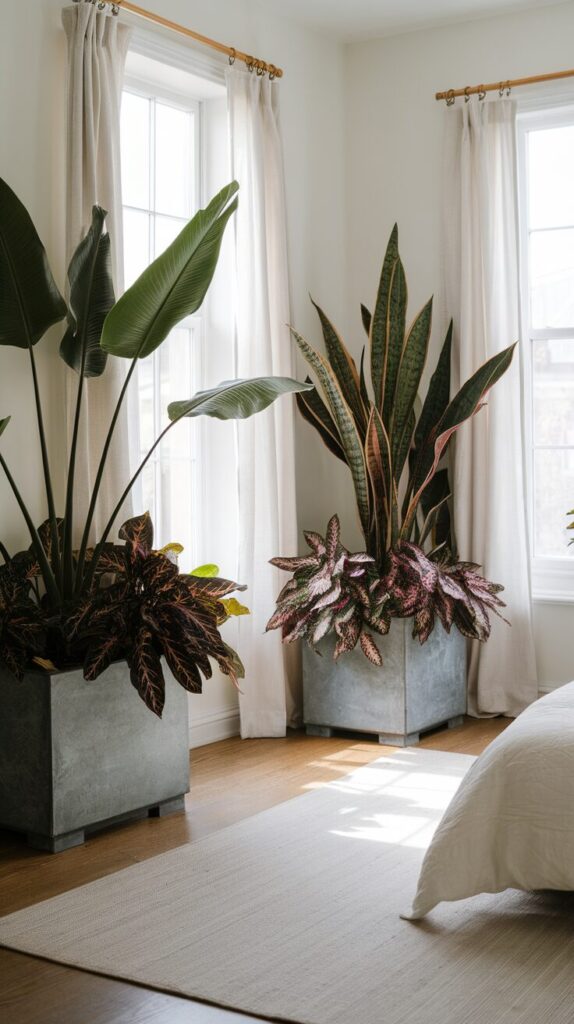
Plants fix awkward empty corners instantly. I added tall greenery and the room felt alive. Nature softens everything.
Tall plants draw the eye upward. They fill vertical space without heaviness. The room feels fresh and balanced.
Why This Works
Plants add organic contrast. They soften hard lines. Large rooms benefit from vertical elements.
How to Do It
- Choose low-maintenance plants
- Place them near windows
- Use substantial planters
- Group plants for impact
Style & Design Tips
Neutral pots keep focus on greenery. Avoid tiny plants that get lost. Scale matters.
Pro Tip or Budget Hack
Use high-quality faux plants if light stays limited. Nobody knows.
17. Frame the Bed With Wall Sconces
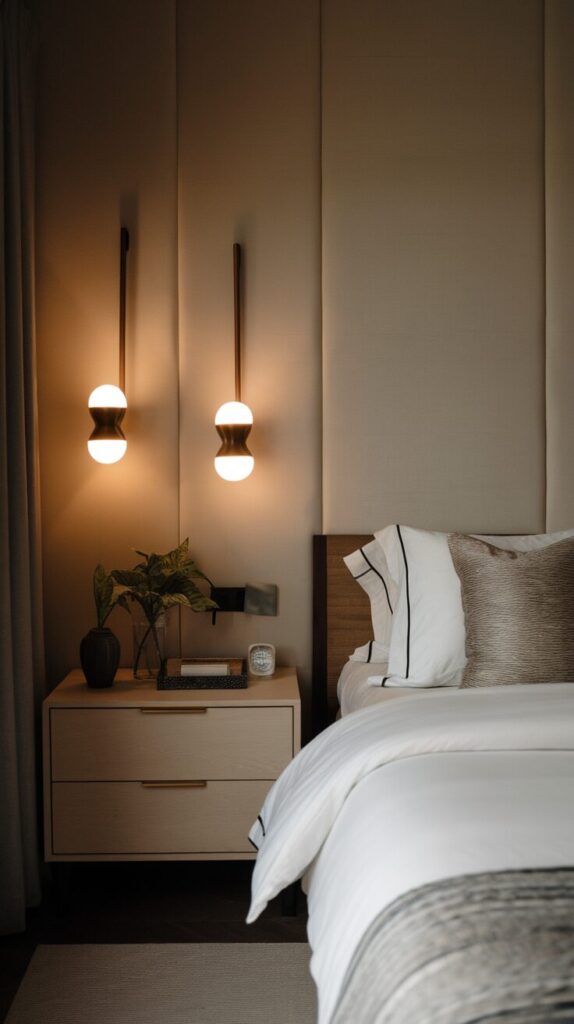
Table lamps eat up surface space. I switched to sconces and loved the cleaner look. Walls deserve function too.
Sconces free nightstands and add style. They feel custom without major renovation. The bed area feels polished.
Why This Works
Wall lighting saves space. It adds symmetry and focus. Large bedrooms benefit from layered lighting.
How to Do It
- Mount sconces at shoulder height
- Center them with the bed
- Use plug-in versions
- Choose warm bulbs
Style & Design Tips
Simple designs age well. Avoid overly decorative sconces. Clean lines feel timeless.
Pro Tip or Budget Hack
Plug-in sconces install in minutes. No electrician needed.
18. Style Empty Corners With Purpose
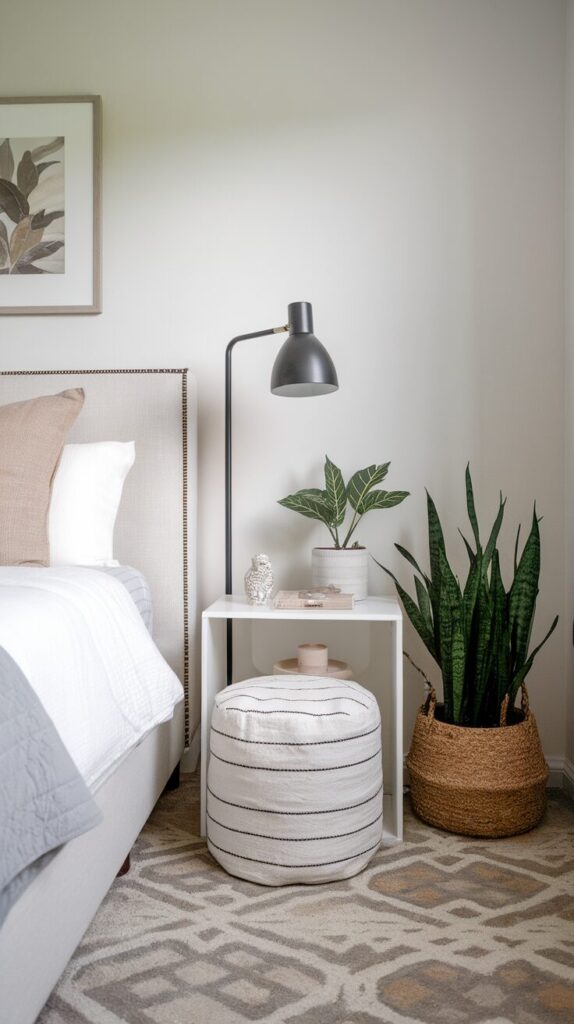
Corners often feel forgotten. I learned to give them jobs instead of ignoring them. Every corner matters.
A styled corner adds intention. It stops the room from feeling unfinished. Small touches go far.
Why This Works
Corners anchor layouts. They prevent visual drift. Large rooms need endpoints.
How to Do It
- Add a floor lamp
- Use a small plant or stool
- Keep scale appropriate
- Avoid overcrowding
Style & Design Tips
Think minimal, not empty. Avoid cluttering corners with random items. Purpose beats filler.
Pro Tip or Budget Hack
Rotate decor seasonally to refresh corners for free.
19. Use Mirrors to Reflect Light and Space
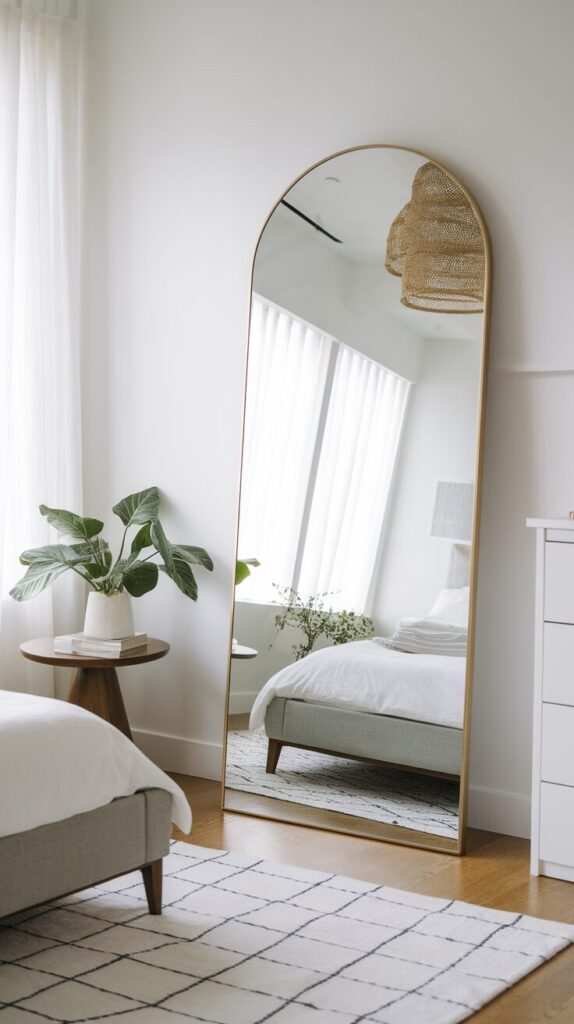
Mirrors amplify everything good. I placed one strategically and loved the result. Light bounced beautifully.
Mirrors add brightness and depth. They make rooms feel larger and lighter. Placement matters more than size.
Why This Works
Mirrors reflect natural light. They visually expand space. Large bedrooms benefit from brightness.
How to Do It
- Place opposite windows
- Use full-length mirrors
- Anchor them near furniture
- Avoid cluttered reflections
Style & Design Tips
Simple frames feel timeless. Avoid mirrors facing messy areas. Reflection matters.
Pro Tip or Budget Hack
Lean a mirror instead of hanging it. Easier and stylish.
20. Keep Furniture Proportions Honest
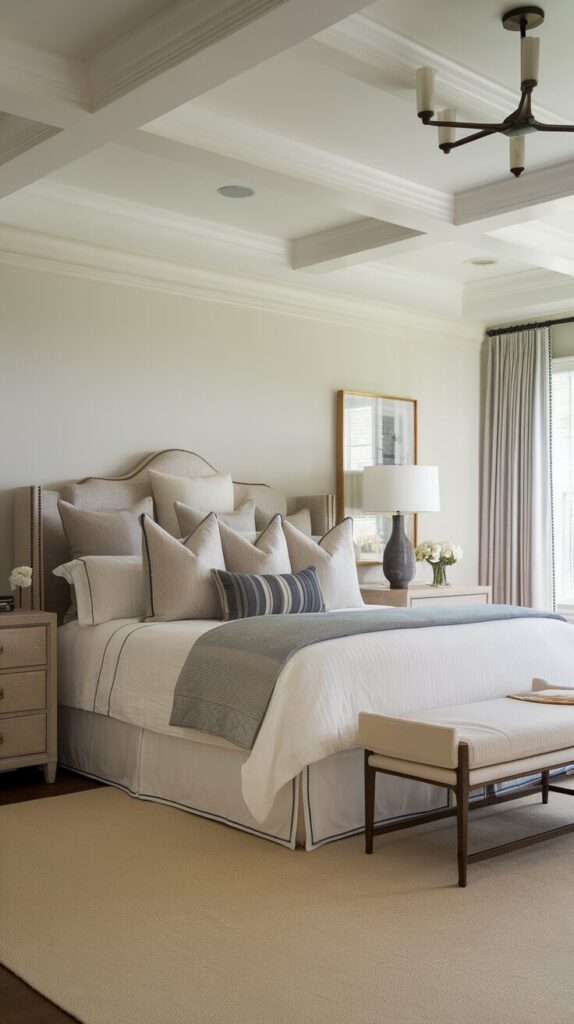
Small furniture disappears in large rooms. I stopped downsizing and everything improved. Scale fixes many issues.
Furniture should match the room’s size. Oversized pieces feel intentional. Balance always wins.
Why This Works
Proper scale creates harmony. The eye relaxes. Large rooms demand confident furniture.
How to Do It
- Choose wider pieces
- Avoid tiny accent furniture
- Balance height and width
- Leave breathing space
Style & Design Tips
Mix large pieces with lighter accents. Avoid overcrowding. Space still matters.
Pro Tip or Budget Hack
Measure furniture with tape on the floor before buying.
21. Let Negative Space Work for You
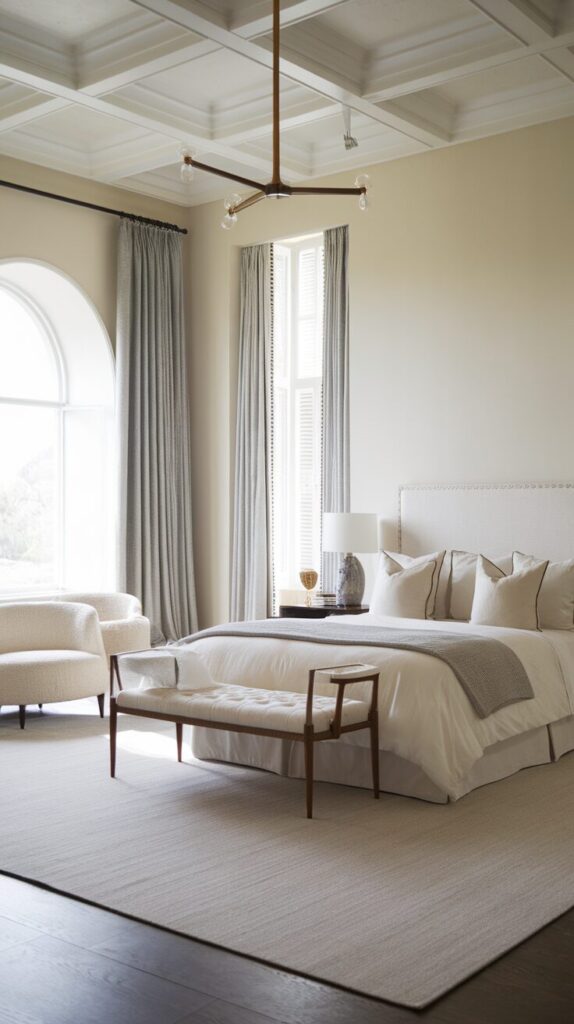
Not every inch needs filling. I learned to stop forcing decor everywhere. Space can feel luxurious.
Negative space gives the room room to breathe. It highlights intentional choices. Calm always beats clutter.
Why This Works
The eye needs rest. Negative space adds elegance. Large bedrooms thrive on restraint.
How to Do It
- Remove unnecessary furniture
- Space pieces intentionally
- Let walls breathe
- Focus on quality
Style & Design Tips
Less feels more upscale. Avoid filling gaps just because. Trust the space.
Pro Tip or Budget Hack
Edit the room twice a year. Remove what you no longer love.
Large Bedroom Design Strategy: The Comfort + Scale Formula
Big bedrooms tempt you to overdecorate, but comfort should always lead the plan. I follow what I call the Comfort + Scale Formula, where every piece earns its place through function and proportion. This approach keeps large spaces from turning into echo chambers or furniture showrooms.
Start by defining three core zones before buying anything new. Most large bedrooms need a sleeping zone, a functional zone like storage or vanity, and a relaxation zone such as seating or reading. When you map those areas first, everything else falls into place naturally.
Next, focus on visual weight instead of quantity. Large rooms demand fewer but larger pieces rather than lots of small ones scattered around. This mindset protects you from clutter while still making the room feel full.
Finally, edit aggressively after styling. Walk through the room and remove anything that doesn’t serve comfort, storage, or beauty. Large bedrooms reward restraint more than excess, and this strategy keeps the space balanced long-term.
Common Mistakes to Avoid in Large Bedrooms
People assume more space equals easier decorating, but that logic fails fast. Large bedrooms magnify design mistakes instead of hiding them. Avoiding a few common traps saves time, money, and frustration.
One major mistake involves pushing all furniture against walls. That layout creates awkward empty islands in the center and kills flow instantly. Float key pieces like beds or seating when possible to create intimacy.
Another common issue comes from using undersized rugs or art. Tiny decor pieces disappear visually and make the room feel unfinished. Always match decor scale to wall and floor size.
Many homeowners also rely on one overhead light. That harsh lighting flattens the entire room and destroys cozy energy. Layer lighting intentionally to create depth and mood.
Lastly, avoid filling every corner just because space exists. Empty space can feel luxurious when used intentionally. Purpose beats random filler every single time.
Choosing the Right Furniture Proportions for Large Rooms
Furniture scale determines whether a large bedroom feels intentional or awkward. You need pieces that visually hold their own without overwhelming the layout. Proportion always beats trendiness.
Start by measuring wall length before buying major items. Wide walls demand wider dressers, longer benches, and larger headboards. Balanced width prevents furniture from looking lost.
Pay attention to ceiling height as well. Tall ceilings benefit from higher headboards, tall plants, and vertical elements. Shorter ceilings need horizontal balance to avoid crowding.
Mix substantial anchor pieces with lighter accents. Heavy furniture everywhere makes the room feel dense, while too many delicate pieces feel unstable. Balance gives the room quiet confidence.
Creating a Functional Layout Before Decorating
Decorating without a layout plan wastes money fast. I always map furniture placement before choosing colors, textiles, or art. Layout controls comfort more than aesthetics.
Start with the bed position since it anchors everything. Ensure walking paths stay clear and symmetrical whenever possible. Good circulation makes the room feel effortless.
Next, define traffic flow between zones. You should move easily from the bed to storage or seating without squeezing past obstacles. Spacious bedrooms should feel open, not complicated.
Only after layout works should you layer decor. Rugs, curtains, and art enhance a solid foundation. Strong structure prevents design regret later.
Maintenance & Longevity: Keeping a Large Bedroom Looking Polished
Large bedrooms collect dust and clutter quickly because extra space invites it. You need simple maintenance habits to preserve that polished look. Consistency beats deep cleaning marathons.
Vacuum large rugs weekly to prevent wear patterns. Rotate rugs and seating occasionally to maintain even traffic distribution. These small actions protect your investment.
Declutter surfaces monthly to prevent buildup. Large dressers and benches easily turn into drop zones for random items. Quick resets keep the space calm.
Refresh textiles seasonally for longevity and style updates. Swap throws, pillow covers, or small decor pieces instead of redesigning everything. Small changes maintain freshness without major spending.
FAQs
How do I make a large bedroom feel cozy instead of empty?
Use zones, layered lighting, and oversized rugs to reduce visual emptiness. Soft textures like upholstered beds and curtains also add warmth. Intention creates coziness more than size does.
Should I center the bed in a large bedroom?
Centering usually works best because it creates symmetry and balance. However, always consider windows, doors, and traffic flow before committing. Function should guide placement.
How many rugs should I use in a large bedroom?
Most large bedrooms benefit from at least one major rug under the bed. Additional rugs can define seating or vanity areas. Keep colors cohesive to avoid visual chaos.
Is it okay to leave some walls empty?
Yes, and you should embrace that when it feels right. Negative space highlights your strongest design choices. Overfilling walls often makes the room feel busy instead of luxurious.
What furniture works best in a large master bedroom?
Substantial pieces like wide dressers, statement beds, and upholstered benches hold visual weight well. Avoid tiny accent furniture that disappears. Scale always matters in large spaces.
How do I avoid making the room feel like a hotel?
Add personal elements like books, plants, or meaningful decor. Layer textures and avoid overly symmetrical perfection everywhere. A little personality prevents a staged look.
Final Thoughts
Large bedrooms reward thoughtful choices, not more stuff. Pick one idea that speaks to you and start there. I promise the space will guide you once you stop fighting it.
You don’t need perfection or a massive budget. You need intention, comfort, and a little confidence in your taste. Try one change this week and let the room grow with you.