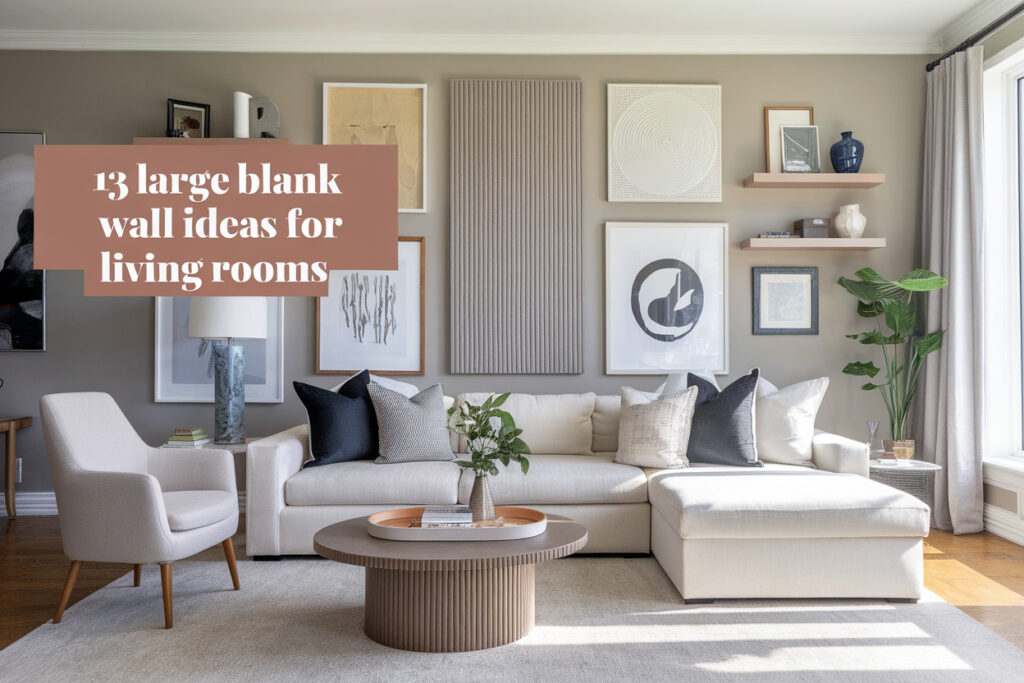
13 Creative Large Blank Wall Ideas for Living Rooms
A big empty wall can quietly sabotage an otherwise well-put-together living room. It makes furniture feel awkwardly spaced, throws off balance, and somehow manages to look unfinished even when everything else feels right. The tricky part is that filling it wrong can look worse than leaving it bare.
Most people assume the solution is simple—just hang something up there and call it done. Unfortunately, large walls are a little more demanding than that, because scale and proportion suddenly become much more noticeable.
Small décor pieces that looked perfectly fine in a hallway can suddenly feel tiny and awkward when placed on a wide living room wall.
I’ve messed this up more times than I’d like to admit, usually by going too small or trying to force symmetry where it didn’t belong.
I once hung three small frames across a ten-foot wall thinking it would look minimalist, but the result felt more like a waiting room than a living room. The wall still looked empty, just slightly more confused.
Once I started treating large walls as functional design zones instead of decoration problems, everything clicked. A big wall isn’t just a surface to decorate—it’s part of the structure of the room. When it’s handled well, it anchors furniture, shapes the layout, and gives the entire space a sense of intention.
That shift in perspective changes how you approach decorating completely. Instead of randomly adding art or shelves, you start thinking about scale, balance, and how the wall interacts with everything around it. Suddenly the wall stops being intimidating and starts becoming one of the most interesting design opportunities in the room.
The ideas in this guide come from that mindset. Some focus on visual impact, others add storage, texture, or architectural detail, but they all solve the same core problem—making a large living room wall feel purposeful instead of unfinished.
1. Oversized Statement Art
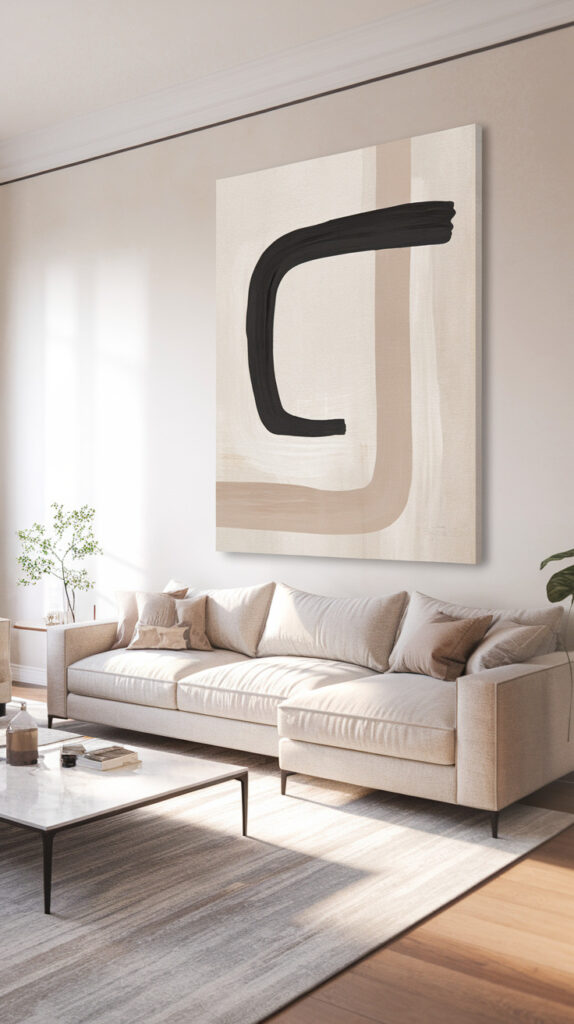
A large blank wall usually looks empty because the furniture below it doesn’t feel “anchored.” A single oversized piece of art fixes that instantly without needing a complicated setup. It fills the space properly and makes the wall feel intentional instead of forgotten.
I personally love this option because it’s one of the few ways to decorate a big wall without turning it into a messy collage. One strong piece makes the room feel grown-up, even if your coffee table is still basically a snack storage unit.
Why This Works
Oversized art creates visual balance because it matches the scale of the wall. Most people decorate large walls with small pieces, which makes the wall look even bigger and emptier.
A big piece also gives your living room a focal point, which helps the rest of your decor feel more organized. It’s basically the “boss” of the room, and everything else naturally falls into place around it.
How to Do It
- Measure the wall space above your sofa or console table so you don’t guess and regret it later.
- Choose a piece that covers about two-thirds of the furniture width underneath it.
- Hang it at eye level, not near the ceiling like it’s trying to escape.
- Use a level and painter’s tape first because crooked oversized art is painfully obvious.
Style & Design Tips
Abstract art works well if your room already has patterns, because it won’t fight your pillows and rug. Landscapes and photography feel calmer, especially in neutral living rooms.
Avoid art that’s too small with a giant frame, because that trick rarely looks right. Also, don’t match your art colors too perfectly with your decor, because it can look staged instead of stylish.
Pro Tip or Budget Hack
If oversized art costs too much, buy a large canvas drop cloth and paint your own simple abstract design. Even basic brush strokes in beige, black, or muted green can look high-end if the canvas is big enough.
You can also frame a large fabric panel or vintage textile and get the same “statement” effect for way less money.
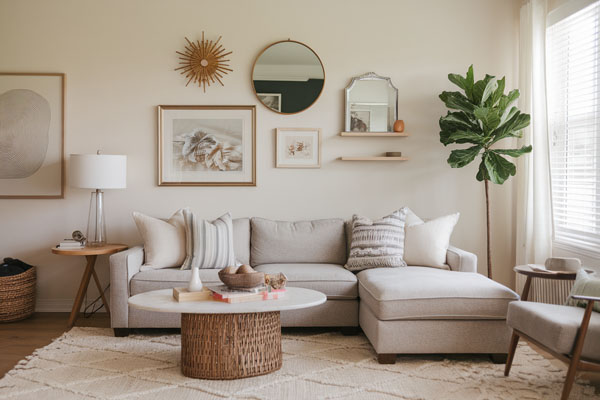
2. Full Gallery Wall With Mixed Frames
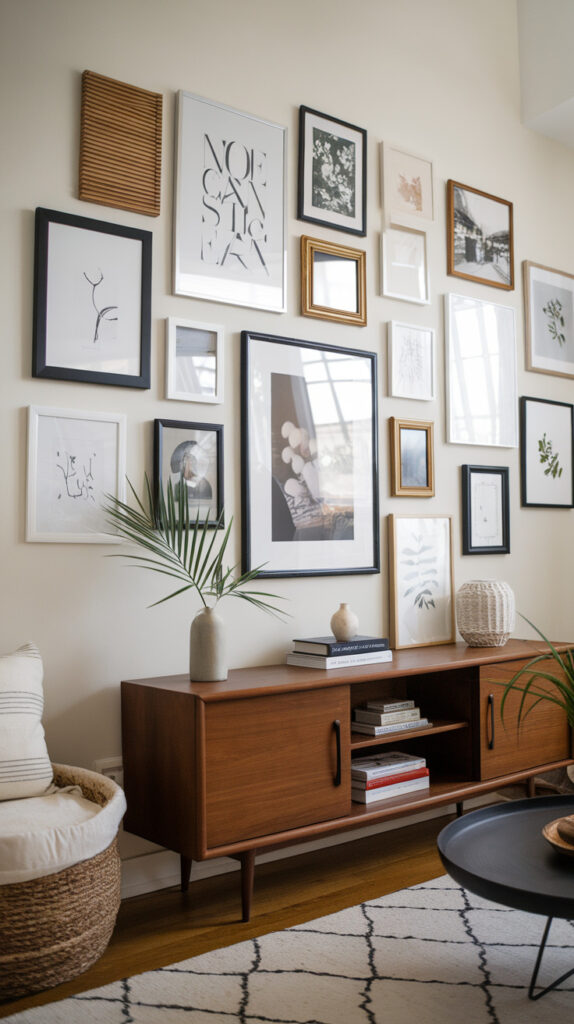
If your wall feels massive and boring, a gallery wall gives you a way to fill it without needing one expensive piece. It’s also perfect if you like collecting prints, family photos, or little art finds over time.
I like gallery walls because they can look casual and personal, but they can also look polished if you plan them properly. The key is not making it look like you randomly taped stuff up after a stressful day.
Why This Works
Gallery walls work because repetition creates structure. Even if every frame is different, the grouping itself becomes one big design element.
It also breaks up a huge wall into smaller visual zones, so your eyes don’t just see a giant blank rectangle. That’s why gallery walls make rooms feel cozier and more finished.
How to Do It
- Choose a theme like black-and-white photos, botanical prints, or modern abstracts.
- Lay everything on the floor first so you can adjust spacing easily.
- Keep frame gaps consistent, usually 2–3 inches apart.
- Start hanging from the center and work outward.
- Use paper templates or painter’s tape to map the layout on the wall.
Style & Design Tips
Mixing frame styles works best when you stick to a limited color palette, like black, wood, and white. Too many random colors makes the wall feel chaotic.
Avoid using frames that are all the same size unless you want a very grid-like look. Also, don’t include too many quote prints, because they age fast and can look like you decorated your living room using a motivational calendar.
Pro Tip or Budget Hack
Buy thrift store frames and spray paint them all one color for a cohesive look. It’s cheap, it’s easy, and it instantly upgrades the whole wall.
If you don’t want to commit to nails, use removable hanging strips for lighter frames so you can rearrange without turning your wall into Swiss cheese.
3. Large Wall Mirror as a Focal Point
A mirror is one of the easiest ways to fix a blank wall while also making the room feel bigger. It’s basically decorating and cheating at the same time, which I fully support.
I’ve used mirrors in small living rooms and big ones, and it always works if the scale is right. A tiny mirror on a giant wall looks like it got lost, so go big.
Why This Works
Mirrors bounce light around the room, which makes the space feel brighter and more open. They also add depth, especially in narrow living rooms.
A large mirror also gives the wall purpose without needing a bunch of extra decor. It creates a strong focal point while staying visually “clean.”
How to Do It
- Choose a mirror that’s at least 30–40 inches wide for a large wall.
- Place it above a sofa, console, or fireplace to make it feel grounded.
- Hang it so the center sits around eye level.
- Use wall anchors if it’s heavy, because gravity does not play games.
Style & Design Tips
Arched mirrors look elegant and soften modern rooms. Rectangular mirrors feel classic and work great in minimalist spaces.
Avoid mirrors with overly ornate frames if your room already has a lot of detail. Also, don’t hang a mirror where it reflects clutter, because it basically doubles the mess.
Pro Tip or Budget Hack
If a giant mirror is too expensive, buy two matching tall mirrors and hang them side by side. It creates the same dramatic effect and looks intentionally designed.
You can also lean a large mirror against the wall for a casual, designer vibe without drilling anything.
Get the Weekend Home Reset Checklist Pack
A free printable pack to help you reset your home, clear the mess, and make your space feel calmer in a simple, doable way.
4. Floor-to-Ceiling Built-In Shelving
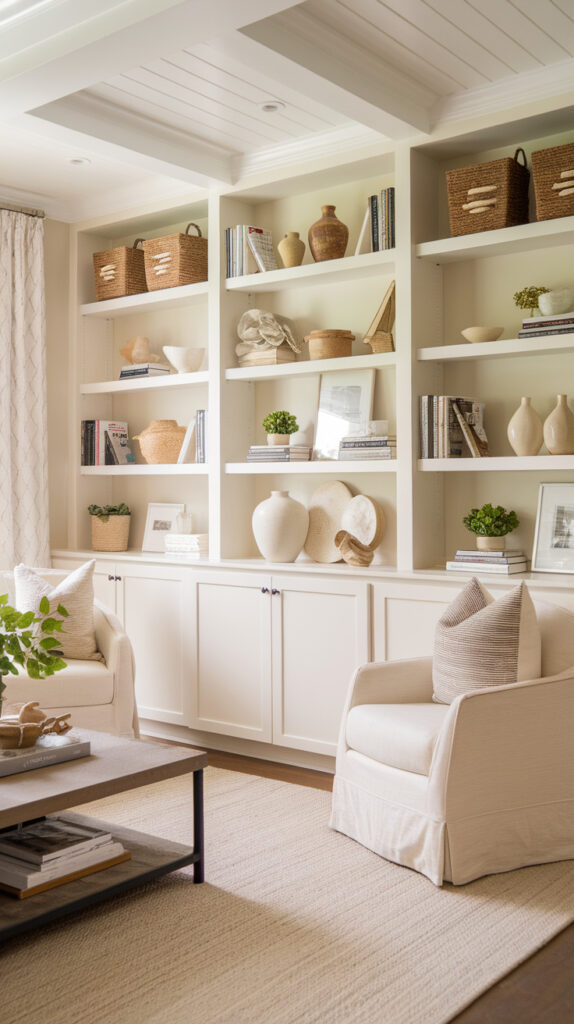
If you want your blank wall to actually do something useful, built-in shelving is a powerhouse option. It adds storage, decor space, and a custom look all at once.
I love this idea for people who want their living room to feel high-end without doing a full renovation. Shelves automatically make a room look like you have your life together, even if you absolutely do not.
Why This Works
Tall shelving fills vertical space, which is exactly what a large blank wall needs. It draws the eye upward and makes the room feel taller.
It also creates texture and depth, so the wall doesn’t feel flat. Even simple shelves look impressive when they go from floor to ceiling.
How to Do It
- Decide if you want true built-ins or modular shelves that look built-in.
- Measure the wall carefully, including ceiling height.
- Install shelves evenly with consistent spacing.
- Anchor everything securely to studs for safety.
- Decorate using a mix of books, baskets, and art pieces.
Style & Design Tips
Don’t fill every shelf with tiny decor, because it will look cluttered fast. Use negative space so the shelves feel curated, not crowded.
Stick to a limited color palette for styling, like neutrals with a few accents. Also, avoid placing random mismatched items unless you want your shelves to look like a storage closet.
Pro Tip or Budget Hack
Use IKEA shelving systems and add trim around the edges to make them look custom. Paint everything the same color as the wall for a seamless built-in effect.
If you want extra drama, paint the back of the shelves a darker color than the wall for depth.
5. Large-Scale Wall Molding or Paneling
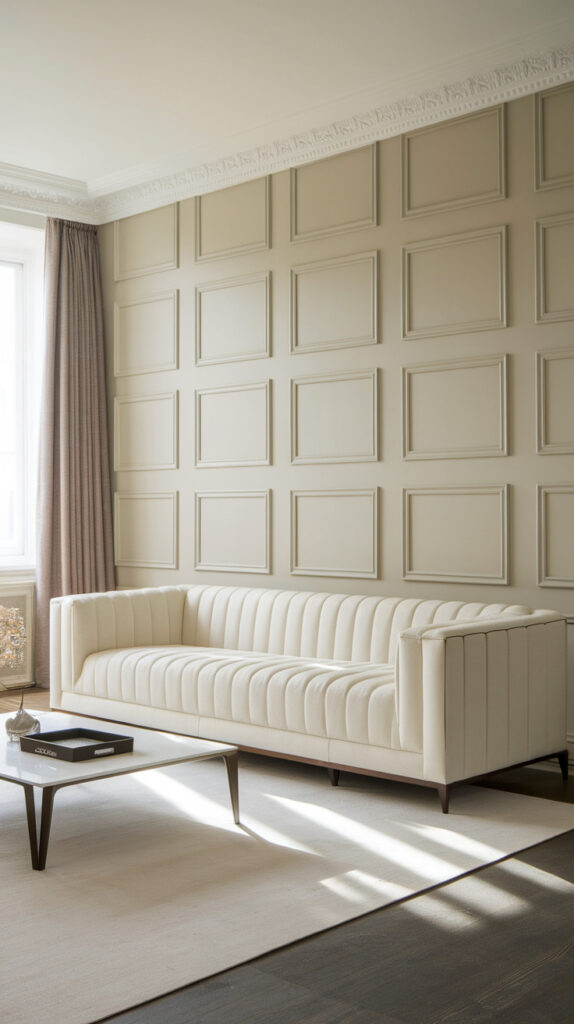
Wall molding sounds fancy, but it’s basically just adding structure to a blank wall so it stops looking like drywall sadness. Even simple rectangular panel molding can make a living room feel upscale.
I’m a big fan of this because it gives you a “designer wall” without needing to hang a million things. It’s also one of those upgrades that looks expensive even if it wasn’t.
Why This Works
Molding adds texture and dimension, which makes large walls feel intentional. It also creates architectural interest, especially in newer homes with flat boring walls.
Paneling works because it breaks up the wall visually while still keeping it clean and minimal.
How to Do It
- Choose a molding style like box panels, picture frame molding, or board-and-batten.
- Measure and mark your layout with pencil and level.
- Cut molding pieces carefully for clean corners.
- Attach with nail gun or strong adhesive.
- Fill nail holes, caulk seams, then paint for a seamless look.
Style & Design Tips
For a modern look, keep the panel shapes large and simple. Tiny panels can look busy on a big wall.
Paint molding the same color as the wall for a subtle upscale effect. If you want drama, use a deeper color like charcoal or navy, but keep the rest of the room balanced.
Pro Tip or Budget Hack
Use MDF strips instead of expensive wood trim. Once you paint it, nobody will know, and your wallet will thank you.
If you’re nervous about cutting corners, start with simple rectangular layouts instead of fancy designs.
6. Giant Wall Clock With Character
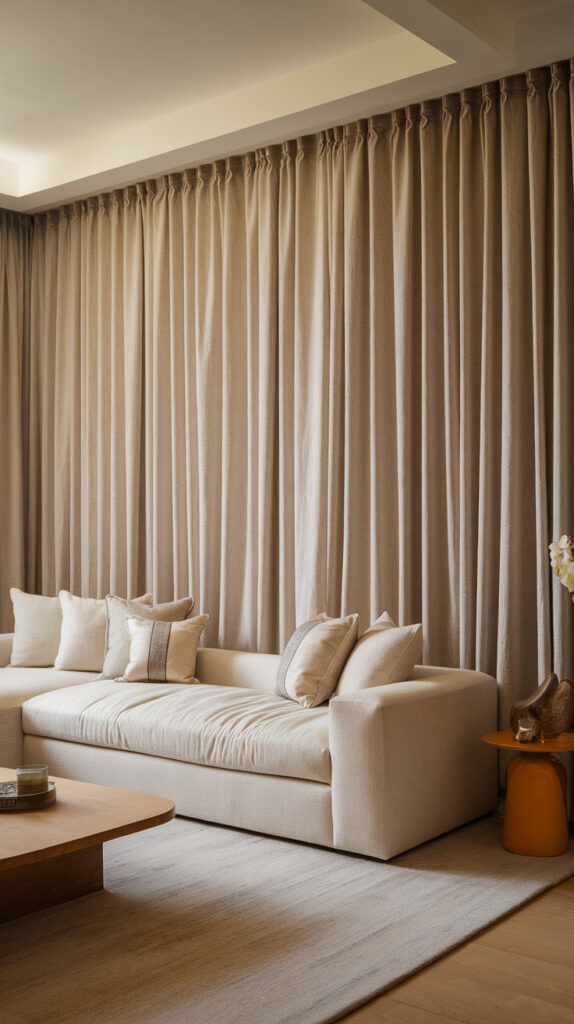
A large wall clock is a classic solution, but it only works if you pick one that actually looks stylish. A cheap clock can make your living room feel like a waiting room, and that’s not the vibe.
I like wall clocks because they’re functional and decorative, which feels like a win. Plus, they fill space without needing multiple pieces.
Why This Works
A big clock creates a strong focal point and adds structure to an empty wall. The circular shape also breaks up the boxy lines of sofas and shelving.
It’s also a great option if you want something bold but not overly “artsy.”
How to Do It
- Pick a clock at least 30 inches wide for a large wall.
- Place it centered above furniture or on a main blank wall area.
- Hang it securely with proper wall anchors.
- Keep surrounding decor minimal so it stays the focus.
Style & Design Tips
Metal clocks look great in modern and industrial rooms. Wooden clocks feel warmer and work well in farmhouse or rustic spaces.
Avoid clocks with overly decorative numbers or bright colors unless your room is playful. Also, don’t hang it too high, because then it looks like it’s floating awkwardly.
Pro Tip or Budget Hack
If you find a clock you love but it’s expensive, search for similar styles on resale marketplaces. People sell oversized decor constantly because they move and suddenly it doesn’t fit.
You can also DIY a clock using a clock kit and a large wood round for a custom look.
7. Tapestry or Oversized Fabric Wall Hanging
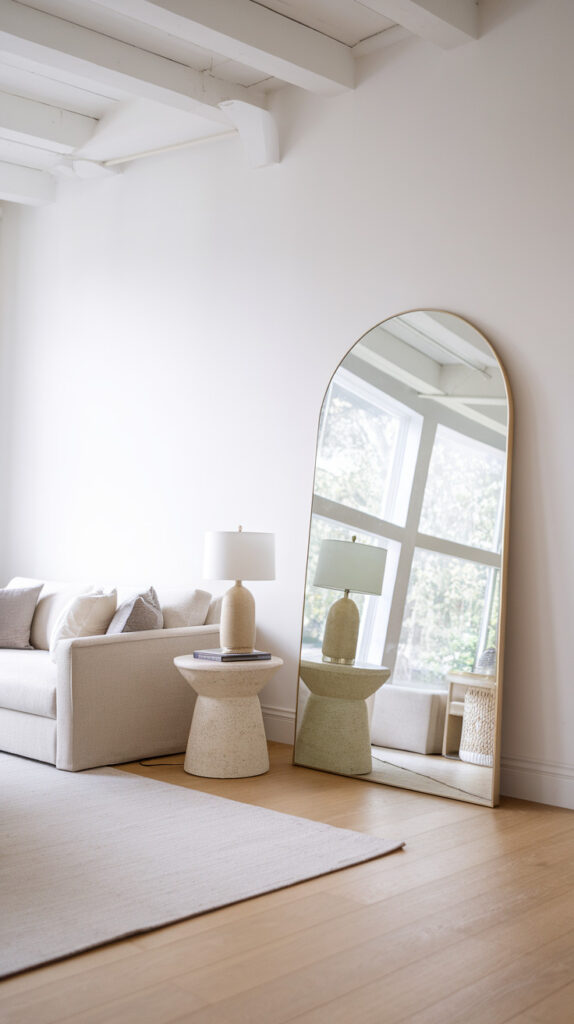
Fabric wall decor is underrated, especially for large blank walls that feel cold or echo-y. A big textile instantly adds softness and texture.
I’ve used this in apartments where I didn’t want to drill a ton of holes, and it makes a space feel cozy fast. It’s also a great way to add color without repainting.
Why This Works
Textiles absorb sound, so they make living rooms feel quieter and warmer. They also add movement and texture, which flat walls desperately need.
A large hanging fills space without feeling heavy like bulky decor pieces.
How to Do It
- Choose a large tapestry, rug, or fabric panel that fits your wall scale.
- Use a curtain rod, wooden dowel, or hanging clips for support.
- Hang it so it looks centered with furniture below.
- Smooth out wrinkles or steam it before hanging.
Style & Design Tips
Neutral textiles work best if your room already has a lot of color. Patterned textiles look amazing in minimalist rooms because they add personality.
Avoid fabrics that look too thin or cheap, because they can sag and look messy. Also, don’t choose something overly trendy unless you enjoy redecorating constantly.
Pro Tip or Budget Hack
Hang a vintage rug on the wall instead of buying a tapestry. It looks expensive, adds texture, and instantly makes the room feel curated.
You can also use a large tablecloth or fabric shower curtain if you find a pattern you love.
8. Extra-Large Floating Shelves With Styled Decor
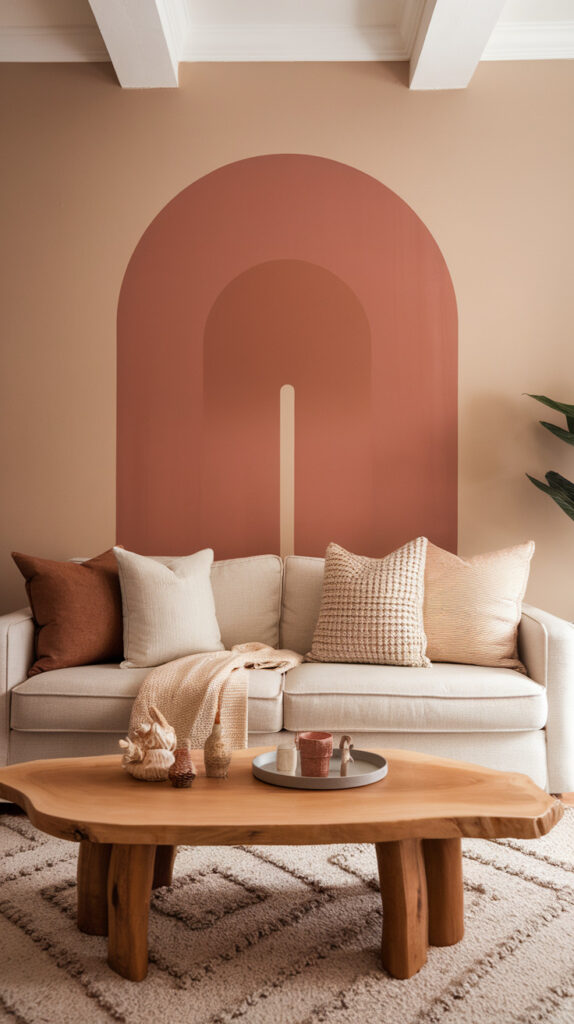
Floating shelves are one of the best ways to decorate a big wall without committing to a full shelving unit. They look modern, clean, and flexible.
I like this option because you can style the shelves in a way that feels personal. You can also swap decor seasonally without doing a whole room makeover.
Why This Works
Large floating shelves add horizontal balance, which helps break up tall blank walls. They also create layers, which makes the wall feel more designed.
They work especially well above sofas, because they fill space while still leaving breathing room.
How to Do It
- Choose shelves that are at least 48 inches long for big walls.
- Install them into studs for stability.
- Space shelves evenly, usually 12–18 inches apart.
- Style with a mix of books, vases, framed art, and plants.
- Leave some empty space so the shelf doesn’t look crowded.
Style & Design Tips
Use larger decor pieces instead of tiny knickknacks. Small items look messy from a distance.
Stick to a few colors and repeat them across the shelf styling for cohesion. Avoid placing everything in a straight line, because it looks stiff and boring.
Pro Tip or Budget Hack
Use inexpensive brackets and stain pine boards for DIY shelves that look high-end. You can make shelves for a fraction of store prices.
If you want a designer look, use three long shelves instead of many short ones.
9. Oversized Accent Paint Shape or Color Block
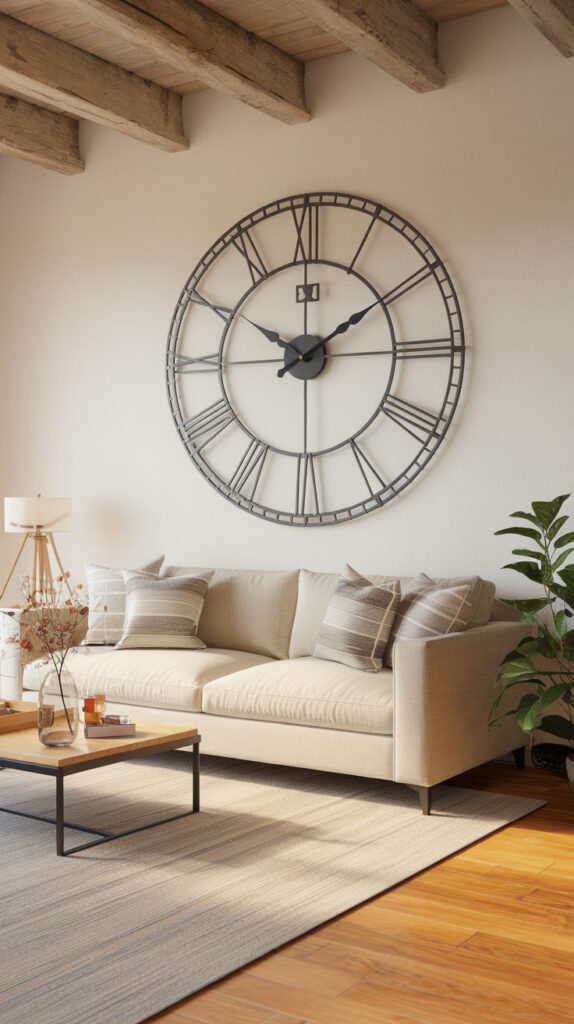
If you want to decorate a blank wall without hanging anything, paint can do all the heavy lifting. A large color block or painted arch makes the wall feel styled with almost no clutter.
I love this because it’s bold, affordable, and surprisingly forgiving. You can also repaint if you change your mind, which is honestly comforting.
Why This Works
Paint changes the visual structure of a wall by creating contrast. It gives your eyes something to focus on even if the wall stays mostly empty.
It also helps define zones, especially in open living rooms where everything blends together.
How to Do It
- Pick a color that complements your rug, sofa, or curtains.
- Choose a shape like a large arch, rectangle, or half-wall block.
- Use painter’s tape and measure carefully.
- Paint two coats for solid coverage.
- Remove tape slowly for clean edges.
Style & Design Tips
Muted tones like sage, dusty blue, or warm beige look sophisticated and timeless. Bright colors can work, but they can also feel loud fast.
Avoid making the shape too small, because it will look like an accidental paint test. Make it large enough to feel intentional and bold.
Pro Tip or Budget Hack
Use leftover paint from other projects and create a multi-tone layered shape. It adds depth without buying new paint.
If you want extra polish, paint the trim or baseboards the same color for a built-in custom look.
10. Large Vertical Plant Wall or Hanging Planters
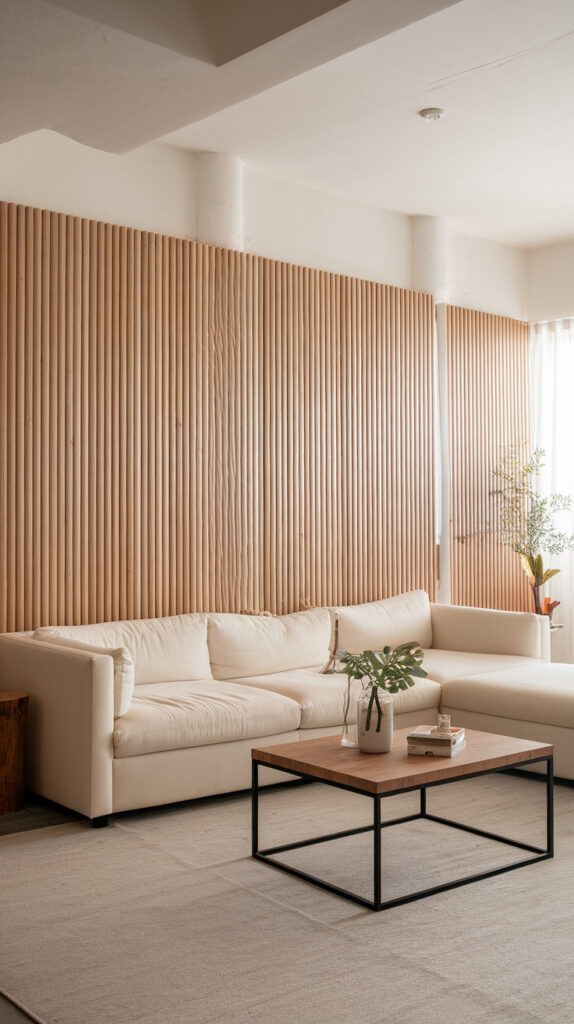
Plants solve blank walls in a way that feels alive and natural. A big wall with greenery looks instantly fresher, and it makes the room feel more inviting.
I’m not saying plants fix everything, but honestly they fix a lot. Even fake ones can work if you choose good-quality ones and stop buying the shiny plastic-looking kind.
Why This Works
Plants add organic texture, which balances out modern furniture and hard surfaces. They also create visual movement, which makes large walls feel less flat.
A plant wall draws attention without feeling heavy like oversized furniture.
How to Do It
- Decide between hanging planters, mounted planters, or a plant shelf wall.
- Choose plants that work indoors like pothos, ivy, or philodendron.
- Install hooks or wall brackets securely into studs.
- Use matching pots for a cleaner look.
- Water carefully so you don’t ruin your wall.
Style & Design Tips
Trailing plants look amazing on walls because they soften edges and fill space naturally. Stick to green tones for a calm look or add a few colored pots for personality.
Avoid placing too many plants too close together, because it can start looking like a jungle corner gone wrong. Also, don’t ignore lighting needs unless you enjoy watching plants slowly give up.
Pro Tip or Budget Hack
Use propagation jars and grow cuttings from one healthy plant. You can fill an entire wall with plants over time without buying new ones constantly.
If you want low-maintenance style, use high-quality faux plants and mix them with real ones for realism.
11. Oversized Wall Sconces With Warm Lighting
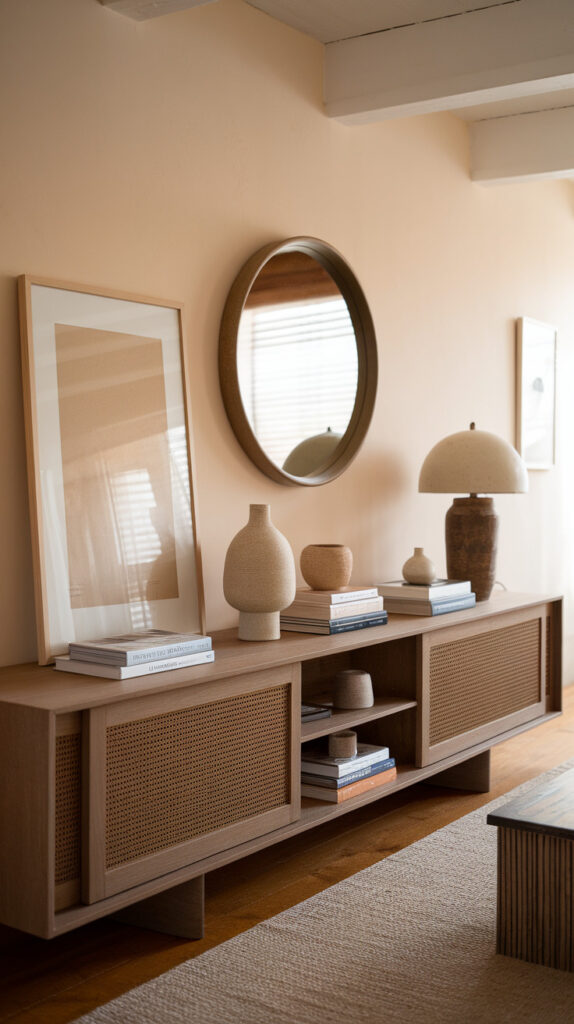
Lighting is a sneaky way to decorate a blank wall while making the living room feel more layered. Big sconces can look like wall art, especially if you choose sculptural designs.
I’ve seen people ignore wall lighting completely, and their rooms always feel a little flat. Once you add sconces, the whole space feels more intentional.
Why This Works
Wall sconces create vertical interest and break up the flat wall space. They also add depth because lighting naturally draws attention.
They work especially well in living rooms where you rely on overhead lighting, which is usually the least flattering option possible.
How to Do It
- Choose oversized sconces that fit the scale of your wall.
- Decide between hardwired or plug-in options.
- Install them symmetrically for a clean look.
- Place them near seating areas or above a console.
- Use warm bulbs for a cozy, flattering glow.
Style & Design Tips
Modern black sconces look sleek and dramatic. Brass or gold finishes feel warmer and more classic.
Avoid tiny sconces on big walls because they disappear visually. Also, don’t use harsh white bulbs unless you want your living room to feel like a dentist office.
Pro Tip or Budget Hack
Use plug-in sconces and hide the cord with a cord cover painted the same color as the wall. It looks clean without requiring electrical work.
You can also install sconces over a large mirror or art piece to make the wall feel layered and expensive.
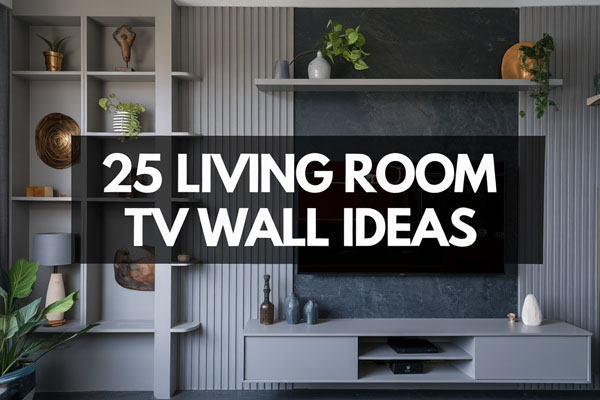
12. Large DIY Wood Slat Feature Wall
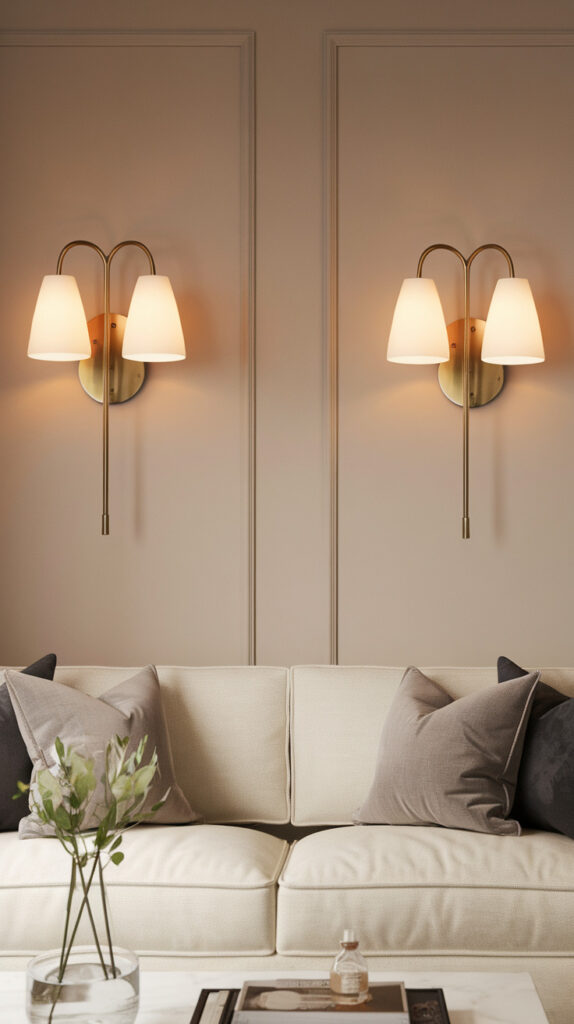
A wood slat wall adds instant texture and makes a living room feel modern and high-end. It’s one of those things that looks like it costs a fortune, but it’s surprisingly doable if you’re patient.
I love this option because it changes the whole vibe of the room. A blank wall can feel cold, but wood slats make it feel warm and designed.
Why This Works
Wood slats add depth, shadow, and texture, which is exactly what large blank walls lack. The vertical lines also make ceilings feel taller.
It creates a strong feature wall without needing additional decor, because the wall itself becomes the statement.
How to Do It
- Measure your wall and calculate how many slats you need.
- Choose wood strips or MDF slats depending on budget.
- Paint the wall behind the slats a darker color for contrast.
- Attach slats evenly using construction adhesive and nails.
- Seal or stain the wood for the finish you want.
Style & Design Tips
Dark backdrops with natural wood slats look modern and dramatic. Light wood on white walls feels Scandinavian and airy.
Avoid uneven spacing because it will look sloppy quickly. Also, don’t choose wood tones that clash with your flooring, because the room will feel visually confused.
Pro Tip or Budget Hack
Use MDF strips instead of hardwood to save money. Once you paint or stain them, they look nearly identical from a distance.
If you want a shortcut, buy pre-made slat panels and install them like wall boards.
13. Extra-Large Wall Mural or Wallpaper Feature
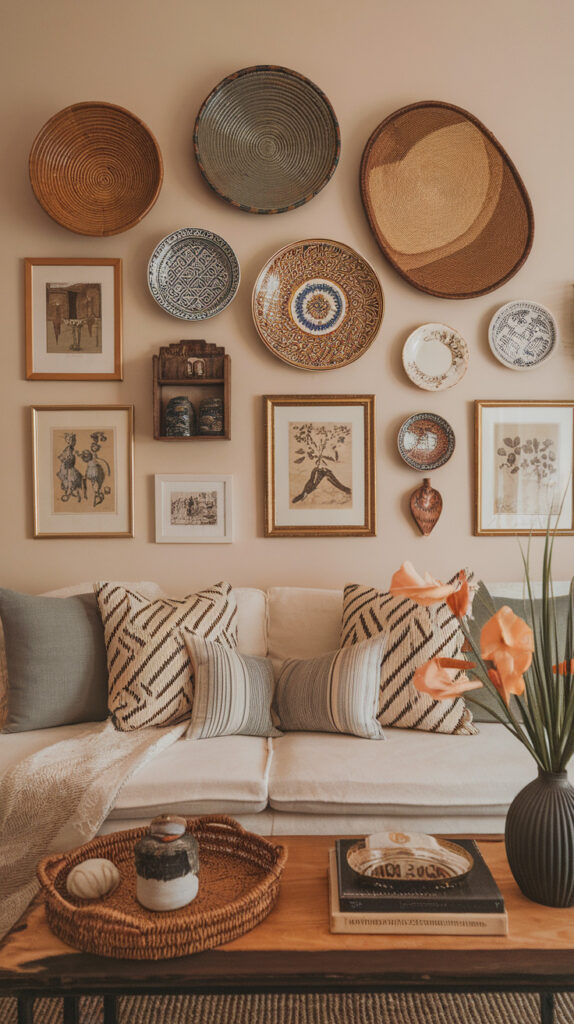
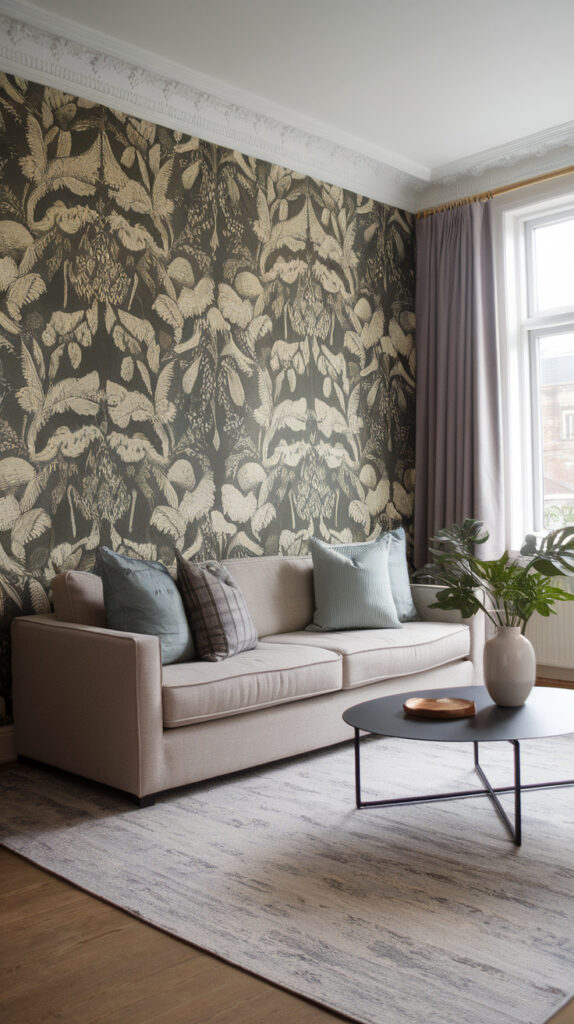
Wallpaper isn’t just for small accent areas anymore. A huge wall mural can completely transform a living room and make it feel custom-designed.
I used to think wallpaper was too risky, but removable options have made it way less scary. You can go bold without committing for the next 15 years like it’s a marriage contract.
Why This Works
A mural creates instant visual interest because it covers the entire wall with pattern, texture, or scenery. It makes the wall feel intentional without needing extra decor.
It also sets the tone for the entire living room, which helps the space feel cohesive.
How to Do It
- Choose a mural or wallpaper design that fits your room style.
- Measure the wall carefully and order extra panels.
- Clean the wall so the wallpaper sticks properly.
- Start from one corner and smooth as you go.
- Trim edges neatly for a clean finish.
Style & Design Tips
Soft botanical murals look elegant and timeless. Geometric patterns feel modern and bold. Textured wallpaper can add depth without being visually loud.
Avoid overly busy prints if your furniture already has strong patterns. Also, don’t pick something trendy just because it’s popular, because wallpaper is not as easy to swap as throw pillows.
Pro Tip or Budget Hack
Use peel-and-stick wallpaper if you rent or like changing styles often. It’s easier to install and remove without damage.
If wallpaper costs too much, try creating a mural effect using large stencils and paint for a custom look at a fraction of the price.
How to Approach a Large Blank Wall Strategically
Large walls expose design mistakes faster than small ones. Scale, balance, and proportion matter more here because there’s nowhere for awkward spacing to hide. Before adding anything, step back and evaluate how the wall relates to your furniture, ceiling height, and traffic flow.
Start by identifying the wall’s role in the room. Is it behind the main sofa, opposite the entry, or visible from multiple angles? That answer determines whether it should become a focal point or quietly support the rest of the design.
Measure first, decorate second. I’ve learned the hard way that guessing dimensions almost always leads to undersized décor, which makes a big wall look even bigger. A simple painter’s tape outline on the wall can help you visualize scale before committing.
Think in zones rather than objects. A large wall often works best when divided visually into sections—upper and lower, center and sides, or framed areas—so the space feels intentional instead of randomly filled.
Finally, decide whether the goal is impact, storage, softness, or architectural detail. When you know the function first, the decorative decisions become much easier and far less overwhelming.
Design Principles That Make Large Walls Look Intentional
Visual weight matters more than color trends. A dark sofa against a pale wall can make the wall feel empty above it, so adding height or depth balances the composition.
Repetition creates cohesion. Whether it’s repeating a wood tone, frame finish, or shape, consistency ties the wall into the rest of the living room so it doesn’t feel like a separate project.
Negative space is not wasted space. Leaving breathing room around artwork, shelves, or molding prevents the wall from looking crowded and keeps the overall design feeling calm.
Layering adds depth without clutter. Combining texture, dimension, and subtle contrast makes a large wall feel rich and considered rather than flat.
Common Mistakes to Avoid
Choosing Décor That’s Too Small
The most common mistake with large blank walls is undersized art or accessories. Tiny frames floating in the middle of a wide wall exaggerate the emptiness instead of solving it.
Aim for pieces that relate proportionally to your furniture. If the wall sits behind a sofa, décor should span at least two-thirds of its width to feel balanced.
Hanging Everything Too High
People often mount art far above eye level, which disconnects it from the furniture below. This makes the wall feel disjointed and awkward.
Keep the center of art around eye level or slightly lower when placed above seating. The goal is connection, not separation.
Overcrowding the Wall
Filling every inch of a large wall can backfire quickly. Too many elements competing for attention create visual stress instead of style.
Leave intentional gaps between pieces. Space allows each element to stand out while keeping the room feeling breathable.
Ignoring Lighting
Large walls can look flat or dull if lighting isn’t considered. Even beautiful art loses impact in poorly lit corners.
Add sconces, picture lights, or nearby lamps to enhance dimension. Lighting transforms a decorated wall from average to impressive.
Copying Trends Without Considering Your Room
A slat wall or bold wallpaper might look incredible online but feel out of place in your space. Scale, ceiling height, and natural light change everything.
Adapt inspiration instead of copying it exactly. The best walls reflect your room’s architecture and your lifestyle.
Budget Planning and Phased Execution
You don’t have to finish a large wall in one weekend. Breaking the project into phases makes it easier financially and creatively.
Start with the biggest foundational element, such as paint, molding, or a large art piece. Once that anchor is in place, smaller layers can build naturally over time.
Set a realistic budget range before shopping. Overspending on a single statement piece might limit your ability to complete the look cohesively.
Mix high and low pieces for balance. Splurging on one quality focal item and pairing it with affordable accents often looks more polished than buying everything mid-range.
Maintenance and Long-Term Flexibility
Large wall features should age well. Paint colors, trim, and shelving typically have longer lifespans than trendy prints or novelty décor.
Choose foundational elements in neutral or classic styles so they can adapt as your furniture or taste evolves. This prevents full redesigns every few years.
Plan for flexibility where possible. Swappable art, adjustable shelves, and removable wallpaper allow your living room to evolve without major renovations.
Dust and upkeep matter more than people expect. Textured walls and shelves require occasional cleaning to maintain that crisp, intentional look.
Frequently Asked Questions
How do I know if my wall décor is the right size?
Measure your wall and furniture first. As a general guideline, wall décor above a sofa should span about two-thirds to three-quarters of the sofa’s width to look proportionate.
Tape outlines on the wall before hanging anything. This simple step instantly reveals whether a piece feels balanced or undersized.
Should I center wall décor on the wall or on the furniture?
Center it on the furniture, not the wall. Anchoring art or shelves to the sofa, console, or fireplace creates visual harmony.
Centering strictly on the wall can make the furniture arrangement feel disconnected. The wall should support the layout, not compete with it.
Can I mix multiple wall ideas on one large wall?
Yes, but structure is key. Combining shelving with art or paneling with paint can look intentional if there’s a clear hierarchy.
Choose one primary feature and let secondary elements support it. Too many equal focal points can make the wall feel chaotic.
What if I’m renting and can’t drill or modify walls?
Peel-and-stick wallpaper, removable molding, leaning mirrors, and adhesive hooks offer flexible options. You can still create scale without permanent changes.
Large leaning art or floor mirrors also provide impact without wall damage. Just ensure stability for safety.
How do I make a large wall look cozy instead of stark?
Add texture and layering. Fabric elements like curtains, wood accents, and warm-toned art soften large surfaces effectively.
Lighting also plays a major role. Warm bulbs and layered light sources prevent the wall from feeling cold or flat.
How long should I wait before deciding if I like a wall update?
Live with it for at least a few days before making changes. Initial reactions can be misleading, especially if the update feels bold.
Give your eyes time to adjust. Small tweaks, like spacing or lighting adjustments, often solve doubts without a full redesign.
Final Thoughts
A big blank wall doesn’t need to be stressful, but it does need a plan. The best wall decor always matches the scale of the space, and it should feel connected to the furniture instead of floating awkwardly.
If you’re stuck, start with one bold option like oversized art or a mural and build around it slowly. I’ve learned the hard way that rushing wall decor usually leads to weird choices you end up removing a month later.
Get the Weekend Home Reset Checklist Pack
A free printable pack to help you reset your home, clear the mess, and make your space feel calmer in a simple, doable way.