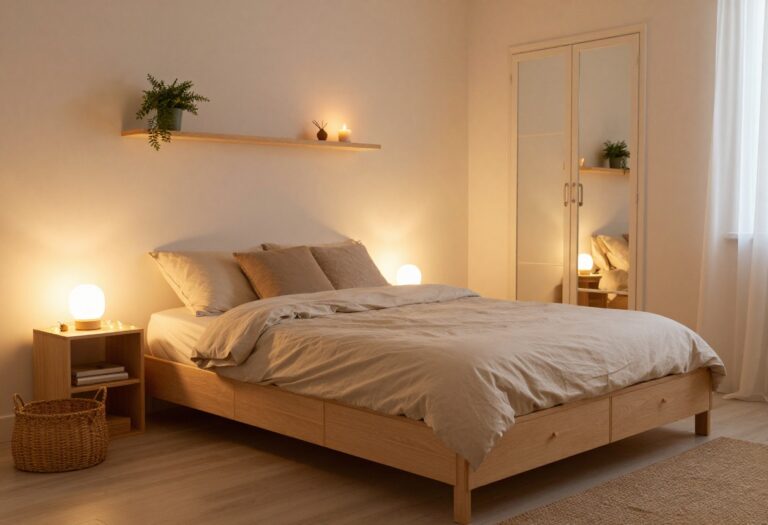
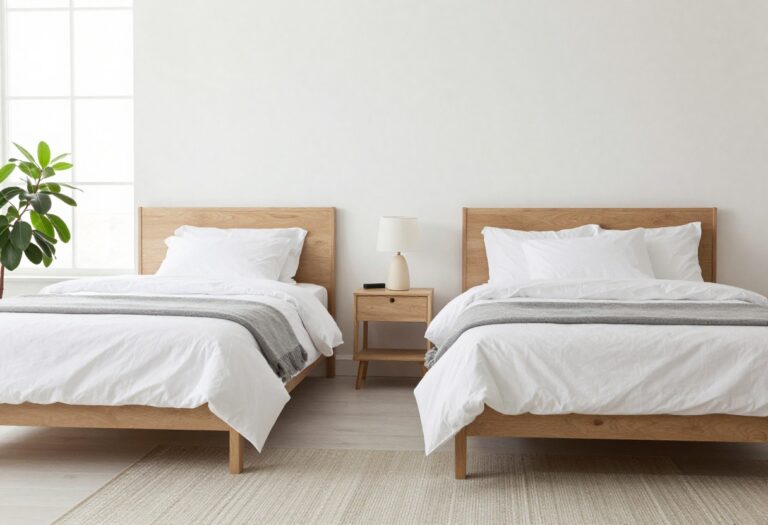
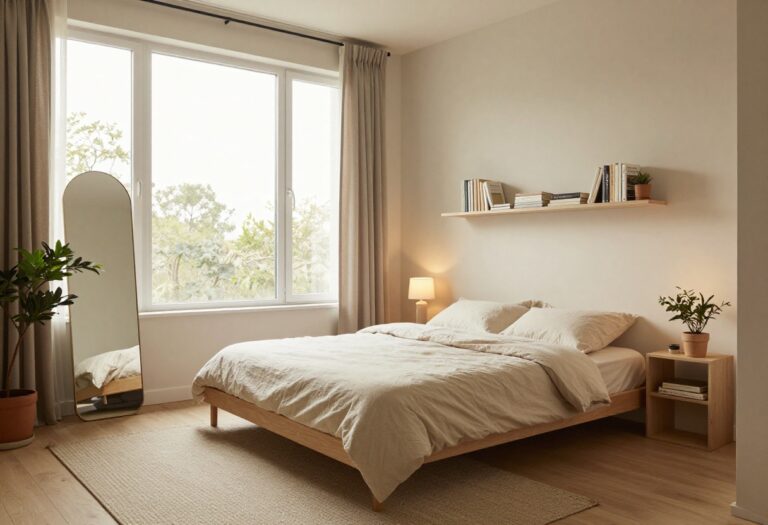
11 Small Bedroom Bunk Bed Ideas for Shared Rooms That Feel Light and Airy
Sharing a small bedroom doesn't have to mean feeling cramped. With the right bunk bed setup, you can carve out personal space for each child while keeping the whole room feeling open and calm.
The secret is choosing designs that let light flow through and avoid visual clutter. These 11 ideas focus on light colors, smart layouts, and airy details so your shared room feels bigger, brighter, and more peaceful.
Whether you're working with a tight footprint or just want a fresh look, these bunk bed solutions blend style with everyday practicality.
1. Whitewashed Wood Bunks with Open Ladder
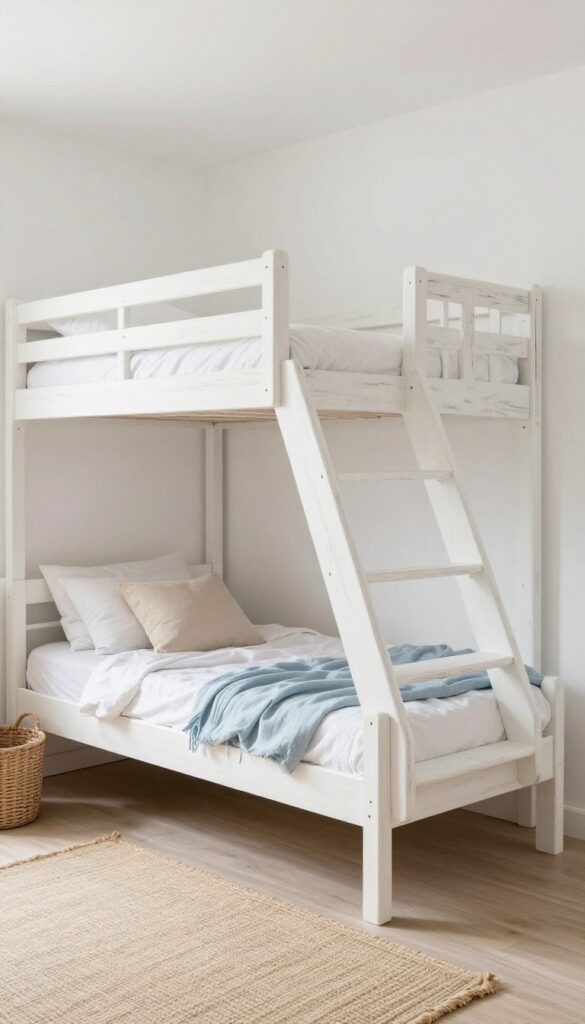
A whitewashed wood bunk bed instantly sets a calm, beachy tone in a shared bedroom. The pale, weathered finish keeps the room feeling open and bright, even when floor space is tight. An open ladder—rather than a solid staircase—adds to the airy vibe, letting light pass through and making the whole setup feel less bulky.
Why It Works
The light color and open design prevent the bunk from visually overwhelming a small room. Whitewashing reflects natural light, making the space appear larger and more serene. The open ladder also saves visual weight, so the room doesn't feel cluttered or closed in.
Best For
This idea works beautifully in shared kids' rooms or guest rooms where you want a relaxed, coastal feel. It's especially good for rooms with limited square footage or low ceilings, since the light finish and open ladder keep things feeling spacious.
Styling Tip
Layer soft linens in whites, creams, and pale blues to complement the whitewashed wood. Add a natural fiber rug underneath and a few woven baskets for storage—this keeps the look cohesive and effortlessly beachy.
2. Lofted Beds with Desks Below
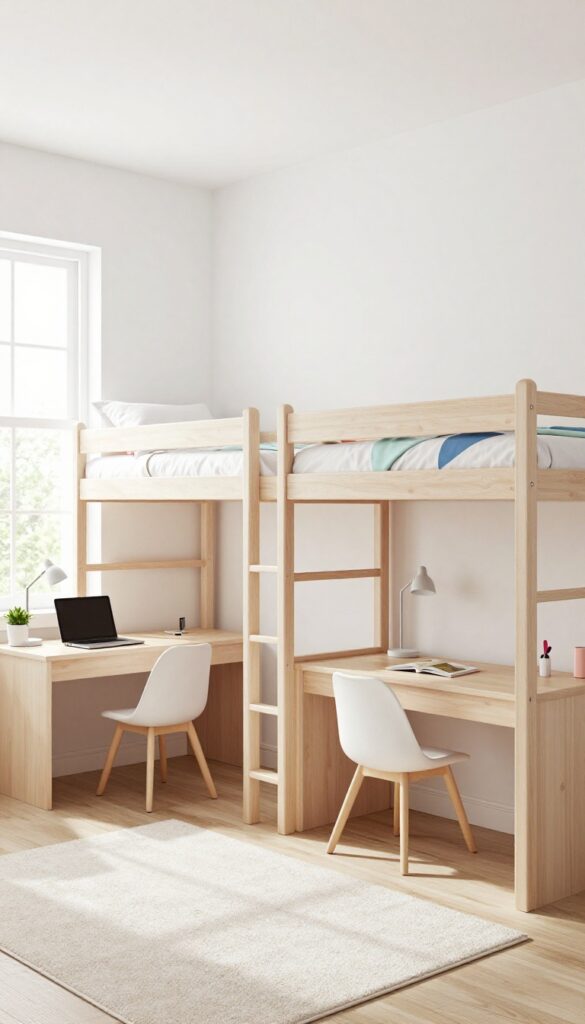
Raising both beds to loft height instantly transforms a cramped shared room into a functional space with room to breathe. By tucking desks underneath, you create dedicated homework zones without sacrificing square footage for play or storage. The elevated sleeping spots feel like cozy treehouses, adding a sense of adventure that kids love.
Why It Works
Lofting beds maximizes vertical space, freeing up the floor for activities or extra storage. Desks below give each child their own work area, reducing distractions and keeping school supplies organized. This layout also makes the room feel larger and less cluttered, which is a win for both parents and kids.
Best For
This idea is ideal for school-aged children who need a quiet study area but share a small bedroom. It works especially well in rooms with high ceilings, where the lofted beds still feel open and airy. If your kids love climbing and cozy nooks, this setup will be a hit.
Styling Tip
Keep the look light and airy by using white or pastel bedding and a pale wood finish for the bunks. Add a small task lamp on each desk and a soft rug underneath to warm up the space. Avoid heavy curtains or dark colors that could make the lofted area feel closed in.
3. Twin over Full with Built-In Drawers
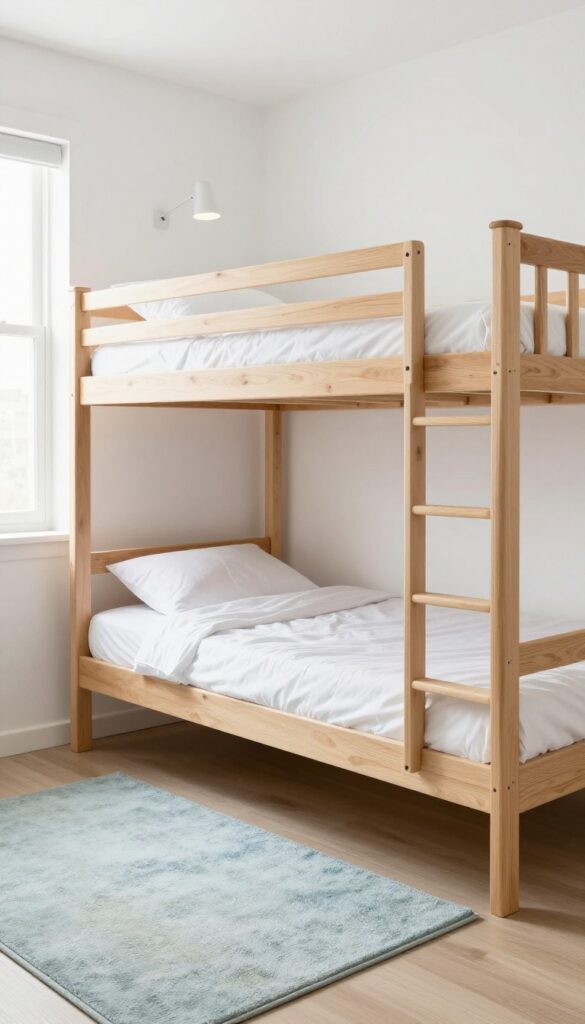
A twin-over-full bunk bed strikes a smart balance between sibling sharing and personal space. The top twin keeps the smaller sleeper cozy, while the wider full mattress below gives an older child or guest room to stretch out. Integrated drawers tucked into the stairs or along the base turn what could be wasted space into a tidy home for clothes, toys, or extra bedding.
Finished in a light wood or crisp white, this setup feels airy and intentional—not bulky or cramped.
Why It Works
The staggered mattress sizes make the most of vertical space without making the room feel top-heavy. Drawers eliminate the need for a separate dresser, freeing up floor area for play or a desk. The lower full bed also doubles as a lounging spot during the day, adding function without clutter.
Best For
Shared rooms where one child is significantly older or taller, or for guest rooms that occasionally host two kids. It's also ideal for narrow rooms where a standard bunk might feel too uniform and you want a more flexible sleeping arrangement.
Styling Tip
Keep the palette soft and cohesive—think white bedding with pale blue or sage accents. Place a low-profile rug under the bed to anchor the space, and use a slim wall-mounted reading lamp above the top bunk to avoid bulky bedside tables.
4. L-Shaped Bunks with Reading Nook
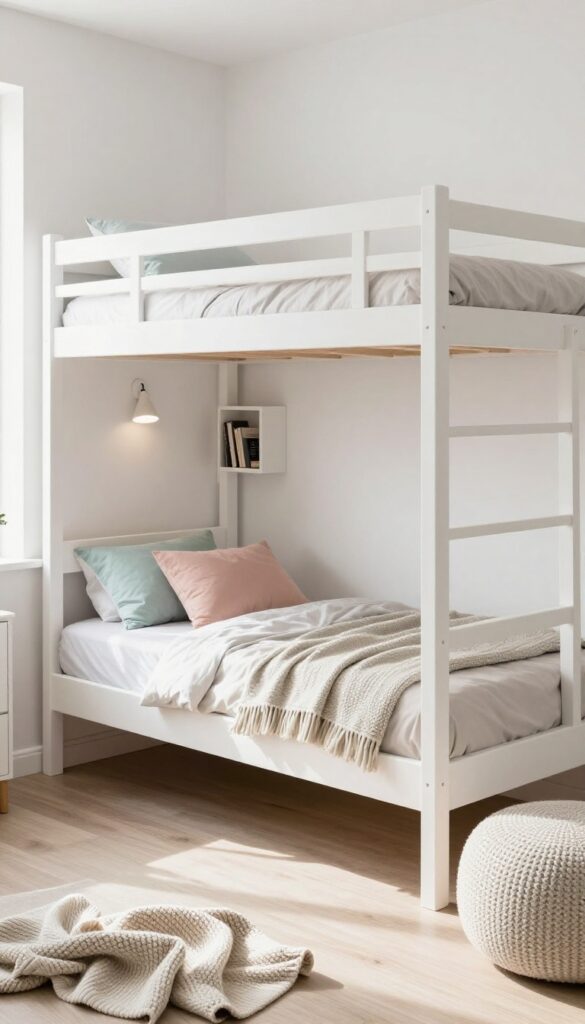
An L-shaped bunk bed configuration instantly transforms a cramped shared bedroom into a cozy, custom-built retreat. By placing the beds perpendicular along two walls, you carve out a natural corner that’s perfect for a small bench, a beanbag, or even a floor cushion. This layout breaks up the room’s lines, making the space feel larger and more intentional—like it was designed just for your kids.
The light and airy angle comes through with white or pale wood frames, soft bedding, and a reading nook that invites quiet downtime without adding visual clutter.
Why It Works
The L-shape uses vertical and horizontal space efficiently, leaving the center of the room open for play or movement. The built-in corner nook becomes a dedicated spot for reading or relaxing, which helps define separate zones in a small room. Plus, the perpendicular arrangement reduces the bulky feel of traditional bunk beds and adds architectural interest.
Best For
This idea works best in square or slightly rectangular rooms where two adjacent walls are available. It’s ideal for siblings who need their own sleeping space but also want a shared hangout area. The reading nook is a bonus for kids who love books or need a calm corner away from the main play zone.
Styling Tip
Keep the palette light: white bunk frames, pale gray or cream bedding, and a soft pastel accent like blush or mint. Add a small wall-mounted reading light above the nook and a low bookcase or floating shelf nearby. A chunky knit throw and a round pouf complete the cozy, airy vibe.
5. White Metal Frame with Sheer Canopies
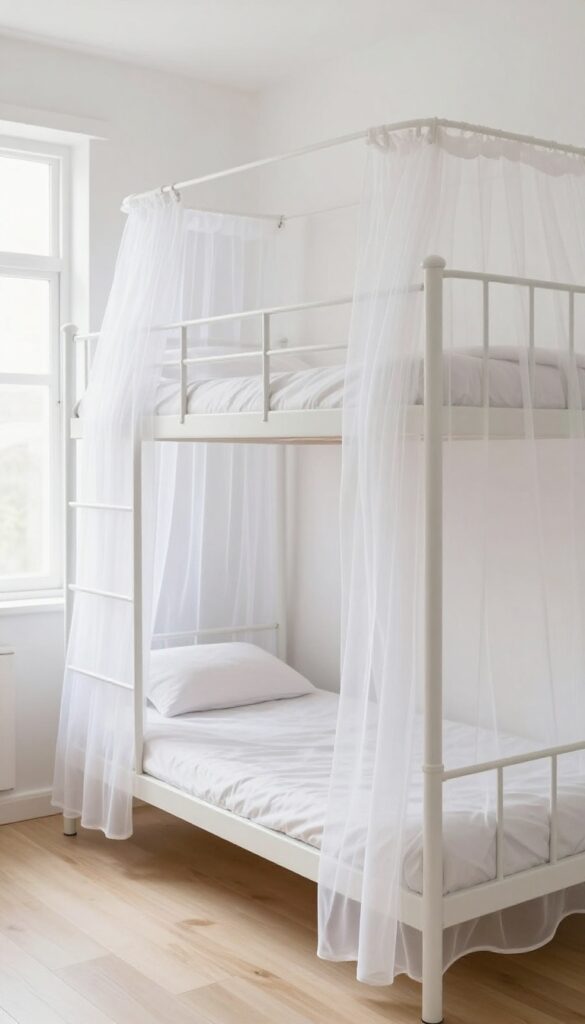
White metal bunk beds have a way of disappearing into a room, which is exactly what you want in a small shared space. The slim, open frames keep sightlines clear and make the ceiling feel higher than it is. Drape a length of sheer fabric over each bed—think white, blush, or pale gray—and suddenly each sleeper has their own little cocoon.
The fabric softens the hard lines of the metal and adds a dreamy, layered texture that feels both playful and serene.
Why It Works
The light color and thin profile of the metal frame prevent the bunk from visually eating up floor space. Sheer curtains add privacy for each child without darkening the room or blocking airflow, which keeps the space feeling open and airy.
Best For
Younger siblings who still like to chat before falling asleep but need their own visual boundary. Also great for rooms with low ceilings, since the open metal design doesn’t feel as bulky as a solid wood bunk.
Styling Tip
Use a tension rod inside each bunk’s top rail to hang the fabric—no drilling required. Choose a sheer with a subtle pattern, like tiny dots or a faint stripe, to add visual interest without overwhelming the frame.
6. Bunk Beds with Under-Bed Storage Carts
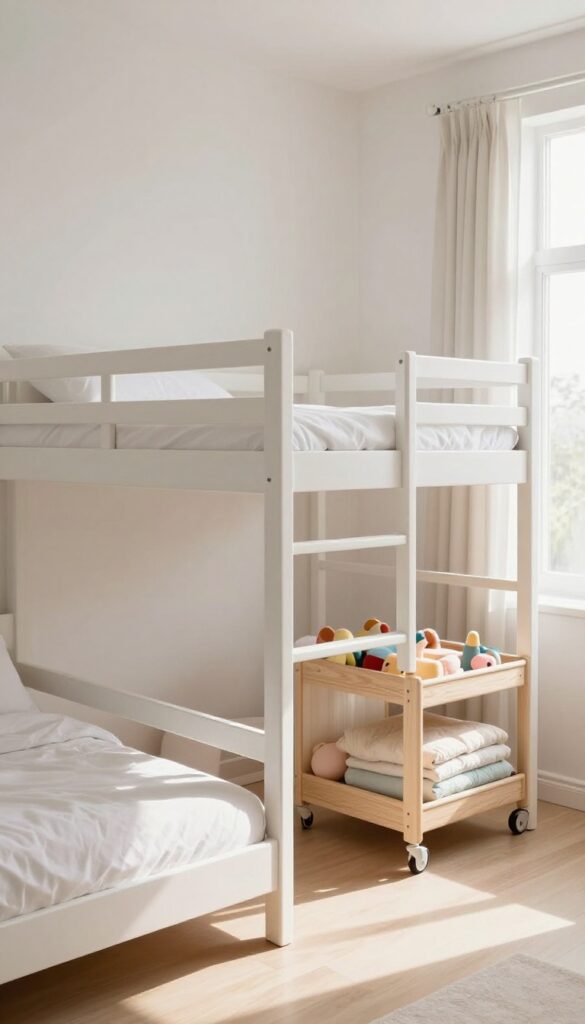
Rolling storage carts tucked beneath a low-profile bunk bed bring a whole new level of flexibility to a shared room. Instead of digging through a dark drawer, kids can slide out a bin and grab exactly what they need—whether it's a favorite toy, an extra blanket, or last season's sweater. The cart system keeps the floor clear and makes tidying up feel less like a chore and more like a quick game of push-and-slide.
Why It Works
The pull-out carts turn otherwise wasted under-bed space into organized, accessible storage. Because they're on wheels, even young children can manage them without help, encouraging independence. The low-profile design also keeps the room feeling open and airy, since the bed doesn't loom overhead.
Best For
This setup is ideal for younger siblings sharing a room, especially when one child needs quick access to toys or bedtime books. It's also a smart choice for rooms with limited closet space, as the carts can hold bulky items like out-of-season clothing or extra bedding.
Styling Tip
Choose carts in a light wood tone or white to match the airy vibe, and label each bin with a simple tag or a small chalkboard sticker. For a cohesive look, use matching fabric bins inside the carts to soften the edges and add a bit of texture.
7. Triple Bunk in a Row for Three Kids
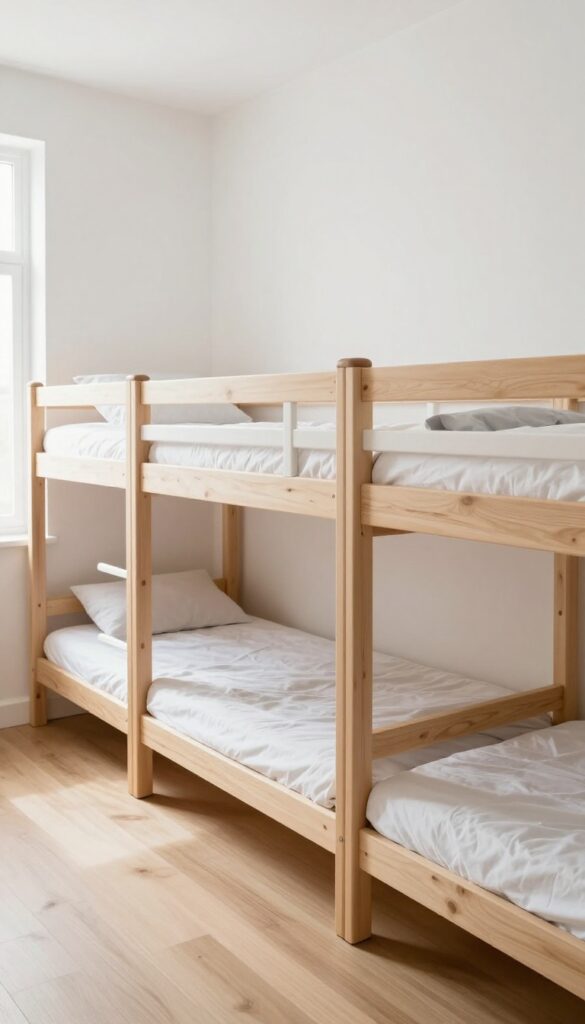
When three kids share a room, floor space disappears fast. A triple bunk lined up along one wall changes everything—each child gets their own sleeping spot without sacrificing the square footage they need to play and move. Light-colored wood keeps the structure from feeling heavy, and slim guardrails add safety without blocking the airy vibe.
The result is a clean, streamlined look that feels more like a modern sleepover setup than a cramped dorm.
Why It Works
By tucking all three beds into a single row, you free up the rest of the room for dressers, desks, or a play area. The continuous line also creates a visual anchor that makes the room feel longer and more organized. Plus, each bunk feels private yet connected, which cuts down on bedtime squabbles.
Best For
This layout is ideal for long, narrow bedrooms where you can dedicate one full wall to sleep. It works especially well for siblings close in age who enjoy being near each other but still need their own space. If your room has a low ceiling, opt for a low-profile design so the top bunk doesn't feel too close to the ceiling.
Styling Tip
Assign each bunk a different color pillow or a small wall shelf for personal treasures. Keep bedding light—white or pale gray—to maintain the airy feel. Add a long, slim mirror or a row of hooks on the opposite wall to balance the visual weight and make the room feel wider.
8. Bunk with a Slide for Playful Days
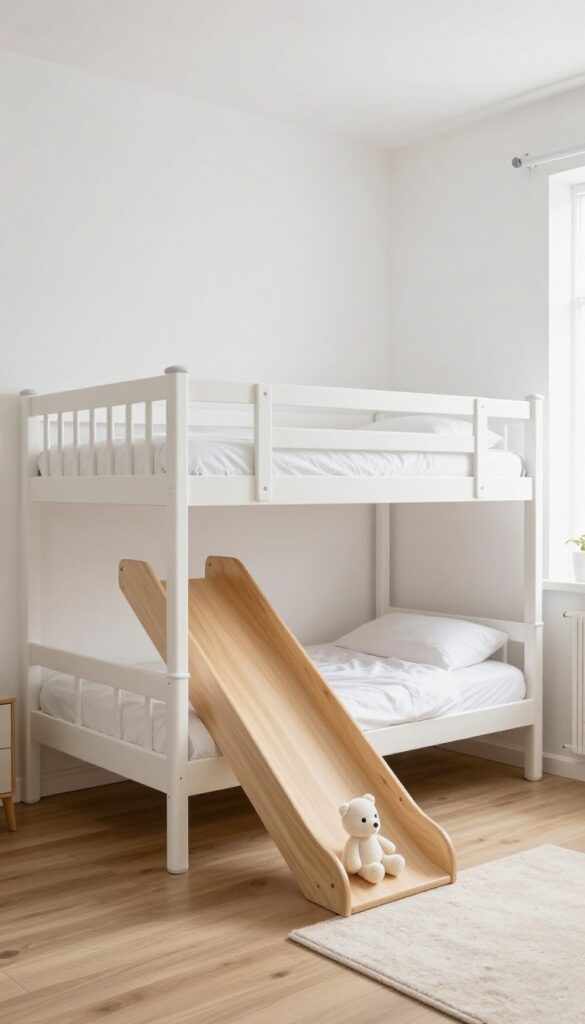
A slide attached to the lower bunk turns an ordinary sleep setup into a mini indoor playground. This idea works especially well when the rest of the room stays calm and uncluttered—think pale walls, simple bedding, and a soft rug. The slide becomes the focal point, so keeping everything else light and airy prevents the space from feeling chaotic.
Why It Works
Kids love the thrill of sliding down in the morning or during playtime, and it adds an element of fun without taking up extra floor space. The slide can be removable or foldable, making it practical as children grow.
Best For
Younger children sharing a room, especially siblings who enjoy active play. It's also great for vacation homes or guest rooms where a playful touch is welcome.
Styling Tip
Choose a slide in a neutral tone like white or pale wood to blend with a minimalist look. Add a small basket at the bottom for soft toys or pillows to keep the landing zone tidy.
9. Corner Bunks with Shared Nightstand Shelf
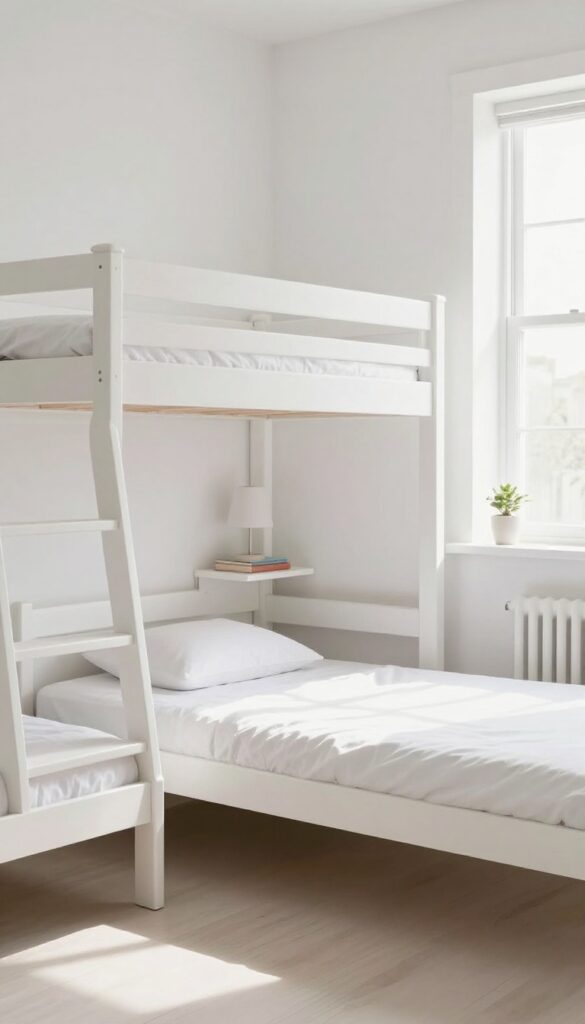
Tucking bunks into a corner instantly opens up the rest of the room for play or study. By adding a floating shelf between the two beds at mattress height, you create a shared nightstand that doesn't steal any floor space. The result feels clean and intentional, with both kids having a spot for their bedtime essentials without the room feeling crowded.
Why It Works
This setup uses vertical wall space that would otherwise go unused. The shelf keeps phones, books, and water bottles within easy reach from either bed, eliminating the need for bulky bedside tables. It also visually anchors the bunks, making the corner feel purposeful rather than awkward.
Best For
Siblings close in age who share a room and want their own space but don't mind sharing a small surface. It's also great for tight rooms where every inch counts, since the shelf adds function without eating into the floor plan.
Styling Tip
Choose a shelf that matches the bunk bed finish—white for a light, airy look or natural wood for warmth. Keep decor minimal: a small lamp with a soft glow, a single book per child, and maybe a tiny plant or a cute catchall tray for odds and ends.
10. Bunk Beds with Curtains for Privacy
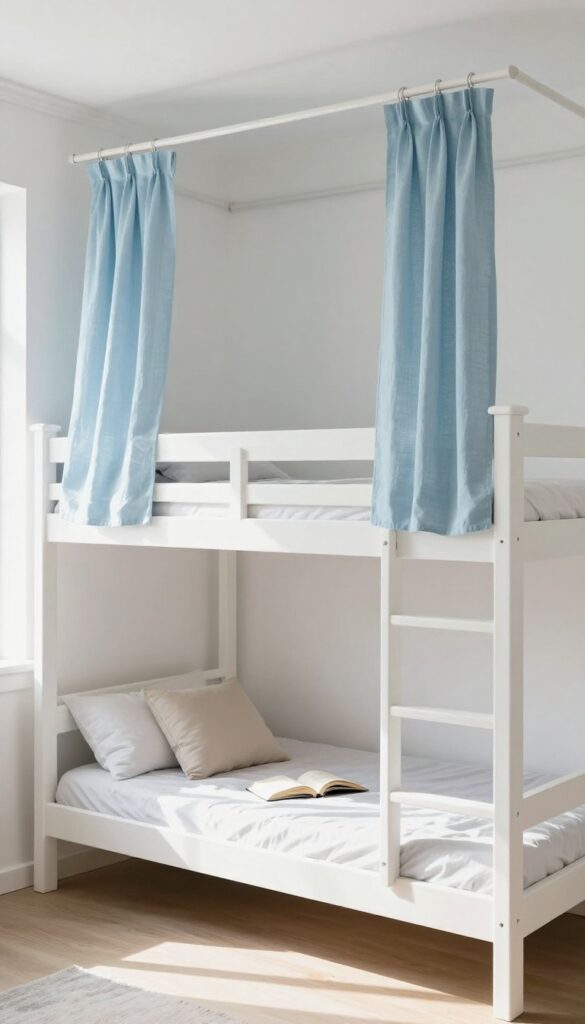
A shared bedroom doesn't have to mean zero alone time. Ceiling-mounted curtains around each bunk create little private nooks where kids can read, daydream, or just escape the sibling chatter for a bit. The fabric choice matters here—light linen or cotton in a soft hue keeps the room feeling open and breezy, not like a fort that's closed off.
It's a simple addition that transforms a functional bed into a personal retreat.
Why It Works
Curtains add instant privacy without taking up any floor space. They soften the look of the bunk bed, reduce visual clutter, and give each child a sense of ownership over their own zone. The fabric also helps absorb sound, making the room feel calmer overall.
Best For
This setup works well for siblings close in age who need their own space but share a room. It's also great for rooms with high ceilings where curtains can be mounted high to create a dramatic, airy effect without making the bunks feel cramped.
Styling Tip
Choose a curtain rod that extends a few inches past the bed frame on each side so the fabric can drape fully. For a cohesive look, pick a color that matches the bedding or accent pillows. If you're worried about light blocking, go with a semi-sheer linen that filters light gently.
11. Low-Profile Bunks with Platform Storage
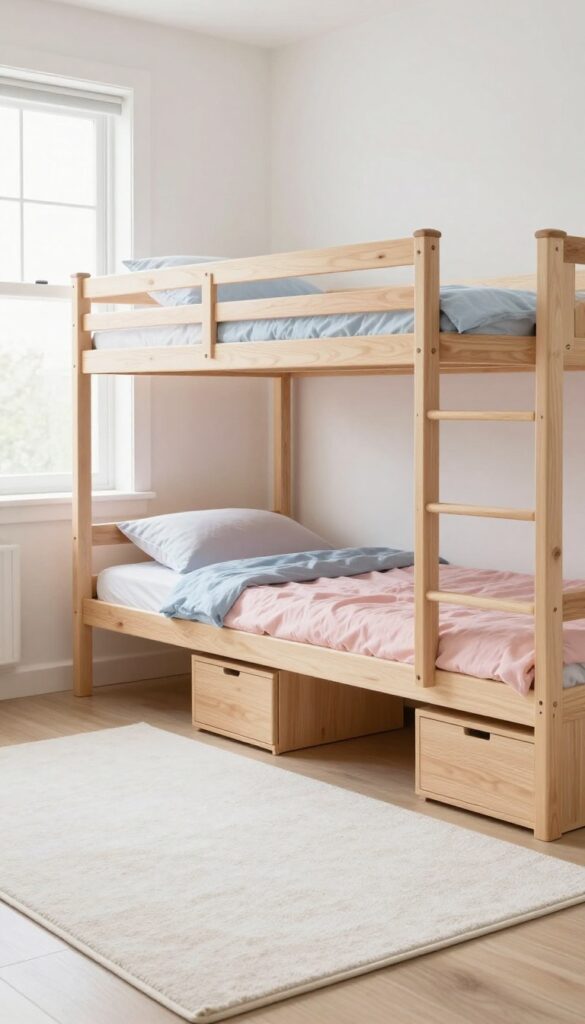
Low-profile bunk beds bring a grounded, calming feel to a shared bedroom. By sitting closer to the floor, they make the ceiling seem higher and the whole room feel more open. Built-in platform drawers underneath turn the space below into hidden storage for clothes, toys, or extra bedding—keeping clutter out of sight and the room looking tidy.
Why It Works
The lower height makes the bunks feel less dominant, so the room stays light and airy. Platform drawers are easy for kids to use and maximize every inch of floor space without needing extra furniture.
Best For
Small shared bedrooms with low ceilings or limited floor space. Great for siblings who need separate sleeping areas but want the room to feel spacious and uncluttered.
Styling Tip
Choose a light wood finish or white frame to enhance the airy vibe. Add soft linen bedding in pastel tones and a simple rug underneath to anchor the area without weighing it down visually.
FAQ
What is the best bunk bed material for a light and airy room?
Light-colored wood or white metal are top choices. Wood adds warmth without heaviness, while metal frames feel almost invisible and let light pass through easily.
How can I make a small shared room feel bigger with bunk beds?
Use light paint on walls and bedding, choose open ladder designs, and avoid bulky storage underneath. Lofted bunks also free up floor space for a more open layout.
Are bunk beds safe for young children?
Yes, with proper guardrails and a sturdy frame. For kids under six, place them on the lower bunk. Always follow the manufacturer's weight and age guidelines.
What bedding colors work best for a light and airy vibe?
Stick with whites, soft grays, pale blues, or muted pastels. These colors reflect light and keep the room feeling calm and spacious.
Can I add storage to a bunk bed without making it look bulky?
Absolutely. Built-in drawers in the stairs or under the lower bunk are great. Rolling carts or slim shelves also add storage without visual weight.
Conclusion
A shared bedroom doesn't have to feel like a squeeze. With the right bunk bed idea, you can give each child their own cozy spot while keeping the whole room light, open, and easy to move around.
Focus on designs that let in light and avoid heavy furniture, and you'll create a space that feels bigger than it really is. Whether you go for a playful slide or a sleek lofted setup, these ideas prove that small rooms can still feel airy and inviting.