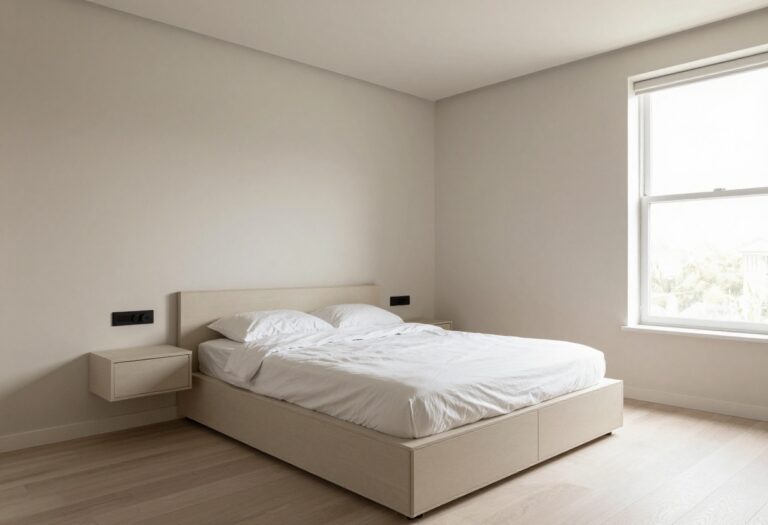
11 Two Girls Bedroom Ideas That Balance Personal Space in Small Rooms
Sharing a bedroom with a sibling is a rite of passage, but it can also feel like a constant negotiation over space. When the room is small, every square inch counts, and finding ways to give each girl her own corner becomes essential.
The trick is to blend shared zones with personal nooks so both personalities shine without clashing. You don't need a massive room to make it work.
With clever furniture choices, thoughtful color blocking, and a few visual tricks, even a compact bedroom can feel like two separate retreats. The ideas here focus on balance—giving each child a sense of ownership while keeping the room cohesive and clutter-free.
1. Use a Room Divider to Create Visual Boundaries
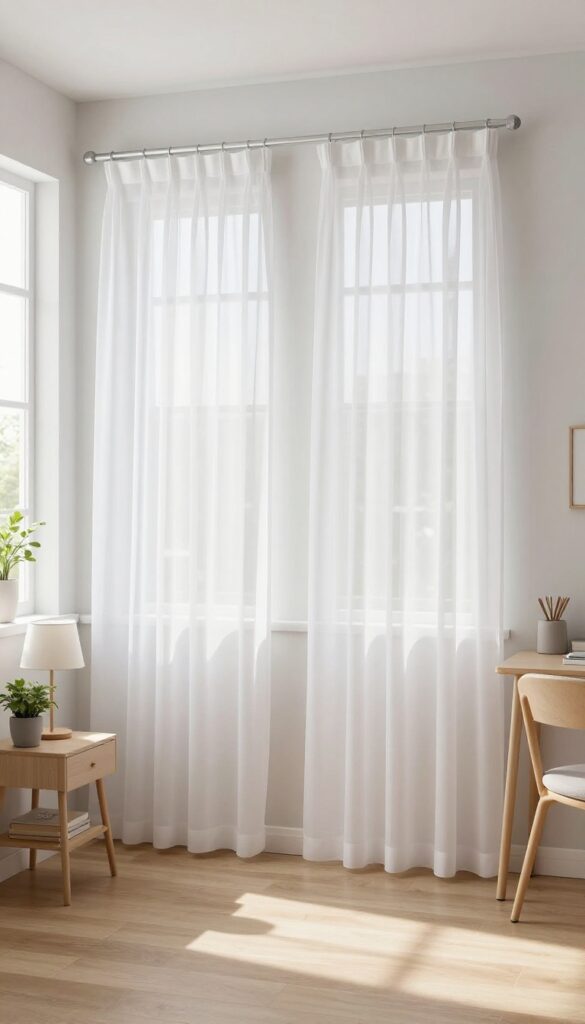
Sharing a bedroom doesn't have to mean sacrificing your own little corner. A lightweight room divider or curtain can carve out two distinct zones without any permanent construction. It's a smart, space-aware move that gives each person a visual boundary, making the room feel more private and intentional.
Plus, you can choose a style that complements the room's palette—like a sheer panel for soft separation or a bookshelf divider that pulls double duty as storage.
Why It Works
A room divider instantly creates the illusion of separate spaces, which helps reduce visual clutter and gives each person a sense of ownership over their area. It's also flexible: you can move it, swap it, or remove it entirely as needs change. In a small room, this trick adds structure without eating up square footage.
Best For
This idea is ideal for siblings or roommates who need distinct zones but share a compact bedroom. It works especially well in rooms with a single window or awkward layout where permanent walls aren't an option.
Styling Tip
Opt for a divider that adds function—like a bookshelf unit with bins or a pegboard panel for hanging accessories. Keep the color light or neutral to maintain an airy feel, and use the divider as a backdrop for a small lamp or plant to make each zone feel complete.
2. Assign Each Girl a Color Zone
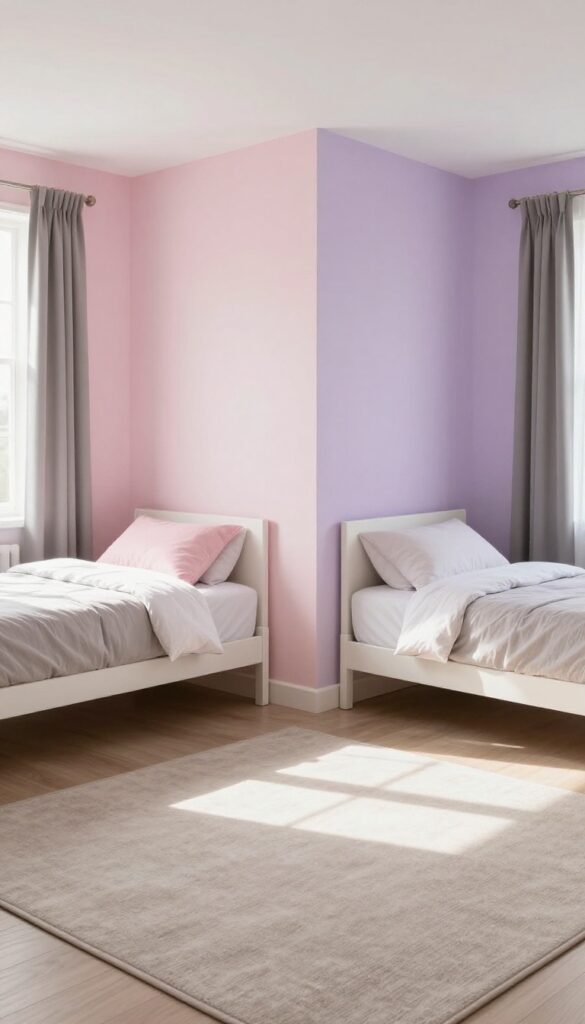
Color is one of the easiest ways to carve out personal space without adding bulky dividers. By giving each side of the room its own accent wall in her favorite shade, you create instant visual territory that feels intentional, not chaotic. A neutral third color on the remaining walls then weaves everything back together, so the room stays cohesive and doesn't feel like two separate bedrooms crammed into one.
Why It Works
This approach uses color psychology to define boundaries without physical barriers, which is especially smart in tight quarters. Each girl gets a clear sense of ownership over her zone, but the shared neutral backdrop keeps the room from looking disjointed or busy.
Best For
Small to medium shared bedrooms where floor space is limited and you want to avoid bulky furniture or room dividers. It works well for siblings with very different tastes who still need the room to feel unified.
Styling Tip
Choose one neutral that appears in both girls' zones—like a soft greige or warm white—to bridge the two colors. Repeat that neutral in bedding, curtains, or a rug to reinforce the connection.
3. Go Vertical with Twin-Over-Full Bunk Beds
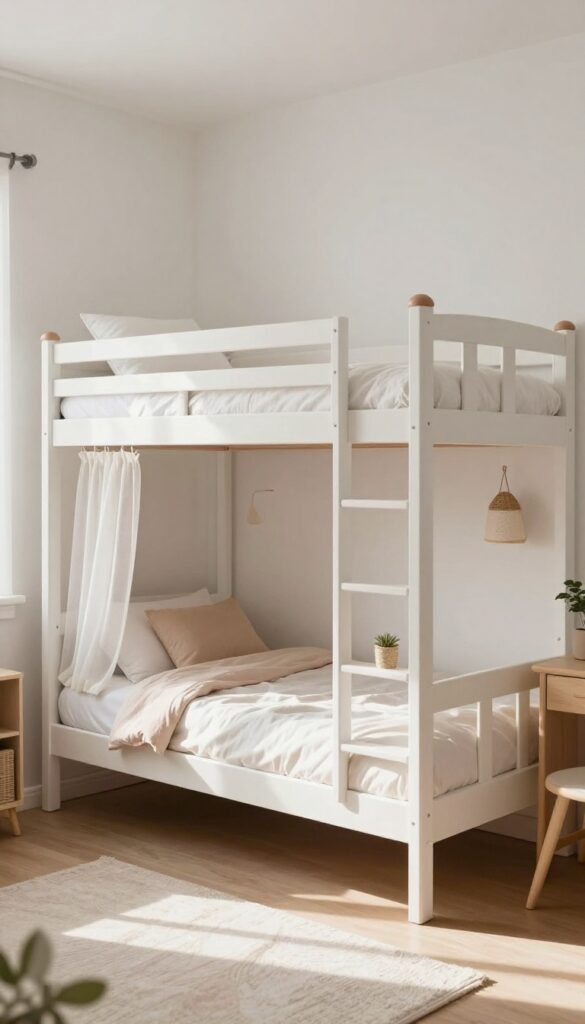
When floor space is tight, the only way to go is up. A twin-over-full bunk bed is a smart solution that gives each girl her own sleeping zone without cramping the room. The twin on top works great for the younger child, while the full-size bottom mattress offers more room for a growing tween or teen.
It’s a practical layout that still feels fun and intentional.
Why It Works
This setup frees up valuable square footage for other activities—think a shared desk, a cozy reading corner, or extra floor space for play. The vertical design also creates a natural separation between the two beds, giving each child a sense of personal territory even in a small room.
Best For
Sisters with an age gap or different sleep needs. The twin-over-full works especially well when one child is older or taller and benefits from a larger mattress, while the other is happy with a cozy top bunk.
Styling Tip
Hang a curtain rod from the bottom of the top bunk frame and add blackout curtains for instant privacy on the lower bunk. Use the ladder rungs or built-in stairs as display shelves for books, plants, or small treasures—just add a few adhesive hooks for hanging baskets.
4. Create a Shared Desk with Personal Storage Bins
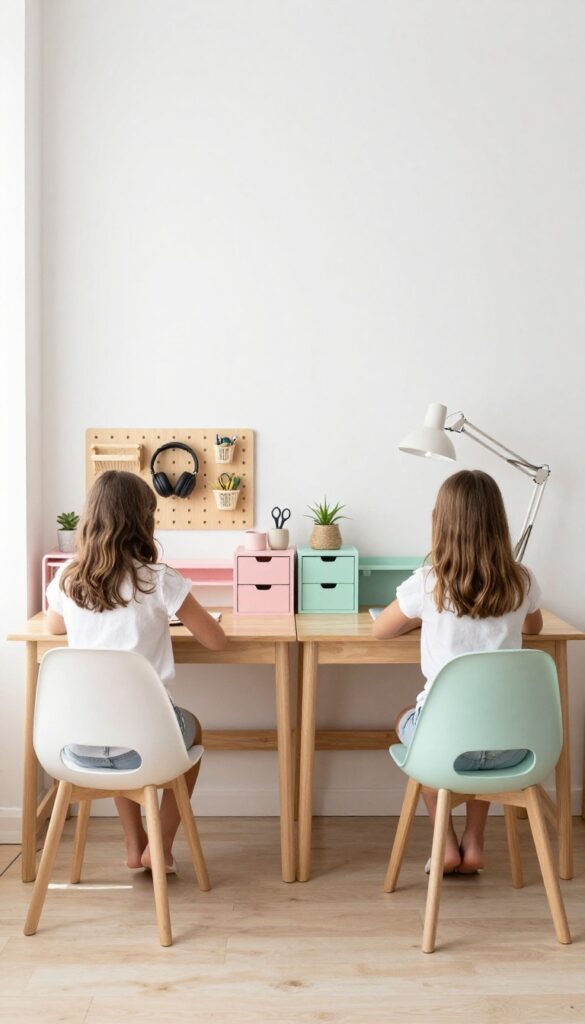
When two girls share a bedroom, homework and creative projects can quickly take over every surface. A long desk placed against one wall gives each child her own defined workspace without taking up extra floor space. By adding labeled bins or small drawer units on each side, you create a clear sense of ownership and make clean-up feel almost automatic.
Why It Works
A shared desk doubles the functionality of a single piece of furniture, which is a win in any small bedroom. Personal storage bins keep each girl's supplies separate and easy to find, cutting down on arguments over who took whose scissors. The visual boundary—whether a slim desk divider or a simple strip of washi tape—helps each child feel like she has her own zone, even in a compact setup.
Best For
This setup is ideal for school-age siblings who need a quiet place to do homework or arts and crafts. It works especially well in narrow or L-shaped rooms where two separate desks would feel cramped. If your girls are close in age and share similar routines, a shared desk with personalized bins keeps the peace and the clutter contained.
Styling Tip
Choose bins or drawers in two different but coordinating colors—like soft pink for one side and mint green for the other—so each girl instantly knows where her things go. Mount a pegboard above the desk for hanging headphones, scissors, or small baskets, and add a task lamp with a swing arm that each can adjust independently.
5. Install Floating Shelves for Individual Display
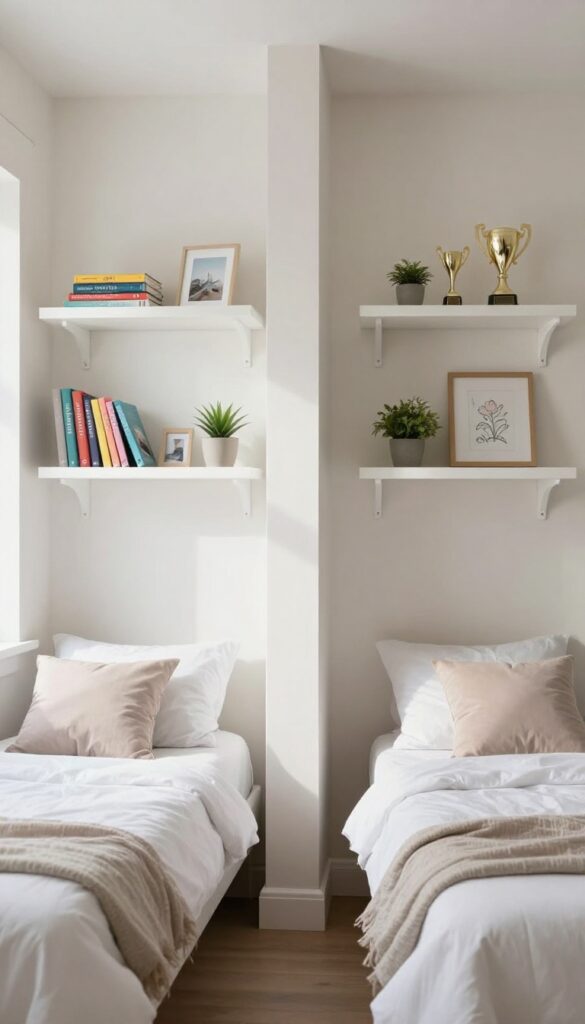
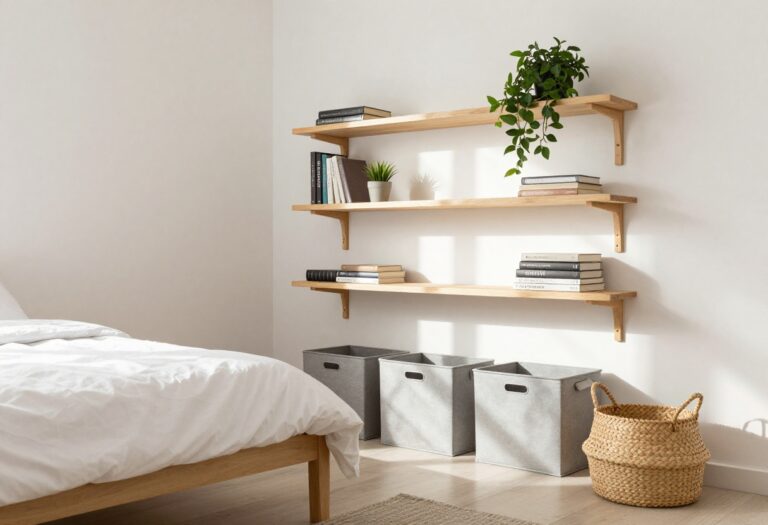
In a shared bedroom, finding ways for each girl to express her personality without cluttering the space can be tricky. Floating shelves offer a simple, space-savvy solution. By mounting a pair of matching shelves above each bed or desk, you create a dedicated spot for personal treasures—without taking up any floor area.
The shelves themselves stay consistent, but what goes on them can be totally unique to each child.
Why It Works
Floating shelves keep the room feeling open and uncluttered while giving each girl a defined area to display her favorite things. The uniform shelf style ties the room together visually, so the overall look remains cohesive even when the contents differ. It's a low-cost, high-impact way to add storage and personality without permanent changes.
Best For
This idea is ideal for small or shared bedrooms where floor space is limited. It works especially well for school-age kids and teens who have collections—books, awards, photos, or small plants—they want to show off. The shelves can easily be updated as their tastes change.
Styling Tip
- Choose floating shelves in a finish that matches the existing furniture, like white or natural wood. Keep the styling simple: a few books stacked vertically, a small framed photo, and a tiny plant or trinket. Avoid overcrowding—leave some breathing room so each item stands out.
- Use adhesive hooks underneath for hanging lightweight items like fairy lights or small art prints.
6. Use a Loft Bed to Free Up Floor Space
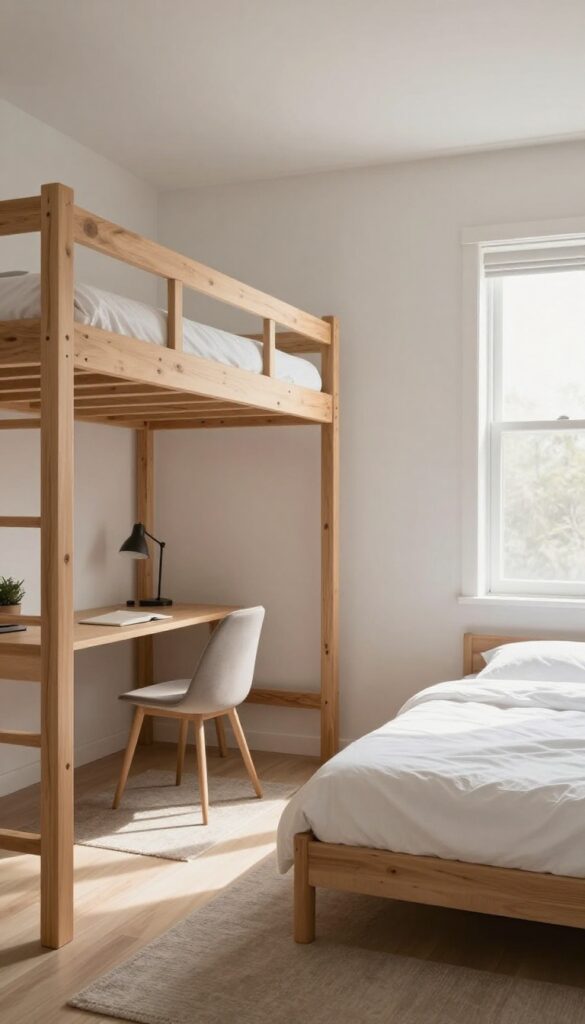
When square footage is tight but you need room for two distinct sleep zones, a loft bed can be a game changer. Raising one bed high enough to create a cozy nook underneath instantly doubles the usable area without adding a single square foot. Pair it with a standard bed on the opposite wall, and you get a balanced layout that feels open rather than cramped.
Why It Works
Loft beds capitalize on vertical space, which is often underused in small bedrooms. The area beneath becomes a dedicated spot for studying, reading, or playing, keeping the floor clear for movement and reducing clutter. Meanwhile, the lower bed anchors the room, creating visual balance and preventing the space from feeling top-heavy.
Best For
This idea shines in shared kids' rooms or teen spaces where one person needs a desk zone and the other prefers a lower bed. It's also ideal for narrow rooms where side-by-side beds would block pathways or make the room feel tunnel-like.
Styling Tip
Choose a loft bed with built-in storage steps or shelves to maximize every inch. Under the loft, add a small desk with a task lamp and a soft rug to define the zone. Keep the lower bed's profile low and streamlined to maintain an airy feel.
7. Add a Canopy or Tented Bed for a Private Retreat
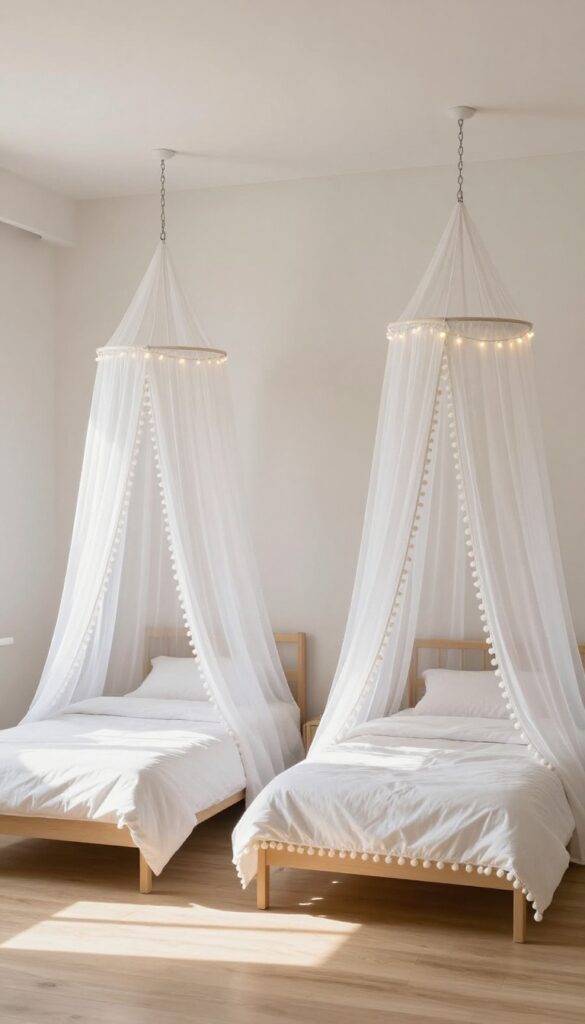
A canopy isn't just for fairy-tale bedrooms—it's a smart way to carve out personal space when square footage is tight. Draping lightweight fabric over one or both beds instantly creates a cozy nook, giving each girl a visual and physical retreat within a shared room. The key is keeping it airy: choose sheer or light cotton in a neutral or soft pastel that blends with your palette, and let each child add her own tiny touch, like a string of fairy lights or a pom-pom trim.
It feels special without eating up floor space.
Why It Works
The canopy acts like a soft room divider, defining each girl's zone without blocking light or making the room feel closed in. It's a low-cost, low-commitment way to give both kids a sense of ownership and privacy, even in a small room. Plus, the fabric softens hard edges and adds texture, making the whole space feel more inviting.
Best For
Sisters who share a room but have very different personalities or sleep schedules. It's also great for rooms where you can't add a permanent partition or where floor space is too limited for a full loft bed or bunk with curtains.
Styling Tip
Use a simple curtain rod or a ceiling-mounted hoop to hang the canopy—no need for a full four-poster bed. For a tented look, drape fabric from a central point and let it pool around the bed. Keep the fabric light so it doesn't trap heat or dust, and wash it seasonally to keep things fresh.
8. Design a Shared Gallery Wall with Personal Sections
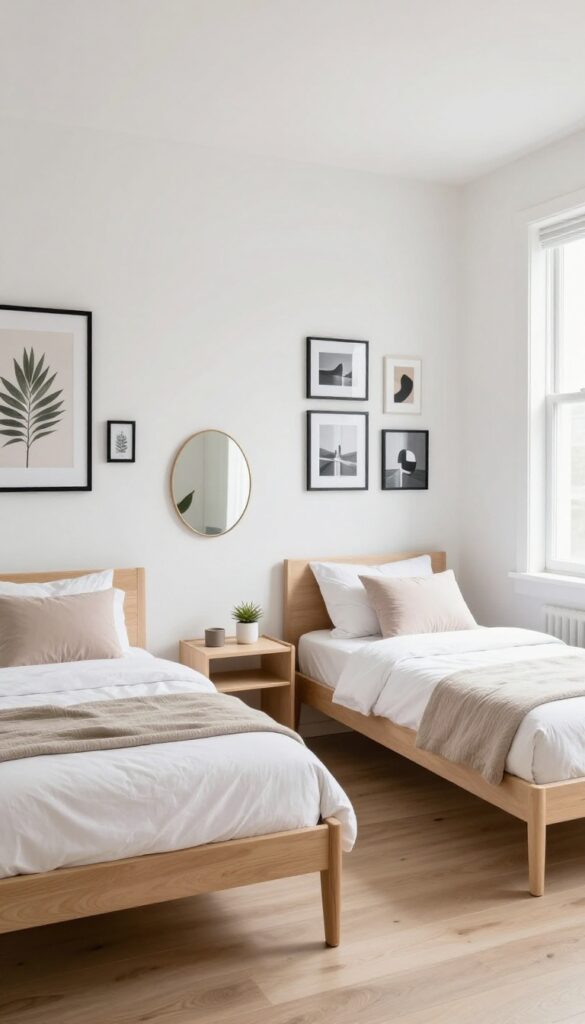
A gallery wall can feel like a compromise in a shared room, but when you split it into two distinct halves, it becomes a celebration of both personalities. Each girl gets her own curated zone to display favorite prints, photos, or small mementos, while matching frames keep the overall look polished and intentional. This approach turns a blank wall into a visual story of the room's two inhabitants.
Why It Works
It gives each girl ownership over her own corner of the wall without creating visual chaos. Using the same frame style—like simple black or white—creates a cohesive backdrop, so the different contents still feel part of a unified design. This balance of individuality and harmony is perfect for small rooms where every surface counts.
Best For
Sisters or roommates with different tastes who want to share a focal wall without fighting over what goes up. It works especially well in smaller bedrooms where a single large gallery wall might feel overwhelming, but two smaller sections keep the space airy and organized.
Styling Tip
Start by measuring the wall and dividing it in half with painter's tape. Let each girl choose her own 3–5 pieces, then arrange them on the floor first to plan the layout. Use matching frames but vary the mat colors or sizes slightly to add depth—just keep the frame finish consistent to tie it all together.
9. Choose a Trundle Bed for Sleepovers and Storage
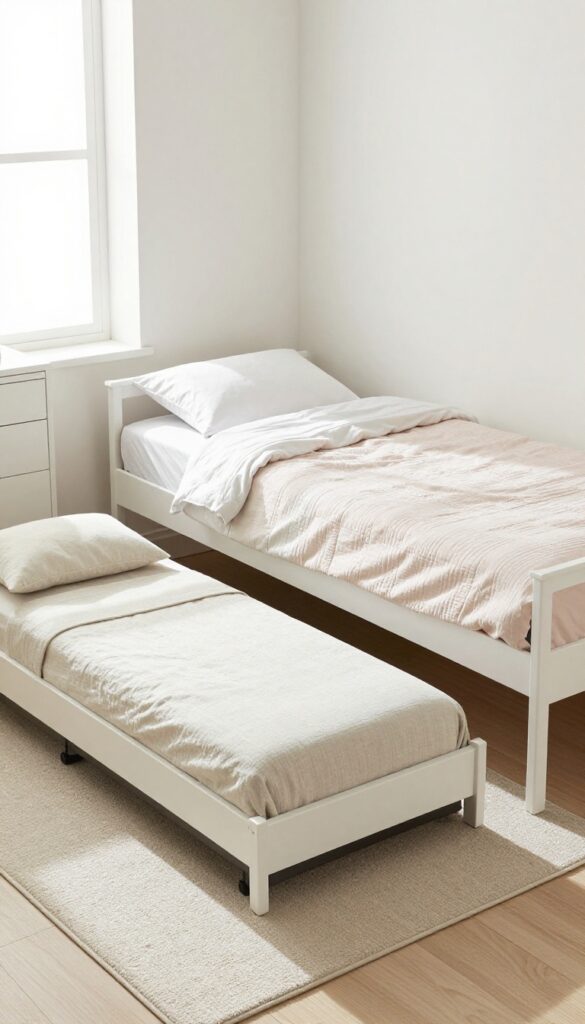
A trundle bed is a smart solution when floor space is precious. During the day, the second bed tucks away completely, freeing up room for playing, studying, or just stretching out. At night, it pulls out to offer a cozy spot for a sibling or guest.
Many trundles also come with built-in drawers underneath, turning the bed frame into a storage powerhouse for extra bedding, clothes, or toys.
Why It Works
It maximizes every square foot without sacrificing style. The trundle eliminates the need for a bulky second bed or a separate guest bed, and the storage drawers help keep clutter at bay. In a shared room, this means more open floor space and less visual chaos.
Best For
This works especially well in small bedrooms where two kids share the space. It's also great for rooms that double as a guest space or for families who love hosting sleepovers without dedicating a permanent second bed.
Styling Tip
Choose a trundle with a low profile so it doesn't feel heavy. Top the main bed with a quilt that matches the room's color scheme, and dress the trundle with a simple blanket and pillow in a coordinating neutral. Add a small rug underneath to define the sleeping zone.
10. Use Rugs to Define Each Side of the Room
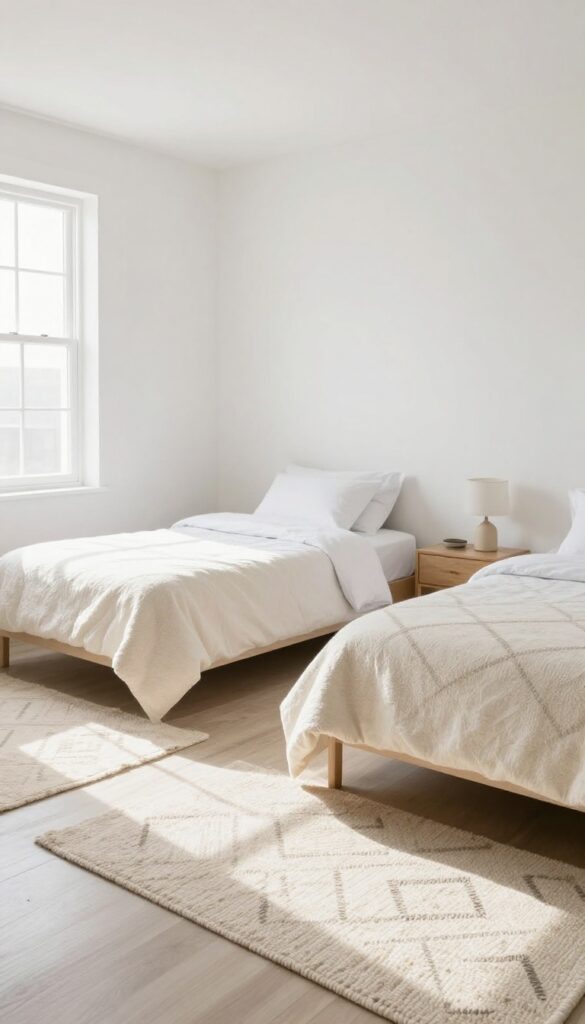
In a shared bedroom, boundaries can be blurry—literally. Instead of building a wall or moving furniture around, let the floor do the talking. Two small rugs, one under each bed, create a clear visual line between her space and hers.
This trick works especially well in smaller rooms where bulky dividers would eat up square footage. The rugs act like invisible walls, giving each girl a defined zone without closing off the room.
Why It Works
Rugs anchor each bed area, making the room feel more organized and intentional. The color or pattern difference helps each girl feel a sense of ownership over her side. Plus, the soft texture underfoot makes getting out of bed a little nicer—and that’s always a win.
Best For
Sisters who share a room but have different style preferences. It’s also great for rooms where the beds are on opposite walls or spaced apart, since the rugs reinforce the separation. If the room is narrow or oddly shaped, this trick helps define zones without adding physical barriers.
Styling Tip
Pick rugs that share one common element—like the same weave, pile height, or a repeating color—so they feel coordinated, not random. For example, a cream shag rug on one side and a cream flatweave with a subtle pattern on the other keeps things cohesive. Layering a smaller rug over a larger neutral one can also work if you want extra softness.
11. Incorporate a Shared Reading Nook with Personal Pillows
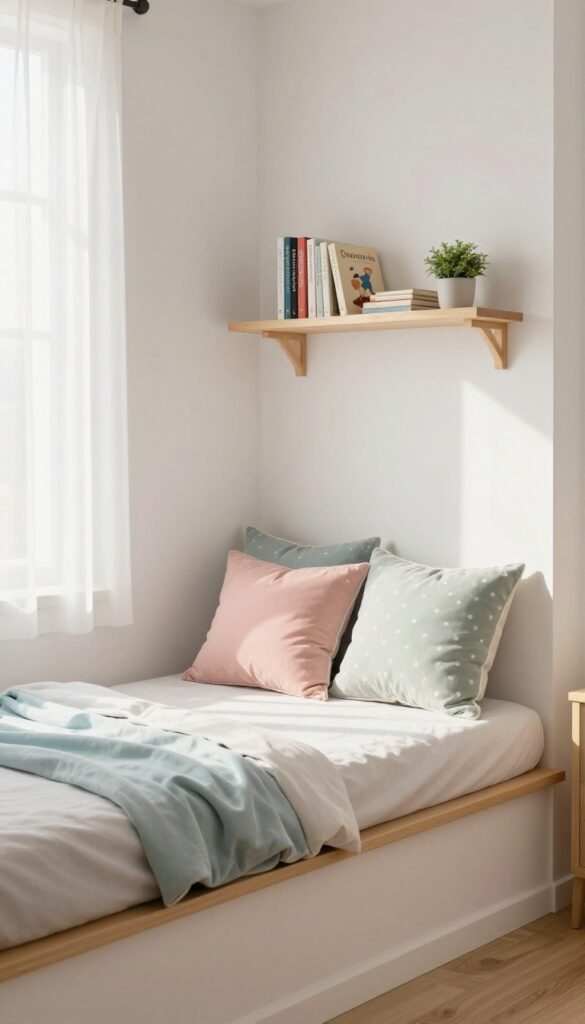
A shared reading nook is a smart way to carve out a cozy corner without sacrificing floor space. By tucking a cushioned bench or window seat into an unused alcove, you create a communal spot where both girls can curl up with a book. The trick is letting each child claim her own throw pillow or blanket, so the nook feels personal even though it's shared.
Add a small shelf above or beside the seat for books they both enjoy, plus a cubby for each to stash her current read.
Why It Works
This idea maximizes a small footprint by turning an awkward corner into a functional hangout. The personal pillows give each girl a sense of ownership, reducing squabbles over territory. The shared bookshelf encourages bonding over stories, while the individual cubbies keep the space tidy and respectful of each child's privacy.
Best For
Best for rooms with a window or an unused corner that can fit a bench or a low bookshelf. Ideal for siblings close in age who enjoy reading or quiet time together. Works especially well in narrow rooms where a built-in seat can double as extra storage.
Styling Tip
Choose a bench cushion in a neutral or soft color that ties into the room's palette, then let each girl pick her own pillow in a pattern she loves. Keep the shelf simple with a few shared favorites and a small plant or lamp for ambiance. Use labeled baskets or bins under the bench for each child's extra blankets.
FAQ
How can two girls share a small bedroom without feeling cramped?
Focus on vertical storage, use room dividers or rugs to define zones, and choose furniture that does double duty—like beds with built-in drawers or loft beds. Keeping clutter to a minimum also helps the room feel more spacious.
What's the best bed setup for two girls in a small room?
Bunk beds or loft beds are great space savers. Twin-over-full bunks give one child a bigger mattress, while loft beds free up floor space for desks or play areas. Trundle beds are another option if you need an extra guest bed.
How do I give each girl her own personal space in a shared room?
Use color zones, individual shelves, or a room divider to create visual boundaries. Let each child choose a few decor items for her side, like a specific throw pillow or wall art, to make the space feel personal.
What colors work best for a shared girls' bedroom?
Neutral bases like white, beige, or light gray allow each girl to add her favorite accent colors without clashing. Soft pastels, muted jewel tones, or earthy shades can be combined by using one color per zone.
How can I add storage to a small shared bedroom?
Use under-bed storage bins, floating shelves, and multi-functional furniture like ottomans with hidden compartments. Wall-mounted hooks and over-door organizers also help keep belongings off the floor.
Conclusion
Sharing a bedroom doesn't have to mean sacrificing personal style or comfort. With a few intentional choices—like defining zones, using vertical space, and letting each girl have a say in her corner—you can create a room that feels both shared and individual. The best part is that these ideas are flexible enough to grow with them.
As tastes change, you can swap out colors, update the gallery wall, or rearrange furniture without a full overhaul. A balanced bedroom is one that adapts, and these small-space solutions make that easy.