13 Creative Mobile Home Kitchen Ideas to Make Everyday Cooking Feel Better
Mobile home kitchens often get a bad rap for being cramped or cookie-cutter. But with a little creativity, they can become the coziest spot in your home.
The key is layering—mixing textures, colors, and smart storage to create a space that feels both personal and functional. Whether you're renting or own, these ideas are designed to work with what you have, not against it.
Think warm wood tones, soft lighting, and clever tricks that make every inch count. Let's dive into 13 ways to turn your mobile home kitchen into a place you actually look forward to cooking in.
1. Swap Out Cabinet Hardware for Instant Character
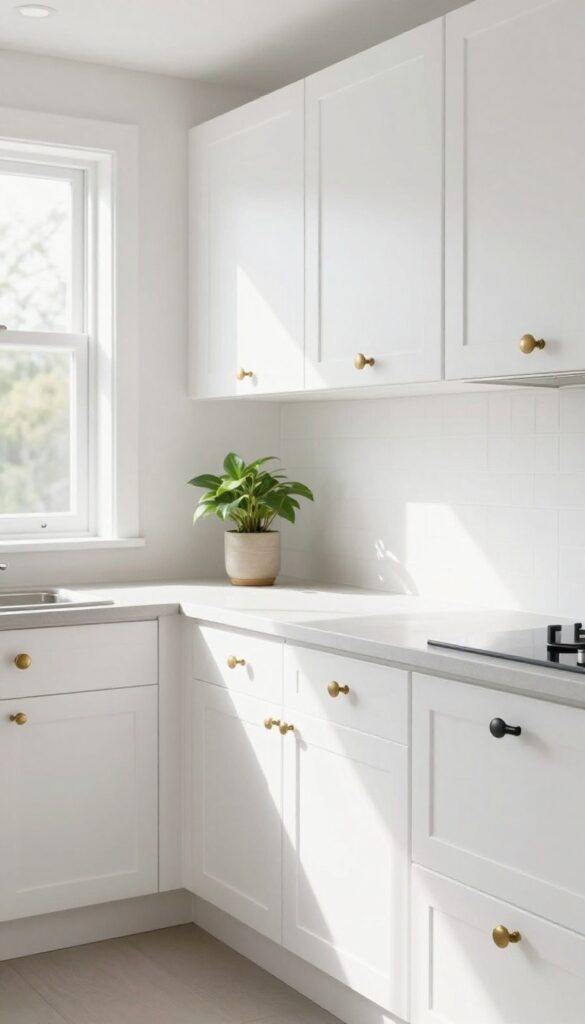
Kitchen cabinets often come with the same basic knobs and pulls as every other rental or builder-grade kitchen. But swapping them out is one of those small changes that makes you wonder why you didn't do it sooner. Vintage brass, matte black, or ceramic options add personality without a full renovation, and the whole process takes an afternoon.
It's a quick, affordable swap that changes the whole feel of your cooking space.
Why It Works
Hardware is like jewelry for your cabinets. It's a low-cost, high-impact update that instantly elevates the look. Different finishes and shapes can shift the style from generic to custom, making your kitchen feel more intentional and collected.
Best For
This idea works in any kitchen, but it's especially great for mobile homes where full renovations might be tricky. It's also perfect for renters who want to personalize their space without permanent changes—just save the old hardware to put back later.
Styling Tip
- Mix finishes for a curated look. Pair matte black pulls with brass knobs, or go for all one finish but vary the shapes. Keep the scale proportional to your cabinet size—longer pulls on drawers, smaller knobs on upper cabinets.
- And use a template to ensure consistent placement.
2. Add Open Shelving for a Breezy, Layered Look
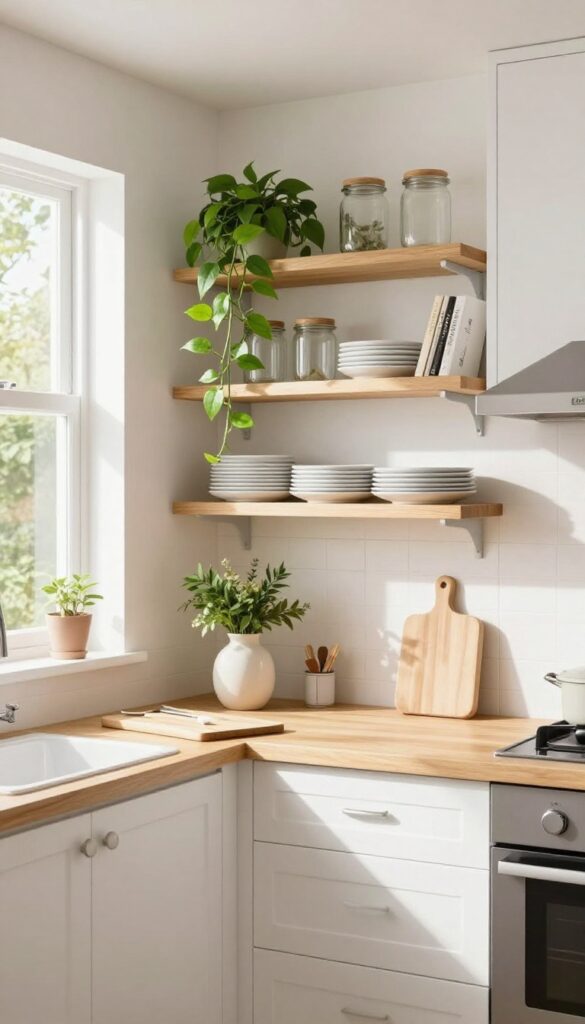
Removing a few upper cabinet doors or installing floating shelves can change the entire feel of a tiny kitchen. Instead of a wall of closed storage, you get a display area that feels airy and curated. It works especially well in mobile homes where every inch counts—open shelves keep the space from feeling boxed in.
Plus, they force you to edit down to what you actually use and love, which naturally reduces clutter.
Why It Works
Open shelving makes a small kitchen feel larger by drawing the eye upward and outward. The visual break from solid cabinets adds depth and allows you to layer in texture through dishes, plants, and cookbooks. It also makes daily cooking more efficient because your most-used items are within arm’s reach.
Best For
This idea is perfect for mobile home kitchens with limited counter space or dark upper cabinets. It works best if you have a cohesive collection of everyday dishes and glassware that look good together. Avoid it if you have a lot of mismatched plastics or rarely used gadgets you’d rather hide.
Styling Tip
Stick to a simple color palette—white, wood, and a few greens—to keep the look calm and cohesive. Group similar items together, like all white plates on one shelf and glass jars on another. Add a small trailing plant like pothos on the top shelf to soften the lines and bring in life.
3. Use a Rolling Cart as a Portable Island
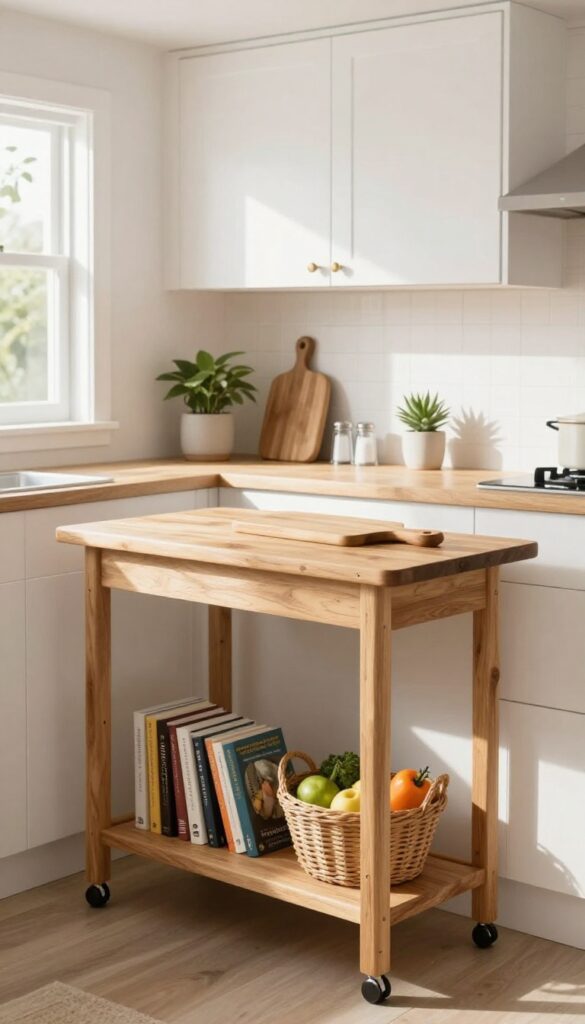
Counter space is precious in a mobile home kitchen, but that doesn't mean you have to sacrifice the convenience of an island. A slim rolling cart in warm wood or sleek metal slides right into a tight spot and rolls out whenever you need it. It's the kind of flexible piece that adapts to your cooking rhythm—tucked away one minute, front and center for chopping and serving the next.
To keep things cozy, top it with a butcher block surface that adds natural texture and a soft, lived-in feel.
Why It Works
A rolling cart gives you extra prep space and storage without the commitment of a built-in island. You can move it to where the action is, then roll it aside to open up the floor plan. The butcher block top brings warmth and a practical cutting surface, making the cart feel like a natural extension of your kitchen rather than a temporary fix.
Best For
This idea works beautifully in narrow or galley-style mobile home kitchens where a permanent island would block traffic. It's also great for renters who can't modify the space, since the cart adds function without any installation. If you love to entertain, it doubles as a serving station for parties or buffet-style meals.
Styling Tip
Choose a cart with a lower shelf or drawer to store cookbooks, baskets of produce, or extra linens. Keep the top mostly clear except for a wooden cutting board and a small plant or salt cellar—this keeps the look airy and intentional. For a layered feel, let the cart's material complement your existing countertops: warm wood against white cabinets, or black metal against butcher block.
4. Hang a Pegboard for Utensils and Pots
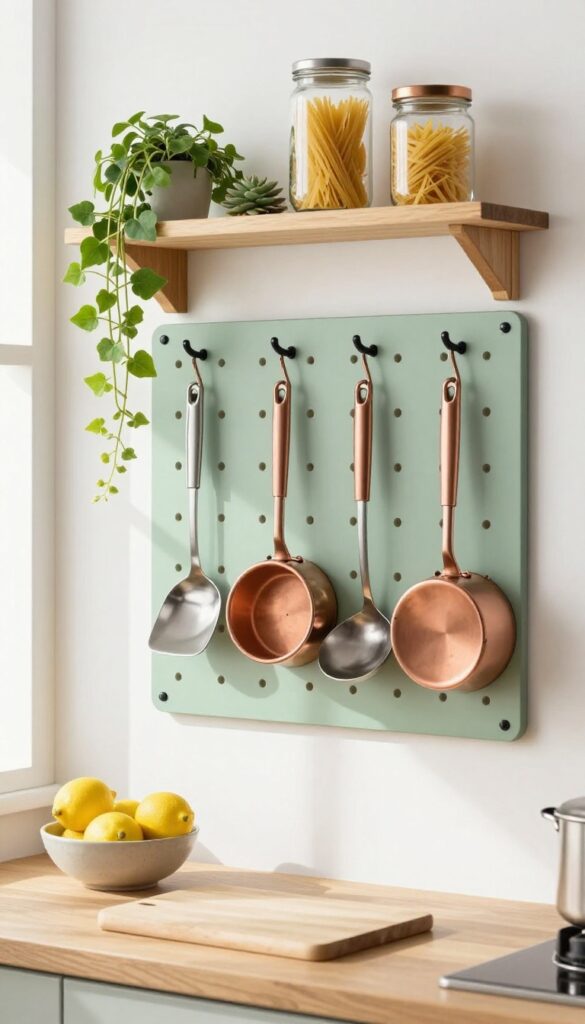
A blank wall in a mobile home kitchen is prime real estate, and a painted pegboard turns it into a functional focal point. Instead of digging through drawers for a spatula or pot lid, everything stays visible and within arm's reach. The layered look of hooks, small shelves, and maybe a trailing herb plant adds texture and warmth without feeling cluttered.
Why It Works
Pegboards maximize vertical storage, which is crucial in compact kitchens. They keep countertops clear and make cooking more efficient. Plus, the ability to rearrange hooks and shelves means the setup can evolve with your needs.
Best For
Mobile home kitchens with limited cabinet or drawer space, especially if you have a wall that's currently bare. It's also great for renters since pegboards are easy to remove and patch.
Styling Tip
Paint the pegboard a soft sage or creamy white to blend with the wall, then use brass or black hooks for contrast. Add a small shelf at the top for a few pretty jars or a tiny succulent to keep the look cozy and intentional.
5. Layer Rugs for Texture and Warmth
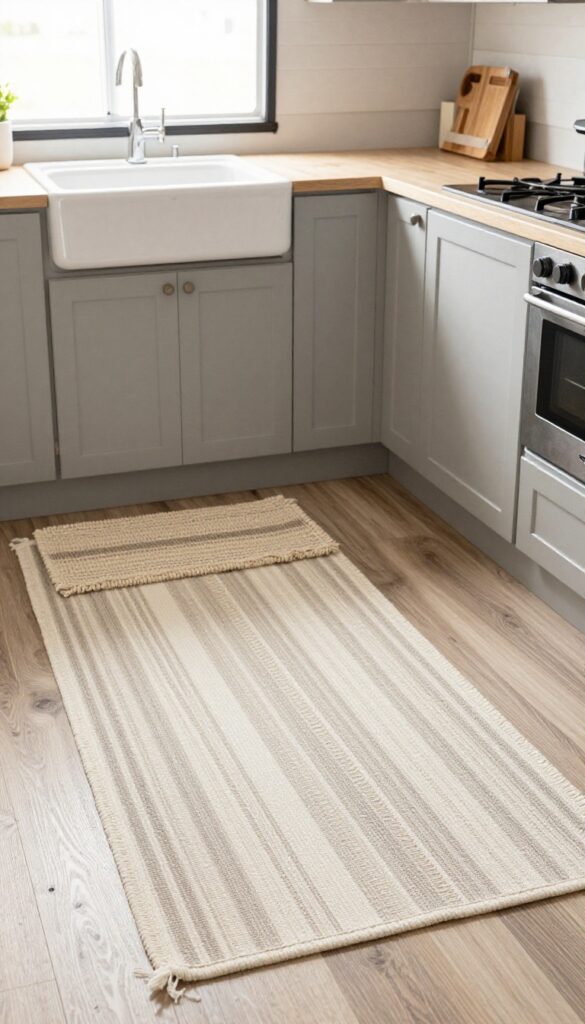
A kitchen can feel cold and echoey, especially in a mobile home with standard vinyl or laminate flooring. The simplest fix? Rugs.
Layering a washable runner in front of the sink and a smaller mat near the stove adds softness underfoot and breaks up all that hard surface. It’s an instant cozy upgrade that also protects floors from spills and splashes.
Why It Works
Rugs absorb sound, reduce fatigue from standing, and introduce pattern or texture without a permanent commitment. Layering different sizes creates visual interest and defines zones—like the prep area versus the cooking zone—making the kitchen feel more intentional and less like one big rectangle.
Best For
Mobile home kitchens with smooth flooring like vinyl, laminate, or tile. It’s also great if you want to add warmth without renovating or if you rent and can’t change the floor.
Styling Tip
Go for a neutral, low-pattern runner (like a striped or flatweave) and layer a smaller, more textured mat (like a chunky cotton or braided style) on top. Keep the color palette cohesive—think warm beige, soft gray, or terracotta—so it feels layered, not messy.
6. Install Under-Cabinet Lighting for a Soft Glow
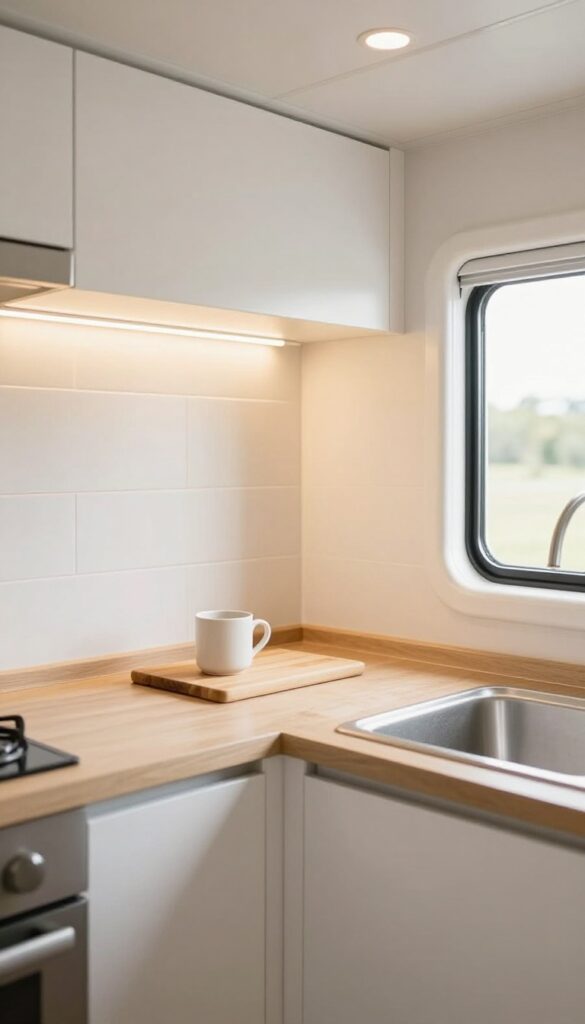
Countertops can feel like a black hole after sunset, especially in a mobile home kitchen where overhead lighting often leaves shadows. Battery-operated puck lights or stick-on LED strips solve that instantly. They brighten your workspace and cast a warm, cozy glow that makes the whole room feel more inviting.
Warm white bulbs are the secret to that soft, layered look—no harsh fluorescents here.
Why It Works
Under-cabinet lighting eliminates shadows on your countertops, making food prep safer and easier. It also adds a subtle layer of warmth that balances cooler overhead lights, creating that cozy, lived-in feel without any major renovation.
Best For
Mobile home kitchens with limited overhead lighting or deep countertops where shadows fall. It's also perfect for renters who can't hardwire fixtures—battery-powered options install in minutes with no wiring.
Styling Tip
Stick with warm white bulbs (2700K–3000K) to keep the glow soft and inviting. Place the lights toward the front edge of the cabinets so the light hits the countertop, not the backsplash.
7. Paint or Peel-and-Stick the Backsplash
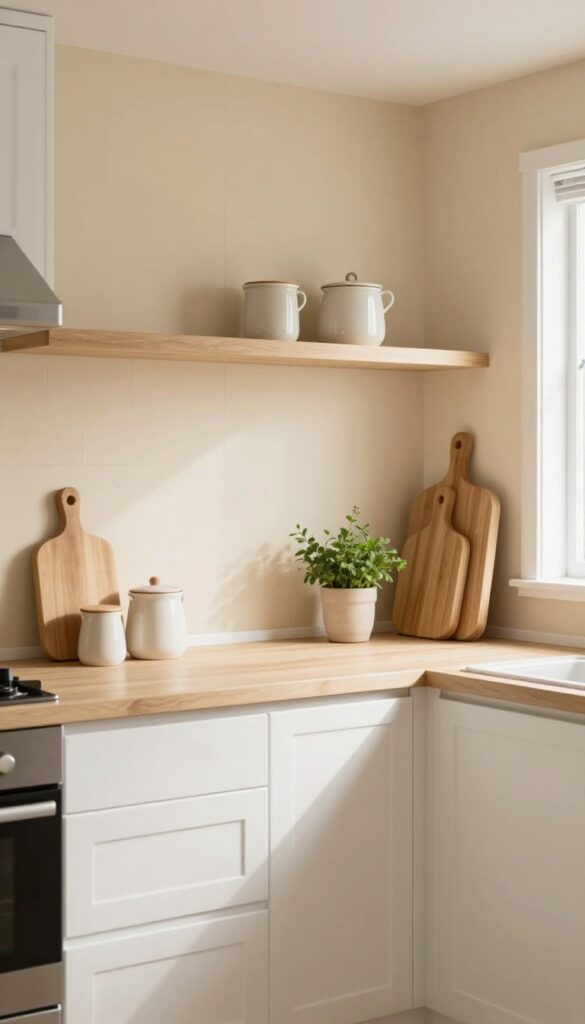
A kitchen backsplash does a lot of heavy lifting—it protects your walls from splatters and grease, but it also sets the tone for the whole room. If your current backsplash feels dated or just blah, you don't need a full renovation to change it. Tile paint and peel-and-stick panels are two weekend-friendly options that can completely shift the mood of your kitchen.
A soft neutral or a subtle geometric pattern adds just enough visual interest without overwhelming the space, keeping things cozy and layered.
Why It Works
Both paint and peel-and-stick are forgiving for DIYers and cost a fraction of real tile. They let you experiment with color and texture without a long-term commitment. A warm beige or creamy white backsplash can make a galley kitchen feel more inviting, while a low-contrast pattern adds depth without competing with your countertops or cabinets.
Best For
Renters who can't alter tile permanently, or homeowners who want a quick refresh before selling. Also ideal for small kitchens where a bold backsplash might feel too busy—stick to muted tones to keep the space feeling open and calm.
Styling Tip
Pair a painted or peel-and-stick backsplash with open shelving in the same color family to create a seamless, custom look. Add a few warm wood cutting boards or ceramic canisters on the shelves to bring in texture and soften the uniformity.
8. Add a Small Banquette or Bistro Table
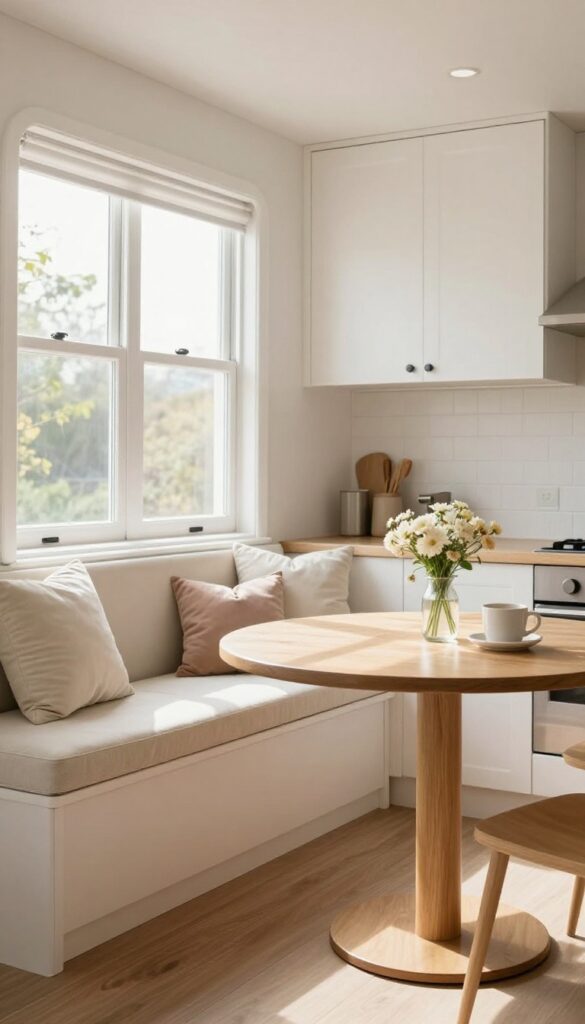
A tiny dining setup can transform a cramped corner into your favorite spot in the house. A banquette with a slim table feels intimate and inviting, perfect for morning coffee or quick weeknight dinners. The cushioned benches add softness to the kitchen’s hard surfaces, while hidden storage underneath keeps clutter out of sight.
Why It Works
Banquettes maximize every inch of floor space by tucking seating into a corner or along a wall. The built-in benches eliminate the need for bulky chairs, making the kitchen feel more open. Plus, the storage compartments are a lifesaver for stashing small appliances, linens, or pantry overflow.
Best For
Galley kitchens, L-shaped layouts, or any kitchen with an unused corner that’s too small for a full table. It’s also a great choice for mobile homes where every square foot counts, and you want a dedicated dining spot without sacrificing flow.
Styling Tip
Choose a bench cushion in a washable performance fabric like outdoor-grade polyester or crypton. Add a couple of toss pillows in a contrasting texture—think velvet or chunky knit—to soften the look. A round or oval table feels less bulky than a rectangular one and makes navigating tight spaces easier.
9. Incorporate Woven Baskets for Bulk Storage
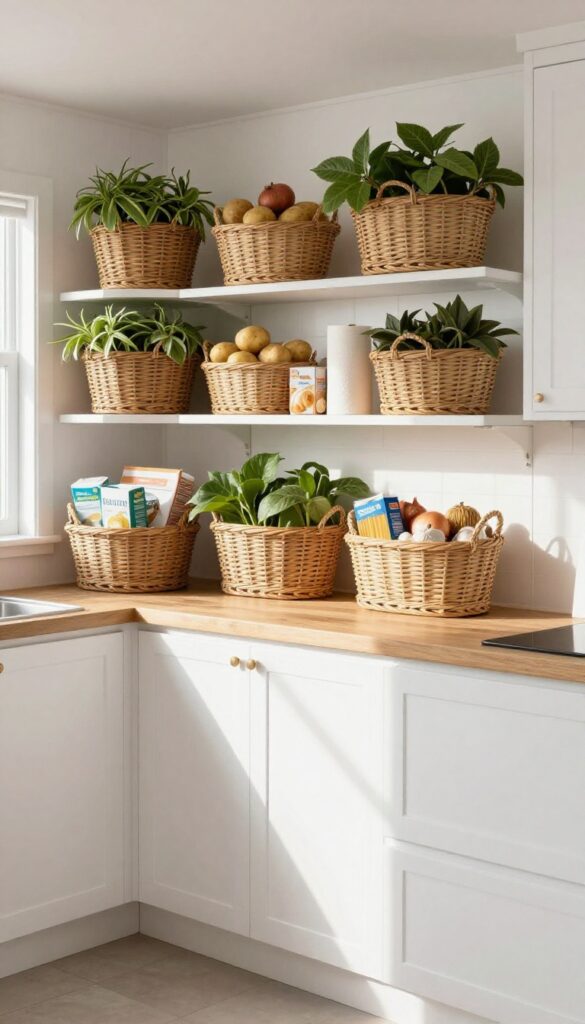
Woven baskets are the unsung heroes of a cozy, layered kitchen. They soften hard edges, hide the chaos of bulk pantry items, and bring in natural texture that makes a space feel collected rather than cluttered. In a mobile home where every inch counts, baskets let you stash potatoes, onions, or paper towels without sacrificing style.
They also make it easy to grab what you need and keep counters looking calm.
Why It Works
Baskets add warmth and visual interest while solving real storage problems. Their woven texture contrasts nicely with smooth cabinet fronts and countertops, creating that layered, lived-in look that feels inviting. Plus, they're lightweight and portable, so you can rearrange or take them outside to clean without hassle.
Best For
This idea is perfect for open shelving, under-sink cabinets, or the top of your fridge. If you have a deep pantry or a corner cabinet that tends to become a black hole, baskets keep similar items corralled and accessible. They're also great for hiding less attractive essentials like cleaning supplies or bulk bags of rice.
Styling Tip
Stick to natural materials like seagrass, rattan, or water hyacinth for a cohesive look. Mix sizes and shapes—tall ones for pasta boxes, wide shallow ones for onions and garlic. If you have open shelves, line baskets up neatly or nest a few smaller ones inside a larger one for a casual, styled vignette.
10. Use a Magnetic Knife Strip to Free Counter Space
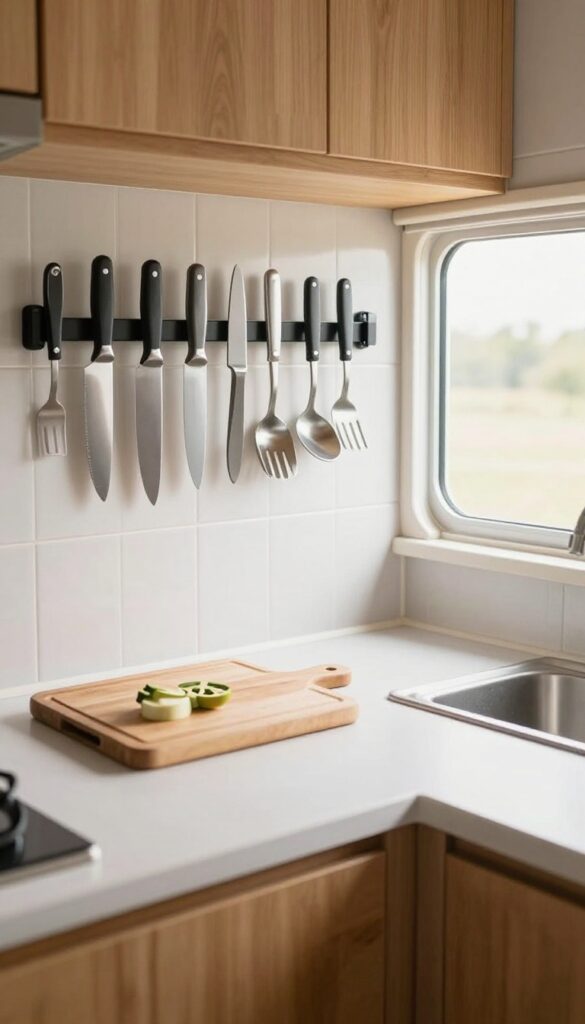
Every inch of counter space counts in a mobile home kitchen. A magnetic knife strip mounts right on the wall or backsplash, holding knives and metal utensils securely while freeing up valuable workspace. It turns everyday tools into a sculptural display that feels both practical and intentional.
Why It Works
By moving knives off the counter, you instantly gain prep space and reduce clutter. The strip keeps blades within easy reach without rummaging through drawers, and the visual line of tools adds a modern, graphic element to the wall.
Best For
Small kitchens where counter space is at a premium, or for anyone who wants to keep knives visible and organized. It also works great in rental kitchens where you can't make permanent changes—just use a strong adhesive strip.
Styling Tip
Choose a slim, matte black or brass strip to complement your hardware. Arrange knives by size for a clean, balanced look, and add a few metal spatulas or tongs to fill gaps. Keep the area around it clear so the strip becomes a subtle focal point.
11. Hang a Pot Rack for Vertical Storage
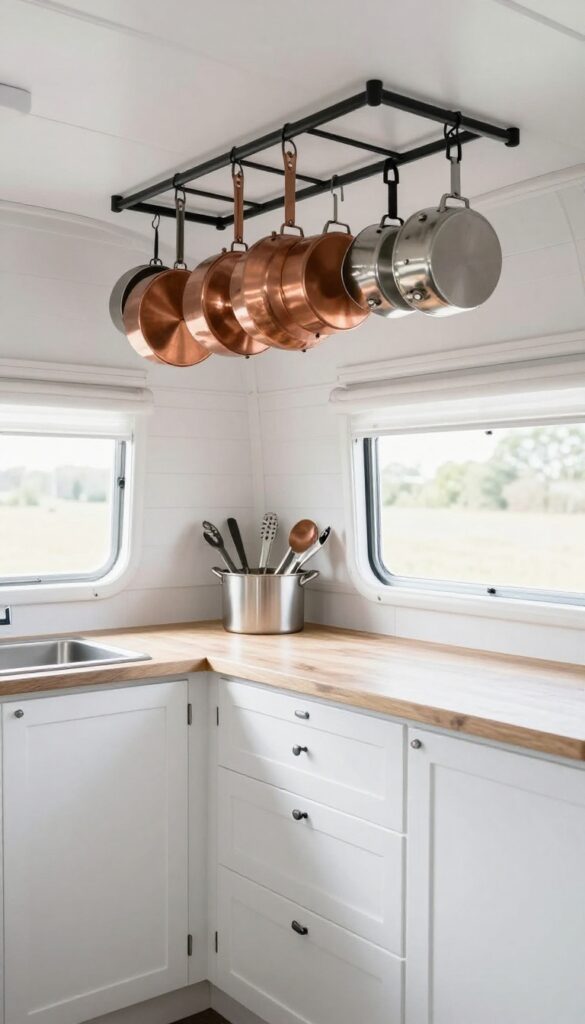
When counter space is tight and cabinets are overflowing, the ceiling becomes prime real estate. A ceiling-mounted pot rack or a sturdy wall-mounted rail keeps your most-used cookware within arm's reach while adding a warm, professional edge to the kitchen. The visual rhythm of hanging pots and pans—especially when grouped by size—creates a cozy, layered look that feels both intentional and lived-in.
Why It Works
It frees up precious cabinet space for dry goods and small appliances while turning everyday tools into decor. The metals and patinas of your cookware add texture and depth, making the kitchen feel more curated without extra effort.
Best For
Mobile homes with low or medium ceilings where every inch of storage counts. It's especially useful if you cook often and want your most-used pots and pans instantly accessible.
Styling Tip
Stick to a unified metal finish—matte black, brass, or stainless steel—for the rack and hooks. Arrange pots by size from largest to smallest, and keep lids stored separately on a wall rail to avoid clutter.
12. Add Greenery with Low-Light Plants
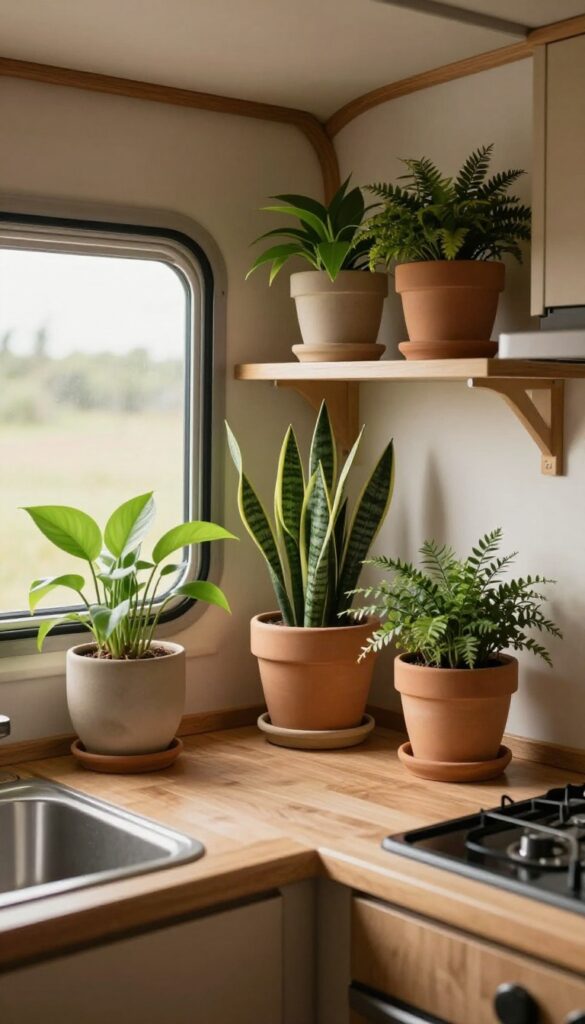
Mobile home kitchens often have limited natural light, especially if they're tucked under a loft or face north. That doesn't mean you have to skip plants entirely. Low-light varieties like pothos, snake plants, and ZZ plants thrive in these conditions and bring a soft, organic feel to the space.
Group a few on open shelves or the windowsill, and their sculptural leaves instantly soften the hard edges of cabinets and appliances.
Why It Works
Plants add life and color without requiring a green thumb or perfect sunlight. They improve air quality and create a calming, layered look that makes a small kitchen feel more like a room you want to linger in. The contrast between glossy leaves and matte cabinets or warm wood adds visual depth without clutter.
Best For
Any mobile home kitchen, but especially those with small windows or north-facing layouts where traditional houseplants struggle. It's also a great fix for kitchens that feel too sterile or lack personality.
Styling Tip
Choose ceramic pots in warm earth tones—terracotta, sage green, or creamy beige—to tie into a cozy, layered aesthetic. Place a trailing pothos on top of a cabinet or a tall snake plant in a corner to draw the eye upward and make the ceiling feel higher.
13. Style the Countertops with Trays and Jars
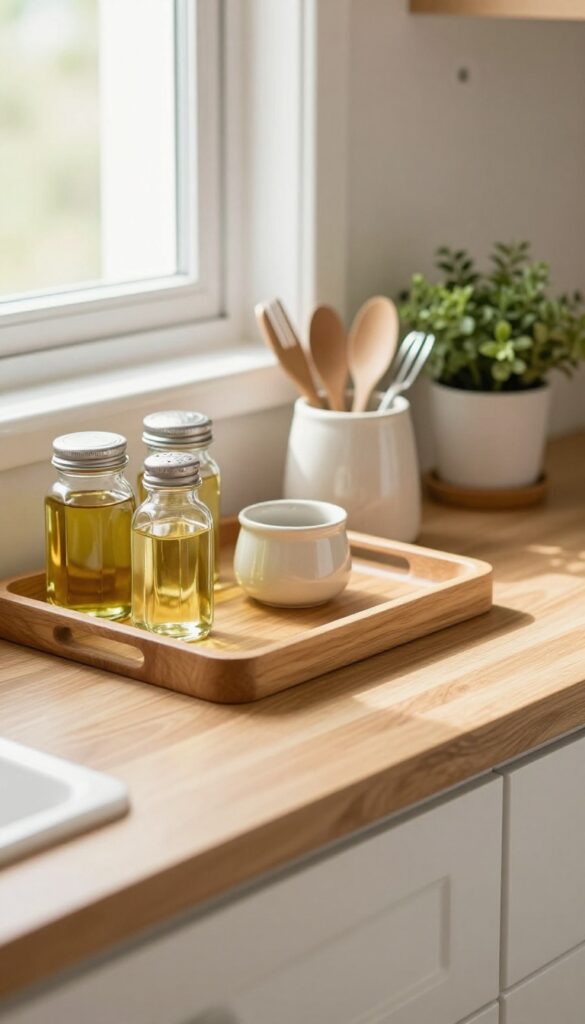
Countertops in a mobile home kitchen often double as prep space, coffee station, and catch-all for daily odds and ends. Instead of fighting the clutter, embrace it with a simple styling trick: group your everyday essentials on a wooden tray. A few jars for oil, salt, and utensils suddenly look intentional rather than messy, and the tray defines a clear zone that feels curated, not chaotic.
Why It Works
Trays create visual boundaries on open countertops, turning scattered items into a cohesive vignette. The layered look adds warmth and texture, especially when you mix wood, ceramic, and glass. It’s an instant upgrade that costs little and takes seconds to rearrange.
Best For
Mobile home kitchens with limited counter space where you need to keep daily-use items accessible but still want a polished look. Perfect for renters who can’t make permanent changes but crave a styled, put-together feel.
Styling Tip
Choose a tray with a slight lip to keep items from sliding, and stick to a neutral palette—natural wood, cream ceramics, and clear glass. Add a small plant or a salt cellar for an extra layer of cozy personality.
FAQ
Can I really change the backsplash in a mobile home kitchen?
Absolutely. Peel-and-stick backsplash tiles are renter-friendly and come in tons of styles. Just clean the wall first, and they'll stay put.
For a permanent option, thin tile or beadboard works great.
What's the best way to add storage without cabinets?
Open shelving, rolling carts, and pegboards are your best friends. They add storage without taking up floor space, and they let you display pretty items like dishes and plants.
How do I make a small mobile home kitchen feel cozy?
Layer textures with rugs, wood accents, and soft lighting. Warm paint colors like cream, sage, or light terracotta also help. Avoid going too dark, as that can make the space feel smaller.
Are there any lighting tips for mobile home kitchens?
Under-cabinet lights make a huge difference. Also consider a small pendant light over a dining area or sink. Stick to warm bulbs (2700K-3000K) for a cozy glow.
Can I paint my mobile home kitchen cabinets?
Yes, but prep is key. Clean, sand, and prime before painting. Use a semi-gloss or satin finish for durability.
Light colors like white, pale blue, or soft gray open up the space.
Conclusion
These 13 ideas show that a mobile home kitchen can be just as inviting and functional as any larger space. The trick is to focus on layers—textures, lighting, and smart storage that work together. Start with one or two changes that feel doable, and build from there.
Your kitchen should make you feel good every time you step into it, no matter the square footage. So go ahead, add that rug, swap those knobs, or hang a plant. Small shifts can make everyday cooking feel a whole lot better.