13 Polished Farmhouse Kitchen Backsplash Ideas That Add Texture and Personality
A kitchen backsplash is one of those details that can quietly transform the whole room. In a farmhouse kitchen, it's the perfect spot to layer in texture and warmth without going overboard. The good news?
You don't need a huge budget to make it happen. Whether you're drawn to classic subway tile or something with a bit more rustic charm, there are plenty of ways to get that polished farmhouse look without spending a fortune. The key is choosing materials and patterns that feel intentional and personal.
We've rounded up 13 ideas that balance style with real-world practicality. Each one brings its own personality, so you can find the backsplash that feels right for your kitchen and your wallet.
1. Beadboard Backsplash for Classic Farmhouse Charm
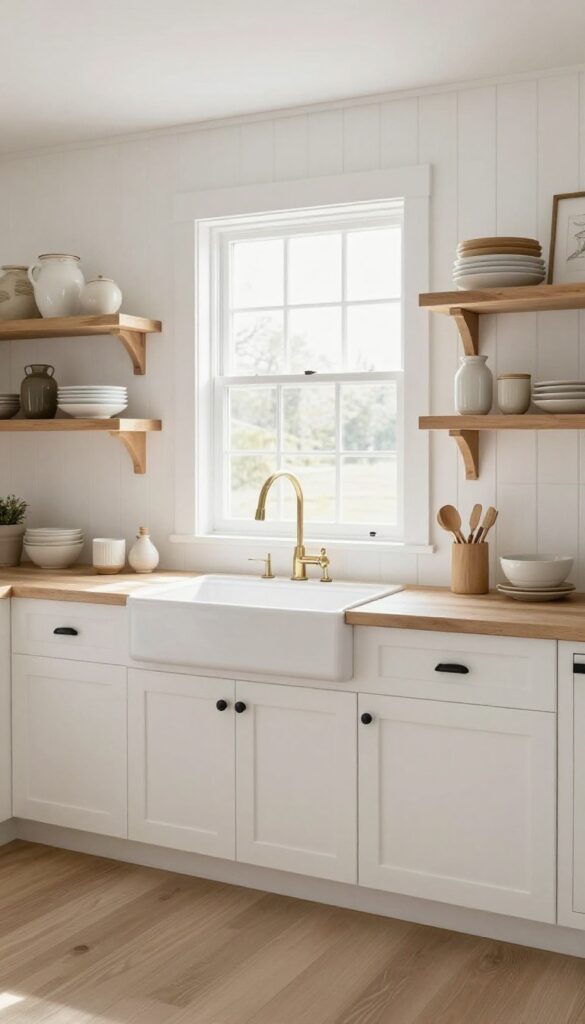
Beadboard brings that cozy cottage feel without breaking the bank. Its vertical grooves add subtle texture and a clean, timeless look that pairs beautifully with farmhouse sinks and open shelving. Painted white or a soft neutral, it brightens the kitchen while keeping the vibe relaxed and inviting.
Why It Works
Beadboard is one of the most budget-friendly backsplash options out there, often costing a fraction of tile. It's also DIY-friendly—you can install it yourself with basic tools and adhesive, then paint it any color you like. The result is a textured, classic backdrop that feels warm and personal.
Best For
This idea is perfect for anyone wanting a quick, affordable kitchen refresh without a major renovation. It works especially well in smaller kitchens or rental spaces where you want to add character without permanent changes. Beadboard also suits homes with a cottage, farmhouse, or country style.
Styling Tip
For a polished look, use a semi-gloss or satin paint finish that's easy to wipe clean. Pair the beadboard with simple white shaker cabinets and black hardware for contrast. Add open wood shelves with a few ceramic pieces to keep the space feeling light and layered.
2. Herringbone Subway Tile with a Twist
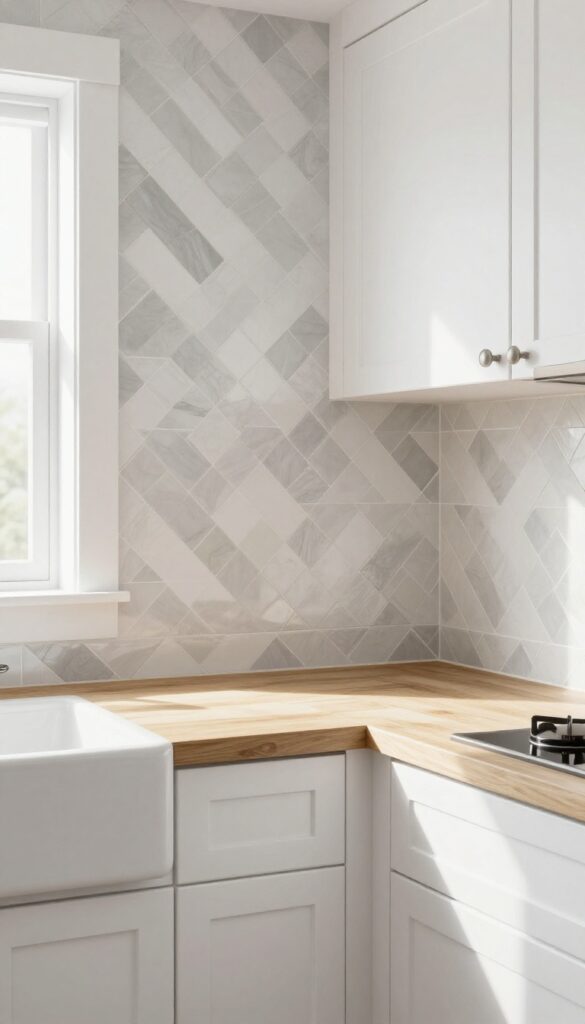
Subway tile is a classic for a reason, but laying it in a herringbone pattern instantly elevates the look. The angled lines create a sense of movement and texture that catches the eye, making your kitchen feel more dynamic. Best of all, this upgrade doesn't cost more than standard subway tile installation—just a different layout that packs a stylish punch.
It's a smart way to add personality without blowing your budget.
Why It Works
The herringbone pattern adds visual interest and a custom feel to your kitchen without expensive materials. The simple shift in layout transforms a basic tile into a design feature, proving that sometimes the most impactful changes come from how you arrange things, not what you spend.
Best For
This works well in kitchens that need a focal point without going overboard. It's ideal for galley kitchens, small spaces, or any layout where you want to draw the eye upward and make the ceiling feel higher. The pattern also complements both modern and traditional cabinetry.
Styling Tip
Keep the rest of the kitchen simple to let the backsplash shine. Pair it with white or light gray grout for a seamless look, or go bold with a contrasting grout color to emphasize the pattern. Stick to neutral cabinets and countertops to avoid competing with the tile.
3. Reclaimed Wood Planks for Rustic Warmth
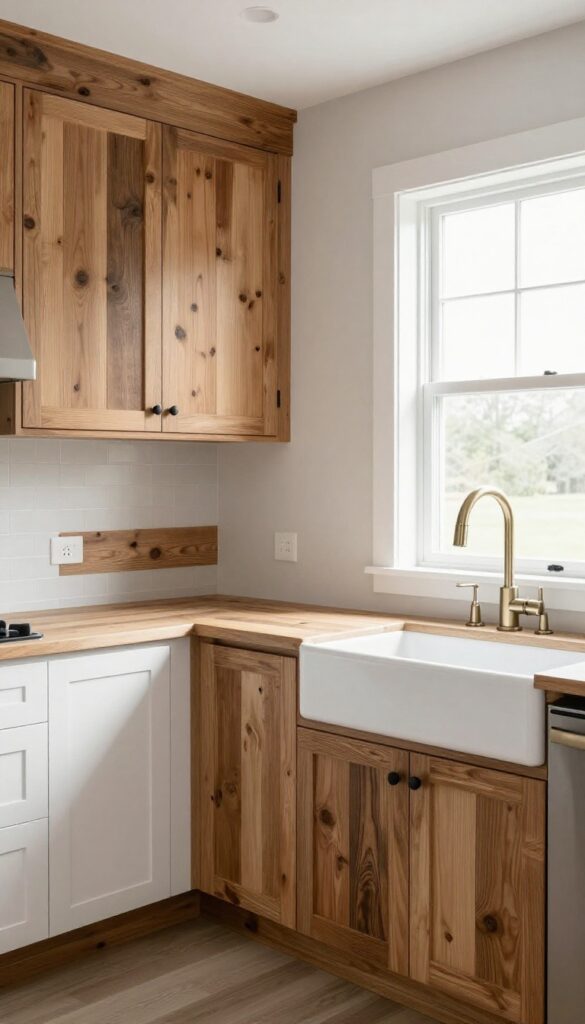
Wood brings a kind of warmth that tile just can't replicate. Reclaimed planks—whether salvaged from old barns or convincingly faux—add natural texture and a story to your kitchen. The grain, knots, and weathered patina make each plank unique, so your backsplash feels like a one-of-a-kind feature rather than something off a shelf.
Why It Works
Wood softens the hard surfaces in a kitchen—countertops, appliances, cabinets—and creates a cozy, lived-in vibe. It's also surprisingly budget-friendly if you source salvaged wood or use reclaimed-look panels, which mimic the real thing at a fraction of the cost.
Best For
This look shines in farmhouse, rustic, or cottage-style kitchens, especially those with neutral or warm-toned cabinets. It also works well in open-concept spaces where you want the kitchen to feel connected to a living area with wood accents.
Styling Tip
Seal the wood with a food-safe, waterproof polyurethane or marine-grade varnish to protect against splashes and grease. For a more polished finish, choose narrower planks (2–3 inches wide) laid horizontally; wider boards (6+ inches) feel more rustic and casual.
4. White Shiplap with a Dark Grout Contrast
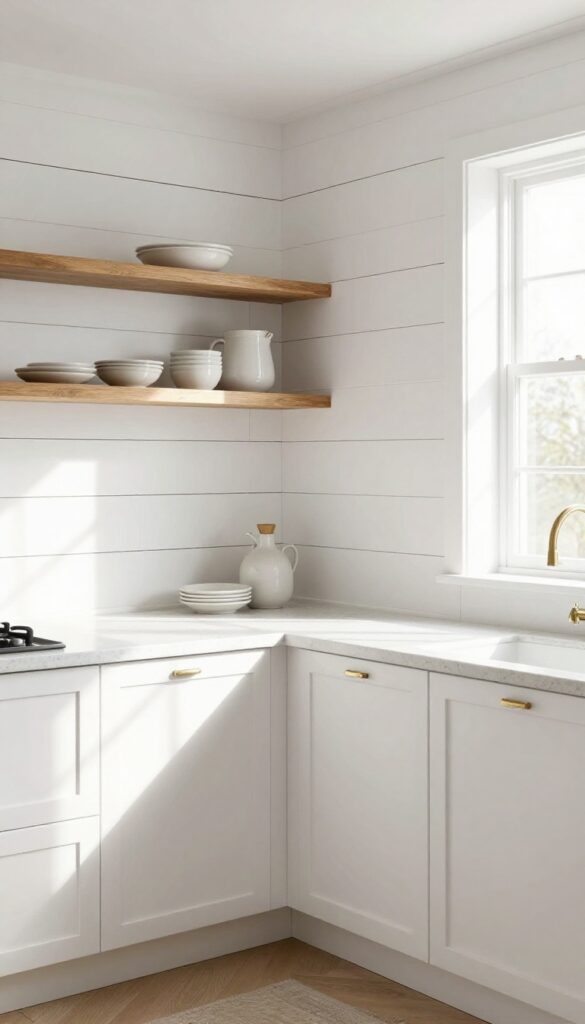
Shiplap never goes out of style in farmhouse kitchens, but a simple swap—dark grout instead of white—completely transforms the look. The deep lines between each board create a crisp, graphic effect that feels both classic and current. It’s an easy way to add visual weight without spending extra on materials.
Why It Works
Dark grout emphasizes the horizontal rhythm of shiplap, making the wall feel more structured and intentional. The contrast also hides dirt and staining better than light grout, which is a practical win for busy kitchens.
Best For
This treatment shines in kitchens with plenty of natural light or white cabinets, where the dark lines won’t overwhelm the space. It’s also great for renters who can install shiplap over existing tile as a temporary upgrade.
Styling Tip
Keep the rest of the backsplash simple—let the grout lines do the talking. Pair with open shelving in a warm wood tone and avoid busy countertops to maintain the clean, graphic look.
5. Zellige-Inspired Tile for Handcrafted Texture
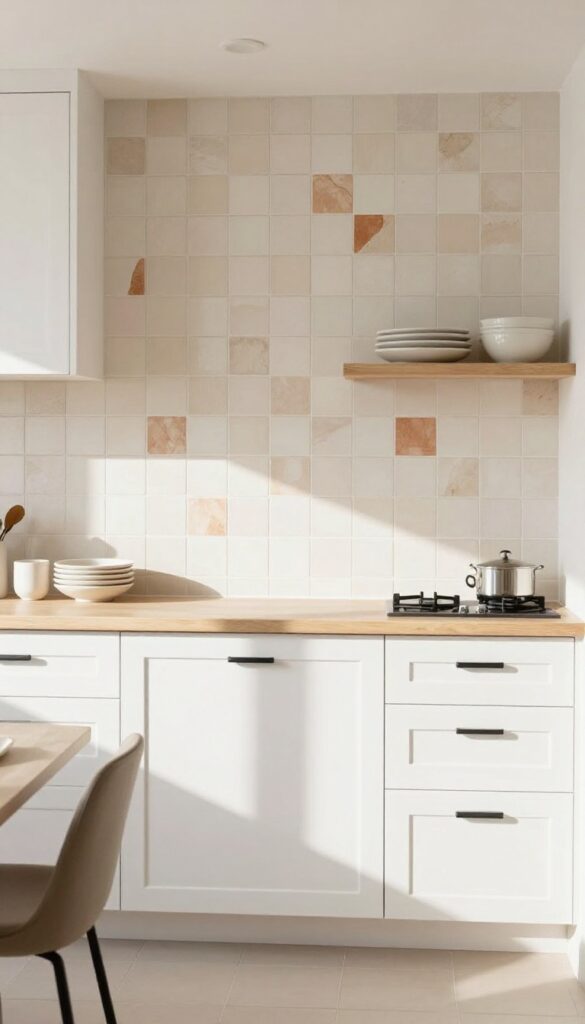
Zellige tiles bring that handcrafted look without the handcrafted price. Their irregular surfaces and subtle color variations mimic the charm of handmade ceramics, adding depth and a touch of artisan character to your kitchen. The result is a backsplash that feels rich and personal, even on a budget.
Why It Works
The slight imperfections in zellige tiles catch light differently, creating a dynamic surface that changes throughout the day. This visual interest makes the backsplash a focal point without being loud, and the neutral palette blends easily with most cabinet colors and countertops.
Best For
This idea shines in kitchens that need warmth and texture but can't swing custom tile work. It's perfect for rental updates or DIY renovations where you want maximum impact with minimal expense.
Styling Tip
Pair zellige tiles with simple white or shaker cabinets to let the texture stand out. Add open shelving with a few ceramic dishes to echo the handmade feel, and keep hardware matte black or brushed brass for a polished finish.
6. Brick Veneer for Industrial Farmhouse Flair
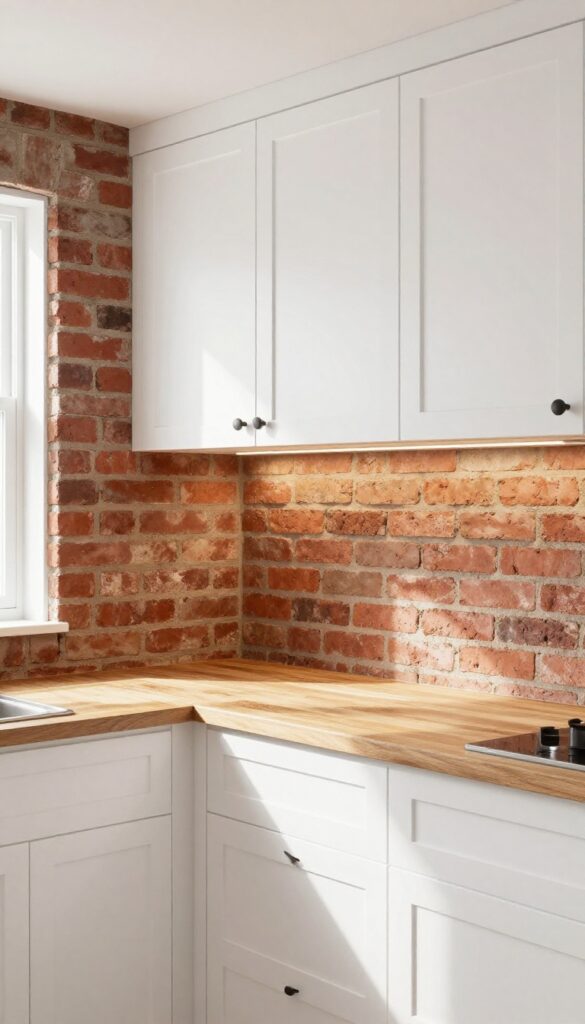
Thin brick veneer gives you the rugged look of exposed brick without the structural headaches or the price tag. It’s a smart way to add warmth and texture to a farmhouse kitchen, especially when you pair it with crisp white cabinets and butcher block countertops. The contrast between the rough brick and smooth surfaces creates that perfect balance of industrial edge and cozy charm.
Why It Works
Brick veneer is lightweight and easy to install over existing drywall, making it a budget-friendly alternative to real brick. It instantly adds character and a handcrafted feel, which is exactly what polished farmhouse kitchens need to avoid looking too pristine or generic.
Best For
This backsplash shines in kitchens that lean industrial farmhouse or modern rustic. It works especially well in open-concept spaces where the brick can tie into exposed beams or concrete floors, creating a cohesive look without overwhelming the room.
Styling Tip
Keep the brick in its natural red or whitewashed finish, and seal it for easy cleaning. Use warm LED under-cabinet lighting to highlight the texture, and skip upper cabinets on one wall to let the brick become the focal point.
7. Geometric Cement Tiles for Pattern Play
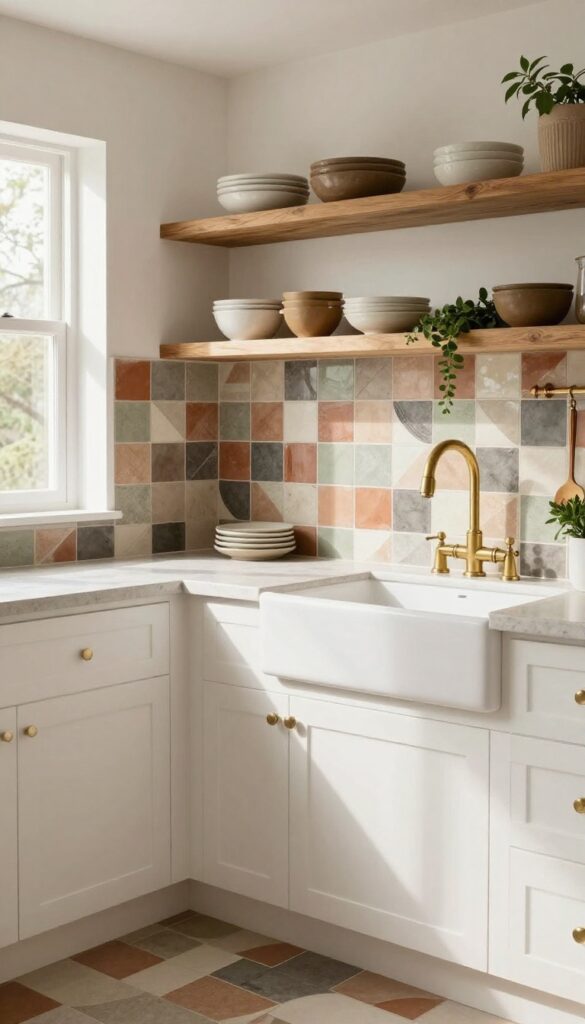
Cement tiles are having a well-deserved moment in kitchens, and for good reason. They bring an artisan feel without the custom price tag, especially when you use them sparingly as a statement backsplash. The earthy color palettes—think terracotta, sage, charcoal, and cream—fit right into a polished farmhouse aesthetic, while the geometric patterns add visual interest without overwhelming the space.
Why It Works
Cement tiles are durable, heat-resistant, and naturally matte, so they hide splatters and fingerprints better than glossy options. Their handcrafted look adds texture and personality, making the kitchen feel curated rather than cookie-cutter. Plus, because they're budget-friendly per square foot, you can splurge on a bold pattern without breaking the bank.
Best For
This idea shines in kitchens with simple cabinetry and neutral countertops, where the backsplash can be the star. It's especially great for renters or homeowners who want a high-impact change without a full renovation—just tile behind the stove or a small section of wall.
Styling Tip
Pair geometric cement tiles with warm wood open shelving and brushed brass fixtures to keep the look grounded. Stick to a two-tone pattern (like black and white or rust and cream) for a cohesive feel. If your kitchen is small, use the tiles only behind the range to create a focal point without overwhelming the room.
8. Open Shelving with a Tiled Backsplash Behind
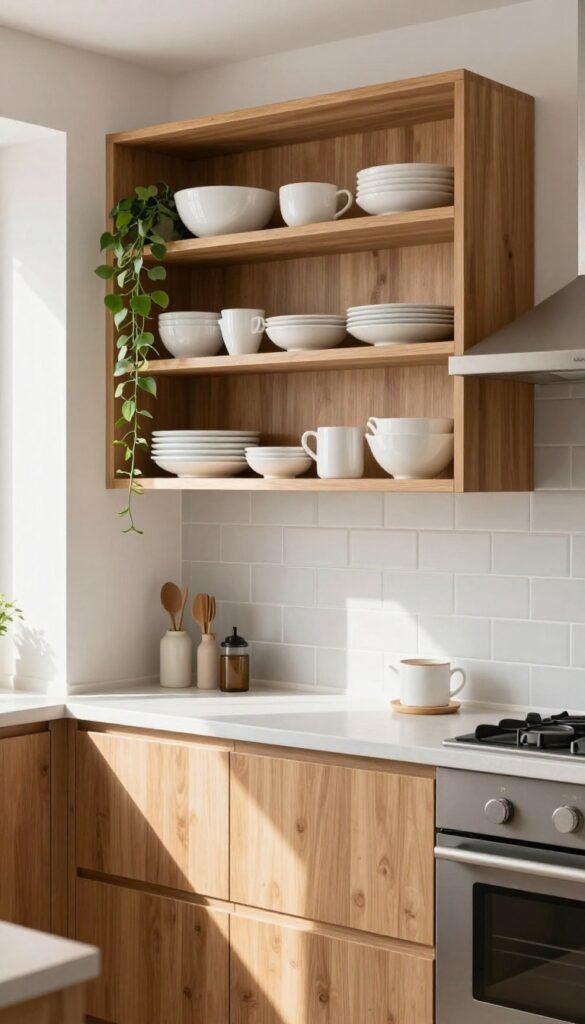
Open shelving keeps your everyday dishes and glassware within easy reach while adding a lived-in, collected look. When you pair it with a simple tiled backsplash in a complementary color, the shelves break up the tile pattern and create visual interest without overwhelming the space. This combo is especially budget-friendly because you can use affordable subway or square tiles and install floating shelves yourself.
Why It Works
The backsplash provides a durable, easy-to-clean surface behind the stove or sink, while the open shelving adds storage and display space. Together, they create a layered look that feels custom and polished without requiring expensive materials.
Best For
This setup works well in galley kitchens or smaller spaces where you want to maximize storage without closing off the room. It's also great for renters who can install removable shelves over an existing tile backsplash.
Styling Tip
Stick to a neutral tile like white subway or soft gray, then choose shelves in a warm wood tone for contrast. Style the shelves with a mix of everyday ceramics, a few cookbooks, and a trailing plant to keep the look practical and inviting.
9. Vertical Stacked Stone for Organic Texture
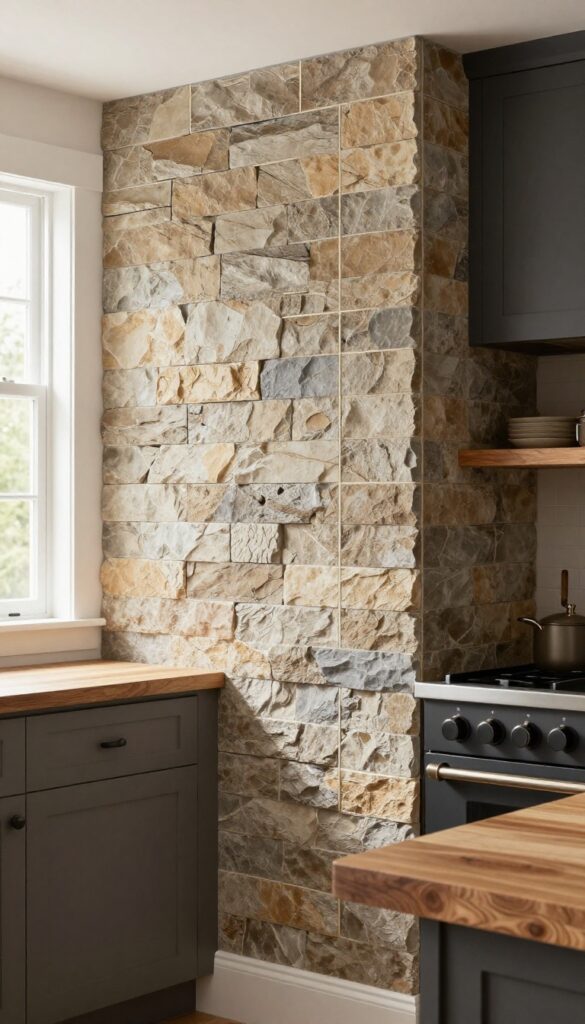
Stacked stone veneer arranged vertically adds a rugged, organic feel that instantly warms up a farmhouse kitchen. The linear pattern draws the eye upward, making ceilings feel taller and the space more open. Best of all, it's a budget-friendly alternative to natural stone that still delivers that earthy, grounded look.
Why It Works
Vertical stacking creates a sense of height and movement without being busy. The irregular edges and natural color variations of the stone add depth and texture, making the backsplash a focal point that feels both rustic and refined.
Best For
This look shines in farmhouse kitchens with neutral cabinets and butcher-block or wood countertops. It's especially effective on a single wall behind a range or sink, where the texture can stand out without overwhelming the room.
Styling Tip
Keep grout lines thin and tone-on-tone to let the stone take center stage. Pair with simple open shelving and matte black or oil-rubbed bronze fixtures for a cohesive, practical finish that won't compete with the backsplash.
10. Checkerboard Marble Look for Vintage Appeal
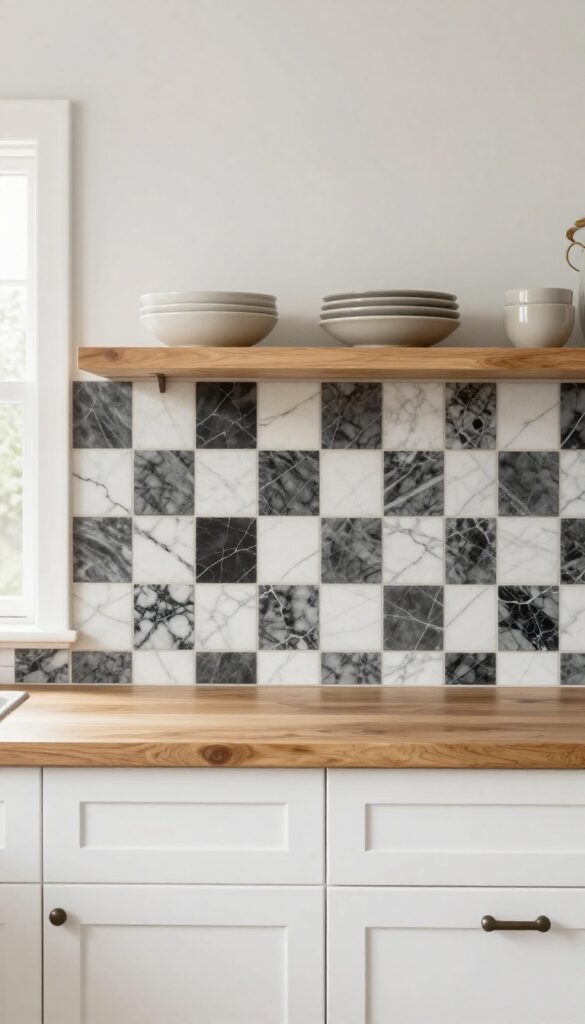
A checkerboard pattern in marble-look tile (or even vinyl) brings a nostalgic diner feel that blends surprisingly well with farmhouse style. The contrast of black and white or soft gray keeps the look classic while adding visual rhythm to the kitchen. It’s an easy way to introduce pattern without going overboard, especially when you stick to a neutral palette.
Why It Works
The marble-look finish softens the high-contrast checkerboard, so it feels more sophisticated than retro. It’s also budget-friendly because you can use peel-and-stick vinyl or affordable ceramic tile to achieve the look. The pattern naturally hides minor spills and splatters, which is a practical bonus in a busy kitchen.
Best For
This backsplash works well in kitchens with white or light gray cabinetry, where the checkerboard can stand out without competing. It’s also great for small kitchens because the pattern adds depth and makes the space feel larger. If you have an island or breakfast bar, carrying the checkerboard up the wall creates a cohesive focal point.
Styling Tip
Balance the bold pattern with solid countertops—a warm wood butcher block or a simple white quartz keeps the look grounded. Add open shelving with a few ceramic dishes in neutral tones to tie the vintage vibe together. Avoid busy countertop patterns that might clash with the checkerboard.
11. Tin Ceiling Tiles as a Unique Backsplash
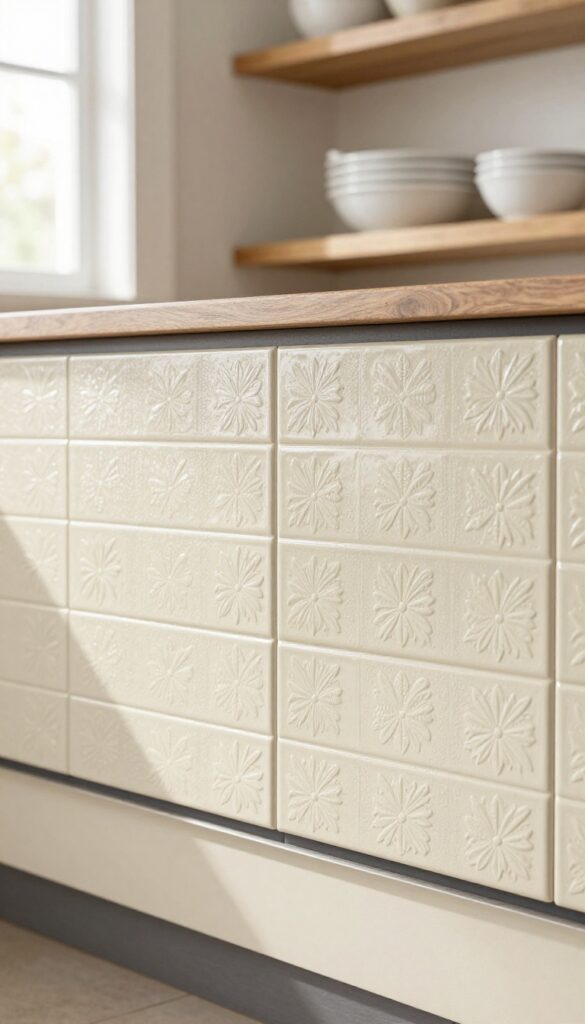
Pressed tin tiles have a vintage charm that instantly adds character to any space. While they're traditionally found on ceilings, installing them as a backsplash is a clever way to bring texture and a hint of old-world elegance to your kitchen. Best of all, these tiles are lightweight, easy to cut, and surprisingly affordable—making them a budget-friendly choice for a high-impact upgrade.
Why It Works
The embossed patterns catch the light and create subtle shadows, giving your backsplash depth without overwhelming the room. Tin tiles are also durable and easy to clean with a damp cloth, so they hold up well behind a stove or sink. Plus, their metallic finish pairs beautifully with both rustic farmhouse elements and modern fixtures.
Best For
This idea is perfect for homeowners who want an antique, textured look without the cost of real metal or tile. It works especially well in smaller kitchens or galley layouts where the reflective surface can help bounce light around and make the space feel larger. If you love vintage details but need a practical, wallet-friendly solution, tin tiles are a solid choice.
Styling Tip
For a cohesive farmhouse feel, choose tiles with a classic floral or geometric pattern and paint them a soft matte white or cream. Install a simple wood or black metal trim around the edges to define the backsplash area. Keep the grout lines thin and dark to emphasize the pattern, and pair with open shelving and butcher block counters for a relaxed, lived-in vibe.
12. Painted Brick or Stone for a Custom Feel
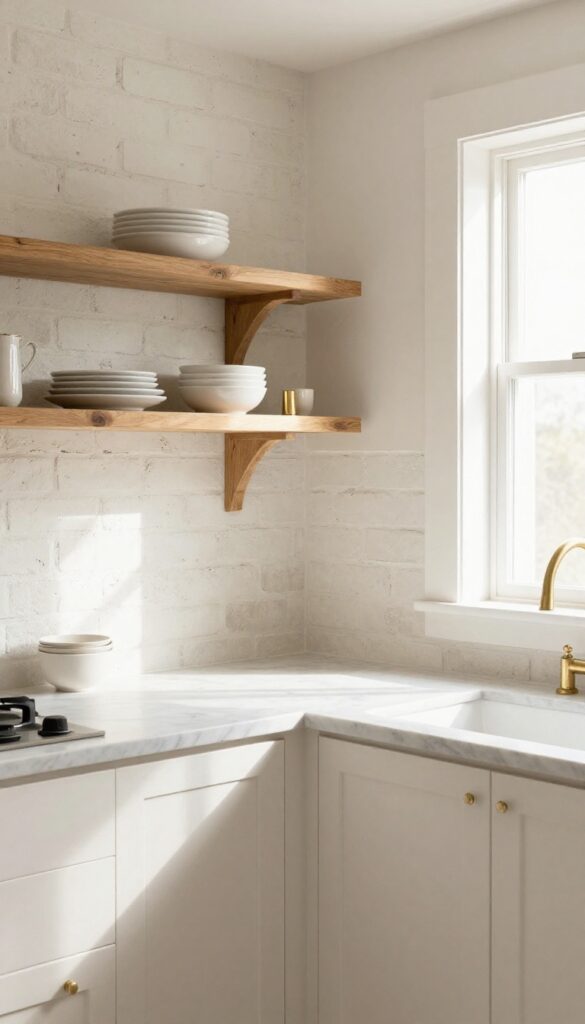
Already have brick or stone in your kitchen? A simple coat of white or cream paint can transform it into a polished, custom-looking backsplash without the cost of a full renovation. The paint softens the rough texture while letting the natural character of the material shine through—so you get that rustic-meets-modern vibe that feels intentional, not accidental.
It’s one of the most budget-friendly ways to update your kitchen, and you can do it in a weekend.
Why It Works
Painting existing brick or stone instantly refreshes the surface, making it feel cleaner and more cohesive with the rest of your kitchen. The light color brightens the space and helps the texture read as subtle detail rather than heavy wall. It’s a low-cost, high-impact change that works with almost any style.
Best For
This idea is perfect for older homes or rentals where you can’t remove the brick or stone, but you want to tone it down. It also works well in kitchens with dark cabinets or limited natural light, because the painted surface reflects light and keeps the room from feeling too heavy.
Styling Tip
Choose a matte or satin finish paint in a warm white or soft cream to keep the look natural. Use a stiff brush to work paint into the crevices, then roll the flatter areas for a smooth finish. Pair with natural wood open shelving and brass accents for a cozy, collected feel.
13. Simple Subway Tile with a Colored Grout
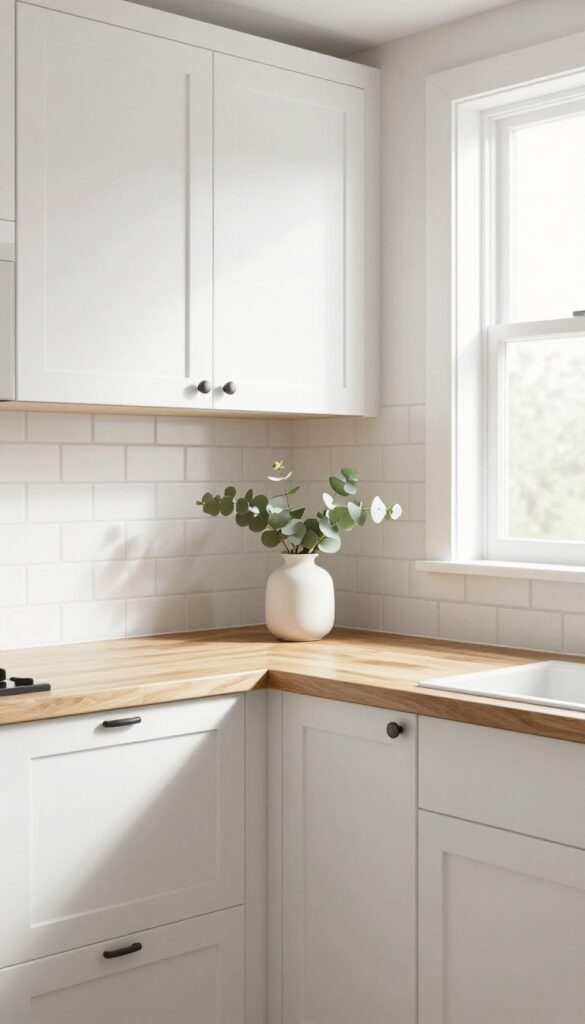
White subway tile is a classic for a reason—it's clean, timeless, and works with almost any style. But if you want to add a little personality without blowing your budget, colored grout is the trick. A warm gray, soft blue, or muted green grout can transform that basic tile into something that feels intentional and custom.
It's a small change that makes a big visual impact, especially in a farmhouse kitchen where you want both charm and practicality.
Why It Works
Colored grout adds contrast and definition to the tile pattern, making the backsplash feel more dynamic. It's also incredibly budget-friendly because you're using the same affordable subway tile, just with a grout color that ties into your overall palette. The result is a polished, designer look without the designer price tag.
Best For
This idea is perfect for anyone who wants a classic farmhouse look but with a subtle twist. It works well in kitchens with white or light-colored cabinets, where the grout color can become a focal point. It's also great for rental kitchens or DIY projects because it's simple to execute and easy to update later.
Styling Tip
Choose a grout color that complements your countertops or cabinet hardware. For example, a warm gray grout pairs beautifully with butcher block counters, while a soft blue grout can echo a vintage rug or painted island. Test the grout color on a small area first to see how it looks in different lighting.
FAQ
What is the most budget-friendly farmhouse backsplash option?
Beadboard and painted shiplap are among the most affordable options. Both can be installed as DIY projects and cost significantly less than tile while still delivering classic farmhouse texture.
Can I install a farmhouse backsplash myself?
Absolutely. Many materials like beadboard, shiplap, and peel-and-stick tile are DIY-friendly. For tile, basic skills and the right tools can get the job done, but consider hiring a pro for complex patterns.
How do I choose a backsplash that adds texture without overwhelming the kitchen?
Stick to one textured element as a focal point, like behind the stove. Keep the rest of the kitchen neutral and let the backsplash be the star. Small-scale patterns or subtle materials like zellige work well.
What colors work best for a polished farmhouse backsplash?
White, cream, soft gray, and warm beige are classic choices. For a bolder look, consider muted blues, greens, or earthy terracotta. Dark grout can add contrast without changing the tile color.
How do I make a small kitchen feel larger with a backsplash?
Use light-colored tiles in a vertical pattern or large-format tiles to reduce grout lines. Reflective materials like glossy subway tile or metallic accents can also bounce light and open up the space.
Conclusion
A farmhouse kitchen backsplash doesn't have to be complicated or expensive to make a big impact. With the right material and a little creativity, you can add texture and personality that feels both polished and personal.
Whether you go for classic beadboard or a playful herringbone pattern, the best backsplash is one that makes you smile every time you walk into the kitchen. Start small, stay true to your style, and enjoy the process of making your space feel like home.