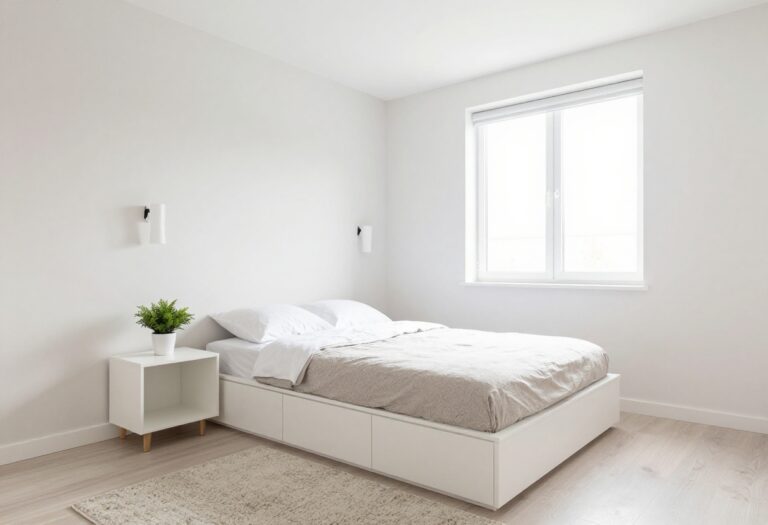
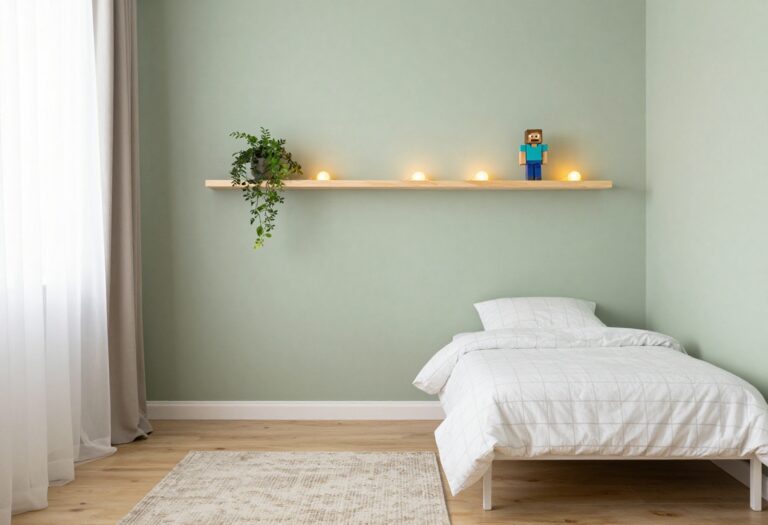
11 Small Spare Bedroom Ideas That Layer in Cozy, Practical Style
That extra bedroom doesn’t have to sit half-empty, collecting odds and ends. With a little thought, it can become one of the coziest spots in your home.
The trick is layering in warmth and personality without overwhelming the square footage. These 11 ideas focus on practical, stylish touches that make a small spare bedroom feel intentional and inviting.
Whether you’re hosting guests or carving out a quiet corner for yourself, each suggestion keeps comfort and function front and center.
1. Start with a Layered Bed Base
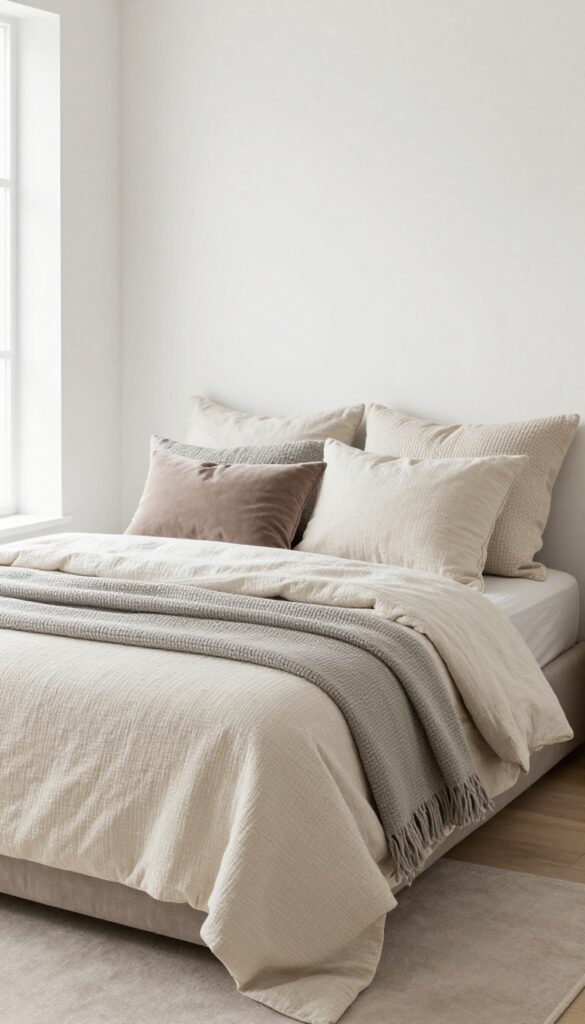
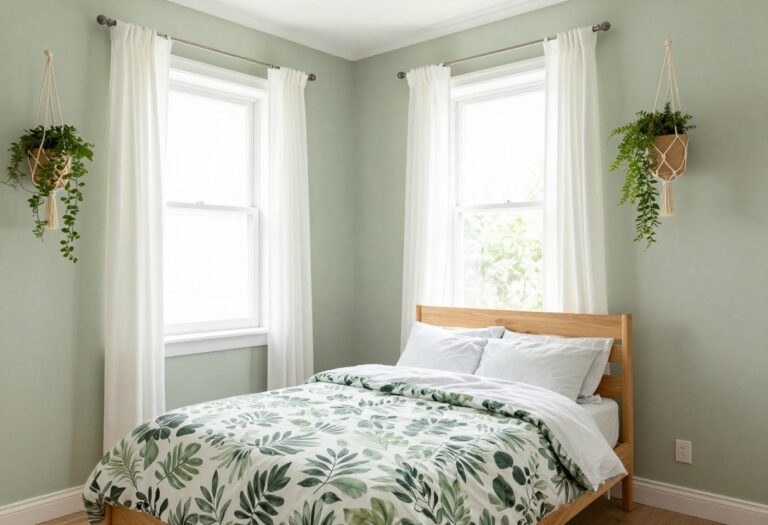
A small spare bedroom often feels unfinished because the bed looks flat and one-dimensional. The quickest fix is to build layers directly on the mattress—no headboard or extra furniture required. Start with a quilt or coverlet in a neutral tone, add a textured blanket folded at the foot, and finish with two or three throw pillows in complementary fabrics like linen, velvet, or chunky knit.
This approach instantly gives the room a finished, hotel-like feel without taking up any floor space.
Why It Works
Layering adds visual depth and warmth to a compact room. The varied textures create interest that draws the eye, making the bed the focal point. Since you’re working with items you may already own, it’s an affordable way to transform the space in minutes.
Best For
This idea works beautifully in any small spare bedroom, especially one that doubles as a guest room or home office. It’s also ideal for rental spaces where you can’t change wall colors or add permanent fixtures.
Styling Tip
Stick to a cohesive color palette of two to three tones—like cream, taupe, and soft gray—to keep the look calm and intentional. Mix one smooth texture (cotton quilt) with one chunky texture (knitted throw) and one soft texture (velvet pillow) for maximum impact.
2. Add a Slim Console Desk for Dual Duty
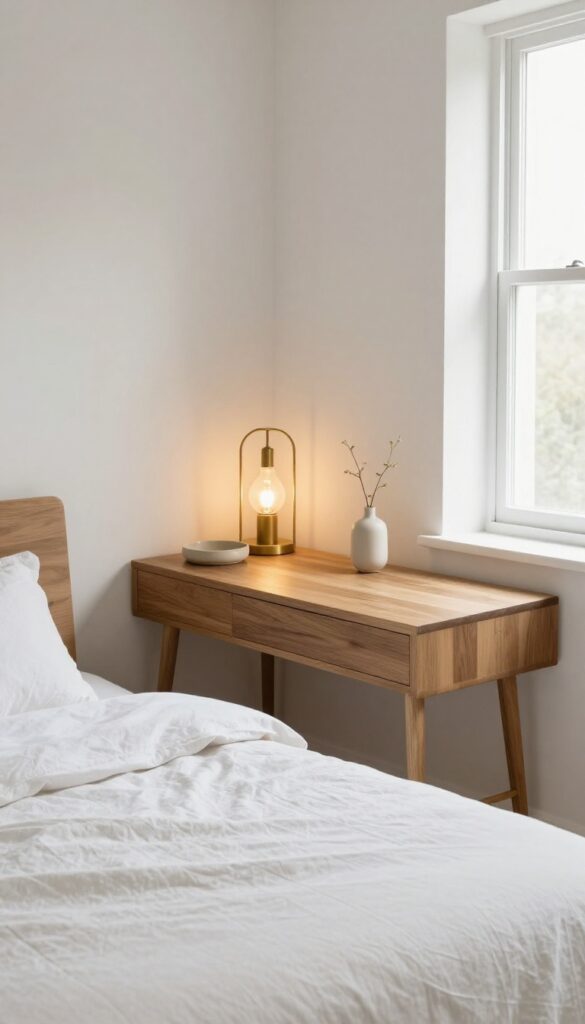
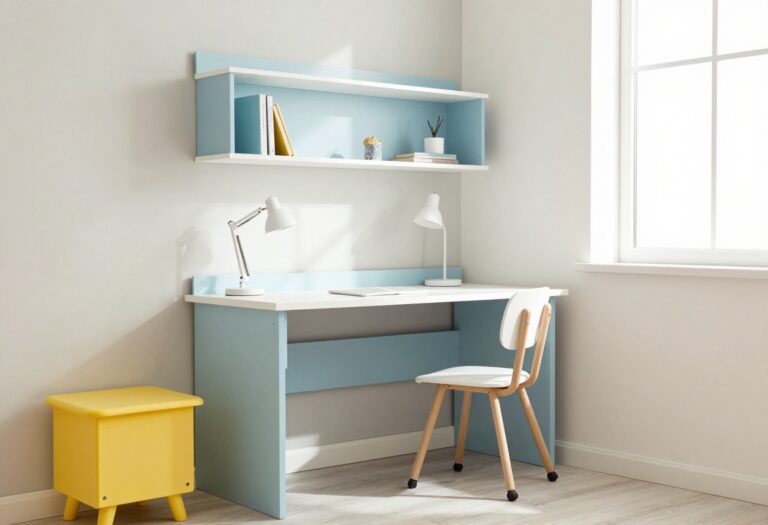
A spare bedroom that pulls double duty doesn’t have to feel cramped or chaotic. By tucking a narrow console desk against one wall, you instantly create a spot for morning emails or late-night journaling—without stealing floor space from the bed. The key is choosing a piece that’s slim enough to leave room for movement but sturdy enough to hold a lamp and a small tray.
When guests come to stay, the desk clears off in minutes, becoming a landing pad for their suitcase or a spot for a glass of water.
Why It Works
A console desk is shallow by design, so it doesn’t jut into the walking path. That makes it perfect for tight quarters where a full desk would feel overwhelming. It gives the room a clear purpose beyond sleeping, which helps the space feel intentional rather than leftover.
Best For
This idea works especially well in spare bedrooms that also serve as a home office, craft nook, or guest room. It’s also great for rooms where you need a dedicated surface for a laptop or paperwork but don’t want to commit to a bulky desk.
Styling Tip
Keep the look layered but uncluttered. Add a small table lamp with a warm bulb, a ceramic tray for keys and pens, and maybe a slim vase with a single stem. Stick to a neutral palette—like soft white, warm wood, and brushed brass—so the desk blends in rather than shouting for attention.
3. Use Floor-to-Ceiling Curtains for Softness
Curtains that kiss the floor and stretch from ceiling to floor do more than just dress a window—they transform the whole room. In a small spare bedroom, this trick adds vertical drama and a sense of height that makes the space feel bigger. The soft folds of fabric also bring a cozy, layered texture that instantly warms up the room, making it feel less like a leftover space and more like a intentional retreat.
Why It Works
Hanging curtains high and wide tricks the eye into seeing a larger window and taller walls. The extra fabric softens hard edges and absorbs sound, which makes the room feel quieter and more intimate. Plus, the gentle draping adds a touch of elegance without requiring expensive furniture or renovations.
Best For
This idea works especially well in rooms with small or oddly placed windows, where traditional blinds or shades might feel inadequate. It’s also great for rental spaces where you can’t change the window size but want to create a more polished, finished look.
Styling Tip
Choose a fabric with subtle texture, like a linen-cotton blend or a soft velvet, to add warmth without overwhelming the room. Go for a neutral tone with a faint pattern—like a soft stripe or a delicate geometric—to keep it interesting but calm. Mount the rod as close to the ceiling as possible and extend it past the window frame by at least 6 inches on each side for maximum effect.
4. Incorporate a Cozy Reading Nook
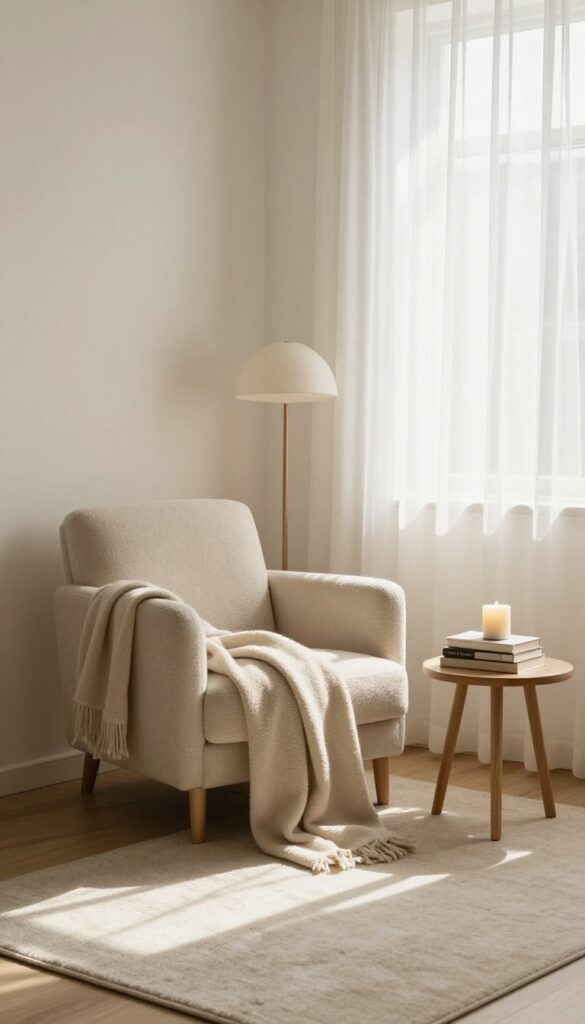
Turning a corner of your spare bedroom into a reading nook instantly gives the space a clear purpose beyond just sleeping. A small armchair or even a plush floor cushion paired with a slim side table and a warm reading lamp creates an inviting spot that feels both intentional and personal. This setup makes the room feel layered and lived-in, not like an afterthought.
Why It Works
A reading nook transforms an underused room into a functional retreat. It adds visual interest and coziness without requiring much square footage, making the bedroom feel complete and welcoming.
Best For
Spare bedrooms that double as a quiet getaway, a home library, or a guest room where visitors can unwind with a book before bed.
Styling Tip
Choose a chair with texture—like bouclé or velvet—to add warmth. Keep the side table small and top it with a stack of books and a candle. A floor lamp with a soft glow completes the cozy vibe.
5. Layer Rugs for Texture and Warmth
Rugs do more than just cover the floor—they anchor the room and add a layer of softness that makes a small bedroom instantly cozier. By layering a larger neutral rug underneath the bed with a smaller patterned rug at the foot or beside it, you create visual depth and a luxurious feel underfoot. This trick works especially well in compact spaces because it defines zones without needing walls or furniture.
Why It Works
Layering rugs adds texture and warmth without taking up any square footage. The contrast between a solid base and a patterned top rug draws the eye and makes the floor feel intentional rather than an afterthought. It also softens hard flooring, which is common in small bedrooms, and makes the space feel more inviting.
Best For
This idea is perfect for small bedrooms with hardwood, tile, or laminate floors that need warmth. It’s also great for renters who can’t change the flooring but want to add personality and comfort. If you have a neutral color palette, a layered rug setup can introduce pattern without overwhelming the room.
Styling Tip
Stick with a low-pile or flatweave rug for the base layer so the top rug lies flat and doesn’t create a tripping hazard. Choose a top rug that contrasts in color or pattern—like a geometric or floral design—and place it at a 45-degree angle for a relaxed, modern look. Make sure both rugs are large enough that the front legs of the bed rest on the base rug for a cohesive feel.
6. Install Floating Shelves for Display and Storage
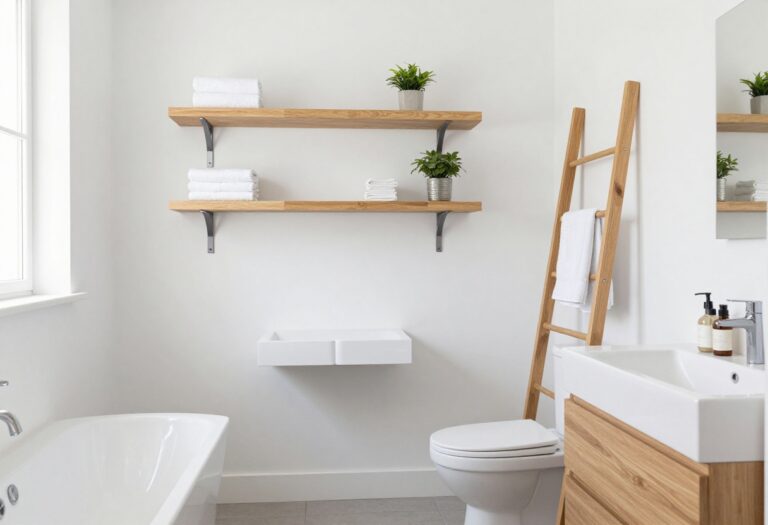
When floor space is tight, the walls become your best storage asset. Floating shelves above the bed or a small desk keep essentials within reach while maintaining that airy, uncluttered feel. They’re perfect for stacking a few favorite books, trailing plants, or small ceramic pieces that add personality without crowding the room.
Keeping the shelf color light—like a warm white or soft wood tone—helps the whole setup feel intentional and visually calm.
Why It Works
Floating shelves use vertical real estate that often goes wasted, so you gain storage without sacrificing precious floor area. They also draw the eye upward, making the ceiling feel higher and the room more spacious. By sticking to a cohesive palette of neutrals or muted tones, you avoid visual chaos and create a tidy, layered look that feels both practical and stylish.
Best For
This idea shines in any small spare bedroom, especially those with limited floor space for a nightstand or dresser. It’s also great for rooms that double as a home office or reading nook, where you need quick access to books, a lamp, or small decor items without clutter.
Styling Tip
Mix closed storage baskets on one shelf with open displays on another to balance function and beauty. Use a narrow shelf depth—around 6 to 8 inches—so items don’t protrude too far. Group decor in odd numbers and vary heights by stacking a few books under a small plant or candle for visual rhythm.
7. Choose a Multifunctional Ottoman
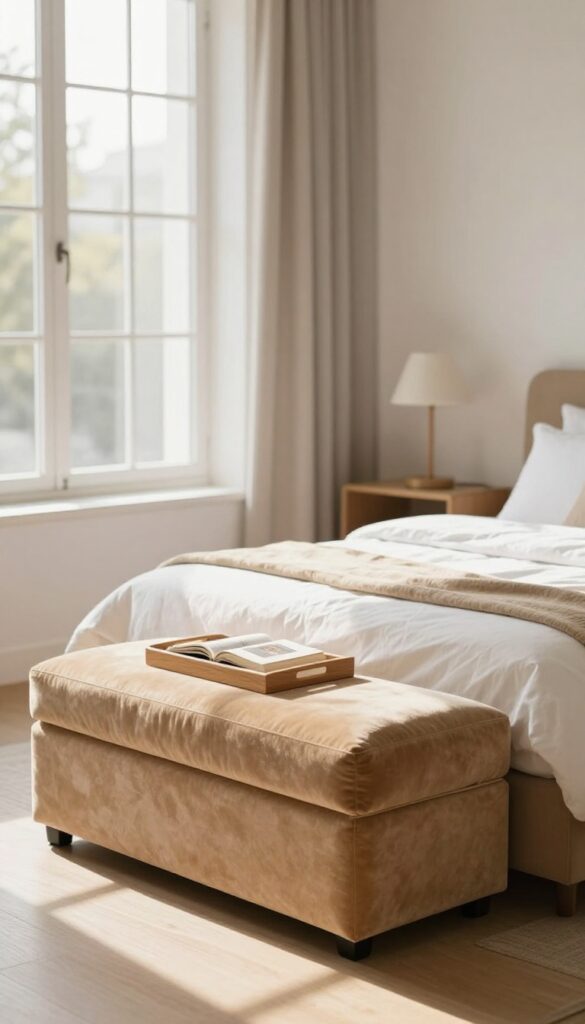
A small spare bedroom often ends up with an awkward empty space at the foot of the bed. Instead of leaving it bare, drop in a storage ottoman that pulls triple duty. It gives you a spot to sit while putting on shoes, a surface for a breakfast tray or a stack of books, and a hidden compartment for extra blankets or pillows.
The layered look of a plush ottoman in a warm neutral or soft velvet instantly makes the room feel more inviting.
Why It Works
In a room where every square inch counts, a single piece of furniture that serves as seating, a table, and storage is a game changer. It eliminates clutter by hiding linens you’d otherwise stash in a closet, and the soft upholstery adds texture that makes the space feel cozy rather than sparse.
Best For
This idea is perfect for spare bedrooms that double as a home office, craft room, or guest space. It’s also great for rooms with limited closet space where you need extra storage for bedding or off-season clothing.
Styling Tip
Choose an ottoman in a fabric that complements your bedding—think a chunky knit, linen, or velvet in a tone like oatmeal, slate, or dusty rose. Top it with a wooden tray to create a stable surface for a lamp, a book, or a cup of tea. Add a small throw pillow on top when you want extra seating.
8. Add a Gallery Wall with Personal Touches
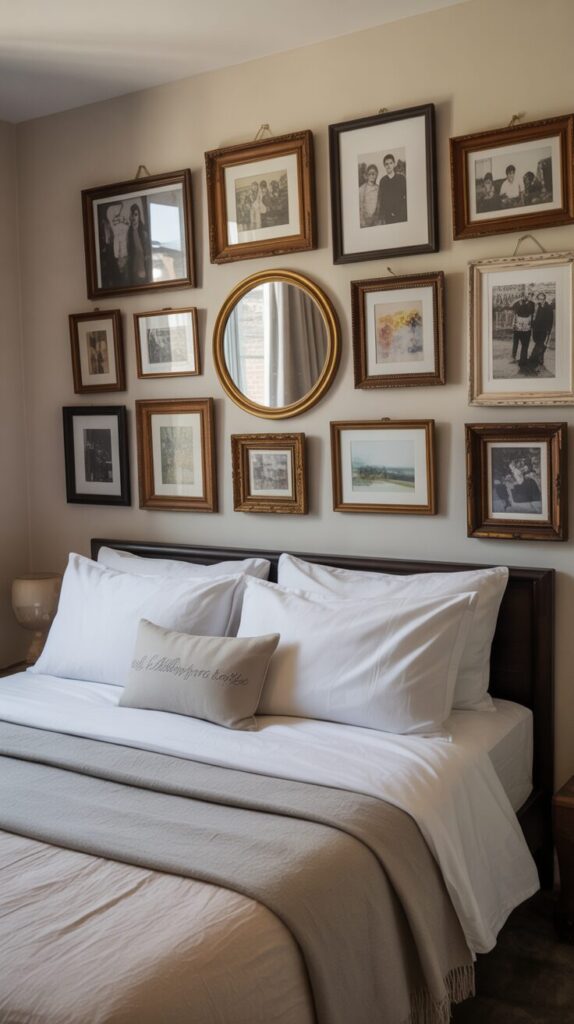
A gallery wall in a small spare bedroom does more than fill blank wall space—it tells a story. By mixing personal photographs, small artworks, and a mirror, you create a focal point that feels curated and intentional. The key is keeping the arrangement tight and cohesive, using frames in similar tones so the wall feels layered but not chaotic.
This approach turns a purely functional room into a space with warmth and personality, perfect for guests or even as a quiet retreat.
Why It Works
A gallery wall draws the eye upward and creates visual interest without taking up floor space. The mirror reflects light, making the room feel larger and brighter, while personal touches make the space feel welcoming and lived-in. It’s a low-cost, high-impact way to add character to a small room.
Best For
This idea works well in spare bedrooms used by guests, as it gives them something interesting to look at and makes the room feel more like a real home. It’s also great for rooms with limited wall space, since a tight arrangement maximizes impact without overwhelming the area.
Styling Tip
Stick to a palette of two or three frame colors—like black, natural wood, and brass—to keep the look cohesive. Lay out the arrangement on the floor first to perfect the spacing, then hang the pieces close together (about 2–3 inches apart) for a collected, gallery-like feel.
9. Use a Bench Under the Window
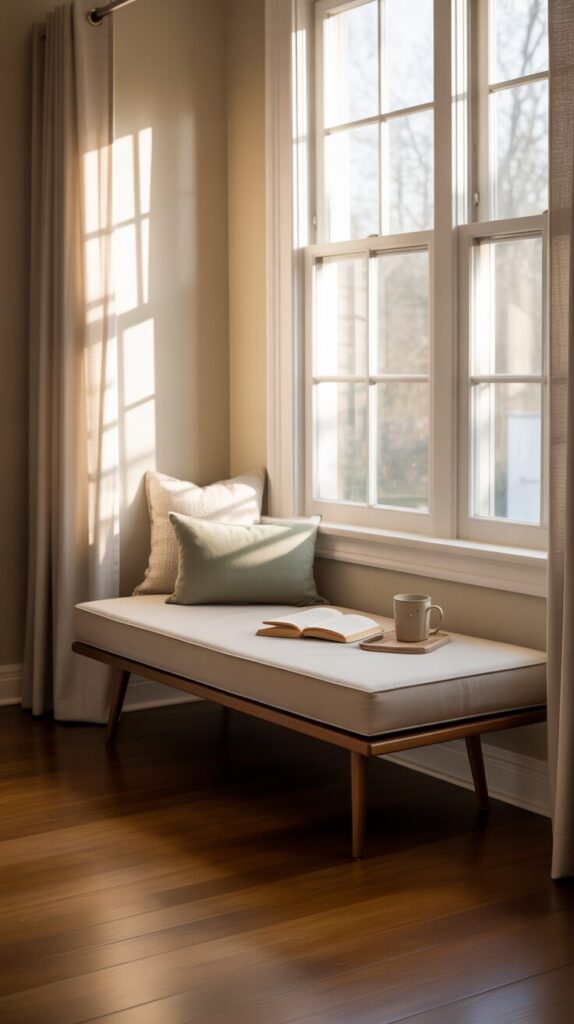
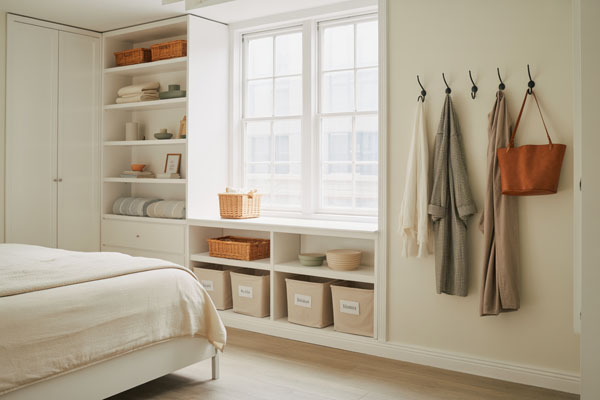
That empty wall beneath the window often goes unnoticed, but it’s prime real estate for adding function and charm. A slim bench tucked under the sill creates a cozy nook where you can sit to pull on socks, lay out tomorrow’s outfit, or just pause for a moment. Paired with a plush cushion and a couple of soft pillows, it blends right into the room’s layered, lived-in look.
Why It Works
A bench makes use of dead space without eating into the floor plan. It doubles as extra seating and a surface for folding clothes or stacking books, all while keeping the room feeling open and airy.
Best For
This idea shines in narrow spare bedrooms where a chair would feel bulky. It’s also great for rooms with low windowsills that would otherwise collect dust.
Styling Tip
Choose a cushion in a fabric that matches your bedding or an accent color from elsewhere in the room. Add two lumbar pillows for back support and a cozy feel. Keep the bench itself simple—wood or metal—so it doesn’t compete with the window.
10. Incorporate Warm Lighting Layers
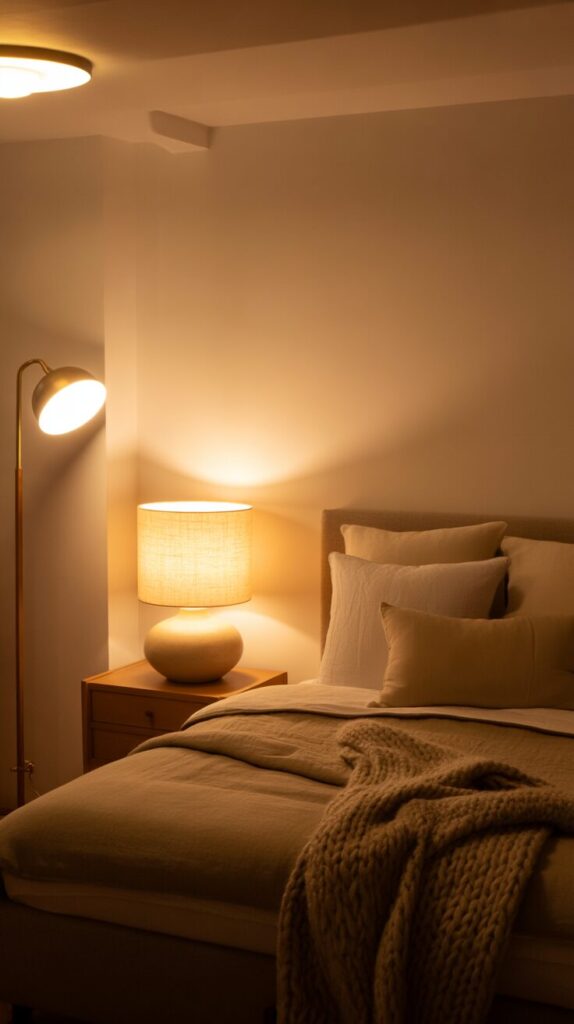
Lighting is often an afterthought in small spare bedrooms, but it’s one of the easiest ways to make the space feel intentional and inviting. Instead of relying on a single overhead fixture, layer in a ceiling light, a table lamp, and a floor lamp—all fitted with warm bulbs. Dimmers on the overhead fixture let you shift from bright and functional for folding laundry or reading to soft and cozy for winding down.
The result is a room that adapts to how you actually use it, not just a forgotten box with a bed.
Why It Works
Layered lighting eliminates harsh shadows and creates a balanced glow that makes a small room feel larger and more comfortable. Warm bulbs (2700K–3000K) mimic the golden light of sunset, which naturally signals relaxation. Dimmers add flexibility so the same room can serve as a bright workspace in the morning and a dim sanctuary at night.
Best For
This idea is perfect for spare bedrooms that double as a home office, guest room, or reading nook. It’s also great if you want to make a small room feel less like a closet and more like a intentional living space without any major renovation.
Styling Tip
Place the table lamp on a nightstand or small desk, the floor lamp in a corner or beside an armchair, and the ceiling fixture centered or slightly off-center. Use matching finishes (like brushed brass or matte black) to tie the look together, and keep all bulbs the same warm temperature for a cohesive feel.
11. Add a Small Plant or Two for Life
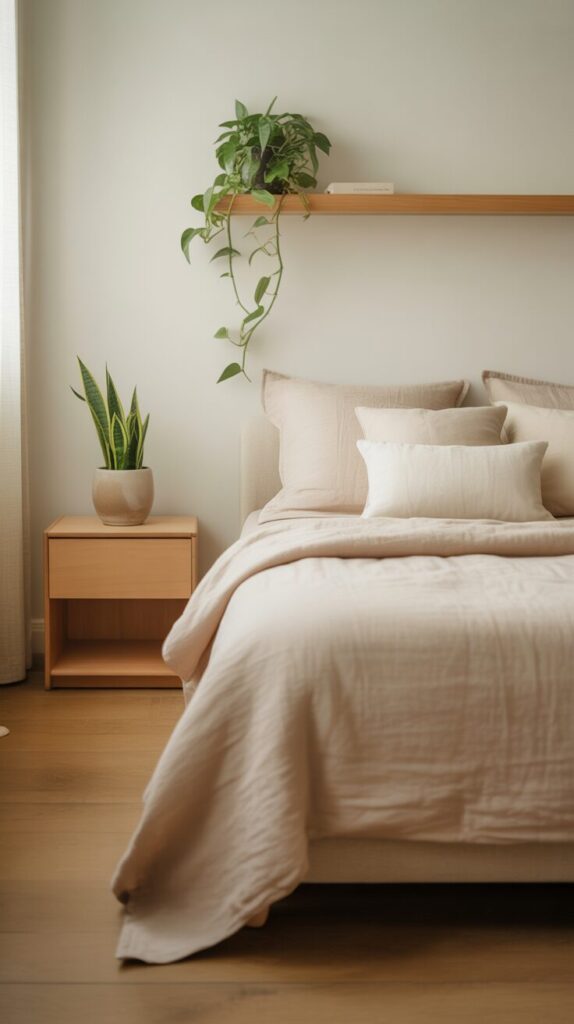
Even the tiniest spare bedroom can feel instantly more alive with a bit of greenery. A small snake plant or a trailing pothos perched on a nightstand or shelf brings in a fresh, organic element that softens all the hard edges. It’s a simple, low-commitment way to add a natural color pop without overwhelming the space or your schedule.
Why It Works
Plants naturally make a room feel more inviting and lived-in. In a small spare bedroom, they break up the monotony of furniture and add visual interest at eye level. Plus, low-maintenance varieties like snake plants and pothos thrive on neglect, so they stay looking good even if you forget to water them for a week.
Best For
This idea is perfect for spare bedrooms that get a little natural light but aren’t sunny enough for high-maintenance plants. It’s also great if you want to add a cozy, layered feel without cluttering surfaces—one or two small pots are all you need.
Styling Tip
Choose a planter that ties into your room’s color palette—think matte ceramic in a soft blush or warm terracotta. Place the plant where it can be seen from the bed, like on a floating shelf or the corner of a nightstand, and let its leaves drape or stand tall depending on the variety.
FAQ
How can I make a small spare bedroom feel cozy without cluttering it?
Focus on layered textiles like rugs, curtains, and bedding. Use multifunctional furniture and keep surfaces mostly clear. A few well-chosen decor pieces add warmth without visual clutter.
What color scheme works best for a small spare bedroom?
Soft neutrals like warm white, beige, or light gray create a calm base. Add depth with muted earth tones or pastels in bedding and accessories. Avoid dark colors that can shrink the space.
How do I balance guest comfort with everyday use?
Choose a comfortable bed and add a small desk or reading nook. Keep storage flexible with a closet or ottoman that can hold guest linens or your own items.
What type of bed is best for a small spare bedroom?
A full or queen bed works well. If space is very tight, consider a daybed or a murphy bed. Make sure there’s enough room to walk around and open doors.
How can I add storage without making the room feel cramped?
Use vertical space with floating shelves or a tall, narrow bookcase. Choose furniture with hidden storage, like an ottoman or a bed frame with drawers. Keep decor minimal to maintain an open feel.
Conclusion
A small spare bedroom doesn’t have to be an afterthought. With a few intentional layers and practical pieces, it can become a welcoming space that works for guests, hobbies, or quiet moments. The key is choosing items that earn their keep while adding warmth and personality.
Start with one or two ideas and build from there. Before you know it, that spare room will feel like a favorite spot in your home.