13 Teen Boys Bedroom Ideas With Chill Study Corners That Actually Work
Designing a bedroom for a teenage boy that feels both cool and functional can be tricky. You want a space where he can hang out, sleep, and actually focus on homework—without it looking like a showroom.
The trick is blending warm, lived-in style with a study corner that doesn't feel like a punishment.
These 13 ideas keep things practical, stylish, and easy to pull off in real homes.
1. Corner Desk With Floating Shelves and a Comfy Chair
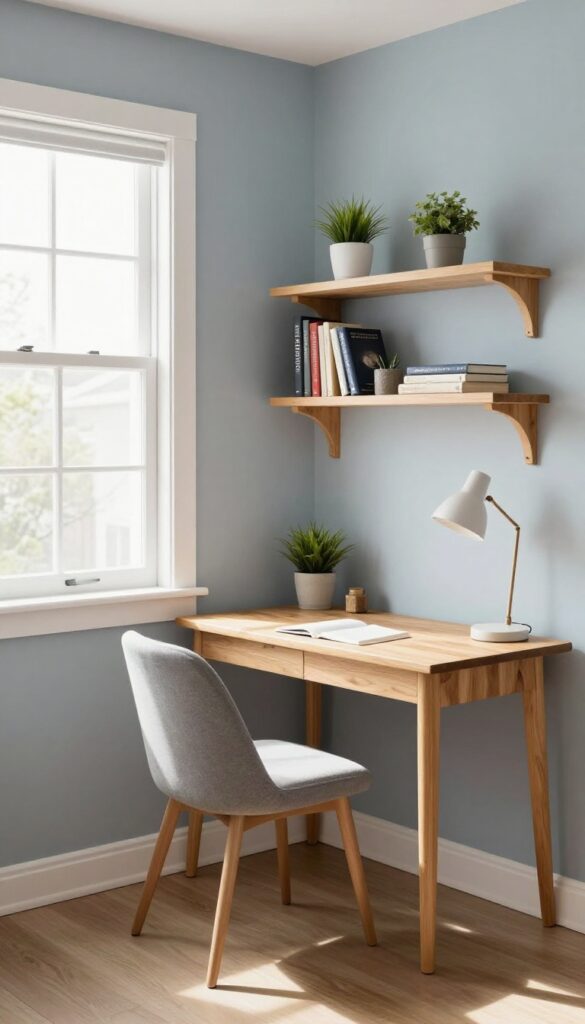
Not every bedroom has room for a full desk setup, but that unused corner by the window or next to the closet? That’s prime real estate. A compact corner desk fits right in, and when you add floating shelves above, it becomes a full study zone without eating up floor space.
The key is choosing a chair that’s comfortable enough for long homework sessions but doesn’t look like it belongs in a sterile office. Think cushioned fabric or a sleek mid-century style that blends with the room’s vibe.
Why It Works
This layout maximizes vertical storage while keeping the footprint small. The floating shelves hold books, plants, or personal mementos, keeping the desk surface clear for studying. The ergonomic chair supports good posture, which matters for growing teens, and the corner placement feels cozy and defined rather than cramped.
Best For
Teen boys who need a dedicated homework spot in a smaller bedroom or a room shared with a sibling. It’s also great for those who want a study area that doesn’t dominate the room’s layout.
Styling Tip
Paint the floating shelves the same color as the wall to make them blend in, or go for a contrasting wood tone to add warmth. Add a small desk lamp with a warm bulb and a corkboard or magnetic board above the desk for notes and inspiration.
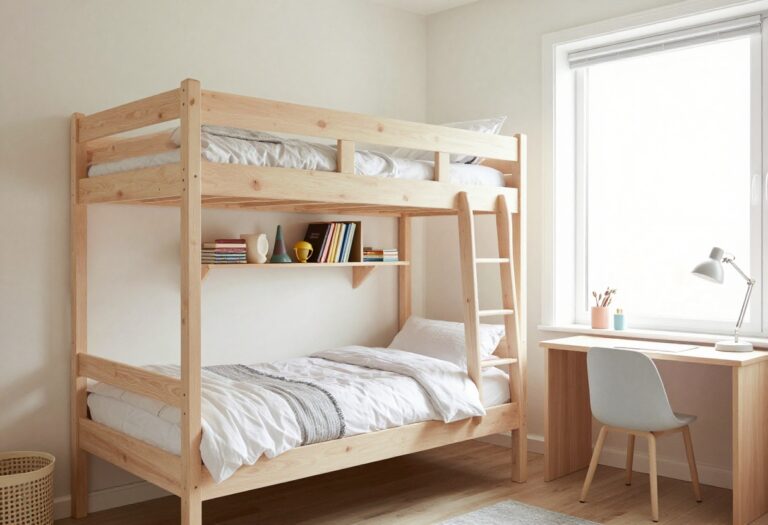
2. Lofted Bed With a Built-In Study Nook Below
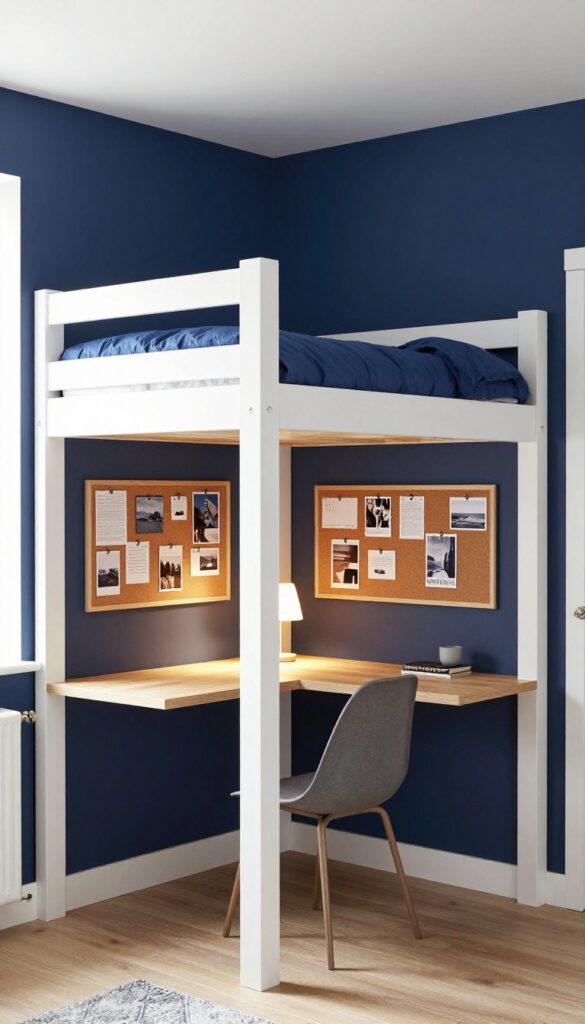
Raising the bed off the ground instantly frees up valuable square footage, and tucking a desk underneath turns that empty air into a functional study zone. This setup feels especially smart in a teen’s room where sleep, homework, and hangout time all compete for space. The key is making the lower area feel intentional, not like an afterthought—add a warm desk lamp, a corkboard for notes and photos, and a comfy chair that invites him to sit down and focus.
Why It Works
It separates sleep from study without needing a second room. The vertical layout uses the room’s height to create two distinct zones in the footprint of one. Plus, the nook feels cozy and private, which can actually help concentration.
Best For
Small to medium bedrooms where floor space is tight and a separate desk would crowd the room. It’s also great for teens who like a clear boundary between relaxing and working.
Styling Tip
Paint the underside of the loft or the wall behind the desk a slightly darker tone than the rest of the room—like a deep navy or charcoal—to visually define the study nook. Add a clip-on task light and a small shelf for books to keep the desktop clear.
3. Window Desk With Natural Light and a Plant Buddy
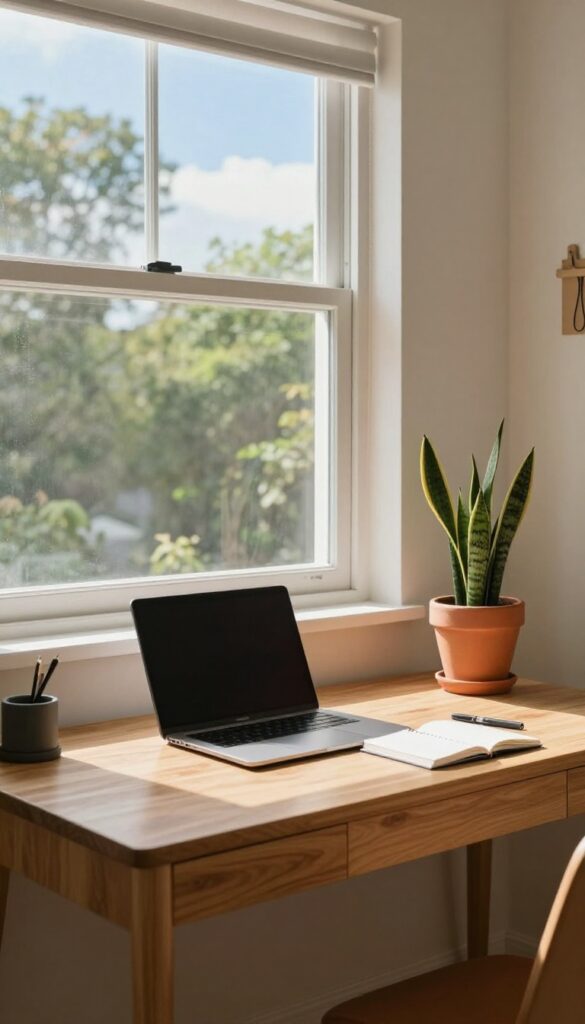
There’s something about a desk parked right in front of a window that just makes homework feel less like a chore. The natural light keeps the space bright and airy, and it gives your teen a front-row seat to whatever’s happening outside—birds, neighbors, or just the clouds rolling by. Add a small, easy-care plant like a snake plant or pothos, and the desk becomes a little ecosystem that feels alive and personal, not just another piece of furniture.
Why It Works
Natural light is a proven mood booster, and it reduces eye strain during long study sessions. The plant adds a living element that softens the room and teaches a bit of responsibility without being demanding. Plus, the window placement makes the desk feel less like a prison and more like a command center with a view.
Best For
This setup is ideal for narrow bedrooms where floor space is tight, or for any teen who tends to feel cooped up while studying. It also works great if your kid is into nature, photography, or just needs a calm, inspiring spot to focus.
Styling Tip
Keep the desk clutter-free with a simple cord organizer and a small tray for pens. Choose a plant in a matte ceramic pot that echoes the room’s color scheme—maybe a muted green or warm terracotta. A sheer roller blind helps control glare without blocking all the light.
4. Bookshelf Room Divider That Doubles as a Desk
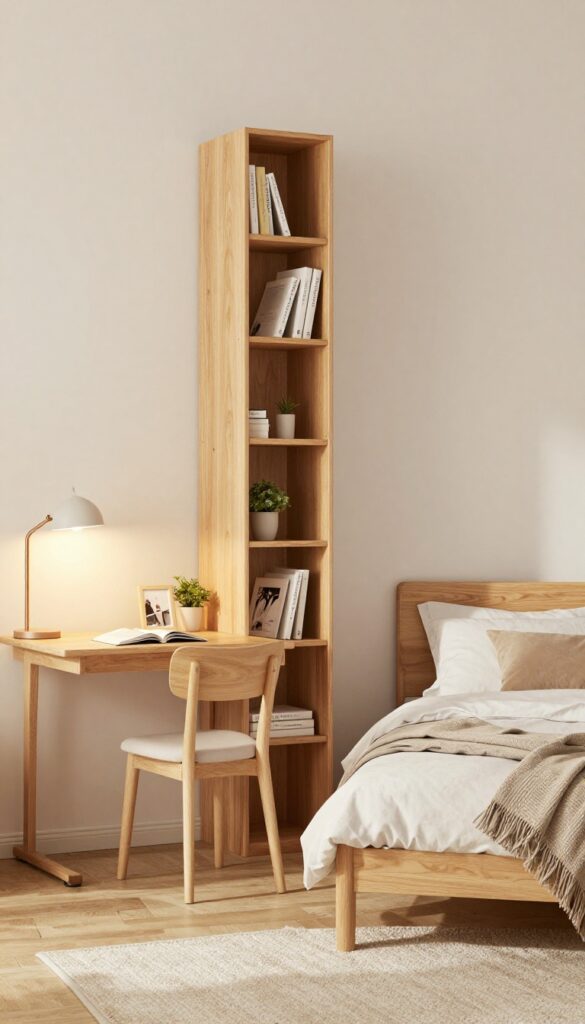
Picture this: a tall, sturdy bookshelf that doesn't just hold books but also carves out a quiet study corner on one side and a cozy sleeping zone on the other. The best part? A pull-out or fold-down desk is built right into the shelves, so homework happens without a separate desk taking up extra floor space.
It's a smart, space-saving solution that feels warm and lived-in, especially when you style it with personal touches like a small plant, a framed photo, or a stack of favorite reads.
Why It Works
This setup creates a clear boundary between rest and work without making the room feel cramped. The bookshelf acts as a visual and physical divider, giving the teen a sense of privacy and focus during study time. Plus, having the desk integrated into the shelving keeps everything within arm's reach—books, supplies, and even a lamp—so the study corner feels intentional and clutter-free.
Best For
This idea shines in shared bedrooms or long, narrow rooms where you need to define separate zones. It's also perfect for teens who love having their books and hobbies close by while they work, and for parents who want a practical way to keep the sleeping area calm and the study area organized.
Styling Tip
Choose a bookshelf in a warm wood tone or a soft neutral like sage green or navy to keep the room feeling cozy. Add a desk lamp with a warm bulb, a cozy desk chair, and a few decorative baskets on the lower shelves for hidden storage. Keep the top shelves lighter with a mix of books and a couple of personal mementos so the divider doesn't feel too heavy.
5. Gallery Wall Above a Simple Writing Desk
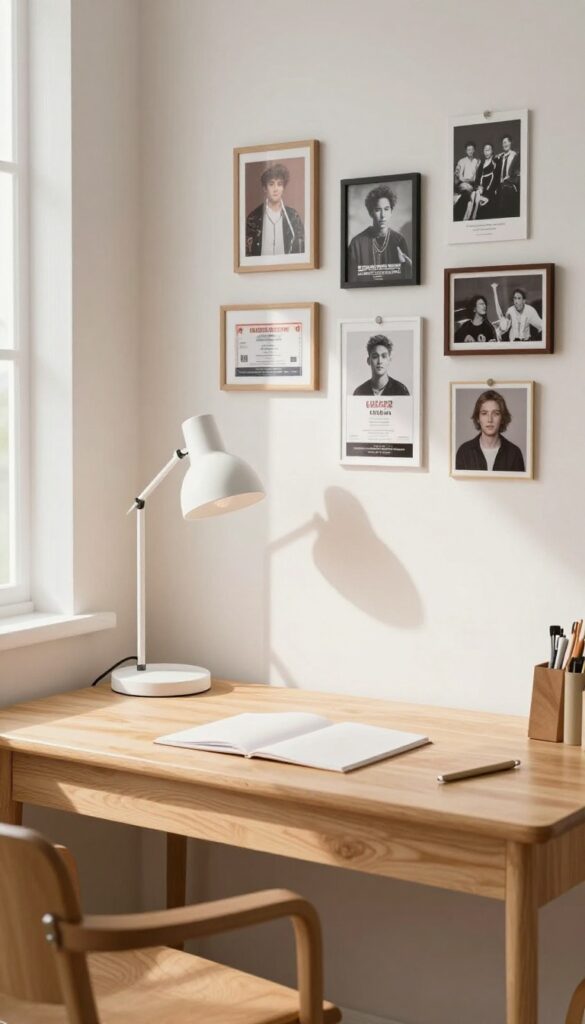
A clutter-free desk paired with a thoughtfully arranged gallery wall strikes the perfect balance between focus and personality. The desk stays clean and minimal, while the wall above becomes a rotating showcase of what matters most to your teen—concert tickets, favorite prints, or snapshots with friends. This setup keeps the study zone calm and functional, but the wall adds warmth and tells a story without taking up any extra surface space.
Why It Works
Teens often want their space to reflect their interests, but a desk covered in knickknacks can be distracting. By moving the personality to the wall, you preserve a clear work surface while still letting their style shine. The gallery wall also makes the desk area feel intentional and curated, not just a spot to do homework.
Best For
This idea is ideal for teens who love art, photography, or collecting small mementos but need a dedicated homework zone that stays organized. It works especially well in smaller bedrooms where floor space is limited, because it uses vertical real estate to add character without crowding the room.
Styling Tip
Mix frame sizes and finishes for an eclectic look, but keep the frames lightweight so they're easy to swap out. Use removable adhesive strips to avoid damaging walls, and lay out the arrangement on the floor first to get the spacing right. Leave a few inches between frames and let the desk lamp double as a spotlight for the gallery.
6. Rug-Defined Study Zone in a Shared Room
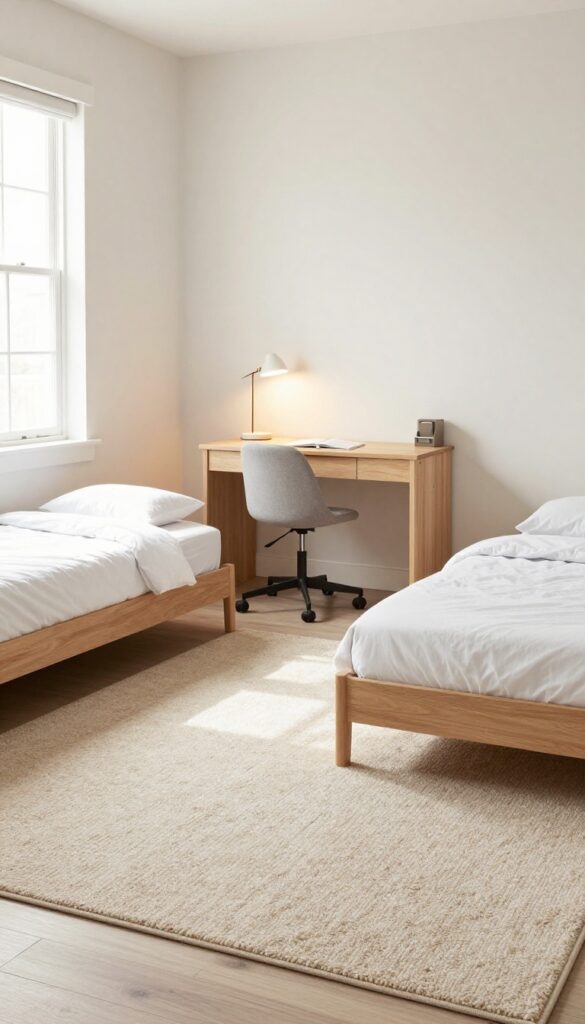
Sharing a bedroom with a sibling can make it tough to find a quiet spot to focus. A simple rug does more than warm up the floor—it visually marks a separate territory for homework without needing walls or a bulky room divider. Toss down a low-pile wool or cotton rug in a neutral or muted tone, then add a compact desk and a floor lamp with a warm bulb.
The rug anchors the study corner and gives it a finished, intentional feel, even when the rest of the room is a bit chaotic.
Why It Works
A rug creates a clear boundary that tells the brain, 'This is the work zone.' It softens the floor underfoot, reduces noise from chair movement, and makes the corner feel like its own little room. The visual separation helps both siblings respect each other's space without arguments.
Best For
Shared bedrooms where two kids need their own study areas but floor space is limited. It's also great for rooms with an awkward layout where a permanent desk placement feels off—the rug can shift the focal point and make the desk look intentional.
Styling Tip
Choose a rug with a low pile so the desk chair rolls smoothly. Go for a rectangular shape that extends at least a foot beyond the desk on each side. A warm-toned lamp with a fabric shade adds soft light and makes the zone cozy for late-night reading.
7. Wall-Mounted Desk With a Pegboard Organizer
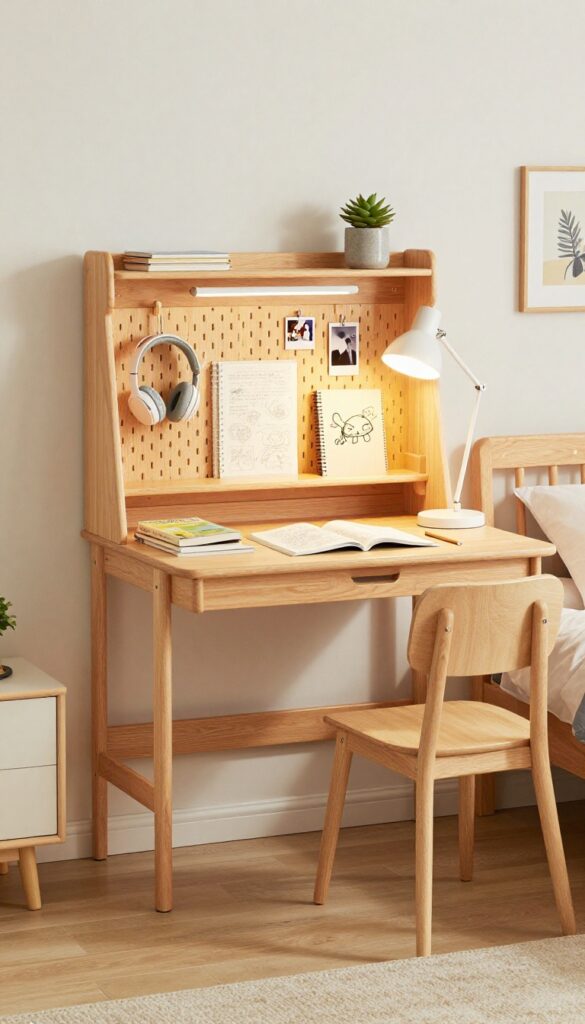
A wall-mounted desk is a genius move when you want a dedicated study spot but don't have extra square footage to spare. The fold-down style tucks away after homework, leaving the room open for hanging out or gaming. Pair it with a pegboard above, and suddenly everything—headphones, notebooks, a tiny plant—has a home that's both handy and visually interesting.
The warm wood tones and a few personal touches keep it from feeling too sterile or dorm-like.
Why It Works
This setup keeps the floor clear, which is huge for small rooms. The pegboard puts supplies within arm's reach but off the desk surface, so there's always room to spread out a textbook or sketchpad. Plus, the ability to rearrange hooks and shelves means the system grows with his changing needs.
Best For
Teens who need a functional study zone in a compact bedroom, especially if the room also doubles as a hangout space. It's ideal for the kid who likes to keep his gear organized but doesn't want a bulky desk dominating the room.
Styling Tip
Choose a warm wood finish for the desktop and add a small task lamp with a soft glow. On the pegboard, mix practical items like a headphone hook with a few personal touches—a polaroid, a small succulent, or a favorite pin. Keep the color palette neutral with one or two accent colors that tie into the rest of the room.
8. Cozy Armchair Reading Nook With a Side Table
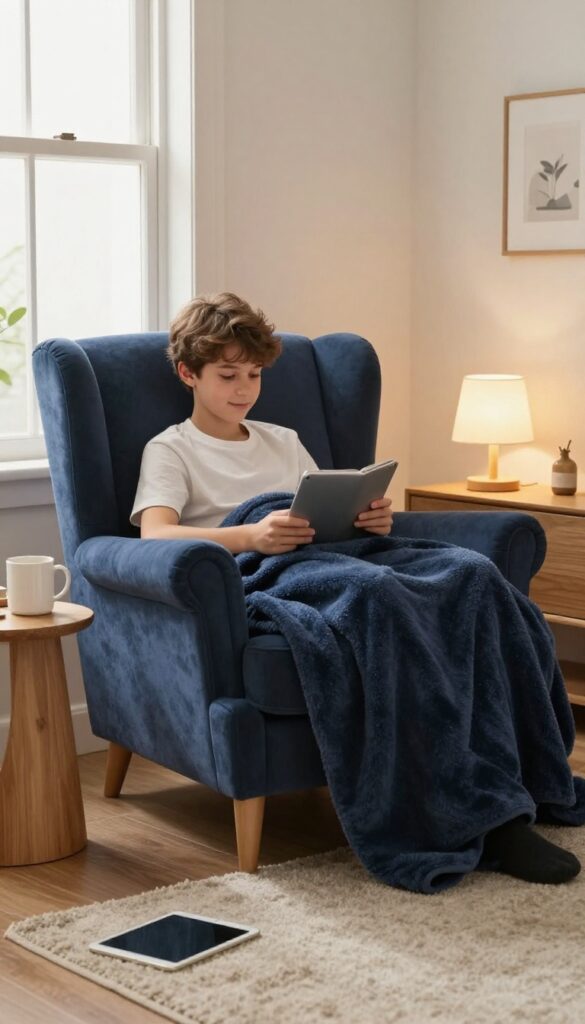
Not every teen wants to sit upright at a desk to get things done. Some prefer to curl up with a book, sketch in a notebook, or even work on a laptop from a softer spot. A plush armchair paired with a sturdy side table creates a relaxed zone that still feels purposeful.
The key is choosing a chair with good support and a table wide enough for a mug, a tablet, and a lamp. This setup invites him to hang out in his room without feeling like he's stuck in a study hall.
Why It Works
A comfortable chair lowers the barrier to starting homework or reading for fun. When the space feels more like a lounge than a desk, it encourages longer, more focused sessions. Plus, the side table keeps essentials close without cluttering the floor.
Best For
This nook is ideal for teens who prefer a relaxed work style—especially those who read for pleasure, draw, or use a laptop for school. It also works well in rooms where a full desk would feel too bulky or formal.
Styling Tip
Anchor the nook with a small rug to define the zone. Add a floor lamp with a warm bulb for cozy evening light, and keep a small tray on the side table to corral pens, a phone, and a coaster. A throw blanket over the armchair adds texture and makes it even more inviting.
9. Under-Bed Drawer Desk for Tiny Rooms
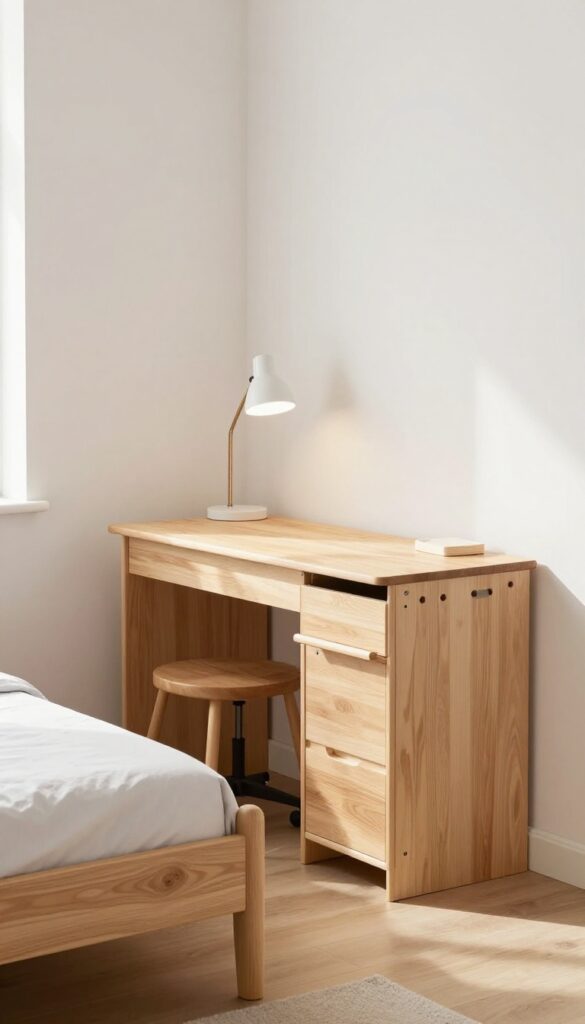
In a small bedroom, every inch counts, and the space under the bed is often overlooked. Turning that gap into a pull-out desk gives your teen a dedicated study spot without sacrificing floor space. The desk slides out like a drawer, and a compact rolling stool tucks right under the bed frame when not in use.
It feels clever and intentional, not like a compromise.
Why It Works
This setup reclaims dead space and creates a functional work zone without adding visual clutter. The desk stays hidden most of the time, keeping the room feeling open and uncluttered. When it's time to study, your teen just pulls it out and gets to work.
Best For
Tiny bedrooms where a traditional desk would block traffic or make the room feel cramped. It's also great for shared rooms where each kid needs their own study area but floor space is limited.
Styling Tip
Choose a desk with a warm wood finish to keep the room feeling cozy. Add a small task lamp with a flexible neck that can clamp onto the desk or the bed frame. A felt-lined drawer for pens and notebooks keeps essentials organized and quiet when sliding.
10. Standing Desk Corner With a Tall Stool
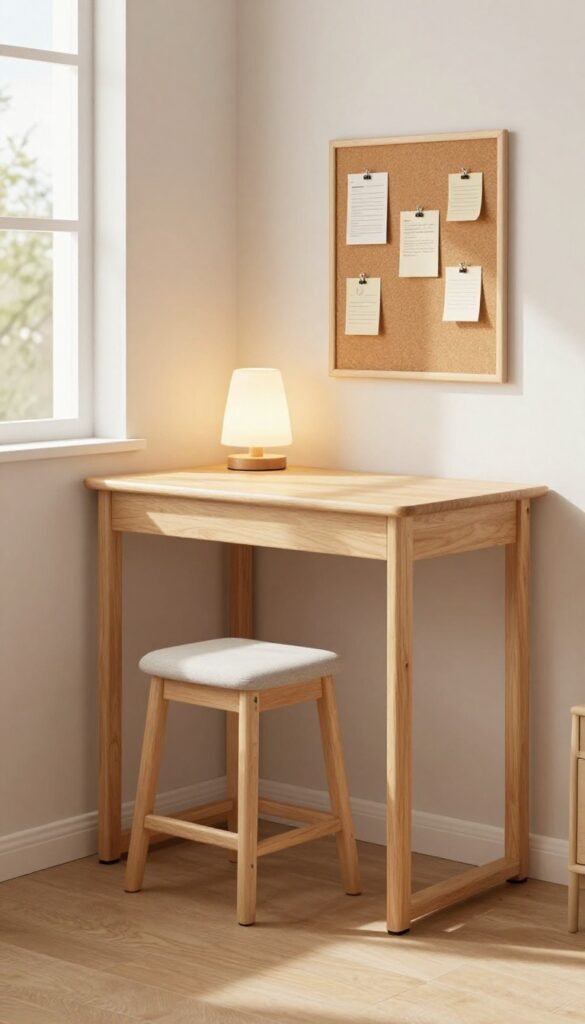
Sitting still for hours isn't natural for most teens, and a standing desk setup in a corner lets them shift position without leaving their homework zone. A slim wall-mounted or adjustable desk keeps the floor clear, while a tall stool offers a quick perch when legs get tired. This corner feels purposeful but not rigid, with warm wood tones and a soft lamp making it inviting enough to actually use.
Why It Works
Alternating between standing and sitting boosts energy and focus, which is especially helpful during long study sessions. The compact footprint fits snugly into an unused corner, and the stool slides under the desk to keep the room tidy.
Best For
Teens who fidget, get restless, or prefer to stand while gaming, sketching, or doing homework. Also great for small bedrooms where a bulky desk and chair would feel cramped.
Styling Tip
Choose a stool with a cushioned seat and a footrest bar for comfort. Add a small corkboard or peg rail above the desk for vertical storage, and use a warm desk lamp to keep the area feeling cozy rather than clinical.
11. Closet Desk Conversion for a Hidden Study Spot
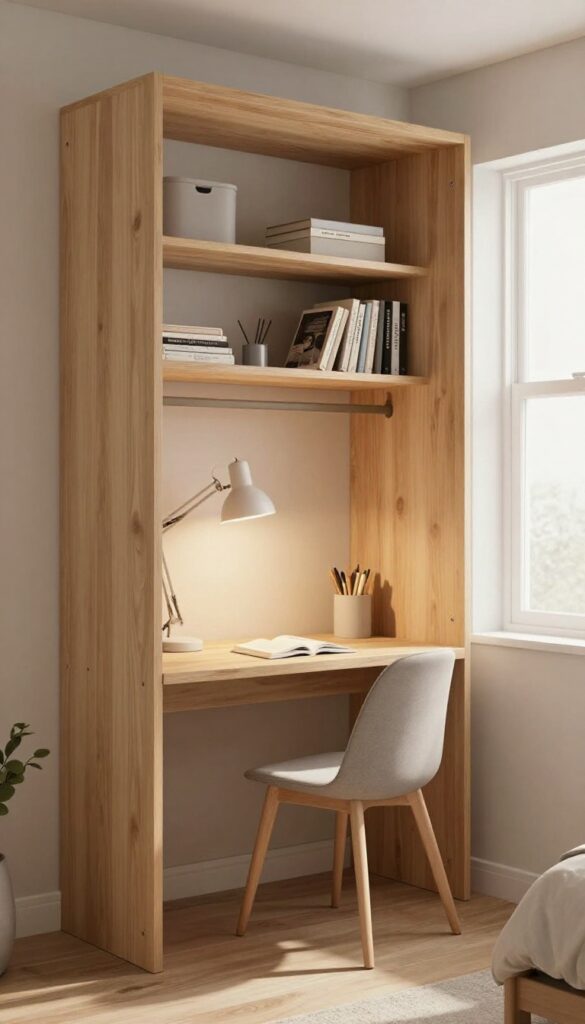
There's something satisfying about turning an underused closet into a functional workspace. By removing the doors and adding a slim desk, shelves, and warm lighting, you create a mini office that feels like a secret hideaway. The best part?
It keeps homework clutter out of sight when not in use, making the room feel bigger and more relaxed.
Why It Works
This conversion maximizes every square inch without a major renovation. The built-in feel makes the study area feel intentional, while the closed-off nature helps teens focus. Plus, it adds value to the room by solving two problems at once: lack of storage and lack of desk space.
Best For
Teens who need a dedicated homework zone but don't have room for a separate desk. It's also ideal for small bedrooms where every inch counts, or for families who want a flexible space that can later become extra storage.
Styling Tip
Paint the inside a warm neutral or soft blue to keep it cozy. Use a desk lamp with adjustable brightness and add a small rug or cushion on the floor for comfort. Keep shelves tidy with baskets for supplies.
12. Shared Desk With a Center Divider for Siblings
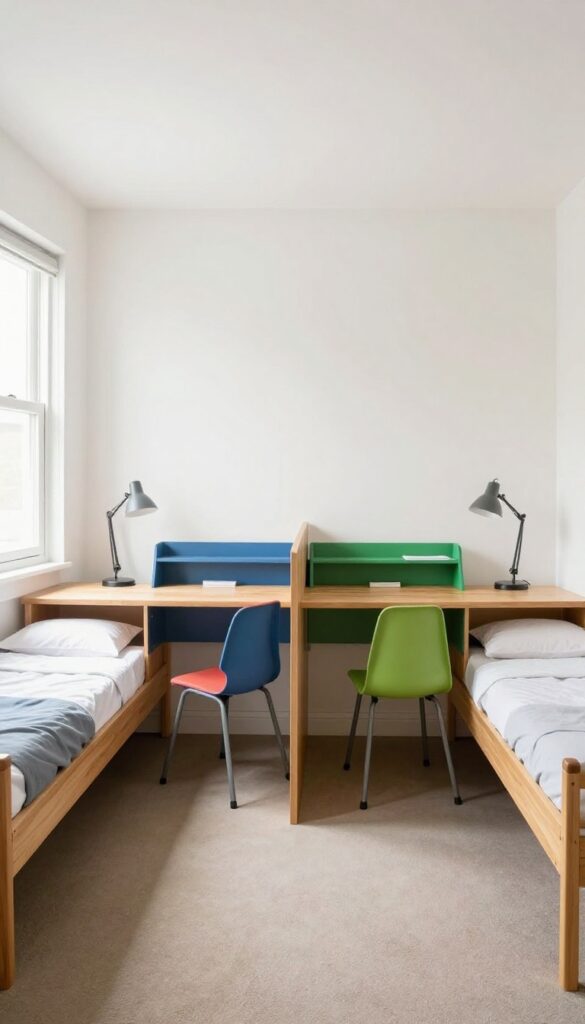
Brothers sharing a bedroom often need their own territory, especially when it comes to homework. A long desk stretching across one wall, fitted with a low divider right in the middle, gives each kid a defined workspace without closing off the room. The divider doesn't have to be tall—just enough to create a visual boundary and keep papers from drifting into the other side.
This setup keeps the space feeling open and connected, which is perfect for siblings who still like to hang out while they study.
Why It Works
A shared desk with a center divider gives each brother a sense of ownership over his own area, which cuts down on bickering over space and supplies. The low profile of the divider keeps the room feeling airy and prevents either side from feeling boxed in. It also makes the desk feel like a collaborative zone when they want to work together, but private enough when they need to focus.
Best For
This idea works best for brothers close in age who need to do homework at the same time but have different subjects or study styles. It's also great for rooms where floor space is limited, because one long desk uses the wall efficiently instead of two separate desks taking up more room.
Styling Tip
Choose a warm wood tone for the desk and divider to keep the room feeling cozy and lived-in. Add a small task lamp on each side with a gooseneck arm so they can adjust the light without bothering each other. Use matching but different-colored desk organizers—like a blue caddy on one side and green on the other—so each brother can personalize his zone without clashing.
13. Moody Study Corner With Dark Paint and Warm Lighting
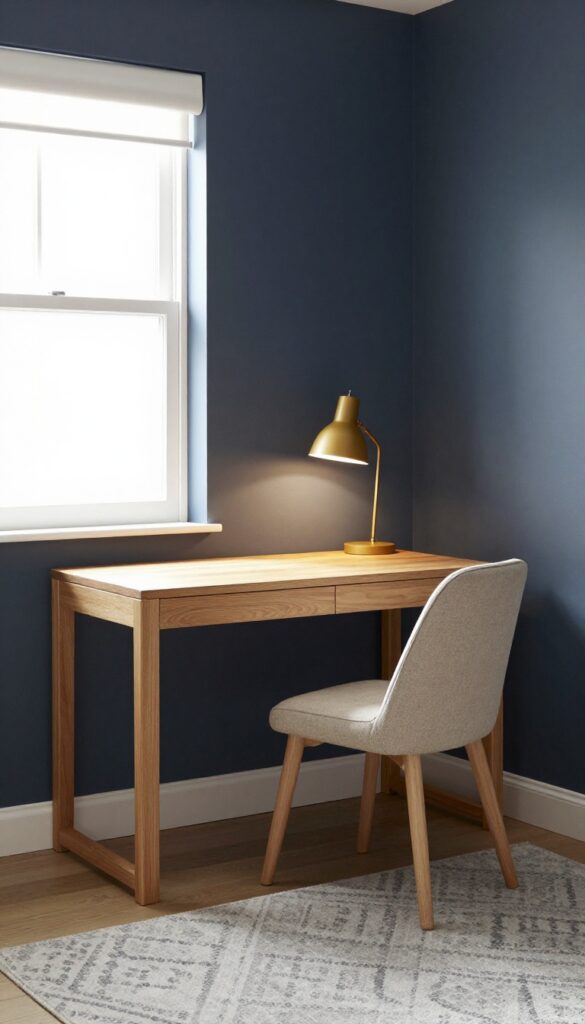
Deep, moody paint colors are making a big comeback in teen spaces, and for good reason. A study nook painted in navy or charcoal instantly feels like a separate zone, even if it's just a corner of the bedroom. The dark walls absorb light and create a cocooning effect that helps with focus, while warm lamps and soft textiles keep the space from feeling too heavy or cave-like.
It's a look that reads as intentional and stylish, not accidental or gloomy.
Why It Works
The high contrast between dark walls and warm light sources naturally draws the eye to the desk area, making it the focal point of the room. This psychological separation helps signal to the brain that it's time to concentrate, without needing physical dividers or bulky furniture.
Best For
Teens who prefer a calm, grounded atmosphere for studying and need a visual boundary between work and rest areas. It's especially effective in rooms with good natural light during the day, so the dark walls don't make the whole space feel small.
Styling Tip
Balance the dark paint with light-colored desk accessories and a cozy task lamp with a warm bulb (2700K–3000K). Add a small rug or a cushioned chair in a neutral tone to soften the look and keep the corner from feeling flat.
FAQ
How can I make a study corner feel less like a desk and more like part of the room?
Use decor that blends in—like a rug, a plant, or wall art. Choose a desk in a wood tone that matches the bed frame, and add personal touches like a lamp or a small shelf with his favorite things.
What's the best lighting for a teen's study area?
Layer a desk lamp with warm LED bulb for task lighting, plus a floor lamp or overhead light on a dimmer. Avoid harsh fluorescent or cool white bulbs—they feel too sterile.
How do I fit a study corner in a very small bedroom?
Go vertical with a wall-mounted desk or loft bed. Use a slim console table instead of a bulky desk, and store supplies in hanging organizers or under-bed bins.
Should the study corner be separate from the sleeping area?
It helps mentally, but it's not required. A room divider, a different rug, or even just turning the desk away from the bed can create a sense of separation.
What colors work best for a teen boy's study nook?
Earthy tones like olive, navy, charcoal, or warm gray are great. They feel grown-up but still cozy. Avoid bright primary colors—they can be distracting.
Conclusion
Helping your teen carve out a study corner that actually feels like his own doesn't require a huge budget or a full renovation. Small changes—like a new desk lamp, a cozy chair, or a fresh coat of paint—can turn a forgotten corner into his favorite spot in the house.
The best part? These ideas grow with him, adapting to his changing style and needs over the years.