21 TV Console Ideas for Small Living Rooms That Actually Work
Finding the right TV console for a small living room can feel like a puzzle. You need something that holds your TV without overwhelming the space, offers storage without looking bulky, and fits your style without breaking the bank.
The good news? There are plenty of clever designs that do all that and more.
Whether you're working with a cozy apartment or a compact den, these 21 TV console ideas prove you don't have to sacrifice style for square footage. Each one is chosen with small spaces in mind, focusing on smart storage, visual lightness, and practical layouts that make your room feel bigger and better organized.
1. Floating Shelf with Hidden Cords
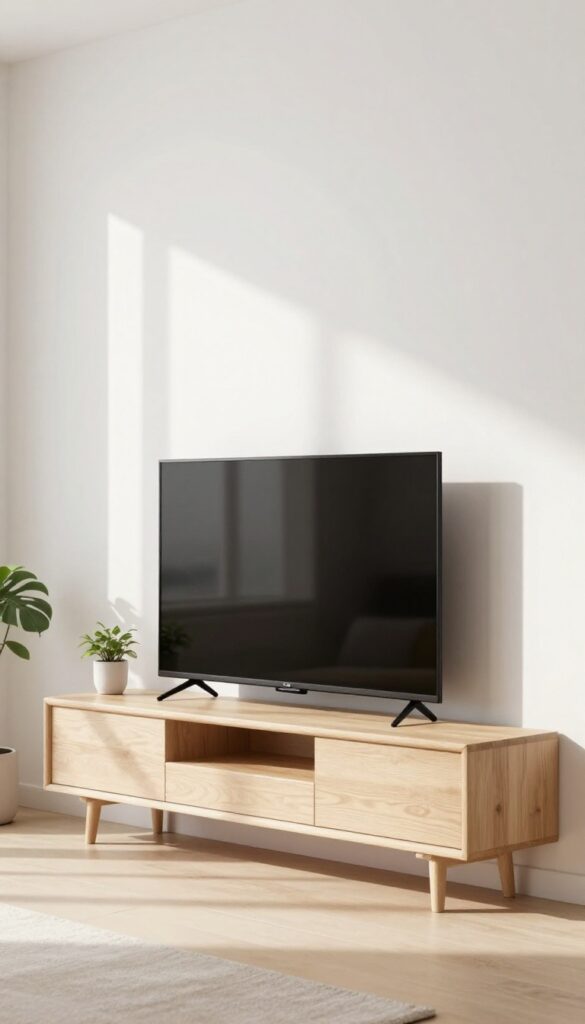
In a small living room, every inch of floor space matters. That's why a floating shelf for your TV is such a smart move. It mounts directly to the wall, freeing up the area below for a slim console, a plant, or even just open floor space.
The real magic happens when you hide the cables inside the wall—no more messy wires dangling down. This setup keeps your TV at perfect eye level and makes the whole room feel cleaner and more open.
A floating shelf is one of the most space-conscious ways to display a TV in a compact living room. By mounting the shelf at the right height, you create a streamlined look that doesn't crowd the room. The key is to pair it with a hidden cord system, so all those cables disappear into the wall.
This approach works especially well in ultra-small spaces, like studio apartments or narrow living rooms, where a bulky entertainment center would feel overwhelming. The result is a minimalist, airy vibe that makes the room feel larger than it is.
Best Placement For Small Rooms
- Mount the shelf so the center of the TV is at eye level when you're seated. In a small room, that usually means about 42 to 48 inches from the floor. Leave at least 6 inches of clearance above the shelf for ventilation.
- If your wall is load-bearing, use toggle bolts for extra support. For the cleanest look, run cables through the wall using a cord-hiding kit—it's a simple DIY that makes a huge difference.
Shelf Styling Tips
- Keep the shelf itself minimal. A dark wood or matte black finish blends with most TVs and doesn't distract. Add a small plant or a stack of design books on one side to soften the look, but don't overcrowd it.
- The goal is to let the TV be the focal point without the shelf feeling cluttered. A single sculptural object, like a ceramic vase, can add just enough personality.
Budget-Friendly Swap
If you're on a tight budget, use a ready-made floating shelf from a home store and paint it to match your wall. For the cord hiding, a cord cover kit costs under $20 and paints to match. This gives you the same sleek look as a custom installation without the high price tag.
2. Low Profile Media Console on Legs

A low-profile media console on slender legs does wonders in a small living room. By keeping the visual weight near the floor, the wall above feels open and the whole space breathes easier. Light wood finishes amplify the airy effect, making the room feel larger and brighter without sacrificing storage.
This console style is perfect for small-space dwellers who want a clean, uncluttered look. The legs lift the unit off the ground, allowing light to flow underneath and creating the illusion of more square footage. Pair it with a light wood tone like oak or ash to keep the palette fresh and inviting.
The low height also makes it ideal for rooms with low ceilings or for maintaining an uninterrupted sightline across the room.
Best Colors And Finishes
- Stick with light, natural wood finishes such as white oak, ash, or birch. These reflect light and keep the console from feeling heavy. For a more modern twist, try a pale gray wash or a matte white lacquer.
- Avoid dark stains or glossy finishes that can make the piece feel bulky.
Layout Tip
Place the console against the longest wall in the room to anchor the seating area without blocking pathways. Leave at least 6 inches of space on either side for visual breathing room. If your TV is mounted, keep the console lower than the bottom of the screen to maintain the airy feel.
Styling The Surface
Keep the top minimal to preserve the open look. A single sculptural object, a small stack of books, or a low-profile soundbar is enough. Add a trailing plant like pothos on one end to draw the eye upward without cluttering the surface.
3. Corner TV Stand That Maximizes Dead Space
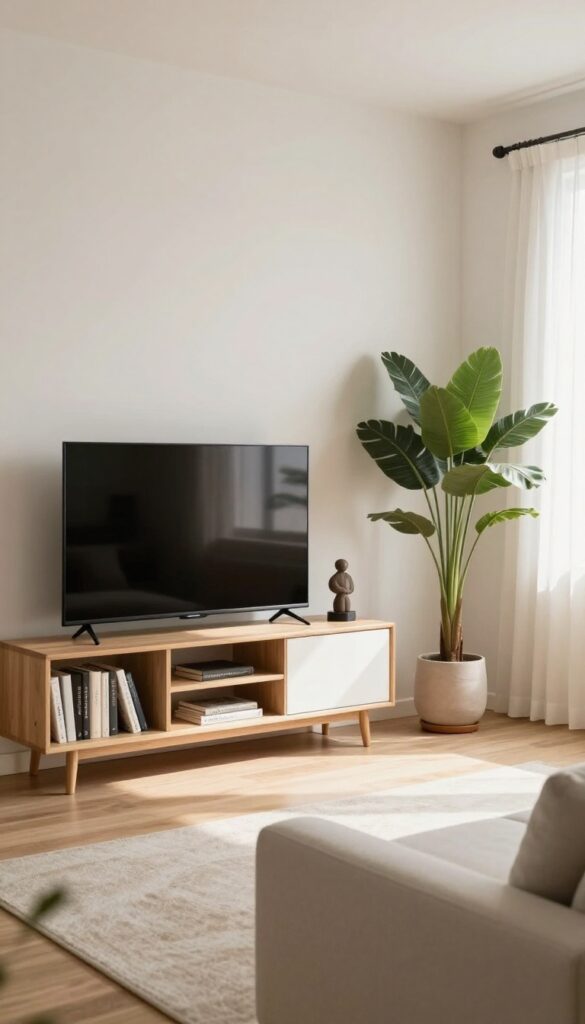
That awkward corner where two walls meet? It’s not dead space—it’s an opportunity. A triangular or L-shaped corner TV stand tucks your screen into an otherwise wasted spot, freeing up valuable wall real estate for a sofa, bookshelf, or art.
In a small living room, this simple shift can make the whole layout feel more open and intentional.
Instead of fighting for wall space, lean into an unused corner. A corner TV stand works especially well in open-plan rooms where you want to define the living area without blocking sightlines. Choose a stand with open shelves or a slim profile so it doesn’t overwhelm the corner.
Pair it with a low-profile media console underneath for streaming devices and a few decorative baskets for remotes and cables. The result? A clean, space-aware setup that feels custom-fit.
Best Shapes And Sizes
Look for triangular stands with a 45-degree angle or L-shaped units that wrap around the corner. If your TV is 50 inches or smaller, a compact corner stand keeps the footprint minimal. For larger screens, opt for a wider L-shape that provides extra shelving without protruding too far into the room.
Layout And Flow Tip
Angle your sofa toward the corner so the TV becomes the focal point without forcing furniture against walls. Leave at least 3 feet of walking space between the stand and the seating area. This creates a cozy conversation zone while keeping the room airy.
Styling The Corner
Balance the TV with a tall plant or floor lamp on the opposite side of the corner to draw the eye upward. Use the stand’s shelves for a mix of books, a small sculpture, and a trailing pothos. Keep cables hidden with cord covers that match the wall color.
4. Open Shelving Unit with Baskets
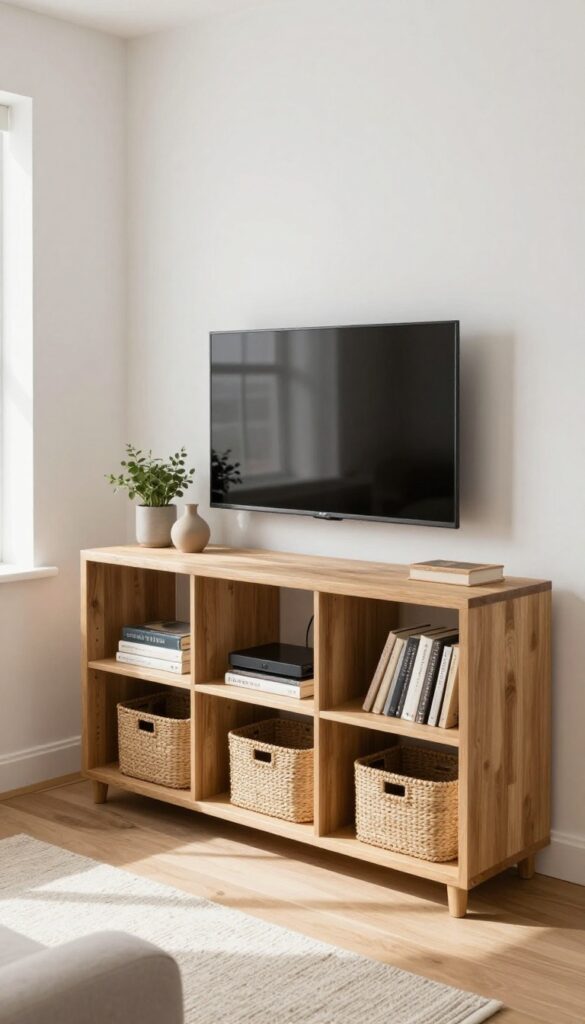
Open shelving strikes a perfect balance between display and concealment. By pairing a slim media console with woven baskets, you keep cords and electronics out of sight while leaving room for decorative objects. This setup works especially well in tight living rooms because it adds storage without the visual weight of a bulky cabinet.
An open shelving unit with baskets is a smart choice for small living rooms where every inch counts. The shelves give you a place to show off books, plants, or art, while the baskets hide remote controls, gaming accessories, and other clutter. Choose a unit that sits low to the ground to keep the sightline open, and stick with baskets in natural tones like seagrass or rattan to add warmth without overwhelming the space.
Best Materials
Go for a light wood frame like oak or birch to keep the room feeling airy. Pair it with baskets made from seagrass, jute, or water hyacinth for a textural contrast. If you prefer a modern look, try a black metal frame with charcoal woven baskets.
Layout Tip
Position the unit against the longest wall to maximize floor space. Keep the TV centered and leave at least 6 inches of empty shelf space on either side to avoid a cramped look. Place the largest baskets on the bottom shelf for stability.
Shelf Styling Tip
Layer items in odd numbers: a stack of books, a small plant, and a ceramic vase. Use baskets to group smaller items like charging cables or streaming devices. Leave about 30% of shelf surface bare to avoid visual clutter.
5. Narrow Console with Drawers
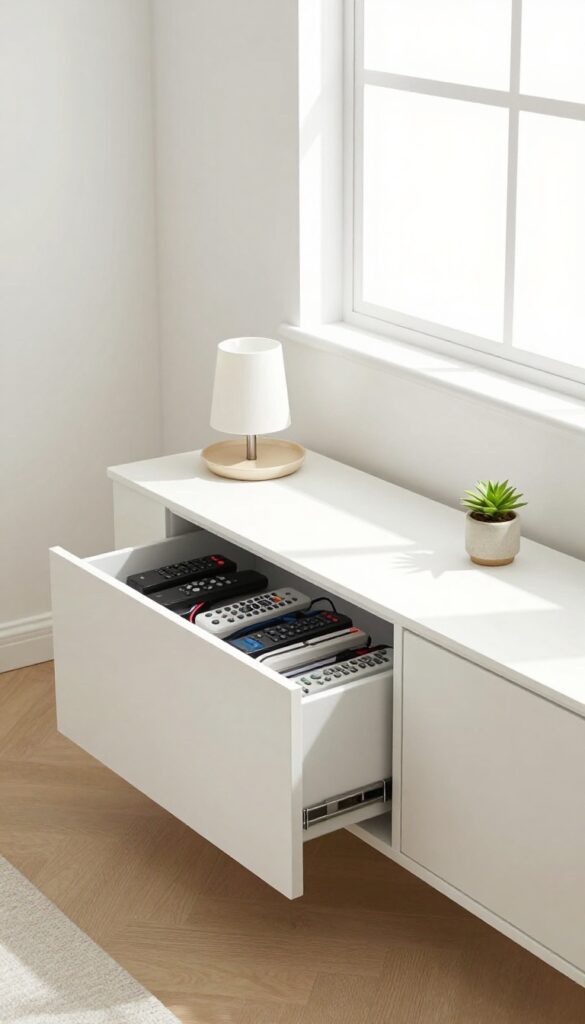
A narrow console with drawers is the ultimate small-space win. It slides into tight spots—behind a sofa, along a hallway, or under a window—without blocking traffic. The shallow drawers keep remotes, chargers, and coasters neatly tucked away, while the top holds a lamp, a tray, or a small plant.
It’s proof that smart storage doesn’t need depth.
When floor space is precious, every inch counts. A slim console with drawers delivers storage exactly where you need it, without the bulky footprint of a full media unit. The key is choosing one with a clean, low profile so it doesn’t visually crowd the room.
Look for a piece that sits close to the wall and offers just enough depth for small electronics and daily clutter. You’ll be surprised how much a few shallow drawers can organize—and how much calmer your living room feels.
Best Colors
Stick with light or neutral finishes like white, oak, or pale gray to keep the console receding visually. If you want contrast, a dark tone like charcoal or walnut works well against a light wall, but keep the top surface clear or use a slim lamp to avoid heaviness.
Layout Tip
Place the console against a wall that’s at least 12 inches wider than the piece itself. This leaves breathing room on either side and makes the area feel intentionally styled. A small lamp or a framed photo on one end balances the look.
Storage Fix
Use drawer dividers to separate remotes, cables, and notepads. That way, you’re not digging through a jumble every time you need the TV clicker. A shallow tray on top catches keys and phones as you walk in.
6. TV on a Dresser for Dual Purpose
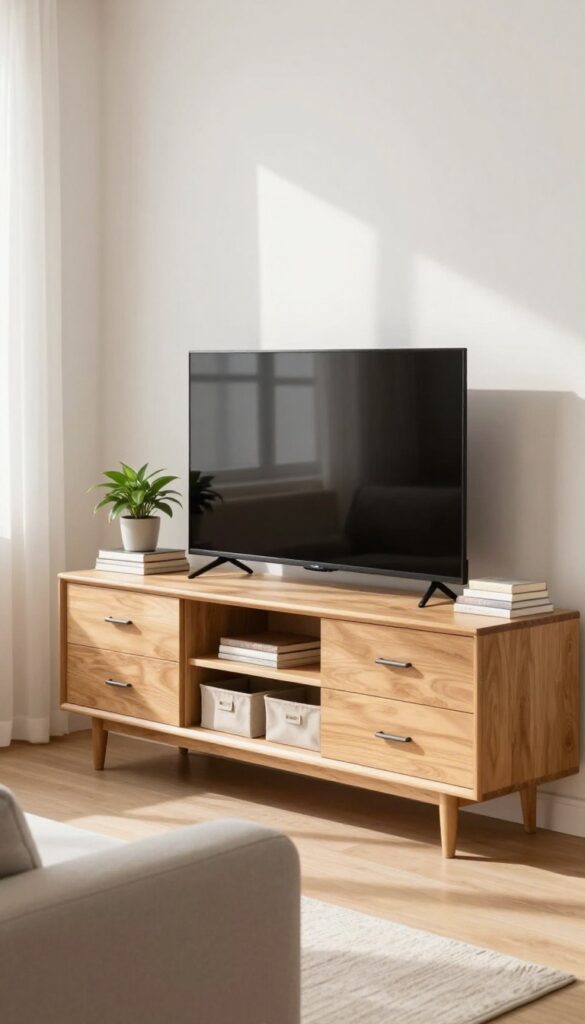
A low dresser pulls double duty in a small living room: it holds your TV while stashing away extra linens, clothes, or board games. This trick is a lifesaver in studio apartments where every piece of furniture needs to earn its keep. The key is picking a dresser with a solid top and enough depth to support your TV safely—typically between 18 and 20 inches deep works well.
The result is a streamlined look that hides clutter and keeps your living space feeling open.
Using a dresser as a TV stand is a smart, space-saving move that adds storage without sacrificing style. In a studio, it can replace both a bulky media console and a separate storage unit, freeing up precious floor area. Choose a dresser with clean lines and a finish that complements your room—white or light wood keeps things airy, while dark wood adds warmth.
Make sure the TV is centered and not too high; the middle of the screen should be at eye level when you're seated. Finish the look by styling the top with a few decor items like a small plant, a stack of books, or a ceramic vase to make it feel intentional.
Best Materials
Solid wood or high-quality MDF with a smooth finish works best. Avoid glass or mirrored tops because they can reflect glare and make the setup feel busy. A dresser with metal handles or tapered legs adds a modern touch, while wooden knobs keep it classic.
Storage Tip
Use baskets or fabric bins inside the drawers to keep smaller items organized. Label them if you're storing things like charging cables, remote controls, or seasonal accessories. This keeps the dresser functional and easy to maintain.
Small-space Fix
If the dresser is too wide for your wall, try a narrower one (around 30–36 inches) and mount the TV above it. This leaves the top surface free for decor and still gives you drawer storage below. Just be sure to use a proper wall mount and hide the cords.
7. Wall-Mounted Cabinet with Doors

When floor space is at a premium, going vertical is the smartest move you can make. A wall-mounted cabinet with closed doors keeps your TV and media gear neatly tucked away, eliminating visual clutter and protecting electronics from dust. The glossy white finish we’re suggesting here does double duty—it reflects natural light around the room, making the whole space feel airier and more open.
This look works especially well in compact living rooms where every inch counts.
A wall-mounted cabinet with closed doors hides electronics and keeps dust away. Choose a glossy white finish to reflect light and make the room feel bigger.
Best Placement
Mount the cabinet at eye level when seated, typically around 42 to 48 inches from the floor to the center of the TV. In a narrow room, centering it on the longest wall creates balance and leaves walkways clear on both sides.
Storage Tip
Use the cabinet’s interior shelves to store gaming consoles, streaming devices, and cables out of sight. Add a small power strip inside and drill a discreet hole in the back for cord management—no messy wires visible.
Finishing Touch
Pair the glossy white cabinet with a slim, low-profile soundbar mounted just below the TV. The clean lines keep the look streamlined, and the reflective surface helps the unit blend into the wall rather than sticking out.
8. Ladder Shelf as a Vertical Console

A leaning ladder shelf doubles as a TV console and a display unit, making it a smart choice for small living rooms. The vertical design draws the eye upward, which helps a compact space feel taller and more open. With the TV placed on one tier and decor on the others, you get a casual, modern look that doesn't sacrifice floor space.
Ladder shelves are inherently space-saving because they lean against the wall and taper toward the top. This shape means you can fit a TV on a lower shelf while using the upper tiers for plants, books, or decorative objects. The open structure keeps the room feeling airy, and the natural wood or black metal finishes add texture without overwhelming the space.
For a cohesive look, choose a ladder shelf that matches your room's color palette—light wood for a Scandinavian vibe, dark metal for industrial edge.
Best Materials
Solid wood or bamboo ladder shelves offer warmth and durability, while metal frames with wood shelves give an industrial touch. For a budget-friendly option, look for engineered wood with a realistic grain finish. Avoid glossy or overly polished surfaces, as they can feel too formal for the casual ladder shelf aesthetic.
Layout Tip
Position the ladder shelf so the TV sits at eye level when you're seated. If the shelf has uneven rungs, place the TV on a stable, flat tier—usually the second or third from the bottom. Leave the top tiers for lightweight decor to prevent the shelf from feeling top-heavy.
Small-space Fix
In a very narrow room, opt for a ladder shelf that's no wider than the TV itself. This keeps the console proportional and avoids visual clutter. You can also use the bottom tier for a basket to hide remotes or cables, maintaining the clean, open look.
9. Console with Built-In Lighting

Glow isn’t just for accent walls. A TV stand with integrated LED strips or under-shelf lighting pulls double duty—it sets a mood and visually expands the room after sunset. In a small living room, that soft wash of light keeps the console from feeling like a dark block, making the whole setup feel airier and more intentional.
You don’t need a full renovation to get the effect; many ready-made units come with built-in lighting, or you can add your own strips for a custom look.
Built-in lighting transforms a basic console into a focal point that works day and night. During the day, the unit itself anchors the room with clean lines. Once the sun goes down, the hidden LEDs create a warm, ambient glow that reduces harsh shadows and makes the space feel larger.
This is especially useful in open-plan layouts where the TV area needs to feel cozy without closing off the rest of the room. The light also highlights any decor you place on the shelves—think small plants, books, or ceramic vases—so your styling gets extra attention.
Best Placement For The Lights
- For the most natural effect, position LED strips along the bottom edge of the console or under floating shelves. This casts light downward, which mimics the look of a floating piece and keeps the floor visually clear. If your console has open cubbies, add a strip to the top interior of each cubby to softly illuminate items inside without blinding glare.
- Avoid placing lights on top of the unit—they’ll compete with the TV and create an uneven glow.
Color Temperature Matters
- Stick with warm white (2700K–3000K) for a cozy, living-room-friendly vibe. Cool white or RGB lights can feel too clinical or distracting, especially when the TV is on. Dimmable strips give you flexibility: brighten them for movie nights or dim them for a relaxed evening.
- If you want a subtle pop, choose a unit with adjustable color temperature so you can switch between warm and neutral depending on the time of day.
Small-space Styling Tip
- Pair the glowing console with a mirror or glossy wall art above it. The light will reflect, doubling the sense of depth and brightness. Keep the shelves minimally styled—one or two objects per shelf—so the light doesn’t get cluttered.
- A trailing plant like pothos on a top shelf catches the glow nicely and adds a soft organic touch to the sleek, lit console.
10. Repurposed Sideboard for Vintage Charm
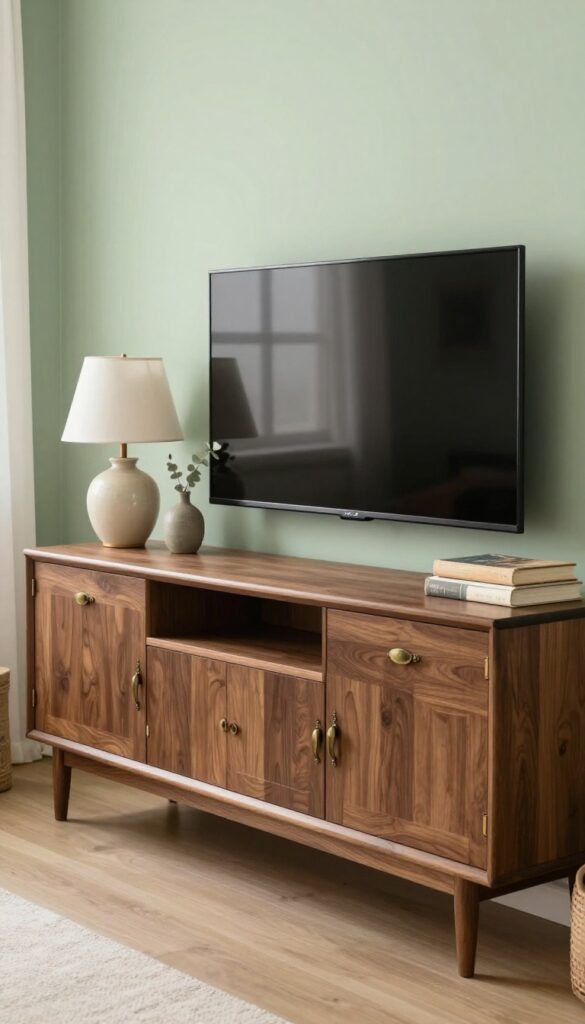
A vintage sideboard or buffet table brings instant character to a living room, especially when it doubles as a TV console. Its longer, lower profile works beautifully in narrow spaces where a bulky media unit would feel overwhelming. The patina of aged wood or the gentle curve of antique hardware adds a layer of warmth that modern furniture often lacks.
Plus, the generous storage behind those doors keeps electronics and cables neatly hidden.
An antique sideboard or buffet table can serve as a unique TV console with plenty of storage. Its longer length works well in narrow rooms, and the vintage look adds personality without sacrificing function. Choose a piece with a lower height so the TV remains at comfortable eye level, and use the drawers or cabinets to stow away remote controls, gaming accessories, and media collections.
The result is a conversation-starting focal point that feels collected, not mass-produced.
Best Colors
Stick with warm wood tones like walnut, oak, or mahogany to enhance the vintage feel. For a more modern twist, a painted sideboard in muted sage, navy, or soft cream can still read as antique while blending with contemporary decor. Avoid high-gloss finishes—they can look too shiny and compete with the aged aesthetic.
Layout Tip
Because sideboards are typically longer than standard consoles, they naturally anchor a seating area. Place the TV slightly off-center if the sideboard has a prominent cabinet or hutch section, or center it above a lower cabinet. Leave at least 6 inches of breathing room on each side for table lamps or decorative objects.
Storage Tip
Maximize the interior by using small baskets or dividers inside drawers to organize cables, streaming devices, and remote controls. If the sideboard has open shelving below, use woven bins to hide bulky items while keeping the look airy. This keeps clutter out of sight without sacrificing the vintage charm.
11. Modular Cube System for Flexibility
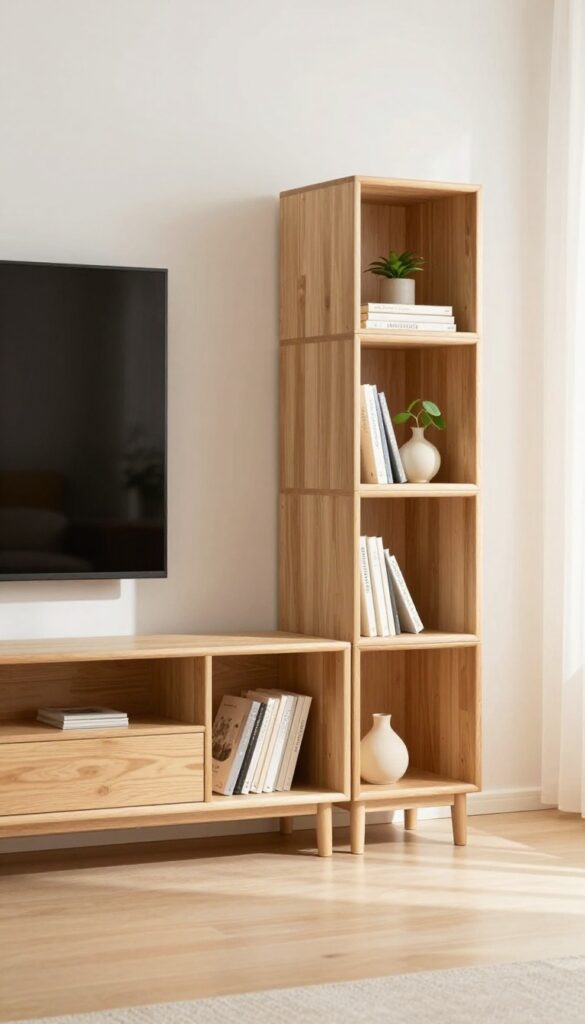
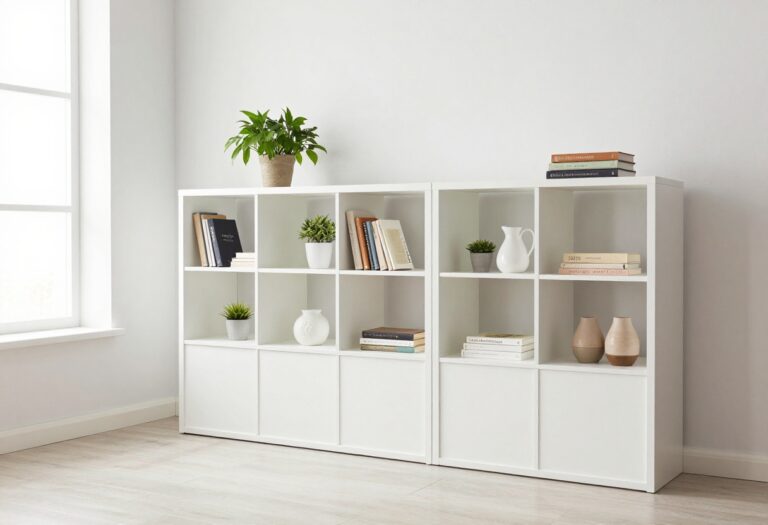
Interlocking cube shelves bring a custom, puzzle-like feel to your TV wall. Instead of a one-piece unit, you mix and match open and closed cubes to fit your exact needs. This system works especially well in small spaces because you can build upward rather than outward, keeping the floor clear and the room airy.
The best part? You can rearrange the cubes anytime your storage needs shift—perfect for when your book collection grows or you swap out decor.
A modular cube system turns your TV console into a living, changing part of your room. Start with a base of four to six cubes, then add more as you go. Keep the layout balanced by placing the TV slightly off-center or floating it above a low row of cubes.
Mix closed cabinets for hiding clutter with open cubes for displaying plants, books, or collectibles. The flexibility means you can adapt the console to different TV sizes or even move it to another room without starting over.
Best Materials
- Light wood like birch or pine keeps the system feeling open and airy. For a modern edge, go with matte black or white laminate. If you want warmth, choose walnut or oak veneer.
- Avoid heavy dark woods in a small room—they can make the cubes feel bulky.
Small-space Layout Tip
Build the cubes into a column rather than a wide row. A tall, narrow arrangement draws the eye up and makes the ceiling feel higher. Place the TV at eye level when seated, and leave a few cubes empty to avoid visual clutter.
Storage Strategy
Use closed cubes for items you don't need daily—cables, remotes, or board games. Open cubes can hold a mix of books and decorative objects. Add small baskets or bins inside open cubes to hide odds and ends while keeping the look cohesive.
12. Glass Shelf for an Invisible Look
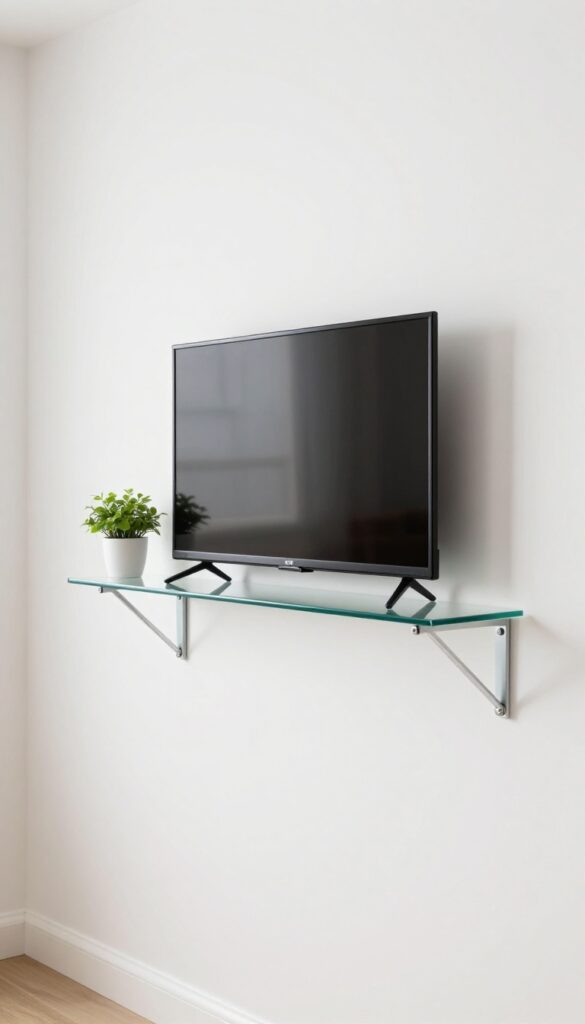
A clear glass shelf mounted on the wall makes the TV appear to float. It's ideal for minimalist spaces where you want the focus on the screen. This trick works especially well in small living rooms because it doesn't add visual bulk—just a sleek, almost invisible surface that holds your TV without competing for attention.
The glass shelf creates a clean, airy look that keeps the TV as the star of the room. Because the shelf is transparent, it blends into the wall, making the TV seem like it's hovering. This is a smart choice for tight spaces where every inch counts, and it pairs beautifully with a clutter-free aesthetic.
Best Wall Placement
Mount the shelf at eye level when seated, typically around 42 inches from the floor. For a floating effect, leave at least 6 inches of clearance above and below the shelf. Avoid placing it too high, which can strain your neck and break the illusion.
Cable Management Tip
Hide cords by running them inside the wall with a cable management kit. If that's not an option, use a clear cord cover painted to match your wall. This keeps the invisible look intact without messy wires dangling below.
Styling Around The Shelf
Keep the area around the shelf minimal—maybe a single small plant or a sleek soundbar on the shelf itself. Avoid cluttering the shelf with decor, as that defeats the invisible effect. Let the TV breathe and the wall stay clean.
13. Console with Sliding Barn Doors
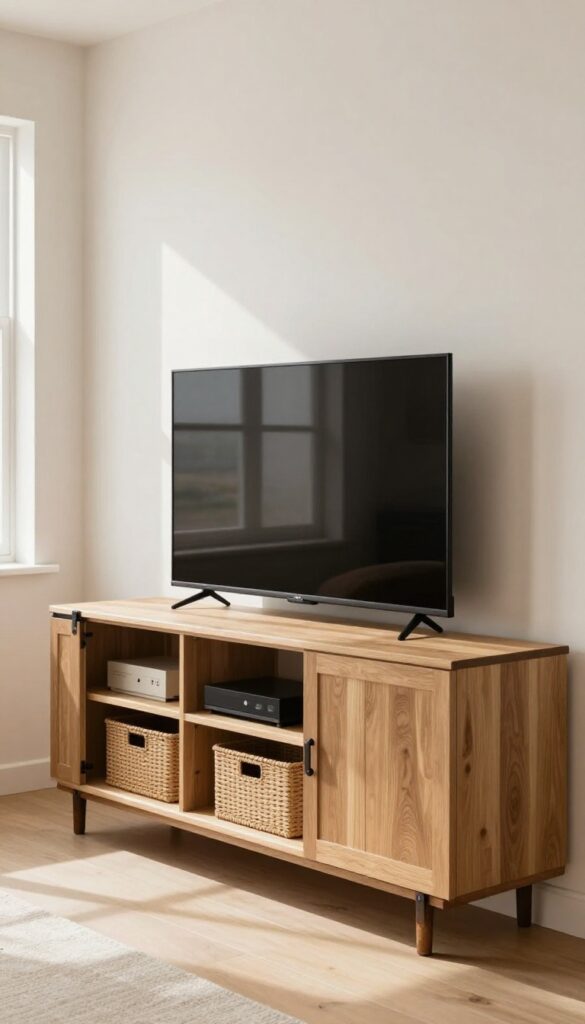
Sliding barn doors on a TV console are a clever way to keep your screen hidden until movie time. The rustic hardware and wooden panels add warmth to any living room, while the doors slide smoothly to reveal or conceal the TV and any media clutter. This setup is especially smart for small spaces, where every surface needs to earn its keep without feeling bulky.
A TV stand with sliding barn doors hides the TV when not in use and adds rustic charm. The doors also conceal clutter behind them.
Best Colors
Stick with natural wood tones like oak or walnut to keep the rustic feel. For a more modern twist, go with a painted finish in matte black or navy blue. Whitewashed wood works well in bright, airy rooms.
Small-space Fix
Choose a console with a slim profile and mount it slightly off the floor to create the illusion of more space. The barn doors should slide on a top-mounted track to save floor area and avoid tripping hazards.
Storage Tip
Use the space behind the doors for media components, game consoles, and cables. Add a few woven baskets on the shelves to corral remotes and accessories—everything stays out of sight when the doors are closed.
14. Tall Bookcase with TV Niche
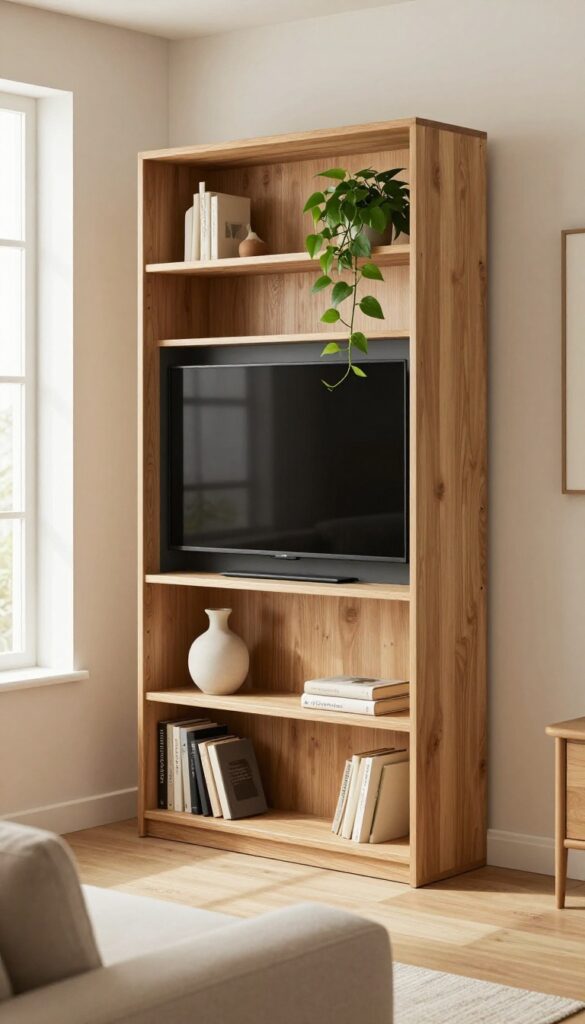
A tall, slender bookcase with a built-in TV compartment is a genius way to keep your living room feeling open and uncluttered. By stacking storage vertically, you reclaim precious floor space while still having room for books, plants, and decorative objects. The key is painting the TV niche a dark color so the screen almost disappears when it’s off, making the whole unit feel more like a library wall than an entertainment center.
This idea works especially well in narrow rooms or open-plan layouts where you want to define a cozy corner without adding bulky furniture.
This setup is all about verticality and visual calm. Choose a bookcase that’s tall but not too deep—around 12 to 14 inches deep is plenty for most TVs and books. The TV compartment should be centered at eye level when seated, with adjustable shelves above and below for flexibility.
Keep the niche painted in a matte charcoal or deep navy to minimize contrast with the screen. On the open shelves, mix books with a few sculptural objects and trailing plants to soften the look. A warm wood tone for the bookcase adds coziness, while a sleek black or white finish keeps it modern.
Best Colors
Go for a dark niche color like charcoal, black, or deep forest green. The rest of the bookcase can be a lighter shade—white, oak, or pale gray—to keep the room feeling airy. If you want a unified look, paint the whole unit one color and use the dark niche as a bold accent.
Layout Tip
Place the bookcase against the longest wall in the room, or use it as a room divider in an open-plan space. Leave at least 3 feet of clearance in front for comfortable viewing. If the room is very narrow, consider a corner unit to save even more space.
Shelf Styling Tip
Avoid overstuffing shelves. Group books both vertically and horizontally, and leave empty space for visual breathing room. Add a few ceramic vases, small framed photos, or a trailing pothos plant to bring life to the display.
15. Floating Drawer Unit Under TV
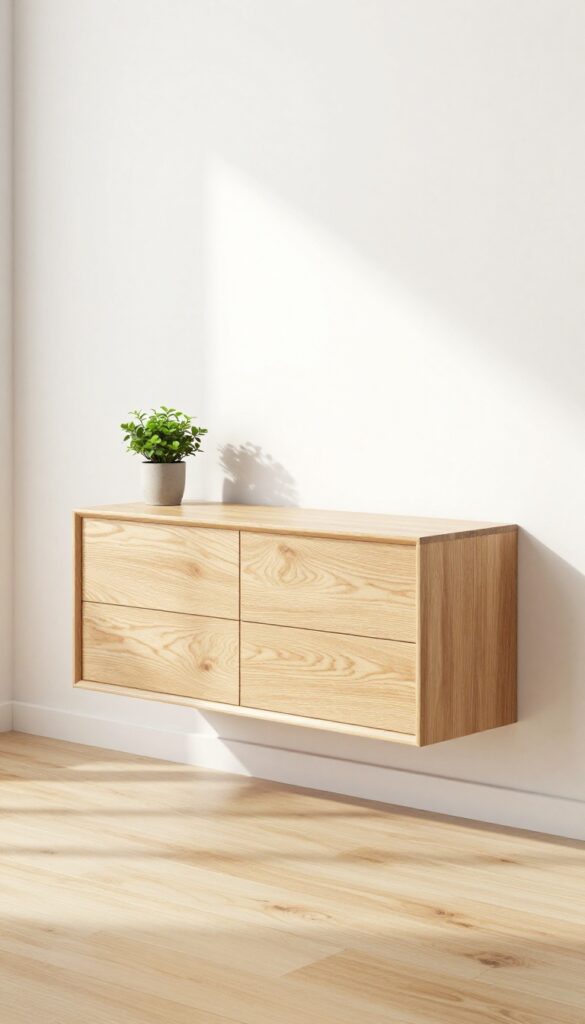
Mounting a set of floating drawers beneath your TV keeps the floor completely clear, which is a game-changer in a small living room. The open space underneath makes the room feel larger and less cluttered, while the drawers hide remotes, cables, and everyday odds and ends. It’s a smart, space-saving solution that blends storage with a sleek, modern look.
Floating drawer units are a brilliant way to add storage without sacrificing floor space. Because they’re attached to the wall, they create a clean, uninterrupted line across the room, which visually expands the area. They work especially well in narrow living rooms or apartments where every inch counts.
Choose a unit that’s slightly wider than your TV console for a balanced look, and keep the drawers shallow to avoid a bulky appearance.
Best Colors
- Stick with light or neutral tones to keep the unit feeling airy. White, pale oak, or light gray blends into the wall and makes the room feel bigger. For a subtle contrast, try a warm wood tone that matches your flooring or other furniture.
- Avoid dark colors unless you have a very large room, as they can make the unit feel heavy.
Layout Tip
Mount the unit at the same height as your TV or slightly lower so it feels integrated. Leave at least 6 to 8 inches of clearance between the bottom of the drawers and the floor for easy cleaning and a floating effect. Pair it with a low-profile media console or skip the console entirely if your TV is wall-mounted.
Storage Tip
Use drawer dividers to keep small items like remotes, charging cables, and game controllers organized. Dedicate one drawer to media accessories and another to everyday clutter like mail or keys. This keeps everything out of sight but easy to grab.
16. Crate-Style Console for Industrial Edge
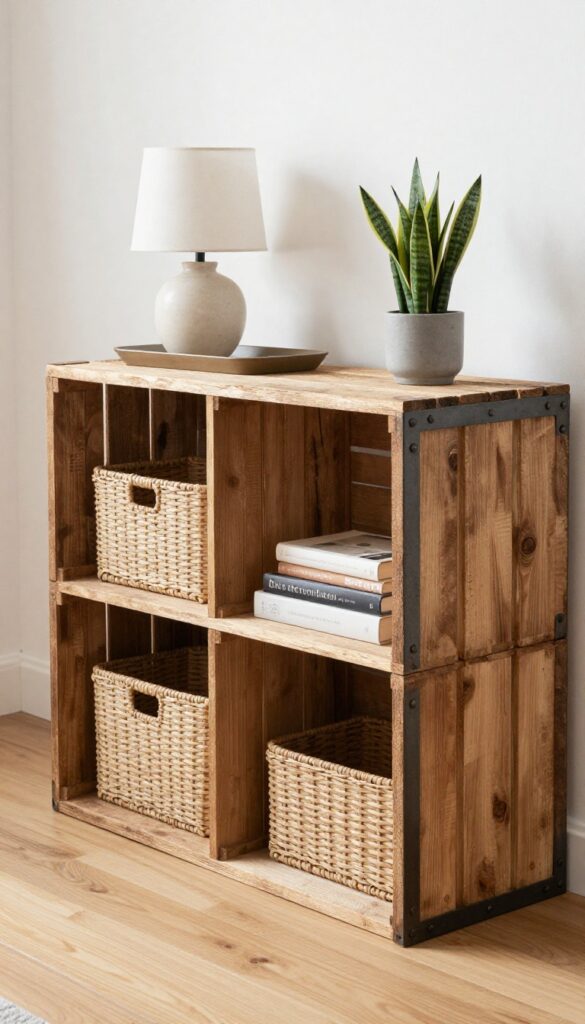
Stacked wooden crates or a ready-made crate console bring instant industrial character without taking up much visual weight. The open cubbies keep the room feeling airy while offering spots for baskets, books, or a small plant. It’s a smart choice for smaller living rooms because the structure stays low and lean, and you can customize the configuration to fit your exact wall width.
A crate-style console feels like a found-object treasure, blending raw wood with metal accents for a look that’s both rugged and refined. The open storage is perfect for corralling remote controls, magazines, or game controllers in woven bins, while the top surface holds a lamp and a tray for daily essentials. To keep it stable in a busy household, secure the crates to the wall with metal brackets—this also lets you stack them higher without worrying about tipping.
Best Materials
Opt for reclaimed pine or fir crates with visible grain and slight wear for authentic character. Pair them with black or galvanized steel brackets to reinforce the industrial vibe. If you’re buying a pre-made console, look for one with a distressed finish and metal corner braces.
Small-space Fix
Use the cubbies strategically: place a low-profile media console in one section, then fill the rest with baskets that hide cables and clutter. This keeps the visual load light while still providing ample storage for a compact living room.
Finishing Touch
Add a warm LED strip under the bottom crate to create a floating effect and soften the industrial edges. A small potted snake plant or pothos on top brings life without overwhelming the console’s simple lines.
17. Mirrored Console to Double Light
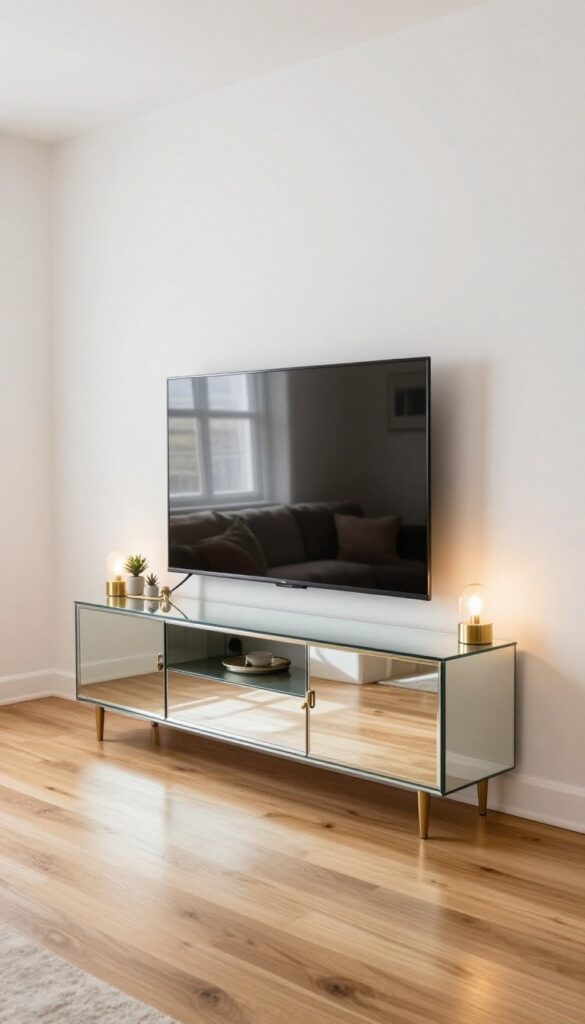
A mirrored TV stand might sound bold, but it's one of the smartest moves for a small living room. The reflective surfaces bounce natural and artificial light around the space, instantly making it feel larger and airier. It's a simple swap that delivers a big visual payoff without sacrificing storage.
A mirrored console works like a secret weapon in a dark or narrow living room. The reflection tricks the eye into seeing more depth, so the room feels twice as wide. It also pairs beautifully with metallic accents, like brass lamps or chrome frames, to amplify the glow.
Choose a console with mirrored doors or a mirrored top—both options help, but the doors hide your media gear while still reflecting light. Keep the surface clutter-free to maximize the effect; a few curated decor pieces are all you need.
Best Materials
Go for a console with a mirrored glass front or a high-gloss lacquer finish that mimics a mirror's reflective quality. A wood frame in a light tone like oak or white keeps the piece from feeling too cold. If you want extra shimmer, look for silver or chrome hardware.
Lighting Tip
Place a small table lamp on either side of the console, or install LED strip lights underneath. The mirror will catch the glow and spread it across the room, making the whole space feel brighter and more open.
Small-space Fix
In a very tiny room, a mirrored console can double as a vanity or entry table. Just clear off the top when you need to use it. The reflective surface also helps disguise dust and fingerprints—keep a microfiber cloth handy for quick wipes.
18. Console with Pull-Out Tray for Laptop
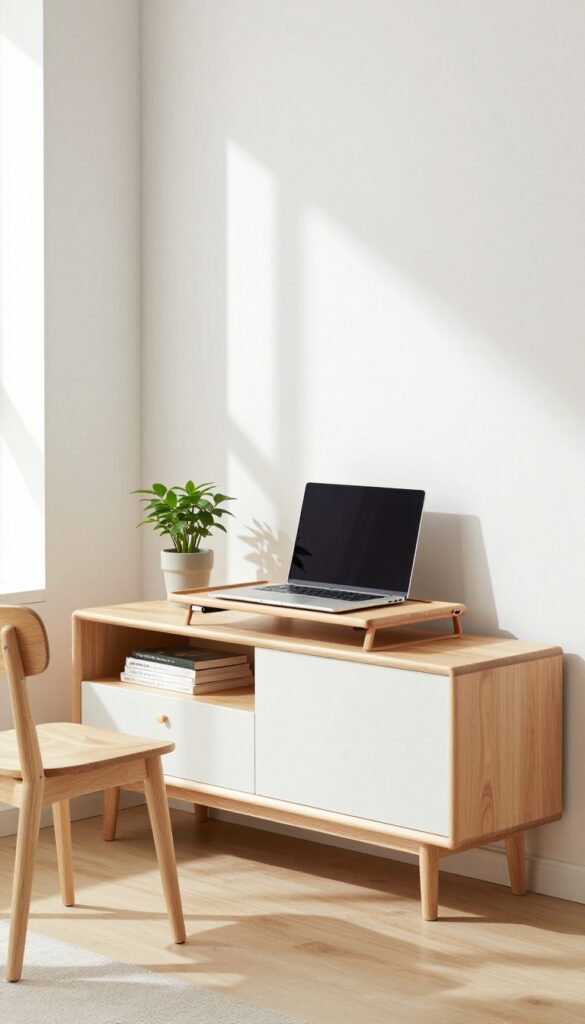
When every square foot counts, your TV console can do double duty. A unit with a pull-out shelf or tray transforms into a compact workspace that tucks away when not in use. It’s a smart, space-saving move for small apartments where a separate desk just isn’t in the cards.
This setup keeps your living room streamlined while adding a functional work zone. The pull-out tray slides out for laptop use, then disappears to maintain a clean, uncluttered look. It’s especially handy in open-plan layouts where the living area pulls double duty as a home office.
Best Layout Tip
Position the console against a wall that gets natural light but isn’t directly facing a window to avoid screen glare. Leave enough floor space in front for a small chair or stool that can slide under the tray when not needed.
Styling The Shelf
Keep the surface around the TV minimal—maybe a small plant or a stack of books—so the work area feels intentional. Use a tray or mat on the pull-out shelf to protect the finish and define the workspace.
Cable Management
Since you’ll have both TV and laptop cables, use a cord cover or raceway along the back of the console. A small cable box or adhesive clips keep everything tidy and out of sight.
19. Rustic Wood Plank Console
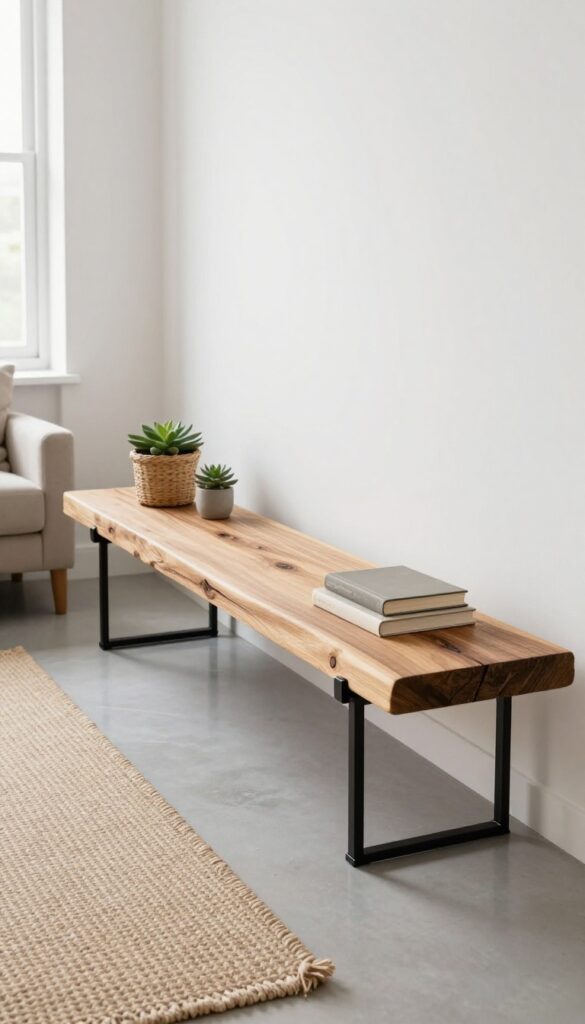
A single slab of reclaimed wood mounted on simple brackets gives you a TV console that feels both grounded and airy. The rough-hewn surface brings natural texture and warmth into the room without adding visual weight—perfect for a small living room where every inch counts. This DIY-friendly idea keeps the floor clear, making the space feel larger, while the wood’s character adds a cozy, lived-in vibe.
A rustic wood plank console is the ultimate small-space solution: it’s slim, budget-friendly, and full of personality. The key is choosing a thick, live-edge or reclaimed plank with visible grain and knots. Mount it at a height that works for your seating—typically 18 to 24 inches from the floor—so the TV sits at eye level.
The open space underneath keeps the room feeling uncluttered and makes vacuuming a breeze. Style the plank with a few curated objects: a low basket for remotes, a small potted plant, and a stack of books. Keep the look intentional but not crowded.
The natural wood pairs beautifully with neutral walls, soft textiles, and a jute or wool rug. If you want extra storage, add floating shelves above or a slim media console below, but the plank alone often does the trick.
Best Wood Choices
Reclaimed barn wood, salvaged pine, or a live-edge walnut slab all work well. Look for pieces that are at least 1.5 inches thick to avoid sagging. If new wood is your only option, choose oak or ash and distress it lightly with sandpaper for a rustic finish.
Mounting And Safety
Use heavy-duty brackets rated for the plank’s weight, and screw them into wall studs. For a cleaner look, choose hidden brackets that slide into routed slots on the underside. Always secure the TV to the wall with a safety strap, especially in a small space where kids or pets might bump into it.
Styling The Plank
Keep the surface simple: a small ceramic vase, a stack of design books, and a woven tray for remotes. Add a warm-toned lamp on one end for ambient lighting. Let the wood’s texture be the star—avoid cluttering it with too many accessories.
20. Two-Tier Console for Layered Storage

When floor space is tight, every inch needs to earn its keep. A two-tier console does exactly that by offering two distinct levels of storage without taking up any extra square footage. The lower shelf can hold baskets filled with remotes, cables, or streaming devices, while the top surface cradles your TV.
This setup keeps everything organized and accessible, making it a smart choice for small living rooms where clutter is the enemy.
A two-tier console is a small-space solution that thinks vertically. By stacking storage, you keep the floor clear and the room feeling open. Choose a slim profile with a lower shelf deep enough for media players or woven baskets.
The upper tier should be sturdy enough for your TV, with cable management built in or easily added. This layout works especially well in narrow rooms or apartments where you need to maximize every square foot without sacrificing style.
Best Materials
Opt for light woods like oak or birch to keep the visual weight low. A white or light gray finish also helps the console blend into the wall, making the room feel larger. If you prefer a darker look, choose a matte black or walnut finish, but pair it with a light wall color to maintain balance.
Storage Tip
Use the lower shelf for baskets that hide everyday items like game controllers, streaming sticks, and charging cables. Label each basket so everything has a home. For a cleaner look, choose baskets with a solid front or a tight weave that conceals contents.
Layout Tip
Position the console so the TV sits at eye level when you're seated. Leave a few inches of clearance above the TV for airflow if you have electronics. If your room is extra narrow, consider a wall-mounted version of the two-tier design to free up floor space entirely.
21. Console with Fold-Down Desk Feature

A wall-mounted console that folds down into a desk is the ultimate space saver. Use it as a TV stand during movie time and a work desk during the day. This dual-purpose piece is perfect for small apartments or multi-use living rooms where every square foot counts.
When your living room doubles as a home office, a fold-down console is a game-changer. Mount it on a wall opposite your seating area, and you've got a sleek TV stand that hides your work setup when not in use. During the day, flip it down to reveal a sturdy desk surface with room for a laptop and notebook.
The key is choosing a design with a clean, minimalist profile so it blends in whether folded up or down.
Best Materials
Opt for a solid wood or high-quality MDF with a matte finish to keep the piece looking refined. A light oak or walnut tone adds warmth without overwhelming the room. Avoid glossy surfaces that show fingerprints and smudges.
Layout Tip
Position the console at a height that works for both TV viewing (seated eye level) and desk use (standard desk height). Measure your sofa and chair heights to find the sweet spot. Leave at least 24 inches of clearance in front for pulling out a chair.
Storage Note
Look for models with small shelves or cubbies above the fold-down section. These can hold media devices, books, or office supplies, keeping the surface clutter-free. Use baskets or bins to hide cords and smaller items.
FAQ
What size TV console should I get for a small living room?
Choose a console that's slightly wider than your TV, but no more than 60 inches wide for most small rooms. Depth should be under 16 inches to avoid sticking out too far.
Should I mount my TV on the wall or use a stand?
Wall mounting saves floor space and gives a cleaner look, but a stand offers storage. For small rooms, consider a floating shelf or a low console that combines both.
How can I hide TV wires in a small space?
Use cord covers that paint to match your wall, run cables through the wall with a kit, or choose a console with built-in cable management channels.
What color TV stand is best for a small room?
Light colors like white, light wood, or mirrored finishes reflect light and make the room feel larger. Dark colors can work if the rest of the room is bright.
Can I use a regular table as a TV stand?
Yes, a sturdy console table, desk, or even a low bookshelf can work. Just make sure it's the right height (eye level when seated) and can support the TV's weight.
Conclusion
Your TV console doesn't have to be an afterthought or a space hog. With the right choice, it can become a stylish anchor that actually helps your small living room feel more open and organized.
From floating shelves to multi-purpose designs, these 21 ideas prove that small spaces can have big style. Pick the one that fits your layout and personality, and enjoy a living room that's both functional and inviting.