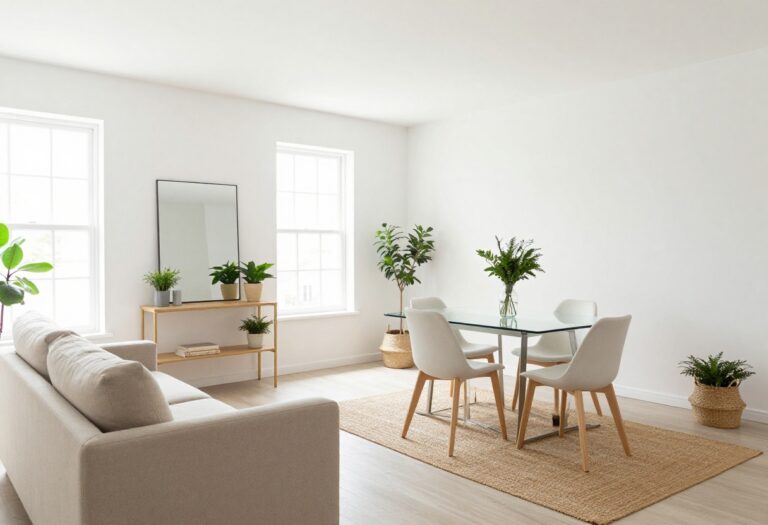
25 Smart Tiny Living Room Ideas to Maximize Your Space
Living in a small space doesn't mean you have to sacrifice style or comfort. With a few clever tweaks, your tiny living room can feel open, organized, and inviting. The key is choosing pieces that work double duty and arranging them in ways that make the most of every inch.
These 25 ideas are designed for a weekend refresh—no major renovations or big budgets required. Each tip is practical, easy to implement, and focused on making your space feel larger without losing personality. Whether you're renting or own your home, these space-aware solutions will help you create a living room that's both beautiful and functional.
Ready to transform your compact space? Let's dive in.
1. Float Furniture Away from Walls
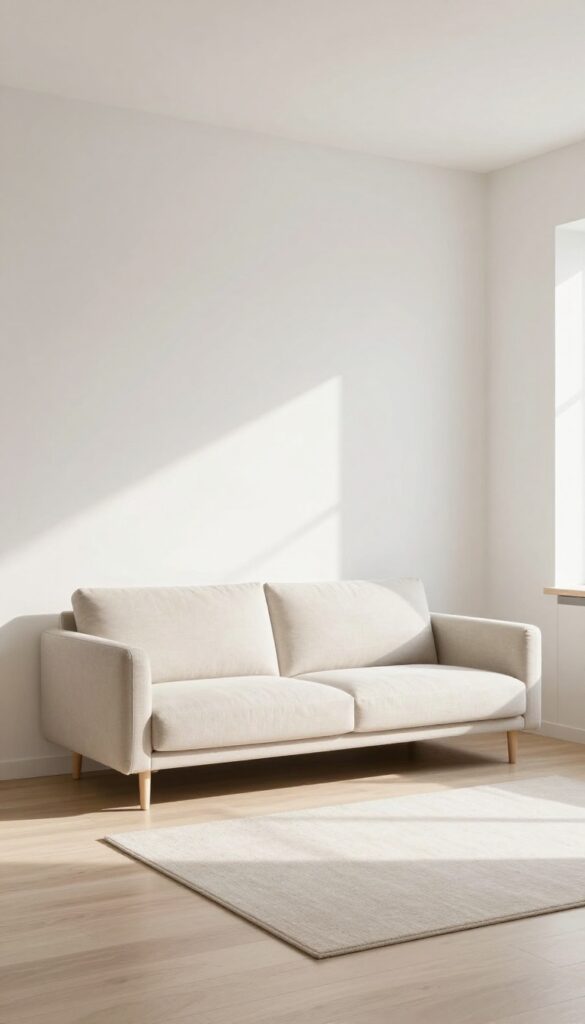
Most of us instinctively push sofas and chairs against the wall, thinking it opens up the room. But in a tiny living room, that habit actually makes the space feel smaller and more rigid. Pulling your seating just a few inches away from the walls creates a subtle gap that tricks the eye into seeing more floor area.
It also encourages a more natural, conversational layout—perfect for a weekend refresh that costs nothing but feels transformative.
Start by moving your main sofa about 4 to 6 inches away from the wall. If you have a console table or a slim shelf, slide it behind the sofa to fill that gap without losing the breathing room. This small shift instantly makes the room feel less boxed in and more intentional.
For chairs, angle them slightly toward the center rather than lining them up like soldiers. The result is a layout that feels both spacious and cozy, ideal for small apartments where every inch counts.
Best Layout Tip
- Place your largest piece—usually the sofa—at least 4 inches from the wall. Then float a lightweight armchair or two across from it, leaving a clear path behind. This creates a defined conversation zone without blocking traffic flow.
- In very narrow rooms, float the sofa parallel to the longest wall and add a slim console behind it for extra surface space.
Small-space Fix
If your room is extra tiny, try floating just one piece, like a loveseat or a pair of chairs, while keeping other furniture against walls. This partial float still opens up the center without sacrificing too much floor space. Use a small rug to anchor the floating furniture and visually separate the seating area from the rest of the room.
Finishing Touch
Add a narrow sofa table or a floating shelf behind the sofa to hold a lamp, books, or a small plant. This makes the gap feel purposeful and adds storage without crowding the room. Choose a table that's slightly shorter than the sofa back to keep the visual line clean and airy.
2. Choose a Slim-Profile Sofa
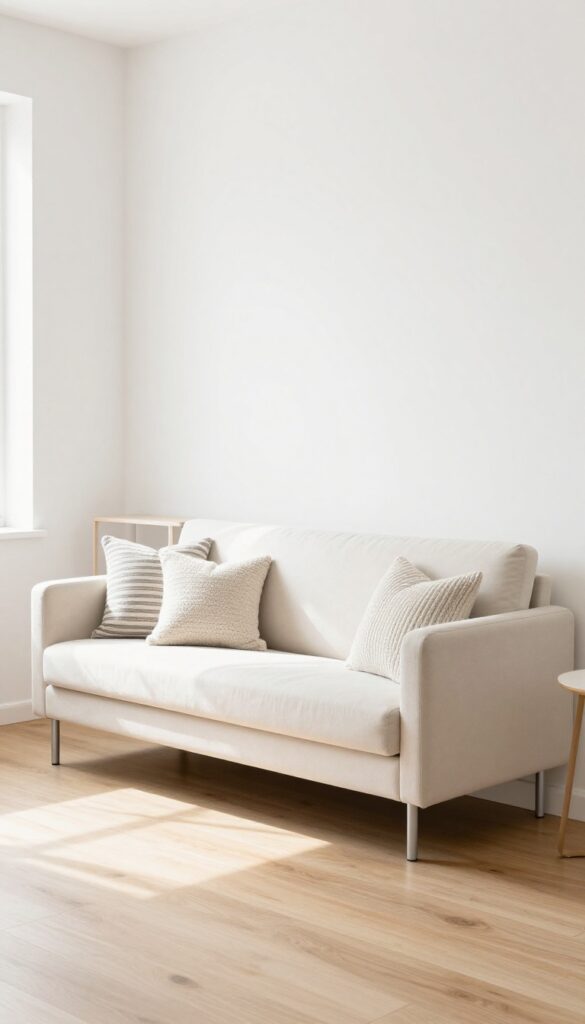
In a tiny living room, every inch counts—including the visual weight of your furniture. A bulky sofa can make a small space feel cramped before you even add a coffee table. That’s where a slim-profile sofa comes in.
With slender arms and a low back, it takes up less visual space while still offering a comfortable spot to sit and relax. Think of it as the streamlined, space-savvy upgrade your room needs.
A slim-profile sofa is a smart, space-aware choice that keeps your living room feeling open and airy. Look for designs with track arms or metal legs—they create a light, lifted look that lets the floor show through. Pair it with a slim console table behind it (if it floats in the room) or a small side table next to it.
The key is to avoid anything that feels heavy or overstuffed. This sofa works beautifully in apartments, condos, or any room where you want to maximize square footage without sacrificing style.
Best Colors
Stick with light, neutral tones like off-white, warm beige, or soft gray to keep the sofa visually weightless. If you want a pop of color, go for a muted pastel or a deep earthy tone—just keep the upholstery matte and texture-rich to avoid glare.
Layout Tip
Float the sofa away from the wall by a few inches to create a sense of depth. Then place a narrow, open-backed console table behind it for extra surface space without blocking the visual flow.
Finishing Touch
Add a few slim, cylindrical throw pillows in a contrasting fabric—like a chunky knit or a subtle stripe—to introduce texture without adding bulk. Keep the pillow count to three or fewer.
3. Use Mirrors to Double the Light
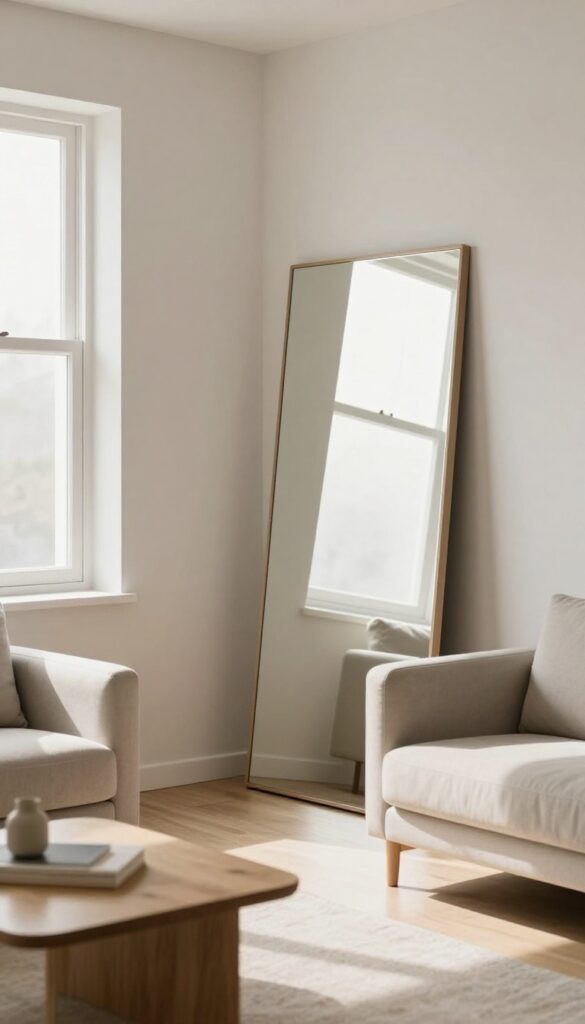
Mirrors are the ultimate trick for making a tiny living room feel airy and open. They bounce light around the room, instantly brightening dark corners and creating the illusion of more square footage. The best part?
This is a weekend-refresh move that costs next to nothing if you already have a mirror lying around.
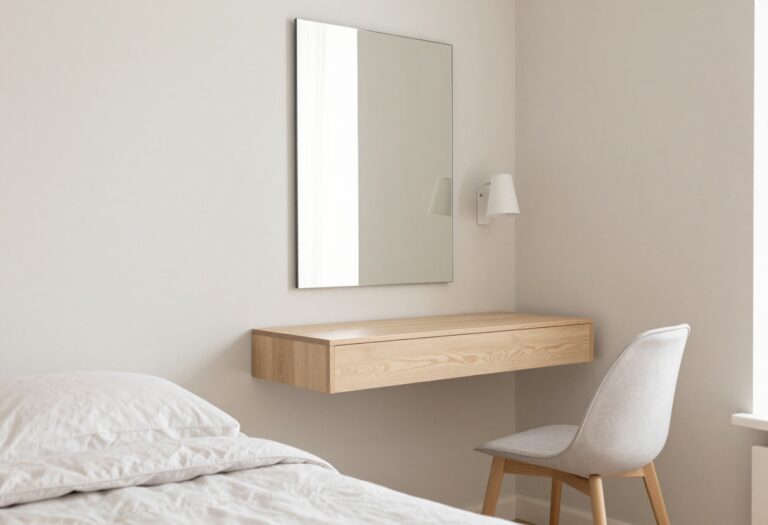
Hang a large mirror opposite a window to reflect natural light and make the room feel twice as big. A floor-length mirror works wonders in tight corners, adding depth without taking up floor space. For a smart, space-aware look, choose a mirror with a slim frame or no frame at all—it blends in while doing its job.
Best Placement
Position your mirror directly across from a window to maximize light reflection. If that's not possible, place it near a lamp or sconce to amplify artificial light. Avoid hanging mirrors on walls that face a cluttered area—you'll just double the visual noise.
Style Tip
Go for a round or oval mirror to soften the sharp lines of a small room. A leaning floor mirror adds a casual, lived-in vibe that feels intentional. For a budget-friendly swap, check thrift stores for vintage frames and spray-paint them in a matte black or brass finish.
Small-space Fix
In a super tight living room, use a mirrored wall panel instead of a traditional mirror. It reflects the entire room, making it feel dramatically larger. Just keep the rest of the decor minimal so the reflection doesn't look chaotic.
4. Go Vertical with Shelving
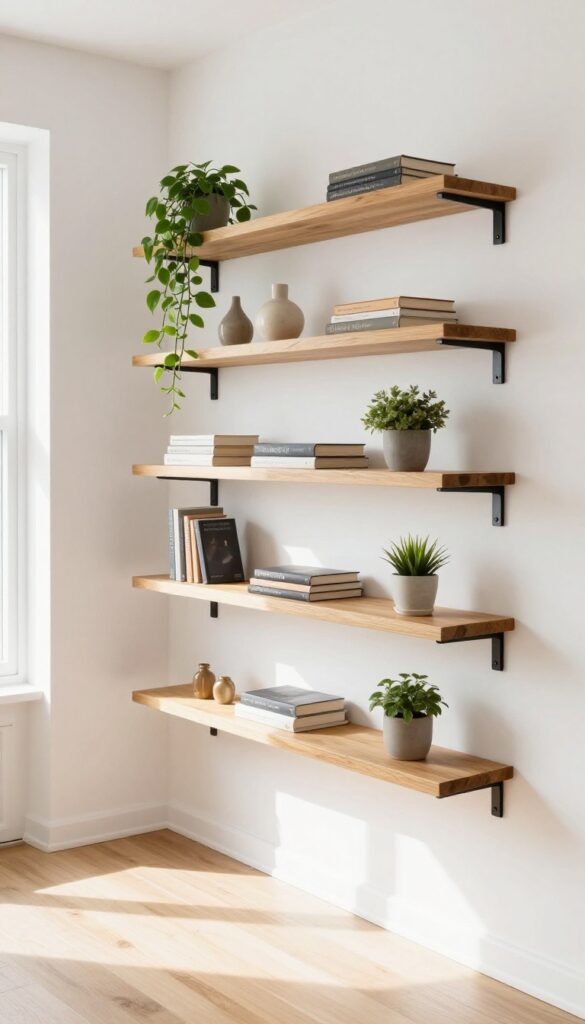
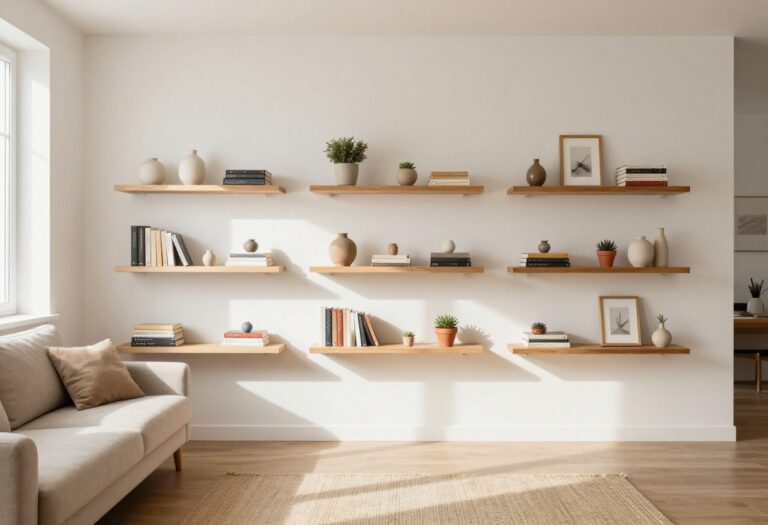
When floor space is tight, the walls become your best storage ally. Floating shelves placed high up draw the eye upward, making the ceiling feel taller and the room more open. They keep essentials within reach while leaving the floor clutter-free, perfect for a weekend refresh that instantly transforms the room's proportions.
The trick is to install shelves at varying heights, grouping them in odd numbers for a curated look. Use them to display a mix of books, small plants, and decorative objects that add personality without overwhelming the space. Stick to a cohesive color palette—like warm woods with black metal brackets—to keep the arrangement intentional.
Shelf Styling Tip
Create visual rhythm by layering items: lean a few books vertically, stack some horizontally, then add a trailing plant or a small sculpture. Leave about 30% empty space on each shelf for breathing room, and group items in odd numbers for a naturally balanced look.
Best Materials
For a light, airy feel, choose slim white or light wood shelves that blend into the wall. If you want contrast, go with dark wood or black metal that pops against a pale background. Floating shelves with hidden brackets give a seamless, built-in appearance that feels custom.
Small-space Fix
Mount shelves just below the ceiling line to store lesser-used items like seasonal decor or extra books. This keeps daily surfaces clear and adds a sense of height. In a tiny living room, even a single row of high shelves can make the whole space feel twice as large.
5. Pick a Coffee Table with Storage
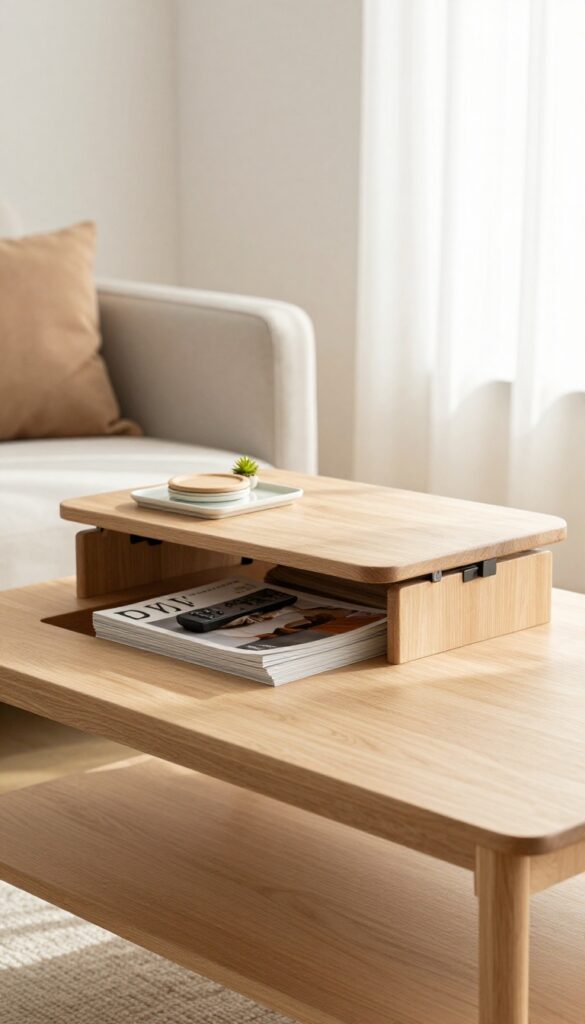
A coffee table is often the centerpiece of a tiny living room, but it doesn't have to be just a surface for coasters and clutter. Choosing one with hidden storage—like a lift-top or a table with built-in bins—lets you stash remotes, magazines, and cozy blankets out of sight. It's a simple swap that instantly makes your space feel more organized and intentional, especially when you're aiming for a weekend refresh.
A coffee table with storage is a small-space superhero. It keeps everyday essentials close at hand but hidden, so your living room stays tidy without sacrificing style. Whether you opt for a lift-top design that doubles as a desk or a table with deep drawers, you'll gain valuable real estate for items that would otherwise pile up on surfaces.
This is one of those smart, space-aware choices that makes a tiny room feel much larger and more functional.
Best Materials
- Look for materials that balance durability with a light visual weight. A white oak or light ash wood finish keeps the room airy, while a glass top with a storage shelf below adds transparency. Avoid heavy dark woods that can overwhelm a small space.
- Metal frames with a slim profile also work well, especially if you choose a table with a lower shelf for baskets.
Storage Tip
- Go for a coffee table with a lift-top mechanism—it's a game-changer for small living rooms. You can eat, work, or prop up your feet without losing access to the storage compartment underneath. Use the hidden space for items you reach for daily, like TV remotes, coasters, and a few magazines.
- Keep a small tray on top for the one or two items you want visible, like a candle or a small plant.
Styling Note
- Even with a storage coffee table, keep the top surface minimally styled. A simple tray, a stack of books, and a small vase are plenty. This maintains the clean, uncluttered look that makes a tiny room feel spacious.
- If your table has open shelves, use woven baskets to hide odds and ends while adding texture.
6. Embrace Multipurpose Ottomans
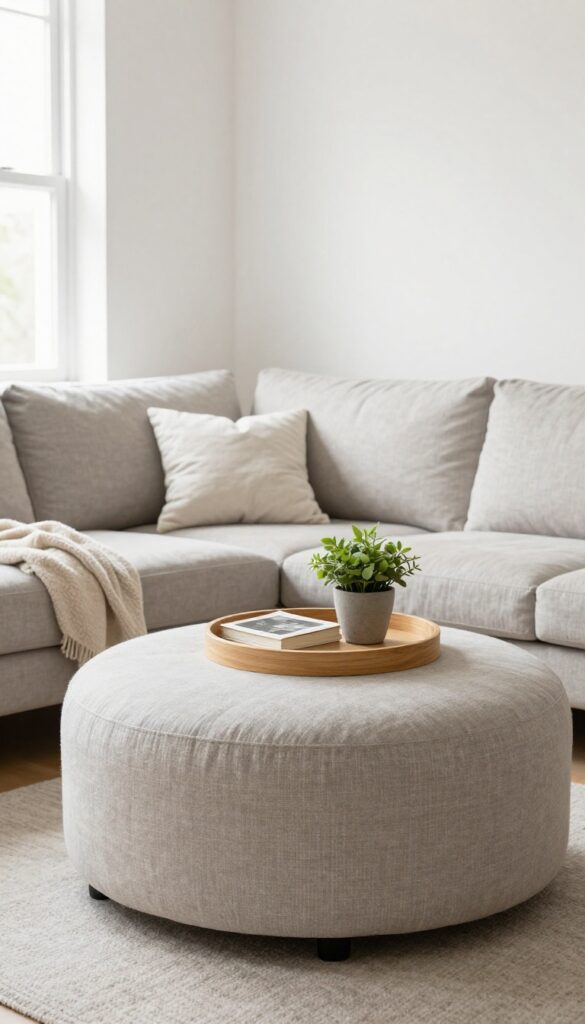
Ottomans are the unsung heroes of tiny living rooms. They pull double duty as extra seating, a footrest, and even a coffee table when you add a tray. The best part?
Many come with hidden storage inside, so you can tuck away blankets, remotes, or magazines in seconds. In a small space, every piece of furniture should earn its keep, and ottomans do exactly that without looking bulky or taking up too much floor area.
Multipurpose ottomans are a weekend-refresh friendly upgrade because they instantly add function without requiring major rearranging. Look for styles that blend with your existing color palette—neutral linen, soft gray, or warm tan work with most decor. Place one in front of your sofa as a casual coffee table alternative, or pair two smaller ones side by side for flexible seating when guests come over.
The key is choosing a size that fits your layout without overwhelming it. A round ottoman softens angular furniture, while a square one offers more surface area. Either way, you get storage, seating, and style in one compact piece.
Best Materials For Durability
In a high-traffic living room, opt for performance fabrics like polyester blends or crypton that resist stains and wear. Leather or faux leather wipes clean easily and adds a sleek look. If you prefer texture, a chunky knit or woven ottoman brings cozy warmth but may require more upkeep.
Storage Tip: Tray It Up
To turn your ottoman into a stable surface for drinks or decor, top it with a large tray. This creates a flat area for coasters, books, or a small plant, while the hidden storage underneath stays accessible. Choose a tray with handles for easy lifting.
Layout Tip: Double Duty In Corners
Place a storage ottoman in an empty corner next to your sofa. It becomes a spot to set down a cup or a book, plus a hidden stash for extra throw pillows or board games. This uses dead space without adding visual clutter.
7. Hang Curtains High and Wide
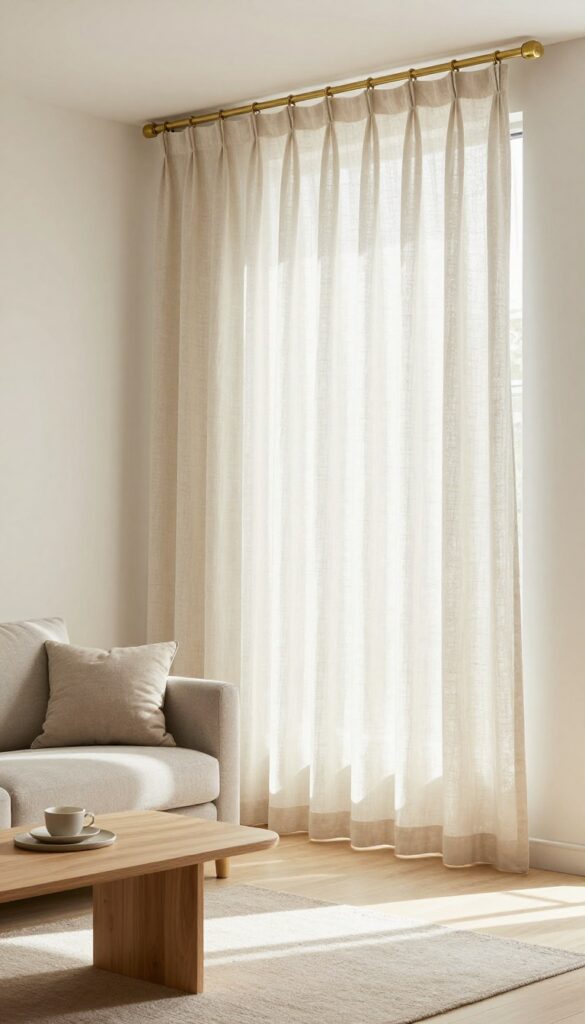
One of the quickest ways to make a tiny living room feel bigger is to trick the eye with curtain placement. By mounting rods closer to the ceiling and extending them well past the window frame, you create the illusion of taller walls and wider windows. It’s a simple weekend swap that instantly adds a sense of airiness and height—no construction required.
This trick works especially well in rooms with low ceilings or small windows. The extra fabric draws the eye upward and outward, making the whole space feel more expansive. Plus, it lets in more natural light when the curtains are open, since the rods sit outside the window frame.
For best results, choose lightweight, floor-length curtains in a solid color or subtle pattern that complements your existing palette.
Best Materials
Linen or cotton blends are ideal—they hang nicely without being too heavy. Avoid stiff fabrics that won’t drape well. A soft, flowing material enhances the airy effect and keeps the room feeling relaxed.
Layout Tip
Measure from the ceiling down to about a quarter inch above the floor. Use brackets that extend at least 6 to 12 inches past each side of the window so the curtains don’t block the glass when pulled open.
Finishing Touch
Pair with simple, modern curtain rings and a slim rod in a finish that echoes other hardware in the room—like brushed brass or matte black. This keeps the focus on the height, not the hardware.
8. Stick to a Light Color Palette
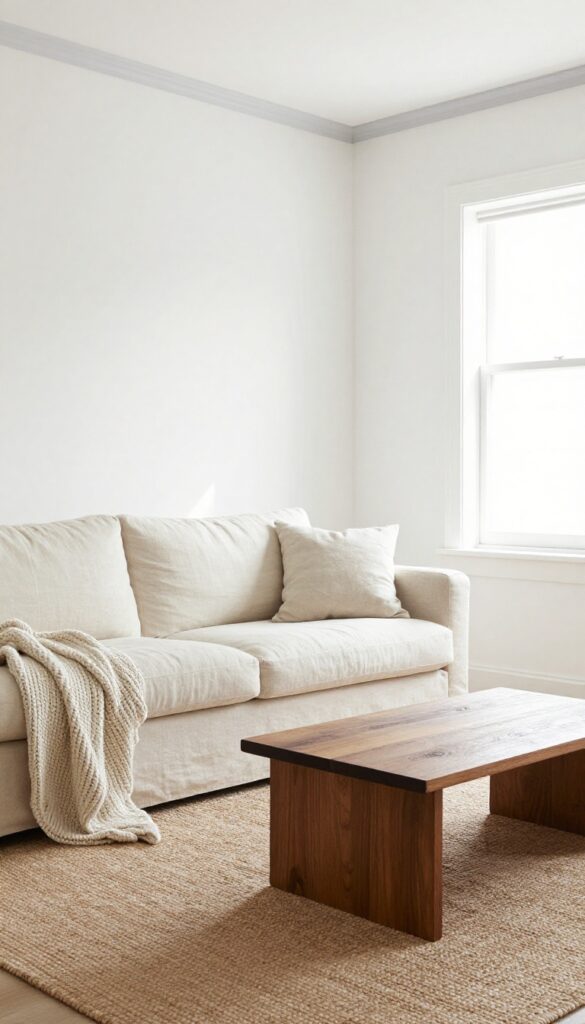
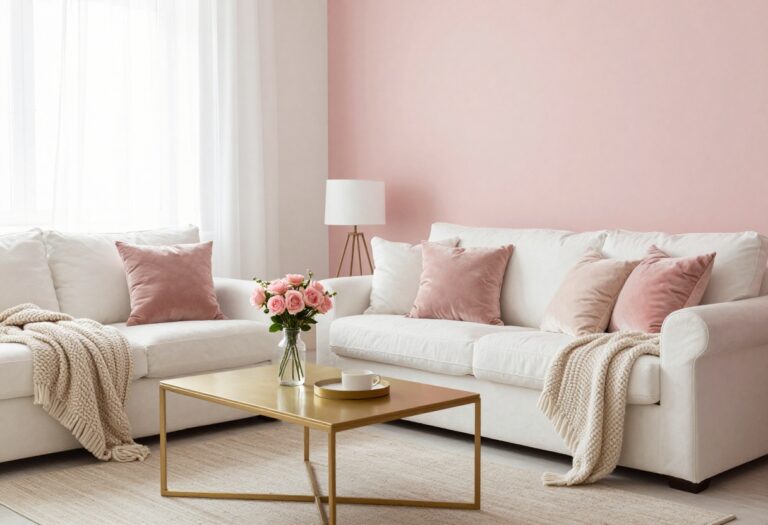
Nothing opens up a cramped living room quite like a light, airy color scheme. Soft whites, creamy ivories, and pale grays bounce natural light around the room, making the walls feel like they recede rather than close in on you. This isn't just a visual trick—it's a mood lifter.
A light palette feels calm, clean, and endlessly flexible, so you can swap in accent pillows or art without clashing. And the best part? It's one of the easiest weekend refreshes you can do.
A fresh coat of paint in a soft neutral costs under $50 and takes an afternoon, but the payoff is a room that breathes.
Light colors reflect light and make a small living room feel airy and open. Paint walls in soft whites, creams, or pale grays, and carry the same tone onto trim and ceiling for a seamless, expansive look. This trick works especially well in rooms with limited windows or north-facing light.
To keep the space from feeling sterile, layer in natural textures—a chunky knit throw, a linen sofa, or a jute rug—and add warmth with wood tones or a single piece of dark furniture as an anchor. The result is a room that feels bigger, brighter, and effortlessly stylish.
Best Colors To Start With
- Not all whites are created equal. For a warm, inviting feel, try Benjamin Moore's White Dove or Sherwin-Williams' Alabaster. If you prefer a cooler, more modern look, go for a pale gray like Agreeable Gray or a soft blue-gray like Classic Gray.
- Stay away from stark, hospital-white shades—they can feel cold and uninviting. Test samples on your wall and observe them at different times of day before committing.
Texture Mix To Avoid Flatness
- A light palette can read as flat if you don't introduce variety. Mix textures to add depth: pair a smooth white wall with a ribbed ceramic vase, a nubby wool throw, and a sleek leather ottoman. Natural wood furniture, rattan baskets, and matte black accents break up the lightness without darkening the room.
- The key is contrast through texture, not color.
Finishing Touch: Ceiling Paint
- Painting the ceiling the same light color as the walls is a classic small-space trick. It blurs the line where wall meets ceiling, making the room feel taller and more open. If you want a subtle twist, try a white with a hint of warmth—like a soft cream—to add coziness.
- For a weekend refresh, this is a high-impact, low-cost move.
9. Add a Rug That Defines the Zone
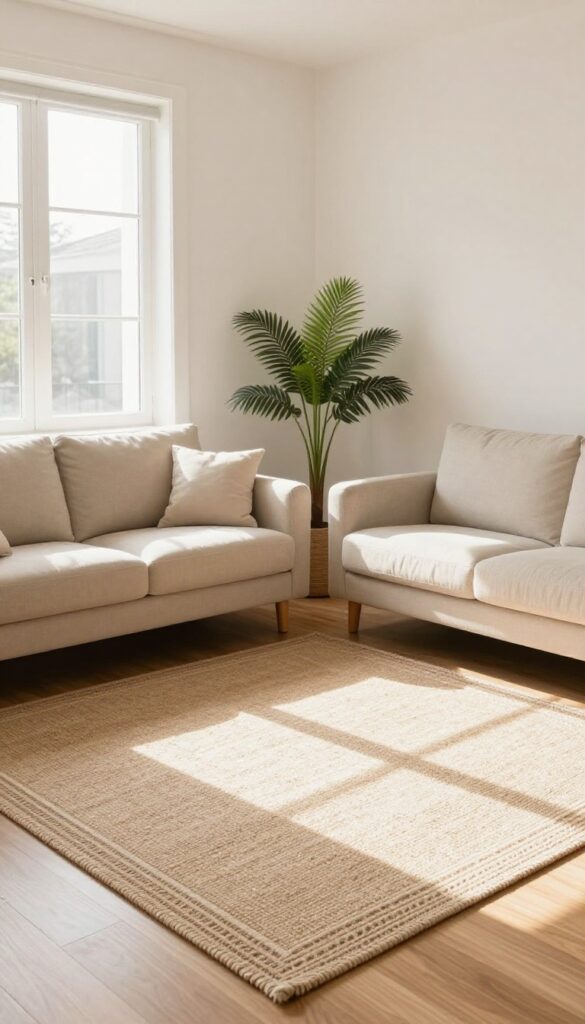
A rug does more than soften your floor—it carves out a clear seating area in an open or awkward layout. When every inch counts, the right rug makes your furniture feel intentional and anchored rather than floating. For a weekend refresh, swapping in a rug with a subtle pattern or a light neutral can instantly lift the whole room without touching a single wall.
Pick a rug large enough that all front legs of your sofa and chairs sit on it. This trick visually ties the furniture together and makes the space feel bigger because your eye sees one continuous zone rather than scattered pieces. A rug that's too small shrinks the room visually—aim for at least 5×7 feet in a tiny living room.
Natural fibers like jute or wool add texture and durability, while low-pile options are easier to clean and don't overwhelm a compact floor plan.
Best Colors And Patterns
Light neutrals—cream, beige, soft gray—keep the room airy and reflect light. If you want pattern, go for a subtle geometric or a faded Persian print that doesn't compete with other elements. A rug with a border can also help define the zone even more clearly.
Layout Tip
In a narrow living room, lay the rug perpendicular to the sofa to widen the space visually. For a corner seating arrangement, choose a round or oval rug to soften the angles and create a cozy conversation nook.
Budget-Friendly Swap
If you can't afford a large rug, layer two smaller rugs of the same style or color family. Overlap them slightly to create the illusion of one big rug—this also adds texture and interest.
10. Install Wall-Mounted Lighting
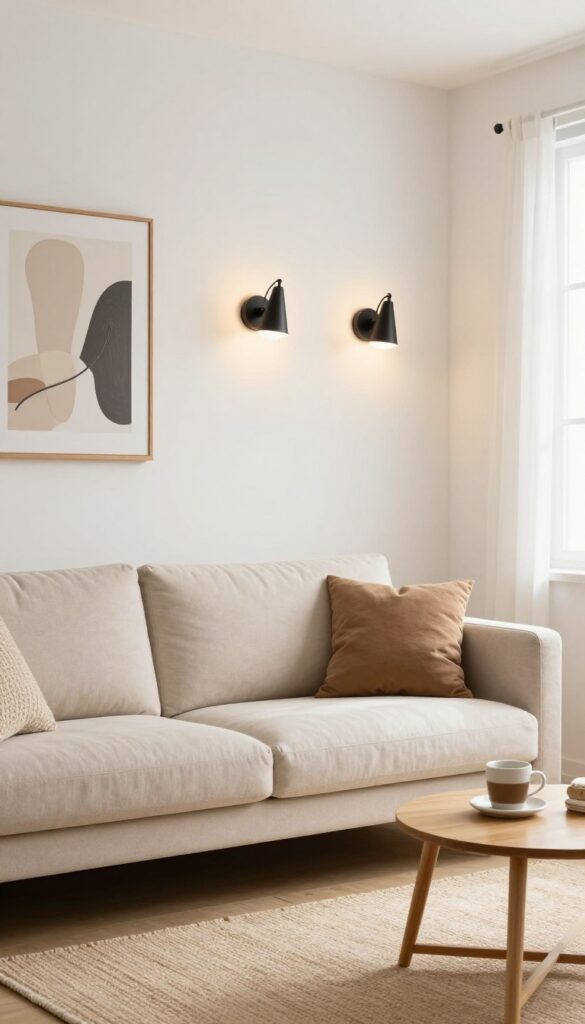
Wall-mounted lighting is a small-space superhero. By lifting light off the floor, you reclaim valuable real estate while adding a warm, sculptural element to your walls. Sconces and swing-arm fixtures create a cozy, layered glow without the visual clutter of cords and lamp bases.
They're perfect for tiny living rooms where every inch matters, and they instantly make the room feel more curated and intentional.
Skip the floor lamp and go straight to the wall. Wall-mounted lighting frees up floor space, reduces trip hazards, and adds a soft, ambient glow that makes a small room feel bigger. Whether you choose sleek modern sconces or vintage-inspired swing arms, the key is to position them at eye level or slightly above to draw the eye upward.
This trick visually lifts the ceiling and makes the room feel more spacious. Plus, you can use them to highlight artwork or architectural features, adding depth without taking up any square footage.
Best Placement
Install sconces on either side of a mirror or artwork to create symmetry and balance. In a tiny living room, flanking the sofa with swing-arm lamps gives you directed task lighting for reading without crowding the side tables. If you have a narrow wall, a single statement sconce can act as a focal point.
Style Tip
Choose fixtures with adjustable arms or shades so you can direct light exactly where you need it. Brass or matte black finishes add a touch of sophistication, while white or neutral tones blend in seamlessly. For a cozy vibe, opt for warm LED bulbs (2700K–3000K) and dimmable switches.
Budget-Friendly Swap
- No budget for hardwiring? Look for plug-in wall sconces with cord covers that paint to match your wall. They install with a single screw and give the same look without an electrician.
- You can also repurpose a small pendant light by mounting it on a wall bracket.
11. Use Nesting Tables for Flexibility
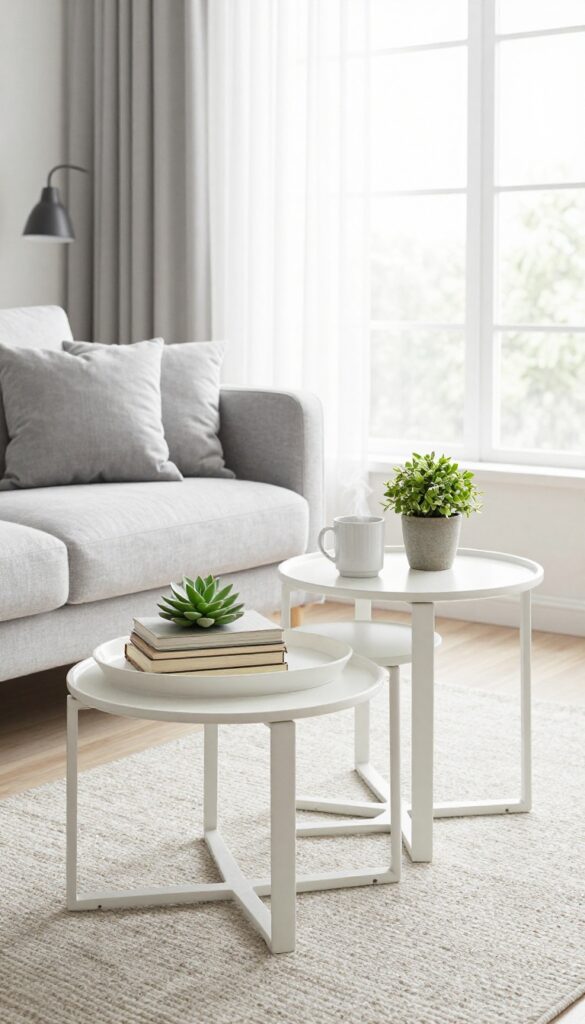
Nesting tables are the unsung heroes of small-space living. They give you multiple surfaces when you need them—like during movie night or when guests come over—and then disappear into a single slim silhouette when you don't. It's like having a coffee table, side table, and extra serving station all in one, without the visual clutter.
Nesting tables work because they adapt to your needs in real time. Pull them apart to create a sprawling coffee table setup or to place a drink within arm's reach of every seat. When you're done, slide them back together and reclaim your floor space.
They're especially brilliant in tiny living rooms where every square inch counts, and they come in styles from sleek modern to warm rustic, so you can match your existing decor without a second thought.
Best Materials
Look for nesting tables in lightweight materials like acrylic, metal, or slim wood. Glass tops keep the room feeling open, while matte black or brass frames add a touch of sophistication. If you have kids or pets, opt for rounded edges and scratch-resistant finishes—practicality never has to sacrifice style.
Layout Tip
Place the largest table in front of your sofa as a coffee table, then fan the smaller ones out to the sides when needed. For extra versatility, keep one nesting table near an armchair and another by the window as a plant stand—they earn their keep in more ways than one.
Styling Note
When nested, style the top table with a tray, a small stack of books, or a single sculptural object. This keeps the look intentional and prevents the set from feeling like a forgotten stack of furniture. A little curation goes a long way in a small space.
12. Create a Gallery Wall with Purpose
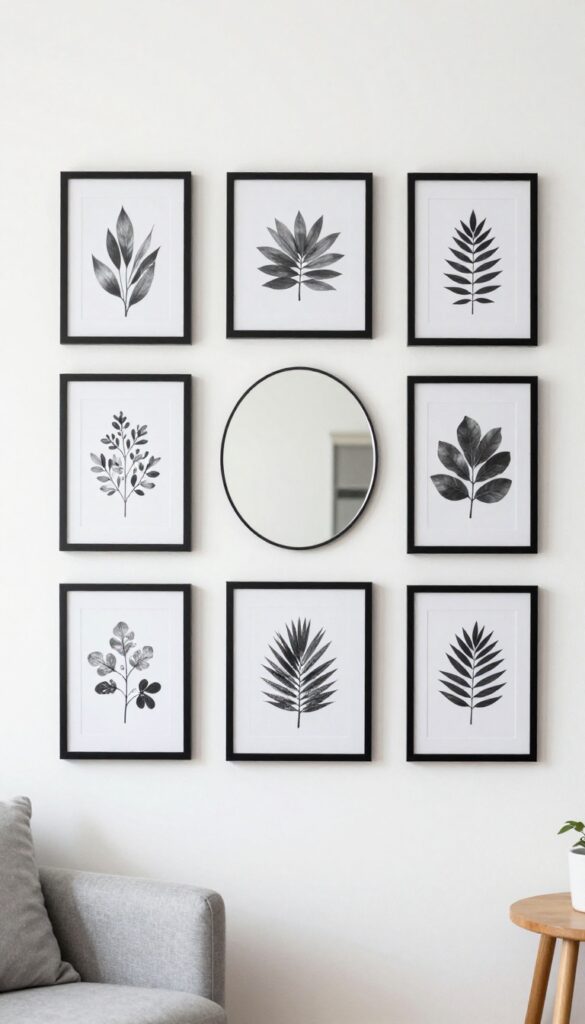
A gallery wall can make a tiny living room feel curated instead of cramped, as long as you keep the arrangement intentional. By clustering small frames in a tight, cohesive layout, you add personality without overwhelming the space. This trick also draws the eye upward, making the ceiling feel higher and the room more expansive.
Start by selecting a unifying element—same frame color, similar matting, or a consistent theme like botanical prints or black-and-white photography. Lay the frames out on the floor first to perfect the spacing before hammering any nails. Keep the overall footprint compact, roughly the size of a large piece of art, so it reads as one cohesive statement rather than scattered decor.
Layout Tip
Use a grid layout for a clean, modern look that’s easy to execute. Measure equal spacing between frames (2-3 inches works well) and use painter’s tape to mark the outline on the wall. A grid feels orderly and doesn’t compete with other furniture.
Best Frames
Stick with slim, lightweight frames in a single finish—black, white, or natural wood. Avoid ornate styles that add visual bulk. For a weekend refresh, swap out the artwork inside existing frames to instantly update the mood without buying new frames.
Finishing Touch
Incorporate one or two small mirrors among the frames to bounce light around the room. A round mirror breaks up the rectangles and adds a functional, airy element that makes the gallery wall feel purposeful and bright.
13. Incorporate a Corner Shelf Unit
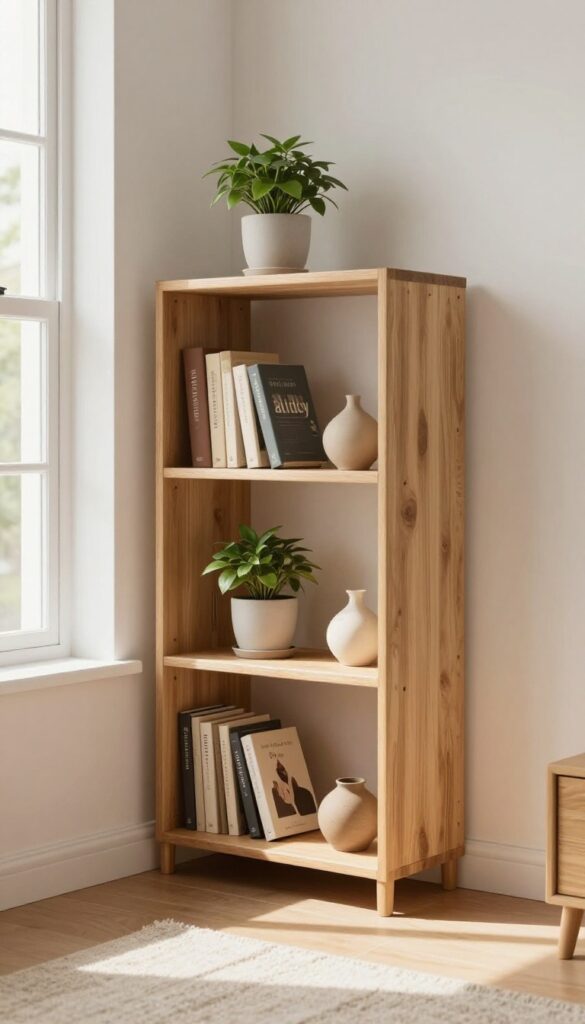
Corners often go unused, but they’re prime real estate in a tiny living room. A tall, narrow shelf fits snugly into an empty corner, turning dead space into a functional display area. It’s a weekend-refresh friendly upgrade that instantly adds storage without eating into your floor plan.
A corner shelf unit works wonders because it uses vertical space rather than precious square footage. You can stash books, plants, or decorative baskets, keeping clutter off surfaces while adding visual interest. The best part?
It’s an easy DIY project or a budget-friendly find at most home stores.
Best Materials
Go for lightweight wood like pine or bamboo for a warm feel, or choose metal for an industrial touch. In a small space, open shelving keeps the room airy—avoid bulky solid cabinets that feel heavy.
Shelf Styling Tip
Mix books with a few small plants or a single ceramic vase to create rhythm. Keep the look intentional by grouping items in odd numbers and leaving some breathing room between objects.
Small-space Fix
If your corner is tight, look for a triangular shelf that hugs the wall. Or install floating corner shelves in a staggered pattern for a custom feel without the commitment of a full unit.
14. Choose Furniture with Exposed Legs
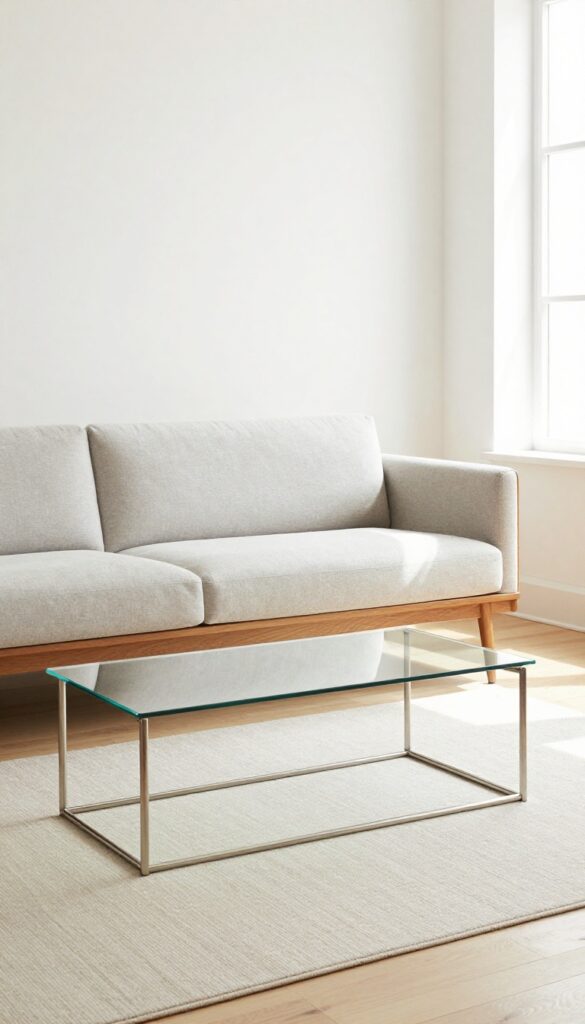
Sofas, chairs, and tables with slender legs create a sense of openness. The visible floor underneath makes the room feel less crowded. It’s a subtle trick that instantly lightens the visual weight of your furniture, making even a compact living area feel airier.
Furniture with exposed legs is a go-to for small spaces because it keeps the eye moving around the room rather than landing on heavy, blocky pieces. The gap between the furniture and the floor lets light pass through, which helps the room feel larger and more connected. This style works especially well in open-plan layouts or rooms with low ceilings, as it draws the gaze upward and outward.
For a weekend refresh, simply swap out a bulky sofa or coffee table for a leggy alternative, and you’ll notice an immediate difference in how spacious the room feels.
Best Materials And Finishes
Look for slim metal legs in black, brass, or chrome for a modern edge, or tapered wooden legs in walnut or oak for warmth. Avoid chunky or overly ornate legs—the goal is slender and streamlined. A mid-century modern sofa with angled wooden legs or a minimalist coffee table with hairpin legs are classic choices that blend style and function.
Layout Tip
Arrange leggy furniture so you can see as much floor as possible. Place the sofa away from walls to create a floating effect, and use a glass-topped coffee table with thin metal legs to maintain that open sightline. This layout trick works wonders in small rooms by making the floor area feel continuous and unbroken.
Finishing Touch
Add a low-profile rug that sits under the front legs of your sofa and coffee table, but leaves the back legs exposed. This anchors the seating area without covering up the legs entirely, preserving that airy feel. Choose a rug with a simple pattern or solid color to keep the focus on the furniture’s clean lines.
15. Use a Console Table Behind the Sofa
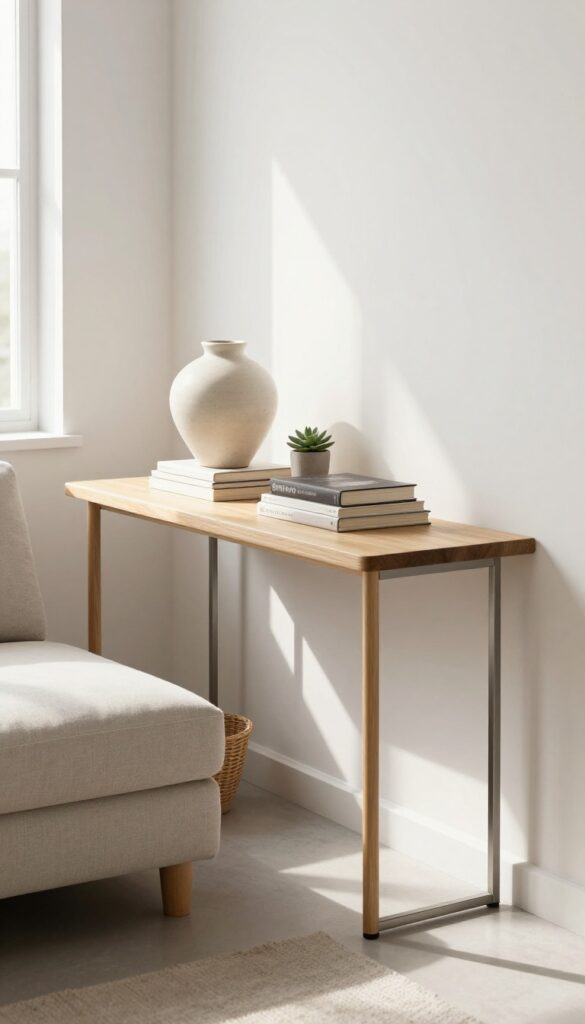
That gap between your sofa and the wall can feel like wasted real estate. A slim console table tucked behind the back cushions turns dead space into a functional surface without eating into your floor plan. It's one of those small-space tricks that instantly makes a room feel more intentional and layered.
A console table behind the sofa adds a landing spot for lamps, books, or a tray for remotes and coasters. It also creates a visual barrier, which can help define the living area in an open-concept room. Choose a piece that's narrow—12 to 18 inches deep—so you can still walk around comfortably.
Style it with a mix of heights: a tall lamp on one end, a stack of books on the other, and a small plant in between. This setup keeps the surface looking curated without feeling cluttered.
Best Materials
Go with a lightweight material like metal or slim wood to avoid a bulky look. A glass top or open shelving keeps the visual weight low, which is key in a tiny living room. Avoid chunky, dark pieces that will dominate the space.
Layout Tip
Pull the sofa forward about 6 to 8 inches from the wall to create room for the console. Make sure the table is slightly shorter than the sofa so it doesn't stick out past the ends. If your sofa is against a window, a low console can double as a plant shelf without blocking light.
Styling Idea
Use the console as a mini workspace by adding a slim laptop stand and a small task lamp. When not in use, it just looks like a stylish decor surface. Add a shallow basket underneath for extra storage—perfect for blankets or magazines.
16. Add a Large Plant for Life
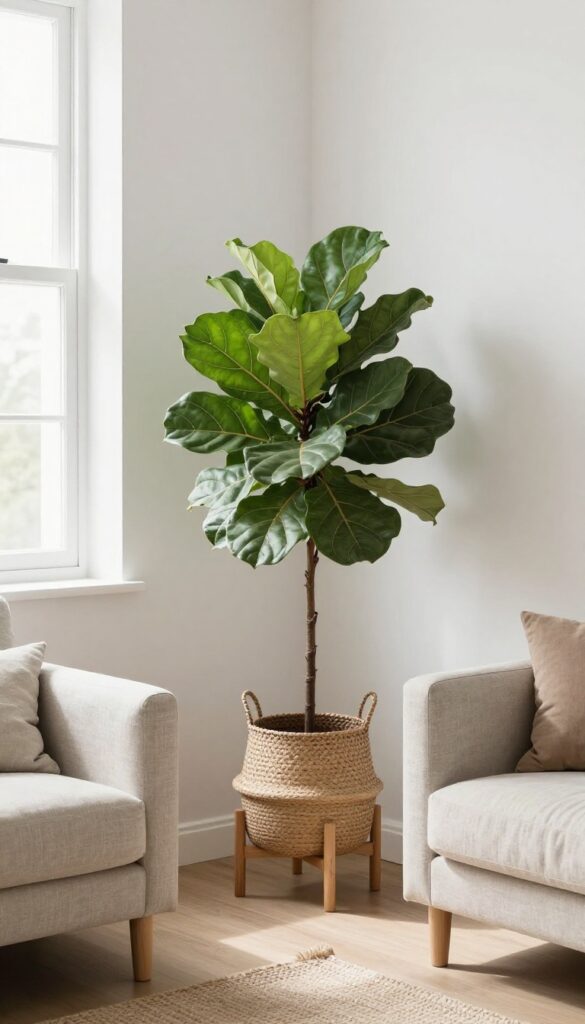
A tall, leafy plant like a fiddle-leaf fig or monstera instantly breathes life into a tiny living room. It draws the eye upward, making the ceiling feel higher, and adds a vibrant pop of green that softens hard edges. Best of all, it takes up very little floor space while delivering a big visual punch.
One large plant can transform a cramped corner into a mini oasis. Choose a specimen with broad, sculptural leaves to create a natural focal point. Place it near a window for light, but even low-light varieties like snake plants or ZZ plants work well.
The key is to let the plant stand alone—no clutter around the base—so it feels intentional, not messy.
Best Plant Choices
Fiddle-leaf figs, monstera deliciosa, and bird of paradise are top picks for their dramatic leaves. If you're not blessed with natural light, go for a snake plant, ZZ plant, or pothos on a tall stand. These thrive on neglect and still look lush.
Pot And Placement
Choose a lightweight, woven basket or a simple ceramic pot with a saucer to protect floors. Place the plant in an empty corner, next to the sofa, or beside a bookshelf. Avoid blocking pathways—let it be a standalone statement.
Styling Tip
Elevate the plant on a low stool or plant stand to give it more presence. Pair it with a neutral throw or a textured rug to tie the green into your color scheme. Dust the leaves weekly to keep them glossy and healthy.
17. Keep Decor Minimal and Intentional
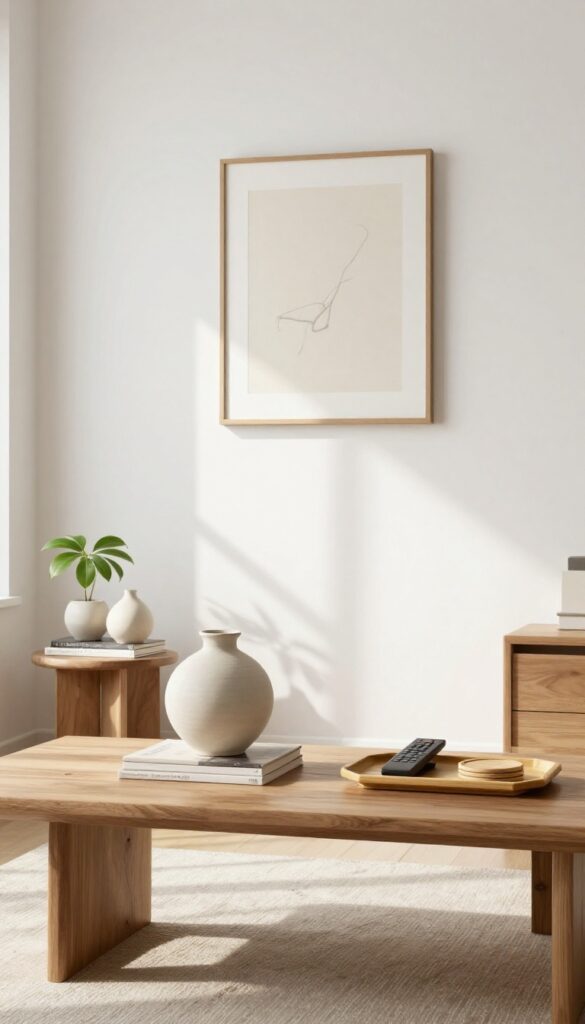
In a tiny living room, every object earns its place. Instead of filling every surface with knick-knacks, choose a few meaningful pieces that tell a story. This approach not only reduces visual clutter but also makes your space feel calm and curated—like a breath of fresh air after a long week.
Start by editing down your accessories to just two or three focal points per zone. A sculptural vase on the coffee table, a stack of your favorite books on a side table, and one piece of wall art can be enough. The goal is to let each item breathe, so your eye has a place to rest.
This minimalist mindset works beautifully with a weekend refresh: simply box up everything extra and see how much lighter the room feels. Then, only bring back what you truly love or use.
Best Materials
Stick with natural, tactile materials like wood, stone, linen, and ceramic. These add warmth and texture without overwhelming the space. A single ceramic bud vase or a wooden bowl can be both functional and decorative.
Shelf Styling Tip
When styling shelves, use the rule of thirds: group items in odd numbers, vary heights, and leave empty space. For example, pair a small plant with a stacked book and a tiny sculpture. The gaps make the arrangement feel intentional, not crowded.
Finishing Touch
Add a small tray to corral remotes, coasters, and other daily essentials. It keeps them accessible but contained, so they don't scatter across the table. Choose a tray in a natural material like bamboo or leather to stay consistent with the minimal look.
18. Use a Sliding Door or Curtain for Storage
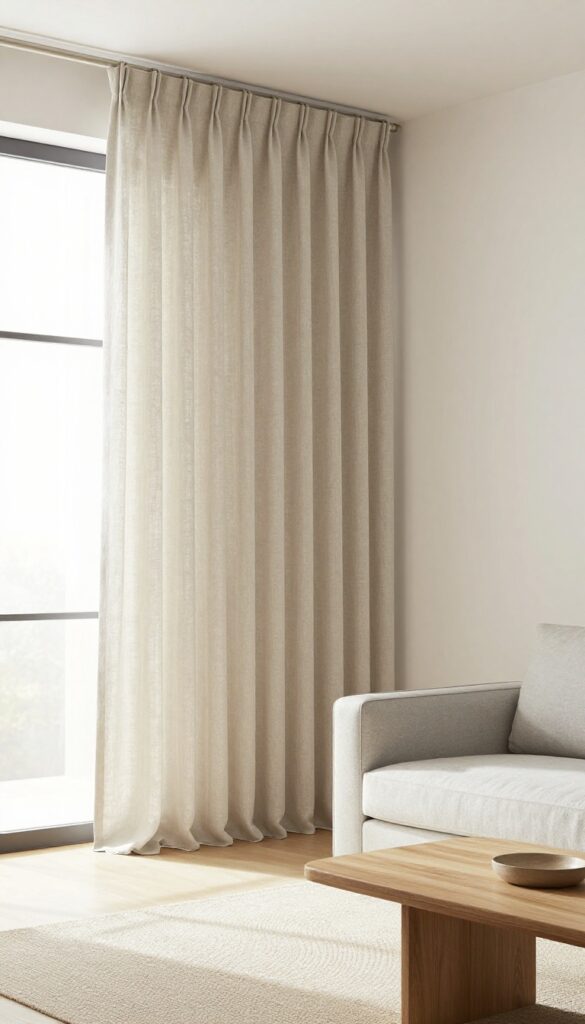
An open shelf or closet can quickly turn into a visual mess, especially in a small living room where every corner is on display. Instead of letting clutter steal the spotlight, a simple sliding door or curtain can give you a clean, calm look while keeping your stuff accessible. It’s a weekend-friendly swap that instantly makes the room feel more put together.
Sliding doors and curtains are two of the easiest ways to hide an open storage area without eating into your floor plan. A sliding barn door adds a rustic or modern touch depending on the finish, while a floor-to-ceiling curtain softens the room and adds texture. Both options let you tuck away baskets, bins, or even a small desk setup behind a sleek facade.
The key is to choose a material and color that blends with your wall or adds a subtle contrast—think a warm wood tone against white walls or a linen curtain in a neutral hue. Installation is straightforward: a track system for the door or a tension rod for the curtain, and you’re done in an afternoon. This trick works especially well for a media console area, a built-in bookcase, or a deep nook that tends to collect odds and ends.
Best Materials For The Look
For sliding doors, solid wood or MDF with a matte finish feels warm and intentional. If you prefer a curtain, choose a heavyweight linen or cotton blend that hangs nicely and doesn’t look flimsy. Avoid shiny fabrics or too-dark colors that might make the space feel smaller.
Layout Tip
Position the track or rod as close to the ceiling as possible to draw the eye upward and make the ceiling feel higher. For curtains, let them pool slightly on the floor for a relaxed, lived-in vibe, or keep them hemmed just above the floor for a cleaner line.
Finishing Touch
Add a small tension rod inside the hidden area to hang a few hooks for bags or scarves. It keeps everyday items off the shelves and adds a layer of organization that feels seamless when the door or curtain is closed.
19. Paint the Ceiling a Lighter Shade
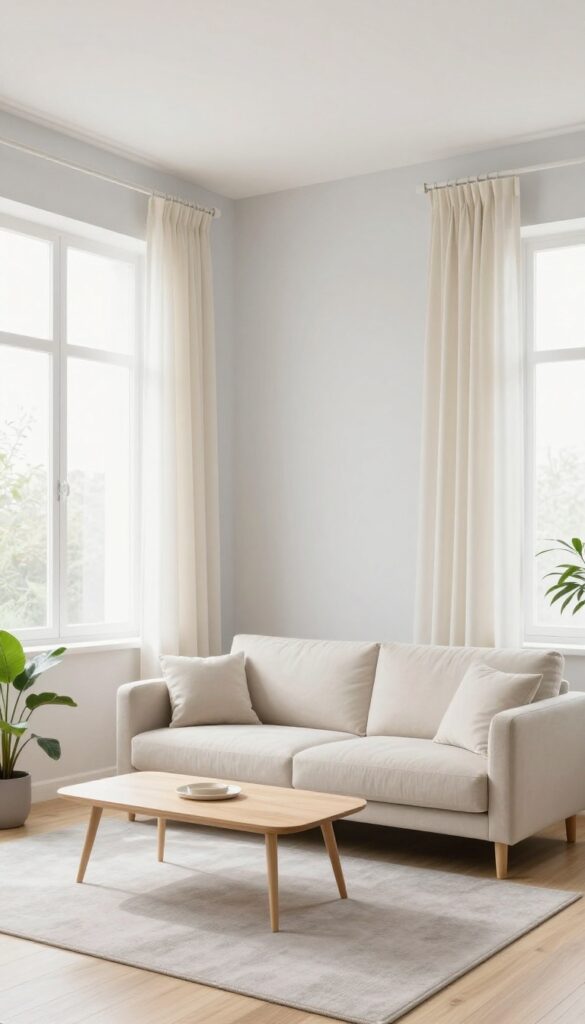
When floor space is tight, look up. A white or pale ceiling instantly makes a room feel taller and airier, bouncing light around the room. It's one of the cheapest, easiest fixes for a cramped living room—perfect for a weekend refresh.
Painting the ceiling a lighter shade than the walls creates an illusion of height. White or off-white reflects natural and artificial light, making the space feel open and bright. This trick works especially well in rooms with low ceilings or limited windows.
For a cohesive look, carry the same light color onto crown molding or trim. If you want a touch of warmth, try a soft cream or pale gray instead of stark white. The effect is subtle but transformative.
Best Colors
- Stick with whites, off-whites, or very light pastels. A pure white like Benjamin Moore's Chantilly Lace gives a crisp, clean look. For a warmer feel, try a creamy white such as Swiss Coffee.
- Pale gray or blush can add personality without darkening the room.
Small-space Fix
Pair a light ceiling with walls in a slightly darker shade to emphasize the height. In a tiny living room, this contrast tricks the eye into perceiving more vertical space. Keep the floor and furniture light as well to maintain an open, breathable feel.
Finishing Touch
Use a flat or matte finish to avoid glare and hide imperfections. If your ceiling has texture, a flat paint will minimize its appearance. For a weekend project, you can easily do it yourself with a roller and extension pole—no need for a professional.
20. Incorporate a Fold-Down Desk
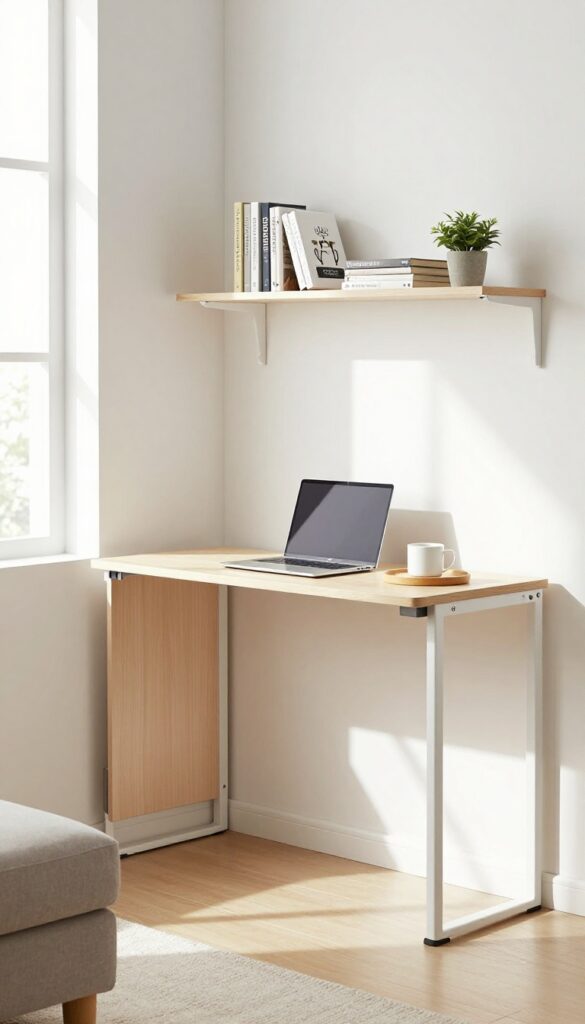
Working from home in a tiny living room can feel like a constant battle for space. A fold-down desk solves that by giving you a dedicated workspace that literally disappears when you're done. Mount it on a wall, and you've got a spot for your laptop and a coffee mug during the day, then fold it up to reclaim the floor area for evening relaxation.
It's the ultimate weekend-refresh project that instantly makes your living room feel more spacious and purposeful.
A fold-down desk is a brilliant way to carve out a work zone without sacrificing precious square footage. Choose a design with a built-in shelf above for a few books or plants, and you'll have a mini home office that feels intentional rather than cramped. When the workday ends, just fold the desktop up—some models even have a chalkboard or cork surface on the inside for notes or decor.
This idea works especially well in a corner, next to a window, or behind a sofa where you wouldn't normally put furniture. The key is to mount it at a height that works for sitting on a stool or even standing, depending on your preference.
Best Placement
- Look for a narrow wall space that's currently unused—like between two windows or beside a doorway. Avoid placing it in a high-traffic path; you want the desk to be accessible but not in the way. If your living room has an alcove or nook, that's a perfect spot.
- Even a wall above a radiator can work if you choose a slim model and keep the area clear.
Styling Tips
- Keep the area around the desk clutter-free. When folded down, add a small lamp, a tray for pens, and a plant for life. When folded up, let the wall be the star—mount a small mirror or art above it to maintain visual interest.
- Choose a desktop color that contrasts with your wall to make the desk a feature, or match it to your trim for a seamless look.
Material & Finish
- Solid wood or plywood with a smooth finish feels sturdy and warm. For a modern touch, go with a white or light wood laminate. If you're handy, you can build one yourself with a hinge and a support chain.
- Many affordable ready-made options are also available online—just check the weight capacity if you plan to keep a monitor on it.
21. Use Baskets for Stylish Storage
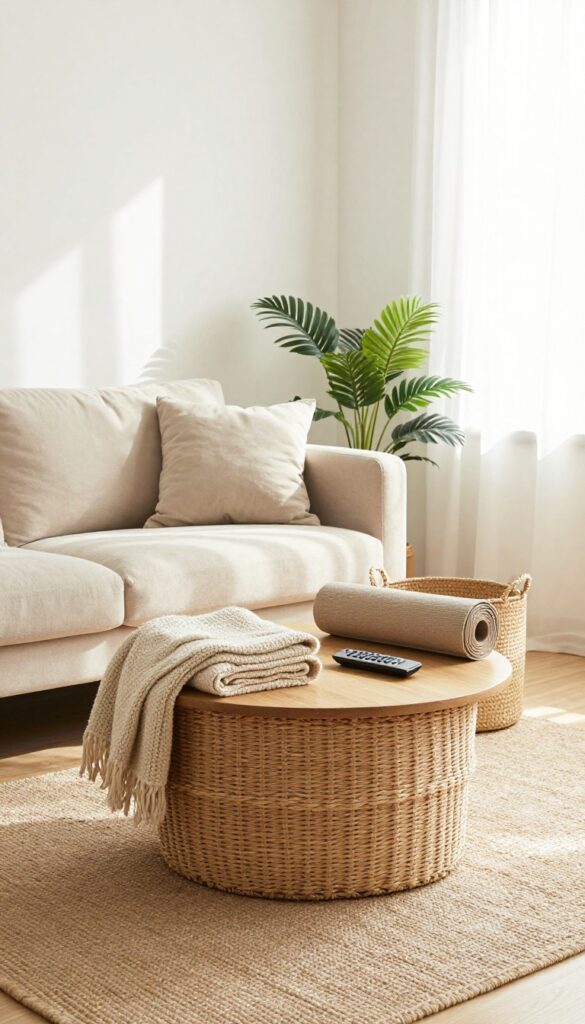
Baskets are the unsung heroes of small living rooms. They bring warmth and texture while hiding the clutter that tends to pile up—remotes, throw blankets, kids' toys, or magazines. The best part?
They blend into almost any decor style, from boho to modern farmhouse, and cost way less than built-in storage.
Place a large woven basket under your coffee table or beside the sofa to catch everyday odds and ends. Choose natural materials like seagrass or rattan for a light, airy feel, or go with dark wicker for a more grounded look. The key is to pick baskets that complement your color palette—neutral tones work universally, while a pop of color can double as an accent.
For a cohesive look, repeat the same basket style in different sizes around the room, like under a console table or on a shelf.
Best Materials
Seagrass and rattan are lightweight and bring organic texture. For a more polished look, try woven cotton rope baskets or felted wool bins. Avoid plastic-looking materials if you want that natural, cozy vibe.
Placement Tips
Tuck a tall basket in an empty corner for storing blankets or yoga mats. Use a shallow, wide basket under a console table for shoes or bags. In a tiny room, baskets on open shelving can hide small items while still looking intentional.
Budget-Friendly Swap
Thrift stores and flea markets are goldmines for unique baskets. A quick spray paint or a fabric liner can refresh a dated find. Or DIY a simple rope basket using a hot glue gun and cotton rope—it's easier than it sounds.
22. Choose a Sectional with a Chaise
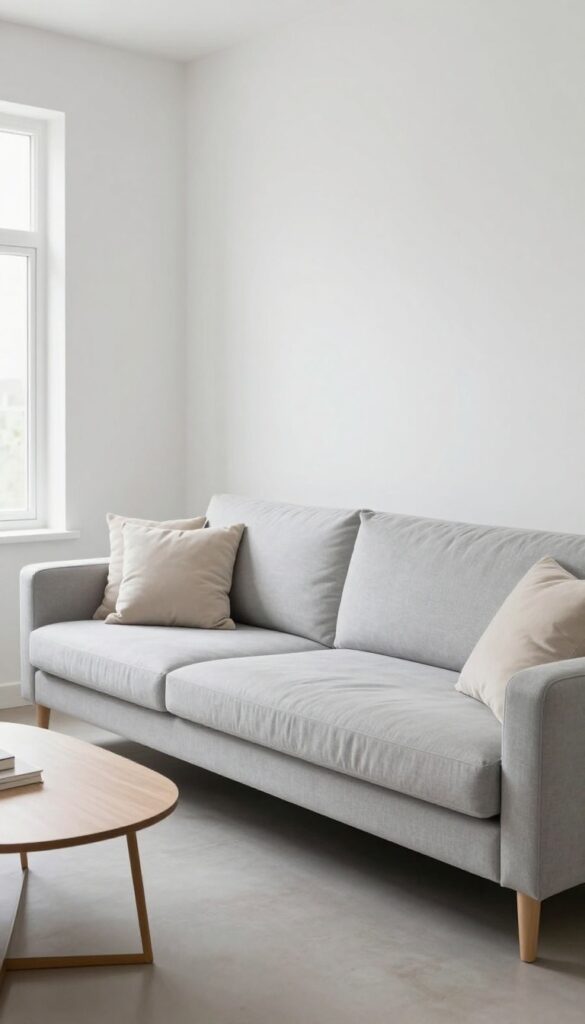
An L-shaped sectional with a chaise is a smart way to carve out a cozy seating zone without overwhelming a small living room. The chaise end offers a spot to stretch out, while the compact footprint keeps the layout open and airy. Look for a design with slim arms and a low back to maintain visual lightness, and consider one with hidden storage under the chaise for blankets, pillows, or off-season items.
A compact L-shaped sectional can define the seating area and provide extra lounging space. Look for one with storage underneath to keep blankets, pillows, or off-season items out of sight. The chaise end also doubles as a casual spot for reading or napping, making it a multifunctional piece that works hard in a tiny room.
Best Layout Tip
Place the chaise against a wall or in a corner to keep the traffic flow open. If your room is narrow, choose a left-facing or right-facing chaise that aligns with the natural path through the space. This prevents the sectional from blocking walkways and makes the room feel larger.
Storage Hack
Opt for a sectional with a lift-top chaise or pull-out drawer. Use it to store throw blankets, board games, or extra cushions. This keeps clutter hidden while still having everything within easy reach when you need it.
Styling Tip
Keep the color light or neutral to avoid visually weighing down the room. A soft gray or beige sectional with a few colorful throw pillows adds personality without sacrificing the airy feel. Pair with a slim coffee table or a small side table to complete the setup.
23. Add a Pop of Color with Pillows
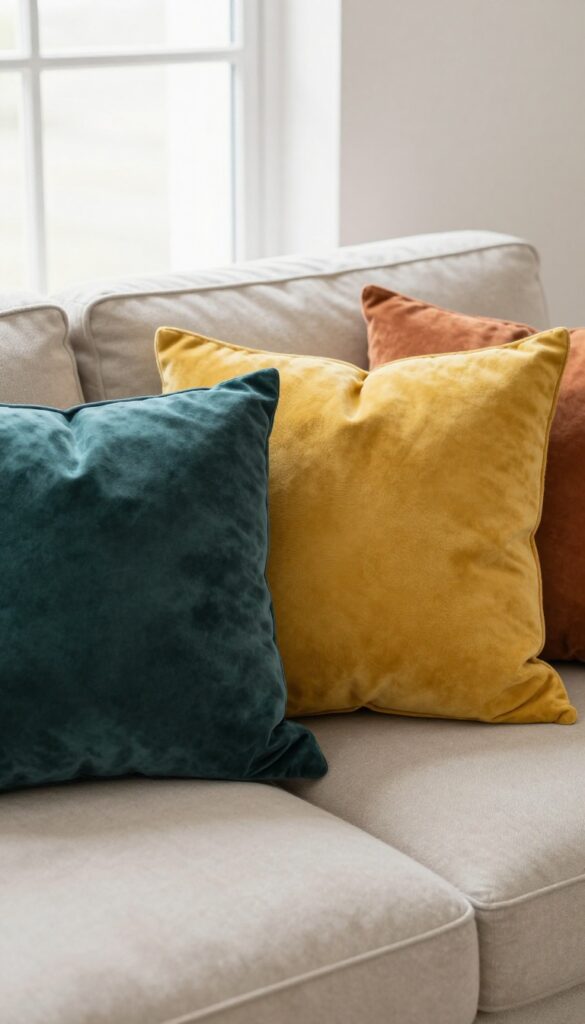
Neutral sofas and walls give you a calm foundation, but they can sometimes feel a little flat. The easiest fix? A handful of colorful throw pillows.
They bring instant energy, texture, and personality to a tiny living room without taking up any floor space. Best of all, swapping them out costs next to nothing and lets you refresh the whole vibe whenever the mood strikes.
Pillows are the ultimate low-commitment decor upgrade. In a small room, they act like little art pieces you can move around. A couple of bold cushions on a beige sofa can completely change the focal point.
Go for a mix of sizes and shapes—square, lumbar, and even a round one—to create visual interest. Stick to two or three colors that tie into something else in the room, like a rug or a piece of art, so the pop feels intentional, not random.
Best Colors For A Weekend Refresh
- If you're working with a neutral base, almost any color works, but some feel more intentional. Deep teal, mustard yellow, or terracotta add warmth without screaming for attention. For a more modern vibe, try a single bold hue like emerald green or cobalt blue in different textures—velvet, linen, and knit.
- That way you get color and depth without clashing.
Texture Mix Makes It Feel Rich
- Don't stop at color—texture is what makes a pillow arrangement look polished. Pair a smooth velvet cushion with a chunky knit one, or add a linen option with a subtle pattern. The contrast keeps the eye moving and makes the whole setup feel curated, even if you just grabbed them on sale.
- In a tiny room, that layered look adds the coziness you'd normally get from bulky furniture.
Small-space Styling Tip
- On a small sofa, less is more. Three pillows max—two in the corners and one in the middle—keeps the seating functional. If you have a loveseat, two pillows are plenty.
- For a floor seating area, toss a couple of large floor cushions in coordinating colors. They double as extra seating and a decor statement, which is exactly what a tiny room needs.
24. Install a Pegboard for Wall Organization
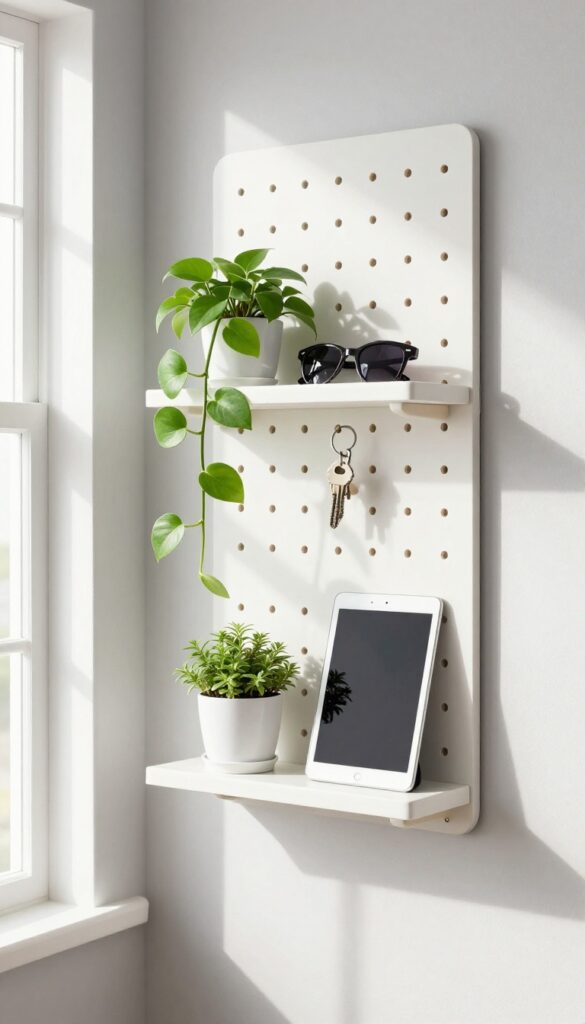
Walls are prime real estate in a tiny living room, so why not put them to work? A pegboard does exactly that—turns a blank wall into a flexible storage system that keeps everyday items within reach and off your surfaces. It’s a weekend project that instantly adds a modern, workshop-chic vibe without costing a fortune.
Pegboards aren’t just for garages anymore. In a small living room, they become a stylish catch-all for keys, headphones, small plants, or even a lightweight tablet. The best part?
You can rearrange the hooks and shelves anytime your needs change. Go for a painted pegboard that matches your wall color for a seamless look, or let a natural wood tone stand out as an accent. Mount it near the entryway or above a desk area to keep clutter at bay.
Pair it with a few small baskets or magnetic containers to hold odds and ends, and you’ve got a custom organization wall that feels intentional, not messy.
Best Colors And Finishes
White or light gray pegboards blend into the wall and keep the focus on what’s hanging. For a bolder statement, try a deep navy or forest green—these colors add depth without overwhelming a small space. If you prefer a natural look, birch or bamboo pegboards bring warmth and texture.
Layout And Styling Tip
Group items by function: keep daily use items like keys and sunglasses at eye level, and store less-used accessories like extra cables or seasonal decor on higher hooks. Leave some empty space to avoid a cluttered look. Add a small shelf on the pegboard for a trailing plant or a framed photo.
Small-space Fix
Use a pegboard above a sofa or console table to free up floor space. It’s perfect for hanging a lightweight mirror, a small clock, or even a foldable desk that tucks away when not in use. Just make sure the pegboard is securely anchored to the wall studs.
25. Use a Slim Bookcase as a Room Divider
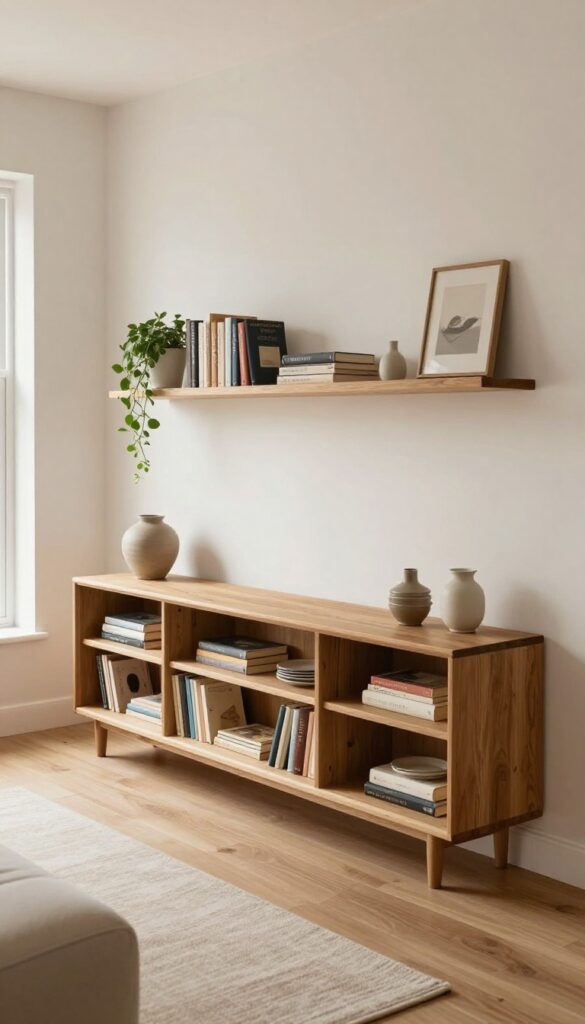
In an open-plan tiny living room, defining zones without losing light or square footage is key. A slim, open bookcase does double duty: it carves out a distinct living area from the dining nook while still letting daylight flow through. Plus, you get storage on both sides—perfect for books, plants, or decorative baskets.
A narrow bookcase (around 12 inches deep) works best. Choose one with a backless or open design so the visual line isn't completely blocked. Place it perpendicular to a wall to create a natural L-shaped separation.
Style the shelves with a mix of books, small plants, and a few curated objects—but keep it airy. Leave some empty space to maintain that open feel. On the dining side, use the shelves for tableware or cookbooks.
This trick instantly gives your tiny living room a sense of purpose without a major renovation.
Best Materials & Finishes
- Go for light woods like oak or birch, or a crisp white lacquer to keep the room feeling bright. If you want contrast, a matte black or dark walnut can anchor the space. Avoid heavy, dark finishes that can visually shrink the room.
- Metal-framed bookcases with glass shelves are another airy option.
Styling Tip: Keep It Balanced
- Treat both sides of the bookcase as display surfaces. On the living room side, layer a few tall books with a small trailing plant. On the dining side, stack plates or place a small vase.
- The goal is to make the divider feel intentional, not like a cluttered shelf. Use baskets on lower shelves to hide odds and ends.
Small-space Fix: Anchor It Lightly
- Since the bookcase is slim, it might tip if overloaded. Secure it to the ceiling or wall with discreet brackets. Alternatively, choose a low, wide design (like a credenza height) that feels more like a console table.
- This still divides the space but offers a surface for decor or a lamp.
FAQ
What is the best color for a small living room?
Light colors like white, cream, pale gray, or soft pastels work best. They reflect light and make the room feel larger and more open.
How can I make my tiny living room look bigger?
Use mirrors, hang curtains high, choose furniture with exposed legs, and keep the color palette light. Also, avoid clutter and use vertical storage.
What furniture should I avoid in a small living room?
Avoid bulky, oversized sofas and chairs, dark heavy furniture, and too many large pieces. Stick to slim profiles and multipurpose items.
Can I have a rug in a small living room?
Yes, but choose a large rug that fits under all furniture legs. A small rug can make the room feel chopped up, while a large one unifies the space.
How do I arrange furniture in a narrow living room?
Float furniture away from walls, use a slim sofa, and place a console table behind it. Keep pathways clear and use vertical storage to draw the eye up.
Conclusion
Making the most of a tiny living room is all about smart choices and a little creativity. By focusing on multipurpose furniture, light colors, and vertical storage, you can create a space that feels open and inviting without sacrificing style.
These 25 ideas are perfect for a weekend refresh—simple changes that make a big impact. Start with one or two tips that resonate with your space, and watch your living room transform into a cozy, functional haven.