10 Kitchen Functionality Ideas for Better Cooking
Most kitchens don’t fail because of style. They fail because everyday cooking tasks become unnecessarily awkward.
A counter that looks beautiful on Instagram can still drive you slightly crazy when you’re chopping vegetables with nowhere to place a bowl. Layout, storage, and workflow matter far more than most people realize.
After spending way too many hours cooking in cramped apartments and oddly designed kitchens, I’ve learned that small functional tweaks often change everything.
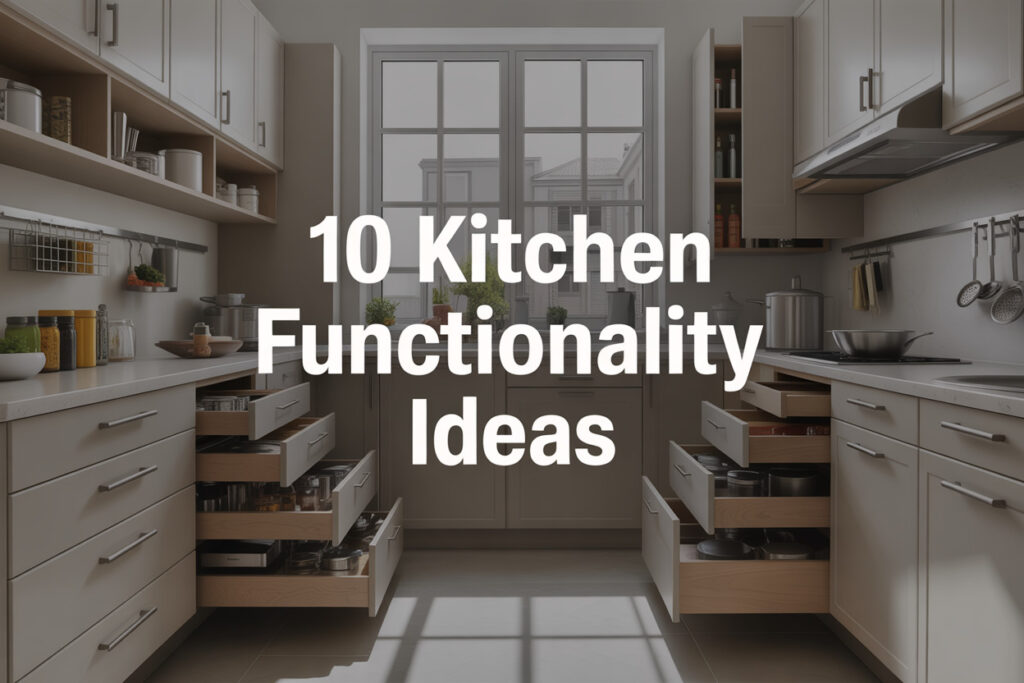
The right setup makes cooking easier, faster, and honestly a lot more enjoyable.
1. Create a Dedicated Prep Zone
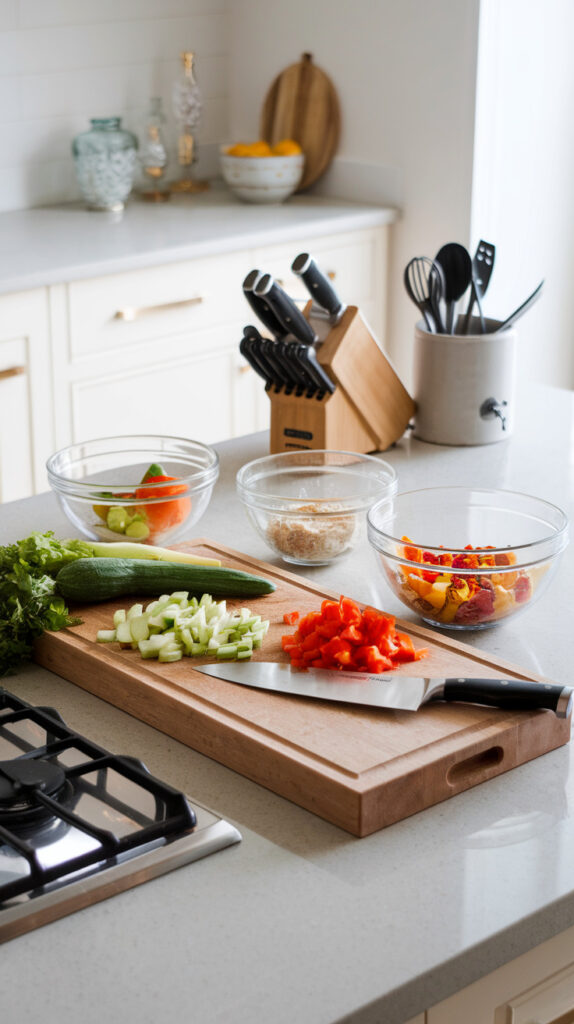
Cooking gets frustrating fast when your prep area keeps changing every five minutes. One moment you’re chopping vegetables, the next you’re clearing space because a blender or fruit bowl is sitting exactly where you need to work.
A dedicated prep zone solves that chaos. Instead of spreading cooking tasks across random sections of the counter, you intentionally design one spot where chopping, mixing, and ingredient prep happen every single time.
Once I started doing this, cooking felt smoother almost immediately. You stop wandering around the kitchen searching for space and your workflow suddenly makes sense.
Why This Works
Cooking follows a natural sequence: prep ingredients, cook them, then plate the food. A prep zone anchors that first step so everything begins in one organized location.
This reduces movement across the kitchen and keeps tools within reach. The result is faster cooking and far less mess.
How to Do It
- Choose a counter section close to both the sink and the stove
- Clear the area completely of decorative items or small appliances
- Keep a cutting board, knife block, and mixing bowls nearby
- Store frequently used prep tools in the nearest drawer
- Place a small compost bowl or trash bin within reach
Each of these steps removes friction from the cooking process. The less you have to move around, the easier cooking becomes.
Style & Design Tips
Keep the prep area visually simple. Too many gadgets or decor items will slowly creep back and steal your workspace.
Neutral cutting boards, wooden utensils, and clean counter surfaces help the space feel calm and practical. Avoid clutter because clutter always wins if you give it permission.
Pro Tip or Budget Hack
Use a large wooden cutting board as a permanent prep surface. It protects the counter and instantly defines the prep area without installing anything.
I’ve done this in rental kitchens where changing the layout wasn’t possible, and it worked surprisingly well.
2. Install Vertical Storage for Everyday Tools
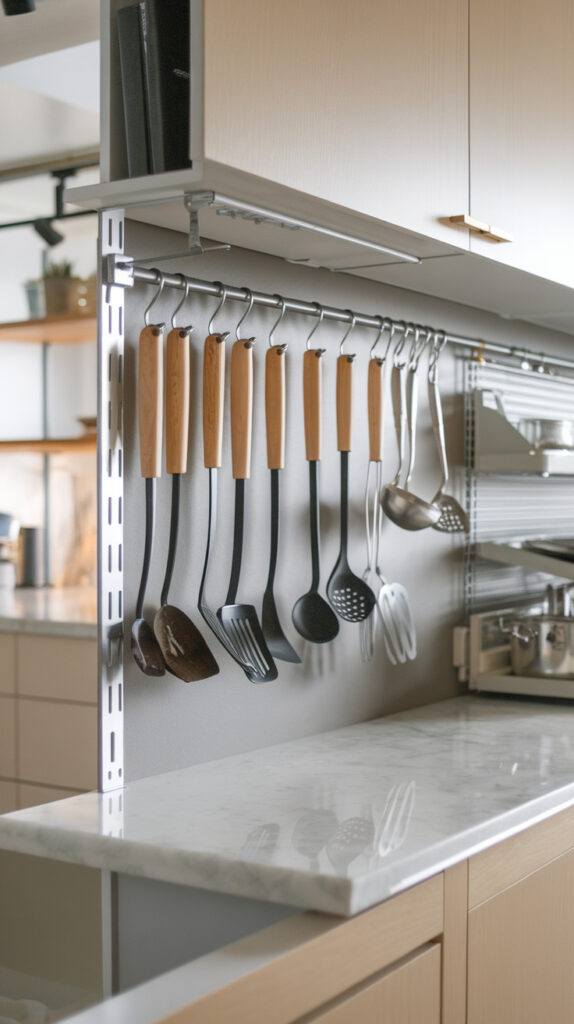
Drawer space disappears fast in most kitchens. Spatulas, ladles, measuring cups, and whisks somehow multiply until drawers feel like a messy puzzle you have to solve every time you cook.
Vertical storage fixes that problem by moving tools onto the wall. Instead of digging through cluttered drawers, you simply grab what you need.
It also adds a surprisingly professional feel to the kitchen. I first noticed this while cooking at a friend’s place, and honestly it made his tiny kitchen feel far more functional.
Why This Works
Vertical storage uses wall space that usually goes ignored. Walls are one of the most underused storage areas in kitchens.
By hanging tools instead of hiding them, you reduce drawer clutter and speed up cooking tasks.
How to Do It
- Install a simple metal rail or pegboard on the wall near your prep zone
- Hang frequently used tools like spatulas, ladles, and tongs
- Keep heavier tools toward the ends for balance
- Avoid overcrowding the rail
- Leave some space so grabbing tools stays easy
The goal isn’t to display every kitchen gadget you own. You only want the tools you reach for constantly.
Style & Design Tips
Stick with matching hooks or hardware so the setup looks intentional. Random mismatched pieces can make the wall look chaotic.
Wood accents, matte black rails, or stainless steel hooks usually blend well with most kitchen styles.
Pro Tip or Budget Hack
A basic IKEA curtain rod works perfectly as a hanging tool rail. It costs far less than specialized kitchen hardware and works just as well.
Sometimes the simplest solution wins.
3. Use Pull-Out Pantry Shelves
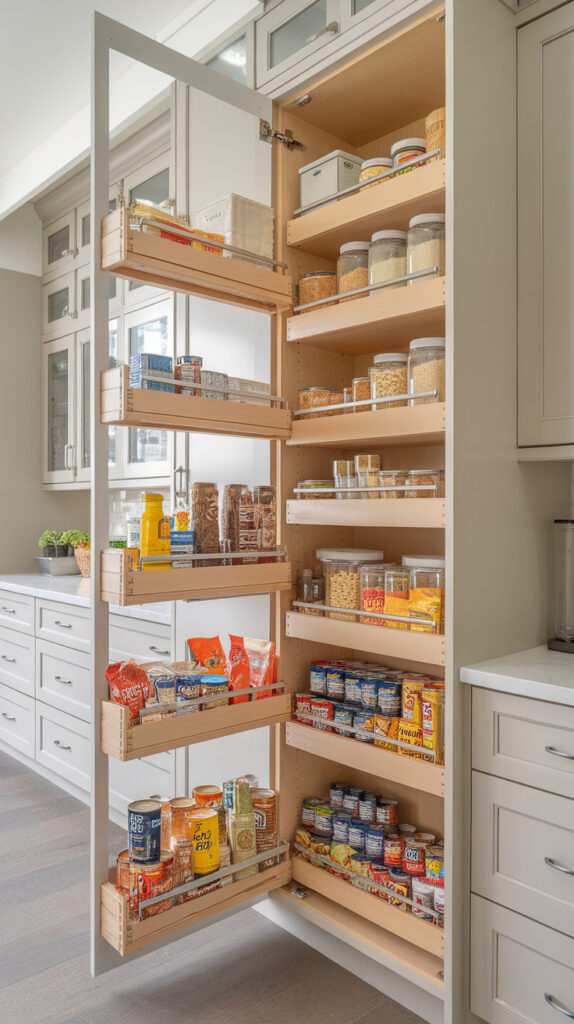
Pantries often turn into black holes where food disappears. Things get pushed to the back, forgotten, and rediscovered six months later when you’re cleaning.
Pull-out shelves eliminate that problem completely. Everything becomes visible the moment you slide the shelf forward.
I installed these once in a narrow pantry cabinet and immediately wondered why kitchens aren’t built this way by default.
Why This Works
Traditional pantry shelves hide items behind other items. Pull-out shelves bring everything forward so nothing gets buried.
Visibility leads to better organization and less wasted food.
How to Do It
- Measure pantry cabinet depth carefully
- Install sliding shelf hardware or ready-made pull-out trays
- Organize shelves by category (grains, snacks, canned goods)
- Place frequently used items on middle shelves
- Label baskets if necessary
The sliding motion lets you see every item instantly.
Style & Design Tips
Use matching storage bins to keep shelves tidy. Random packaging tends to make shelves look messy even when they’re organized.
Clear containers work especially well for dry ingredients.
Pro Tip or Budget Hack
If installing sliding shelves isn’t possible, try large pull-out baskets. They mimic the same effect without needing hardware installation.
It’s not perfect, but it gets surprisingly close.
4. Add Under-Cabinet Lighting
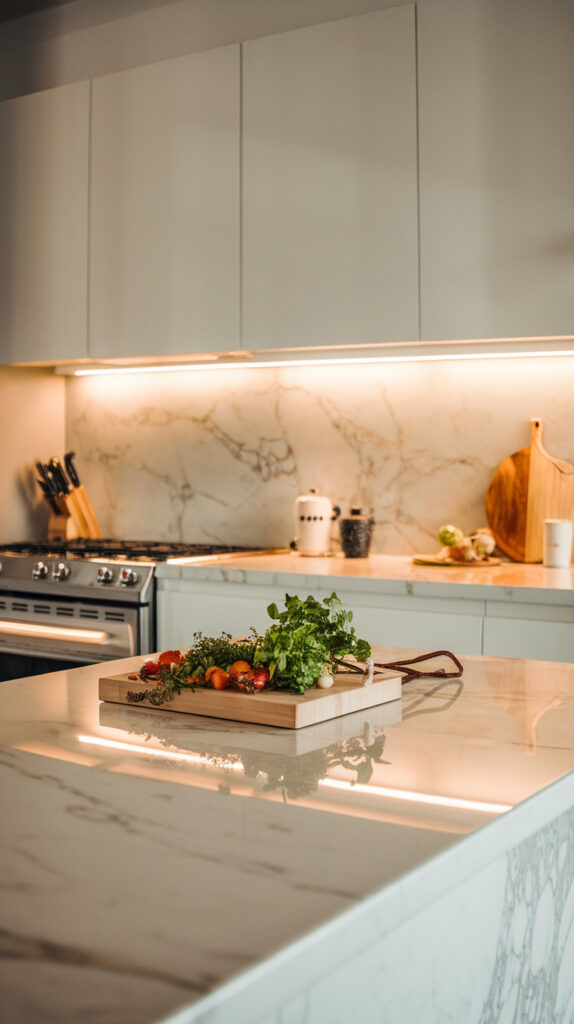
Many kitchens look bright but still leave the counters in shadow. Overhead lights rarely shine directly where you’re chopping or measuring ingredients.
Under-cabinet lighting fixes that instantly. The difference is subtle at first, but once you cook with it, going back feels strange.
I didn’t realize how useful this was until I installed simple LED strips in one kitchen. Suddenly the counter actually looked like a workspace.
Why This Works
Lighting positioned directly above work areas improves visibility. Good lighting reduces mistakes and makes cooking more comfortable.
It also highlights the counter space visually, making the kitchen feel more polished.
How to Do It
- Install LED light strips underneath upper cabinets
- Choose warm or neutral white lighting
- Hide wiring behind cabinet edges
- Use adhesive strips or clips for easy installation
- Connect lights to a switch or smart plug
LED strips are inexpensive and easy to install in most kitchens.
Style & Design Tips
Avoid harsh blue-toned lights. They make kitchens feel cold and overly clinical.
Soft white or warm white lighting feels far more natural while cooking.
Pro Tip or Budget Hack
Battery-powered LED puck lights work surprisingly well for renters. You can install them in minutes without drilling.
They’re not permanent, but they get the job done.
5. Create a Cooking Zone Around the Stove
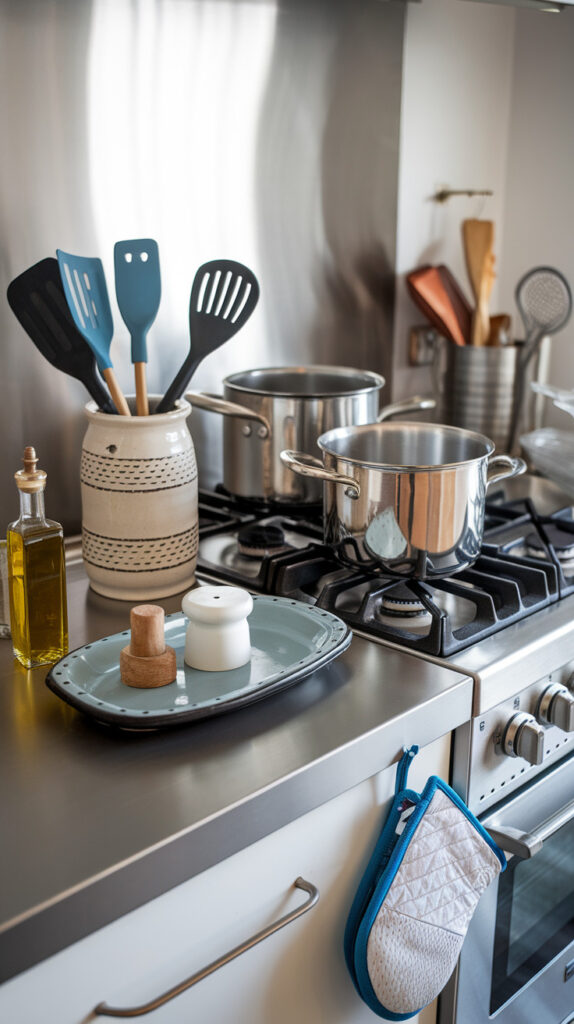
Some kitchens scatter cooking tools across multiple drawers. You end up walking back and forth just to grab a spatula or seasoning.
A cooking zone fixes that by placing everything near the stove. It sounds simple, but the efficiency difference is huge.
Once you organize things this way, cooking starts to feel more natural and less chaotic.
Why This Works
Cooking happens quickly and requires constant movement. Keeping tools within arm’s reach reduces unnecessary steps.
This improves speed and keeps your focus on the food.
How to Do It
- Store spatulas, tongs, and spoons in a drawer near the stove
- Keep cooking oils within easy reach
- Add a small tray for salt and pepper
- Store pots and pans in the nearest cabinet
- Keep oven mitts nearby
The idea is simple: anything used during cooking stays close to the stove.
Style & Design Tips
Use small trays or containers to group items. This prevents the area from looking cluttered.
Minimal organization creates visual calm while still being functional.
Pro Tip or Budget Hack
A rotating lazy Susan for cooking oils and spices makes grabbing ingredients incredibly easy.
It also keeps bottles from spreading across the counter.
6. Install Deep Drawers Instead of Lower Cabinets
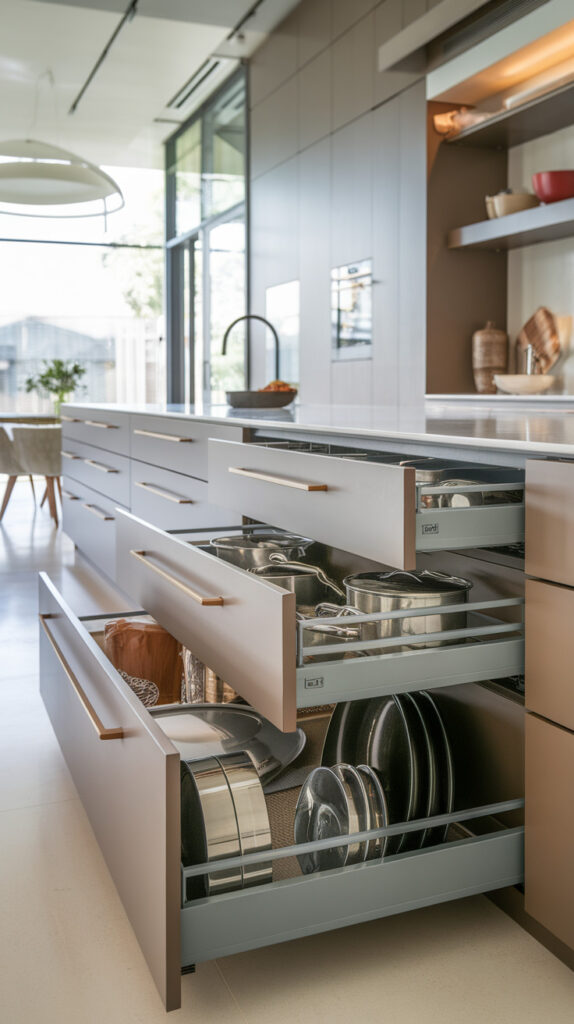
Lower cabinets often hide pots and pans behind awkward stacks. Reaching the back usually requires kneeling and pulling everything out.
Deep drawers solve that issue completely. Everything becomes visible and accessible from above.
After using kitchens with drawer-based storage, traditional cabinets start to feel outdated.
Why This Works
Drawers bring items upward instead of hiding them behind doors. This makes storage easier to access and organize.
You also avoid stacking heavy cookware.
How to Do It
- Replace lower cabinets with deep drawer systems if remodeling
- Use drawer organizers for lids
- Store pans vertically when possible
- Place heavy items in bottom drawers
- Keep everyday cookware in the top drawer
The goal is visibility and easy access.
Style & Design Tips
Soft-close drawer systems feel smoother and quieter. Once you use them, regular drawers feel oddly aggressive.
Stick with simple drawer handles for a clean look.
Pro Tip or Budget Hack
If replacing cabinets isn’t possible, install pull-out drawer inserts inside existing cabinets.
They replicate the same accessibility without a full renovation.
7. Use Clear Containers for Pantry Ingredients
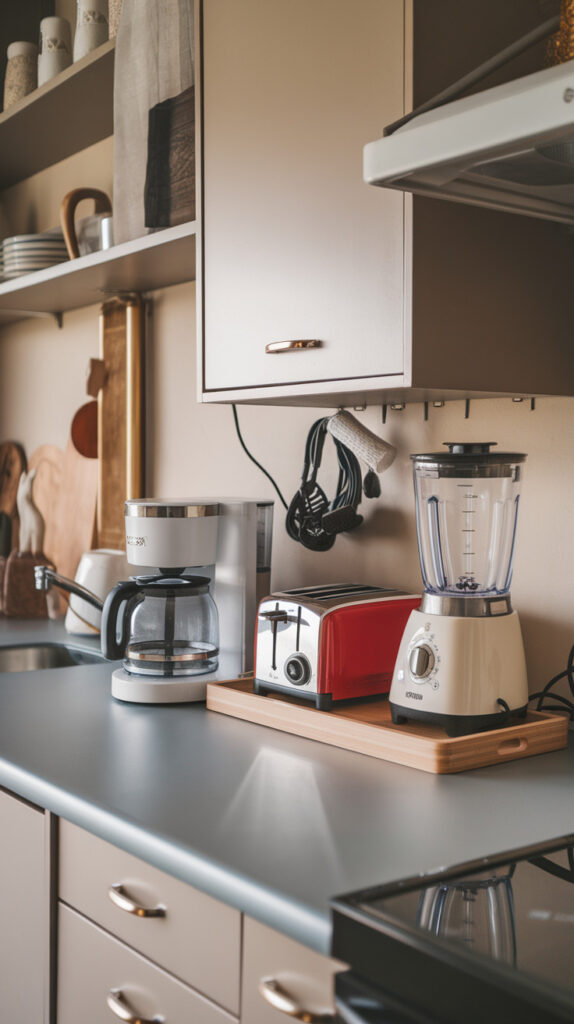
Bags and boxes create visual chaos in pantry cabinets. They also make it hard to know when ingredients are running low.
Clear containers solve both problems instantly. You see exactly what you have and how much is left.
I started doing this with flour and rice first, and it slowly expanded to half the pantry.
Why This Works
Visibility improves organization and inventory awareness. Clear containers remove packaging clutter.
They also make measuring ingredients easier.
How to Do It
- Transfer dry goods into airtight containers
- Label each container clearly
- Store containers by category
- Place frequently used ingredients at eye level
- Use scoop spoons for convenience
Consistent containers make the pantry look neat instantly.
Style & Design Tips
Choose containers of similar shapes and materials. Mixed styles quickly make shelves look cluttered again.
Glass or clear BPA-free plastic both work well.
Pro Tip or Budget Hack
Large mason jars are excellent pantry containers. They’re cheap, durable, and surprisingly stylish.
8. Add a Small Appliance Station
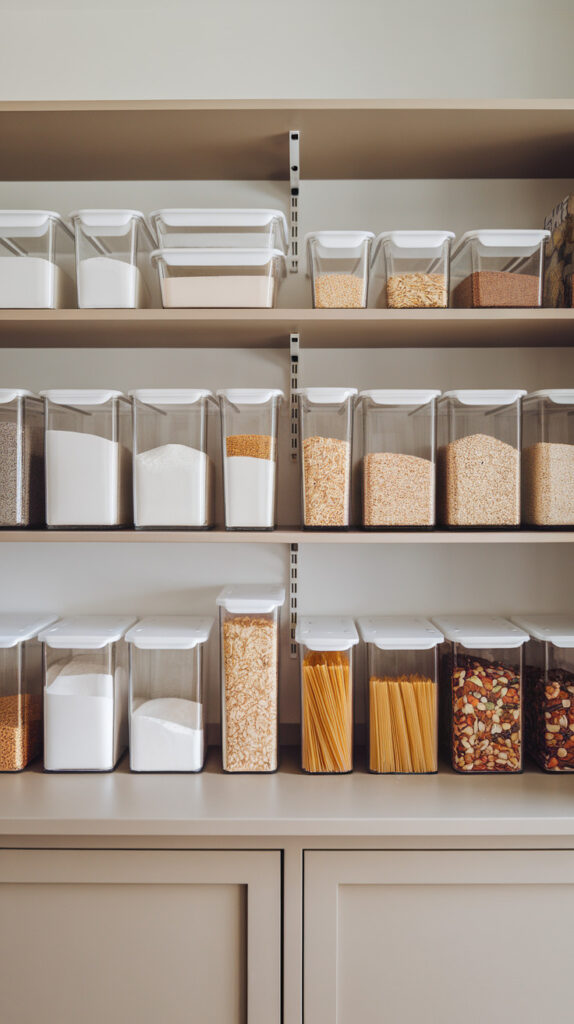
Small appliances love to spread across counters. Toasters, coffee makers, blenders, and air fryers quickly take over valuable prep space.
Creating a dedicated appliance station keeps counters clear. Everything stays in one organized zone instead of scattered everywhere.
It also makes the kitchen look cleaner and more intentional.
Why This Works
Grouping appliances reduces clutter and improves workflow. You stop rearranging items every time you cook.
Dedicated zones help maintain organization over time.
How to Do It
- Choose one counter section for appliances
- Place coffee maker, toaster, or blender there
- Install an outlet strip if needed
- Keep appliance accessories nearby
- Avoid overcrowding the space
The station should feel organized, not packed.
Style & Design Tips
Use trays or baskets to group smaller accessories. This keeps cords and attachments under control.
Matching appliances also make the area look more cohesive.
Pro Tip or Budget Hack
A rolling kitchen cart can double as an appliance station. It adds storage and can move if counter space gets tight.
9. Use Drawer Dividers for Utensils
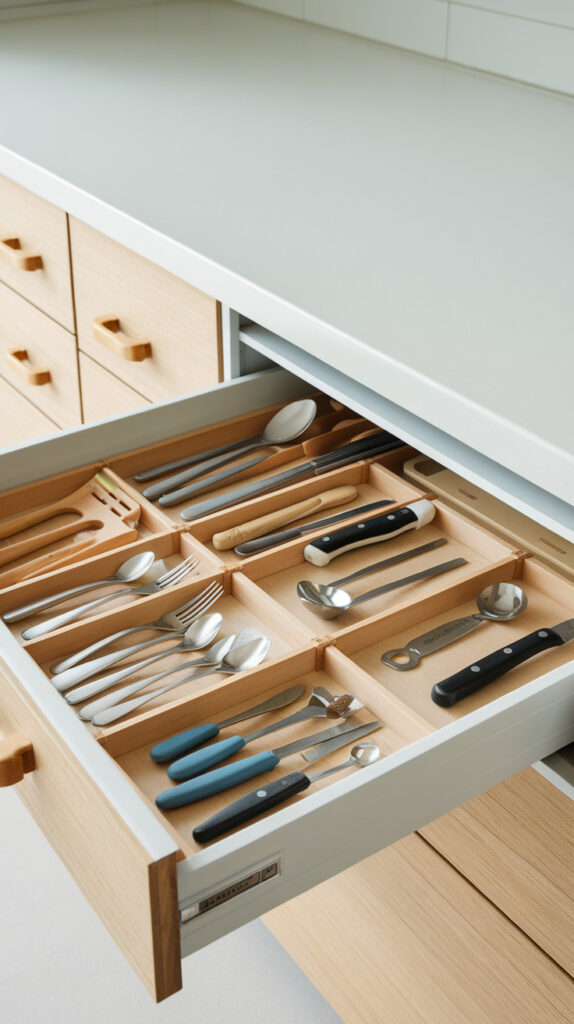
Utensil drawers turn messy fast. Even organized drawers slowly drift into chaos after a few weeks of cooking.
Drawer dividers keep everything in its place. Forks, knives, measuring spoons, and peelers each get their own space.
It’s a simple fix that makes daily cooking easier.
Why This Works
Dividers prevent tools from mixing together. Organized drawers reduce time spent searching for utensils.
Small improvements add up during everyday cooking.
How to Do It
- Install adjustable drawer divider trays
- Group similar tools together
- Remove utensils you rarely use
- Keep cooking tools separate from eating utensils
- Reorganize every few months
This keeps the drawer system manageable.
Style & Design Tips
Wood dividers often look warmer than plastic ones. They blend nicely with most kitchen styles.
Avoid overcrowding compartments.
Pro Tip or Budget Hack
Expandable bamboo drawer organizers are affordable and easy to install.
They also look far better than cheap plastic trays.
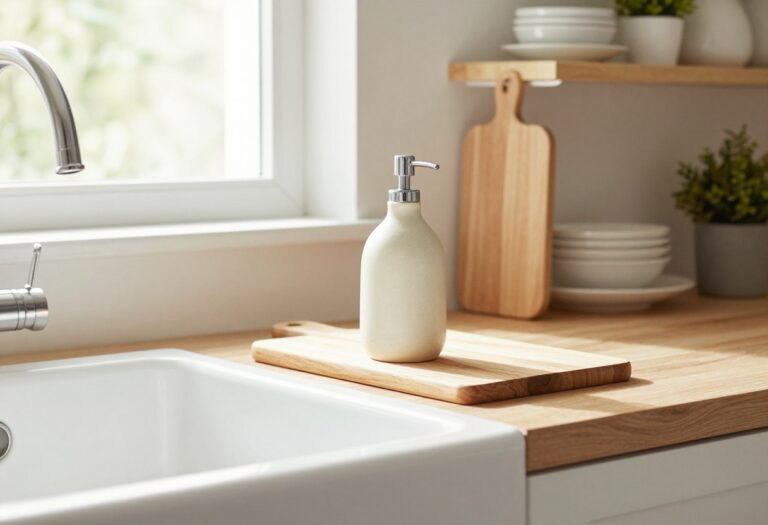
10. Create a Simple Cleaning Zone
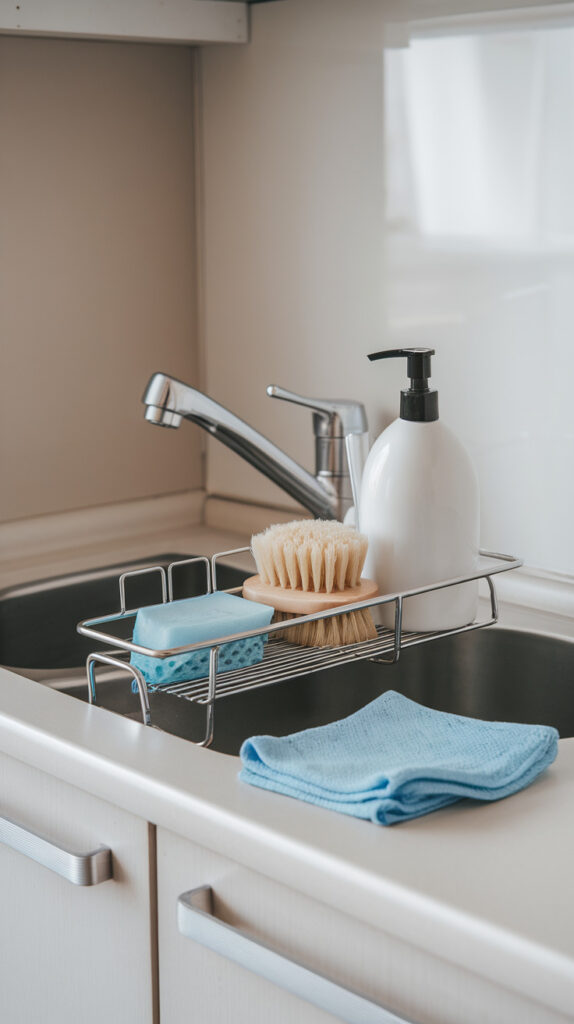
Cleaning tools scattered around the kitchen make cleanup harder than it needs to be. Sponges, soap, and dish brushes end up everywhere.
A dedicated cleaning zone solves that problem. Everything stays near the sink where it actually gets used.
It’s one of the simplest upgrades that improves daily kitchen routines.
Why This Works
Cleaning becomes faster when supplies are organized. You stop searching for tools mid-cleanup.
Consistency also keeps the sink area tidy.
How to Do It
- Place soap dispenser, sponge holder, and brush near the sink
- Store extra cleaning supplies under the sink
- Use a tray or caddy for organization
- Replace sponges regularly
- Keep a microfiber cloth nearby
A clean sink area encourages better kitchen habits.
Style & Design Tips
Choose matching dispensers or neutral containers. Random plastic bottles make the area feel cluttered.
Simple designs work best here.
Pro Tip or Budget Hack
A small stainless steel caddy keeps everything together without taking up much space.
It’s cheap, practical, and easy to clean.
Kitchen Workflow Strategy: Designing a Kitchen That Actually Works
Most people organize their kitchens around storage. Professionals organize kitchens around workflow.
The difference sounds small, but it changes how a kitchen functions every single day. When layout decisions follow cooking behavior instead of just storage needs, everything from meal prep to cleanup becomes smoother.
Professional kitchens rely on simple workflow logic. Ingredients move from storage to prep, then to cooking, and finally to serving or cleaning.
Home kitchens benefit from the same idea. Once you design your space around that flow, you stop fighting the layout every time you cook.
The Four Core Kitchen Zones
A practical kitchen usually operates around four main zones. These zones guide how tools, ingredients, and surfaces should be arranged.
Understanding these zones helps you apply the ideas from the article more effectively.
1. Storage Zone
This includes the pantry, refrigerator, and cabinets where ingredients live. The goal here is quick access and clear visibility.
Dry goods, canned items, spices, and oils should all live where you can reach them easily before cooking begins.
2. Prep Zone
The prep zone is where chopping, measuring, and ingredient assembly happen. This is usually the most used surface in the kitchen.
Your cutting boards, knives, mixing bowls, and prep tools should stay here permanently.
3. Cooking Zone
The stove, oven, and nearby surfaces form the cooking zone. Everything used during cooking should live nearby.
Spatulas, oils, pans, pot lids, and seasonings should always stay within arm’s reach.
4. Cleaning Zone
The sink area handles cleanup, rinsing produce, and dishwashing. This zone also stores cleaning tools and dish supplies.
Keeping these items together makes cleanup far faster and prevents clutter.
Why Workflow Matters More Than Size
Many large kitchens still feel inefficient because tools and ingredients are scattered randomly. A small kitchen with strong workflow design can outperform a much larger one.
Cooking becomes easier when movement follows a clear path. Instead of walking in circles around the room, you move logically from one task to the next.
This idea is the foundation behind professional kitchen design, and it works just as well in normal homes.
Common Mistakes to Avoid
Small layout mistakes often cause the biggest daily frustrations in kitchens. Fixing these issues can dramatically improve how the space feels and functions.
Here are some of the most common ones I see.
Treating Counters as Storage
Counters often become parking lots for appliances, decor, and random kitchen tools. The problem is that every item on the counter steals prep space.
Cooking becomes far easier when counters remain mostly clear.
Overcrowding Drawers
Stuffing drawers with too many tools makes everything harder to find. Eventually the drawer becomes a tangled mess of utensils.
Removing tools you rarely use immediately improves drawer functionality.
Ignoring Vertical Space
Many kitchens leave walls completely empty while cabinets overflow. Walls are valuable storage space.
Hooks, rails, and shelving can dramatically improve organization without increasing clutter.
Poor Lighting Over Work Areas
Overhead lighting often leaves prep areas in shadow. Chopping or measuring becomes awkward when visibility is poor.
Task lighting over counters solves this problem instantly.
Storing Tools Too Far From Where They’re Used
Spatulas across the kitchen from the stove might seem harmless. During cooking, that extra movement becomes annoying quickly.
Tools should always live where they’re actually used.
Budget-Friendly Kitchen Functionality Upgrades
Improving kitchen functionality doesn’t require a full renovation. Many practical upgrades cost very little and can be installed in minutes.
Small improvements often deliver the biggest benefits.
Upgrade Cabinet Organization
Simple pull-out baskets or shelf risers dramatically improve cabinet access. Suddenly items in the back become visible.
This small change eliminates the frustrating “digging through cabinets” problem.
Use Stackable Storage
Stackable pantry containers create more vertical storage space. They also keep shelves visually organized.
Uniform containers instantly make cabinets feel more structured.
Add Rolling Storage
Rolling carts provide flexible storage without permanent installation. They work well in small kitchens where cabinets are limited.
The ability to move them makes the space more adaptable.
Install Adhesive Hooks
Adhesive hooks can hold towels, utensils, or lightweight tools. They require no drilling and work well in rentals.
Strategic hook placement can solve many small storage problems.
Introduce Multi-Purpose Tools
Multi-use tools reduce clutter and drawer overload. For example, a measuring cup that doubles as a mixing bowl saves space.
Less equipment often means a more efficient kitchen.
Smart Kitchen Organization Habits
Even the best-designed kitchen will eventually become messy without good habits. Organization systems only work when they’re maintained.
Luckily, small habits make a huge difference.
Reset the Kitchen After Cooking
Taking five minutes to reset counters and tools keeps the kitchen functional. It also makes the next cooking session easier.
A clean starting point changes how the kitchen feels.
Return Tools Immediately
Tools tend to migrate across the kitchen during cooking. Returning them to their designated zones prevents clutter from building up.
This habit keeps the workflow intact.
Reevaluate Storage Every Few Months
Cooking habits evolve over time. Tools you once used often may become unnecessary.
Reorganizing occasionally keeps the kitchen aligned with how you actually cook.
Keep Only What You Use
Kitchen tools multiply quickly. If something hasn’t been used in months, it may not deserve permanent drawer space.
Reducing clutter improves both storage and workflow.
Kitchen Functionality FAQ
What is the most important feature of a functional kitchen?
The most important feature is workflow. A kitchen should allow ingredients, tools, and cooking tasks to move smoothly from storage to prep to cooking without unnecessary movement.
How much counter space should a prep area have?
Ideally, a prep zone should have at least 24–36 inches of uninterrupted counter space. This gives enough room for cutting boards, bowls, and ingredients.
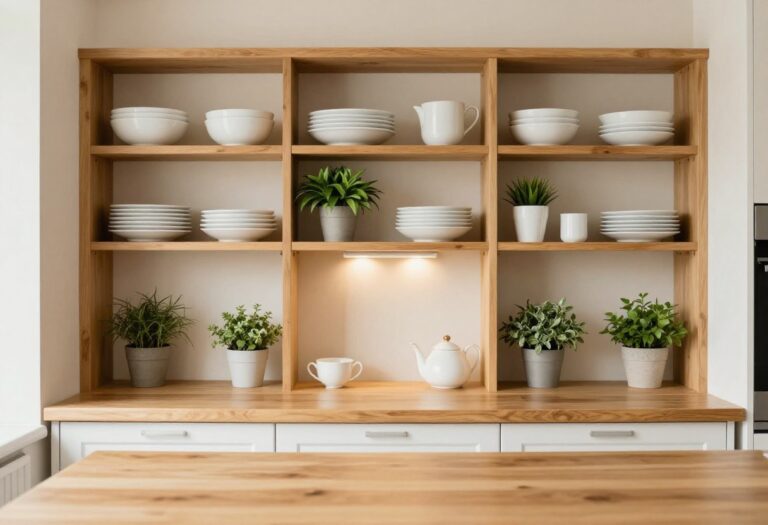
Are open shelves practical in kitchens?
Open shelves can work well for frequently used items like bowls or plates. However, they require regular organization to avoid looking cluttered.
How do I improve a small kitchen’s functionality?
Focus on vertical storage, multi-purpose tools, and clear counter space. Small kitchens benefit the most from organized zones and efficient layouts.
What lighting is best for kitchen workspaces?
Under-cabinet LED lighting is ideal for work areas. It provides direct illumination over counters where prep tasks happen.
Should kitchen appliances stay on the counter?
Only appliances used daily should remain on the counter. Everything else should be stored away to keep prep areas clear.
How often should a kitchen be reorganized?
A light reorganization every few months works well. Cooking habits change over time, and storage systems should adapt accordingly.
Final Thoughts
Cooking becomes far more enjoyable when the kitchen actually supports how you move and work. Small layout adjustments often solve problems that fancy renovations never touch.
I’ve seen tiny kitchens feel incredibly efficient once a few smart changes are in place. Function always beats size when it comes to cooking spaces.
Try one or two of these ideas first and see how they change your routine. Sometimes the smallest tweak ends up making the biggest difference.