23 Cleaning Cookie Sheets Tips for Burnt Food Stains
Burnt-on food stains on cookie sheets are a common kitchen frustration. Whether it's caramelized sugar or baked-on grease, those dark patches can make your sheets look old and worn.
But you don't need harsh chemicals to get them clean again. With a few simple tricks using items you already have at home, you can tackle even the most stubborn stains.
From baking soda pastes to surprising uses for dryer sheets, these 23 tips will help you restore your cookie sheets to their former glory. Let's dive into the most effective methods that actually work.
1. Baking Soda and Hydrogen Peroxide Paste
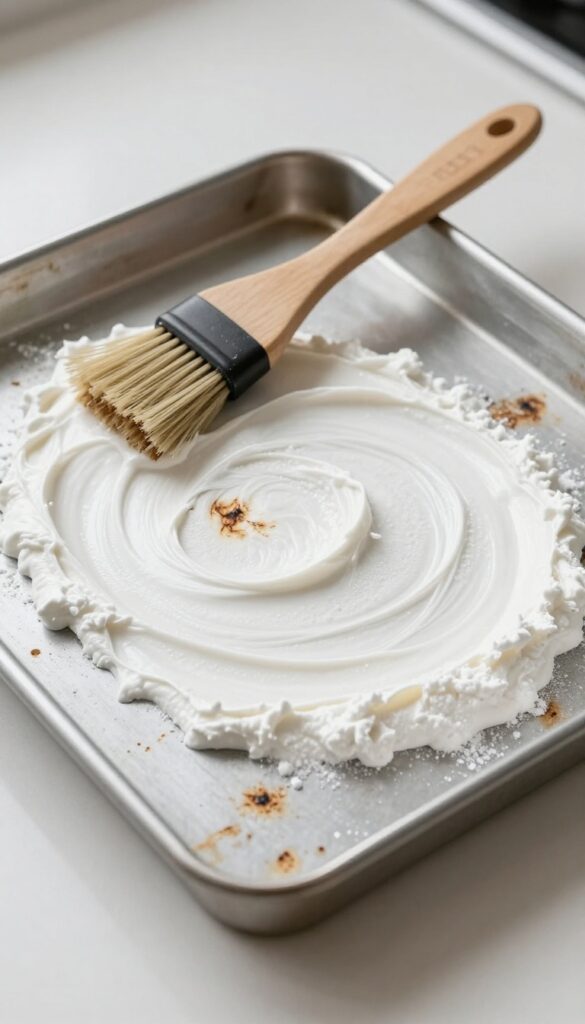
When burnt-on stains refuse to budge, a simple paste made from baking soda and hydrogen peroxide can work wonders. This combination creates a gentle abrasive that lifts stubborn residue without scratching the surface of your cookie sheets. It's a go-to method for many home cooks because the ingredients are common pantry staples.
To make the paste, mix three parts baking soda with one part hydrogen peroxide until you get a thick, spreadable consistency. Apply it generously over the stained areas and let it sit for about 30 minutes. The hydrogen peroxide helps break down the burnt residue while the baking soda provides gentle scrubbing power.
After the wait, scrub with a soft sponge or brush, then rinse thoroughly. For extra tough spots, you can let the paste sit longer or add a little dish soap to the mix.
Why This Combo Works
Baking soda is mildly alkaline, which helps neutralize acidic burnt residues. Hydrogen peroxide is a mild bleach and oxidizer that can break down organic stains. Together, they create a fizzy reaction that lifts dirt without harsh chemicals.
Tips For Best Results
Use a soft-bristled brush or non-scratch scrub pad to avoid damaging the sheet's finish. If the paste dries out, add a few drops of water to reactivate it. For heavily stained sheets, repeat the process or let the paste sit for up to an hour.
2. Dish Soap and Dryer Sheet Soak
This method sounds almost too simple to work, but it's surprisingly effective. The combination of hot water, dish soap, and a dryer sheet creates a chemical reaction that helps lift burnt-on food without scrubbing. It's a great option when you want to let the soak do the heavy lifting.
Fill your sink or a large basin with hot water—as hot as your tap can get. Add a generous squirt of dish soap and drop in one or two unused dryer sheets. Submerge the cookie sheet completely and let it soak for at least an hour, or overnight for tougher stains.
The dryer sheet contains softening agents that help break down baked-on grease and food particles. After soaking, scrub gently with a sponge or brush; the burnt residue should come off easily. Rinse and dry thoroughly.
Why Dryer Sheets Work
Dryer sheets are coated with fabric softeners and surfactants that reduce friction and loosen stuck-on debris. In hot water, these compounds help emulsify grease and lift carbonized food from the metal surface. It's the same reason they can remove soap scum from shower doors.
Best Practices For Best Results
Use unscented dryer sheets if you're sensitive to fragrances. Make sure the water stays hot throughout the soak—if it cools down, the reaction slows. For heavily burnt sheets, add a second dryer sheet and let them soak overnight.
Avoid using this method on non-stick pans, as the chemicals can damage the coating.
3. Cream of Tartar and Vinegar Scrub
If you've got a jar of cream of tartar sitting in your spice rack, it's time to put it to work. This fine white powder is a natural acid that cuts through burnt-on residue without scratching your pans. Mixed with white vinegar, it forms a paste that tackles even the most stubborn baked-on grime.
Here's how to use it effectively.
Why This Combo Works
Cream of tartar is potassium bitartrate, a mild acid that helps break down carbonized food. Vinegar adds another acidic punch, dissolving grease and lifting stains. Together, they create a gentle abrasive paste that's tough on stains but safe for your cookie sheets—no harsh chemicals needed.
How To Make And Apply The Paste
Mix equal parts cream of tartar and white vinegar to form a thick paste. Spread it over the burnt areas, making sure to cover all the stains. Let it sit for about 15 minutes—this gives the acids time to work.
Then scrub with a non-abrasive sponge or brush. Rinse thoroughly with water and dry.
When To Use This Method
This scrub is ideal for light to moderate burnt stains, especially those from sugary spills or baked-on cheese. For heavy, charred layers, you may need to repeat the process or let the paste sit longer. It's also great for removing discoloration on stainless steel or aluminum sheets.
4. Lemon Juice and Salt Rub
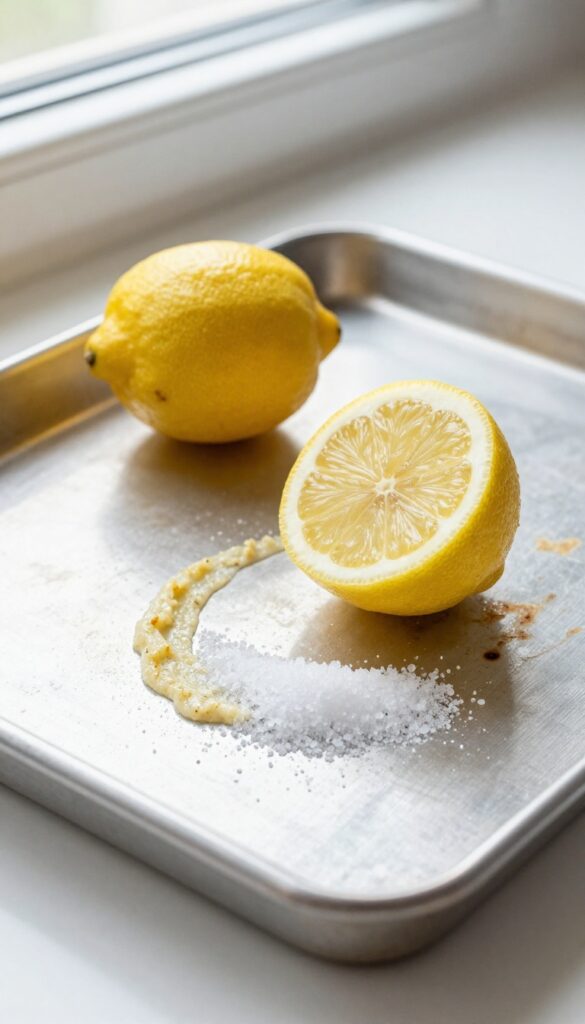
Citrus and salt aren't just for seasoning—they make a powerful cleaning duo. The acid in lemon juice breaks down burnt-on residue, while salt provides gentle abrasion to scrub it away without scratching your pan. This method is especially great for light to moderate stains and leaves your kitchen smelling fresh.
Cut a lemon in half, dip the cut side into a dish of salt, and rub it vigorously over the burnt areas. The salt sticks to the lemon, creating a scrubby paste. Focus on the darkest spots, applying a little elbow grease.
Let the mixture sit for 5 minutes, then rinse with warm water. Repeat if needed. For extra stubborn stains, squeeze some lemon juice directly onto the pan and sprinkle salt over it before scrubbing.
Why Lemon And Salt Work
Lemon juice contains citric acid, which reacts with alkaline burnt residues and helps dissolve them. Salt acts as a mild abrasive that physically lifts grime without scratching metal. Together, they create a chemical and mechanical action that's tough on stains but gentle on your pans.
Best Practices For Best Results
Use coarse salt like kosher or sea salt for better abrasion. Warm the pan slightly first to loosen the burnt bits. Scrub in circular motions, applying even pressure.
Rinse thoroughly to remove all salt residue, which can be corrosive if left on. Dry immediately to prevent water spots.
When To Use This Method
This technique works best on light to medium burnt stains. For heavy, blackened build-up, you may need to combine it with a baking soda soak first. Avoid using on non-stick or delicate coatings, as the salt can scratch them.
Stick to stainless steel, aluminum, or carbon steel sheets.
5. Oven Cleaner Spray (Heavy Duty)
For those times when gentler methods just don't cut it, a commercial oven cleaner can be a game-changer. These sprays are formulated to dissolve the toughest baked-on carbon and grease that have been accumulating for months. Just remember: this is a heavy-duty approach, so a little caution goes a long way.
Oven cleaners contain strong chemicals that break down burnt food quickly. They work best on cookie sheets with thick, blackened stains that resist scrubbing. Always follow the instructions on the can, and never mix oven cleaner with other cleaning products.
How To Apply Safely
Start by placing your cookie sheet on a protected surface, like a layer of newspaper. Spray the oven cleaner evenly over the burnt areas, then close the bag or cover with plastic wrap to keep the fumes contained. Let it sit for the time recommended on the label—usually 20 to 30 minutes.
The longer you wait, the easier the gunk will wipe away.
Safety First
Oven cleaner fumes are potent, so work in a well-ventilated area—open a window or turn on a fan. Wear rubber gloves to protect your skin, and consider safety glasses if you're sensitive to splashes. Keep kids and pets away until the job is done.
Wipe And Rinse Thoroughly
After the cleaner has done its work, wipe off the residue with a damp cloth or sponge. You may need to scrub a bit with a non-abrasive pad for stubborn spots. Rinse the sheet thoroughly with warm water and dish soap to remove any chemical residue before using it again.
6. Boiling Water and Baking Soda
This method turns your cookie sheet into a giant pot of cleaning solution. It's especially good for sheets with thick, baked-on layers that scrubbing alone won't touch. The combination of heat and alkaline baking soda breaks down carbonized food without any elbow grease.
Place the cookie sheet flat on your stovetop burners, making sure it's stable. Fill it with enough water to cover the burnt areas, then add a few tablespoons of baking soda. Bring the water to a boil and let it simmer for about 10 minutes.
The boiling action lifts the residue, and the baking soda helps dissolve it. After boiling, let the water cool slightly, then pour it out. Most of the burnt bits will slide off with a gentle wipe.
For stubborn spots, a quick scrub with a non-abrasive sponge finishes the job.
Why This Works So Well
Heat softens the burnt-on gunk, while baking soda creates a mild alkaline solution that breaks down grease and carbon. The bubbling action from boiling also helps dislodge particles. It's a chemical-free way to get heavy-duty results.
Tips For Best Results
Use a sheet that fits across two burners for even heating. If your sheet is too large, boil in batches or use a large pot instead. Add a squirt of dish soap for extra grease-cutting power.
Never let the water boil dry, as that could damage the pan.
What To Avoid
Don't use this method on non-stick cookie sheets, as high heat can damage the coating. Also avoid sudden temperature changes—let the sheet cool gradually after boiling to prevent warping.
7. Aluminum Foil and Dish Soap Scrub
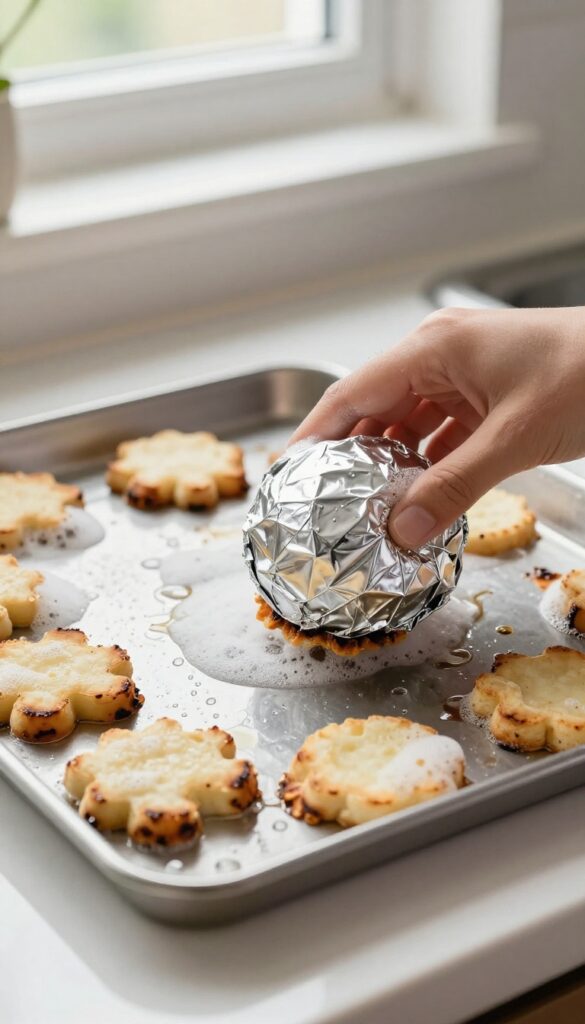
You might think of aluminum foil as something only used for covering leftovers, but it doubles as a surprisingly effective scrubbing tool. When crumpled into a ball and paired with a little dish soap, it becomes a gentle abrasive that lifts burnt-on residue without scratching most cookie sheets. This method is quick, uses items you already have, and works especially well on baked-on grease and caramelized sugar.
To use this method, start by tearing off a sheet of aluminum foil about 12 inches long. Crumple it into a tight ball—the tighter, the better, as it will hold its shape while you scrub. Add a small squirt of dish soap directly onto the stained area of the cookie sheet, then use the foil ball to scrub in circular motions.
The foil's texture provides enough abrasion to break down burnt food, while the soap helps lift grease. Rinse with warm water and repeat if necessary. This method is safe for most metal cookie sheets, but avoid using it on nonstick surfaces, as the foil can damage the coating.
Why It Works
Aluminum foil is softer than steel wool but tougher than a sponge, making it ideal for tackling stubborn stains without scratching. The dish soap adds lubrication and breaks down grease, while the crumpled foil creates tiny cutting edges that scrape off burnt food particles. Together, they form a powerful yet gentle cleaning duo.
Best Practices
For best results, use warm water to loosen the stains first. Scrub in small circles and apply moderate pressure—no need to go Hulk on it. Rinse frequently to check your progress and avoid spreading residue.
If the stains are extra stubborn, let the soap sit for a few minutes before scrubbing.
When Not To Use This Method
Skip the foil scrub on nonstick, ceramic, or glass cookie sheets. The abrasive nature of foil can scratch or damage these surfaces. Stick to softer methods like baking soda paste or vinegar soaks for those materials.
Always test a small, hidden area first if you're unsure about your sheet's coating.
8. Denture Cleaning Tablets Soak
Denture cleaning tablets aren't just for false teeth—they're surprisingly effective at lifting burnt-on stains from cookie sheets. The effervescent action creates tiny bubbles that penetrate and loosen baked-on residue without any scrubbing. It's a gentle yet powerful method that works wonders on stubborn discoloration.
Drop two denture cleaning tablets into a sink or basin filled with warm water. Submerge the cookie sheet completely and let it soak for 30 minutes. You'll see the water fizz and turn cloudy as the tablets work.
After the soak, rinse the sheet thoroughly and wipe away any remaining residue with a soft sponge. The stains should be significantly lighter or gone entirely.
Why It Works
Denture tablets contain sodium bicarbonate, citric acid, and other cleaning agents that create an oxygenated fizz. This effervescence helps break down carbonized food particles and grease without harsh scrubbing that could damage the sheet's surface.
Best For Light To Moderate Stains
This method is ideal for cookie sheets with a thin layer of burnt-on residue or discoloration. For thick, caked-on stains, you may need to repeat the soak or combine it with a baking soda paste afterward.
Tips For Best Results
Use the hottest tap water you can safely handle to activate the tablets fully. If the sheet is too large for your sink, use a deep roasting pan or a plastic storage bin. Rinse well after soaking to remove any chemical residue before using the sheet again.
9. Ketchup Application for Burnt Sugar
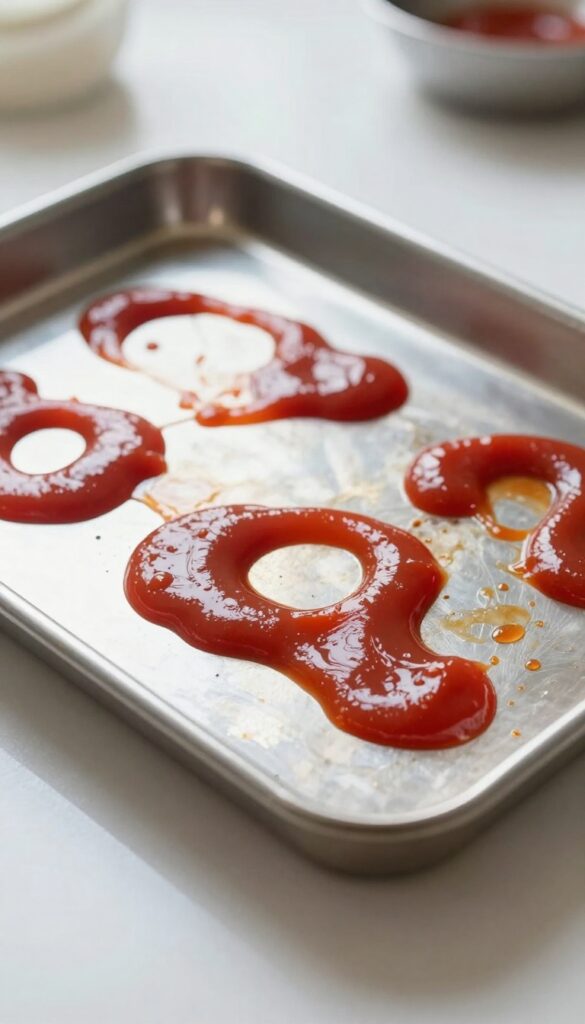
Ketchup isn't just for fries—it's a surprisingly effective cleaner for burnt sugar stains. The acidity in ketchup helps break down caramelized sugar, making it easy to wipe away. This method is especially useful for cookie sheets with sticky, dark spots from sugary spills.
Spread a thin layer of ketchup over the burnt sugar stains, covering them completely. Let it sit for about 20 minutes to allow the acids to work. Then, rinse the sheet with warm water and wash it as usual with dish soap.
For stubborn spots, gently scrub with a non-abrasive sponge. This trick is gentle on the metal but tough on sugar residue.
Why Ketchup Works
Ketchup contains vinegar and tomato acids that dissolve caramelized sugar without harsh scrubbing. The thick texture also helps it cling to vertical surfaces if your sheet has raised edges.
Best Practices
Use regular ketchup, not reduced-sugar varieties, as the sugar content helps the paste stay put. For extra stubborn stains, let it sit for up to 30 minutes. Avoid using on aluminum sheets that are not anodized, as acidity can cause discoloration.
10. Bar Keepers Friend Powder
Bar Keepers Friend is a household name for a reason. This mild abrasive powder tackles burnt-on stains without scratching metal surfaces. It's especially effective on cookie sheets because it combines gentle scouring with oxalic acid, which breaks down stubborn residue.
To use it, wet a sponge or soft cloth, sprinkle a small amount of powder directly onto the damp surface, and scrub the stained area in a circular motion. You'll see the burnt bits lift away quickly. Rinse thoroughly with water and dry immediately to prevent any residue.
For extra tough spots, let the paste sit for a minute before scrubbing.
Why It Works So Well
Bar Keepers Friend contains oxalic acid, which chemically reacts with burnt-on food and grease. The fine feldspar powder provides just enough abrasion to physically remove stains without gouging the metal. This dual action makes it more effective than baking soda alone for heavy-duty cleaning.
Best Practices For Safety
Always wear gloves to protect your hands from the mild acid. Test on a small hidden area first, especially if your cookie sheet has a non-stick coating—Bar Keepers Friend is designed for bare metal. Avoid using it on aluminum or copper without checking the label, as it can darken those metals.
Where To Buy And Storage Tips
You can find Bar Keepers Friend at most grocery stores, hardware stores, or online. The powder form is more versatile than the liquid version for scrubbing. Keep the canister dry and sealed, as moisture can cause clumping.
A little goes a long way—one can lasts for months.
11. Vinegar and Baking Soda Fizz
The classic duo of vinegar and baking soda isn't just for volcanoes—it's a powerhouse for cleaning burnt cookie sheets. The fizzy reaction helps lift stuck-on food without harsh scrubbing. This method is gentle on the metal but tough on stains.
Sprinkle a generous layer of baking soda over the burnt areas, then spray or pour white vinegar directly onto it. Let the mixture fizz for a few minutes to break down the residue. After the bubbling subsides, scrub with a non-abrasive pad or sponge.
Rinse with warm water and dry. For extra stubborn spots, let the paste sit for 15–20 minutes before scrubbing.
Why This Works
Baking soda is a mild abrasive that helps physically scrub away stains, while vinegar's acidity dissolves grease and burnt-on food. The chemical reaction creates carbon dioxide bubbles that help lift debris from the surface.
Pro Tips For Best Results
Use distilled white vinegar for maximum effectiveness. If the stains are heavy, heat the vinegar slightly before spraying—warm vinegar works faster. Avoid using steel wool or harsh scrubbers, as they can scratch the sheet's surface.
When To Avoid This Method
This method is safe for most metal cookie sheets, including aluminum and stainless steel. However, avoid it on non-stick or enamel-coated sheets, as the abrasive baking soda can damage the coating. For those, stick to gentler cleaners.
12. Salt and Ice Cube Scrub
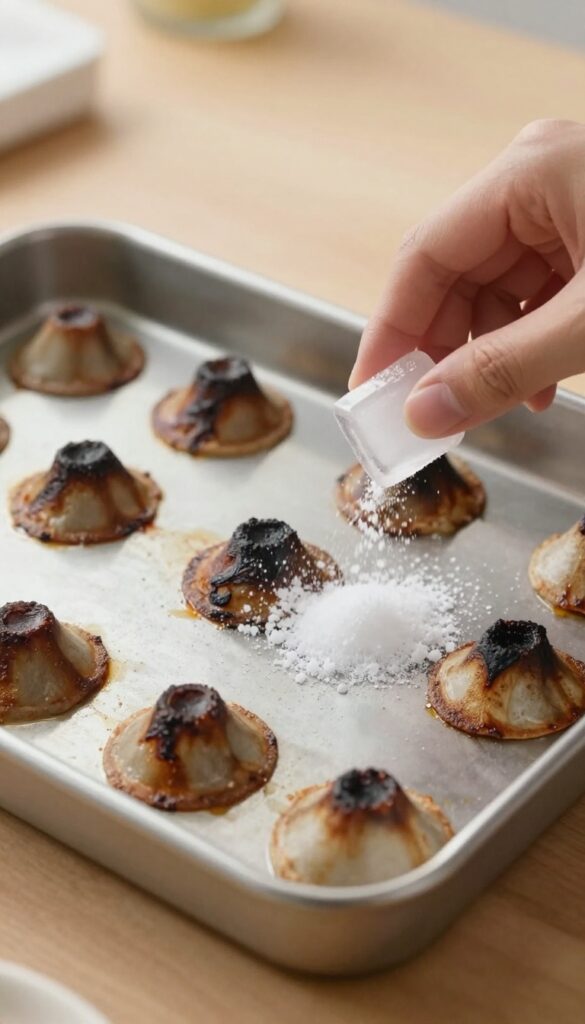
When you need a gentle but effective scrub, reach for the salt and an ice cube. This odd pairing works wonders on burnt-on food without scratching your cookie sheets. The ice adds moisture as you scrub, while the coarse salt grinds away stuck-on bits.
It's a simple, chemical-free trick that's surprisingly satisfying.
Why This Combo Works
Salt is a natural abrasive that's hard enough to loosen burnt food but soft enough to protect your pan's surface. The ice cube provides just enough water to create a gritty paste as you rub, and the cold helps lift stubborn residues. Together, they form a scrub that's tough on stains but gentle on metal.
How To Do It
Sprinkle a generous layer of coarse salt (like kosher or sea salt) over the burnt areas. Take an ice cube and rub it firmly over the salt in circular motions. The ice will melt slowly, mixing with the salt to form a slushy scrub.
Continue for a minute or two, then rinse with warm water. Repeat if needed.
Tips For Best Results
Use coarse salt—table salt is too fine and dissolves too quickly. Work in sections if the sheet is large, and don't press too hard. This method works best on light to moderate burnt stains; for heavy buildup, try a longer soak first.
Always rinse thoroughly after scrubbing.
13. Hydrogen Peroxide and Baking Soda Overnight Soak
If you have stubborn burnt stains that won't budge with quick scrubs, it's time to let chemistry do the heavy lifting. Hydrogen peroxide combined with baking soda creates an oxygenated paste that breaks down carbonized food overnight. This method is especially effective for cookie sheets with multiple layers of baked-on residue.
Why This Combo Works So Well
Baking soda is a mild abrasive that helps lift debris, while hydrogen peroxide releases oxygen bubbles that penetrate and loosen burnt gunk. Together, they form a paste that clings to vertical surfaces and stays active for hours. The oxygen bubbles work continuously to soften even the toughest stains without harsh scrubbing.
How To Apply The Paste Correctly
Mix about ½ cup of baking soda with enough hydrogen peroxide (3% solution) to form a thick, spreadable paste. Apply a generous layer directly over the burnt areas, making sure the paste is at least ¼ inch thick. Cover the sheet with plastic wrap or a damp towel to keep the paste from drying out overnight.
Let it sit for 8–12 hours.
Rinsing And Finishing Up
The next morning, remove the wrap and rinse the sheet with warm water. Most of the stain will slide off easily. For any remaining spots, scrub gently with a non-abrasive sponge or a soft brush.
Rinse thoroughly and dry. Your cookie sheet should look significantly cleaner, often with no scrubbing needed.
14. Dishwasher Detergent and Hot Water Soak
Your dishwasher detergent is a powerhouse for breaking down burnt-on food. The enzymes and surfactants in the formula are designed to attack tough stains, and they work just as well in a sink soak. This method is especially effective for cookie sheets with a thick layer of baked-on residue that won't budge with scrubbing alone.
Fill your sink or a large basin with the hottest tap water you can handle. Add a generous scoop of powdered dishwasher detergent—about a quarter cup—and stir until it dissolves. Submerge the cookie sheet completely and let it soak for at least an hour.
For extra stubborn stains, let it sit overnight. The enzymes will slowly break down the burnt food particles, making them easy to wipe away. After soaking, scrub gently with a non-abrasive sponge or nylon brush.
Rinse thoroughly and dry. Avoid using this method on aluminum sheets, as the detergent can cause discoloration.
Why Dishwasher Detergent Works So Well
Dishwasher detergents contain powerful enzymes like proteases and amylases that target protein and starch-based stains. These enzymes chemically break down the burnt food into smaller, water-soluble pieces. The hot water activates the enzymes and helps lift the residue from the metal surface.
This is a chemical cleaning method, so no harsh scrubbing is needed.
Tips For Best Results
Use a detergent with enzymes—check the label for terms like "enzyme formula" or "stain-fighting. " Avoid using gel or liquid detergents, as they may not dissolve as well. If the sheet is too large for your sink, use a plastic storage bin or your bathtub.
Always wear gloves to protect your hands from the hot water and detergent.
Safety And Material Precautions
Do not use this method on non-stick or aluminum cookie sheets. The high heat and alkaline detergent can damage non-stick coatings and cause aluminum to discolor or pit. Stick to stainless steel or heavy-gauge carbon steel sheets.
After soaking, rinse the sheet very well to remove any detergent residue before using it again.
15. Pumice Stone for Stubborn Spots
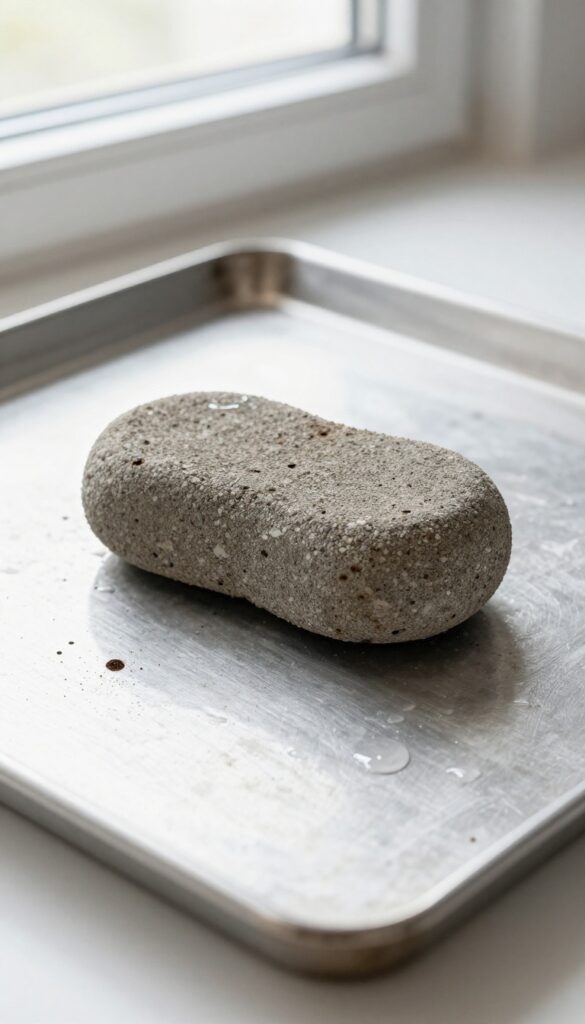
When baking soda and vinegar won't cut it, a pumice stone can be a game-changer for those rock-hard, carbonized spots. This natural volcanic rock is abrasive enough to scrape away burnt residue without damaging the metal—if you use it correctly. It's especially effective on heavy-duty aluminum or steel sheets that have seen years of use.
A pumice stone is a gentle abrasive that works by physically wearing down burnt-on carbon. Unlike steel wool, it won't leave scratches if you keep it wet and use light pressure. This method is best for isolated stubborn spots rather than cleaning the entire sheet.
How To Use A Pumice Stone Safely
Start by soaking the pumice stone in water for a few minutes—it should be completely wet before use. Wet the cookie sheet as well. Gently rub the stone over the burnt spot using circular motions with light pressure.
Let the stone do the work; don't press hard. Rinse the sheet frequently to check progress and remove debris.
Best Sheets For This Method
Pumice stones work best on heavy-duty, uncoated metal sheets. Avoid using them on non-stick or enamel-coated sheets, as the abrasive can scratch or chip the coating. If you're unsure, test on a small hidden area first.
When To Use A Pumice Stone Vs. Other Methods
Use a pumice stone when you have a few small, extremely stubborn spots that won't come off with baking soda or vinegar. It's not ideal for large areas or light stains—those are better tackled with gentler methods. For thick, burnt-on layers, combine with a little dish soap for extra lubrication.
16. Ammonia and Plastic Bag Method
For truly stubborn burnt-on stains, ammonia offers a powerful, fume-based solution that requires minimal scrubbing. This method uses the chemical reaction of ammonia vapors to break down carbonized residue overnight. It's a set-it-and-forget-it approach that works wonders on heavily soiled cookie sheets.
Place your cookie sheet inside a large, sealable plastic bag. Add a small bowl of household ammonia (about 1/4 cup) next to the sheet, being careful not to spill any directly on the metal. Seal the bag tightly and leave it overnight in a well-ventilated area, preferably outdoors or in a garage.
The ammonia fumes will soften the burnt food stains. The next morning, remove the sheet carefully, rinse it thoroughly with water, and wash with dish soap. The stains should wipe away easily.
Always wear gloves and work in a ventilated space.
Safety First: Ventilation And Gloves
Ammonia fumes are strong and can irritate your eyes and lungs. Always perform this method in a well-ventilated area—open a window or work outside. Wear rubber gloves to protect your skin, and avoid inhaling the fumes directly.
Keep the bag sealed during the process.
Step-by-step: Setting Up The Bag
Choose a heavy-duty garbage bag that can fit your cookie sheet without tearing. Place the sheet inside, then add a small bowl or cup of ammonia. Do not let the ammonia touch the sheet directly—only the fumes should do the work.
Seal the bag with a twist tie or knot, and leave it undisturbed for at least 8 hours.
Aftercare: Rinsing And Final Wash
After removing the sheet from the bag, rinse it thoroughly under hot water to remove any ammonia residue. Follow up with a scrub using dish soap and a non-abrasive sponge. The burnt stains should come off with little effort.
If any spots remain, repeat the process or use a gentle scrub.
17. Baking Soda and Lemon Juice Spray
Sometimes the best cleaners are the simplest ones. Baking soda and lemon juice are pantry staples that work together to tackle burnt-on stains without harsh fumes. This spray-on paste is easy to apply and smells fresh, making it a pleasant alternative to chemical cleaners.
The combination of baking soda's mild abrasiveness and lemon juice's acidity creates a gentle but effective cleaning action. The fizzing reaction helps lift burnt particles, while the lemon juice cuts through grease and leaves a citrus scent. This method works best on light to moderate stains and can be used as a regular maintenance cleaner.
How To Make The Spray
In a small bowl, mix 1/2 cup baking soda with enough lemon juice (about 3 tablespoons) to form a spreadable paste. Transfer to a spray bottle for easy application. For a thinner spray, add a splash of water.
Shake well before each use.
Application Tips
Spray the paste directly onto the burnt stains, covering them completely. Let it sit for 15 minutes to allow the fizzing action to work. For extra stubborn spots, scrub gently with a non-abrasive sponge before rinsing.
Avoid letting the mixture dry completely, as it can become hard to remove.
Rinsing And Results
Rinse the cookie sheet thoroughly with warm water. Most stains should lift away easily. For any remaining residue, repeat the process or follow up with a quick scrub.
Dry the sheet immediately to prevent water spots. This method leaves your cookie sheet clean and smelling like fresh lemons.
18. Commercial Stainless Steel Cleaner
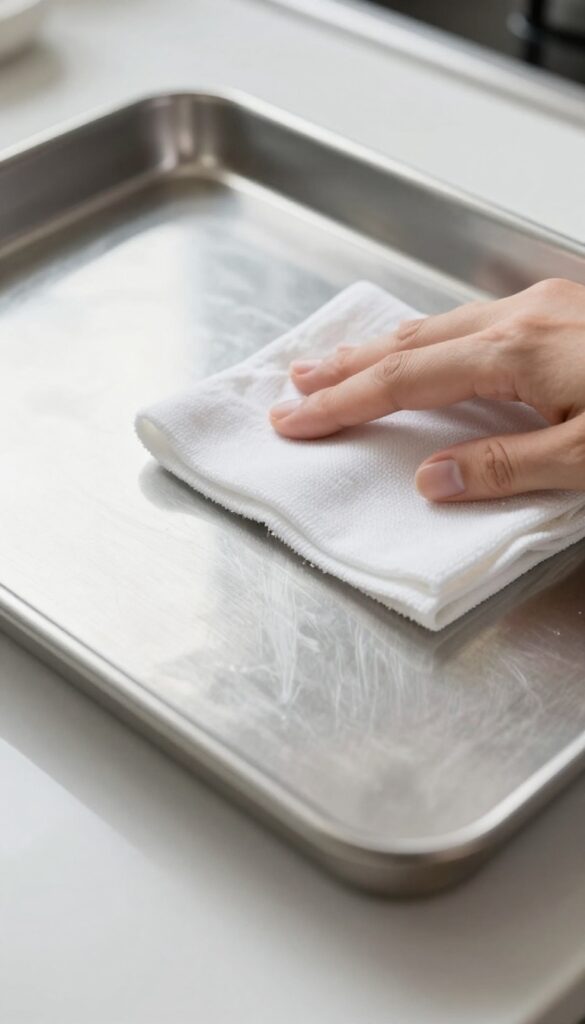
Sometimes the toughest burnt-on stains call for a product designed specifically for the job. Commercial stainless steel cleaners are formulated to break down carbonized food without scratching or dulling the metal. They're a great option when your DIY methods have hit their limit.
Reach for a trusted stainless steel cleaner like Bar Keepers Friend or a dedicated stainless steel polish. Apply a small amount to a soft, lint-free cloth and rub gently in the direction of the grain—never against it. This lifts burnt residue while restoring the sheet's original shine.
Buff dry with a clean cloth for a streak-free finish. For extra stubborn spots, let the cleaner sit for a minute before wiping.
Why It Works
These cleaners contain mild abrasives and solvents that target polymerized oils and sugars without damaging the metal. The grain-direction technique prevents micro-scratches that can trap future residue.
Best Practices
Always test on a small hidden area first. Avoid using steel wool or abrasive pads, as they can ruin the finish. Stick to soft cloths or non-scratch sponges.
Rinse thoroughly with water after cleaning to remove any chemical residue.
When To Use This Method
Ideal for sheets with moderate to heavy burnt-on stains that resist baking soda or vinegar. Also great for restoring shine to older sheets that have lost their luster over time.
19. Vinegar and Cornstarch Paste
White vinegar is a kitchen MVP for cleaning, but when you add cornstarch to the mix, you get a paste that tackles burnt stains like a dream. The cornstarch soaks up grease while the vinegar works on the baked-on residue. It's gentle enough for non-stick surfaces but tough on grime.
This simple paste is one of those DIY solutions that feels too easy to work, but it really does the job. You probably have both ingredients in your pantry right now, so there's no need to run to the store. Just mix, apply, and let it sit—the magic happens while you wait.
How To Make The Paste
In a small bowl, combine two parts cornstarch with one part white vinegar. Stir until you get a thick, spreadable paste. Adjust the ratio if needed—add a little more cornstarch if it's too runny, or a splash more vinegar if it's too stiff.
Application And Drying Time
Spread the paste evenly over the burnt areas of your cookie sheet. Make sure it's thick enough to cover the stains completely. Let it sit for at least 30 minutes, or up to an hour for tougher spots.
As it dries, the paste will pull the grease and burnt residue out of the metal.
Scrubbing And Rinsing
Once the paste is dry and cracked, grab a damp sponge or a soft scrub brush. Gently scrub the area in circular motions—the dried paste acts like a mild abrasive. Rinse with warm water and repeat if any stubborn spots remain.
Your sheet should look noticeably cleaner.
20. Baking Soda and Water Paste with Plastic Wrap
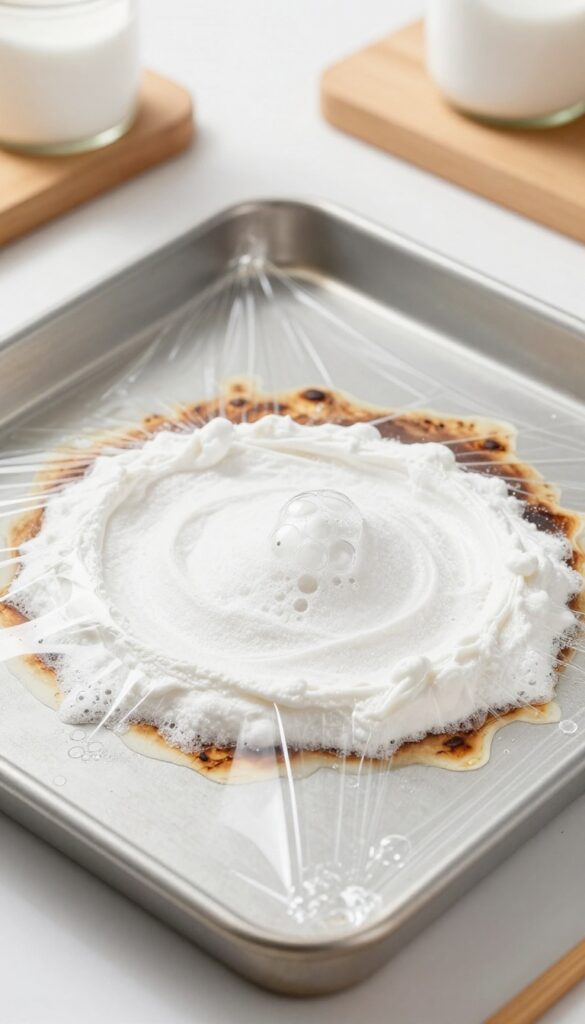
This method is all about giving the baking soda extra time to work its magic. By sealing the paste under plastic wrap, you create a moist environment that keeps the baking soda active for hours. It's perfect for those stains that have been baked on multiple times and need a long soak.
Start by mixing baking soda with just enough water to form a thick, spreadable paste. You want it to be like toothpaste—not too runny. Apply a generous layer over the burnt spots, making sure to cover every bit of the stain.
Then, take a piece of plastic wrap and press it directly onto the paste, smoothing out any air bubbles. The wrap prevents the paste from drying out, so it can keep breaking down the burnt food over several hours. Leave it for at least 4 hours, or overnight for the toughest stains.
When you're ready, remove the wrap and scrub the area with a non-abrasive sponge or a soft brush. The paste will have loosened the burnt residue, so it should come off with minimal effort. Rinse well and dry.
Why Plastic Wrap Matters
Without the wrap, the baking soda paste would dry into a crust within an hour or two, losing its effectiveness. The plastic wrap traps moisture, keeping the paste active for much longer. This extended contact time is what makes the method so effective for deep-set stains.
Best For Stubborn, Layered Stains
This technique shines on cookie sheets that have accumulated burnt-on layers over time. It's especially good for stains that have been baked on at high temperatures, like caramelized sugar or burnt cheese. The long soak softens these tough residues without harsh scrubbing.
Tips For Best Results
Use warm water when making the paste—it helps the baking soda dissolve slightly and activates its cleaning power. Make sure the plastic wrap is in direct contact with the paste, not just draped over the sheet. You can use a weight like a can of beans to hold the wrap in place if needed.
21. Lemon and Baking Soda Scrub
Lemons aren't just for lemonade. When you pair their natural acidity with the gentle abrasiveness of baking soda, you get a powerful scrub that cuts through burnt-on grime without scratching your pans. Plus, it leaves your kitchen smelling fresh instead of like chemical cleaner.
This method is almost too easy. Cut a lemon in half, dip the cut side into a small dish of baking soda, and scrub the stained areas of your cookie sheet. The acid in the lemon reacts with the baking soda to create a mild fizzing action that helps lift burnt food.
Rinse with warm water and repeat if needed. For extra stubborn spots, let the lemon-baking soda paste sit on the stain for a few minutes before scrubbing.
Why This Works
The citric acid in lemon juice breaks down grease and carbonized food particles, while the baking soda provides a gentle scrubbing action. Together, they create a chemical reaction that helps loosen burnt residue without the need for harsh chemicals or excessive elbow grease.
Best For Light To Moderate Stains
This scrub works wonders on cookie sheets with a thin layer of burnt-on food or general discoloration. For thick, crusted-on stains, you might need to combine this method with a longer soak or a stronger cleaner. But for everyday maintenance and light stain removal, it's a go-to.
Tips For Best Results
Use a fresh lemon for maximum juice and acidity. Roll the lemon on the counter before cutting to release more juice. If you don't have a lemon, lime or orange works too, though the acidity is slightly lower.
Always rinse thoroughly after scrubbing to remove any baking soda residue.
22. Boiling Vinegar Solution
When scrubbing alone won't cut it, bring out the big guns—boiling vinegar. This method uses heat and acidity to break down the toughest burnt-on residue without any harsh scrubbing. It's especially effective for cookie sheets with thick, dark stains that have been baked on over time.
Boiling a vinegar solution on your cookie sheet is like giving it a deep-cleaning spa treatment. The heat helps the vinegar penetrate the burnt layers, while the acetic acid dissolves the carbonized food. After a short simmer, most of the gunk will wipe away with minimal effort.
What You'll Need
You only need two things: white vinegar and water. Use equal parts—say, 1 cup of each for a standard half-sheet pan. Make sure your cookie sheet is oven-safe and can withstand boiling liquid.
If it's nonstick, check the manufacturer's guidelines first.
The Boiling Process
Pour the vinegar-water mixture into the cookie sheet and place it on the stovetop over medium-high heat. Bring it to a gentle boil, then reduce to a simmer. Let it bubble away for 10 minutes.
You'll see the burnt stains start to lift as the liquid works its magic.
Scrubbing And Rinsing
After simmering, carefully remove the pan from the heat and let it cool slightly. Pour out the liquid (down the drain is fine). Use a non-abrasive scrub sponge or a stiff brush to gently scrub away the loosened residue.
Rinse thoroughly with warm water and dry immediately.
23. Professional Restoration for Antique Sheets
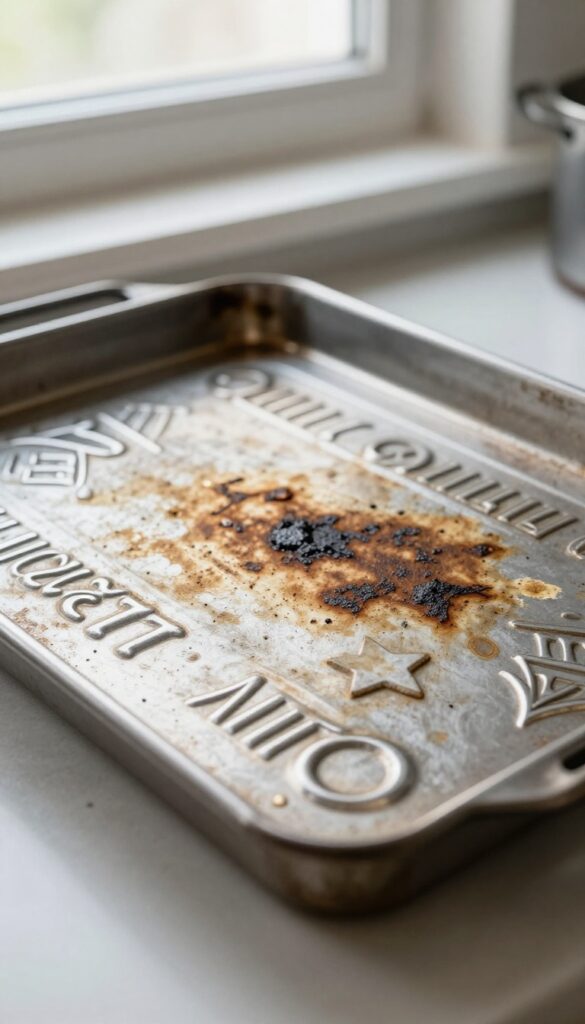
Vintage cookie sheets have a charm that modern non-stick pans just can't match. But when decades of baked-on stains threaten their beauty, you might worry that aggressive cleaning will ruin their character. Professional restoration offers a way to preserve both the history and the functionality of these kitchen treasures.
Professional restorers use gentle abrasives, chemical baths, and precise polishing to remove burnt stains without damaging the metal's patina. They can also re-season carbon steel sheets, bringing back their natural non-stick properties. This service is ideal for family heirlooms or valuable antique finds that deserve more than a DIY scrub.
What Professional Restoration Involves
Restorers first assess the sheet's material—aluminum, steel, or copper—and the type of stain. They may use a mild acid soak to lift carbonized residue, followed by hand polishing with ultra-fine abrasives. The goal is to remove only the burnt layer, leaving the original surface intact.
When To Choose Professional Help
If your cookie sheet has intricate embossing, a rare brand stamp, or a copper bottom that's starting to tarnish, professional care is worth the investment. Also, if DIY methods have failed or you're worried about scratching a collectible piece, experts have the tools to do it safely.
Finding A Reliable Restorer
Look for restorers who specialize in antique cookware or metal conservation. Ask about their process and whether they test for lead or other contaminants in vintage sheets. Many offer mail-in services, so you don't need to be local.
FAQ
Can I use steel wool on my cookie sheets?
Steel wool can scratch and damage the surface of most cookie sheets, especially non-stick or aluminum ones. Stick to gentle abrasives like baking soda, salt, or non-scratch scrub pads.
How often should I clean my cookie sheets?
Clean cookie sheets after each use to prevent buildup. For light stains, a quick wash with dish soap is enough. Deep clean with these methods as needed, typically every few months.
Will these methods work on non-stick cookie sheets?
Yes, but be cautious with abrasive methods. Use gentle scrubbing tools and avoid harsh chemicals that can damage the non-stick coating. Baking soda and vinegar are safe options.
What if my cookie sheet is aluminum?
Aluminum can react with acidic cleaners like vinegar or lemon juice, causing discoloration. Use mild alkaline cleaners like baking soda and water, and avoid prolonged soaking in acidic solutions.
Can I put my cookie sheet in the dishwasher?
It depends on the material. Aluminum and non-stick sheets may discolor or lose their coating in the dishwasher. Hand washing is recommended for best longevity, but check the manufacturer's instructions.
Conclusion
Burnt-on stains don't have to mean the end of your favorite cookie sheets. With these 23 tips, you can choose the method that best fits your sheet's material and the severity of the stains. Many of these use common household items, so you can start cleaning right away.
Remember to always test a small area first and avoid harsh abrasives on delicate surfaces. Regular maintenance will keep your sheets looking great and performing well for years to come. Happy baking and cleaning!