10 Indoor Patio Ideas for Year-Round Relaxing
Indoor patios deserve more respect. People treat them like seasonal extras instead of everyday sanctuaries, and that mindset wastes serious comfort potential.
I’ve watched too many friends shove a chair inside and call it done, then wonder why the space feels awkward. This guide fixes that problem fast and without fluff.
I’m talking about indoor patios that feel intentional, cozy, and usable every single month. You don’t need a huge budget or a designer eye, just a few smart ideas and the confidence to try them.
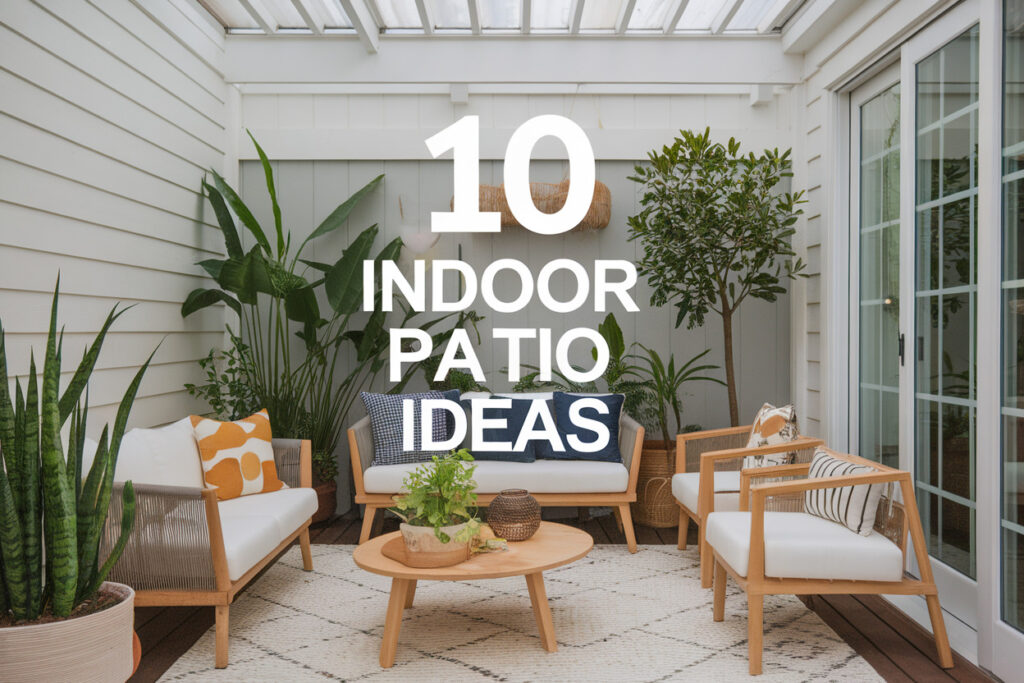
Ready to turn that ignored space into your favorite hangout?
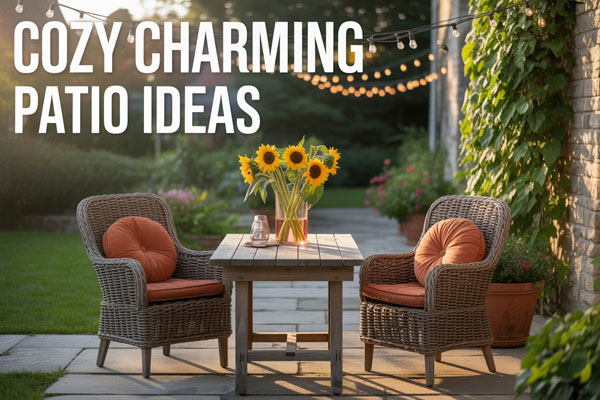
1. Cozy Rattan Seating With All-Season Cushions
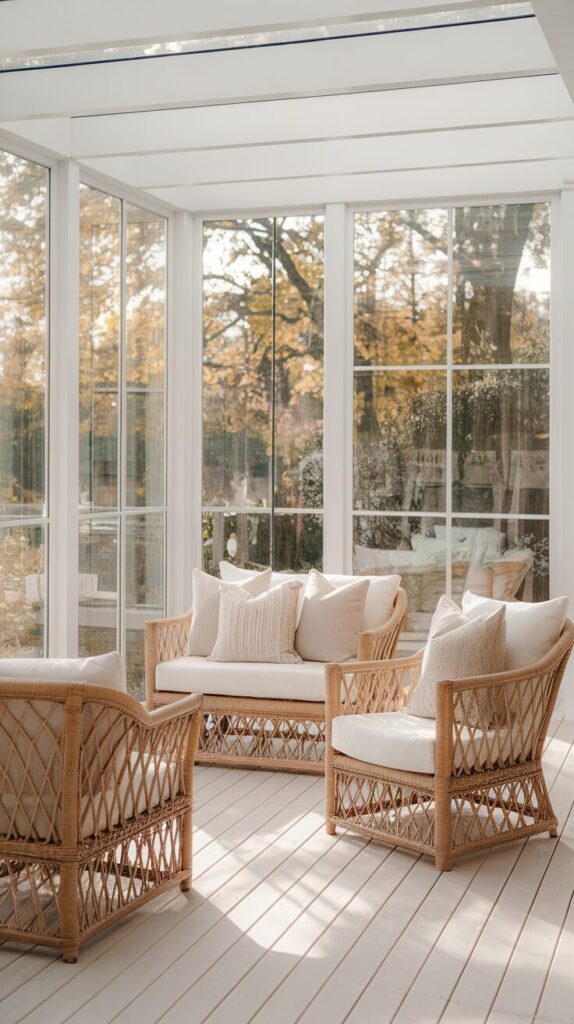
Warm textures hit first. The second you step onto an indoor patio with rattan seating, your shoulders drop and your brain relaxes.
That natural weave softens hard floors and glass walls while instantly making the space feel lived-in. I always suggest rattan because it balances casual comfort with visual style without trying too hard.
Idea Description
Soft light bounces off woven frames, and the space feels calm instead of echoey. Rattan seating works because it brings an outdoor vibe inside without feeling unfinished. You get comfort, durability, and that relaxed “sit and stay awhile” energy. I’ve tried metal and plastic before, and rattan wins every time for warmth.
Why This Works
Rattan visually breaks up rigid indoor architecture. The curves counter sharp lines from windows and walls, which helps the space feel human instead of showroom-stiff. Cushions add physical comfort while also absorbing sound, which matters more indoors. The setup supports lounging, chatting, or solo coffee time without fuss.
How to Do It
- Choose rattan chairs or a loveseat sized for the space
- Add all-season cushions with removable covers
- Anchor the seating with a low rug to define the zone
- Keep a small side table within arm’s reach
Style & Design Tips
Stick to neutral cushions if the patio gets strong light. Bright patterns fade faster and distract from the natural texture. Avoid oversized furniture that crowds walkways. Let the rattan texture do the talking instead of piling on busy décor.
Pro Tip or Budget Hack
Check secondhand listings for rattan frames and replace the cushions yourself. New cushions cost less than full furniture sets and give you control over color and firmness.
2. Indoor Plants That Thrive Without Direct Sunlight
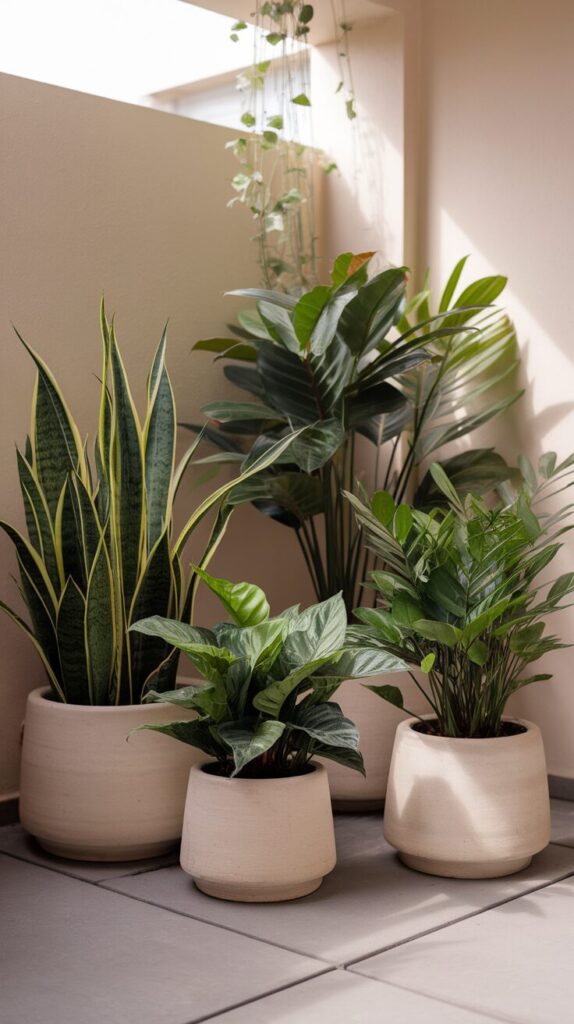
Green changes everything. An indoor patio without plants feels unfinished, no matter how nice the furniture looks. The trick involves choosing plants that survive real life instead of Instagram lighting. I learned this the hard way after watching three “easy” plants die dramatically.
Idea Description
Soft leaves catch your eye before furniture ever does. Plants bring movement, texture, and calm energy into an enclosed patio. Low-light plants work because they adapt without demanding constant care. I love this idea because it looks high-effort while staying forgiving.
Why This Works
Plants improve visual balance and reduce that boxed-in feeling. They blur the line between indoors and outdoors, which defines the whole point of an indoor patio. Green tones also ground neutral spaces and prevent décor from feeling flat. Even one tall plant changes the room’s mood instantly.
How to Do It
- Choose plants like snake plants, pothos, or ZZ plants
- Place taller plants in corners to frame the space
- Use matching planters for a clean look
- Rotate plants monthly for even growth
Style & Design Tips
Avoid tiny scattered pots that feel cluttered. Group plants in odd numbers for better flow. Matte planters beat glossy ones for a relaxed patio vibe. Keep leaf shapes varied for depth.
Pro Tip or Budget Hack
Buy smaller plants and let them grow. Young plants cost less and adapt better to your space over time.
3. Layered Lighting That Mimics Natural Daylight

Light controls mood more than any throw pillow ever could. Indoor patios often suffer from harsh overhead lighting or awkward shadows. Layered lighting fixes that instantly and makes the space usable from morning to midnight. I swear by this approach after ruining one space with a single bright fixture.
Idea Description
Soft glows replace harsh glare, and the space feels inviting. Layered lighting mixes ambient, task, and accent light to mimic daylight shifts. This setup works because it feels natural instead of staged. Once you try it, you’ll never go back.
Why This Works
Different light sources create depth and flexibility. You can brighten the space during the day and soften it at night without changing furniture. The room adapts to your mood instead of forcing one vibe. Lighting also highlights textures that daylight sometimes misses.
How to Do It
- Install a warm overhead fixture or ceiling fan light
- Add floor lamps or table lamps near seating
- Use string lights or wall sconces for accents
- Choose dimmable bulbs whenever possible
Style & Design Tips
Stick to warm white bulbs for comfort. Cool light kills coziness fast. Hide cords whenever you can. Lighting should disappear into the vibe, not demand attention.
Pro Tip or Budget Hack
Smart bulbs let you adjust brightness and tone without rewiring. One bulb can replace three lamps worth of hassle.
4. Outdoor-Style Rugs That Define the Space

Bare floors feel cold emotionally, not just physically. Rugs ground an indoor patio and tell your brain where to relax. Outdoor-style rugs work best because they handle traffic and light without stress. I learned this after ruining a soft rug in three months.
Idea Description
The floor finally feels intentional. An outdoor-style rug defines seating zones while adding color and pattern. These rugs resist fading and stains, which matters indoors with sunlight. They make the patio feel finished without fragility.
Why This Works
Rugs visually anchor furniture and improve acoustics. They prevent chairs from sliding and make bare floors feel warmer. Outdoor rugs handle humidity and temperature shifts better than indoor ones. That durability keeps the space low-maintenance.
How to Do It
- Measure seating area before shopping
- Choose flatweave or low-pile designs
- Center furniture legs on the rug
- Use rug pads to prevent movement
Style & Design Tips
Avoid tiny rugs that float awkwardly. Let the rug extend beyond seating edges. Simple patterns age better than trendy prints. Neutral bases allow décor swaps later.
Pro Tip or Budget Hack
Check end-of-season outdoor sales. Stores discount these rugs heavily once patio season ends.
5. Sliding Glass Doors With Sheer Curtains

Privacy and light can coexist. Sheer curtains soften harsh glass while keeping brightness intact. I used to hate curtains here until I tried the right fabric. Now I won’t design an indoor patio without them.
Idea Description
Light filters gently instead of blasting in. Sheer curtains add softness and privacy without blocking views. This idea works because it adds movement and texture. The space feels calm, not exposed.
Why This Works
Sheers diffuse light and reduce glare. They also visually soften architectural lines. Curtains create a sense of enclosure without closing the space. That balance feels comfortable year-round.
How to Do It
- Install ceiling-mounted curtain tracks
- Choose washable sheer fabrics
- Hang panels floor-to-ceiling
- Keep panels neutral for flexibility
Style & Design Tips
Avoid heavy fabrics that trap heat. White and linen tones reflect light best. Height matters more than width for a polished look.
Pro Tip or Budget Hack
Use curtain clips to adjust length without hemming. You’ll save time and frustration.
6. Compact Fireplace or Electric Heater Feature
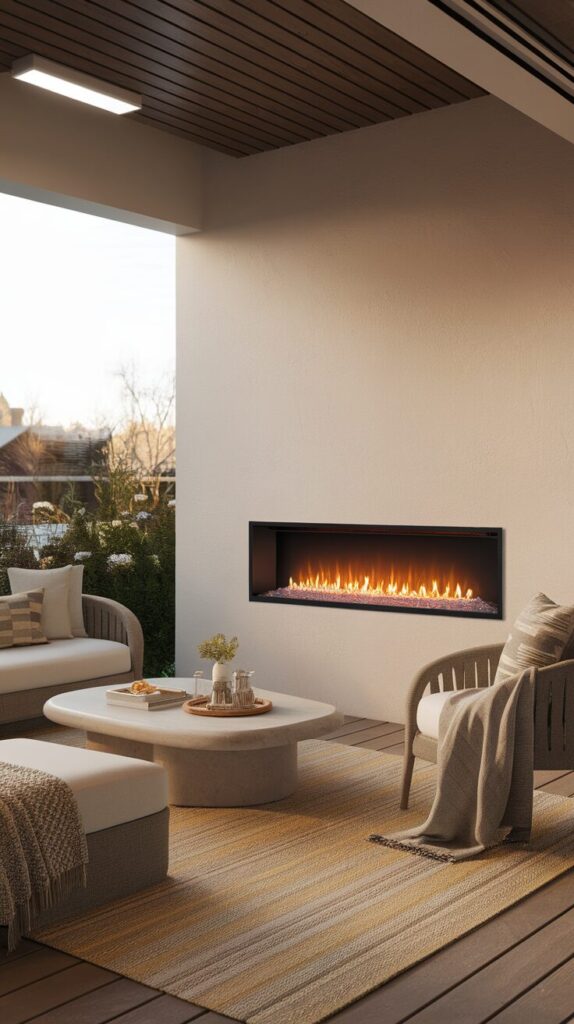
Warmth changes behavior. People linger longer when the space feels physically cozy. A compact fireplace or heater adds both comfort and visual focus. I underestimated this until winter proved me wrong.
Idea Description
A subtle glow pulls the room together. Electric fireplaces offer warmth without renovation stress. This feature works because it creates a focal point. Even unused, it adds atmosphere.
Why This Works
Heat encourages relaxation and longer use. The visual flame effect adds depth and movement. Fireplaces also anchor furniture layouts naturally. The space feels intentional instead of accidental.
How to Do It
- Choose wall-mounted or freestanding units
- Place seating facing the feature
- Keep clearance around the unit
- Use heat-resistant décor nearby
Style & Design Tips
Avoid oversized units in small patios. Choose simple frames over ornate ones. Let the flame stay subtle, not flashy.
Pro Tip or Budget Hack
Electric units cost less to run than space heaters long-term. Look for models with flame-only mode.
7. Bistro Table Setup for Casual Meals

Eating somewhere different changes routine energy. A small bistro setup encourages slow mornings and relaxed evenings. I added one on a whim and use it constantly. It feels like a mini café at home.
Idea Description
Two chairs, one table, endless uses. Bistro sets fit tight spaces without crowding. This idea works because it adds function without commitment. Coffee tastes better here, I swear.
Why This Works
Small-scale furniture preserves flow. The setup encourages intentional breaks. It also gives the patio a clear purpose beyond lounging. That clarity improves daily use.
How to Do It
- Choose foldable or lightweight chairs
- Use round tables for easy movement
- Place near natural light
- Add seat cushions for comfort
Style & Design Tips
Avoid bulky chairs that dominate. Match materials for cohesion. Keep tabletop décor minimal to preserve function.
Pro Tip or Budget Hack
Thrift stores often carry solid bistro sets. Paint refreshes them instantly.
8. Built-In Storage Benches With Hidden Space
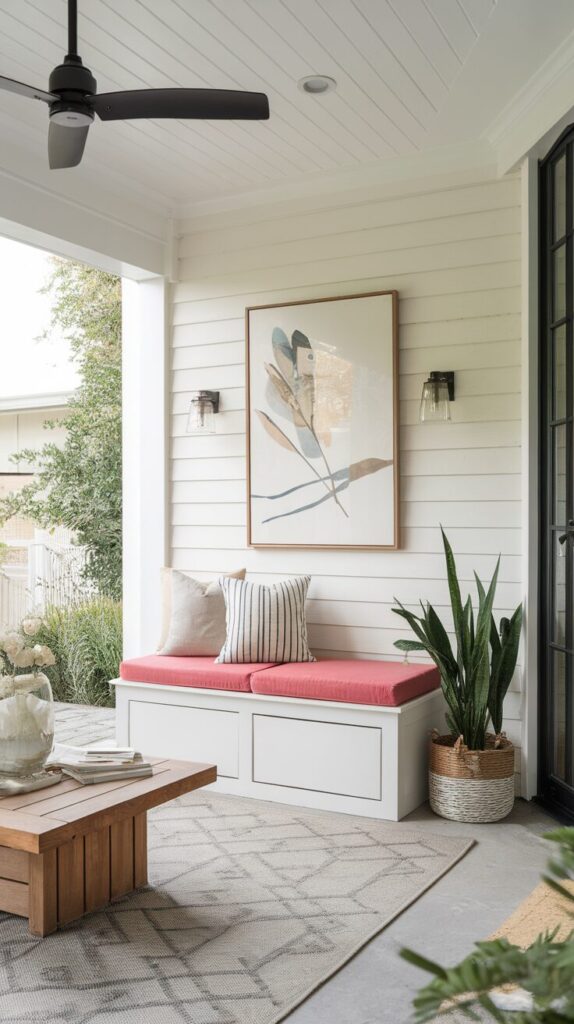
Clutter kills calm. Storage benches fix that problem while adding seating. I love solutions that multitask quietly. This one does exactly that.
Idea Description
The space stays clean without effort. Built-in benches hide blankets, tools, or cushions. This idea works because it combines form and function. You gain storage without visual noise.
Why This Works
Hidden storage preserves visual flow. Benches provide extra seating without extra furniture. The room feels larger and calmer. Organization supports relaxation more than people admit.
How to Do It
- Measure wall length carefully
- Choose lift-top or drawer designs
- Add seat cushions for comfort
- Label storage sections discreetly
Style & Design Tips
Match bench color to wall tones. Avoid shiny finishes that show wear. Simple lines age best over time.
Pro Tip or Budget Hack
Use modular storage cubes as a base. Add a custom cushion on top.
9. Textured Accent Wall Using Wood or Brick
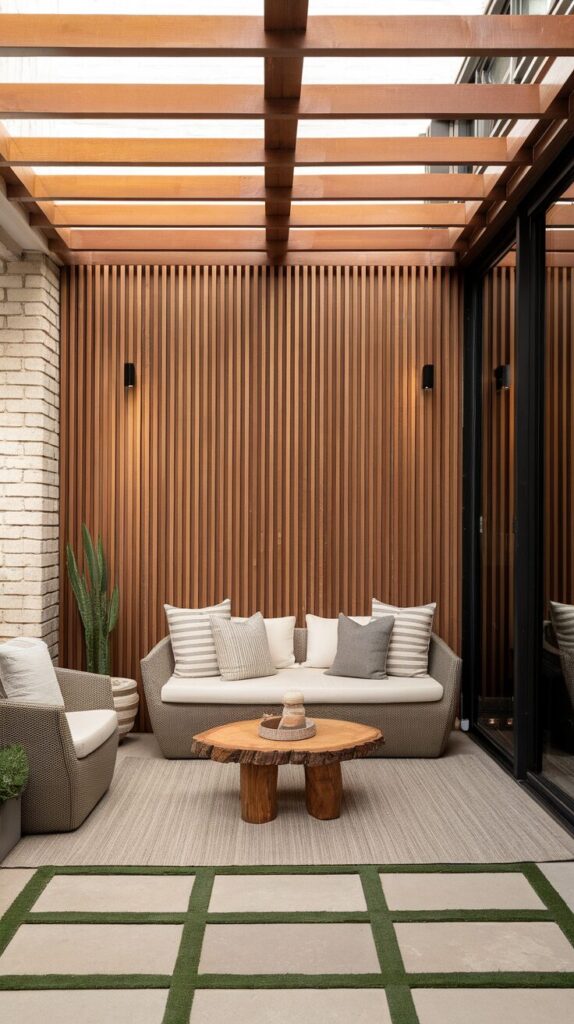
Flat walls feel lifeless. Texture adds depth without clutter. Accent walls transform indoor patios fast. I prefer subtle texture over bold color here.
Idea Description
The wall becomes the star quietly. Wood slats or brick veneer add warmth. This idea works because it adds interest without overwhelming. The space feels grounded instantly.
Why This Works
Texture catches light differently throughout the day. It adds visual movement without extra décor. Accent walls also define zones clearly. The patio feels complete.
How to Do It
- Choose one wall only
- Use peel-and-stick panels for ease
- Keep finishes natural
- Balance with simple furnishings
Style & Design Tips
Avoid overly dark tones in small spaces. Let texture replace busy décor. One statement wall beats four noisy ones.
Pro Tip or Budget Hack
Peel-and-stick options install quickly and remove cleanly. Renters love this trick.
10. Personal Touch Corner With Books and Throws
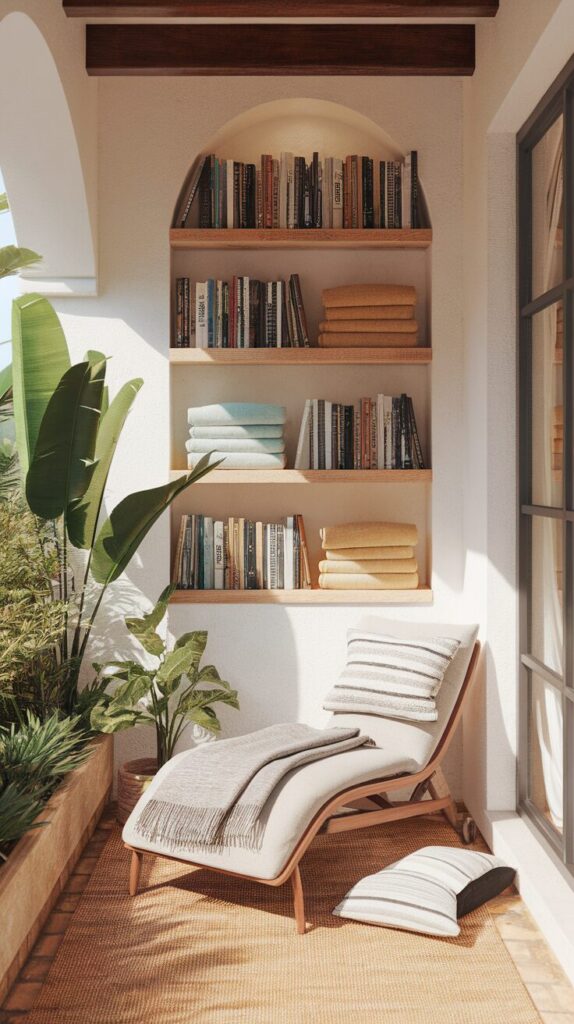
Personality seals the deal. A space without personal items feels staged. A small corner fixes that without clutter. This final touch matters more than trends.
Idea Description
Books, throws, and memories soften the room. This idea works because it reflects real life. You create emotional comfort alongside physical comfort. Guests feel it immediately.
Why This Works
Personal items create connection. They encourage use instead of admiration. The space feels owned, not styled. Comfort grows from familiarity.
How to Do It
- Choose one corner only
- Stack books intentionally
- Drape throws casually
- Rotate items seasonally
Style & Design Tips
Avoid overloading shelves. Keep color palettes tight. Personal doesn’t mean messy.
Pro Tip or Budget Hack
Shop your home first. You already own the best décor pieces.
Indoor Patio Design Strategy: Build the Foundation First
Most indoor patios fail because people decorate before they define purpose. Start by deciding how you actually want to use the space daily. A reading nook needs different lighting and seating than a casual dining corner. Clear intention prevents wasted money and awkward layouts.
Measure everything before buying a single piece of furniture. I always sketch a rough floor plan so I see walking paths clearly. Traffic flow matters more than style in tight indoor patios. If people bump into chairs, relaxation disappears fast.
Think in layers instead of individual items. Begin with flooring and rugs, then seating, then lighting, then décor. This approach keeps the space balanced instead of cluttered. You create cohesion instead of chaos.
Choose one dominant mood and stick with it. Cozy, minimal, botanical, or modern all work well. Mixing too many styles weakens the atmosphere. Strong direction makes the patio feel intentional.
Finally, prioritize comfort over trends. A space that looks good but feels stiff won’t get used. Comfort drives consistency, and consistent use justifies the investment.
Common Mistakes to Avoid
Ignoring scale ruins indoor patios quickly. Oversized furniture overwhelms small spaces and blocks natural light. Always measure twice before committing. Proportion keeps the space breathable.
Using indoor-only materials near heavy sunlight causes fading and wear. Sun exposure damages fabrics faster than people expect. Choose durable, fade-resistant materials whenever possible. Long-term durability saves money.
Overdecorating every corner creates visual noise. You don’t need accessories on every surface. Leave breathing room between items. Negative space enhances calm.
Relying on one light source makes the patio feel flat. Harsh overhead lighting kills ambiance instantly. Layer lighting instead of depending on a single fixture. Soft variation creates depth.
Forgetting climate control limits year-round use. Indoor patios can feel too hot in summer and too cold in winter. Add subtle heating or airflow solutions early. Comfort ensures seasonal flexibility.
Year-Round Comfort Planning
Indoor patios face temperature swings more than standard rooms. Large windows amplify heat in summer and cool drafts in winter. Plan for seasonal adjustments before discomfort starts. Proactive design prevents frustration.
Use layered textiles during colder months. Throws and cushions instantly warm the space without structural changes. Rotate lighter fabrics during warmer seasons. Small swaps keep the space adaptable.
Install adjustable window treatments for better temperature control. Sheers soften light, while heavier panels block excessive heat. Flexibility keeps the patio usable in every season. Controlled light equals controlled comfort.
Add discreet airflow options if the space traps heat. A quiet ceiling fan improves circulation without dominating the design. Air movement enhances comfort significantly. Even small upgrades make noticeable differences.
Seasonal styling refreshes energy without renovation. Swap pillows, plants, or decorative accents quarterly. These subtle changes maintain excitement. The space evolves instead of feeling stale.
Safety and Maintenance Considerations
Indoor patios often sit near glass, electrical outlets, and heaters. Keep cords organized and out of walkways. Clear paths reduce trip hazards significantly. Safety supports relaxation.
Vacuum rugs and cushions regularly to prevent dust buildup. Sunlight highlights dirt quickly in bright spaces. Consistent cleaning preserves freshness. Maintenance protects your investment.
Check furniture joints and screws twice yearly. Temperature changes affect material expansion. Tightening hardware prevents wobbling and damage. Simple upkeep extends lifespan.
Clean glass doors and windows often. Clear glass improves light flow dramatically. Smudges dull the atmosphere more than people realize. Brightness enhances the overall mood.
Store seasonal décor properly when rotating items. Use labeled bins to avoid clutter creep. Organized storage maintains visual calm. Order reinforces relaxation.
Frequently Asked Questions
Can I create an indoor patio in a small apartment?
Yes, you absolutely can. Focus on compact furniture and vertical plants. Define the area with a rug to create separation. Even a small corner works beautifully.
What flooring works best for indoor patios?
Durable flooring like tile, vinyl plank, or sealed concrete performs best. These materials handle sunlight and moisture changes well. Add a rug for softness and warmth.
Do I need a fireplace for year-round use?
You don’t need one, but it helps in colder climates. Electric options offer warmth without complex installation. Comfort remains the priority.
How many plants should I include?
Start with three to five plants for balance. Too many can overwhelm small spaces. Group them strategically instead of scattering randomly.
What color palette works best?
Neutral bases with natural greens create timeless appeal. Add subtle accent colors through pillows or décor. Keep the foundation flexible.
How do I prevent the space from feeling cluttered?
Limit décor to intentional pieces only. Choose furniture with hidden storage when possible. Maintain clear surfaces and open walkways consistently.
Final Thoughts
Indoor patios shine when you treat them like real living spaces. You don’t need every idea here to make a difference. Try one change and let the space evolve naturally. I promise your future self will thank you during the next lazy afternoon.