13 Creative Kitchen Hood Ideas for Stylish Ventilation
Ever stood in your kitchen, looked at your stove, and thought, why does everything look great except that boring hood? Yeah, same here.
I have obsessed over kitchen design more times than I admit, and the hood always sneaks up as the silent style killer or the unexpected hero.
Today I want to chat with you about creative kitchen hood ideas that actually look good while doing their job, because smoke and style can coexist.
Trust me, I have tested this theory with plenty of cooking disasters.
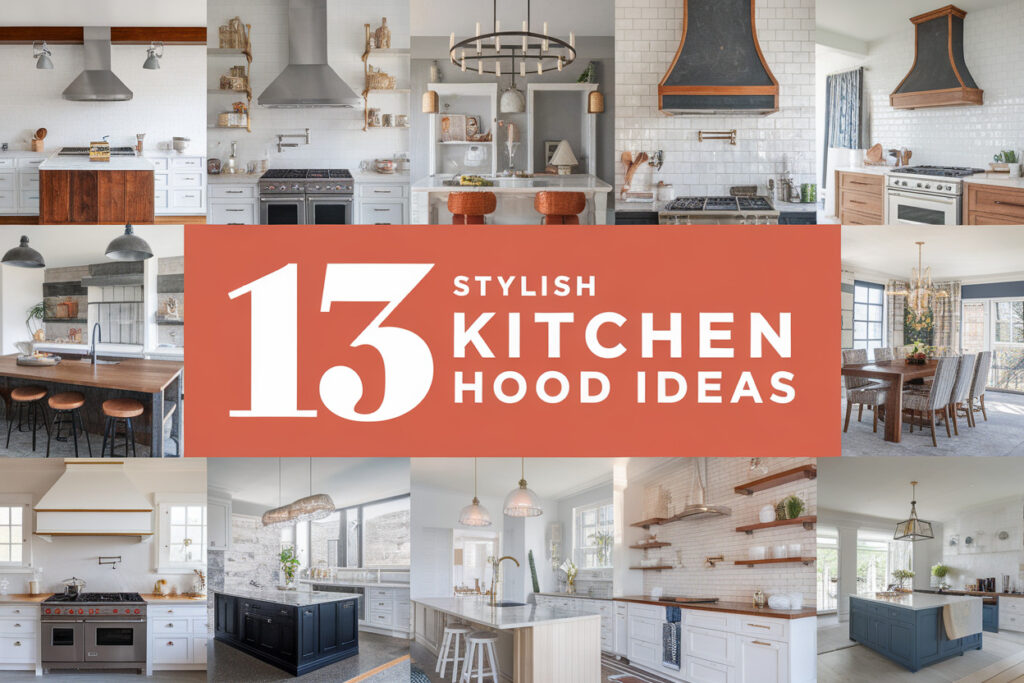
Why Your Kitchen Hood Deserves More Attention
Most people treat the kitchen hood like a necessary evil, but I see it as a design opportunity hiding in plain sight. The hood sits right at eye level, which means it naturally becomes a focal point whether you want it or not.
Ever wondered why some kitchens feel instantly high end while others look unfinished? The hood often plays a bigger role than the countertop or cabinets.
I learned this the hard way in my first apartment kitchen, where I ignored the hood and focused on trendy tiles instead. The tiles looked great, but the cheap stainless hood screamed builder basic every time I cooked pasta.
Once I swapped it for a more thoughtful design, the whole space leveled up without changing anything else.
Kitchen Hood Design Strategy: Building a Smart Foundation Before You Choose
Before you commit to any of these creative kitchen hood ideas, you need a clear strategy. I always tell people to treat the hood like a structural design decision, not just a decorative add-on. When you plan it correctly from the beginning, everything else in your kitchen falls into place.
Start with function first, style second. A hood that looks incredible but fails to remove smoke and odors will frustrate you daily, and no one wants a beautiful kitchen that smells like last night’s garlic shrimp.
Step 1: Understand Your Cooking Habits
Your cooking style determines the power you need. If you cook lightly a few times a week, you can choose a moderate airflow system. If you sear, fry, grill, or cook heavily every day, you need higher CFM performance.
Ask yourself:
- Do you cook with high heat regularly?
- Do you use a gas or electric range?
- Does smoke linger after cooking?
Answer honestly, not aspirationally.
Step 2: Calculate Proper Ventilation Power
You need the right CFM (Cubic Feet per Minute) rating for your space. Larger kitchens and powerful gas ranges require higher CFM ratings to effectively remove heat and grease.
As a general rule:
- Electric ranges: 100 CFM per linear foot of cooktop
- Gas ranges: 100 CFM per 10,000 BTUs
- High-output professional ranges: 600–1200+ CFM
Always check local building codes before installing high-powered systems. Some areas require makeup air systems for higher CFM ratings.
Step 3: Choose Ducted Over Ductless When Possible
I strongly recommend ducted systems whenever possible. Ducted hoods vent air outside, which removes heat, grease, and smoke more effectively than recirculating systems.
Ductless hoods can work in apartments or tight layouts, but they rely on filters and do not remove heat. If you can install ducting, do it.
Step 4: Match Hood Width and Mounting Height
Your hood should be at least as wide as your cooktop, and ideally 3 inches wider on each side. This improves capture efficiency and prevents smoke from escaping.
Mounting height matters too:
- Gas ranges: 24–30 inches above cooktop
- Electric ranges: 20–24 inches above cooktop
Too high reduces performance. Too low feels cramped.
Step 5: Balance Design with Cabinet Layout
The hood should visually anchor your kitchen, not fight with your cabinets. I always sketch the full elevation view before committing to materials or finishes.
A thoughtful foundation makes your hood feel intentional instead of random.
13 Creative Kitchen Hood Ideas
1. Wood Wrapped Kitchen Hood for Warm Character
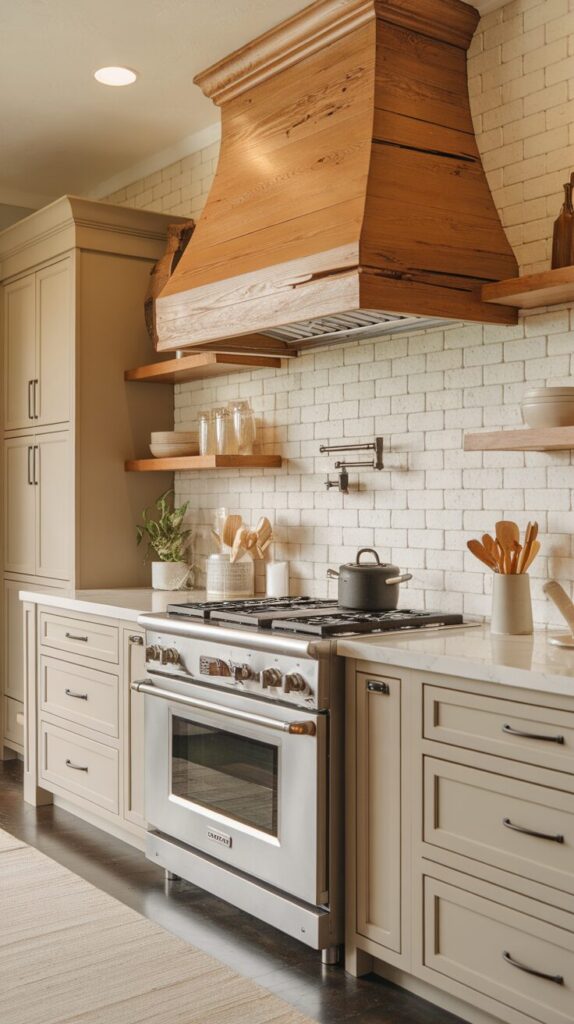
A wood wrapped kitchen hood instantly adds warmth and personality, especially if your kitchen feels a bit cold or overly modern. I love how wood softens sharp lines and makes the space feel lived in rather than showroom stiff. If you enjoy cozy vibes, this option hits the sweet spot.
You can match the wood to your cabinets for a seamless look or choose a contrasting tone to make the hood stand out. I once used reclaimed wood with visible grain, and it became the most commented on feature in the room. Wood wrapped hoods work beautifully in farmhouse, rustic, and even modern kitchens when done right.
2. Plaster Kitchen Hood for Soft, Sculptural Style
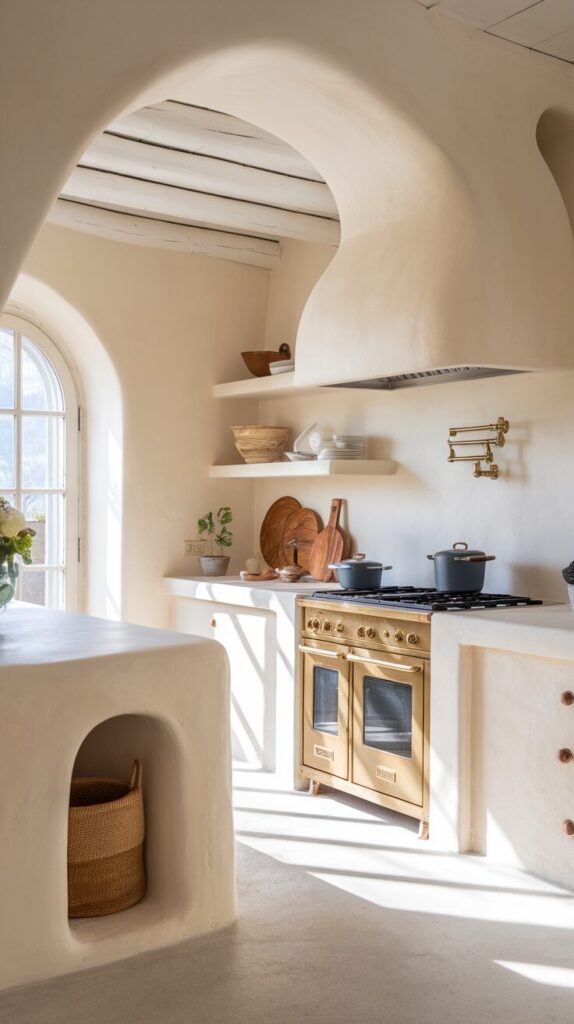
Plaster hoods feel like artwork disguised as ventilation, and I mean that in the best way. They bring a smooth, sculptural look that feels custom and intentional. IMO, this style works wonders if you want a calm, European inspired kitchen.
Plaster hoods usually blend into the wall color, which creates a seamless effect that feels elegant without trying too hard. I once saw a soft cream plaster hood paired with brass hardware, and I still think about it. This style shines in Mediterranean, minimalist, and modern kitchens where subtle texture matters.
3. Statement Metal Hood for Bold Personality
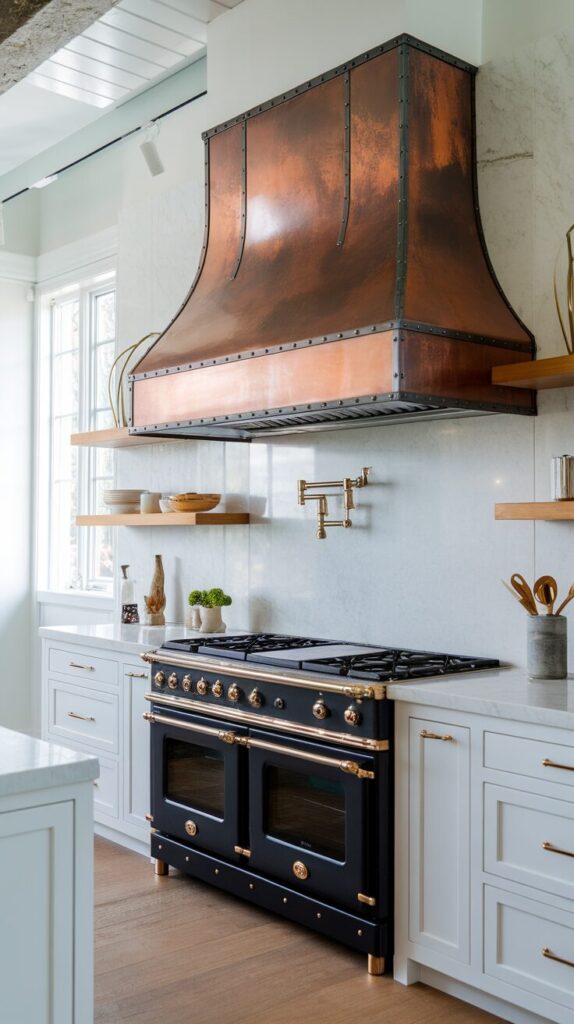
If subtle feels boring to you, a statement metal hood might be your soulmate. Metal hoods come in copper, brass, stainless steel, or matte black, and they instantly command attention. I love how they bring an industrial or modern edge without overpowering the room.
Copper hoods age beautifully and develop a patina over time, which adds character rather than flaws. Black metal hoods feel sleek and dramatic, especially against light cabinets. Metal hoods work best when you want your kitchen to feel confident and a little rebellious.
4. Hidden or Integrated Hood for a Clean Look
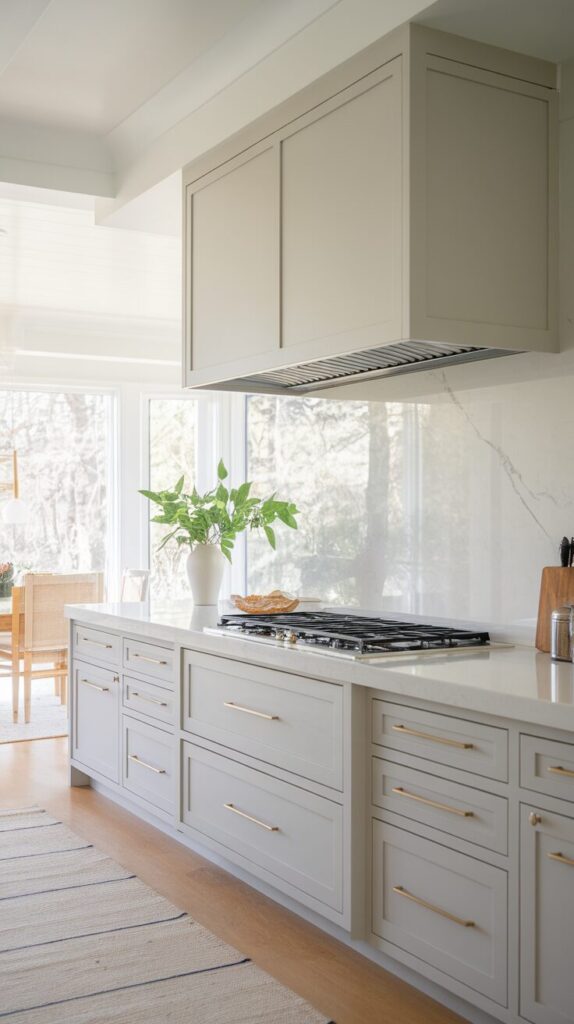
Some kitchens shine because nothing screams for attention, and that’s where hidden hoods come in. These hoods integrate into cabinetry, creating a clean and uninterrupted visual flow. I recommend this option if you love minimalist spaces or hate visual clutter.
Integrated hoods work especially well in small kitchens, where bulky features can feel overwhelming. I once installed one in a narrow galley kitchen, and the space instantly felt wider. This idea proves that sometimes the most stylish choice involves not showing off at all.
5. Tile Covered Kitchen Hood for Artistic Flair
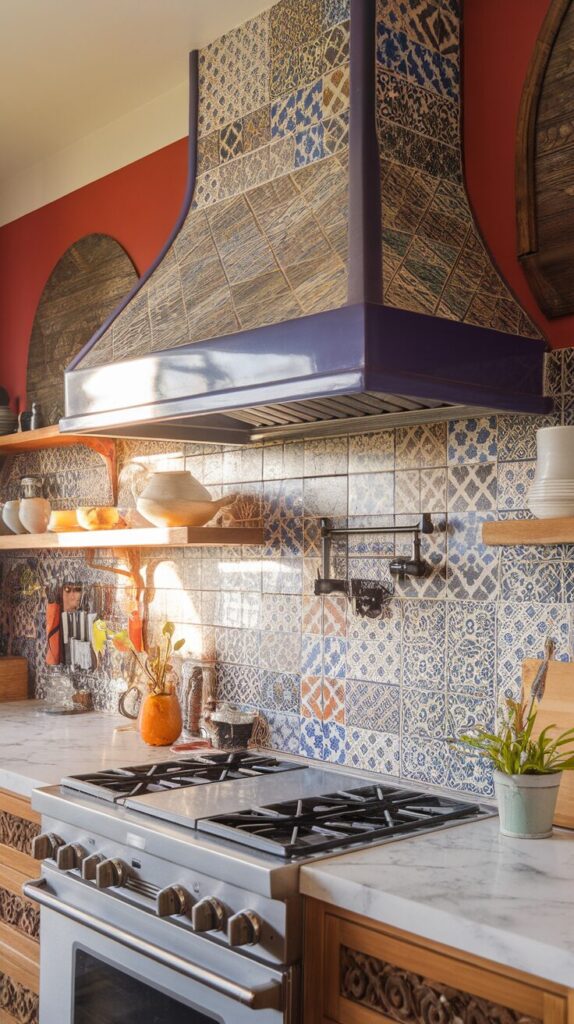
A tile covered kitchen hood turns a practical element into a design statement that feels custom and playful. You can use the same tile as your backsplash for cohesion or switch it up for contrast. Ever wondered why tiled hoods look so charming in photos? Texture and pattern do the heavy lifting.
I once used Moroccan style tiles on a hood, and the kitchen instantly felt traveled and soulful. Tile hoods suit eclectic, bohemian, and colorful kitchens where personality takes center stage.
6. Minimalist Box Hood for Modern Simplicity
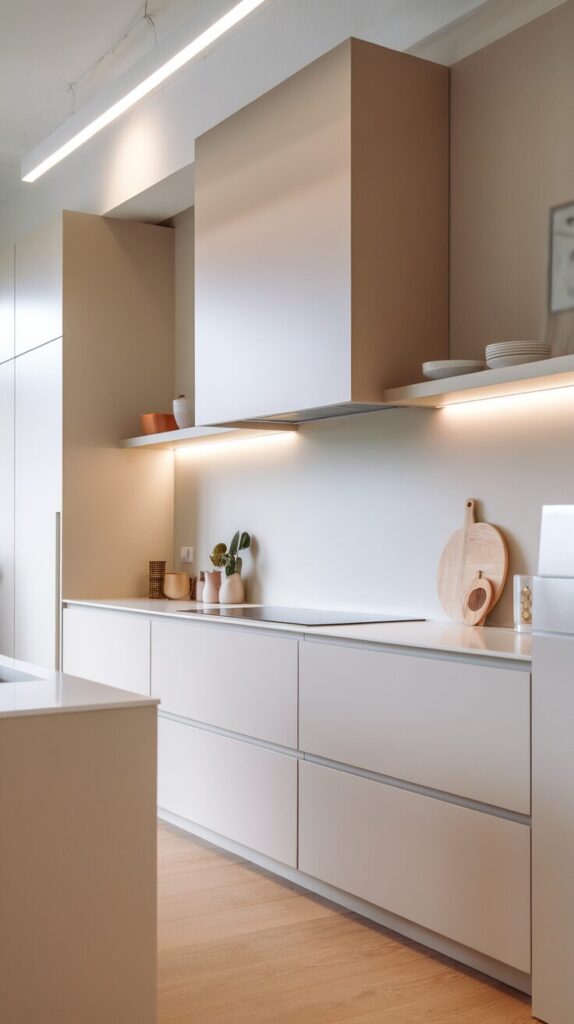
Box hoods keep things simple, clean, and modern without unnecessary details. They feature straight lines and sharp edges, which makes them perfect for contemporary kitchens. I appreciate how they feel intentional without shouting for attention.
Pair a box hood with handleless cabinets and neutral tones for a sleek, magazine worthy look. This style works best when you want function and form to coexist quietly.
7. Vintage Inspired Hood for Old World Charm
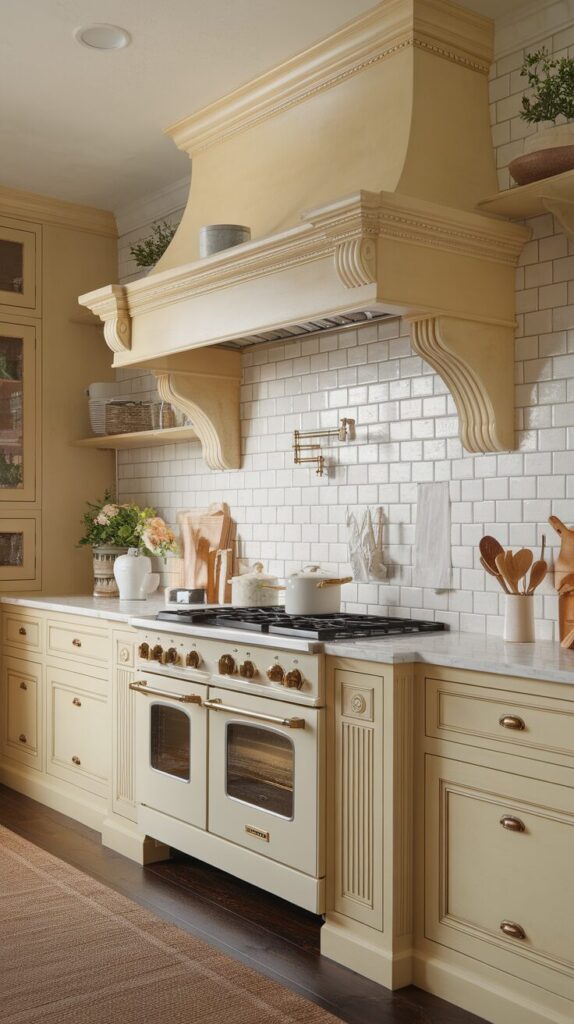
Vintage inspired hoods bring nostalgia and character into the kitchen, especially if you love classic design. These hoods often feature decorative molding, curved lines, or distressed finishes. I find them incredibly charming, especially in homes with history.
You can pair a vintage hood with modern appliances for a balanced look that feels curated rather than dated. This idea suits traditional and transitional kitchens that value timeless details.
8. Glass Kitchen Hood for Light and Openness
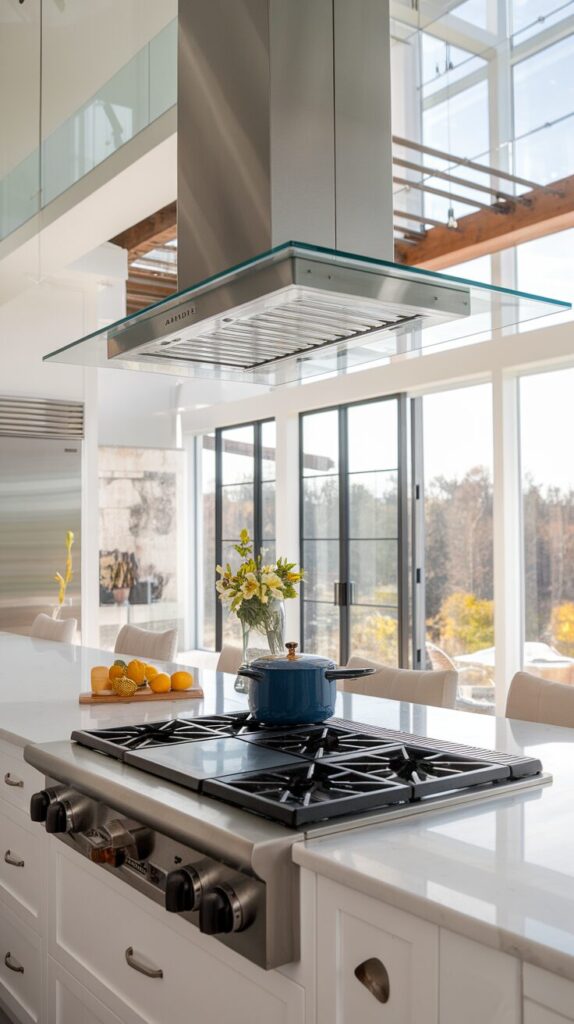
Glass kitchen hoods feel airy and modern, which makes them perfect for smaller kitchens or open layouts. They allow light to pass through, preventing the hood from visually blocking the space. I love how they almost disappear while still doing their job.
This style works best when you want a clean, contemporary look with minimal visual weight. Glass hoods pair beautifully with modern kitchens that prioritize openness and light.
9. Stone Clad Hood for Natural Texture
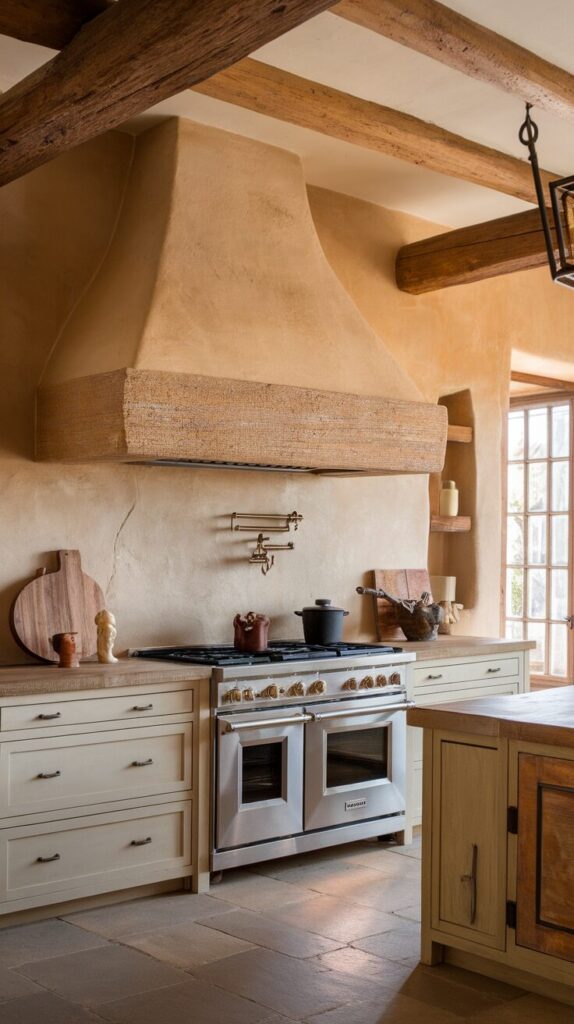
Stone clad kitchen hoods bring a grounded, earthy feel that adds instant richness. Natural stone introduces texture and variation, which keeps the kitchen from feeling flat. I once saw a limestone hood that made the entire space feel like a luxury retreat.
Stone hoods work especially well in rustic, Mediterranean, or modern organic kitchens. This idea proves that raw materials can feel both bold and comforting at the same time.
10. Curved Kitchen Hood for Soft Elegance
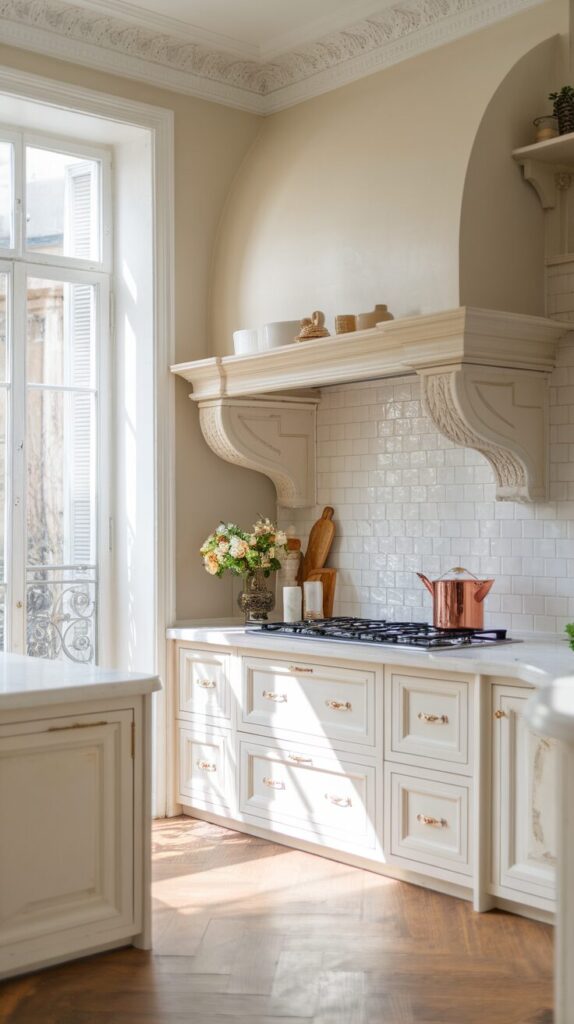
Curved hoods soften the overall look of a kitchen, especially if you have lots of straight lines and sharp edges. They add elegance without feeling fussy or overdone. I find curved designs visually calming, almost like they guide your eyes gently upward.
This style works beautifully in classic, French inspired, or modern kitchens that want a softer touch. Curved hoods bring balance and grace into functional design.
11. Industrial Style Hood for Urban Edge
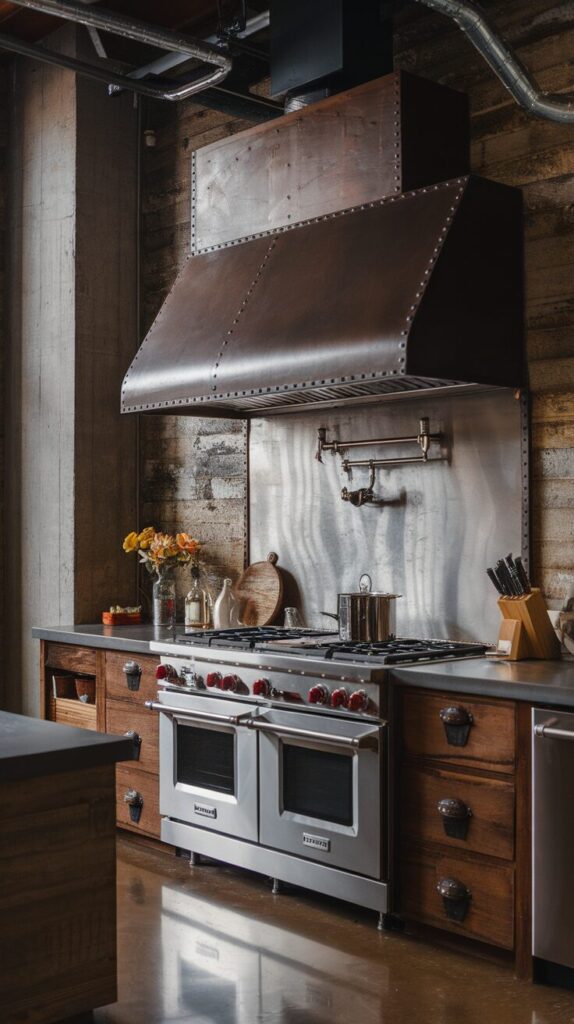
Industrial kitchen hoods feel bold, functional, and unapologetically utilitarian. They often resemble restaurant grade equipment, which appeals to serious home cooks. FYI, this style works surprisingly well even in residential kitchens when paired thoughtfully.
I love how industrial hoods make a kitchen feel hardworking and authentic. They suit lofts, modern homes, and spaces that embrace raw materials and exposed elements.
12. Colorful Painted Hood for Playful Energy
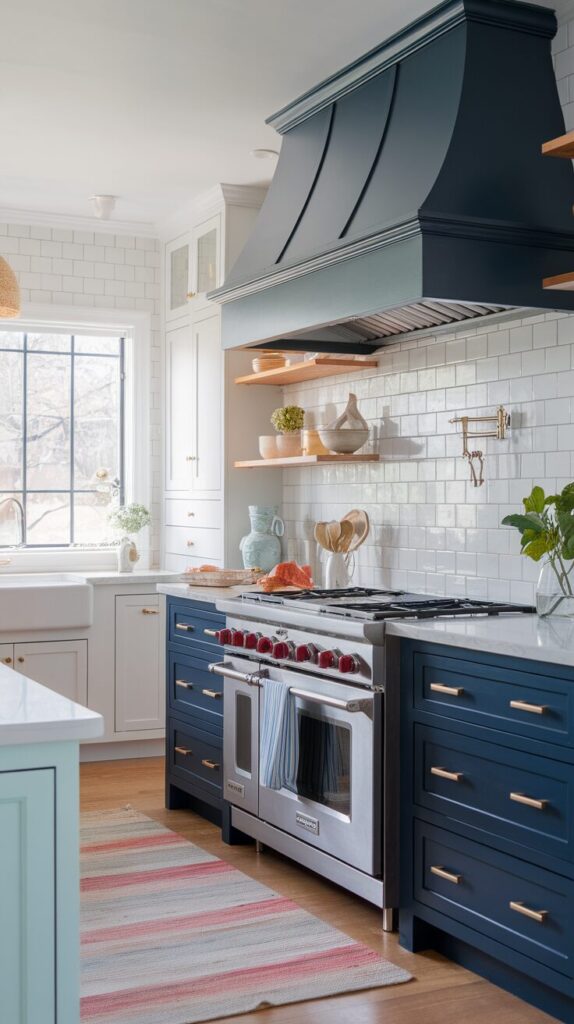
A colorful painted hood instantly injects personality and fun into the kitchen. You can match it to an accent color or let it stand alone as a statement piece. I once painted a hood deep navy, and it transformed a neutral kitchen overnight.
Bold colors work best when the rest of the kitchen stays relatively calm. This idea suits creative homeowners who enjoy a little drama in their design choices.
13. Floating Shelf and Hood Combo for Functionality
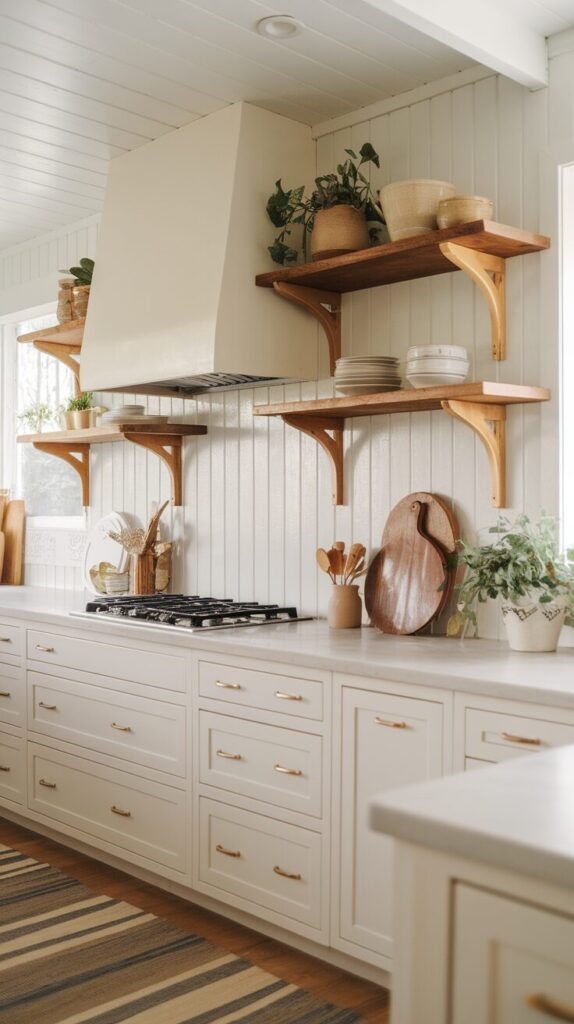
Combining a kitchen hood with floating shelves maximizes both style and storage. This setup looks intentional and practical, especially in smaller kitchens. I love how it creates symmetry while giving you space for decor or everyday essentials.
This idea works well in farmhouse, transitional, and modern kitchens. It proves that smart design can look good and work hard at the same time.
How to Choose the Right Kitchen Hood Style
Choosing the right hood involves balancing aesthetics, function, and personal taste. I always ask myself a few simple questions before deciding. Do I want the hood to stand out or blend in? Do I cook heavily or lightly? Does the style match the rest of the kitchen?
Here are a few practical tips I swear by:
- Match the hood style to your kitchen’s overall vibe to avoid visual chaos.
- Prioritize proper ventilation because beauty means nothing if smoke lingers.
- Choose materials that age well and fit your lifestyle.
- Consider ceiling height and space to avoid overwhelming the room.
Installation and Maintenance Considerations
Design matters, but practical details keep you sane long term. Installation depends on ducting, ceiling height, and hood size, so I always recommend professional input. Trust me, guessing here can lead to noisy fans and poor airflow.
Maintenance varies by material, and some finishes demand more love than others. Metal hoods need regular cleaning, while plaster and wood require gentle care. A beautiful hood stays beautiful only when you maintain it properly.
Styling Tips to Elevate Your Kitchen Hood
Styling completes the look and makes the hood feel intentional rather than accidental. I love adding subtle lighting above or around the hood to highlight its shape. Decorative trim or molding also adds polish without major renovations.
You can also style around the hood with:
- Symmetrical cabinets or shelves for balance.
- Contrasting backsplash tiles to frame the hood.
- Warm lighting to enhance textures and finishes.
Common Mistakes to Avoid When Designing a Kitchen Hood
I have seen gorgeous kitchens ruined by avoidable hood mistakes. Let’s save you from that pain.
Choosing Style Over Function
People fall in love with aesthetics and ignore ventilation power. A stunning plaster hood means nothing if it barely clears smoke.
Always verify the internal insert performance before focusing on the exterior design.
Installing a Hood That Is Too Small
A narrow hood cannot effectively capture rising smoke and grease. Always match or exceed your cooktop width.
Undersized hoods create long-term frustration and visible grease buildup on nearby cabinets.
Ignoring Noise Levels
Some powerful hoods sound like a jet engine. Always check sone ratings or decibel levels before purchasing.
A quiet hood encourages you to actually use it every time you cook.
Skipping Proper Duct Planning
Long duct runs and multiple sharp turns reduce efficiency. Keep duct runs short and straight whenever possible.
Poor duct planning weakens airflow even if your hood has high CFM.
Forgetting Maintenance Access
Custom wood, plaster, or tile surrounds look beautiful, but you still need easy access to filters and internal components.
Plan for removable panels or accessible inserts.
Ventilation Safety and Building Code Considerations
Kitchen hoods impact more than design. They directly affect air quality and safety inside your home.
Fire Safety Matters
Grease buildup increases fire risk. Regular cleaning reduces hazards and extends hood life.
Use proper-rated duct materials and avoid plastic venting components.
Local Code Requirements
Some municipalities require:
- Minimum CFM standards
- Makeup air systems for high-powered hoods
- Specific duct sizes
- Exterior vent termination caps
Check local codes before installation to avoid costly modifications later.
Electrical and Lighting Integration
Modern hoods often include built-in LED lighting. Plan for proper wiring and switch placement during early design stages.
Good lighting enhances both visibility and ambiance.
Long-Term Maintenance Strategy for Stylish Kitchen Hoods
A stylish kitchen hood stays beautiful only if you maintain it consistently. I follow a simple routine that keeps performance high and surfaces clean.
Monthly Cleaning Basics
- Wash metal filters in warm soapy water or dishwasher if rated safe
- Wipe exterior surfaces with appropriate cleaners
- Inspect for grease buildup near duct openings
Seasonal Deep Maintenance
Every few months:
- Check duct connections
- Replace carbon filters in ductless systems
- Inspect fan operation and lighting
Maintenance prevents performance decline and protects your design investment.
Cost Planning and Budget Allocation
Budget planning prevents mid-project regret. Kitchen hood costs vary widely depending on material, customization, and ventilation power.
Here is a rough breakdown:
- Stock stainless steel hood: moderate range
- Custom wood or plaster hood: higher investment
- Stone or metal statement hood: premium range
- Professional installation: additional labor cost
- Ductwork modification: varies by home structure
Allocate budget for both the visible shell and the internal insert system. Never compromise airflow performance to save on cost.
Frequently Asked Questions
1. How powerful should my kitchen hood be?
Choose a hood based on your cooktop size and cooking habits. Gas ranges and heavy cooking require higher CFM ratings for proper smoke removal.
2. Are ductless kitchen hoods effective?
Ductless hoods work for light cooking, but they do not remove heat or humidity. Ducted systems provide better long-term performance.
3. How often should I clean my kitchen hood filters?
Clean metal filters at least once a month if you cook regularly. Heavy cooking may require more frequent cleaning.
4. Can I install a kitchen hood myself?
You can install simple units yourself, but complex ducting and high-CFM systems often require professional installation for safety and code compliance.
5. What material works best for a low-maintenance hood?
Stainless steel offers durability and easy cleaning. Painted or plaster finishes require more careful maintenance.
6. Does a bigger hood improve performance?
A wider hood improves smoke capture efficiency, especially if it extends beyond the width of the cooktop. Proper sizing significantly improves airflow results.
Final Thoughts
A kitchen hood does more than clear the air, it sets the tone for the entire space. I believe the right hood turns a functional necessity into a design statement that reflects your personality.
Whether you love bold metal, soft plaster, or warm wood, you have options that look amazing and work hard. So next time you plan a kitchen update, give that hood some love, because your kitchen deserves it.