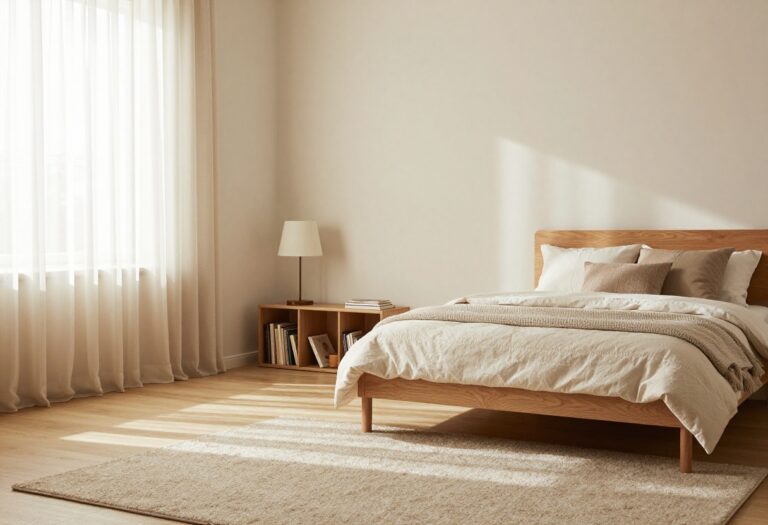
12 Small Bedroom Ideas With Calm Colors and Layered Bedding
A small bedroom can still feel like a peaceful escape. The trick is choosing a soft, calming color palette and layering your bedding in a way that adds depth without clutter. These 12 ideas focus on keeping things light and airy, so your space feels open and restful.
From pale blues to warm creams, the right hues set the stage for relaxation. Layered bedding—think quilts, throws, and textured pillows—brings cozy comfort without overwhelming the room. Each idea here is designed to be achievable, whether you're renting or own your home.
Ready to turn your compact bedroom into a serene sanctuary? Let's explore simple ways to blend calm colors with inviting layers that make the most of every square foot.
1. Start With a Soft Neutral Base
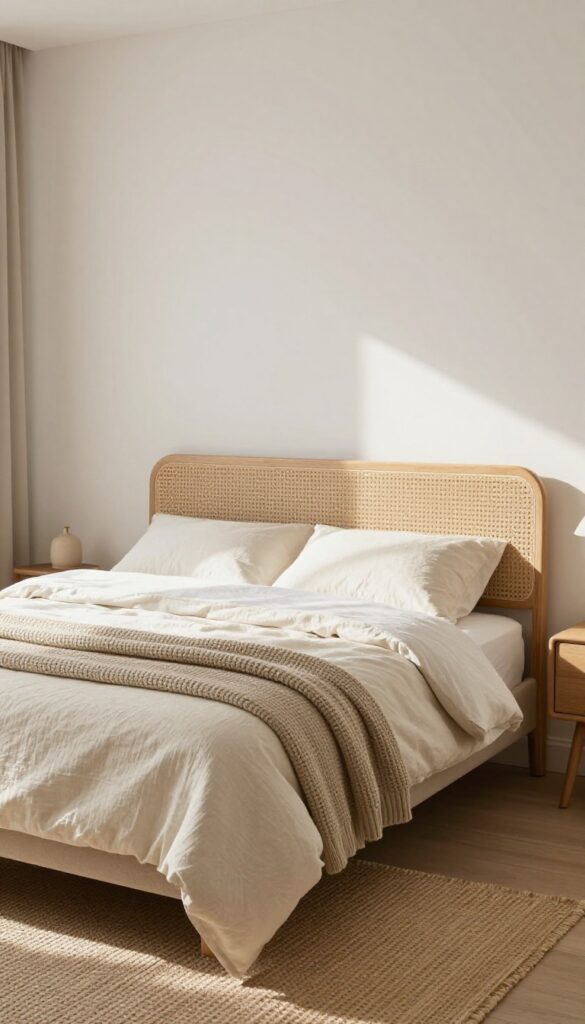
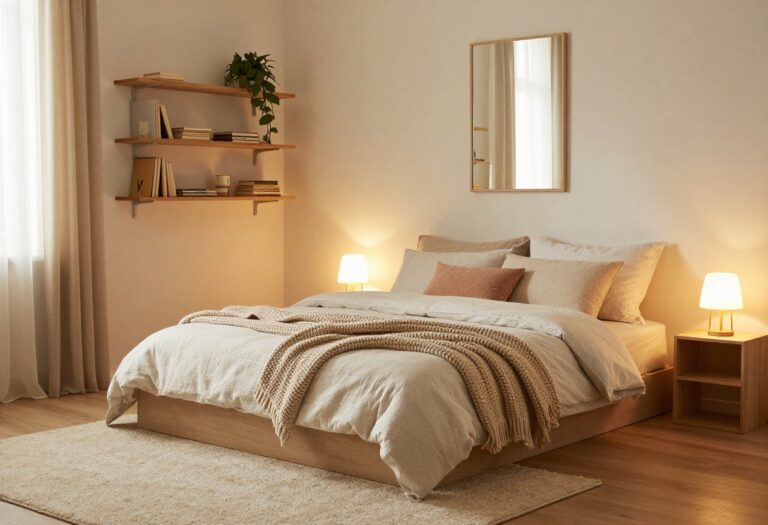
A soft neutral base is the foundation of any calm, airy bedroom. Think warm white walls, a light beige bed frame, and natural linen curtains that let sunlight filter through gently. This palette doesn't just make the room feel bigger—it also sets a peaceful mood that helps you unwind at the end of the day.
Layered bedding in similar tones, like cream sheets with a chunky knit throw, adds depth without disrupting the serene vibe.
Why It Works
Neutrals reflect light, making a small space feel open and bright. They also create a cohesive backdrop that lets texture and subtle contrast shine, so the room feels intentional rather than flat.
Best For
This approach works beautifully for tiny bedrooms or guest rooms where you want a universally appealing, hotel-like calm. It's also ideal if you love changing accent colors seasonally, since the neutral base adapts easily.
Styling Tip
Layer three shades of the same neutral—for example, ivory sheets, a oatmeal blanket, and a white duvet—to add visual interest. Then introduce one natural texture like a rattan headboard or a jute rug to keep the look from feeling too bland.
2. Introduce a Single Pastel Accent
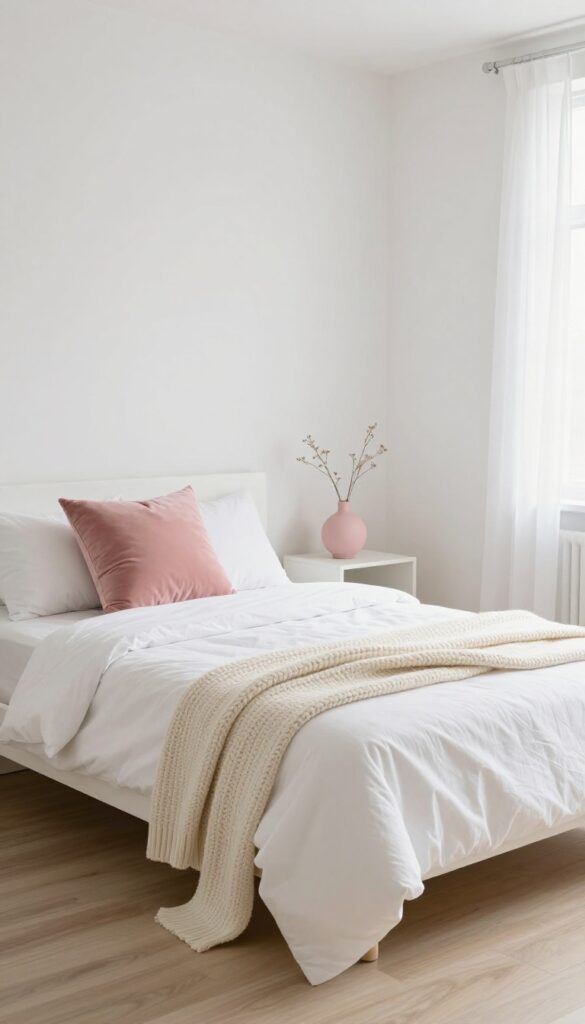
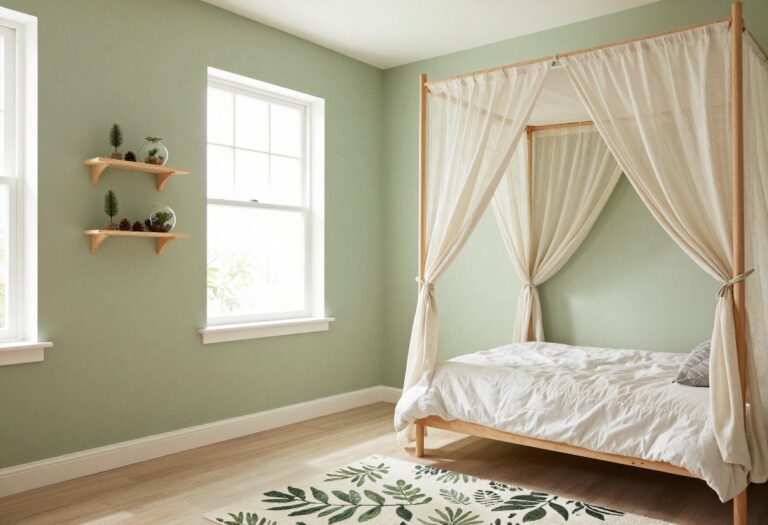
A single pastel accent can transform a neutral bedroom without overwhelming it. Choose one soft shade—like blush pink, sage green, or powder blue—and let it stand alone. A throw pillow on the bed or a lightweight blanket draped over the foot adds just enough color to feel intentional, not loud.
The rest of the room stays light and neutral, so that one pastel moment really shines.
Why It Works
Pastels are naturally calming, so they enhance the serene mood of a small bedroom. By limiting the accent to one color and a few small items, you avoid visual clutter while still adding personality. The contrast against white or beige walls makes the room feel fresh and airy.
Best For
This idea is perfect for anyone who wants a hint of color but is hesitant to commit to bold hues. It works especially well in rental spaces or rooms where you want to keep the overall palette flexible and easy to change.
Styling Tip
Stick to one pastel shade and repeat it in just two or three places—like a pillow, a throw, and maybe a small vase on the nightstand. Keep all other textiles (sheets, curtains, rug) in soft whites or warm creams to let the accent pop without competing.
3. Layer a Quilt Under a Duvet
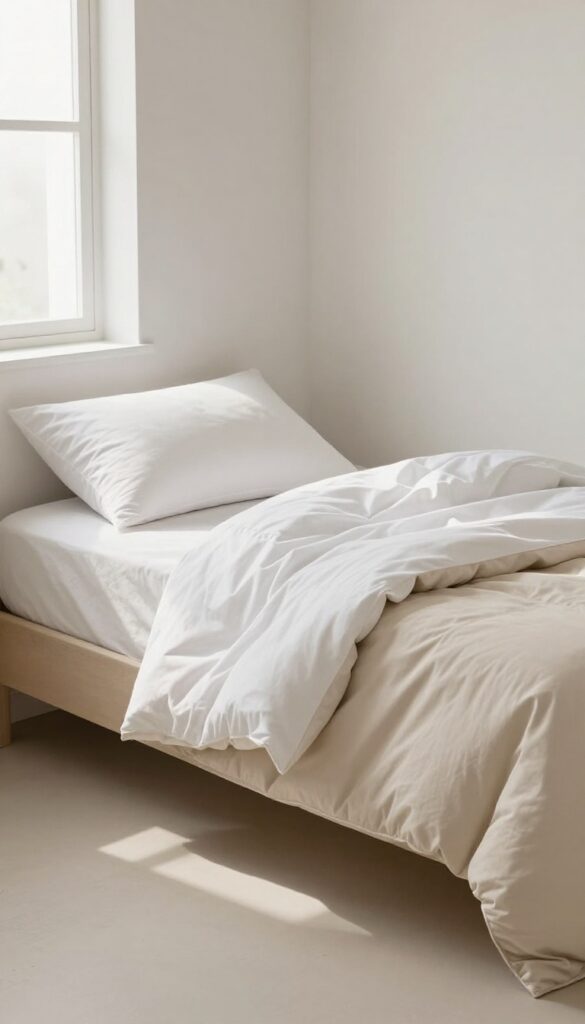
There's something quietly satisfying about a bed that looks effortlessly put together without requiring a ton of effort. Folding a lightweight quilt at the foot of the bed and topping it with a duvet in a matching neutral creates that layered, hotel-inspired look. The contrast between the two textures adds depth while keeping the palette calm and cohesive.
Why It Works
This trick adds visual interest without cluttering the bed or making it harder to make. The quilt peeking out at the foot introduces another texture—like cotton or linen—while the duvet keeps the top soft and smooth. It's an easy way to make a small bedroom feel more intentional and styled.
Best For
This works well in small bedrooms where you want to avoid bulky layers that overwhelm the space. It's especially effective with neutral palettes like white, beige, or soft gray, where subtle texture differences stand out without adding visual noise.
Styling Tip
Choose a quilt that's slightly lighter in weight and a shade or two darker than your duvet for gentle contrast. Fold it neatly across the foot, leaving about six inches of mattress exposed on each side. Add two matching shams and a lumbar pillow to complete the look.
4. Use Sheer Curtains for Soft Light
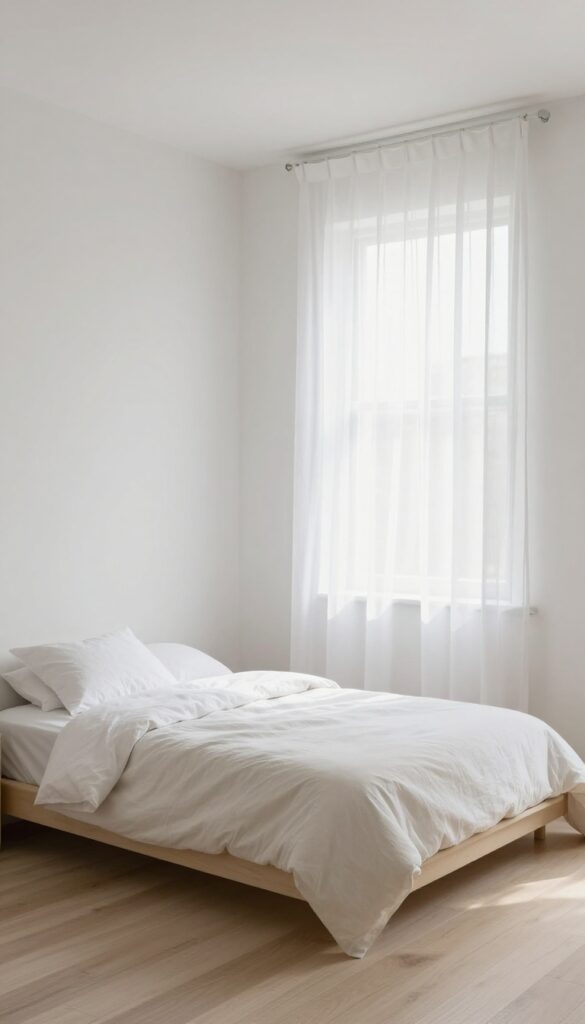
Natural light is a small bedroom's best friend, but harsh sunlight can feel overwhelming. Sheer white or linen curtains strike the perfect balance, letting in soft, diffused light while gently softening the room's edges. The result is an open, airy atmosphere that makes the space feel larger and more peaceful—exactly what a calming bedroom needs.
Why It Works
Sheer curtains allow daylight to filter through without creating glare or dark shadows. This keeps the room bright and inviting while maintaining privacy. The lightweight fabric adds a layer of softness that balances out heavier elements like a bed frame or dresser, making the whole room feel cohesive and serene.
Best For
This works especially well in small bedrooms with limited window space or those that face a busy street. It's also ideal for rooms that need a touch of elegance without sacrificing square footage—sheers take up minimal visual space and can make a low ceiling feel higher.
Styling Tip
Hang the curtain rod as close to the ceiling as possible and extend it a few inches past the window frame. This tricks the eye into seeing taller, wider windows. Choose a rod in a matching finish to your other hardware, and let the fabric puddle slightly on the floor for a relaxed, lived-in look.
5. Add a Chunky Knit Throw
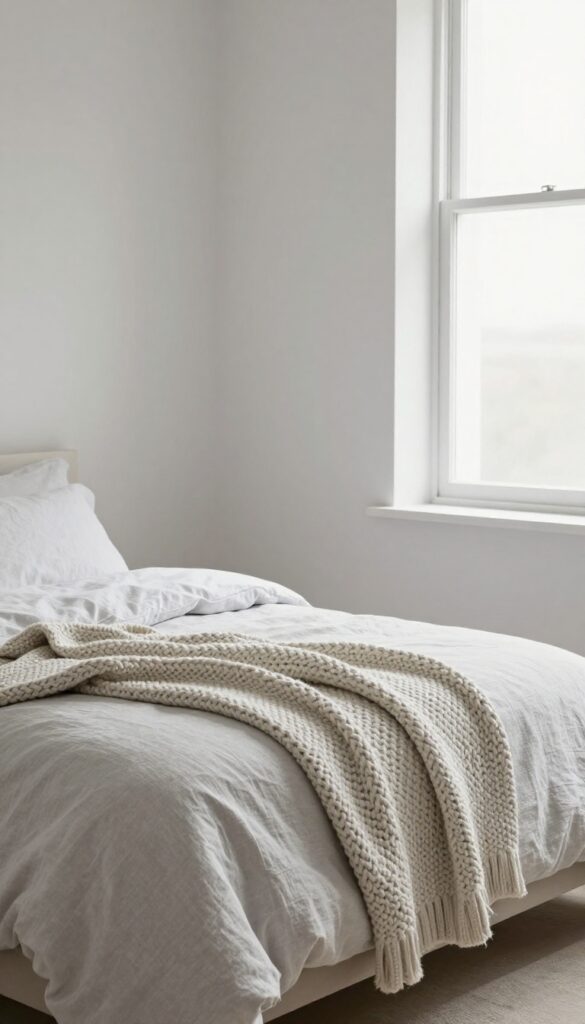
Nothing says cozy quite like a chunky knit throw draped casually over the end of your bed. In a small bedroom, texture is your secret weapon—it adds depth and warmth without taking up any floor space. A cream or light gray throw keeps the look airy and calm, while the oversized stitches create a soft, inviting focal point.
Why It Works
Chunky knits bring tactile contrast to smooth bedding and sleek furniture, making the room feel layered and lived-in. The neutral tones blend seamlessly with a calm color palette, so the space stays serene but never flat.
Best For
This works especially well in minimalist or Scandinavian-style bedrooms where every piece needs to earn its place. It's also great for renters because it adds personality without permanent changes.
Styling Tip
Fold the throw in half lengthwise and drape it across the foot of the bed, letting the ends hang unevenly. For extra coziness, toss a matching knit pillow on the bed or a nearby armchair.
6. Choose a Low-Profile Bed Frame
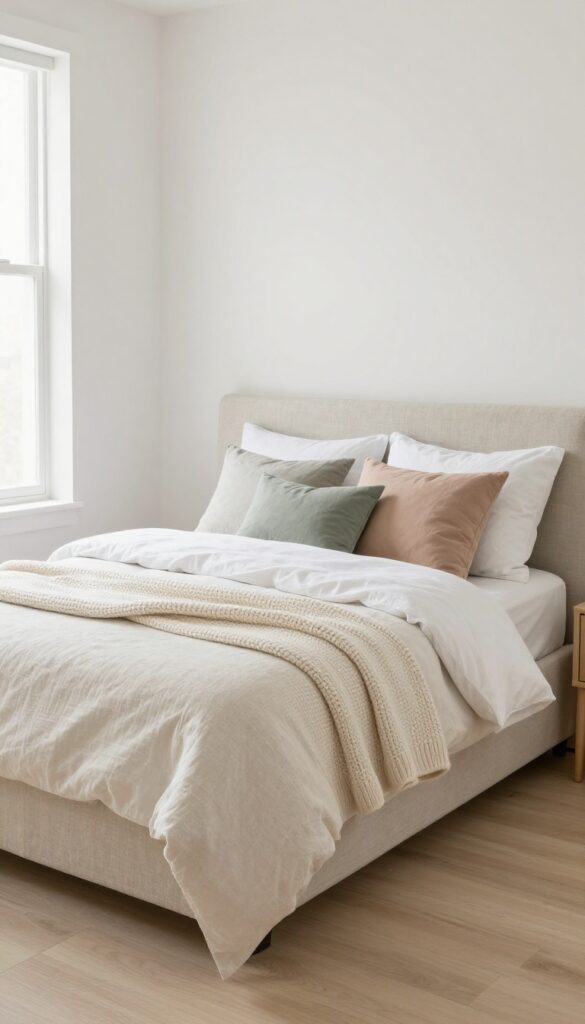
A low bed frame is a quiet game-changer in a small bedroom. By sitting closer to the floor, it tricks the eye into seeing more vertical space, making the ceiling feel higher and the room less cramped. Pair it with a simple linen headboard for a soft, grounded look that feels airy and uncluttered.
Why It Works
A low profile shifts the visual weight downward, drawing attention to the floor and opening up the wall space above. This creates a sense of expansiveness without moving a single piece of furniture. The lower height also makes the bedding the star, letting layered textures and calm colors shine.
Best For
This idea is ideal for rooms with low ceilings or tight square footage where every inch of vertical space counts. It also works beautifully in minimalist or Scandinavian-inspired bedrooms where clean lines and an open feel are the goal.
Styling Tip
Stick with a low, slim headboard in a neutral linen or cotton to keep the look light. Add a chunky knit throw and a couple of pillows in muted tones to build depth without adding height. Avoid tall, ornate headboards that will fight the low frame's effect.
7. Mix Pillow Sizes and Textures
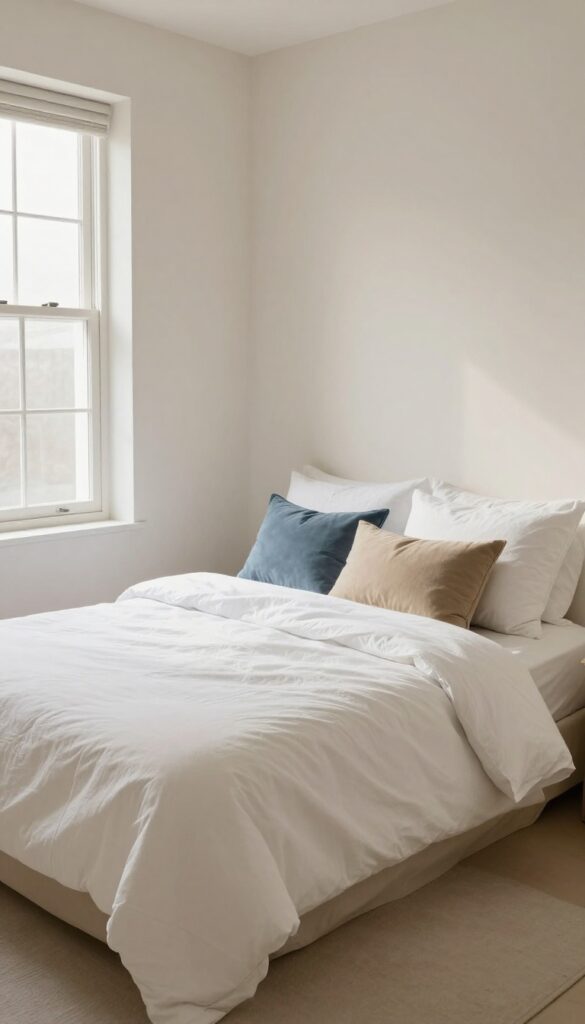
Pillows are the easiest way to add depth and personality to a calm, neutral bed. Instead of using all matching sets, try combining a few different sizes and fabrics—like two standard shams in soft cotton, a lumbar pillow in velvet, and a small square in linen. The mix keeps things visually interesting without feeling busy.
Stick to a cohesive color family, such as warm whites, beiges, and dusty blues, so the bed still feels serene and put-together.
Why It Works
Varying pillow sizes and textures creates a layered, curated look that feels intentional but not fussy. The different heights and materials draw the eye across the bed, making it feel more substantial and cozy—perfect for a small bedroom where every detail counts.
Best For
This idea works well in bedrooms with a neutral or monochromatic palette, where texture becomes the main source of visual interest. It's also great for anyone who wants a hotel-like feel without a lot of effort or expense.
Styling Tip
Start with two standard shams behind, then add a lumbar pillow in front, and finish with one or two smaller accent pillows. Keep the color palette limited to three tones, and vary fabric textures—for example, pair a matte cotton with a shiny velvet and a nubby linen.
8. Incorporate a Light-Colored Rug
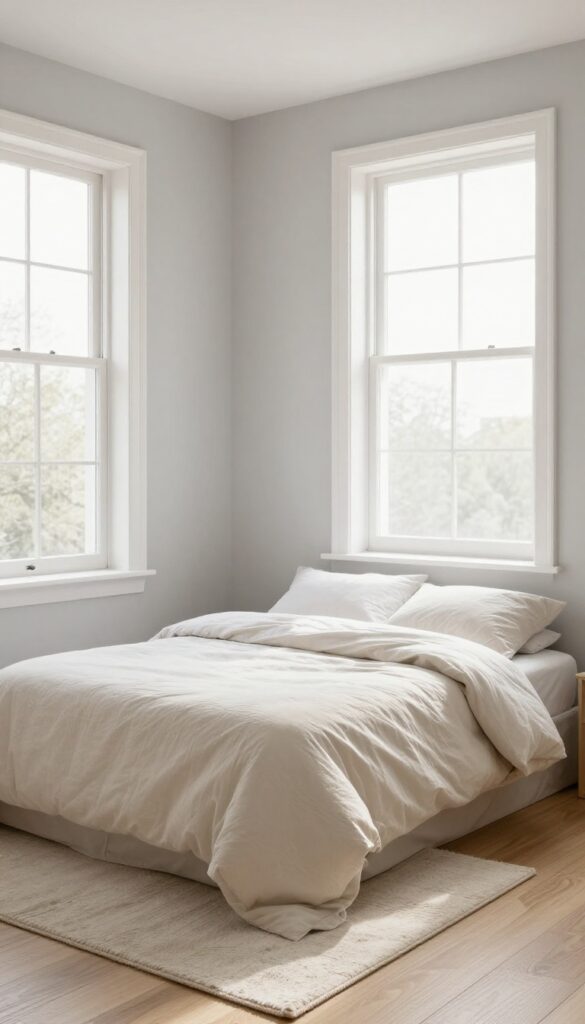
A light-colored rug does more than just warm up your floors. In a small bedroom, it defines the bed area without making the space feel cramped. Cream, pale gray, or a soft pastel rug adds a layer of softness that invites you to step out of bed onto something cozy.
Because it blends rather than contrasts, it keeps the room feeling open and airy.
Why It Works
A light rug reflects natural and artificial light, making the room feel brighter and more spacious. It also anchors the bed visually, creating a focal point that grounds the layered bedding without adding visual weight.
Best For
This idea works well in bedrooms with light or neutral wall colors, especially if you want to add texture without introducing dark tones. It's also great for rooms with hardwood or tile floors that need a soft touch.
Styling Tip
Choose a low-pile or flatweave rug that sits flush under the bed, extending at least 18 inches beyond the sides and foot. For a cohesive look, pick a rug that picks up a subtle tone from your bedding or curtains.
9. Use Floating Shelves for Decor
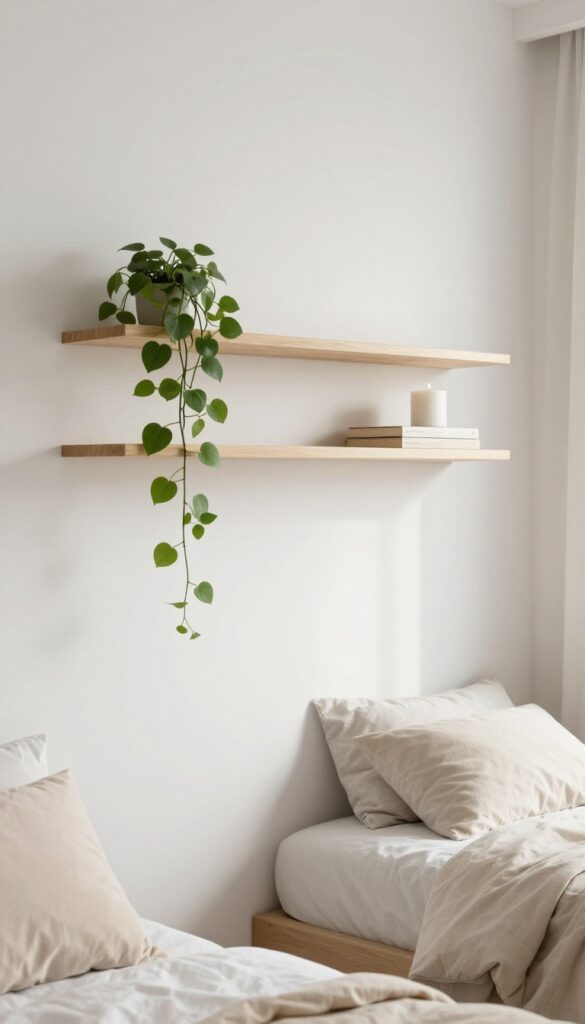
Floating shelves are a small bedroom's best friend when you want to add character without cluttering the floor. In a light wood or crisp white finish, they blend into the wall while giving you a spot to style a few tiny treasures—a trailing plant, a slim book, a simple candle. The effect is airy and intentional, like a mini gallery that doesn't shout for attention.
It's the kind of detail that makes a room feel lived-in and curated, not packed or messy.
Why It Works
Floating shelves keep vertical space useful without eating into your limited square footage. By lifting decor off surfaces like nightstands or dressers, they reduce visual clutter and make the room feel more open. The light finish also reflects natural light, reinforcing the calm, airy mood you're going for in a small bedroom.
Best For
This idea works beautifully in any small bedroom where floor space is tight but walls are available. It's especially great for renters who can't install permanent shelving—just use adhesive or damage-free brackets. Perfect for above a desk, beside the bed, or in that awkward corner near the window.
Styling Tip
Stick to odd numbers when arranging items on each shelf—three small objects look more balanced than two or four. Mix heights and textures: a ceramic vase, a small framed photo, and a stack of two books. Keep the color palette neutral with one tiny green plant to tie into the calm, layered bedding theme.
10. Add a Single Statement Piece
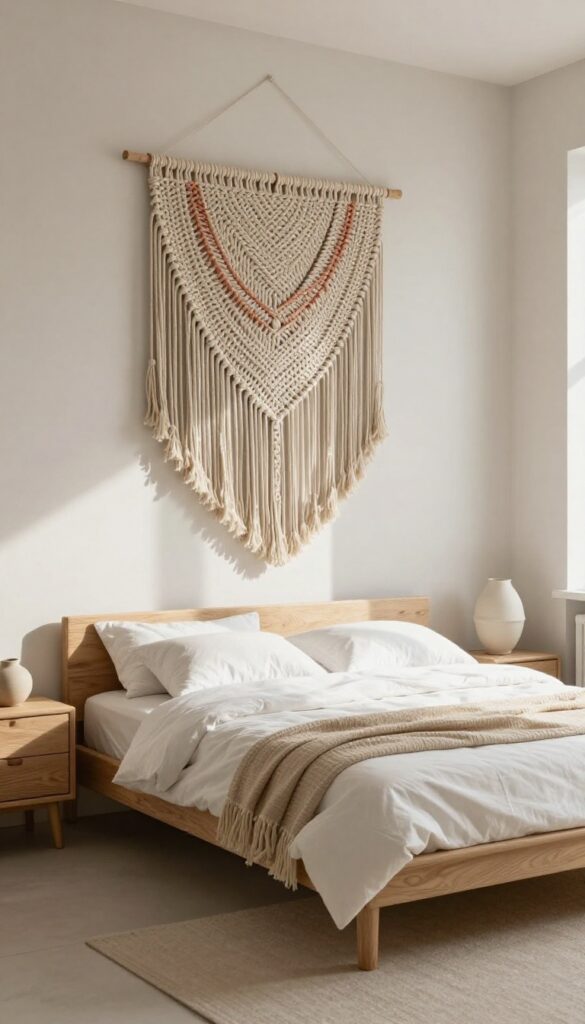
In a small bedroom, every item competes for visual space. The trick is to let one piece take center stage while everything else fades into a quiet backdrop. A single statement piece—whether it's a woven wall hanging in pale terracotta or a simple abstract print in soft blue—gives the room a focal point without overwhelming it.
The rest of the space stays minimal: neutral bedding, bare nightstands, and maybe a single lamp. This approach keeps the room feeling light and airy, not cluttered, while still adding personality.
Why It Works
A single statement piece creates a visual anchor that draws the eye and gives the room purpose. Because it's the only bold element, the brain doesn't have to process competing details, which makes the space feel calm and orderly. The soft color of the piece ties into the overall palette, reinforcing the serene mood without adding noise.
Best For
This idea is perfect for small bedrooms where you want a touch of character but have limited wall or floor space. It works especially well in rooms with neutral walls and simple furniture, where a single accent can define the entire vibe. If you're someone who likes a clean, uncluttered look but still wants the room to feel curated, this is your move.
Styling Tip
- Hang your statement piece at eye level above the bed or on the wall opposite the door so it's the first thing you see. Choose something with a soft, natural texture like macrame, linen canvas, or a wooden hoop. Keep the frame light—thin wood or no frame at all—to maintain that airy feel.
- If you use art, pick a piece with a muted background and a single gentle hue that echoes your bedding or rug.
11. Keep Nightstands Slim and Simple
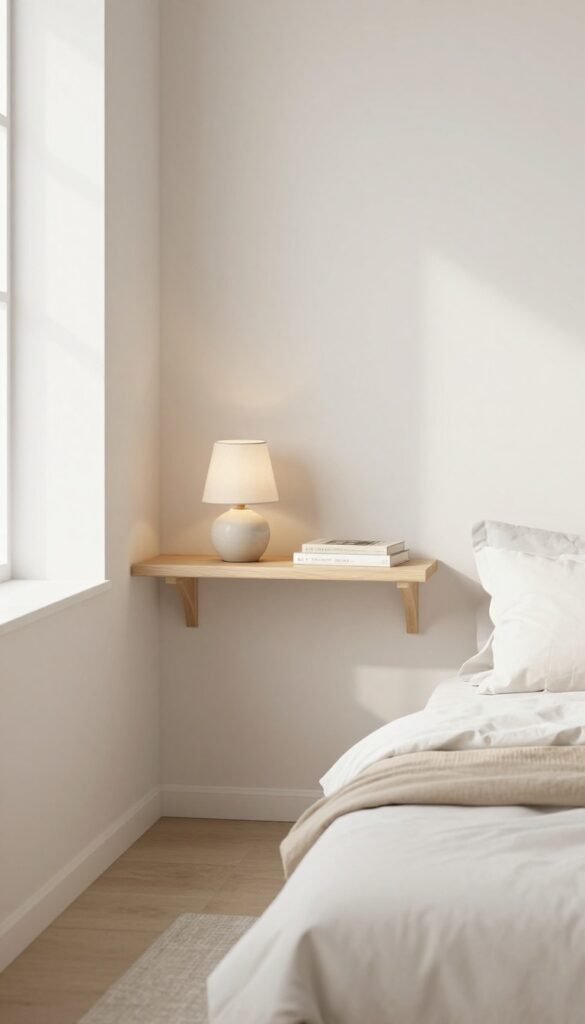
In a compact bedroom, every inch counts, and bulky nightstands can quickly make the space feel cramped. A slim, streamlined alternative—like a narrow console table or a floating shelf—keeps the floor open and the visual weight light. The idea is to have just enough surface for a small lamp and a book, nothing more.
Light wood or white finishes blend into the wall, making the room feel airy and uncluttered.
Why It Works
A slim nightstand takes up minimal floor space, which is crucial in a small bedroom. It still offers a practical landing spot for bedtime essentials without creating visual bulk. The clean lines and light color help the room feel larger and more open, supporting the calm, breathable atmosphere you're going for.
Best For
This works especially well in bedrooms under 120 square feet, where every square inch matters. It's also great for rooms with low square footage that need to feel open and uncluttered, or for anyone who prefers a minimalist, serene look.
Styling Tip
Mount a floating shelf at the same height as a standard nightstand (about 24–28 inches from the floor). Add a small lamp with a fabric shade for soft light, and keep decor minimal—maybe a single small plant or a stack of two books. Avoid piling on items to maintain that clean, airy feel.
12. Finish With a Calming Scent
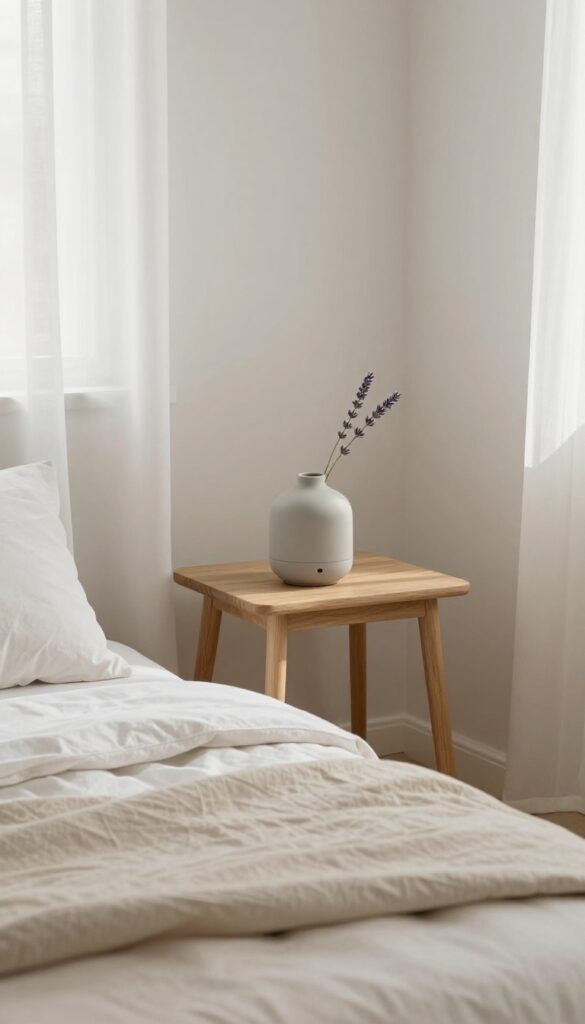
Scent is often the forgotten layer in a bedroom, but it can set the entire mood. A soft lavender or chamomile fragrance from a candle or diffuser adds a subtle finishing touch that makes the space feel intentional and serene. You don't need a big display—just a small vessel on a nightstand or shelf keeps the look clean and airy.
Why It Works
A calming scent works with your other decor choices to reinforce the relaxing atmosphere. It signals to your brain that this is a place to unwind, not just sleep. Plus, it adds sensory depth without taking up visual space.
Best For
This idea is perfect for anyone who wants their bedroom to feel like a true retreat. It's especially effective in small rooms where every element needs to earn its place—scent adds emotional comfort without clutter.
Styling Tip
Choose a simple, matte ceramic diffuser or a neutral candle in a soft color like cream or pale gray. Place it on a nightstand or floating shelf away from the bed to avoid overwhelming the space. Stick to one or two notes—lavender, chamomile, or a light vanilla—to keep the vibe light and airy.
FAQ
What are the best calm colors for a small bedroom?
Soft neutrals like warm white, beige, light gray, and pale pastels such as blush pink, sage green, or powder blue work best. These colors reflect light and make the room feel open and serene.
How do I layer bedding without making it look messy?
Start with a fitted sheet and a flat sheet in a neutral color. Add a lightweight quilt or blanket folded at the foot, then top with a duvet. Use two to three pillows in coordinating textures and colors.
Keep the layers simple and cohesive.
Can I use dark colors in a small bedroom with calm tones?
Yes, but use them sparingly as accents. A dark throw pillow or a small piece of art can add depth without overwhelming the space. Stick to light walls and bedding to maintain an airy feel.
What type of bedding is best for a small bedroom?
Choose lightweight fabrics like cotton, linen, or bamboo in solid colors or subtle patterns. Avoid heavy comforters or bulky duvets that take up visual space. Layering with a quilt or throw adds texture without bulk.
How can I make my small bedroom feel bigger with decor?
Use mirrors to reflect light, keep furniture low and slim, and choose a light color palette. Minimize clutter with smart storage like floating shelves or under-bed bins. Sheer curtains and a rug in a light shade also help open up the room.
Conclusion
Creating a small bedroom that feels calm and inviting doesn't require a major overhaul. By focusing on a soft color palette and thoughtfully layered bedding, you can transform your space into a relaxing retreat that feels much larger than it is.
Start with one or two ideas that resonate with you, and build from there. Even small changes—like swapping out a throw or adding a sheer curtain—can make a big difference in how your bedroom looks and feels every day.