13 How to Clean Cast Iron Skillet Without Stripping It
Cast iron skillets are kitchen workhorses, but cleaning them can feel like a high-stakes game. One wrong move and you might strip away that hard-earned seasoning. The good news?
You don't need harsh chemicals or steel wool to get a clean pan. These 13 methods focus on preserving your seasoning while removing stuck-on food and grease.
Each technique is practical, budget-friendly, and easy to do with items you probably already have. Whether you're a cast iron newbie or a seasoned pro, these tips will keep your skillet in top shape without the stress.
1. Use a Stiff Nylon Brush and Hot Water
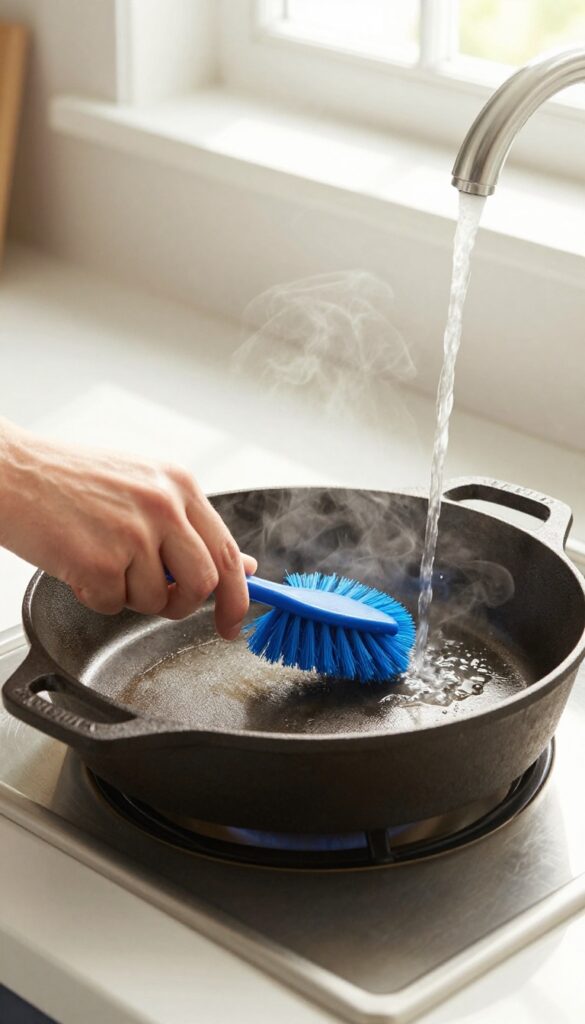
Scrubbing with a stiff nylon brush and hot water is one of the gentlest ways to clean your cast iron skillet. The key is to do it while the pan is still warm, which helps loosen stuck-on bits without needing soap. This method relies on good old-fashioned elbow grease, and it's surprisingly effective for everyday cleaning.
For most meals, a quick scrub with hot water and a nylon brush is all you need. The brush's bristles are tough enough to remove food residue but soft enough to avoid scratching the seasoning. Plus, you're not introducing any chemicals that could strip the pan's protective layer.
Why Nylon Works Best
Nylon brushes are non-abrasive, so they won't damage the seasoning like steel wool or metal scrubbers can. They're also flexible, getting into the skillet's curves and corners. Look for brushes with sturdy bristles that can handle a bit of pressure without bending.
Hot Water Makes A Difference
Hot water helps expand the metal slightly, loosening food particles. It also cuts through grease better than cold water. Just be careful not to use boiling water, as extreme temperature changes can warp the pan.
Skip The Soap
Modern dish soaps are mild, but they can still break down seasoning over time. For this method, rely on hot water and friction alone. If you need extra help, a paste of coarse salt and water works wonders as a gentle abrasive.
2. Scrub with Coarse Salt and a Paper Towel
When you need a little extra scrubbing power but don't want to damage your seasoning, reach for coarse salt. It's a gentle abrasive that lifts stuck-on food without scratching the surface. Plus, it's probably already in your pantry.
Sprinkle a generous amount of coarse kosher or sea salt into the pan, then use a folded paper towel or a clean cloth to scrub in circular motions. The salt acts as a gentle abrasive that removes stuck bits without harming the seasoning. Once you're done, simply rinse with hot water and dry thoroughly.
Why Salt Works So Well
Salt crystals are hard enough to dislodge food particles but soft enough to leave your seasoning intact. Unlike steel wool or harsh scrubbers, salt won't scrape away the polymerized oil that makes your skillet non-stick. It's a time-tested method that's both effective and safe.
How To Do It Right
Start with a cool or warm pan—never hot, as that can cause burns. Add about 2 tablespoons of coarse salt. Use a folded paper towel to scrub vigorously in circles, focusing on any stubborn spots.
The salt will turn gray as it picks up grease and debris. Rinse with hot water and dry immediately.
When To Use This Method
This technique is perfect for everyday cleaning after cooking foods that leave residue, like fried eggs or sautéed vegetables. It's also great for removing burnt-on bits without resorting to soap. For heavily caked-on messes, combine with a little oil to make a paste.
3. Boil Water in the Pan to Loosen Stuck Food
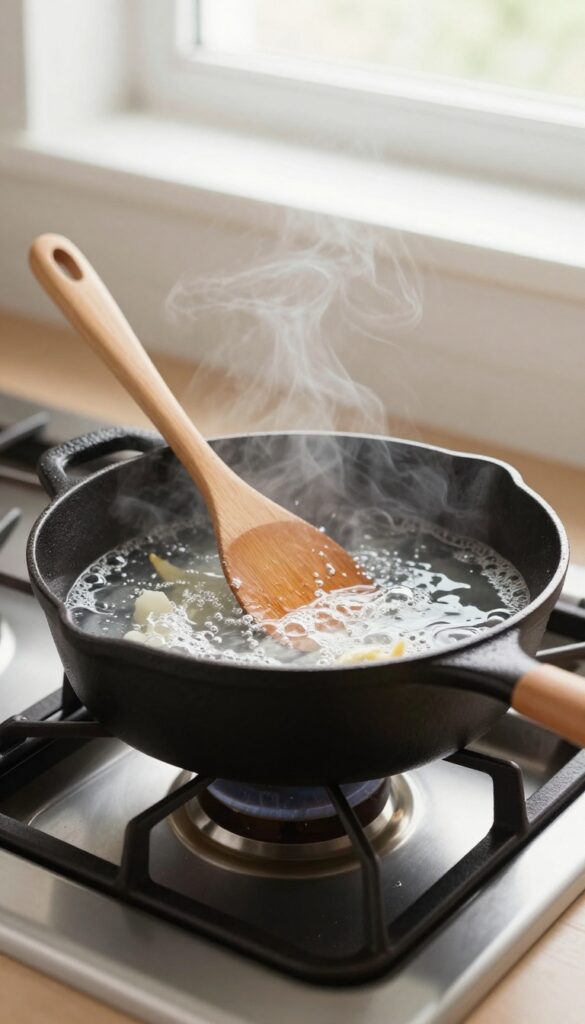
Stubborn, crusted-on bits don't stand a chance against a simple boil. This method uses steam and heat to soften food without scrubbing away your seasoning. It's especially handy after searing meat or cooking sticky dishes.
How To Do It Right
Add about an inch of water to your skillet and place it on the stove over medium-high heat. Bring the water to a boil, then reduce to a simmer for 3–5 minutes. You'll see the stuck food start to release.
Use a wooden or silicone spatula to gently scrape away the softened bits. Pour out the water, rinse with warm water, and dry immediately with a towel.
Why It Works Without Stripping Seasoning
Boiling water loosens food through hydration and heat, not abrasion. Unlike scrubbing or soaking in soapy water, this method doesn't attack the polymerized oil layer. The brief contact with water is safe—just don't let it sit for hours.
When To Use This Technique
This is ideal for pans with burnt-on residue, cheese crusts, or caramelized sugars. Skip it if you only have light grease or dust—a quick wipe will do. Reserve boiling for the tough stuff.
4. Use a Chainmail Scrubber for Tough Residue
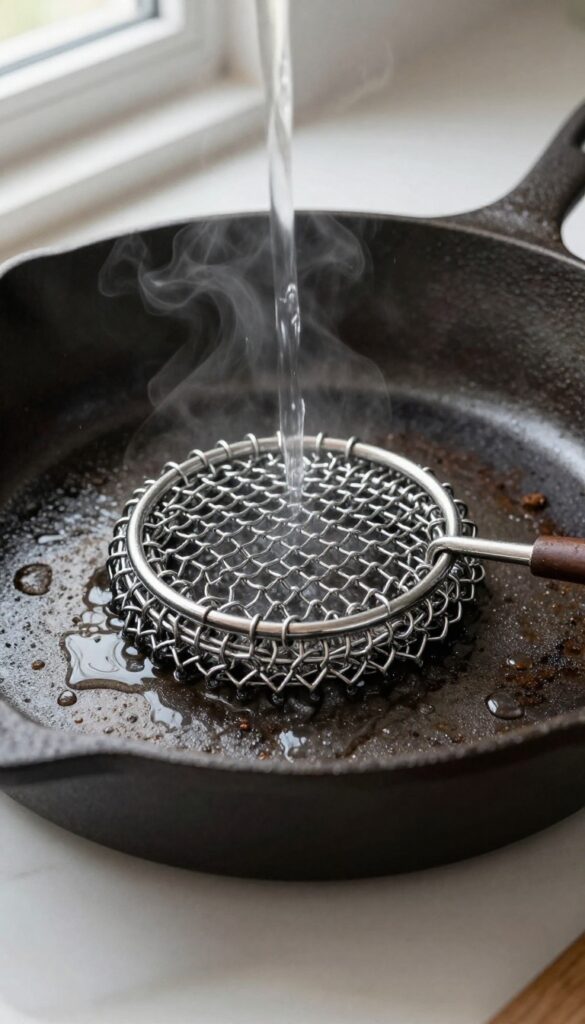
When food gets really stuck on, a gentle scrub just won't cut it. That's where a chainmail scrubber comes in. It looks like armor for your hand, but it's actually a brilliant tool for cast iron.
The metal rings are tough on burnt-on bits but soft enough to leave your seasoning alone. Use it with hot water and a bit of pressure, and you'll see why so many cast iron fans swear by it.
A chainmail scrubber is made of interlinked stainless steel rings. It's durable, rust-resistant, and won't scratch your seasoning. The key is to use it with hot water—never soap, unless you're dealing with a really greasy mess.
The rings scrape off food without digging into the oil layers. It's also easy to clean: just rinse it and hang it to dry.
Why Chainmail Works Without Stripping Seasoning
Seasoning is a polymerized oil layer that bonds to the iron. Chainmail rings are rounded and move smoothly across the surface. They dislodge food by friction, not by cutting.
Unlike steel wool, which can gouge the seasoning, chainmail glides over it. The result is a clean pan with no damage.
How To Use It Properly
First, let the skillet cool slightly—warm is fine, but hot can burn you. Run it under hot tap water and add a small amount of water to the pan. Then scrub in a circular motion with the chainmail.
Focus on the stuck spots. Rinse and check. If needed, repeat.
Dry immediately with a towel or over low heat.
When To Avoid Chainmail
Don't use chainmail on a brand-new seasoning that hasn't fully cured. It's also not ideal for enameled cast iron, as it can scratch the coating. Stick to nylon or silicone for those.
And if your skillet has rust, use chainmail after removing the rust, not before—it won't fix rust.
5. Wipe with a Non-Scratch Sponge and Mild Soap
For years, the cast iron rule was simple: never use soap. But modern dish soaps are nothing like the harsh lye-based ones from grandma's day. A tiny drop of mild dish soap is perfectly safe—just don't let the pan soak.
This method is ideal when you need to cut through greasy residue without scrubbing off the seasoning. Use a non-scratch sponge, work quickly, and rinse immediately.
This approach combines the gentle touch of a non-scratch sponge with the grease-fighting power of mild soap. It's perfect for everyday cleaning after cooking fatty foods like bacon or fried chicken. The key is using the smallest amount of soap possible—think a single drop—and rinsing thoroughly within seconds.
Never let the soap sit on the pan. After rinsing, dry the skillet immediately with a towel or over low heat, then apply a thin layer of oil to maintain the seasoning.
Choosing The Right Sponge
Not all sponges are cast iron-friendly. Look for non-scratch or non-stick safe sponges—usually blue or green in color. Avoid steel wool or abrasive scrub pads, which can scrape off seasoning.
A soft cellulose sponge or a silicone scrubber works well. If you're unsure, test the sponge on a non-stick pan first; if it leaves scratches, don't use it on your cast iron.
The Right Soap To Use
Stick to mild, liquid dish soaps like Dawn or Seventh Generation. Avoid anything with bleach, citrus, or abrasive particles. A single drop is plenty for a standard 10-inch skillet.
If your pan has built-up grease, you can use a tiny bit more, but always rinse thoroughly. Never use dishwasher detergent or bar soap—those are too harsh and can strip seasoning.
Drying And Oiling Afterward
After rinsing, dry the skillet completely to prevent rust. The fastest way is to place it on a stovetop burner over medium heat for a minute or two until all moisture evaporates. Then, while the pan is still warm, rub a very thin layer of cooking oil (vegetable, canola, or flaxseed) over the entire surface using a paper towel.
This seals the seasoning and keeps the skillet ready for next use.
6. Deglaze with Water or Broth After Cooking
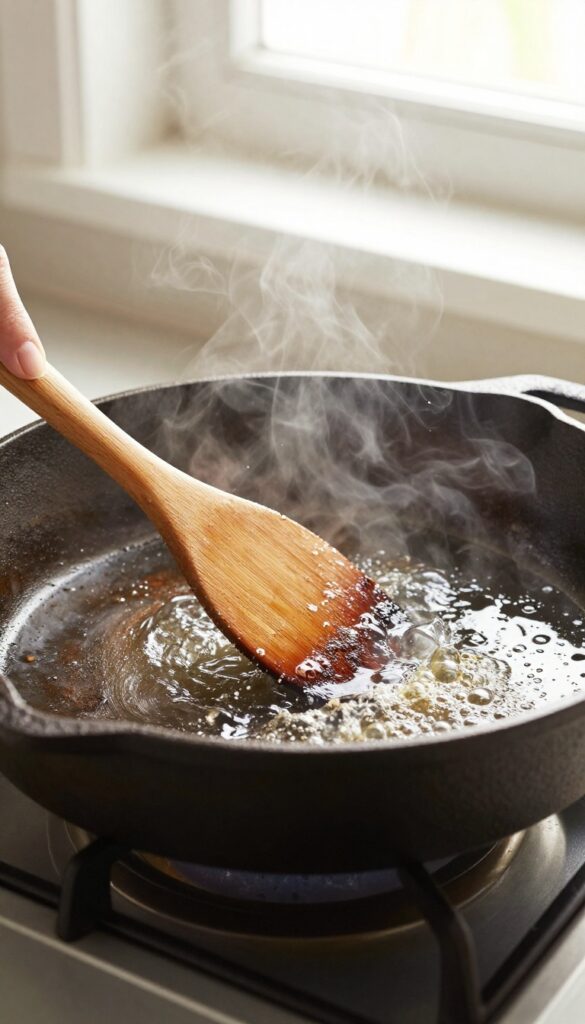
Right after cooking, while the pan is still hot, pour in a splash of water or broth. Use a wooden spatula to scrape up any browned bits stuck to the surface. The liquid lifts the residue instantly, creating a quick pan sauce and making cleanup a breeze.
Deglazing is a classic cooking technique that doubles as a gentle cleaning method. The steam and liquid loosen food particles without scrubbing, protecting your seasoning. Plus, you end up with a flavorful sauce to drizzle over your meal.
Why It Works So Well
The heat from the pan causes the liquid to rapidly steam and bubble, which helps release stuck-on food. The wooden spatula is soft enough to avoid scratching the seasoning but firm enough to dislodge bits. This method is especially effective for pans used to sear meat or sauté vegetables.
How To Do It Right
Immediately after removing your food, add about 1/4 cup of water or broth to the hot skillet. Let it sizzle and scrape with a wooden spatula. Pour the liquid into a bowl to use as a sauce or discard it.
Wipe the pan with a paper towel, and it's clean.
Tips For Best Results
Use hot liquid for even better steam action. Avoid cold water, which can cause thermal shock and warp the pan. If you want extra flavor, use chicken or vegetable broth.
For stubborn spots, let the liquid simmer for 30 seconds before scraping.
7. Use a Plastic or Wooden Scraper
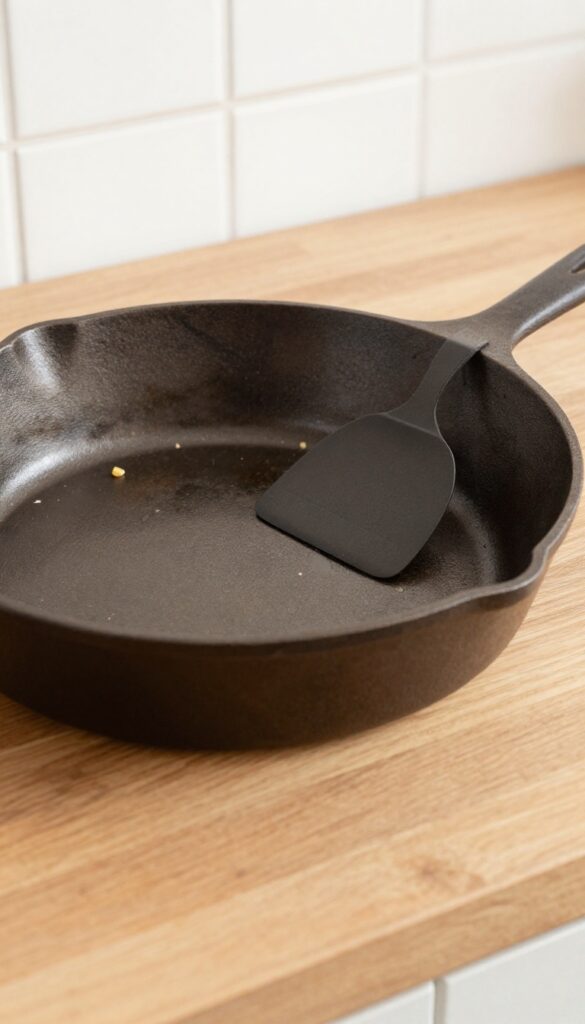
Sometimes a gentle scrub just won't cut it, especially when you've got bits of food fused to the pan. Before you reach for anything abrasive, grab a plastic pan scraper or a flat wooden spatula. These tools are tough on stuck-on food but gentle on your seasoning.
A plastic pan scraper or a flat wooden spatula can dislodge stuck food without scratching the seasoning. Use it while the pan is still warm, and follow up with a quick rinse.
Why Plastic Or Wood Works
Unlike metal scrapers, plastic and wood are softer than the seasoning layer. They'll lift off cooked-on bits without gouging or scratching the surface. This makes them ideal for daily maintenance between deep cleans.
Best Technique For Stuck-on Food
Let the pan cool slightly after cooking—warm, not hot. Then hold the scraper at a low angle and push firmly against the residue. The food should release easily.
If it doesn't, add a splash of water to create steam, which loosens stubborn bits.
After Scraping: Rinse And Dry
Once you've scraped off the debris, rinse the pan with warm water. Use a soft sponge if needed, but often a rinse is enough. Dry thoroughly with a towel or on low heat, then apply a thin layer of oil to maintain the seasoning.
8. Wipe Out Grease with a Paper Towel While Warm
Not every meal leaves your skillet a disaster zone. Sometimes it's just a light sheen of oil or a few crumbs. For those easy days, you can skip the water and soap entirely.
A quick wipe while the pan is still warm is all you need.
This method is the ultimate low-effort clean. After you've served your food, let the skillet cool for a minute or two—it should be warm but not scorching hot. Grab a thick paper towel (or a clean kitchen towel if you're careful) and wipe out the interior.
The residual heat loosens grease and any tiny food bits, so they come right off. You'll be left with a clean, lightly oiled surface that's ready for its next use. No water, no scrubbing, no risk of rust.
When To Use This Method
This works best when you've cooked something fatty like bacon, eggs, or sautéed vegetables. If the pan has only a thin layer of oil and no stuck-on bits, a paper towel wipe is perfect. Avoid it if you've cooked acidic foods (tomato sauce, vinegar-based dishes) or if there's charred residue—those need a more thorough clean.
Tips For A Good Wipe
Use a paper towel that's sturdy enough not to fall apart. Fold it into a thick square to protect your fingers from the heat. If the pan is too hot to handle, use tongs to hold the towel.
For an extra-clean finish, follow up with a second dry towel to pick up any remaining oil. Then store the skillet as usual.
Why This Preserves Seasoning
Seasoning is essentially polymerized oil bonded to the iron. Water and soap can slowly break down that layer, especially if used aggressively. By wiping with only a paper towel, you leave the seasoning intact.
The tiny amount of oil left behind actually helps maintain and even strengthen the coating over time.
9. Use a Potato and Salt for Stubborn Stains
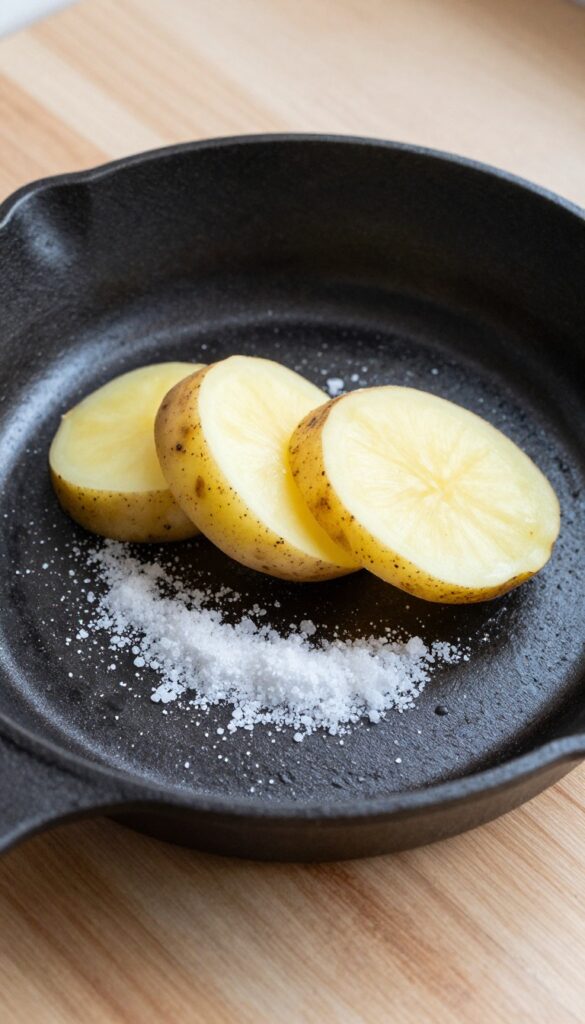
Some stains just won't budge, no matter how much you scrub. Burnt-on bits and discoloration can make your skillet look rough. Before you reach for harsh abrasives, try this old-school trick: a raw potato and coarse salt.
It's gentle on seasoning but tough on messes.
Cut a raw potato in half and dip the cut side into coarse salt. Scrub the stained areas of your pan using the potato as your scrubber. The starch in the potato helps lift stubborn stains and neutralizes odors, while the salt provides just enough abrasion to remove stuck-on food without damaging the seasoning.
Rinse the skillet with warm water and dry it thoroughly. This method works especially well for pans that have developed a slightly sticky or uneven surface.
Why It Works
Potatoes contain natural enzymes and starches that break down food residues and absorb odors. The salt acts as a mild scrubber that's softer than steel wool but effective enough to dislodge burnt particles. Together, they create a paste-like action that cleans without stripping the polymerized oil layer.
When To Use This Method
This trick is perfect for pans with light to moderate stuck-on food, or when your skillet has developed a faint rancid smell. It's also great for removing the residue left after cooking acidic foods like tomatoes, which can sometimes cause discoloration.
Tips For Best Results
Use a medium-sized potato so it's easy to grip. Kosher salt or any coarse salt works well. Scrub in a circular motion, applying moderate pressure.
After rinsing, dry the pan immediately and apply a thin layer of oil to maintain the seasoning. If stains persist, repeat the process or let the potato-salt mixture sit on the stain for a few minutes before scrubbing.
10. Try a Baking Soda Paste for Burnt-On Food
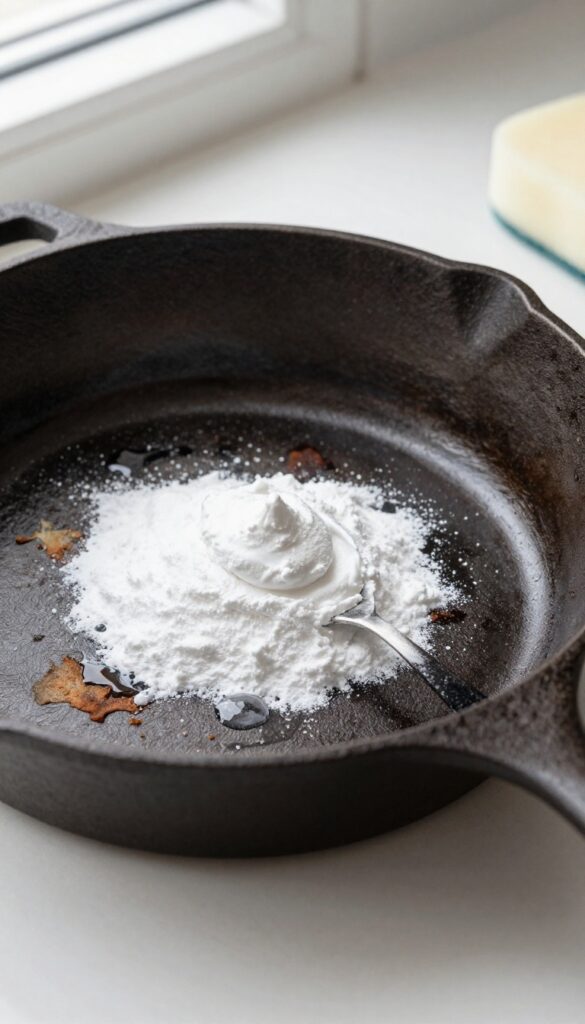
Burnt-on food can feel impossible to remove without damaging your seasoning. Baking soda offers a gentle yet effective solution. Mixed into a paste, it targets stubborn spots without the harshness of steel wool or chemical cleaners.
When water alone won't cut it, baking soda steps in as a mild abrasive that's safe for seasoned cast iron. It's cheap, non-toxic, and already in your pantry. The key is using it as a paste rather than a dry scrub, which can be too gritty.
This method works best on localized burnt areas, not for a full pan clean.
How To Make And Apply The Paste
Mix about two tablespoons of baking soda with just enough water to form a thick paste—think toothpaste consistency. Apply it directly to the burnt spots using a non-scratch sponge or your fingers (wear gloves if you prefer). Let it sit for 5 to 10 minutes to soften the residue.
Scrubbing Technique Matters
Use a soft sponge or nylon brush to scrub in small circles. Avoid steel wool or abrasive pads that can scratch the seasoning. Rinse with warm water and check the spot.
If it's still there, repeat the process. Baking soda won't strip your seasoning, so you can be thorough.
When To Use This Method
This paste is ideal for burnt-on cheese, caramelized sugars, or stuck-on meat bits. It's not needed for everyday cleaning—save it for those tough patches. If your pan has a thick layer of carbon buildup, you might need a deeper clean, but for most burnt spots, this is your go-to.
11. Use a Coffee Filter or Soft Cloth for Final Wipe
The final wipe-down is where many people accidentally introduce lint or leave moisture behind, which can lead to rust. A coffee filter or a soft, lint-free cloth is your best friend here. It’s cheap, disposable, and perfect for applying a thin layer of oil without leaving fibers.
After cleaning and rinsing your skillet, give it a thorough dry with a coffee filter or a soft cloth. Then, add a tiny drop of oil and use the filter to spread it evenly across the cooking surface. This step locks in moisture protection and keeps your seasoning smooth and non-stick.
Why Lint Matters
Paper towels seem convenient, but they often shed tiny fibers that stick to the seasoning. Over time, those fibers can burn and create a rough surface. Coffee filters are designed to be lint-free, making them ideal for the final wipe.
Soft cotton cloths work too, as long as they’re clean and don’t leave fuzz.
How To Apply Oil Evenly
Use just a few drops of oil—less than you think. Wipe it over the entire interior surface, then try to wipe it off again. The goal is a microscopically thin layer.
Too much oil will become sticky or gummy. A coffee filter’s absorbency helps you achieve that barely-there coat.
Store With A Coffee Filter Inside
For extra rust protection, place a clean coffee filter inside the skillet before storing. It absorbs any residual moisture and keeps dust off the seasoning. Replace it every few uses.
This simple trick extends the life of your seasoning and keeps your skillet ready to go.
12. Avoid Soaking or Dishwasher Use
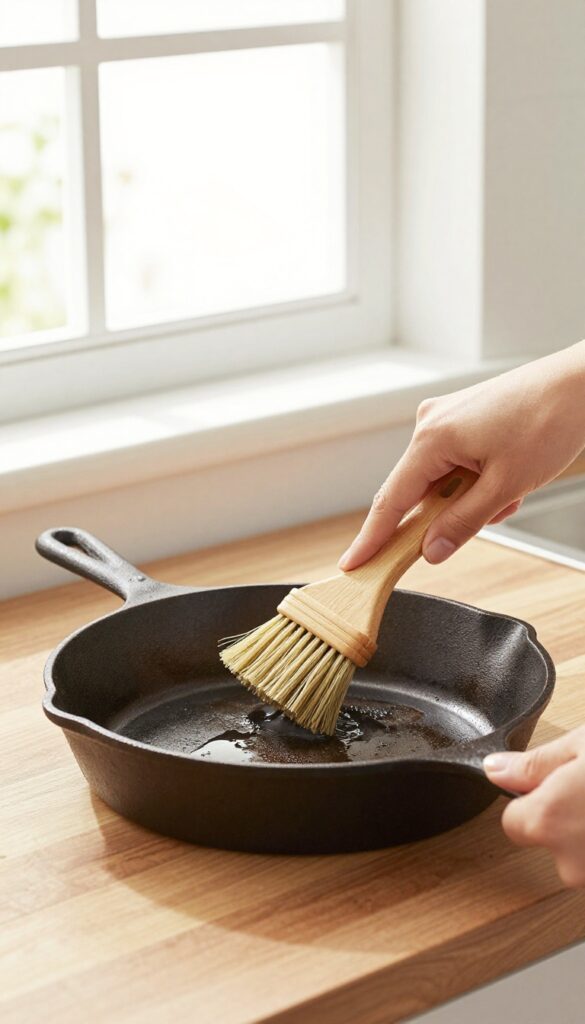
It might be tempting to let your cast iron skillet soak in the sink or toss it in the dishwasher for a thorough clean, but these shortcuts can do serious damage. Water is the enemy of seasoning, and prolonged exposure leads to rust and flaking. The safest approach is to wash quickly and dry immediately, keeping your skillet in prime cooking condition.
Never soak your cast iron skillet or put it in the dishwasher. Prolonged exposure to water can cause rust and strip the seasoning. Stick to quick washes and immediate drying.
Why Soaking Is Risky
Soaking may seem harmless, but water seeps into the pores of the iron, lifting the seasoning layer. Even a short soak can cause rust spots, especially if the pan isn't dried thoroughly. Instead of soaking, use a stiff brush or chainmail scrubber to remove stuck-on bits, then rinse quickly.
The Dishwasher Danger
Dishwashers combine harsh detergents, high heat, and prolonged moisture—a triple threat to seasoning. The detergent strips oil, while the heat and water cause rust. Your skillet will emerge looking dull and may need to be completely reseasoned.
Hand washing is always the better choice.
Quick Wash, Immediate Dry
After cooking, wash your skillet with hot water and a mild soap if needed (contrary to old myths, a little soap won't hurt). Use a non-abrasive sponge or brush. Rinse quickly, then dry with a lint-free towel or by heating it on the stove for a minute.
This routine preserves seasoning and prevents rust.
13. Re-season with a Thin Oil Layer After Each Clean
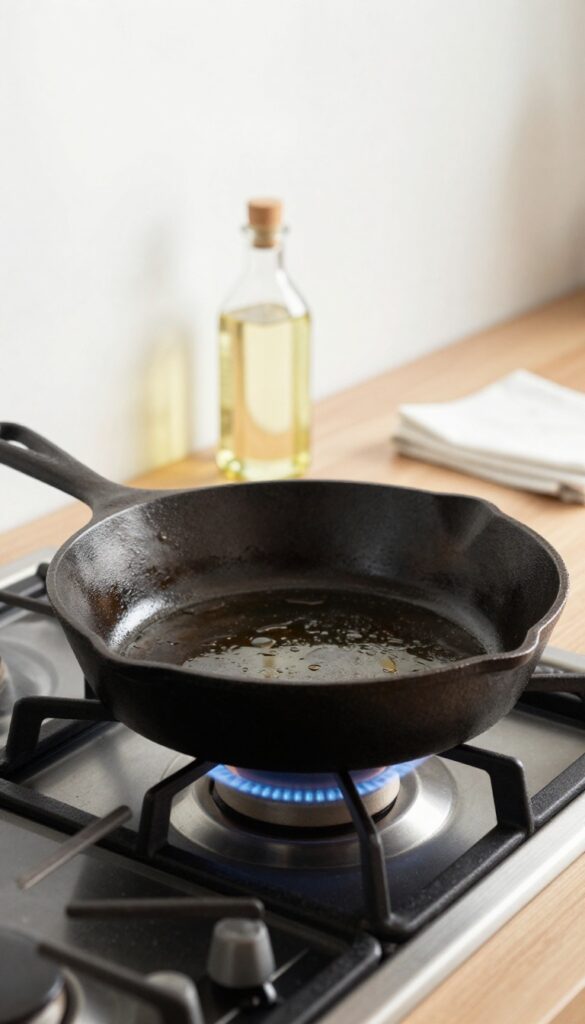
The final step in your cleaning routine is just as important as the washing itself. Re-seasoning after every wash locks in protection and gradually builds a better non-stick surface. It only takes a minute and prevents rust from ever getting a foothold.
After you've scrubbed and dried your skillet, place it on a burner over low heat for a minute or two to ensure it's completely dry. Then, using a paper towel or a lint-free cloth, rub a very thin layer of oil—vegetable, canola, or flaxseed work great—over the entire surface, including the handle and the bottom. The key is to use just enough to give the pan a subtle sheen; excess oil will turn sticky or gummy.
Wipe it again with a clean towel to remove any extra. This quick step maintains the seasoning between deep re-seasoning sessions and keeps your skillet ready to cook.
Why Thin Layers Matter
A thick coat of oil won't polymerize properly and will leave a tacky residue that attracts dust and can burn onto the pan during cooking. Thin layers bond with the iron to create a smooth, durable seasoning. Think of it as a light moisturizer, not a heavy cream.
Choosing The Right Oil
Flaxseed oil is a top pick because it polymerizes into a hard, glass-like coating, but it can be pricey. Vegetable oil and canola oil are affordable and reliable. Avoid butter or olive oil for re-seasoning—they have low smoke points and can turn rancid.
When To Skip Re-seasoning
If you've only cooked something low-fat like eggs or pancakes and your skillet still has a good sheen, you don't need to re-season every single time. But if you see any dull spots or after cooking acidic foods, always give it a fresh oil layer.
FAQ
Can I use soap on my cast iron skillet?
Yes, a small amount of mild dish soap is safe for cast iron. Avoid harsh detergents or soaking. Rinse immediately and dry thoroughly.
How do I remove rust without stripping seasoning?
For light rust, scrub with a paste of baking soda and water or use a chainmail scrubber. For heavy rust, you may need to strip and re-season, but try gentle methods first.
What oil is best for seasoning after cleaning?
Flaxseed oil, grapeseed oil, or vegetable oil work well. Apply a very thin layer and heat the pan until it just starts to smoke, then let it cool.
How often should I season my cast iron skillet?
Season after each cleaning if you notice the surface looking dull or if food starts sticking. Regular use and proper cleaning often maintain seasoning without extra steps.
Can I use metal utensils on cast iron?
Yes, metal utensils are generally safe for well-seasoned cast iron. They won't strip the seasoning but can scratch if the pan is new or poorly seasoned.
Conclusion
Keeping your cast iron skillet in top shape doesn't require harsh chemicals or complicated routines. By sticking to gentle cleaning methods like salt scrubs and avoiding soap when possible, you'll preserve that precious seasoning for years.
Remember, a well-maintained skillet only gets better with use, so don't overthink it. Just wipe, dry, and lightly oil after each cook, and you'll have a nonstick surface that outperforms any modern pan.