23 Bathtub Cleaning Hacks for Soap Scum and Stains
A grimy bathtub can make your whole bathroom feel dirty, even after you've cleaned everything else. Soap scum and hard water stains build up fast, turning a relaxing soak into an eyesore. But you don't need expensive specialty cleaners or hours of elbow grease to get that shine back.
These 23 bathtub cleaning hacks are designed to cut through soap scum and lift stains with ingredients you probably already have at home. From vinegar and baking soda to dryer sheets and even ketchup, each trick targets a specific type of grime. The best part?
Most take just minutes to work their magic. Whether you're dealing with a fiberglass tub, porcelain, or acrylic, there's a hack here for you.
1. Vinegar and Dish Soap Spray
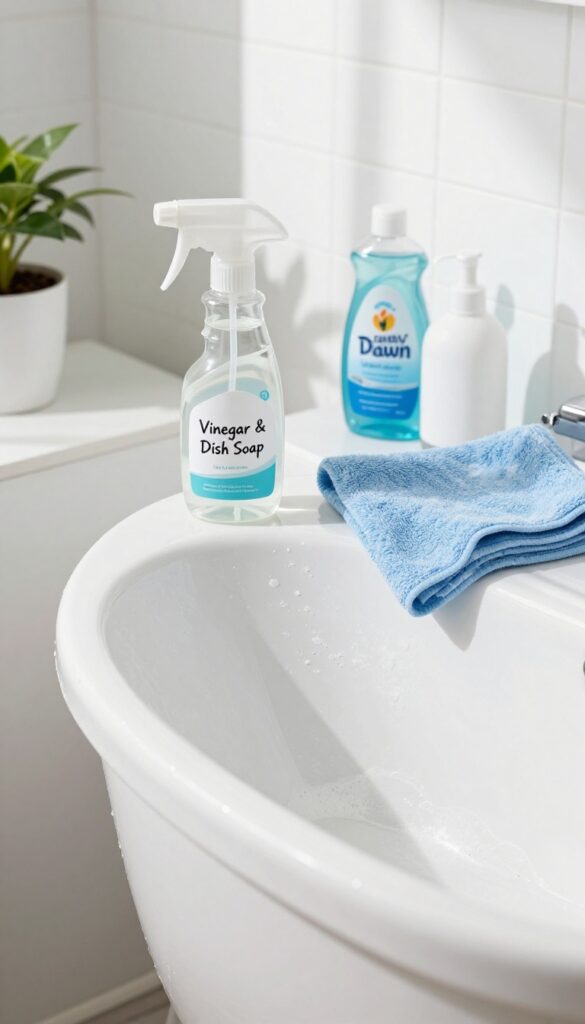
If soap scum has taken over your tub, this two-ingredient spray is a game-changer. White vinegar cuts through hard water minerals, while blue Dawn dish soap breaks down the greasy residue. Together, they make a powerful, non-toxic cleaner that works on most tub surfaces.
Mix equal parts white vinegar and blue Dawn dish soap in a spray bottle. Shake gently to combine. Spray the mixture generously on soap scum and let it sit for 15 minutes.
The vinegar dissolves mineral deposits while the soap cuts grease. Wipe away with a damp cloth or sponge. For tough buildup, scrub with a soft brush before rinsing.
This hack works best on porcelain, fiberglass, and acrylic tubs. Avoid using on natural stone or unsealed surfaces.
Why This Combo Works
Vinegar is acidic, which breaks down alkaline soap scum and hard water stains. Dish soap is a surfactant that lifts grease and grime. Together, they tackle the two main components of bathtub grime without harsh chemicals.
Best Application Tips
For best results, heat the vinegar slightly before mixing. Warm vinegar works faster. Spray the solution and let it sit longer—up to 30 minutes—for heavy buildup.
Use a microfiber cloth to avoid streaks. Rinse thoroughly after wiping to remove any residue.
When To Avoid This Hack
Don't use this spray on natural stone like marble or granite. The acid can etch the surface. Also avoid on unsealed grout or painted tubs.
Always test a small hidden area first.
2. Baking Soda Paste for Stubborn Rings
That dark ring around the tub where water meets porcelain can feel impossible to remove. But baking soda, that humble box in your pantry, is tough enough to cut through layers of soap scum without scratching the surface. Mixed into a thick paste, it becomes a gentle abrasive that lifts grime on contact.
To make the paste, combine three parts baking soda with one part water in a small bowl. Stir until it forms a spreadable consistency, like toothpaste. Apply a generous layer directly to the ring or any stained area, using a sponge or your fingers.
Let it sit for 10 minutes so the baking soda can start breaking down the minerals and soap residue. Then scrub in a circular motion with a soft sponge or microfiber cloth. Rinse thoroughly with warm water and wipe dry.
The result is a bright, residue-free finish without harsh chemicals.
Why It Works On Rings
Baking soda is mildly alkaline, which helps dissolve fatty acids in soap scum. Its fine crystalline structure provides enough friction to dislodge stuck-on grime without scratching acrylic, fiberglass, or porcelain. The short dwell time gives it a chance to penetrate the stain before you start scrubbing.
Pro Tip For Extra Tough Stains
If the ring has been building up for months, add a splash of white vinegar to the paste after applying it. The fizzing reaction helps lift stubborn deposits. Just be careful not to let it sit longer than 5 minutes, as prolonged acid exposure can dull some finishes.
Rinse immediately.
When To Skip This Hack
Avoid baking soda on natural stone tubs like marble or granite, as the abrasive can etch the surface. Also, don't use it on tubs with a wax coating or anti-slip texture, as it may wear down those finishes over time. Stick to liquid cleaners for those surfaces.
3. Hydrogen Peroxide and Cream of Tartar
Rust and hard water stains can be some of the toughest marks to remove from a bathtub. They often laugh at regular cleaners and scrubbing. But a simple paste made from hydrogen peroxide and cream of tartar can tackle them head-on without harsh chemicals.
Mix equal parts hydrogen peroxide and cream of tartar to form a thick paste. Apply it directly to the stains, spreading it evenly. Let it sit for about 30 minutes to break down the mineral deposits.
Then scrub with a soft brush or sponge and rinse thoroughly. This combo works wonders on rust rings and stubborn hard water marks, leaving your tub looking refreshed.
Why This Combo Works So Well
Hydrogen peroxide is a mild bleaching agent that helps lift stains, while cream of tartar is a mild acid that dissolves mineral deposits. Together, they create a gentle but effective abrasive paste that targets rust and hard water stains without scratching most tub surfaces.
Best Surfaces And Precautions
This paste is safe for porcelain, fiberglass, and acrylic tubs. Avoid using it on unsealed natural stone or damaged surfaces. Test on a small hidden area first.
Wear gloves to protect your skin, and don't let the paste dry completely on the surface—rinse it off promptly after scrubbing.
Tips For Maximum Stain Removal
For extra stubborn stains, let the paste sit longer, up to an hour. You can also gently scrub with a soft toothbrush to get into crevices. If stains remain, repeat the process.
Always rinse thoroughly with water to remove any residue.
4. Dryer Sheet for Soap Scum
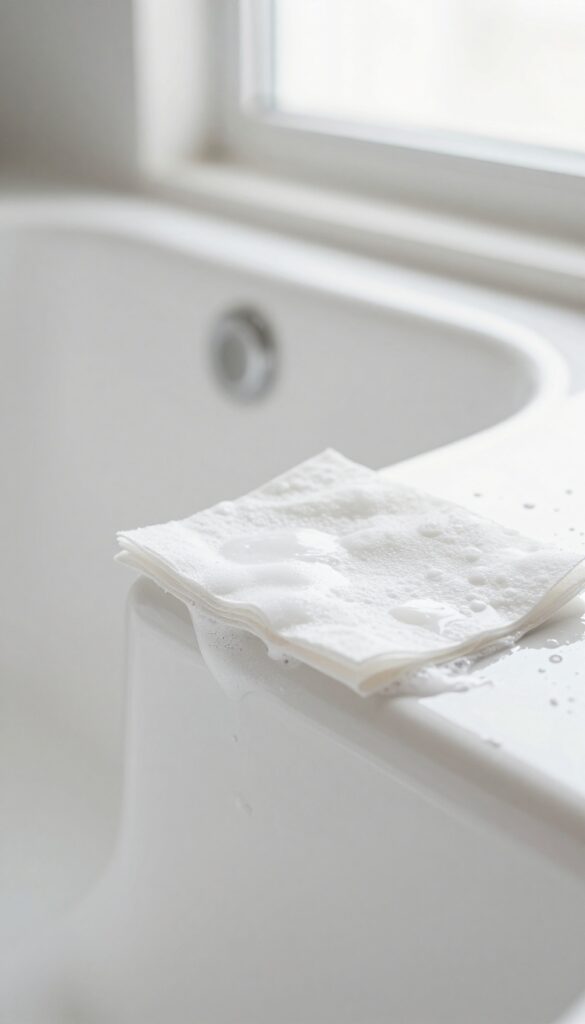
You might think dryer sheets are only for the laundry room, but they can be a surprisingly effective tool for tackling soap scum. The anti-static agents in these sheets help loosen grime, while the soft texture polishes surfaces without scratching. It's a quick, low-effort hack that leaves your tub feeling smooth and looking shiny.
Grab a used dryer sheet—one that's already been through the dryer works best. Wet it slightly, then scrub the soap scum directly. The sheet's fibers grab onto the grime, and the anti-static properties help break down the film.
Rinse the tub afterward, and you'll notice less residue and a nice sheen.
Why It Works
Dryer sheets contain fabric softeners and anti-static agents that are mild enough for bathtub surfaces but tough on soap scum. The sheet's texture provides gentle abrasion, lifting deposits without scratching porcelain, fiberglass, or acrylic.
Best For
This hack works wonders on light to moderate soap scum buildup. It's especially good for quick touch-ups between deep cleans. Avoid using it on heavily soiled tubs—you'll need a stronger cleaner for that.
Pro Tips
Use a fresh sheet if the used one is too dry. For extra stubborn spots, add a drop of dish soap to the sheet. Rinse thoroughly after scrubbing to prevent any residue from the sheet's chemicals.
5. Lemon and Salt Scrub
When you need a quick, natural scrub that actually works, reach for a lemon and some salt. The citric acid in lemon juice cuts through soap scum and mineral deposits, while salt provides just enough abrasion to lift grime without scratching most tub surfaces. This duo is especially effective on porcelain and fiberglass tubs, and it leaves behind a fresh citrus scent.
This simple scrub works because it combines chemical and physical cleaning. The lemon's acidity dissolves alkaline soap scum and hard water stains, while the salt granules gently scrub away loosened residue. It's a great option for a mid-week refresh or for tackling light to moderate buildup without harsh chemicals.
How To Make And Use The Scrub
Cut a fresh lemon in half. Sprinkle a generous amount of coarse salt (like kosher or sea salt) onto the cut surface. Scrub the bathtub directly with the lemon, applying moderate pressure.
Focus on areas with visible soap scum or stains. Work in small sections, and rinse the lemon half and reapply salt as needed. After scrubbing the entire tub, let the lemon juice sit for 2–3 minutes, then rinse thoroughly with warm water.
Wipe dry with a microfiber cloth to prevent water spots.
Best Tub Materials To Use This On
This scrub is safe for porcelain, enameled cast iron, fiberglass, and acrylic tubs. Avoid using it on natural stone or unsealed surfaces, as the acid can etch the material. Always test a small, inconspicuous area first.
For stubborn stains, you can let the lemon juice sit for up to 5 minutes before scrubbing, but do not let it dry on the surface.
Why This Beats Store-bought Cleaners
Unlike commercial cleaners that often contain harsh chemicals, this lemon and salt scrub is non-toxic, biodegradable, and safe for you and the environment. It's also incredibly cheap—you probably already have both ingredients in your kitchen. Plus, the natural scent is far more pleasant than artificial fragrances.
For an extra boost, add a few drops of lemon essential oil to the salt before scrubbing.
6. Magic Eraser for Quick Touch-Ups
Sometimes you just need a fast fix for a small spot of soap scum or a stray stain without pulling out the heavy-duty cleaners. That's where a simple melamine foam eraser—often sold under the brand name Magic Eraser—comes in. It's like a gentle scrubber that works with just water, making it perfect for quick touch-ups between deep cleans.
Melamine foam erasers are made of a microporous material that acts like ultra-fine sandpaper, lifting grime without scratching most surfaces. They're especially effective on fiberglass and acrylic tubs, where harsh chemicals might cause damage over time. Just dampen the eraser, wring out excess water, and gently rub over soap scum lines or stains.
You'll see the grime lift away almost instantly. Rinse the area afterward to remove any residue.
How It Works
The magic behind melamine foam is its open-cell structure. When dampened, the foam becomes abrasive at a microscopic level, effectively scrubbing away dirt and soap scum without the need for chemical cleaners. It's like having a million tiny scrubbers in your hand.
Best Surfaces To Use It On
This hack works beautifully on fiberglass and acrylic tubs, as well as on tile and grout. Avoid using it on glossy or delicate surfaces like enameled cast iron, as it may dull the finish. Always test a small, inconspicuous area first.
Tips For Best Results
For tough stains, let the damp eraser sit on the spot for a minute before rubbing. Use a light touch—you don't need to press hard. The eraser will wear down as you use it, so cut off the worn corner to expose a fresh surface.
And remember, never use a dry eraser, as it can scratch.
7. Borax and Lemon Juice Paste
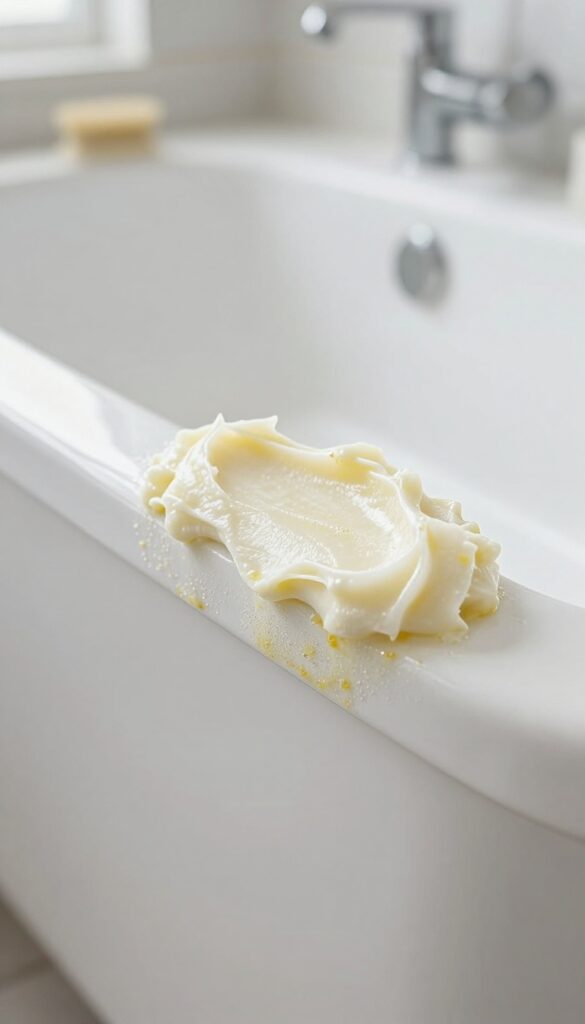
When you need a heavy-duty cleaner but want to keep things natural, borax and lemon juice make a powerful team. Borax is a mineral that boosts cleaning power and helps break down stubborn soap scum, while lemon juice cuts through grease and leaves a fresh scent. Together, they form a paste that tackles even the toughest stains without harsh chemicals.
This paste is especially effective on set-in soap scum and hard water stains. The borax provides gentle abrasion to scrub away grime, while the citric acid in lemon juice dissolves mineral deposits. It's a simple, two-ingredient solution that works on porcelain, fiberglass, and acrylic tubs.
How To Make And Apply The Paste
Mix equal parts borax and lemon juice in a small bowl until it forms a thick paste. If it's too runny, add more borax; if too thick, add a few more drops of lemon juice. Apply the paste directly to stained areas using a sponge or your fingers, spreading it evenly.
Let it sit for 20 minutes to allow the borax to work on the grime and the lemon juice to break down grease.
Scrubbing And Rinsing Tips
After the paste has sat, scrub the area with a soft-bristled brush or a non-abrasive sponge. Focus on circular motions to lift the stains. Rinse thoroughly with warm water and wipe dry with a clean cloth.
For extra stubborn spots, you can let the paste sit longer or apply a second coat. Avoid using this paste on natural stone or marble, as the acid can etch the surface.
8. Rubbing Alcohol for Stubborn Marks
Rubbing alcohol isn't just for first aid kits—it's a surprisingly effective cleaner for those random marks that soap scum and scrubbing can't touch. Marker, ink, and even some sticky residue can be wiped away in seconds. Because it evaporates quickly and leaves no residue, it's safe for most tub surfaces, including fiberglass, acrylic, and porcelain.
How To Use It
Dab a small amount of rubbing alcohol onto a clean cloth or cotton ball. Rub gently over the mark until it lifts. No need to rinse—the alcohol evaporates fast.
For larger areas, use a spray bottle to mist the surface, then wipe with a microfiber cloth.
Where It Works Best
This hack is ideal for removing permanent marker, ink stains, and stubborn scum rings that won't budge with regular cleaners. It also works on adhesive residue from stickers or labels. Avoid using it on painted or sealed surfaces, as it may strip the finish.
Safety Tips
Always test in an inconspicuous spot first. Keep the bathroom well-ventilated while using alcohol. Store it away from heat sources and out of reach of children.
For sensitive skin, wear gloves to avoid dryness.
9. Shaving Cream for a Quick Shine
If you're looking for a way to get a sparkling tub without scrubbing for hours, shaving cream is your secret weapon. The foam (not gel) works as a gentle cleaner and leaves behind a thin protective layer that helps prevent soap scum from sticking. It's perfect for a quick touch-up between deep cleans.
Spray a generous layer of shaving cream foam over the entire tub surface. Let it sit for about five minutes to break down any light soap scum and grime. Then, wipe it off with a damp cloth or sponge.
Rinse the tub with warm water and dry it with a clean towel. The result is a shiny, streak-free finish that also repels future buildup.
Why Foam Works Best
Shaving cream foam contains surfactants that help lift dirt and oils without harsh abrasives. Gel versions often have additional moisturizers that can leave a slippery residue, so stick with the classic white foam. It's also gentle enough for all tub materials, including fiberglass and acrylic.
A Protective Bonus
The same ingredients that soften your beard also create a microscopic film on the tub surface. This film makes it harder for soap scum and minerals to cling, so your tub stays cleaner longer. For best results, use shaving cream as a quick maintenance hack once a week.
10. Toothpaste for Small Stains
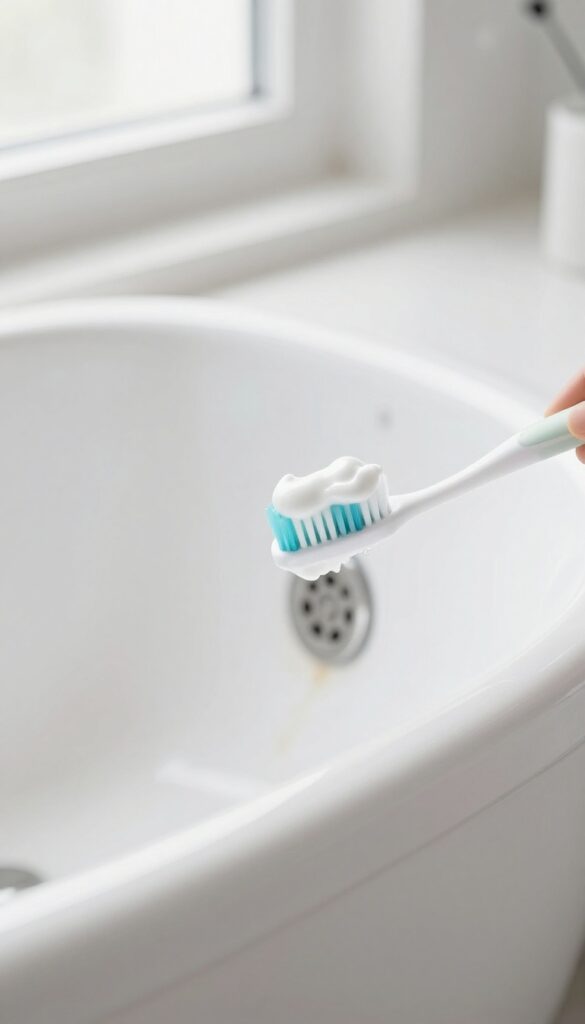
You don't need a special tub cleaner for every little spot. Plain white toothpaste has mild abrasives that can buff away small stains and discolored patches without scratching the surface. It's a quick fix that uses something already in your bathroom cabinet.
How It Works
Toothpaste contains gentle polishing agents like calcium carbonate or silica. These fine particles are abrasive enough to lift soap scum and light stains from porcelain, fiberglass, or acrylic, but soft enough to avoid damaging the finish. The paste also helps suspend the dirt so it rinses away easily.
Best Stains For This Trick
This hack works best on small, isolated stains like a ring from a metal can, a stray mark from a razor, or a light discoloration near the drain. It's not designed for heavy soap scum or large areas—save that for baking soda or vinegar. Use toothpaste as a targeted spot treatment.
Step-by-step Application
Squeeze a pea-sized amount of white toothpaste onto a soft-bristled toothbrush. Gently scrub the stain in a circular motion for about 30 seconds. Let it sit for a minute, then rinse with warm water.
Wipe dry with a cloth. Repeat if needed. Avoid gel or whitening toothpaste with extra chemicals.
11. Coca-Cola for Rust Stains
Rust stains in a bathtub can be stubborn, but you might already have the solution in your fridge. The phosphoric acid in cola is surprisingly effective at breaking down rust, making it a cheap and easy cleaner. No need for harsh chemicals—just a bottle of soda and a little patience.
Pour cola directly over rust stains or soak a cloth in it and lay it on the stain. Let it sit for about an hour, then scrub with a sponge or brush. The acid dissolves the rust, and the carbonation helps lift it away.
Rinse thoroughly afterward to avoid any sticky residue.
Why Cola Works
The phosphoric acid in cola reacts with iron oxide (rust) to form a soluble compound that rinses away easily. This makes it a gentle but effective rust remover, especially on porcelain or fiberglass tubs.
Application Tips
For vertical stains, soak a paper towel or cloth in cola and press it against the stain. You can also use a spray bottle to apply it evenly. Let it sit longer for tough stains—up to two hours if needed.
Rinsing And Aftercare
After scrubbing, rinse the area with warm water to remove all soda residue. Follow up with a mild soap or vinegar solution to neutralize any remaining acid and prevent stickiness.
12. WD-40 for Soap Scum and Grime
WD-40 is famous for silencing squeaky hinges, but it’s also a surprisingly effective bathtub cleaner. The lubricant cuts through sticky soap scum and grime that regular cleaners leave behind. Plus, it leaves a protective layer that helps repel future buildup.
Spray WD-40 directly onto soap scum and let it sit for 10 minutes. The solvents break down the waxy residue, making it easy to wipe away with a clean cloth. Rinse the tub afterward with warm water and mild soap to remove any slippery film.
This hack works best on porcelain and ceramic tubs—test on a small area first if you have acrylic or fiberglass.
Why It Works So Well
Soap scum is basically a mix of soap, minerals, and oils. WD-40 contains petroleum-based solvents that dissolve these sticky compounds on contact. The same ingredients that free up rusted bolts break down the grime clinging to your tub.
How To Apply It Right
Make sure the tub is dry before spraying. Apply a thin, even coat over the scummy areas. Let it sit for a full 10 minutes—don’t rush this step.
Then wipe with a microfiber cloth in circular motions. Finally, rinse thoroughly with dish soap and water to avoid any slippery residue.
Safety Tips And Precautions
Always ventilate the bathroom when using WD-40—the fumes can be strong. Avoid getting it on non-porous surfaces like vinyl or certain plastics, as it may cause discoloration. Wear gloves to keep it off your skin, and never use it near an open flame.
13. Baby Oil for a Protective Coating
After you've scrubbed your tub clean, keeping it that way is the real challenge. Baby oil does more than just moisturize skin—it can also create a protective barrier that repels soap scum and water spots. This simple trick adds a layer of shine and makes future cleanings much easier.
Baby oil is mostly mineral oil, which leaves a thin, invisible film on surfaces. When applied to a clean, dry bathtub, that film acts like a shield. Soap scum and hard water minerals have a harder time sticking to the oiled surface, so they rinse away more easily next time.
Plus, the oil gives the tub a glossy, just-polished look without any harsh chemicals. To use this hack, make sure your tub is completely clean and dry first. Put a few drops of baby oil on a soft, lint-free cloth.
Rub it over the entire surface in a thin, even layer. Let it sit for a minute or two, then buff it with a clean cloth until the shine appears. You don't need a lot—a little goes a long way.
The effect lasts for several washes, depending on how often you use the tub.
Why It Works
Baby oil is hydrophobic, meaning it repels water. Soap scum and mineral deposits form when water evaporates and leaves residue behind. By coating the tub with oil, you create a slick surface that water beads up on and rolls off, taking grime with it.
This same principle is why car wax protects paint.
Application Tips
Always test a small, hidden area first to make sure the oil doesn't make your tub slippery when wet. Avoid using too much oil—a thin layer is all you need. If you apply too heavily, it can feel greasy and attract dust.
Buff thoroughly until there's no visible residue. For best results, reapply after every deep clean.
Safety And Precautions
Baby oil is safe for most tub surfaces, including porcelain, fiberglass, and acrylic. But it's not recommended for textured or non-slip tub bottoms, as it can reduce traction and create a slipping hazard. If your tub has a textured floor, skip the oil there or use a non-slip mat after application.
14. Pumice Stone for Hard Water Rings
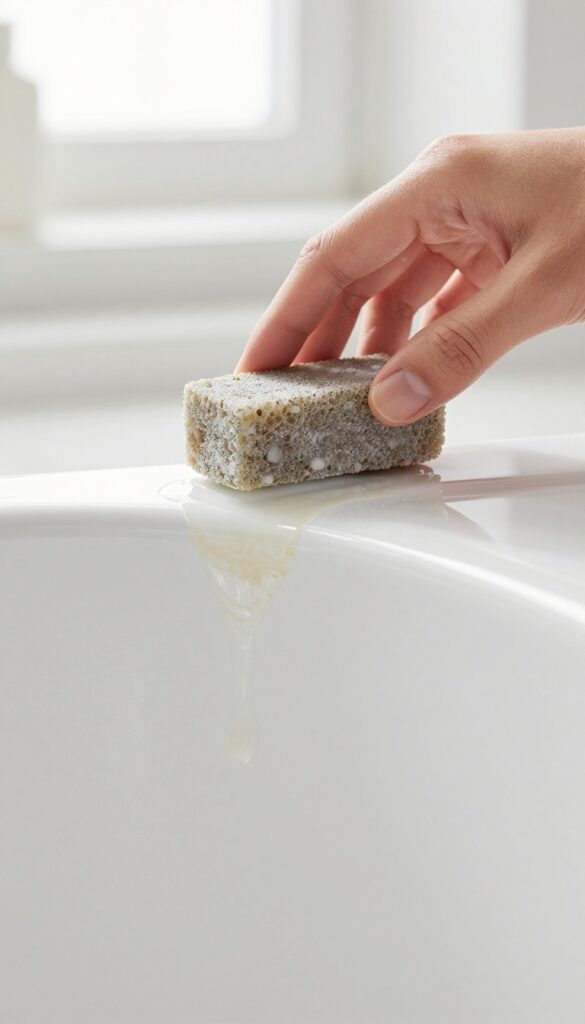
Hard water rings can make a clean tub look dirty. That white, crusty line around the water level is mineral buildup, and it's tough to scrub off with regular cleaners. A pumice stone offers a simple, low-effort fix that works wonders on porcelain surfaces.
A pumice stone is a natural volcanic rock that's abrasive enough to grind away mineral deposits but soft enough not to damage porcelain when used correctly. The key is to keep both the stone and the tub surface wet while you work. This lubricates the stone and prevents scratching.
How To Use It
First, soak the pumice stone in water for a few minutes. Then, wet the hard water ring on your tub. Gently rub the stone back and forth over the ring using light pressure.
You'll see a white powder form as the stone erodes the deposit. Rinse frequently to check your progress and avoid over-scrubbing.
Where It Works Best
This hack is ideal for porcelain or enameled cast-iron tubs. It's not recommended for acrylic, fiberglass, or any coated surface, as the abrasiveness can leave scratches. Always test on a small hidden area first if you're unsure.
Tips For Best Results
Use a pumice stone that's specifically labeled for bathroom use. Keep it wet throughout the process—dry rubbing will scratch. After you've removed the ring, wipe the area clean and dry it with a soft cloth to prevent new deposits from forming quickly.
15. Ammonia and Water for Grease
Heavy grease buildup in a bathtub—often from bath oils, lotions, or hair products—can feel impossible to remove with regular soap. Ammonia is a powerful degreaser that breaks down that sticky film quickly. When diluted properly, it's safe on most tub surfaces and leaves your bathroom sparkling clean.
Ammonia cuts through grease like nothing else, but it's strong stuff. Always wear gloves and open a window for ventilation. Never mix ammonia with bleach or any chlorine-based cleaner—it creates toxic fumes.
For best results, use this method on porcelain or fiberglass tubs; avoid on acrylic if you're unsure, as prolonged exposure may dull the finish.
Mixing The Solution
In a spray bottle, combine 1 part clear ammonia with 10 parts warm water. Shake gently to mix. The ratio is important—too strong and the fumes become overwhelming; too weak and it won't cut the grease.
Use clear ammonia, not the sudsy kind, to avoid residue.
Application And Scrubbing
Spray the solution generously over greasy areas, especially around the drain and where water sits. Let it sit for 5 minutes to break down the grime. Scrub with a non-abrasive sponge or soft brush.
You'll see the grease lift away almost immediately. Rinse thoroughly with hot water.
Safety And Aftercare
After rinsing, wipe the tub dry with a clean towel to prevent water spots. Open a window or run the exhaust fan for at least 15 minutes to clear any lingering ammonia smell. Store the leftover solution in a labeled bottle away from children and pets.
Do not use this hack on marble or natural stone.
16. Dishwasher Tablet for a Deep Soak
When your bathtub needs more than a quick wipe down, a dishwasher tablet can do the heavy lifting. These tablets are packed with enzymes and surfactants designed to break down baked-on food, but they work just as well on soap scum and body oils. All you need is a warm bath—for the tub, not you.
Drop one dishwasher tablet into a tub filled with warm water and let it dissolve completely. Let the water sit for 30 minutes so the enzymes can break down grime. Drain the water, then rinse the tub thoroughly with clean water.
For tough spots, scrub gently with a sponge before rinsing. This method is especially effective on acrylic and fiberglass tubs, but avoid it on painted or antique surfaces.
Why It Works
Dishwasher tablets contain enzymes that target proteins and starches, which are common in soap scum and body oils. The warm water activates the enzymes, allowing them to penetrate and lift grime without harsh scrubbing.
Best Tubs For This Hack
This method works great on acrylic, fiberglass, and porcelain tubs. Avoid using it on painted, enameled, or antique tubs because the enzymes can be too aggressive and may damage the finish.
Pro Tips For Best Results
Use a tablet without bleach to avoid discoloration. If your tub has stubborn stains, let the water sit for up to an hour. Always rinse thoroughly to remove any residue that could make the tub slippery.
17. Hydrogen Peroxide and Baking Soda
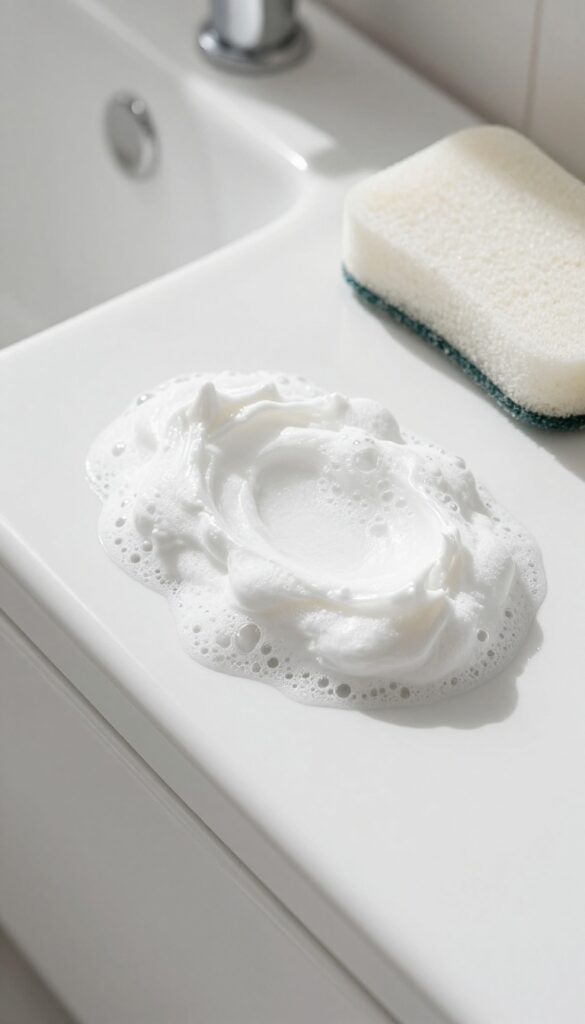
When soap scum and stains have built up a stubborn layer, a simple paste might not cut it. That's where the fizzing power of hydrogen peroxide and baking soda comes in. This dynamic duo creates an oxygenated reaction that lifts grime and whitens surfaces without harsh fumes.
Sprinkle a generous layer of baking soda over the entire tub surface. Then, fill a spray bottle with hydrogen peroxide (3% solution works fine) and mist it over the baking soda until it forms a thick, fizzing paste. Let it sit for 10 minutes—the fizzing action helps break down soap scum and loosen stains.
Scrub with a non-abrasive sponge or brush, working in circular motions. Rinse thoroughly with warm water and wipe dry. For extra whitening, add a squeeze of lemon juice to the hydrogen peroxide.
Why This Combo Works
Baking soda is a mild abrasive that physically scrubs away grime, while hydrogen peroxide is an oxidizer that chemically breaks down stain molecules. When mixed, they produce oxygen bubbles that help lift dirt from pores and crevices. Unlike bleach, hydrogen peroxide is gentler on colored surfaces and doesn't produce toxic fumes.
Best For Porcelain And Acrylic Tubs
This method is safe for most tub materials, but it's especially effective on white porcelain and acrylic. Avoid on fiberglass if the gel coat is worn, as the fizzing can seep into microscopic cracks. Test on a small hidden area first.
For tough rust stains, let the paste sit for 20 minutes and repeat if needed.
Pro Tips For Best Results
Use warm water to rinse—it helps remove any leftover residue. If the paste dries out during the wait, spritz with more hydrogen peroxide. For a deeper clean, scrub with a soft-bristled brush instead of a sponge.
Always wear gloves to protect your skin from prolonged contact.
18. Vinegar Soak for Removable Parts
Bathtub jets, drain covers, and other small removable parts often trap grime that's hard to reach with a sponge. Instead of scrubbing awkward crevices, let vinegar do the work. An overnight soak in undiluted white vinegar loosens soap scum and mineral deposits, making cleanup effortless.
What Parts To Remove
Focus on parts that easily detach: jet covers, drain stoppers, overflow plates, and any decorative trim. Check your tub's manual for removal instructions—most pop off with a gentle twist or a screwdriver. Avoid soaking electronic or painted parts.
Soaking Method
Place the parts in a plastic tub or zip-top bag and pour in enough white vinegar to fully submerge them. Seal the bag or cover the tub to prevent vinegar smell from spreading. Let them soak for at least 8 hours or overnight.
Final Scrub And Rinse
In the morning, scrub each part with a soft brush or old toothbrush to remove loosened residue. Rinse thoroughly with warm water. For stubborn spots, sprinkle baking soda on the parts before scrubbing.
Dry completely before reinstalling.
19. Cream of Tartar and Vinegar Paste
Yellowing or discolored patches on a bathtub can be stubborn, especially on older porcelain or fiberglass surfaces. Regular cleaners often fail to lift that dull, aged look. A simple paste made from cream of tartar and vinegar targets those stains without harsh scrubbing.
Cream of tartar is a mild acid that works well with vinegar to break down mineral deposits and discoloration. The paste sits on the stain, letting the acids penetrate and lift the yellowing. After it dries, a quick wipe reveals a brighter surface.
This hack is especially effective for tubs that have seen years of hard water or soap residue.
Mixing The Paste
Combine two tablespoons of cream of tartar with enough white vinegar to form a thick paste. Stir until smooth. The consistency should be spreadable but not runny.
Adjust the vinegar drop by drop if needed.
Applying And Letting It Work
Spread the paste over the discolored areas in a thick layer. Let it sit for 10 to 15 minutes, or until it dries completely. The drying process is key—it allows the acids to fully react with the stains.
Wiping And Rinsing
Once dry, wipe off the paste with a damp cloth or sponge. Rinse the area thoroughly with water. For stubborn spots, repeat the process or let the paste sit longer.
No heavy scrubbing needed.
20. Rubbing Alcohol and Vinegar Spray
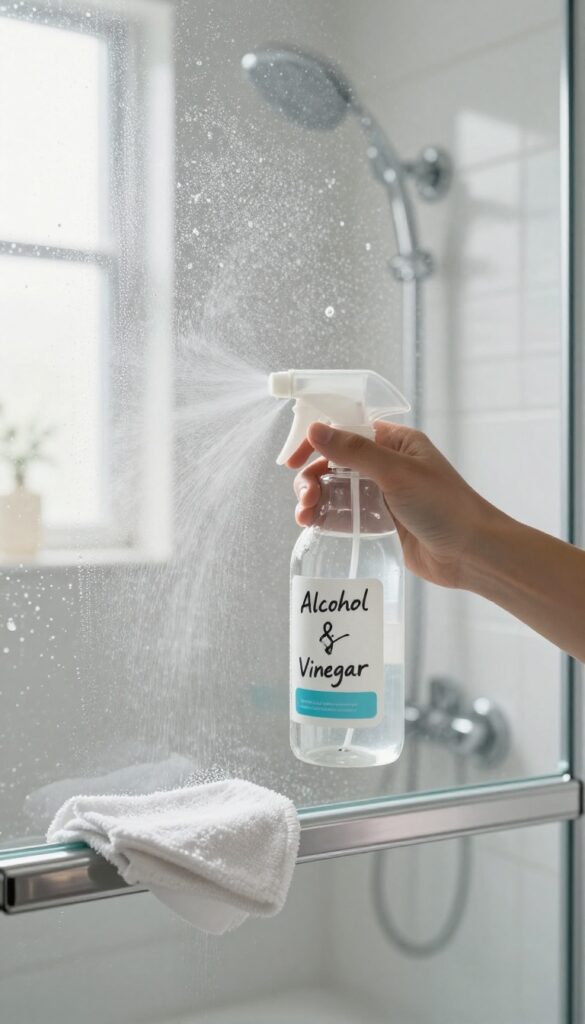
If you're tired of streaks left behind by standard cleaners, this two-ingredient spray is a game changer. Rubbing alcohol and vinegar team up to dissolve soap scum fast while evaporating quickly so you don't have to buff or polish. It's especially good for glass shower doors and glossy tile.
Mix equal parts rubbing alcohol and white vinegar in a spray bottle. Shake gently, then spray generously on soap scum or hard water spots. Let it sit for about 5 minutes—the alcohol helps break down the grime while the vinegar tackles mineral deposits.
Wipe with a microfiber cloth or sponge. The alcohol speeds drying, which means fewer streaks and less effort. For extra stubborn buildup, let the spray sit longer or give it a light scrub with a soft brush.
Why It Works So Well
Vinegar is acidic, so it cuts through alkaline soap scum and dissolves calcium deposits. Rubbing alcohol acts as a solvent and also lowers the surface tension of the mixture, helping it spread into thin layers. The rapid evaporation means you don't have to rinse or dry—just wipe and move on.
Best Surfaces To Use It On
This spray is safe for glass, ceramic tile, chrome fixtures, and most acrylic tubs. Avoid using it on natural stone like marble or granite, because the acid can etch the surface. Always test a small hidden spot first if you're unsure.
Pro Tips For Best Results
Use a spray bottle with a fine mist setting for even coverage. If the vinegar smell bothers you, add a few drops of essential oil like lemon or tea tree. For heavy soap scum, warm the vinegar slightly before mixing—it boosts the cleaning power.
21. Bleach Pen for Grout Lines
Grout lines around the tub can trap soap scum and mildew, turning a clean tub into a grimy mess. A bleach pen offers precision targeting without splashing harsh chemicals onto your tub surface. It's a simple, low-mess way to brighten those narrow lines.
Trace the bleach pen along the grout lines, making sure to cover any dark or stained areas. Let it sit for about 10 minutes to break down the grime. Then scrub with an old toothbrush and rinse thoroughly.
The bleach works quickly, so you don't need to wait long.
Why A Bleach Pen Works
Bleach pens have a thick gel that stays put on vertical surfaces, unlike liquid bleach that runs. The gel clings to grout, giving it time to penetrate and whiten. Plus, the fine tip lets you apply it exactly where needed, avoiding contact with the tub's finish.
Best Practices For Best Results
For tough stains, let the gel sit up to 15 minutes. Use a toothbrush with firm bristles to work the gel into the grout. Rinse with warm water and wipe dry.
Avoid using on colored grout, as bleach can fade it.
Safety Tips
Always ventilate the bathroom when using bleach products. Wear gloves to protect your hands. Keep the pen away from fabric and avoid contact with your eyes.
22. Steam Cleaning for Deep Grime
Sometimes scrubbing just doesn't cut it, especially when soap scum has baked onto the tub over months. That's where a handheld steamer comes in. The high-temperature steam loosens even the most stubborn grime without any chemicals, making it a safe option for all surfaces, including textured or non-slip bathtub bottoms.
Steam cleaning is a game-changer for deep-set dirt. It works by applying heat and moisture to break down the bond between grime and the tub surface. After steaming, a simple wipe with a microfiber cloth lifts everything away.
No scrubbing, no harsh fumes, just clean.
Best For Textured Surfaces
Textured bathtub bottoms are notorious for trapping soap scum in their grooves. A sponge can't reach those tiny crevices, but steam can. The vapor penetrates the texture, softening the grime so it wipes out easily.
Just be sure to use a steamer with a brush attachment for extra agitation.
How To Steam Clean Your Tub
Fill your handheld steamer with water and let it heat up. Starting at the top of the tub, work in sections, holding the steamer head an inch or two from the surface. Move slowly to let the steam work.
After a few seconds, wipe the area with a clean cloth. Repeat until the entire tub is done.
Safety Tips For Steam Cleaning
Always wear gloves to protect your hands from the heat. Avoid using steam on cracked or damaged surfaces, as the moisture could worsen the issue. Also, never point the steamer at caulking or seals, as high heat can loosen them over time.
23. Regular Maintenance with a Squeegee
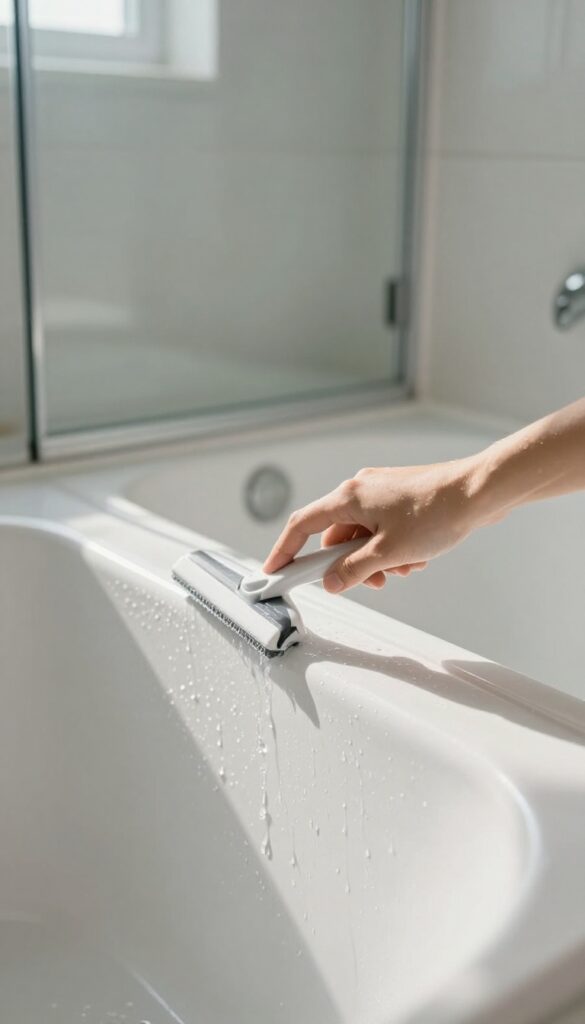
You scrub the tub until it shines, but a few days later, soap scum is back. The secret to keeping that clean look longer is simpler than you think: a squeegee. This one tool can cut your deep-cleaning frequency in half.
Keeping a squeegee in your shower or tub area and using it after every bath or shower prevents water spots and soap residue from drying onto the surface. It takes less than 30 seconds and makes a huge difference. Make it a habit, and you'll notice less scrubbing needed over time.
Why A Squeegee Works
Soap scum forms when soap residue mixes with hard water minerals and dries on the tub. By wiping away water immediately, you remove the ingredients before they can bond. A squeegee is more effective than a towel because it doesn't leave lint and reaches into corners easily.
Best Squeegee For The Job
Look for a squeegee with a rubber blade and a hook for hanging. A 6- to 10-inch blade is ideal for tub surfaces. Avoid metal blades that can scratch acrylic or fiberglass.
Keep it within arm's reach so you don't skip the step.
Quick Daily Routine
After your bath or shower, give the tub walls and floor a quick squeegee from top to bottom. Overlap strokes to catch all water. If you have a shower curtain, pull it closed to allow air circulation.
That's it—less than a minute of effort for a cleaner tub.
FAQ
What is the best homemade cleaner for bathtub soap scum?
A mixture of equal parts white vinegar and Dawn dish soap in a spray bottle is highly effective. Spray it on, let it sit for 15 minutes, then wipe away.
How do I remove hard water stains from my bathtub?
Use a pumice stone on porcelain tubs (wet it first) or a paste of baking soda and hydrogen peroxide for fiberglass. Let it sit before scrubbing.
Can I use bleach on my bathtub?
Bleach can be used on white porcelain or ceramic tubs but avoid it on colored or acrylic tubs as it may cause discoloration. Always dilute and rinse thoroughly.
How often should I deep clean my bathtub?
A deep clean every 1-2 weeks is ideal, but daily squeegeeing and weekly wipe-downs can reduce the need for heavy scrubbing.
Is it safe to mix vinegar and baking soda in the bathtub?
Yes, but they neutralize each other, so use them separately for best results. Use baking soda as a scrub, then spray vinegar to fizz away residue.
Conclusion
With these 23 hacks, you can tackle any bathtub grime without breaking a sweat. Most use common household items, so you can start cleaning right away. Pick the method that matches your stain type and tub material for the best results.
Remember, consistency beats intensity. A quick post-shower wipe-down with a squeegee or microfiber cloth will keep soap scum from building up. Your bathtub will stay sparkling with minimal effort, leaving you more time to enjoy a relaxing soak.