13 Kids Shared Bedroom Ideas for Sibling Setups That Feel Warm and Lived-In
Sharing a bedroom can be a wonderful adventure for siblings, but making the space work for both personalities takes a bit of thought. You want a room that feels cozy and inviting, not chaotic or cramped. The key is blending function with warmth so every corner feels intentional and loved.
Whether you're starting from scratch or refreshing an existing layout, these ideas focus on creating a lived-in look that still feels put together. Think soft textures, clever storage, and personal touches that let each child shine.
No cold, showroom vibes here—just real, achievable decor that makes bedtime and playtime better. From bunk bed solutions to shared shelving, we've gathered 13 ideas that keep the room feeling warm and connected.
1. Bunk Beds with Built-In Storage Stairs
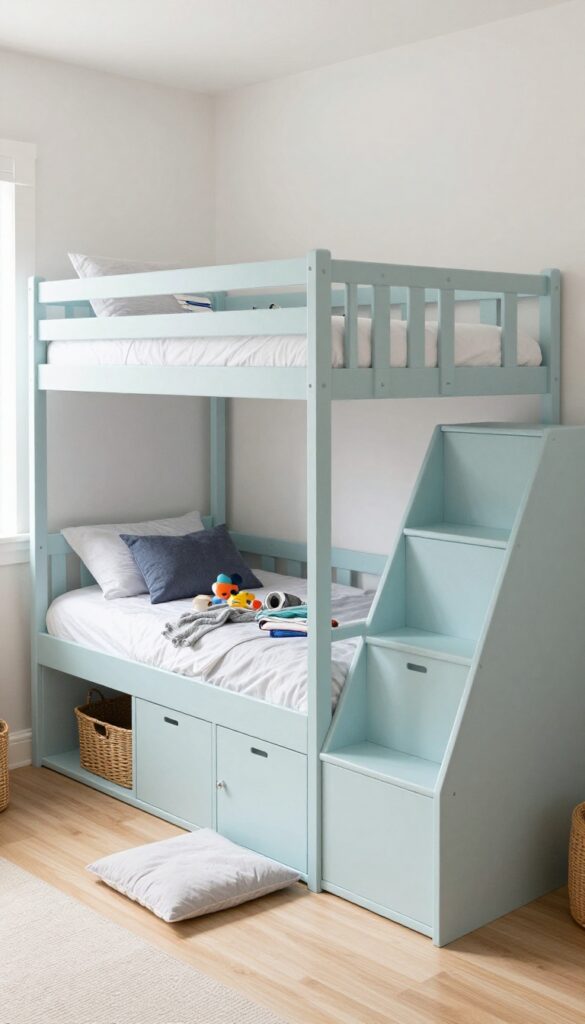
A bunk bed with storage stairs does double duty in a shared kids' room. Instead of a standard ladder, each step hides a drawer or cubby, giving toys, books, and pajamas a tidy home. The built-in staircase also feels safer for younger climbers and adds a custom, architectural look that elevates the whole room.
Why It Works
It solves two common sibling struggles at once: sleeping arrangements and clutter. The stairs provide easy access to the top bunk while offering dedicated storage that keeps the floor clear. This design encourages kids to put things away because each item has a specific spot.
Best For
Siblings close in age who share a room and need extra storage without sacrificing floor space. It's especially great for smaller bedrooms where every square inch counts, and for families who want a piece that grows with the kids.
Styling Tip
Paint the stairs a contrasting color to make them pop, or use woven baskets inside cubbies for a softer, more textured look. Add a cozy reading nook underneath the bottom bunk with a floor cushion and a clip-on light for a personal hideaway.
2. Twin Beds with a Shared Headboard Wall
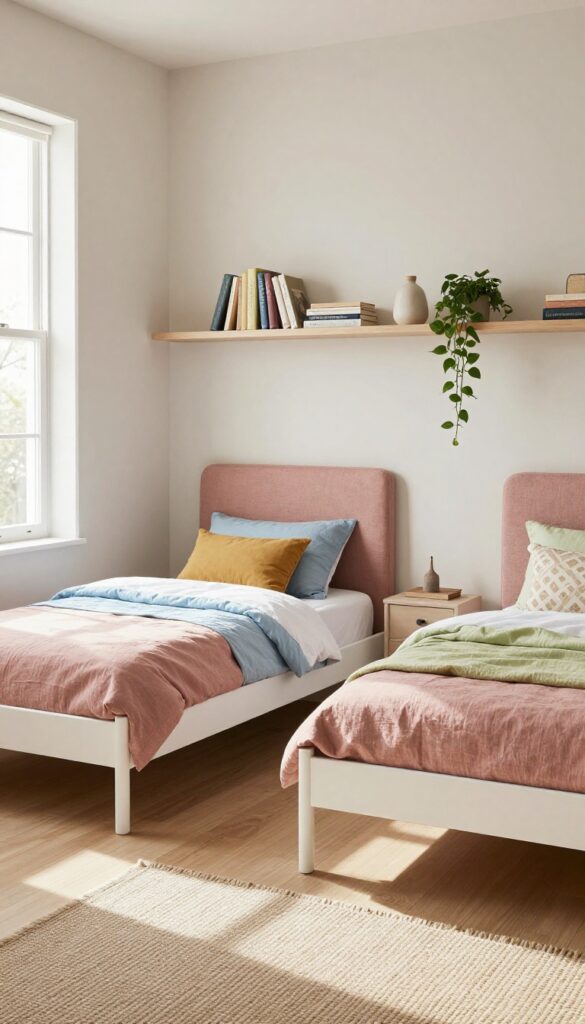
There's something quietly charming about twin beds lined up together, especially when they share one long headboard. It gives the room a built-in, custom feel without the cost of custom furniture. The symmetry instantly calms the space, while each child still gets their own defined spot to sleep and call theirs.
A padded headboard wall in a soft neutral or a gentle pastel adds warmth and makes the beds feel like a cohesive set, not just two separate pieces pushed together.
Why It Works
This layout maximizes floor space by eliminating the gap between beds, leaving more room for play or storage. The shared headboard creates a visual anchor that makes the whole wall feel intentional and polished. It also simplifies bedtime—no arguing over who gets the window side because both beds share the same view and lighting.
Best For
Siblings close in age who are ready for their own beds but still enjoy being near each other. It's ideal for narrow or moderately sized rooms where you want to avoid the cramped feeling of two separate bed frames. Also works well for twins or siblings who share a room long-term.
Styling Tip
Keep bedding coordinated but not identical—let each child pick their own pillow or throw in a favorite color to add personality without breaking the symmetry. A long floating shelf above the headboard can hold books, a small lamp, or a trailing plant to soften the look. For a warmer feel, choose a headboard upholstered in linen or velvet in a tone like dusty rose, sage, or oatmeal.
3. Loft Beds with Play and Study Zones Below
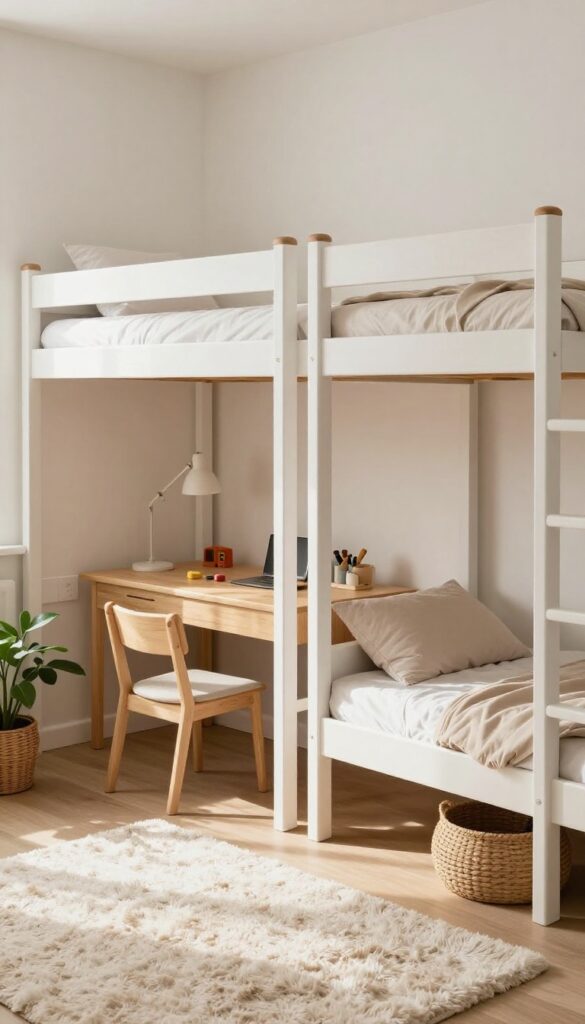
Loft beds are a brilliant way to carve out separate spaces when floor area is limited. By raising the sleeping quarters, you instantly free up the ground for a desk, a cozy reading nook, or a soft play mat. Each sibling gets their own elevated sleep spot and a dedicated activity zone below, making the room feel twice as large without adding a single square foot.
The result is a layered, functional layout that feels both spacious and intentional.
Why It Works
Loft beds maximize vertical space, giving each child a defined area for sleeping and a separate zone for playing or studying. This separation reduces conflict over territory and helps siblings maintain their own routines. The raised beds also create a sense of adventure and privacy, which kids love.
Best For
This setup is ideal for small shared bedrooms where floor space is at a premium. It works especially well for school-age siblings who need a quiet desk area for homework but still want room to play. Loft beds are also great for rooms with high ceilings, as the extra height makes the space feel even more open.
Styling Tip
Keep the area under the loft bed visually cohesive by using a consistent color palette. For a warm, lived-in feel, choose a soft neutral for the bed frame and add a cozy rug, a small lamp, and a few baskets for toy storage. Hang a curtain or canopy under the bed to create a private hideaway for reading or quiet play.
4. Color-Coded Zones with Soft Boundaries
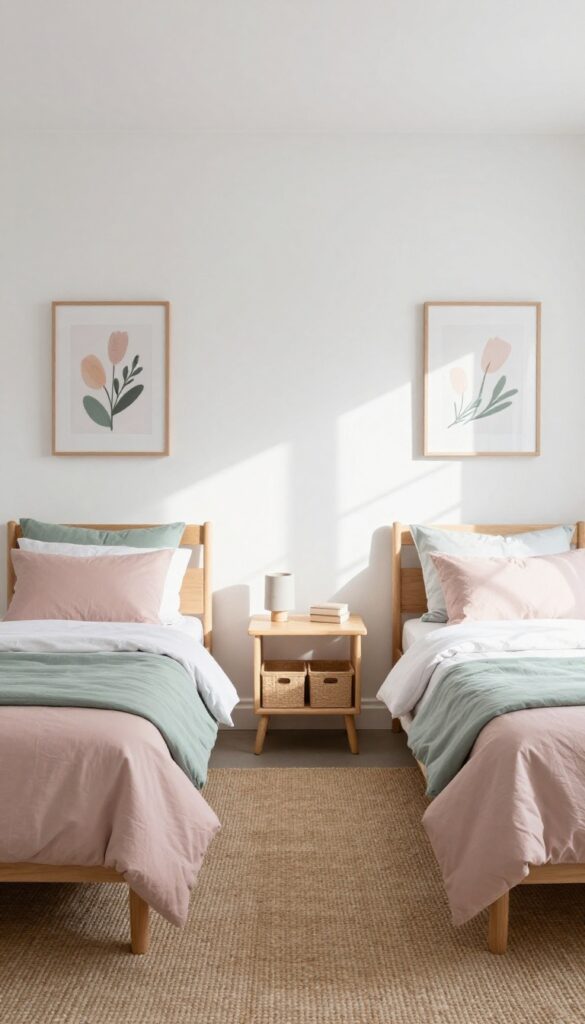
Let color do the heavy lifting when it comes to giving each child their own spot in a shared room. Instead of building walls or buying bulky dividers, assign each sibling a personal palette—think dusty rose for one, soft sage for the other—and weave it through their bedding, a small piece of wall art, and a set of storage bins. A neutral backdrop, like warm white walls and a natural jute rug, keeps the room feeling calm and cohesive, while those intentional color pops quietly mark territory without any arguments.
Why It Works
Color-coding is a visual shortcut that kids understand instantly. It gives them a sense of ownership over their corner of the room, which can reduce squabbles over space. The neutral base also makes the room feel larger and more serene, so the color feels like a treat rather than visual chaos.
Best For
This idea shines in rooms where siblings are close in age but have very different tastes. It's also perfect for small spaces where physical dividers would eat up precious square footage.
Styling Tip
Stick to two or three accent colors max, and repeat each one in at least three places per zone—like the duvet cover, a small shelf item, and a storage bin. This creates a cohesive look without needing to paint walls or buy all new furniture.
5. Shared Gallery Wall for Art and Photos
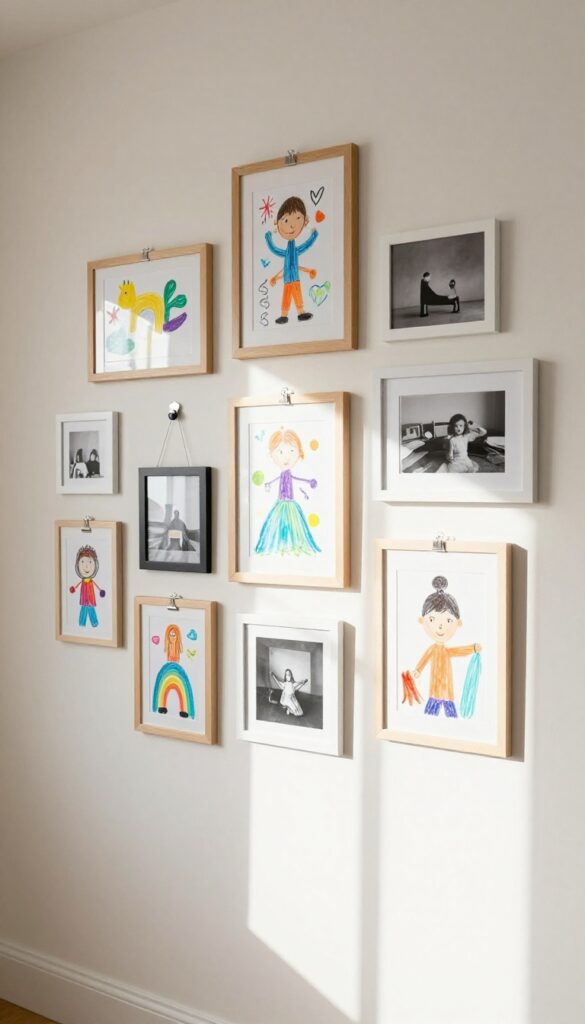
There's something special about a wall that tells the story of both kids. A shared gallery wall lets each child claim their own section while contributing to a bigger, more personal display. This isn't about perfectly curated frames—it's about celebrating their ever-changing masterpieces and favorite snapshots in a way that feels warm and lived-in.
By using simple frames and clips, you can swap out artwork as often as they create it, keeping the wall fresh and meaningful.
Why It Works
It gives each child a sense of ownership and pride in their space. Rotating displays encourage creativity and reduce clutter because you're only showing a few pieces at a time. The shared arrangement also visually unites the room, making it feel cohesive without being matchy-matchy.
Best For
This idea works well for siblings of any age, but it's especially great for preschoolers and elementary-age kids who love to draw and collect mementos. It's also perfect for small bedrooms where a dedicated art corner isn't possible.
Styling Tip
Choose a mix of frame sizes and colors that tie into the room's palette—soft wood tones, black, or white. Use clip-style frames or mini clothespins on a wire for easy updates. Arrange the frames asymmetrically but with a balanced visual weight, and leave a little breathing room between each piece.
6. Under-Bed Storage with Rolling Bins
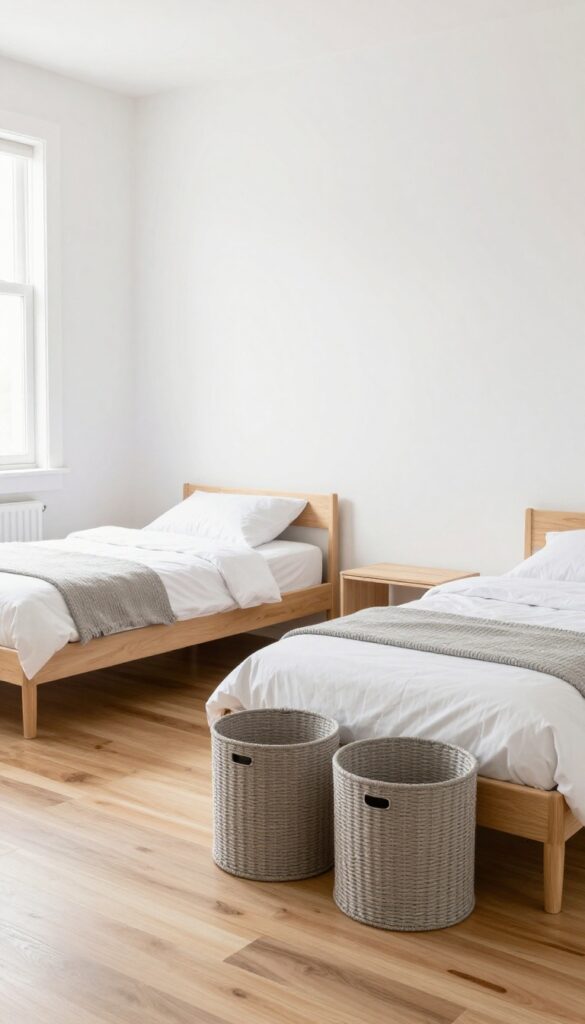
That gap between the floor and the bed frame? It's prime real estate waiting to be put to work. Low-profile rolling bins slide right underneath, making them easy to pull out and tuck away again.
In a shared room, this trick keeps clutter off the floor and gives each kid their own stash spot without taking up an inch of extra floor space.
Why It Works
Rolling bins turn dead space into functional storage without adding visual bulk. Because they're on wheels, even young children can access their own belongings, which encourages tidying up. The low profile means they fit under most standard beds, and you can label each bin so everyone knows where their things live.
Best For
This idea is ideal for small shared bedrooms where floor space is already tight. It's especially useful for storing out-of-season clothes, extra bedding, or toys that don't have a permanent home. If your kids share a room and you're constantly stepping over stuff, under-bed bins are a simple fix.
Styling Tip
Choose bins in a neutral color like woven gray or soft white so they blend into the room's palette. Add a fabric label holder on each bin with each child's name or a picture for non-readers. To keep the room feeling cohesive, match the bin style across both beds.
7. Reading Nook with Cushions and Canopy
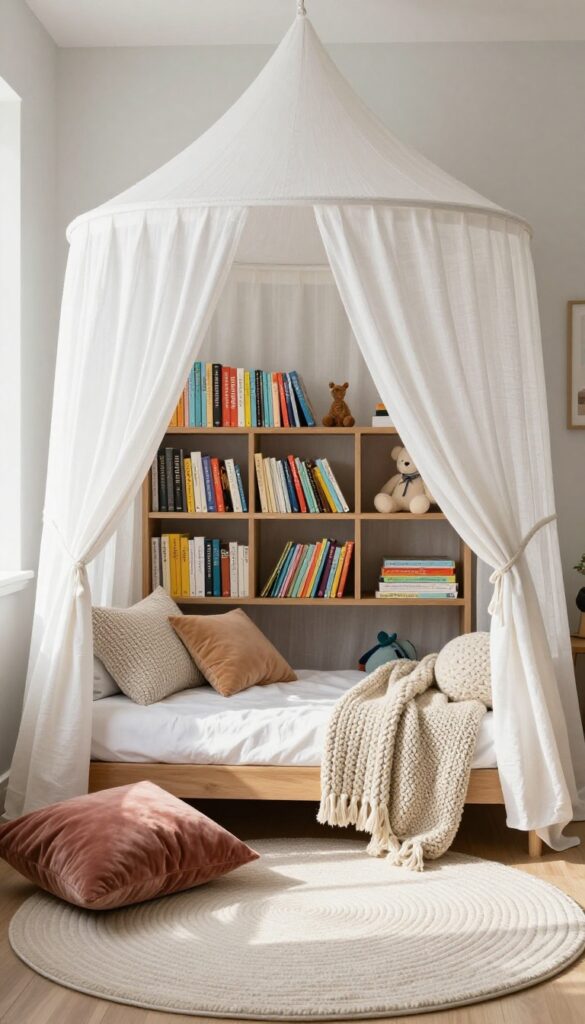
Tuck a cozy reading corner into a corner or under a window. Add floor cushions, a small bookshelf, and a soft canopy to create a shared retreat. This idea turns an often-overlooked spot into the room's favorite hangout, where siblings can curl up with books or just chat quietly.
Why It Works
A dedicated nook gives each child a sense of ownership within the shared space. The canopy adds a touch of whimsy and privacy, while floor cushions keep the area flexible and inviting. It encourages quiet time and bonding without feeling like a chore.
Best For
Bedrooms with an unused corner, an awkward alcove, or a window seat area. Ideal for siblings who enjoy reading or need a calm spot away from the main play zone. Works well in rooms with limited floor space since it uses vertical and tucked-away areas.
Styling Tip
Layer textures with a chunky knit throw, velvet cushions, and a linen canopy for a warm, lived-in feel. Choose a bookshelf that's low to the ground so kids can reach their favorites easily. Add a small rug to define the zone and make it extra cozy.
8. Dual Desks with a Shared Shelf Above
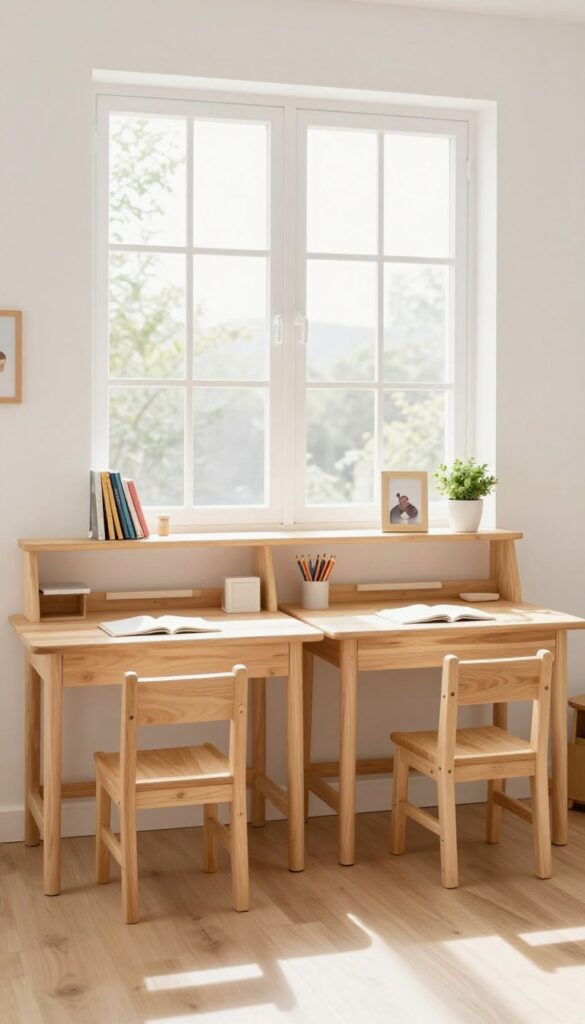
When homework time rolls around, having two separate desks can feel like a luxury. But in a shared bedroom, floor space often runs out fast. The solution?
A pair of slim desks placed side by side or back-to-back, topped with one long floating shelf that holds pencils, books, and personal touches. The look is tidy, intentional, and gives each child their own corner to spread out without feeling crowded. A warm wood finish on the desks keeps the room feeling lived-in and cozy, while the shelf above becomes a shared canvas for art or storage bins.
Why It Works
This setup maximizes vertical real estate and keeps the floor clear for play or movement. Each child gets a defined workspace, which reduces arguments over territory. The shared shelf above encourages neatness because everything has a designated spot within arm's reach.
Best For
Siblings close in age who both need a dedicated homework zone but share a smaller room. Also great for twins or kids who do similar activities like drawing, reading, or crafts.
Styling Tip
Choose desks with built-in cubbies or small drawers to stash supplies out of sight. On the shelf, use matching baskets for each child's items, but let them pick a personal accent—like a different colored lamp or a favorite photo frame—to make the space feel their own.
9. Personalized Bed Canopies for Privacy
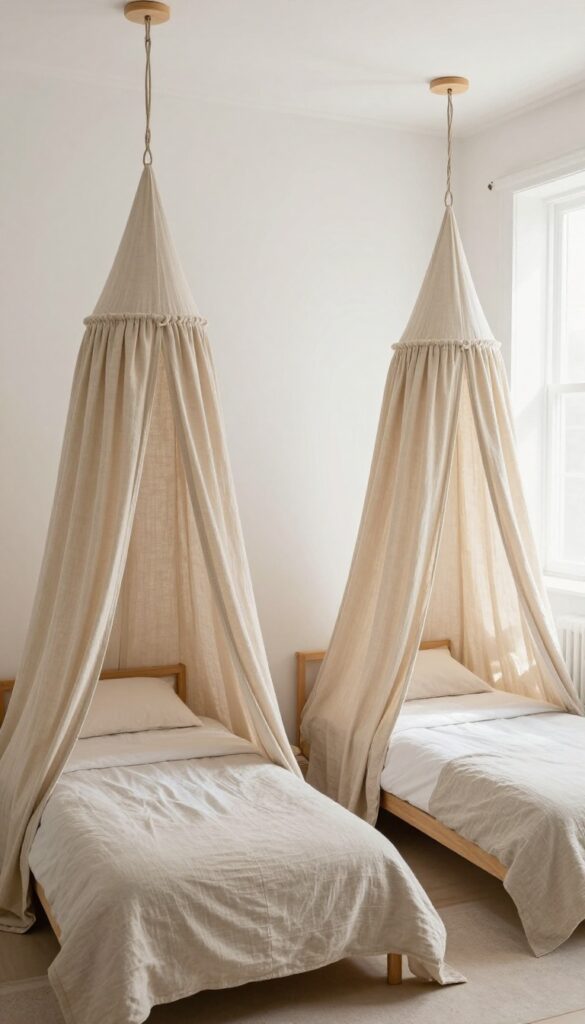
In a shared bedroom, a little privacy goes a long way. Hanging a lightweight canopy over each bed creates a cozy nook that feels like a personal retreat. The soft fabric softens the room’s edges and adds a dreamy, ethereal quality that kids love.
Choose neutral tones like linen, cotton, or a subtle weave that blends with the room’s palette so the canopies feel intentional, not overdone.
Why It Works
Each child gets their own visual and physical space without needing walls or heavy dividers. The canopies define each bed zone, reduce visual clutter, and give siblings a sense of ownership over their corner. They also help muffle noise slightly and create a calming environment for reading or winding down.
Best For
This idea is ideal for younger siblings who still share a room but crave a little separation. It works especially well in rooms with high ceilings or bunk beds where you can drape fabric from the ceiling or a wall-mounted rod. Great for twin beds placed side by side or in opposite corners.
Styling Tip
Use a simple curtain rod or a wooden hoop mounted to the ceiling to hang the canopy. For a cohesive look, match the fabric to the bed linens or the room’s accent color. Add a small string of fairy lights inside the canopy for a warm glow at bedtime.
10. Shared Wardrobe with Divided Sections
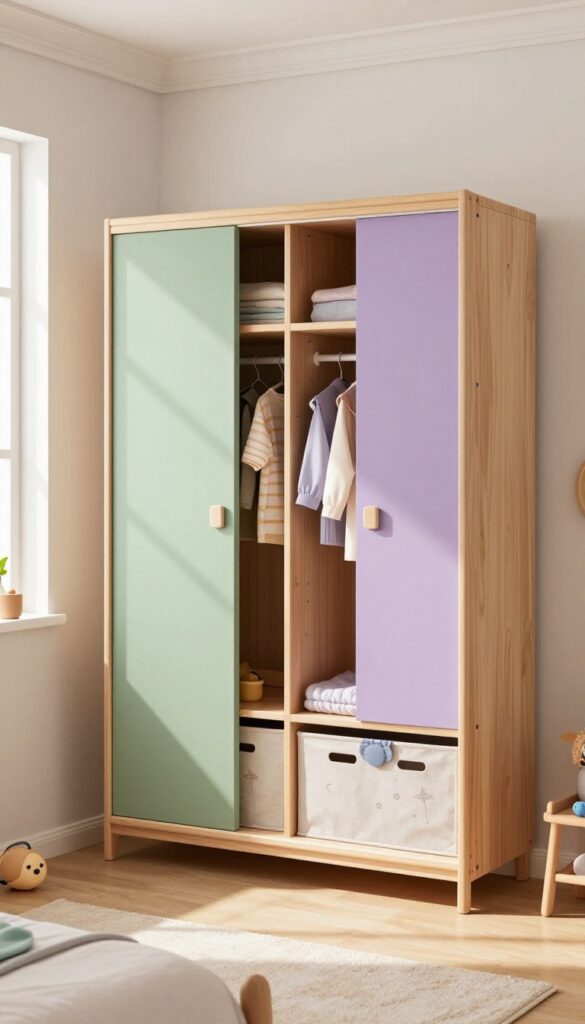
A big shared wardrobe can feel like a constant source of squabbles—until you give each child their own clearly defined territory. Think of it as a closet system with separate hanging rods, cubbies, and labeled bins for each sibling. The key is making the division visual and personal, so there's no guessing whose sweater is whose.
In a warm, lived-in room, this setup feels less like a storage hack and more like a thoughtful way to teach boundaries and respect for personal space.
Why It Works
Dividing a single wardrobe into zones eliminates the most common source of closet fights: mixed-up clothes. Each child has ownership over their section, which builds independence and keeps mornings smoother. The labeled bins and rods also make tidying up a clear, repeatable routine.
Best For
Siblings close in age who share a room and have similar clothing needs—especially when you want to avoid duplicate furniture but still give each child a sense of personal space.
Styling Tip
Use the same wardrobe frame but paint the interior of each section a different muted color—like soft sage for one and dusty lavender for the other. Add small baskets or fabric bins in coordinating tones, and hang a simple name tag or initial decal on each section's door or drawer front.
11. Wall-Mounted Shelves for Display and Storage
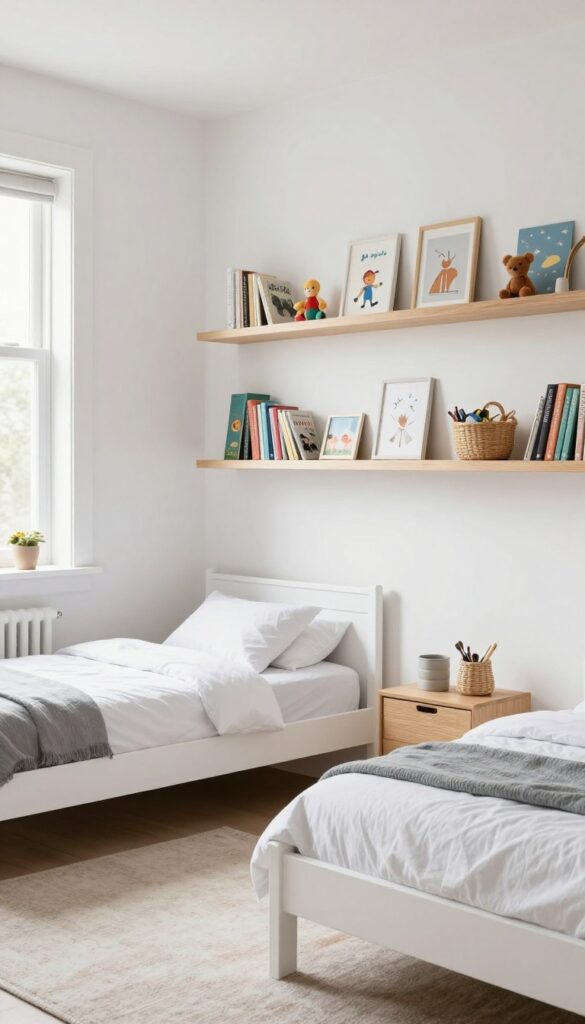
Floating shelves are a simple way to add personality to a shared bedroom without eating up square footage. By mounting them at varying heights, you create visual interest while giving each child a dedicated spot for their favorite things. The result is a room that feels curated and cozy, not cluttered.
Why It Works
Shelves keep the floor clear, which is crucial in a room with two kids and limited space. They also turn blank walls into functional display areas, so trophies, books, and art have a home that's easy to see and reach.
Best For
Siblings who love to collect things—whether it's rocks, ribbons, or chapter books—and need a place to show them off without taking over the room. It's also great for small rooms where every inch counts.
Styling Tip
Mix shelf depths and paint them the same color as the wall for a seamless look. Add a small basket on one shelf for odds and ends, and keep the displays balanced by alternating books and toys.
12. Rug That Defines a Play Area
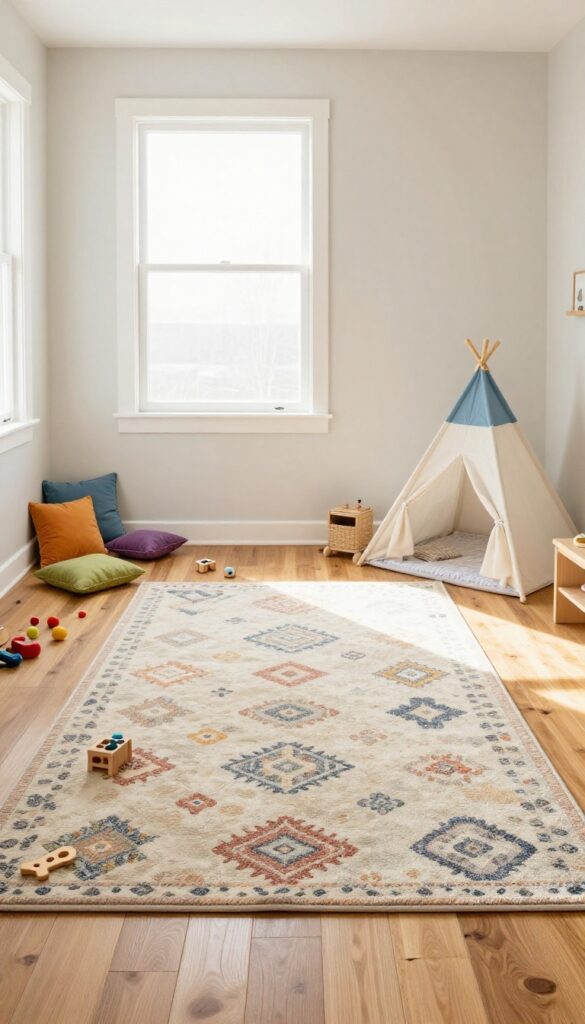
A large, soft rug can do more than warm up the floor—it can carve out a whole world of play. In a shared bedroom, where boundaries often blur, a rug acts like a visual anchor, telling little ones, “This is where the fun happens.” Choose one with a forgiving pattern that hides spills and crumbs, and you've got a zone that's both inviting and practical.
Why It Works
A rug instantly creates a designated play area without needing walls or furniture. It softens the room acoustically, making playtime quieter for the rest of the house, and provides a comfortable surface for sitting, building, or reading. The right pattern also means less stress over inevitable messes.
Best For
This works especially well in rooms with hard flooring, where a rug adds warmth and noise reduction. It's ideal for younger siblings who spend a lot of time on the floor, and for families who want a flexible zone that can be easily moved or replaced as kids grow.
Styling Tip
Go for a low-pile or flatweave rug in a busy geometric or abstract print—it hides stains best and vacuums easily. Layer it over a neutral carpet if you want extra cushioning. Keep the rug large enough that toys and bodies stay within its borders, but leave a few inches of floor visible around the edges to define the space.
13. Matching Bedding with Individual Accents
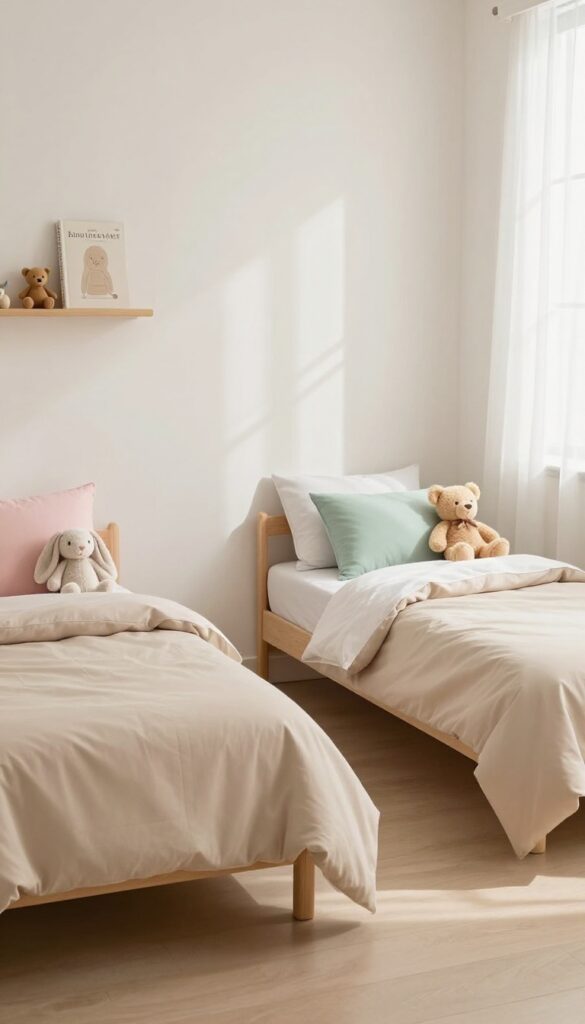
There's a sweet spot between a room that feels chaotic and one that looks like a hotel showroom. Matching duvet covers or quilts create that instant visual calm, giving the space a collected feel even when toys are scattered across the floor. Then each child gets to layer in their own throw pillows, stuffed animals, or a small blanket that reflects their personality—so the room still feels like theirs.
Why It Works
The identical base keeps the room from looking messy or disjointed, while the personal accents let each child express themselves. It's a simple trick that makes shared spaces feel intentional rather than cluttered.
Best For
Siblings with very different tastes who still need to share a room. Also great for younger kids who change their favorite color every month—you only swap out the accent pieces.
Styling Tip
Stick with neutral or soft-toned matching bedding (think warm white, sage, or oatmeal) so the colorful pillows and plushies pop without overwhelming the room. Add a small shelf or basket near each bed for rotating personal items.
FAQ
What is the best bed setup for a shared kids' bedroom?
Bunk beds or loft beds are great for saving floor space, but twin beds side by side work well if the room is wide enough. Consider your kids' ages and whether they prefer separate sleeping areas.
How do I give each child privacy in a shared room?
Use bed canopies, room dividers, or tall bookcases to create visual separation. Personalizing each side with different colors or decor also helps define their own space.
What storage solutions work best for two kids?
Under-bed bins, shared wardrobes with divided sections, and wall-mounted shelves are all effective. Label everything clearly so each child knows where their belongings go.
How can I make a shared bedroom feel warm and cozy?
Layer soft textures like rugs, cushions, and curtains. Use warm lighting with dimmers or string lights, and add personal touches like family photos or their artwork.
What if my kids have very different tastes?
Start with a neutral base for walls and large furniture, then let each child choose their own bedding, wall art, or accent colors. This way the room feels cohesive but still personal.
Conclusion
Creating a shared kids' bedroom that feels warm and lived-in is all about balancing function with personality. From clever storage to cozy nooks, each idea helps siblings coexist happily while making the room a place they love to spend time in. Remember, the best shared rooms grow with your children.
Leave room for their tastes to evolve, and don't be afraid to swap out decor as they get older. With a little planning, you can design a space that feels like home for everyone.