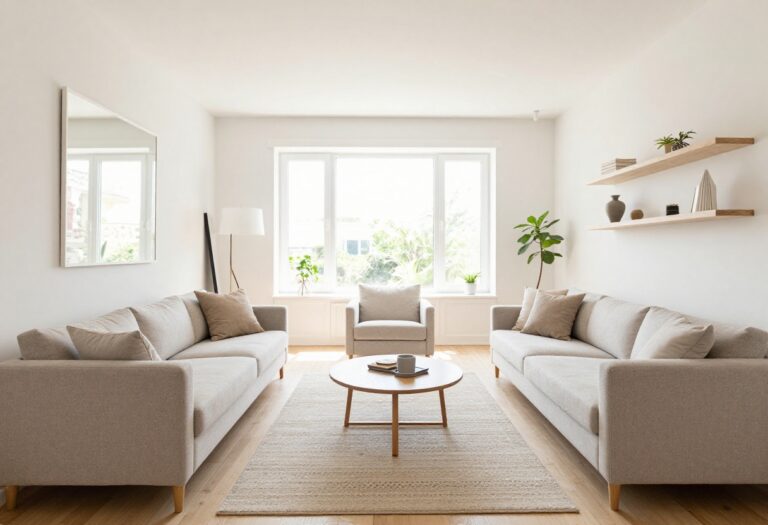
13 Rustic Living Room Ideas Bringing Cabin-Inspired Warmth
There’s something about a cabin that makes you want to curl up and stay awhile. The wood, the textures, the soft glow of firelight—it’s a feeling you can bring home without moving to the mountains.
These 13 rustic living room ideas focus on cozy, layered warmth that feels natural and lived-in. Think chunky knits, reclaimed wood, and earthy tones that invite you to slow down.
Whether you’re starting from scratch or just tweaking a few details, each idea is designed to be practical and easy to picture in your own space.
1. Start with a Reclaimed Wood Accent Wall
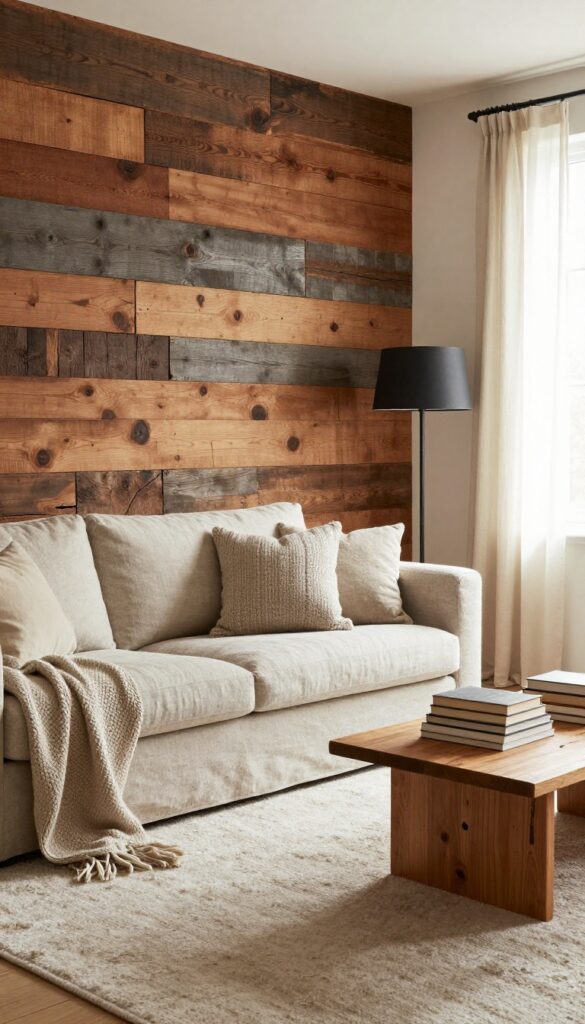
Nothing says cabin warmth quite like a wall wrapped in reclaimed wood. It brings texture, history, and that cozy, lived-in feel that makes a living room instantly inviting. Whether you go for warm honey tones or weathered barn gray, a single accent wall anchors your seating area and sets the rustic mood without overwhelming the space.
A reclaimed wood accent wall is the quickest way to inject cabin character into your living room. It works in almost any layout—behind the sofa, around a fireplace, or as a headboard wall in a bedroom. The key is to choose wood with visible grain, knots, and slight imperfections; that's what gives it soul.
Pair it with neutral furnishings and soft textiles so the wall remains the star. For a balanced look, keep the other walls light and airy.
Best Colors And Finishes
Stick with warm browns, chestnuts, or weathered grays. A matte or satin finish keeps the look natural, while a glossy topcoat can feel too modern. If your room gets little natural light, go lighter—like whitewashed oak—to keep it from feeling cave-like.
Layout And Placement
Place the accent wall on the longest wall or the one your eyes naturally land on when entering the room. Center your sofa or main seating across from it to create a strong focal point. Avoid cluttering the wall with too much art or shelving—let the wood speak.
Texture And Layering Tip
Balance the rough texture of reclaimed wood with soft, cozy layers. Think chunky knit throws, linen curtains, and a plush rug. Add a few matte black or wrought iron accents for contrast—like a floor lamp or picture frames—to keep the space from feeling too one-note.
2. Layer Chunky Knit Throws Over Neutral Sofas
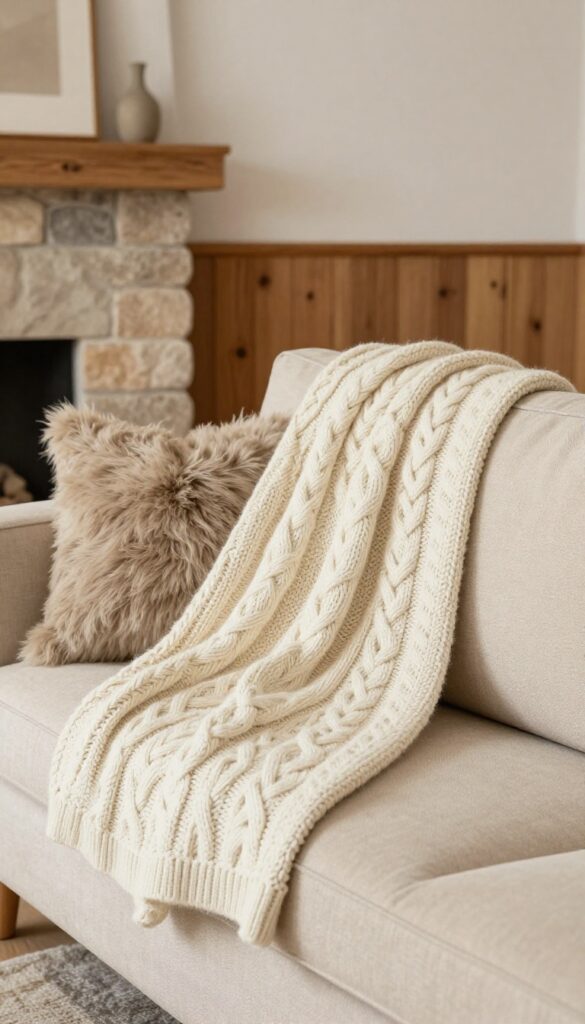
There’s nothing quite like the feeling of sinking into a sofa draped with a thick, textured throw. A chunky knit or cable-knit throw in cream, oatmeal, or soft gray instantly makes a neutral sofa feel warmer and more inviting. It’s a simple addition that brings cabin-inspired comfort without committing to a full redo—and you can swap it out seasonally to keep the look fresh.
A neutral sofa—think beige, warm gray, or off-white—serves as the perfect canvas for a chunky knit throw. The contrast between the smooth upholstery and the nubby, oversized knit creates visual interest and tactile coziness. Drape it casually over one arm or fold it across the back for an effortless, lived-in look.
This layer works especially well in rooms with wood tones, stone fireplaces, or rustic accents. For a cohesive cabin vibe, pair your throw with a few textured pillows in wool or faux fur.
Best Colors And Textures
- Stick with warm neutrals like ivory, heather gray, camel, or taupe to keep the look serene and layered. A cream-colored cable-knit throw over a charcoal sofa feels balanced, while a oatmeal throw on a beige sofa adds subtle depth. For a bolder touch, choose a throw with a herringbone or basketweave pattern—it adds texture without clashing.
- Avoid bright or synthetic-looking colors; the goal is natural, earthy warmth.
Styling Tip: Drape For Effortless Appeal
- How you place the throw matters. For a relaxed vibe, toss it so one end hangs longer than the other, with a slight fold at the seat. If you prefer a tidier look, fold it into a rectangle and lay it across the back of the sofa.
- Either way, let the texture do the talking. You can also layer two throws of different weights—a chunky knit over a lighter linen throw—for extra dimension.
Seasonal Swap Strategy
- One of the best things about chunky throws is how easy they are to rotate. In colder months, use a heavy wool or alpaca blend for maximum warmth. Come spring and summer, switch to a lighter cotton knit or a chunky cotton blend in a slightly lighter shade.
- This keeps your sofa feeling current and cozy year-round without a major decor overhaul.
3. Incorporate a Stone or Brick Fireplace Feature
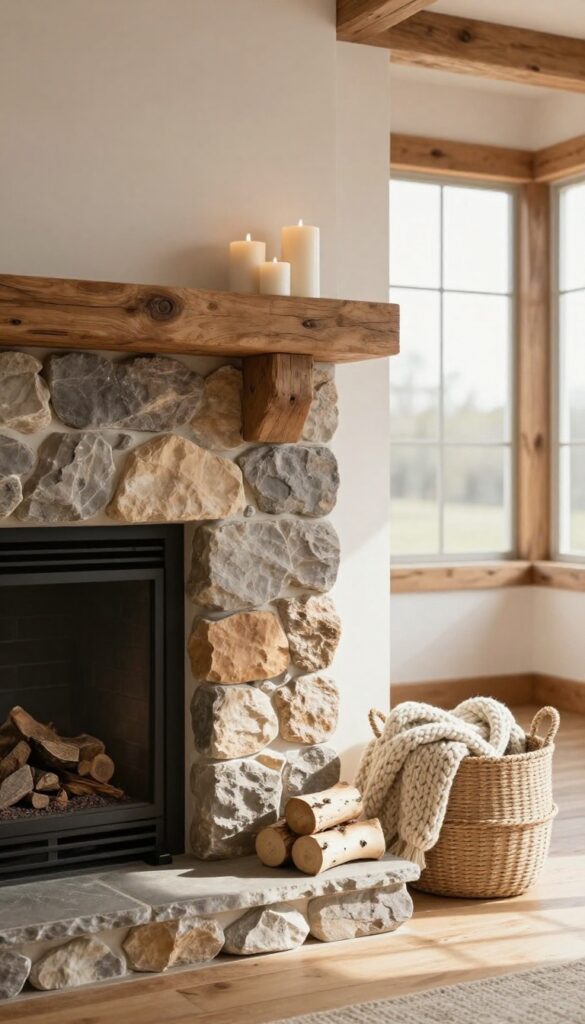
A fireplace instantly brings that cabin warmth into any living room, even if you don't have a real one. The texture of natural stone or aged brick creates a rugged focal point that anchors the whole space. It's the kind of feature that makes a room feel grounded and lived-in, like a cozy retreat from the outside world.
If you're lucky enough to have a working fireplace, let it shine by cladding the surround in stacked stone or reclaimed brick. The organic tones—think warm grays, earthy browns, and rusty reds—pair beautifully with wood furniture and soft textiles. For those without a fireplace, a faux stone veneer or a simple mantel with a collection of stacked logs can create a similar visual anchor.
The key is to make it feel intentional and layered, not like a prop. Add a chunky wooden mantel, a few candles, and maybe a woven basket of blankets nearby to complete the look. This feature works best in a room that already has natural textures, like exposed beams or hardwood floors, but it can also be a surprising contrast in a more modern space.
Best Colors
Stick with earthy neutrals: warm grays, taupe, charcoal, and rust. These colors blend seamlessly with wood tones and soft greenery. Avoid cool grays or stark whites, which can feel too clinical for a rustic vibe.
Texture Mix
Pair the rough stone or brick with smooth surfaces like a polished wood mantel or a sleek metal fire screen. The contrast keeps the eye moving and adds depth. Throw in a chunky knit throw or a sheepskin rug nearby to soften the hard edges.
Small-space Fix
In a small living room, a corner fireplace with a stone surround can save floor space while still delivering that cabin feel. Use a floating mantel to keep the area open and light, and avoid bulky hearths that eat up square footage.
4. Use Warm Wood Furniture with Visible Grain
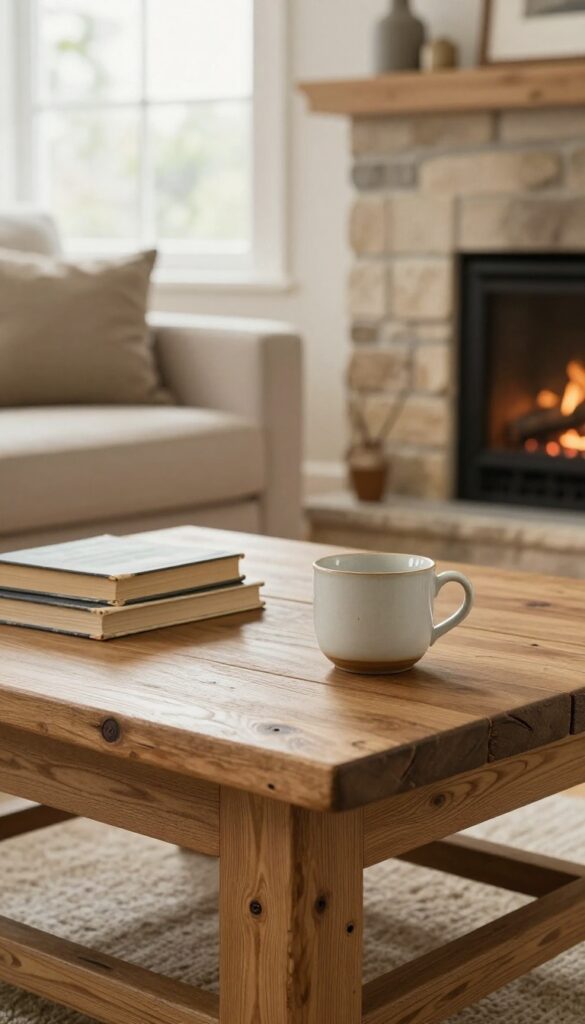
Wood is the backbone of any cabin-inspired space, but not all wood furniture feels the same. The pieces that really bring that rustic warmth are the ones where you can actually see the grain—the knots, the swirls, the natural imperfections that make each item one of a kind. When you choose oak, walnut, or pine with visible grain, you're not just adding furniture; you're adding texture and a story.
That handcrafted look instantly makes a living room feel more grounded and lived-in, which is exactly the cozy, layered vibe we're going for.
A coffee table or sideboard with pronounced grain does more than hold your remotes and magazines—it becomes a focal point that draws the eye and adds depth. The natural patterns break up larger surfaces and keep the room from feeling flat. Plus, wood with visible grain tends to patina beautifully over time, so your furniture actually gets better with age.
Look for pieces with a matte or satin finish rather than high gloss, which can mask the texture. And don't be afraid to mix wood tones: a walnut coffee table can sit happily next to a pine shelving unit, as long as there's a common thread like a similar finish or undertone.
Best Woods For This Look
- Oak is a classic choice because its grain is bold and consistent—perfect for larger pieces like a media console or bookcase. Walnut offers a darker, richer tone with dramatic grain patterns that feel more refined. Pine is lighter and softer, with lots of knots and character; it's ideal for a more casual, cottage-like feel.
- Reclaimed wood is another fantastic option—it already has history and often features unique grain from years of wear.
Where To Let The Grain Shine
The coffee table is the obvious star, but don't overlook side tables, a console behind the sofa, or even a wooden tray on an ottoman. A large wooden shelving unit with open cubbies can display the grain while also storing blankets and books. If you have a fireplace, consider a wooden mantel or a reclaimed beam above it—the grain will stand out beautifully against stone or brick.
Finishing Touch: Layer With Soft Textures
To keep the wood from feeling too heavy or rustic, balance it with soft, cozy textiles. Drape a chunky knit throw over the arm of a wooden sofa or place a wool rug under a walnut coffee table. The contrast between the hard, textured wood and the soft fabrics creates that layered, inviting look that makes a room feel truly lived-in.
5. Add Soft Lighting with Antler or Wood Chandeliers
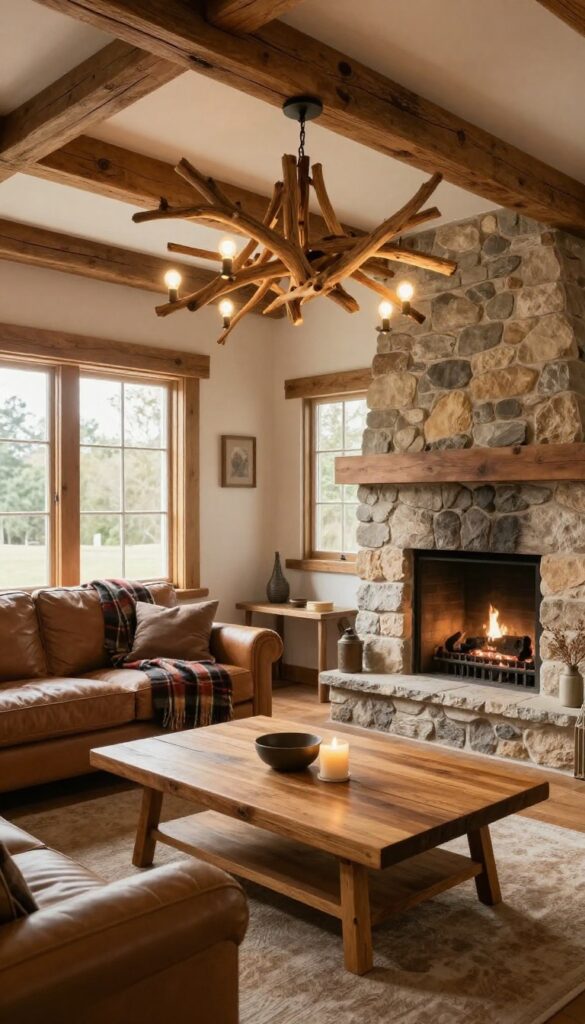
Overhead lighting can make or break that cozy cabin feel. A chandelier made from antlers or driftwood branches instantly draws the eye up and sets a warm, rustic tone. The key is to keep the light soft and dimmable, so the room feels inviting rather than harsh.
This is one of those details that makes a living room feel thoughtfully layered, not just decorated.
A chandelier made from antlers or driftwood branches brings a rustic touch overhead. Pair with dimmer bulbs and warm light to create a soft, inviting glow. This fixture becomes a natural focal point, especially in rooms with high ceilings or exposed beams.
It adds texture and a bit of drama without feeling heavy or overdone.
Best Materials
Real or faux antlers work beautifully, but if that's not your style, look for chandeliers crafted from reclaimed driftwood, twisted branches, or even forged iron with organic shapes. The goal is to mimic nature's imperfections. For a lighter look, go with bleached driftwood; for a darker, cozier vibe, choose walnut or wrought iron.
Lighting Tip
Always use warm white bulbs (2700K to 3000K) and install a dimmer switch. This lets you adjust the brightness from a gentle glow for movie nights to a bit more light for reading or entertaining. Candelabra-style bulbs with exposed filaments add an extra layer of rustic charm.
Placement Idea
In a living room, hang the chandelier over a coffee table or seating area, about 30 to 36 inches above the table surface. If your ceiling is low, consider a flush-mount version that still has that natural, sculptural look. In an open-concept space, use the chandelier to define the living zone without walls.
6. Mix Plaid and Flannel Patterns in Pillows
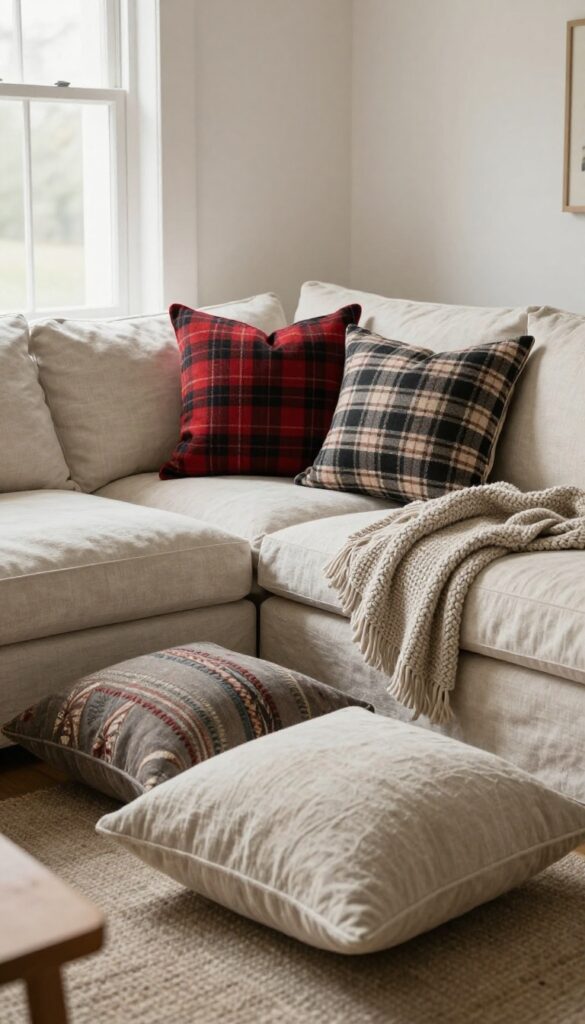
Nothing says cabin comfort quite like the cozy clash of plaid and flannel. These classic patterns instantly warm up a neutral living room, making it feel like a weekend retreat. The trick is to mix them with solid textures so the space stays inviting, not overwhelming.
Plaid and flannel pillows in reds, greens, or muted earth tones add a classic cabin vibe. Mix them with solid textures like linen or wool to keep the look balanced. Start with a neutral sofa, then layer in two or three patterned pillows in complementary colors.
A chunky knit throw draped over the arm completes the cozy scene.
Best Colors
Stick with a cohesive palette: red and black buffalo plaid, green and navy tartan, or earthy rust and tan. Keep the base solid—cream, gray, or brown—so the patterns pop without competing.
Texture Mix
Balance busy patterns with smooth linen, soft wool, or nubby bouclé. A velvet pillow in a solid tone can also anchor the look. The goal is contrast: rough flannel next to sleek fabric feels intentional.
Arrangement Tip
Place the largest patterned pillows in the corners, then layer smaller solids in front. Odd numbers (like three or five) look more natural. Fluff them often to keep the relaxed, lived-in feel.
7. Bring in Natural Fiber Rugs Like Jute or Sisal
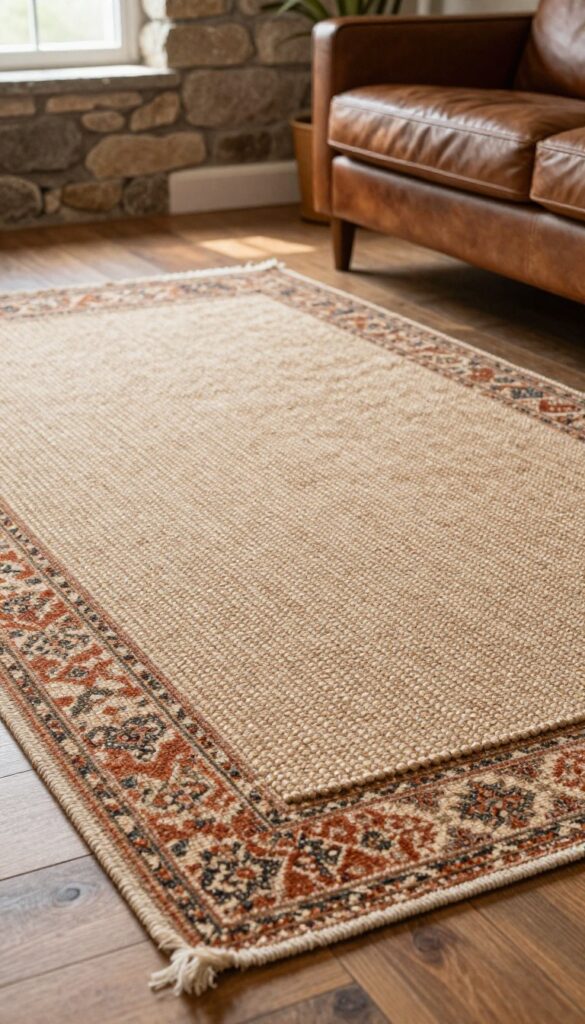
Floor coverings do a lot of heavy lifting in a rustic space, but not all rugs feel right. Synthetic shags or shiny patterns can clash with the cabin vibe you're after. Natural fiber rugs like jute and sisal bring in that raw, organic texture that instantly grounds a room.
They're durable, affordable, and pair beautifully with wood floors, stone fireplaces, and leather furniture. Layering a smaller wool rug on top adds softness underfoot and a pop of color — making the whole setup feel intentionally cozy.
A jute or sisal rug is one of the easiest ways to add warmth without overwhelming the room. The neutral tones and nubby texture blend into almost any rustic palette, from warm browns to cool grays. Plus, they hide dirt well, which is a win for high-traffic living rooms.
To keep the space from feeling too one-note, layer a patterned or solid wool rug on top. This trick adds visual interest and a softer surface for lounging. Stick to natural dyes and earthy hues like rust, olive, or deep navy to stay true to the cabin aesthetic.
Best Materials
- Jute is softer and more flexible, making it great for low-traffic areas or layering. Sisal is tougher and more stain-resistant, so it works well in busy living rooms. Both are sustainable and biodegradable — a nice bonus if you're leaning into natural decor.
- Look for blends that include wool or cotton for extra durability without sacrificing the organic look.
Rug Pairing
- The key to layering is contrast. Start with a large jute or sisal rug that extends past your furniture. Then place a smaller wool rug at an angle or centered on top.
- Choose a wool rug with a simple pattern or solid color that picks up on accents in the room — like throw pillows or curtains. This creates a collected-over-time feel that's relaxed but intentional.
Cozy Detail
Add a sheepskin or faux fur throw on top of the layered rugs near the seating area. It's a small touch that makes the space feel extra inviting — perfect for curling up with a book. The mix of rough jute and plush wool or fur is exactly the kind of texture play that makes rustic decor feel lived-in and warm.
8. Display Vintage or Rustic Decor Like Lanterns and Crocks
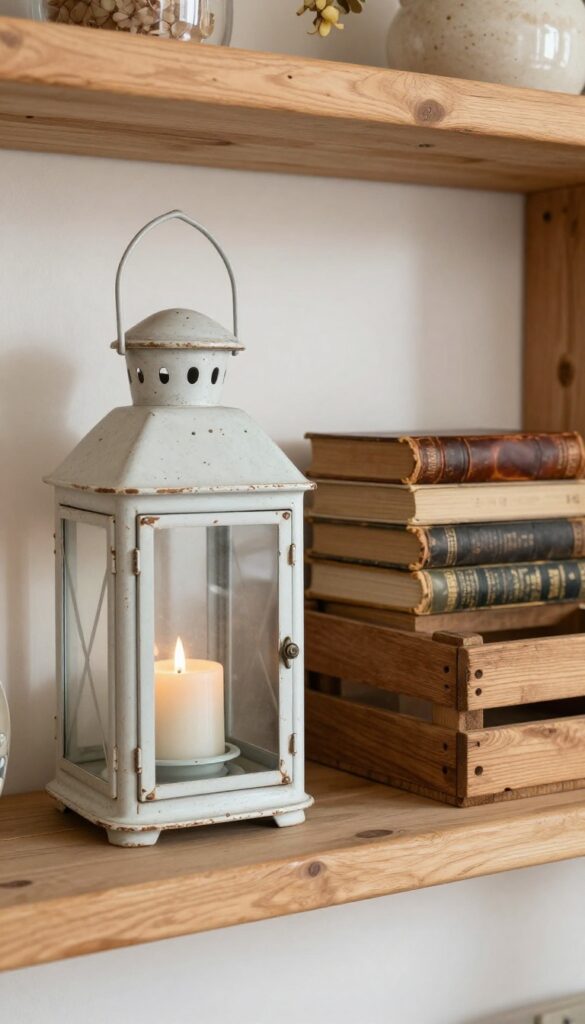
Old lanterns, stoneware crocks, and wooden crates have a way of making a room feel lived-in without trying too hard. They bring texture, history, and a quiet sense of character that fits right into a cozy cabin aesthetic. The trick is to group a few pieces together on a shelf or mantel for an effortless, collected look that feels intentional but not fussy.
Scouting for vintage finds doesn't have to mean hours at flea markets—start with one or two key pieces that speak to you. A weathered lantern on a stack of old books or a chunky crock filled with dried hydrangeas instantly adds warmth. Mix metal, wood, and ceramic for depth, and keep the arrangement loose so it doesn't look staged.
This approach works especially well in living rooms where you want a relaxed, layered vibe without clutter.
Best Materials
Stick with natural, aged materials: wrought iron or tin for lanterns, salt-glazed stoneware for crocks, and unfinished or reclaimed wood for crates. Avoid anything too shiny or new-looking. The beauty of rustic decor is in the patina—chipped paint, rust spots, and worn edges add authenticity.
Shelf Styling Tip
- Group items in odd numbers (three is a safe bet) and vary heights. Place a tall lantern next to a squat crock, then lean a small wooden crate behind them. Add a sprig of greenery or a dried branch for softness.
- Leave breathing room between clusters so each piece stands out.
Cozy Detail
For extra warmth, tuck a battery-operated candle inside a lantern or drape a small string of fairy lights around a crock. The soft glow makes the vignette feel inviting, especially in the evening. Just keep the lighting subtle—you want ambiance, not a spotlight.
9. Use Earthy Paint Colors Like Warm Taupe or Forest Green
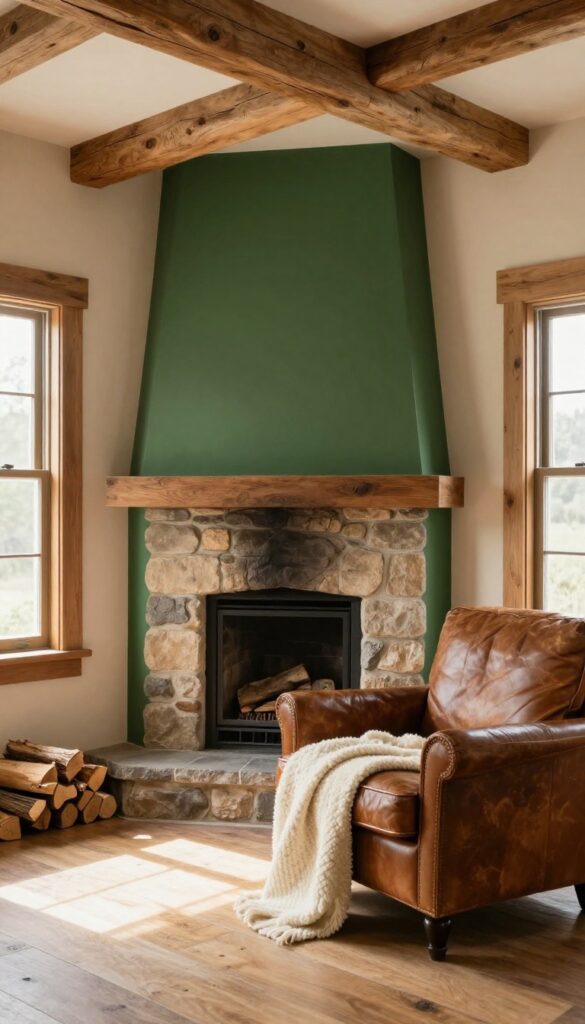
Nothing sets the mood of a room faster than wall color. While crisp white and cool gray have their place, a rustic living room calls for something richer—shades pulled straight from nature. Warm taupe, olive, and deep forest green wrap the room in a cozy, grounded feeling that instantly reads as cabin-inspired.
These earthy tones create a cocooning effect, making the space feel intimate and inviting, especially when paired with natural wood and stone elements.
The beauty of these colors is how they adapt to light. In a sun-drenched room, a deep forest green reads vibrant and alive; in a cozier, low-light space, it becomes moody and enveloping. Warm taupe sits somewhere in between—neutral enough to keep things calm, but with enough pigment to add depth.
Olive brings a soft, organic feel that bridges the gap between green and brown. Whichever you choose, the key is to let the color be the backdrop, not the main event. Layer in creamy textiles, worn leather, and weathered wood to keep the look layered and natural.
Best Colors For The Job
- Stick with muted, complex earth tones. Sherwin-Williams' 'Sage Green Light' or Benjamin Moore's 'Cushing Green' are excellent forest green options that don't feel too dark. For taupe, look for shades with warm undertones—something like 'Revere Pewter' or 'Edgecomb Gray' works beautifully.
- Olive lovers should try 'Clary Sage' or 'Dried Thyme' for that perfect dusty green.
Pairing With Wood And Stone
- Earthy walls crave natural companions. Unfinished oak beams, a stacked stone fireplace, or a reclaimed wood mantel will sing against these hues. Avoid matching wood tones exactly; instead, mix light and dark.
- A taupe wall with a dark walnut coffee table creates contrast, while forest green with pale ash wood keeps things airy.
Finishing Touch
- Don't forget the ceiling. Painting the ceiling the same earthy color as the walls—or a shade or two lighter—creates a seamless, cocoon-like effect. It draws the eye up and makes the room feel larger and more intentional.
- Add matte or eggshell finishes to avoid glare and keep the look soft.
10. Incorporate Live Edge Shelving for Organic Lines
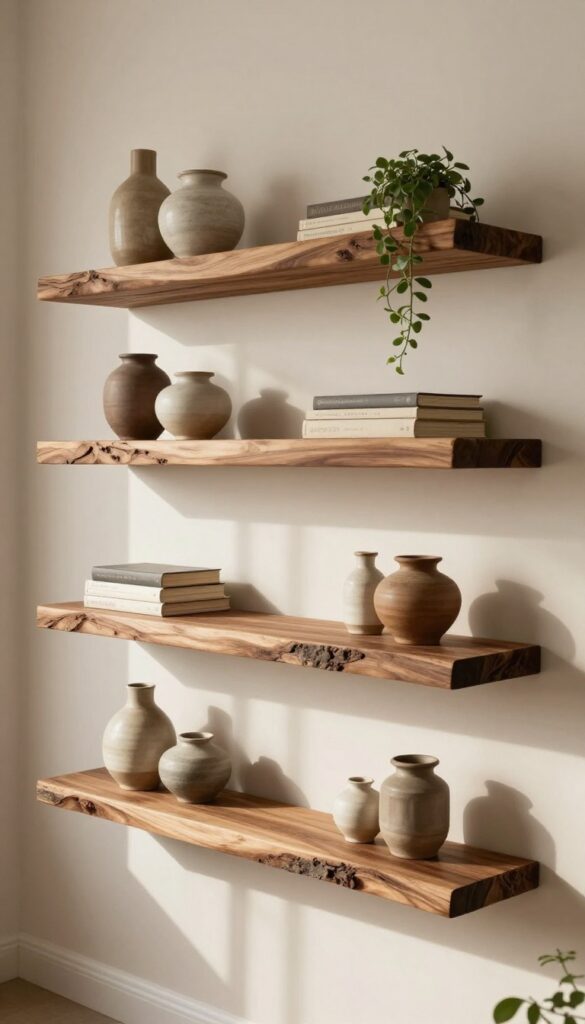
Live edge shelving brings a raw, natural element into your living room that feels both sculptural and grounded. Instead of perfectly straight boards, these shelves keep the wood’s original edge, complete with curves, knots, and bark. They add an organic line that softens the room and connects it to the outdoors.
Whether you mount a single statement shelf or a staggered set, the effect is instantly cozy and layered.
Floating shelves with live edges bring a piece of nature indoors. Use them to display books, pottery, or small plants for a functional yet artistic touch. The uneven edges create visual interest and break up the monotony of straight walls.
Pair them with warm neutral walls and soft lighting to let the wood grain shine.
Best Wood Choices
- Walnut, oak, and cherry are popular for their rich grain and durability. Walnut offers deep brown tones that feel warm, while oak has a more pronounced grain for texture. If you want a lighter look, consider ash or maple.
- Reclaimed wood adds extra character and sustainability.
Placement & Layout
- Mount live edge shelves at varying heights to create a dynamic display. A single long shelf above a sofa works well, or try a cluster of smaller shelves in a corner. Leave enough space between shelves for taller items like vases or stacked books.
- Keep the arrangement asymmetrical for a more natural feel.
Styling Your Shelves
Mix books with decorative objects like ceramic vases, small sculptures, or trailing plants. Stick to a cohesive color palette—earthy greens, warm browns, and cream tones—to keep the look intentional. Don’t overcrowd; leave some negative space so the live edge remains the focal point.
11. Add a Faux Fur Throw or Sheepskin Rug for Texture
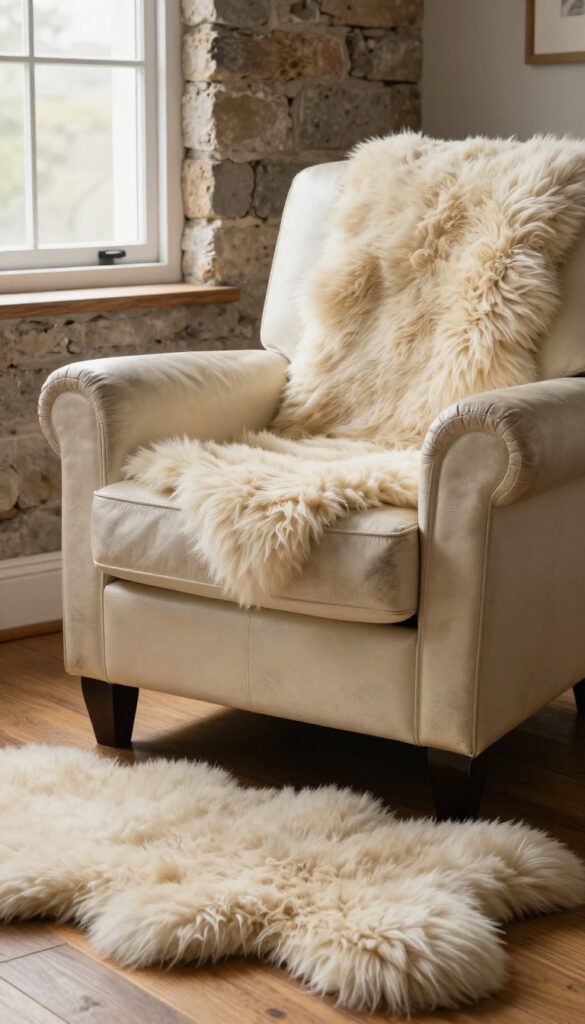
Nothing says cozy quite like a soft, fluffy layer you can sink your toes into. A faux fur throw draped over a worn leather chair or a sheepskin rug casually tossed on the floor brings instant warmth and a touch of luxury. The contrast between that plush texture and the rougher wood or stone surfaces in a rustic room creates a visual depth that feels both intentional and inviting.
Texture is one of those secret weapons in rustic decor that can make a space feel complete. Faux fur and sheepskin add a softness that balances all the natural, rugged materials around them. Whether you choose a cream-colored throw for a neutral palette or a deeper charcoal for contrast, these pieces make the room feel more layered and lived-in.
They're also incredibly practical—easy to move around and perfect for curling up on chilly evenings.
Best Placement Ideas
Drape a faux fur throw over the back of your favorite armchair or fold it across the foot of a sofa for an effortless look. For sheepskin rugs, place one beside the bed, in front of the fireplace, or under a coffee table. They work especially well on hardwood floors, adding warmth underfoot and breaking up large empty spaces.
Color And Texture Pairing
Stick with natural tones like cream, tan, or gray to keep the rustic vibe intact. Pair a fluffy white throw with a dark leather sofa for high contrast, or layer a gray sheepskin rug over a jute or sisal rug for a mix of textures. Avoid synthetic-looking colors—stick to shades that feel organic and earthy.
Care And Maintenance Tip
Faux fur throws can be machine washed on a gentle cycle and air dried to keep them fluffy. Sheepskin rugs usually need spot cleaning or professional care, so check the label. To keep them looking fresh, shake them out regularly and avoid placing them in direct sunlight to prevent fading.
12. Choose Slipcovered or Leather Furniture for Durability
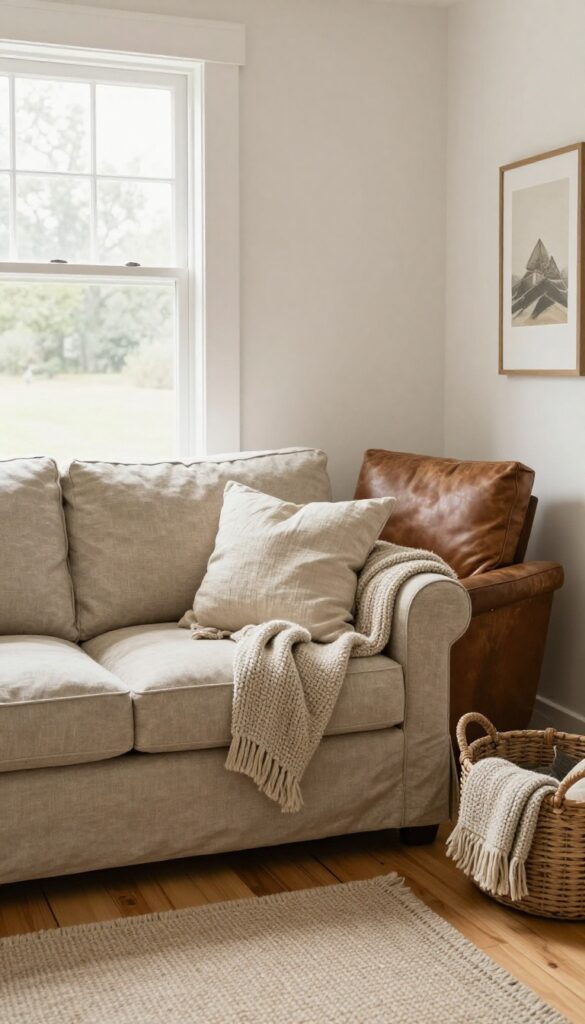
Rustic living rooms are meant to be lived in—kids, pets, muddy boots, and all. That’s why furniture that can take a beating while still looking good is a must. Slipcovered sofas and leather pieces are the unsung heroes of a cozy, low-stress space.
They bring that relaxed, cabin feel without making you nervous every time someone sets down a coffee cup.
Slipcovered sofas in canvas or linen feel relaxed and are easy to clean. Leather chairs or sofas develop a patina over time, adding to the rustic charm. Both options embrace wear and tear as part of their personality, so you can actually relax instead of fussing over fabric care.
Best Fabrics For Slipcovers
Look for heavyweight canvas or washed linen in neutral tones like oatmeal, taupe, or soft gray. These fabrics hide dirt well and get softer with each wash. Avoid anything too stiff or shiny—it won't match the laid-back cabin vibe.
Leather Patina Perks
Distressed or full-grain leather is ideal for rustic spaces. It starts out looking lived-in and only gets better with age. A worn leather armchair next to a slipcovered sofa creates a nice contrast in textures while keeping the whole room durable.
Styling Tip: Layer Textures
Balance the smoothness of leather with chunky knit throws or a wool rug. For slipcovered sofas, add a few linen pillows and a woven basket for blankets. This keeps the space feeling warm and inviting, not too rigid or matchy.
13. Finish with Greenery in Woven Baskets or Terracotta Pots
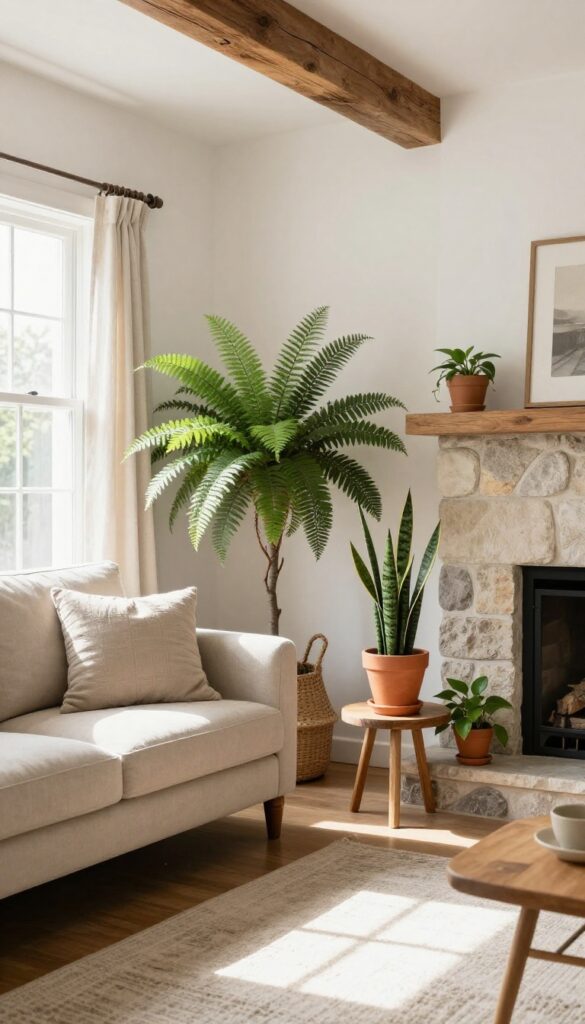
Plants are the easiest way to breathe life into a rustic living room. They soften all that wood and stone, adding a fresh, organic layer that feels like a natural extension of the outdoors. Woven baskets and terracotta pots keep the look grounded and earthy, so your greenery doesn't clash with the cabin vibe.
A few well-placed plants can transform a space from simply decorated to truly alive. Snake plants, ferns, and eucalyptus branches are great choices because they thrive in indirect light and add lush texture. Tuck a tall fern in a woven basket next to the sofa, or cluster small terracotta pots on a mantel or side table.
The contrast between the rough textures of the containers and the soft, green leaves creates visual interest without feeling fussy. For the best effect, vary the heights and leaf shapes—pair a spiky snake plant with a trailing pothos or a broad-leafed monstera. This mix keeps the eye moving and makes the arrangement feel collected over time, not staged.
Best Plant Choices
- Stick with low-maintenance varieties that can handle a bit of neglect. Snake plants, ZZ plants, and pothos are nearly impossible to kill and look great in rustic settings. Ferns add a soft, airy feel, while eucalyptus branches bring a subtle scent and a more structured silhouette.
- If you have good light, a fiddle-leaf fig can become a dramatic focal point in a large basket.
Container Styling Tip
- Mix woven baskets with terracotta pots for a collected, layered look. Baskets warm up the space and hide plastic nursery pots, while terracotta adds a classic, earthy tone. For a cohesive feel, stick to neutral or warm-toned baskets—think seagrass, jute, or rattan—and unglazed terracotta.
- Group pots in odd numbers (three is a charm) on a coffee table tray or a hearth.
Placement Ideas
- Greenery works best where it can soften hard edges. Place a tall plant next to a fireplace or in an empty corner to fill visual gaps. A low, trailing plant on a bookshelf or mantel draws the eye upward and adds life to horizontal surfaces.
- In a small living room, one large statement plant in a basket can do more than several small pots scattered around.
FAQ
How can I make a small living room feel rustic without overwhelming it?
Focus on one or two key elements, like a reclaimed wood accent wall or a chunky knit throw, and keep the rest neutral. Use lighter wood tones and mirrors to reflect light, so the space stays cozy but open.
What colors work best for a rustic cabin-inspired living room?
Earthy tones like warm taupe, olive green, deep brown, and soft cream are ideal. These colors mimic nature and create a calming, grounded atmosphere that pairs well with wood and stone.
Can I achieve a rustic look on a budget?
Absolutely. Thrift stores and flea markets are great for vintage lanterns, wooden crates, and old frames. DIY projects like painting an accent wall or adding a faux stone veneer can also save money.
How do I layer textures without making the room feel cluttered?
Stick to a cohesive color palette and vary textures within that range. For example, combine a jute rug, a wool throw, and linen pillows. Keep surfaces like coffee tables clear of too many small items.
What lighting is best for a rustic living room?
Warm, soft lighting is key. Use table lamps with fabric shades, floor lamps with dimmers, and overhead fixtures with warm bulbs. Avoid harsh white light—opt for 2700K to 3000K bulbs.
Conclusion
Bringing cabin-inspired warmth into your living room doesn’t require a full renovation. Small touches like a chunky throw, a live edge shelf, or a jute rug can shift the whole feel of the space. The goal is to create a room that feels inviting, layered, and effortlessly cozy—a place where you actually want to unwind.
Start with one or two ideas that speak to you, and build from there. Your rustic retreat is closer than you think.