How to Clean Couch Fabric in 10 Water-Mark-Free Steps
Water marks on couch fabric are frustrating—you clean a spot, and it dries with a ring that looks worse than the original stain. The trick is controlling moisture and evaporation so the fabric dries evenly.
Whether you're tackling a fresh spill or doing a full refresh, these ten methods help you avoid those telltale circles.
No special skills required, just a few smart choices about water, cloths, and drying techniques.
1. Blot, Don't Rub
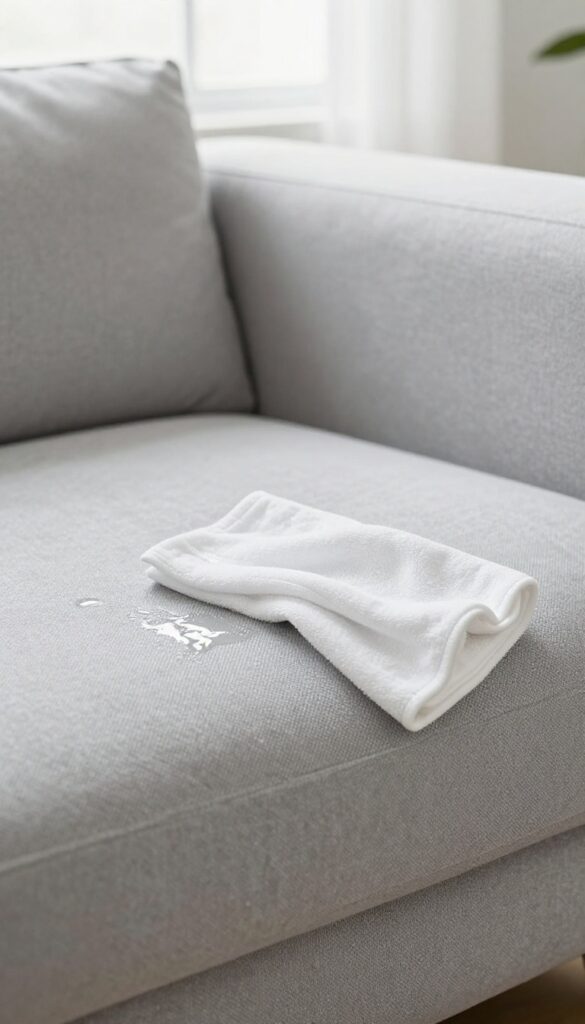
When a spill happens, your first instinct might be to scrub it away. But rubbing is the fastest way to create a water mark. It pushes the liquid deeper into the fibers and spreads it outward, making the stain larger and the drying uneven.
Blotting, on the other hand, lifts the moisture without disturbing the fabric's natural texture.
Blotting is simple but requires the right touch. Use a clean, white cloth or paper towel—colored fabrics can bleed dye onto your couch. Press down gently on the spill, letting the cloth absorb as much liquid as possible.
Repeat with a dry section of the cloth until no more moisture transfers. This method works for water, coffee, wine, and most other spills.
Why Rubbing Backfires
Rubbing grinds the liquid into the fabric's weave, especially on microfiber or cotton blends. It also damages the fibers' surface, making them look matted or discolored. The friction can even cause the fabric to pill over time.
Blotting avoids all that by working with the fabric, not against it.
The Right Cloth Matters
Not all cloths are created equal. Avoid terry cloth or anything with a looped texture—it can snag the fabric. Microfiber cloths or plain cotton towels are best.
If using paper towels, choose a thick, absorbent brand. And always test a hidden spot first to make sure the cloth doesn't leave lint or color behind.
Blotting Technique For Set-in Stains
For older stains, dampen the cloth with a small amount of water or a mild cleaning solution before blotting. The goal is to rehydrate the stain so it lifts out, not to soak the fabric. Work from the outside of the stain inward to prevent spreading.
Patience is key—repeat the blotting process several times if needed.
2. Use Distilled Water
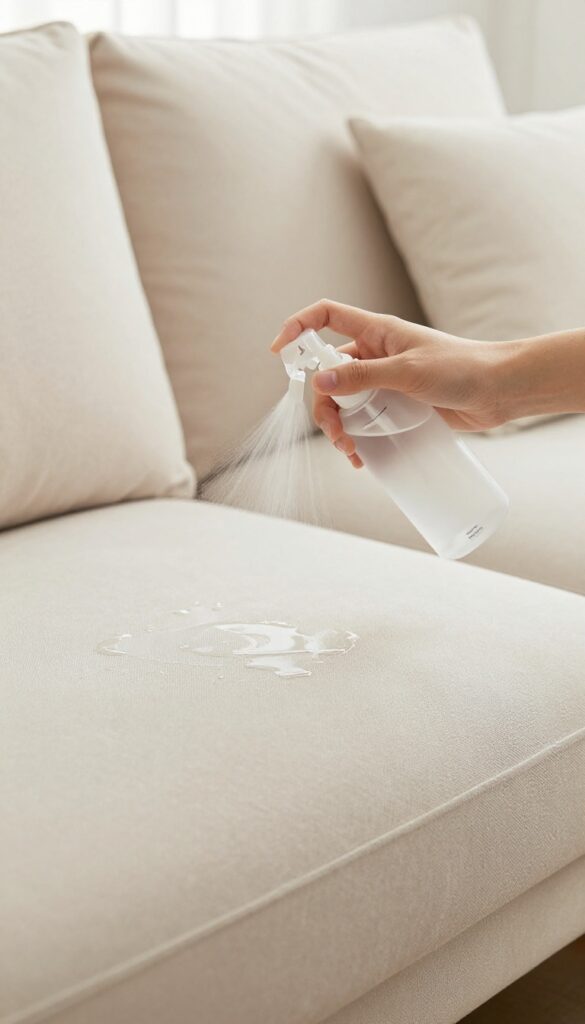
Most people grab water straight from the tap when cleaning upholstery. That's usually where the water mark problem starts. Tap water contains dissolved minerals like calcium and magnesium that stay behind when the water evaporates, leaving white or dark rings on fabric.
Distilled water has been boiled and condensed to remove those minerals. It's pure H2O, so it evaporates completely and cleanly. This one simple swap can dramatically reduce the chance of water marks, especially on delicate fabrics that are prone to showing spots.
You can buy distilled water at any grocery store for about a dollar a gallon. Keep a bottle under your sink specifically for fabric cleaning—it's a small investment that saves you from re-cleaning the same spots.
Using distilled water is one of the easiest changes you can make to your cleaning routine. It's not about buying fancy products; it's about removing the hidden culprits that cause those frustrating rings. Tap water minerals are invisible when wet, but as the water dries, they concentrate at the edges of the damp area, creating a visible ring.
Distilled water eliminates that problem entirely. When you spot-clean with distilled water, you can be more generous with your application because you're not adding minerals to the fabric. This is especially helpful for larger stains where you need to wet a bigger area.
The water will evaporate evenly, and since there are no minerals to deposit, the fabric dries looking clean and uniform. A quick note: distilled water isn't the same as bottled spring water or filtered water. Spring water still contains natural minerals, and even filtered water may have trace amounts.
For best results, look for bottles labeled "distilled water" or "purified water" that specifically say distilled. It's cheap and widely available, so there's no reason not to use it.
Why Tap Water Causes Rings
Tap water is a solution of dissolved minerals, mostly calcium carbonate and magnesium. When you wet fabric, the water spreads out and then evaporates from the edges inward. As the water evaporates, the minerals are left behind.
They accumulate at the outer edge of the wet area, forming a visible ring. The harder your water, the more pronounced the rings will be. If you've ever seen white crusty deposits on a faucet or shower door, that's the same stuff ending up on your couch.
How Distilled Water Prevents Marks
Distilled water contains virtually no dissolved solids. When it evaporates, there's nothing left behind to form a ring. The fabric dries evenly because the water simply turns into vapor and disappears.
This is especially important for dark or colored fabrics where mineral deposits show up as white rings, and for delicate fabrics like velvet or linen where rings are hard to remove once they set.
Where To Buy And How To Store It
Distilled water is sold in most grocery stores, drugstores, and big-box retailers. It's usually in the water or baby section. A gallon costs around one to two dollars.
Keep a dedicated spray bottle filled with distilled water under your sink or in your cleaning caddy. Label it clearly so you don't accidentally grab tap water. You can also use distilled water in steam cleaners and fabric steamers for the same mineral-free benefit.
3. Test in an Inconspicuous Area First
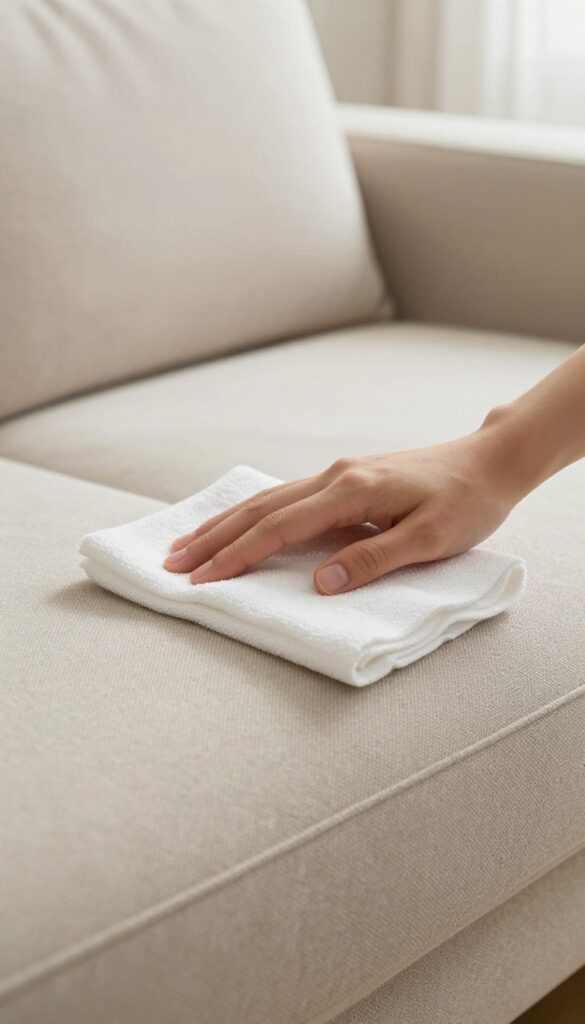
You wouldn't try a new skincare product all over your face without a patch test first, right? Same goes for your couch. Before you go all in on a visible spot, test your cleaning method on a hidden area.
This simple step can save you from a bigger headache—like a water mark that's now front and center.
Testing first is about avoiding surprises. Different fabrics react differently to water and cleaning solutions. Some may darken, others might develop rings, and a few could even fade.
By testing in a spot no one sees, you get a preview of how the fabric will behave. If it passes, you're good to go. If not, you can adjust your method without any permanent damage.
Where To Test
Look for areas that are out of sight: under a cushion, behind a leg, or inside a zippered cover. The goal is to find a spot that's similar in fabric and wear level to the main area you'll clean. Avoid testing on a seam or edge where the fabric might be doubled or treated differently.
How To Test Properly
Dampen a white cloth with your cleaning solution and blot the test area gently. Don't rub. Let it dry completely—this might take a few hours.
Check for any discoloration, water marks, or texture changes. If the fabric looks the same as before, you're safe. If not, try a different cleaner or less water.
What To Look For
Watch for dark spots, light rings, stiff texture, or color bleeding. Also, note how fast the area dries. Slow drying can increase the risk of water marks.
If the test area shows any of these signs, your main cleaning method needs tweaking. Maybe use less water, a different detergent, or a faster drying technique.
4. Dry Evenly with a Fan
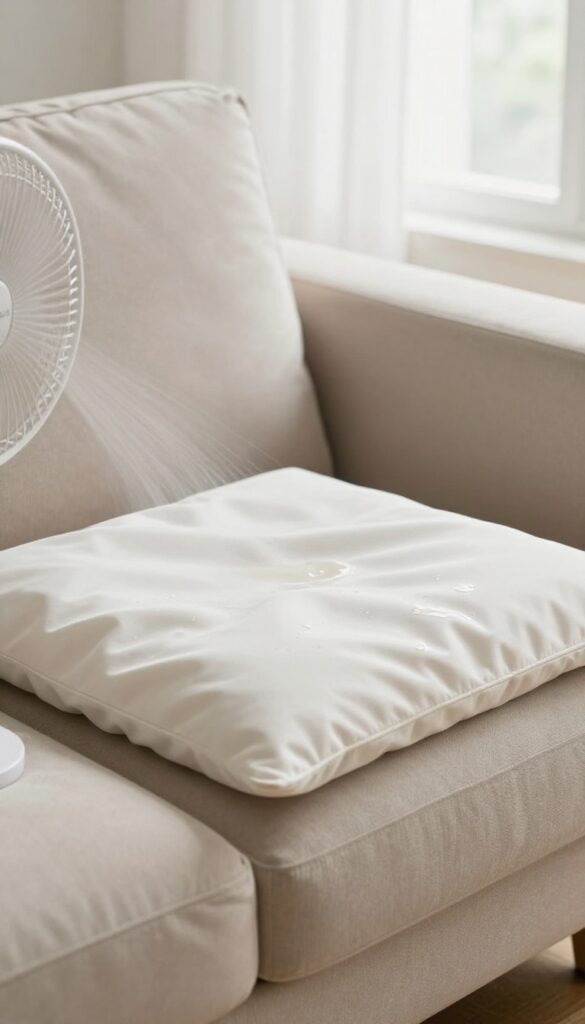
Uneven drying is the main reason water marks show up. When some parts of the fabric dry faster than others, the moisture pulls dirt and residue toward the edge, creating a ring. Using a fan or a hairdryer on cool helps the entire cleaned area dry at the same pace, so no rings form.
After you've blotted and cleaned the spot, don't just let it air dry. Position a fan so it blows directly over the damp area, or use a hairdryer on the cool setting, moving it back and forth. Keep the airflow constant until the fabric feels dry to the touch.
This prevents the edges from drying first and leaving a watermark.
Why Uneven Drying Causes Rings
When fabric dries unevenly, moisture migrates from wetter areas to drier ones, carrying dissolved particles with it. As the last bit of water evaporates, those particles get deposited in a ring pattern. A fan keeps evaporation uniform across the whole spot.
Fan Placement Tips
Place the fan about 2 to 3 feet away from the couch, angled so the air sweeps across the damp area. Don't aim it directly at one spot—oscillating fans work best. If using a hairdryer, keep it moving and hold it at least 6 inches away to avoid heat damage.
When To Use Heat Vs. Cool Air
Stick with cool or low heat settings. High heat can set stains or damage certain fabrics like microfiber or velvet. A fan on medium speed is usually enough for most upholstery.
For thicker fabrics, you might need to let the fan run for 30–60 minutes.
5. Apply a Mild Soap Solution Sparingly
Soap can be your friend or your enemy when cleaning couch fabric. Use too much, and you're left with a sticky residue that attracts dust and creates new water marks. The trick is to use a tiny amount of mild detergent mixed with distilled water, and apply it lightly with a spray bottle.
Many people assume more soap means a deeper clean, but with upholstery, the opposite is true. Excess soap leaves behind a film that traps dirt and shows up as dull patches once dry. A light mist of a gentle solution is all you need to lift stains without leaving traces.
Why Less Is More
Soap residue is a magnet for dirt. When you oversaturate the fabric, the soap doesn't rinse out completely. As the fabric dries, the remaining soap attracts airborne dust, creating a visible ring or spot.
Using a minimal amount of mild detergent prevents this buildup and keeps your couch looking clean longer.
Mixing The Right Solution
Fill a spray bottle with distilled water—tap water contains minerals that can leave their own marks. Add just a few drops of a mild, bleach-free liquid detergent. Swirl gently to mix.
You want the solution to be barely soapy; if it suds up a lot, you've used too much.
Applying Without Overwetting
Lightly mist the soiled area from about 6 inches away. You want the fabric to feel damp, not soaked. Too much moisture can penetrate the padding and cause slow drying, which leads to water marks.
Blot immediately with a clean, dry microfiber cloth to lift the stain and excess moisture.
Drying Evenly To Avoid Rings
After blotting, use a dry cloth to gently press the area and absorb remaining dampness. Allow the fabric to air dry completely. To speed up even drying, point a fan at the spot or use a hairdryer on a cool setting held a few inches away.
This helps prevent the edges from drying faster than the center, which causes rings.
6. Use a Microfiber Cloth
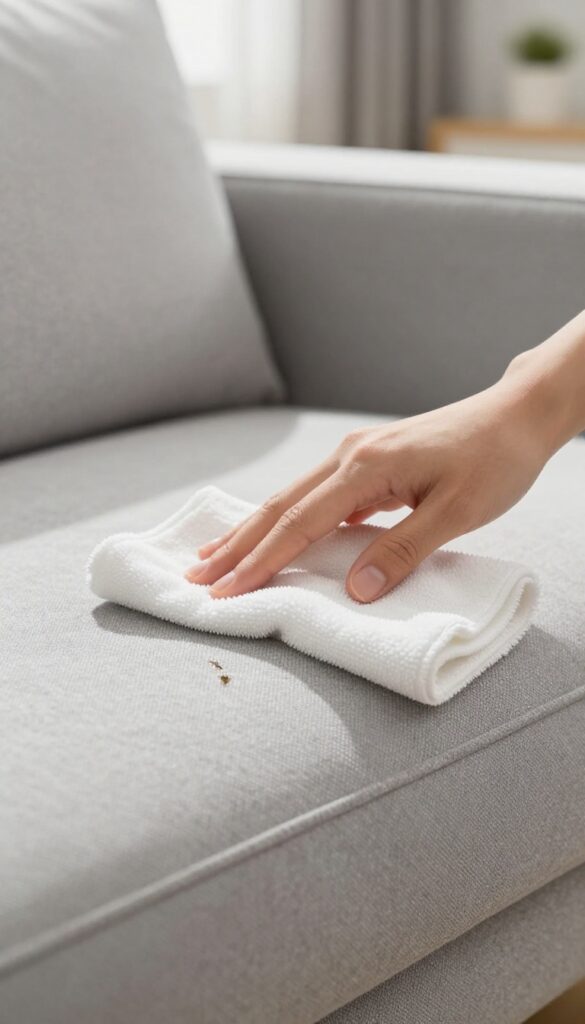
The cloth you choose matters more than you'd think. A rough towel or an old t-shirt can leave lint behind or push moisture deeper into the fabric, creating perfect conditions for water marks. Microfiber cloths are designed to avoid all that.
Microfiber is made from ultra-fine synthetic fibers that split into even smaller wedges. Those wedges act like tiny hooks that trap dust, dirt, and moisture without grinding them into the fabric. When you blot a spill, the cloth pulls liquid away from the surface instead of spreading it around.
That means less water sits on the fibers, and less chance of uneven drying. Plus, microfiber is lint-free. No fuzzy residue left behind to catch your eye or attract more dirt.
It's also reusable—just wash it and it's ready to go again. Keep a stack of clean, dry microfiber cloths near your couch so you can grab one the moment a spill happens.
Why Microfiber Works
The secret is in the split fibers. Each strand is split into multiple wedge-shaped sections that create a large surface area. This lets the cloth absorb up to seven times its weight in water.
When you press it against a damp spot, the liquid gets pulled into the cloth, not pushed deeper into the cushion.
Blot, Don't Rub
Rubbing spreads the moisture and can damage the fabric's texture. Always blot gently. Start from the outside of the stain and work inward to keep the wet area as small as possible.
Use a dry section of the cloth for each blot to avoid redepositing moisture.
Keep A Dry Backup
After blotting with a damp microfiber cloth, follow up with a completely dry one. This extra step wicks away any remaining moisture and helps the fabric dry evenly. It's a simple habit that makes a big difference in preventing rings.
7. Blot with a Dry Cloth After Cleaning
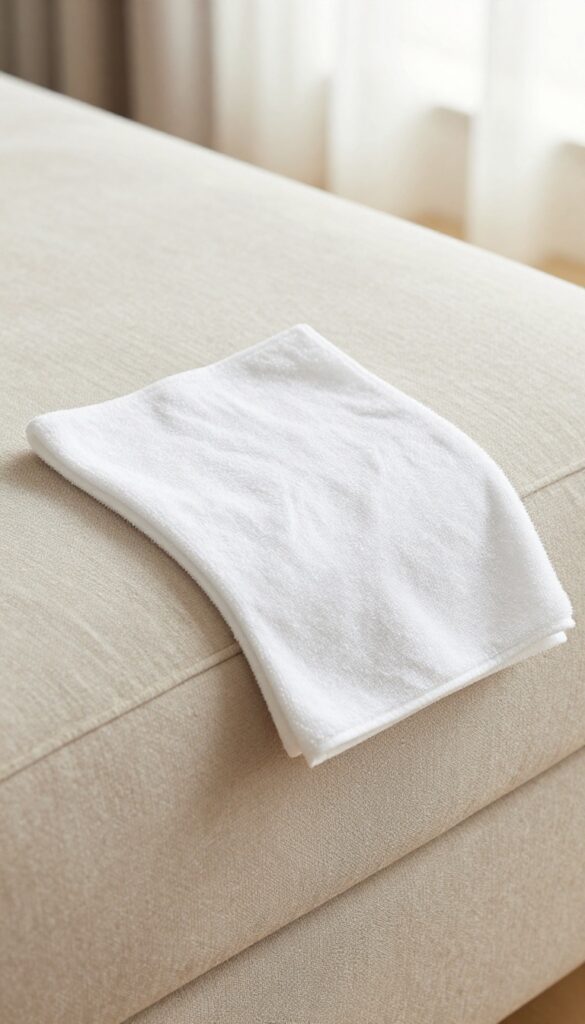
You've applied your cleaning solution, worked it in gently, and now what? If you let the fabric air-dry on its own, moisture can pool unevenly, leaving those dreaded rings. The fix is simple: blot immediately with a dry cloth to wick away excess liquid before it has a chance to settle.
Blotting after cleaning isn't just about speed—it's about technique. Press a clean, dry microfiber cloth onto the damp area and hold for a few seconds. The cloth absorbs moisture from deep within the fibers, promoting even drying.
Repeat with a fresh dry section of the cloth until the fabric feels just slightly damp to the touch. This step is non-negotiable for upholstery that dries without marks.
Why Blotting Prevents Water Marks
Water marks form when moisture evaporates faster from some areas than others. By blotting, you remove excess water that would otherwise migrate and create uneven drying zones. Think of it as giving the fabric a head start toward uniform dryness.
Best Cloths For Blotting
Microfiber cloths are top-tier because they're highly absorbent and lint-free. Avoid terry cloth or rough towels—they can leave fibers behind or disturb the fabric's texture. Keep a stack of clean, dry microfiber cloths handy before you start cleaning.
When To Blot Again
If the fabric still feels wet after the first blot, switch to a new dry cloth and repeat. Don't rub—that can spread moisture and push it deeper. Patience pays off: thorough blotting now saves you from re-cleaning later.
8. Try a Vinegar and Water Solution
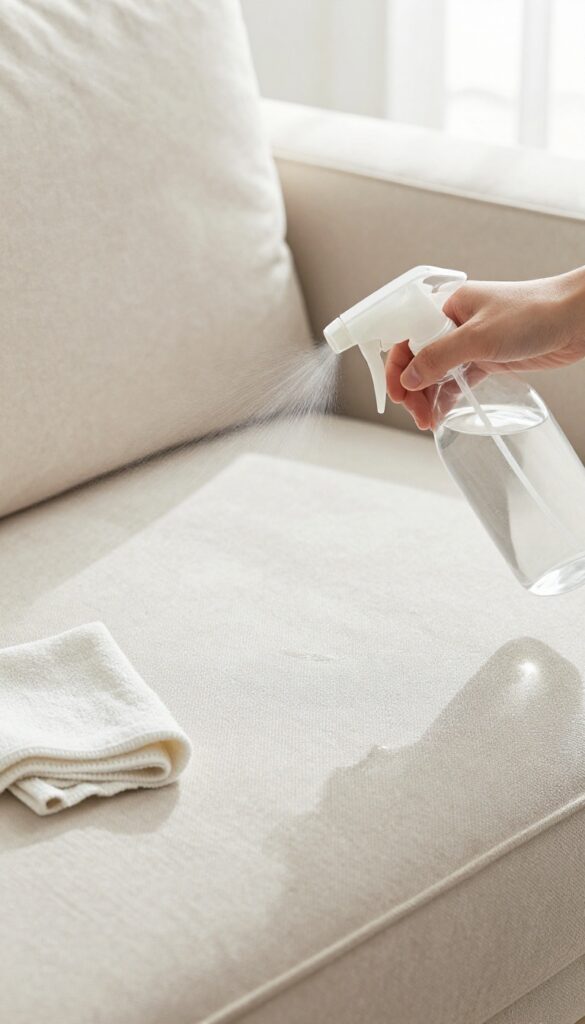
White vinegar is a surprisingly effective cleaner for couch fabric, and it evaporates quickly—which means fewer water marks. Mixed with distilled water in a 1: 1 ratio, it cuts through dirt and mild stains without leaving a sticky residue. The key is using distilled water, not tap, because tap water contains minerals that can leave their own marks as they dry.
Vinegar's acidity helps break down grime while its fast evaporation rate reduces the chance of rings. Always test on a hidden spot first, as some fabrics may react to the acidity. Apply the solution with a spray bottle, misting lightly rather than soaking the fabric, then blot gently with a clean cloth.
Let it air dry, and you'll likely see a clean spot with no watermark.
Why Distilled Water Matters
Tap water often has calcium and other minerals that leave white deposits or rings when they dry. Distilled water is pure, so it evaporates cleanly. This simple swap makes a huge difference in avoiding water marks.
How To Apply Without Overwetting
Lightly mist the vinegar solution onto the fabric—don't soak it. Work in small sections, using a microfiber cloth to blot and lift dirt. The goal is to dampen, not drench.
Overwetting is the main cause of water marks, so go easy.
Drying Tips For Best Results
After cleaning, speed up drying with a fan or by opening a window. Good airflow helps the vinegar evaporate evenly, reducing the chance of rings. Avoid sitting on the cushion until it's completely dry.
9. Use a Upholstery Cleaner Designed for No-Rinse
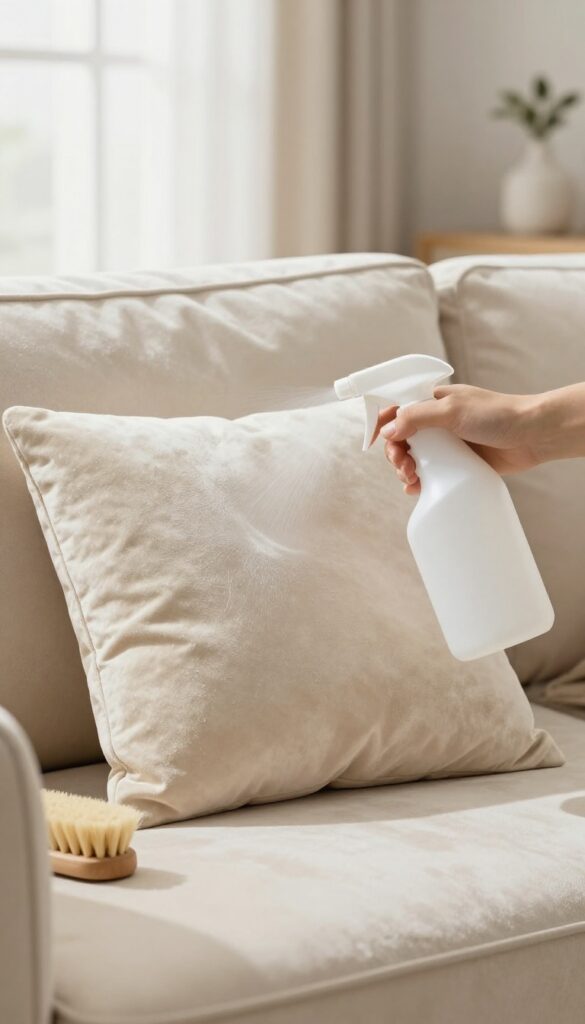
No-rinse upholstery cleaners are a game changer when you're worried about water marks. These products are formulated to lift dirt and then evaporate completely, leaving no residue behind. They're especially handy for delicate fabrics like velvet or microfiber that are prone to water rings.
No-rinse cleaners work by using a low-moisture formula that breaks down grime without saturating the fabric. You spray it on, agitate gently with a soft brush or cloth, and let it dry. The cleaning agents are designed to evaporate quickly, so there's no need to rinse or blot with water—which is exactly what causes those rings.
This makes them a safe bet for quick spot cleans on high-traffic areas or for refreshing the whole couch without worrying about uneven drying.
How No-rinse Cleaners Work
These cleaners typically contain surfactants that encapsulate dirt and a solvent that helps the solution evaporate fast. When you apply them, the water content is minimal, and the cleaning agents break down oils and stains. As the liquid dries, it pulls the dirt away from the fibers and leaves no residue.
This evaporation process is key—it dries evenly across the fabric, preventing the concentration of minerals or soap that causes water marks.
Best Fabrics For No-rinse Cleaners
No-rinse cleaners are ideal for synthetic fabrics like polyester, nylon, and acrylic blends, as well as natural fibers like cotton and linen that are labeled as water-safe. They're also excellent for delicate fabrics like velvet or chenille, where water can leave permanent water spots. Always test on an inconspicuous area first, but these cleaners are generally gentle enough for most upholstery.
Application Tips For Best Results
Start by vacuuming the couch to remove loose dirt. Spray the no-rinse cleaner evenly onto the fabric, about 6 inches away. Use a soft-bristled brush or a microfiber cloth to work the cleaner into the fibers in a circular motion.
Let it dry completely—usually 15 to 30 minutes. Avoid sitting on the couch until it's fully dry to prevent uneven drying and potential marks.
10. Steam Clean with Caution
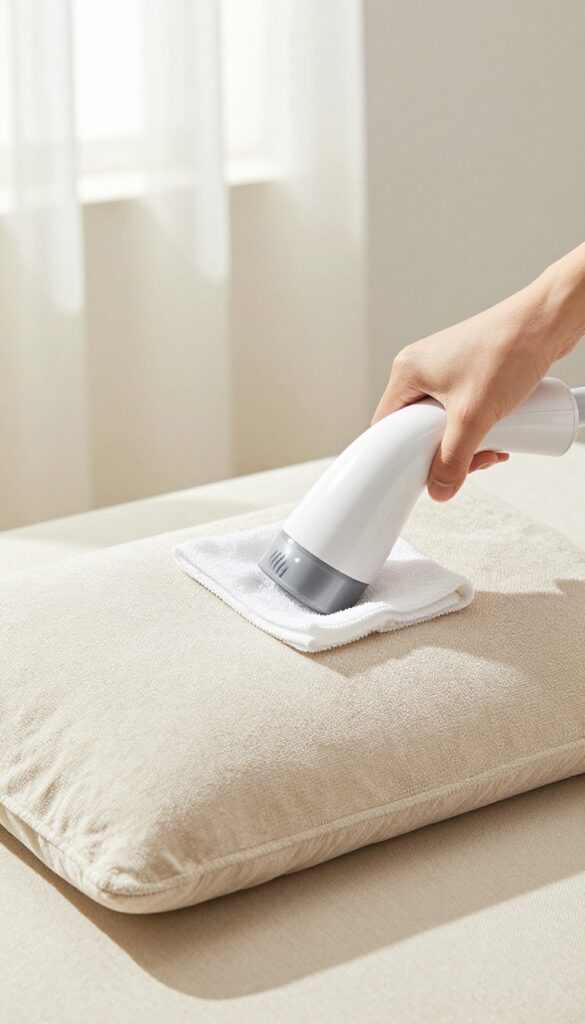
Steam cleaning is a powerful way to deep-clean couch fabric, but it can also leave water marks if you're not careful. The high temperature and moisture can create uneven drying, leading to those dreaded rings. The key is to control the amount of water you apply and to follow up quickly to absorb excess moisture before it settles.
Choose The Right Attachment
Use a steam cleaner with a fabric attachment designed for upholstery. This helps distribute steam evenly without soaking the fabric. Avoid using a bare metal or plastic nozzle, as it can concentrate moisture in one spot and cause water marks.
Work In Small Sections
Don't try to steam the entire couch at once. Work in small, manageable sections—about the size of a seat cushion. This allows you to focus on one area at a time and ensures you can dry it properly before moving on.
Follow Up With A Dry Cloth
Immediately after steaming, use a clean, dry microfiber cloth to blot the area. This absorbs excess moisture and helps the fabric dry evenly. Press firmly but don't rub, as rubbing can spread moisture and create marks.
Let It Air Dry Completely
After blotting, let the fabric air dry fully before using the couch. Open windows or use a fan to speed up drying. Avoid sitting on the damp fabric, as body heat can cause uneven drying and water marks.
FAQ
Why do water marks appear on couch fabric?
Water marks appear when moisture dries unevenly, leaving behind mineral deposits or residue from cleaning products. The fabric's fibers can also swell and dry at different rates, creating rings.
Can I use tap water to clean my couch?
Tap water is not recommended because it contains minerals that can leave white or dark marks. Distilled water is a safer choice to avoid water spots.
How do I remove existing water marks from my couch?
Lightly mist the entire area with distilled water to re-wet the fabric evenly, then blot dry with a clean cloth. This can help redistribute moisture and reduce the mark.
Is it safe to use a hairdryer on couch fabric?
Yes, but only on a cool or low heat setting. High heat can damage some fabrics. Keep the dryer moving to avoid overheating one spot.
What if my couch fabric is delicate or labeled 'dry clean only'?
For delicate fabrics, avoid water-based cleaning. Use a dry upholstery cleaner or consult a professional. Always check the care label first.
Conclusion
Water marks on couch fabric don't have to be a permanent problem. By choosing the right drying method and testing any cleaner first, you can keep your upholstery looking fresh without those telltale rings.
Stick with blotting, avoid oversaturation, and let airflow do the heavy lifting. Your couch will thank you with a clean, even finish every time.