13 Teal Living Room Ideas for Jewel-Tone Freshness
Teal is one of those colors that feels both calming and bold at the same time. It sits somewhere between blue and green, carrying the depth of a jewel tone without overwhelming a room.
In a modern living room, teal works as a grounding anchor or a playful pop—it all depends on how you use it. What makes teal especially versatile is its ability to pair with neutrals like white, gray, and beige, as well as richer shades like mustard, blush, or navy.
Whether you're starting from scratch or just want to refresh a few details, these 13 ideas will help you bring that jewel-tone freshness into your space. Each idea focuses on real-world styling—nothing too fussy or expensive.
1. Paint an Accent Wall in Deep Teal
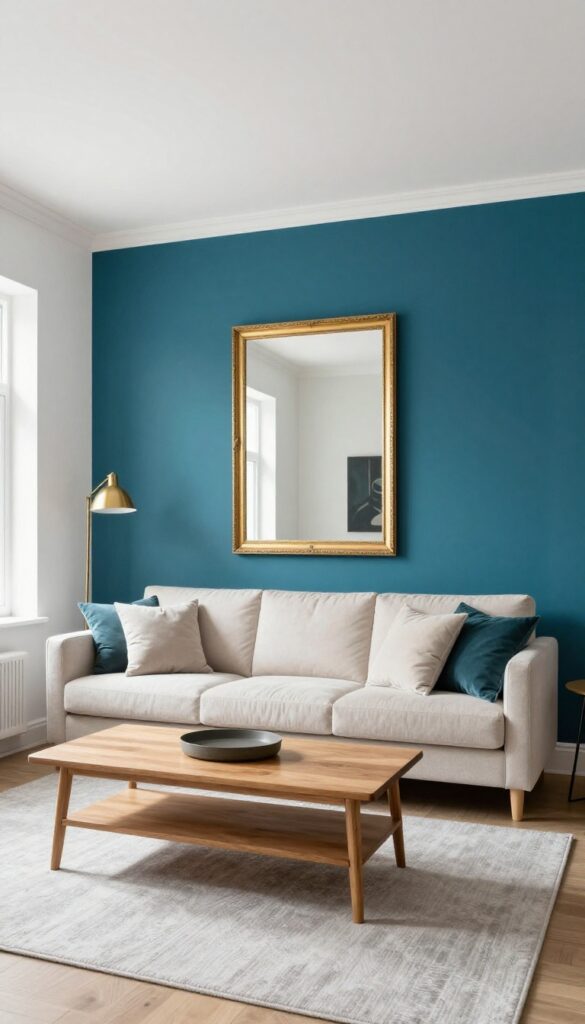
Deep teal is one of those colors that instantly makes a room feel both grounded and luxurious. By painting just one wall—typically the one behind your sofa or media console—you get a dramatic focal point without the commitment of a full color-drenched room. The rest of the walls stay light (soft white or pale gray), so the space remains airy and open.
This approach works especially well in living rooms that get plenty of natural light. The deep teal absorbs some of that brightness, creating a cozy, intimate backdrop that makes your furniture pop. It's a simple weekend project that delivers a high-end look for under $50.
Best Colors To Pair
Stick with crisp whites, warm grays, and natural wood tones for a clean, modern feel. Avoid pairing deep teal with other dark colors on adjacent walls—it can make the room feel smaller. Instead, let the accent wall be the star.
Layout Tip
Place your main seating piece directly against the accent wall to anchor the room. If you have a media console, center it on the wall and keep the surface uncluttered. This draws the eye to the color and creates a balanced layout.
Finishing Touch
Add a large mirror or a piece of art with metallic gold or brass frames on the accent wall. The reflective surface will bounce light around and enhance the teal's richness without competing with it.
2. Go All In with a Teal Velvet Sofa
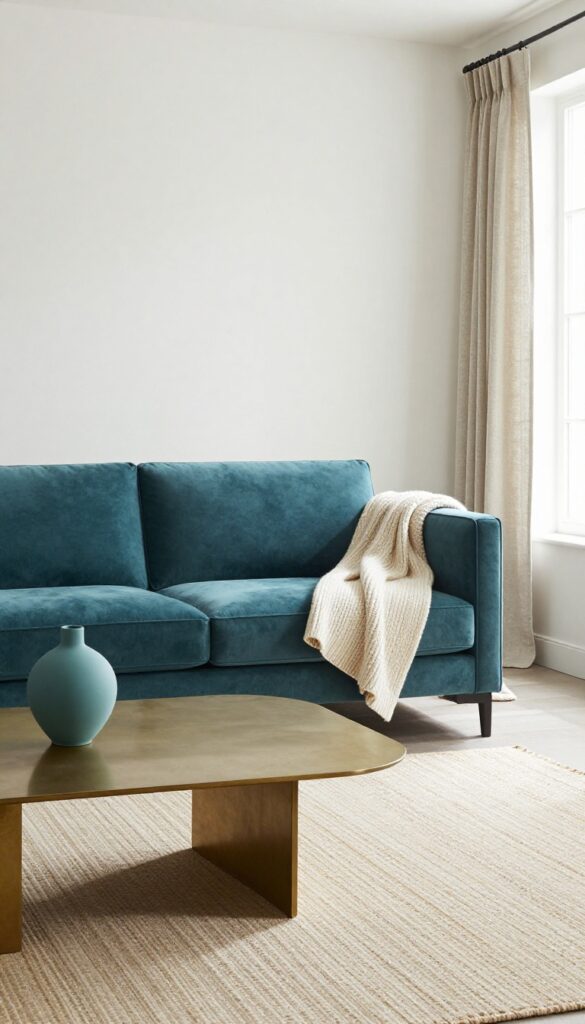
A teal velvet sofa is the kind of piece that instantly defines a room. Its rich jewel tone feels both grounded and uplifting, while the soft pile of velvet adds a tactile layer that invites you to sit and stay a while. In a modern living room, this sofa becomes the visual anchor—everything else just supports its star power.
Keep the surrounding palette clean and neutral so the teal can truly breathe.
When you commit to a teal velvet sofa, you're making a deliberate choice to center the room around color and texture. The key to pulling it off without overwhelming the space is balance. Let the sofa be the loudest element, then bring in soft grays, warm whites, or light beiges for the walls, rug, and larger furniture pieces.
This approach keeps the overall look modern and airy, not heavy. The velvet sheen catches light beautifully, adding a subtle glamour that feels fresh rather than fussy. For a cohesive finish, repeat the teal in small accents like a ceramic vase or a throw pillow, but keep the majority of accessories neutral.
Best Color Pairings
- Teal pairs effortlessly with crisp whites, warm taupes, and soft grays. For a bolder contrast, add touches of brass or gold in lamp bases, coffee table legs, or picture frames. If you want a hint of warmth, bring in a camel leather ottoman or a woven jute rug.
- Avoid competing colors like bright red or hot pink—let the teal be the main event.
Texture Mix
Velvet is plush and smooth, so balance it with rougher textures. A chunky knit throw, a linen curtain, or a sisal rug adds visual interest and keeps the room from feeling too formal. A matte wood coffee table also grounds the softness of the sofa nicely.
Layout Tip
Place the sofa facing the main focal point—whether that's a fireplace, a large window, or a media console. Leave enough space around it for easy flow. A lightweight side table on one end and a floor lamp on the other create a balanced, functional setup without crowding the statement piece.
3. Layer Teal Through Throw Pillows and Blankets
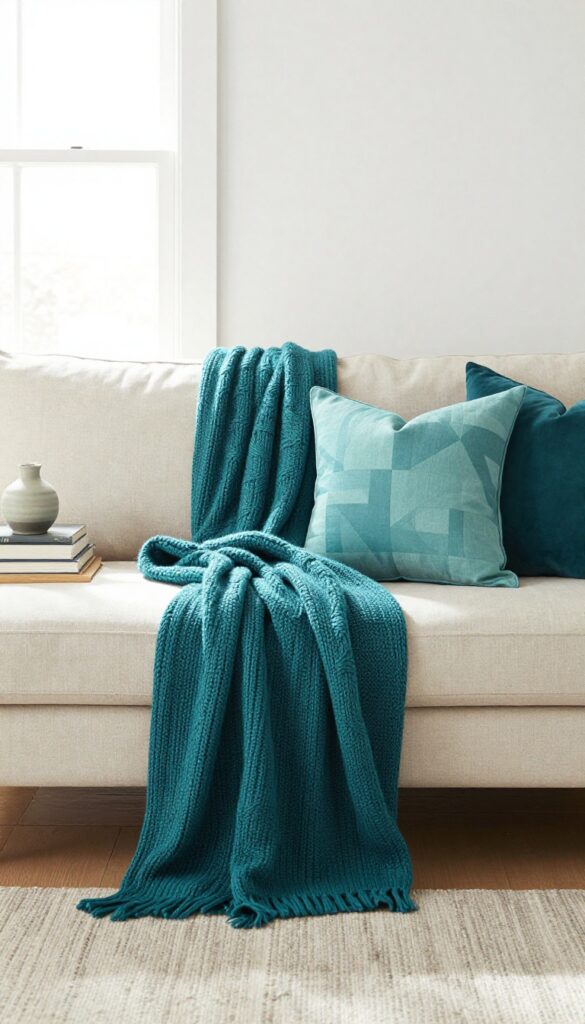
Not ready to paint a wall or buy a teal sofa? Start small with pillows and throws. This approach lets you test the color without a major commitment.
By mixing patterns and shades, you can create a layered, collected look that feels intentional, not accidental.
Teal throw pillows and blankets are the easiest way to bring jewel-tone freshness into your living room. They add pops of color that can be swapped out seasonally or whenever you crave a change. The key is to layer different shades—from deep peacock to soft aqua—and mix in patterns like stripes, geometric prints, or subtle ikat.
This creates visual depth and keeps the space from feeling flat. Drape a chunky knit teal throw over the arm of a neutral sofa, then arrange a few pillows in complementary tones. The result is a cozy, curated vibe that feels modern and clean.
Best Colors To Pair
- Teal plays well with neutrals like warm gray, cream, and tan. For a bolder look, pair it with mustard yellow or blush pink. If you want a monochromatic scheme, layer teal with navy or deep green.
- Stick to two or three colors to keep the arrangement cohesive.
Texture Mix
Combine smooth velvet pillows with chunky cable-knit or faux-fur throws. The contrast in textures adds tactile interest and makes the teal pop. A velvet pillow in deep teal next to a linen one in a lighter shade creates a sophisticated, layered effect.
Finishing Touch
Toss a lightweight teal throw over a basket or the back of a chair for an effortless, lived-in feel. Fold it neatly over the arm of a sofa when you want a more polished look. The key is to make it look natural, not staged.
4. Use Teal Curtains for Vertical Drama
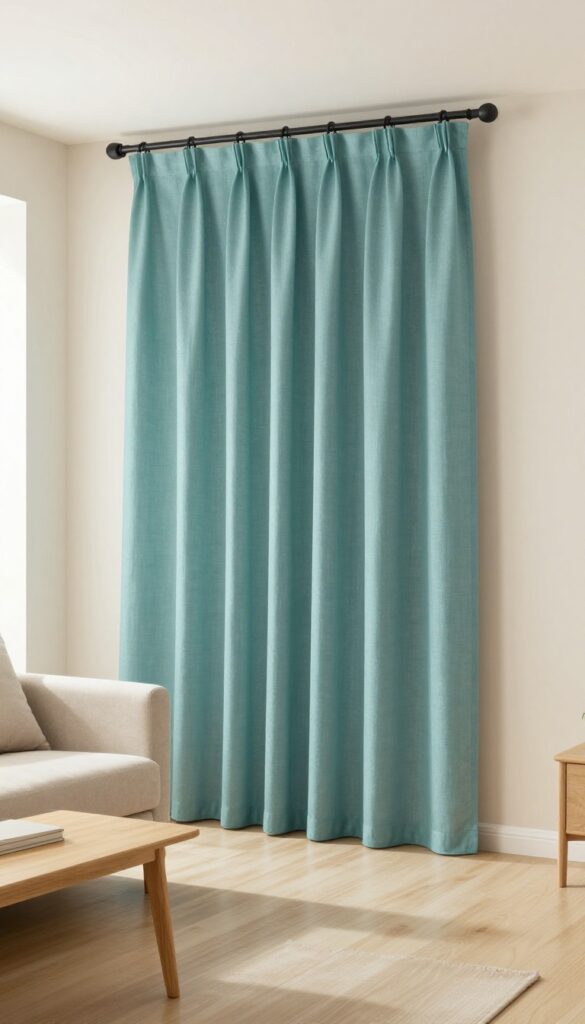
Curtains do more than cover windows—they can reshape a room. Floor-to-ceiling teal panels pull the eye upward, making ceilings feel higher and the space more expansive. It’s a simple swap that adds instant color and a dose of drama without a major renovation.
Whether you lean casual or formal, the right fabric and hang make all the difference.
Teal curtains work especially well in rooms with neutral walls and floors. They become the focal point without overwhelming the space. For a modern, clean look, choose linen or cotton blends in a matte finish—they soften light and keep the vibe relaxed.
Velvet, on the other hand, adds richness and a touch of luxury, ideal for more formal living rooms or evening spaces. Keep hardware simple: a slim rod in brushed nickel or matte black lets the fabric shine. Hang the rod as close to the ceiling as possible and let the panels just kiss the floor for that tailored, height-enhancing effect.
Best Fabrics For The Look
- Linen or cotton blends work beautifully for a casual, airy feel. They filter light gently and add texture without stiffness. If you want more structure and a polished finish, opt for velvet or a heavier drapery fabric.
- Velvet teal curtains feel cozy and opulent, perfect for cooler months or rooms with a lot of natural light.
Hanging Tips For Maximum Height
- Mount the curtain rod just below the ceiling molding, not above the window frame. This tricks the eye into seeing taller walls. Choose panels that are wide enough to stack neatly when open—at least double the window width for fullness.
- Use rings or grommets for easy gliding, and ensure the hem just skims the floor for a clean, intentional line.
Styling Around Teal Curtains
- Let the curtains be the star by keeping other window treatments minimal. Skip valances or heavy blinds. Pair with sheer white or cream panels underneath for light control and privacy.
- On the walls, stick to soft neutrals like warm gray, beige, or white. Add a few teal accents in throw pillows or art to tie the room together without competing.
5. Bring in a Teal Area Rug to Define the Space
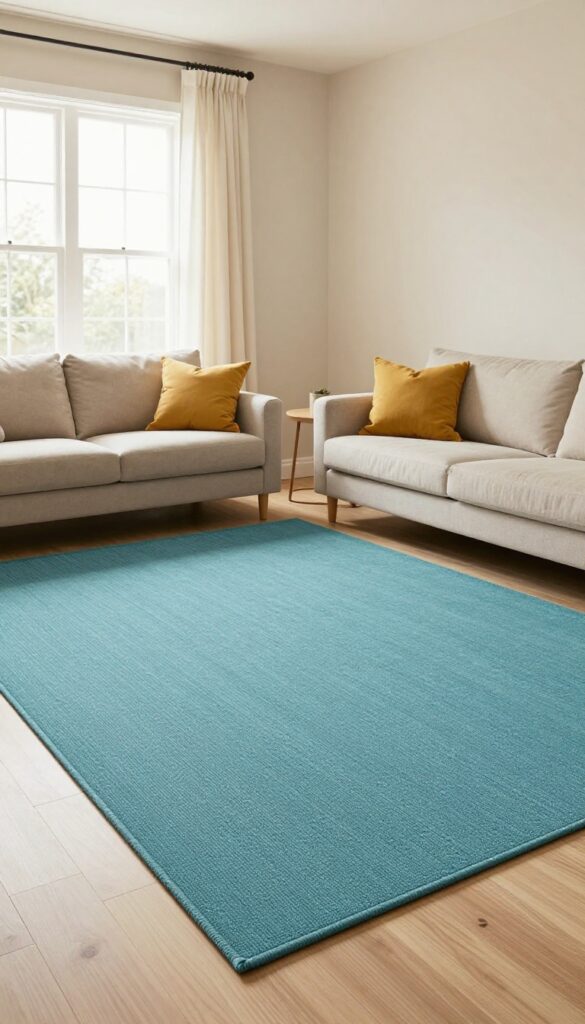
A rug does more than soften your steps—it carves out a zone, especially in an open layout. A teal area rug brings that jewel-tone richness right underfoot, grounding your seating area with a pop of color that feels intentional, not accidental. Whether your room leans modern or transitional, a well-chosen rug in this hue adds warmth and visual weight without overwhelming the space.
When you place a teal rug beneath your sofa and coffee table, it instantly anchors the conversation area. The color draws the eye downward, creating a cozy foundation that contrasts beautifully with neutral floors or lighter walls. For a clean, modern look, opt for a low-pile or flatweave design—it keeps the silhouette sleek and makes maintenance a breeze.
Let the rug extend about six inches past the front legs of your sofa and chairs to tie the furniture grouping together without feeling cramped.
Best Colors To Pair
Teal plays well with warm neutrals like beige, cream, and taupe, which keep the rug from feeling too cool. For a bolder contrast, add mustard yellow or blush pink throw pillows. If you prefer a monochromatic scheme, layer in deeper navy or soft sage accents.
Layout Tip
In a small living room, choose a rug that fits under the front legs of your main seating pieces rather than covering the entire floor. This leaves a border of flooring visible, making the room feel larger while still defining the zone. For larger spaces, go big—a 8×10 or 9×12 rug can anchor the whole seating arrangement.
Texture Mix
A flatweave teal rug pairs nicely with chunky knit throws or a velvet sofa. The contrast in textures adds depth without clutter. If your rug has a subtle pattern, keep other textiles solid to let the rug shine.
6. Paint the Ceiling a Soft Teal
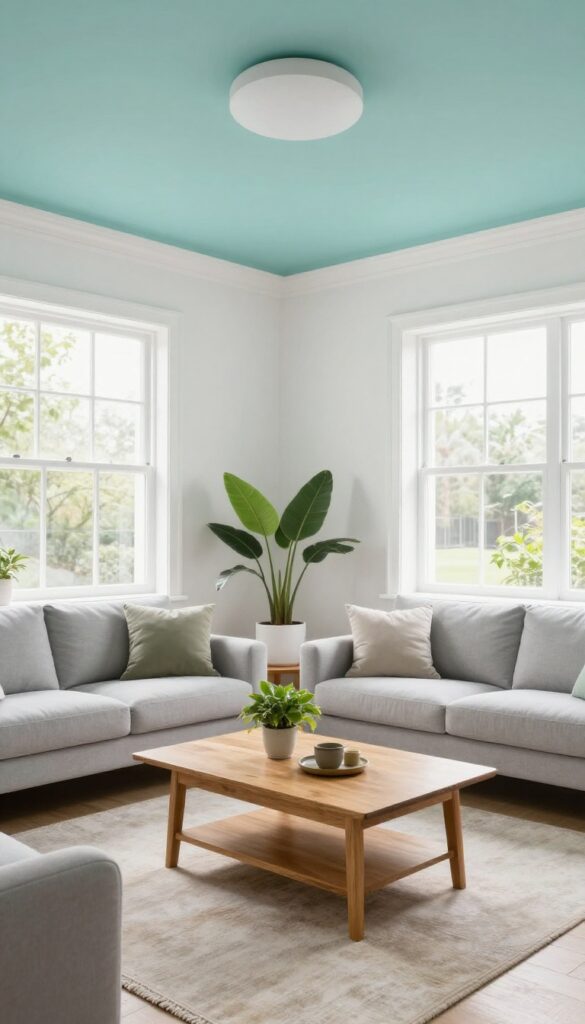
Ceilings often get the white paint treatment and nothing more. But if you want to add color without sacrificing floor or wall space, a soft teal ceiling is a clever workaround. It draws the eye upward, makes the room feel taller in an unexpected way, and wraps the space in a gentle, cozy hue.
Paired with white or light walls, the effect is airy but still colorful—like a calm sky that stays with you indoors.
This idea works especially well in living rooms with good natural light, where the teal reads as a soft wash rather than a heavy lid. It also helps define the room without adding furniture or decor. For a modern, clean look, keep the trim white and the walls a warm off-white or pale gray.
The contrast keeps the ceiling from feeling too heavy while still giving the room a distinct personality.
Best Teal Shades For Ceilings
- Stick with muted, dusty teals rather than bright or dark ones. Think shades like Benjamin Moore's "Smoke" or "Palladian Blue"—colors that feel soft and atmospheric. Avoid anything too saturated, which can make the ceiling feel low or oppressive.
- A matte finish is ideal because it minimizes glare and keeps the color looking smooth and subtle.
Lighting Tip
A teal ceiling works best with warm, dimmable lighting. Cool white bulbs can make the color look flat or even greenish, while warm light brings out the blue undertones and adds coziness. Consider a flush-mount fixture with a soft white shade or even a small chandelier that lets the ceiling color peek through.
Finishing Touch
Tie the ceiling into the rest of the room with a few accessories in the same teal family. A throw pillow, a ceramic vase, or a piece of wall art with teal accents will make the color feel intentional rather than random. Keep the rest of the palette neutral so the ceiling remains the star.
7. Style a Teal Accent Chair as a Focal Point
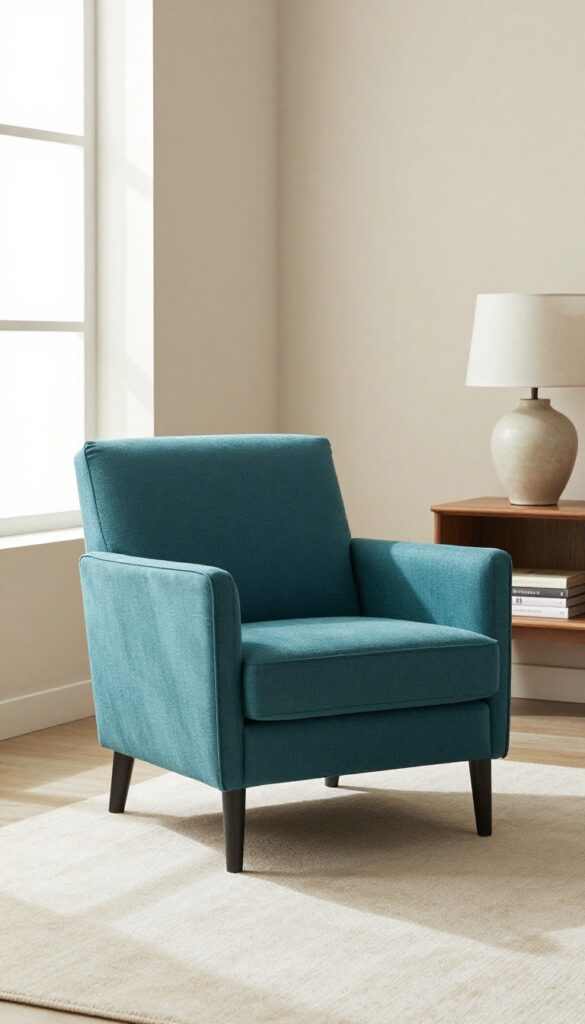
A single teal accent chair can anchor an entire seating area without overwhelming the room. Its jewel-tone richness adds depth and a pop of color that feels intentional, not accidental. Place it where it can catch natural light or stand against a neutral wall to let the hue do the work.
Whether you lean toward a sleek mid-century silhouette or a cozy wingback, the chair becomes a natural gathering spot. It’s a low-commitment way to test teal in your space—one piece, big impact.
Teal works beautifully as an accent because it bridges cool and warm tones. A chair in this shade instantly draws the eye, making it the perfect piece to build a conversation area around. Pair it with a small side table and a floor lamp to create a cozy reading nook, or let it float next to a bookshelf for a curated look.
The key is giving it breathing room—don’t crowd it with too much furniture. Let the chair be the star, and keep surrounding pieces simple and understated.
Best Colors To Pair
Teal pairs effortlessly with warm neutrals like camel, beige, and cream, which soften its intensity. For a bolder look, try mustard yellow or blush pink as complementary accents in throw pillows or a nearby rug. If you prefer a monochromatic vibe, layer different shades of teal and deep blue-green for a rich, cohesive feel.
Layout Tip
Position the chair at an angle to the sofa or facing the fireplace to create a natural focal point. Avoid placing it against a busy patterned wall—let the chair stand out against a solid, light-colored backdrop. A small side table and a floor lamp complete the vignette without competing for attention.
Texture Mix
- Balance the chair’s fabric with varied textures nearby. If the chair is velvet, add a chunky knit throw or a woven basket. For a leather or linen chair, introduce a soft faux fur pillow or a ceramic side table.
- This contrast keeps the look from feeling flat and adds visual interest.
8. Add Teal Through Artwork and Wall Decor
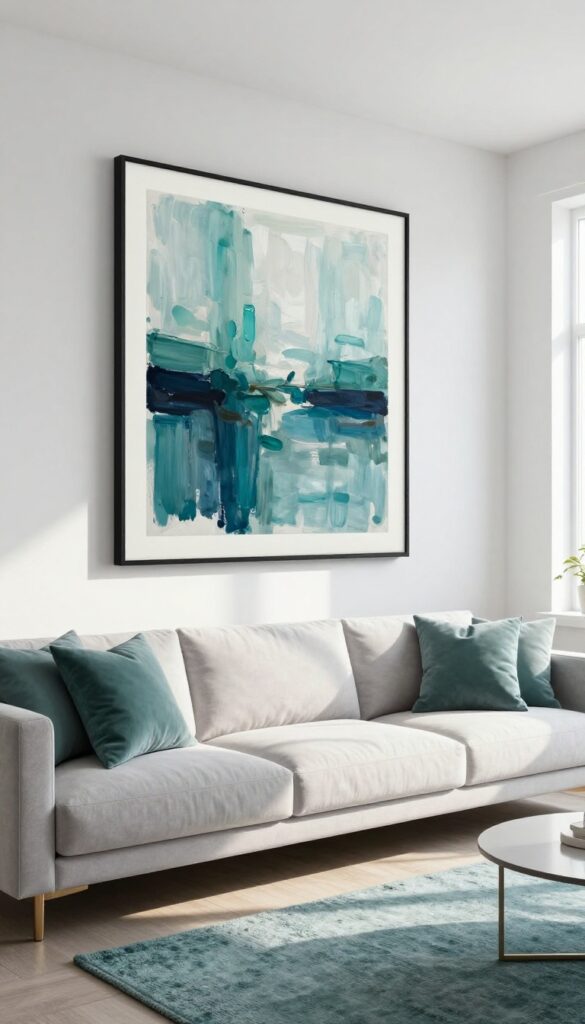
Artwork is one of the easiest ways to bring teal into a room without committing to a painted wall or large furniture piece. A single abstract painting with teal swirls or a set of prints featuring coastal blues can anchor your color scheme while keeping the space feeling curated. The key is to let the art stand out against a neutral wall—think soft white, warm gray, or even a pale beige—so the teal really pops.
This approach works especially well in living rooms where you already have other teal accents like throw pillows or a rug, because the artwork ties everything together visually.
For a modern, clean look, choose artwork that features teal as a dominant color rather than a minor accent. Abstract pieces with sweeping brushstrokes or geometric patterns in teal, navy, and white feel sophisticated and fresh. If you prefer a gallery wall, mix teal-focused pieces with black-and-white photography or simple line drawings to keep the arrangement from feeling too matchy.
Stick with slim black or white frames to maintain a sleek, uncluttered appearance. Position the art at eye level, and consider the scale: a large single piece makes a bold statement, while a cluster of smaller works adds visual interest without overwhelming the room.
Best Colors For Framing
- Black and white frames are your safest bets for a clean, modern look. They let the teal in the artwork take center stage without competing for attention. If your room has warm wood tones, you could also try natural wood frames in a light oak or walnut—just keep the finish matte to avoid a shiny distraction.
- Avoid ornate or gold frames unless your style leans traditional, as they can clash with the crisp, contemporary vibe teal often brings.
Wall Decor Tip
Hang your teal artwork on a wall that gets some natural light, but not direct sunlight, which can fade the colors over time. If you're building a gallery wall, lay the pieces out on the floor first to experiment with spacing—aim for 2-3 inches between frames for a cohesive look. Use a level to keep things straight, and don't be afraid to include a small teal sculpture or a woven wall hanging alongside the art for added texture.
Small-space Fix
In a compact living room, a single large teal canvas can make the space feel taller and more expansive, especially if the artwork has vertical lines or an abstract flow. Avoid overcrowding the wall with too many small pieces, which can make a small room feel busy. Instead, let one bold piece do the heavy lifting, and complement it with a simple floor lamp or a small plant nearby to balance the visual weight.
9. Mix Teal with Warm Wood Tones
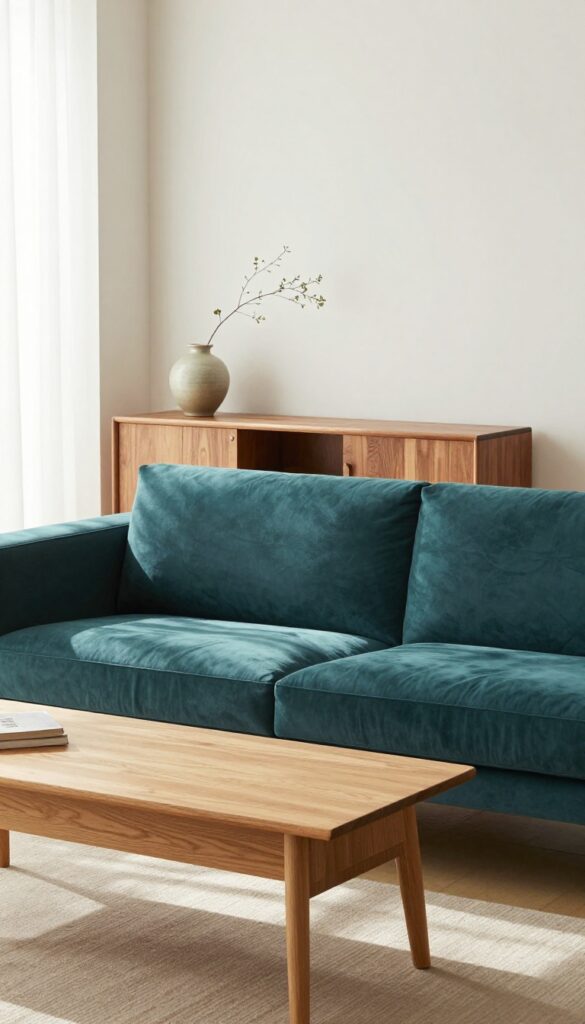
Teal and wood are a match made in decor heaven. The cool, jewel-like depth of teal finds its perfect counterpoint in the natural warmth of wood. This pairing feels instantly grounded and organic, like a breath of fresh air in a modern space.
Whether you go for a teal sofa or just a rug, adding wood elements keeps the look from feeling too cold or clinical.
The key is contrast. A deep teal velvet sofa against a light oak coffee table creates a striking visual balance. Or try a teal area rug over hardwood floors with a walnut media console.
The wood tones warm up the teal, while the teal keeps the wood from feeling too rustic or traditional. It's a clean, modern look that still feels cozy and inviting.
Best Wood Pairings
- Light woods like oak, ash, or birch keep the room airy and modern. Medium walnut or acacia adds richness without heaviness. Avoid very dark woods like ebony, which can make the teal feel muddy.
- Stick to woods with visible grain and natural variation for the most organic feel.
Furniture Focus
- A teal sofa is the star, but a teal accent chair or ottoman works too. Pair it with a wooden coffee table, side table, or floating shelves. For a bolder move, try a teal media console against a wood accent wall.
- Keep the wood pieces simple and clean-lined to match the modern angle.
Finishing Touch
Add a few wooden accessories like a carved bowl, picture frames, or a plant stand. A single branch in a ceramic vase on a wood console ties the look together. The mix of cool teal and warm wood feels polished but effortless.
10. Use Teal in Small Doses with Vases and Decor
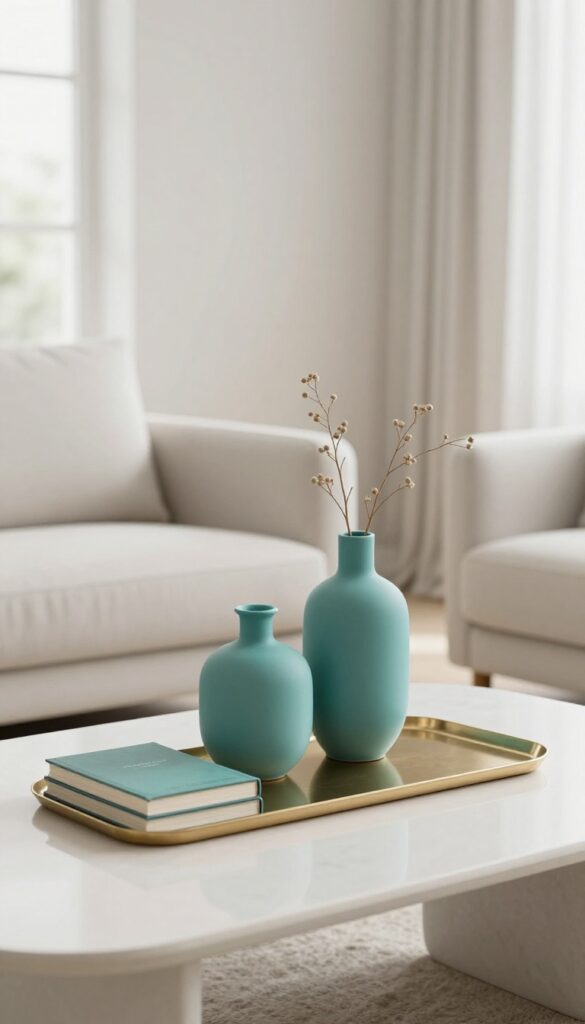
Not ready to commit to a teal sofa or an accent wall? That's fair. The beauty of teal is that even a tiny hit of it can shift a room's energy.
A single ceramic vase or a pair of candle holders in this jewel tone can make a neutral setup feel intentional and polished. It's the kind of low-pressure move that lets you test the color without repainting or reupholstering. Plus, small teal objects are easy to move around, so you can play with placement until it clicks.
Grouping a few teal accessories together creates a curated vignette that draws the eye without overwhelming the space. Think of a coffee table styled with a teal ceramic vase, a stack of books with a teal spine, and a small brass tray. The teal pieces act as anchors, while the brass and neutrals keep things light.
On a shelf, try clustering a teal candle holder next to a white ceramic bust and a green plant. The contrast makes each piece stand out. This approach works especially well in modern, clean rooms where every object earns its place.
The key is to keep the rest of the styling minimal so the teal pops.
Best Colors To Pair
- Teal plays beautifully with crisp white, warm beige, and soft gray. For a bolder look, pair it with mustard yellow or blush pink. If you prefer a monochromatic vibe, combine different shades of teal and blue-green.
- Avoid pairing teal with too many other bright colors at once—stick to one or two accents to keep the look clean.
Shelf Styling Tip
When styling a shelf with teal decor, use the rule of three: group three teal items of varying heights together. For example, a tall teal vase, a medium ceramic bowl, and a small candle holder. Space them evenly and add neutral objects like white books or a wooden frame in between to let the teal breathe.
Budget-Friendly Swap
- You don't need expensive designer pieces. Thrift stores and discount home stores often have great teal vases, bowls, and candle holders. Spray paint is also your friend—a coat of teal spray paint can transform a plain glass jar or thrifted ceramic piece into a custom accent.
- Just make sure to use a primer for a smooth, lasting finish.
11. Paint Built-In Shelves or a Bookcase Teal
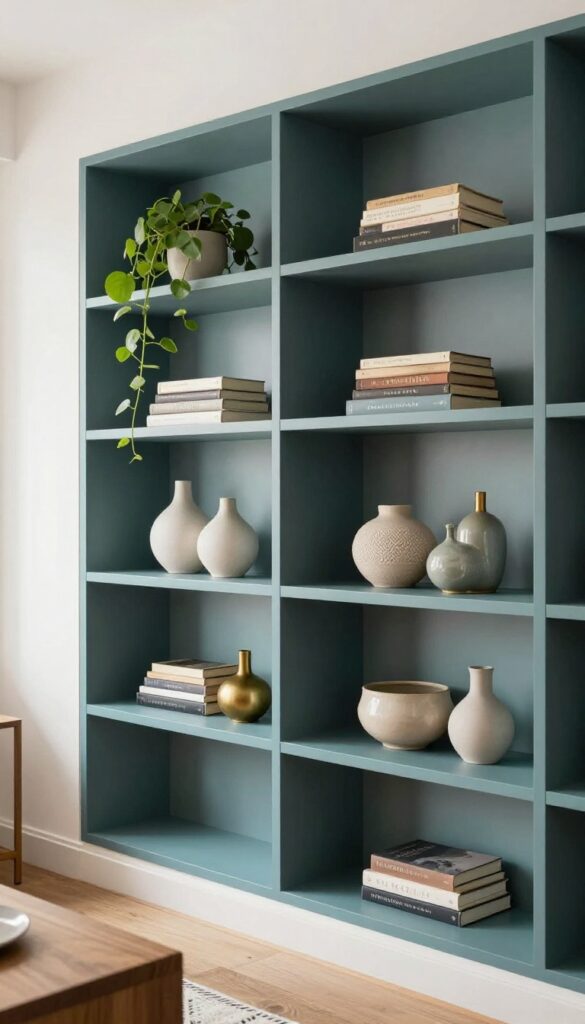
Built-in shelves and bookcases often fade into the background, especially when they're painted white or left as bare wood. A coat of teal changes that completely. Suddenly, your shelves become a deliberate design feature—a backdrop that gives your books, ceramics, and framed photos a jewel-toned stage.
The trick is to keep the shelves themselves light or open, so the teal feels airy rather than heavy.
Teal built-ins add depth without overwhelming the room. The color acts like a neutral with personality, pairing well with warm woods, brass accents, and soft textiles. For a modern-clean look, choose a muted teal with gray undertones—think deep sea or stormy teal.
Paint the interior back of the shelves white or a pale cream to keep the display crisp. If you're working with a standalone bookcase, the same principle applies: paint the frame and shelves teal, but leave the back panels light. This creates a frame effect that makes your objects pop.
Style the shelves with a mix of books (both vertical and horizontal stacks), ceramic vases, and a few trailing plants. Keep the arrangement balanced but not too symmetrical—a little asymmetry feels more natural and less staged.
Best Teal Shades For Shelves
- Not all teals work the same way on vertical surfaces. For a modern-clean vibe, stick with teals that have a hint of gray or green rather than bright blue. Sherwin-Williams' 'Riverway' or Benjamin Moore's 'Hale Navy' (which reads as a dark teal) are solid choices.
- If you want something lighter, try 'Watery' by Benjamin Moore—it's soft and airy but still reads as teal. Avoid overly bright or turquoise shades if your goal is a sophisticated, grown-up look.
Shelf Styling Tip
- To keep the shelves from looking cluttered, follow the rule of thirds: fill about one-third of each shelf with objects, leaving the rest as negative space. Group items in odd numbers—three small vases or five books—and vary the heights. Add a small lamp or a piece of art on the top shelf to draw the eye upward.
- For a cleaner look, use matching book covers or wrap books in kraft paper to create a uniform color block.
Finishing Touch
- Add brass or gold hardware to the bookcase if it has doors or drawers. The warm metal against teal creates a luxe, collected feel. If the shelves are open, consider installing small LED strip lights along the top edge to highlight the teal and your displayed objects.
- This makes the whole setup feel intentional and gallery-like, especially in the evening.
12. Combine Teal with Metallic Accents
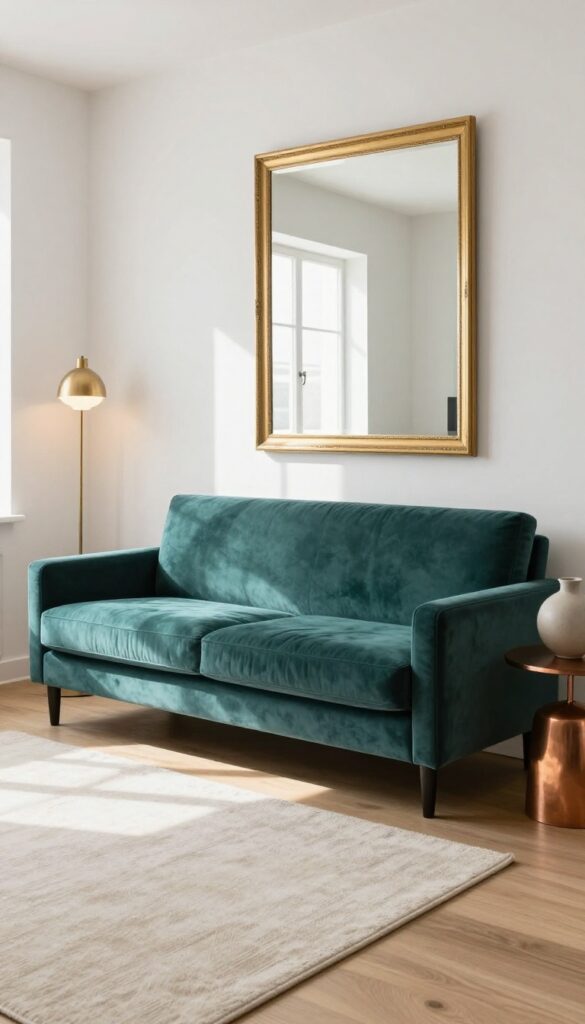
Gold, brass, or copper accents are like jewelry for your teal living room. They amplify the jewel-tone richness without overwhelming the space. A single metallic piece—like a brass floor lamp or a copper side table—can transform the whole vibe from flat to glamorous.
The key is to keep it intentional: one or two statement pieces rather than a room full of shine.
Metallic accents work beautifully with teal because they echo its depth and luminosity. Gold brings warmth, brass adds a vintage edge, and copper offers a modern, earthy glow. Start with a gold-framed mirror above a teal sofa to reflect light and open up the room.
Then add a brass coffee table or a copper drink cart for layered shine. The result is a space that feels polished but not fussy—perfect for a modern living room that wants a touch of luxury without going over the top.
Best Metals To Pair With Teal
- Gold and brass are your safest bets—they complement teal's cool undertones while adding warmth. Copper works well if your teal leans more emerald or navy, creating a rich, earthy contrast. Avoid silver or chrome, which can feel too cold against teal.
- Stick to one metal family per room to keep the look cohesive.
Where To Place Metallic Accents
Focus on eye-level spots: a gold-framed mirror above a console table, a brass lamp on a sideboard, or copper candle holders on a coffee table. You can also add metallic legs to a teal velvet sofa or a brass base to a glass coffee table. The goal is to catch light naturally, so position pieces near windows or under lamps.
Finishing Touch
Balance the shimmer with matte textures: a linen sofa, a wool rug, or a wooden coffee table. This prevents the room from feeling too shiny or formal. A single metallic throw pillow or a brass tray on a coffee table can be enough—let the teal do the heavy lifting.
13. Create a Teal Gallery Wall with Mixed Frames
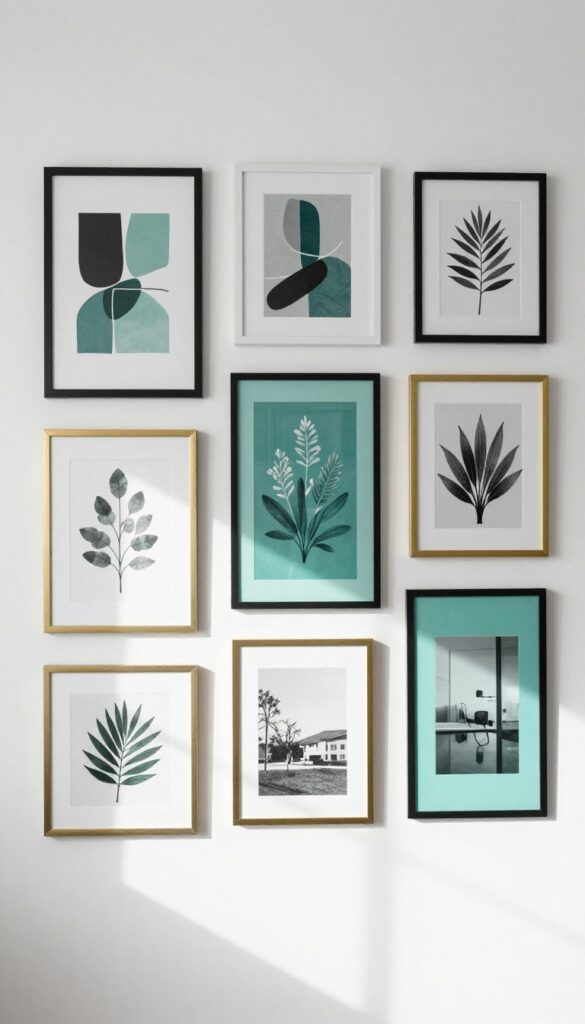
A gallery wall is a fantastic way to inject personality into your living room, and using teal as the unifying color makes it feel intentional and polished. Instead of sticking to one shade, mix different tones of teal—from deep ocean blues to soft aqua—across your artwork, photos, and prints. The variety keeps the eye moving, while the cohesive color palette ties everything together for a modern, clean look.
It's a practical project that lets you showcase your style without overwhelming the space.
Curate a gallery wall where teal is the unifying color. Mix different shades of teal in artwork, photos, and prints. Use a variety of frame styles but keep the color palette cohesive for a modern look.
Frame Mixology
Combine frame styles like slim metal, chunky wood, and ornate gold, but stick to a limited finish palette—black, white, and brass work well. The contrast in textures adds depth, while the consistent frame colors keep the wall from feeling chaotic. For a clean modern vibe, use mostly thin black or white frames with one or two brass accents as focal points.
Artwork Selection
Choose pieces that feature teal prominently, but vary the medium: abstract prints, botanical illustrations, and black-and-white photography with teal matting. This mix keeps the wall visually interesting. If you have personal photos, edit them with a teal filter or print them on teal-toned paper to blend seamlessly.
Layout And Spacing
- Before hammering nails, lay the arrangement on the floor to experiment with spacing. Keep gaps between frames consistent—2 to 3 inches works well. For a modern look, try a grid layout for smaller pieces or a salon-style cluster for larger ones.
- Start with the largest piece in the center and build outward.
FAQ
What colors go best with teal in a living room?
Teal pairs well with neutrals like white, gray, beige, and cream. For a bolder look, try mustard yellow, blush pink, navy, or warm wood tones. Metallics like gold and brass also complement teal beautifully.
Is teal a good color for a small living room?
Yes, teal can work in small spaces if used thoughtfully. An accent wall or a few accessories add depth without making the room feel cramped. Pair with light colors and good lighting to keep the space open.
How do I keep a teal living room from feeling dark?
Balance teal with plenty of light colors, such as white walls, light flooring, and bright textiles. Use mirrors to reflect natural light, and choose teal in lighter shades or as an accent rather than the dominant color.
Can teal work in a modern farmhouse style?
Absolutely. Teal adds a fresh twist to farmhouse decor. Pair it with natural wood, shiplap, and neutral linens.
A teal sofa or accent chair can be the perfect pop of color in an otherwise neutral space.
What type of lighting works best with teal decor?
Warm lighting enhances teal's richness, while cool lighting can make it feel flat. Use warm white bulbs and layer ambient, task, and accent lighting. Floor lamps and table lamps with soft shades create a cozy glow.
Conclusion
Teal is a versatile color that can transform your living room into a jewel-toned retreat without feeling overdone. Whether you go bold with a velvet sofa or subtle with throw pillows, each idea adds a layer of freshness that feels both modern and inviting. Start with one or two changes and build from there.
The beauty of teal is that it plays well with so many styles—so you can make it your own. Here's to a living room that feels refreshed, balanced, and full of personality.