13 Small-Space Living Room Furniture Ideas for Warm, Cozy Comfort Zones
Making a small living room feel both spacious and cozy is a balancing act. You want it to welcome you after a long day, but without the clutter that comes with too much furniture. The trick is choosing pieces that earn their square footage—think storage ottomans, slim-profile sofas, and nesting tables that tuck away when not needed.
Warmth doesn't have to mean bulky. With the right furniture choices, you can layer in texture and softness while keeping the floor plan open.
A few well-placed accents, like a chunky knit throw or a velvet armchair, can instantly make the room feel like a hug. These 13 ideas focus on furniture that works harder so your space feels bigger, calmer, and cozier.
1. A Slim-Profile Sofa That Doesn't Skimp on Comfort
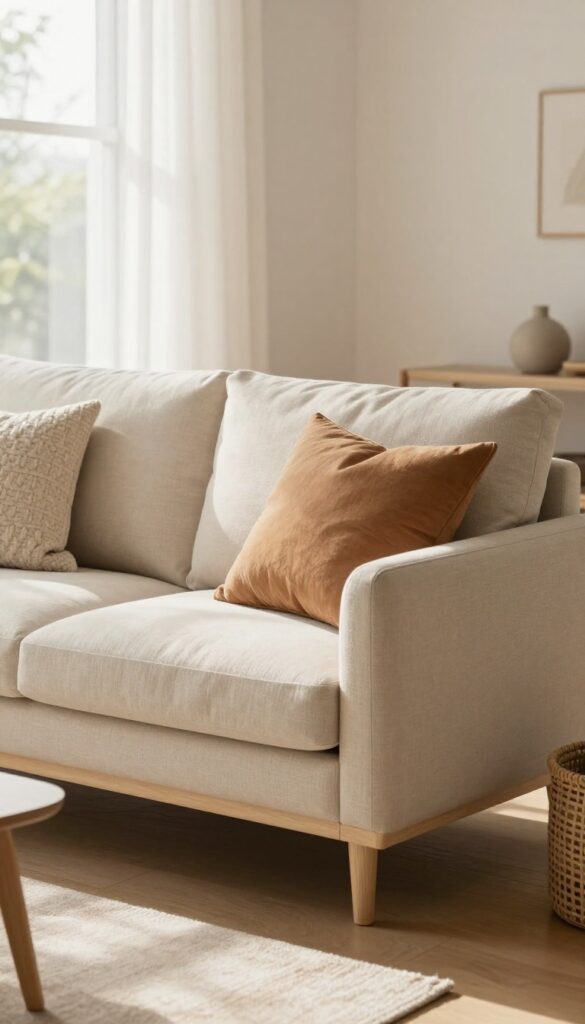
In a small living room, every inch counts, but that doesn't mean you have to sacrifice coziness. A slim-profile sofa with narrow arms and a streamlined silhouette can make a space feel larger while still offering that deep, plush seating you crave. Light upholstery keeps things airy, and the right cushions give you that sink-in feeling without the bulk.
When space is tight, a sofa with a slim frame and low back can visually open up the room. Look for models with tapered legs to create an airy feel underneath. Deep seats and plush foam or down-blend cushions ensure comfort isn't compromised.
A warm beige or soft cream fabric adds coziness and reflects light, making the room feel bigger.
Best Colors
Stick with warm neutrals like oatmeal, warm gray, or dusty rose to keep the sofa inviting without overwhelming the space. These tones pair well with natural wood accents and soft textiles, reinforcing the warm and cozy vibe.
Small-space Fix
Choose a sofa with exposed legs—at least 4 inches high—so you can slide a slim console table or storage baskets underneath. This maximizes floor space and adds functionality without visual clutter.
Finishing Touch
Layer in texture with a chunky knit throw and a couple of linen pillows in warm earth tones. This adds depth and softness, making the sofa feel even more inviting.
2. Storage Ottomans That Pull Double Duty
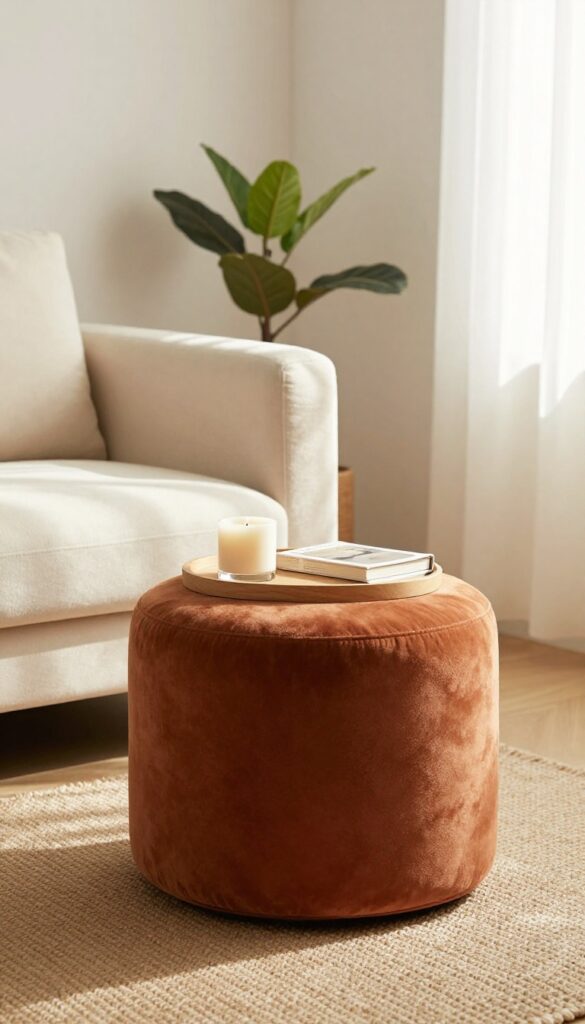
A storage ottoman is one of those pieces that quietly does a lot. Tuck it under a console table or let it sit in the middle of the room—either way, it hides clutter and gives you a spot to put your feet up. In a small living room, that kind of versatility is gold.
Ottomans with hidden storage are perfect for stashing blankets, magazines, or remote controls. Use one as a coffee table with a tray on top, or pull it up as extra seating when guests come over. The warm and cozy vibe comes from choosing soft fabrics like velvet or bouclé in earthy tones—think rust, olive, or warm beige.
Place it near the sofa so it feels intentional, and top it with a wooden tray and a candle for instant coziness.
Best Colors For Warmth
Stick to warm neutrals or muted jewel tones. A rust velvet ottoman adds richness without overwhelming a small space. If your room leans neutral, a tan or caramel leather ottoman brings texture and warmth.
Small-space Layout Tip
In a compact living room, choose an ottoman that’s about two-thirds the length of your sofa. Place it on a soft rug to anchor the seating area, and leave at least 18 inches around it for easy flow.
Finishing Touch
Set a round wooden tray on top to create a stable surface for drinks or decor. Add a small stack of books and a ceramic dish for remotes—functional and styled in one move.
3. Nesting Tables for Flexible Surface Space
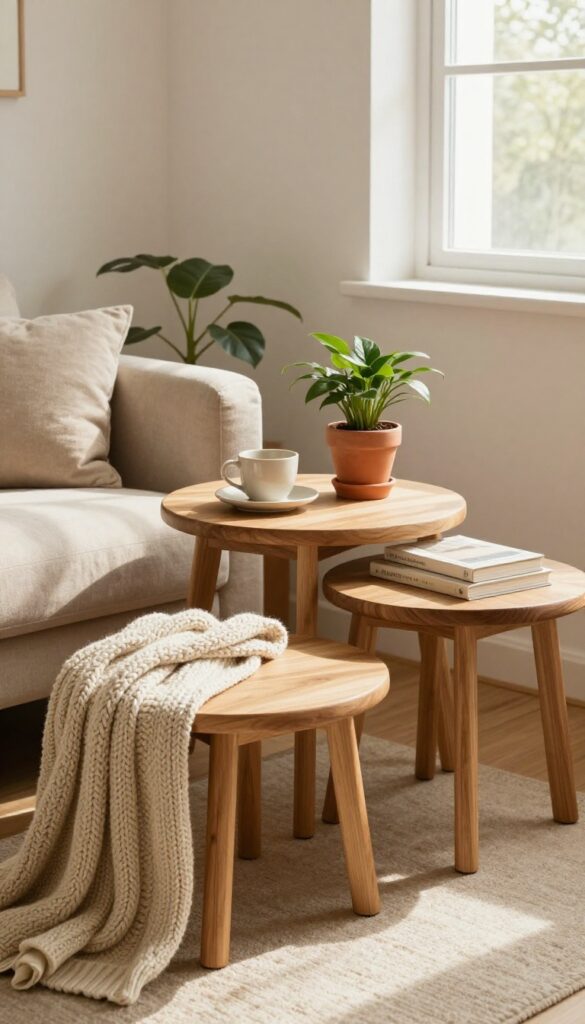
Nesting tables are the unsung heroes of small living rooms. They sit quietly tucked together, taking up almost no visual or physical space, until you need an extra surface for a coffee cup, a book, or a laptop. Then you simply pull one out, and suddenly you have a side table, a snack station, or a mini desk.
It’s that effortless flexibility that makes them such a smart choice for cozy, compact layouts.
Nesting tables let you expand your surface area only when needed. Tuck them together to save floor space, then pull them apart for snacks, drinks, or a laptop. Choose warm wood tones for a cozy feel.
Best Materials For Warmth
- For a cozy vibe, look for nesting tables in solid wood or wood veneer with a natural finish. Oak, walnut, or acacia bring warmth and texture that complement soft sofas and wool throws. If you prefer a lighter look, birch or ash with a clear coat keeps the room airy but still inviting.
- Avoid glass or high-gloss lacquer—they can feel cold and formal, which works against the warm, relaxed mood you’re aiming for.
Layout Tip: Keep Them Close
- Position your nesting tables near the seating area—beside the sofa or between two armchairs. When nested, they act as a single compact unit; when separated, each table should be within arm’s reach of a seat. In a small room, place the largest table closest to the sofa and the smaller ones to the side, so they don’t block traffic paths.
- This setup gives you flexibility without cluttering the floor plan.
Styling The Stack
- Even when nested, nesting tables can look intentional and styled. Place a small tray on the top table with a candle, a coaster, or a remote caddy. On the lower tables, stack a couple of coffee table books or a small plant.
- This layered look adds visual interest without making the tables feel busy. When you pull one out, the remaining stack still looks complete, so the room never feels empty or unbalanced.
4. A Corner Bookshelf That Doubles as a Room Divider
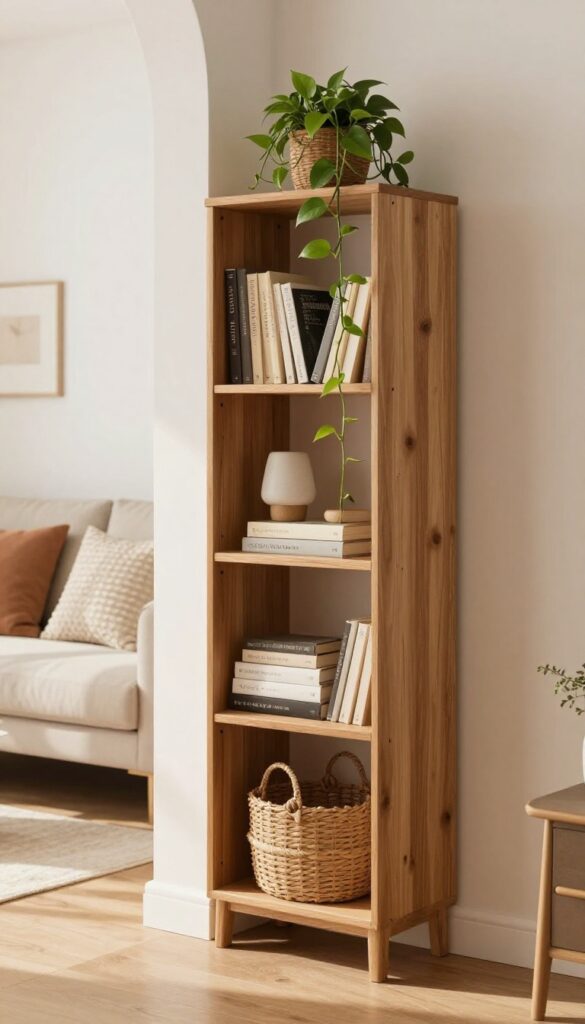
Open-plan living is great for flow, but sometimes you want a little separation without losing the airy feel. That’s where a corner bookshelf comes in—it can carve out a cozy living zone while still letting light pass through. The trick is choosing an open-backed design that feels like a visual screen rather than a wall.
Fill it with a mix of books, trailing plants, and ceramic pieces, and suddenly you have a room divider that actually works for you.
Place the bookshelf at the edge of your seating area, perpendicular to the wall, so it defines the space without blocking sightlines entirely. Keep the styling light and layered—stack a few books horizontally, add a small lamp, and let a pothos vine trail down one side. The back can stay open for an airy look, or you can attach a thin panel or fabric for more privacy.
Either way, it’s a smart, small-space-friendly solution that adds storage and character.
Best Placement For Flow
Position the bookshelf at a 90-degree angle from the wall, leaving a few feet of clearance on both sides. This creates a natural L-shape that anchors the living area without blocking pathways. In a narrow room, try a slim unit (under 12 inches deep) to keep the walkway open.
Styling For Warmth
Mix materials to keep the look cozy: wood shelves with woven baskets, matte ceramic vases, and soft fabric bins. Add a small table lamp on one shelf for warm ambient light. Stick to a neutral palette with earthy accents—terracotta, olive, and cream—to maintain a relaxed vibe.
Small-space Bonus
Use the back of the bookshelf as a mini display or catch-all. Attach a few hooks for bags or hats, or lean a lightweight mirror against it to visually expand the room. This turns a single piece of furniture into a multitasking zone.
5. An Armchair with a Built-In Footstool
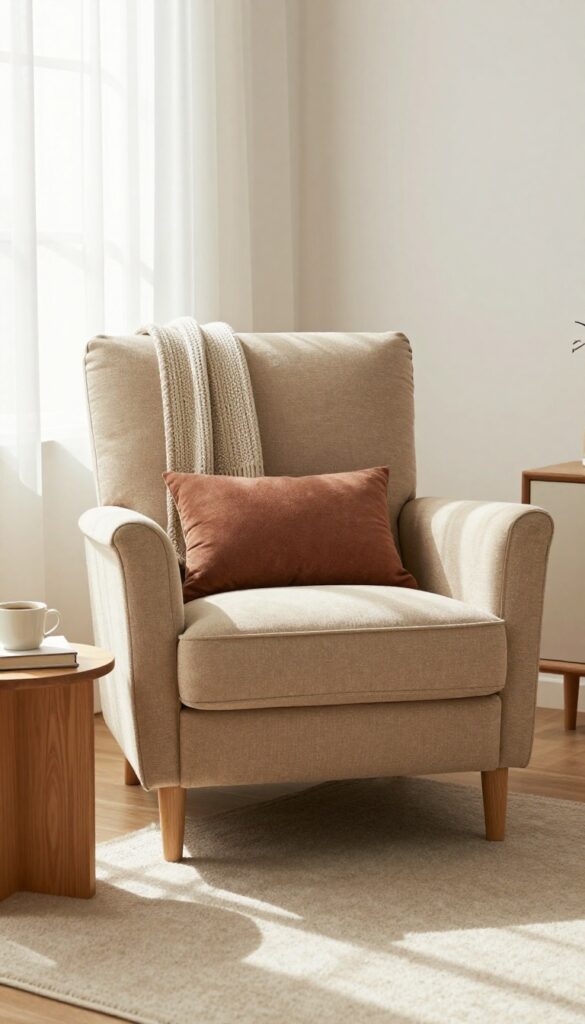
Nothing says “this is my spot” like a cozy armchair with a matching footstool. In a small living room, a built-in footrest or a streamlined ottoman saves space while giving you a dedicated relaxation nook. Look for a chair with a high back and padded arms—it instantly feels more enveloping.
Place it near a window or under a floor lamp, and you’ve got a reading corner that doubles as a visual anchor for the room.
A built-in footstool armchair is a small-space superhero. It eliminates the need for a separate ottoman, keeping the floor plan open while still offering that leg-up comfort. The key is choosing a compact silhouette—think mid-century modern or a streamlined club chair—so it doesn’t overwhelm the room.
Upholster it in a warm, textured fabric like chenille or bouclé to reinforce the cozy vibe. Position it on a soft rug and add a small side table for your coffee or book. This setup creates a clear zone for unwinding without eating up square footage.
Best Colors
Stick with warm neutrals like oatmeal, taupe, or a soft rust to keep the chair inviting. If you want a pop, try a deep olive or mustard—they add personality without screaming for attention. Avoid cool grays or stark whites, as they can feel chilly in a cozy scheme.
Layout Tip
Angle the chair toward the center of the room instead of pushing it flat against a wall. This creates a more intimate conversation area and makes the footstool feel like a natural extension of the seat. Leave at least 18 inches between the chair and any furniture for easy movement.
Cozy Detail
Drape a chunky knit throw over the back of the chair and add a small lumbar pillow. The layered textures make the nook feel instantly lived-in and inviting. Choose a throw in a contrasting color to add visual depth.
6. A Lift-Top Coffee Table for Hidden Storage
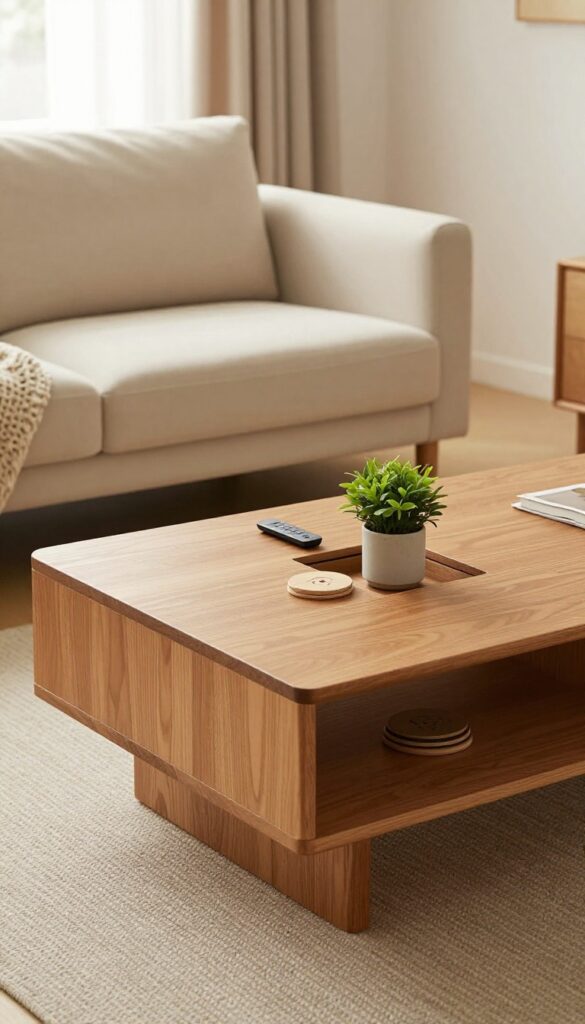
A coffee table that pulls double duty is a small-space lifesaver. Lift-top designs let you raise the surface to a comfortable height for snacking, working, or crafting without hunching over. When the top is down, the table looks clean and intentional.
The hidden compartment underneath is perfect for stashing remotes, coasters, or a deck of cards—keeping the room tidy without sacrificing style.
A lift-top coffee table is a smart choice for living rooms where every inch counts. The mechanism is smooth and easy to operate, so you can switch from coffee table to desk in seconds. Look for a rounded or oval shape to soften the room's edges and make the space feel more inviting.
Pair it with a cozy rug and a soft throw for a warm, lived-in look. The storage below can hold board games, magazines, or even a small laptop, making it a hub for both relaxation and productivity.
Best Materials For Warmth
- Wood finishes like oak or walnut bring natural warmth and age gracefully. If you prefer a lighter look, a whitewashed or birch table keeps the room airy while still feeling cozy. Avoid glass tops—they can feel cold and show fingerprints easily.
- Instead, opt for a matte or slightly distressed surface that hides daily wear.
Layout Tip For Small Spaces
Place the table close enough to the sofa that you can reach it from a seated position, but leave at least 18 inches of clearance for easy movement. In a narrow room, a rectangular lift-top works well; in a square room, a round one encourages flow. Angle a floor lamp nearby to create a focused task area when the top is raised.
Styling The Surface
Keep the top simple when the table is lowered—a small tray for remotes, a ceramic vase, or a stack of books. When you lift it, clear the tray to one side so you have room to work or eat. A round wooden coaster set or a woven placemat adds texture without cluttering the space.
7. Wall-Mounted Media Console to Free Up Floor Space
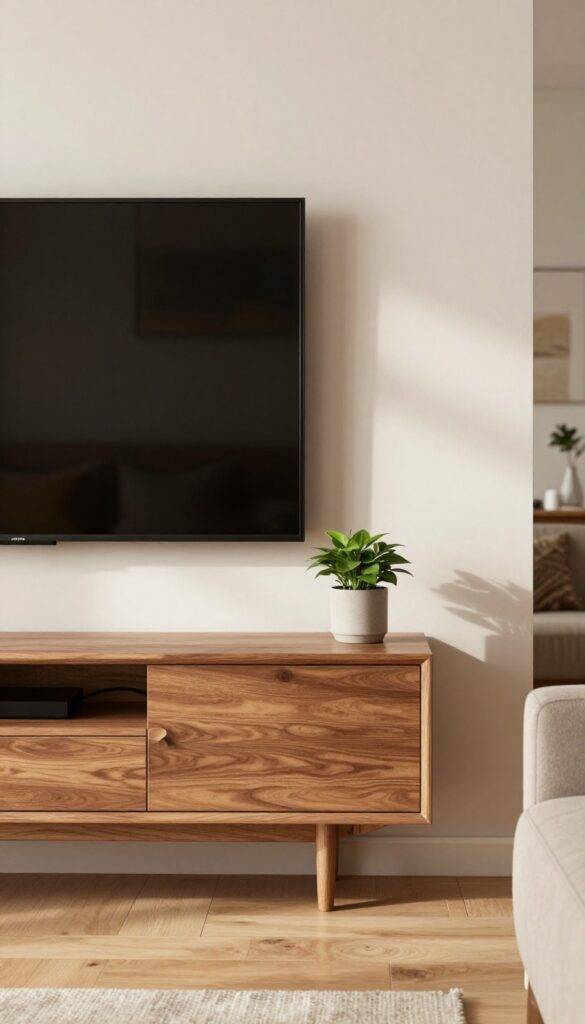
Floor space is precious, especially in a cozy living room where every square inch counts. Mounting your TV console on the wall instantly opens up the room, making it feel airier and more spacious. A slim unit with closed storage keeps cables and clutter out of sight, while a warm wood finish adds that inviting, lived-in feel.
A wall-mounted media console is a smart solution for small living rooms that need to feel bigger without sacrificing style. By lifting the console off the floor, you create visual breathing room and make cleaning a breeze. Choose a unit with a low profile so it doesn't dominate the wall, and opt for closed cabinets to hide electronics and accessories.
A warm wood tone, like walnut or oak, brings coziness and pairs beautifully with neutral walls and soft textiles.
Best Materials
Solid wood or high-quality wood veneer in warm finishes like walnut, teak, or oak. These materials add natural texture and warmth, which is key for a cozy vibe. Avoid glossy or cold materials like glass or high-gloss white, as they can feel sterile.
Layout Tip
Mount the console at a height that allows the TV to be at eye level when seated. Leave at least 6 inches of clearance below the console for a clean, floating look. If you have a soundbar, place it on the console or mount it just below the TV to keep the setup streamlined.
Small-space Fix
In a tight living room, pair the wall-mounted console with a matching floating shelf above the TV. Use the shelf for a few small plants, a framed photo, or a decorative bowl—this draws the eye upward and makes the ceiling feel higher.
8. A Floor Lamp with Built-In Shelves
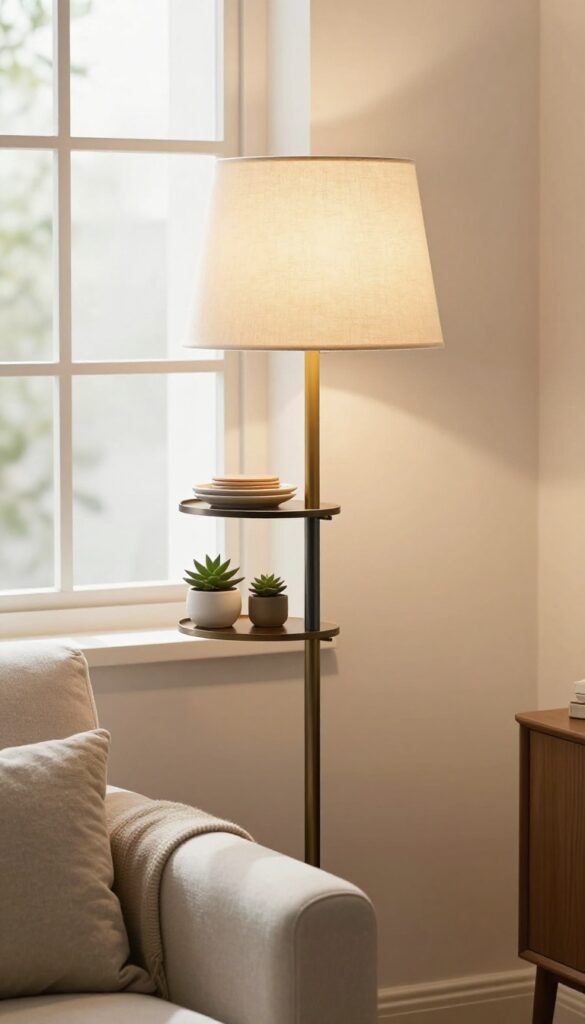
Lighting and storage don't have to compete for floor space. A floor lamp with integrated shelves or a small side table pulls double duty, especially in compact living rooms. It casts a warm glow while giving you a spot for a book, a steaming mug, or a trailing pothos.
This combo keeps surfaces clutter-free and makes the corner feel intentional, not cramped.
Instead of a separate lamp and side table, a single piece does both jobs. The shelves are usually slim, so they work best for daily essentials rather than bulk storage. Place it next to your favorite armchair or sofa end to create an instant reading nook.
The ambient light softens the room, and the built-in ledge keeps your remote, phone, or a small coaster within reach.
Best Materials
- Look for a lamp with a metal or wood base that matches your room's warm tones. A brushed brass or matte black finish adds a cozy, modern feel. Avoid glossy plastics—they can cheapen the look.
- A fabric shade in cream or linen diffuses light beautifully and keeps the piece feeling soft and inviting.
Small-space Fix
- In tight corners, choose a lamp with a narrow footprint and shelves that wrap around the pole rather than sticking out far. This prevents it from blocking walkways. Place it where you'd normally put a side table, but save those precious inches.
- Bonus: the vertical storage draws the eye up, making the ceiling feel higher.
Styling Tip
- Keep the shelves minimal. One shelf can hold a small ceramic dish for keys, another a tiny succulent or a stack of coasters. Avoid overcrowding—the point is to reduce visual clutter.
- If the lamp has a lower shelf, use it for a small basket to stash remotes or charging cables out of sight.
9. Modular Seating That Adapts to Your Needs
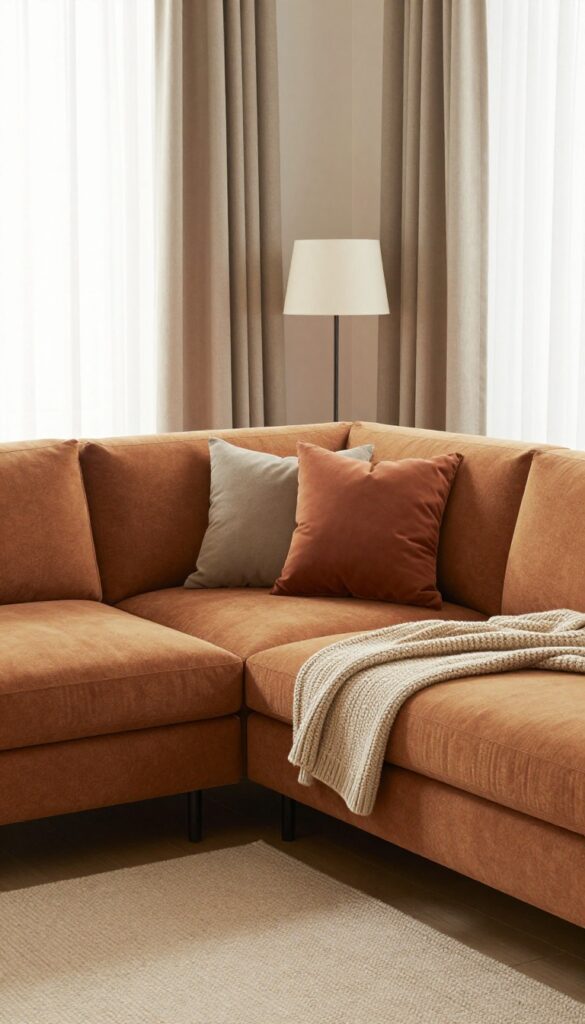
Life changes, and so should your sofa. Modular seating—think sectionals with pieces you can move, flip, or rearrange—gives you a living room that shifts with your needs. One week it’s a deep chaise for movie marathons, the next it’s a set of separate seats for game night.
In small spaces, this flexibility is a game changer because you’re not stuck with one layout that might not work tomorrow.
Modular sofas let you customize your seating without buying new furniture. They’re perfect for renters or anyone who likes to refresh their room often. The key is choosing a system with lightweight pieces that click together easily.
Look for options with storage underneath or built-in tables for extra function. In a warm, cozy room, go for soft fabrics like chenille or velvet in earthy tones—think rust, olive, or warm beige. Add plush throw pillows and a chunky knit blanket to make the modular setup feel intentional and inviting, not like a temporary fix.
Best Colors
Stick with warm neutrals like taupe, camel, or terracotta to keep the room feeling cozy. If you want a pop, choose one modular piece in a deeper shade like forest green or burnt orange. Avoid cool grays—they can make the space feel less inviting.
Layout Tip
In a small living room, arrange the modules in an L-shape along two walls to open up the center. Leave one side free for a slim console table or a floor lamp. This creates a defined seating zone without blocking traffic flow.
Texture Mix
Balance the sofa’s fabric with contrasting textures. Add a flat-weave wool rug underneath, linen curtains behind, and a few velvet or bouclé pillows on the seats. This keeps the modular look from feeling too uniform or casual.
10. A Bench That Serves as Seating and Storage
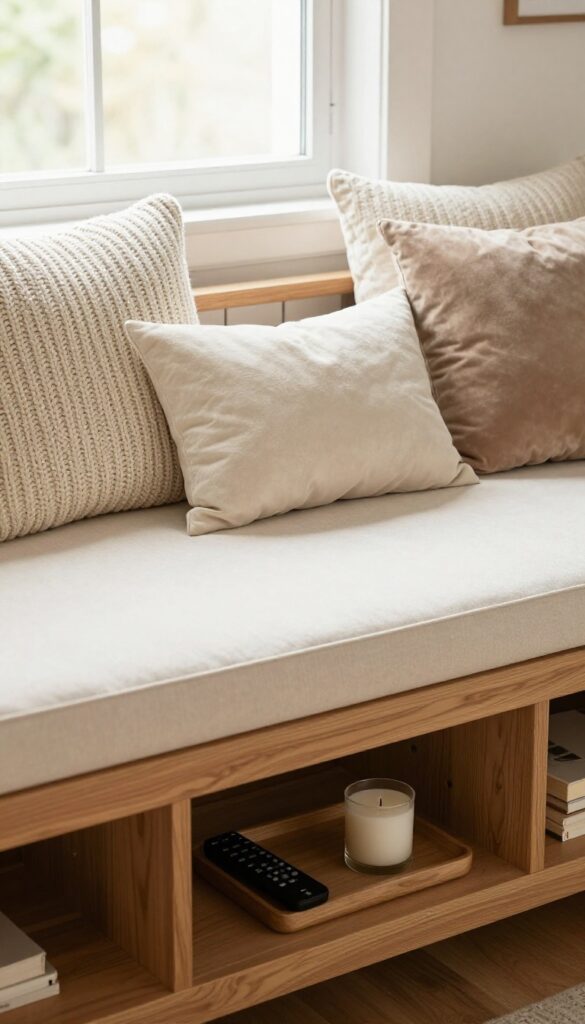
A storage bench is one of those pieces that quietly does a lot. It gives you a place to sit while pulling on boots or just pausing for a moment, and underneath, it hides blankets, pillows, or even board games. In a small living room, that double duty is gold.
The trick is choosing one that feels intentional, not like an afterthought. A warm wood tone or a soft painted finish keeps it from looking like a utility piece, and adding a cushioned top in a cozy fabric makes it an actual spot you want to use.
Place a storage bench along a wall or under a window. It offers a spot to sit while putting on shoes and hides extra throws or pillows. Add a cushion in a warm fabric for comfort.
Best Materials For Warmth
Go for natural wood like oak or walnut if you want that warm, lived-in feel. Painted finishes in soft cream, sage, or muted navy also work well, especially if your room leans more modern. Avoid cold metals or glossy surfaces—they don't match the cozy vibe.
Small-space Placement
Tuck the bench against a wall that's not used for anything else, like the space under a window or beside the door. In a tiny living room, it can even double as a coffee table if you add a tray on top. Just keep the cushion low-profile so it doesn't feel bulky.
Styling The Top
- Layer a couple of throw pillows in textured fabrics like chunky knit or velvet. Add a small tray for remotes or a candle. This turns the bench into a styled surface, not just a storage box.
- Keep it simple—too many items make it feel cluttered.
11. A Rolling Cart as a Mobile Bar or Side Table
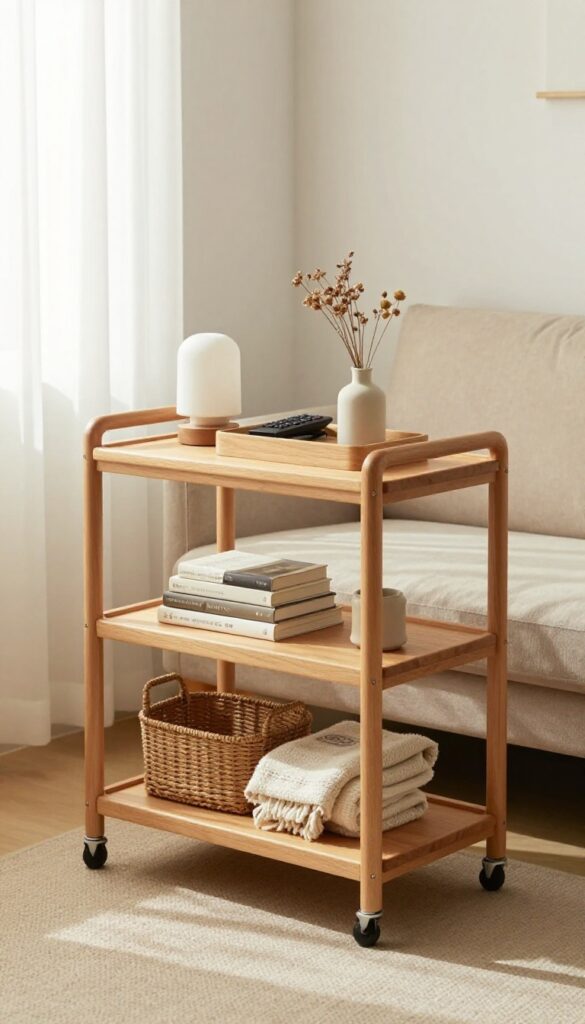
A slim rolling cart is one of those pieces that just makes sense in a small living room. It can be a side table when you need one, a bar cart for entertaining, or a plant stand by the window. Because it moves easily, you can shift it around as your needs change and tuck it into a corner when you want more floor space.
Choose one with shelves so you can display a few favorite items and keep everyday essentials within reach.
Rolling carts are a smart solution for tight spaces because they offer flexible storage and surface area without committing to a permanent footprint. Look for a cart with two or three shelves in a warm wood tone or a matte black finish to match your cozy vibe. Use the top shelf for a lamp, a small tray with remotes, or a vase of dried flowers.
The lower shelves can hold a stack of books, a basket with extra throws, or a few bottles and glasses if you’re using it as a bar. The key is to keep it curated—too much clutter defeats the purpose. When not in use, roll it next to your sofa or against a wall where it acts as a slim console table.
This piece is especially handy in apartments where every inch counts, but it also adds a touch of personality with its open display.
Best Colors And Materials
- For a warm and cozy look, choose a cart in natural wood tones like oak or walnut. If you prefer a more modern feel, a matte black or dark green cart can still feel warm when paired with soft textures. Avoid high-gloss finishes that can feel cold.
- Metal frames should have a brushed or powder-coated finish to avoid glare. The shelves can be wood, bamboo, or even tempered glass with a woven basket underneath for warmth.
Styling For Small Spaces
- In a small living room, every item should earn its keep. Use the cart to corral items you use daily: a coaster set, a small plant, a candle, and a book you’re reading. This keeps the cart looking intentional and not like a catch-all.
- If you have a narrow gap between the sofa and the wall, a slim cart (12-15 inches wide) can slide right in. Alternatively, park it beside an armchair as a dedicated side table that can roll over to the sofa when guests visit.
Cozy Finishing Touch
- Add a small tray on the top shelf to group smaller objects and prevent them from rolling off. Place a soft table lamp or a battery-operated LED candle on the tray for warm ambient light. Drape a chunky knit throw over the lower shelf for texture.
- If you use it as a bar cart, include a few glassware pieces and a small plant to soften the look. The cart should feel like a purposeful accent, not a utility rack.
12. A Compact Daybed for Lounging and Guest Sleep
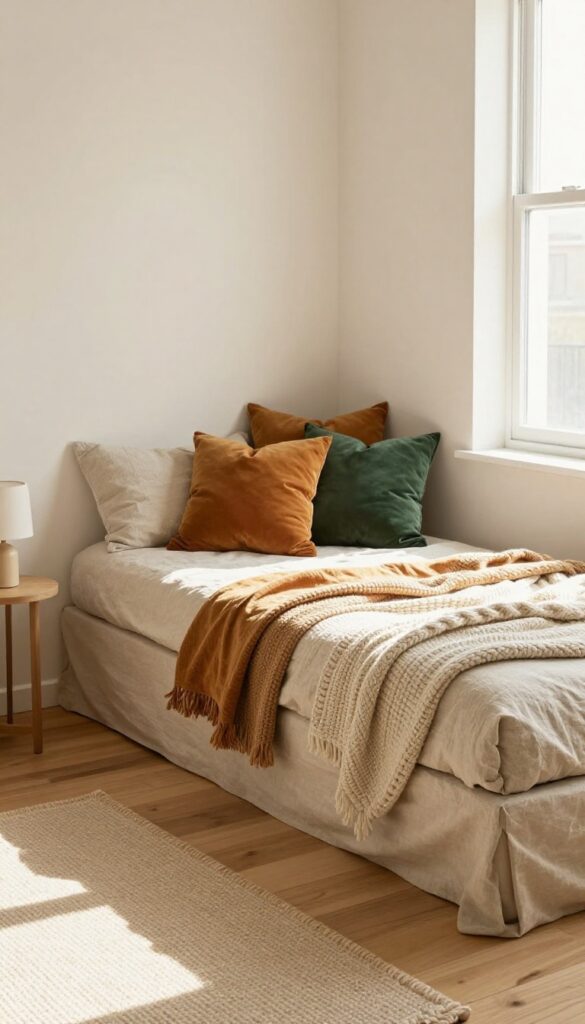
Daybeds are the multitaskers of the furniture world, and they’re perfect when square footage is tight. By day, it’s a cozy spot to curl up with a book; by night, it transforms into a spare bed for friends or family. Tucked against a wall and layered with plush pillows, it feels like a built-in lounge area without taking up extra floor space.
For studio apartments or living rooms that double as guest rooms, this is a warm, practical solution that doesn’t sacrifice style.
A daybed brings flexibility to any small living room. It offers seating during the day and a comfortable sleep surface at night, all in one compact footprint. To make it feel intentional, place it against a long wall or under a window, and surround it with soft textiles.
Add a mix of throw pillows in different sizes and a chunky knit blanket to create that cozy, inviting look. The key is to treat it like a sofa during the day—use a fitted cover or a duvet that can be easily folded away when not in use. This keeps the space looking tidy and ready for lounging, not like a bedroom.
Best Colors And Fabrics
- Stick with warm, neutral tones like oatmeal, taupe, or soft gray for the daybed frame and mattress cover. These shades blend seamlessly into a living room and make the space feel larger. For a pop of color, add accent pillows in rust, mustard, or deep green.
- Choose performance fabrics like linen or cotton blends that are durable and easy to clean—especially important if the daybed doubles as a guest bed.
Layout Tip
Position the daybed perpendicular to the wall to define the seating area, or place it parallel to the wall for a more streamlined look. Leave enough room on one side for a small side table or floor lamp. If space allows, add a narrow console table behind the daybed to hold books, a lamp, or decorative objects—this turns it into a stylish focal point.
Cozy Detail
Layer textures to make the daybed feel luxurious: a chunky cable-knit throw, velvet pillows, and a woven wool blanket. Add a small tray on the mattress with a candle or a stack of magazines to reinforce the lounge vibe. When guests come over, simply remove the decorative pillows and add fresh sheets—the transformation is instant and effortless.
13. Floating Shelves to Replace Bulky Cabinets
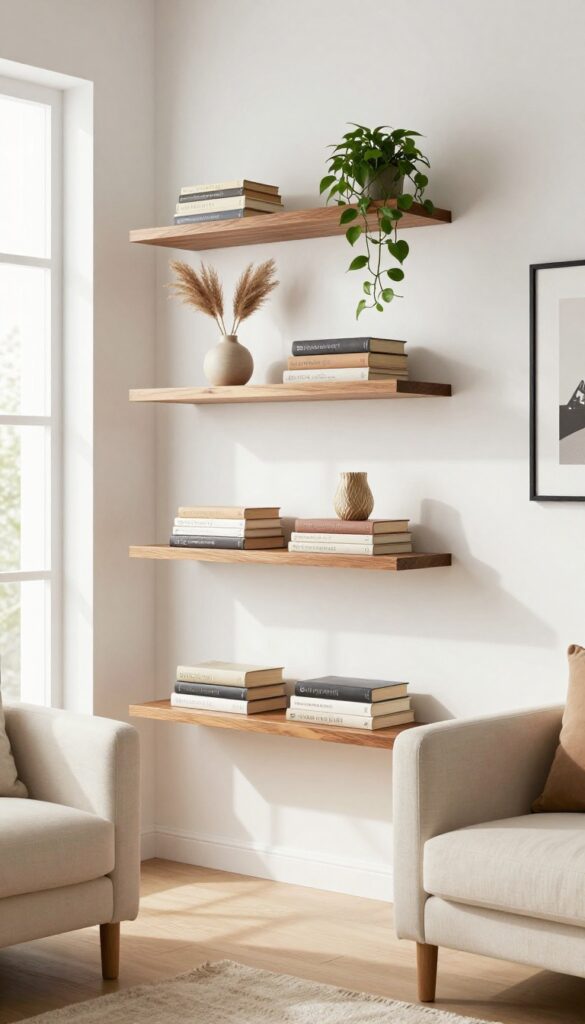
Nothing opens up a room quite like clearing the floor. Floating shelves take the place of heavy entertainment centers and bookcases, giving your living room an airy, spacious feel. They draw the eye upward, which makes ceilings look taller and the whole space feel less cramped.
Plus, they let you show off your favorite books, plants, and decor without hiding them behind doors.
Floating shelves are a small-space superhero. By removing bulky cabinets, you instantly create more visual floor space, which makes the room feel larger and less cluttered. The key is to keep the shelves styled intentionally—mix books with a few decorative objects and a trailing plant for a curated look.
Use warm wood tones or black metal brackets to match your cozy aesthetic. This swap works especially well in tight living rooms or open-concept areas where you want to define zones without adding visual weight.
Best Materials For A Cozy Look
- Go with solid wood shelves in a warm stain like walnut or oak. If you prefer painted shelves, choose a matte finish in a soft cream or warm gray. Black metal brackets add an industrial touch that still feels inviting when paired with warm-toned decor.
- Avoid glossy white or cold metals that can make the room feel sterile.
Shelf Styling Tip
- Create a balanced vignette by grouping items in odd numbers. Stack a few books horizontally, lean a small piece of art, and add a ceramic vase or a small plant. Leave some negative space so the shelves don't look crowded.
- A trailing pothos or a small snake plant adds life and softens the edges.
Small-space Fix
Install shelves from wall to wall to maximize storage without taking up floor space. Place them above a sofa or console table to keep the area functional. Use baskets or decorative boxes on the lower shelves to hide remote controls, chargers, or other small items that can create visual clutter.
FAQ
What is the best sofa for a small living room?
A slim-profile sofa with narrow arms and a light color is ideal. Look for one with deep seats for comfort without the bulk. A loveseat or a compact two-seater often works better than a full-size sectional.
How can I make my small living room feel cozy without clutter?
Choose furniture with built-in storage, like ottomans or lift-top tables. Stick to a few warm textures—like a chunky knit throw or velvet pillows—and keep surfaces clear. Use vertical space with shelves or wall-mounted units.
What color furniture works best in a small space?
Light neutrals like beige, cream, or soft gray keep the room airy. Warm wood tones add coziness without darkening the space. You can always add pops of color through accessories.
How do I arrange furniture in a narrow living room?
Place the sofa along the longest wall and use a slim coffee table. Avoid blocking pathways. Use a floor lamp instead of a bulky table lamp, and consider a console table behind the sofa for extra surface space.
Can I use a large sectional in a small living room?
It's possible if you choose a modular or L-shaped sectional with a chaise that can be moved. Measure carefully and leave enough walking space. A light-colored, low-profile sectional can work without overwhelming the room.
Conclusion
Creating a cozy comfort zone in a small living room is all about choosing furniture that works for you. Each piece should earn its place by offering comfort, storage, or flexibility. With these 13 ideas, you can build a space that feels warm and inviting without feeling cramped.
Remember, the goal is to make your living room a place you love to unwind in. Start with one or two changes that fit your style, and let the room evolve naturally.