11 Budget-Friendly Primitive Living Room Ideas for a Warm, Cozy Home
Primitive decor is all about simplicity, natural materials, and a sense of history. It doesn't have to cost a fortune to achieve that warm, cozy look.
With a little creativity and some smart shopping, you can fill your living room with charming, rustic pieces that feel both personal and inviting.
Whether you're starting from scratch or just want to add a few touches, these 11 budget-friendly ideas will help you create a space you'll love to come home to.
1. Thrifted Wooden Crates as Rustic Shelving
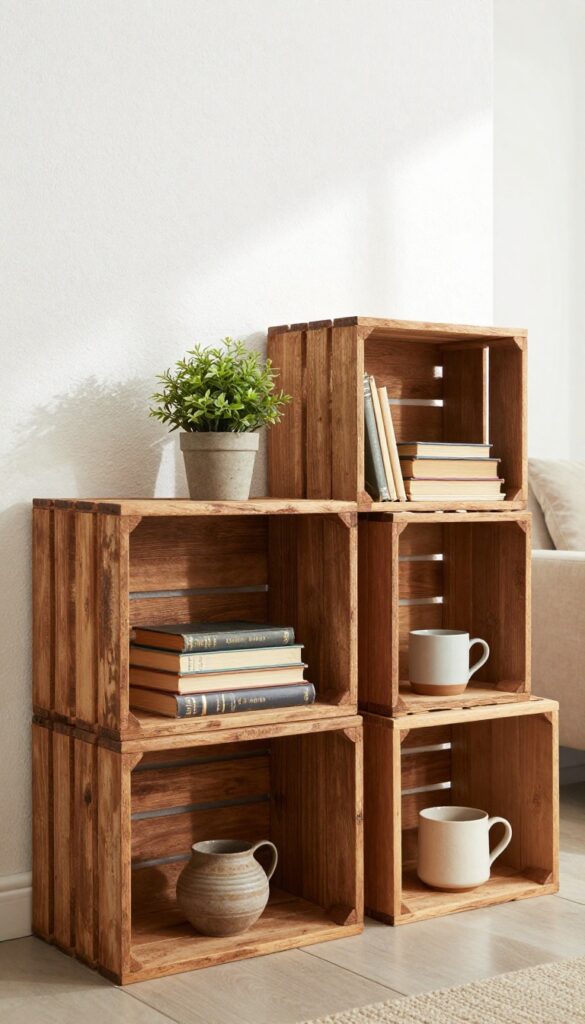
Old wooden crates have a way of making a room feel instantly lived-in and warm. They carry a patina that new furniture just can't fake, and they're usually dirt cheap at thrift stores or flea markets. Stack a few on the floor for a side table, or mount them on the wall for open shelving that adds texture without breaking the bank.
Thrifted wooden crates are one of the easiest ways to add rustic storage to your living room without spending much. Their natural wood tones bring warmth, and the varied sizes let you create a custom look. You can leave them as-is for a more worn vibe or give them a light sand and a coat of stain to match your decor.
They work especially well in cozy, farmhouse-style spaces but can also blend into boho or industrial rooms with the right styling.
Best Materials
- Look for solid wood crates—pine, oak, or even plywood with a bit of age. Avoid particleboard or crates with heavy chemical smells. The rougher the wood, the more character it adds.
- If you want a cleaner look, sand the edges and apply a matte polyurethane.
Layout Tip
Arrange crates in a staggered pattern on one wall to create visual interest. Use a level and sturdy brackets to mount them securely—each crate can hold books, plants, or small decor items. For a floor stack, nest two or three crates together and top with a cushion for extra seating.
Budget-Friendly Swap
Can't find real crates? Check online marketplaces for vintage fruit crates or ask at local grocery stores for discarded wooden boxes. You can also buy new unfinished crates from craft stores and distress them with sandpaper for a similar look at a fraction of the cost.
2. DIY Burlap Curtains for Soft Texture
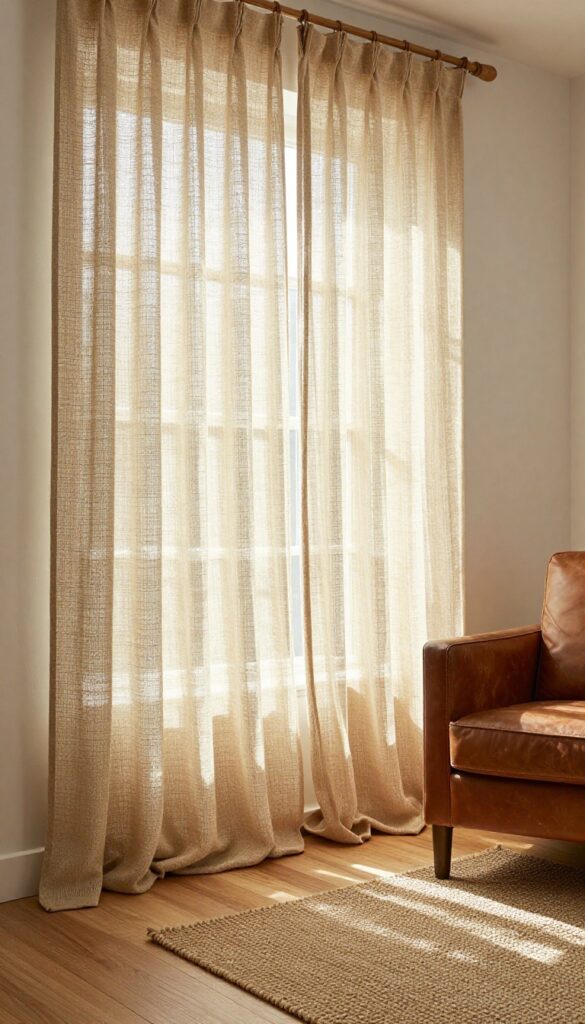
Windows can feel bare or too modern in a primitive-style room. Burlap curtains solve that by adding warmth and a natural, earthy texture that softens the light just enough. They’re also one of the most budget-friendly window treatments you can make yourself, whether you sew or use no-sew hem tape.
The rough weave filters sunlight into a gentle glow, making the whole space feel cozier and more grounded.
Burlap curtains instantly bring a rustic, handcrafted feel to any living room. They work especially well in farmhouse, cabin, or primitive decor because the material feels honest and unpretentious. The key is to keep them simple—no fancy pleats or grommets.
Use basic rod pockets or clip rings so the fabric hangs loosely. For a softer look, wash the burlap first (it will shrink a bit and lose some stiffness). Hang them high and wide to make windows appear larger, and let the fabric puddle slightly on the floor for that relaxed, lived-in vibe.
Best Colors And Weaves
Natural tan or oatmeal burlap is the classic choice, but you can also find it in muted whites, grays, or even a soft sage green. Look for a loose, even weave that lets light through without being see-through. Avoid burlap that feels too scratchy—some blends with cotton or linen are softer while keeping the same look.
Budget-Friendly Swap
If sewing isn’t your thing, use no-sew hem tape to create rod pockets and hem the edges. You can also skip the sewing altogether and simply drape a length of burlap over a curtain rod, letting the raw edges fray naturally. That frayed edge adds to the primitive charm and costs nothing extra.
Finishing Touch
Tie back the curtains with a strip of leather, a piece of twine, or a braided rope. This small detail echoes the rustic texture and keeps the look cohesive. For extra warmth, layer the burlap with linen or cotton sheers underneath—this gives you privacy while still letting in soft light.
3. A Gallery Wall of Vintage Farm Prints
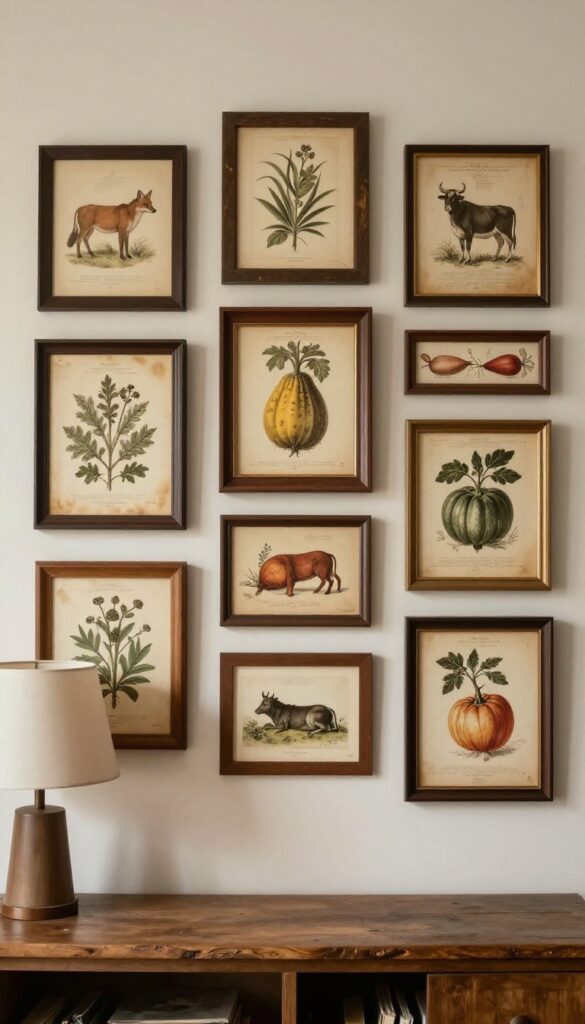
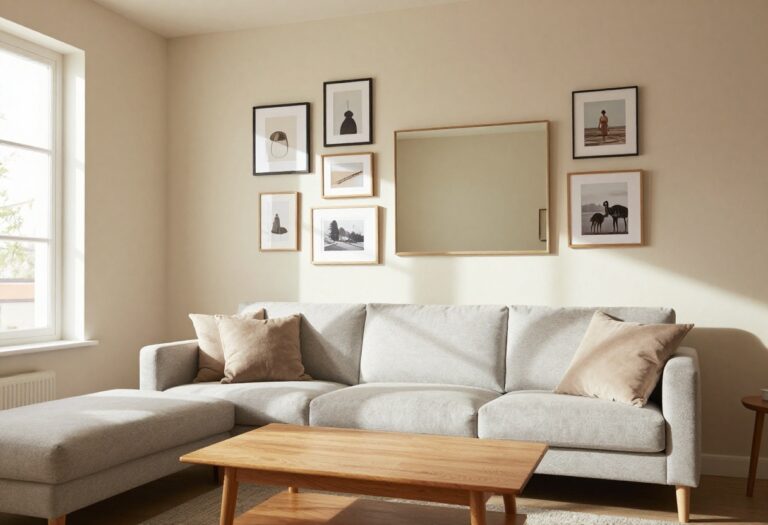
Nothing says cozy primitive living quite like a wall full of old farm prints. Think faded botanical illustrations, vintage livestock posters, or even a few hand-colored engravings of heirloom vegetables. The key is mixing frames—some dark, some light, some chipped—so the whole arrangement feels like it grew over time rather than being bought as a set.
This is the kind of wall that makes a room feel lived-in and personal, like each print has a story.
Start by hunting down prints at thrift stores, flea markets, or even free printable sites that offer vintage-style artwork. Look for subjects like chickens, cows, fruit trees, or wildflowers. The more imperfect the paper, the better—foxing and yellowed edges add character.
Once you have a collection, lay them out on the floor to plan your arrangement. A salon-style cluster works beautifully above a sofa or a console table. Don't stress about perfect symmetry; a slightly off-center layout feels more authentic.
Use a mix of frame styles—raw wood, painted black, or distressed white—and keep the matting simple or skip it entirely for a tighter, more casual look.
Best Colors
- Stick with muted, earthy tones to keep the wall feeling warm and cohesive. Sepia, faded sage, mustard yellow, and rust red all complement the primitive vibe. Avoid bright whites or neon accents—they'll clash with the aged look you're going for.
- If your prints are mostly black and white, add warmth through the frame colors and matting.
Budget-Friendly Swap
Don't have access to good thrift stores? Print vintage images from free online archives onto matte paper, then tea-stain the edges for an instant aged effect. You can also swap out expensive frames for thrifted ones—just paint them all the same muted color for a cohesive look that still feels collected.
Layout Tip
- For a relaxed salon wall, start with the largest print in the center and work outward. Keep about 2 to 3 inches between frames. Use paper templates on the wall first to test spacing without making extra holes.
- A level is your friend, but a slight tilt now and then adds to the casual, primitive charm.
4. Slipcover an Old Sofa with Neutral Linen
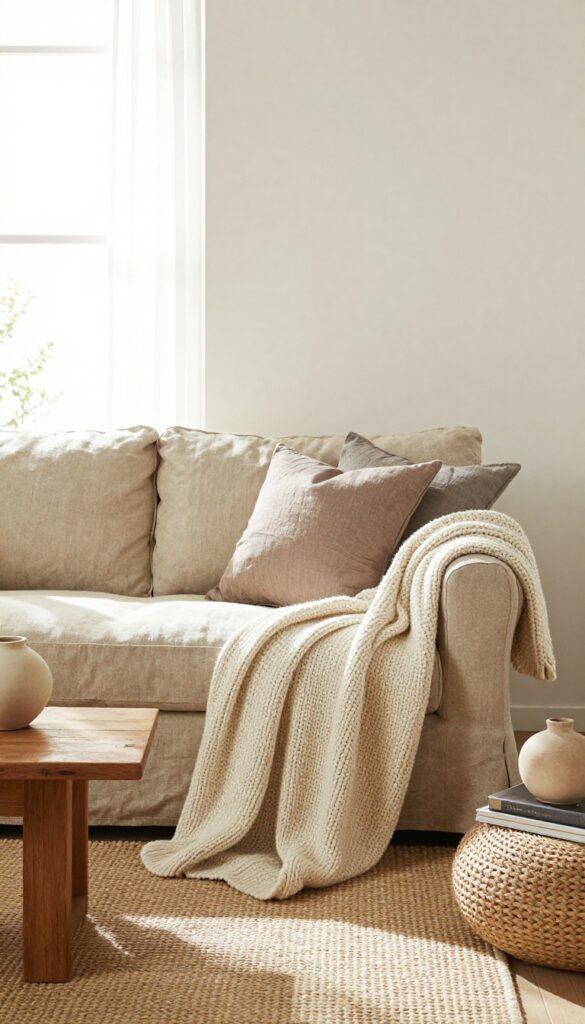
If your sofa is still structurally sound but looking a little tired, a slipcover is your budget-friendly best friend. It instantly hides stains, fading, or worn fabric, and gives the whole room a fresh start. Linen in a warm beige or oatmeal tone adds that cozy, lived-in feel without trying too hard.
Slipcovers are a game-changer for anyone working with a tight budget or an older sofa they aren't ready to replace. A fitted or slightly loose linen cover softens the look of your seating and makes the room feel more relaxed. Plus, it's machine-washable, which is a huge win for homes with kids or pets.
The neutral color keeps the sofa flexible, so you can switch up pillows and throws without clashing.
Best Colors
Stick with warm neutrals like oatmeal, cream, or light taupe. These shades add warmth without feeling cold or stark. Avoid stark white or cool grays if your goal is a cozy vibe.
Budget-Friendly Swap
Skip custom slipcovers and look for ready-made options online. Many brands offer affordable linen-blend covers that fit standard sofa sizes. Just measure your sofa carefully before ordering.
Finishing Touch
Tuck a chunky knit throw and a few linen pillows in slightly darker earth tones on the slipcovered sofa. This adds depth and keeps the neutral look from feeling flat.
5. Repurpose a Ladder into a Blanket Rack
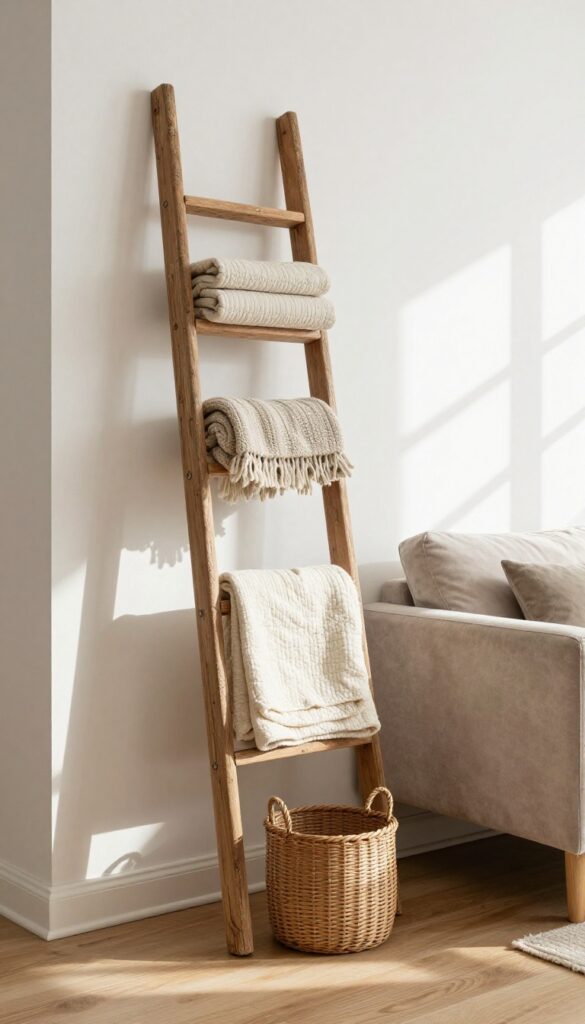
An old wooden ladder leaning against the wall does more than just hold blankets—it brings a sense of history and warmth into the room. The rungs create natural shelves for draping quilts, throws, or even a few lightweight baskets. It’s an easy, budget-friendly way to add vertical interest without drilling holes or buying new furniture.
This idea works especially well in a corner or beside a sofa where you often reach for an extra layer. The ladder’s weathered texture pairs beautifully with chunky knits and soft flannels, reinforcing that cozy, lived-in feel. Plus, it’s completely customizable—paint it to match your palette or leave it raw for a rustic touch.
Best Materials
Look for an authentic wooden ladder with visible grain and a slightly worn finish. Pine or oak works well, but even a reclaimed barn ladder adds character. Avoid metal or plastic—they won’t give the same warm, inviting vibe.
Styling Tip
Drape one or two folded quilts over the top rungs and let a third hang loosely near the middle. Add a small woven basket on a lower rung to hold magazines or kindling. Keep the look airy—don’t overload every rung.
Budget-Friendly Swap
If you don’t have an old ladder, check flea markets, garage sales, or even your own attic. A fresh coat of matte white or sage green paint can transform a thrifted find into a custom piece that fits your decor perfectly.
6. Use Galvanized Metal Buckets as Planters
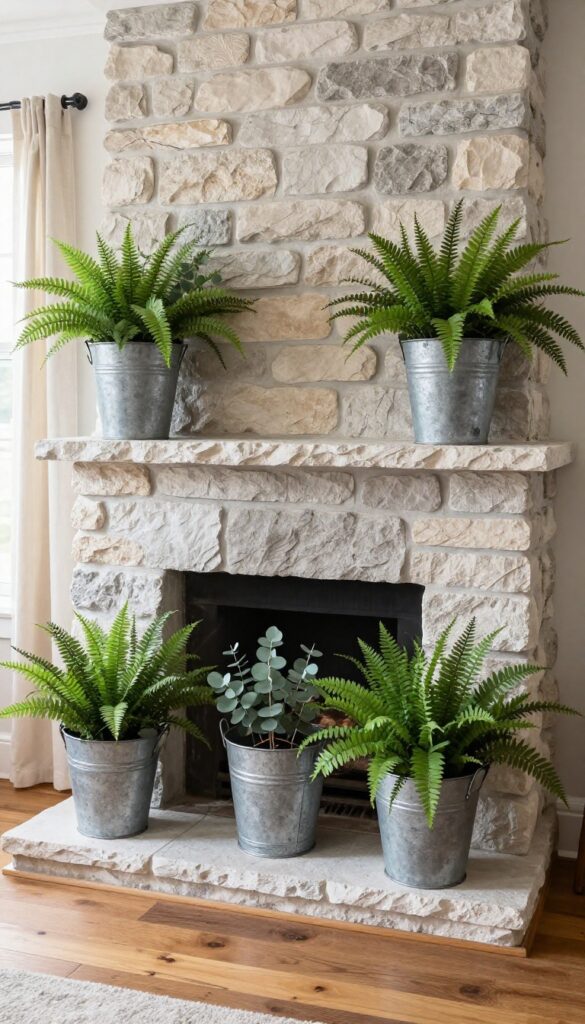
Galvanized metal buckets bring a down-to-earth charm that fits right in with a primitive living room. Their silvery-gray finish softens over time, developing a patina that only gets better with age. Grouping them on the hearth or a side table adds a collected, lived-in feel without costing a fortune.
Faux or low-maintenance greenery in galvanized buckets is an easy way to add life and texture. The metal contrasts nicely with soft leaves, and the buckets themselves are sturdy enough to hold soil or a plastic liner. For a cohesive look, stick with one or two bucket sizes and repeat the same plant type, like ferns or eucalyptus.
Best Plants To Use
Go with faux ferns, boxwood stems, or dried lavender for zero upkeep. If you prefer real plants, try snake plants or pothos—they thrive with minimal light and water. The key is choosing greenery that looks full and natural, not sparse or plastic-y.
Where To Place Them
A trio of buckets on the hearth creates a balanced focal point. On a side table, one large bucket with trailing ivy softens the hard edges of a lamp or stack of books. For a budget-friendly swap, use buckets you already have or find at a thrift store—just wipe them clean and add a liner if needed.
Styling Tip
Keep the buckets slightly distressed or aged for that warm, cozy primitive feel. If they’re too shiny, lightly sand the surface or let them weather naturally. Pair them with natural wood, linen, or wool textures to reinforce the rustic vibe.
7. Create a Faux Fireplace with Salvaged Mantel
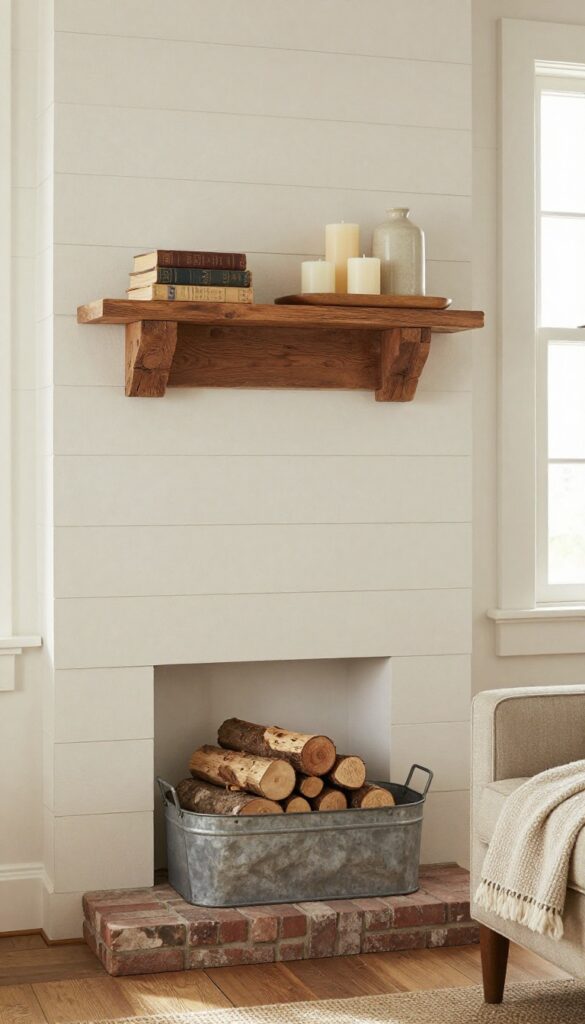
A fireplace instantly makes a room feel warmer and more inviting, but not every home comes with one. The good news is you can fake it convincingly with a salvaged mantel and a little creativity. This budget-friendly trick gives you that cozy focal point without any construction, chimney sweep, or safety concerns.
Mount a reclaimed wood mantel on the wall and add a basket of logs or candles underneath. It becomes a cozy focal point without real fire.
Best Materials
Look for a solid wood mantel with character—chipped paint, weathered grain, or even old nail holes add instant history. Reclaimed barn wood or an old shelf from an architectural salvage store works perfectly. If you can’t find one, a new piece of pine can be distressed with sandpaper and dark wax.
Styling The Hearth
Below the mantel, stack a few birch logs in a galvanized metal basket or a woven seagrass bin. For a candle alternative, cluster pillar candles of varying heights on a wooden tray. A small stack of vintage books or a ceramic vase adds a lived-in touch.
Proportion Tip
Mount the mantel at standard fireplace height—about 54 inches from the floor to the top of the mantel. Make sure it’s centered on the wall and wide enough to balance the furniture around it. A 60-inch mantel works well for most living rooms.
8. Layer Rag Rugs for Warmth Underfoot
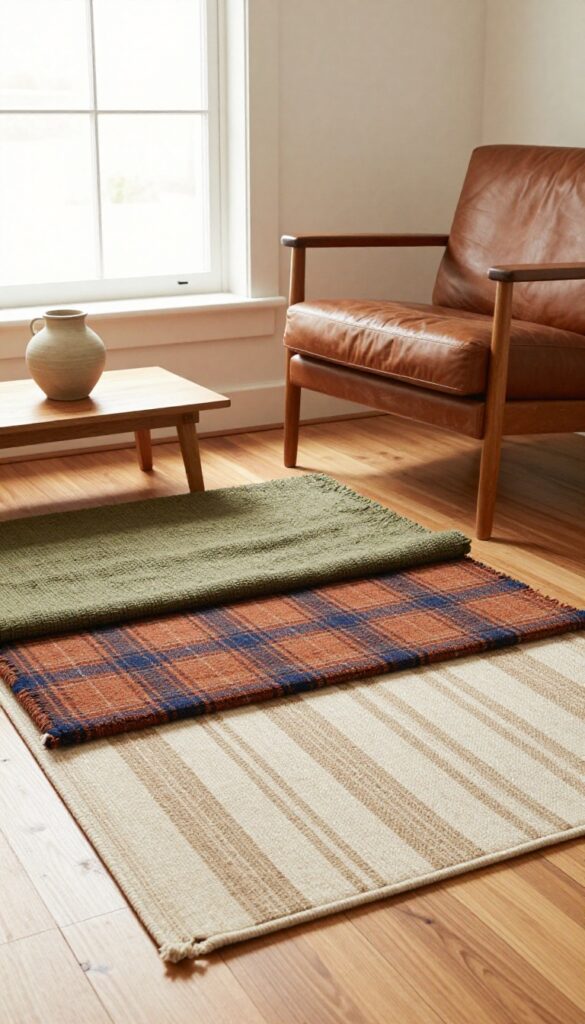
Nothing says cozy like stepping onto a soft, worn rug that feels like it has a story. Layering two or three smaller rag rugs in overlapping patterns is an easy, budget-friendly way to add warmth and texture to a primitive living room. The mix of faded stripes, plaids, and solids creates depth without looking busy, and it gives you the freedom to change up the layout whenever you want.
Rag rugs are naturally casual and affordable, making them perfect for a primitive style that values handmade charm over perfection. By layering them, you can cover more floor space without committing to a single large rug that might be expensive or hard to clean. Start with a neutral or muted base rug, then add a smaller one with a bolder pattern on top, slightly off-center.
This technique also works well in high-traffic areas because you can rotate or replace individual rugs as they wear. For a cohesive look, stick to a warm color palette—think rust, mustard, olive, and cream—and avoid anything too bright or modern. The key is to let the rugs look a little imperfect, like they’ve been collected over time.
Best Colors And Patterns
- Stick with earthy tones like brick red, oatmeal, navy, and faded black. Stripes, checks, and simple geometric patterns work best because they blend without clashing. Avoid anything too graphic or contemporary.
- The goal is a soft, lived-in feel that complements wood floors and natural fiber furniture.
Layering Technique
- Place the largest rug on the bottom, then angle a smaller one on top at a 45-degree angle or just offset to one side. You can even add a third runner in a contrasting pattern. Make sure the edges overlap by at least 6 inches so they don’t look accidental.
- This creates a casual, collected look that feels intentional but relaxed.
Budget-Friendly Swap
- If you don’t have rag rugs, try using cotton dhurries or flat-weave kilims instead. They have a similar texture and price point. Check thrift stores or online marketplaces for vintage finds—they often have the worn-in look that’s perfect for this style.
- You can also cut larger rugs into smaller pieces and hem the edges for a custom layered effect.
9. Display Open Shelving with White Ironstone
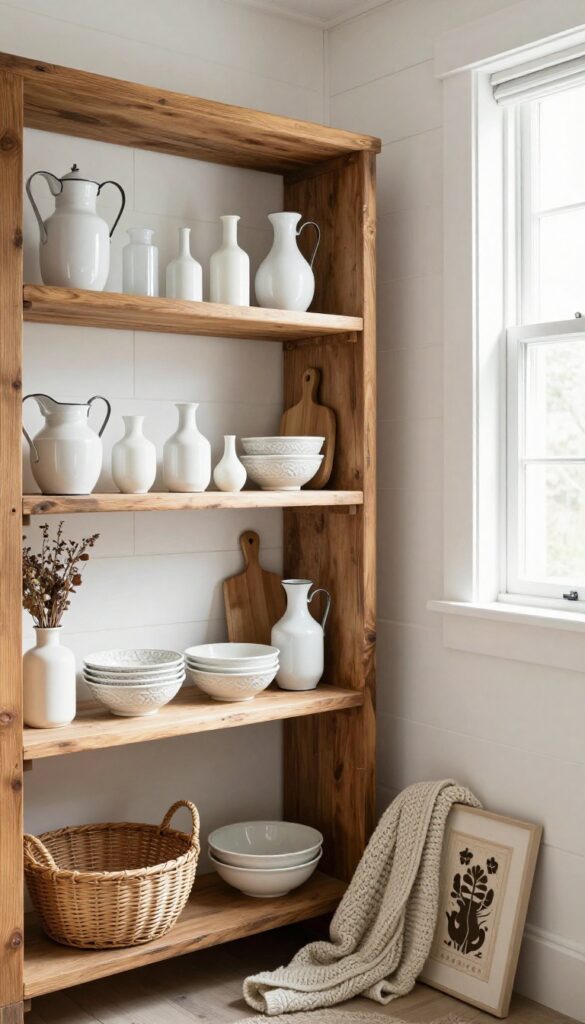
White ironstone and milk glass have a quiet charm that fits right into a primitive living room. The soft, creamy white adds brightness without feeling cold, and the pieces themselves often have subtle textures or embossed details that catch the light. Because these dishes and jars are so affordable at thrift stores, you can build a collection over time without spending much.
Arranged on open shelves, they create a clean, uncluttered look that feels both vintage and intentional.
Open shelving is a natural spot for white ironstone, but the key is to keep the arrangement relaxed. Group pieces in odd numbers, vary the heights, and leave a little breathing room between items. Mix in a few wooden cutting boards or a simple woven basket to keep the display from feeling too uniform.
The goal is a collected-over-time look, not a perfectly styled store display.
Where To Find Pieces On A Budget
- Thrift stores, flea markets, and estate sales are gold mines for white ironstone and milk glass. Look for chipped or slightly imperfect pieces—they’re usually discounted and the wear adds character. Online marketplaces like Facebook Marketplace or Craigslist often have people selling entire collections for very little.
- Stick to solid white pieces with minimal gold trim to keep the primitive feel.
Shelf Styling Tip
- Balance the white dishes with natural textures. Layer a chunky knit throw on one shelf, lean a small piece of folk art against the wall, or tuck in a few dried herbs in a simple vase. This keeps the look warm and cozy, not sterile.
- Also, avoid overcrowding—leaving some empty space on the shelves makes the room feel airier and more intentional.
10. Build a Simple Bench from Reclaimed Wood
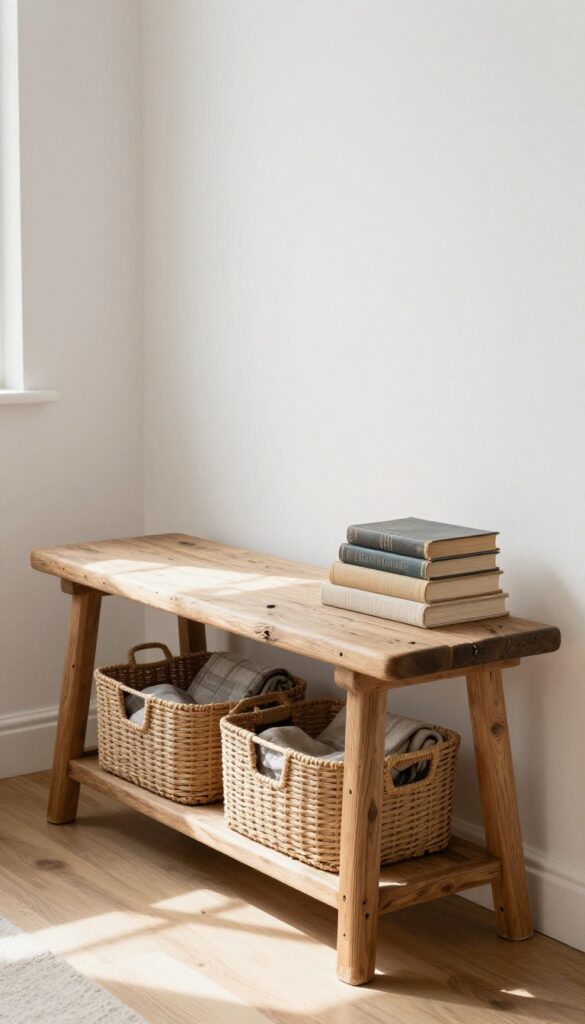
A handmade bench does more than just add extra seating. It brings a grounded, rustic feel that fits right in with primitive decor. Using salvaged boards keeps the cost low and the character high.
Whether you place it under a window, along a wall, or at the foot of a sofa, it instantly becomes a spot for baskets, throws, or a stack of books. The natural wood grain and slight imperfections tell a story, making your living room feel collected over time rather than bought all at once.
Building a simple bench from reclaimed wood is a weekend project that pays off in both style and function. The key is to keep the design straightforward—a flat seat, four legs, and maybe a lower shelf for storage. Look for old barn wood, pallets, or fence boards with weathered patina.
Sand just enough to avoid splinters, but leave the character marks intact. A clear matte sealer or a light whitewash preserves the aged look while protecting the surface. Place the bench against a wall with a couple of woven baskets underneath for stashing blankets or magazines.
Add a cushion in a neutral linen or wool plaid for extra comfort. This piece works especially well in a small living room where a full sofa might feel too bulky.
Best Wood Choices
- Reclaimed pine, oak, or fir are excellent options because they're durable and take on a beautiful patina. Avoid wood that's too brittle or has active insect damage. Look for boards with nail holes, saw marks, or natural cracks—these add visual interest.
- If you don't have access to salvaged lumber, check habitat restoration stores or online marketplace listings for used barn wood. The goal is to get wood that feels honest and well-worn, not brand new.
Finishing Touch
- For a warm, cozy look, finish the bench with a matte polyurethane or a homemade whitewash (equal parts water and white paint). This tones down the orange or yellow undertones in some woods while keeping the grain visible. If you prefer a darker, richer look, try a natural stain like dark walnut.
- Always test the finish on a hidden spot first. A final coat of paste wax adds a soft sheen and makes dusting easier.
Styling The Bench
- Layer textures on top to soften the wood's roughness. A chunky knit throw, a couple of linen pillows, or a sheepskin draped over one end creates an inviting spot to sit. Place a small tray with a candle and a stack of books on the seat when it's not in use.
- Underneath, keep two or three large woven baskets in natural tones for hidden storage. This keeps the area tidy while reinforcing the primitive, cozy vibe.
11. Add Warmth with Candlelight and Lanterns
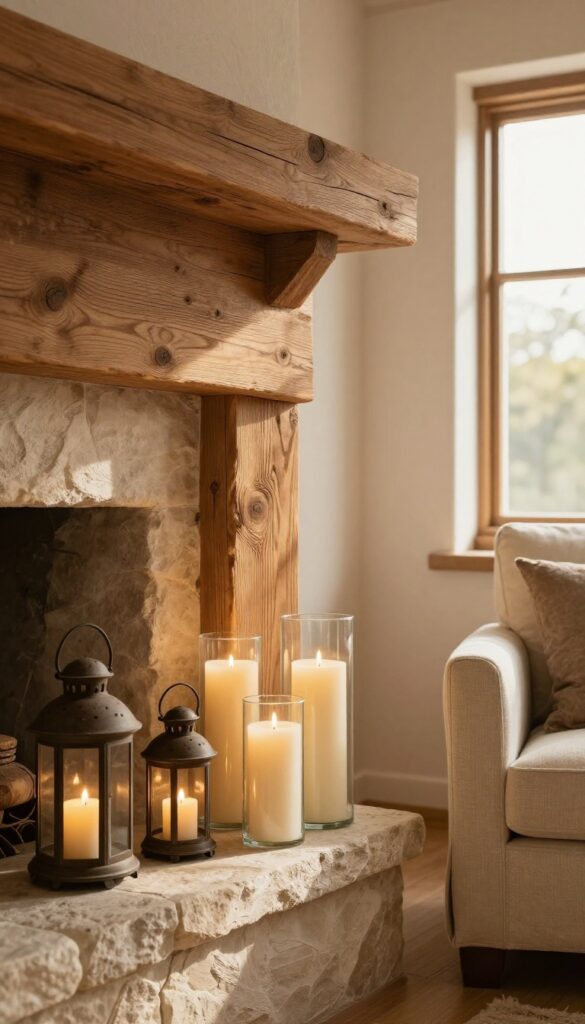
Nothing beats the soft, flickering glow of candlelight for making a primitive living room feel instantly cozy. It’s an easy, budget-friendly way to layer warmth without turning up the thermostat. Vintage lanterns and glass hurricanes add that old-world charm while keeping things safe and practical.
Group pillar candles of varying heights on a mantel or coffee table for a simple focal point. Use glass hurricanes to protect flames from drafts and add a polished look. Vintage-style lanterns work well on side tables or even hung from hooks for a rustic touch.
The key is to scatter these light sources around the room so the glow feels natural and inviting.
Best Materials
Stick with natural materials like wrought iron, tin, or weathered wood for lanterns. Glass hurricanes should be clear or slightly smoked to let the light shine through. Beeswax or cream-colored candles give a warm, golden hue that complements the primitive aesthetic.
Budget-Friendly Swap
Skip expensive candelabras and look for thrifted lanterns or simple glass cylinders. Dollar stores often carry pillar candles in neutral tones. You can also repurpose mason jars as candle holders by adding a bit of twine around the rim.
Cozy Detail
Place a few lanterns on the floor near a hearth or in a corner to create a soft, ambient glow at ground level. This unexpected placement adds depth and makes the room feel more intimate.
FAQ
What defines primitive decor?
Primitive decor emphasizes simplicity, natural materials, and handcrafted or aged items. Think wood, linen, burlap, and muted earth tones with a rustic, timeworn feel.
How can I achieve a primitive look on a tight budget?
Shop thrift stores, garage sales, and flea markets for wooden crates, old frames, and galvanized metal. DIY projects like slipcovers or burlap curtains also save money.
What colors work best in a primitive living room?
Warm neutrals like beige, cream, and taupe, plus muted reds, greens, and blues. Avoid bright or cool tones to keep the space cozy.
Can primitive decor work in a small living room?
Yes. Use open shelving, light-colored linens, and multipurpose pieces like a ladder rack. Keep furniture low and uncluttered to maintain an airy feel.
How do I mix primitive decor with modern pieces?
Balance rustic elements with clean-lined modern furniture. For example, pair a linen slipcovered sofa with a sleek coffee table, or hang primitive art on a neutral wall.
Conclusion
Bringing primitive charm into your living room doesn't require a big budget or a complete overhaul. With a few thrifted finds, simple DIY projects, and a focus on natural textures, you can create a space that feels warm, inviting, and full of character.
Start with one or two ideas that speak to you, and build from there. Your cozy, budget-friendly primitive living room is closer than you think.