10 Gorgeous Wall Design Ideas for Modern Living Rooms
Modern living rooms often get a bad rap for feeling cold or impersonal. But the truth is, a modern space can be just as cozy and inviting as any traditional room—it's all about how you treat the walls.
The right wall design adds depth, warmth, and a sense of home without sacrificing that clean, contemporary edge. Whether you're starting from scratch or just want to refresh a single wall, these ideas are meant to feel achievable.
They lean into texture, natural materials, and thoughtful details that make a room feel lived-in, not staged. Think warm wood, soft curves, and layers that invite you to settle in.
1. Warm Wood Slat Accent Walls
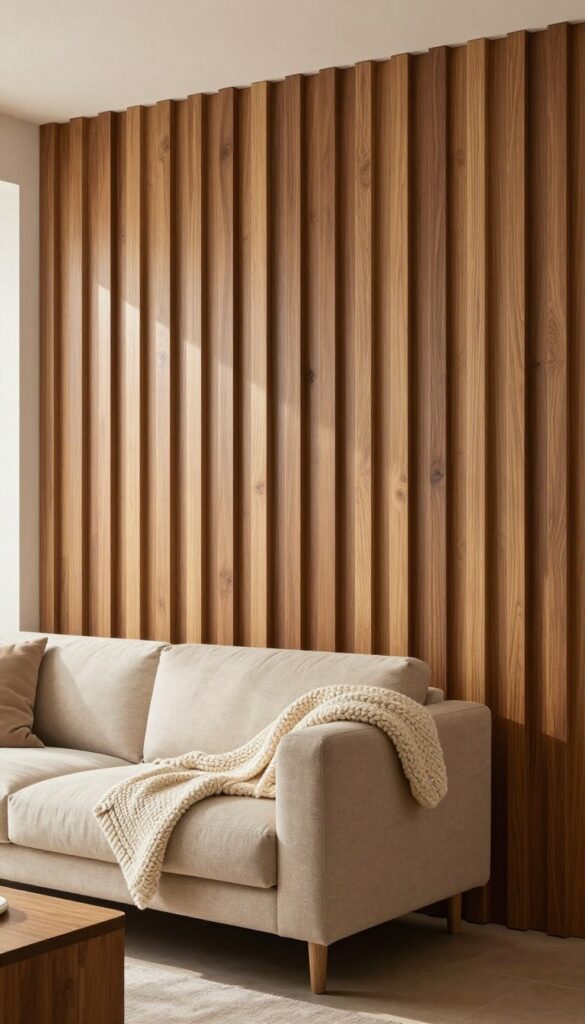
There's something about vertical wood slats that instantly adds texture and rhythm to a living room. In warm oak or walnut tones, they soften the clean lines of modern design while keeping things sleek and intentional. The result is a wall that feels like a natural focal point—inviting without overwhelming the space.
Pair it with a low-profile sofa and a chunky knit throw, and you've got a look that's both sophisticated and instantly cozy.
A warm wood slat accent wall is one of those ideas that works in almost any modern living room. The vertical lines draw the eye upward, making ceilings feel higher and the room more spacious. The key is choosing a finish that feels grounded—think honey oak or rich walnut rather than pale or bleached woods.
This warmth balances the coolness of modern furniture and creates a lived-in feel. For the best effect, install the slats from floor to ceiling on a single wall behind the sofa or media console. Leave a slight gap between each slat to let the wall color peek through, adding depth without making the room feel closed in.
Best Colors And Finishes
Stick with warm, medium-toned woods like oak, walnut, or teak. Avoid gray or whitewashed finishes if you want that cozy, lived-in vibe. A matte or satin clear coat keeps the wood looking natural and touchable.
Layout And Placement
Use the slat wall as a backdrop for your main seating area. It works especially well behind a sofa or console table. In open-plan rooms, it can define the living zone without adding a physical divider.
Styling Tip
Keep the rest of the room simple. A low-profile sofa in a neutral fabric, a jute or wool rug, and a few soft textures like a chunky knit throw or velvet pillows let the wood wall shine without competing.
2. Curved Plaster or Limewash Finishes
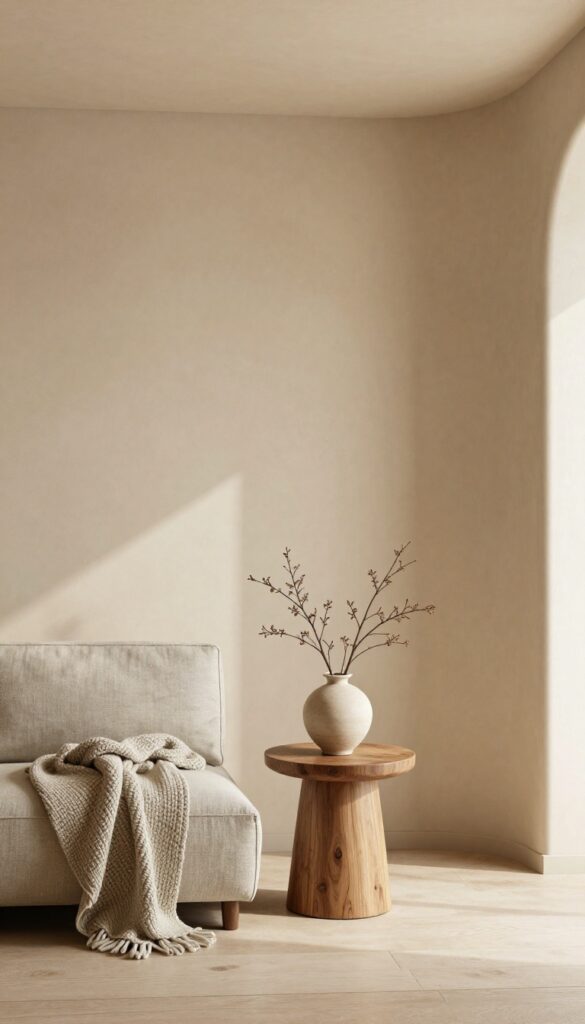
There's something quietly magnetic about a wall that doesn't just sit flat. Curved plaster or hand-applied limewash brings a soft, sculptural energy that feels both ancient and modern at the same time. The matte, earthy finish catches light gently, creating shadows that shift throughout the day.
It's the kind of detail that makes a room feel lived-in and thoughtful, not staged.
This isn't about loud patterns or bold colors. It's about texture and form working together to create a focal point that feels organic and grounding. A curved wall behind a fireplace or a rounded nook for a reading chair instantly softens the room's geometry.
The limewash finish adds a subtle depth that paint can't replicate—it's uneven, breathable, and gets better with age. Pair it with warm wood tones, linen, and a few ceramic pieces to keep the look cohesive and inviting.
Best Colors
Stick with earthy neutrals like warm clay, dusty terracotta, or soft sand. These tones enhance the organic feel and play well with natural light. Avoid stark whites or high-contrast hues that would compete with the texture.
Texture Mix
Balance the smooth curves with rougher textures—think chunky knit throws, raw wood furniture, or a sisal rug. The contrast keeps the space from feeling too polished and adds that lived-in warmth.
Small-space Fix
If you don't have room for a full curved wall, try a rounded corner shelf or a small alcove with limewash. Even a single arched doorway painted in limewash can bring the same sculptural effect without sacrificing square footage.
3. Floor-to-Ceiling Built-In Shelving
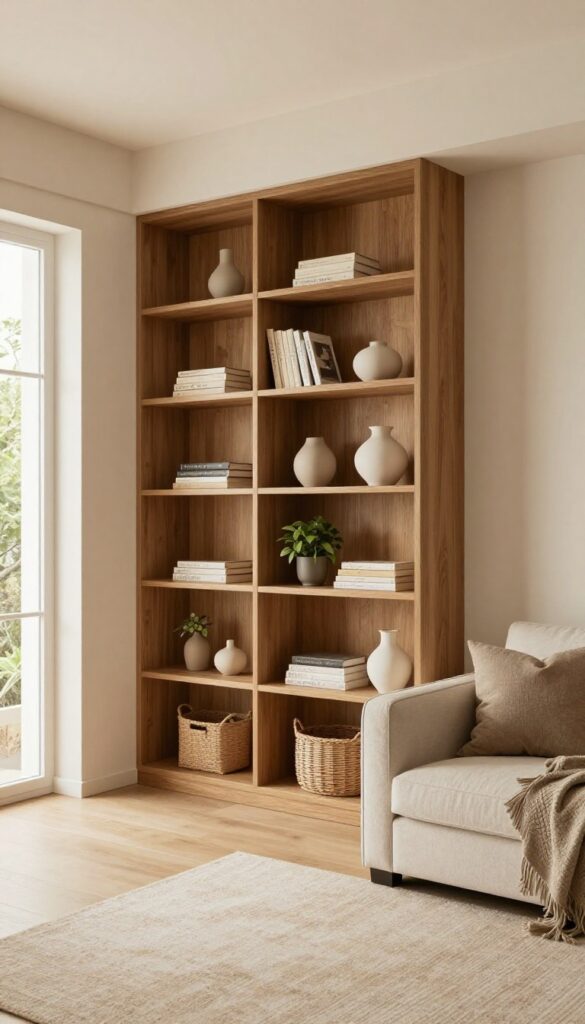
Few things anchor a living room like a wall of custom shelving that rises all the way up. Floor-to-ceiling built-ins in a warm neutral tone—think soft beige or warm greige—create a handsome backdrop that feels both substantial and inviting. They offer generous storage and display space without the visual noise of standalone bookcases.
The trick to keeping it modern is leaving intentional breathing room between objects, so the eye can rest and the whole arrangement feels curated rather than crammed.
Built-in shelving is a smart investment for anyone who wants to combine storage with style. By going from floor to ceiling, you draw the eye upward, making the room feel taller and more spacious. Choose a warm neutral finish like oak veneer or a matte sand-colored paint to keep the look grounded and cozy.
Mix books, ceramics, and personal objects at varying heights, but resist the urge to fill every inch. Negative space is your friend—it gives each piece room to breathe and keeps the overall effect clean and modern. For a lived-in feel, tuck a few small plants or woven baskets on lower shelves to add texture and warmth.
Shelf Styling Tip
- Group items in odd numbers and vary the heights. Stack a couple of books horizontally, then lean a framed photo against them. Place a ceramic vase on one side and a small sculpture on the other.
- Leave at least one shelf mostly empty to create a visual pause. This rhythm makes the whole wall feel intentional and easy to live with.
Best Materials
Warm wood tones like oak or walnut keep the shelving from feeling too cold or corporate. If you prefer painted built-ins, go with a soft greige or warm white rather than stark white. Matte finishes hide fingerprints better and add a subtle, tactile quality that fits a lived-in aesthetic.
Lighting Tip
Incorporate LED strip lights under a few shelves to highlight your favorite objects and add a soft glow in the evening. Warm white lights (2700K-3000K) complement the warm neutral tones and make the room feel cozy rather than clinical. Dimmable options let you adjust the mood from bright and functional to soft and ambient.
4. Textured Wallpaper in Muted Tones
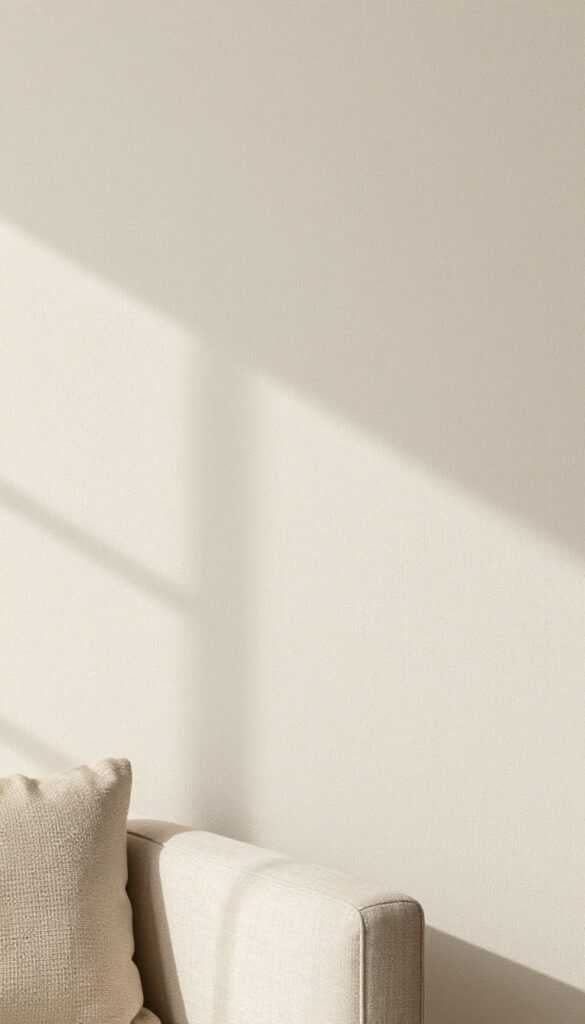
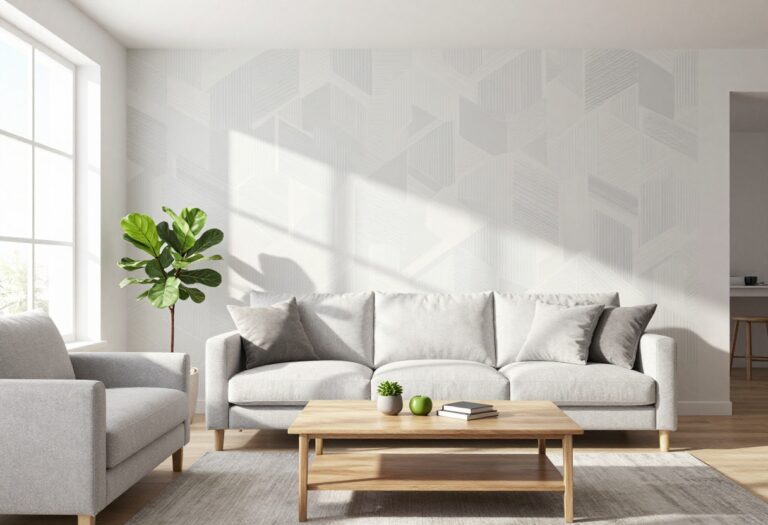
Wallpaper is having a major moment, but the modern take is all about texture over pattern. Grasscloth, linen, or subtle geometric designs in muted tones like beige, dusty rose, or sage add depth without overwhelming the room. The tactile quality brings a refined yet relaxed feel, making the space feel warm and lived-in rather than stark or sterile.
It's a smart way to introduce visual interest while keeping the overall look calm and cohesive.
Textured wallpaper works beautifully in living rooms because it adds a layer of sophistication without shouting for attention. The key is choosing a tone-on-tone pattern or a natural fiber that catches light differently throughout the day. This creates a subtle, ever-changing backdrop that feels both intentional and effortless.
Pair it with soft furnishings and natural materials to enhance the organic vibe, and keep the rest of the decor simple to let the wall texture shine.
Best Colors And Patterns
- Stick with muted, earthy tones that complement your existing palette. Beige, dusty rose, sage green, and warm gray are top choices because they add warmth without dominating. For patterns, opt for subtle geometrics, organic lines, or a simple grasscloth weave.
- Avoid high-contrast or busy prints—the goal is depth, not distraction.
Installation And Maintenance Tips
Textured wallpapers like grasscloth can be trickier to install than standard paper, so consider hiring a professional if you're not experienced. They also require gentle cleaning—use a soft brush attachment on your vacuum or a barely damp cloth for spot cleaning. Keep the room well-ventilated to prevent moisture buildup, which can damage natural fibers over time.
Finishing Touch: Layer With Lighting
- Lighting can make or break textured wallpaper. Use warm, directional lighting like picture lights or wall sconces to cast gentle shadows across the surface, emphasizing the texture. Avoid harsh overhead lights that can flatten the effect.
- A dimmer switch gives you control over the mood, making the room feel cozy at night and airy during the day.
5. Gallery Wall with Personal Art and Photos
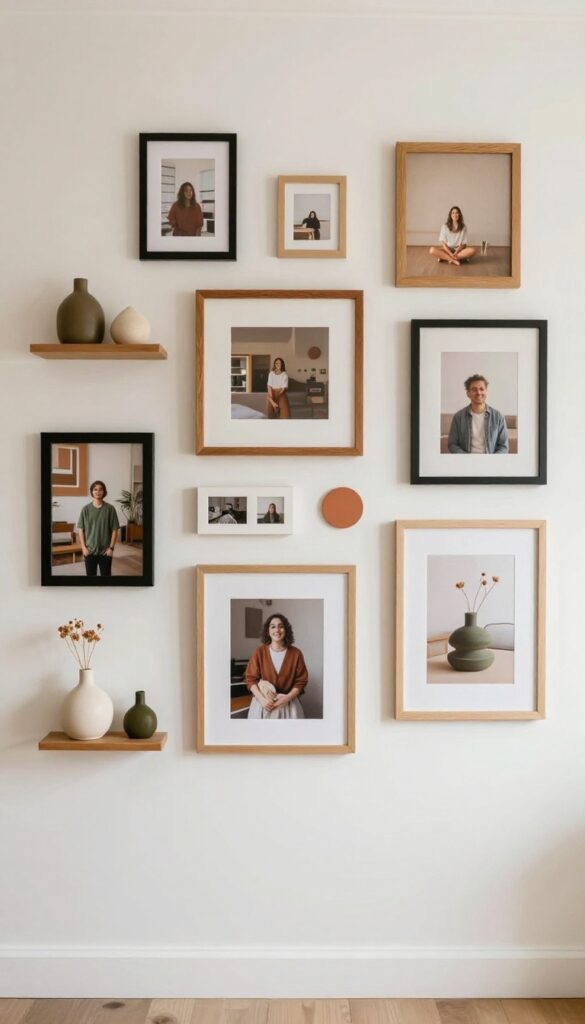
A gallery wall is one of those rare decor moves that feels both intentional and effortless. When you mix personal photos, original art, and a few found objects, the wall becomes a visual diary of what you love. The trick is keeping the arrangement cohesive without making it look too staged.
A warm, lived-in gallery wall instantly adds character and makes any living room feel like it has history.
A curated gallery wall tells your story. Mix frame styles and sizes, but keep a cohesive color palette. Include a mix of original art, family photos, and found objects.
It instantly makes the room feel collected over time.
Frame Mixing Tips
- Stick to two or three frame colors—black, white, and natural wood work well together. Vary frame widths but keep the overall look balanced. Use larger frames for anchor pieces and smaller ones for filler.
- Lay out the arrangement on the floor first to test spacing before hammering any nails.
Color Palette Strategy
- Choose a unifying color scheme from the art and photos. For a warm, lived-in feel, lean toward earthy tones like terracotta, olive, and cream. If your photos are black and white, add a pop of color with a single vibrant print.
- Consistent matting also helps tie mismatched frames together.
Adding Depth With Objects
- Don't limit yourself to flat art. Mount a small shelf within the gallery to display a ceramic piece, a dried flower, or a vintage find. This breaks up the grid and adds a three-dimensional element.
- Just keep the objects low-profile so they don't overwhelm the wall.
6. Large-Scale Abstract Canvas with Warm Tones
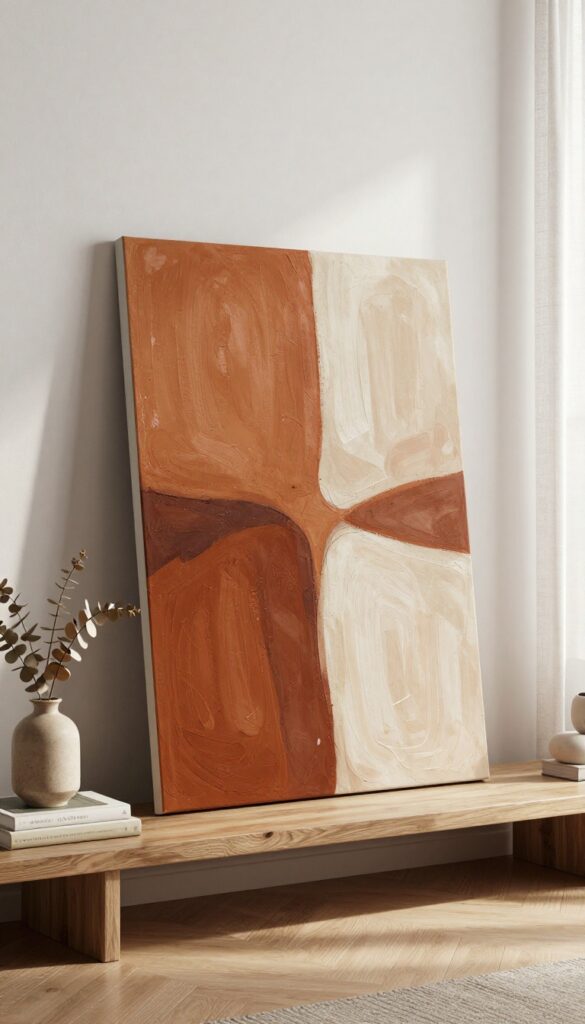
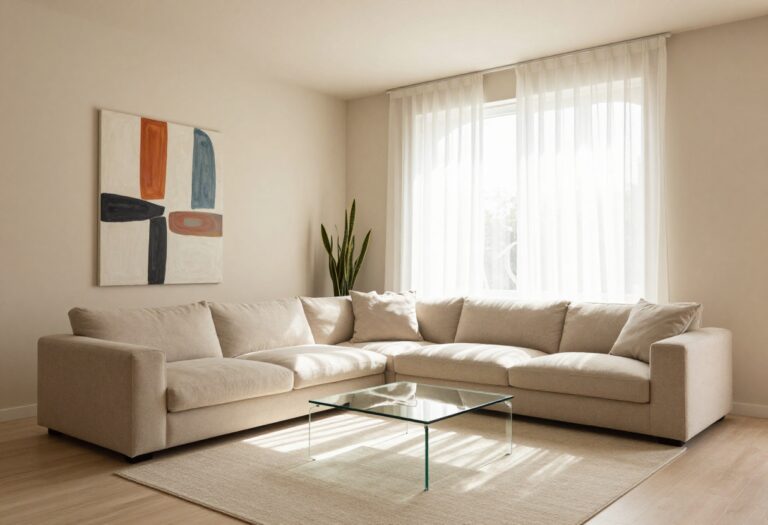
One oversized piece of art in earthy rust, ochre, or terracotta anchors the room. It creates a bold focal point without busyness. Lean it against the wall for a casual, lived-in vibe instead of hanging it perfectly straight.
This idea leans into the warm, lived-in aesthetic by embracing imperfection. The large scale fills empty wall space effortlessly, while the abstract nature keeps it sophisticated. Warm tones like rust and ochre add coziness and pair beautifully with natural materials like wood and linen.
Leaning the canvas against the wall, rather than hanging it, gives the room an effortlessly curated feel. It’s a smart trick for renters too—no nails needed, and you can swap out the art whenever the mood strikes.
Best Colors
Stick to earthy warm tones: rust, terracotta, ochre, burnt sienna, and deep clay. These colors add depth and pair well with neutral furniture and greenery.
Placement Tip
Lean the canvas on a console table, sideboard, or directly on the floor behind a sofa. Make sure it’s slightly off-center for a relaxed, intentional look. Avoid placing it in direct sunlight to prevent fading.
Finishing Touch
Add a small sculptural object or a stack of coffee table books in front of the canvas to ground it. A dried eucalyptus branch or a ceramic vase in a complementary tone works perfectly.
7. Wainscoting or Board-and-Batten in Soft White
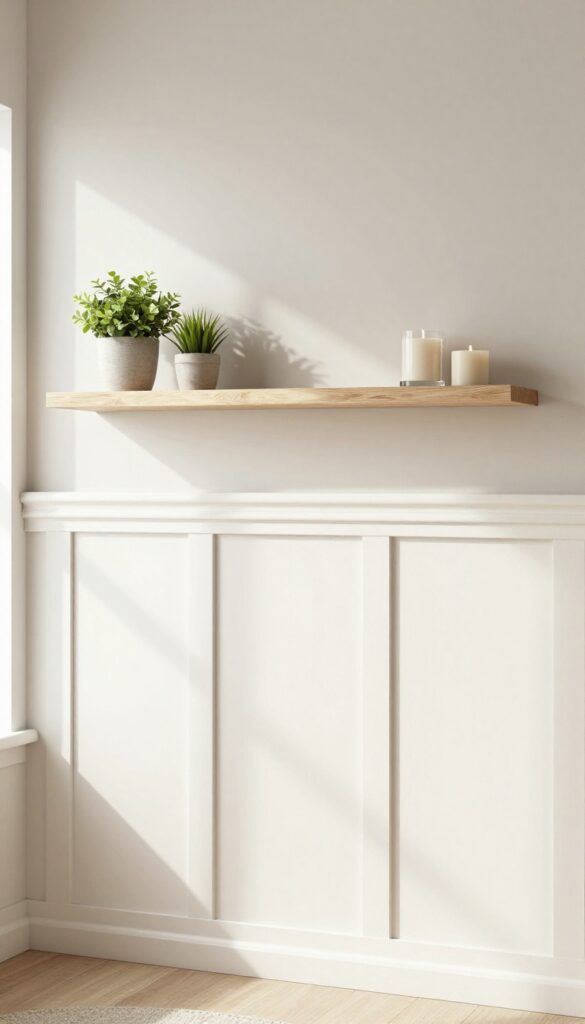
Wainscoting isn't just for formal dining rooms anymore. When you paint it in a warm off-white, it becomes a subtle way to add texture and architectural interest without making the room feel stiff. The vertical lines draw the eye upward, which makes ceilings feel higher and the whole space more polished.
It’s especially great for living rooms that need a little character but don’t have the budget for major renovations.
This look works because it balances tradition with modern simplicity. The soft white keeps it from feeling too ornate, while the paneling adds just enough detail to break up large walls. Pair it with sleek, low-profile furniture and a few natural textures like linen or wood, and you get a room that feels both put-together and lived-in.
The key is keeping the paint color warm—think creamy white with a hint of beige, not stark hospital white.
Best Colors
Stick with warm off-whites like Benjamin Moore’s White Dove or Sherwin-Williams’ Alabaster. These have a soft, inviting undertone that stops the paneling from looking too cold. If you want a bit more contrast, try a pale greige for the wall above the wainscoting.
Layout Tip
Install the wainscoting at about one-third the height of the wall—usually 36 to 48 inches from the floor. This proportion feels balanced and leaves plenty of wall space above for art or a mirror. In a small living room, keep the panels narrow (around 12 inches apart) to maintain a sense of openness.
Finishing Touch
Add a floating shelf right on top of the wainscoting. It creates a natural ledge for styling with small plants, candles, or a stack of books. This little detail makes the whole feature feel intentional and functional, not just decorative.
8. Floating Wall-Mounted Console with Layered Decor
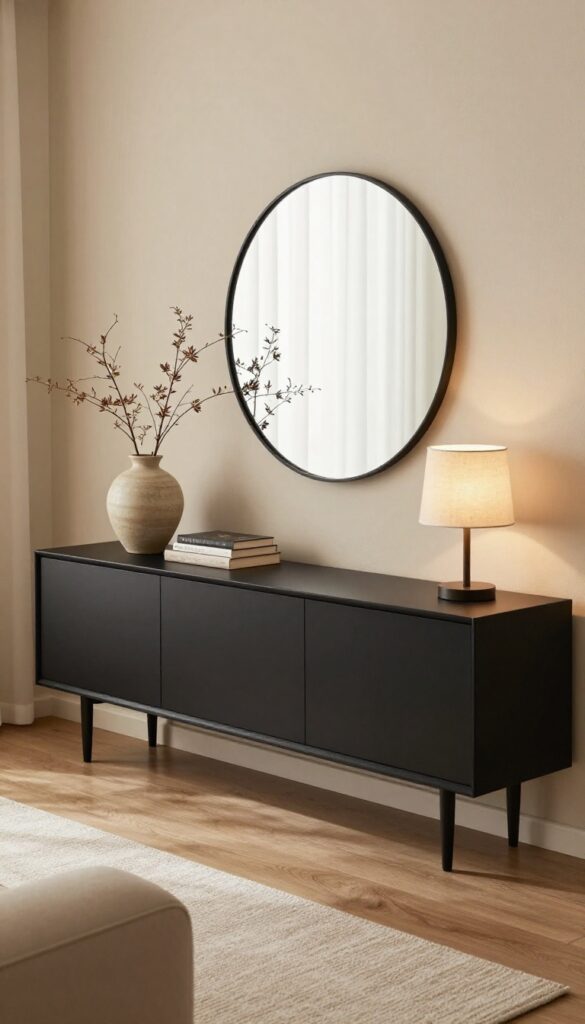
A slim console table floating against the wall does more than just hold a lamp—it becomes a mini stage for layered decor that feels curated, not cluttered. The beauty of a wall-mounted piece is that it keeps the floor clear, which instantly makes a living room feel more open and airy. This setup works especially well in tight spaces or behind a sofa, where a bulky piece of furniture would block the flow.
Start with a clean-lined floating console in a warm wood tone or matte black to anchor the look. On top, build a vignette in layers: a table lamp with a soft linen shade for height, a stack of two or three books for texture, and a ceramic vase or small sculptural object to add organic shape. Keep the arrangement asymmetrical but balanced—think triangle composition with varying heights.
The result is a focal point that feels intentional and inviting, without taking up precious floor space.
Best Colors
Stick with warm neutrals like taupe, cream, and soft beige for the decor pieces to keep the look cozy. If your console is dark, contrast with lighter accessories; if it's light, add a dark ceramic vase or black-framed art above to anchor the arrangement.
Layout Tip
Position the console at least 30 inches above the floor—high enough to keep the area underneath visible, but low enough that the decor feels connected to the room. Leave a few inches of breathing room between each object so the arrangement doesn't feel crowded.
Finishing Touch
Hang a large mirror or a piece of art directly above the console to create a cohesive vignette. The reflection will bounce light around the room, making the space feel even larger and more open.
9. Mirrored Wall Panels for Light and Depth
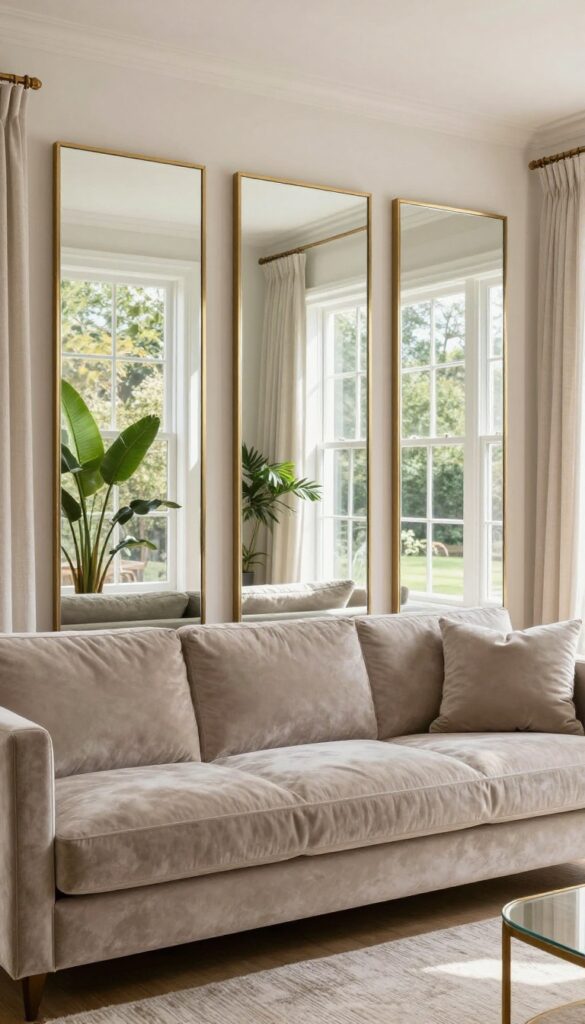
Mirrors are a classic trick for making a room feel bigger and brighter, but covering an entire wall in mirror can feel cold or commercial. The smarter move is to use mirrored panels as accents—think of them as functional art that bounces light around without overwhelming the space. Placed behind a sofa or across from a window, they catch natural light and create the illusion of depth, making even a compact living room feel airy and open.
To keep the look warm and lived-in, frame them in brass or bronze; those warm metals soften the reflective surface and add a touch of elegance that feels inviting, not sterile.
Mirrored panels work best when they’re part of a larger wall treatment—like a set of three tall panels behind a sofa or a single wide panel opposite a window. They don’t need to be floor-to-ceiling; even a panel that’s about two-thirds the height of the wall can do the trick. The key is placement: you want them to reflect something interesting, like a piece of art, a plant, or a view, not just a blank wall.
Pair them with soft textures—a plush rug, linen curtains, or a velvet sofa—to balance the hard, glossy surface. And don’t forget the frame: a slim metallic frame in brass or bronze adds just enough definition to keep the mirror from feeling like a bathroom fixture.
Best Placement
For maximum impact, place mirrored panels behind a sofa or console table so they reflect the main seating area and any windows opposite. If your room lacks natural light, position them to catch whatever daylight there is and bounce it deeper into the room. Avoid placing them directly across from clutter or a TV—you’ll just double the mess or screen glare.
Frame Finish Matters
Choose warm metal frames like brass, bronze, or even brushed gold to keep the look cozy. Cool silver or chrome can feel too modern and stark, which works against the warm, lived-in angle. A matte brass finish adds subtle warmth without being shiny, and it pairs beautifully with wood tones and earthy colors.
Scale And Spacing
- Instead of one giant mirror, use two or three tall, narrow panels spaced a few inches apart. This creates a grid-like effect that feels intentional and architectural. Leave about 2–3 inches between panels for a clean, modern look.
- If your ceiling is low, vertical panels can make the room feel taller.
10. Living Wall or Vertical Garden with Low-Maintenance Plants
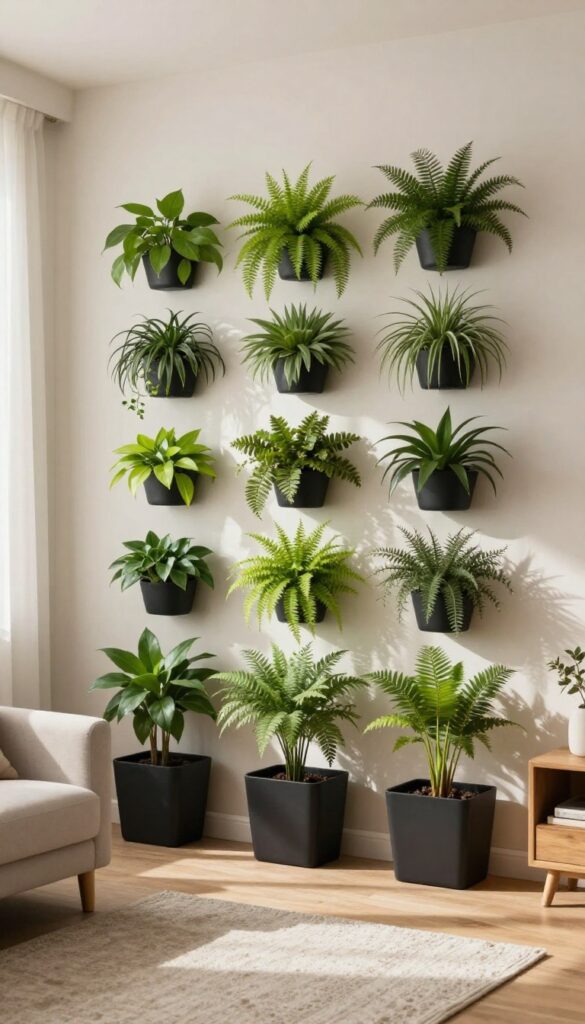
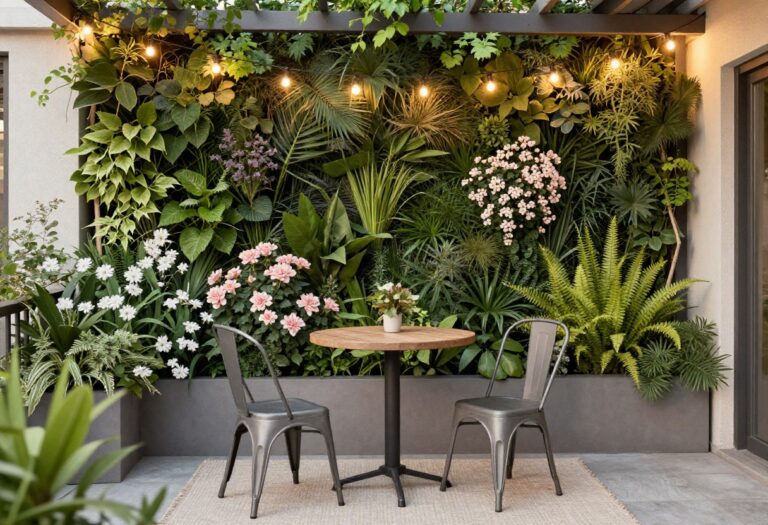
A vertical garden isn’t just for outdoor patios or trendy cafes—it can transform a plain living room wall into a living, breathing focal point. By choosing ferns, pothos, or air plants, you get the lush, calming effect of greenery without the high maintenance. The key is to keep it structured: a modular system or a neat grid of wall-mounted planters prevents it from looking messy.
Against a neutral wall, the green pops in a way that feels organic and grounding, perfect for a warm, lived-in space.
A living wall brings texture, color, and life to a modern living room without taking up floor space. It’s especially effective in rooms with limited square footage or where you want to soften hard surfaces like concrete or large windows. The plants themselves should be chosen for their air-purifying qualities and ease of care—think snake plants, ZZ plants, or trailing pothos.
Group them in a balanced layout, mixing upright and trailing varieties for visual interest. The overall effect is a serene, almost sculptural element that changes subtly over time as the plants grow. To keep it feeling intentional, use a consistent planter style (like matte black or natural terracotta) and consider adding a drip tray or self-watering system to simplify upkeep.
Best Plants For A Low-maintenance Living Wall
- Stick with hardy, forgiving plants that thrive in indirect light. Pothos, philodendron, spider plants, and ferns are top choices because they tolerate occasional neglect and adapt to indoor conditions. Air plants (Tillandsia) are another great option—they don’t need soil, just occasional misting.
- Avoid high-maintenance varieties like fittonia or calathea, which require constant humidity and attention. Group plants with similar light and water needs together so you can care for them as a unit.
Wall-mounted System Options
- You can go with a ready-made modular system like Woolly Pocket or a DIY approach using a grid of small pots attached to a wooden frame. For a sleek look, consider a felt pocket system that allows plants to grow directly into the fabric. If you’re renting, use a lightweight frame that hangs on a picture rail or command hooks—just make sure it’s secure.
- A simple metal grid with clip-on pots is another flexible, affordable option that’s easy to rearrange.
Styling And Finishing Touches
- Place the living wall on a feature wall behind a sofa or opposite a window to catch natural light. Keep the surrounding decor minimal—let the green be the star. Add a slim LED grow light strip above the wall if the room lacks brightness; warm white bulbs keep the glow cozy.
- For a cohesive look, match the planter color to your existing hardware or trim. A small tray or pebble basin underneath catches drips and adds a polished finish.
FAQ
What wall design works best for a small modern living room?
Mirrored panels or a large mirror can visually double the space. Light, neutral colors with subtle texture (like limewash) also keep the room feeling open while adding warmth.
How do I make a modern living room feel cozy without clutter?
Focus on texture and layering. Use a wood slat wall, a chunky rug, and soft lighting. Keep surfaces clean but add a few personal objects like a ceramic vase or a stack of books.
Can I combine more than one wall design idea in the same room?
Absolutely. For example, a wood slat accent wall can pair with a gallery wall on the opposite side. Just keep the color palette consistent and let one feature be the main focus.
What's the best way to hang a gallery wall without damaging the wall?
Use removable adhesive hooks or picture hanging strips for lightweight frames. For heavier pieces, use wall anchors. Plan the layout on the floor first, then transfer the arrangement with paper templates.
Are living walls high maintenance?
Not if you choose low-maintenance plants like pothos, snake plants, or air plants. A self-watering system or easy-access watering schedule keeps them thriving without much effort.
Conclusion
Your living room walls are a blank canvas for personality and warmth. Whether you go for the natural texture of wood slats, the softness of limewash, or the personal touch of a gallery wall, each idea here is designed to make your space feel truly yours. The best part?
Most of these updates are simple to pull off and won't break the bank. Start with one wall that gets the most attention—maybe behind the sofa or the TV—and build from there.