How to Clean Bathroom Glass Shower Door in 13 Ways
A sparkling glass shower door can make your entire bathroom feel brand new. But soap scum and hard water stains build up fast, leaving a dull film that seems impossible to remove.
The good news is you don't need a professional cleaner or harsh chemicals to get that crystal-clear shine back. These 13 methods use everyday items you probably already have at home, from white vinegar and dish soap to baking soda and lemon juice.
Each technique targets a specific type of grime, so you can choose the one that fits your needs. Whether you prefer a quick daily mist or a deep scrub for stubborn deposits, there's an option here that works.
1. White Vinegar and Dish Soap Spray
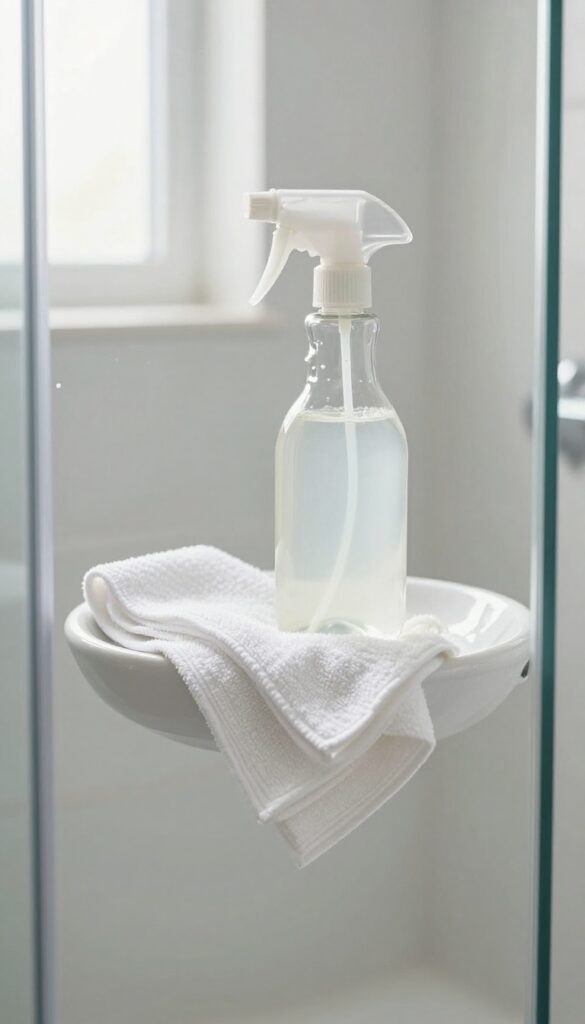
This classic combo is a powerhouse for cutting through soap scum and hard water stains. The acidity of vinegar breaks down mineral deposits, while dish soap tackles greasy residue. Together, they make a gentle but effective cleaner that won't damage your glass.
Mix equal parts white vinegar and warm water in a spray bottle, then add a squirt of dish soap. Shake gently to combine. Spray the solution generously onto the glass, covering every spot.
Let it sit for 10 minutes to let the vinegar work on the minerals. Then wipe clean with a damp microfiber cloth, rinsing the cloth often. For best results, dry the glass with a second microfiber cloth to prevent streaks.
Why This Works So Well
Vinegar's acetic acid dissolves calcium and lime deposits, while dish soap contains surfactants that lift oils and soap scum. The combination targets both types of grime simultaneously, making it more effective than using either alone.
Pro Tips For Streak-free Glass
Use distilled white vinegar—avoid balsamic or apple cider vinegar as they can stain. Always use a microfiber cloth; paper towels leave lint and streaks. If your water is very hard, let the spray sit for up to 15 minutes before wiping.
When To Avoid This Method
Don't use vinegar on natural stone or unsealed grout nearby—it can etch or discolor them. Rinse the glass thoroughly if you have metal fixtures to prevent vinegar from dulling the finish over time.
2. Baking Soda Paste Scrub
When you need a little extra muscle on those stubborn spots, baking soda steps in. It's a gentle abrasive that lifts grime without scratching the glass. Mixed into a thick paste with water, it becomes a targeted scrub for soap scum and hard water rings.
This method is perfect for spot-treating areas that a simple spray won't budge. The paste clings to vertical surfaces, giving it time to break down deposits. Plus, it's non-toxic and safe for most glass finishes.
How To Make The Paste
In a small bowl, combine three parts baking soda with one part water. Stir until it forms a spreadable paste—think toothpaste consistency. If it's too runny, add more baking soda; too thick, add a few more drops of water.
Application Tips
Use a soft sponge or microfiber cloth to apply the paste in circular motions. Focus on areas with visible buildup, like the bottom corners or around the handle. Let it sit for 5–10 minutes to work its magic.
Rinse thoroughly with warm water and dry with a clean towel to avoid streaks.
When To Use This Method
Reach for baking soda paste when you have hard water spots or soap scum that won't come off with vinegar alone. It's also great for cleaning the glass track where grime collects. Avoid using it daily—save it for weekly or bi-weekly deep cleans to prevent any micro-scratches over time.
3. Lemon Juice and Salt Solution
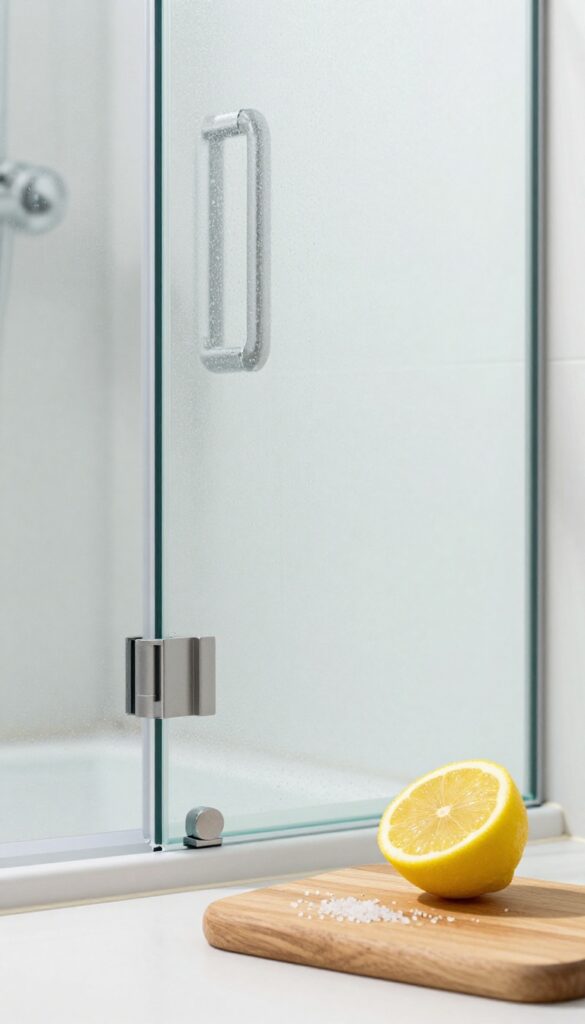
Sometimes the best cleaners come straight from the kitchen. Lemons and salt make a surprisingly effective team for tackling hard water stains and soap scum on glass shower doors. The citric acid in lemon juice dissolves mineral deposits, while salt acts as a gentle abrasive that won't scratch the glass.
Plus, you get a fresh, natural citrus scent without any chemical fumes.
How To Use This Combo
Cut a lemon in half and sprinkle the cut side with a generous amount of salt. Use the lemon half like a scrub brush, rubbing it directly onto the glass in circular motions. Focus on areas with visible water spots or soap film.
The salt will create a mild scrubbing paste as you work. Let the juice sit for a minute or two, then rinse thoroughly with warm water. Wipe dry with a microfiber cloth to prevent new spots.
Why It Works So Well
Hard water stains are mostly calcium carbonate, which reacts with acids. The citric acid in lemon juice breaks down these deposits, making them easy to rinse away. Salt adds just enough grit to lift stubborn grime without damaging the glass.
This method is especially good for light to moderate buildup and leaves behind a pleasant, clean scent.
When To Skip This Method
If your glass has etched or frosted finishes, avoid abrasive scrubbing, as salt could scratch the surface. Also, if you have heavy, long-term scaling, you may need a stronger acid like vinegar or a dedicated descaler. Lemon juice works best for regular maintenance or light stains.
Pro Tip For Better Results
Warm the lemon slightly in the microwave for 10–15 seconds before cutting. This helps release more juice and makes the scrubbing more effective. For extra cleaning power, mix lemon juice with a little baking soda to form a paste, then apply with a sponge.
Rinse well afterward.
4. Commercial Glass Cleaner with Squeegee
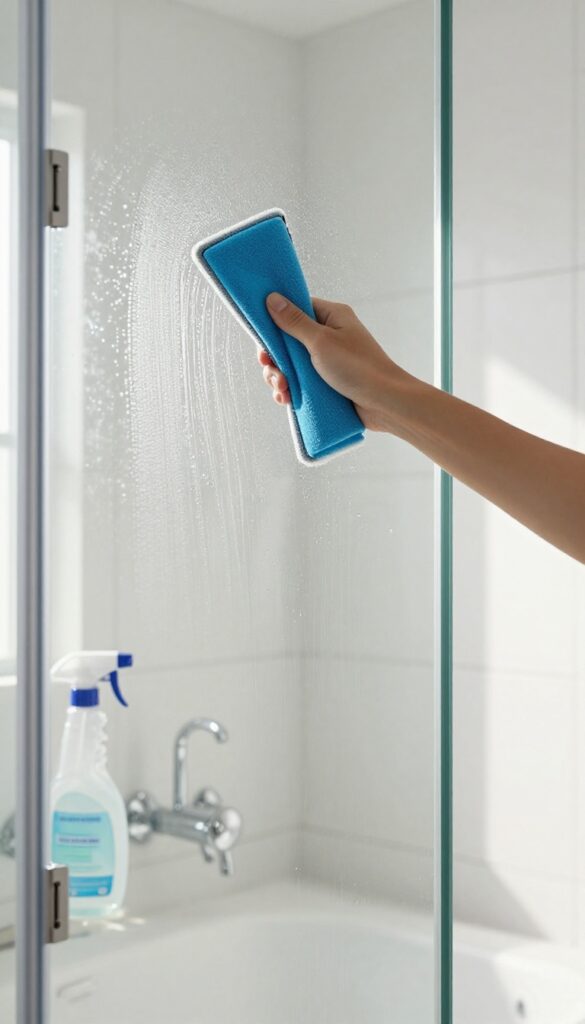
Sometimes the simplest solution is the most effective. A quality commercial glass cleaner paired with a squeegee gives you that professional, streak-free finish without any mixing or measuring. It's a go-to method for a reason—fast, reliable, and perfect for regular maintenance.
Choosing The Right Cleaner
Not all glass cleaners are created equal. Look for a product specifically labeled streak-free, like Windex Original or Sprayway Glass Cleaner. Avoid cleaners with ammonia if you have tinted glass or certain finishes.
Foaming versions can also work well because they cling to vertical surfaces longer, giving you more time to squeegee.
Squeegee Technique Matters
Start at the top corner of the door. Spray the cleaner generously, covering the entire surface. Immediately pull the squeegee across horizontally, slightly overlapping each stroke.
After each pass, wipe the blade dry with a clean microfiber cloth. This prevents water from dripping and leaving streaks. Finish with a vertical stroke at the edges for a polished look.
When To Use This Method
This approach works best for light to moderate buildup and as a weekly maintenance routine. It's not ideal for heavy soap scum or hard water stains—those need a deeper cleaning first. But once the door is clean, a quick spray-and-squeegee session keeps it looking great with minimal effort.
5. Magic Eraser for Soap Scum
If you have a Magic Eraser lying around, you already have a surprisingly effective tool for soap scum. These melamine foam blocks work like ultra-fine sandpaper, gently abrading away buildup without scratching glass. The key is to wet the eraser thoroughly first—dry scrubbing can leave marks.
Grab a Magic Eraser or any generic melamine foam sponge. Wet it until it's saturated but not dripping. Gently rub the soap scum lines in a circular motion.
You'll see the grime lift almost instantly. Rinse the door thoroughly afterward to remove any foam residue, which can leave a film if left to dry.
Why It Works So Well
The open-cell structure of melamine foam acts like a micro-abrasive. It's strong enough to break down soap scum but gentle enough for glass. That's why it's often called a "magic" cleaner—it tackles buildup without harsh chemicals.
Test First, Then Go
Because it's mildly abrasive, always test on a small, inconspicuous area first. Some glass coatings or tinted doors may scratch. If you see any damage, switch to a softer method.
Otherwise, you're good to go.
Rinse Thoroughly
After scrubbing, rinse the door with clean water. Leftover foam can dry into a haze, which defeats the purpose. A squeegee or microfiber cloth finish will leave it streak-free.
6. Rubbing Alcohol and Water Mist
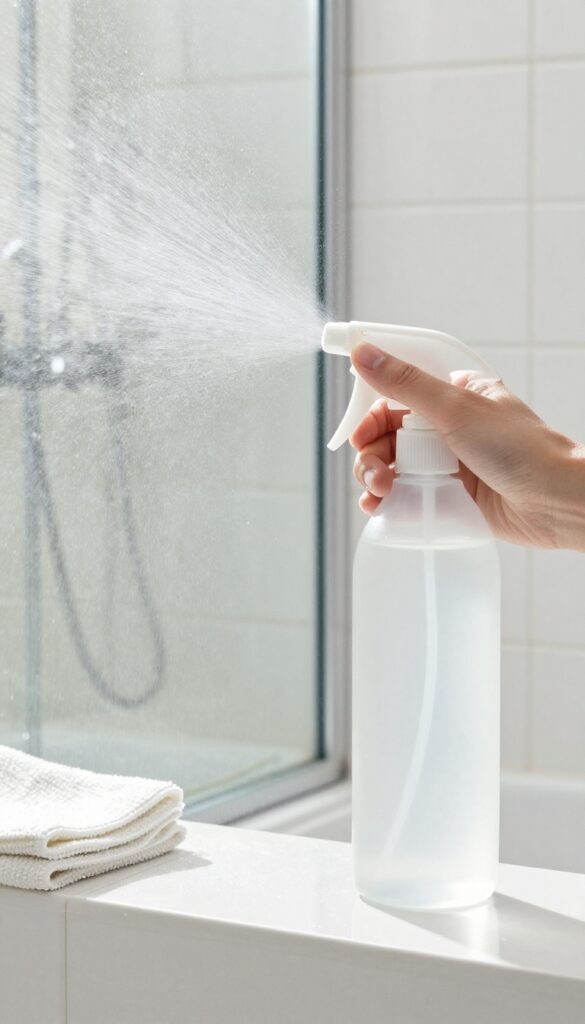
Rubbing alcohol is a surprisingly effective cleaner for glass shower doors. It evaporates quickly, which means no streaks, and it also kills mold and mildew spores. This two-ingredient mist is perfect for daily maintenance or a quick refresh between deeper cleans.
Mix equal parts rubbing alcohol and water in a spray bottle. Mist the solution onto the glass door, then wipe with a lint-free cloth or microfiber towel. The alcohol breaks down soap scum and disinfects the surface, while the water helps dilute any residue.
Because it dries fast, you won't have to buff or wait around.
Why It Works So Well
Rubbing alcohol is a solvent that cuts through grease and soap residue. Its high evaporation rate prevents water spots and streaks from forming. Plus, it's a natural disinfectant, so it kills mold spores on contact without harsh fumes.
How To Use It Right
Spray the solution generously over the entire door. Let it sit for 30 seconds to loosen grime, then wipe with a clean, dry microfiber cloth. Work in sections to avoid letting the solution dry before you wipe.
For best results, use this mist after every shower to keep buildup at bay.
Safety Tips
Rubbing alcohol is flammable, so keep it away from open flames. Use in a well-ventilated area. Avoid mixing with bleach or ammonia.
Store the spray bottle out of reach of children and pets.
7. Dishwasher Rinse Aid Treatment
If you already use rinse aid in your dishwasher, you know how it makes glasses sparkle. The same surfactants that prevent water spots on dishes work beautifully on glass shower doors. This method is all about prevention—a quick spray after each shower keeps mineral deposits from ever forming a stubborn film.
Mix a few tablespoons of rinse aid (like Jet-Dry) with water in a spray bottle. After your shower, give the glass a light mist and let it air dry. The surfactants break the surface tension of water, causing it to sheet off instead of beading up and leaving spots.
Over time, this reduces mineral buildup dramatically. It's a low-effort habit that pays off with less scrubbing later.
Why Rinse Aid Works On Glass
Rinse aids contain wetting agents that lower the surface tension of water. On glass, this means water spreads into a thin, even layer that slides off quickly. Without those tiny water droplets, there's nowhere for minerals to concentrate and form spots.
It's the same chemistry that makes your dishwasher glasses come out streak-free.
How To Apply It Correctly
You don't need a heavy soak. Fill a spray bottle with about 2 tablespoons of rinse aid per cup of water. After your shower, mist the glass lightly—just enough to see the water start to sheet off.
Let it air dry. No wiping needed. For best results, do this after every shower, especially if you have hard water.
A Note On Safety And Surfaces
Rinse aid is generally safe for glass and metal, but avoid spraying it on natural stone or unsealed grout. If you have a frameless door with rubber seals, wipe any overspray to prevent potential drying or cracking. Always test in an inconspicuous area first.
The small effort keeps your door looking new without harsh chemicals.
8. Hydrogen Peroxide and Cream of Tartar
When white vinegar just isn't cutting it against those stubborn white or rust-colored stains, it's time to bring out a more powerful duo. Hydrogen peroxide mixed with cream of tartar creates a gentle but effective paste that tackles oxidized mineral deposits and tough soap scum. This combination works like a mild bleaching agent without the harsh fumes of chlorine bleach, making it safe for most glass surfaces.
To use this method, mix equal parts hydrogen peroxide and cream of tartar until you get a thick paste. Apply the paste directly to the stained areas using a soft sponge or cloth. Let it sit for about 15 minutes so the peroxide can break down the minerals.
Then scrub gently with a non-abrasive pad and rinse thoroughly with warm water. For extra-stubborn spots, you can let the paste sit longer, but don't let it dry completely. This method is especially effective on hard water rings and rust-colored stains that other cleaners leave behind.
Why This Combo Works
Hydrogen peroxide is a mild oxidizer that helps dissolve organic matter and mineral deposits. Cream of tartar (potassium bitartrate) is a mild acid that reacts with the peroxide to create a gentle scrubbing action. Together, they form a paste that clings to vertical surfaces and penetrates deep into stains.
Unlike vinegar, which can be too weak on tough mineral buildup, this mixture provides both chemical and physical cleaning power.
Application Tips
For best results, apply the paste with a soft cloth or sponge and work it into the stain using circular motions. Avoid using metal brushes or abrasive scrubbers, as they can scratch the glass. After letting it sit for 15 minutes, rinse with warm water and dry with a microfiber cloth to prevent new water spots.
If any residue remains, a quick wipe with a damp cloth will remove it. This method works well on both tempered glass and framed doors.
Safety And Precautions
While hydrogen peroxide is generally safe, it can bleach fabrics and some colored grout, so protect surrounding surfaces with a towel or plastic wrap. Wear gloves if you have sensitive skin. Always test on a small, inconspicuous area first to ensure the mixture doesn't damage the glass or any coatings.
Avoid using this paste on etched or frosted glass, as the scrubbing could scratch the surface.
9. Steam Cleaner for Deep Grime
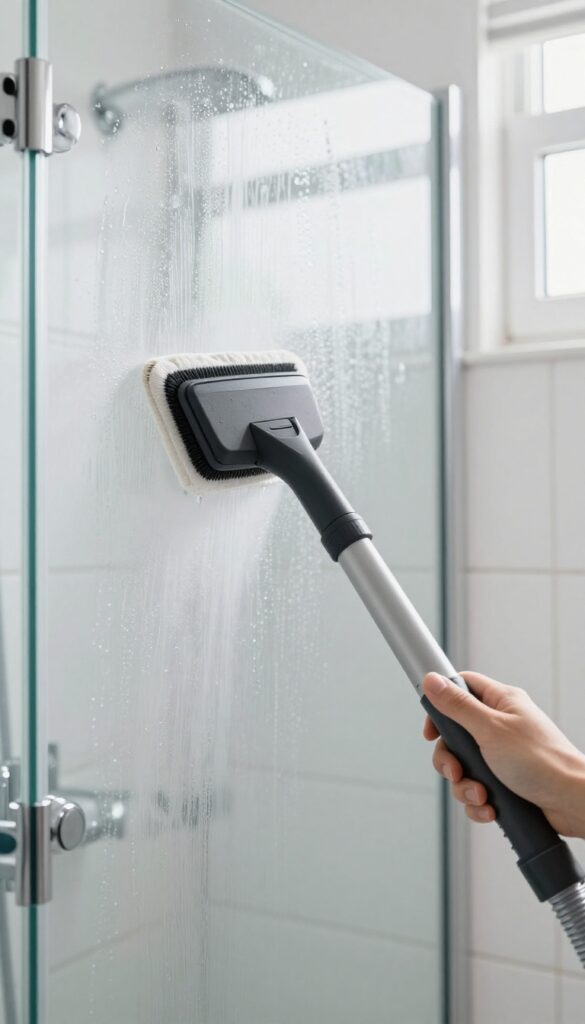
When scrubbing by hand just isn't cutting it, a steam cleaner can be a game-changer. The high-temperature steam penetrates and loosens caked-on soap scum and hard water deposits without any chemicals. It's especially effective for doors that have been neglected for months or have buildup in tight corners and along the bottom edge.
To use a steam cleaner, fill the reservoir with water and heat it according to the manufacturer's instructions. Attach the squeegee or flat brush head—many handheld steamers come with a microfiber pad attachment that works well for glass. Start at the top of the door and work your way down, holding the steamer about an inch from the glass.
Move in overlapping passes so the steam has time to soften the grime. After steaming the entire surface, wipe away the loosened residue with a clean, dry microfiber cloth. For stubborn spots, you can go over them again with the steam focused on that area.
The heat also sanitizes the glass, killing mold and mildew spores without bleach or harsh fumes.
Best Steam Cleaners For Shower Doors
Handheld steam cleaners are ideal because they're lightweight and easy to maneuver on vertical glass. Look for models with a squeegee attachment or a flat brush head. Some popular options include the McCulloch MC1275, the Bissell SteamShot, and the Dupray Neat Steam Cleaner.
If you already own a steam mop, check if it has a handheld attachment—many do.
Safety Tips For Steam Cleaning Glass
Always test a small, inconspicuous area first to make sure the glass can handle the heat. Tempered glass, which is standard for shower doors, is generally fine. Avoid using steam on cracked or damaged glass, as the heat could worsen the crack.
Wear gloves to protect your hands from the hot steam, and keep the nozzle away from your face.
When To Use A Steam Cleaner Vs. Other Methods
Steam cleaning is best for deep, stubborn grime that vinegar or baking soda can't fully remove. It's also a good choice if you want to avoid chemical cleaners for health or environmental reasons. For light, daily buildup, a quick spray of vinegar or a daily shower spray is faster and easier.
Save the steam cleaner for monthly or quarterly deep cleans.
10. Toothpaste for Small Spots
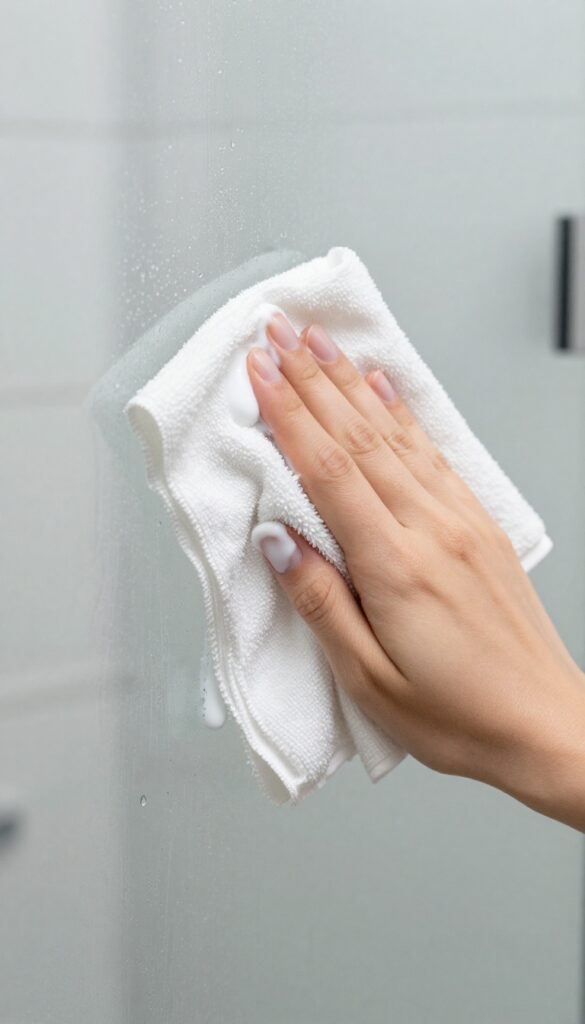
Toothpaste isn't just for your teeth. The mild abrasives in white, non-gel toothpaste can gently polish away water spots and hard water rings on glass without scratching. It's a quick fix for those small, stubborn marks that other cleaners leave behind.
When you notice a few isolated spots or rings on your shower door, grab a tube of plain white toothpaste. Squeeze a pea-sized amount onto a damp microfiber cloth and rub it directly onto the spots using small circular motions. The gentle abrasives break down mineral deposits and soap residue.
Rinse thoroughly with water and buff dry with a clean cloth. For best results, avoid gel or whitening toothpaste, as they may contain additional chemicals that could leave a film.
Why It Works
Toothpaste contains mild abrasives like calcium carbonate or silica that physically scrub away deposits without scratching glass. It's also slightly alkaline, which helps neutralize acidic hard water stains.
Best Spots To Use It
This method shines on small, concentrated areas like water spots near the handle, hard water rings at the bottom edge, or dried drip marks. It's not ideal for large, even coverage—save that for vinegar or baking soda.
Pro Tip For Extra Shine
After rinsing off the toothpaste, give the area a quick polish with a dry microfiber cloth. This removes any remaining residue and leaves the glass streak-free.
11. Rain-X Water Repellent
You might know Rain-X for your car's windshield, but it works just as well on glass shower doors. This treatment creates a hydrophobic layer that makes water bead up and roll right off, which means fewer spots and less scrubbing later. It's a smart preventive step if you're tired of battling soap scum every week.
Rain-X Original Glass Treatment is easy to apply. You just clean the glass first, then spray it on and buff it off. The hydrophobic effect lasts about a month, so a quick monthly reapplication keeps your door looking clear with minimal effort.
It's especially good for doors that get heavy daily use.
How To Apply
Start with a perfectly clean, dry door. Spray Rain-X onto a microfiber cloth, not directly onto the glass, to avoid streaks. Wipe it on in a circular motion, then let it haze for a minute or two.
Buff it off with a clean dry cloth until the glass is clear. That's it.
Why It Works So Well
The secret is a silicone polymer that bonds to the glass surface. Water molecules can't spread out, so they form tight beads that slide off before minerals and soap have a chance to dry. This cuts down on both hard water stains and soap scum buildup.
Best Practices
For the best results, apply Rain-X after a deep clean and when the door is completely dry. Don't use it on frosted or textured glass, as it can leave a cloudy residue. And always test a small hidden spot first to make sure your glass is compatible.
12. Pumice Stone for Heavy Deposits
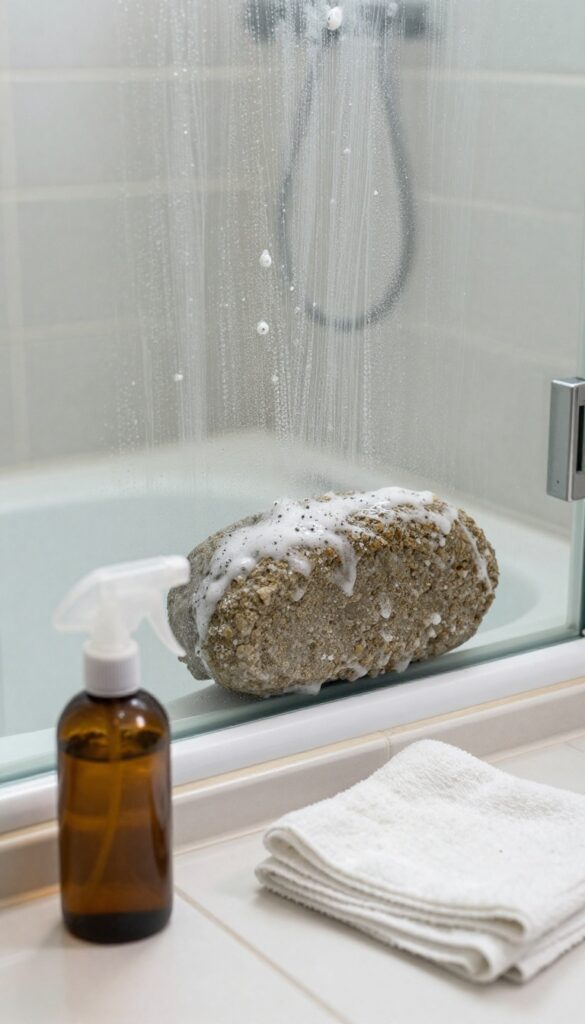
Sometimes, hard water stains and soap scum form a crust so thick that even vinegar and baking soda won't touch it. That's when you need an abrasive that's tough on deposits but gentle on glass—enter the pumice stone. This volcanic rock has been used for centuries to scrub away stubborn buildup without scratching surfaces, as long as you keep it wet.
A pumice stone is a last-resort tool for those crusty rings around the bottom of your shower door or the white scale that refuses to budge. The key is to always keep the stone wet while you work—dry pumice will scratch glass. Gently rub the wet stone over the deposits in a circular motion, rinsing frequently to check your progress.
Once the buildup is gone, wipe the glass clean with a microfiber cloth and your regular glass cleaner. This method is perfect for tackling the toughest spots that have been ignored for months.
Why Pumice Works Without Scratching
Pumice is porous and softer than glass, so when it's wet, it acts like a fine abrasive that wears away deposits rather than the glass itself. The water creates a slurry that lifts mineral crusts and soap scum. As long as you keep the stone saturated, you're essentially sanding off the gunk, not the glass.
How To Use A Pumice Stone On Glass
Start by soaking the pumice stone in water for a few minutes. Wet the shower door surface as well. Gently rub the stone over the heavy deposits—don't press hard; let the stone do the work.
Rinse the area often to see your progress and to keep everything wet. Once the deposits are gone, wash the door with a mild cleaner to remove any stone residue.
When To Avoid Pumice
Do not use pumice on tempered glass that has any chips or cracks, as the pressure could worsen them. Also avoid using it on coated glass (like water-repellent coatings) because the abrasive action will strip the coating. Stick to pumice only on plain, uncoated glass with stubborn, thick deposits that other methods have failed to remove.
13. Daily Quick-Dry Routine
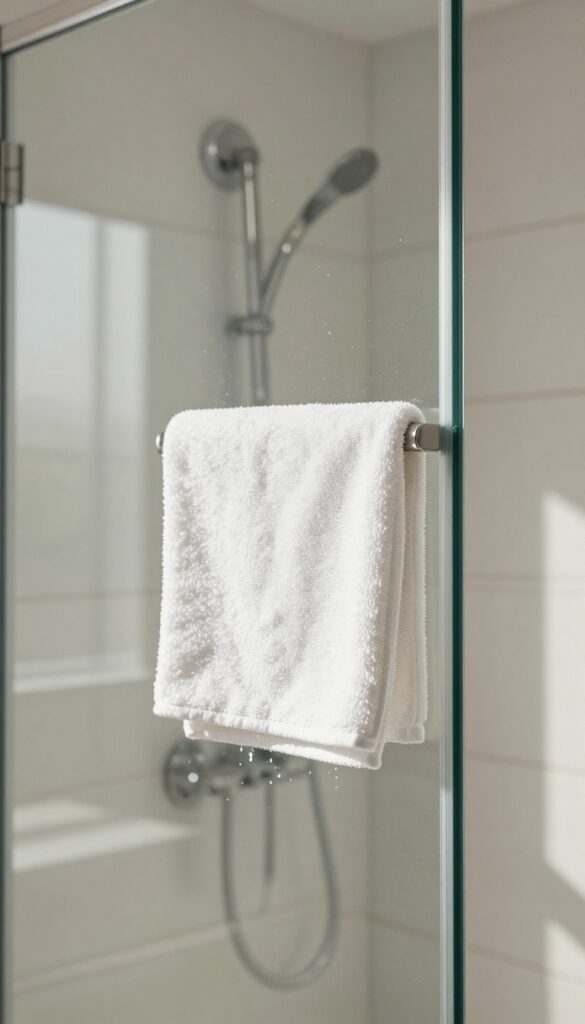
The easiest way to keep your shower door spotless is to stop water from drying on the glass in the first place. A daily quick-dry routine takes less than a minute and dramatically reduces soap scum and hard water buildup. It's a simple habit that pays off in the long run.
After every shower, grab a microfiber cloth or a squeegee and wipe the door dry. This removes water droplets before they can evaporate and leave mineral deposits. It also prevents soap residue from clinging to the glass.
Consistency is key—doing it daily keeps your door looking clear for weeks without any scrubbing.
Why Microfiber Works Best
Microfiber cloths are ideal because they trap water and minerals without scratching the glass. They also leave no lint behind. Keep a dedicated cloth hanging near the shower so it's always handy.
Wash it weekly to avoid transferring dirt back onto the glass.
Squeegee Technique For Speed
If you prefer a squeegee, start at the top and pull down in overlapping strokes. Wipe the blade dry after each pass to avoid streaks. A good squeegee can clear a standard door in under 30 seconds.
Store it with a suction cup hook inside the shower for easy access.
Bonus: Use A Spray Sealant Weekly
For even easier drying, apply a glass sealant or water repellent once a week. This makes water bead up and roll off, so a quick wipe is even more effective. It also helps prevent future stains from bonding to the glass.
FAQ
Can I use bleach on my glass shower door?
Bleach is not recommended for glass doors because it can damage seals and gaskets over time. It also doesn't effectively remove soap scum or hard water stains. Stick to vinegar, baking soda, or specialized glass cleaners.
How often should I clean my glass shower door?
For best results, do a quick dry-wipe after each shower and a deeper clean every one to two weeks. This prevents buildup from becoming stubborn. If you have hard water, weekly cleaning may be necessary.
What is the best homemade cleaner for glass shower doors?
A mixture of equal parts white vinegar and water with a few drops of dish soap is highly effective. It cuts through soap scum and mineral deposits without harsh chemicals. For extra stain-fighting power, add lemon juice.
Will a squeegee scratch my glass door?
No, a rubber squeegee is safe for glass. Just make sure the blade is clean and free of debris. Replace the squeegee if the rubber becomes hard or cracked to avoid scratches.
How do I remove hard water stains that won't come off?
For stubborn hard water stains, try a paste of baking soda and hydrogen peroxide, or use a pumice stone (wet) gently. Commercial products like CLR or Lime-A-Way also work. Always test on a small area first.
Conclusion
A streak-free glass shower door is totally achievable with the right approach. Pick a few of these 13 methods that fit your routine and supplies, and you'll see a real difference in how your bathroom looks and feels.
Start with the simplest fix—like a daily squeegee—and build from there. Once you get into the habit, keeping that door crystal clear becomes second nature, and you'll enjoy a spa-like shower every single day.