10 Small-Space Living Room Rug Ideas That Anchor the Whole Room
A rug can make or break a small living room. Get it right, and the whole space feels grounded, cozy, and intentionally designed.
Get it wrong, and the room can feel cramped or disjointed. The trick is choosing a rug that anchors without overwhelming—balancing scale, placement, and pattern so everything clicks.
Whether you're working with a tiny apartment or a compact den, these ten rug ideas are tailored for small spaces. They're practical, stylish, and designed to make your living room feel larger, more functional, and undeniably put together.
1. Go Big with a Rug That Fits Under All Furniture
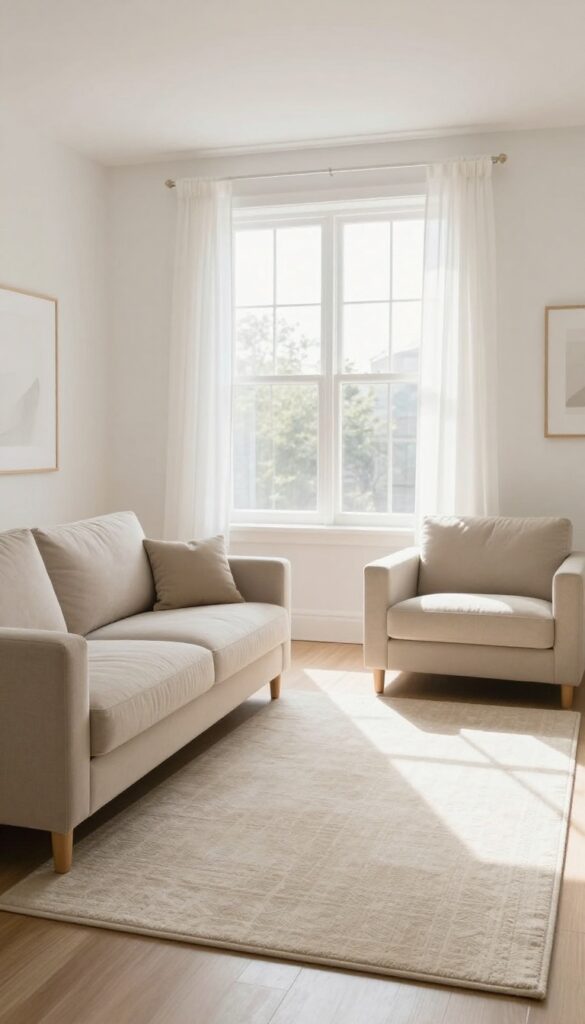
A rug that's too small can make even the most carefully arranged living room feel disjointed. When the rug stops short of your furniture, it visually cuts the room into separate pieces. The fix is surprisingly simple: choose a rug large enough to sit under the front legs of your sofa and chairs—or all four legs if space allows.
This trick instantly anchors the seating area, making the whole room feel larger and more intentional.
In a small room, a rug that's too small makes the space feel choppy. Instead, choose a large rug that sits under the front legs of your sofa and chairs—or even all four legs if possible. This visually expands the floor area and creates one cohesive zone.
The key is measuring your seating arrangement first and adding at least 6–8 inches on each side so the rug extends beyond the furniture. A large rug also helps define the living area in open-concept layouts, acting like a visual boundary without walls.
Best Colors For Small Spaces
Light, neutral tones like soft beige, warm gray, or pale cream keep the room feeling airy and open. If you want a pattern, choose one with a subtle, low-contrast design—like a tone-on-tone geometric or a faded traditional print—so it doesn't overwhelm the space. A light rug also reflects more natural light, which is a bonus in smaller rooms.
Layout Tip: Measure Before You Buy
- To get the proportions right, measure your seating area and add 24–30 inches to both the length and width. This ensures the rug extends at least 12–15 inches beyond the furniture on all sides. In a typical small living room, an 8×10 or 9×12 rug often works best.
- Use painter's tape to outline the size on your floor before purchasing—it helps you visualize the fit.
Texture Mix For Depth
- A large rug doesn't have to be flat or boring. Choose a low-pile wool or a flatweave cotton for durability, then layer in texture with a chunky knit throw or velvet cushions. This contrast keeps the room from feeling one-dimensional.
- If you have hardwood floors, a rug with a subtle loop or a slightly nubby texture adds warmth without competing with other elements.
2. Layer a Flatweave Over a Natural Fiber Base
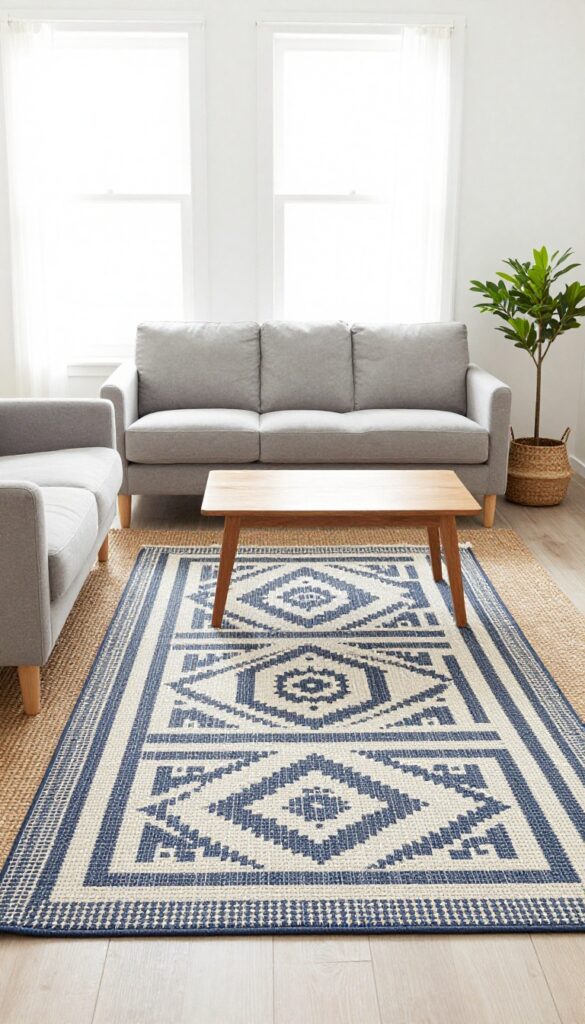
Layering rugs is one of those tricks that instantly makes a room feel collected and cozy without adding clutter. By starting with a large, neutral jute or sisal rug and topping it with a smaller flatweave or patterned rug, you create visual depth and texture that anchors your seating area. This approach works especially well in small spaces because the base rug covers more floor area, making the room feel larger, while the top rug adds personality exactly where you need it.
The key is choosing a base rug that’s durable and low-pile, so the top rug lies flat and doesn’t bunch up. Jute and sisal are natural, affordable, and add organic texture that pairs beautifully with almost any style. For the top layer, go with a flatweave in a contrasting color or pattern—think geometric, striped, or a subtle tribal print.
This combo defines the seating zone without overwhelming the room, and it’s easy to swap out the top rug when you want a refresh.
Best Colors And Patterns
- Stick with a neutral base like warm beige, gray, or natural tan to keep the foundation versatile. Then layer a top rug that introduces your accent colors—maybe a navy and ivory kilim or a black-and-white geometric. The contrast makes the pattern pop without feeling busy.
- If your room already has a lot of color, a monochrome top rug in a lighter or darker shade of your base works beautifully.
Small-space Layout Tip
- In a small living room, let the base rug extend at least 6 inches beyond the front legs of your sofa and chairs. This creates a cohesive zone that visually expands the floor area. Then center the top rug between the sofa and coffee table, making sure it’s large enough to anchor the seating without floating.
- A 5×7 top rug over an 8×10 base is a reliable proportion.
Texture Mix And Maintenance
The contrast between the rough, natural weave of jute and the smooth, tight weave of a flatweave is what makes this combo so visually interesting. To keep the base rug clean, vacuum it regularly and spot-clean spills immediately—natural fibers can stain easily. A rug pad underneath the base layer prevents slipping and adds cushioning, making the whole setup feel plush underfoot.
3. Use a Round Rug to Soften Sharp Corners
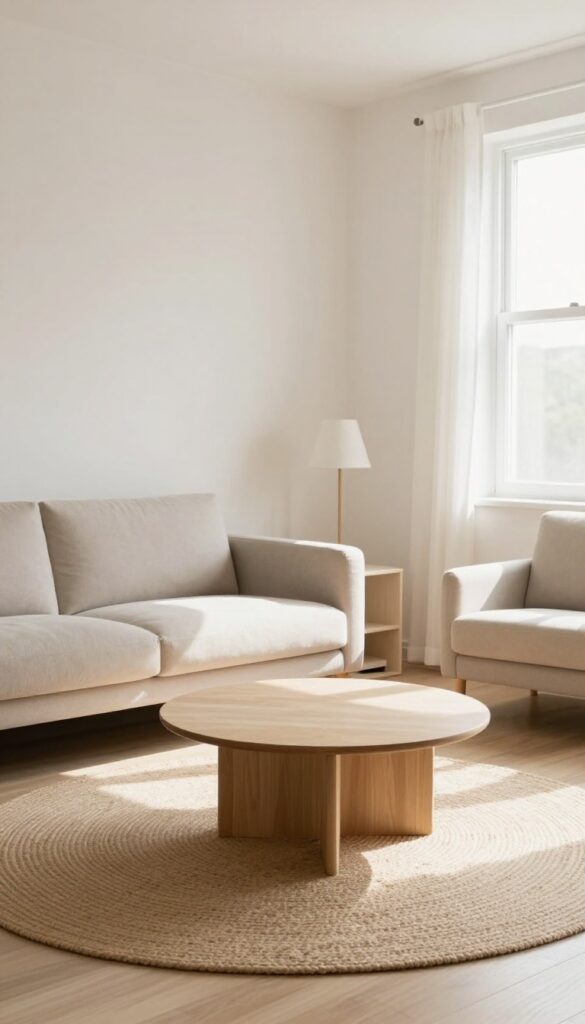
In a small living room, every piece of furniture tends to be boxy—sofas, coffee tables, media consoles. All those right angles can make the space feel rigid and cramped. A round rug is the easiest way to break up that geometry.
Its curved shape instantly softens the room, making it feel more open and fluid. Plus, it draws the eye around the space, which tricks the brain into thinking the area is larger than it really is. Place one under a coffee table or tuck it into a corner with an accent chair, and you’ll see the difference immediately.
Round rugs are a small-space superhero. They interrupt the monotony of straight lines and create a natural focal point that doesn’t eat up visual square footage. In a compact living room, a 4- to 5-foot round rug under a slim coffee table anchors the seating area without overwhelming it.
If you have an awkward corner, a round rug paired with a cozy armchair and a floor lamp turns it into a reading nook that feels intentional, not leftover. The key is to choose a rug that’s large enough to sit under the front legs of your furniture—at least 2 feet beyond the coffee table on each side. This keeps the look grounded and prevents the rug from floating like a tiny island.
For a budget-friendly option, try a jute or cotton round rug; they’re lightweight, easy to clean, and add texture without breaking the bank.
Best Placement For Small Spaces
- The most effective spot for a round rug is under a round or oval coffee table—the shapes echo each other and create a harmonious zone. If your coffee table is square or rectangular, center the rug under it so the table’s corners overlap the rug’s edge by a few inches. This softens the table’s sharpness while keeping the rug from looking like an afterthought.
- Another smart placement is in a corner with a single accent chair and a small side table. The rug defines the area without blocking traffic flow, which is crucial in tight quarters.
Best Colors And Patterns
- For a small room, stick with light, neutral tones like cream, beige, or soft gray to keep the space airy. A subtle pattern—like a faded geometric or a low-contrast tribal design—adds visual interest without overwhelming the floor. If you want a pop of color, choose a rug with a single bold hue (like mustard or teal) and echo it in throw pillows or art.
- Avoid busy, high-contrast patterns; they can make a small room feel chaotic. Instead, opt for a rug with a border or a concentric circle design that naturally draws the eye outward, enhancing the sense of flow.
Texture And Material Tips
- In a small living room, texture is your friend. A round wool rug adds warmth and softness underfoot, while a flat-weave cotton or sisal rug feels more casual and helps the room breathe. For a touch of luxury, consider a round shag rug—just keep it low-pile so it doesn’t overwhelm the space.
- If the rug sits in a high-traffic area, choose a durable material like polypropylene that resists stains and fading. Layering a smaller round rug over a larger square one is another trick that adds depth without clutter, especially if the bottom rug is a neutral sisal.
4. Pick a Low-Profile Rug for Doorways and High-Traffic Areas
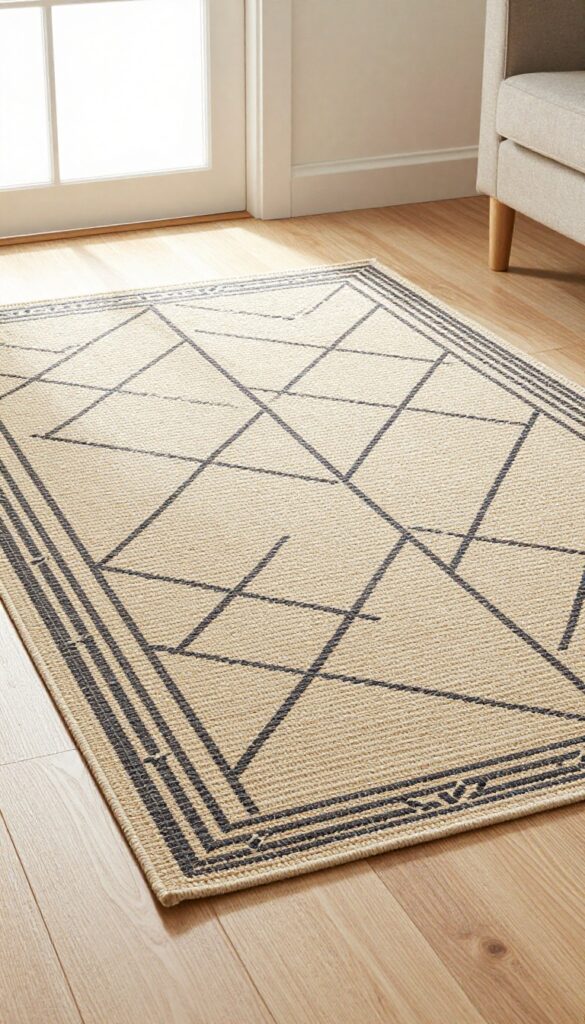
Not every rug needs to be plush and sink-in soft. In spots where the door swings open or foot traffic is constant, a low-profile rug is the unsung hero. Flatweave and low-pile options sit nearly flush with the floor, so they won't catch on shoes or create a bump under furniture.
They also make vacuuming a breeze and keep the room feeling open and intentional.
For high-traffic zones like entryways, hallways, or the path between the sofa and TV, a low-profile rug is both practical and stylish. It defines the space without adding visual bulk, which is especially helpful in small living rooms. Look for flatweave, kilim, or indoor-outdoor styles that can handle daily wear.
These rugs often have tighter weaves, so dirt doesn't get trapped as easily. Plus, they're easier to clean—just shake out or spot treat. The low pile also means chairs and sofas can sit evenly without wobbling.
Choose a darker color or a pattern to hide inevitable scuffs, and you'll have a rug that works hard without looking tired.
Best Materials For Durability
- Wool and cotton flatweaves are classic choices—they're naturally stain-resistant and hold up well. For even more toughness, consider polypropylene or recycled synthetic fibers. These materials are fade-resistant and can handle spills without absorbing moisture.
- Indoor-outdoor rugs are another great option; they're designed to be hosed down and can take a beating. Just make sure the backing is non-slip or add a rug pad to keep everything in place.
Small-space Layout Tip
- In a tight living room, a low-profile rug can visually expand the floor area. Place it under the front legs of your sofa and coffee table to anchor the seating zone without covering the whole floor. This leaves a border of bare floor around the edges, making the room feel larger.
- For doorways, choose a runner that's long enough to catch footsteps but leaves a few inches of floor on each side to avoid a cramped look.
5. Anchor a Conversation Area with a Runner
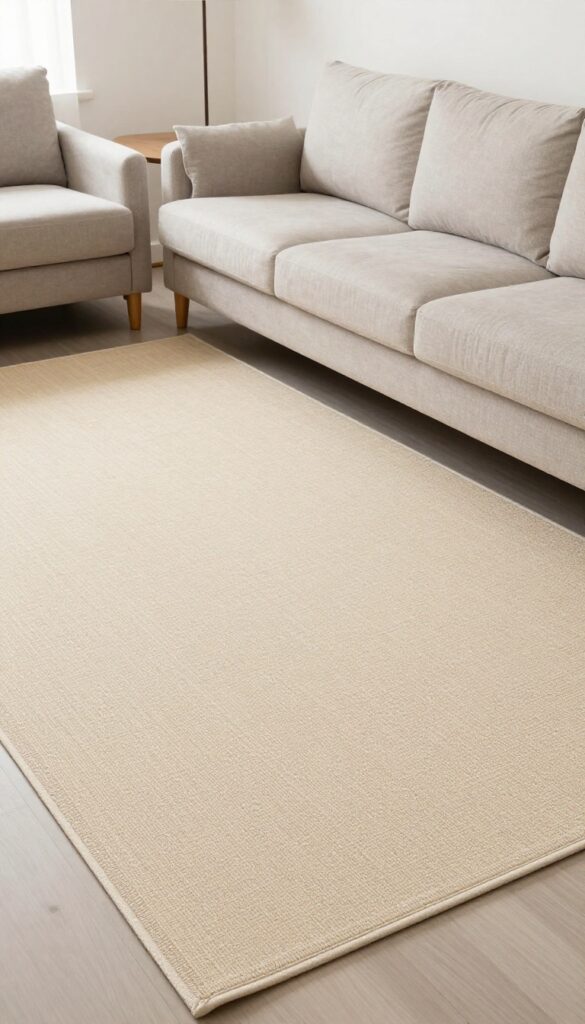
A long, narrow living room can feel tricky to furnish—too much furniture and it gets cramped, too little and it feels like a hallway. A runner rug placed parallel to your sofa or between two armchairs instantly carves out a defined seating zone without covering every inch of floor. It creates a visual pathway and a cozy conversation nook, all while keeping the layout open and airy.
This trick is especially useful in small spaces where a large area rug would overwhelm the room.
The key is to choose a runner that's long enough to anchor the seating area—typically 6 to 8 feet—and place it so the front legs of your furniture sit on it. This grounds the arrangement without making the floor feel busy. Go for a low-pile or flat-weave material that's easy to walk on and doesn't collect crumbs, especially if the runner sits in a high-traffic path.
A subtle pattern or a solid with a textured border adds interest without competing with other rugs or decor in the room.
Best Colors
Stick with neutral tones like warm beige, soft gray, or washed blue to keep the runner feeling like a natural extension of the floor. If you want a pop of color, try a muted rust or olive green that echoes accent pillows or artwork. Avoid high-contrast patterns that might visually chop the room in half.
Layout Tip
Place the runner so it runs parallel to the longest wall, with the sofa or chairs centered along it. Leave at least 12 inches of bare floor on either side to maintain balance. If you have a coffee table, position it so it sits partially on the runner—this ties the whole grouping together.
Small-space Fix
In a very narrow room, skip the coffee table and use a pair of small side tables instead. The runner will still define the zone, and you'll keep a clear walking path. Add a floor lamp at one end to visually bookend the conversation area.
6. Choose a Light Base with a Subtle Pattern
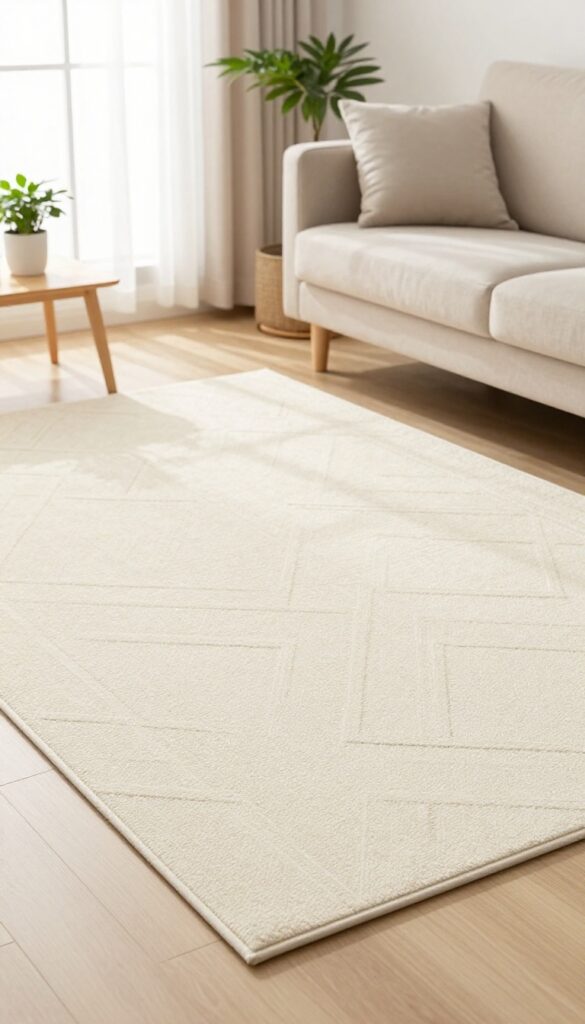
Light rugs work wonders in small living rooms by bouncing natural light around and making the floor feel like it extends further than it actually does. A cream or pale gray base with a faint geometric or organic pattern adds just enough visual texture to keep the space from feeling flat, without overwhelming the room. The subtle design also does a surprisingly good job at hiding everyday dirt and crumbs, so you can go longer between deep cleans.
A light rug with a delicate pattern is a smart choice for compact living rooms because it keeps the space airy while adding a layer of interest that a solid rug can't match. The pattern draws the eye without creating visual clutter, which is key when you're working with limited square footage. Plus, the lighter tones help walls and furniture stand out, making the whole room feel more open and intentional.
Best Colors And Patterns
Stick with warm off-whites, cream, or pale greige for the base—these tones feel cozy without shrinking the room. For the pattern, look for faint stripes, subtle trellis motifs, or soft organic shapes in a slightly darker shade like oatmeal or dusty beige. Avoid high-contrast patterns that can feel busy; the goal is a whisper of design, not a shout.
Small-space Layout Tip
In a small living room, place the rug so it sits under the front legs of your sofa and extends at least 6 inches on either side. This anchors the seating area without covering the entire floor, which can make the room feel chopped up. If your space is extra tight, a 5×7 or 4×6 rug works better than a larger one that gets buried under furniture.
Maintenance And Durability
Choose a low-pile or flatweave material like wool, cotton, or a wool-blend—these are easier to vacuum and less likely to trap dust. A subtle pattern is your secret weapon here: it camouflages pet hair, crumbs, and light stains much better than a solid light rug. For high-traffic areas, go with a darker pattern on the same light base to keep it looking fresh longer.
7. Try a Bold Pattern to Distract from Small Proportions
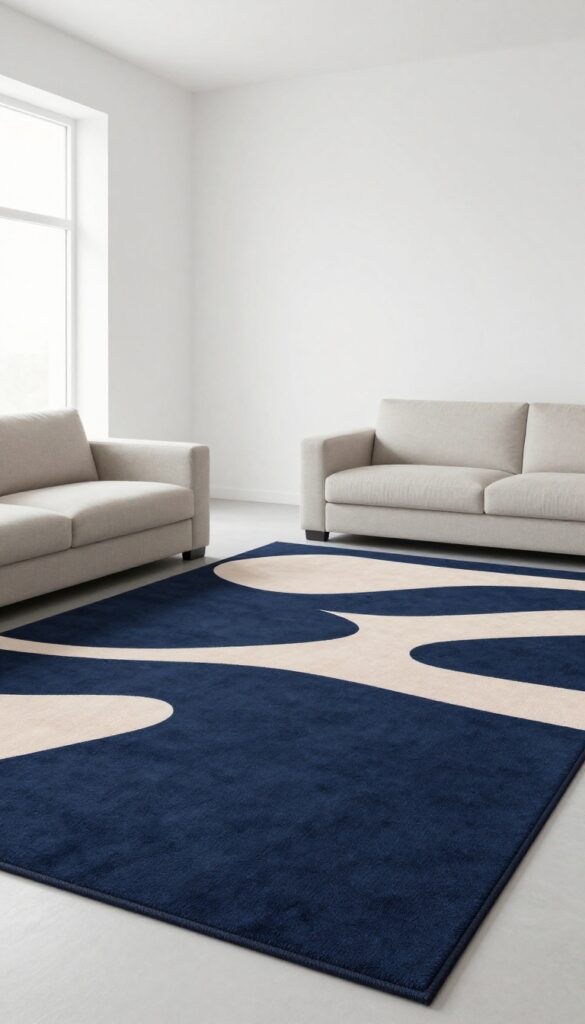
When your living room is on the compact side, a busy rug might seem like a risk. But a bold pattern can actually be your secret weapon. A large-scale print draws the eye across the entire floor, making the space feel wider and more expansive than it really is.
The trick is to pick a design with colors that already show up in your room, so the rug feels intentional rather than chaotic.
Go for oversized florals, abstract shapes, or geometric motifs in a palette that ties into your existing decor. Keep the rest of the room simple—neutral furniture, minimal accessories—so the rug does all the heavy lifting. This approach works especially well in open-plan layouts where the rug can define the living zone without adding visual clutter.
Best Patterns For Small Spaces
- Large-scale patterns are your best bet. Think big blooms, wide stripes, or sweeping abstract curves. Small, dense prints can make a room feel busy and cramped, so avoid those.
- A rug with a central medallion or a bold border also helps anchor the seating area and gives the eye a clear focal point.
Color Palette Tips
Stick to two or three colors from your existing decor—like a deep navy and a soft blush if you have those tones in throw pillows or artwork. This creates a cohesive look without overwhelming the space. If your room is mostly neutral, a rug with a bright accent color can add just the right pop of personality.
Layout And Placement
In a small room, let the rug define the conversation area. Place the front legs of your sofa and chairs on the rug to create a unified zone. Avoid pushing the rug against the walls; leaving a few inches of bare floor around the edges actually makes the room feel larger.
8. Use a Rug to Define a Zone in an Open Plan
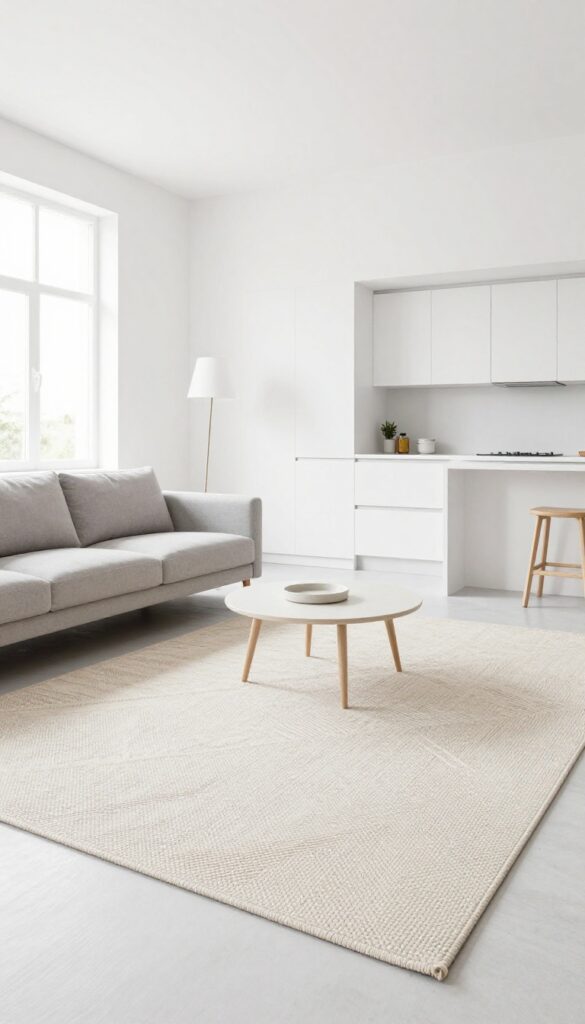
Open-concept layouts are great for flow, but sometimes you crave a little separation—without the cost or permanence of walls. A rug is the simplest tool to carve out a living area in a studio or loft. By choosing a rug large enough to hold all your furniture in that zone, you create a clear visual boundary that makes the space feel organized and intentional.
It’s a practical trick that instantly gives your room a sense of purpose.
In an open-plan home, a rug acts like an invisible wall. It anchors your seating group and tells the eye where the living room begins and ends. For small spaces, this is especially powerful: a well-placed rug can make a cramped studio feel like a proper one-bedroom.
Stick with a low-pile or flatweave rug to keep the look clean and easy to maintain. Avoid busy patterns that might clash with adjacent zones—solid colors or subtle geometrics work best.
Best Size For Small Spaces
- For a studio or small open plan, go big. A rug that’s at least 6×9 feet will comfortably hold a sofa and coffee table, with the front legs of the sofa sitting on the rug. If space is tight, a 5×8 can work for a loveseat and a pair of chairs.
- The key is to avoid a rug that’s too small—it will make the zone feel cramped and floaty.
Material That Holds Up
Choose a durable, low-maintenance material like polypropylene or wool blend. These fibers resist stains and are easy to vacuum, which is crucial in high-traffic open layouts. A flatweave or short pile also won’t trip up your vacuum cleaner or collect dust from the rest of the room.
Layout Tip For Flow
Position the rug so it aligns with the main seating arrangement, leaving a clear path around it. In a studio, place the rug at the center of the living area, with the bed or dining table in a separate zone. This creates a natural division without blocking light or sightlines.
9. Opt for a Washable Rug for Messy Households
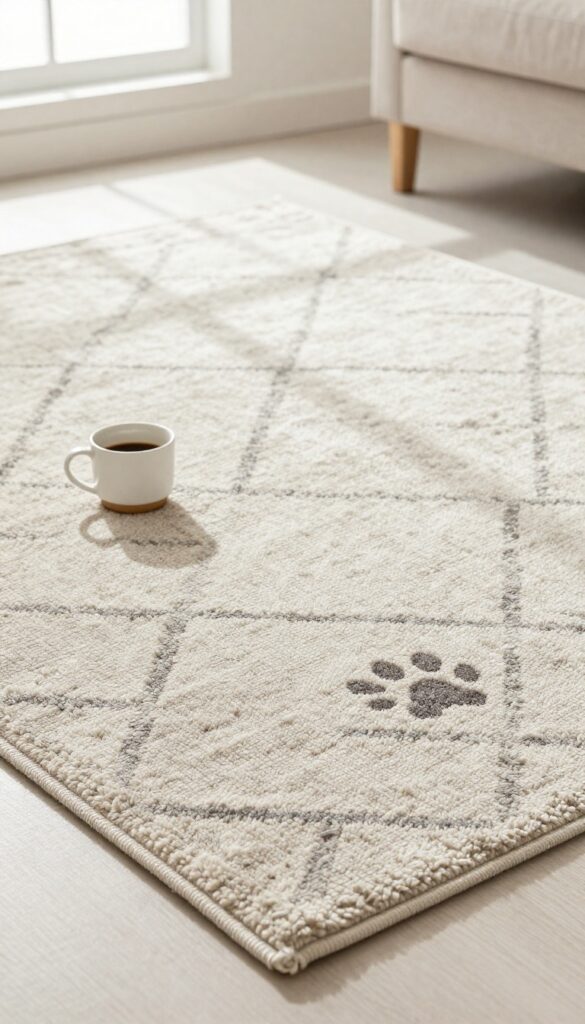
Small spaces see a lot of traffic, and spills happen. A washable rug—like those from Ruggable or similar brands—lets you toss it in the machine when life gets messy. Look for a low-pile design that dries fast and stays put.
In a compact living room, every square inch works hard. That means your rug takes a beating—from coffee spills to muddy paws. A washable rug solves this without sacrificing style.
Choose a flatweave or low-pile option that cleans easily and doesn't trap dirt. Machine-washable rugs have come a long way, now offering chic patterns and textures that mimic traditional wool or cotton. They anchor the space while giving you peace of mind.
Best Materials
Look for rugs made from recycled polyester or polypropylene. These materials resist stains and dry quickly. Avoid high-pile or shag rugs, as they hold onto moisture and debris.
Small-space Fix
In a small living room, a washable rug can double as a floor cushion for extra seating. Roll it up when not in use, or layer it over a larger neutral rug for texture.
Finishing Touch
Add a rug pad underneath to prevent slipping and extend the rug's life. Choose a non-slip pad that's also washable for easy maintenance.
10. Go Monochrome for a Seamless, Spacious Look
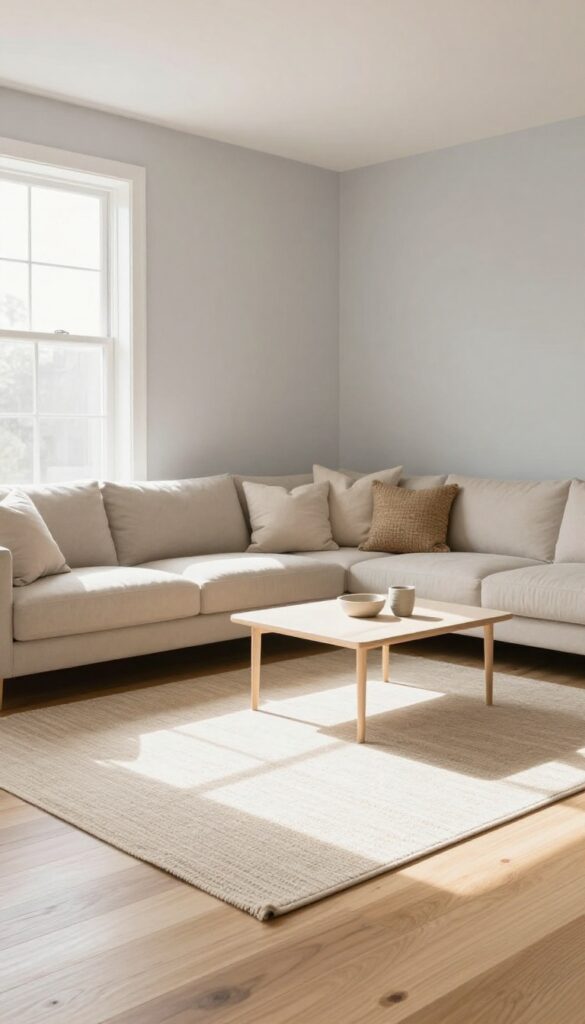
When you're working with a small living room, every visual trick counts. One of the easiest ways to make the space feel bigger is to choose a rug that blends in rather than stands out. A monochrome approach—where the rug matches or closely relates to your floor or wall color—creates a continuous line that the eye follows, making the room feel more open and less chopped up.
It's a subtle move, but it works wonders.
The magic of a monochrome rug lies in its ability to erase visual boundaries. Instead of a rug that cuts the floor into separate zones, you get one seamless surface that stretches the room. This is especially effective in open-concept layouts where you want distinct areas without breaking the flow.
For example, a charcoal rug on dark hardwood or a beige rug on light tile keeps the eye moving, making the space feel larger than it is. The lack of contrast tricks the brain into seeing more square footage.
Best Colors
- Stick to one color family, but vary the shade slightly for depth. If your floors are a warm medium brown, try a rug in a similar tone with a subtle texture or pattern. For light gray walls, a pale gray rug with a soft weave keeps things airy.
- Avoid high-contrast borders or bold patterns—they break the seamless effect.
Material Matters
- Choose a material that complements your floor's finish. For hardwood, a low-pile wool or flatweave rug won't add bulk. On tile or concrete, a softer shag or looped texture adds warmth without disrupting the visual line.
- Natural fibers like jute or sisal in a neutral tone also work well for a relaxed, earthy look.
Small-space Fix
In a tiny living room, take the rug all the way to the walls or at least under the front legs of your furniture. This expands the perceived floor area. If you can't go wall-to-wall, choose a rug large enough to fit all major pieces—nothing shrinks a room faster than a floating rug that leaves bare strips around the edges.
FAQ
What size rug is best for a small living room?
Aim for a rug that's at least large enough to fit under the front legs of your sofa and chairs. For most small living rooms, a 5×8 or 6×9 works well. If possible, go bigger—a rug that's too small makes the room feel cramped.
Should I use a dark or light rug in a small space?
Light rugs reflect light and can make a room feel bigger and airier. But dark rugs add coziness and hide stains better. Choose based on your style and how much natural light the room gets—both can work with the right balance.
Can I layer rugs in a small living room?
Absolutely. Layering a smaller patterned rug over a larger natural fiber rug adds texture and defines the seating area without overwhelming the space. Just keep the top rug thin and the bottom rug neutral.
How do I keep a rug from sliding on hardwood floors?
Use a rug pad that's specifically designed for hard floors. It prevents slipping, adds cushioning, and protects the floor. Make sure the pad is slightly smaller than the rug so it doesn't peek out.
What rug pattern works best in a small room?
Both subtle and bold patterns can work. Subtle patterns add texture without clutter, while bold patterns can distract from the room's size. Just keep the rest of the decor simple so the rug doesn't compete.
Conclusion
Finding the right rug for a small living room is all about balance—scale, placement, and style working together to anchor the space without overwhelming it. Whether you go for a light flatweave, a bold pattern, or a washable runner, the best rug is one that makes your room feel complete and functional.
Take your time measuring, consider how you use the room, and don't be afraid to experiment. A well-chosen rug can transform a cramped living area into a cozy, stylish retreat that feels much bigger than it actually is.