10 Wall Frame Ideas for Living Room Walls That Feel Bigger and Better
Blank walls can make a living room feel unfinished, but filling them doesn't have to eat up your floor space. Wall frames are a smart way to inject personality without cluttering your square footage. Whether you rent or own, these ideas work with what you have.
Small spaces call for clever choices. The right frame arrangement can trick the eye into seeing more depth, height, or width. Plus, frames let you swap out art and photos whenever your mood changes.
Ready to turn your blank wall into a conversation starter? Here are ten wall frame ideas that keep your living room feeling open, airy, and totally you.
1. Lean a Large Floor Frame Against the Wall
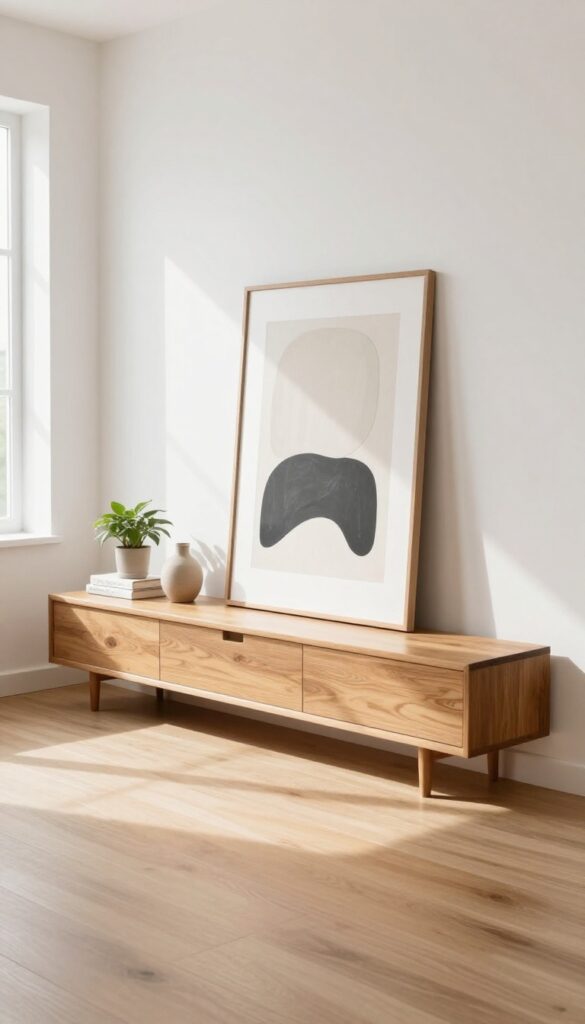
Floor frames are the easiest way to make a statement without committing to a permanent fixture. By propping an oversized frame directly on the ground, you instantly draw the eye upward and create a sense of height—perfect for small living rooms where every inch counts. The best part?
You can swap it out whenever the mood strikes, no patching required.
This trick works especially well in rental spaces or for anyone who likes to refresh their decor seasonally. A large frame—think 3 feet by 4 feet or bigger—leans casually against the wall, adding an art-gallery feel without the formality. The frame itself becomes the focal point, so choose one with a bold color or interesting texture to anchor the room.
Pair it with a low console table or a stack of books at its base to ground the look and prevent it from feeling top-heavy.
Best Frame Styles
Go for a frame with a chunky wood or metal profile to give it presence. A distressed white or natural oak finish keeps things light and airy, while a dark charcoal or brass adds drama. Avoid thin, delicate frames—they can look lost on the floor.
Small-space Styling Tip
In a tight living room, lean the frame against a wall that gets natural light so it casts a subtle shadow and adds depth. Keep the area around it minimal—just a small plant or a single ceramic vase—to maintain an uncluttered feel.
Budget-Friendly Swap
If you don't have a large frame, use a full-length mirror instead. It reflects light and makes the room feel twice as big. Or, pick up a vintage poster and mount it on foam core for a lightweight, affordable alternative.
2. Create a Symmetrical Grid with Matching Frames
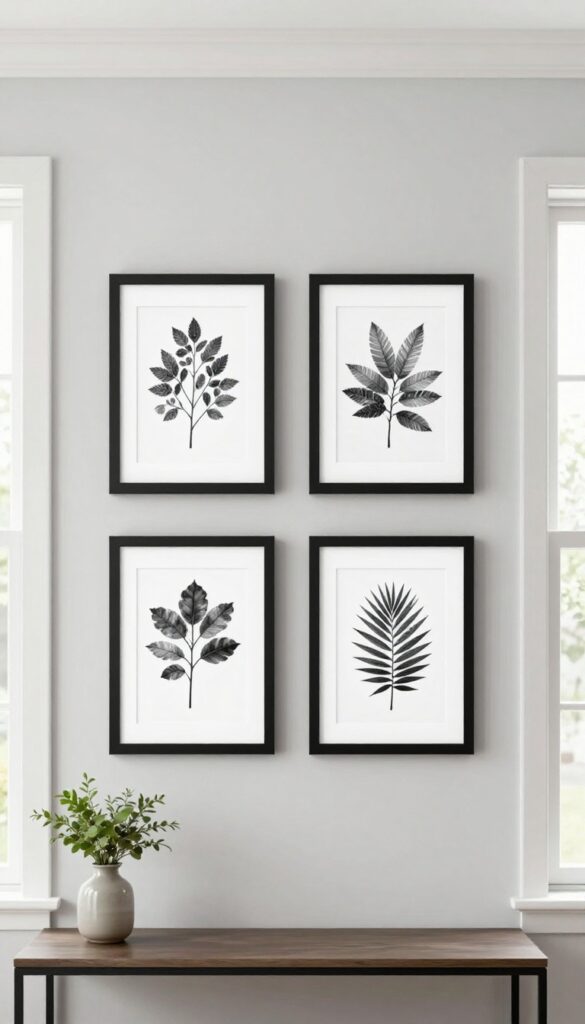
A small wall can feel like a design dead end, but a grid of identical frames turns it into a focal point. By using the same frame style, mat color, and spacing, you create a clean, gallery-like arrangement that feels both curated and calming. This approach works especially well in tight spaces because the repetition tricks the eye into seeing more order and less clutter.
Start with four or six matching frames—think simple black, white, or natural wood. Arrange them in a perfect grid with equal spacing (about 2 to 3 inches between each frame). Keep the artwork or photos consistent too: all black-and-white prints, all botanical sketches, or all minimalist line art.
The uniformity is what makes the grid feel intentional rather than chaotic. Hang the grid at eye level, centering it on the wall so it anchors the room without overwhelming it.
Best Wall Placement
A symmetrical grid shines on a narrow wall between windows, above a console table, or in a hallway. Avoid placing it behind a sofa where the grid might feel too wide; instead, use a 2×2 or 3×2 layout that fits the wall's proportions. Measure the total width of your grid and leave at least 6 inches of breathing room on each side.
Small-space Fix
In a compact living room, a grid of small frames (8×10 or 5×7) keeps the wall from feeling heavy. Use ultra-thin frames in a light finish like pale oak or white to maintain an airy look. The grid's structure actually makes the room feel larger by drawing the eye outward in a controlled pattern.
Finishing Touch
Add subtle warmth by choosing frames with a slight sheen or a linen-textured mat. If your grid is in a dark corner, install a small picture light above the top row to highlight the arrangement. This also softens the edges and makes the frames pop against the wall.
3. Mix Frame Colors for a Collected-Over-Time Vibe
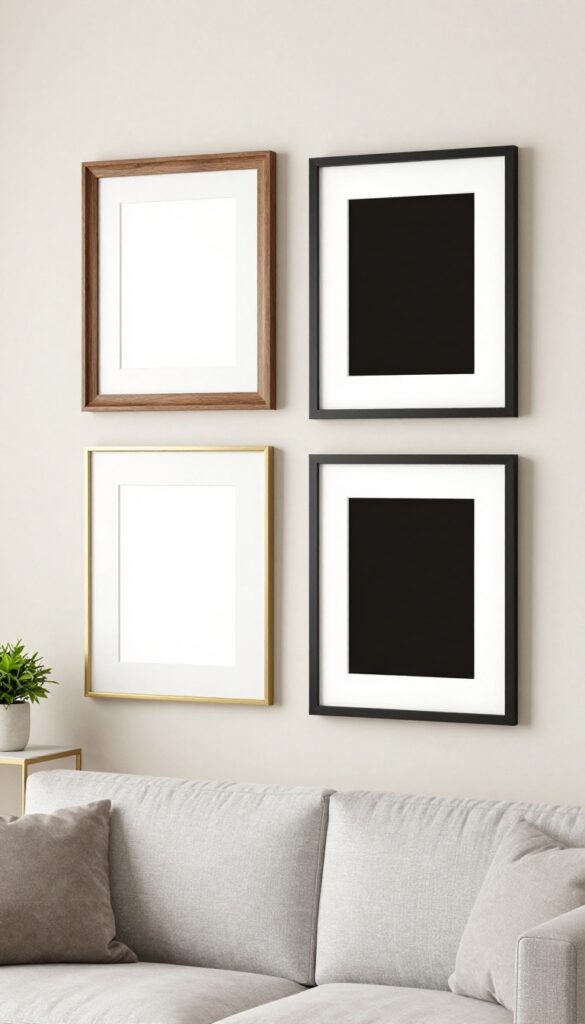
A wall of matching black frames can feel a bit too curated, like a showroom display. Mixing frame colors—black, white, wood, and gold—in different sizes creates a relaxed, layered look that feels personal and lived-in. This approach works especially well in small spaces because the variety draws the eye across the wall, making the room feel larger and more dynamic.
The key is to treat your frame collection like a gallery wall that evolved naturally. Start with a few larger frames in contrasting colors—say a chunky wood frame next to a sleek black one—then fill in with smaller gold or white frames. The mix of finishes adds warmth and texture without feeling chaotic.
Stick to a consistent mat color (white or cream) to tie everything together, and vary the spacing between frames to keep the arrangement organic. This style works beautifully above a sofa, console table, or even in a hallway, giving your wall instant personality without overwhelming a compact room.
Best Colors To Combine
- For a balanced mix, stick to a palette of two to four frame colors. Black and white are the anchors—they ground the arrangement. Then add one warm tone like natural wood (walnut or oak) and one metallic accent like gold or brass.
- Avoid silver or chrome if you're going for a cozy vibe; they can feel too cool. The goal is contrast that still feels harmonious, so repeat colors at least twice across the wall.
Small-space Layout Tip
- In a small living room, use the frame mix to visually expand the wall. Place the largest frames slightly off-center and cluster smaller ones around them. Keep the overall arrangement within a rectangle shape—this creates a subtle boundary that tricks the eye into seeing more width.
- Leave at least 2 inches between frames to avoid a cluttered look, and align the outer edges for a tidy finish.
Finishing Touch: Matting And Art
- Consistent white or cream mats unify the mix of frame colors. For art, choose prints with similar tones or themes—black-and-white photography, botanical sketches, or abstract line drawings work well. Avoid busy patterns that compete with the frames.
- A few empty frames with just the mat can also add breathing room and keep the wall from feeling too full.
4. Use Floating Shelves as Frame Ledges
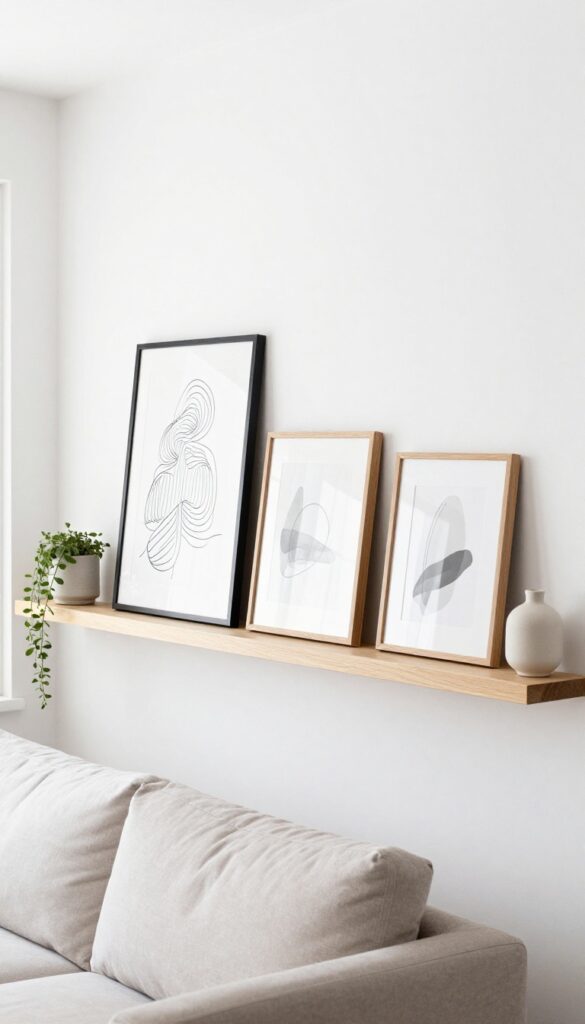
Floating shelves do more than hold books—they make fantastic ledges for leaning art. In a small living room, wall space is precious, and a single narrow shelf can turn a bare wall into a rotating gallery. The best part?
You can swap out frames whenever the mood strikes, no nails or hooks required. Layer in a tiny succulent or a ceramic vase, and the shelf becomes a mini vignette that adds depth without eating up floor space.
This trick works especially well above a sofa or console table where you want something interesting but not bulky. Choose a shelf that's at least 4 inches deep so frames sit securely, and keep the width proportional to your wall. White or light wood shelves keep the look airy, while black metal adds a modern edge.
Lean one large frame as the anchor, then add smaller frames and a trailing plant for balance. The casual lean feels intentional, not messy, and the shelf itself becomes part of the decor.
Best Placement
Install the shelf at eye level—about 60 inches from the floor—so the frames are easy to see and swap. Above a low sofa or bench, you can go a few inches lower. Leave at least 6 inches of wall space above the shelf for breathing room.
Styling Tip
Mix frame finishes for a collected look: a black frame next to a natural wood one, with a metallic accent. Keep the art simple—line drawings, black-and-white photos, or soft abstracts work best. Add one small object like a brass candlestick or a tiny potted cactus to break up the rectangles.
Small-space Fix
In a narrow living room, use a single long shelf instead of multiple small ones. Lean three frames of varying heights in a row, and tuck a small plant on one end. This creates a horizontal line that makes the wall feel wider.
5. Frame a Single Large Statement Piece
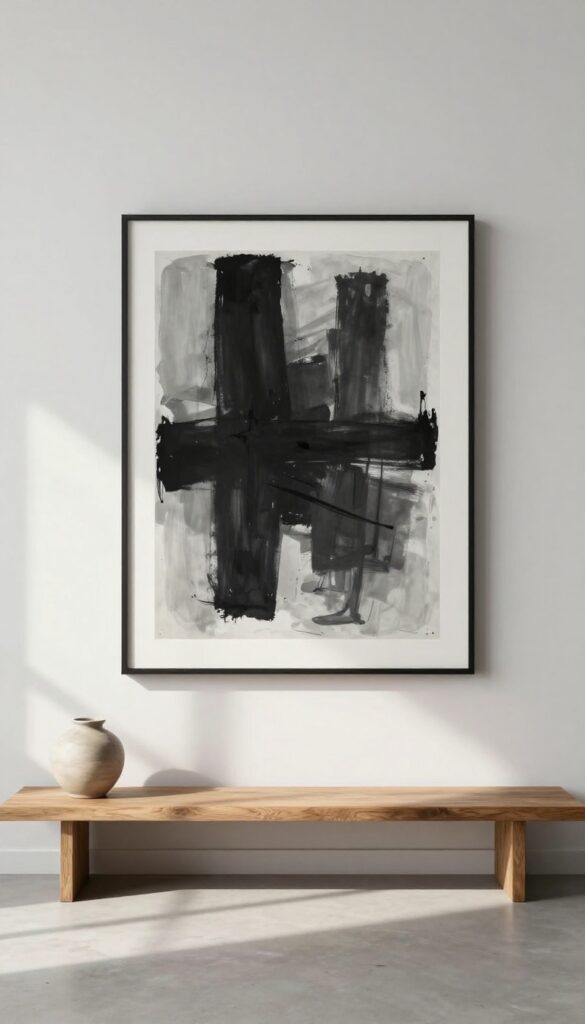
One oversized frame changes everything. Instead of scattering multiple small pieces across the wall, a single large print or abstract canvas anchors the room with confidence. This approach works especially well in small spaces where every inch counts—the big frame draws the eye upward and outward, making the wall feel taller and the room more expansive.
The result is a clean, intentional look that feels curated rather than cluttered.
When you commit to one large statement piece, the rest of the wall stays quiet. That contrast is what makes the frame pop. Choose a bold print, a dramatic abstract, or even a large-scale photograph with strong contrast.
The frame itself should be simple—thin black or natural wood—so the art remains the hero. Hang it at eye level, and let the surrounding wall breathe. This is not about filling space; it is about creating a focal point that gives the room personality without overwhelming it.
Best Colors
- Stick with a palette that complements your existing decor but adds a punch. For a neutral room, go with a black-and-white photograph or a muted abstract in earthy tones. If your space already has color, choose a piece that pulls out one accent shade—like a deep teal or burnt orange—to tie the room together.
- The goal is contrast without chaos.
Small-space Fix
- In a compact living room, a large statement piece can actually make the space feel bigger. It creates a single visual anchor, so the eye does not bounce around. Keep the frame slim and the matting minimal.
- A floating frame with a gap between the art and the glass adds depth without bulk. Pair it with a small console table or a single plant below to ground the arrangement.
Finishing Touch
- Lighting makes or breaks a statement piece. Install a picture light above the frame or aim a small spotlight at it from the ceiling. Warm LED bulbs (2700K to 3000K) bring out the richness of the art without harsh glare.
- The subtle glow turns the frame into a gallery-worthy moment, especially in the evening.
6. Go Vertical with a Tall Column of Frames
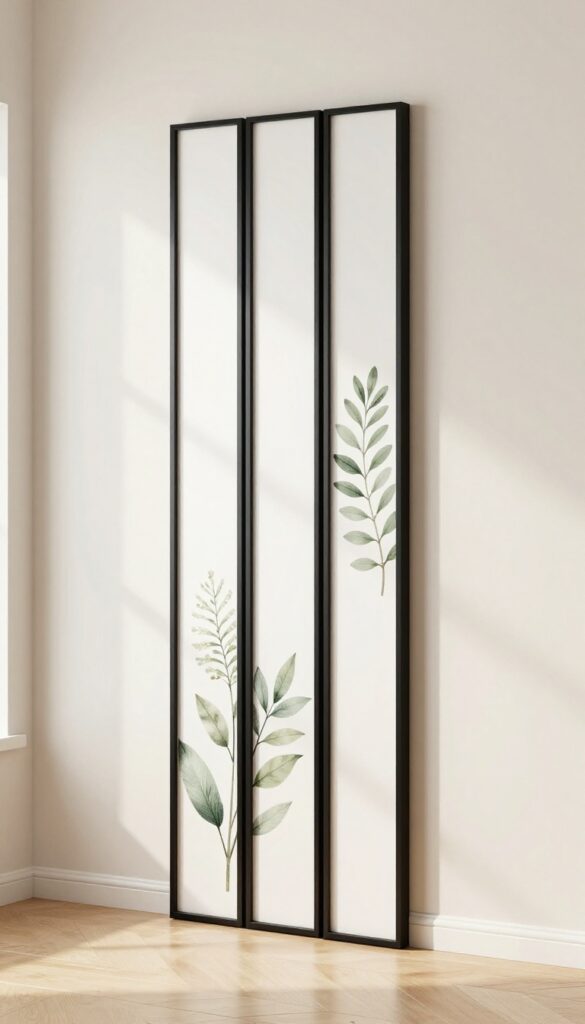
When wall space is tight but you still want a big visual punch, stacking frames vertically is a smart move. A tall column of three or four frames draws the eye upward, making low ceilings feel higher and turning a narrow strip of wall into a focal point. This arrangement works especially well beside doorways, between windows, or on a slim accent wall where a wide gallery just won't fit.
The key is consistency—stick with frames of the same size and color to keep the column clean and cohesive. Black or white frames with simple mats create a crisp, modern look, while warm wood tones add a natural, grounded feel. For a more eclectic vibe, mix frame styles but keep the outer dimensions uniform so the column stays visually balanced.
Best Art Choices
Choose artwork or prints that share a common theme or color palette to tie the column together. Botanical prints, abstract line drawings, or black-and-white photography all work well. You can also use the same image in each frame for a bold, repeated pattern—just make sure the image is strong enough to stand on its own.
Spacing And Layout Tip
Hang the frames with 2 to 4 inches between each one—too much space breaks the vertical line, too little feels cramped. Use a level and measure from the center of each frame to keep the column perfectly straight. For a floating effect, mount the frames slightly away from the wall using shadow box frames or spacers.
Small-space Fix
- In a tiny living room or narrow entryway, a vertical column of frames is a lifesaver. It uses minimal wall width while adding height and interest. Pair it with a slim console table below and a small lamp or vase to anchor the arrangement.
- Avoid overcrowding the surrounding wall—let the column breathe.
7. Cluster Frames Asymmetrically for an Eclectic Look
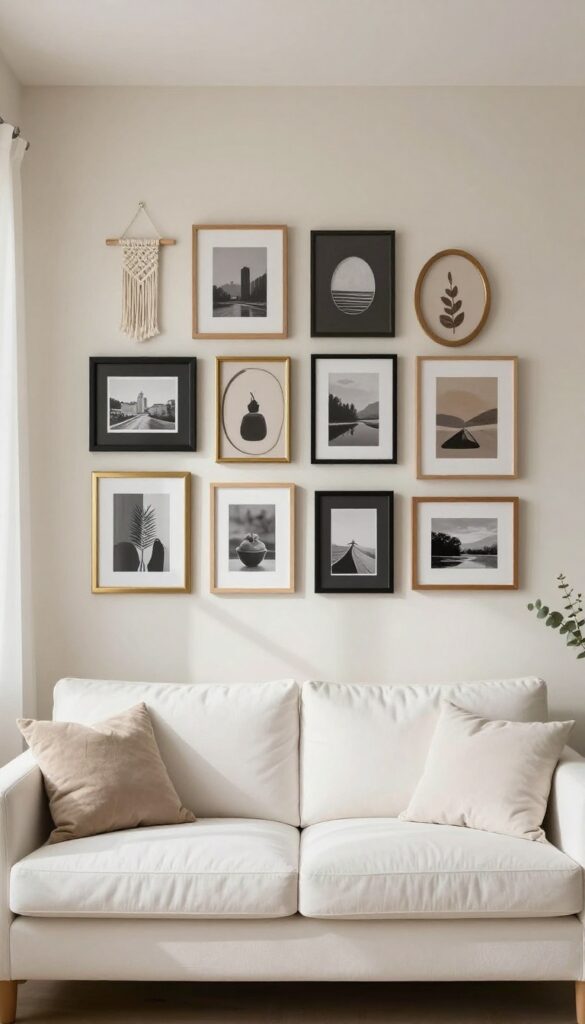
Forget the straight line of matching frames. An asymmetrical cluster of art and photos feels like a gallery wall that grew organically over time. This approach is perfect for small spaces because it draws the eye upward and across the wall, making the room feel larger and more dynamic.
The loose arrangement also lets you mix in personal mementos, postcards, or small sculptures without needing everything to match.
Start by laying out your frames on the floor to find a composition that feels balanced yet random. Mix square, rectangular, and even oval frames in different finishes—black, brass, natural wood. Leave uneven gaps between them for that collected-over-time vibe.
This works especially well above a sofa, console table, or in a narrow hallway where a single large frame might feel too heavy.
Layout Tip
Use painter's tape to outline the cluster on the wall before hammering any nails. Start with the largest frame slightly off-center, then build outward with smaller pieces. Keep the outer edges of the cluster within an imaginary rectangle to avoid a chaotic look.
Small-space Fix
In a tight living room, keep the cluster tight—no more than 12 inches wider than the furniture below it. Use lightweight frames so you can adjust easily. A cohesive color palette (like all black-and-white photos or muted earth tones) helps the cluster feel intentional rather than messy.
Finishing Touch
Add one unexpected element, like a small macrame wall hanging or a dried eucalyptus branch tucked into a frame corner. This breaks up the hard edges and adds texture, making the display feel more like a curated vignette.
8. Frame Fabric or Wallpaper Samples for Instant Art
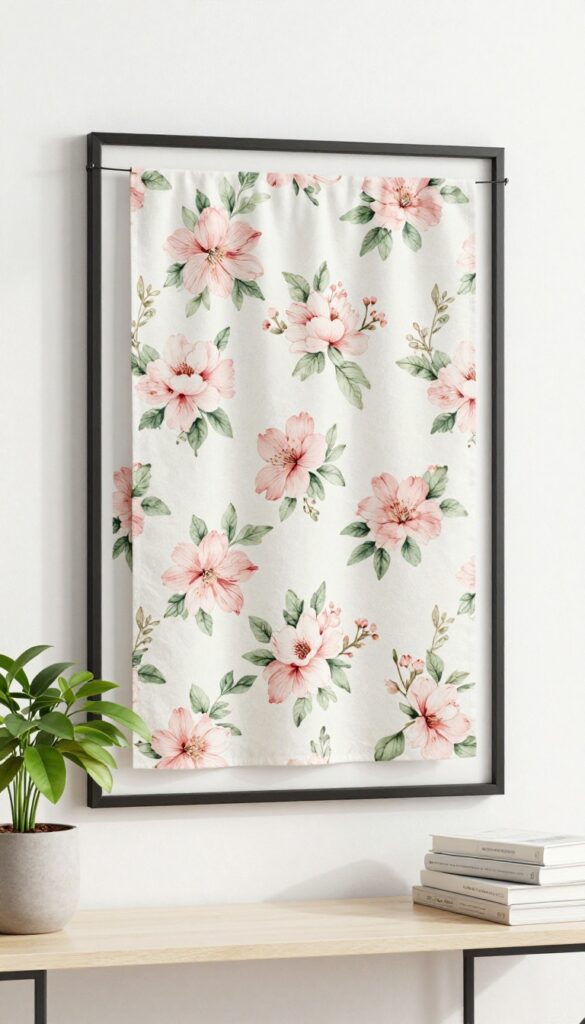
Blank walls don’t have to stay that way, especially when you have leftover fabric or wallpaper sitting in a drawer. Pull out a pretty floral cotton, a textured linen, or a remnant of that wallpaper you loved but didn’t use up. Stretching it inside a simple frame turns it into instant, custom art that ties your room together without costing much.
It’s a clever trick for small spaces because it adds pattern and color without taking up floor space or requiring a big investment.
This idea works especially well in apartments or rented homes where you can’t paint or commit to permanent wall treatments. By framing fabric or wallpaper, you get the look of a curated gallery wall with pieces that actually match your sofa cushions, curtains, or accent pillows. The best part?
You can swap them out seasonally or whenever you crave a change—just pop in a new swatch and you’re done.
Best Fabrics And Patterns To Try
- Look for fabrics with a tight weave and a pattern that reads well from a distance—large florals, geometric prints, or subtle stripes. Linen, cotton, and even lightweight upholstery remnants work beautifully. If you’re using wallpaper, choose a design that has a clear focal point so it doesn’t look like a random scrap.
- For a cohesive look, pull colors directly from your existing decor.
Small-space Styling Tip
In a compact living room, group two or three framed fabric pieces in a tidy grid above a slim console table or a sofa. Keep the frames consistent in color and style—black or white thin frames keep the focus on the pattern. This creates a polished gallery feel without overwhelming the wall, and the coordinated colors help the room feel larger and more intentional.
Finishing Touch: Mounting Without Damage
Use removable adhesive strips or picture-hanging hooks to keep your frames secure but renter-friendly. If you want to stretch the fabric yourself, cut it a few inches larger than the frame, wrap it around a piece of cardboard or foam core, and secure it with tape or staples on the back. Slip it into the frame and you’re done—no sewing or special tools needed.
9. Use a Picture Rail to Hang Frames Without Nails
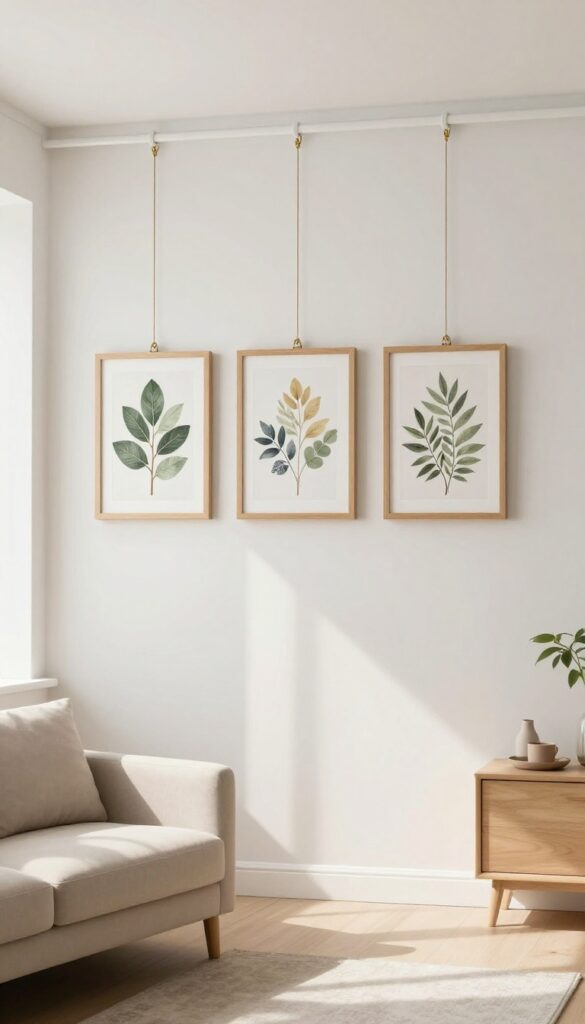
Picture rails aren't just for Victorian parlors—they're a smart, renter-friendly solution for small living rooms. Installed near the ceiling, this thin wooden or metal ledge lets you hang frames with chains or wires, keeping walls hole-free. The best part?
You can swap out art in seconds without patching or repainting. It's a game-changer for anyone who loves to refresh their decor often but hates commitment.
A picture rail system works beautifully in small spaces because it draws the eye upward, making the room feel taller. Choose lightweight frames with D-rings and attach them with clear nylon cord or decorative chains. For a clean look, hang all frames at the same height or stagger them for a gallery feel.
In a compact living room, this keeps the wall surface free for furniture and prevents visual clutter.
Best Materials
Opt for a slim, unfinished wood rail that blends with your trim—paint it the same color as the wall for a seamless look. If you prefer contrast, a black metal rail adds a modern edge. For the hanging hardware, use brass chains for warmth or clear fishing line for an invisible effect.
Small-space Fix
In a tight room, keep the rail within 6–12 inches of the ceiling and use long vertical wires to suspend frames. This leaves the wall below completely clear for a sofa or console table. You can also use the rail to hang a single large mirror, which will reflect light and double the sense of space.
Finishing Touch
Add small picture lights clipped onto the rail to spotlight your art. Battery-operated LED puck lights work well and eliminate cords. This creates a cozy, gallery-like atmosphere without taking up floor or table space.
10. Frame a Mirror for Dual Function
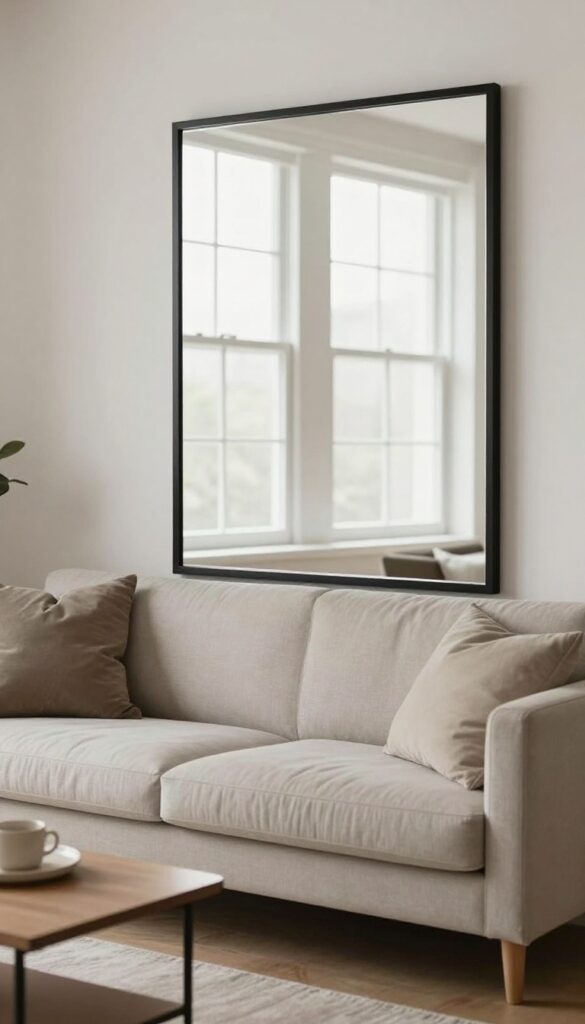
A framed mirror does double duty on your wall: it bounces light around the room and gives you a quick spot to check your outfit before heading out. In a small living room, that extra reflection makes the whole space feel airier and more open. Choose a frame that blends with your existing decor—ornate for a traditional touch, or sleek and minimal for a modern look.
The best part? It’s a functional decor piece that never goes out of style.
Mirrors are a small-space superhero. By framing one like a piece of art, you add visual interest without taking up any floor space. Hang it opposite a window to maximize natural light, or place it near a lamp to double the glow.
The frame itself becomes a design element—think warm wood for a cozy feel, black metal for an industrial edge, or a carved antique frame for character. Plus, you get a handy mirror for last-minute fixes before guests arrive.
Best Placement
Hang your framed mirror where it can reflect something beautiful—a window, a gallery wall, or a stylish light fixture. Avoid placing it directly across from a cluttered area, as it will just double the mess. In a narrow living room, a tall vertical mirror on one wall can make the ceiling feel higher and the space wider.
Frame Style Tips
- Match the frame to your room’s personality. For a boho or eclectic space, try a natural rattan or woven frame. In a modern apartment, a slim brass or matte black frame keeps things clean.
- If your decor leans traditional, a carved gold or dark wood frame adds elegance. Don’t be afraid to go oversized—a large mirror acts as a statement piece.
Small-space Hack
In a tiny living room, lean a large framed mirror against the wall instead of hanging it. This creates a casual, art-studio vibe and saves you from drilling holes. Pair it with a low console table underneath for a styled vignette that feels intentional and airy.
FAQ
How many frames should I use on a small living room wall?
It depends on the wall size, but 3 to 5 frames usually work well for a small wall. A single large frame can also make a strong impact without clutter.
What's the best way to arrange frames without damaging walls?
Use adhesive picture hanging strips for lightweight frames, or lean frames on shelves and the floor. A picture rail is another renter-friendly option.
Should all frames match in color and style?
Not necessarily. Matching frames create a clean, formal look, while mixed frames feel eclectic and collected. Choose based on your room's vibe.
What kind of art works best in small spaces?
Light, airy art with lots of negative space helps a room feel bigger. Avoid dark, busy prints that can overwhelm a small wall.
Can I mix photos and art in the same arrangement?
Absolutely. Mixing personal photos with art adds personality and visual interest. Just keep a consistent frame style or color to tie them together.
Conclusion
Wall frames are one of the easiest ways to give your living room personality without sacrificing floor space. Whether you lean one big frame or cluster a few small ones, each idea here is designed to work with your space, not against it.
Start with one wall and see how it changes the whole room. You might find that a few well-placed frames are all you need to make your living room feel bigger, brighter, and more like home.