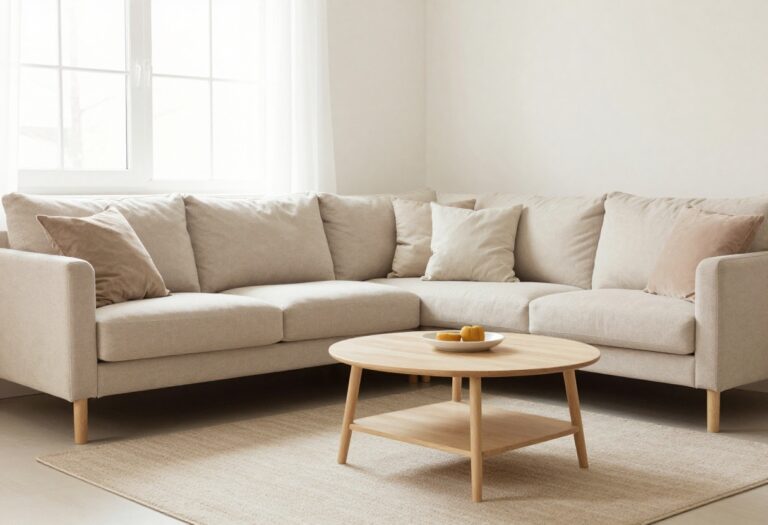
13 Living Room Divider Ideas That Split Space Gracefully
Dividing a living room without making it feel cramped is a delicate balance. You want separate zones for lounging, dining, or working, but walls can make a small space feel even smaller.
The trick is choosing dividers that define areas while keeping the room open and airy. From translucent screens to clever furniture placement, these 13 ideas prove you can split space gracefully—even in the tightest floor plans.
Each option prioritizes light flow, visual lightness, and practical function, so your room feels larger, not chopped up.
1. Open Shelving That Works Both Sides
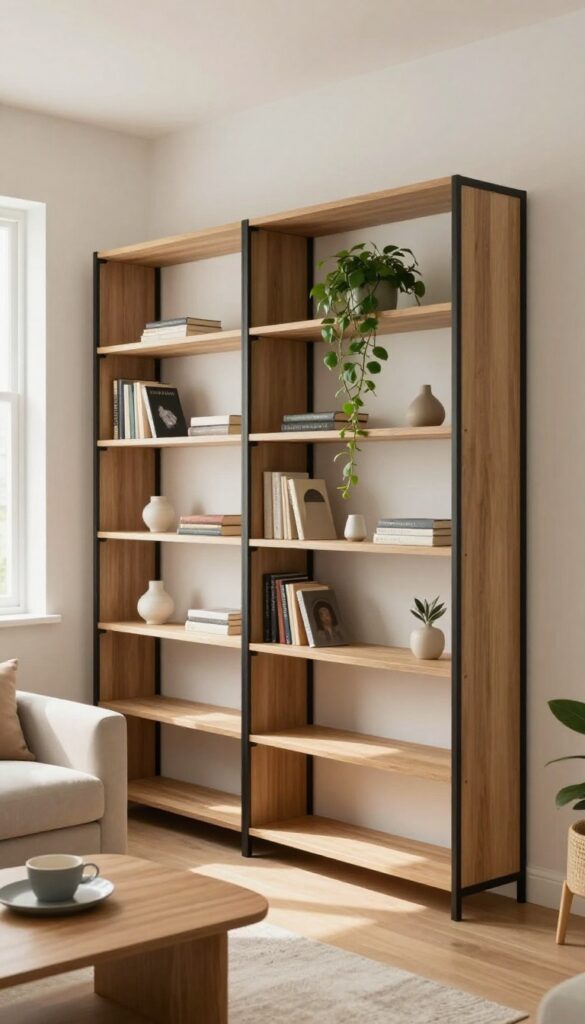
A floor-to-ceiling open shelf unit is one of those rare dividers that actually gives you more space instead of taking it away. It splits the room without blocking light or views, and both sides become usable storage. In a small living room, that double-duty quality is a game-changer.
The key is choosing a frame that feels light—think slim metal or pale wood. Dark, chunky shelves can make a room feel smaller, while airy materials keep the visual weight low. Style the shelves with a mix of books, plants, and ceramics, but leave some breathing room.
Transparency is your friend here; too many objects and the divider starts to feel like a wall.
Best Materials
Go with thin steel or aluminum in black or white for an industrial-minimal look. If you prefer wood, pick light oak or ash with open backing. Avoid solid wood panels—they block light and make the room feel closed off.
Shelf Styling Tip
Keep the arrangement balanced but not symmetrical. Stack books horizontally on one shelf, add a trailing plant on another, and group small ceramics in odd numbers. Leave about 30% of each shelf empty to maintain that open, airy feel.
Small-space Fix
If your room is extra narrow, choose a shelf unit that’s only 12–14 inches deep. That’s enough for books and small decor but won’t eat into your floor space. Anchor it to the ceiling for stability, especially if you have kids or pets.
2. Floor-to-Ceiling Curtain Panels
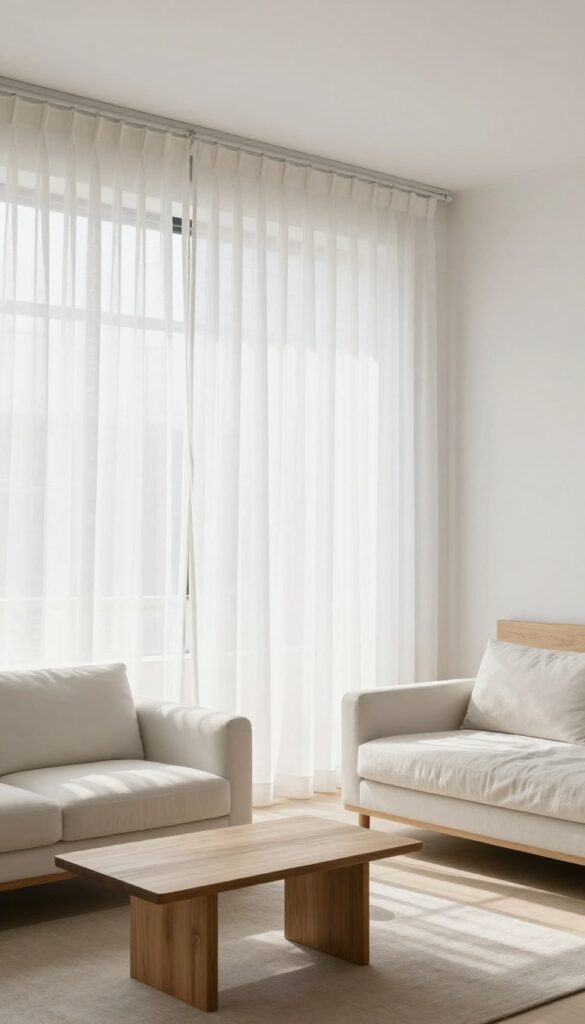
When you want to divide a room without closing it off, fabric is your best friend. Floor-to-ceiling curtain panels hung from a ceiling track create a soft, flexible boundary that can disappear in seconds. The sheer or semi-sheer material keeps light flowing through, so your space never feels boxed in.
It's an especially smart move in small apartments or open layouts where you need occasional privacy without sacrificing airiness.
This approach works beautifully in studio apartments or shared living-dining rooms. The curtains add vertical drama, making ceilings feel higher, while the soft folds introduce texture and movement. Choose neutral linen or cotton blends that blend with your walls for a seamless look, or go for a contrasting tone if you want the divider to feel like a design statement.
Mount the track close to the ceiling and let the panels puddle slightly on the floor for a relaxed, elegant finish.
Best Fabrics For The Job
- Linen and cotton blends are top picks because they drape well and filter light gently. For a more polished look, try a textured weave like slub linen or a subtle stripe. Avoid heavy velvet or blackout fabrics unless you need total darkness—they'll weigh down the room and block too much light.
- If you want a hint of pattern, a soft geometric or faint botanical print can add interest without overwhelming the space.
Small-space Styling Tip
- In tight quarters, keep the curtain rod or track continuous from wall to wall. This trick visually expands the room by tricking the eye into seeing a larger window or a longer wall. When the curtains are open, they stack neatly at the sides, taking up almost no floor space.
- Pair with a low-profile sofa or a slim console table on the other side to maintain an open flow.
Finishing Touches
Add a subtle weight at the bottom hem—like a hidden chain or magnetic strips—so the panels hang straight and don't billow with every breeze. Choose curtain rings with clips for easy opening and closing, or go with a ripple-fold system for a cleaner, more tailored look. A single panel on each side can be enough for a narrow opening; for wider spans, use multiple panels that overlap slightly.
3. Low Console Table with a Statement Lamp
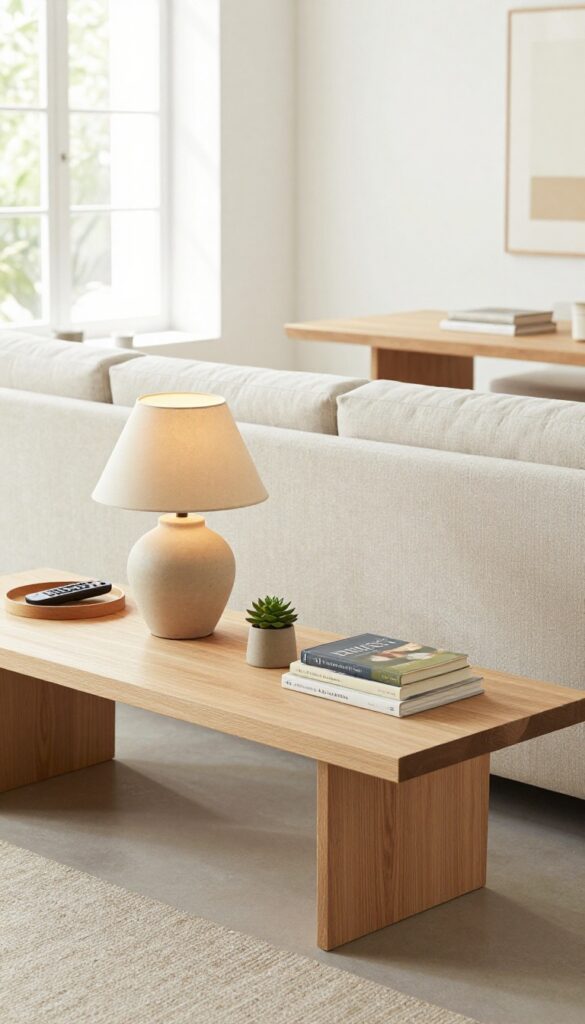
Sometimes the best room dividers don't block the view—they just hint at a change in purpose. A long, low console table placed behind the sofa does exactly that. It creates a visual line between the living area and the dining zone without closing anything off.
Top it with a sculptural lamp and a tray for remotes, and you've got a division that feels intentional, not accidental. The key is keeping the table slim—no deeper than 12 inches—so it doesn't eat into your floor space.
This idea works especially well in open-plan layouts where you want separate zones but don't want to lose the airy feel. The console acts like a subtle anchor, giving the sofa a defined back and the dining area a clear boundary. Choose a piece with tapered legs or an open base to maintain sightlines and keep the room feeling larger.
The lamp becomes the focal point—go for something with personality, like a ceramic base or a sculptural metal shade. A tray corrals the small stuff (remotes, coasters, a small plant) so the surface stays tidy. Finish with a stack of books or a shallow bowl to add texture without clutter.
Best Materials
For a small-space-friendly look, stick with light woods like oak or ash, or go for a sleek lacquered finish in white or soft gray. A glass top can also work, but it shows fingerprints, so consider a matte or wood surface for less upkeep. Metal frames (brass, black steel) add a modern edge and keep the piece visually light.
Small-space Fix
If your sofa is against a wall, pull it forward just enough to slide the console behind—about 6 to 8 inches of clearance is plenty. This creates the illusion of a separate zone without actually moving furniture. In a narrow room, skip the lamp and use a low-profile plant or a stack of art books instead to keep the line clean.
Finishing Touch
Add a small rug under the dining table that contrasts with the living area rug to reinforce the split. The console will bridge the two spaces, so the rug change feels natural, not abrupt. A warm-toned lamp (amber glass or a linen shade) softens the boundary and makes both zones feel cozy.
4. Sliding Barn Door on a Partial Wall
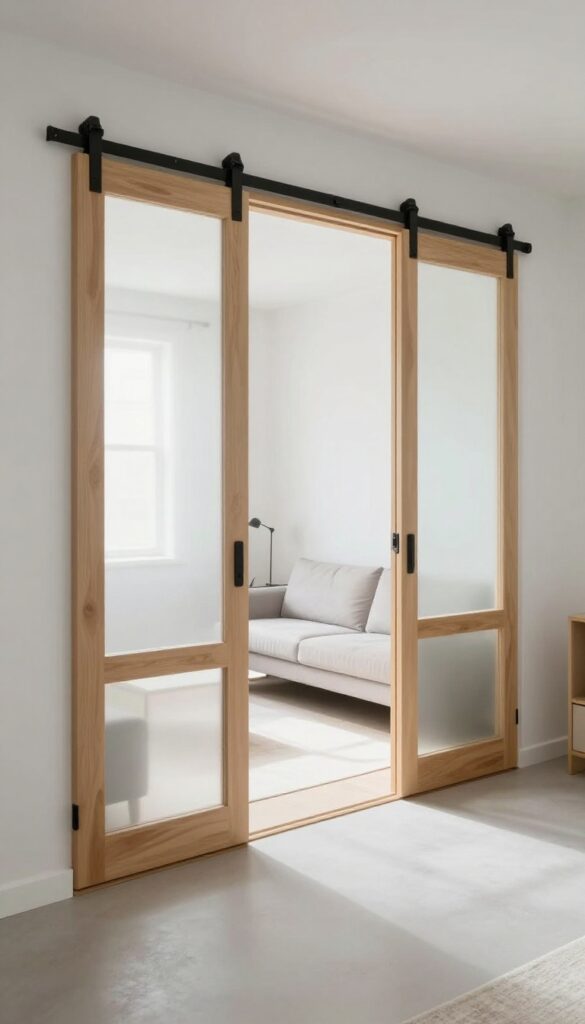
A half-wall or pony wall already hints at separation without closing off a room entirely. Adding a sliding barn door takes that idea a step further, giving you the option to fully close off a home office or entry when you need privacy. When the door is open, it tucks neatly against the wall and disappears, so the space still feels airy and connected.
This setup works especially well in small apartments or open layouts where a full wall would feel too heavy.
Mount a sliding barn door on a half-wall or pony wall to separate the living room from a home office or entry. The door can be left open to maintain an open feel or closed for visual separation. Choose a light wood or painted finish to match your decor.
Best Materials
Light woods like birch or ash keep the look airy, while a painted white or soft gray finish blends seamlessly with most walls. For a touch of warmth, go with a medium oak or a reclaimed wood look, but avoid dark, heavy stains that can make the door feel bulky in a small space.
Layout Tip
Make sure the half-wall is sturdy enough to support the door track, and leave enough clearance on the sliding side for the door to glide fully open without blocking furniture or walkways. A pocket-style barn door that slides into a cavity is another option if you want zero visual clutter.
Small-space Fix
Use a translucent or frosted glass panel in the barn door to let light pass through even when closed. This keeps the living room bright and prevents the separated area from feeling like a dark closet.
5. Tall Planters as Natural Screens

Living in a small space doesn't mean you have to sacrifice privacy or style. A row of tall planters with leafy indoor trees can carve out distinct zones without blocking light or making the room feel closed in. The trick is choosing plants that grow upright rather than wide, so you get height without taking up too much floor space.
Plus, the natural green adds life and improves air quality—a win-win for any compact home.
Line up three or four tall planters with leafy indoor trees like fiddle-leaf figs or bamboo palms to create a living divider. The greenery softens the space and improves air quality. Use lightweight pots on casters so you can rearrange as needed.
Best Plant Choices
Fiddle-leaf figs, bamboo palms, and rubber trees are top picks because they grow tall and narrow. If you prefer something lower maintenance, snake plants or ZZ plants also work well and tolerate lower light. Stick to plants with dense foliage for maximum screening effect.
Pot And Planter Tips
Choose lightweight pots—fiberglass, resin, or ceramic with a matte finish—so you can move them easily. Put them on casters or a plant caddy to make rearranging a breeze. For a cohesive look, use pots in the same color family, like warm terra-cotta or sleek charcoal.
Small-space Layout
Place the planters in a staggered line rather than a straight row to create a more natural, organic screen. Leave a few inches between pots so air can circulate and the arrangement feels less like a wall. In a studio apartment, this setup can separate the sleeping area from the living space without eating up square footage.
6. Geometric Room Divider Screen
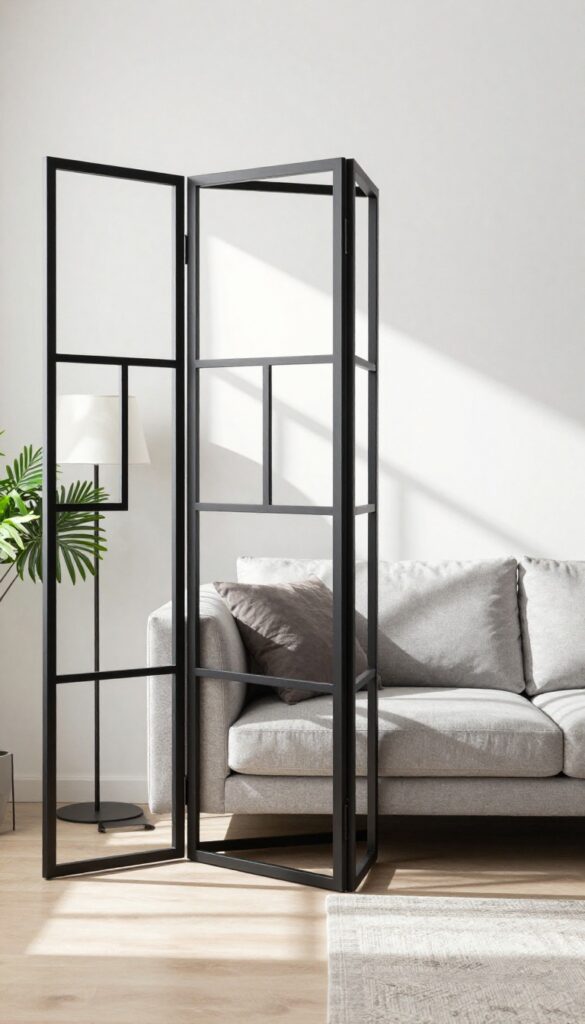
A geometric room divider screen is a smart way to carve out a cozy nook without losing the open feel of your living room. The cutouts or laser-cut metal let light filter through, so the space stays airy and bright. It's especially useful in small apartments where you want separation without walls.
Place a freestanding folding screen with a geometric pattern behind a seating area to define a reading nook or meditation spot. The pattern adds architectural interest and a modern touch, while the see-through design keeps the room from feeling boxed in. Choose a finish that complements your existing decor, like matte black for an industrial vibe or brass for warmth.
Best Materials
Laser-cut metal is a popular choice for its durability and clean lines. You can also find screens made of wood with geometric cutouts for a warmer look. Consider powder-coated steel for a sleek finish that resists scratches.
Small-space Fix
In a small living room, use the screen to hide a cluttered corner or create a mini home office. Fold it partially to control visibility and light. A lighter color or metallic finish helps the screen blend rather than dominate.
Finishing Touch
Add a small plant or a floor lamp next to the screen to soften the edges and create a layered look. The shadows from the geometric pattern can become a feature on the wall behind it.
7. Rug Layering to Define Zones
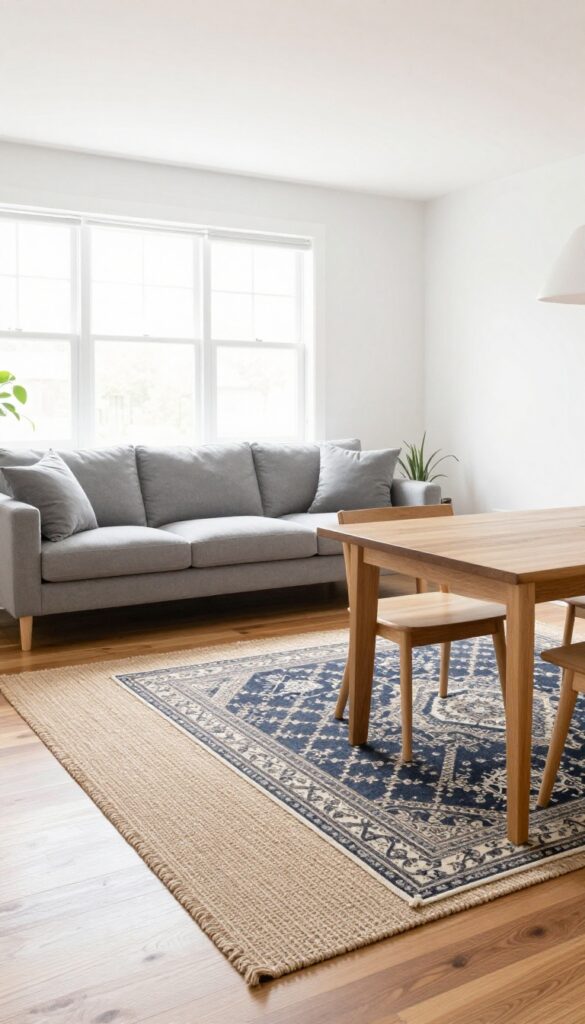
Rug layering is a clever way to carve out separate zones in an open-plan living area without adding a single piece of furniture. By placing two contrasting rugs—one large and neutral under the sofa, another smaller and patterned under the dining table—you create visual boundaries that feel intentional and stylish. The shift in texture and color cues your eye to see distinct spaces, making the room feel organized and spacious.
For small living rooms that double as dining or work areas, rug layering offers a flexible, no-construction solution. The key is choosing rugs that complement each other without competing. A low-pile neutral rug anchors the seating area, while a flat-weave patterned rug defines the dining zone.
This approach works especially well in apartments where you want to avoid permanent dividers. It also adds warmth and personality, turning one large room into two cozy, functional pockets.
Best Colors And Patterns
- Stick with a neutral base—like a jute or beige wool rug—under the main seating. Then pick a smaller rug with a bold geometric or floral pattern for the dining area. The contrast should be clear but harmonious: think navy and ivory, or terracotta and cream.
- Avoid matching colors exactly; the whole point is to create distinction.
Layout Tip
Position the larger rug so it extends at least 6 inches beyond the sofa on all sides. The smaller rug should sit fully under the dining table, with chairs staying on the rug even when pulled out. Leave a gap of about 12 to 18 inches between the two rugs to emphasize the separation.
Small-space Fix
In tight quarters, use a runner instead of a full-sized rug under the dining table. A 2×6 foot runner can define a narrow eating area without overwhelming the floor. Pair it with a 5×7 foot rug in the living zone for a balanced look that doesn't crowd the room.
8. Hanging Macrame or Beaded Curtain
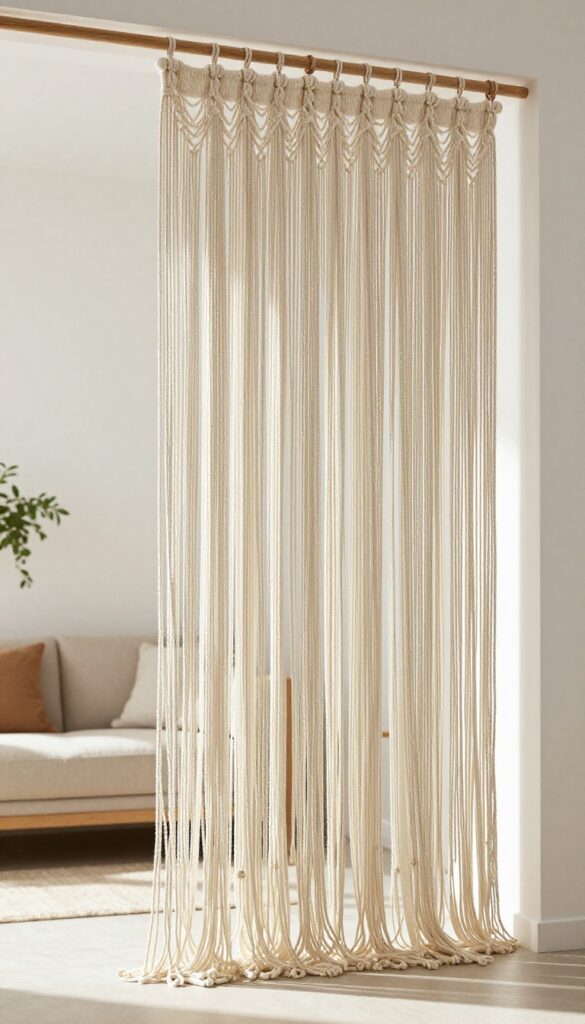
A hanging divider adds softness and movement without eating up floor space. Macrame or beaded curtains bring a boho, handcrafted feel that’s both airy and intentional. They’re perfect for renters or anyone who wants a flexible, lightweight solution that can be easily swapped out.
Suspended from the ceiling, a macrame wall hanging or beaded curtain creates a gentle visual break without blocking light or airflow. It works especially well in front of a hallway or to separate a small entry from the main living area. The key is keeping it subtle—choose natural fibers like cotton or jute, or muted wooden or ceramic beads.
This way, the divider feels like a decorative accent rather than a heavy barrier.
Best Materials
- Stick with natural materials to keep the look grounded and warm. Cotton macrame cord, jute, or unbleached linen all work beautifully. For beaded curtains, opt for wooden, bamboo, or matte ceramic beads in earthy tones.
- Avoid shiny plastic or bright colors, which can feel cheap and clash with a smart, space-aware aesthetic.
Small-space Fix
- Since this divider hangs from the ceiling, it doesn’t take up any floor area—ideal for tight layouts. Install a simple curtain rod or a tension rod inside a doorway frame. You can also use a decorative branch or dowel for a more organic look.
- Just make sure the rod is securely anchored, especially if the curtain is heavy.
Styling Tip
Keep the rest of the room’s decor minimal so the hanging divider becomes a focal point. Pair it with low-profile furniture, neutral textiles, and plenty of natural light. Add a few trailing plants nearby to echo the organic lines and reinforce the boho vibe.
9. Glass-Paneled Partition
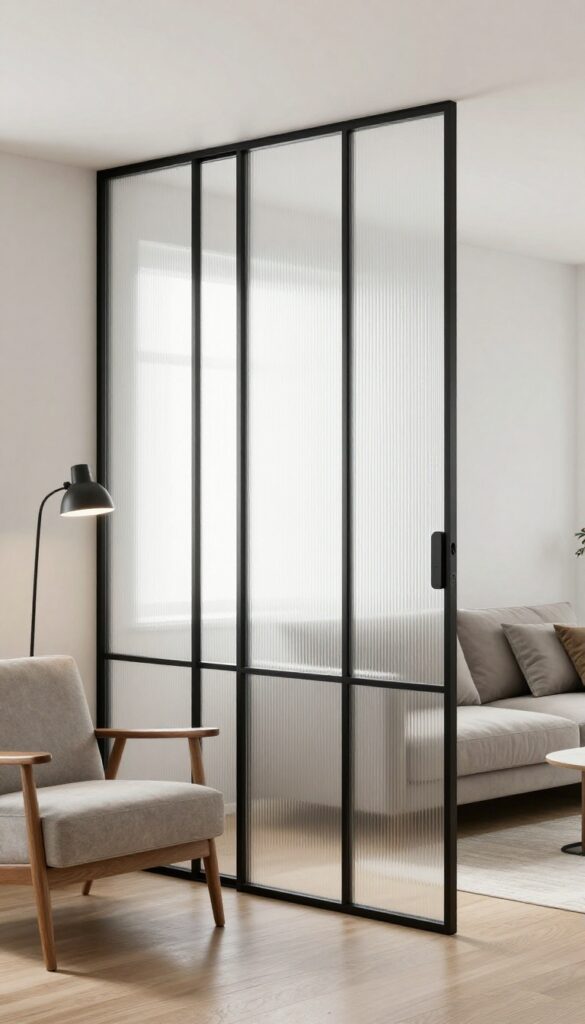
A glass partition does something few other dividers can: it carves out separate zones without cutting off the light. In a small living room where every square foot counts, that’s a huge win. Whether you go for a sliding door or a fixed panel, frosted or textured glass keeps things airy while giving you the privacy you need—especially if you’re carving out a work nook.
A glass partition is the ultimate smart-space solution. It defines a home office or reading corner without making the room feel chopped up. The key is choosing the right glass: frosted or textured patterns obscure clutter while still letting daylight flood through.
Pair it with a slim black or brass frame for a clean, modern look that doesn’t overwhelm. This idea works especially well in open-plan layouts where you need a visual break but can’t afford to lose natural light.
Best Glass Finishes
Frosted glass offers the most privacy while still transmitting light. For a more decorative touch, try reeded or fluted glass—they add texture and a bit of Art Deco flair. If you want maximum light flow, go with clear glass and add a sheer curtain on one side for on-demand privacy.
Small-space Fix
In a narrow living room, a sliding glass partition is your best bet—it doesn’t eat up floor space like a swinging door would. Mount the track on the ceiling to keep the floor clear, and choose a frameless design for an even more seamless look.
Finishing Touch
Anchor the partition with a slim console table on the living room side. Place a lamp and a small plant there to create a visual anchor that ties the two zones together. The glass will reflect the greenery, making the whole space feel larger.
10. Bookshelf Back-to-Back
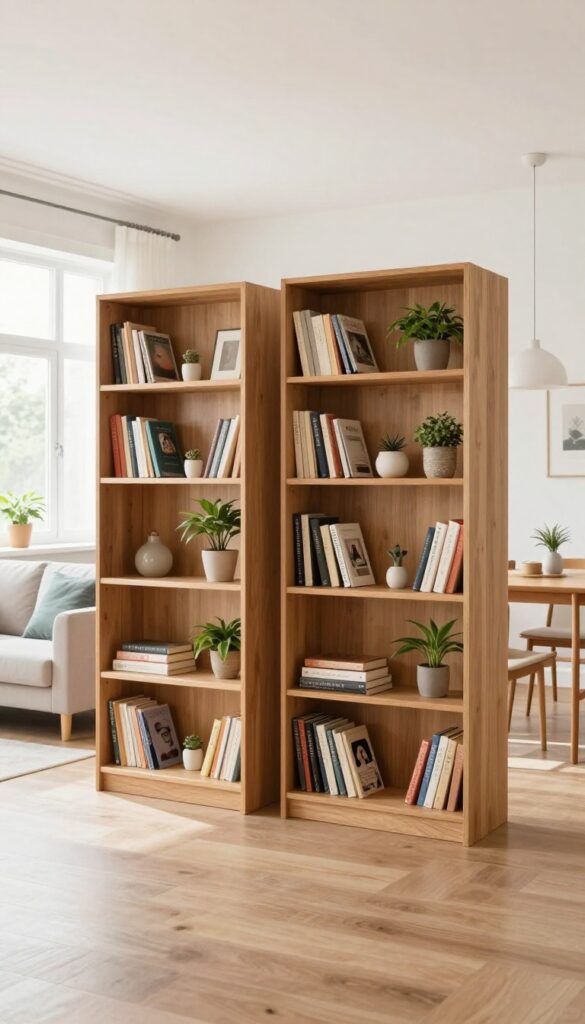
Two identical low bookshelves placed back-to-back create a clever, double-sided room divider that works overtime in small spaces. Each side faces a different zone—say, the living area on one side and the dining nook on the other—so both get storage and display space without adding visual clutter. The trick is to keep shelves lightly styled with a mix of books, small plants, and a few decorative objects, avoiding that heavy, wall-like feel.
It’s a smart, space-aware move that makes a small room feel larger and more intentional.
This back-to-back bookshelf divider is a favorite for studio apartments and open-plan layouts where every inch counts. By using two matching low units (think 30–36 inches tall), you create a visual separation without blocking light or views. The open shelves keep the room airy, while the double-sided access means both zones benefit from the storage.
Style each side differently to match its zone—cozy decor for the living area, functional items for the dining side. The result is a practical, stylish boundary that feels built-in, not makeshift.
Best Height And Placement
- For a room divider that doesn’t overwhelm, choose bookshelves that hit around waist height—typically 30 to 36 inches tall. This keeps sightlines open and maintains a sense of spaciousness. Place the unit in the middle of the room, perpendicular to the main wall, to naturally separate zones.
- In a long, narrow room, position it slightly off-center to create a more dynamic flow.
Shelf Styling Tip
- Keep shelves lightly filled to avoid a bulky appearance. Aim for a 60/40 ratio of empty space to objects. Use a mix of books (stacked horizontally and vertically), small ceramic vases, and trailing plants like pothos to soften the edges.
- On the living room side, add a few framed photos; on the dining side, store napkins and placemats in woven baskets. This dual-purpose styling makes the divider feel intentional and curated.
Small-space Fix
- In tight quarters, opt for bookshelves with a slim profile—12 to 14 inches deep is ideal. Choose a light wood finish or white to reflect light and keep the room feeling open. If you need extra storage, use the bottom shelf for closed bins or baskets to hide clutter.
- This keeps the top shelves airy and visually light, perfect for a small apartment or cozy living room.
11. Convertible Room Divider with Storage
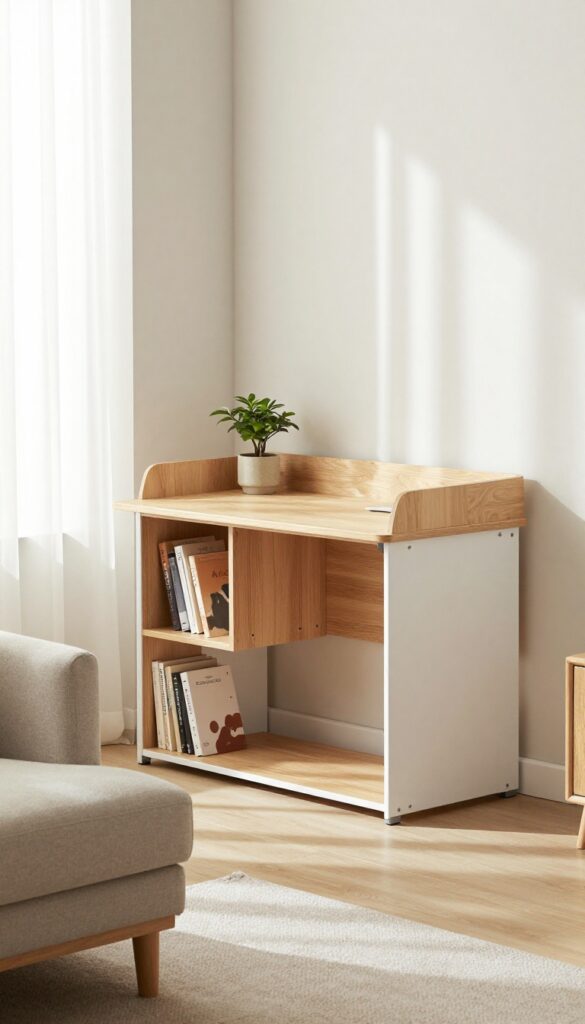
Some room dividers just sit there looking pretty, but the smartest ones actually work for you. A convertible divider with built-in storage is the ultimate multitasker—it separates your space, hides clutter, and even doubles as a desk or display shelf. For small apartments or open layouts, this piece is a total game changer.
It keeps everything within arm's reach while defining zones without closing things off completely.
The beauty of a convertible divider lies in its flexibility. You can find modular systems with cubbies, drawers, or a fold-down desk that tucks away when not in use. Open compartments let you show off books or plants, while closed storage hides mail, chargers, or office supplies.
Place it between a living area and a dining nook, or use it to carve out a tiny home office in a corner of the bedroom. The key is choosing a design that feels intentional—not like an afterthought.
Best Materials & Finishes
- Look for a mix of solid wood and metal for durability and style. Light woods like oak or birch keep the room airy, while dark walnut adds warmth. A powder-coated steel frame in black or white gives it an industrial edge.
- Avoid glossy finishes—they show fingerprints and feel less grounded in a small space.
Layout Tip
Position the divider so the desk or open shelving faces the area where you'll use it most. For example, if it's between the living room and a home office, angle the desk toward the office side so you can work without staring at the sofa. Leave at least 2 feet of clearance on the desk side for a chair.
Styling The Shelves
- Treat the open cubbies like a mini vignette. Mix books with a few sculptural objects—a ceramic vase, a small framed photo, a trailing plant. Keep the closed storage for things you don't want on display, like cables or paperwork.
- This balance makes the divider feel like furniture, not just a barrier.
12. String Curtain with Clip-on Panels
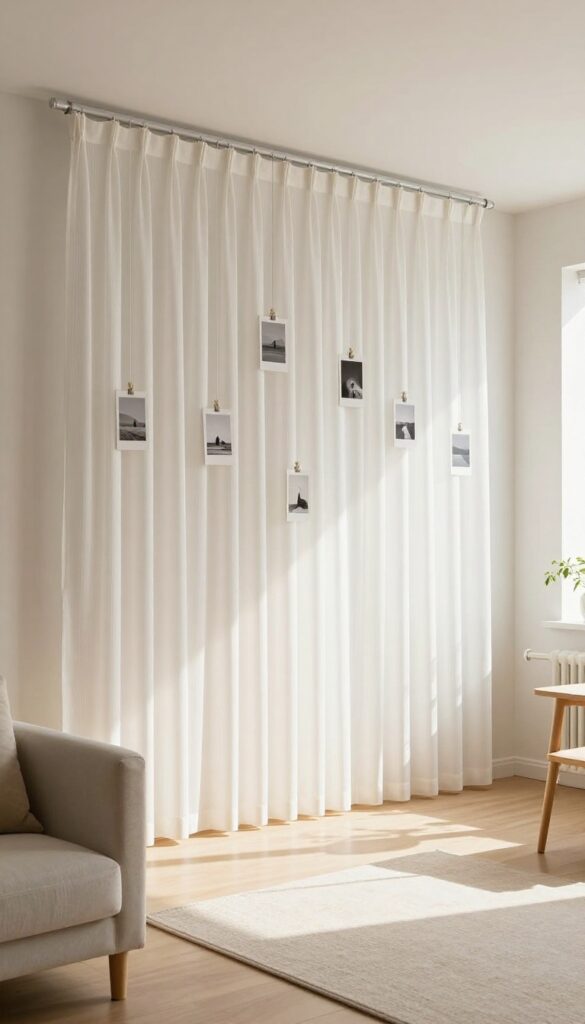
A string curtain system is one of those ideas that feels both clever and unexpected. By hanging thin cables from the ceiling and clipping on fabric panels, photos, or lightweight art, you create a divider that's as changeable as your mood. It's a smart, small-space-friendly move because you can adjust the opacity just by adding or removing panels.
The whole setup feels airy and intentional, not heavy or permanent.
This DIY-friendly option lets you customize the divider to your exact style. Start with a ceiling-mounted track or a set of parallel cables. Then clip on anything from cotton sheets to vintage scarves to printed photos.
The beauty is in the flexibility—swap out panels seasonally or whenever you want a fresh look. For a small space, keep the panels sparse to maintain an open feel, or layer them densely for more privacy. The hardware is minimal, so the focus stays on what you hang.
Best Materials
Go with lightweight fabrics like linen, cotton voile, or even tulle for a soft, breezy look. If you want to add art, use thin canvas prints or paper on lightweight backing. Avoid heavy materials that could pull the cables or require extra support.
Small-space Fix
In a studio or narrow living room, use just a few panels spaced apart to define zones without blocking light. Clip panels at different heights for visual interest and to keep the divider from feeling too uniform.
Finishing Touch
Add small weights to the bottom corners of fabric panels so they hang straight and don't flutter. Choose clip colors that blend with the cables or go for a metallic accent that ties into your room's hardware.
13. Floating Shelf Divider with Hanging Plants
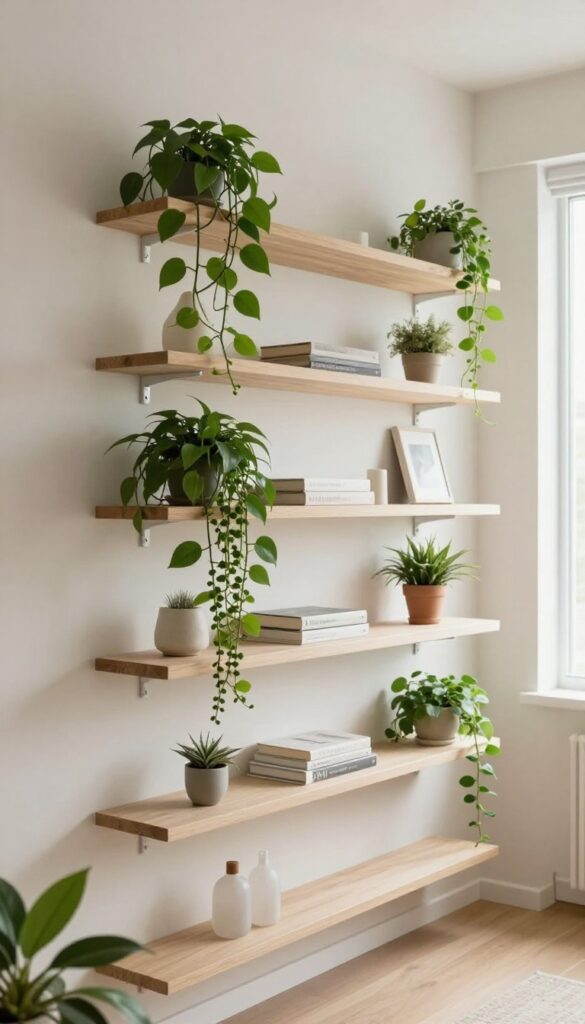
A row of floating shelves at eye level creates a surprising visual break that doesn't close off the room. The shelves themselves are minimal, but the trailing plants draped over the edges add softness and life. This idea works especially well in open-plan living areas where you want to define zones without losing light or sightlines.
The greenery softens the horizontal line, making the divider feel organic rather than rigid.
Install a row of floating shelves across the room at eye level—typically around 48 to 60 inches from the floor. Use slim, hidden brackets to keep the profile clean and minimal. Choose trailing plants like pothos, string of pearls, or philodendron that will cascade over the shelf edges, creating a living curtain.
Space the shelves evenly or stagger them for a more dynamic look. The result is a lightweight room divider that adds privacy and greenery without sacrificing openness.
Best Plants For This Look
- Trailing plants are the stars here. Pothos is nearly unkillable and grows fast, while string of pearls adds a unique texture. For a fuller look, mix in a few upright plants like snake plants or ZZ plants on top of the shelves.
- Keep the plants low-maintenance by choosing varieties that thrive in indirect light—most living rooms have enough brightness near windows.
Shelf Styling Tip
- Keep the shelves uncluttered so the plants remain the focal point. Add one or two small decorative objects—a ceramic vase, a stack of books, or a small framed photo—but leave plenty of negative space. The goal is a light, airy divider, not a crowded display.
- Use neutral-colored shelves (white, light wood, or black) to blend with the wall and keep the emphasis on the greenery.
Small-space Fix
- In a narrow room, use a single long shelf instead of multiple shorter ones. This creates a continuous horizontal line that visually widens the space. Mount the shelf securely into wall studs, as the weight of multiple plants can be significant.
- For renters, consider a tension rod system with lightweight shelves to avoid drilling large holes.
FAQ
What is the best room divider for a small living room?
The best options are lightweight and transparent, like open shelving, sheer curtains, or glass partitions. They define zones without blocking light or making the space feel closed in.
Can I use furniture as a room divider?
Absolutely. Sofas, console tables, and bookshelves work well as dividers. Just make sure the piece is low or open so it doesn't visually cut the room in half.
How do I choose a room divider that matches my decor?
Consider the material and color. For a cohesive look, pick a divider that echoes existing elements—like wood tones, metal finishes, or fabric textures. Neutral colors blend easily.
Are room dividers permanent?
Not necessarily. Many dividers like screens, curtains, and planters are portable and can be moved or removed as your needs change. This flexibility is great for renters.
How can I make a room divider feel intentional?
Style it with purpose. Add lighting, plants, or decorative objects to make the divider a feature rather than an afterthought. A well-styled divider enhances the room's design.
Conclusion
Dividing a living room doesn't have to mean sacrificing openness or style. With the right approach—whether it's a curtain, a shelf, or a row of plants—you can carve out distinct zones that feel intentional and airy.
The key is choosing a divider that complements your space rather than competing with it. Try one of these ideas and watch your room transform into a more functional, beautifully organized home.