10 Red Couch Living Room Ideas for Bold Centerpiece Energy
A red couch is a statement piece that instantly energizes any living room. But styling it without overwhelming the space can feel tricky.
The key is to lean into cozy, layered decor that lets the sofa shine while keeping the room warm and inviting.
Whether you're working with a deep crimson or a bright cherry red, these ideas will help you build a living room that feels both bold and comfortable.
1. Anchor with Neutral Walls and Warm Wood Tones
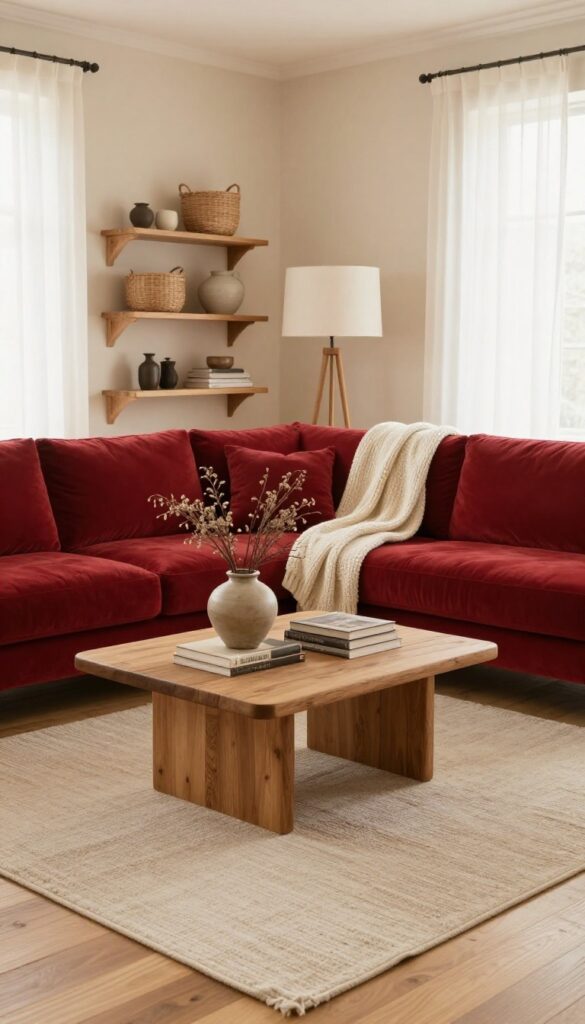
A red couch is a bold statement piece, but it doesn't have to overwhelm your living room. By pairing it with soft neutral walls and warm wood accents, you create a balanced, inviting space that feels both grounded and lively. The key is letting the sofa take center stage while the rest of the room supports it with calm, natural textures.
This approach works beautifully in everything from cozy apartments to spacious family rooms.
Start with walls in a soft beige, warm white, or light greige. These hues allow the red to pop without competing for attention. Then layer in wood elements—a chunky oak coffee table, walnut shelving, or a floor lamp with a natural wood finish.
The wood tones add warmth and prevent the room from feeling stark or cold. For a cohesive look, repeat the wood finish in at least two or three pieces, like the coffee table and a side table or picture frames. This creates a rhythm that feels intentional and soothing.
Best Wood Finishes To Pair
- Oak and walnut are your best friends here. Oak leans slightly golden, which complements brighter reds, while walnut's deeper brown works well with burgundy or brick reds. Avoid very cool or gray-toned woods, as they can clash with the warmth of the red.
- If you have mixed wood finishes in your home, aim to keep the dominant pieces in the same family for a unified look.
Texture Mix For Depth
- Neutral walls and wood can feel flat without texture. Add a chunky knit throw in cream or oatmeal, a linen or cotton rug in a soft beige, and perhaps a few woven baskets for storage. These tactile elements soften the space and make it feel lived-in and cozy.
- A velvet or corduroy cushion on the couch can also add a nice contrast to the wood's smoothness.
Lighting To Enhance The Mood
- Warm lighting is crucial. Use table lamps with soft white bulbs (2700K–3000K) and consider a floor lamp with a fabric shade to cast a gentle glow. Avoid harsh overhead lights—they can make the red look flat or too intense.
- Instead, aim for layered lighting: ambient from a ceiling fixture, task from a reading lamp, and accent from a picture light or sconce near the couch.
2. Layer in Textures with Chunky Knits and Velvet
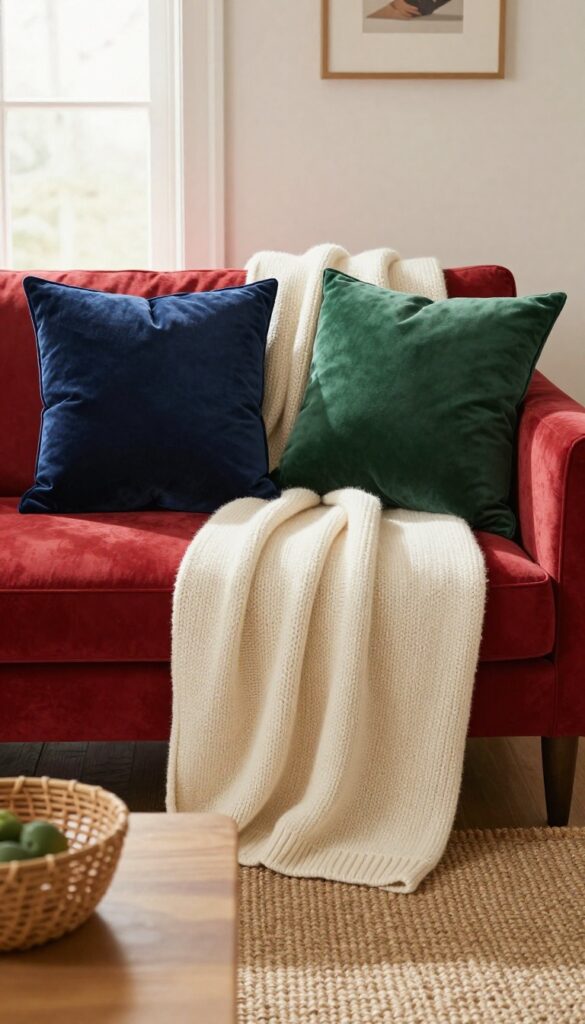
A red sofa already makes a strong statement, so the trick is to keep the rest of the room feeling inviting rather than overwhelming. The easiest way to do that? Pile on texture.
Chunky knits, velvet pillows, and a woven rug soften the bold color and make the space feel cozy and layered. Think of it as building a tactile landscape that balances the red with warmth and softness.
Start by draping a thick, oversized knit throw over the back or arm of your couch. Choose a neutral like cream, beige, or soft gray to let the red pop without competing. Then add a couple of velvet pillows in complementary hues—think deep navy, forest green, or even a muted blush.
The contrast between the chunky yarn and smooth velvet creates visual interest that feels curated, not chaotic. Finish the look with a jute or wool blend rug underneath to anchor the seating area and add another layer of texture underfoot.
Best Colors To Pair
Stick with warm neutrals and rich jewel tones. Cream, taupe, and camel keep things soft, while emerald green or sapphire blue add depth. Avoid bright or cool colors that might clash with the red.
Texture Mix
Combine at least three different textures: a chunky knit throw, smooth velvet pillows, and a nubby woven rug. This variety keeps the eye moving and makes the red couch feel grounded.
Finishing Touch
Add a wooden coffee table or a rattan basket for extra warmth. Natural materials reinforce the cozy, layered vibe and prevent the space from feeling too polished.
3. Pair with Earthy Greens for a Natural Contrast
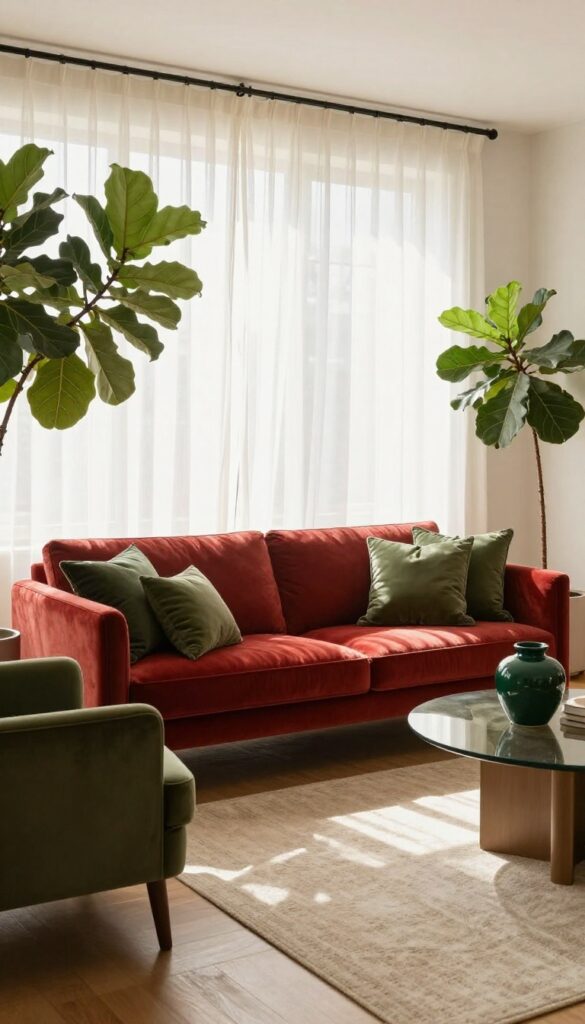
Red and green might sound like a holiday cliché, but when you choose the right shades, it becomes one of the most grounded, sophisticated combos in interior design. Think olive, sage, or forest green alongside a warm red couch—the effect is earthy, calming, and surprisingly versatile. This pairing works especially well in rooms with plenty of natural light, where the green can soften the red's intensity and create a balanced, inviting atmosphere.
The key to pulling off red and green without looking like December 25th is choosing muted, earthy greens instead of bright or cool ones. Olive and sage have a natural warmth that complements the red, while forest green adds depth without competing. Start with one or two accent chairs in a green fabric—velvet or linen works beautifully—then layer in plants like fiddle-leaf figs or snake plants for organic texture.
Artwork with green botanical motifs or abstract washes can tie the look together without overwhelming the space. For a finishing touch, add a few green throw pillows or a ceramic vase in a deep verdant hue. The result feels collected, not costume-y, and the red couch becomes the confident anchor in a room that breathes.
Best Greens To Use
- Stick with olive, sage, or forest green. Avoid bright emerald or lime, which can clash with the red. Olive and sage have yellow undertones that harmonize with warm reds, while forest green adds a rich, cocooning feel.
- Test swatches in your room's lighting before committing.
Texture Mix
- Combine different textures to keep the look layered and cozy. A velvet green accent chair feels luxurious next to a linen red sofa. Add a chunky knit throw in a neutral cream or a woven jute rug to ground the space.
- Plants bring their own texture—mix broad leaves with trailing vines for variety.
Plant Styling Tip
- Use plants as a bridge between the red and green. Place a tall fiddle-leaf fig or a rubber tree in a woven basket near the couch. The organic shapes soften the color contrast and add life.
- For smaller spaces, a shelf with trailing pothos or a cluster of succulents in terracotta pots works just as well.
4. Use Warm Metallics Like Brass and Copper
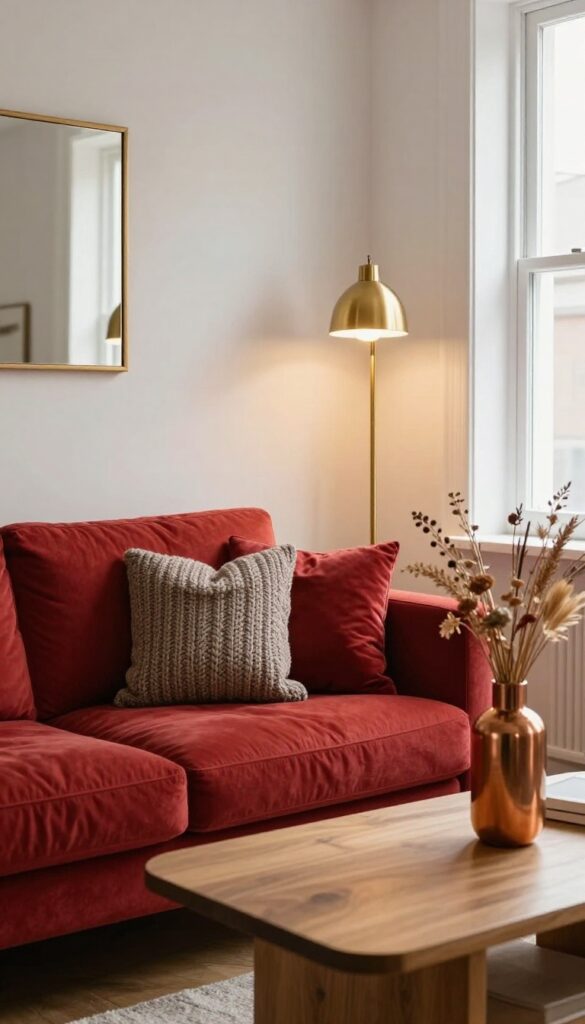
Red is a bold foundation, but it can feel heavy if you don’t balance it with the right accents. Warm metallics—brass, copper, and gold—are perfect partners. They pick up the warmth in red without adding more color, creating a glow that feels intentional and cozy.
Think of them as little light catchers that make the whole room feel richer.
The trick is to let the metallics play a supporting role. A brass floor lamp next to a red sofa draws the eye upward and adds a soft, golden halo. Copper vases on the coffee table catch the afternoon light, and a gold-framed mirror reflects the whole scene back.
These finishes don’t compete with red—they enhance it. The result is a living room that feels layered, warm, and curated, not flashy.
Best Materials To Mix
- Stick to warm-toned metals: brass, copper, rose gold, and antique gold. Avoid silver, chrome, or cool stainless steel, which can clash with red’s warmth. Look for pieces with a brushed or satin finish—they feel softer and more lived-in than high-polish shine.
- Mix two metals at most to keep the look cohesive.
Placement Tips For Maximum Effect
- Put metallics where they’ll catch natural or artificial light. A brass side table next to the sofa, a copper pendant light above the seating area, or a gold-framed art piece opposite a window. Small touches count too: brass drawer pulls on a media console or a copper tray on the ottoman.
- The goal is a subtle shimmer, not a spotlight.
Cozy Finishing Touch
- Balance the metallic shine with soft textures. A brass lamp looks warmer next to a chunky knit throw or a velvet pillow. Copper vases feel grounded on a wooden shelf or a woven basket.
- This contrast keeps the room from feeling too polished or cold—it stays cozy and inviting.
5. Create a Cozy Reading Nook Around the Couch
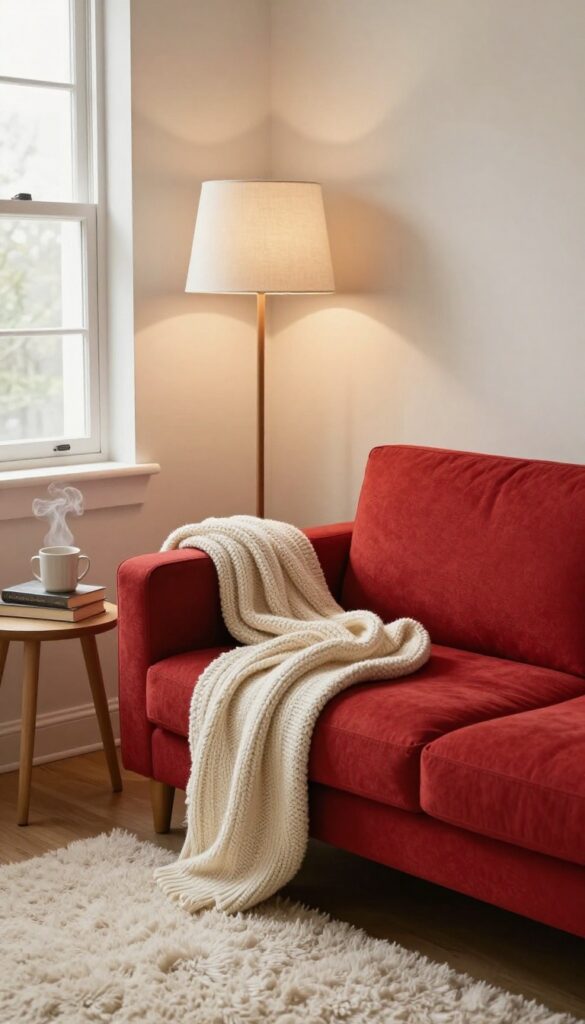
A red couch naturally draws the eye, so why not make it the centerpiece of a quiet escape? By adding a few warm, layered elements around it, you can turn that bold sofa into the heart of a relaxation zone. Think soft lighting, a place to set down your coffee, and something plush underfoot—simple touches that make the whole area feel more inviting.
Position a floor lamp with a warm bulb nearby, add a small side table for books and tea, and layer a sheepskin rug underfoot. This makes the red couch the anchor of a cozy nook where you can curl up with a good book or just unwind. The key is balancing the couch's bold color with soft textures and warm lighting so the space feels calm, not overwhelming.
Lighting Tip
Choose a floor lamp with a fabric shade in a neutral tone like cream or beige. A warm bulb (2700K–3000K) casts a soft, golden glow that tones down the red's intensity and creates a cocoon-like atmosphere. Position the lamp just behind or beside the couch so the light pools over your shoulder while you read.
Texture Mix
Balance the red couch's smooth upholstery with a sheepskin or faux fur rug—its fluffy texture adds instant coziness underfoot. A chunky knit throw in cream or charcoal draped over the armrest invites you to snuggle in. These soft layers contrast nicely with the couch's bold color and keep the nook feeling warm and tactile.
Small-space Fix
If your living room is tight, use a slim console table behind the couch instead of a side table. It holds a stack of books, a small lamp, and your mug without eating into floor space. A wall-mounted swing-arm lamp also saves room while providing directed reading light.
6. Balance with Cool Blues or Soft Grays
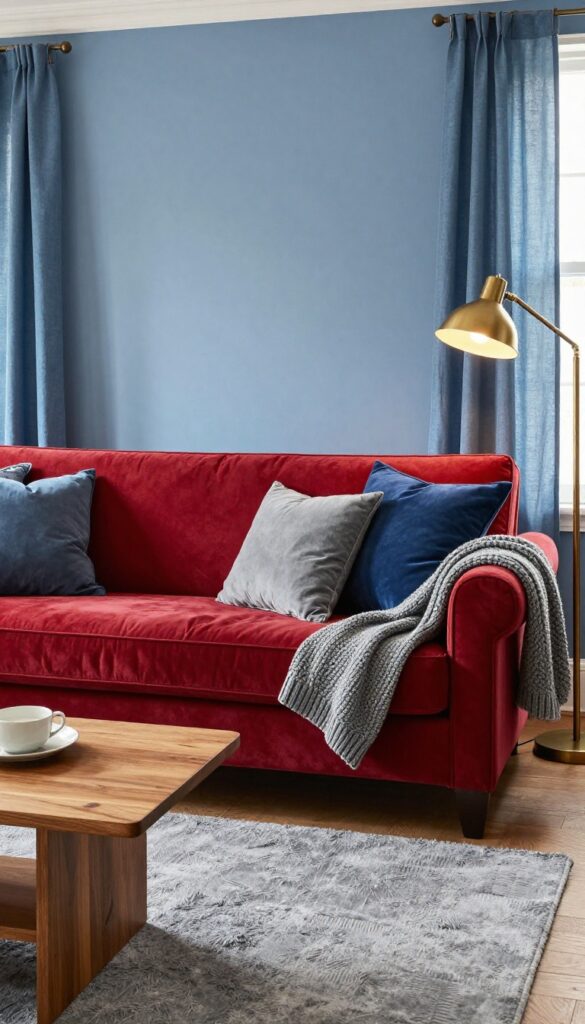
A red couch doesn't have to fight for attention. When you pair it with cool tones like navy, slate, or soft blue, the whole room settles into a calm, collected vibe. Think of it as giving that bold red a cool partner to lean on—suddenly the couch feels intentional, not overwhelming.
This palette works especially well if you want a living room that feels cozy but still pulled together.
The trick is letting the cool colors do the heavy lifting. A navy throw pillow here, a slate gray rug there—each piece quietly balances the warmth of the red without stealing the show. You end up with a space that feels layered and lived-in, not like a showroom.
Soft blues on an accent wall can also anchor the room, giving the eye a place to rest between pops of color.
Best Colors To Pair
- Navy blue is a natural match—it's deep enough to hold its own against red but stays cool and understated. Slate gray works beautifully too, especially in a textured rug or chunky knit throw. For a lighter touch, try a dusty blue or a pale gray-blue on an accent wall.
- Avoid icy blues or stark grays; they can feel too cold next to the warmth of red.
Texture Mix
- Because you're working with a cool palette, textures become extra important. A chunky knit throw in heather gray adds softness, while a velvet navy pillow brings a touch of luxury. A linen or cotton curtain in a soft blue keeps things airy.
- Mixing these textures prevents the room from feeling flat or too matchy-matchy.
Finishing Touch
Add a warm wood coffee table or a brass floor lamp to bridge the cool and warm tones. These natural materials keep the room from feeling too clinical and reinforce that cozy, layered look. A few cream or beige accents—like a ceramic vase or woven basket—also help soften the contrast.
7. Incorporate Patterned Pillows and Throws
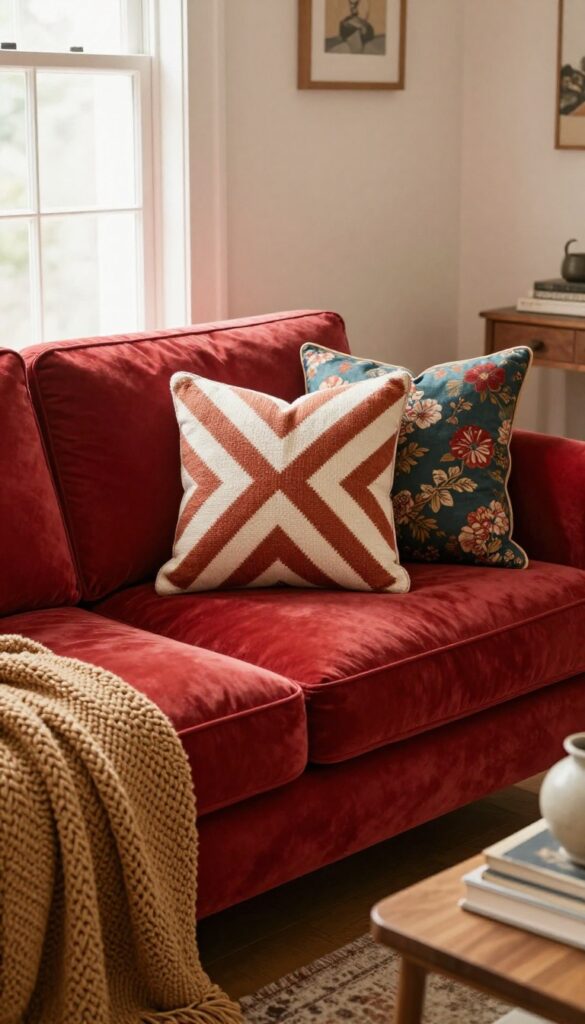
A red couch can feel like a lot of red—especially if it's a solid, bold hue. The trick to keeping it from overwhelming the room is to break up that color block with patterns that weave red into a larger story. Think geometric zigzags, faded florals, or tribal-inspired motifs that pull the eye around the seating area.
The goal isn't to match; it's to create a layered, collected look that feels warm and intentional.
Pillows and throws are the easiest way to introduce pattern without commitment. They add texture, color depth, and a sense of coziness that a plain red sofa can lack on its own. By choosing pieces that include red as an accent color, you tie the whole arrangement together while giving the eye plenty of interesting places to land.
Mixing patterns—like a striped lumbar pillow with a floral square—keeps the look dynamic but still cohesive when they share a common hue.
Best Colors To Pair
Stick with warm neutrals like cream, tan, and rust to keep the palette grounded. Navy and deep teal also work beautifully with red, adding contrast without clashing. Avoid cool grays or icy blues—they can make the red feel harsh rather than cozy.
Pattern Mixing Tips
Combine one large-scale pattern (like a bold floral) with a smaller, denser pattern (like a mini geometric print). Balance them with a solid texture, such as a chunky knit throw or a velvet pillow, to give the eye a place to rest. Aim for three to five pillows total for a full-sized couch.
Finishing Touch
Layer a textured throw blanket over one arm of the couch in a neutral tone with a subtle pattern—like a cream cable-knit with thin red stripes. It softens the red and invites people to sink in.
8. Add Warm Lighting with Lamps and Candles
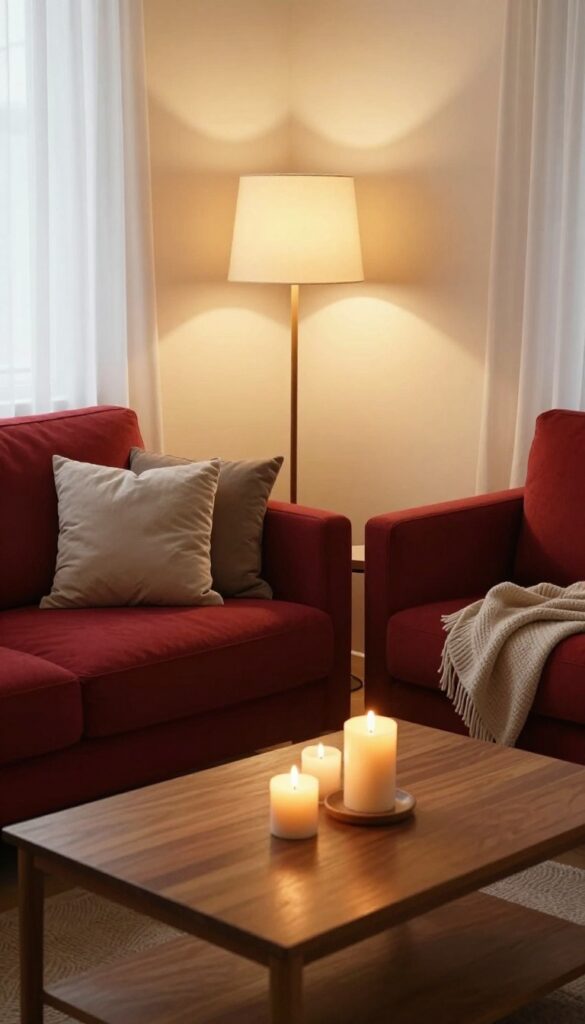
Overhead lights can wash out red, making it look flat or even harsh. The key to making a red couch feel inviting is layering warm, soft light sources at different heights. Table lamps, floor lamps, and candles with warm-toned bulbs create a cozy glow that enhances the couch's richness and makes the whole room feel more intimate.
Red is a powerful color that demands thoughtful lighting. Harsh overhead fixtures can drain its warmth and create unflattering shadows. Instead, rely on multiple light sources placed around the room.
Warm white bulbs (2700K–3000K) are ideal—they cast a golden hue that complements red without competing. Position a floor lamp near one end of the sofa to create a reading nook, and add a table lamp on a side table or console. Candles on the coffee table or mantel add flickering warmth that makes the space feel instantly cozier.
Dimmers are also a great investment: they let you adjust the mood from bright and energetic to soft and romantic in seconds.
Lighting Tip
Use warm-toned bulbs (2700K–3000K) in all lamps to avoid a cool, sterile feel. Avoid cool white or daylight bulbs—they make red look orange or pink and ruin the cozy vibe.
Best Placement
Place lamps at different heights around the couch: a tall floor lamp behind one end, a mid-height table lamp on a side table, and a few candles on the coffee table or a nearby shelf. This creates depth and a soft, layered glow.
Cozy Detail
Add a dimmer switch to your main overhead light if possible. It gives you control over the brightness, so you can dial down the intensity in the evening and let your lamps and candles take center stage.
9. Style with Natural Elements Like Wood and Rattan
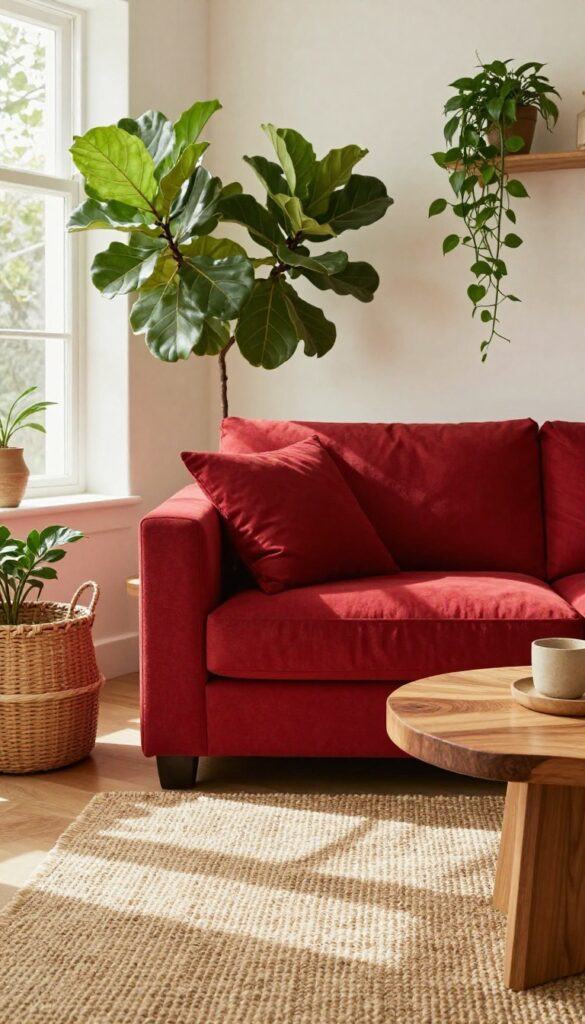
A red couch can feel like a lot, especially if your room leans modern or minimalist. But pair it with natural textures—think woven baskets, rattan chairs, and live plants—and that boldness softens into something warm and grounded. The contrast works because nature doesn't compete; it complements.
Wood tones bring warmth, rattan adds airiness, and greenery breathes life into the space. Together, they make the red feel intentional rather than overwhelming, like a cozy anchor instead of a shout.
Natural materials are your secret weapon for taming a red couch without dulling its impact. The key is to layer textures that feel organic and unpolished—nothing too glossy or refined. Start with a jute or sisal rug underfoot to anchor the seating area.
Its rough, earthy weave instantly dials down the formality. Then bring in a rattan accent chair or a pair of woven poufs for extra seating that feels light and breezy. Wood surfaces, like a live-edge coffee table or chunky shelf, add heft without heaviness.
Finish with plenty of greenery: a fiddle-leaf fig in a basket, trailing pothos on a mantel, or a cluster of succulents on a side table. The plants soften edges and make the room feel alive, not staged.
Best Materials To Mix
- Stick with matte, unfinished, or lightly stained woods—oak, teak, or walnut work beautifully. Avoid high-gloss lacquers that feel too polished. Rattan and bamboo are perfect for chairs, light fixtures, or wall decor.
- Woven baskets in varied weaves (tight, open, chunky) add depth and can double as storage for throws or magazines. For textiles, choose linen, cotton, or wool in neutral tones like cream, beige, or soft gray. These fabrics breathe and feel cozy without competing with the red.
Layout Tip: Create A Natural Flow
- Position your red couch as the focal point, then arrange natural elements around it in a loose, organic way. Place a large woven basket beside the couch for blankets, and set a low wooden coffee table within easy reach. Angle a rattan armchair slightly toward the couch to encourage conversation.
- Keep paths clear so the room feels open, not cluttered. The goal is a relaxed, inviting layout that lets the red pop without feeling boxed in.
Plant Styling Note
- Use plants to bridge the red and the natural textures. A tall potted plant like a monstera or rubber tree next to the couch creates a vertical line that draws the eye up and softens the couch's mass. Smaller plants on shelves or tables add pops of green that echo the red's vibrancy without competing.
- Stick to simple terra-cotta or woven planters to keep the look cohesive.
10. Keep the Coffee Table Minimal and Functional
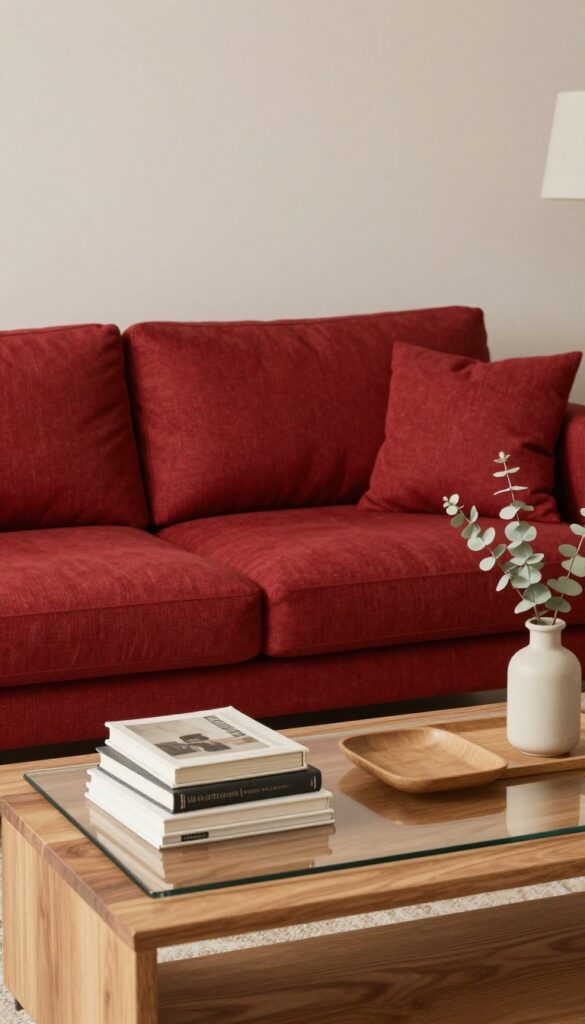
A red couch already brings plenty of drama to your living room, so your coffee table doesn't need to compete. In fact, keeping it simple helps the sofa stay the star while still giving you a spot to set down a drink or prop up your feet. The trick is to style it with just a few intentional pieces—nothing fussy or overcrowded.
Think of your coffee table as a supporting actor, not the lead. A clean, uncluttered surface feels calming and makes the red couch pop even more. Plus, a minimal setup is way easier to maintain day-to-day, which is a win for real life.
When your couch is bold red, the coffee table should feel like a quiet complement. Go for a low wooden or glass table that doesn't block the view of the sofa. Then add three or four carefully chosen objects: a stack of neutral-toned books, a small tray for remotes or coasters, and a single vase with dried eucalyptus or a few stems.
That's it.
This approach works in any living room, from open-concept spaces to cozy apartments. The minimal styling lets the red couch breathe and keeps the eye moving around the room. It also makes the space feel intentional and polished without looking like a showroom.
Best Colors And Materials
- Stick with natural materials that warm up the room without stealing focus. A wood table in oak, walnut, or teak adds warmth that pairs beautifully with red. For a lighter look, try a glass top with a wooden base—it keeps the visual weight low.
- Accessories should stay neutral: cream, beige, soft gray, or black. Avoid bright colors or patterns that might clash with the couch.
Layout Tip
Place the coffee table close enough to the couch so you can easily reach it, but leave at least 18 inches of clearance for walking. If your red couch is a sectional, position the table in front of the main seating section. For smaller spaces, a round or oval table softens the lines and makes the room feel more open.
Finishing Touch
Add a small textured element like a ceramic vase or a woven tray to bring in cozy tactile contrast. A single candle on the tray can also create a warm glow at night. Keep the tray shallow so it doesn't become a dumping ground—just enough for the essentials.
FAQ
What colors go best with a red couch?
Neutral tones like beige, cream, and warm gray are safe bets. For contrast, try earthy greens, navy blue, or soft blush. Warm metallics like brass also complement red beautifully.
How do I make a red couch feel cozy?
Layer textures such as chunky knit throws, velvet pillows, and a plush rug. Use warm lighting from lamps and candles, and incorporate natural materials like wood and rattan.
Can a red couch work in a small living room?
Absolutely. Keep walls light and furniture minimal. Use mirrors to reflect light and choose a streamlined sofa design.
A red couch can actually make a small space feel more dynamic.
What kind of rug should I use with a red couch?
A neutral rug in cream, beige, or soft gray helps ground the space. For more personality, try a patterned rug that includes red or complementary colors like navy or green.
How do I avoid a red couch looking too overwhelming?
Balance it with plenty of neutral tones, soft textures, and natural elements. Avoid adding too many other bold colors. Let the couch be the star and keep accessories simple.
Conclusion
A red couch doesn't have to dominate your living room in an overwhelming way. With the right mix of neutrals, textures, and warm accents, it becomes a cozy anchor that invites people to sit and stay.
Start with one or two of these ideas and build from there until the room feels just right.