17 Cleaning a Blackstone Griddle Tips for Grease Buildup
Grease buildup on your Blackstone griddle can turn cooking into a sticky mess and ruin the flavor of your food. A clean griddle not only performs better but also lasts longer, so tackling that stubborn residue is worth the effort.
These 17 tips break down the process into simple, actionable steps that target grease at every stage, from immediate post-cook care to deep cleaning heavy buildup. Each method is practical and uses tools you likely already have, saving you time and frustration.
Ready to restore your griddle's non-stick surface and keep it working like new? Let's get into the strategies that actually cut through the grease.
1. Scrape While It's Still Warm
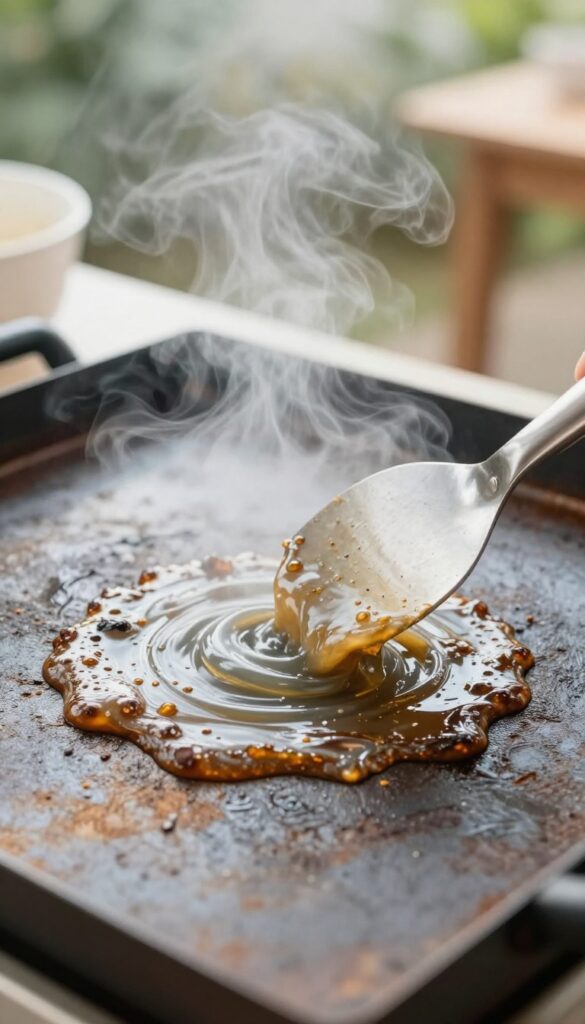
Timing is everything when it comes to cleaning a Blackstone griddle. The moment you finish cooking, the grease is still hot and liquid, which makes it easy to remove with a simple scrape. Waiting even a few minutes lets the grease cool and harden, turning a quick wipe into a tough scrubbing session.
Make it a habit to scrape right after the last batch of food comes off, and you'll save yourself a lot of elbow grease later.
Scraping while the griddle is warm is the single most effective habit for preventing grease buildup. The heat keeps fats and oils in a liquid state, so they slide off the surface without sticking. Use a flat metal scraper or a grill spatula with a straight edge, and push the grease toward the grease cup or into a drip pan.
Work in sections, scraping from one side to the other, and repeat until the surface looks clean. This step alone can eliminate the need for harsh chemicals or deep scrubs.
Why Warm Scraping Works Best
When grease cools, it solidifies and bonds to the metal pores of the griddle. Warm scraping takes advantage of the natural fluidity of hot oil, so it releases easily without scratching the seasoning. The heat also softens any food residue, making it come off in one pass rather than requiring repeated scrubbing.
Tools That Make It Easy
A dedicated Blackstone scraper or a heavy-duty metal spatula works perfectly. Avoid plastic scrapers—they can melt on a hot surface and leave residue. A long-handled scraper keeps your hands safe from heat and splatter, and a grease bucket or drip tray catches the runoff for easy disposal.
Step-by-step Warm Scraping Routine
Turn off the burners but leave the griddle hot. Starting at one end, angle the scraper at about 45 degrees and push the grease toward the grease trough. Work in overlapping rows, wiping the scraper clean on a paper towel between passes.
Once the surface is mostly clear, use a paper towel to blot any remaining thin film of oil.
2. Use a Squeeze Bottle of Water to Steam Clean
Steam is one of the most effective ways to loosen stubborn grease without scrubbing yourself raw. A simple squeeze bottle of water turns your hot griddle into a self-cleaning tool. The rapid steam lifts burnt-on residue, making it easy to wipe away.
This method works best right after cooking while the griddle is still hot. Fill a plastic squeeze bottle with plain water—no soap needed. Carefully drizzle or squirt a thin layer of water across the surface.
It will sizzle and steam immediately. Use a long-handled scraper or spatula to push the loosened grease toward the grease trough. Repeat if necessary.
The steam softens carbonized bits, so you don't have to scrub aggressively. Let the griddle cool slightly, then wipe with a paper towel for a nearly spotless finish.
Why Steam Works So Well
Water turns to steam at 212°F, and your griddle is usually much hotter. The rapid expansion of steam penetrates beneath grease layers, breaking their bond with the metal. This is far gentler on the seasoning than abrasive scrubbing.
Best Practices For Steam Cleaning
Always use a squeeze bottle with a narrow tip for controlled application. Avoid flooding the surface—too much water can cool the griddle unevenly. Work in small sections, scraping immediately after steaming.
Keep a dry towel nearby to absorb excess moisture.
When Not To Use This Method
Don't steam clean a cold griddle—the water will just sit and make a mess. Also, avoid this if your griddle has a thick layer of rust or if you've recently re-seasoned it. Steam can strip fresh seasoning if applied too aggressively.
3. Apply a Thin Layer of Oil After Each Clean
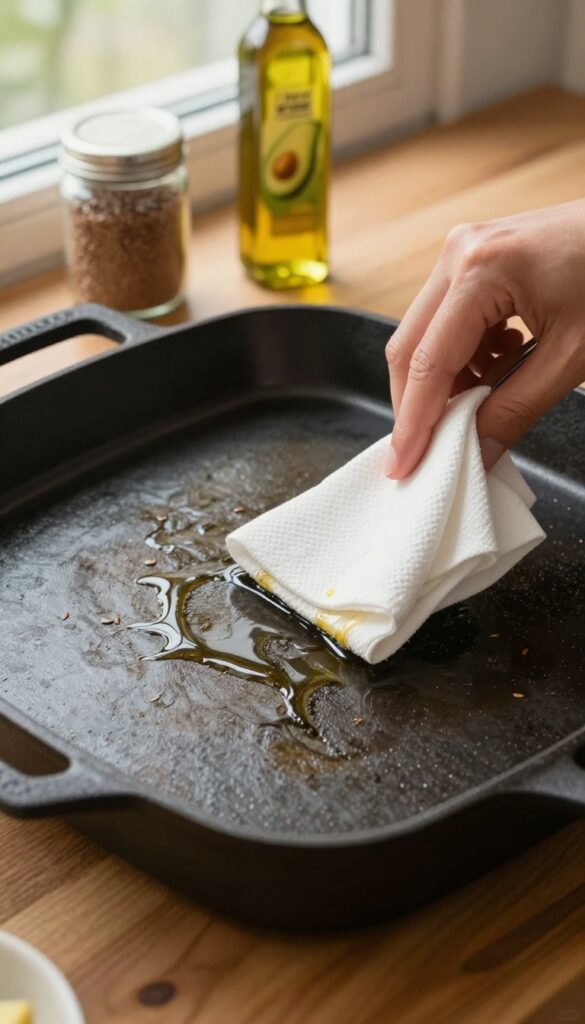
Once your griddle is clean and dry, that bare metal is vulnerable to rust and moisture. A simple oil wipe seals the surface and creates a protective barrier that also makes future grease cleanup much easier. It’s a quick step that pays off every time you cook.
After you’ve scraped, scrubbed, and dried your griddle, don’t walk away just yet. A thin layer of oil locks in the clean and preps the surface for next use. This habit prevents rust, keeps the seasoning even, and stops new grease from bonding as tightly.
Just a teaspoon of high-smoke-point oil like avocado or flaxseed, rubbed on with a paper towel, is all you need. Let it cool completely before covering.
Why Oil Prevents Grease Buildup
A seasoned griddle has a polymerized oil layer that is naturally non-stick. When you apply fresh oil after cleaning, you fill microscopic pores and smooth the surface. New grease then slides off more easily during your next cook, so you spend less time scrubbing.
It’s like resetting the non-stick properties every time.
Choosing The Right Oil
Not all oils work the same. Stick with oils that have a high smoke point—avocado, grape seed, canola, or vegetable oil are solid choices. Avoid butter or olive oil, as they burn and leave sticky residue.
A little goes a long way; too much oil can become gummy and attract dust.
How To Apply It Correctly
Wait until the griddle is cool enough to touch but still warm—that helps the oil spread evenly. Dip a folded paper towel in oil and wipe the entire cooking surface in a thin, even coat. Use tongs to hold the towel if the surface is still hot.
Buff off any excess so the surface looks dry but feels slick.
4. Try the Ice Cube Trick for Stubborn Grease
Some grease just won't budge, no matter how hard you scrape. That's when a simple kitchen hack comes to the rescue: ice cubes. The rapid temperature change shocks the griddle surface, causing caked-on grease to release its grip.
It's fast, effective, and uses nothing but water and ice.
How It Works
When you drop ice cubes onto a hot griddle, the extreme cold causes the metal to contract instantly. This thermal shock breaks the bond between the grease and the surface. As the ice melts, the water turns to steam, which further loosens any remaining residue.
The result is a layer of grime that wipes away with minimal effort.
Step-by-step
Start with the griddle on medium-high heat. Drop 3-4 ice cubes directly onto the greasy areas. Let them sizzle and melt completely.
Use a metal scraper to push the loosened grease into the drip tray. Follow up with a paper towel or cloth to wipe the surface clean. For extra-stubborn spots, repeat the process.
Safety Tips
Always wear heat-resistant gloves to protect your hands from steam and splatter. Keep your face and body clear of the griddle when adding ice—the steam can rise quickly. Never use ice on a cold griddle; the thermal shock only works when the surface is hot.
Also, avoid using too many cubes at once, as excess water can cool the griddle too much.
5. Use a Griddle Stone for Heavy Buildup
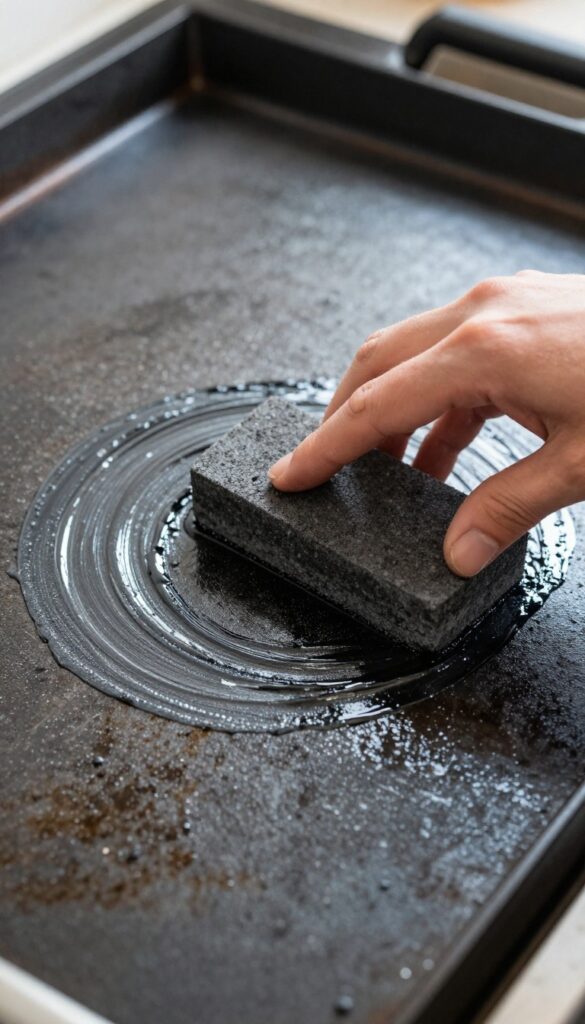
When scraping and steaming aren't enough, a griddle stone can be your secret weapon. These pumice-like blocks are designed to tackle thick, carbonized grease without scratching the surface. They work by gently abrading the buildup, turning it into dust that wipes away easily.
A griddle stone is a rectangular block of porous pumice that you rub across a warm griddle to remove stubborn residue. It's much gentler than steel wool or abrasive pads, so it won't damage the seasoning or metal. Use it sparingly—only when you have heavy, baked-on grease that resists other methods.
When To Reach For The Stone
Reserve the griddle stone for deep cleaning sessions, not daily upkeep. If you see patches of black, crusty carbon that won't scrape off, it's time. Use it after cooking but while the griddle is still warm (not hot) so the grease is slightly softened.
How To Use It Right
Lightly wet the stone and rub it in a circular motion over the buildup. You'll see a grayish dust form—that's the carbon coming off. Wipe the area with a paper towel, then rinse and dry the stone.
Repeat as needed. Avoid pressing too hard; let the stone do the work.
Caring For Your Griddle Stone
Rinse the stone with water after each use and let it air dry completely. Don't use soap, as it can clog the pores. When the surface becomes smooth or glazed, it's time for a new one.
A good stone lasts several deep cleans.
6. Deglaze with Vinegar and Water
Vinegar is a powerhouse when it comes to cutting through grease without harsh chemicals. When you deglaze a warm griddle with a vinegar-water mix, the acid breaks down sticky residue while the steam lifts it off the surface. This method is especially handy after cooking fatty foods like bacon or burgers, where a simple scrape leaves behind a stubborn film.
To deglaze, mix equal parts white vinegar and water in a spray bottle. After cooking, let the griddle cool slightly so it's warm but not scorching hot. Spray the solution generously over the greasy areas—you'll hear it sizzle and see steam rise.
Use a metal spatula or scraper to push the loosened grease toward the grease cup. The vinegar smell dissipates quickly, and your griddle will be left clean and ready for the next cook.
Why It Works
Vinegar's acetic acid is a natural degreaser that dissolves the bonds in grease molecules. Heat from the griddle activates the reaction, making it more effective than cold cleaning. Plus, it's food-safe and leaves no toxic residue, so you don't have to worry about chemical aftertaste.
Best Practices
Always use warm—not hot—griddle to avoid rapid evaporation that reduces cleaning power. Spray in a well-ventilated area since vinegar fumes can be strong. For heavy buildup, let the solution sit for 30 seconds before scraping.
Rinse with water afterward and dry thoroughly to prevent rust.
When To Use This Method
This technique is ideal for routine maintenance after high-grease meals or as a prep step before seasoning. It's gentle enough for daily use but powerful enough to tackle moderate buildup. Avoid using it on a seasoned surface too often, as vinegar can strip seasoning if overused.
7. Invest in a Quality Griddle Cover
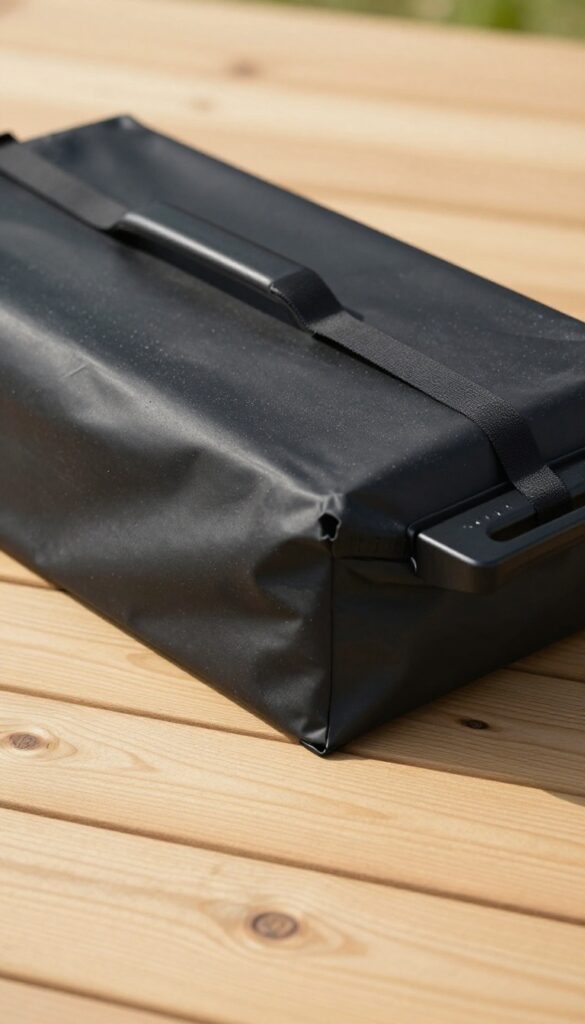
A tight-fitting cover is one of the simplest ways to cut down on grease buildup. By keeping out moisture, dust, and debris, you'll spend less time scrubbing and more time cooking. It's a small investment that pays off every time you lift the lid to a clean cooking surface.
A quality griddle cover acts as your first line of defense against the elements. Rain, dew, and even humid air can cause grease to turn sticky and hard to remove. A cover also keeps bugs, leaves, and other outdoor debris from landing on your griddle, which means less gunk to scrape off later.
Look for a cover made from heavy-duty, waterproof material with a soft inner lining to prevent scratches. Make sure it fits snugly over your entire griddle, including the side shelves if you have them. Some covers come with adjustable straps or drawstrings to keep them secure in windy conditions.
While a cover won't eliminate the need for regular cleaning, it will dramatically reduce how often you need to do a deep scrub. Think of it as a shield that keeps your griddle ready to go at a moment's notice.
Why A Cover Matters For Grease Control
Moisture is the enemy of a clean griddle. When water gets into leftover grease, it creates a sticky film that's harder to remove later. A cover prevents rain and morning dew from mixing with any residual oil, keeping your griddle in better shape between uses.
It also blocks UV rays that can degrade the metal surface over time.
What To Look For In A Griddle Cover
Not all covers are created equal. Choose one made from thick, marine-grade vinyl or polyester with a waterproof coating. A soft fleece or felt lining protects the cooking surface from scratches.
Look for features like air vents to prevent moisture buildup underneath, and elastic hems or straps for a secure fit. Measure your griddle before buying to ensure full coverage.
How To Use Your Cover Effectively
Always let your griddle cool completely before putting on the cover. Trapping heat can cause condensation and promote rust. Wipe down the surface quickly to remove any large food particles first.
If you cook frequently, consider a cover that's easy to remove and replace without fuss. Store the cover in a dry place when not in use to extend its life.
8. Clean the Grease Cup Regularly
That little grease cup hanging off the side of your Blackstone does a lot of work. It collects all the drippings from your cooks, but if you ignore it, it will overflow and create a greasy mess on your patio or deck. Keeping it clean is one of the easiest ways to prevent buildup and maintain a tidy cooking area.
A full grease cup is a fire hazard and a magnet for pests. Empty it after every few cooks, or more often if you cook fatty foods like bacon or burgers. Wash it with warm, soapy water and dry it completely before reattaching.
If you notice a lot of buildup inside, use a degreaser or soak it in hot water with dish soap to break down the residue. A clean cup means less grease splatter and a safer cooking experience.
How Often To Empty It
Check the cup after each cook. If it's more than half full, empty it. For heavy use, empty it every time.
Don't let it sit full overnight—grease can harden and attract bugs. A quick rinse after each empty keeps it from getting crusty.
Deep Cleaning The Cup
Over time, grease can form a thick layer inside the cup. Scrub it with a stiff brush and dish soap, or use a mixture of baking soda and vinegar for stubborn spots. Rinse thoroughly and let it air dry.
A clean cup not only functions better but also reduces odors.
Preventing Overflow
If you notice the cup filling quickly, consider using a larger replacement cup or emptying it mid-cook. Some griddlers place a small disposable aluminum tray inside the cup for easier cleanup. Just swap it out when full and toss the old one.
9. Use a Non-Scratch Scouring Pad
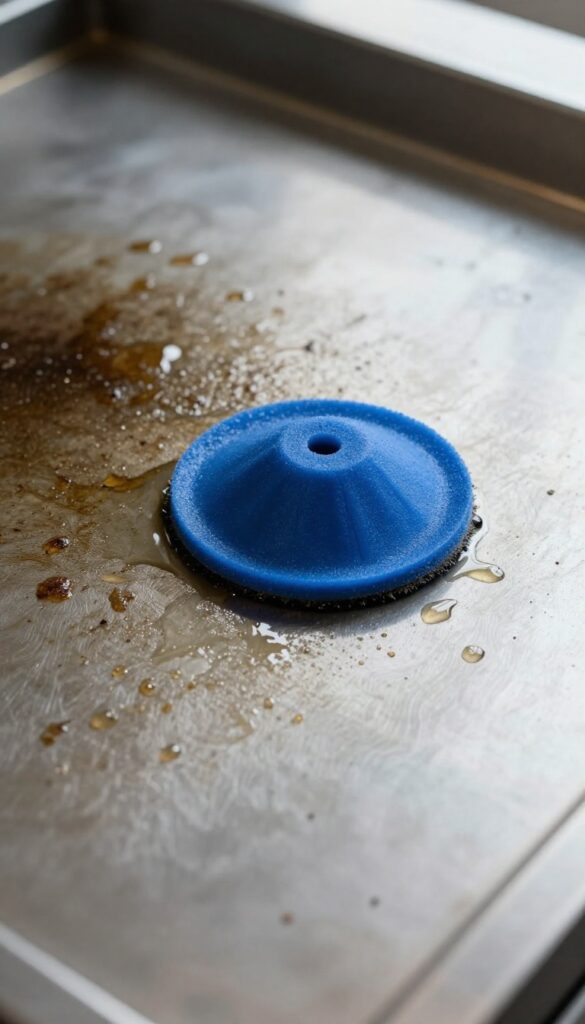
Stuck-on grease spots can be frustrating, especially when scraping alone leaves behind a rough patch. A non-scratch scouring pad is your go-to for those stubborn areas without damaging the seasoning you've worked hard to build. Blue or green pads are soft enough to protect the surface but tough on residue.
When you encounter a spot that won't come off with a scraper or steam, reach for a non-scratch pad. These pads are designed to be abrasive enough to lift burnt-on grease but gentle enough to leave your seasoning intact. Always use them with a little water or cooking oil to lubricate the surface and avoid scraping too hard.
Why Blue Or Green Pads Work Best
Blue pads are the softest and safest for routine cleaning, while green pads offer a bit more scrubbing power for tougher spots. Both are non-abrasive compared to steel wool, which can strip seasoning. Stick with these colors to avoid scratching the griddle's surface.
How To Use A Scouring Pad Correctly
First, let the griddle cool slightly but stay warm—hot enough to loosen grease but not so hot that you burn your hand. Apply a small amount of water or oil to the pad, then scrub in circular motions over the stuck-on area. Rinse the pad frequently to prevent redepositing grease.
When To Avoid Scouring Pads
If your griddle has a factory coating or is brand new, check the manufacturer's instructions before using any abrasive pad. Once the seasoning is established (after several cooks), non-scratch pads are safe. For heavy rust or deep scratches, consider a griddle stone instead.
10. Apply a Paste of Baking Soda and Water
Sometimes grease hardens into a crust that simple wiping won't touch. Baking soda's mild abrasiveness makes it perfect for those tough spots without scratching your griddle's surface. Mixed with water, it forms a paste that clings to vertical surfaces and penetrates baked-on residue.
This method is cheap, non-toxic, and surprisingly effective on stubborn patches.
Baking soda paste works best on cool or warm griddles—never hot. Apply it generously, let it sit to soften the grease, then scrub with a non-abrasive pad. Rinse thoroughly to avoid any gritty residue left behind.
Why Baking Soda Works So Well
Baking soda is alkaline, which helps break down fatty acids in grease. Its fine particles provide gentle scrubbing power that lifts grime without damaging the seasoning. Unlike harsh chemicals, it's safe for food surfaces and won't leave harmful residues when rinsed properly.
How To Make And Apply The Paste
Mix three parts baking soda with one part water in a small bowl until it forms a thick, spreadable paste. Use a spatula or your fingers (wear gloves if you prefer) to coat the greasy areas evenly. Let it sit for 10 minutes—longer for heavy buildup.
Then scrub gently with a soft sponge or nylon brush in circular motions.
Rinsing And Finishing Up
After scrubbing, wipe away the paste with a damp paper towel. Rinse the griddle with clean water and dry it thoroughly with a lint-free cloth. If any paste remains, it can leave a chalky film, so take your time.
Follow up with a light coat of cooking oil to protect the surface.
11. Season After Every Deep Clean
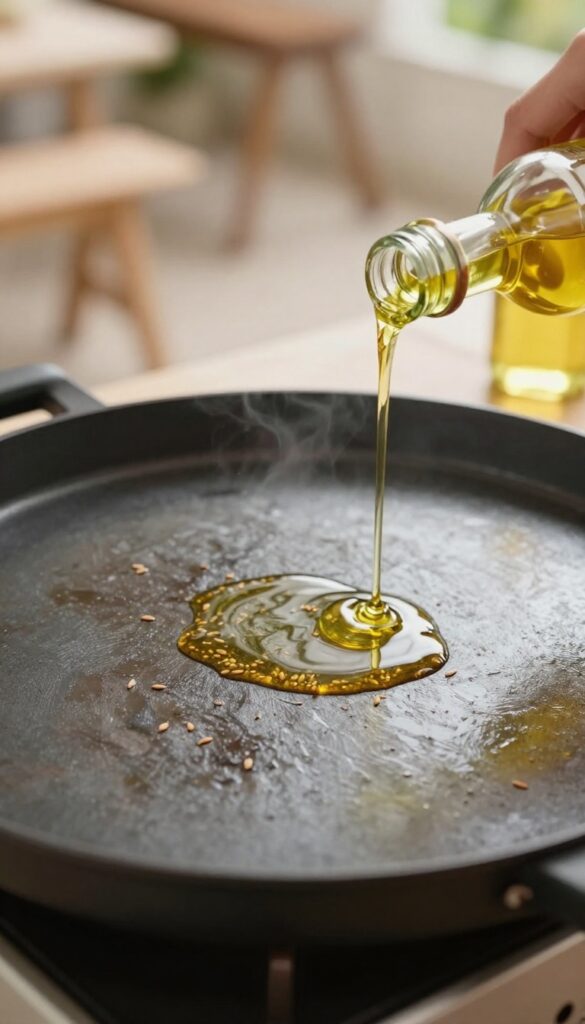
A deep clean strips away not just grease but also your griddle's protective seasoning. Without that layer, food sticks more easily and grease bonds directly to the metal, making future buildup worse. Re-seasoning after every deep clean locks in the non-stick surface and creates a barrier that repels grease instead of absorbing it.
Re-seasoning is simple and takes just a few minutes. After your griddle is completely dry from the deep clean, apply a thin layer of high-smoke-point oil—like flaxseed, grapeseed, or avocado oil—across the entire cooking surface. Use a paper towel or cloth to spread it evenly, then heat the griddle on high until the oil just starts to smoke.
Let it cool slightly, then repeat the process two or three times for a durable, slick finish. This routine not only restores performance but also makes future cleaning easier because grease has a harder time sticking to a well-seasoned surface.
Why Re-seasoning Matters
Seasoning is more than a cosmetic step. It fills microscopic pores in the metal, creating a smooth, non-porous surface that grease can't easily latch onto. Without it, even a spotless griddle will quickly develop sticky patches after just one cook.
Think of seasoning as a sacrificial layer—it takes the brunt of the grease so your griddle's metal stays clean.
Best Oils For The Job
Not all oils are created equal when it comes to seasoning. You need an oil with a high smoke point—ideally above 400°F—so it polymerizes into a hard, slick coating instead of burning off. Flaxseed oil is a top choice for its durability, but grapeseed and avocado oil work well too.
Avoid butter, olive oil, or any low-smoke-point fats, as they'll leave a gummy residue that attracts more grease.
How Often To Re-season
Re-season after every deep clean, not after every cook. For most Blackstone owners, that means once every few weeks or whenever you do a full strip-down. If you notice food starting to stick or the surface looking dull between deep cleans, a quick one-layer seasoning can help maintain the barrier.
Over-seasoning is rarely a problem—just keep the layers thin to avoid flaking.
12. Use a Heat Gun for Melted-On Grease
Some grease spots seem impossible to remove, especially after they've been heated and cooled multiple times. A heat gun can be your secret weapon for those rock-hard patches that refuse to budge. The intense heat softens the grease just enough for you to scrape it away cleanly, restoring your griddle's smooth surface.
When scraping alone fails, a heat gun can make short work of stubborn grease. It's a simple process: heat the affected area, then scrape immediately while the grease is soft. This method is especially effective on thick, crusty buildup that has been baked on over multiple cooking sessions.
Why A Heat Gun Works
A heat gun delivers focused, high-temperature air that can reach up to 1000°F. This intense heat penetrates the grease layer, softening it from the inside out. Unlike a torch, a heat gun spreads heat more evenly, reducing the risk of damaging the griddle's surface.
How To Use It Safely
Start by setting your heat gun to a medium setting, around 600-700°F. Hold it about 2-3 inches from the grease spot and move it in a circular motion for 30-60 seconds. Once the grease looks glossy and soft, immediately scrape it off with a metal spatula or scraper.
Work in small sections to avoid overheating the griddle.
When To Skip This Method
Avoid using a heat gun on a freshly seasoned griddle or if your griddle has a non-stick coating. The high heat can damage the seasoning or coating. Also, never use a heat gun near flammable materials like paper towels or grease-soaked rags.
13. Switch to a Metal Scraper with a Handle
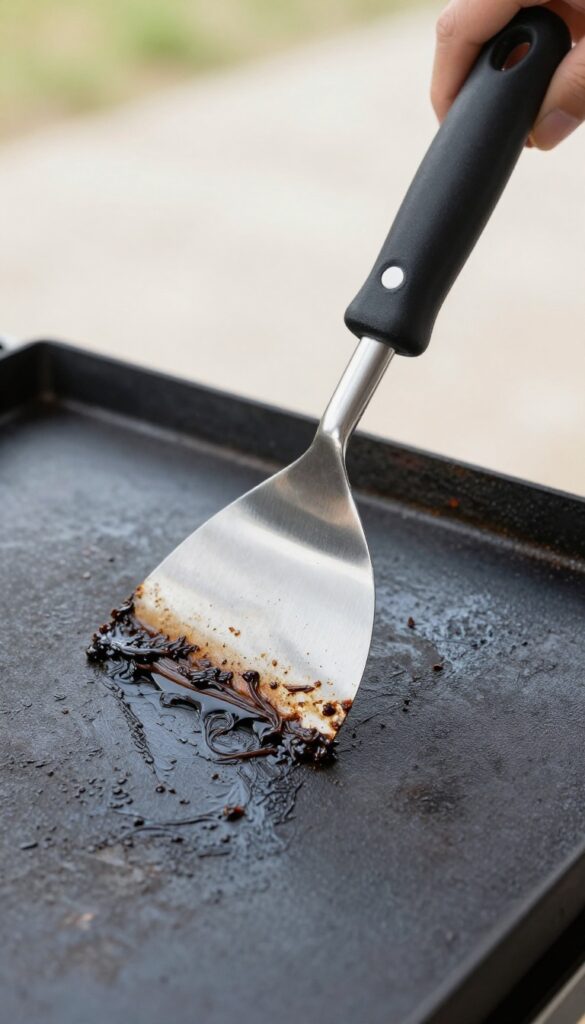
A standard scraper can work, but a long-handled metal scraper changes the game. It gives you better leverage to dig into stubborn grease without straining your wrist, and the extra length keeps your hands safely away from the hot surface. This simple swap makes scraping faster and more effective.
A long-handled metal scraper is a game-changer for tackling tough grease on your Blackstone griddle. The extended handle provides better leverage, allowing you to apply more pressure without bending over or risking burns. This tool is especially useful for scraping off carbonized buildup that a short scraper can't budge.
Plus, it keeps your hands at a safe distance from the heat, reducing the chance of accidental burns. When shopping, look for a scraper with a sturdy metal blade and a comfortable, heat-resistant handle. Use it while the griddle is still warm—not screaming hot—to loosen grease without damaging the surface.
Why Leverage Matters
A short scraper forces you to use your wrist and fingers, which can tire quickly and limit how much force you apply. A long handle transfers power from your arm and shoulder, giving you more control and pressure. This is key for dislodging baked-on grease that's bonded to the metal.
Safety First
Keeping your hands away from the hot griddle surface is a major advantage. Even with gloves, heat radiates upward, and a long handle creates a buffer zone. This is especially helpful when you're scraping near the center of a large griddle.
Choosing The Right Scraper
Look for a scraper with a stainless steel blade that won't rust and a handle made of wood or silicone for heat resistance. Avoid plastic handles that can melt. A blade width of 4 to 6 inches covers more area, making the job faster.
14. Wipe Down with Paper Towels After Each Use
A quick wipe while the griddle is still warm removes most loose grease before it has a chance to build up. This simple habit takes less than a minute and makes deep cleaning sessions much easier. Waiting until the griddle cools down lets grease harden, turning a quick wipe into a scrubbing session.
After you finish cooking and turn off the heat, grab a stack of heavy-duty paper towels. Fold them into a thick pad to protect your fingers from the heat. Use tongs or a spatula to hold the towels and wipe the entire cooking surface in long, smooth strokes.
The warmth keeps grease liquid, so it lifts right off without scraping. For stubborn spots, you can add a splash of water to create steam that loosens residue. Just be careful not to burn yourself.
This daily wipe-down maintains the seasoning layer while removing the fresh grease that would otherwise turn into sticky buildup.
Why Warm Wiping Works
Grease is much easier to remove when it's still liquid. Once it cools, it solidifies and bonds to the surface, requiring more effort and potentially damaging the seasoning. Wiping warm catches the grease before it sets.
Best Tools For The Job
Use thick, lint-free paper towels or a dedicated griddle cloth. Avoid thin napkins that can tear or leave fibers. Tongs or a long-handled spatula keep your hands safe from the heat.
When To Skip The Water
If your griddle is well-seasoned and only has light grease, dry wiping is enough. Water can strip seasoning if used too often, so reserve it for sticky spots or after cooking fatty foods.
15. Avoid Harsh Chemical Cleaners
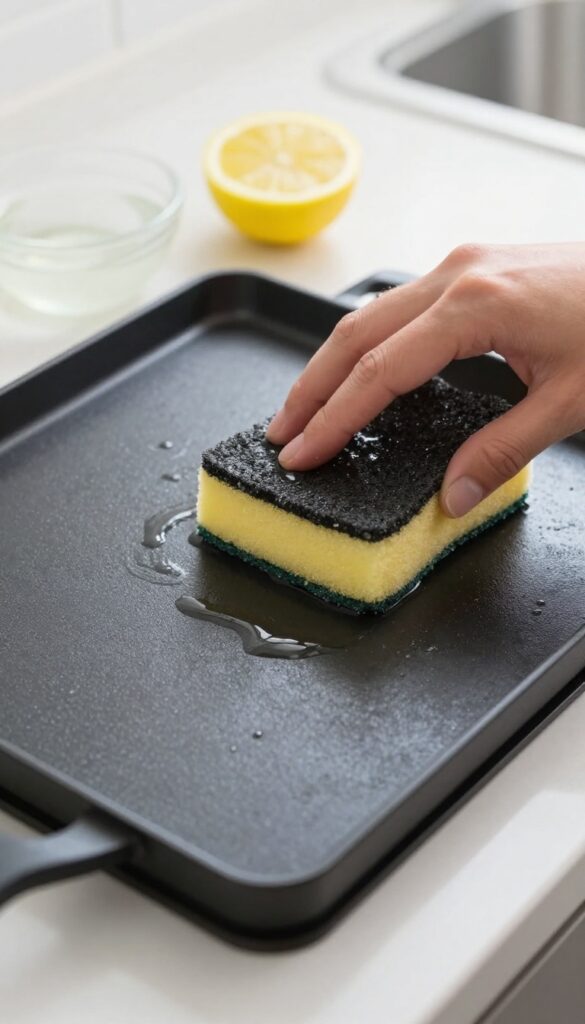
It might be tempting to reach for a heavy-duty degreaser when grease won't budge, but harsh chemicals can do more harm than good on your Blackstone griddle. Many commercial cleaners strip the seasoning—the non-stick layer you've built up over time—and can leave behind residues that affect the taste of your food. Sticking to mild, natural options keeps your griddle safe and your meals tasting great.
Strong chemicals like oven cleaners, bleach, or ammonia are overkill for a griddle and can damage its surface. They react with the metal and the polymerized oil that forms the seasoning, creating patches that are prone to rust. Even if you rinse thoroughly, some chemical residue can linger and get into your next meal.
Instead, rely on mild dish soap, water, and a soft sponge for routine cleaning, and use natural degreasers like white vinegar or lemon juice for tougher spots. A paste of baking soda and water also works wonders on stubborn grease without the risk. Your griddle will stay seasoned, safe, and ready to cook.
Why Harsh Chemicals Are Risky
Seasoning is a thin layer of oil that has been polymerized onto the griddle's surface through heat. Harsh chemicals break down that layer, leaving the bare metal exposed. Once the seasoning is gone, your griddle becomes sticky, prone to rust, and loses its non-stick properties.
You'd then have to spend time re-seasoning it from scratch.
Natural Alternatives That Work
For everyday cleaning, a few drops of mild dish soap and warm water are plenty. For grease buildup, spray white vinegar directly on the cool griddle, let it sit for a few minutes, then wipe. Lemon juice cuts grease and leaves a fresh scent.
Baking soda mixed with water into a paste can scrub away baked-on residue without scratching.
How To Clean Without Damaging Seasoning
Always let the griddle cool slightly before cleaning—extreme temperature changes can warp the metal. Use a soft sponge or cloth instead of steel wool. Rinse with water and dry immediately to prevent rust.
After cleaning, apply a thin layer of cooking oil and heat the griddle until it smokes to restore the seasoning. This simple routine keeps your griddle in top shape.
16. Use a Dedicated Griddle Cleaning Kit
Trying to clean a greasy Blackstone with mismatched tools can be frustrating. A dedicated griddle cleaning kit bundles everything you need into one package, so you're never hunting for the right scraper or pad. These kits are designed specifically for flat-top surfaces, which means they handle grease buildup without damaging your seasoning.
What's Typically Included
Most kits come with a metal scraper, scrubbing pads, a bottle of seasoning oil, and sometimes a protective cover. The scraper is usually long-handled to keep your hands away from the heat, and the pads are tough enough to lift carbonized grease but gentle on the surface. Having all these items together means you can clean from start to finish without improvisation.
Why A Kit Beats Diy
Assembling your own cleaning set often leads to using tools that are too abrasive or not effective. For example, a steel wool pad might scratch the surface, while a plastic scraper won't cut through hardened grease. A kit eliminates the guesswork and ensures every component is safe for your griddle's seasoning.
Plus, the included oil is usually a high-smoke-point option perfect for reseasoning after a deep clean.
How To Use It Effectively
After cooking, let the griddle cool slightly but stay warm. Scrape off loose debris with the included scraper, then use the scrubbing pad with a little water to break down stubborn grease. Wipe the surface dry, apply a thin layer of seasoning oil, and spread it evenly with a paper towel.
The process takes just a few minutes and keeps your griddle in top shape.
17. Schedule a Monthly Deep Clean
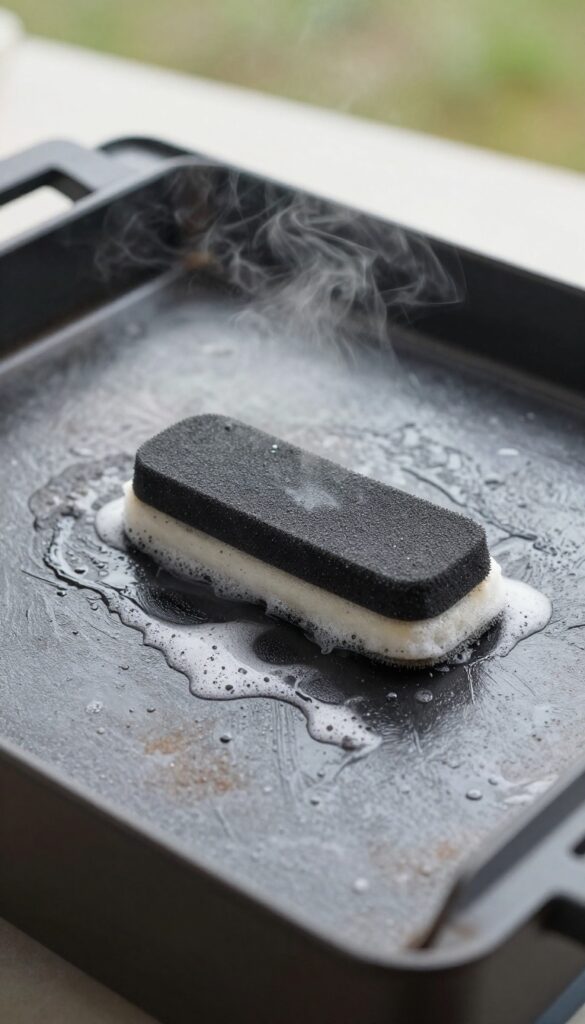
Even with regular upkeep, grease can slowly build up in layers over time. A monthly deep clean resets your griddle's surface, removing the stubborn residue that daily wipes can't touch. This prevents the grease from becoming a permanent, baked-on crust that ruins performance.
Set a recurring reminder to perform a full strip and re-season every 30 days. Start by scraping off any loose debris, then apply a degreaser or a mixture of vinegar and water. Scrub vigorously with a grill stone or heavy-duty scrub pad, rinse thoroughly, and heat the griddle to evaporate all moisture.
Finally, apply a thin layer of oil and heat until it smokes to restore the seasoning. This process keeps your cooking surface smooth and non-stick, preventing grease from becoming a permanent problem.
Why Monthly Matters
Grease doesn't just sit on the surface—it seeps into microscopic pores and polymerizes over time. A monthly deep clean removes that embedded layer before it hardens into a stubborn coating that resists normal cleaning. Regular deep cleaning also helps maintain even heat distribution and prevents off-flavors from old grease.
Step-by-step Deep Clean
Start by heating the griddle for 10 minutes to soften grease. Scrape off large debris, then apply a degreaser or a paste of baking soda and water. Let it sit for 5 minutes, then scrub with a grill stone or a non-abrasive pad.
Rinse with water and wipe dry. Heat the griddle until all moisture evaporates, then apply a thin layer of high-smoke-point oil. Let it smoke for 10 minutes, then turn off the heat and let it cool.
Signs You Need A Deep Clean Sooner
If your food starts sticking more than usual, or you notice a dark, sticky residue that doesn't wipe off, don't wait for the calendar. A monthly schedule is a baseline—heavy use or cooking greasy foods like bacon may require a deep clean every two weeks. Trust your griddle's performance as your guide.
FAQ
Can I use soap on my Blackstone griddle?
Yes, but only a mild dish soap and only when doing a deep clean. Avoid soap for daily cleaning as it can strip the seasoning.
How often should I clean my Blackstone griddle?
Do a quick scrape and wipe after every use. Deep clean with a stone or vinegar once a month or when buildup is visible.
What oil is best for seasoning a Blackstone griddle?
High-smoke-point oils like avocado, grapeseed, or canola work best. Avoid olive oil as it can become sticky.
Why is my Blackstone griddle rusting?
Rust forms when the seasoning wears off and moisture hits the bare metal. Re-season immediately and always dry thoroughly after cleaning.
Can I use a wire brush on my griddle?
No—wire brushes can scratch the surface and leave bristles behind. Stick to metal scrapers, griddle stones, or non-scratch pads.
Conclusion
Grease buildup doesn't have to be a constant battle. By using these 17 tips, you can keep your Blackstone griddle clean, non-stick, and ready for your next cookout. The key is consistency—a few minutes of maintenance after each use saves hours of scrubbing later.
Try incorporating a couple of these methods into your routine, and you'll notice the difference immediately. Your griddle will thank you, and so will your taste buds.