11 White Living Room Ideas for a Bright, Airy, Calm Space
White living rooms have a reputation for feeling fresh, open, and endlessly calm. But achieving that look doesn't mean you need a designer budget or a giant space. With a few clever choices, you can make your living room feel lighter and larger without spending a fortune.
The key is working with what you have. White walls are a great start, but texture, natural light, and smart furniture placement do the heavy lifting. You don't need all-new decor—just a few intentional swaps and additions.
These 11 ideas focus on budget-friendly moves that maximize brightness and airiness. Whether you rent or own, have a sprawling floor plan or a cozy nook, each tip is designed to feel achievable and stylish.
1. Stick to One Shade of White for a Seamless Look
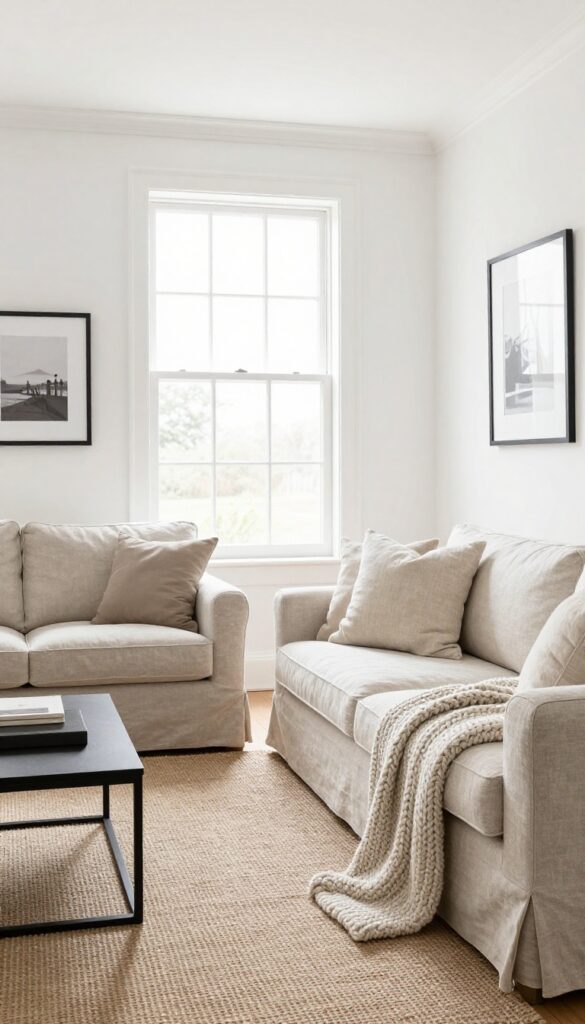
A single white paint color used on walls, trim, and ceiling creates a continuous, unbroken surface that tricks the eye into seeing more space. This monochromatic approach removes visual clutter at the architectural level, making the room feel calm and expansive. The key is choosing a warm white with a hint of cream or beige undertone so the space stays cozy, not clinical.
Painting everything the same white is a budget-friendly way to make a small or awkward living room feel larger without renovation. It works especially well in rooms with interesting moldings or sloped ceilings, where color breaks would otherwise chop up the visual flow. To keep the look from feeling flat, layer in texture through furniture, rugs, and accessories.
Best White Undertones
Not all whites are created equal. For a warm, inviting feel, look for whites with yellow, beige, or pink undertones—like Benjamin Moore's White Dove or Sherwin-Williams' Alabaster. Avoid stark whites with blue or gray undertones, which can feel cold and sterile, especially in north-facing rooms.
Texture Is Your Friend
When color contrast is off the table, texture does the heavy lifting. Bring in a chunky knit throw, a linen sofa, a jute rug, or matte black picture frames. These tactile elements add depth and prevent the room from looking like a blank box.
Budget-friendly Paint Tip
You don't need expensive designer paint to pull this off. Many hardware store brands offer good-quality paint in warm whites. Buy the largest container you can—it's cheaper per gallon—and ask for a single batch to ensure color consistency across all surfaces.
2. Layer Textures with Thrifted Linens and Throws
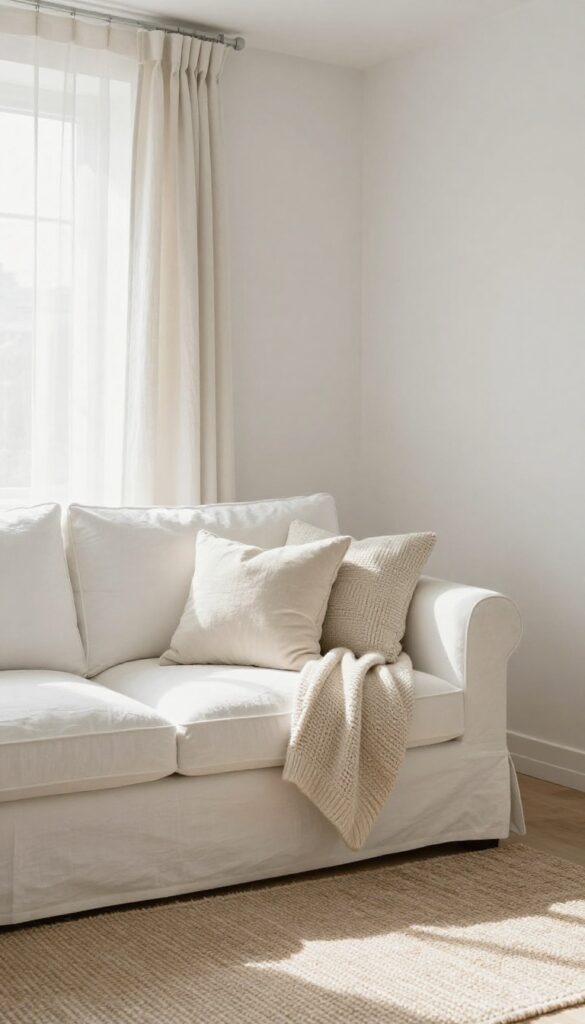
A white living room can feel flat if every surface is the same smooth finish. The fix is texture—lots of it. And the best part?
You don’t need to spend a fortune. Thrift stores are packed with natural-fiber linens, cotton quilts, and chunky knits that add warmth and depth without breaking your budget. Mixing these pieces creates a space that feels collected, not decorated.
Start with a base of white or off-white linen curtains—they soften harsh light and add movement. Drape them from ceiling height to make the room feel taller. On the sofa, layer a chunky knit throw and a few cotton cushions in varying weaves.
A slipcovered armchair in creamy cotton adds casual comfort. The key is contrast: pair a smooth linen with a ribbed knit, or a flat weave with a nubby bouclé. This mix keeps the eye moving and makes the room feel lived-in and inviting.
Best Textures To Look For
- When thrifting, keep an eye out for linen, cotton, wool, and bamboo. Avoid synthetic blends—they don’t breathe or drape the same way. A linen tablecloth can become curtain panels, and a wool blanket works as a throw.
- Look for chunky knits, waffle weaves, and fringed edges. Even a vintage cotton sheet can be turned into a slipcover with a little DIY.
Where To Layer
- Focus on seating areas first. Drape a throw over the back of the sofa, and add a folded quilt on an armchair. Then move to windows—linen curtains instantly soften the room.
- A textured rug underfoot (jute, wool, or cotton) ties it all together. Keep the palette tonal: cream, ivory, oatmeal, and soft beige. This keeps the look calm while the textures do the work.
Budget-Friendly Swap
- Skip expensive designer linens and head to the thrift store’s bedding aisle. A king-size flat sheet in white or cream can become curtains with no sewing—just clip-on rings. A twin wool blanket makes a perfect throw.
- And don’t overlook the kitchen section: linen napkins work as small cushion covers or table runners. The goal is to mix high and low so the room feels curated, not cheap.
3. Use Mirrors to Double Your Natural Light
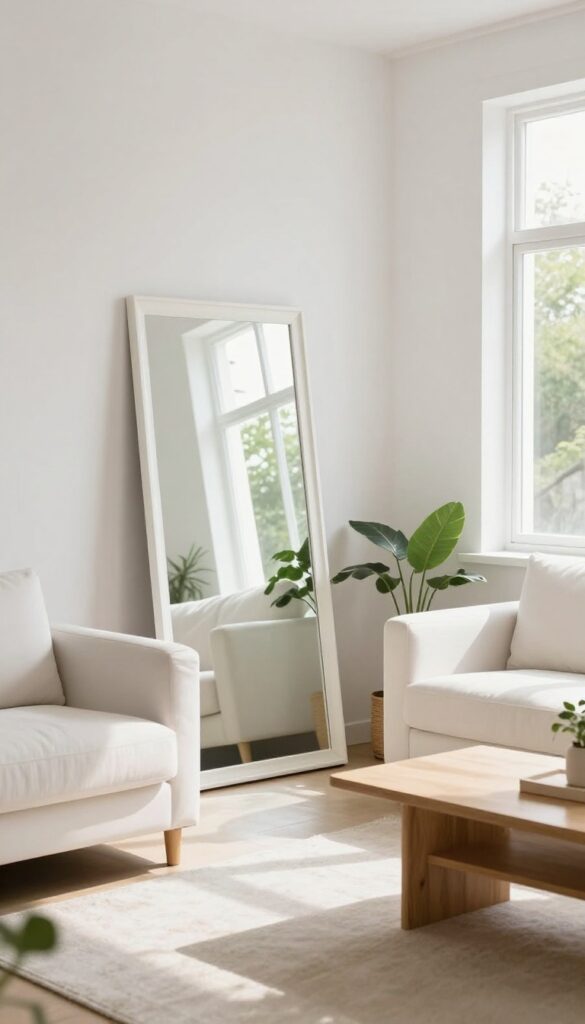
Mirrors are a classic trick for a reason: they bounce light around the room and make a space feel twice as big. In a white living room, a well-placed mirror can amplify that airy, calm vibe without adding any clutter. The best part?
You don't need to spend much to get the effect. A secondhand mirror with a simple frame can be transformed with a coat of white spray paint, making it look custom and intentional.
A large mirror opposite a window will reflect the view and flood the room with light. This is especially powerful in smaller living rooms where every ray counts. Look for mirrors at thrift stores, garage sales, or online marketplaces—often for under $20.
If the frame is outdated or the wrong color, a quick spray paint refresh in matte white or soft cream ties it into your white-on-white scheme. The result is a brighter, more open space that feels thoughtfully styled without a designer budget.
Placement Tip
Hang your mirror directly across from the largest window in the room. Angle it slightly downward if needed to catch the most daylight. Avoid placing it where it will reflect a cluttered area or a blank wall—you want it to bounce light, not mess.
Budget-Friendly Swap
- Skip expensive decor stores and head to charity shops or flea markets. A mirror with a chipped or dated frame is perfect for a DIY makeover. Sand lightly, wipe clean, and spray-paint in a flat white finish.
- It takes an afternoon and costs next to nothing.
Styling Detail
Lean a large mirror against the wall for a casual, collected look. This works especially well on a fireplace mantel or behind a console table. Add a small plant or stack of books at its base to anchor the arrangement and soften the reflective surface.
4. Choose Low-Profile Furniture to Keep Sightlines Open
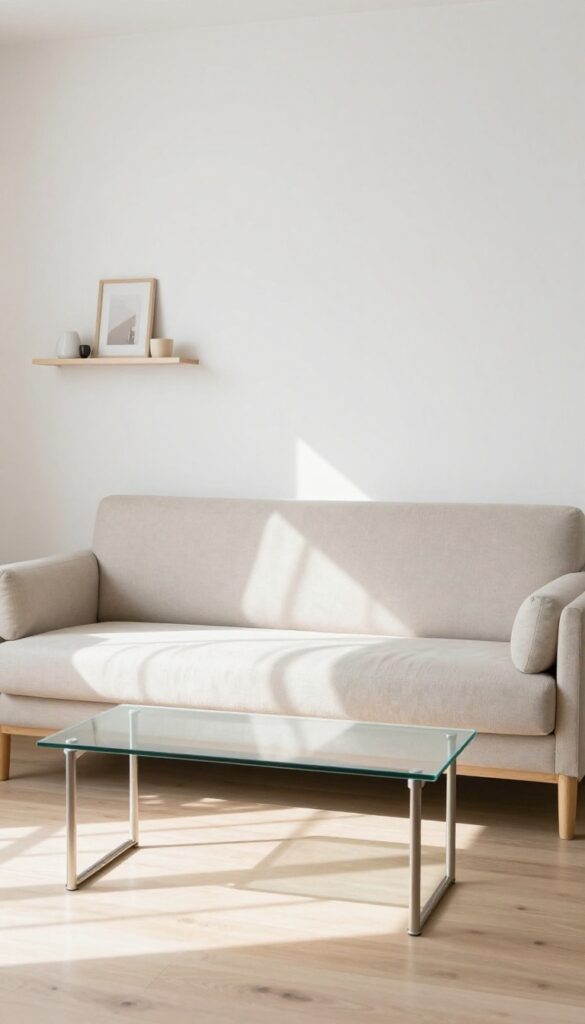
Bulky furniture can make a small living room feel even smaller. When you swap out that deep sofa or chunky entertainment unit for something lower to the ground, the whole space breathes easier. Low-profile pieces let your eyes travel across the room without hitting visual roadblocks, which instantly makes the ceiling feel taller and the floor plan more open.
The best part? This trick works beautifully on a budget because you don't need expensive designer pieces—just smart proportions.
The key is selecting furniture that sits lower and lighter. A sofa with exposed legs and a low back, for example, creates a sense of airiness underneath and above. Instead of a massive media console, try a slim console table or even a wall-mounted shelf for your TV and accessories.
This approach keeps the visual weight at the bottom of the room, drawing the eye upward and making the whole space feel more expansive. It's a simple shift that costs little but changes everything.
Best Furniture Shapes
- Look for sofas and armchairs with slender legs and low profiles. Mid-century modern styles are perfect—they often have tapered legs and sit just 15 to 18 inches off the ground. Avoid deep, overstuffed cushions that push the seat height higher.
- For tables, choose slim, open designs like a glass-top coffee table or a metal-framed console. The goal is to see floor space between the furniture and the ground.
Budget-Friendly Swap
- You don't need to replace everything. Start with the largest piece: your sofa. If buying new isn't an option, try removing the bulky skirt or replacing chunky legs with slimmer ones from a hardware store.
- For media storage, swap a heavy cabinet for a simple wall-mounted shelf or a low bookcase that sits directly on the floor. These changes cost under $50 but make a huge visual difference.
Finishing Touch
- Once your furniture is low-profile, add a tall floor lamp or a vertical piece of art to draw the eye upward. This balances the low horizontal lines and emphasizes the height of the room. A tall plant like a fiddle-leaf fig or a slim floor mirror also works wonders.
- Keep the floor around the furniture clear—no clutter—so the open sightlines remain uninterrupted.
5. Add Greenery for a Fresh Pop of Life
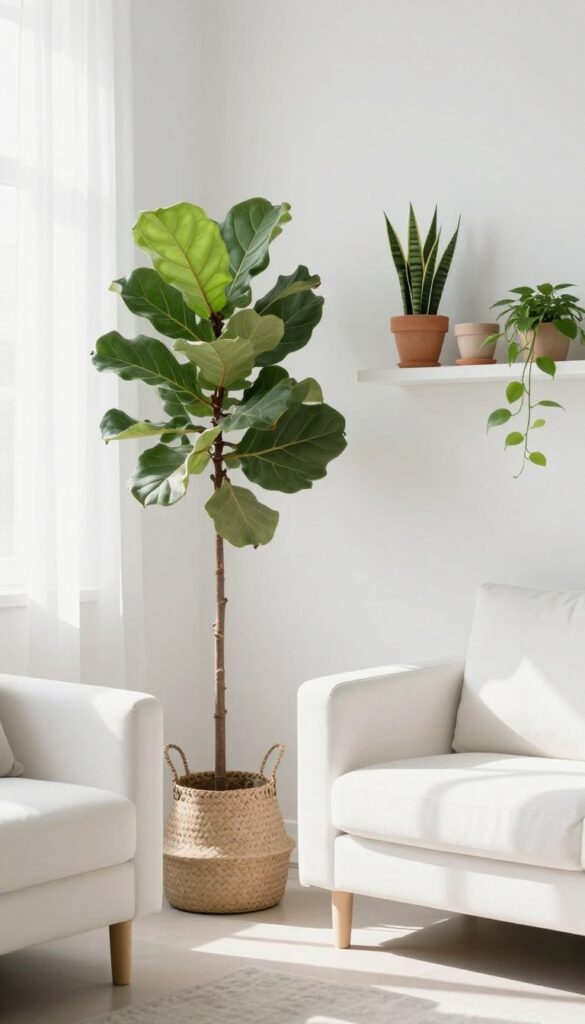
White rooms can sometimes feel a little too clean, almost clinical. The fix is easy: bring in plants. A tall fiddle-leaf fig in a corner or a cluster of small pots on a shelf instantly adds organic contrast and makes the space feel lived-in.
Plus, plants are one of the most budget-friendly ways to introduce color and texture without committing to permanent changes.
Plants breathe life into a white living room, softening hard edges and adding layers of green that feel fresh and calming. You don't need a green thumb or a big budget—low-maintenance varieties like snake plants, pothos, or ZZ plants thrive with minimal care and cost little. Place a large floor plant next to a sofa or armchair to anchor the seating area, or group smaller pots on a floating shelf for a curated look.
The key is to let the greenery stand out against the white backdrop, so choose pots in neutral tones like terracotta, matte black, or woven baskets to keep the focus on the leaves.
Best Plants For Low Light
Not every white living room gets tons of natural light. For darker corners, go with snake plants, pothos, or ZZ plants—they thrive in low light and need water only every couple of weeks. These are also the most affordable options, often available for under $15 at local nurseries or big-box stores.
Styling Tip: Vary Heights
Create visual interest by mixing plant heights. Use a tall stand for a fiddle-leaf fig, a mid-height pedestal for a snake plant, and small tabletop pots for succulents or trailing pothos. This layering draws the eye around the room and makes the greenery feel intentional, not just an afterthought.
Budget-Friendly Swap
- If live plants feel like too much commitment, high-quality faux plants can look just as good. Look for ones with realistic leaves and natural-looking stems—silk or preserved options are best. Place them in a woven basket or ceramic pot, and no one will know they're fake.
- This swap costs a bit upfront but lasts for years.
6. Incorporate Woven Baskets for Stylish Storage
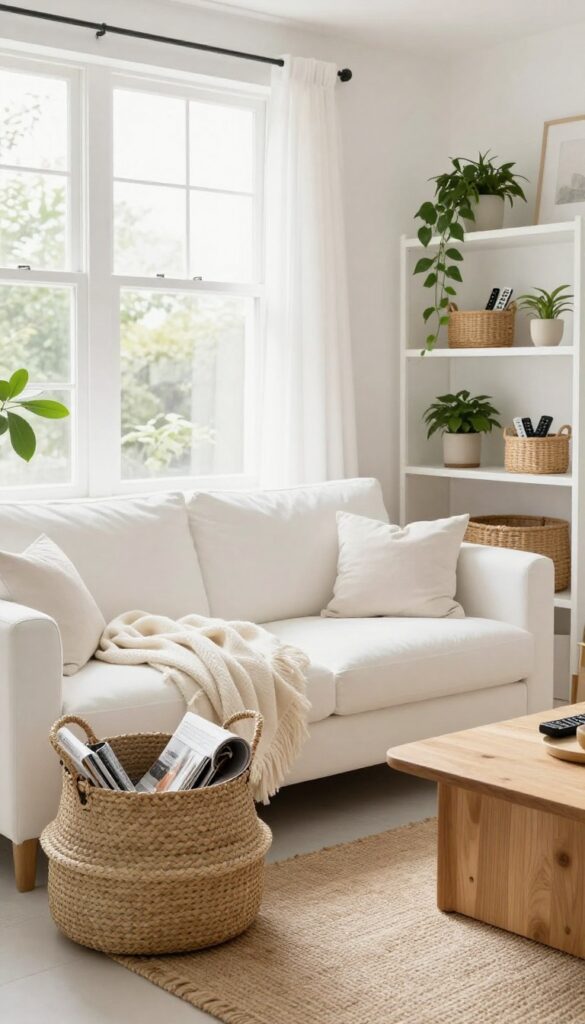
Woven baskets are the unsung heroes of living room organization. They bring natural texture and warmth to a white space, while quietly hiding all the clutter that tends to pile up. The best part?
You can find them for next to nothing at thrift stores, garage sales, or dollar stores, making this one of the most budget-friendly upgrades you can make.
A few well-placed baskets can transform a tidy room into one that feels intentionally styled. They soften the clean lines of modern furniture and add a layer of cozy, organic texture that keeps a white living room from feeling sterile. Plus, they're incredibly versatile—use them to store throw blankets, stack magazines, corral kids' toys, or even hide remote controls and charging cables.
The key is to choose baskets in natural tones like seagrass, rattan, or jute, which complement a white palette without competing with it. For a cohesive look, stick to one or two basket styles and repeat them throughout the room. A large basket next to the sofa can hold extra throws, while a smaller one on a shelf can keep odds and ends out of sight.
If you're on a tight budget, check discount stores or online marketplaces—often you can find quality baskets for under $10 each. Just give them a quick wipe-down and they're ready to go.
Where To Place Them
- Think about the spots where clutter naturally accumulates. Next to the sofa is a prime spot for a large basket to stash blankets or pillows. Under a console table, a row of baskets can hide kids' toys or extra electronics.
- On open shelving, a small basket can corral remotes, coasters, or reading glasses. The goal is to make storage feel intentional, not like an afterthought.
Budget-Friendly Swap
If you can't find woven baskets in your price range, consider using fabric bins or even clean cardboard boxes covered in natural jute rope. Another option is to spray-paint thrifted wire baskets in a neutral tone—they'll add texture with a more modern edge. The idea is to get the look without overspending.
Texture Mix Tip
Pair woven baskets with other natural materials like linen, wood, or cotton to create a layered, inviting space. In a white living room, the contrast of rough weave against smooth walls or sleek furniture adds visual interest. Just keep the color palette warm and neutral to maintain that airy, calm feel.
7. Swap Heavy Curtains for Sheer Panels
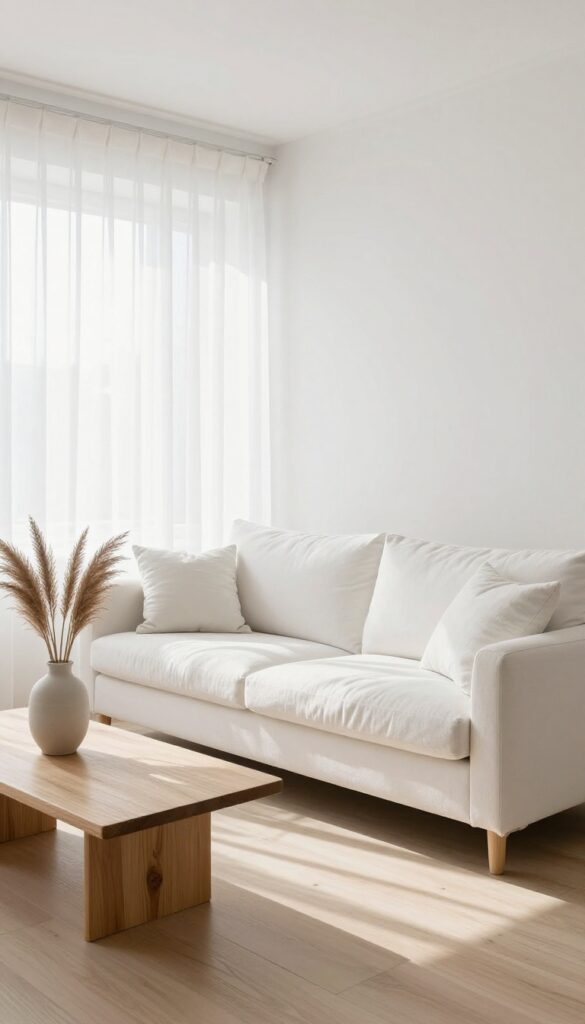
Heavy drapes can make a room feel smaller and darker, especially in a white living room where the goal is openness. Swapping them for sheer white panels is one of the quickest ways to let light bounce around the space. The result is a room that feels bigger, fresher, and more connected to the outdoors.
Sheers are also forgiving—they hide minor window flaws and soften harsh views without blocking light.
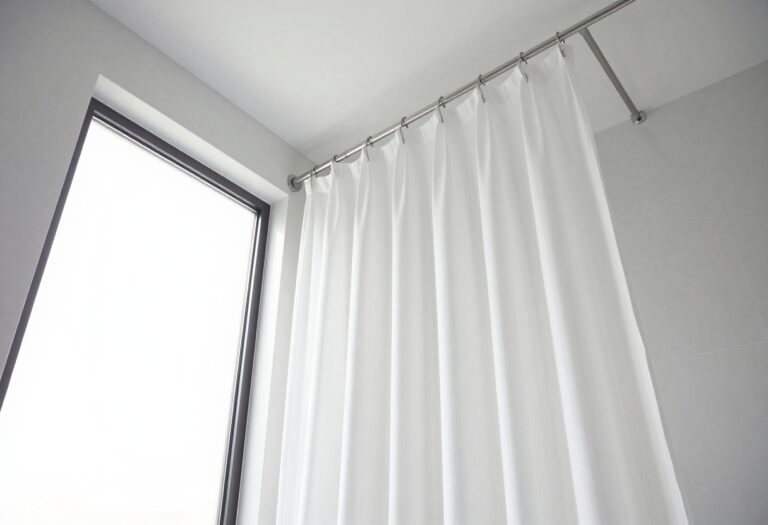
Sheer white curtains soften sunlight and create an airy feel. They're inexpensive and easy to install. For a custom look, buy extra-long panels and hem them yourself.
This simple swap can make your living room feel instantly larger and more inviting, all without breaking the bank.
Best Fabrics For An Airy Look
Look for polyester blends or linen-look sheers that hold their shape without wrinkling. Avoid stiff fabrics that don't drape well. A slight texture, like a subtle weave or faint stripe, adds visual interest without competing with the white palette.
Hanging Trick For Height
Mount the rod as close to the ceiling as possible—this draws the eye upward and makes the room feel taller. Let the panels puddle slightly on the floor for a relaxed, custom look, or hem them to skim the floor for a cleaner finish. Either way, extra length gives you flexibility.
Budget-Friendly Swap
You don't need expensive custom drapes. Store-bought sheer panels are affordable, and hemming them yourself is a simple DIY. For a polished touch, use clip rings instead of traditional rod pockets—they're cheap and make sliding the curtains effortless.
8. Paint an Accent Wall in a Soft Neutral
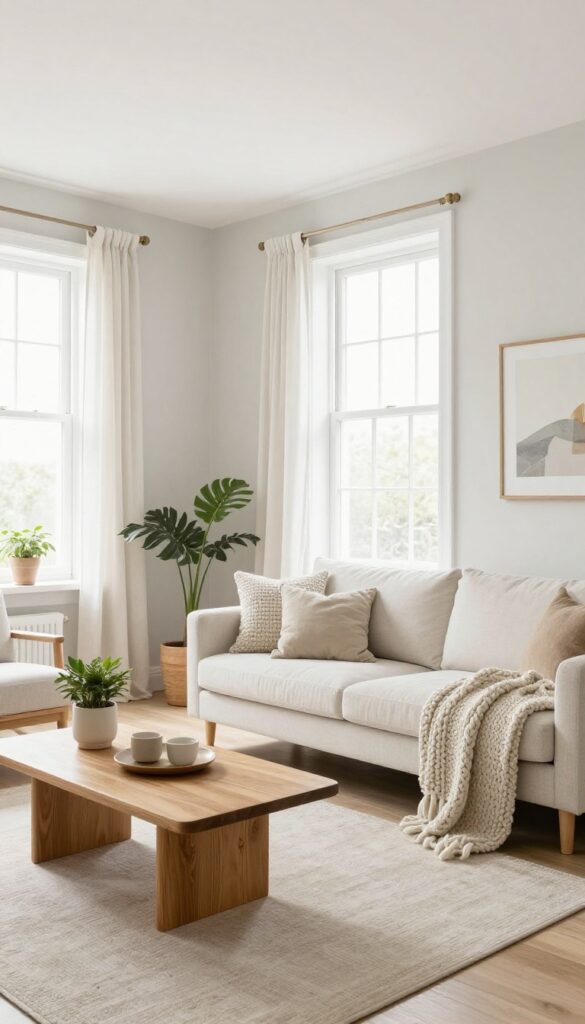
Accent walls usually get a bad rap for being too bold or trendy, but they don't have to scream for attention. A soft neutral accent wall—think pale gray, warm beige, or dusty blush—adds just enough contrast to keep an all-white room from feeling flat or sterile. It's a subtle shift that gives the space a grounded, intentional feel without overwhelming the airy palette.
And if you have leftover paint from another project, this is an easy way to use it up and save a few dollars.
A soft neutral accent wall works best when it's the only major color departure in the room. Keep the rest of the walls white or off-white, and let the accent wall act as a quiet anchor. This is especially effective in living rooms with lots of natural light, where the neutral tone will shift throughout the day—looking warmer in the morning and cooler in the afternoon.
It's a low-commitment way to test a color you love without painting the whole room, and it pairs beautifully with white furniture, natural wood, and textured textiles.
Best Colors
- Stick with hues that have a clear undertone to avoid looking muddy. Pale greige (gray + beige) is a safe bet that reads as sophisticated and warm. For a hint of warmth, try a blush with brown undertones rather than pink.
- A soft dove gray works well in north-facing rooms, while a creamy beige suits south-facing spaces. Avoid anything too yellow or too cool—you want the wall to feel like a natural extension of the white, not a separate statement.
Budget-Friendly Swap
- Check your garage or basement for leftover paint from a previous project. Even a half-gallon is usually enough for one accent wall if you're painting a standard-sized living room. If you don't have leftovers, ask a local paint store for mistints—they often sell perfectly good paint at a steep discount.
- Another trick: use a sample pot in a larger size (like a quart) and thin it slightly with water to stretch coverage. The finish should be matte or eggshell to keep the look soft and light-reflective.
Finishing Touch
- Once the accent wall is up, style it with a few carefully chosen pieces that echo the new color. A ceramic vase in a similar tone, a woven wall hanging, or a slim console table with a neutral lamp can tie the wall into the rest of the room. Avoid cluttering the wall with too much art or decor—the whole point is to let the color breathe.
- One or two simple accents will make the wall feel intentional, not empty.
9. Display White Ceramics and Glassware
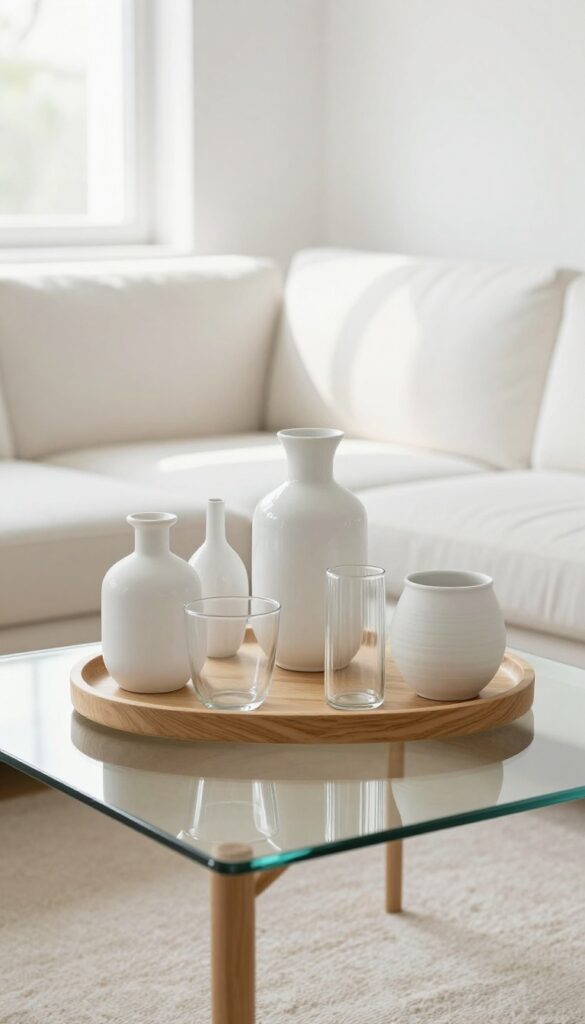
Grouping white ceramics and glassware together creates a serene, sculptural vignette that feels intentional without trying too hard. The neutral palette keeps the eye moving smoothly around the room, making even a small coffee table or shelf feel more spacious. Best of all, thrift stores are goldmines for white vases, pitchers, and candle holders—often for just a few dollars each—so you can build a collection slowly without blowing your budget.
White ceramics and glassware bring a clean, airy feel to any living room. Their uniform color creates a cohesive look, while the variety of shapes and textures—smooth porcelain, ribbed glass, matte stoneware—adds subtle visual interest. Group them in odd numbers on a coffee table tray, a console, or a floating shelf for a gallery-like display.
The monochrome palette also makes it easy to swap pieces in and out as you find new treasures. To keep the look smart and space-aware, edit ruthlessly: a tight cluster of three to five items reads as curated, not cluttered.
Where To Hunt For Bargains
- Thrift stores, estate sales, and flea markets are your best friends here. Look for plain white pieces with no logos or busy patterns—classic shapes like bud vases, urn forms, and cylindrical candle holders work best. Don’t worry about minor chips or crazing; those can add character.
- A quick soak in bleach water removes any stains, and a coat of matte spray paint can refresh faded finishes.
Styling For Maximum Impact
- Arrange your ceramics on a wooden tray or a stack of coffee-table books to give them a grounded base. Vary the heights by using small pedestals or upturned bowls underneath shorter pieces. For glassware, cluster clear or frosted pieces together on a windowsill to catch natural light.
- Keep the arrangement tight—spacing items too far apart makes the display feel sparse.
Budget-Friendly Swap
- If you can’t find enough thrifted pieces, supplement with inexpensive white vases from dollar stores or IKEA. Spray-paint them with a matte white finish to match your collection. Another trick: use plain white mugs or small bowls as impromptu catchalls for remotes or coasters.
- They’ll blend right into the display while serving double duty.
10. Use Floor Lamps to Brighten Dark Corners
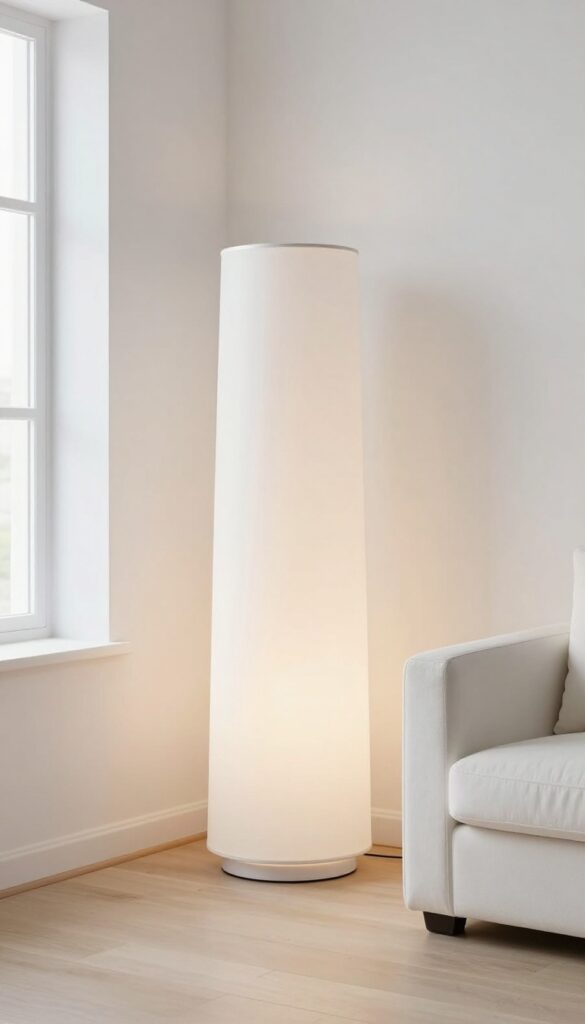
Even in a white living room, shadows can creep into corners and make the space feel smaller than it is. A tall floor lamp with a white or light-colored shade bounces light around the room, softening edges and opening up the area. For budget-friendly options, check big-box stores or online retailers—you don't need a designer piece to get the effect.
Place a floor lamp in a corner that gets little natural light, especially one that's opposite the main light source. This balances the brightness and prevents any one spot from feeling cave-like. Look for lamps with adjustable heads or dimmers so you can control the mood.
A slim, minimalist design works best in tight spaces, while a sculptural base can double as art.
Best Placement
Target corners near seating areas or behind an armchair. If your room has a dark nook by the window, angle the lamp toward the center of the room to spread light evenly. Avoid placing it directly next to a TV or mirror, which can create glare.
Budget-Friendly Swap
Skip expensive designer lamps and look for simple metal or wood bases with a drum shade. Stores like IKEA, Target, and Walmart have options under $50. You can even spray-paint a thrifted lamp base white to match your room's palette.
Lighting Tip
Use a warm white bulb (2700K–3000K) to keep the room feeling cozy, not clinical. A higher lumen output (800–1100 lumens) helps brighten the corner without being harsh. If the lamp has a three-way switch, you can adjust brightness throughout the day.
11. Keep Surfaces Minimal with a Tray System
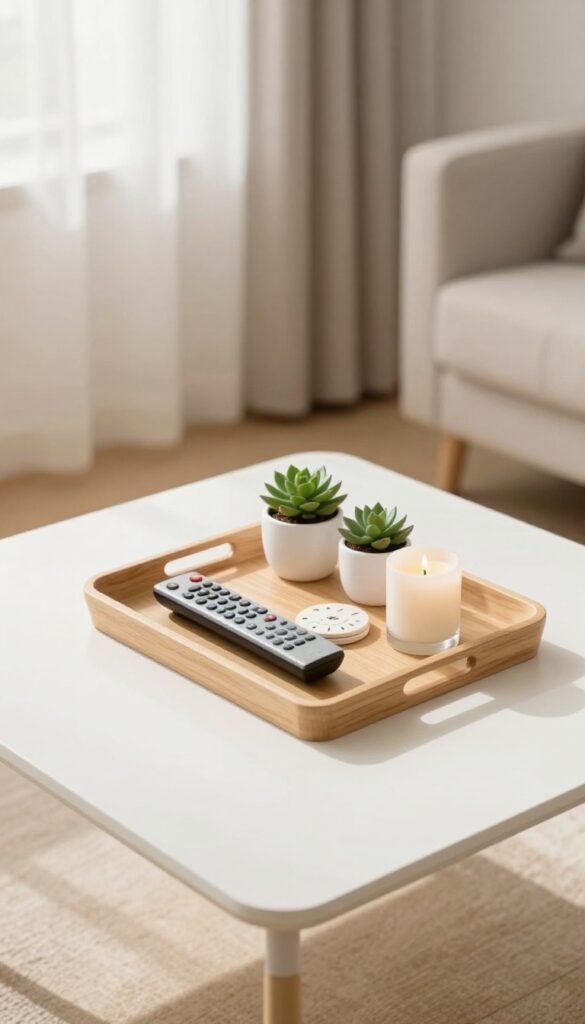
A coffee table that's covered in loose remotes, coasters, and random odds and ends can make even the most stylish room feel cluttered. The fix is simple: grab a tray. A large tray on your coffee table corrals all those little essentials into one neat zone.
It keeps everything handy without letting visual chaos take over. Plus, a nice wooden or metal tray adds a polished finishing touch that ties the whole look together.
Using a tray is one of the easiest ways to keep your living room looking tidy without sacrificing convenience. It creates a designated spot for remotes, coasters, and maybe a small plant or candle. The tray itself becomes a decorative anchor, giving the table a curated feel.
Best of all, this trick works on any surface—side tables, console tables, even ottomans. It's budget-friendly because you can use a tray you already own or find one at a thrift store for a few dollars.
Best Materials
- Wooden trays bring warmth and work well in cozy or Scandinavian-style rooms. Metal trays (brass, black, or silver) lean modern and sleek. For a budget-friendly option, try a woven seagrass or rattan tray—it adds texture and feels relaxed.
- Just make sure the tray is large enough to hold your daily items without overflowing.
What To Put On It
- Stick to the basics: remotes, coasters, and a single decorative object like a small plant or a candle. Avoid piling on too many things—the goal is to reduce clutter, not create a display. If you have a lot of remotes, consider a small caddy or a divided tray to keep them organized.
- A tiny succulent or a short vase with a few stems adds life without taking up space.
Budget-Friendly Swap
- Don't want to buy a new tray? Use a large wooden cutting board, a shallow baking dish, or even a sturdy serving platter. Spray paint an old tray in a matte black or brass for an instant upgrade.
- The key is to choose something with a lip to keep items from sliding off. This hack costs next to nothing and still gives you that clean, organized look.
FAQ
Is white living room decor hard to keep clean?
Not really. Choose washable slipcovers, wipeable surfaces, and easy-care fabrics. A quick weekly dusting and spot cleaning keep things fresh.
White actually shows dirt early, so you can clean it before it builds up.
Can I use white in a small living room?
Absolutely. White makes small spaces feel larger and brighter. Stick to one shade of white and add mirrors to amplify light.
Keep furniture low and minimal to avoid crowding.
What colors go best with white living room decor?
Soft neutrals like beige, gray, and blush work beautifully. Natural wood tones add warmth. For a bolder touch, use navy, forest green, or black in small doses through pillows or art.
How do I make a white living room feel cozy?
Layer textures—think chunky knits, velvet pillows, and a shag rug. Add warm lighting with floor lamps and candles. Introduce wood or rattan elements for a natural, inviting feel.
What's the cheapest way to start a white living room makeover?
Paint the walls white if possible. Then add white curtains, a mirror, and a few thrifted textiles. Swap out dark accessories for white or light ones.
Small changes make a big impact without a big budget.
Conclusion
A bright, airy living room doesn't require a complete overhaul or a huge budget. By focusing on a few key changes—like layering textures, adding mirrors, and choosing low-profile furniture—you can create a calm, inviting space that feels open and serene. Each of these ideas is designed to be practical and affordable, so you can start small and build over time.
Remember, the goal is a room that feels like a retreat, not a showroom. Let your personal style shine through with subtle accents and natural materials.