11 Living Room Shelving Ideas for a Collected Designer Look
Shelving does more than hold your stuff—it sets the tone for the whole room. The right arrangement can make a living room feel collected, cozy, and intentionally layered without looking cluttered.
Whether you’re working with a single floating shelf or a wall of built-ins, small styling choices go a long way. These 10+ ideas focus on creating warmth and depth through texture, balance, and everyday objects you already love.
No complicated DIY required, just smart tweaks that make your shelves feel like part of the room’s story.
1. Mix Open and Closed Storage for Visual Balance
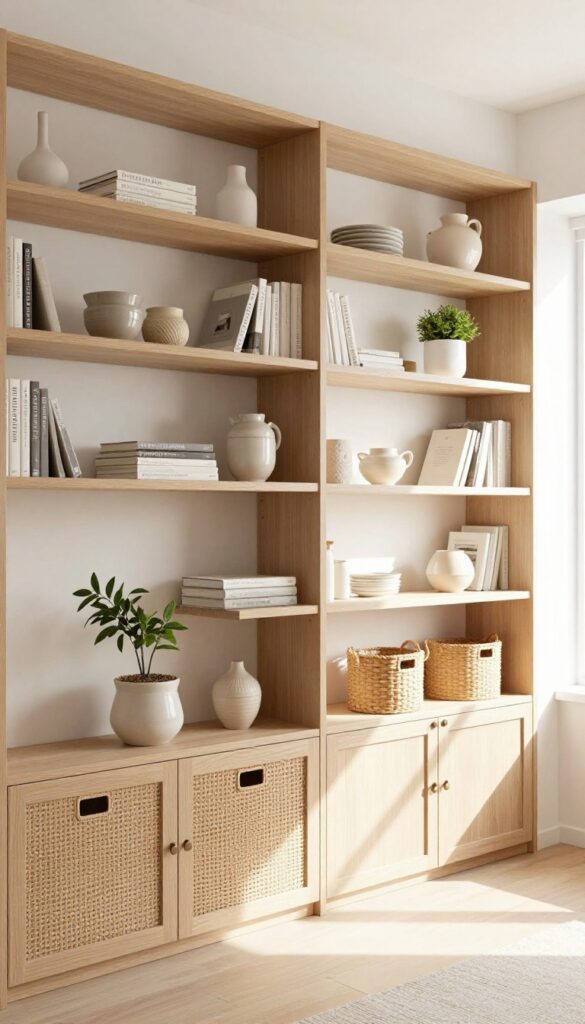
Shelving doesn’t have to be all or nothing. By blending open display areas with closed storage, you get the best of both worlds: a place to show off your favorite decor and a way to hide the everyday clutter. This approach keeps your living room looking polished without feeling like a museum.
The mix of visible and hidden creates a natural rhythm that makes the whole setup feel intentional and lived-in.
Why It Works
Open shelves let you rotate decor and keep things feeling fresh, while closed cabinets or baskets catch the overflow—remotes, papers, kids’ toys. That balance prevents the space from looking messy or too sparse. It also adds depth, because your eye moves between the solid doors and the open cubbies, making the wall feel more dynamic.
Best For
This works well in family living rooms where you need to stash everyday items but still want to style a few pretty vignettes. It’s also great for small spaces, because you can maximize storage without making the room feel closed in.
Styling Tip
Keep the open shelves about one-third of your total storage. Use baskets in natural textures like seagrass or linen on the lower shelves to ground the look, and place your prettiest ceramics or books on the upper open sections. Stick to a cohesive color palette so the mix feels curated, not chaotic.
2. Layer Books Horizontally and Vertically
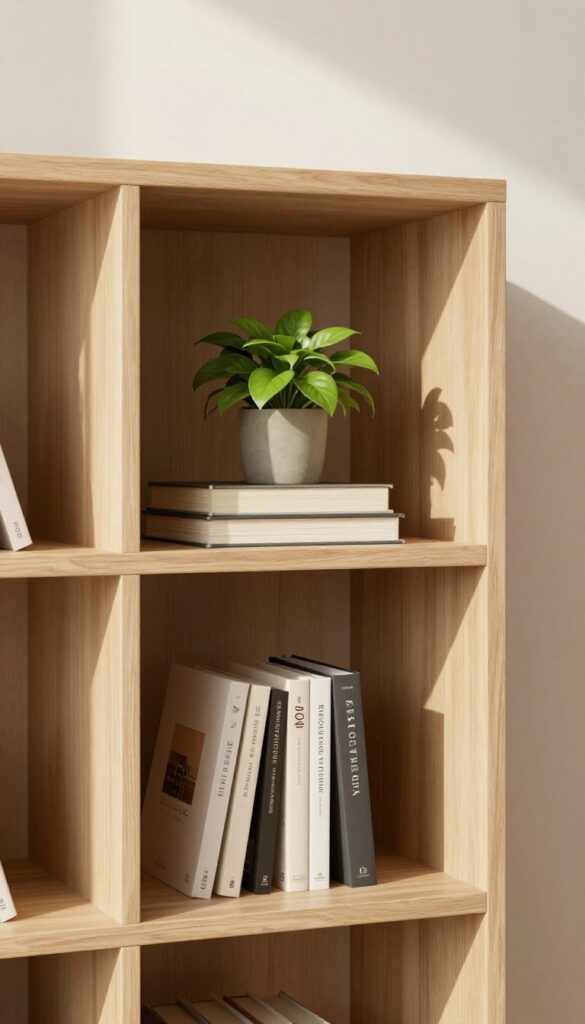
Stack some books flat and stand others upright to break up visual monotony. Add a small plant or ceramic object on top of horizontal stacks for extra texture. This simple trick adds depth and makes your shelves feel curated rather than cluttered.
Why It Works
Mixing orientations creates visual rhythm and prevents rows of books from looking like a library. The horizontal stacks also serve as mini pedestals for decorative objects, adding layers of height and interest without extra effort.
Best For
This idea works beautifully on any shelf but shines on open bookcases or media units where you want a lived-in, collected look. It’s especially effective in living rooms where shelves double as display space.
Styling Tip
Keep horizontal stacks to three to five books max so they don’t overwhelm the shelf. Place a small plant, a candle, or a ceramic catchall on top to anchor the arrangement and tie in other room colors.
3. Use Baskets and Natural Textures for Warmth
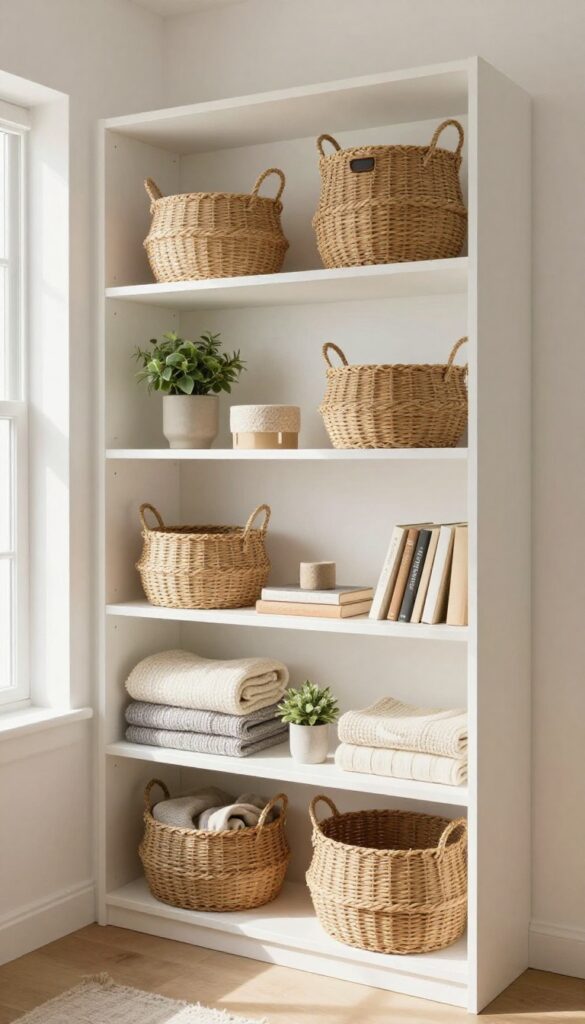
Woven baskets are one of those rare decor pieces that look good while doing the heavy lifting. Tuck them onto lower shelves to hide remote controls, throw blankets, or kids’ toys, and suddenly your living room feels more organized without sacrificing style. The natural fibers—seagrass, rattan, or water hyacinth—add warmth that balances out sleek shelving or neutral walls, making the whole space feel grounded and lived-in.
It’s an easy way to layer texture without cluttering your surfaces.
Why It Works
Baskets bring organic texture that softens the hard lines of shelves and furniture. They also solve the age-old problem of visible clutter by providing discreet storage that’s still easy to access. The combination of function and natural warmth makes the room feel cozy and intentional.
Best For
This idea is perfect for busy households where you need quick storage for everyday items. It also works well in living rooms with a bohemian, farmhouse, or Scandinavian vibe, but can adapt to any style when you choose baskets in neutral tones.
Styling Tip
Mix basket sizes and weaves for visual interest—pair a chunky seagrass basket with a finer rattan one. Keep them on the bottom two shelves so they anchor the display, and layer a small plant or stack of books on top for a styled look.
4. Create a Gallery Wall Effect on Your Shelves
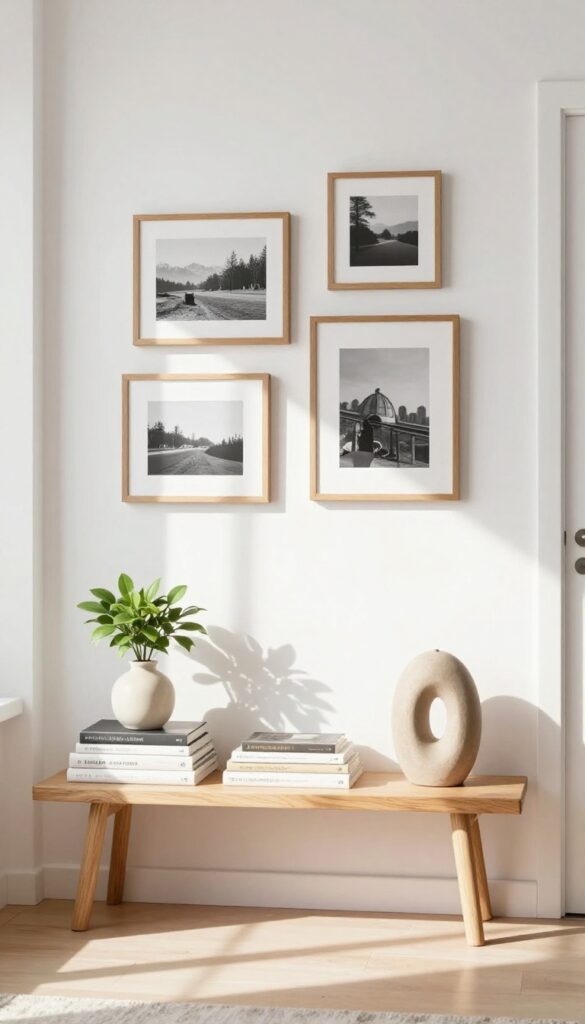
Gallery walls are wonderful, but they require a lot of planning, measuring, and nail holes. A simpler approach that delivers the same curated feel is to treat your shelves like a mini gallery. Lean small framed art or photos against the back of the shelf, letting them rest naturally against the wall.
Then layer books, small plants, or ceramic objects in front. The result is a collected-over-time look that feels personal and effortless—no level required.
Why It Works
Layering art on shelves creates depth and visual interest without the commitment of hanging frames. It makes the shelves feel intentional and lived-in, like you’ve gathered pieces over years. The overlapping elements draw the eye across the shelf, encouraging a slower, more thoughtful look.
Best For
This idea works especially well in living rooms or reading nooks where you want a relaxed, curated vibe. It’s perfect for renters who can’t put holes in walls, or for anyone who likes to swap out art seasonally without hassle.
Styling Tip
Stick to a cohesive color palette for your frames and art to keep the look polished. Mix in a few black-and-white photos with muted tones. Prop frames at slightly different angles for a casual feel, and vary the heights by placing some on stacks of books.
5. Incorporate Greenery for Life and Color
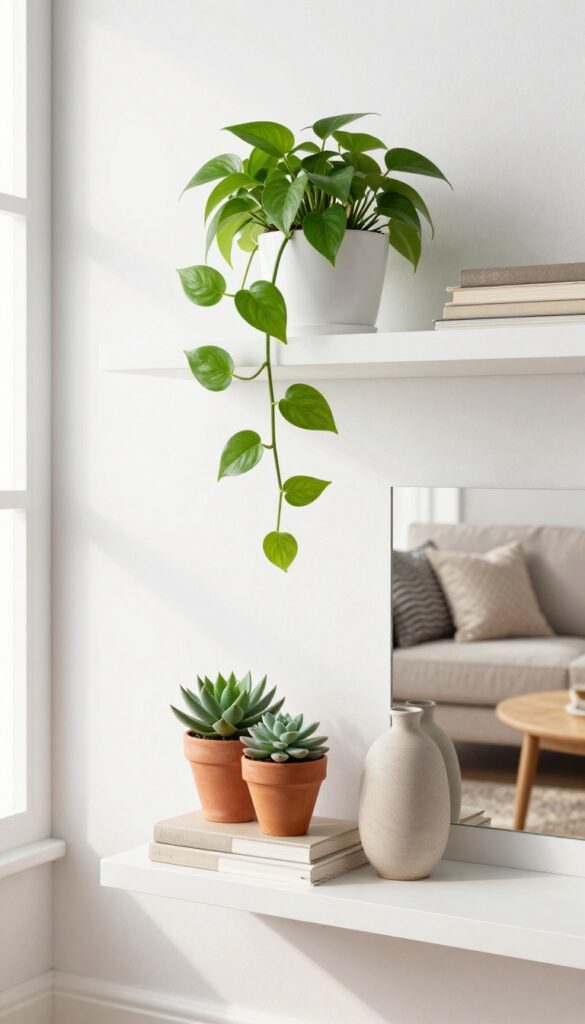
Plants do more than just look pretty—they breathe life into a room. Trailing varieties like pothos or small potted succulents soften the hard lines of shelving and add a fresh, organic touch. The key is choosing neutral pots that blend in, letting the greenery take center stage without visual clutter.
Why It Works
Greenery introduces natural color and texture that contrasts beautifully with books, ceramics, and wood. It makes shelves feel less like storage and more like a curated display, while also improving air quality and mood.
Best For
This idea works well in living rooms that feel a bit too sterile or modern. It’s especially effective on floating shelves or open bookcases where plants can cascade down, adding softness and movement.
Styling Tip
Mix trailing and upright plants for variety. Use terra-cotta or matte white pots to keep the look cohesive. Group a few small succulents together on one shelf for impact, then let a pothos drape from a higher shelf to draw the eye upward.
6. Play with Asymmetry for an Effortless Vibe
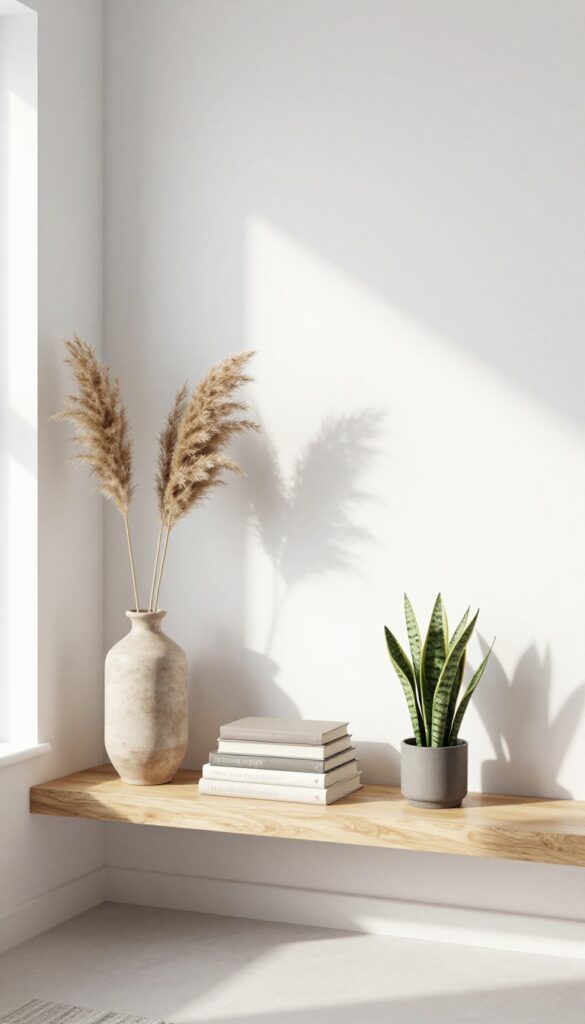
Perfectly symmetrical shelves can feel a bit stiff—like they’re trying too hard. Asymmetry, on the other hand, brings a relaxed, collected-over-time feel that makes a space instantly more inviting. Group items in odd numbers and vary heights to create a natural rhythm that draws the eye without feeling forced.
This approach works especially well when you want your shelves to look curated but not fussy, practical but still polished.
Why It Works
Asymmetry mirrors how we naturally arrange things in real life—a stack of books here, a small plant there. It breaks up visual monotony and adds a sense of movement, making the whole composition feel organic and easy to live with.
Best For
This idea shines in living rooms where you want a relaxed, lived-in look. It’s perfect for open shelving, bookcases, or even floating shelves above a desk or console table.
Styling Tip
Start with a few larger anchor pieces, like a chunky vase or a stack of coffee table books, then layer in smaller objects. Use varying heights—tall candlesticks next to a low bowl—to keep the eye moving. And don’t be afraid to leave a little empty space; it helps each item breathe.
7. Add Task Lighting to Highlight Displays
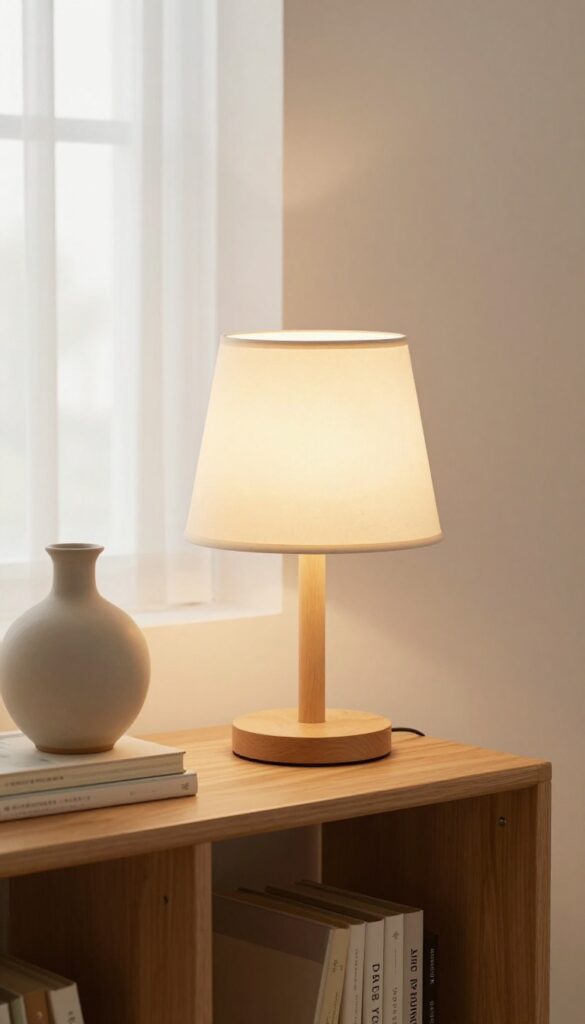
Shelves can feel flat without the right lighting. A small clip-on lamp or a slim LED strip changes everything, casting warm light across your favorite objects and making the whole room feel cozier in the evening. It’s an easy upgrade that adds depth and turns your shelves into a focal point after dark.
The best part is that you don’t need to rewire anything—just plug in or use battery-operated fixtures for instant atmosphere.
Why It Works
Task lighting draws the eye to what matters most on your shelves, whether it’s a ceramic vase, a stack of books, or a framed photo. The directed glow creates shadows and highlights that add visual interest, while warm bulbs keep the space inviting rather than harsh. It also helps the room feel layered and lived-in, especially when the overhead lights are off.
Best For
This idea works wonderfully for living rooms where you want to create a cozy evening vibe without turning on bright ceiling lights. It’s also great for bookshelves in darker corners or for displaying collectibles that deserve a little spotlight.
Styling Tip
Opt for warm white bulbs (around 2700K) to keep the glow soft and golden. Position clip-on lamps at different heights—one near the top shelf and another lower down—to create a balanced, gallery-like effect. If using LED strips, hide them along the front edge of each shelf so the light bounces off the objects, not into your eyes.
8. Style in Threes for a Curated Look
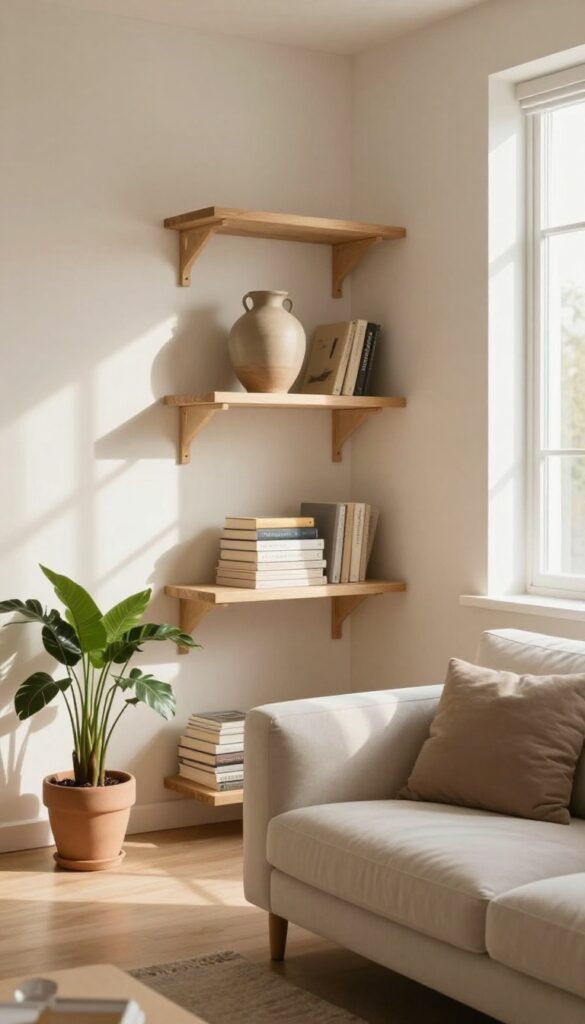
Grouping objects in threes is one of those styling tricks that instantly makes a shelf look intentional. The rule is simple: choose three items in varying heights—tall, medium, short—and arrange them together. This creates a visual triangle that draws the eye naturally, giving your shelves a balanced, curated feel without overthinking.
It’s a go-to move for adding layers and depth, especially in a cozy living room where you want things to feel collected but not cluttered.
Why It Works
Our brains are wired to find trios pleasing—they feel complete and harmonious. By varying heights, you create rhythm and prevent items from blending into a flat line. This trick works with almost any decor style and makes even everyday objects look like intentional decor.
Best For
This is perfect for open shelves, bookcases, or console tables where you want to display a mix of decor and functional items. It’s especially useful in living rooms where you need to balance visual interest without overwhelming the space.
Styling Tip
Start with your tallest item at the back or center, then layer a medium piece in front, and finish with a short object off to the side. Play with textures—wood, ceramic, metal—to add depth. For a cozy feel, include a small plant or a stack of books as one of the trio.
9. Use Neutral Backdrops to Let Objects Pop
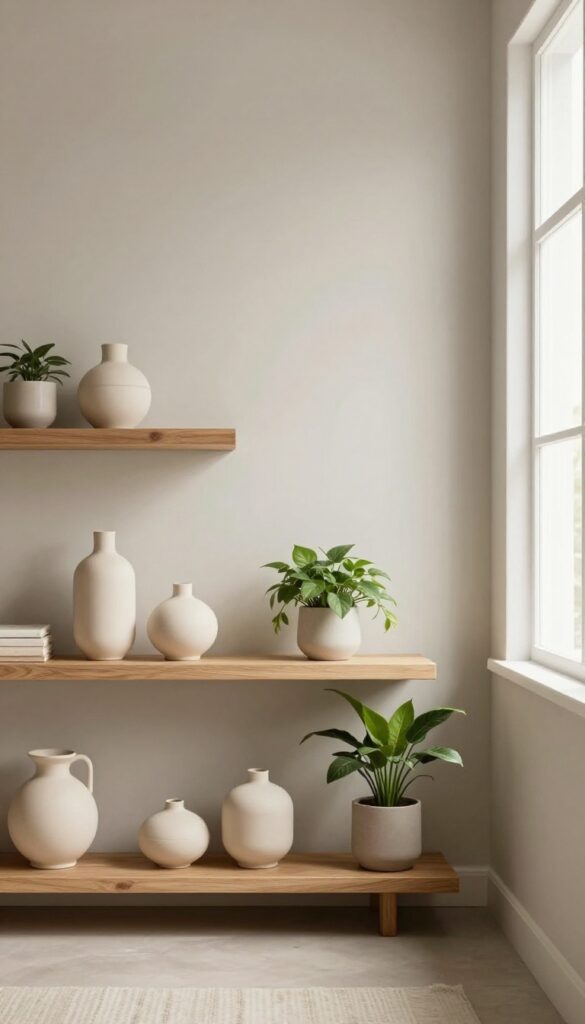
A simple trick that instantly upgrades your shelves: paint the inside back a soft neutral or a slightly deeper shade than your wall. It creates a subtle frame around your objects, making them stand out without any bold color competition. For a cozy, layered look, try a warm greige or a muted clay tone—it adds depth while keeping the overall feel calm and inviting.
Why It Works
The contrast between the backdrop and your items draws the eye to each piece, giving your shelves a curated, intentional feel. It’s an easy way to add visual interest without cluttering the space.
Best For
This works especially well in living rooms where you want a polished but relaxed vibe. It’s also great for small shelves where every inch needs to feel purposeful.
Styling Tip
Stick to a cohesive color palette on the shelves—think warm woods, cream ceramics, and a few green plants. The backdrop will tie everything together without overwhelming the eye.
10. Incorporate Personal Mementos with Intention
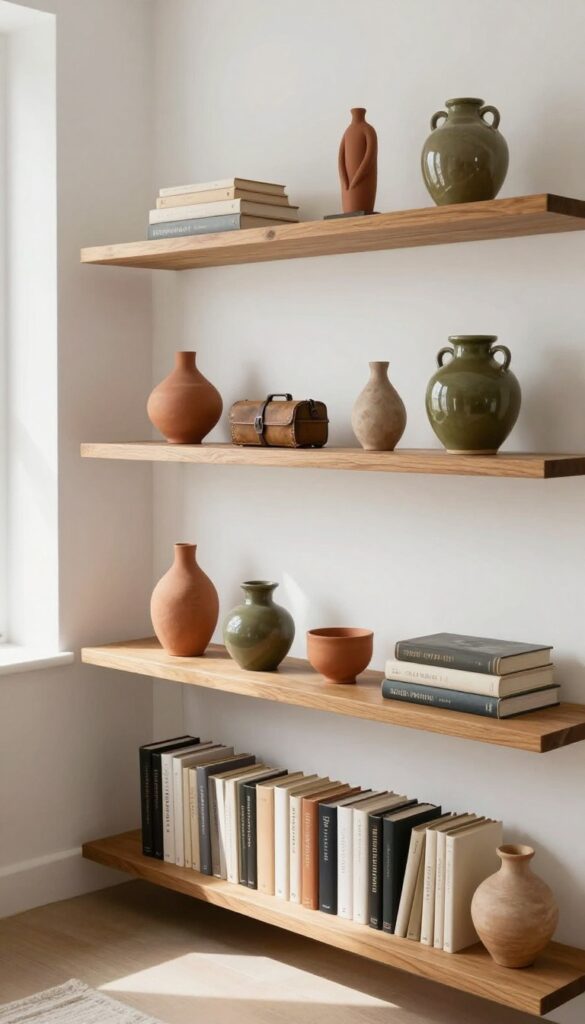
Your shelves don’t have to be all books and store-bought decor. Tucking in a few personal mementos—like a small sculpture from a trip or a piece of handmade pottery—adds warmth and tells your story. The trick is to keep the overall palette cohesive so these items feel like part of the design, not clutter.
When done right, your shelves become a curated gallery of memories that still look polished and intentional.
Why It Works
Personal items instantly make a space feel lived-in and unique, but without a thoughtful approach, they can look messy. By limiting yourself to a few meaningful pieces and sticking to a consistent color story, you get the emotional payoff without sacrificing style. The contrast of a worn travel souvenir against crisp book spines adds texture and character.
Best For
This idea works especially well in living rooms where you want to show off your personality without overwhelming the space. It’s perfect for anyone who has collected items over time and wants to display them in a way that feels curated, not chaotic. Great for renters too, since it doesn’t require permanent changes.
Styling Tip
Group mementos in odd numbers—three small items together often look more balanced. Mix heights by stacking a couple of books under a vase or using a small riser. Keep the color palette of your mementos similar to the books and shelves around them; for example, if your shelves are warm wood, choose souvenirs in earthy tones like terracotta or olive.
11. Float Shelves at Different Heights for Rhythm
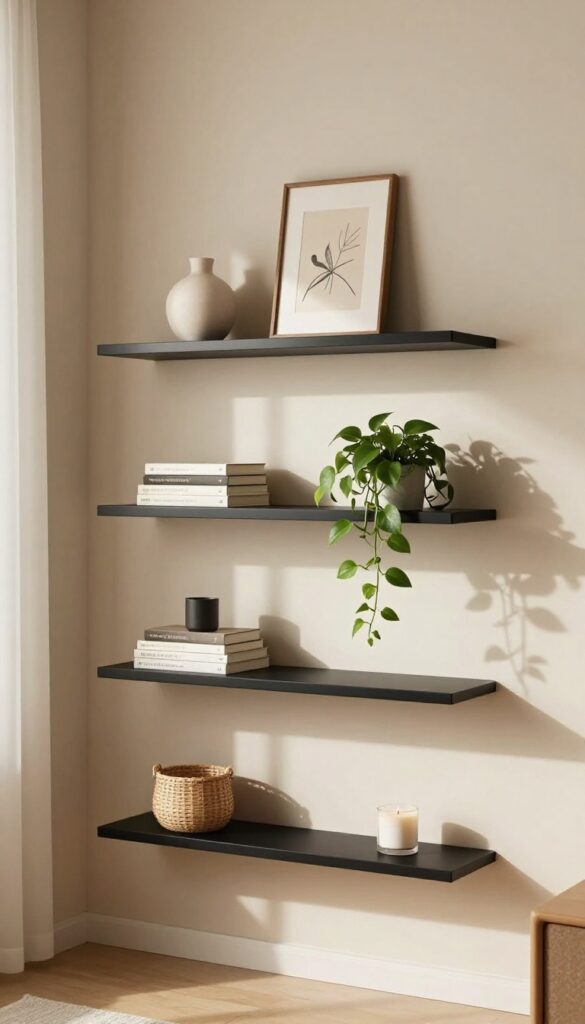
There’s something about staggered floating shelves that instantly makes a wall feel alive. Instead of lining them up in a neat row, try placing them at varying heights to create a sense of movement and surprise. This approach works especially well in a cozy, layered living room where you want each shelf to feel like its own little vignette.
Books on one level, a trailing plant on another, and a small framed art piece on the next—each gets its moment without competing for attention.
Why It Works
Staggering shelves breaks up visual monotony and draws the eye across the wall naturally. The rhythm of different heights adds depth and makes the display feel curated rather than rigid. It’s an easy way to turn a blank wall into a focal point without overwhelming the space.
Best For
This idea is perfect for living rooms with a single empty wall or a narrow alcove that needs personality. It also works great in rental spaces where you can’t paint or add built-ins—floating shelves are low-commitment but high-impact.
Styling Tip
Stick to a cohesive color palette across shelves to keep the look intentional. Mix in a few small ceramic objects or woven baskets for texture, and leave some negative space so each shelf breathes. A warm wood tone or matte black finish for the shelves adds to the cozy, layered feel.
FAQ
How do I style shelves without making them look cluttered?
Start by editing down to your favorite pieces. Use the rule of thirds—group items in odd numbers—and leave some empty space. Mixing closed storage with open shelves also helps contain visual noise.
What are the best materials for living room shelves?
Wood adds warmth, while metal or glass feels more modern. For a cozy look, go with natural wood finishes or painted wood in warm neutrals. Floating shelves in solid wood are a versatile choice.
How high should I hang shelves in a living room?
Aim for eye level, typically around 57 to 60 inches from the floor to the bottom of the shelf. Adjust based on your ceiling height and the items you plan to display.
Can I mix different shelf styles in one room?
Absolutely. Combining floating shelves with a ladder shelf or a small bookcase adds visual interest. Just keep the color palette or material consistent to tie them together.
How do I make shelves look cozy without being busy?
Focus on texture—baskets, ceramics, wood, and soft fabrics like a folded throw. Stick to a limited color palette and vary heights and shapes to keep the eye moving without overwhelming.
Conclusion
Shelving is one of those small details that can quietly transform a living room. By layering textures, mixing storage, and styling with intention, you create a space that feels both polished and lived-in.
Start with one shelf, experiment with what you already own, and let the room evolve naturally. The goal isn’t perfection—it’s a home that feels warm, personal, and exactly right for you.