12 Small Shared Kids Bedroom Ideas with Smart Zones on a Budget
Sharing a bedroom can be a wonderful adventure for siblings, but making the space work for both personalities takes a bit of thought. When the room is small, every square inch counts—and that’s where smart zoning comes in. The trick is to carve out distinct areas for sleeping, playing, and studying without making the room feel cramped or chaotic.
Budget-friendly doesn’t mean boring. With a little creativity, you can design a room that feels intentional, stylish, and totally livable. Think clever storage, flexible furniture, and color tricks that make the space feel bigger than it is.
Ready to transform that tiny shared bedroom into a functional haven? Here are 12 ideas that balance practicality with personality—all without breaking the bank.
1. Bunk Beds with Built-In Storage Stairs
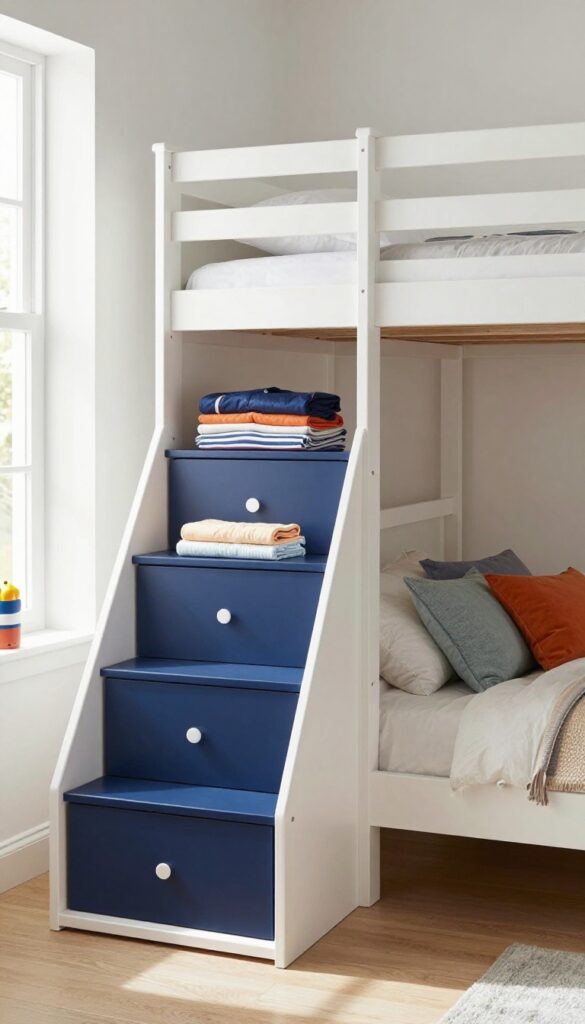
When floor space is tight and two kids are sharing, going vertical is the obvious move. But instead of a basic bunk setup, consider one with storage stairs built right into the frame. Each step pulls out like a drawer, giving each child their own spot for clothes, toys, or extra bedding.
It keeps the room tidy without needing a separate dresser, and the stairs feel safer and more natural for little ones to climb than a ladder.
Why It Works
These stairs turn wasted vertical space into functional storage, eliminating the need for bulky furniture that eats up square footage. Plus, kids can easily access their own belongings without asking for help, encouraging independence and making morning routines smoother.
Best For
Siblings close in age who share a room and need designated storage zones. It's also great for small rooms where a dresser or toy chest won't fit, and for parents who want to reduce clutter without constant nagging.
Styling Tip
Paint the stairs a contrasting color like navy or soft green to make them a design feature. Add a small basket on the top step for items used daily, like a water bottle or favorite book. Keep the bedding neutral with a pop of color in throw pillows to tie the look together.
2. Floor Cushions for a Flexible Play Zone
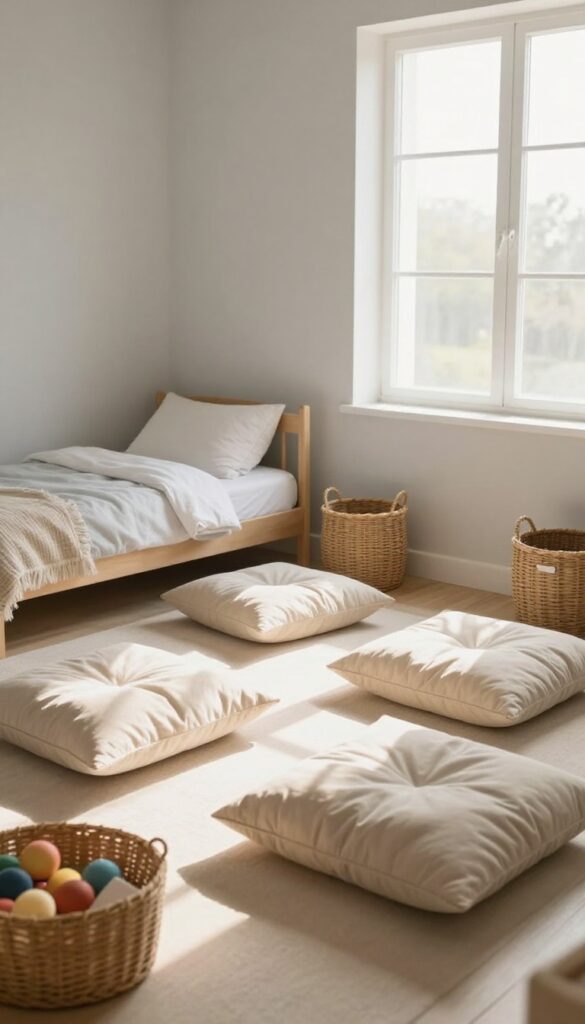
Oversized floor cushions turn an empty corner into a soft, inviting play zone that shifts with your kids' moods. Unlike bulky furniture, these lightweight pillows can be stacked against the wall during the day or scattered for movie nights and fort-building. Choose washable covers in a neutral tone—like warm beige or soft gray—to keep the space looking tidy, even when the cushions are piled high.
Why It Works
Floor cushions define a play area without taking up permanent square footage, which is key in a shared room. They're easy to move, so kids can rearrange them for different activities, and they store flat when not in use. The neutral covers hide stains and blend with any decor, making the zone feel intentional rather than chaotic.
Best For
This idea works well for younger kids who spend a lot of time on the floor playing or reading. It's also great if you need a zone that can transform from a play space to a guest sleeping area—just add a few more cushions for an impromptu sleepover.
Styling Tip
Look for floor cushions with removable, machine-washable covers in a durable fabric like canvas or performance velvet. Add a small, low tray nearby for snacks or toys, and keep a basket for quick cleanup. For a cohesive look, choose cushions that echo the room's main color palette.
3. Wall-Mounted Desks for Twin Study Stations
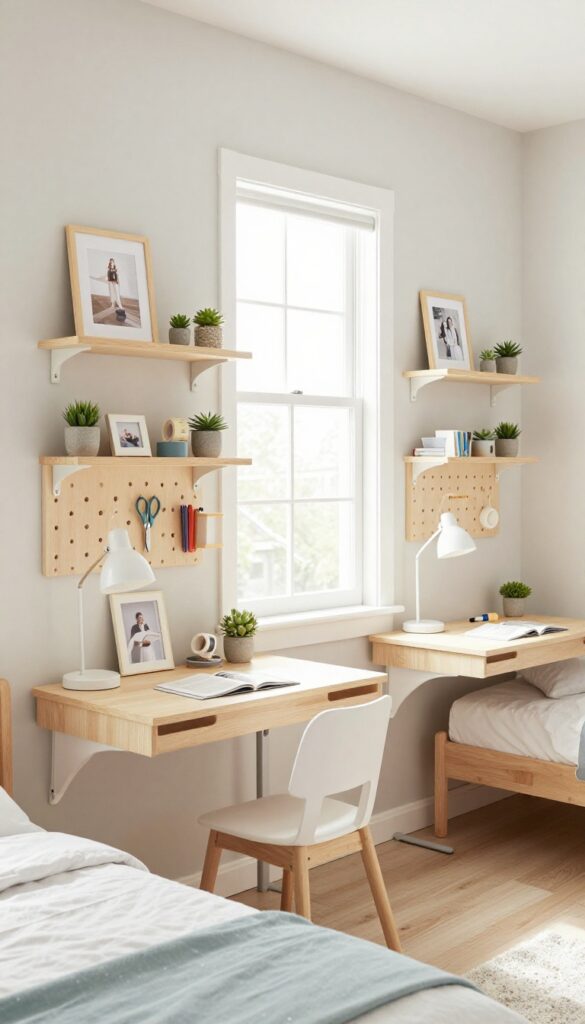
Homework doesn't have to take over the whole room. Wall-mounted desks side by side carve out a focused study zone without stealing floor space. When the books are put away, the desks fold up flush against the wall, leaving the area open for play or bedtime routines.
It's a smart, space-saving move that keeps the room feeling bigger and more organized.
Why It Works
By mounting desks on the wall, you eliminate the bulk of traditional furniture and free up valuable square footage. Each child gets their own dedicated workspace, which reduces squabbling over territory. The fold-up design means the room can transition from study mode to sleep or play mode in seconds.
Best For
Tight shared bedrooms where floor space is at a premium. Ideal for school-aged kids who need a quiet spot for homework but also want room to move around. Works especially well in narrow rooms or against a single long wall.
Styling Tip
Keep the look cohesive by painting both desktops the same neutral color, then let each child add their own touch with a small desk lamp, a framed photo, or a tiny succulent on a floating shelf above. A shared pegboard between the desks can hold scissors, tape, and other supplies within arm's reach.
4. Color-Coded Bins on Open Shelving
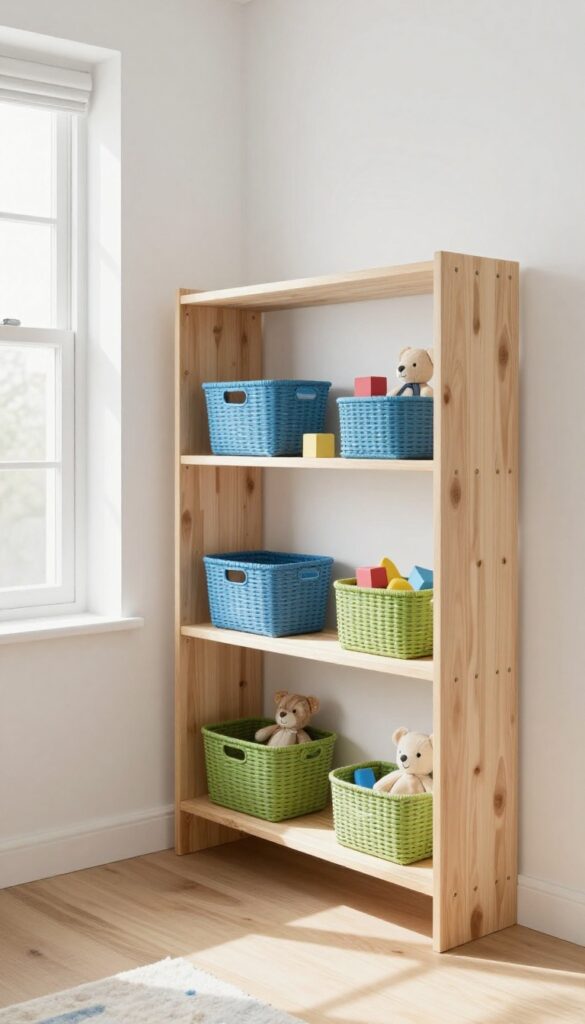
Open shelving does more than display cute decor—it can become a super functional storage system when you add color-coded bins. By assigning a specific color to each child, you create a visual shortcut that makes tidying up almost automatic. Blue for one, green for the other, and suddenly there's no more fighting over who left the LEGOs out.
The bins keep everything contained while adding a playful splash of color that livens up the room.
Why It Works
- This system taps into kids' natural love for color and ownership. When each child has their own designated color, they quickly learn to sort and store their belongings without constant reminders. The open shelving keeps everything visible and accessible, so they can grab what they need and put it back just as easily.
- Plus, it's a budget-friendly solution—you can find affordable bins in any color at discount stores or online.
Best For
This idea shines in shared bedrooms where siblings are close in age, especially toddlers and early elementary kids who are just learning to organize. It's also great for small rooms where you need to maximize vertical storage without bulky furniture. The color-coding works well for two kids, but you can easily adapt it for three or more by adding more colors.
Styling Tip
To keep the look cohesive, choose bins in the same style and material—like woven baskets or plastic tubs—and only vary the color. Mount the shelves at a height the kids can reach, and label each bin with a picture or word for non-readers. For extra style points, alternate bin colors on the shelves to create a balanced, graphic pattern.
5. Loft Beds with Curtains for Privacy
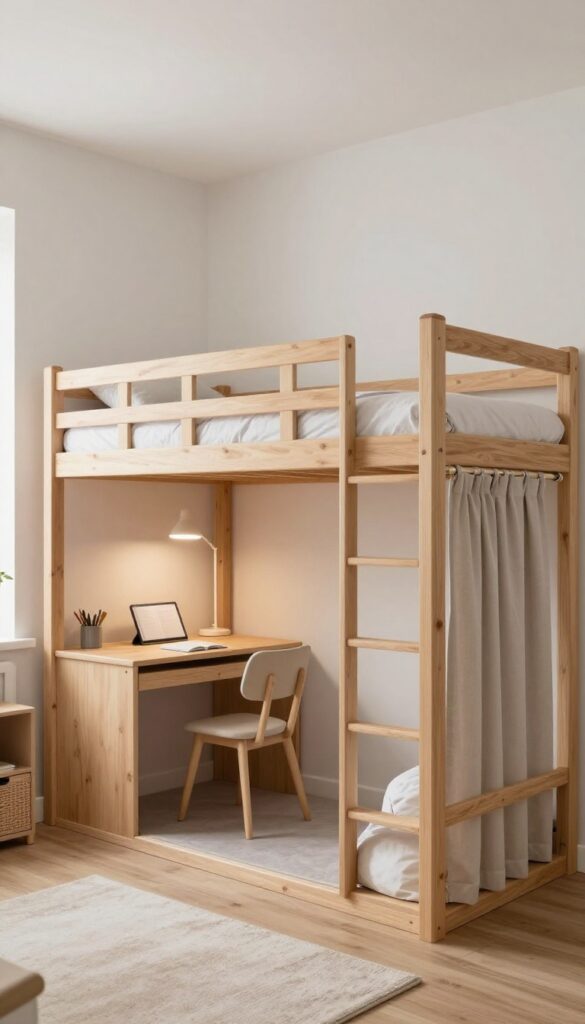
Loft beds are a game-changer in a shared kids' room, especially when square footage is tight. By raising the mattress, you instantly open up valuable floor space underneath for a desk, a reading nook, or a play zone. Adding curtains to the lower bunk transforms that area into a cozy, private retreat—perfect for kids who need a little separation without walls.
Why It Works
The raised design maximizes vertical space, freeing the floor for other activities. Curtains provide a visual and acoustic barrier, giving each child a sense of ownership over their own corner. It's a budget-friendly way to create personal zones without building permanent dividers.
Best For
This setup works well for siblings with an age gap or different sleep schedules. It's also ideal for rooms where you need to combine sleeping, studying, and playing in one compact area. The privacy factor helps reduce arguments over shared space.
Styling Tip
Choose lightweight, blackout curtains in a neutral or muted tone to keep the room feeling airy. Install a simple tension rod inside the bunk frame—no tools needed. Add a small clip-on reading light and a soft rug underneath to define the zone even more.
6. A Shared Gallery Wall for Personal Touches
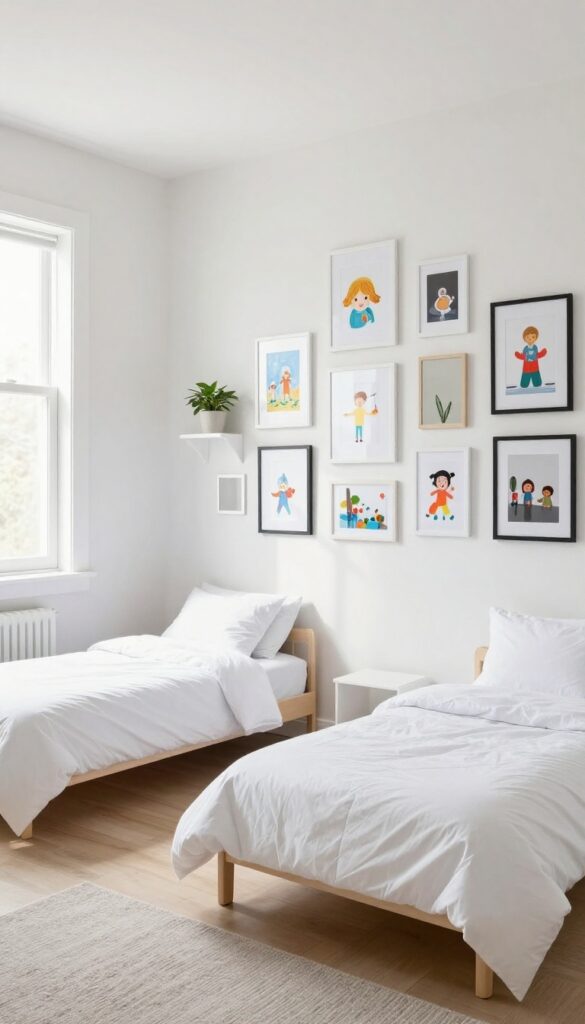
In a shared kids' bedroom, finding ways to let each child express their own personality without clashing can feel tricky. That's where a shared gallery wall comes in—it's one wall that belongs to everyone, with space for each kid to show off their favorite art, photos, or postcards. By using inexpensive frames in a unified color like white or black, the display stays cohesive and intentional, not chaotic.
The best part? Pieces can be swapped out whenever the mood strikes, so the wall grows with them.
Why It Works
A gallery wall gives each child a dedicated spot for their personal treasures, which helps reduce territorial disputes. Using matching frames keeps the overall look polished and prevents the wall from feeling messy, even as the content changes. It's a low-cost, high-impact way to add color and personality without committing to a theme that might feel dated next year.
Best For
This idea is ideal for siblings with different tastes—say, one loves dinosaurs and the other is into unicorns. It also works well when you want to avoid decorating with licensed characters that kids quickly outgrow. The gallery wall can evolve from crayon drawings to concert tickets as they get older.
Styling Tip
Lay out the frames on the floor first to plan the arrangement. Mix in a few small mirrors or a wall-mounted shelf to add depth. Use removable adhesive strips so you can easily swap art without damaging the walls—a must for renters or anyone who likes to refresh often.
7. Under-Bed Rolling Drawers for Extra Storage
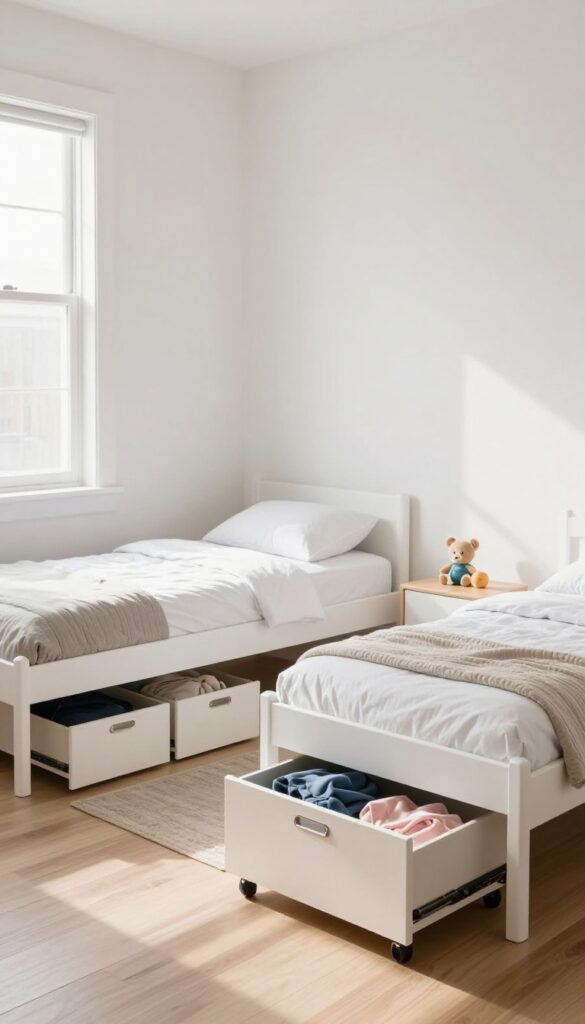
That empty space under the bed is prime real estate, especially in a shared kids' room where every inch counts. Instead of letting dust bunnies take over, slide in a few rolling drawers that tuck neatly out of sight. They turn awkward gaps into organized storage for clothes, toys, or extra bedding, and the best part is you don’t have to spend a lot to make it happen.
Look for budget-friendly bins on wheels at big-box stores or repurpose shallow plastic drawers by adding casters yourself.
Why It Works
Rolling drawers make use of dead space without requiring any construction or permanent changes. They’re easy for kids to pull open and close, so they can grab what they need and put things back without help. Labeled bins keep categories clear, which cuts down on the “I can’t find my sweater” chaos in the morning.
Best For
This idea shines in rooms where floor space is tight but bed clearance is at least six inches. It’s ideal for storing out-of-season clothes, extra sheets, or bulky toys that don’t have a designated home. If your kids share a bunk bed, use the lower bunk’s under-bed area for each child’s personal stash.
Styling Tip
Choose drawers in a neutral color like white, gray, or natural wood to keep the room feeling airy. Add metal label holders or adhesive chalkboard labels so kids can update what’s inside as their needs change. For a cohesive look, pick bins with lids in a matte finish to match the bed frame’s style.
8. A Reading Nook Tucked into a Corner
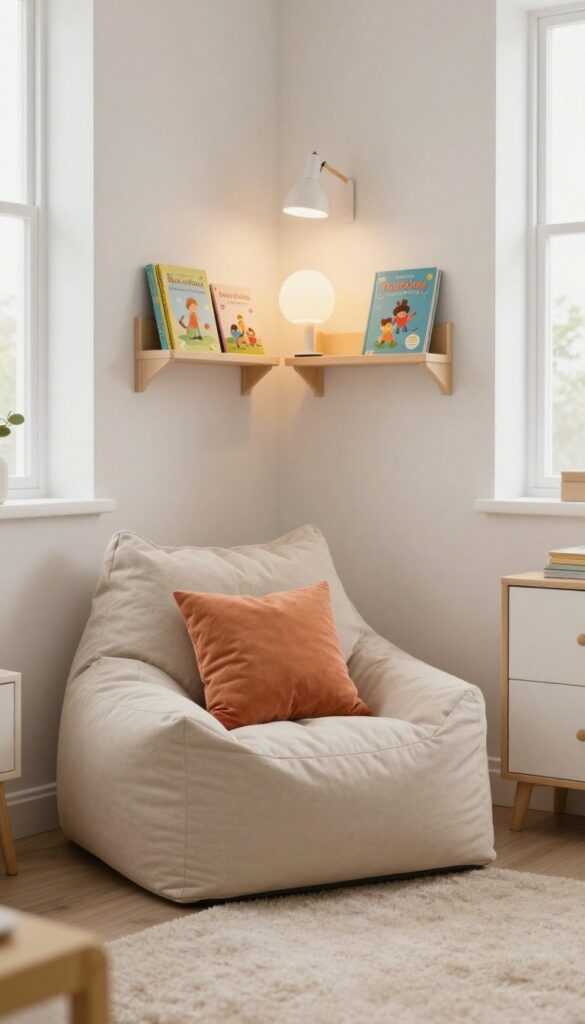
Every shared bedroom has that one corner that never quite gets used—maybe it's behind the door or next to a dresser. Instead of letting it collect dust, turn it into a tiny reading retreat. A beanbag chair, a small shelf, and a clip-on light are all it takes to create a cozy spot where kids can escape without leaving the room.
It's budget-friendly because you can often repurpose items you already own, and it adds a defined zone that makes the room feel bigger, not smaller.
Why It Works
A dedicated reading nook gives each child a quiet space of their own, which is essential in a shared room. It also encourages independent play and reading without requiring a lot of square footage or expensive furniture. The soft rug and beanbag absorb noise, making the corner feel calm and separate from the rest of the room.
Best For
This idea is perfect for irregularly shaped rooms with awkward corners that are hard to furnish otherwise. It also works well in rooms where kids have a big age gap—the older child can read while the younger one naps nearby.
Styling Tip
Choose a beanbag in a neutral or muted color so it blends in, then add personality with a colorful throw pillow or a small basket of books. Position the clip-on light at eye level so it's easy for kids to turn on and off themselves.
9. Vertical Toy Storage with Clear Bins
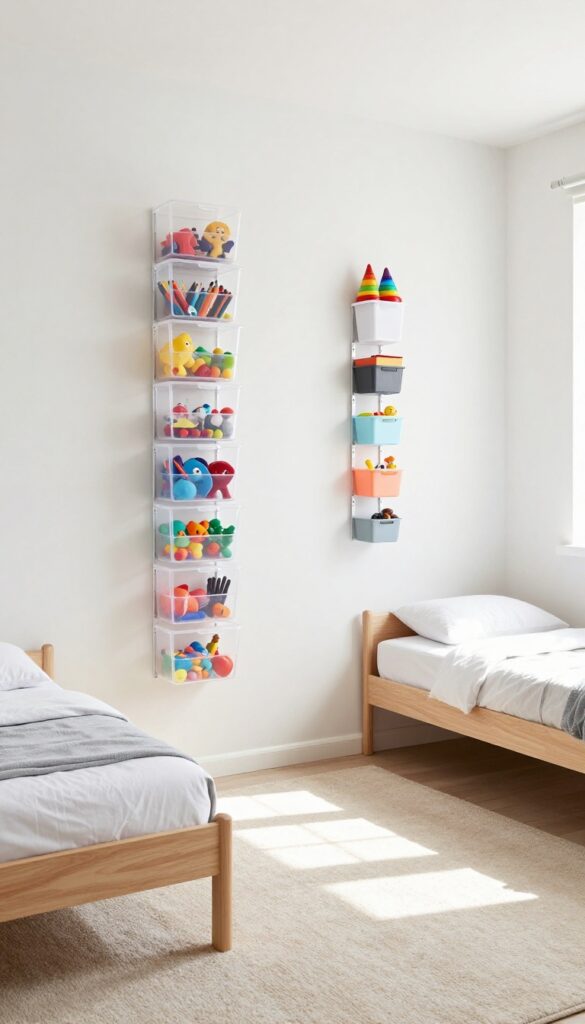
When floor space is tight, the walls become your best storage ally. Clear bins mounted vertically let kids see every action figure, art supply, or small toy at a glance—no more digging through opaque boxes. This system makes cleanup almost fun because everything has a visible home, and you can keep the bins low enough for little hands to reach without help.
Why It Works
Clear bins eliminate the guesswork of where things go, so kids can independently put toys away. The vertical layout uses unused wall space, freeing up floor area for play. Plus, the see-through design keeps the room looking tidy because clutter is contained but not hidden.
Best For
Small shared bedrooms where two kids need their own storage zones. It’s also perfect for craft supplies, LEGO pieces, or collections of small cars and dolls that tend to scatter.
Styling Tip
Stick to one bin size for a uniform look, or mix sizes for visual interest. Label each bin with a picture or word so both kids know what belongs where. Mount the organizer on a wall near a play area or desk for easy access.
10. A Shared Desk with a Room Divider
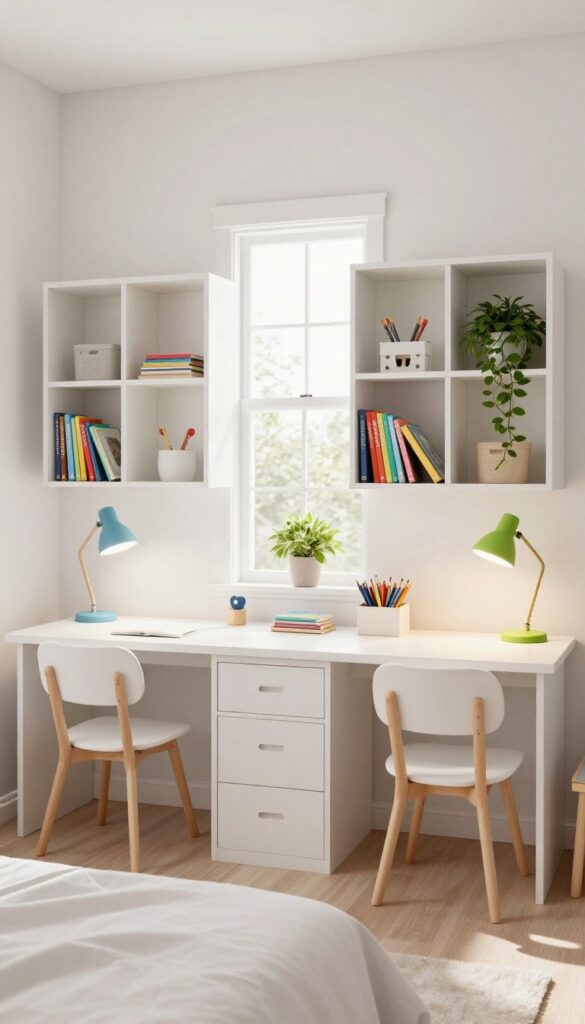
When two kids share a bedroom, homework time can get chaotic fast. A long desk placed right down the middle of the room, paired with a low bookshelf as a divider, carves out two distinct study zones without closing anyone off. Each side gets its own lamp and a small caddy for supplies, so there's no fighting over the good pencil.
The bookshelf divider pulls double duty—it holds books, bins, and a few decorative objects, keeping the room organized and giving each child a sense of personal space. It's a practical setup that feels intentional and stylish, not like a compromise.
Why It Works
This layout maximizes floor space by combining two functions—desk and storage—into one central piece. The low bookshelf keeps the room feeling open and airy while still providing a clear visual boundary. Each child gets their own dedicated work area, which cuts down on distractions and sibling squabbles.
Best For
This idea is perfect for school-age siblings who need a quiet place to do homework but share a small room. It also works well for a single child who wants a desk plus extra storage, or for a playroom where two kids need separate craft stations.
Styling Tip
Choose a desk with a light wood or white finish to keep the room feeling bright. Use matching but different-colored desk accessories for each side—like a blue lamp on one and a green one on the other—to personalize without clashing. Top the bookshelf with a trailing plant or a small basket for chargers to keep cords tidy.
11. Ceiling-Mounted Curtain Track for Flexible Zones
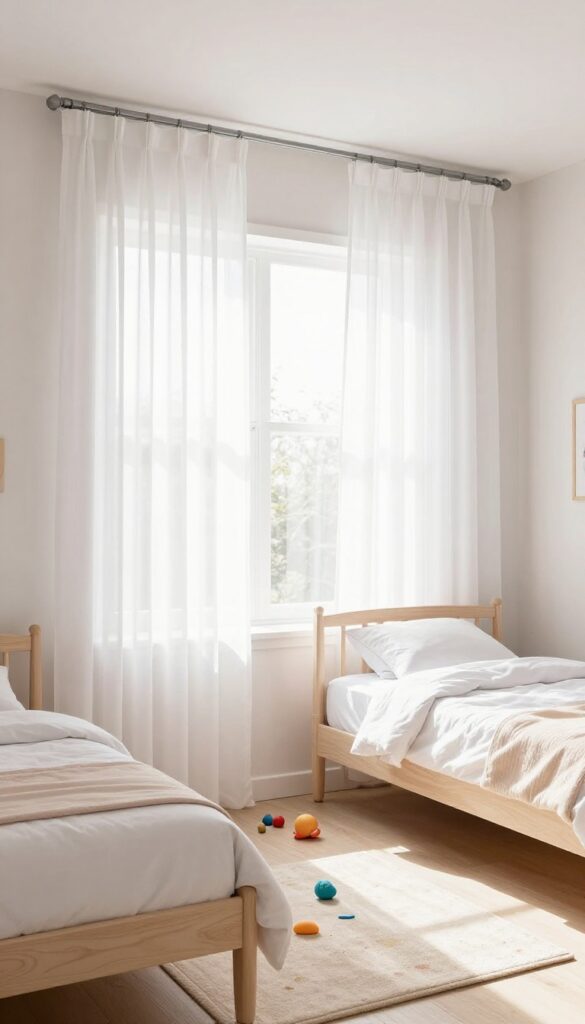
Sharing a small bedroom doesn’t have to mean sacrificing privacy or personal space. A ceiling-mounted curtain track lets you carve out separate sleep and play zones without any construction. The beauty of this setup is how easily the curtains can be pulled open when the room needs to feel larger, then closed again for quiet time or bedtime.
It’s a simple, affordable way to give each child their own corner while keeping the room feeling airy and connected.
Why It Works
A curtain track creates a visual and physical boundary that helps kids understand their personal space, reducing conflicts. It’s also one of the most budget-friendly zoning tools available—far cheaper than building a wall or installing sliding doors. Because the curtains don’t touch the floor (unless you want them to), the room still feels open and light, which is crucial in a small shared space.
Best For
This idea works especially well for siblings with a big age gap or different sleep schedules—one can play while the other naps. It’s also perfect for renters who can’t make permanent changes, since the track installs with just a few screws and can be removed without a trace. Any room with a standard flat ceiling can accommodate this setup.
Styling Tip
Choose curtains in a light, neutral fabric like linen or cotton to keep the room feeling bright. For a playful touch, use a sheer white panel on one side and a soft pastel on the other—that way each child can have their own color. Mount the track close to the ceiling and extend it a few inches past the bed on each side to create a cozy, enclosed feel when the curtains are drawn.
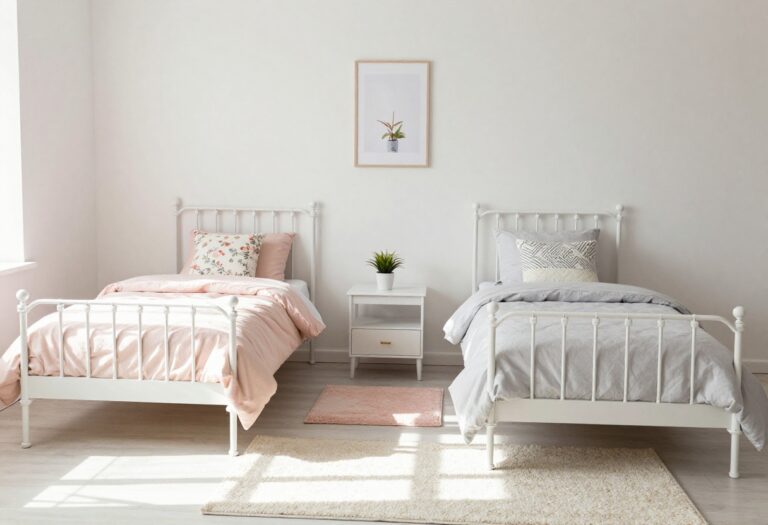
12. Matching Bedding with Individual Accent Pillows
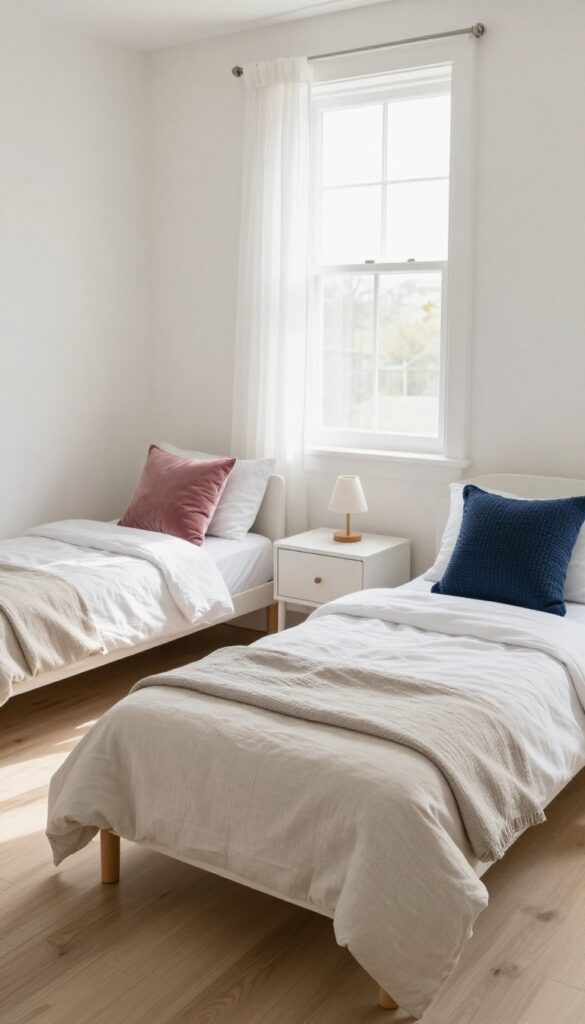
There’s a sweet spot between a room that feels chaotic and one that feels too matchy-matchy. Matching bedding in a soft neutral or muted tone creates a calm foundation, while each child’s own accent pillow adds a pop of personality. It’s a simple trick that makes the space feel intentional without erasing their individual tastes.
Why It Works
Coordinating bedding keeps the room visually tidy and prevents a cluttered look, even with two beds side by side. The accent pillows become small style anchors—easy to swap when a favorite color or character changes, so the room evolves with them without a full redo.
Best For
Siblings with different style preferences or age gaps. It’s also great for tight budgets since you only need one set of matching duvets or quilts, and pillows can be found cheaply at discount stores or even made from old tees.
Styling Tip
Stick to solid or subtle patterned bedding in beige, gray, or soft blue, then let each child pick a pillow in their favorite color or with a simple graphic. For a cohesive look, choose pillows that share a common element like texture (velvet, knit) or size.
FAQ
How can I create separate zones in a small shared kids bedroom on a budget?
Use furniture placement, rugs, and curtains to define zones without spending much. A bookshelf can act as a room divider, a different rug color can mark the play area, and a ceiling-mounted curtain can separate sleep and study spaces.
What’s the best way to store toys in a small shared bedroom?
Go vertical with wall-mounted bins or shelves. Clear bins help kids see what’s inside, and color-coding by child makes organization easy. Under-bed rolling drawers are also great for hiding bulky items.
How do I give each child privacy in a shared room?
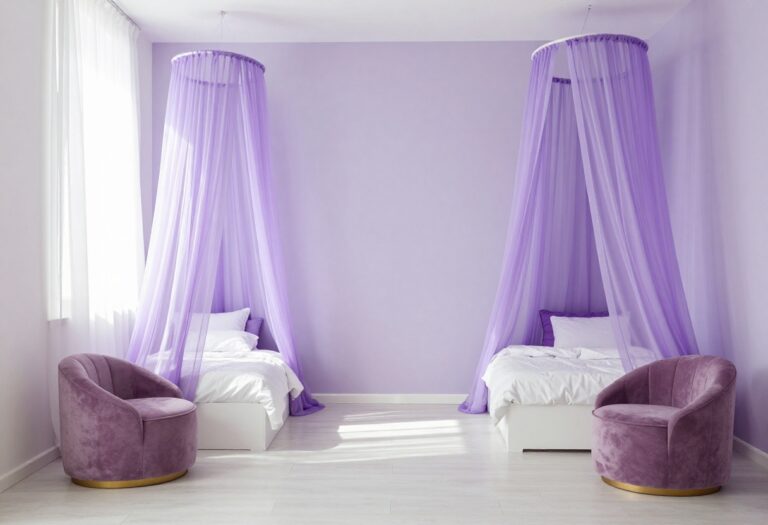
Loft beds with curtains, bunk bed canopies, or a simple room divider can create private nooks. Even a small reading corner with a beanbag and a curtain can feel like a personal retreat.
What colors work best for a small shared kids bedroom?
Light, neutral colors like white, beige, or soft gray make the room feel bigger. Add pops of color through bedding, pillows, or artwork that can be easily changed as kids grow.
How can I make a shared desk setup work for two kids?
Use a long desk with a divider in the middle, or place two wall-mounted desks side by side. Give each child their own storage caddy and lamp to reduce conflict and keep supplies organized.
Conclusion
Creating a small shared kids bedroom with smart zones doesn’t have to be expensive or complicated. With a few thoughtful choices—like bunk beds with storage, flexible play areas, and personal touches—you can design a space that feels both functional and fun. Remember, the best rooms grow with your kids.
Keep things flexible, involve them in the process, and don’t be afraid to swap out elements as their needs change. A little planning goes a long way toward a room that everyone loves.