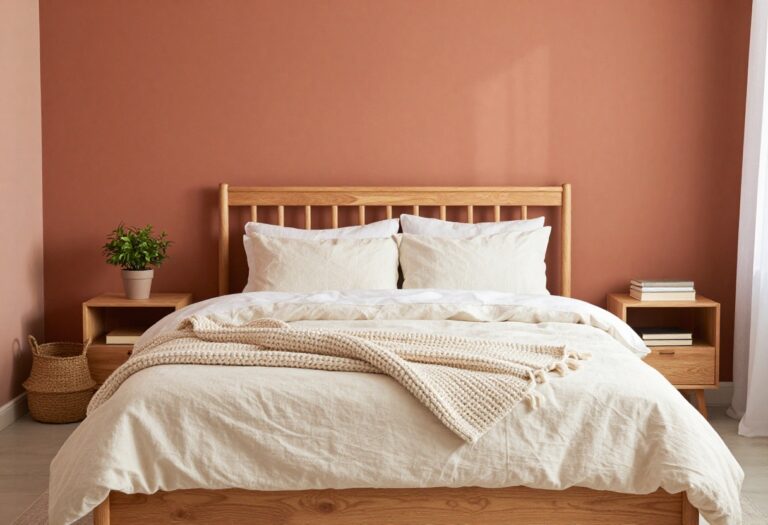
13 Two Kids Bedroom Ideas with Privacy Corners and Shared Storage on a Budget
Sharing a room can be a fun adventure for siblings, but it also comes with its own set of challenges. You want each child to have a little personal space, yet the room still needs to feel cohesive and clutter-free.
The good news is you don't need a huge budget or a massive renovation to make it happen. With a few clever tweaks, you can carve out cozy privacy corners and set up shared storage that actually works.
These 13 ideas are all about keeping things practical, stylish, and easy on the wallet.
1. Bunk Beds with Built-In Curtains
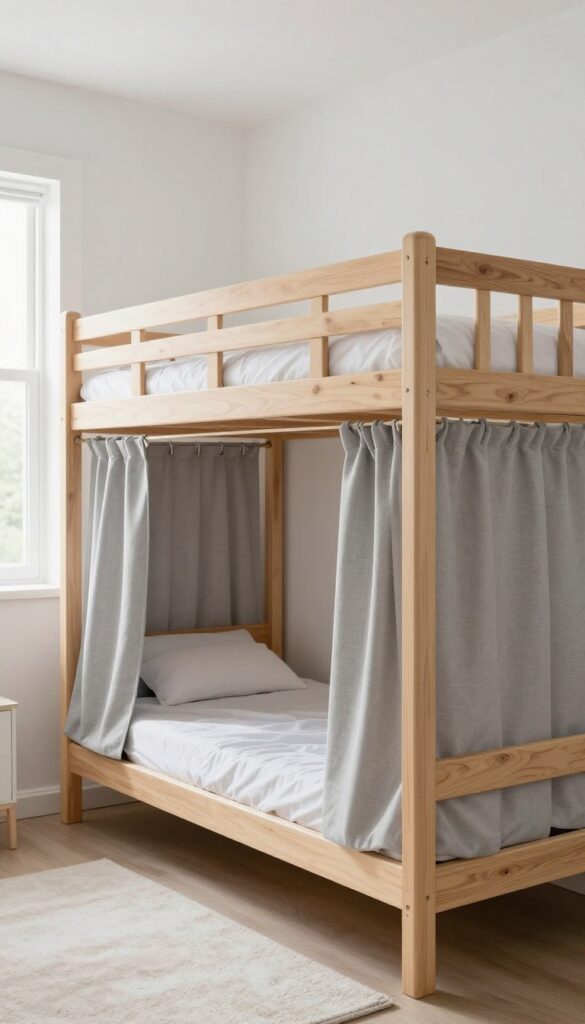
A classic bunk bed gets a privacy upgrade with simple curtain panels. Use tension rods and blackout fabric to create a personal cocoon for each child. It's an affordable way to give them separate zones without losing floor space.
Why It Works
Curtains instantly carve out private nooks within a shared room, giving each kid a sense of ownership. Blackout fabric helps with sleep and screen-free downtime, while tension rods mean no drilling or permanent hardware. The whole setup can be swapped out as tastes change.
Best For
Families on a tight budget who want to maximize a small room without major renovations. It's also great for kids who are close in age and need defined personal space.
Styling Tip
Choose curtains in a neutral tone like soft gray or beige to keep the room calm, then add a pop of color with a patterned trim or tie-backs. Use clip rings for easy opening and closing, and make sure the fabric is flame-retardant for safety.
2. Room Divider from a Bookshelf
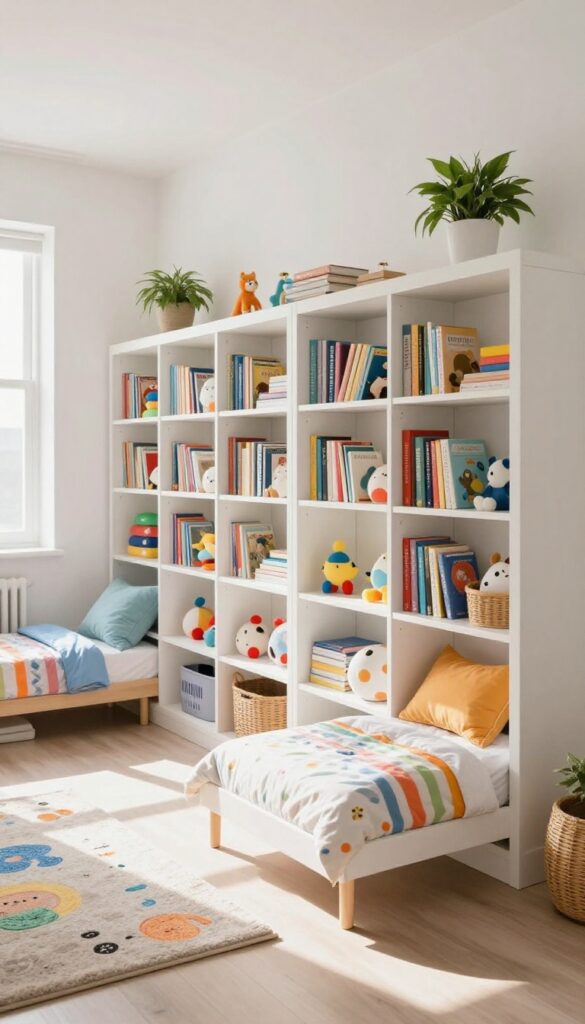
A low bookshelf does double duty when you place it perpendicular to the wall, splitting the room into two defined zones. Each side gets its own cubbies for toys, books, or treasures, so kids can keep their belongings separate without needing a wall. It’s a clever way to carve out privacy in a shared space without spending much—just a simple IKEA hack or thrifted find can do the trick.
Why It Works
The bookshelf acts as a visual and physical barrier, giving each child a sense of ownership over their side. Meanwhile, the open shelving keeps the room feeling airy and connected, so you don’t lose that spacious vibe. It’s a budget-friendly solution that adds storage without the cost or permanence of a built-in wall.
Best For
This idea shines in small to medium shared bedrooms where floor space is tight but you still want to give each kid their own corner. It works especially well for siblings close in age who share toys and books, since the shelves can be organized by owner or category.
Styling Tip
Choose a bookshelf with a solid back or add a fabric panel to one side for more privacy. Paint it the same color as the wall to make it blend in, or go bold with a contrasting hue to make it a statement piece. Top it with a few plants or a small lamp to soften the look.
3. Twin Beds with a Shared Headboard Wall
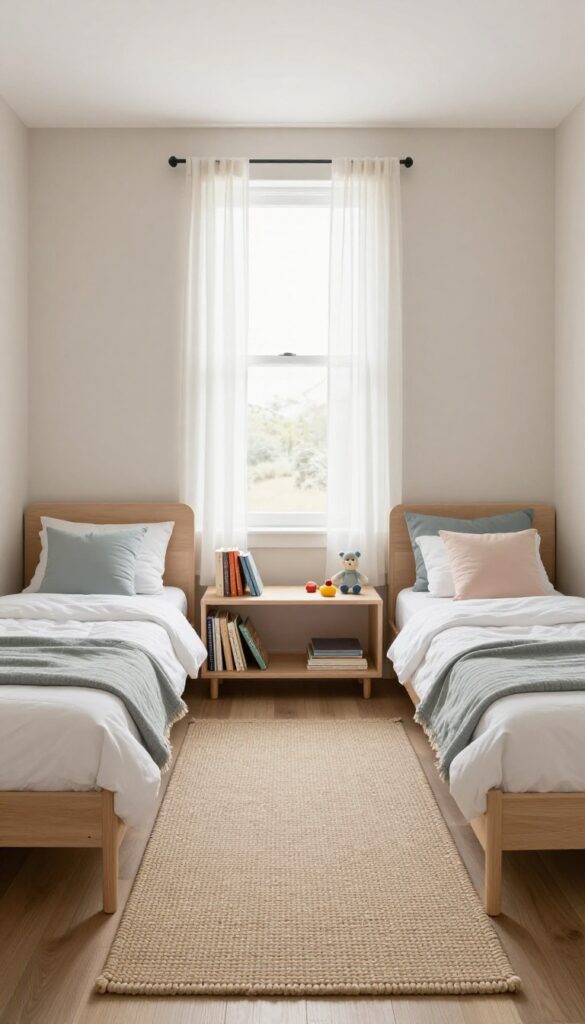
Separating twin beds by pushing them against opposite walls might sound like it would make the room feel chopped up, but when you connect them with a single long headboard or a bold painted accent wall, the whole space actually feels more open and intentional. The shared headboard becomes a visual bridge that ties both sides together, while the gap between the beds creates a natural pathway and a subtle sense of privacy. It's a clever layout that gives each kid their own defined zone without closing off the room.
Why It Works
This setup is a budget-friendly win because you only need one oversized headboard (or a DIY painted wall) instead of two separate bed frames with headboards. The shared accent wall draws the eye horizontally, making the room feel wider, and the open floor space in the middle can double as a play area or a spot for a shared rug. Each twin bed still feels like its own little retreat, especially when you add a small lamp or a personal rug on each side.
Best For
This idea works great for siblings who get along but still want their own corner, or for rooms where you need to maximize floor space while giving each child a clear personal zone. It's also a smart choice for narrow or oddly shaped rooms where centering the beds would waste space.
Styling Tip
Keep the headboard wall neutral or use a soft two-tone paint effect to avoid visual clutter. Add a low shelf above the headboard for books or small toys, and let each kid pick their own bedding color or pattern to personalize their side. A long, low bench or storage ottoman at the foot of each bed can double as seating and extra toy storage.
4. Loft Beds with Desk Nooks Below
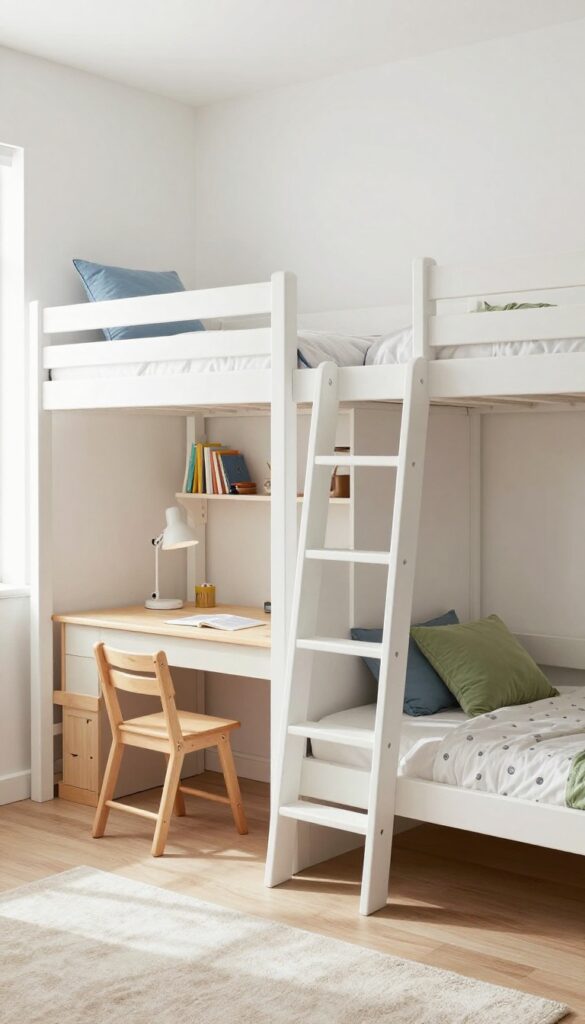
Stacking beds vertically is one of the smartest moves for a shared kid's room, especially when you're working with a tight budget. Loft beds lift each child up high, leaving the floor open for a cozy desk nook or a little reading corner underneath. The space below becomes their own private zone, easy to personalize with a small chair, a soft rug, and a clip-on lamp.
It gives each kid a sense of ownership without needing to build any walls.
Why It Works
Loft beds double the usable floor area in a small room. Each child gets a defined territory—their bed above and a workspace or hangout below—which cuts down on territorial squabbles. Because the beds are identical, the look stays neat and symmetrical, and you save money by not buying separate desks and chairs.
Best For
This setup works best for two kids who are at least six years old and comfortable climbing a ladder. It's ideal for narrow or small bedrooms where floor space is at a premium, and it's a budget-friendly alternative to bunk beds with built-in storage.
Styling Tip
Keep the loft beds in a neutral color like white or natural wood to avoid visual clutter. Under each bed, add a small task chair and a wall-mounted shelf for books and a lamp. Let each child pick one accent color for their nook—like a throw pillow or a desk organizer—so the room feels personal but not chaotic.
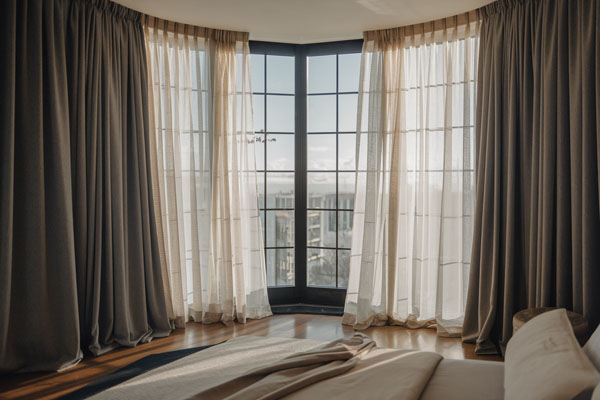
5. Curtain Dividers on a Ceiling Track
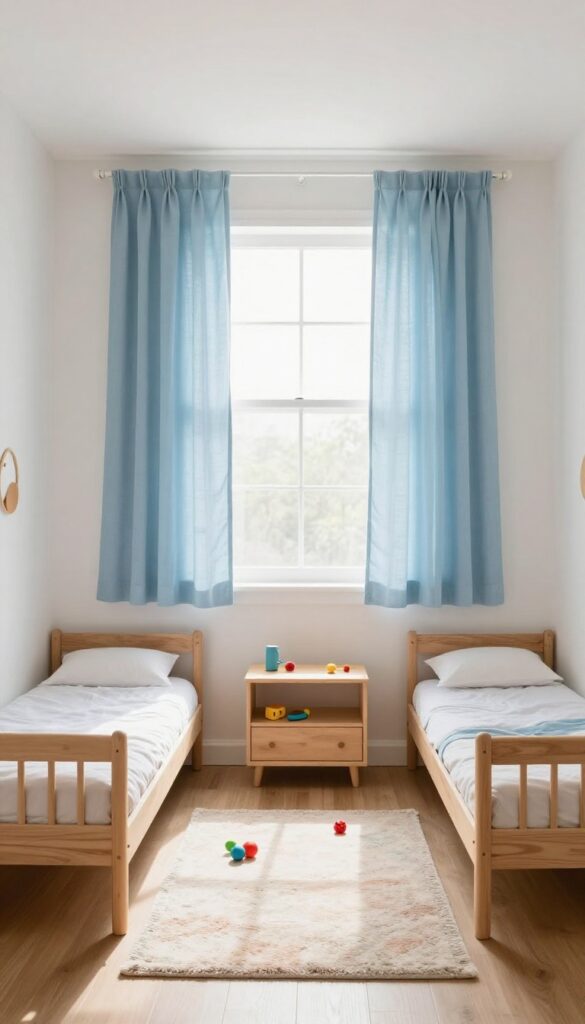
A ceiling-mounted curtain track is one of those ideas that feels almost too simple, but in practice, it’s a total game-changer. You get the privacy of a wall without the permanence or cost. Plus, you can pull the curtains open in seconds when the kids want to play together.
The trick is choosing a fabric that feels soft and light—think linen or cotton voile in a neutral or pastel tone. It keeps the room feeling open and airy while still giving each child their own defined space.
Why It Works
This setup is incredibly flexible. You can adjust the curtain position along the track, swap out fabrics seasonally, or even use blackout material for nap times. It’s also one of the most affordable ways to create separate zones in a shared room, since you don’t need to build anything or hire a contractor.
Best For
This idea is perfect for families on a tight budget or renters who can’t make permanent changes. It works especially well in rooms with high ceilings or large windows, where the curtain can add a soft, decorative element while serving a practical purpose.
Styling Tip
Hang the curtain from ceiling to floor for a polished look, and choose a rod pocket or clip-ring style for easy opening. Add a simple tieback on each side so the curtains don’t block the room’s flow during playtime. A subtle pattern like a thin stripe or a tiny dot adds visual interest without overwhelming the space.
6. Shared Storage Bench at the Foot of Beds
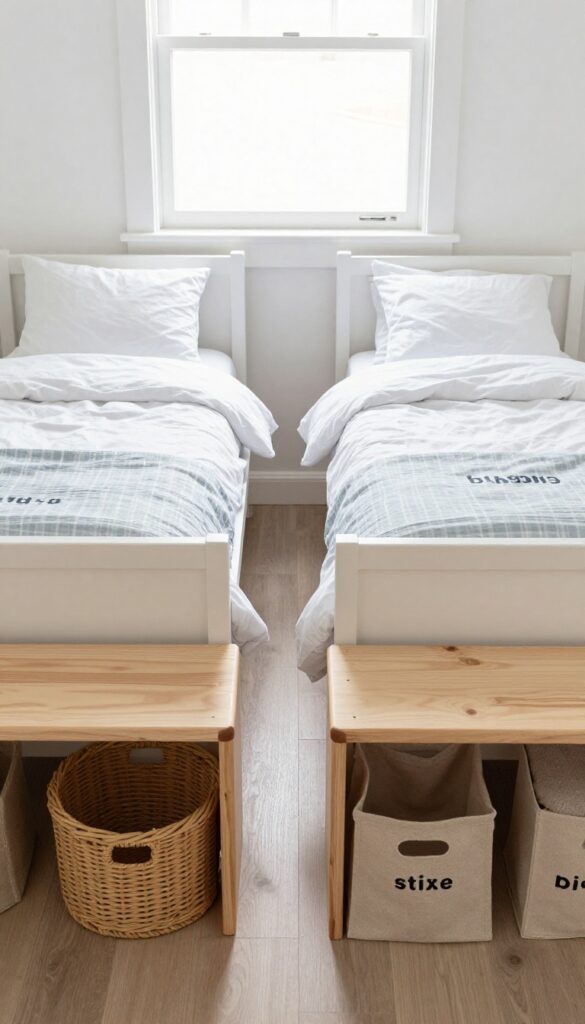
A storage bench at the foot of each bed—or one long one between them—pulls double duty in a shared room. It gives kids a spot to sit while putting on shoes or reading, and hides away the clutter that tends to pile up. On a budget, you can find secondhand benches or build a simple plywood one with hinged lids, then add baskets that slide right under.
Why It Works
It keeps extra blankets, off-season clothes, and toys out of sight without needing extra furniture. The bench also creates a clear visual anchor at the foot of each bed, making the room feel more put together.
Best For
Twin or full beds arranged side by side, where the bench can span the gap or sit individually. It works especially well in narrow rooms where a dresser might not fit.
Styling Tip
Paint the bench the same color as the bed frames for a built-in look, or go with a contrasting pop of color. Tuck woven baskets or canvas bins underneath for easy sorting—label them by child or category.
7. Personalized Wall Shelves for Each Kid
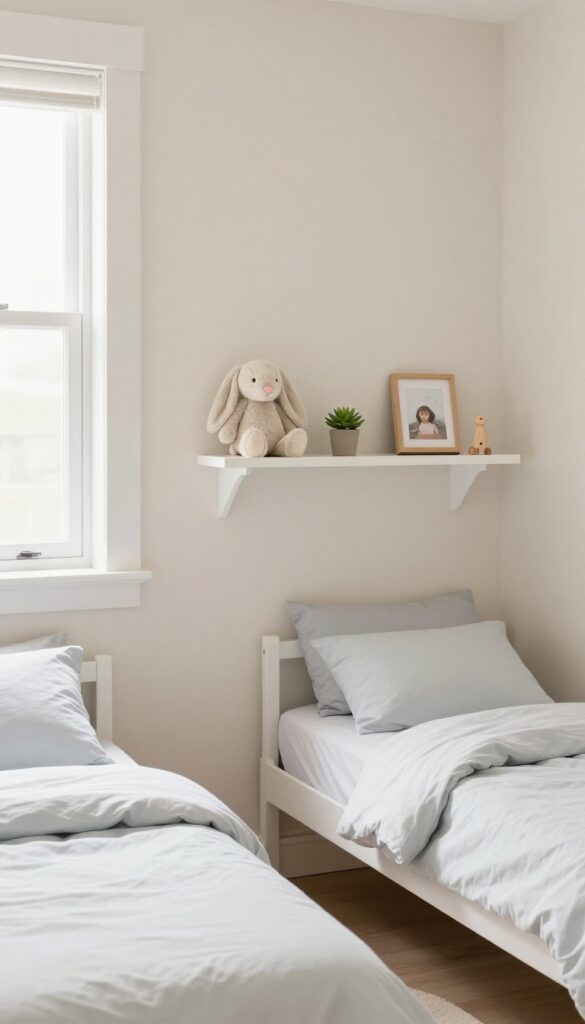
Giving each child their own little display spot can make a shared room feel more personal. Installing separate wall shelves above each bed or desk lets them showcase a favorite toy, a small plant, or a framed photo. It’s a simple way to carve out individual territory without sacrificing floor space, and it keeps the room looking tidy and intentional.
Why It Works
Wall shelves are a budget-friendly solution that adds vertical storage and personal flair. They give each child a sense of ownership over their corner, which can reduce squabbles over shared space. Plus, you can easily update the displayed items as their tastes change.
Best For
This idea works well for siblings of different ages or interests who need their own visual territory. It’s also great for small rooms where floor space is tight, since shelves keep everything up and out of the way.
Styling Tip
Choose floating shelves in a neutral color like white or wood to blend with the wall. Let each kid pick one or two small decor items to display, and swap them out seasonally or for birthdays to keep the room feeling fresh.
8. Under-Bed Storage with Privacy Bins
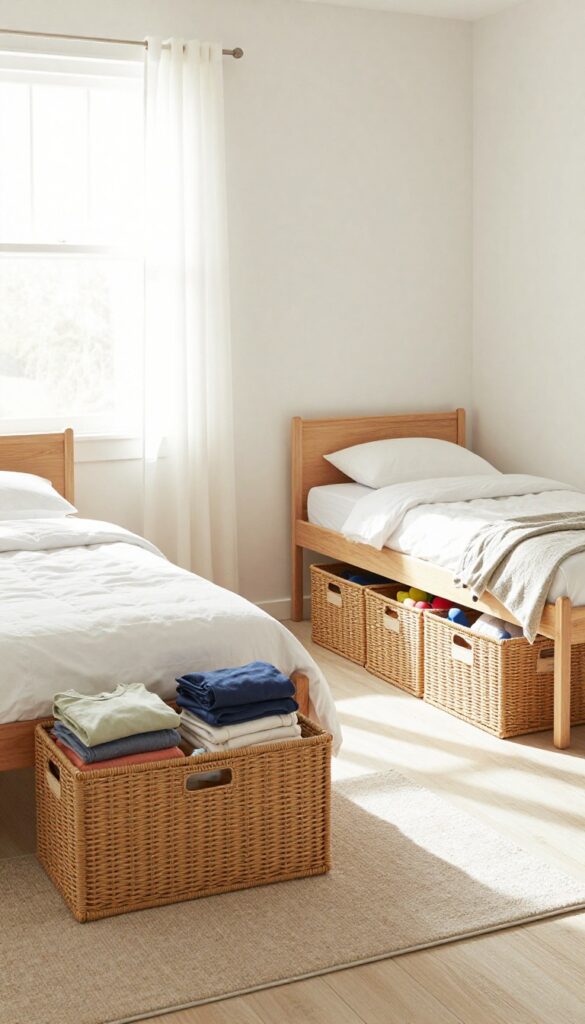
Kids love having their own secret hiding spots, and under-bed storage bins deliver that feeling while keeping the room tidy. Rolling bins or drawers slide out easily, so each child can grab their things without digging through shared piles. Labeling them with names makes it clear whose stuff belongs where, cutting down on morning arguments and lost items.
Why It Works
It gives each child a private, personal storage zone without taking up extra floor space. The bins keep clutter out of sight, making the room look neater, and the labeling system teaches responsibility and ownership.
Best For
Tight on space or sharing a small room? This idea is perfect for any two-kid bedroom, especially when you need to maximize every inch without sacrificing privacy.
Styling Tip
Choose bins in a neutral color like white or gray with woven fronts for a clean, cohesive look. Add a small rug under each bed to define the area and make the bins feel like part of the design.
9. Corner Tent or Canopy for a Cozy Nook
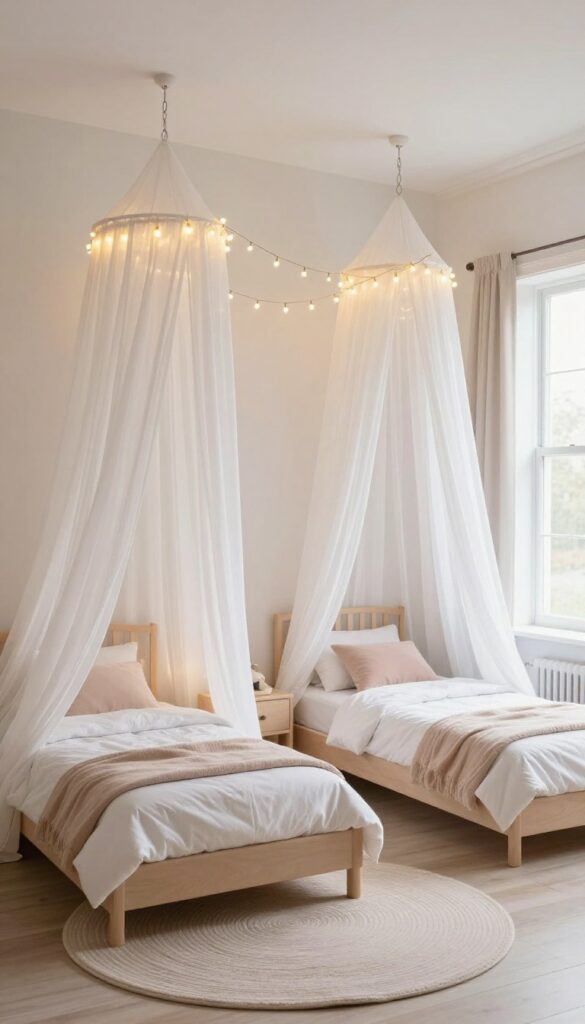
Kids love having their own little hideout, and a corner tent or canopy delivers that without a big renovation. A simple pop-up tent or a draped canopy turns an empty corner into a private reading nook or quiet zone. It’s lightweight, easy to set up, and can be moved around as your kids’ needs change.
Plus, it adds a soft, playful texture to the room without overwhelming the space.
Why It Works
This idea creates an instant sense of privacy and ownership for each child, even in a shared room. The tent or canopy defines a personal space where they can retreat, read, or just daydream. It’s also budget-friendly—you can find affordable options online or even DIY one with a hoop and fabric.
Best For
This works great for younger kids who still love imaginative play, but older kids can use it as a cozy spot for electronics or reading. It’s perfect for rooms with limited square footage because it uses vertical space and doesn’t require permanent installation.
Styling Tip
Choose a neutral or soft pastel canopy to keep the room feeling calm, or go with a patterned tent that matches the room’s theme. Add a small rug, a floor cushion, and a string of battery-operated fairy lights inside to make it extra inviting. Keep the area clutter-free so it stays a special retreat.
10. Shared Closet with Individual Baskets
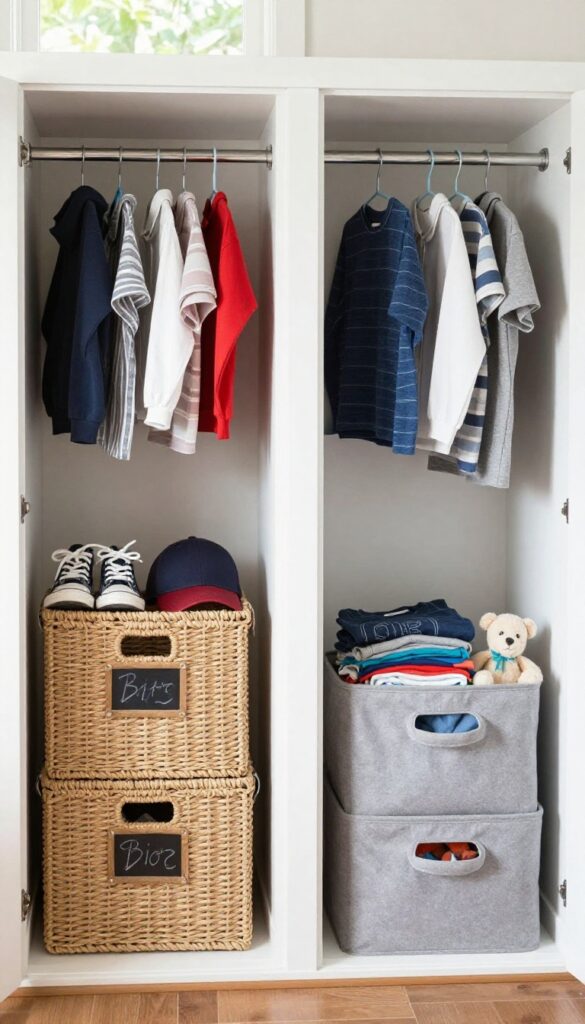
When two kids share a closet, things can get messy fast. A simple solution is to use stackable bins or baskets to create two distinct zones. Each child gets their own labeled basket for shoes, accessories, or folded clothes, making it easy to keep order without spending much money.
Why It Works
It gives each child a sense of ownership over their space, even in a shared closet. The baskets are inexpensive, easy to move, and can be swapped out as kids grow. Plus, the labels help everyone remember where things go, cutting down on clutter.
Best For
This works well for siblings close in age who share a closet and need a straightforward system. It's especially budget-friendly for families who want to avoid built-in shelving or expensive organizers.
Styling Tip
Choose baskets in neutral tones like woven seagrass or soft gray to keep the closet looking calm. Add fabric bins with handles for easy pulling. Use chalkboard labels so you can rewrite names or categories as needed.
11. Folding Screens as Flexible Walls
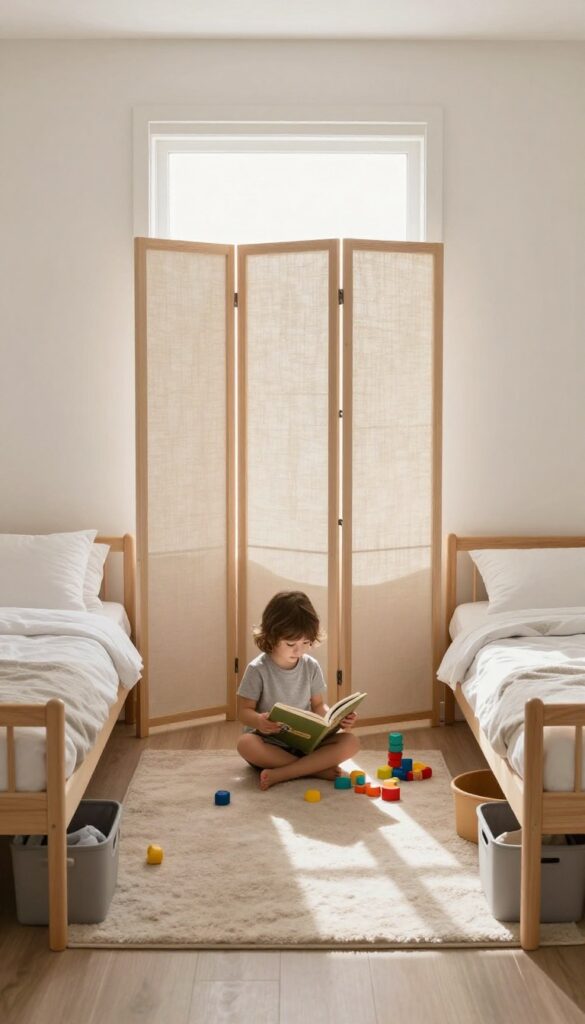
A folding screen is one of those rare decor pieces that can change the whole feel of a room without any tools or commitment. Slide it into place when your kids need a private changing spot, a quiet reading nook, or just a visual break from each other. Because it's portable, you can move it around as their needs shift—no drilling, no painting, no fuss.
Why It Works
Folding screens create instant boundaries in a shared room without making it feel smaller. They're lightweight, easy to store, and come in endless styles, so you can match the room's vibe exactly. Plus, they give each child a sense of ownership over their own little zone.
Best For
This idea works especially well in rooms where the layout changes often—like when kids grow into new hobbies or need separate homework areas. It's also a lifesaver for temporary setups, like when one child has a friend over and the other wants privacy.
Styling Tip
Look for a screen with a neutral frame and a fabric panel in a color that ties into the room's palette. If you're on a tight budget, DIY a plain screen with removable wallpaper or fabric panels—just staple or clip them on for an easy update.
12. Headboard Storage with Personal Touches
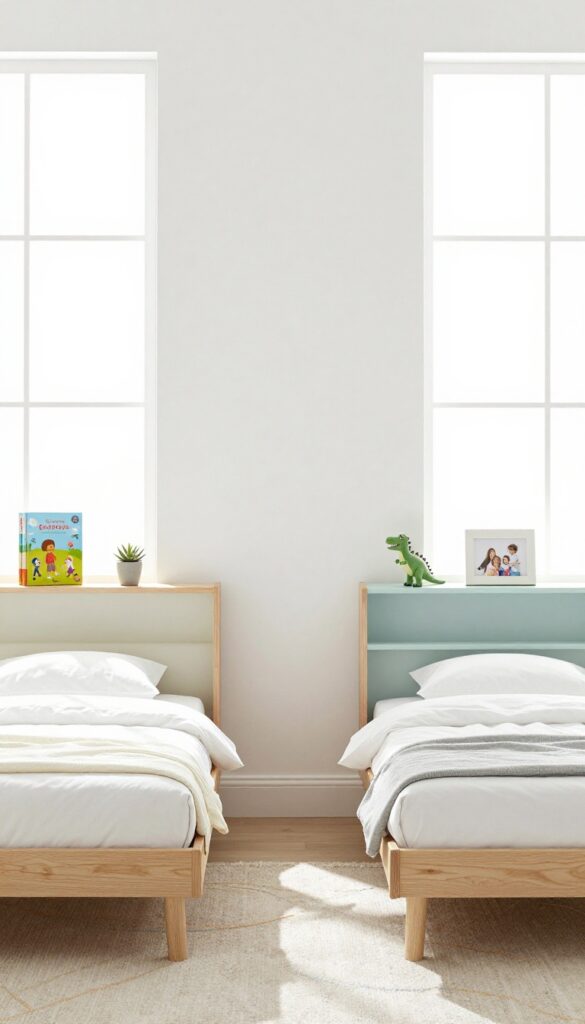
Headboards with built-in shelves or pockets are a smart way to give each child their own little nook without sacrificing floor space. Each kid gets a spot for a favorite book, a water bottle, or a small toy—right within arm's reach. It's a simple upgrade that adds storage and a sense of personal space, even in a shared room.
Why It Works
This idea maximizes vertical space and keeps bedtime essentials organized. Each child has a designated area for their things, which reduces arguments over who left what where. Plus, it's a budget-friendly way to add storage without buying new furniture.
Best For
Best for siblings who like to have their own things close by, especially in small rooms where floor space is tight. It also works well for younger kids who need easy access to a bedtime story or a sippy cup.
Styling Tip
Choose headboards with fabric pockets or wooden shelves that match the room's color scheme. Let each child pick a small decorative item for their shelf—like a framed photo or a tiny plant—to make the space feel truly theirs.
13. Color Zones with Paint or Wall Decals
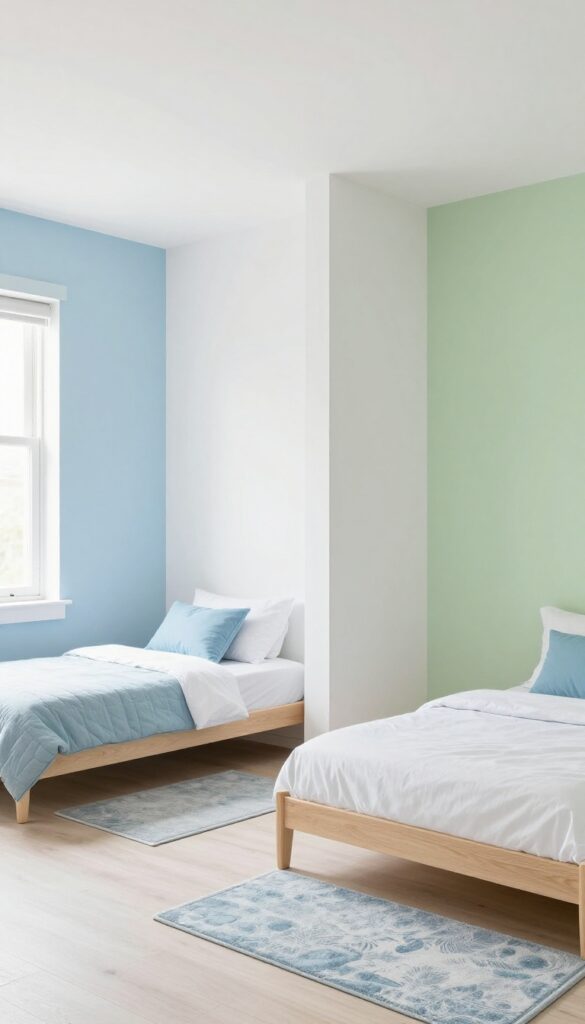
Sometimes the simplest changes make the biggest difference. Painting each side of the room a different color—or using removable wall decals—gives each child their own visual territory without building a single wall. One side gets a soft blue accent, the other a pale green.
It’s a cheap, renter-friendly way to create boundaries and let their personalities shine through.
Why It Works
Color zoning tricks the eye into seeing two separate spaces even in one open room. It gives each child a sense of ownership and reduces territorial disputes. Plus, paint and decals are budget-friendly and easy to update as tastes change.
Best For
This works well for siblings who share a room but want their own identity. It’s especially great for small rooms where physical dividers would feel cramped. Also ideal for renters who can’t paint permanent walls—decals come off cleanly.
Styling Tip
Carry the color onto a small accent piece on each side, like a rug or a throw pillow, to reinforce the zone. Keep the ceiling and other walls neutral so the room doesn’t feel chaotic. Use a subtle transition color (like white or light gray) on the wall where the two colors meet.
FAQ
How can I create privacy in a shared kids' bedroom on a tight budget?
Use inexpensive options like curtains on tension rods, folding screens, or a bookshelf as a room divider. Even a simple canopy over a bed can give a sense of personal space without spending much.
What are the best storage solutions for two kids sharing a room?
Shared storage benches, under-bed bins, and labeled baskets in a closet work well. Look for furniture that does double duty, like a storage ottoman or a bed with drawers underneath.
How do I make a small room work for two kids?
Maximize vertical space with loft beds or tall shelves. Use room dividers that also store things, like a low bookcase. Keep the floor clear and choose furniture that can serve multiple purposes.
Can I give each child their own decor style in a shared room?
Absolutely. Use color zones, separate wall shelves, or personalized bedding to let each child express themselves. Keep the base neutral and add their favorite colors or themes in small doses.
What's an easy way to separate a room without permanent changes?
A ceiling-mounted curtain track or a folding screen are great non-permanent options. You can also use a large bookshelf or a tall plant to create a visual divide that's easy to rearrange.
Conclusion
Creating a shared bedroom that feels personal and organized doesn't have to be expensive or complicated. With a few smart choices like curtain dividers, under-bed storage, and personalized shelves, you can give each child their own little retreat while keeping the room tidy.
The key is to think about what works for your space and your kids' ages, then pick the ideas that fit best. Start with one or two changes and see how it transforms the room.