11 TV Unit Ideas Living Room Walls Can Style Neatly
Your living room wall does more than hold up the TV—it sets the tone for the entire space. A cluttered media console can throw off the whole vibe, while a well-planned unit keeps things tidy and visually calm. The trick is choosing a design that hides the mess without sacrificing style.
Storage-smart TV units are the unsung heroes of a neat living room. They tuck away cables, gaming consoles, and remote controls behind clean fronts or inside clever compartments. The best part?
They look like part of the decor, not an afterthought. We have rounded up 11 ideas that balance storage with clean lines.
1. Floating Console with Hidden Cord Management
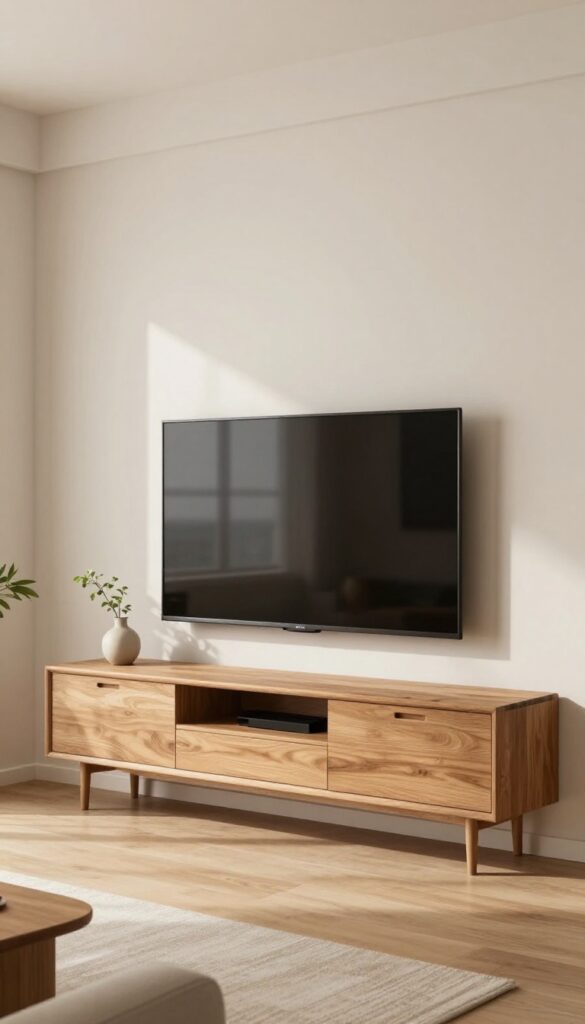
Wall-mounted consoles have become a go-to for living rooms that need a clean, unfussy base for the TV. By lifting everything off the floor, you instantly make the room feel larger and easier to clean. But the real magic is in the hidden cord management—a built-in channel or removable back panel keeps all those cables out of sight, so the setup looks polished from every angle.
A slim profile with a couple of drawers gives you a discreet spot for remotes, streaming devices, and small accessories, which means less clutter on the surface.
A floating console works especially well in smaller living rooms or open-plan spaces where every inch counts. The absence of legs or a base makes the room feel more open, and the streamlined look pairs nicely with both modern and transitional decor. When you choose a console with hidden cord management, you're solving one of the biggest eyesores in any TV setup: the tangle of wires that usually hangs down behind the unit.
Look for models with a built-in cable raceway or a removable back panel that lets you route cords directly into the wall. This way, the only thing visible is a clean, floating piece of furniture that anchors the wall without dominating it.
Best Materials And Finishes
- To keep the look light and airy, go with a natural wood tone like oak or walnut, or a matte white finish that blends into the wall. If you want a bit of contrast, a black or charcoal console can ground the TV and add a modern edge. Avoid glossy finishes—they tend to show fingerprints and reflections, which can be distracting when you're watching a show.
- A matte or satin finish is more forgiving and feels softer in a living room setting.
Storage Tip
- Use the drawers for items you reach for often: remotes, charging cables, a small notepad, or even a few coasters. Keep the surface almost bare—just a small plant, a single framed photo, or a decorative bowl. The whole point of the floating console is to reduce visual clutter, so resist the urge to pile on accessories.
- If you need extra storage, consider a side table or a nearby shelf instead.
Layout Tip
Mount the console at a height that feels comfortable when you're sitting on your sofa—usually around 12 to 18 inches from the floor to the top of the unit. Make sure the TV is centered above it, with a few inches of breathing room between the bottom of the TV and the console top. This gap helps the TV feel like it's floating too, which reinforces the clean, uncluttered vibe.
2. Floor-to-Ceiling Cabinet with Closed Storage
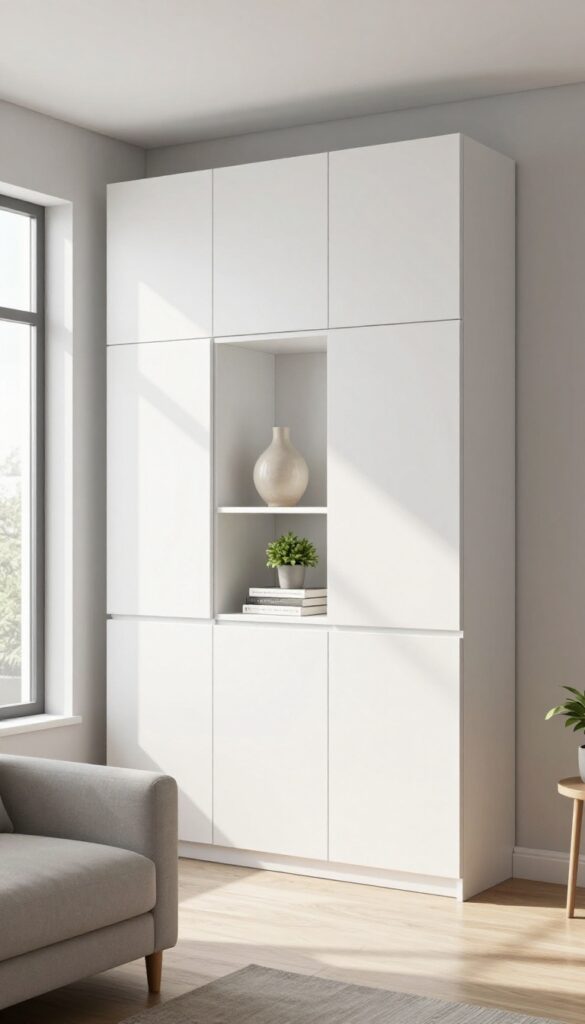
Tall cabinetry that stretches from floor to ceiling does something magical for a living room: it makes the wall look intentional and polished while hiding all the clutter. Instead of a bulky entertainment center that leaves awkward gaps above, this design uses every inch of vertical space. The trick is balancing closed storage for electronics and media with a few open shelves for decor, so the unit feels airy rather than like a solid wall of wood.
A floor-to-ceiling cabinet is the ultimate storage-smart solution for a living room that needs to stay tidy without sacrificing style. By concealing cables, game consoles, and DVD collections behind sleek doors, you create a calm, uncluttered focal point. The open shelves break up the mass and let you display books, plants, or ceramics, adding personality without the visual noise.
This setup works especially well in rooms with high ceilings, as it draws the eye upward and makes the space feel grander. For a cohesive look, choose a cabinet color that blends with your wall—white or soft grey keeps it light, while a deep navy or charcoal adds drama without overwhelming.
Best Materials & Finishes
- Opt for matte laminates or painted MDF for a clean, budget-friendly finish that resists fingerprints. If you want a natural touch, consider oak veneer with a wire-brushed texture—it adds warmth without being too rustic. For a modern edge, go with high-gloss lacquer in a neutral tone; it reflects light and makes the room feel bigger.
- Avoid heavy wood grains if your room is small, as they can feel visually busy.
Layout & Storage Tip
- Plan the cabinet layout around your TV height: the center section should house the screen at eye level when seated. Use pull-out drawers or baskets for media accessories, and leave a few open cubbies at eye level for decor. To keep cables hidden, run them through a channel behind the cabinet or use a cord management kit.
- If your room has baseboard heating, leave a gap at the bottom or build the cabinet slightly raised to avoid blocking airflow.
Lighting & Styling
- Install LED strip lights under the open shelves to create a warm glow that highlights your decor and reduces shadows. On the shelves, mix stack of books with small plants or ceramic vases for texture. Keep the closed sections organized with labeled bins or drawer dividers so everything has a place.
- A few larger pieces, like a sculptural vase or framed photo, prevent the display from looking too cluttered.
3. Modular Shelving System with TV Niche
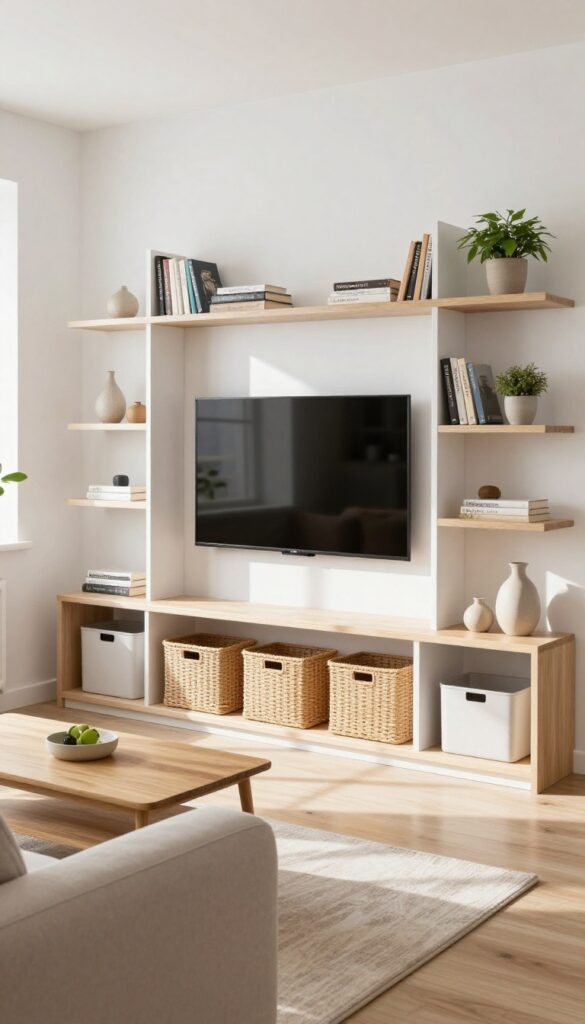
Imagine a wall that works as hard as you do—that’s the beauty of a modular shelving system built around your TV. These customizable cube units let you arrange shelves exactly where you need them, creating a dedicated niche for the screen while leaving plenty of room for books, plants, and decorative bins. The result is a living room wall that feels intentional, not cluttered, and adapts to your changing storage needs over time.
A modular shelving system with a TV niche is the ultimate storage-smart solution for living rooms that need to balance style with everyday practicality. The key is choosing a system with adjustable shelves and a mix of open and closed storage. Open cubes display your favorite decor pieces, while baskets or bins tucked into lower cubes hide remote controls, cables, and kids’ toys.
The TV sits flush within the grid, surrounded by a frame of shelves that makes the screen feel like part of the design rather than an afterthought. This approach works especially well in open-plan spaces where the wall needs to serve multiple purposes—entertainment, display, and storage—without looking chaotic.
Best Materials And Finishes
- For a clean, modern look, opt for a light wood like birch or ash with a matte lacquer finish. This keeps the room feeling airy and warm. If you prefer a more dramatic contrast, go for a dark walnut or black-stained oak against a white wall.
- The key is to choose a material that complements your existing furniture—match the shelf tone to your floor or coffee table for a cohesive flow.
Storage Tip: Basket Strategy
- Use a mix of woven baskets and solid bins in the lower cubes to hide everyday clutter. Label each basket by category—toys, cables, magazines—so everything has a home. This keeps the wall looking tidy while making it easy to grab what you need.
- For a cohesive look, stick to one basket material (like seagrass or felt) in a neutral tone.
Shelf Styling Tip
Arrange items in odd-numbered groups of three or five, varying heights with stacked books, small plants, and ceramic vases. Leave some negative space around the TV niche so the screen doesn’t feel crowded. Add a row of small trailing plants on the top shelf to soften the geometry and draw the eye upward, making the ceiling feel higher.
4. Low Credenza with Sliding Barn Doors
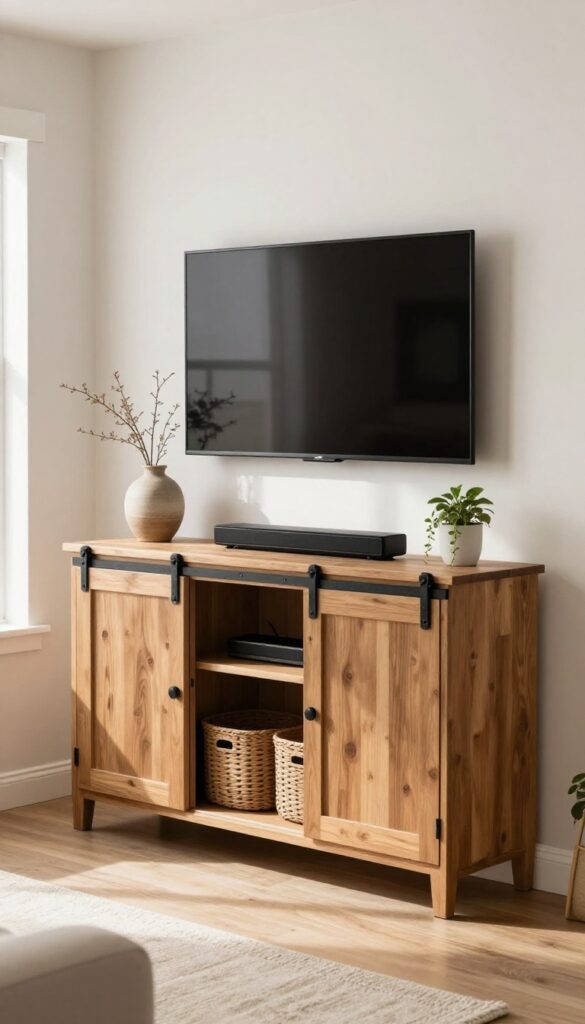
A low credenza with sliding barn doors is a smart way to handle living room storage without making the space feel bulky. The horizontal shape keeps sightlines open, which is especially nice in rooms where you don't want a tall cabinet blocking the flow. The barn doors add a casual, rustic touch while letting you hide everything from cable boxes to board games behind a clean facade.
This piece works well under a wall-mounted TV, giving you a sturdy surface for a soundbar or a few decorative objects. The sliding doors glide open when you need access and close to conceal any mess. The overall effect is tidy and intentional, with a bit of farmhouse charm that blends into modern or transitional spaces.
Best Materials
Solid wood or good-quality plywood with a natural grain finish feels warm and authentic. For a more polished look, go with a matte black or dark grey metal frame and reclaimed wood doors. Avoid glossy finishes—they can make the piece feel too formal and show fingerprints easily.
Storage Tip
Use the space behind the barn doors for a mix of open bins and small baskets. Keep frequently used items like remote controls and gaming controllers in easy-to-reach spots near the edges. The center area can hold larger electronics, with a power strip mounted inside for clean cord management.
Styling The Top
Keep the surface clutter-free to maintain the low profile. Place a slim soundbar directly under the TV, then add one or two low-profile decor pieces like a ceramic vase or a stack of coffee table books. A small trailing plant on one end softens the hard lines and adds life.
5. Corner TV Unit with Wraparound Storage
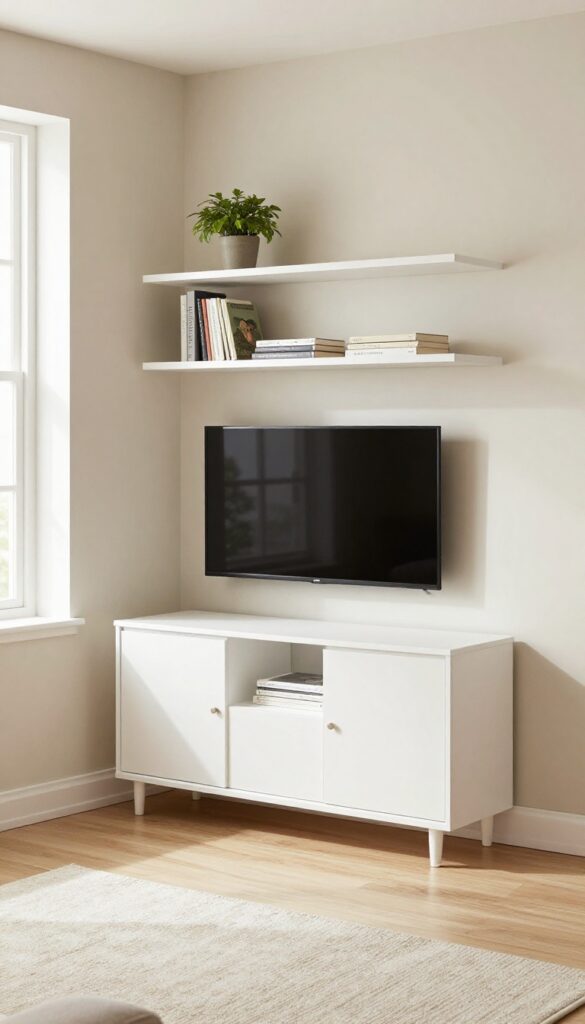
Corners often end up as dead zones, but a corner TV unit turns that awkward spot into a functional focal point. Wraparound storage—think angled shelves and cabinets—keeps everything from media components to decorative baskets within arm's reach without stealing floor space. The trick is to keep the top open or use slim shelving so the unit feels grounded, not bulky.
It's a smart solution for small living rooms or anyone who wants a tidy, streamlined look.
A corner TV unit with wraparound storage is a game-changer for tight spaces. By tucking the TV into the corner, you free up wall space for other furniture or art. The angled shelves and cabinets create a cohesive storage system that hides cords, remotes, and games, while open shelves display books or plants.
Choose a light wood or white finish to keep the unit airy, and consider floating shelves above for extra display space without visual weight.
Best Materials And Finishes
- Light woods like oak or ash keep the unit from feeling heavy, especially in small rooms. Glossy white or pale grey lacquer also works well—it reflects light and blends into the wall. For a warmer look, try a matte walnut finish with brass handles.
- Avoid dark, chunky materials that can make the corner feel cramped.
Layout Tip: Open Vs. Closed Storage
- Balance open and closed storage to avoid a cluttered appearance. Use closed cabinets for electronics and bulky items, and open shelves for decor or frequently used objects. Keep the top shelf open or use a low-profile design so the unit doesn't block sightlines.
- A good rule: 60% closed, 40% open.
Finishing Touch: Lighting
Add LED strip lights under the shelves or behind the TV to create a soft glow that highlights your decor and reduces eye strain. Warm white (2700K to 3000K) keeps the space cozy. If the unit has glass-front cabinets, interior lighting adds a polished, museum-like feel.
6. Built-In Wall Unit with Symmetrical Shelving
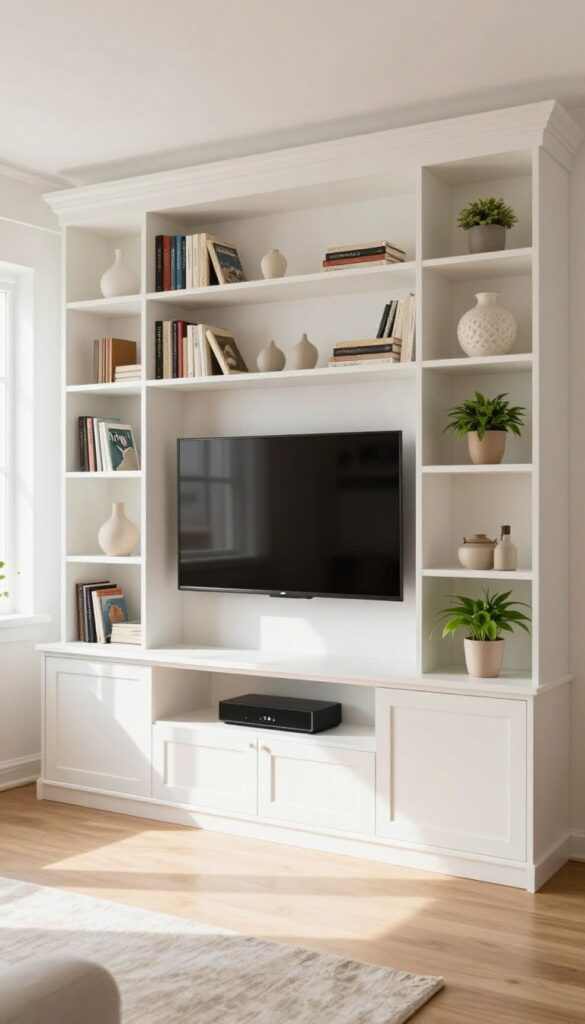
There’s something quietly satisfying about a wall that feels perfectly balanced. A built-in unit with symmetrical shelving does exactly that—it frames your TV with matching cabinets and open shelves on each side, creating a clean, orderly focal point. The look is polished without trying too hard, and it gives you a place for everything from books to decorative objects.
Plus, because it’s custom-fitted to your wall, there’s no awkward gap or wasted space.
Symmetry is the secret here. By mirroring the shelves and cabinets on both sides, your eye naturally rests on the TV in the center, making the whole wall feel intentional and calm. This setup works especially well in living rooms where you want the TV to feel like part of the decor, not the main event.
The built-in aspect also means you can tailor the depth and height to fit your media components, hiding cords and electronics behind cabinet doors. For a storage-smart approach, use the lower cabinets for baskets or bins that hold remotes, games, or extra cables, and reserve the open shelves for curated displays that change with the seasons.
Best Colors
- Stick with a single color for the entire unit to keep the symmetry strong. White or off-white is a classic choice that blends into the wall and lets your decor pop. If you want more contrast, a deep navy or charcoal can anchor the TV and make the shelves feel like a deliberate design feature.
- For a warmer look, try a soft wood stain or muted sage green.
Layout Tip
Center the TV at eye level when seated, and keep the shelves around it at a height that’s easy to reach. Leave a few inches of breathing room between the TV and the shelves to avoid a cramped feel. If your room is on the smaller side, opt for shallower shelves—about 10 to 12 inches deep—so they don’t overwhelm the space.
Shelf Styling Tip
- Balance each side with similar visual weight, but not identical objects. For example, a stack of books on the left can be mirrored by a ceramic vase on the right. Mix in a few small plants or framed photos to soften the lines.
- Keep the overall display about two-thirds full to avoid a cluttered look.
7. Media Console with Pull-Out Drawers and Baskets
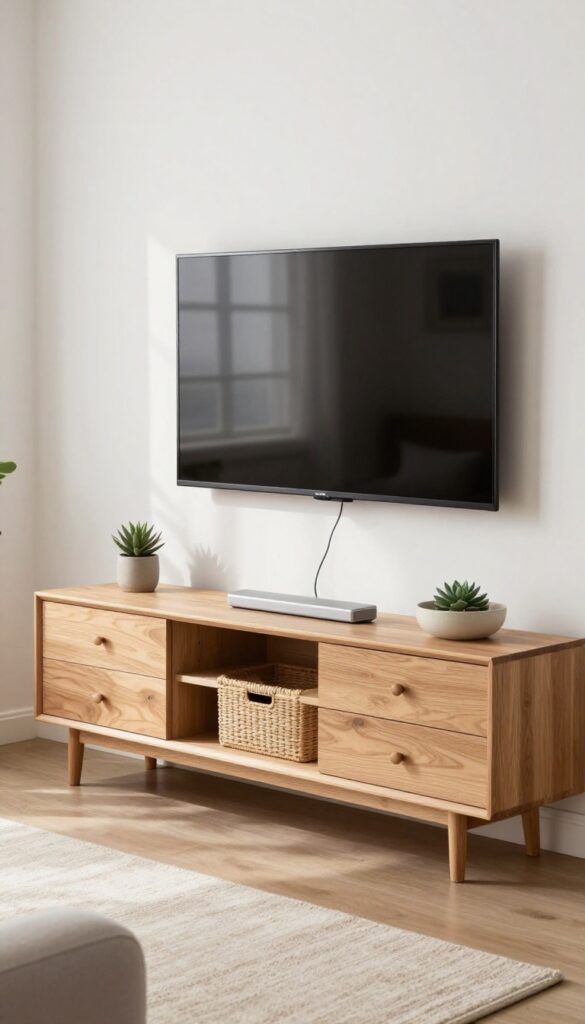
A media console with deep pull-out drawers is a game-changer for anyone tired of tangled cables and scattered gaming gear. The drawers slide out smoothly, giving you easy access to controllers, headsets, and remotes without digging through a messy pile. Woven baskets placed on open shelves or inside cubbies add warmth and texture, while hiding smaller items like charging bricks and spare batteries.
This setup keeps your TV wall looking neat and intentional, not cluttered.
This console works best in a living room where the TV is the main focal point, but you still want to keep the surrounding area tidy. The combination of closed storage (drawers) and open storage (baskets) lets you hide the ugly stuff while displaying a few decorative objects on top. Choose a console with a low profile so it doesn't block the wall or make the room feel heavy.
A light wood finish or a crisp white keeps the look airy, while dark wood adds a grounded, masculine feel. The key is to pick a style that complements your existing furniture—mid-century modern, Scandinavian, or industrial all work well.
Best Materials
- Solid wood or high-quality MDF with a veneer finish gives the console durability and a polished look. For the baskets, natural woven materials like seagrass, rattan, or water hyacinth add organic texture. Avoid plastic baskets—they can feel cheap and don't breathe as well for storing electronics.
- Metal hardware in brushed brass or matte black adds a subtle accent.
Layout Tip
- Place the console at least 4–6 inches away from the wall to allow airflow behind electronics. Center it under the TV, leaving a few inches of breathing room on each side. If your TV is mounted, the console should be slightly lower than the bottom edge of the screen—usually around 24–30 inches high.
- This keeps the viewing angle comfortable and prevents the console from competing with the TV.
Storage Strategy
- Use the top drawers for frequently used items like remotes and game controllers. Reserve the lower drawers for cables, power strips, and rarely touched accessories. Label the inside of each drawer with small tags or washi tape so everyone in the household knows where things go.
- For the baskets, assign one for charging cables and another for spare batteries or small tech gadgets. This system prevents the inevitable junk drawer effect.
8. Ladder Shelf TV Stand with Tiered Storage
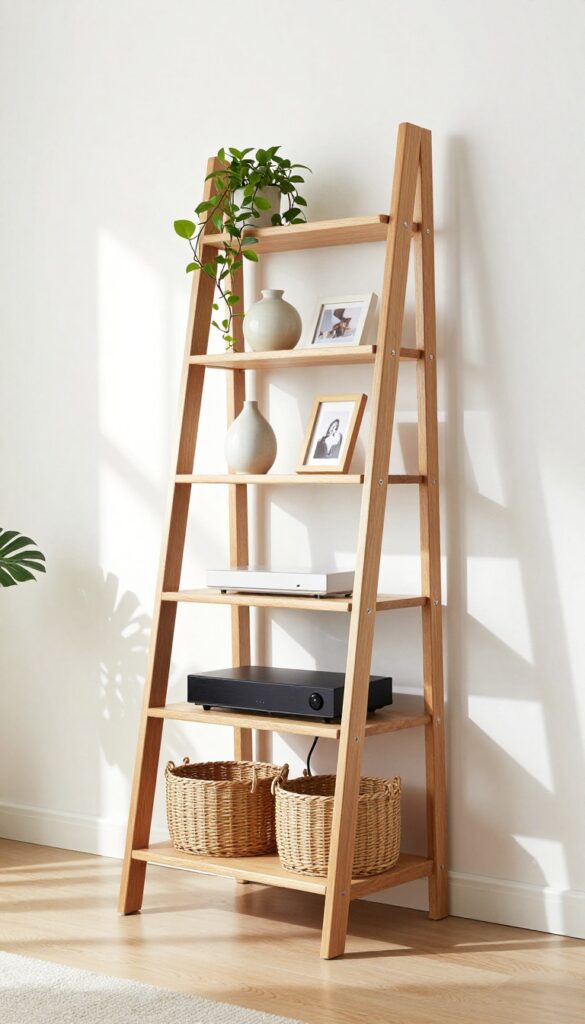
A leaning ladder shelf brings casual, airy storage to your TV wall without the bulk of a full media console. The angled silhouette keeps the room feeling open, while the tiered design gives you distinct zones for electronics, books, and decorative objects. It’s a smart pick for small to medium living rooms where you want storage that doesn’t dominate the space.
The ladder shelf TV stand works best when you let its natural rhythm guide your arrangement. Place your TV on the lower, wider shelves so it stays stable and at eye level. Use the middle tiers for media components like a streaming box or game console, and reserve the top shelves for lighter items—vases, framed photos, or small plants.
The open design encourages you to edit what you display, keeping the wall from looking cluttered. For a cohesive look, choose a ladder shelf in a finish that complements your floor or other furniture, like warm oak or matte black.
Storage Tip
Keep cables hidden by running them along the back leg of the ladder and securing them with clip-on cord organizers. Use small woven baskets or fabric bins on the bottom shelves to corral remote controls, chargers, and other daily essentials. This way, the open shelves stay tidy and the TV area feels intentionally styled.
Shelf Styling Tip
- Create visual rhythm by alternating heights and textures across the tiers. Place a stack of books on one shelf, a ceramic vase on the next, and a trailing plant on the top. Stick to a palette of two or three colors—like white, wood, and green—to keep the display calm and cohesive.
- Leave some negative space so each item breathes.
Small-space Fix
- In a narrow room, opt for a slim ladder shelf that is no deeper than 12 inches. Angle it slightly away from the wall for a relaxed lean, but secure it with anti-tip brackets for safety. Pair it with a low-profile TV to maintain the airy feel.
- This setup works especially well in apartments or open-plan living areas where you want to define the media zone without adding visual weight.
9. Minimalist Wall-Mounted Shelf with Boxes
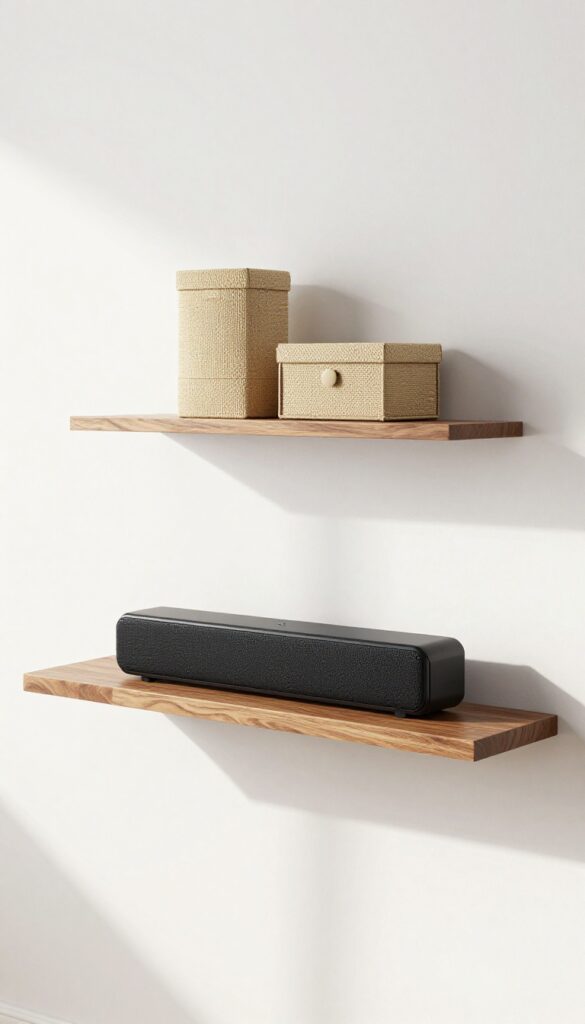
Sometimes the simplest setup is the one that feels the most intentional. A single floating shelf mounted below the TV does double duty—it gives your soundbar a dedicated spot and keeps essentials like remotes and small gadgets tucked away in matching boxes. The result is a clean, airy look that doesn't compete with the screen.
This idea works especially well in smaller living rooms where every inch counts, or in spaces where you want the TV to blend in rather than dominate.
A single floating shelf is one of the easiest ways to keep your TV area looking neat without adding bulky furniture. By mounting the shelf directly below the TV, you create a streamlined zone that holds just what you need: a soundbar for better audio and a few boxes for the everyday clutter. Choose boxes that match the shelf or contrast slightly—think natural wood tones with white boxes, or black boxes against a light wall.
The key is keeping everything uniform so the eye isn't drawn to scattered items. This setup is perfect for renters or anyone who wants a quick, low-commitment upgrade. Plus, it frees up floor space, making the room feel larger and more open.
Best Materials & Finishes
- Go with a solid wood shelf in a finish that complements your TV unit or wall color—walnut, oak, or painted white are all great choices. For the boxes, woven seagrass or matte metal adds texture without visual noise. If your wall is dark, a light wood shelf creates contrast; on a white wall, a darker shelf grounds the setup.
- Avoid glossy finishes that reflect light and distract from the screen.
Storage Tip
- Use boxes with lids to hide remotes, cables, and small accessories. Label them if you share the space, but keep labels subtle—think small tags or a simple marker on the bottom. This keeps the shelf looking curated and clutter-free.
- Bonus: stash a power strip behind the shelf or inside a box to manage cords.
Layout & Placement
- Mount the shelf about 4 to 6 inches below the TV so the soundbar sits comfortably without blocking the screen. Center the shelf with the TV, and keep the boxes on one side or evenly spaced. If your soundbar is wide, let it extend slightly past the shelf ends—it still looks balanced.
- Leave a few inches of breathing room on each side for a polished look.
10. TV Unit with Integrated Lighting and Glass Doors
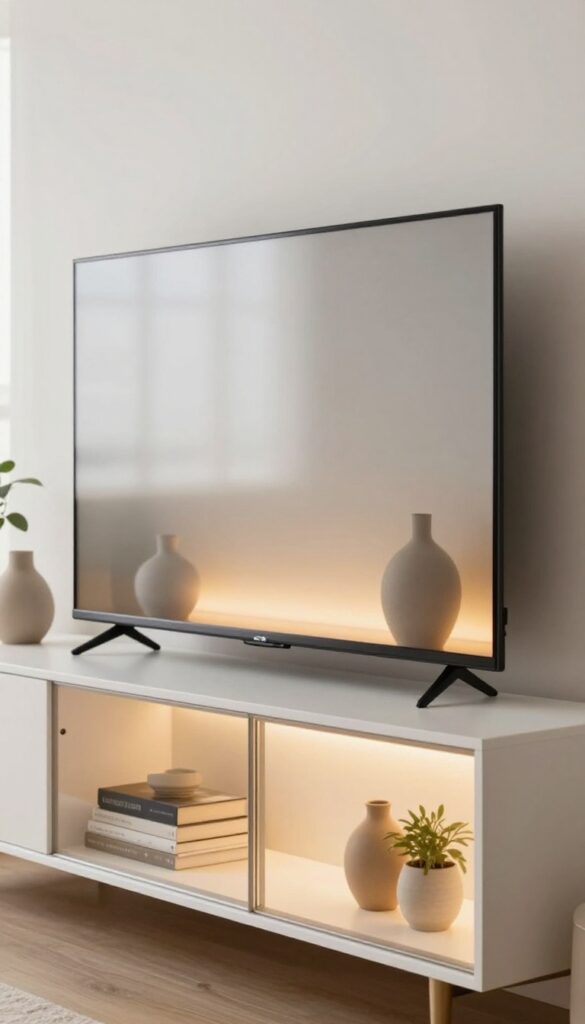
Integrated lighting is one of those finishing touches that instantly makes a TV unit feel custom and polished. When you pair it with glass-front cabinets, the result is a display that feels curated rather than cluttered. The key is using frosted or tinted glass to soften the view of electronics while still letting the glow from LED strips shine through.
This setup works especially well in living rooms where you want to keep the TV area neat but still add a layer of ambient lighting for cozy evenings.
The combination of glass doors and hidden LED strips does double duty: it hides the mess of cables and devices behind a sleek surface, while the soft light highlights the decor pieces you actually want to show off. Think of it as a built-in nightlight for your living room, one that makes the whole wall feel intentional and thoughtfully designed. The best part is that you can adjust the brightness or color temperature to match the mood, from warm and dim for movie nights to cooler tones for daytime entertaining.
Best Lighting Placement
Install LED strips along the top inner edge of each cabinet, angled slightly downward so the light washes over the items inside without creating harsh glare. For open shelves, consider placing strips under each shelf to create a floating effect. Use warm white (2700K–3000K) for a cozy living room vibe, or dimmable smart LEDs if you want flexibility.
Glass Type And Finish
Frosted glass is the most forgiving—it hides dust and minor clutter while still letting light through. Tinted glass in bronze or grey adds a touch of sophistication and works well with darker wood tones. If you want a cleaner look, opt for clear glass with a subtle anti-glare coating, but be prepared to keep the interiors extra tidy.
Storage And Styling Balance
Use the glass-front cabinets for decorative items like vases, books, or collectibles, and reserve solid doors for storing media players, game consoles, and cables. To keep the display from looking busy, limit each glass cabinet to three to five carefully arranged objects, and leave some negative space. A small tray or box can corral smaller items like remotes.
11. Convertible TV Cabinet with Fold-Down Desk
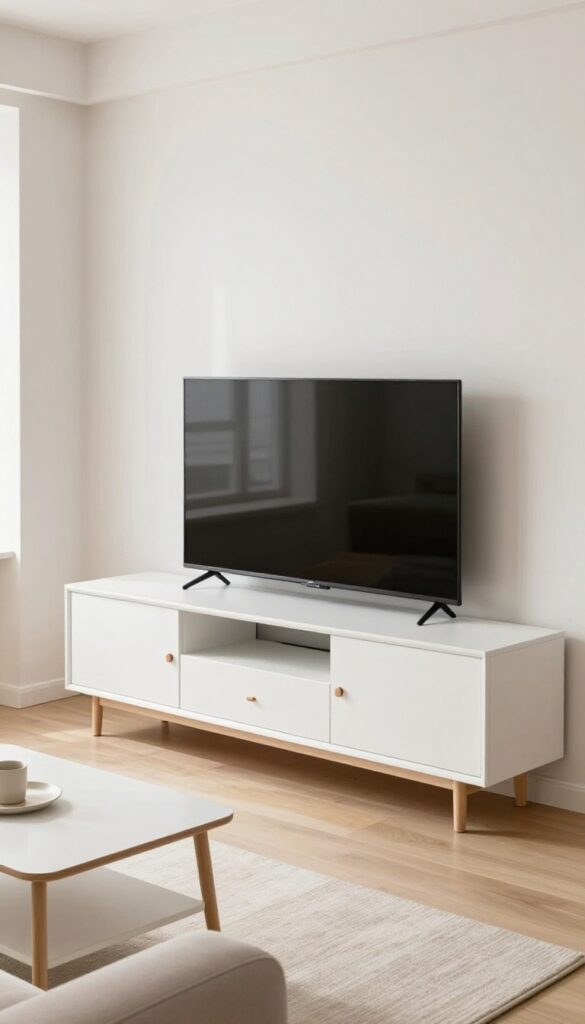
A convertible TV cabinet that doubles as a desk is a game-changer for small living rooms that pull double duty as a workspace. When you need to get some work done, simply fold down the desk surface—it’s sturdy enough for a laptop and a notebook. When it’s time to relax, close the cabinet doors to hide the TV and the desk, leaving a clean, furniture-only look.
This piece blends storage, function, and style without making the room feel cluttered.
This idea works best in a compact living room where every inch counts. The cabinet typically features a lower section with closed storage for electronics and a fold-down panel that reveals a desk surface. Above, there’s often a shelf or a nook for the TV.
When the desk is folded away, the cabinet looks like a sleek media console. Choose a design with clean lines and a finish that complements your existing furniture—white or light wood keeps the room airy, while dark wood adds warmth. The key is to keep the interior organized with cable management and small bins for office supplies, so everything stays tidy when the desk is stowed.
Best Materials
- Look for a cabinet made from solid wood or high-quality MDF with a laminate finish—it needs to withstand daily folding and unfolding. A matte finish hides fingerprints better than glossy. For the desk surface, a scratch-resistant laminate or a thin layer of hardwood veneer will hold up to laptop use.
- Metal hinges and a sturdy folding mechanism are non-negotiable; test them in the store if possible. Avoid particleboard that can sag over time.
Layout Tip
- Place the cabinet against a wall that’s not the main focal point, like a side wall rather than directly across from the sofa. This way, the desk area feels separate from the seating zone. If the room is narrow, choose a cabinet that’s no deeper than 18 inches when closed, so it doesn’t eat into walkway space.
- Leave at least 3 feet in front of the cabinet for a chair when the desk is down—a slim, foldable chair that can be tucked away works perfectly.
Storage Strategy
- Inside the cabinet, use small bins or drawer dividers to separate office supplies from media accessories. Keep a power strip with USB ports mounted inside so you can charge devices without visible cords. For the TV, choose a model that’s slim enough to fit inside the cabinet depth—usually 10 to 12 inches.
- If the cabinet has open shelves above, use them for decorative baskets or a few books to keep the look intentional, not cluttered.
FAQ
How do I hide TV cables without cutting into the wall?
Use a cord cover kit that paints to match your wall, or route cables through a channel behind a floating console. Some units have built-in cable management panels.
What is the best height for a TV unit?
The center of the TV should be at eye level when seated, typically 42 to 48 inches from the floor. Adjust based on your seating height and room layout.
Can I use a TV unit in a small living room?
Yes. Opt for wall-mounted or slim consoles with vertical storage to save floor space. Corner units and modular systems work well in tight areas.
How do I keep my TV unit looking neat?
Choose units with closed storage for electronics and cables. Use baskets, trays, or drawer dividers to organize remotes and accessories. Limit surface decor to a few key pieces.
What materials are best for a storage-smart TV unit?
Solid wood or MDF with a matte finish hides fingerprints and blends with most decor. Metal accents add durability, while glass doors require more cleaning but look sleek.
Conclusion
A storage-smart TV unit does more than hold your screen—it keeps your living room wall looking polished and intentional. Whether you prefer floating consoles or built-in systems, the right choice makes daily life easier and the space feel larger.
Pick the idea that fits your room size and storage needs. With a little planning, your TV wall can become a neat, stylish focal point that works as hard as you do.