13 Warm Living Room Ideas Using Soft Light and Texture
A warm living room isn't about turning up the thermostat. It's about how light falls across a room and how surfaces feel under your fingertips.
Soft lighting and layered texture can transform a space from flat to inviting without a major renovation. These 13 ideas are designed for a weekend refresh—simple swaps and thoughtful additions that make your living room feel like a hug.
Each tip is practical, space-aware, and easy to picture in your own home.
1. Swap Cool Bulbs for Warm LED Filament Bulbs
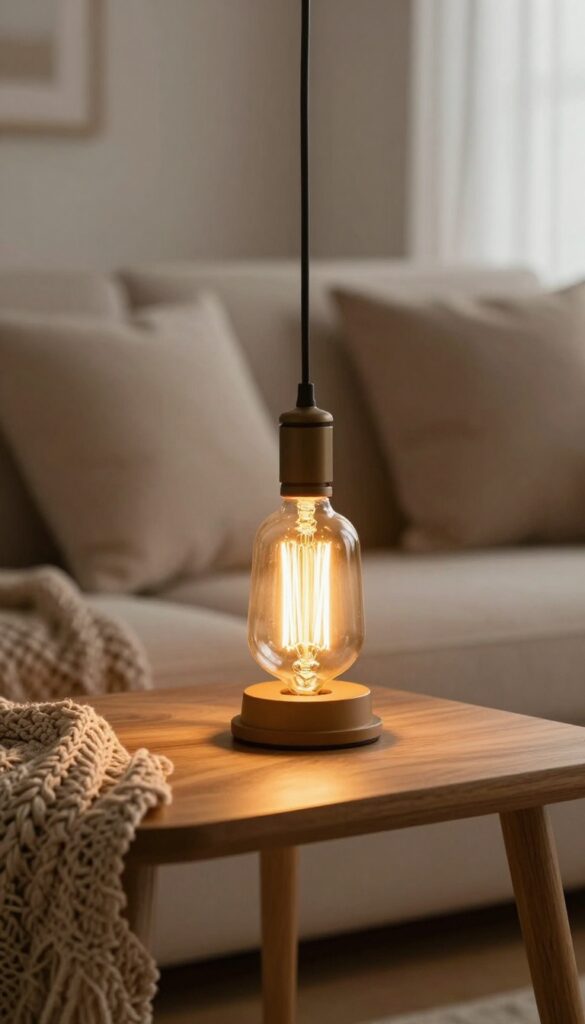
Lighting temperature is one of those things you don't notice until you do. Swap out those cool-white bulbs for warm LED filament ones (2700K–3000K) and watch the whole room soften. The exposed filaments add a vintage, handcrafted feel while casting a gentle amber glow that makes every corner feel more inviting.
It's a five-minute swap that changes the mood instantly.
The quickest way to make a living room feel warmer is to change the light itself. Cool bulbs (4000K+) read as clinical or sterile, while warm bulbs wrap the room in a cozy, golden atmosphere. LED filament bulbs combine that warmth with a decorative look—the visible filaments glow like old Edison bulbs but last for years.
Use them in bare sockets, pendants, or lamps where the bulb is exposed. The effect is especially nice in the evening when you want to dial down the energy and settle in.
Best Fixtures For Filament Bulbs
These bulbs shine in open fixtures where they're visible. Try a single pendant over a coffee table, a cluster of three in a corner, or a simple floor lamp with an exposed socket. Avoid hiding them behind heavy shades—the whole point is the warm glow and the filament detail.
Where To Place Them
Focus on areas where you relax: beside the sofa, near a reading chair, or on a sideboard. Replace overhead can lights with a dimmable filament bulb on a dimmer switch so you can adjust the brightness. The warm glow works best at lower wattages (40W–60W equivalent) for a soft, ambient light.
Budget-Friendly Swap
You don't need to replace every bulb at once. Start with two or three key lamps or pendants and see how the room shifts. A pack of warm LED filament bulbs costs around $10–$15, making this one of the cheapest ways to change your space's entire feel.
2. Layer a Chunky Knit Throw Over the Sofa
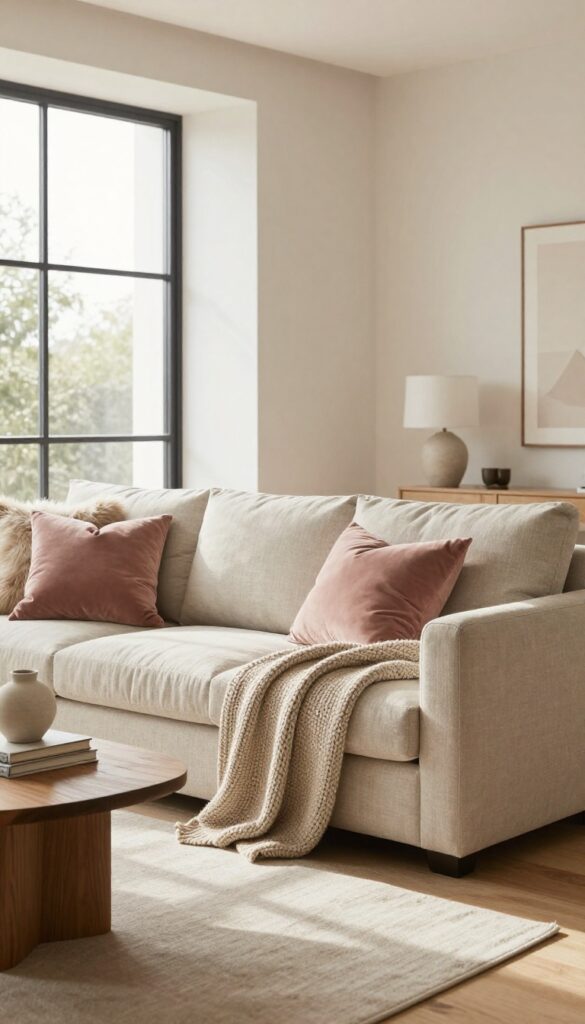
Texture is the secret ingredient that makes a room feel finished and lived-in. A chunky knit throw does exactly that—it adds warmth, softness, and a tactile invitation to curl up. In a living room built around soft light and cozy layers, this one piece can anchor the whole look.
And because it’s a weekend-refresh friendly swap, you can change the vibe in seconds.
Drape a chunky knit throw in a neutral tone like oatmeal or cream over your sofa. The oversized texture invites touch and adds visual weight without cluttering the space. It’s an easy way to introduce warmth without committing to a new rug or paint color.
Best Colors
Stick with warm neutrals—think creamy white, oatmeal, taupe, or a soft heather gray. These shades reflect light and keep the room feeling airy. If you want a subtle pop, try a dusty blush or sage green, but keep it muted so the texture stays the star.
Texture Mix
Pair the knit throw with smoother fabrics like linen or cotton on your sofa cushions. The contrast makes the chunky knit stand out even more. Add a velvet pillow or a faux fur accent nearby for a layered, collected look that still feels intentional.
Styling Tip
Instead of folding the throw neatly, drape it loosely over one arm or across the back of the sofa. Let a corner hang down slightly—it looks effortlessly inviting. For a more polished look, fold it in thirds and lay it along the seat cushion, then pull one end over the armrest.
3. Add a Floor Lamp with a Fabric Shade
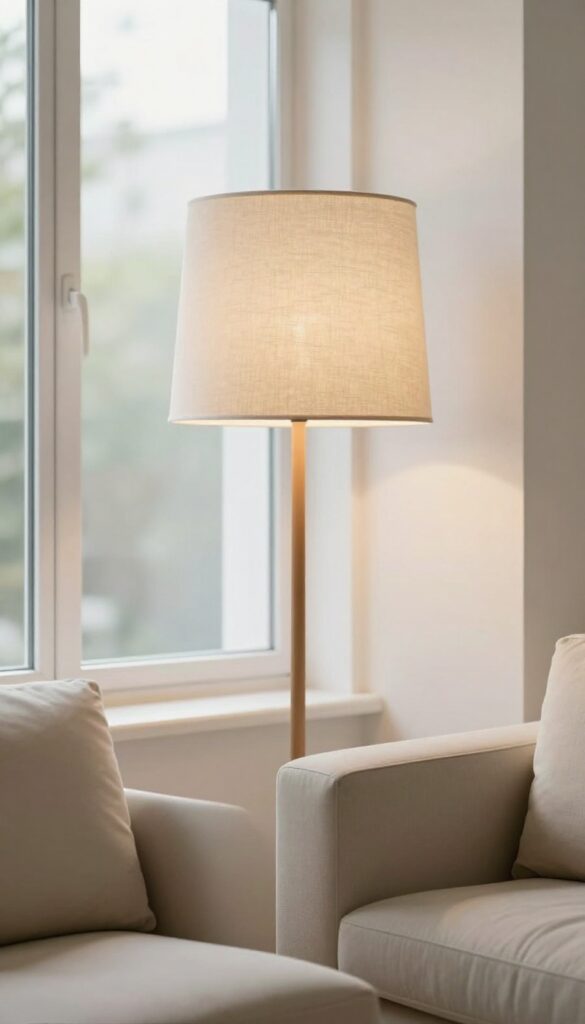
A floor lamp does more than just light up a dark corner. When you choose one with a linen or cotton shade, the light softens and spreads evenly, wrapping the room in a warm, gentle glow. No more harsh shadows or glaring bulbs—just a cozy pool of light that naturally draws you in.
Place it next to an armchair or sofa, and you’ve instantly carved out a reading nook or a quiet spot to unwind.
Floor lamps with fabric shades are a weekend-refresh hero because they change the mood without any renovation. The soft material diffuses light beautifully, making the space feel intimate and calm. For a smart, space-aware setup, tuck the lamp into an empty corner or beside a low-profile sofa.
This adds height and visual interest without cluttering the floor. Choose a shade in a neutral tone like oatmeal, beige, or warm gray—it blends in while still making a statement. The result is a living room that feels layered, inviting, and effortlessly put together.
Best Placement
- Corners are prime real estate for a floor lamp. It fills an empty spot and creates a natural focal point. If your seating area feels disconnected, place the lamp between two chairs or next to a sofa arm.
- This anchors the zone and gives you task lighting for reading or scrolling. Avoid putting it in high-traffic walkways—keep it slightly tucked so it doesn’t get knocked over.
Style & Shade Tips
- Linen and cotton shades are top choices for soft light. A drum or tapered shape works well—clean lines that feel modern but not cold. For a warm touch, look for shades in off-white, cream, or sandy tones.
- If you want a bit of texture, choose a shade with a subtle weave or ribbed fabric. This adds visual depth even when the lamp is off.
Budget-Friendly Swap
- You don’t need a pricey designer lamp. A basic floor lamp from a home store gets the job done—just swap the shade for a nicer fabric one. Many lamps come with a plain drum shade that you can upgrade for under $30.
- Look for a shade with a diffuser or a white lining to maximize softness. It’s an easy, low-cost way to get that cozy glow.
4. Incorporate a Sheepskin or Faux Fur Rug
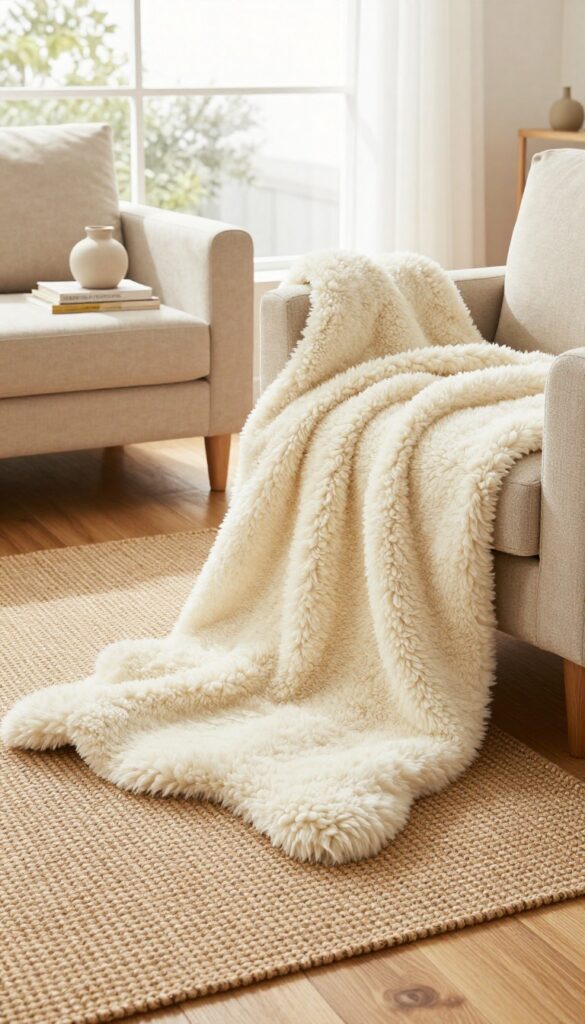
Soft texture is one of the quickest ways to make a living room feel cozier, and a sheepskin or faux fur rug delivers that instantly. Draped over a chair, layered on a larger neutral rug, or placed directly on hardwood, it adds a plush, inviting layer that begs you to kick off your shoes. The contrast between the fluffy surface and sleeker floors or furniture creates visual interest without clutter—perfect for a weekend refresh that doesn't require a full redesign.
A sheepskin or faux fur rug is a small addition with a big impact on warmth and comfort. Its natural or faux texture softens hard surfaces and adds a touch of luxury that feels indulgent but achievable. In a warm-toned living room, choose a cream, ivory, or light gray rug to keep the space airy, or go for a deeper taupe or charcoal if you want a more grounded look.
The key is to let the rug stand out against its background—place it where it can be seen and touched, like beside the sofa or under a coffee table. For a smart, space-aware approach, fold it over the arm of a chair or drape it over a bench for an effortless layered effect.
Best Placement & Pairing
- The most effective way to use a sheepskin or faux fur rug is to layer it over a larger, flat-weave or low-pile rug. This creates depth and a cozy nook without overwhelming the floor. Alternatively, place it directly on hardwood or tile for a striking textural contrast.
- In smaller living rooms, keep it near seating areas—under a coffee table or beside an armchair—so it feels intentional rather than random.
Color & Texture Mix
- Stick with neutral tones like cream, ivory, or soft gray to maintain a warm, cohesive palette. These colors blend easily with existing decor and reflect light, making the room feel brighter. For a bolder touch, try a faux fur in a muted blush or warm caramel, but keep the rest of the room simple to avoid visual noise.
- Pair with chunky knit throws, velvet pillows, or linen curtains to balance the fluffiness with other textures.
Weekend-refresh Styling Tip
- This is one of the easiest weekend updates: simply add one or two sheepskin rugs to your living room. No need to rearrange furniture or paint walls. Drape one over the back of a sofa for an instant cozy vibe, or layer it at the foot of a reading chair.
- The effect is immediate and requires zero commitment—if you change your mind, just fold it away.
5. Use Dimmable Table Lamps on Side Tables
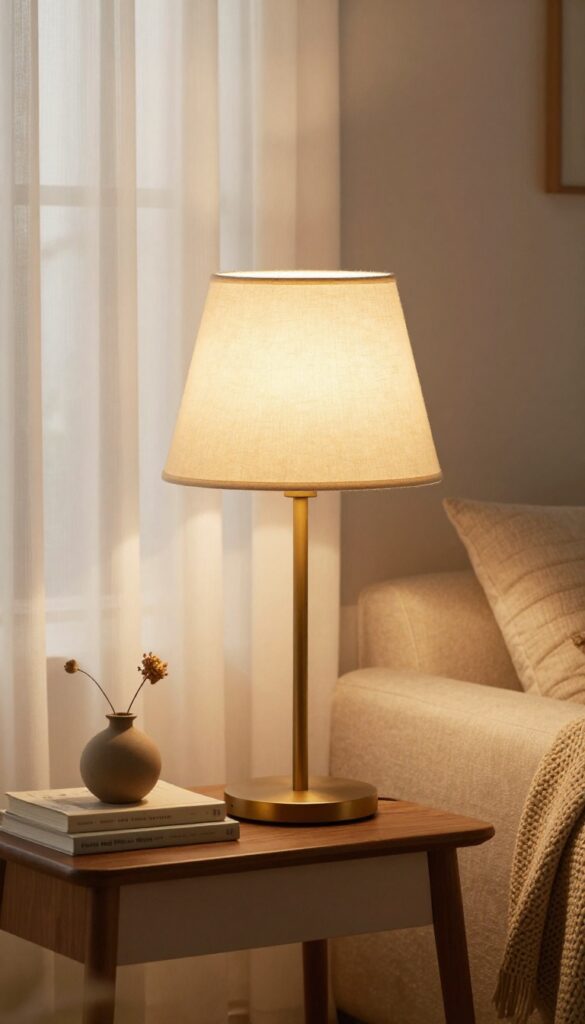
Table lamps are a no-brainer for living rooms, but swapping out standard bulbs for dimmable ones changes the whole game. With a simple twist or slide, you can go from bright task lighting for afternoon reading to a low, golden glow that makes the room feel like a cozy cocoon. It’s one of those small upgrades that instantly makes your space feel more intentional and relaxing—without any major renovation.
Dimmable table lamps give you control over your room’s mood at any hour. Place them on side tables flanking the sofa or next to an armchair, and you’ll have flexible light that adapts to your day. In the morning, keep them bright to help you wake up; by evening, dim them down to signal it’s time to unwind.
This idea works especially well in living rooms where overhead lighting feels harsh or where you want separate zones for different activities.
Best Bulb Types
- Look for LED bulbs labeled ‘dimmable’ with a warm color temperature around 2700K to 3000K. They’ll give you that soft, amber glow when dimmed, without any flicker or buzz. Avoid cheap dimmable CFLs—they often hum or take forever to warm up.
- A quality LED will last for years and save energy too.
Placement Tips
Position lamps so the shade sits just below eye level when you’re seated—this prevents glare and keeps the light soft. On a side table, aim for a lamp that’s about 25 to 30 inches tall from tabletop to top of shade. If your side table is small, go with a slim, tapered base that won’t crowd the surface.
Weekend Refresh Move
- Already have table lamps? Just swap in dimmable bulbs and add a smart plug or dimmer switch. That’s a 15-minute upgrade that costs under $30.
- Pair it with a textured lampshade—like linen or woven rattan—to soften the light even more and add a tactile element to your room.
6. Hang Velvet Curtains Floor to Ceiling
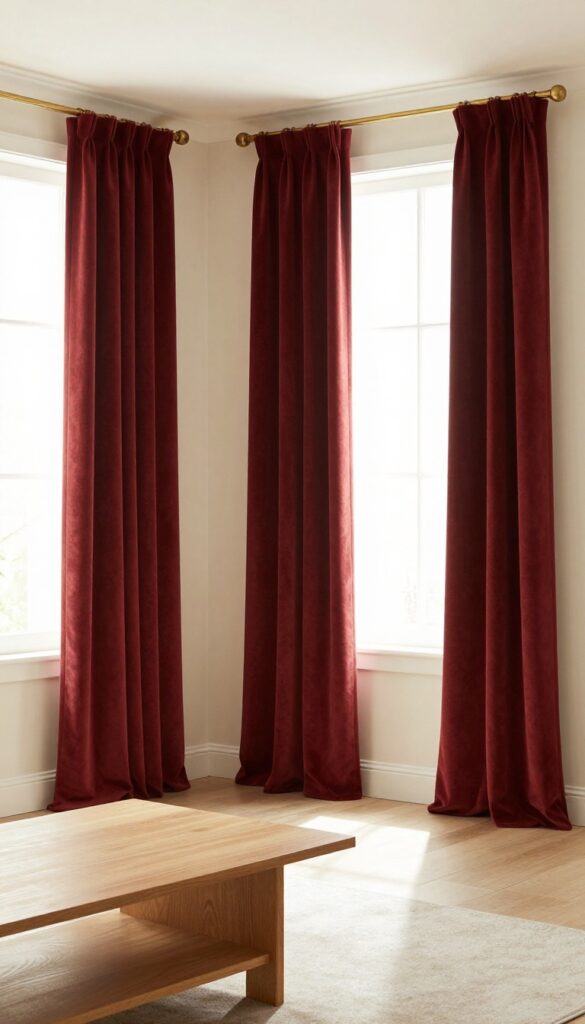
Few things transform a living room as instantly as floor-to-ceiling velvet curtains. The weight of the fabric, the way light filters through the pile, and the deep color saturation all work together to create a warm, enveloping feel. Plus, velvet naturally absorbs sound, making the room quieter and more intimate—perfect for a cozy night in.
And because you can install them in an afternoon, this is a top-tier weekend refresh.
Velvet curtains in deep jewel tones like rust, forest green, or navy add richness and absorb sound. Hanging them high and wide makes windows feel larger and the room more cocooning. For a smart, space-aware approach, choose a single panel per side to keep the look clean and avoid overwhelming a smaller room.
Best Colors For A Cozy Vibe
- Stick with warm, saturated hues that complement your existing palette. Rust pairs beautifully with warm woods and cream walls. Forest green feels grounding next to leather or brass.
- Navy adds a sophisticated, den-like quality, especially when layered with ivory or oatmeal textiles. Avoid icy tones or pastels—they can make velvet look cheap and work against the warm, cocooning effect.
Hanging Tip: High And Wide
Mount your curtain rod as close to the ceiling as possible—ideally just a few inches below the crown molding—and extend it past the window frame by at least 6 to 8 inches on each side. This trick visually widens the window and makes the ceiling feel taller. Use a sturdy rod that can handle the weight of velvet, and choose rings with clips for easy opening and closing.
Small-space Fix: One Panel Per Side
- In a compact living room, stacking two panels per side can feel bulky. Instead, use a single wide panel on each side. This keeps the look tailored and avoids a heavy, fabric-heavy appearance.
- For a budget-friendly swap, consider velvet-look polyester blends—they drape well, are easier to clean, and cost less than natural fibers.
7. Place a Woven Basket Filled with Blankets
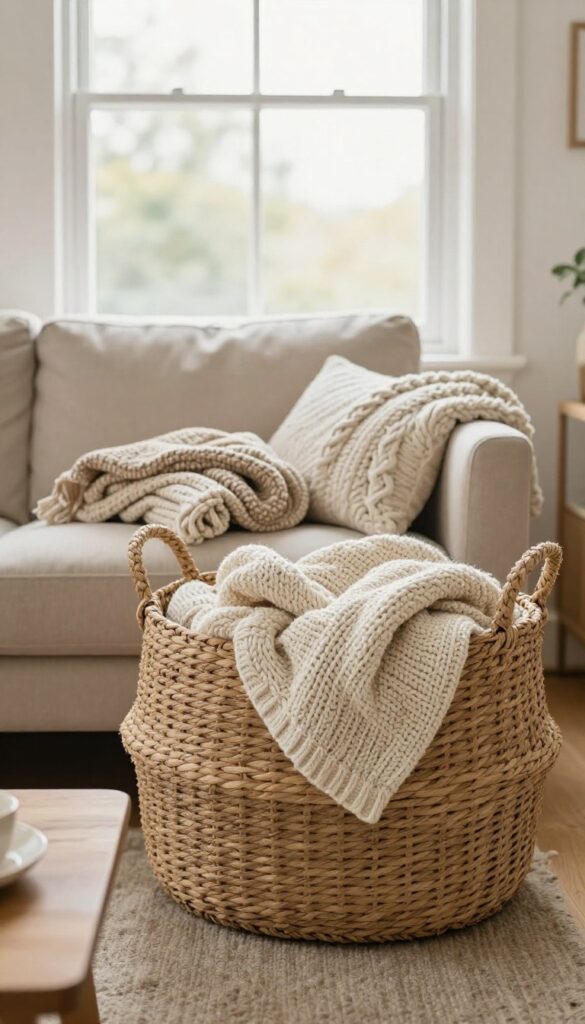
Texture is one of those quiet elements that makes a room feel layered and lived-in without trying too hard. A woven basket does double duty here: it adds natural warmth through its material and gives you a stylish home for extra throws. When guests spot a basket full of soft blankets, they instantly know this is a space where they can kick off their shoes and stay awhile.
A large woven basket—think seagrass, rattan, or water hyacinth—placed beside the sofa or near a reading chair brings an organic, grounded feel to the room. It breaks up all the soft upholstery and hard surfaces with a touch of nature. Fill it with a couple of chunky knit throws or lightweight cotton blankets in tones that complement your existing palette.
The basket itself becomes a sculptural accent, while the blankets invite cozying up. For a weekend refresh, swap out the basket for a different natural material or try a new blanket color to shift the room's mood without any real effort.
Best Materials
Seagrass and rattan offer a light, airy texture that works well in smaller spaces. For a richer look, go with dark-stained wicker or woven abaca. The key is choosing a basket with an open weave so the blankets breathe and feel accessible, not stuffed.
Styling Tip
Fold blankets loosely or let them drape over the basket's edge for an effortless, inviting look. Avoid stacking them too neatly—a little casual disorganization reads as cozy, not messy. Pair the basket with a chunky knit throw in cream or oatmeal to keep the texture story cohesive.
Small-space Fix
In a tight living room, a tall, narrow basket takes up less floor space while still holding plenty of blankets. Place it next to an armchair or in an unused corner to add warmth without clutter. Bonus: it doubles as a catchall for remote controls or magazines.
8. Cluster Candles on a Tray or Mantel
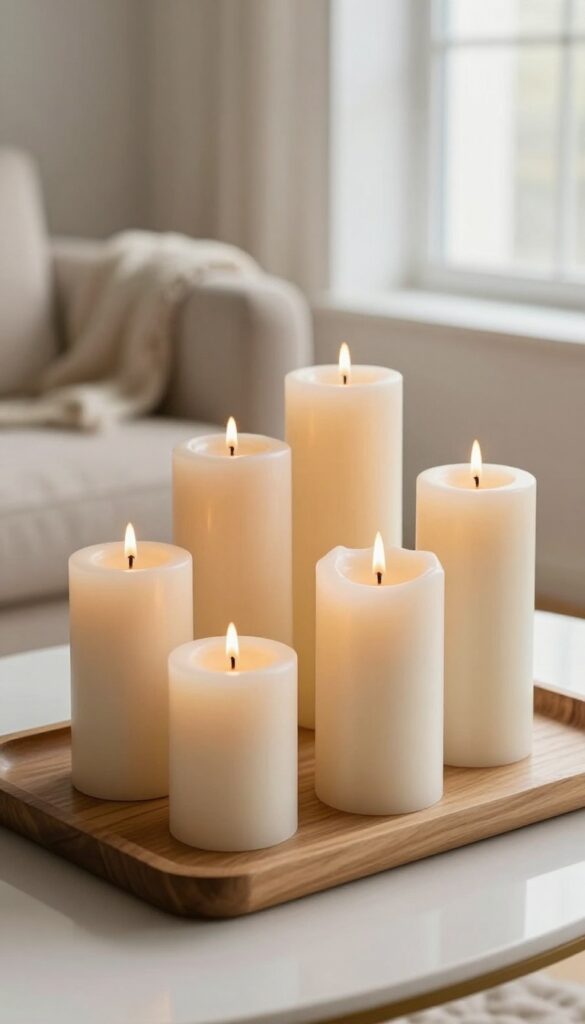
There’s something about a group of candles that instantly makes a room feel more alive. When you cluster them on a tray or across a mantel, you’re not just adding light—you’re creating a little stage for warmth and movement. The flicker draws the eye, and the varying heights add a sculptural quality that feels intentional without trying too hard.
For a weekend refresh, this is one of the fastest ways to shift the mood in your living room.
Group unscented pillar candles of varying heights on a wooden or marble tray. The flickering light creates movement and warmth, especially when reflected off a mirror or glass. Stick to neutral tones like ivory, cream, or soft taupe so the focus stays on the glow, not the color.
Place the tray on a coffee table, sideboard, or mantel where it can catch attention without blocking sightlines. If you have a mirror nearby, angle the candles so their light bounces—it doubles the warmth without doubling the effort.
Best Materials For The Tray
A wooden tray adds natural texture that complements the softness of candlelight, while a marble or stone tray brings a clean, cool contrast that feels smart and space-aware. For a budget-friendly swap, use a large ceramic plate or a slate cheese board—anything with a defined edge keeps the cluster contained and intentional.
Height And Spacing Tips
- Mix pillars in three heights—short, medium, and tall—and group them in odd numbers like three or five. Keep about an inch of space between each candle so they read as a set but don’t crowd each other. Place the tallest at the back or center, then stagger the others forward.
- This creates depth and makes the arrangement feel curated, not accidental.
Finishing Touch
Add a small element of nature, like a sprig of eucalyptus or a few dried lavender stems, tucked between the candles. It softens the edges and adds a subtle organic note that keeps the look from feeling too stiff. Just keep it low so it doesn’t block the light.
9. Add a Boucle or Textured Accent Chair
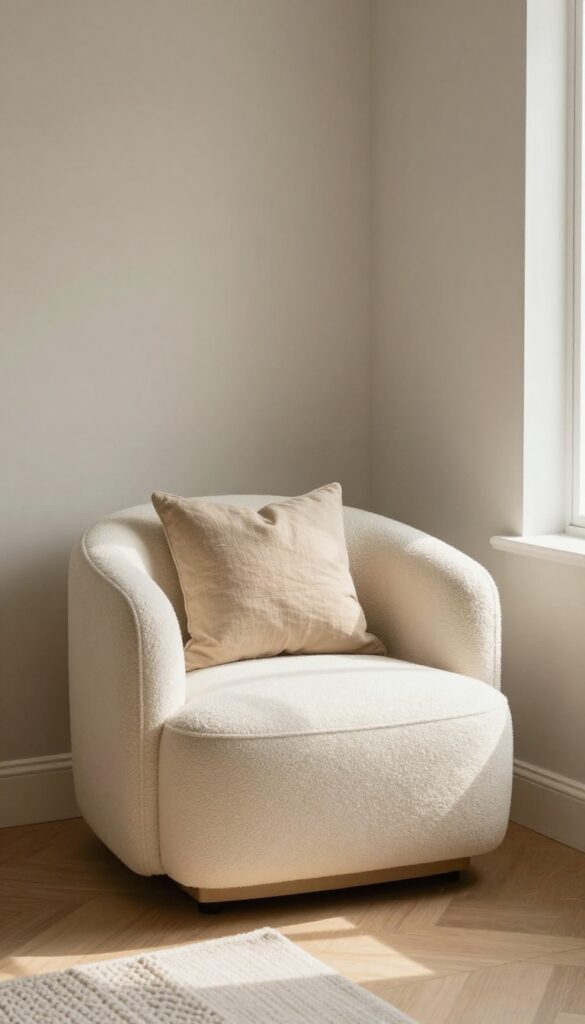
A single accent chair can shift a room's entire feel, especially when it brings texture into play. Boucle—that looped, nubby fabric—adds a soft, tactile layer that makes a living room feel instantly more inviting. It’s the kind of piece that looks like it belongs in a cozy hotel lounge but fits right into a weekend refresh.
A boucle or heavily textured accent chair breaks up all the smooth surfaces—leather sofas, glass tables, flat-painted walls—that can make a room feel sterile. The nubby fabric catches light differently, creating subtle shadows and depth without any extra effort. It also invites you to touch it, which is exactly the kind of sensory detail that makes a space feel lived-in and warm.
Plus, boucle works with almost any color palette because it reads as a neutral texture, not a loud pattern.
Best Colors
Stick with creamy whites, warm beiges, or soft greiges for the most versatile look. These shades keep the chair from competing with other furniture while still adding visual interest. If you want a bolder pop, try a muted rust or dusty olive—just keep the fabric texture as the main event.
Small-space Fix
In tight living rooms, choose a slim armless boucle chair or a compact swivel version. It takes up less visual real estate but still delivers that cozy, textured punch. Place it near a window or beside a floor lamp to draw the eye without crowding the layout.
Texture Mix
Pair your boucle chair with a smooth leather sofa or a velvet ottoman for contrast. Add a chunky knit throw or a linen pillow to layer textures even further. The goal is to create a mix that feels intentional, not chaotic—boucle acts as the soft anchor.
10. Install Picture Lights Above Art or Shelves
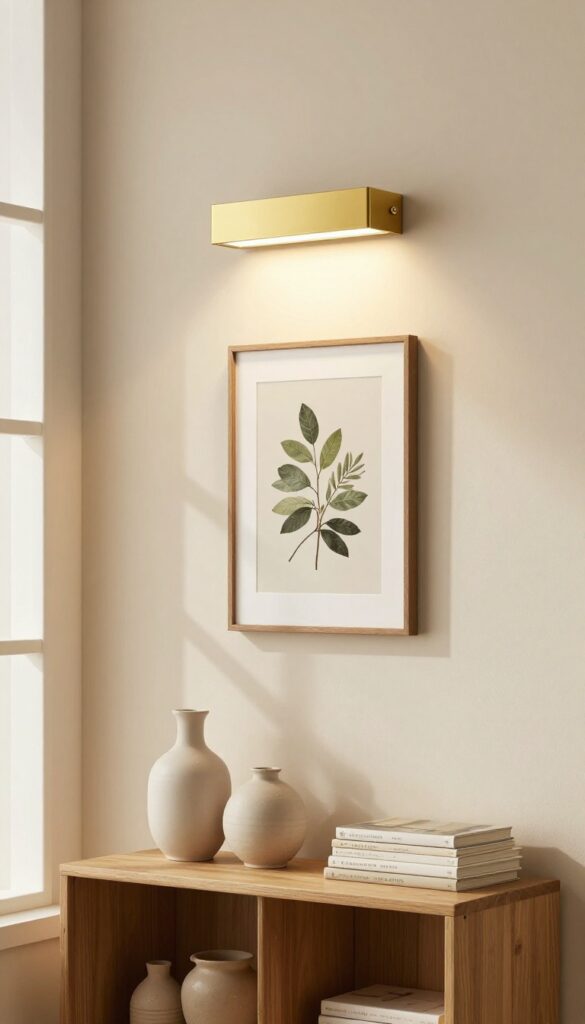
Picture lights aren't just for galleries anymore. A small, warm LED fixture positioned above a favorite print or a styled shelf creates a focused pool of light that feels intentional and cozy. It's an easy weekend swap that instantly adds depth and draws the eye to what matters most in the room.
Picture lights work especially well in a living room where you want to highlight a single piece of art or a curated shelf display. The warm glow softens the edges of the room and makes the artwork feel like a destination. For a smart, space-aware look, choose a slim fixture in a finish that complements your hardware—brass for warmth, matte black for contrast, or nickel for a clean modern feel.
Installation is usually straightforward: most plug-in versions hide the cord behind the frame or along the wall, so you don't need an electrician. If you're renting, adhesive cord clips keep things damage-free. The result is a layered lighting scheme that feels polished without being fussy.
Best Placement
- Center the light about 4 to 6 inches above the artwork or shelf. For a single piece, the fixture should be roughly half the width of the frame. Over a shelf, a longer bar light works best to cast even light across multiple objects.
- Avoid placing the light too close to the wall—leave a few inches so the beam spreads naturally.
Bulb Temperature Tip
Stick with warm white LEDs in the 2700K to 3000K range. Anything cooler will feel harsh and clinical, which defeats the cozy mood you're going for. Dimmable bulbs give you flexibility to adjust the brightness depending on the time of day.
Shelf Styling Note
When lighting a shelf, arrange items in small clusters with varying heights. The light will cast soft shadows that add depth, so leave a little breathing room between objects. A stack of books, a small ceramic vase, and a framed photo catch the light beautifully without looking cluttered.
11. Use a Tray to Corral Coffee Table Decor
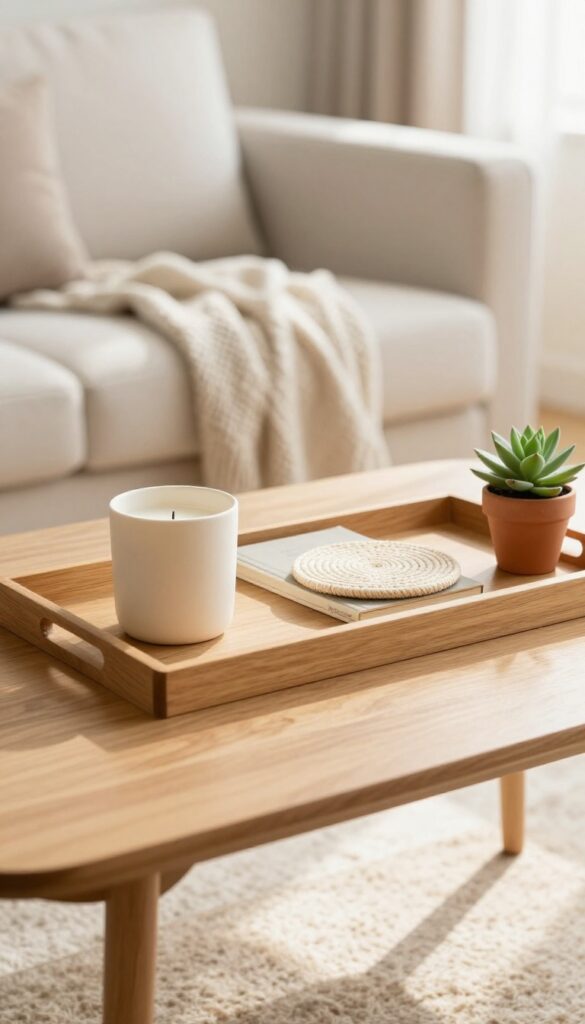
A coffee table can quickly turn into a dumping ground for remotes, magazines, and random odds and ends. A simple tray changes that. It gives everything a designated home while making the whole setup look intentional.
Plus, it's one of those weekend-refresh moves that takes five minutes but makes the room feel instantly more pulled together. Whether you go with ceramic, wood, or woven rattan, a tray lets you layer textures and objects without creating visual chaos.
Think of a tray as a mini stage for your coffee table. It anchors the decor and keeps the surface from feeling cluttered. Start with a tray that fits the scale of your table—too small and it looks lost, too big and it overwhelms.
Then add a few carefully chosen items: a candle, a small stack of books, a coaster or two, and maybe a tiny plant or bud vase. The key is leaving some empty space so the arrangement breathes. This approach works especially well in smart, space-aware homes where every inch needs to earn its keep.
Best Materials For The Job
- Wood trays add warmth and pair nicely with neutral or earthy tones. Ceramic or stone trays feel more sculptural and work well in modern spaces. Woven rattan or seagrass brings in texture and a relaxed vibe.
- For a budget-friendly swap, try a large wooden cutting board or a repurposed baking sheet with a linen napkin folded underneath.
What To Put On The Tray
- Stick to three or four items max. A candle in a neutral vessel, a small stack of books (two or three), and a single coaster or trivet. Add a tiny plant like a succulent or a single stem in a bud vase for a living touch.
- Avoid putting remotes or loose papers here—those belong in a drawer or a basket nearby.
Placement And Proportion Tip
Center the tray on the coffee table if your table is round or square. For rectangular tables, place it slightly off-center toward one end, leaving the other end free for drinks or a decorative object. Make sure the tray is large enough to hold items without crowding—about two-thirds the width of the table is a good rule of thumb.
12. Hang a Macrame Wall Hanging or Tapestry
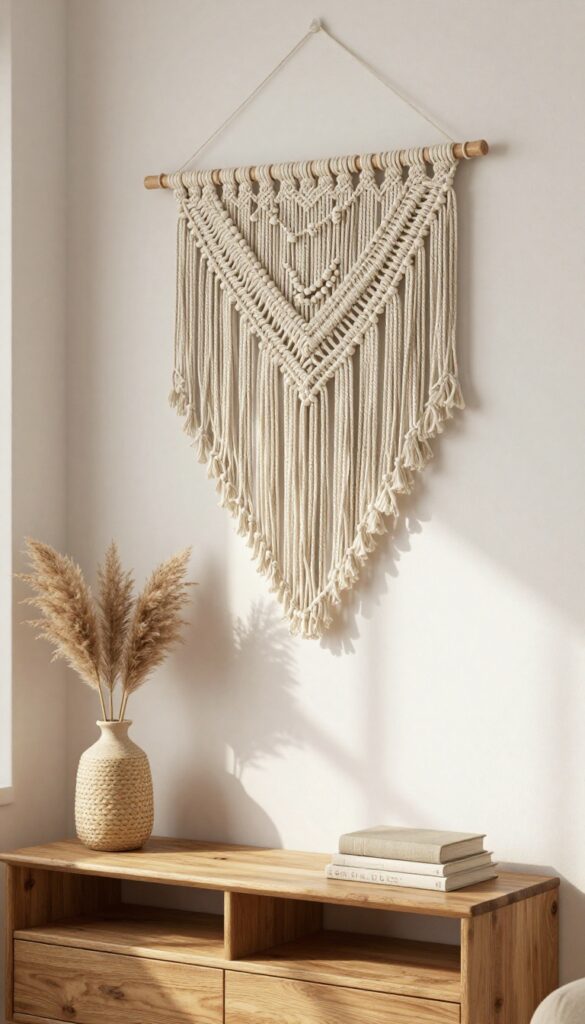
Blank walls can feel cold, even in a warm living room. A macrame wall hanging brings in soft texture and a handmade touch without taking up any floor space. Its natural fibers and open weave add visual warmth and a relaxed boho feel, making it an easy weekend refresh for any room.
Macrame wall hangings are perfect for adding softness and character to empty walls. They work especially well above a sofa, bed, or console table, where they draw the eye and create a cozy focal point. The natural cotton or jute fibers introduce organic texture that complements wood, leather, and other natural materials.
Because they hang flat against the wall, they're ideal for small spaces where you want decor without clutter. Choose a piece with fringe or beads for extra visual interest, or keep it simple for a more minimalist look.
Best Colors And Materials
Stick with natural tones like cream, beige, or undyed cotton for a warm, neutral base that blends with any color scheme. If you want a pop of color, look for macrame with dyed accents in muted earth tones like rust, mustard, or sage. Jute and hemp offer a more rustic feel, while cotton is softer and more flexible.
Placement And Scale
Hang your macrame at eye level, about 6 to 12 inches above furniture. For a standard sofa, a piece that's roughly two-thirds the width of the sofa feels balanced. In a small space, a vertical hanging can make ceilings feel higher, while a wide, horizontal piece can make a narrow wall feel broader.
Styling Tip: Layer With Other Textures
Pair your macrame with a chunky knit throw, a woven basket, or a ceramic vase to reinforce the natural, tactile vibe. Avoid hanging it next to shiny or sleek decor, as the contrast can feel jarring. Instead, let it anchor a cozy corner with soft lighting and plush textiles.
13. Place a Floor Cushion or Pouf for Extra Seating
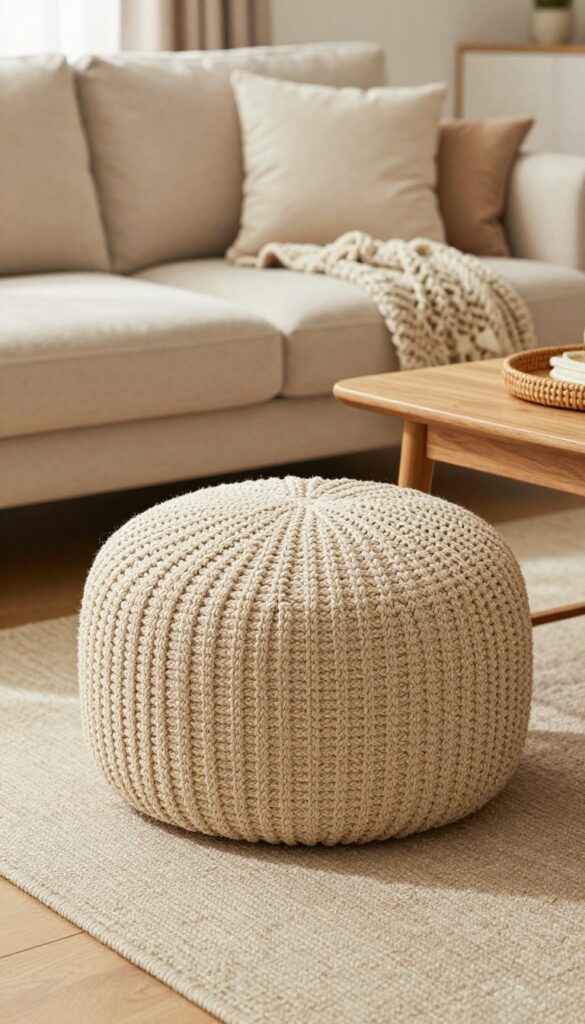
A fabric pouf or oversized floor cushion in a textured weave offers flexible seating and a casual vibe. It also serves as a footrest, adding comfort and a relaxed layer to the room. For a weekend refresh, this is one of the easiest swaps you can make.
Floor cushions and poufs are the unsung heroes of cozy living rooms. They slide under a coffee table when not in use, pull out for impromptu seating, and double as a footrest after a long day. The key is choosing one with a textured weave—like chunky cotton, wool, or woven rattan—that adds visual warmth without taking up visual space.
This idea works especially well in small living rooms where an extra chair would feel bulky. Plus, it’s a budget-friendly way to introduce a new color or texture without committing to a large piece of furniture.
Best Materials
Stick with natural fibers like cotton, jute, or wool for a soft, lived-in feel. A chunky knit pouf adds instant coziness, while a woven rattan or seagrass option brings a touch of boho texture. Avoid slippery synthetics that slide around on hardwood floors.
Placement Tip
Position the pouf near a low coffee table or ottoman so it can easily be pulled into the seating circle. In a small room, place it beside the sofa as a spot to kick your feet up or as extra seating for guests—just tuck it away when not in use.
Color Flow
Pick a pouf that echoes a secondary color from your rug or throw pillows. For a calm, cohesive look, choose a neutral tone like oatmeal or charcoal. For a playful pop, go with a muted mustard or dusty blush that ties into your accent palette.
FAQ
What is the best color temperature for warm living room lighting?
Aim for bulbs with a color temperature between 2700K and 3000K. This range produces a soft, yellowish glow that mimics natural candlelight and creates a cozy atmosphere.
How can I add texture without cluttering my living room?
Focus on a few key pieces like a chunky throw, a textured rug, or a woven basket. Keep surfaces clean and use trays to group small items, so texture adds depth without visual chaos.
Can I achieve a warm look on a budget?
Absolutely. Swap light bulbs, add a thrifted throw, or hang curtains from a tension rod. Small changes like clustering candles or using a floor lamp can make a big difference without spending much.
What type of rug works best for a warm living room?
Look for rugs with a high pile or natural fibers like wool, shag, or faux fur. These materials feel soft underfoot and add visual warmth, especially in neutral or earthy tones.
How do I layer lighting effectively?
Combine overhead lights with floor lamps, table lamps, and candles. Use dimmers to control brightness and place lights at different heights to create a balanced, inviting glow.
Conclusion
Warmth in a living room comes from the little things—the way light filters through a shade, the softness of a throw, the texture of a rug under your feet. These 13 ideas are meant to be mixed and matched over a weekend, giving your space a refreshed feel without a full overhaul.
Start with one or two changes that speak to you, and let the room evolve naturally. Your cozy, inviting living room is closer than you think.