9 Small-Space Living Room Ideas with a 3+2 Seater Sofa for a Cozy, Elevated Look
A 3+2 seater sofa setup can feel like a lot for a small living room. But with the right layout and styling, it actually becomes the anchor that makes the space feel intentional and inviting. The trick is to work with the proportions, not against them.
Think of the two sofas as a frame for conversation and comfort. When placed thoughtfully, they define zones without blocking flow. Add a few smart decor moves, and your living room goes from cramped to curated.
Here are nine ideas to help you pull off a 3+2 seater sofa arrangement that feels both spacious and stylish. Each one is designed with real homes and small footprints in mind.
1. Float the Sofas Away from Walls
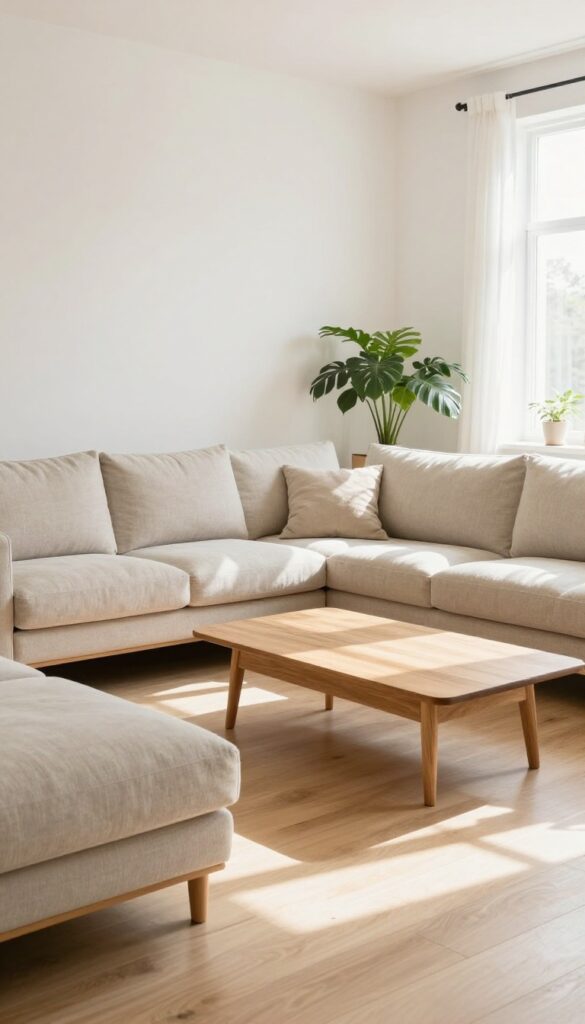
Pushing furniture against the wall is a default move in small spaces, but it can actually make a room feel smaller and more cramped. Floating your 3+2 seater sofas inward—even just a few inches—creates a subtle walkway behind them that tricks the eye into seeing more floor space. This simple layout shift defines the seating area as its own cozy zone, making the room feel both larger and more intentional.
Floating sofas is a small-space secret that instantly opens up a living room. By pulling the sofas away from the walls, you create a visual breathing room that makes the whole area feel less boxed in. The walkway behind the sofas adds a sense of flow, and the seating arrangement becomes a clear focal point rather than just furniture scattered around the edges.
This works especially well in open-concept layouts where you want to define the living area without building walls.
Layout Tip
- Start by pulling the larger 3-seater sofa about 12–18 inches away from the wall. Then position the 2-seater perpendicular or at a slight angle to create an L-shape. Leave enough space behind both sofas for easy walking—at least 24 inches.
- This setup naturally frames a coffee table and makes conversation flow better.
Best Colors
Light, neutral upholstery like linen, beige, or soft gray helps the floating effect feel airy rather than heavy. If you want a bolder look, keep the walls pale and let the sofas pop with a muted jewel tone like sage or dusty blue. The contrast between the wall and the sofa back will emphasize the walkway.
Finishing Touch
Add a slim console table or a row of low bookshelves behind the 3-seater to anchor the floating look. Top it with a lamp, a few stacked books, or a trailing plant. This turns the walkway into a purposeful vignette and gives the sofas a reason to be off the wall.
2. Use a Slim Console Table Behind the Longer Sofa
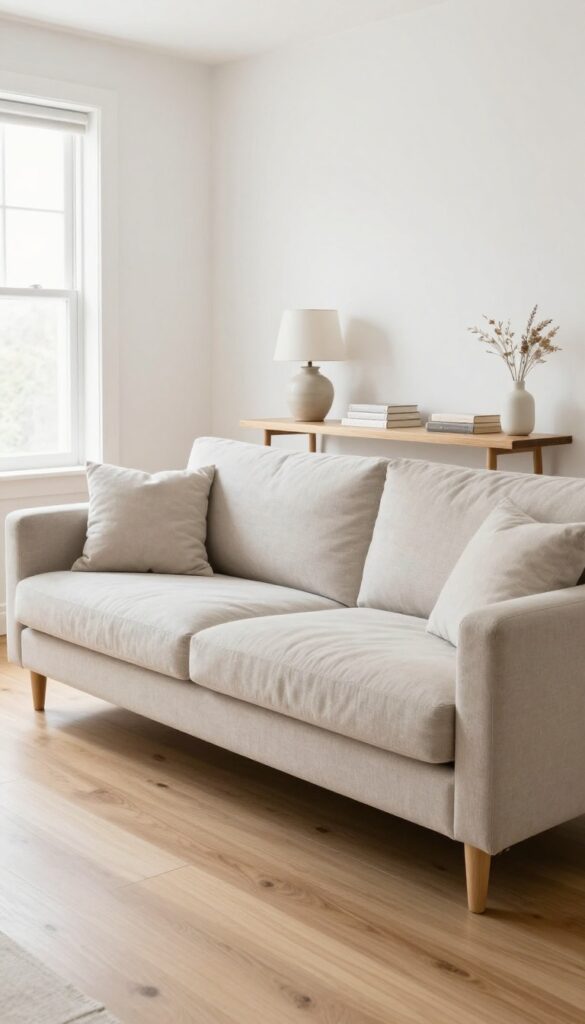
A narrow console table tucked behind your 3-seater sofa is one of those small-space tricks that looks intentional, not squeezed in. It gives you a spot for a lamp, a stack of books, or a tray for remotes without stealing any floor space. Plus, that slim line of wood or metal helps define the seating zone in an open layout, making the room feel anchored and intentional.
A console behind the sofa works double duty: it adds surface area for everyday essentials and creates a subtle room divider. In a small living room, this trick keeps the layout open while giving you a place to style decor that doesn't crowd the coffee table. The key is keeping the console shallow—12 to 14 inches deep is plenty—so it doesn't stick out past the sofa's back.
Choose a style that complements your sofa: a light wood console with tapered legs keeps things airy, while a black metal frame adds modern contrast. Top it with a table lamp for warm ambient lighting, a small tray for coasters, and a low vase or stack of books for visual interest. Avoid overloading it—two or three carefully chosen items keep the look clean and purposeful.
Best Materials For A Slim Console
- For a practical yet stylish look, go with materials that feel light and don't visually weigh down the room. A console with an open metal frame and a thin wood shelf keeps the air flowing, which is ideal for tight spaces. If you want a warmer feel, a solid wood console with slim legs works well—just make sure the finish matches or complements your sofa's legs.
- Glass tops can also work, but they show dust and fingerprints more easily, so consider your cleaning habits.
Styling Tip: Keep It Low And Simple
- Since the console sits behind the sofa, you don't want tall items blocking the view from the seating area. Stick with items under 18 inches tall: a low lamp, a small plant, or a horizontal art book. A long, shallow tray can corral smaller items like remotes and coasters.
- If you have a window behind the sofa, keep the console styling minimal so natural light isn't blocked. A single sculptural object or a small framed photo can be enough.
Layout Fix For Open-plan Rooms
- In an open floor plan, a console behind the sofa acts as a visual barrier between the living area and the dining or entry space without closing things off. It gives the sofa a defined back, making the seating area feel like its own room. Place the console centered behind the sofa, and let it extend slightly on each side for balance.
- If your sofa is against a wall, skip this idea—it works best when the sofa floats in the room.
3. Choose a Low-Profile Coffee Table
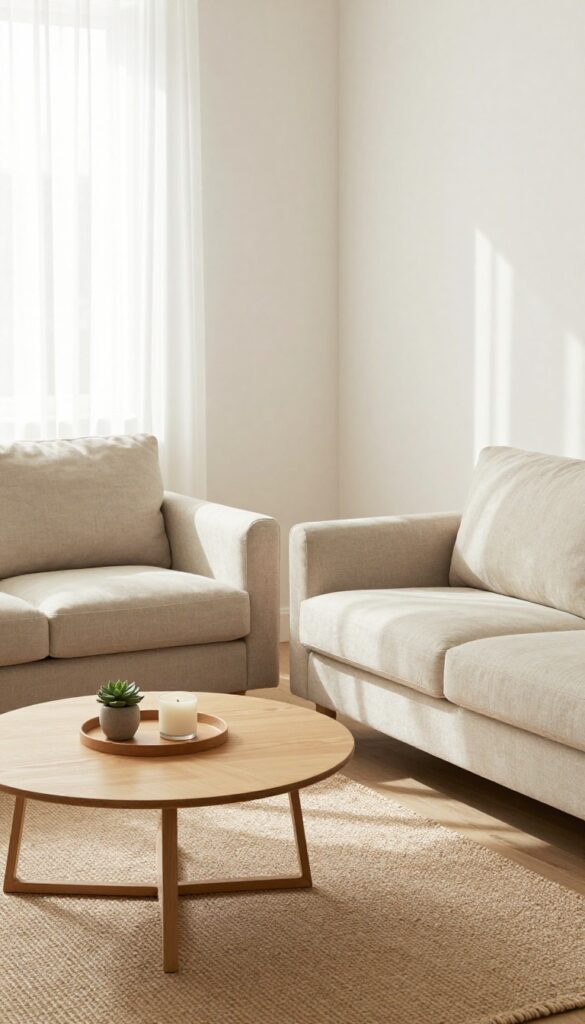
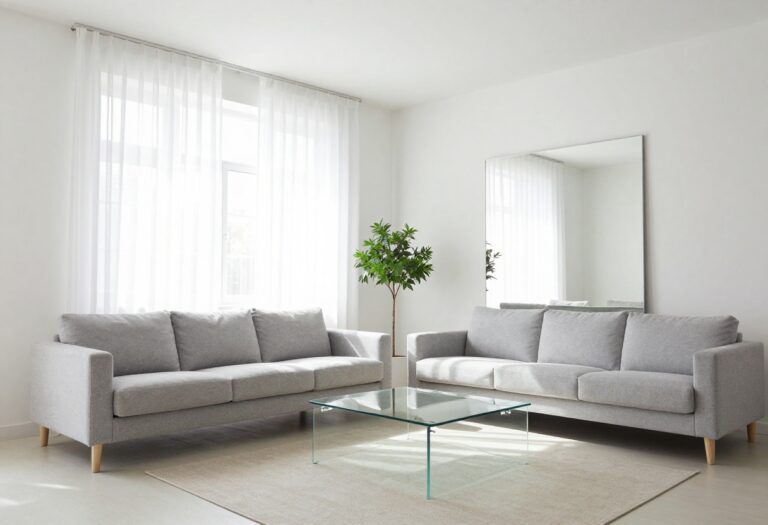
In a room with two sofas, the coffee table can easily become a visual roadblock. A low profile keeps the eye moving and makes the whole space feel airier. Round or oval shapes are especially smart here—they soften all those right angles and let you glide past without bumping your shins.
A low coffee table keeps sightlines clear and makes the room feel taller. Opt for a round or oval shape to soften the boxy lines of two sofas and improve traffic flow. This small swap can transform a cramped layout into one that breathes.
Best Materials
Light woods like oak or ash keep things airy, while a glass top adds near-invisibility. For a touch of warmth without visual weight, try a natural stone top on slim metal legs. Avoid chunky dark wood that eats up visual space.
Small-space Fix
If your room is tight, skip the coffee table entirely and use a pair of low ottomans or a slim bench. They double as extra seating and can be tucked away when not needed. Another trick: choose a table with a lower shelf for baskets or books, so the surface stays clear.
Styling Tip
Keep the tabletop minimal—a single tray with a candle and a small plant. Since the table is low, anything tall will block the view across the room. Stick to flat or short decor items that respect the open sightline.
4. Layer Rugs to Define the Seating Area
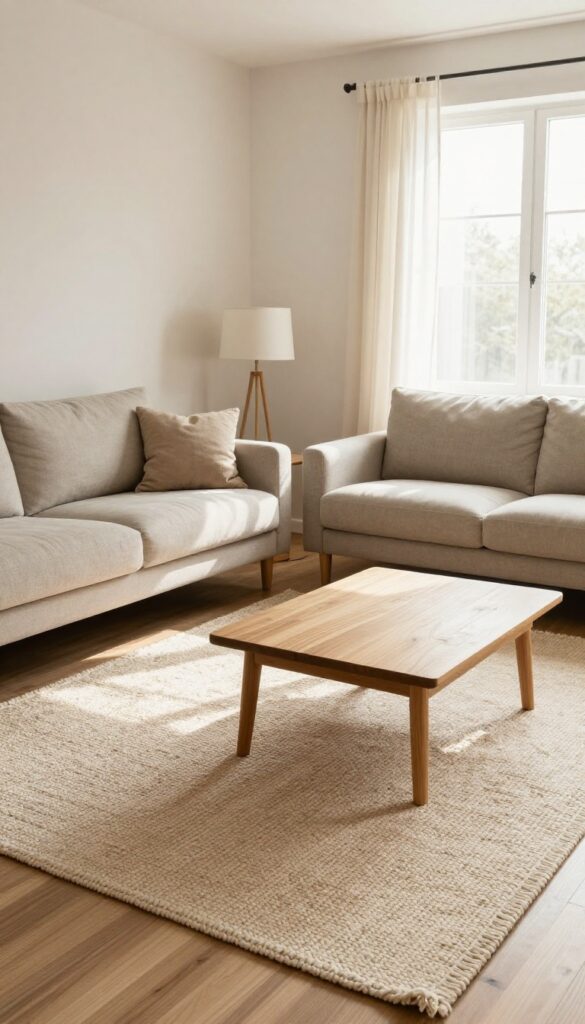
A large neutral rug under both sofas creates a unified foundation, making the seating area feel intentional and grounded. Layering a smaller, textured rug in the center adds warmth and visual interest, pulling the furniture together without overwhelming a small space. This trick works especially well in open-plan rooms where you want to define zones without building walls.
Start with a jute or low-pile wool rug in a light beige or gray that extends just beyond the sofas' front legs. This anchors the arrangement and keeps the room from feeling floaty. Then, place a smaller, high-pile or patterned rug—think chunky knit, faux sheepskin, or a geometric flatweave—in the center, overlapping the larger rug by about six inches.
The contrast in texture and scale adds depth, while the neutral base prevents the look from feeling busy. In a small living room, this layered approach also helps soften hard floors and absorb sound, making the space cozier. Keep the coffee table on the top rug to tie everything together.
Small-space Fix
In tight quarters, choose a large rug that fits just under the front legs of both sofas, leaving the back legs on the floor. This visually expands the floor area while still defining the zone. The layered top rug should be small enough to sit entirely within the coffee table footprint so it doesn't crowd the walkway.
Texture Mix
Pair a smooth, flat-weave base rug with a shaggy or looped top rug for contrast. Natural fibers like sisal or seagrass work well underneath, while wool, cotton, or faux fur on top add softness. This combination feels both practical and plush, perfect for a family-friendly yet stylish setup.
Budget-Friendly Swap
If you're on a budget, use a large, affordable indoor-outdoor rug as the base—it's durable and easy to clean. Then splurge on a smaller, high-quality accent rug for the top layer. This way, you get the layered look without spending a fortune, and you can swap out the top rug seasonally for a fresh feel.
5. Stick to a Light, Cohesive Color Palette
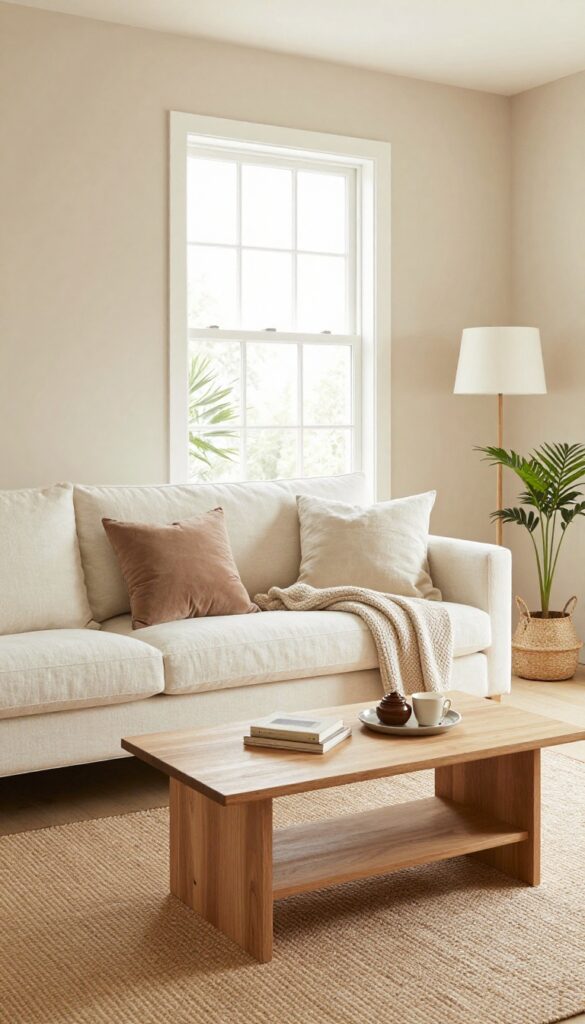
A light, cohesive color palette works magic in a small living room, especially when your sofa is a 3+2 seater combination. Pale tones on the walls and upholstery make the space feel open and airy, while texture adds the depth you'd normally get from bold colors. The trick is to keep everything in the same family—think warm whites, soft beiges, or muted greys—so the room flows without feeling flat.
When you stick to a light palette, your sofas become part of the background rather than dominating the room. This is especially helpful in a small space where you want the eye to move freely. To keep it from feeling sterile, layer in pillows and throws in similar hues but different textures.
A linen pillow, a velvet lumbar, and a chunky knit throw add visual interest without breaking the color scheme. The result is a calm, put-together look that feels both cozy and spacious.
Best Colors To Start With
- Warm white, cream, taupe, and light greige are your best bets. They reflect natural light and make the room feel bigger. Avoid stark white or cool grey if your room gets limited sunlight—they can feel cold.
- Instead, go for shades with a hint of warmth, like ivory or oatmeal.
Texture Mix That Works
Combine at least three textures: a smooth cotton or linen for the sofa, a velvet accent pillow, and a chunky knit or faux fur throw. This mix creates depth and makes the palette feel intentional. You can also add a jute or sisal rug for natural texture underfoot.
Small-space Styling Tip
Use a light-colored coffee table (like oak or whitewashed wood) to keep the look cohesive. Add a single decorative object in a subtle metallic—like brass or champagne—for a hint of warmth. Avoid dark frames or heavy furniture that might disrupt the light flow.
6. Add a Floor Lamp in the Corner Between Sofas
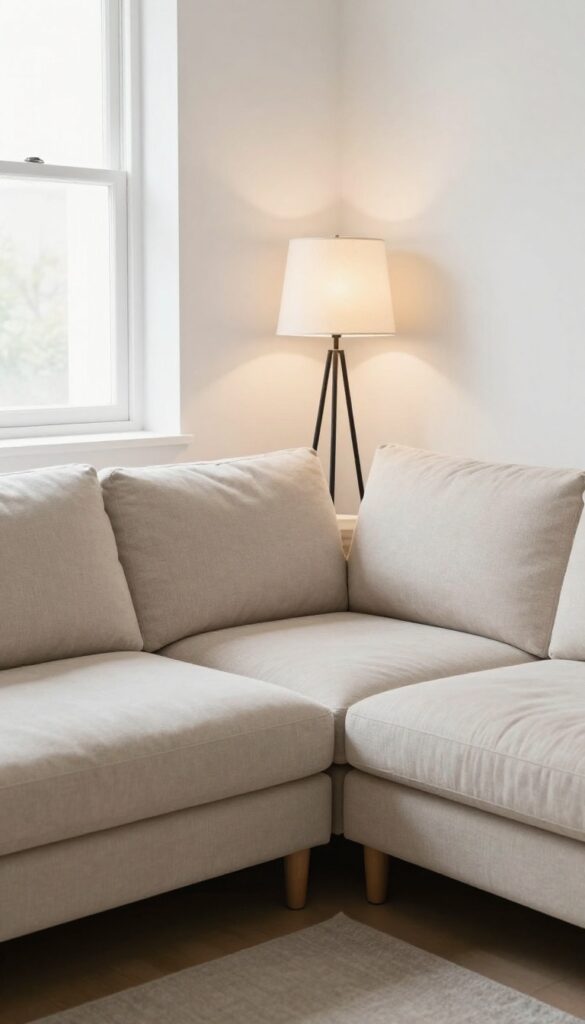
That awkward corner where two sofas meet often goes unused, but it’s actually prime real estate for a floor lamp. A tall, sculptural lamp not only fills the gap visually but also creates a dedicated reading nook without taking up extra floor space. The vertical line draws the eye upward, balancing the horizontal bulk of the sofas and making the whole arrangement feel lighter.
In a small living room, this trick adds function and height without cluttering the layout.
Positioning a floor lamp in the corner between two sofas is a simple way to define the seating area and add a cozy glow. Choose a lamp with a slim profile so it doesn’t crowd the space, and aim for a shade that directs light downward for reading. This setup works especially well in open-plan rooms where you want to zone the seating without adding walls.
The lamp becomes a subtle anchor, tying the two sofas together while offering practical task lighting.
Best Lamp Styles
Go for a tripod or arc floor lamp to add visual interest without bulk. A slim metal or wood stem keeps the look airy, while a fabric shade softens the light. Avoid heavy bases or oversized shades that might overwhelm the corner.
Small-space Layout Tip
Push the sofas just a few inches away from the wall, then place the lamp behind the outer sofa arm. This keeps the lamp out of walkways while still filling the corner. The light will bounce off the wall, making the room feel larger.
Cozy Finishing Touch
Add a small side table or a stack of books next to the lamp base to complete the reading nook. A textured throw draped over the nearby sofa arm ties the look together and invites you to sit and stay a while.
7. Use Nesting Side Tables for Flexibility
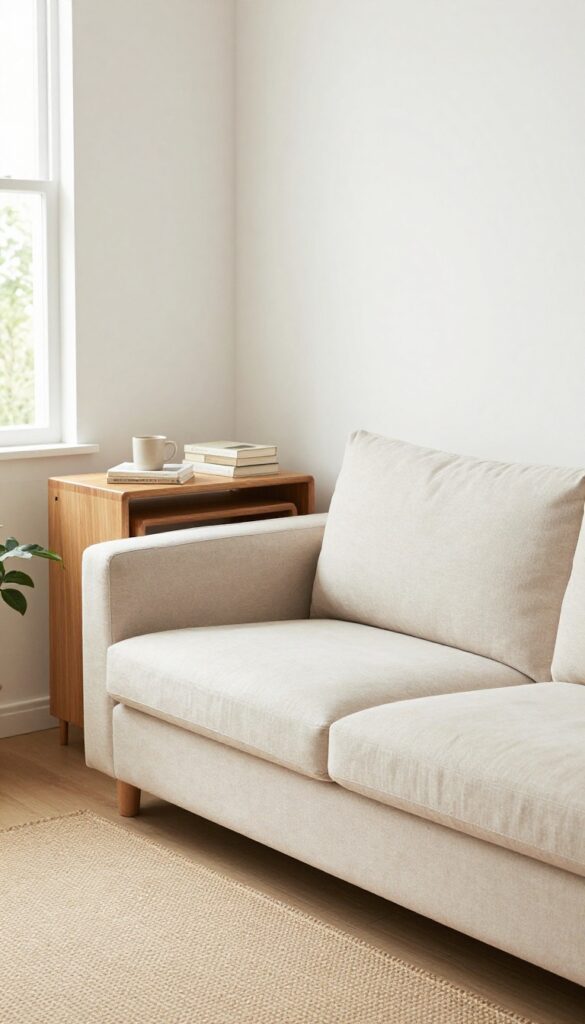
Nesting tables are a small-space superhero. Placed beside your 2-seater sofa, they give you extra surface area for drinks, books, or a lamp when you need it, then tuck neatly under each other when you don't. This clever setup keeps your living room feeling open and uncluttered, while still offering the convenience of a side table.
It's a practical solution that doesn't sacrifice style.
Nesting tables are a small-space superhero. Placed beside your 2-seater sofa, they give you extra surface area for drinks, books, or a lamp when you need it, then tuck neatly under each other when you don't. This clever setup keeps your living room feeling open and uncluttered, while still offering the convenience of a side table.
It's a practical solution that doesn't sacrifice style.
Best Materials
- For a cohesive look, choose nesting tables that complement your sofa's material. If you have a fabric sofa, try wooden tables in a warm oak or walnut finish to add natural texture. For leather sofas, metal or glass nesting tables create a sleek contrast.
- Avoid matching too perfectly—a little variety keeps the space interesting.
Layout Tip
Position the largest nesting table within easy reach of the sofa's arm, and keep the smaller ones slightly staggered. This creates a layered, intentional look rather than a stack of furniture. When you have guests, pull out the smaller tables to serve as extra side tables or even makeshift seating for a drink.
Small-space Fix
- In tight living rooms, nesting tables are a game-changer. They eliminate the need for a bulky coffee table that can block pathways. Use them to hold a tray with remotes and coasters, and slide them away when you need floor space for yoga or extra guests.
- It's all about flexibility without clutter.
8. Hang a Large Mirror Opposite a Window
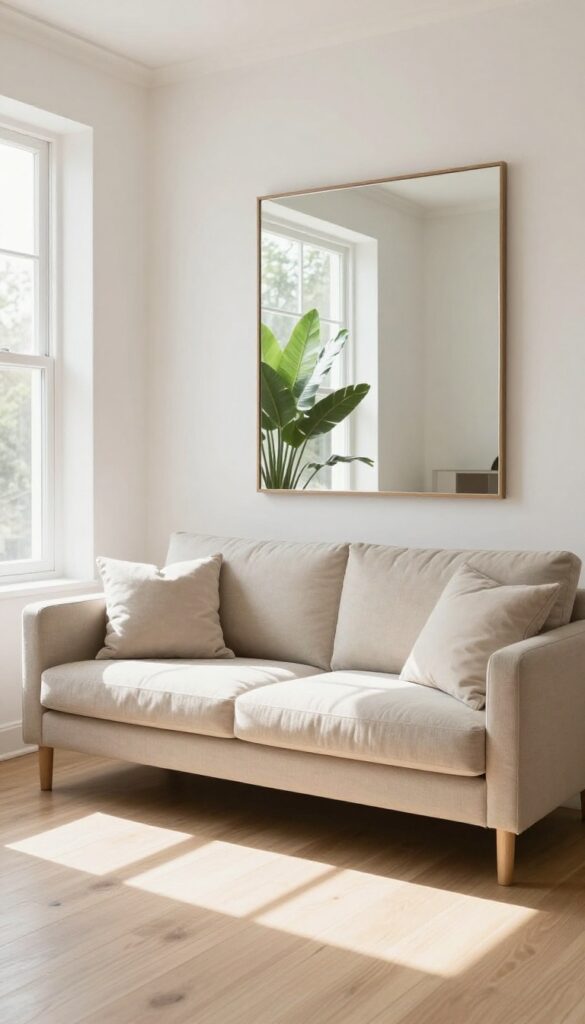
A well-placed mirror does more than just let you check your reflection—it can completely transform how a room feels. When you hang a large mirror directly across from a window, it captures natural light and bounces it back into the space. This simple trick makes your living room feel brighter, airier, and significantly larger without any major renovation.
In a small living room, every square foot counts. By positioning a mirror opposite a window, you double the visual depth and create the illusion of a second window. The reflected light floods the area around your 3+2 seater sofa set, making the whole seating area feel open and inviting.
It's a budget-friendly way to add drama and function—especially in rooms that don't get a ton of direct sunlight.
Best Placement
- Hang the mirror so its center is at eye level, directly facing the window. If your sofa is against the wall with the window, place the mirror on the opposite wall. For a corner window, angle the mirror to catch the light and reflect it across the room.
- Avoid placing it where it will reflect a cluttered area or a dark wall—you want it to bounce light, not mess.
Mirror Style & Frame
- Go for a large mirror—at least 36 inches wide—to maximize the effect. A frameless mirror keeps things modern and minimal, perfect for small spaces. If you want a bit of personality, choose a slim metal frame in gold, brass, or black.
- Avoid bulky frames that eat up visual space. A round or arched mirror can soften the straight lines of your sofa and add a stylish curve.
Small-space Bonus
- This trick works extra hard in narrow or dark living rooms. Pair the mirror with light, airy curtains on the window to let in maximum light. Keep the windowsill clear of tall objects so nothing blocks the reflection.
- The result: your 3+2 seater sofa setup feels like it belongs in a much larger, sunnier room.
9. Keep Decor Minimal Above the Sofas
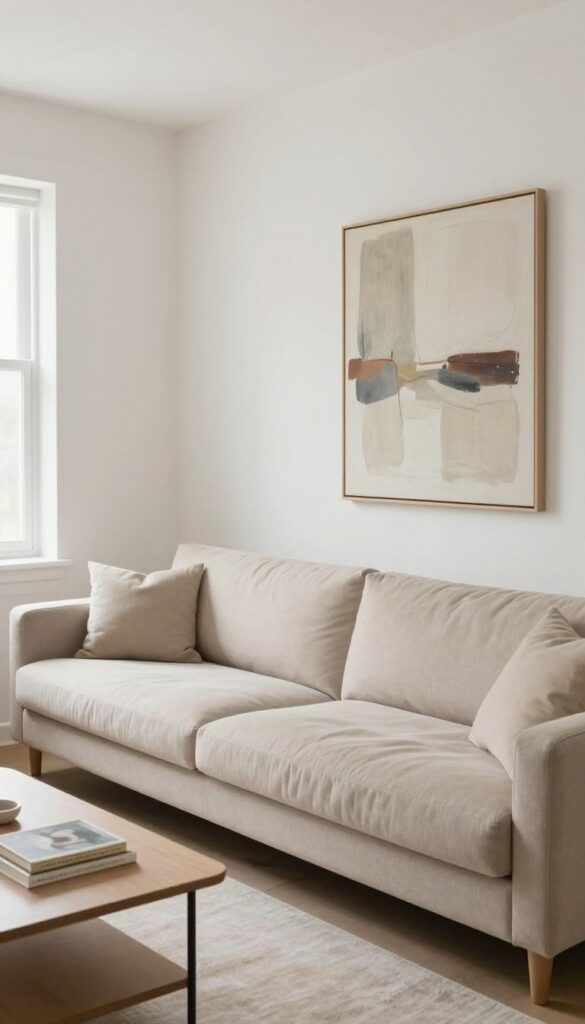
When you have two sofas facing each other, the walls above them become a big design opportunity. It's tempting to fill that space with shelves, mirrors, or a gallery wall, but in a small living room, less really is more. Going minimal above the sofas keeps the eye level low and makes the room feel open rather than crowded.
A single large art piece or a simple shelf with just a few carefully chosen items can anchor the seating area without stealing the spotlight. This approach works especially well in compact spaces where you want the sofas to feel like the main event, not the wall decor.
Avoid cluttering the walls above the sofas. One large art piece or a simple shelf with a few items keeps the focus on the seating and prevents visual overload.
Best Art Placement
Hang one oversized piece above each sofa, or center a single large canvas between the two. Keep the bottom edge 6 to 8 inches above the backrest so it feels connected to the sofa, not floating away. In a small room, a single bold artwork creates a stronger focal point than a cluster of small frames.
Shelf Styling Tip
- If you prefer a shelf, choose a narrow floating shelf in a finish that matches your sofa legs or other furniture. Place just two or three items on it—a small plant, a ceramic vase, or a stack of books. Leave plenty of negative space so the shelf doesn't feel busy.
- This keeps the look clean and airy.
Small-space Fix
In a tight living room, skip the shelf altogether and lean one large framed print or a woven wall hanging directly on the wall behind each sofa. This adds texture without depth, so you don't lose any visual square footage. It's a simple swap that makes the room feel bigger.
FAQ
Can a 3+2 seater sofa work in a very small living room?
Yes, if you choose slim-profile sofas and arrange them thoughtfully. Floating them away from walls and using light colors helps the room feel open.
What's the best layout for a 3+2 seater sofa in a small space?
An L-shape or facing arrangement works well. Place the 3-seater along one wall and the 2-seater perpendicular or opposite, leaving a clear path to move around.
How do I avoid a cramped feel with two sofas?
Use a low coffee table, skip bulky armchairs, and keep the color palette light. Mirrors and good lighting also help the space feel larger.
What kind of coffee table goes best with a 3+2 setup?
A round or oval coffee table is ideal because it softens the angular lines of the sofas and makes it easier to walk around.
Should I match the two sofas or mix them?
Matching sofas create a cohesive look, but mixing different styles or colors can add interest. Just keep the scale and seat height similar for balance.
Conclusion
Arranging a 3+2 seater sofa in a small living room doesn't have to be a challenge. With a few intentional choices—like floating furniture, using light colors, and adding mirrors—you can create a space that feels both cozy and open.
The key is to prioritize flow and function without sacrificing style. Try one or two of these ideas, and you'll see how a small room can still make a big impression.