13 Aesthetic Living Room Ideas for a Stylish Home Makeover
Your living room should feel like a breath of fresh air—calm, stylish, and totally you. But finding that sweet spot between trendy and timeless can be tricky. That's where these 13 ideas come in, each one designed to bring a modern, clean look without sacrificing warmth or personality.
We're talking about smart layouts, thoughtful textures, and little touches that make a big difference. Whether you're working with a cozy apartment or a spacious family room, these tips are all about making your space feel intentional and inviting.
Ready to give your living room a fresh start? Let's dive into ideas that are as practical as they are beautiful.
1. Start with a Neutral Base and Build from There
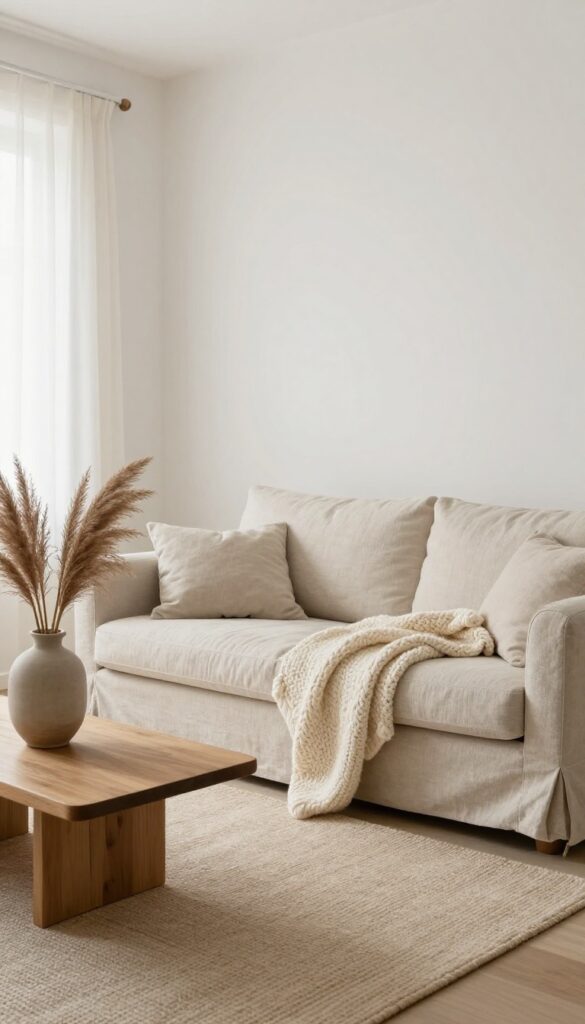
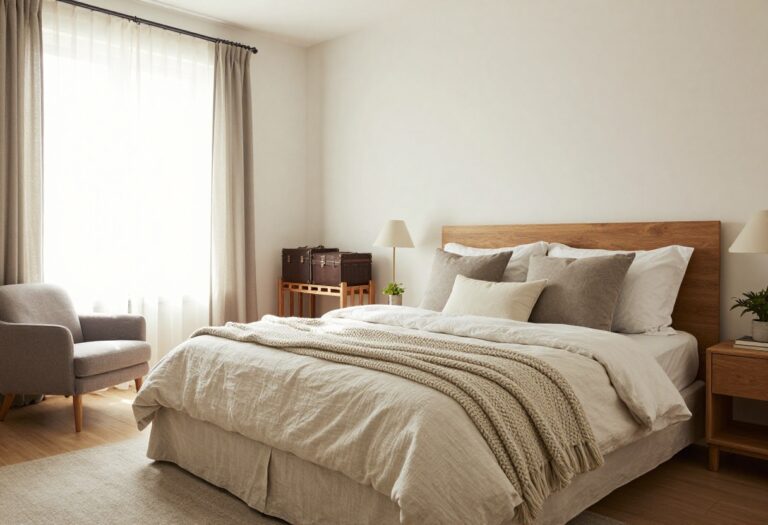
A soft neutral palette isn't boring—it's the smartest move for a living room that feels calm, spacious, and endlessly adaptable. Warm whites, beiges, or light greys create a quiet backdrop that lets every other element shine. The trick is layering in texture so the room doesn't feel flat or sterile.
A chunky knit throw draped over a linen sofa or a jute rug underfoot adds just enough visual interest without clutter. This approach works especially well if you love switching up accessories seasonally, because neutrals play nice with any accent color you throw at them.
Neutrals are the unsung heroes of modern living rooms. They make a space feel larger, brighter, and more cohesive—especially in open-plan layouts where you want a seamless flow. The key is choosing warm undertones (think creamy beige or greige) over cool greys to keep the room inviting.
Once your base is set, you can layer in personality through pillows, art, and decor without worrying about clashing. It's a foundation that forgives impulse buys and lets your style evolve naturally.
Best Colors To Start With
Stick to warm whites like Swiss Coffee or Alabaster, soft beiges like Accessible Beige, and light greiges that lean warm rather than blue. These shades reflect light beautifully and make a small living room feel twice its size. Avoid stark white or cool grey if you want a cozy, lived-in feel.
Texture Mix For Depth
- A neutral palette needs texture to avoid looking flat. Combine a linen sofa with a chunky wool throw, a cotton bouclé pillow, and a sisal or jute rug. Add a matte ceramic vase or a rattan basket for organic contrast.
- The mix keeps the eye moving and adds warmth without color.
Finishing Touch: Layered Lighting
- Lighting is crucial in a neutral room. Use a mix of overhead warm dimmable lights, a floor lamp with a linen shade, and a table lamp on a console. The soft glow will enhance the creamy tones and make the textures pop.
- Avoid harsh cool bulbs—they'll wash out the warmth.
2. Choose a Statement Sofa in a Clean Silhouette
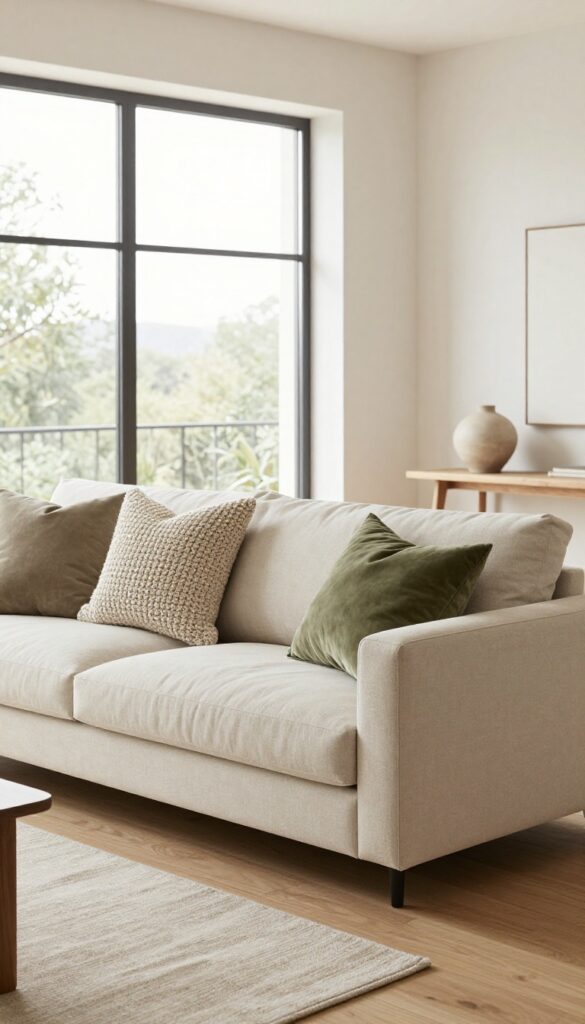
A sofa is often the largest piece in a living room, so its shape sets the tone for everything else. Going with a streamlined, low-profile design in a solid neutral creates a calm foundation that feels both modern and inviting. The beauty of a clean silhouette is that it doesn't compete with other elements—instead, it lets your textures and accessories shine.
When you pick a sofa with simple lines, you're making a smart style choice that pays off in versatility. A solid color like warm beige, charcoal, or soft ivory keeps the look cohesive, while pillows in contrasting fabrics—think chunky knits, smooth velvet, or textured linen—add personality without clutter. This approach works especially well in open-plan spaces where the sofa needs to anchor the room without overwhelming it.
Best Colors
Stick with earthy neutrals or muted tones that blend easily with your existing palette. Cream, taupe, slate gray, or a soft olive green are all strong contenders. These shades create a serene backdrop and make it easy to swap out accent pillows seasonally.
Texture Mix
Since the sofa itself is minimal, layer in texture through pillows and throws. Combine a nubby wool pillow with a smooth leather accent or a chunky cable-knit throw. The contrast keeps the eye moving and adds warmth without breaking the clean lines.
Layout Tip
Position the sofa so it faces the main focal point—whether that's a fireplace, a media console, or a large window. Leave enough space behind it for walking traffic, and consider a slim console table behind the sofa to anchor the arrangement and provide surface space for lamps or decor.
3. Add a Large Area Rug to Define the Space
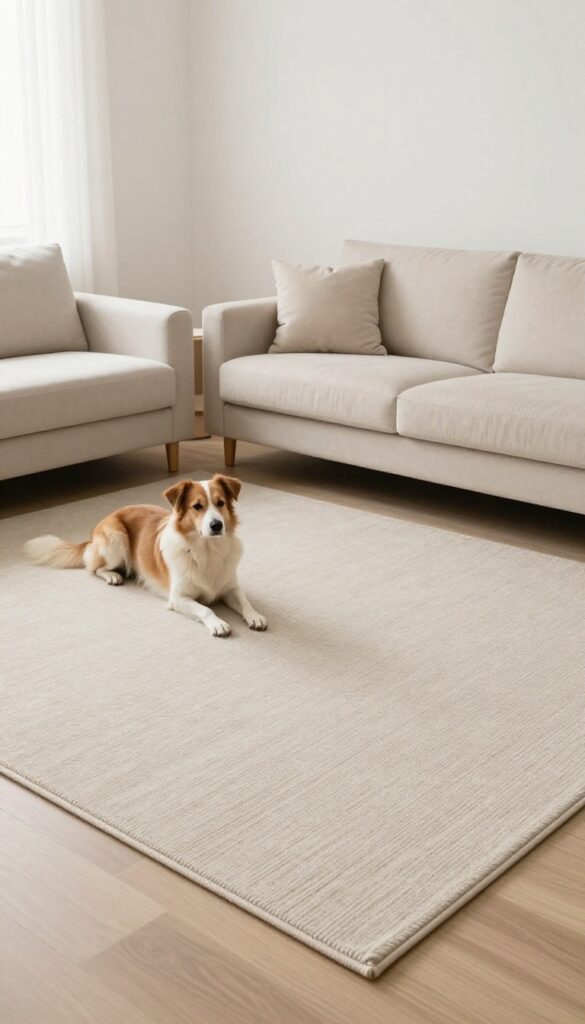
A large area rug does more than warm up your floors—it anchors your seating arrangement and gives the room a clear focal point. In a modern, clean aesthetic, a generously sized rug in a subtle pattern or natural fiber pulls the whole look together without overwhelming the space. Go for a neutral tone with a hint of texture, like a low-pile wool in oatmeal or a flatweave jute, to keep the airy, uncluttered feel you're after.
When your rug is big enough to fit all front legs of your sofa and chairs, the seating area feels intentional and connected. This trick visually expands the room and prevents that floating furniture look. For a smart, space-aware approach, measure your main seating piece and aim for a rug that extends at least 18 inches beyond it on each side.
In open-concept layouts, the rug also helps separate the living zone from dining or entry areas without building walls.
Best Colors And Patterns
- Stick with neutral bases—cream, beige, warm gray, or soft taupe—and add interest through texture rather than loud prints. A subtle geometric motif or a tone-on-tone diamond pattern works well. If you want a touch of color, choose a rug with a muted accent like dusty blue or sage green that echoes other decor elements.
- Avoid busy florals or high-contrast stripes that can make the room feel chaotic.
Size And Placement Tips
- For a standard living room, an 8×10 or 9×12 rug is usually ideal. Place it so the front legs of your sofa and chairs rest on the rug, leaving about 12 to 18 inches of floor exposed around the edges. In smaller spaces, a 5×8 rug can work if you float it under a coffee table with just the front legs of furniture touching.
- Always use a rug pad to prevent slipping and add cushioning.
Texture And Material Choices
- Natural fibers like jute, sisal, or seagrass bring organic warmth and pair beautifully with modern furniture. For a softer feel underfoot, choose a low-pile wool or a cotton flatweave. In high-traffic areas, go for durable synthetics that mimic natural textures but resist stains.
- A looped or berber style adds subtle dimension without competing with other textures in the room.
4. Incorporate Mixed Lighting for Depth
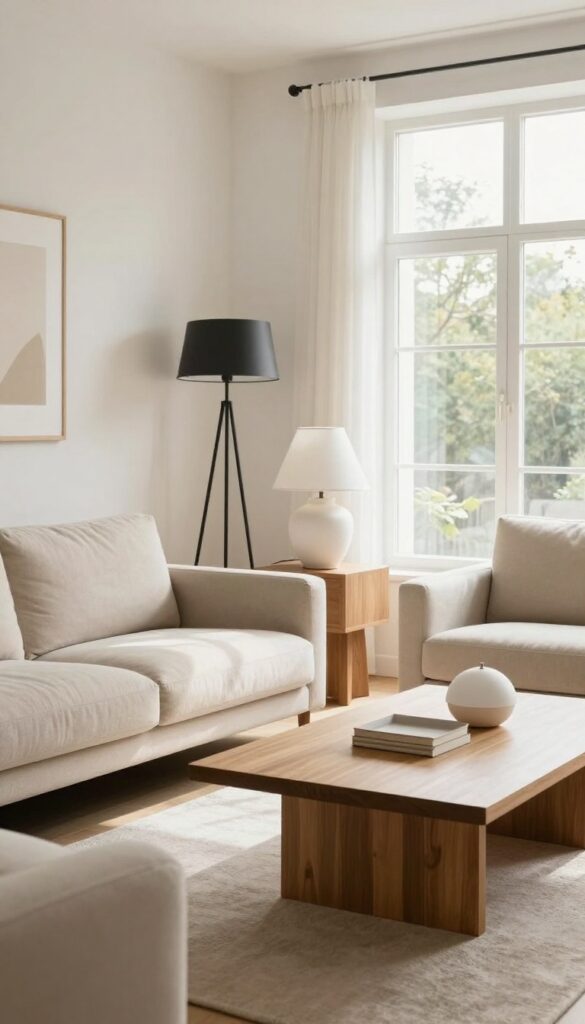
Lighting is one of the most underrated tools in a modern living room. Instead of relying on a single overhead fixture, layering different light sources transforms the space from flat to dynamic. The goal is to create pockets of light that draw the eye around the room, making it feel larger and more intentional.
A mix of floor lamps, table lamps, and a pendant light gives you the flexibility to shift the mood throughout the day—bright for morning coffee, dim for evening relaxation. Dimmers take it a step further, letting you fine-tune the atmosphere without changing bulbs.
Start by identifying the main activity zones in your living room. The seating area needs a warm glow for reading or conversation, so place a floor lamp near the sofa or armchair. A table lamp on a side table adds a secondary light source that softens shadows.
If you have a central coffee table, consider a low pendant light hung just above it—this anchors the space and adds a sculptural element. For a clean, modern look, choose fixtures with simple lines and neutral finishes like matte black, brushed brass, or white. Avoid cluttering the room with too many small lamps; instead, focus on three to four well-placed sources that create visual balance.
The key is to vary the heights—tall floor lamps, mid-height table lamps, and a ceiling fixture—so the light feels layered, not flat.
Best Fixture Styles
- Stick with fixtures that have a slim profile and a single material finish. A tripod floor lamp in black metal or a dome pendant in white ceramic works well. For table lamps, choose a simple cylinder or sphere shape in a matte texture.
- Avoid ornate details or mixed metals in the same room—keep it cohesive.
Placement Tips
- Position floor lamps in corners to wash the walls with light, making the room feel wider. Table lamps should sit at eye level when seated, so the light doesn't glare. If using a pendant, hang it 30–36 inches above the coffee table for a balanced proportion.
- Use dimmers on all fixtures to adjust brightness easily.
Bulb Choice
Opt for LED bulbs with a warm color temperature (2700K–3000K) to keep the glow cozy. Avoid cool white or daylight bulbs in a living room—they feel harsh and clinical. Dimmable bulbs are a must if you have dimmers, so check compatibility before buying.
5. Use Floating Shelves for Smart Storage
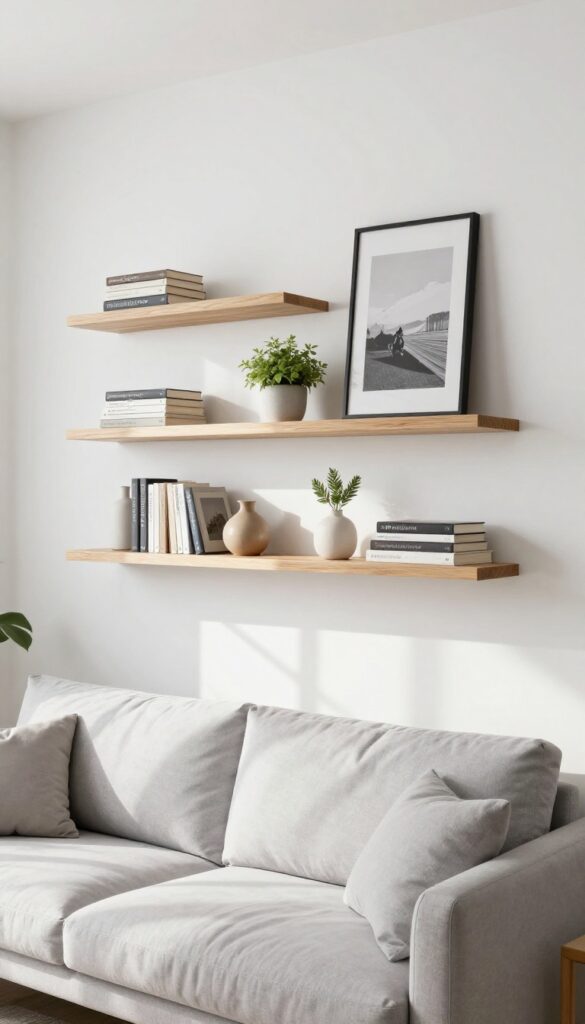
Floating shelves are the unsung heroes of modern living rooms. They keep your daily essentials within arm's reach while preserving that clean, uncluttered look we all crave. Instead of bulky bookcases that eat up floor space, these wall-mounted wonders let you display your favorite pieces without making the room feel crowded.
The trick is to style them with intention—a few carefully chosen books, a petite plant, and a ceramic vase can turn a simple shelf into a curated vignette.
Floating shelves are perfect for small spaces or any room where you want to maximize vertical storage. They work especially well above a sofa, beside a window, or flanking a TV console. The key is to balance functionality with aesthetics: use them for items you reach for often, but also treat them as a canvas for your personal style.
Mixing materials like wood, metal, or glass can add depth, while keeping the arrangement sparse prevents visual clutter.
Best Materials
- For a modern and clean look, opt for floating shelves in matte black, white lacquer, or natural oak. These finishes blend seamlessly with most wall colors and furniture. If you want a subtle contrast, choose a shelf that matches your wall trim or baseboards.
- Avoid overly ornate brackets—the beauty of floating shelves is their seamless appearance.
Shelf Styling Tip
- Group items in odd numbers and vary the heights. Stack a couple of books horizontally, then place a small plant on top for greenery. Lean a framed photo or small art piece against the wall, and add a ceramic vase or a sculptural object to create visual interest.
- Leave some negative space so the shelf doesn't feel overcrowded.
Small-space Fix
In a compact living room, install floating shelves above a doorway or in an unused corner to store books, plants, or decorative boxes. This keeps the floor clear and draws the eye upward, making the room feel taller. Use matching baskets on the shelves to hide small items like remotes or charging cables.
6. Bring in Greenery with Low-Maintenance Plants
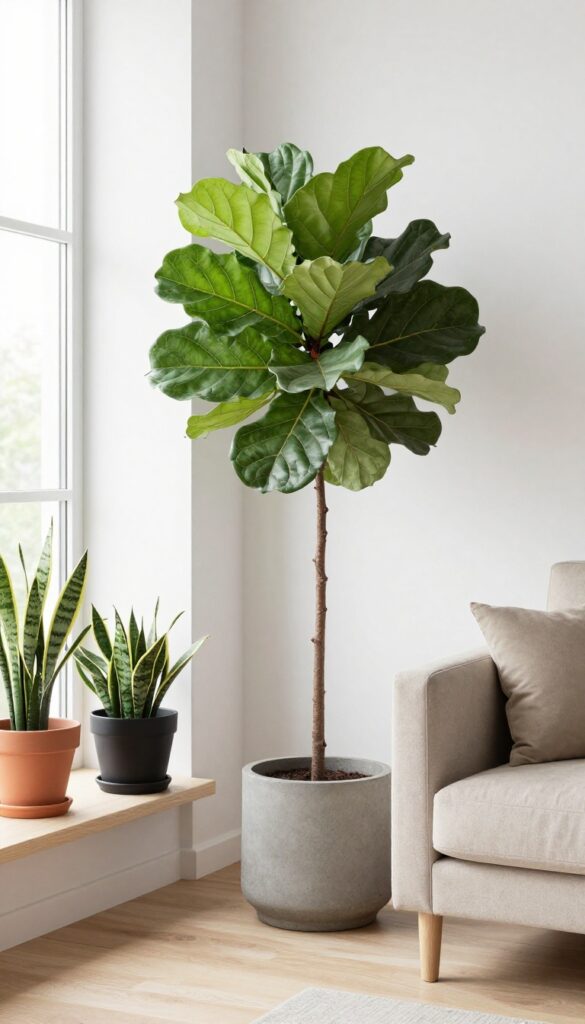
Plants are the easiest way to make a modern living room feel alive without cluttering the space. A single tall fiddle leaf fig or a cluster of snake plants adds structure and a fresh pop of green. The trick is to keep it minimal—one or two statement plants that draw the eye without overwhelming the clean lines of your decor.
In a modern, clean aesthetic, plants serve as natural sculptures. They soften hard edges and bring a sense of calm. Choose plants with strong silhouettes, like a fiddle leaf fig, monstera, or snake plant, and place them in simple, matte pots—think concrete, terracotta, or black ceramic.
Avoid fussy arrangements; let the plant be the focal point. Position them near natural light but not directly in a draft. A tall plant in a corner or beside a sofa anchors the room, while a smaller cluster on a shelf adds depth.
Keep the look intentional: prune dead leaves, dust occasionally, and rotate the pot for even growth.
Best Plant Choices
- For a modern living room, stick to plants with architectural leaves. Fiddle leaf figs, snake plants, and ZZ plants are nearly impossible to kill and thrive in indirect light. Monstera deliciosa adds a tropical touch but still fits a clean aesthetic.
- Avoid trailing plants that can look messy; instead, choose upright varieties that maintain a tidy profile.
Pot Styling Tip
- The pot matters as much as the plant. Go for neutral tones like matte white, charcoal, or warm terracotta. Avoid glossy finishes or busy patterns.
- A simple cylinder or tapered shape works best. If you group multiple plants, use pots in the same color family to keep the look cohesive. Self-watering pots are a practical choice for low-maintenance care.
Placement For Impact
- Place your statement plant where it can be seen but not in the way. A corner next to the sofa or beside a window works well. For a smaller space, a single tall plant on a plant stand elevates it visually.
- Avoid clustering too many small pots on a coffee table or shelf—it can look cluttered. Instead, let one large plant do the heavy lifting.
7. Hang Curtains High and Wide
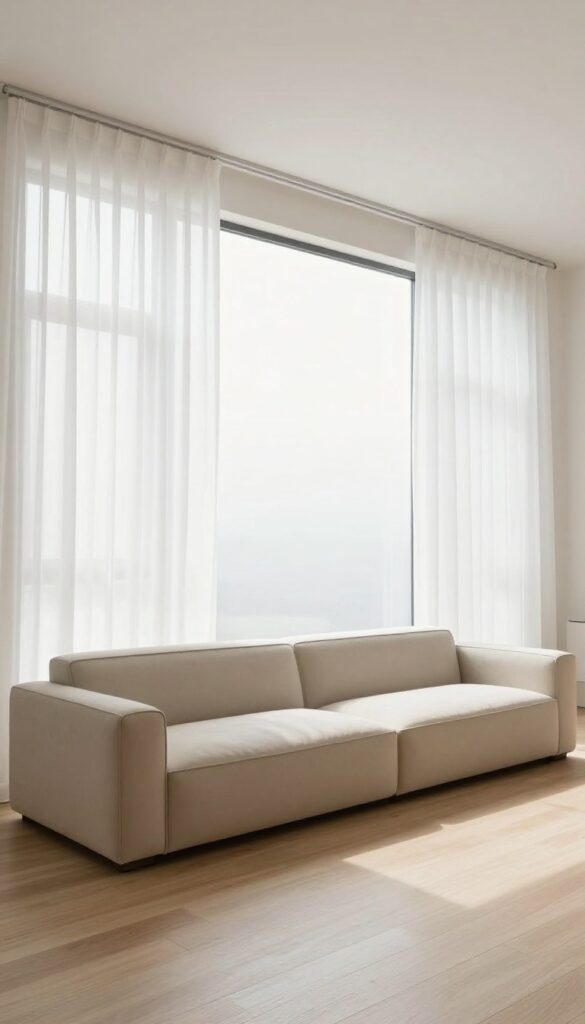
One of the quickest ways to make a living room feel taller and more spacious is to rethink your curtain placement. Instead of mounting rods right above the window frame, take them all the way up near the ceiling and extend them well past the sides of the window. This simple shift changes the whole proportions of the room, drawing the eye upward and making the windows feel grander.
It’s a trick that works in any space, from a cozy apartment to an open-concept home, and it costs nothing extra—just a bit of measuring and a drill.
When you hang curtains high and wide, you instantly add a sense of height and width that makes the room feel more polished and intentional. The key is to choose rods that extend at least 6 to 12 inches past the window frame on each side, so when the curtains are open, they don’t block any glass. This lets in maximum natural light while still framing the window beautifully.
For the best effect, use floor-length curtains that just kiss the floor—no puddling, no awkward gaps. The clean, tailored look fits perfectly with a modern and clean aesthetic, and it’s a smart, space-aware move that makes even small living rooms feel larger.
Best Rod Height
- Mount the rod 4 to 6 inches below the ceiling or crown molding, whichever is lower. This creates a continuous vertical line that lifts the eye. If you have standard 8-foot ceilings, placing the rod at 7.5 feet instead of right above the window can make the ceiling feel higher.
- For taller ceilings, you can go even closer to the ceiling line.
Curtain Width Trick
Choose a rod that extends 12 to 18 inches beyond the window on each side. This allows the curtains to stack completely off the glass when open, so you get full sunlight and an unobstructed view. The extra width also makes the window appear larger and balances the wall proportionally.
Fabric And Length
- Go for lightweight, solid-colored fabrics like linen or cotton in neutral tones—white, cream, soft gray, or beige. They keep the look airy and modern. Always hem curtains to just barely touch the floor (1/2 inch above is fine too).
- Avoid heavy drapes that add visual bulk; the goal is clean lines and a sense of openness.
8. Pick a Focal Point Like a Large Mirror or Art Piece
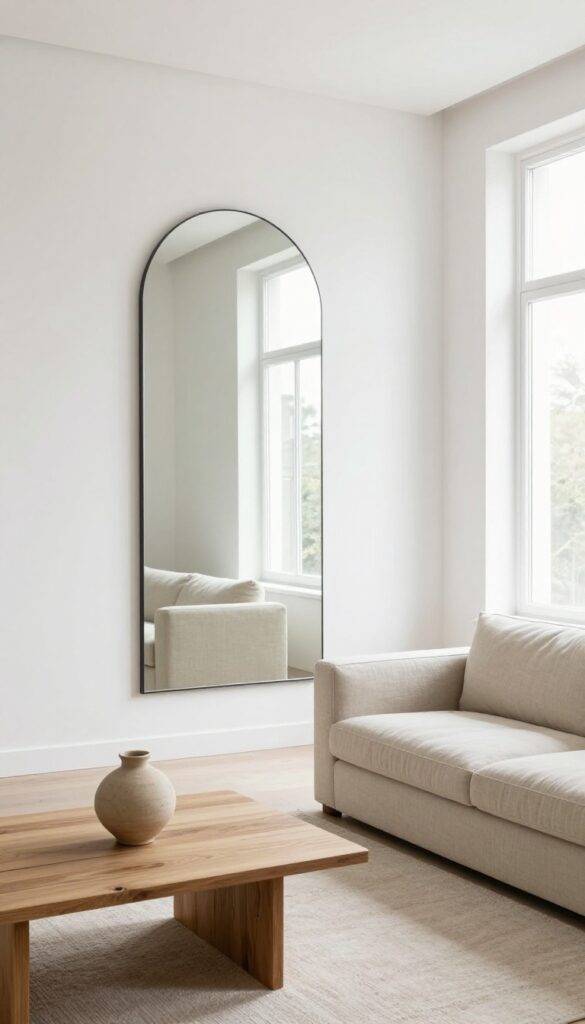
A room without a clear focal point can feel scattered and unfinished. Anchoring your living room with one oversized piece—whether it’s a floor-to-ceiling mirror or a bold abstract painting—gives the eye a place to rest and makes the whole space feel intentional. The trick is to let that single element do the talking and keep everything else quietly supportive.
A single oversized mirror or a bold abstract painting draws the eye and anchors the room. Keep the rest of the decor minimal to let it shine. This approach works especially well in modern, clean-lined spaces where clutter is kept to a minimum.
The focal point becomes the personality of the room, while neutral furniture and simple accessories provide a calm backdrop.
Best Placement
Hang your mirror or art piece on the largest wall you have, ideally one that faces the main seating area. In a living room, that usually means above the sofa or opposite the entryway. For mirrors, positioning it to reflect natural light or a nice view doubles its impact—brightening the room and making it feel larger.
Size And Scale
- Go big—at least two-thirds the width of the furniture below it. A piece that’s too small will look lost and defeat the purpose. If you’re using a mirror, choose one with a slim, minimalist frame in black, white, or natural wood to keep the look clean.
- For art, a single large canvas with a simple composition works best.
Styling Around It
- Once your focal point is up, resist the urge to crowd it. Keep shelves, tables, and walls around it sparse. A low console or a simple plant at the base is plenty.
- The goal is to create breathing room so the eye is drawn straight to the mirror or art without distraction.
9. Opt for a Low Coffee Table with Storage
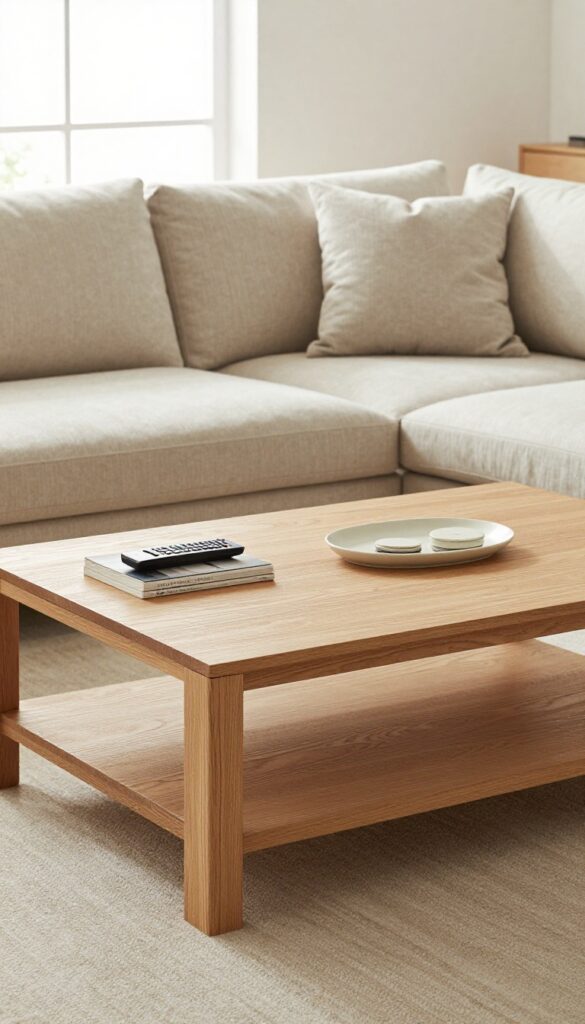
A coffee table is often the centerpiece of the living room, but it doesn't have to be a clutter magnet. A low, rectangular table with built-in storage—like a shelf or drawer—keeps remotes, coasters, and magazines neatly tucked away while maintaining a clean, open look. This is especially smart in modern spaces where every surface counts, and it adds a subtle layer of functionality without sacrificing style.
Choosing a low coffee table with storage is all about blending form and function. The low profile keeps sightlines clear, making the room feel larger and more connected, while the hidden storage reduces visual noise. Whether you go for a warm wood finish or a sleek marble top, this piece anchors the seating area and gives you a place to stash everyday essentials.
It's a small swap that makes a big difference in how put-together your living room feels.
Best Materials
- Wood and marble are top contenders here. A light oak or walnut finish adds warmth and pairs well with neutral sofas and textured throws. Marble tops bring a cool, polished vibe that works beautifully in minimalist or contemporary rooms.
- For a budget-friendly option, consider a wood table with a stone-look laminate—it offers the same aesthetic without the high price tag.
Storage Tip
- Look for a table with a deep lower shelf or a single drawer. Use the shelf for stacked books or a decorative tray that corrals remotes and coasters. If you choose a drawer, keep it organized with small dividers for charging cables, notepads, and other small items.
- This way, everything has a home and the tabletop stays clear for a vase or a candle.
Layout Tip
- Position the coffee table about 16 to 18 inches from the sofa for easy reach. In a smaller room, a low table with rounded corners can help the flow feel less boxy. If you have a sectional, a rectangular table works well in the center, while a square or round option might suit a tighter arrangement.
- Always leave enough space to walk around comfortably.
10. Add Texture with Throw Pillows and Blankets
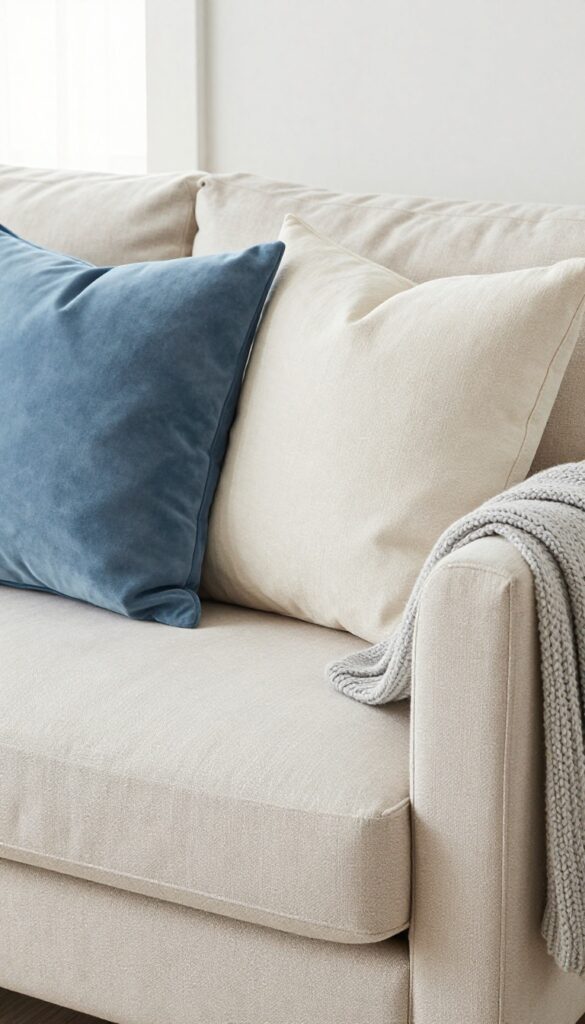
Texture is one of those quiet design tools that makes a room feel instantly more inviting. In a modern, clean living room, it adds warmth without clutter. The trick is to mix materials like velvet, cotton, and knit in a cohesive color palette—think soft neutrals with one or two muted accent tones.
Stick to two or three pillows per sofa to keep the look intentional and airy, not piled on.
Layering textures through pillows and blankets is a simple way to give your living room depth and a cozy feel. In a modern space, you want to avoid visual chaos, so choose pieces that share a common color thread but vary in weave and finish. A chunky knit throw draped over a sleek linen sofa instantly softens the lines, while a velvet pillow adds a touch of luxury.
This approach works especially well in rooms with neutral walls and clean-lined furniture, where texture becomes the main source of visual interest.
Best Materials To Mix
- Stick to three textures per sofa grouping. Velvet, cotton, and knit are a foolproof trio. Velvet brings a subtle sheen, cotton feels crisp and breathable, and knit adds that handcrafted warmth.
- For a more modern edge, try a faux leather pillow or a woven wool blanket. Avoid too many shiny or fuzzy textures together—it can look busy.
Color Palette Tips
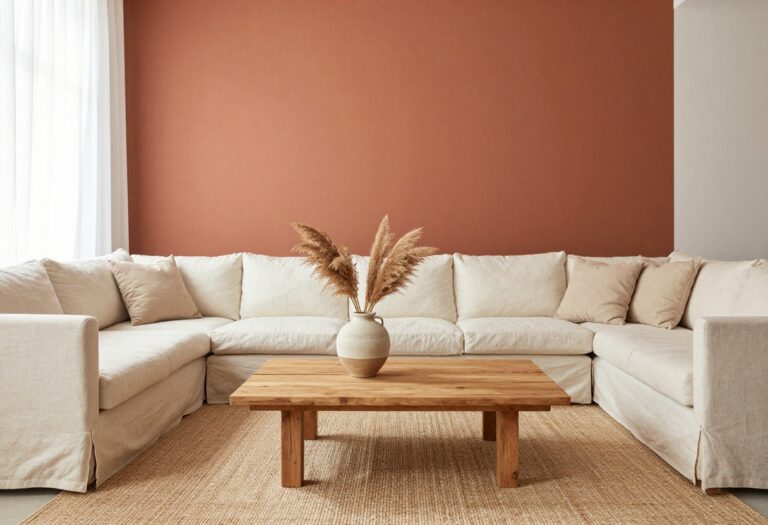
- Keep the base neutral: cream, beige, light gray, or taupe. Then add one accent color like dusty blue, sage green, or terracotta. Use that accent in just one or two pieces—a velvet pillow or a stripe on a throw.
- This keeps the look cohesive while still giving the eye a place to rest.
Placement And Styling
- On a standard sofa, place two pillows at opposite ends and fold a throw over one arm or the back. For a sectional, group three pillows at one corner. Avoid symmetrical arrangements on every seat—it can feel too staged.
- Let the throw drape naturally, not perfectly folded, to keep the room feeling lived-in and relaxed.
11. Create a Gallery Wall with a Modern Twist
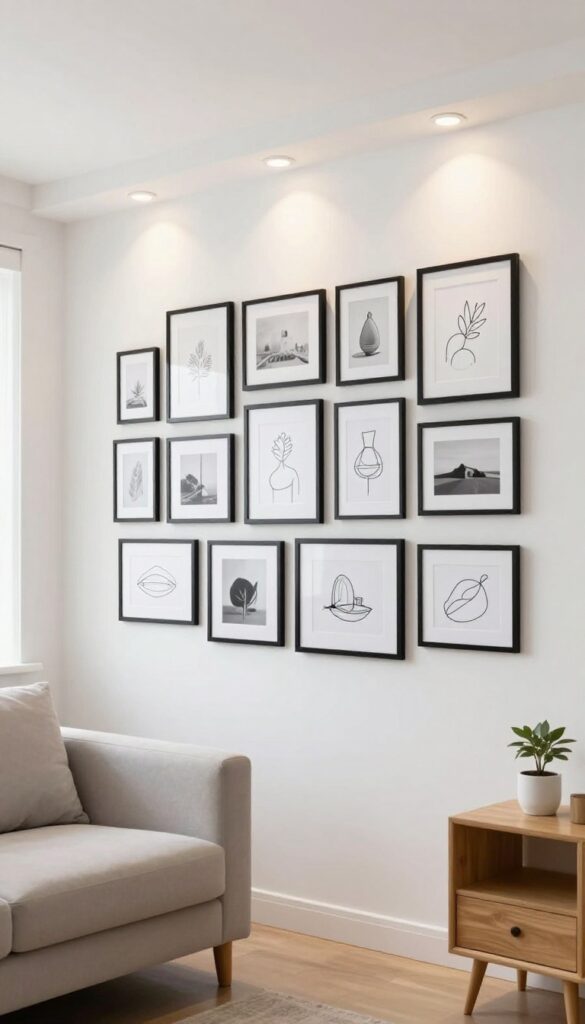
Gallery walls are a classic way to add personality, but they can easily feel cluttered or dated. The modern approach keeps it clean and intentional: think black-and-white photography, simple line drawings, and matching frames. This version feels curated, not chaotic, and it works in any living room—even a small one.
A gallery wall doesn't have to be a jumble of mismatched frames and busy art. For a modern, clean look, stick to a monochrome palette with black-and-white prints or minimalist line drawings. Use identical frames in black, white, or natural wood to create visual unity.
Arrange them in a balanced but not perfectly symmetrical layout—think of a loose grid or an organic cluster that feels relaxed. This approach keeps the wall from feeling too stiff while still looking polished. It's an easy way to make a statement without overwhelming the room.
Best Art Choices
Stick to black-and-white photography, botanical sketches, or abstract line art. The lack of color keeps the focus on composition and texture. You can find affordable prints online or even frame your own black-and-white snapshots for a personal touch.
Layout Tip
Before hammering any nails, lay the frames out on the floor to experiment with spacing. Aim for 2 to 3 inches between frames. For a relaxed vibe, vary the orientation—mix horizontals and verticals—but keep the overall shape of the arrangement roughly rectangular or square.
Finishing Touch
Add a small LED picture light above the gallery wall to highlight the art in the evening. A warm white light (2700K) will make the black-and-white prints pop without washing them out.
12. Incorporate a Statement Accent Chair
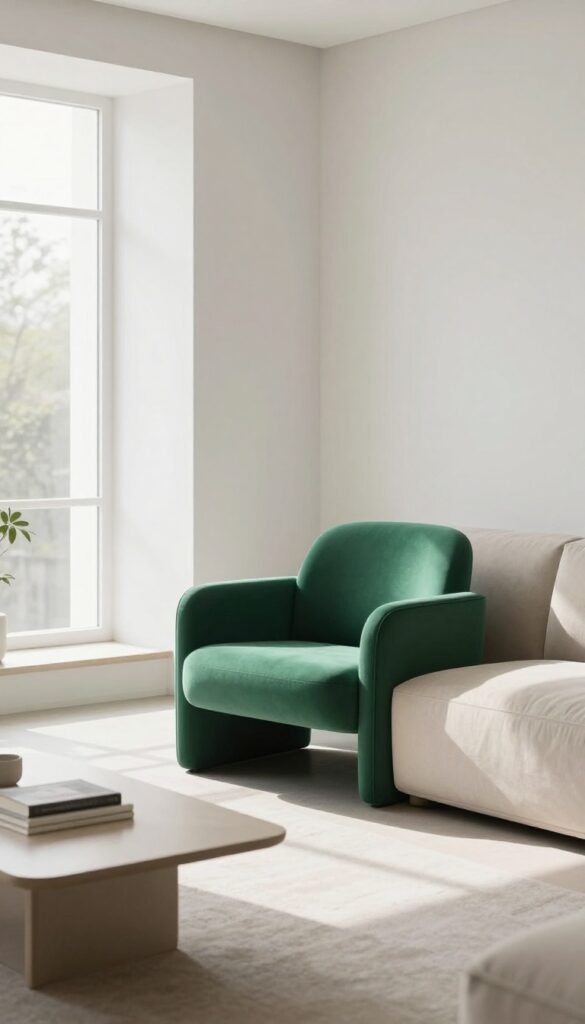
A single accent chair can transform the energy of a living room without requiring a full redesign. In a modern, clean space, one bold piece—whether in a vibrant hue or an unexpected silhouette—creates a focal point that feels intentional rather than chaotic. It adds personality and a touch of luxury, while keeping the rest of the room streamlined and clutter-free.
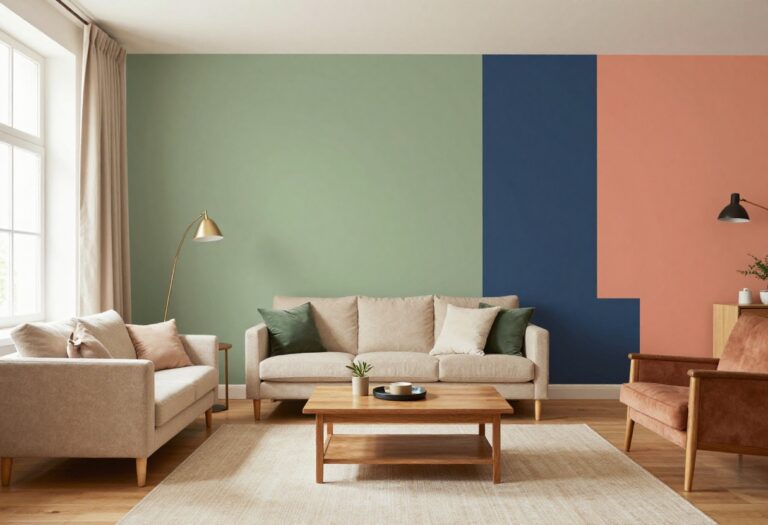
Placing a statement accent chair near a window or next to the sofa instantly gives the room a layered, curated look. The key is to let that one piece shine, so keep surrounding furniture neutral and minimal. A sculptural chair in emerald green or deep navy can anchor a reading nook, while a bright mustard or burnt orange chair adds warmth to a monochrome palette.
This approach works especially well in open-plan layouts, where the chair can define a cozy corner without blocking flow. For a truly modern feel, choose a chair with clean lines—like a mid-century shell chair or a simple cube design—and avoid overly ornate details. The rest of the room should stay quiet, allowing the chair to do the talking.
Best Colors For A Clean Look
- Stick to one saturated color that contrasts with your main palette. For a white-and-gray room, go with a jewel tone like sapphire or amethyst. If your sofa is beige or cream, try a punchy coral or ochre.
- Avoid busy patterns—solid colors read cleaner and more modern.
Placement And Layout
Angle the chair slightly toward the sofa to create a conversational grouping, or place it perpendicular to a console table for a defined vignette. Leave at least 18 inches of space around it so the room doesn't feel cramped. In a small living room, a slim-profile chair on slender legs keeps the floor visible and the space airy.
Finishing Touch
Add a small side table and a simple floor lamp next to the chair to make it a functional spot for reading or morning coffee. Keep accessories minimal—a single throw pillow in a complementary solid color is enough. This reinforces the smart, space-aware vibe without cluttering the visual.
13. Keep Surfaces Clear with Hidden Storage Solutions
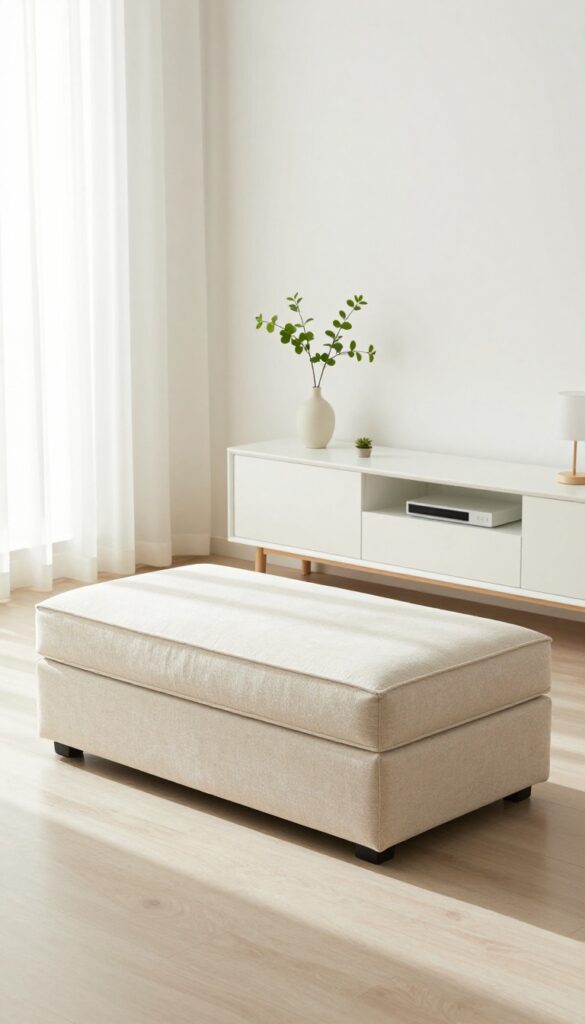
A cluttered coffee table or crowded media console can undo all the calm you’ve worked to create. The trick isn’t to own less—it’s to stash smartly. Hidden storage lets you keep everyday items close but out of sight, so your living room feels airy and intentional.
Start by choosing furniture that doubles as storage. An ottoman with a lift-top can hold blankets, remotes, and magazines, while a media console with cabinets hides cables and gaming gear. Baskets under a console or beside a sofa catch odds and ends like throws or kids’ toys.
The goal is to give every surface a clear purpose—and nothing more. When side tables and shelves stay bare except for a lamp or a small plant, the room breathes easier. This approach works especially well in smaller spaces where every inch counts, but it’s just as effective in larger rooms that need a tidy, streamlined look.
Best Furniture Picks
Look for ottomans with a sturdy lid and enough depth to store bulky items. A rectangular storage ottoman can double as a coffee table or extra seating. For media consoles, choose one with adjustable shelves behind closed doors so you can hide electronics while keeping them ventilated.
Styling The Surfaces
- Once the clutter is gone, style what remains. A single tray on the coffee table can hold the remote and a candle. On the console, a small vase or a stack of books adds personality without visual noise.
- The key is to leave at least 70% of the surface empty.
Small-space Fix
If your living room is tight, use a nesting table set where the smaller tables slide under the larger one. Or try a wall-mounted cabinet with a fold-down desk that hides paperwork. Every piece should earn its spot by offering storage or function.
FAQ
What is the best neutral color for a modern living room?
Warm whites like off-white or cream are versatile and keep the space bright. Light greiges (grey-beige) also work well for a cozy yet modern feel.
How can I make a small living room look bigger?
Use a large rug, hang curtains high, and choose furniture with exposed legs. Mirrors also help reflect light and create the illusion of more space.
What type of lighting is best for a living room?
A mix of ambient, task, and accent lighting works best. Overhead lights for general illumination, floor lamps for reading, and table lamps for cozy corners.
How many plants should I put in my living room?
One or two statement plants are enough for a clean look. Too many can make the space feel cluttered. Choose low-maintenance varieties like snake plants or pothos.
Can I mix modern and traditional decor?
Absolutely. A modern sofa paired with a traditional rug or vintage accessories creates an interesting contrast. Keep the overall palette cohesive for a balanced look.
Conclusion
Refreshing your living room doesn't have to mean a full renovation. Small, intentional changes—like a new rug, better lighting, or a few well-placed accessories—can completely transform the feel of the space.
Pick the ideas that resonate with your style and start with one or two. Before you know it, you'll have a living room that feels both stylish and truly yours.